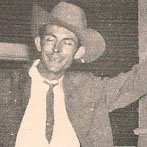
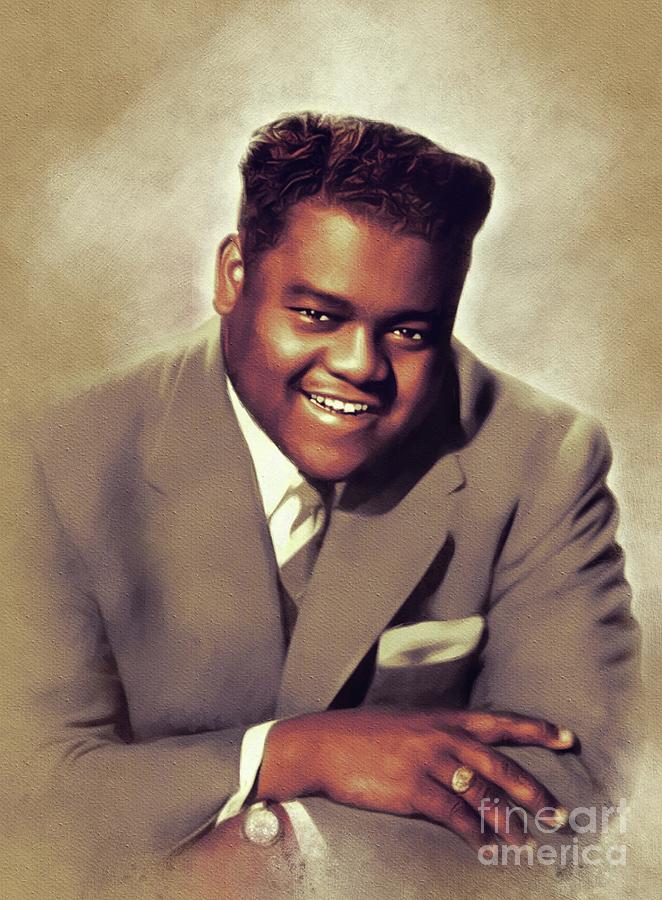
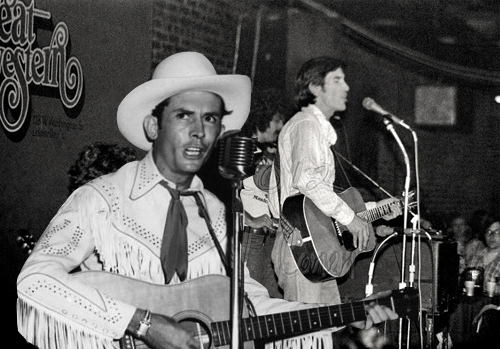
Today, January 1st, marks the anniversary of the deaths of two great American songwriters, Hank Williams in 1953 and Townes Van Zandt in 1997. In addition to their coincidental departure dates, these two shared a lot in common.
They were both long and lanky long gone daddies with dark hair and eyes, and they both had what my granddaddy called “jug ears.” In fact, judging by these two accompanying photographs, I suspect that a DNA test would discover a shared ancestor in the not too distant past.
More significantly, they also possessed the rare ability to create memorable melodies with song lyrics that can stand alone on a page without musical accompaniment.
First Hank:
Hear that lonesome whippoorwill.
He sounds too blue to fly.
The midnight train is whining low.
I’m so lonesome I could cry.
Then Townes:
Everything is not enough.
And nothin’ is too much to bear.
Where you’ve been is good and gone.
All you keep’s the getting there.
Well, to live is to fly, all low and high.
So shake the dust off of your wings
And the sleep out of your eyes.
Theirs was a tragic vision. To quote Richard Sewell:
[The tragic vision] recalls the original terror, harking back to a world that antedates the conception of philosophy, the consolations of the later religions, and whatever constructions the human mind has devised to persuade itself that the universe is secure. It recalls the original un-reason, the terror of the irrational. It sees man as questioner, naked, unaccommodated, alone, facing mysterious, demonic forces in his own nature and outside, and the irreducible facts of suffering and death. Thus it is not for those who cannot live with unresolved questions or unresolved doubts, whose bent of mind would reduce the fact of evil into something else or resolve it into some larger whole.
Like their artistic archetype Edgar Allan Poe, throughout their abbreviated lives, they were besieged by “demonic forces in their own natures,” and like Poe, they attempted to neutralize those demons through drink and more exotic drugs — in Hank’s case, chloral hydrate and barbiturates, and in Townes’s, codeine and heroin.
However, when it comes to self-destruction, I don’t think either EA or Hank could hold a candle to Townes Van Zandt. Supposedly, Poe gambled to augment his stepfather’s meager allowance, but in Townes’s case, his gambling seemed a deep-seated masochistic addiction.
According to John Kruth’s biography, To Live’s to Fly, not only did Van Zandt literally lose shirts off his back, but in one card game, he also lost his gold dental inlays, which he pulled out with pliers and delivered on the spot as payment. He also had the propensity to give all his hard earned money away to winos after getting paid for a gig. Like a crazed character out of Dostoyevsky, he seemed to seek out suffering, perhaps for the sake of his art.
One of the many Mongolians who didn’t click on this site in 2015
Thanks to all of ya’ll who clicked on the blog this year, which received 20.022 hits by visitors from 110 countries. I’d like especially to thank those solo souls in Lithuania, Guadeloupe, Liechtenstein, Ethiopia, the Isle of Man, Libya, Congo-Kinshasa, not to mention whoever it was in Papua New Guinea looking for porn who got sidetracked in Hoodooland.
Of course, several countries were no-shows, including predictable sourpusses like North Korea, Mongolia, and Greenland, but come on, Botswana, Paraguay, and Fiji, where’s your sense of adventure?
Happily, except for a death-haunted January that featured a stem cell transplant, 2015 was a big improvement over 2014, so I thought I’d offer a reprise of some of the most popular posts.
January
Although “Endangered Lowcountry SC Locutions,” featuring my mother and written exactly a week before my her death, was by far January’s the most popular post, I prefer “Super Bowl XLIX Preview,” which I could easily update this year by merely dropping those clunky Roman Numerals designating forty-nine for the sleek – dare I call them Arabic – numerals 5 and 0.
February
One of the top news stories in February was an outbreak of measles at Disney World, which brought to light that luddites on both the far right and far left are not vaccinating their replicated DNA, so I produced this piece “Natural Selection at Work” that features not only a vintage photo of smiling polio victims but also a full color photo of an autistic dog.
February also brought us the Brian Williams scandal, which sent me into true confession mode. Dear Readers, believe it or not, I’m no stranger to “misremembering,” as the self-explanatory title “My Most Cherished Mismemory Debunked” testifies.
March
March came in like a lion with a very popular post, “Ten Literary Riddles.” If you don’t want to see the answers, don’t scroll down past number 10.”
April
What better way to celebrate a month dedicated to fools than a post entitled “A Brief Analysis of the Likability of 2016 Presidential Candidates,” which is so fair and balanced that Larry Sally, my most ardently Republican friend, says he more or less agrees with it.
May brought the news that Texas’s wheelchair bound governor was preparing the state for an invasion from the US Federal government, and I realized what a great movie it would make, hence, “The Invasion of Texas – Coming to a Theater Near You Soon!”
Oh my God, where has the summer gone? Life is short. I’ll be dead in no time. Better turn to the Good Book. And who better to lead a Bible lesson than the Donald: “Bible Study with Donald Trump.”
And I’m surprised this post didn’t catch on, a “Casting the Republican Primary Farce,” in which I find photos of dead movie/tv starts who are – drumroll – dead ringers for the Republican candidates.
Let’s face it, in this artificially flavored, dioxin-laden world of ours, either you or someone you dearly love is going to get cancer, especially if you manage to dodge the jihadists’ and nativists’ bullets to live long enough.
Obviously, people deal with cancer in different ways. Everyone from scientists to your Aunt Tessie will tell you to be positive, which, of course, is good advice, if not all that easy to take, especially if you’re facing chemotherapy.
For the last 17 months, my wife and I have shared our lives with a particularly rare and more-often-than-not fatal form of lymphoma known as Peripheral T-Cell Lymphoma, Not Other Specified, or for shortness sake, PTCL-NOS.
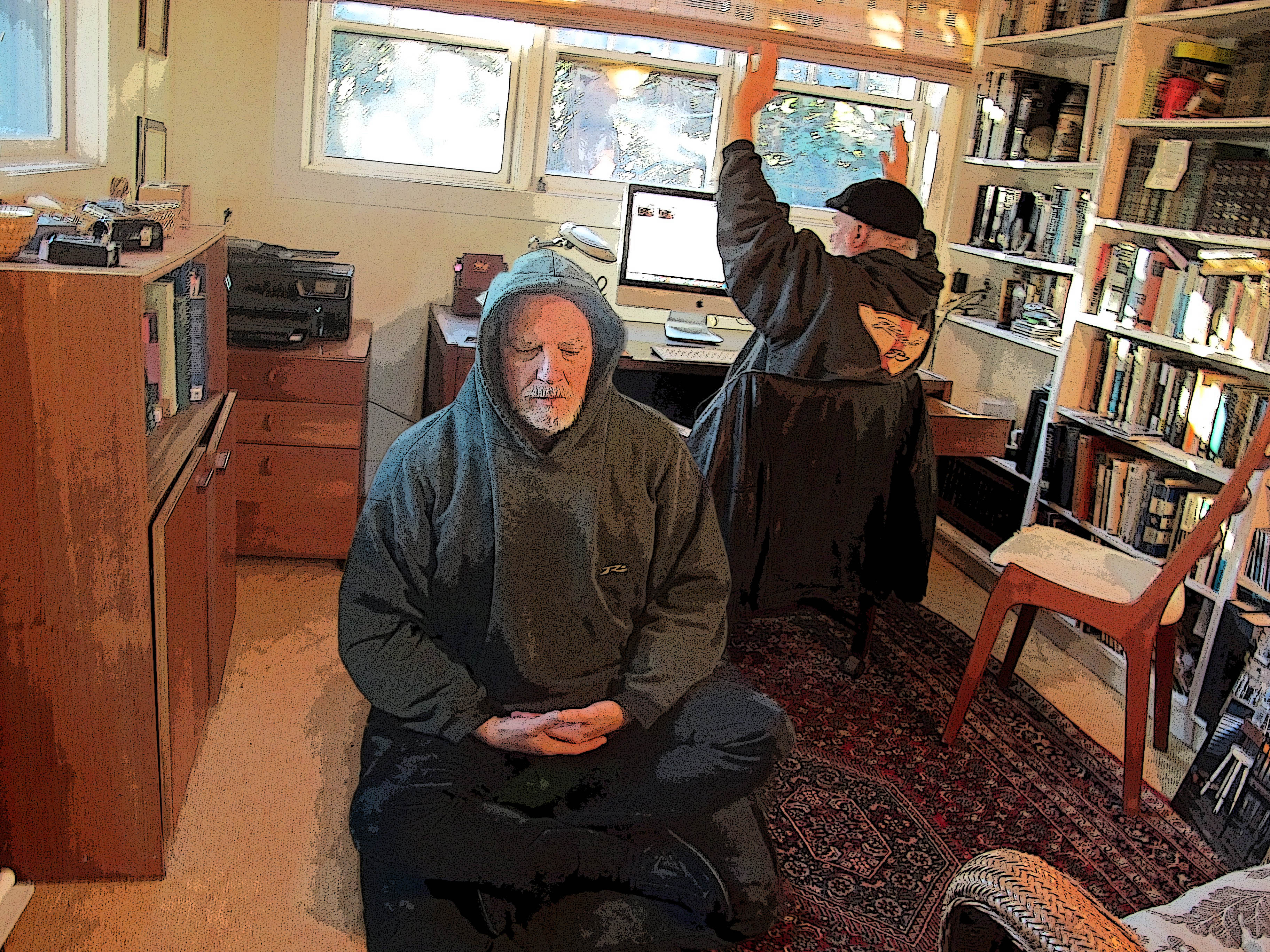
Essentially, you can deal with cancer in two ways, the Dalai Lama way or the Woody Allen way, so I thought I’d recap my wife’s journey of the last year and a half focusing on her husband’s behavior, imagining him as either the Dalai Lama or Woody Allen so you can decide for yourself which role you might play if you ever face similar challenges.
9 July 2014
Woody Allen, husband of Judy Birdsong, spends the morning cleaning the house preparing for guests, an artist friend and former colleague who’s bringing an Italian mother and her two teenaged sons to go kayaking.
Judy has gone out “to run some errands,” and Woody is getting somewhat peeved because she’s been gone so long and has left so much of the housework to him.
Finally Judy calls.
“Where have you been?’ Woody asks.
“Getting a chest x-ray.”
“A chest x-ray? What for?”
“I have this lump near my breast bone. The doctor thinks it’s probably just some bone outgrowth. No big deal.”
“Oh, my God,” Woody thinks, “she’s got lung cancer!”
* * *
Tenzin Gyatso, husband of Judy Birdsong, enjoys picking up each individual knick-knack from the shelf and gently rubbing the dust cloth over its surface. Although he knows Judy’s getting a chest x-ray, he concentrates on the task at hand, gently returning the clay statuette of the Indian mother to her place on the shelf next to the hand-painted Mexican fish.
* * *
That evening around six, the phone rings. Woody, upstairs in his study, sees on the phone’s screen that it’s the doctor’s office. He picks up the receiver just as Judy does but doesn’t hang up.
He hears: “The x-ray is inconclusive. It’s cloudy. Have you had any fever? Coughing? We don’t see a mass, but you have something called a pleural effusion, that is, fluid in your lungs, so you’ll need to come in tomorrow for a C-scan.”
Woody hangs up the phone and immediately googles “plural effusion.”
Numerous medical conditions can cause pleural effusions. Some of the more common causes are:
Woody spends a very miserable night, the worst one since his last night in jail (c. 1978), tossing and turning and speculating just what horrible type of cancer Judy has. Finally, because she’s had no symptoms, Woody becomes convinced that it’s metastatic ovarian cancer.
* * *
That evening around six, the phone rings. Tenzin, upstairs in his study, sees on the phone’s screen that it’s the doctor’s office. He waits to see if Judy picks up, and she does.
After the conversation, she comes up and tells him the x-rays weren’t clear, that she needs a C-scan.
He takes a deep cleansing breath, then exhales slowly.
11 July
The C-scan did detect a mass, “a primary cancer probably a lymphoma,” according to the radiologist. Woody and Judy arrive at Roper Hospital for Judy’s initial visit with her oncologist. When they arrive, they discover the appointment is at a different facility across town, so they rush to their car and take off. Even though the receptionist has assured them they have enough time, this soundtrack plays in Woody’s mind.
They do arrive on time, and the oncologist, an acquaintance, the husband of a colleague of Woody’s, is a calming presence. He shows them the tumor on a screen and agrees that it looks like lymphoma, and says that’s what he hopes it is because lymphomas are curable. He introduces them to the paradox that the faster a cancer grows, the easier it is to kill.
Woody goes home and googles lymphomas, which indeed are very treatable if it’s the B-cell variety. T-cell lymphomas are a different story.
15 July
While Judy’s out kayaking with Tenzin, the oncologist calls and tells Woody they need to run about a thousand new tests on Judy to find out “what type of t-cell lymphoma we’re talking about.”
“Oh no,” Woody says. “T-cells are harder to cure, aren’t they?”
“They can be,” he says tersely.
When Judy returns, she can see it on Woody’s face.
“What’s the matter?”
He tells her. For the first time they weep together.
20 July
Tenzin has put Woody in a strait jacket, jammed a sock in his mouth, and locked him in a closet so he can call his sons and tell them the bad news. He also calls his siblings and closest friends.
Judy is stoic as well, suffering through a barrage of tests without a complaint.
They nervously wait to see how far it’s spread.
22 July
Good News! It’s Stage 1, confined to that one tumor. No bone marrow involvement. The treatment will be aggressive. 96-hour continuous hospital infusion, two weeks off, then another blast. There will be 6 to 8 cycles, then perhaps a stem cell transplant and even after that radiation.
28 July – Early December
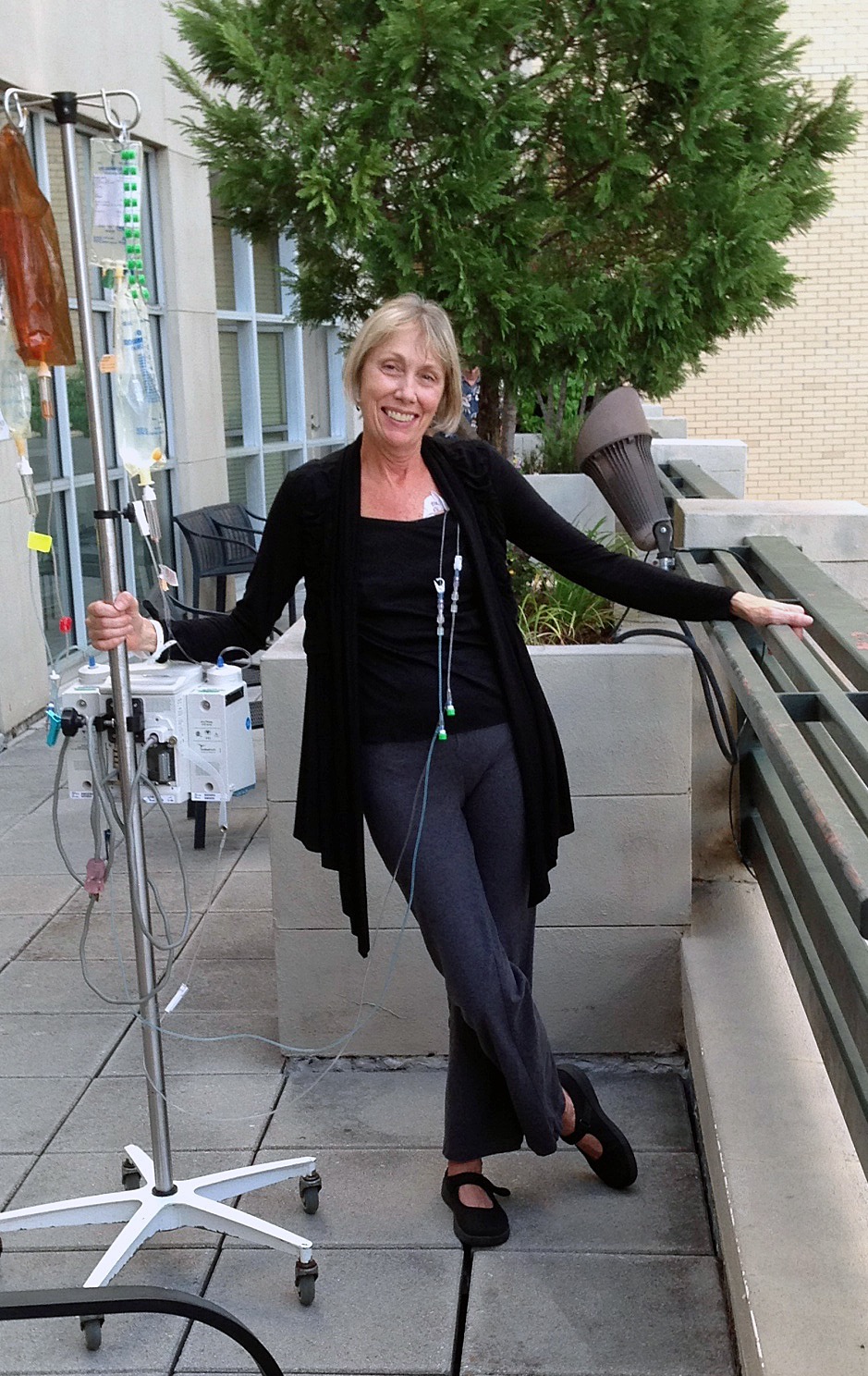
Judy on the 5th Floor Balcony of Roper
Although Tenzin can sometimes hear muffled sounds from Woody’s closet, he – Tenzin – is very much in control. During hospital weeks, he wakes up at 5, walks their doomed dog Saisy, showers, etc., and delivers the paper to Judy on the 5th floor of Roper and sits down to enjoy a cup of coffee. Then he shuffles off in his blue footies, down the hall to the elevator, hitting the first floor, greeting the staff coming on as he heads to the parking garage and to work.
After only four days of chemo, the tumor has shrunk so much that the oncologist says he wouldn’t know it were there by external inspection.
Of course, everyone loves Judy because of her courage and exquisite manners. The nurses try to see to it that she gets the rooms that look out over Charleston Harbor. She walks a lot, dragging the chemo-shit along with her. She continues her work as a school psychologist from her hospital bed, and in the third week goes to work in Berkeley County wearing a wig. In the afternoons when she’s in the hospital, Judy and Tenzin sit on the balcony and note the beauty of the light as it falls upon the steeples of the city.
In October on a Friday, Tenzin returns from work to find a voice message from the oncologist. He’s delighted to inform them that Judy’s scan has come back all clear; there’s not a trace of cancer.
Nevertheless, they’re going to continue for two more cycles of chemo, culminating in a grand total of 6.
Late December 2014 – January 2015
Tenzin’s mother has had a stroke as Judy’s preparing for a stem cell transplant. Tenzin allows Woody to come out of the closet to google stem cell transplants, but marches him right back in there afterwards.
One morning they come downstairs to find that Saisy has died during the night. Tenzin and his neighbor Jim load Saisy’s carcass in the back of Judy’s SUV (Tenzin’s Mini isn’t an option), and she drops Saisy off at the Vet’s to be cremated. She then drives on to work as Tenzin does the same.
Over the next week, Tenzin tries to make it to his hometown to see his fading mother while meanwhile Judy suffers the worst part of her treatment, bone-marrow killing doses of a different type of chemo that incapacitates her.
When Tenzin’s mother dies, Judy’s very ill; she can’t attend the funeral because she’s been hospitalized. The good news is that Judy’s sister and sister-in-law have come to help. Despite all the negativity, spirits are somewhat high.
February – March 2015
Scans again clear. Time for radiation, which is no fun, but it’s much better than chemo.
June 2015
Judy’s and Tenzin’s son is getting married in June, right after another scan. Woody, who has been released from the closet but remains under house arrest, thinks the scan should be put off until after the wedding, but Tenzin and Judy disagree. How great to hear the news beforehand they say.
But they don’t hear the news. Woody is not allowed to come up to DC for the festivities (though he does text twice). The wedding week is wonderful as Judy and Tenzin reunite with loved ones and enjoy interacting with their new in-laws. All agree the ceremony and reception are a blast.
When Judy and Tenzin return to Charleston, they learn the scan was “all clear.”
17 December 2015
Judy goes in for her six-month scan. Woody has been sneaking around googling, looking for PTCL-NOS success stories, and under that heading what’s below is all he can find:
To date: 17 chemotherapeutic drugs in 8 regimens. 4 of those drugs at least twice.
Knowing the redemptive value of suffering makes all the difference.
Woody also discovers that the median time for relapse is 6.7 months after primary treatment, and it’s been seven months since Judy’s ended. Plus her SED rate is way high at 38 (20’s normal). Woody googles for possible reasons for high SED rate. “Cancers: lymphoma, leukemia.”
18 December 2015
Judy tells Woody (who’s wearing a Tenzin mask) he doesn’t need to accompany her to her 3 o’clock appointment.
As soon as she leaves for work, Woody clobbers Tenzin over the head with a walking cane and shoves him in the closet.
Woody goes to work and grades one set of exams, attends a brunch, then goes home at one-thirty and tries to take a nap.
He falls into a fitful sleep but awakens.
The clock crawls. Three finally arrives. Why didn’t meet her there? Imagine a text message. Or if it’s bad, wouldn’t she call? Imagine her driving back by herself knowing. Poor thing. 3:05. Friday’s NY Times crossword puzzle. It’s impossible. 3:15. He imagines Judy being weighed, getting her blood pressure taken. 3:30, no word. 3:35 goes down to play solitaire. 3:50. Knows Judy might get irritated but calls.
She hasn’t been seen yet!
4:05; Billie Holiday’s text ring tone “Comes Love” sounds. He sees ”scan’s all clear” on the screen. Screams Yes!! Literally dances a jig. Judy calls. “Yes!” He texts his sons “Yes!” He texts friends. “Yes!”
He rides his bike down to the Jack of Cups where he finds the owner Nick sitting at the bar with Tyler, a Chico Feo bartender, sitting next to him, and Samantha, a lovely tattoo-covered “girl next door” stationed behind the bar. He shares the good news. Larry comes in. Lesley, Nick’s wife comes in. They all high five. Nick disappears and returns with six shots.
They raise their glasses and chug.
Meanwhile, Tenzin is just coming to back home. He walks slowly up the stairs to his study and takes from the shelf The Selected Poems of WH Auden. He looks at the index of first lines, flips to the sought after page, and reads:
Is poetry really the way into a lover’s heart? Here’s the Swan of Avon, Mr. William Shakespeare himself, having a go at it:
But no roses see I in her cheeks,
And in some perfumes there is more delight,
Than in the breath that from my mistress reeks.
Here, Master Will is attempting to flatter his dark-skinned mistress by underscoring how she doesn’t conform to pale-faced Elizabethan standards of beauty while mocking poets who overstate their lovers’ charms. However, judging by the limited number of women I have courted, I don’t see this strategy working well at all.
For example, I would not have attempted to flatter my late beloved wife with these lines:
My mistress’s breasts are fairly flat
And her hair a sort of mousey brown,
Yet she makes my heart go rat-a-tat-tat
Whenever I take her out on the town.
Nor do I think John Donne’s “The Flea” would work with most women. Sure, his comparing flea bites to sexual intercourse is “imaginative” and his “a-ha” comeback at the end of the poem clever, but, really, do you think this argument has even a Casper-the-Friendly-Ghost of a chance:
It sucked me first, and now sucks thee,
And in this flea our two bloods mingled be.
Thou knowst this cannot be said
A sin, nor shame, nor loss of maidenhead.
Then there’s Andrew Marvell’s “To His Coy Mistress,” which at least starts off on the right foot with some extravagant praise.
An hundred years should go to praise
Thine eyes and on thine forehead gaze;
Two hundred to adore each breast,
But thirty thousand to the rest;
An age at least to every part,
And the last age should show your heart.
For, lady, you deserve this state,
Nor would I love at lower rate.
But then gets all morbid on us:
Thy beauty shall no more be found;
Nor, in thy marble vault, shall sound
My echoing song; then worms shall try
That long preserved virginity . . .
As one of my students once said when I told her that faculty members often lie around unclothed in the faculty lounge:
BAD MENTAL PICTURE!
Sir John Suckling, he of the unfortunate name, creates this sure-not-to-please image:
Her feet beneath her petticoat
Like little mice stole in and out,
As if they feared the light;
But oh, she dances such a way!
No sun upon an Easter-day
Is half so fine a sight.
Maybe chicks back then thought vermin cute, foot-fetishes adorable?
Here’s another from Sir John:
Her lips were red, and one was thin;
Compared with that was next her chin,—
Some bee had stung it newly.
Jacobean Botox!
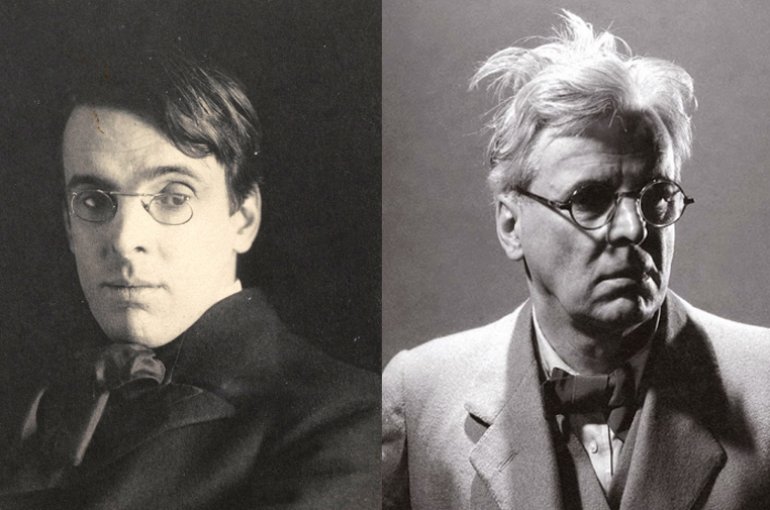
No, boys and girls, I doubt seriously that poetry is capable of melting hearts. After all, the greatest of poets, William Butler Yeats, devoted god knows how many iambs in his lifelong but vain attempt to win the love of Maud Gonne.
He leaves us with this good advice:
Never give all the heart, for love Will hardly seem worth thinking of To passionate women if it seem Certain, and they never dream That it fades out from kiss to kiss; For everything that’s lovely is But a brief, dreamy, kind delight. O never give the heart outright, For they, for all smooth lips can say, Have given their hearts up to the play. And who could play it well enough If deaf and dumb and blind with love? He that made this knows all the cost, For he gave all his heart and lost.
In the misty pre-Darwinian year of 1818, William Cullen Bryant published his oft-anthologized poem “To a Waterfowl.” In the poem he apostrophizes a somewhat generic migratory bird. His vagueness in pinpointing species is probably a good idea here, because the titles “To a Duck” or “To an Egret” or “To a Wood Stork,” not only sound a bit cacophonous, but they also create concrete images that might distract from the poem’s high-minded contemplations. The image of an egret awkwardly lumbering into the air might call into question Bryant’s central message: Don’t worry; God’s in charge.
“[W]ither [. . .] dost though pursue thy solitary way?” the poet asks, addressing the waterfowl. “Seekest thou [. . .] weedy lake [. . .] or marge of river wide” or “chafed ocean side?”
Dangers abound – “Vainly the fowler’s eye/Might mark [the waterfowl’s] distant flight to do [it] wrong.”
However, not to worry, “There is a Power/Whose care/Teaches [the waterfowl’s] way along [the] pathless coast” towards “a summer home” where it can “rest/And scream among [its] fellows.”
Bryant concludes the poem with this stanza:
He, who, from zone to zone,
Guides through the boundless sky thy certain flight,
In the long way that I must trace alone
Will lead my steps aright.”
Flash forward 101 years:
Turning and turning in the widening gyre,
The falcon cannot hear the falconer.
Things fall apart; the centre cannot hold;
Mere anarchy is loosed upon the world,
The blood-dimmed tide is loosed, and everywhere
The ceremony of innocence is drowned;
The best lack all conviction, while the worst
Are full of passionate intensity.
Charles Darwin
Forty-one years after the publication of Bryant’s “To a Waterfowl” and sixty years before Yeats’ composition of “The Second Coming,” Darwin published the Origin of the Species. Now, very few would buy into the concept that a micromanaging deity orchestrates the flight of migratory birds.[1]
What Darwin did was to thrust randomness and happenstance into the forefront of the scientific version of how human beings came to be human beings, which, of course, suggests that randomness and happenstance play roles in our petty lives from day to day for better or for worse.
No wonder, then, that Yeats’s poem resonates more with modern readers than does Bryant’s.
“The Second Coming” may well be the most thoroughly pillaged piece of literature in English. (Perhaps Macbeth’s famous “sound and fury” monologue is a distant second.) Since Chinua Achebe cribbed Yeats’s lines for Things Fall Apart in 1958 and Joan Didion for Slouching Towards Bethlehem a decade later, dozens if not hundreds of others have followed suit, in mediums ranging from CD-ROM games to heavy-metal albums to pornography.
[. . .]
In the wake of Didion’s success, publishers have come to realize they can apply Yeats’s lines to pretty much any book that documents confusion and disarray. Thus Elyn Saks’s 2008 memoir, The Center Cannot Hold: My Journey Through Madness, concerning her bout with schizophrenia. Though these four words from Yeats surely resonate with Saks’s feelings, the “center” in question here isn’t the moral authority of the Western world, it’s one person’s sense of stability. The trend has held for art books (David Gulden’s photography collection The Centre Cannot Hold), politics (The Center Holds: Obama and His Enemies), alternate history (American Empire: The Center Cannot Hold), popular history (A Blood-Dimmed Tide: The Battle of the Bulge by the Men Who Fought It), reportage (A Blood-Dimmed Tide: Dispatches from the Middle East), religion (The Second Coming: A Pre-Mortem on Western Civilization), international affairs (Slouching Towards Sirte: NATO’s War on Libya and Africa), right-wing moral hectoring (Slouching Toward Gomorrah), memoir (Slouching Toward Adulthood), and even humor (Slouching Towards Kalamazoo; Woody Allen’s Mere Anarchy). It seems that for every cogent allusion (Northrop Frye’s Spiritus Mundi, anyone?) there are a dozen falcons that truly can’t hear the falconer.
William Butler Yeats
Well, as matter of fact, the polarization of our own politics in addition to the utter disregard for human life of those who strap on suicide vests do suggest that “the centre cannot hold’ and “the worst are full of passionate intensity.” Virtually, every day we’re confronted with slaughter, whether it be at a bistro in Paris, a luxury hotel in Mali, or a African American church in Charleston, South Carolina.
The blood-dimmed tide has been loosed. No wonder incorporating a quote from “The Second Coming” into a title has become cliché.
[1] Of course, many still reckon that God micromanages our human existences, His making sure, for example, that Judy Birdsong’s application to her first choice graduate school was rejected so that she could meet up and marry me at USC, her second choice. (Not to mention how He later saw to it that teachers misbehaved at my present place of employment so that they would be fired to make room for me). Cf., Dabo Swinney’s “Game Plan for Life.”
Nowadays, Alexander Pope is so unpopular that the Robin Williams character in Dead Poets Society demanded his students rip Pope’s poems from their texts. Certainly, the polished closed heroic couplets that flowed from Pope’s quill would make an incongruous soundtrack for what Eliot called “the immense panorama of futility and anarchy that is contemporary history.” Yep, the minuet has given way to slam dancing; fixed poetic forms have followed their cousin the typewriter into obsolescence.
Adieu. Toot-a-loo. Later.
Nevertheless, when it comes to the poetic confluence of sound and sense, very few poets can equal that four-foot six-inch Colossus, Alexander Pope, that satiric terror who immortalized his enemies in his verse.
Here he is on synthesizing sound with image and movement:
Tis not enough no Harshness gives Offence,
The Sound must seem an Echo to the Sense.
Soft is the Strain when Zephyr gently blows,
And the smooth Stream in smoother Numbers flows;
But when loud Surges lash the sounding Shore,
The hoarse, rough Verse shou’d like the Torrent roar.
When Ajax strives, some Rocks’ vast Weight to throw,
The Line too labours, and the Words move slow;
Note how via spondees he slows down the first half of line six, a lesson learned by Frost in his short poem “The Span of Life”:
The old dog barks backwards without getting up.
I can remember when he was a pup.
Not only do the four consecutive stressed beats of old dog barks back echo what a bark sounds like, but their slowness also reinforces the dog’s old age, his sluggishness. On the other hand, the opening anapests of line two suggest the bounding energy of a puppy. Here the sound does indeed “seem an echo to the sense.”
Ultimately, Pope’s dictum demands that when describing ugliness, poets need to make their poems sound ugly, so I thought it might be interesting to check out a few great poets depicting unpleasant images and to see how successful they are in creating dissonance.
Let’s start with Chaucer’s description of the Summoner from “The Prologue to the Canterbury Tales.”
Click the arrow for sound:
A SOMONOUR was ther with us in that place,
That hadde a fyr-reed cherubynnes face,
For saucefleem he was, with eyen narwe.
As hoot he was and lecherous as a sparwe,
With scalled browes blake, and piled berd,
Of his visage children were aferd.
Ther nas quyk-silver, lytarge, ne brymstoon,
Boras, ceruce, ne oille of tartre noon,
Ne oynement, that wolde clense and byte,
That hym myghte helpen of his whelkes white,
Nor of the knobbes sittynge on his chekes.
Wel loved he garleek, oynons, and eek lekes,
And for to drynken strong wyn, reed as blood;
Thanne wolde he speke and crie as he were wood.
Fast-forwarding 200 years, here’s Edmund Spenser’s personification of Gluttony from Canto 3 of Book 1 of The Faerie Queene (I’ve modernized the spelling):
And by his side rode loathsome Gluttony,
Deformed creature, on a filthy swine,
His belly up-blown with luxury
And also with fatness swollen were his eyes
And like a Crane his neck was long and fine
With which he swallowed up excessive feast,
For want whereof poor people did pine;
And all the way, most like a brutish beast,
He spewed up his gorge, that all did him detest.
Although Spenser succeeds in creating disgusting visual images, I’m not so sure he’s completely successful in creating sonic dissonance. On the other hand, note the dissonance of these lines from Gerard Manley Hopkins describing Industrial England.
And all is seared with trade; bleared, smeared with toil;
And wears man’s smudge and shares man’s smell: the soil
Is bare now, nor can foot feel, being shod.
Now that’s brilliantly untuneful. Read it out loud. The rhyme toil/soil is deliciously dissonant, and seared/bleared/smeared ranks up there in rankness as well.
I’ll leave you with Master Will piping some appropriately sour notes:
It is the lark that sings so out of tune
Straining harsh discords and unpleasing sharps.
That’s Juliet talking, lying in her bridal bed with Romeo, realizing that the bird singing outside her window is not, as she hoped, the nightingale.
Time to get up, star-crossed lovers, and march off to your doom.
 Today, January 1st, marks the anniversary of the deaths of two great American songwriters, Hank Williams in 1953 and Townes Van Zandt in 1997. In addition to their coincidental departure dates, these two shared a lot in common.