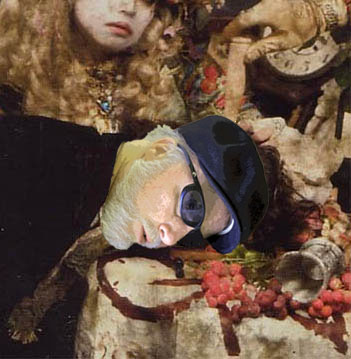
Wesley Moore III—also known as Rusty— has checked out of this earthly Motel-6-of-Woe and embarked with a one-way ticket to “that undiscovered country from whose bourne no traveler returns.”
As the Reverend Gary Davis, a fellow South Carolinian put it, “When the Lawd get ready, you gotta move.”
In other words both Wesley and Rusty have died.
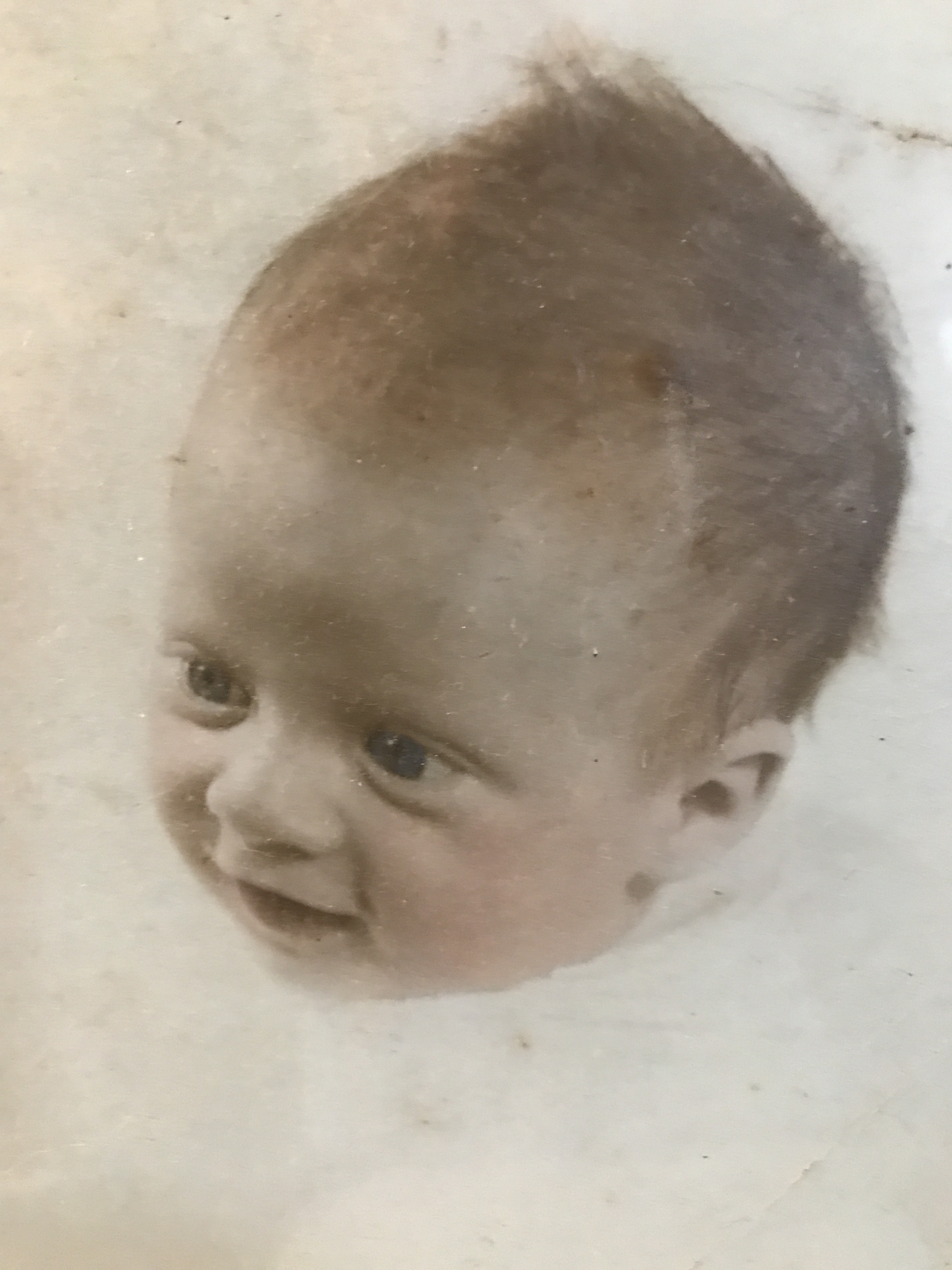
On December 14, 1952, Wesley was born with a full head of red hair, which displeased his father, Wesley Edward Moore, Jr.—but delighted his mother, Sue Blanton Moore, who was a ginger herself. Wesley’s grandfather, Kistler Blanton, gave him the nickname Rusty so people wouldn’t call him “Red.”
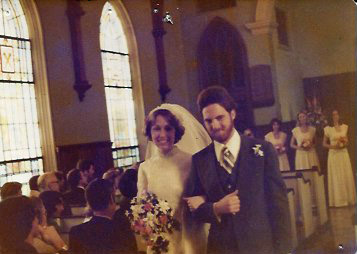
Wesley attended Summerville’s excellent public schools, graduated in 1971, received a BA in English from the University of South Carolina in 1975, then dropped out of graduate school in 1977, where he had met and fallen in love with Judy Deal Birdsong. They met working at a campus bar. Judy liked to say, “It was a marriage made in Milwaukee.”
Their son Harrison was born in 1984, followed by Wesley Edward (Ned) in 1986.
Wesley taught at first at Trident Technical College, then at Porter-Gaud School while Judy worked as a school psychologist. During his 34 years at Porter-Gaud, he served in various capacities, including department chair. He considered teaching at Porter-Gaud the second best thing that ever happened to him.
The Moores eventually moved to Folly Beach where they built a house on the so-called Folly River. The boys grew up, graduated from college, and established independent lives.
In 2014, Judy was diagnosed with T-Cell lymphoma, went into a brief remission, and made the best of a bad situation until her death on Mother’s Day in 2017. Her last words were a mouthed “thank you.”
What a woman!
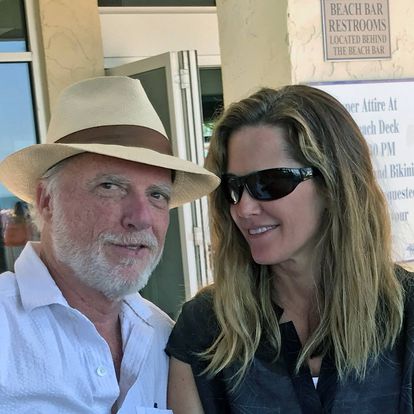
In 2018 Wesley married Caroline Tigner, who with her daughter Brooks, established a new home on Folly where Caroline helped resurrect Wesley’s writing career. His first novel Today, Oh Boy (2023) was a critical success, though its sales were meager. He went on to publish a hodgepodge of a memoir, Long Ago Last Summer (2025) and another novel Winter Breakin (2027). His late life literary career would not have been possible without Caroline’s encouragement and keen editorial eye.
Throughout his life, Wesley enjoyed a variety of pastimes. He surfed from ages 16 to 70, dabbled in Buddhism, and published a blog. Almost every afternoon would find him at Chico Feo or Lowlife on Folly hanging out with people in their twenties and thirties, and forties. He missed being a teacher and enjoyed conversing with curious young people like Jack Fortune and Molly Fergurson.
But, alas, he’s dead, and that is that. As Wesley’s favorite short story writer once observed, “You can’t be any poorer than dead.”
I gave up on graduate school almost immediately—by day two, maybe. Getting a master’s in English was like having a full-time job, a serious one. Because I’d applied at the last minute, I didn’t receive an assistantship, so I supported myself with two part-time gigs: washing dishes in a girls’ dorm cafeteria and tending bar in the student union, back in those halcyon days of the ’70s when eighteen-year-olds could drink legally in barely reconstructed South Carolina.
After tending bar and finally getting home at two, there was no way I was going to read that assigned essay on Ralph Roister Doister—or set an alarm so I could read it before class. So I began sleepwalking down the road to failure, sad and guilty on the one hand, but on the other, all hepped up on the intellectual banter of my witty, irreverent friends. Their conversation was way more entertaining than network TV, university theater, or the mountainous molehills of literary criticism I was supposed to be reading.
On Sunday evenings we would gather in the bar, which was closed because alcohol could not be bought or sold on the Christian sabbath. By the way, beer was cheap in those days. An eight-ounce Bud cost a quarter, and you could cop one for a dime at happy hour. Anyway, we would listen to music, pontificate about the immense panorama of chaos and futility, talk literature, and watch rebroadcasts of Mary Hartman, Mary Hartman, which celebrates its fiftieth anniversary this year.
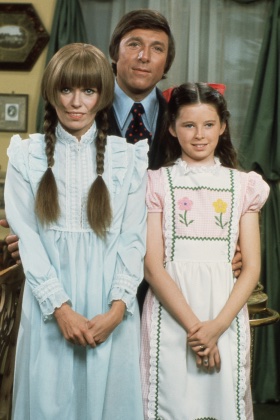
Mary Hartman, Mary Hartman, a soap opera parody, satirized television and American consumerism. In groundbreaking meta-fashion, it used television to expose the medium’s tendency to make viewers anxious about their homes and how others perceive them.
In the opening episode, Mary’s life is a borderline horror show: she’s sexually dissatisfied, her grandfather has become an exhibitionist, and she learns that a nearby family has been murdered (along with their livestock). Nevertheless, her worst worry seems to be the “waxy yellow buildup” on her kitchen floor. The actors played it straight, and there was no laugh track.
Norman Lear and his co-creators Gail Parent, Ann Marcus, Jerry Adelman, and Daniel Gregory Brown jack up standard melodrama into something far darker and more farcical—what I would call Midwestern Gothic. A sick character, for example, drowns in the chicken soup Mary brings him, turning a gesture of neighborly kindness into a grotesque disaster.
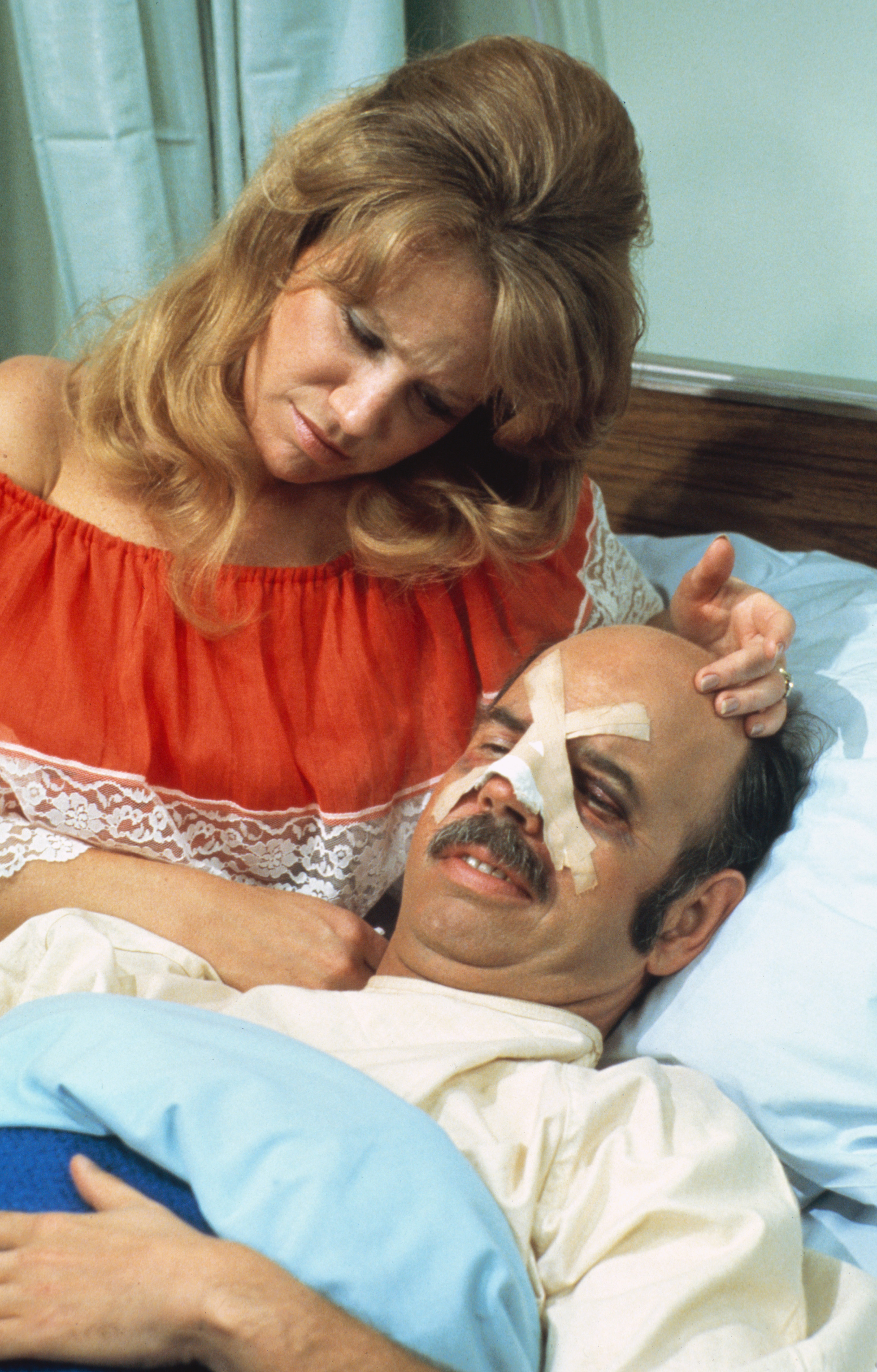
Another memorable episode features Mary’s friend Loretta Haggers, an aspiring country singer, appearing on Dinah Shore’s talk show. Attempting to compliment Dinah’s friendly Jewish producer, Loretta gushes, “I just couldn’t believe that his was the people that what killed our Lord, you know?” They hastily cut to commercial. The joke exposes something uglier than bad manners: Loretta is so steeped in prejudice that she thinks she’s paying the man a compliment.
Loretta Haggers (Mary Kay Place)
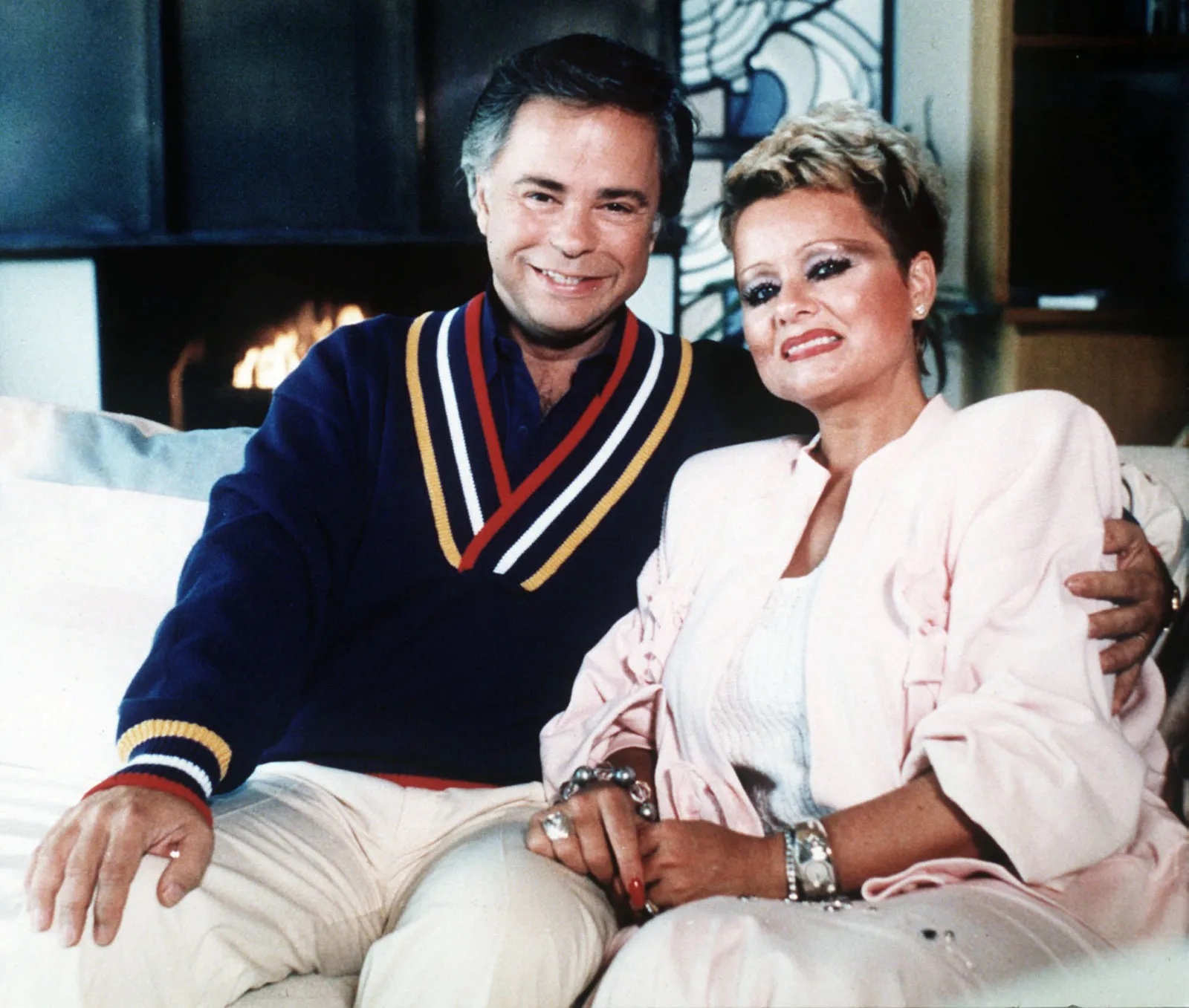
Our favorite character was the child evangelist Reverend Jimmy Joe Jeeter, a spoof of television ministries like The PTL Club, where Jim and Tammy Faye Bakker offered what amounted to a divine quid pro quo: send a check, and God will reward your generosity with financial blessings. Jimmy Joe’s father, Merle Jeeter, played by Dabney Coleman, uses his son to promote a scheme called “Condos for Christ.” Alas, Jimmy Joe dies when a television electrocutes him in the bathtub.
Tammy Faye and Jim Bakker
A spinoff talk-show parody, Fernwood 2 Night, starred Martin Mull as the host and Fred Willard as his clueless sidekick. Imagine Johnny Carson replacing Ed McMahon with Senator Tommy Tuberville. The episode featuring the great Tom Waits is downright hilarious.
As it turned out, none of us managed to earn our master’s degrees, which in my case worked out beautifully. Rather than spending another year in Columbia racking up tuition bills in an un-air-conditioned room, I fled south to Charleston to live on Limehouse Street with my bride Judy Birdsong, whom I courted in between episodes. My friend Keith, who got me a job at the bar, eventually became a successful architect, and Jake, the assistant manager of the bar, ended up as a vice-president of a publicly held company. So as Jimmy Joe might say, “We done alright.”
And for your viewing pleasure, here’s Tom Waits visiting Fernwood 2 Night.
John Keats, “On First Looking into Chapman’s Homer”
In the introduction to her widely acclaimed translation of The Odyssey, Emily Wilson makes the commonsensical point that dressing up the epic in costumes of nineteenth century diction to feign an archaic look doesn’t make much sense given that the Victorian era is only a couple of hundred years closer to a poem that’s 3,000 years old. Instead, she said her “goal was to evoke an experience like the original, using the language of the people who will read it.”[1]
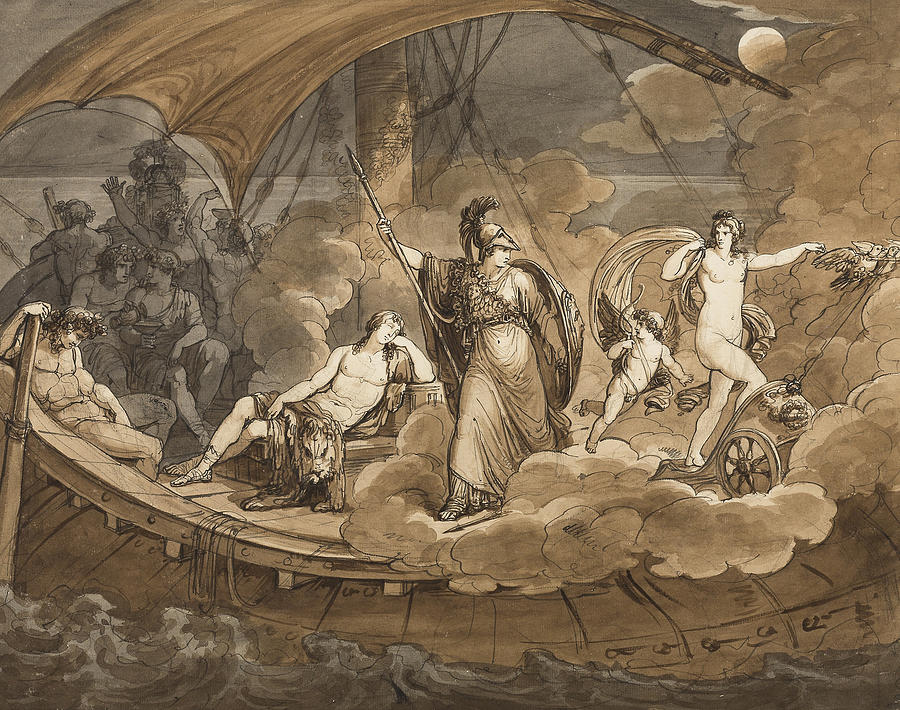
For example, after Athena’s been whining to Big Daddy Zeus about how he’s been neglecting poor Odysseus, we get this:
“Daughter,” the Cloud God said, “you must be joking.”
I’m only four books in, but I swear I’m identifying with the lines from John Keats’ sonnet quoted in the epigraph above.
Wilson brings that ancient world alive in a way I’d call thrilling.
Athena called a favorable wind,
Pure Zephyr whistling on wine-dark sea.
Telemachus commanded his companions
To seize the rigging, so they did, and raised
The pine-wood mast inside the rounded block,
And bound it down with forestays round about,
And raised the bright white sails with leather ropes.
Wind blew the middle sail; the purple wave
Was splashing loudly round the moving keel.
The gentle goddess rode the waves and smoothed the way.
The quick black ship held steady, so they fastened
The tackle down, and filled their cups with wine.
They poured libations to the deathless gods,
Especially to the bright-eyed child of Zeus.
All through the night till dawn the ship sailed on.
This is splendid blank verse, rhythmically propulsive, imagistically rich, a fucking pleasure to read aloud.
In my the-opposite-of-humble opinion, she has supremely succeeded in her attempt “to keep to a register that is recognizably speakable and readable, while skirting between the Charybdis of artifice and the Scylla of slang.”
So, fun ahoy! I’ve found a cure
for my postpartum just gave birth to a novel blues.
[1] Wilson’s quote is from Judith Thurman’s New Yorker article 11 September 2023
I’ve received a contract for my new novel Winter Break. so I thought I’d post a short excerpt. The boy Dwayne is the nephew of a serial killer who picked Rusty up hitchhiking. Bigelow is Summerville’s Chief of Police.
201 Dogwood Circle, 2 January 1973
Rusty’s up early, so he’s in the kitchen when the telephone rings.
Hunched over the comics of the morning paper, working on a bowl of Cheerios, he doesn’t get up from the table to answer the phone. In the Dick Tracy strip he’s reading, a newspaper headline in the first panel screams POLICE SEEK EX-VAUDEVILLE KNIFE THROWER IN UNDERWORLD DECAPITATION.
And Bigelow thinks he has it tough.
He hears Ginny say, “Hello.”
She doesn’t say a word for so long that Rusty forgets she’s on the phone. Finally, he hears, “Yes sir, Mr. Harmon. He’s right here.”
She walks over to Rusty, stretching the spiral cord, and hands him the phone. “Rusty, it’s Special Agent Harmon from SLED. He would like to speak to you.”
As he scrapes his chair back and gets up from the table, his first thought is “shit”—this must be about drugs. He then remembers the stash is still in the deep freezer in Will’s shed. God, idiot! He better get his act together. Jesus Christ.
He takes the phone and turns his back to Ginny and looks out of the window into the toy-strewn backyard. Mary Beth has set her dolls up at a tiny table for a tea party but left them in last night’s rain. He glances down at the jumble of dirty dishes piled in the sink. He can feel his heart racing in his chest.
Ginny stays put, eavesdropping.
“Yes, sir, this is Rusty Boykin.”
A long period of silence. Ginny can see that he’s more relaxed now.
Finally, Rusty says, “Um, I don’t know. I sort of want to turn the page from Uncle Punky and Dwayne. It’d be like revisiting a nightmare. I’ve been sort of creeped out by all of this.”
He turns around to see Ginny standing there. She leans over the kitchen table and picks up her pack of Winstons and shakes out another cigarette.
“Only nine,” Rusty says. “Wow, I thought he was at least eleven or twelve.”
Ginny exhales a long plume of smoke into the ceiling.
“Yes, sir. Okay, okay, I’ll do it. What time?”
“I do. In fact, I was born there. Okay, see you at four. Goodbye.”
His mother’s smoking irritates him. The ash of her cigarette is dangerously long. He reaches for an ashtray on the counter and hands it to her.
“Well?” she says.
“Agent Harmon wants me to go to the hospital and talk to the boy Dwayne. He keeps asking for me, thinks I’m his friend for some reason. Harmon says Dwayne has no one else in the world, so I’m gonna do it, even though I don’t particularly want to, for obvious reasons.”
“I think you should,” Ginny says. “It’s the right thing to do.”
Rusty sighs. “The poor kid is only nine. Man, what a messed-up world.”
Dorchester County Hospital
On the five-minute drive from Scranton Acres to Dorchester County Hospital, Rusty doesn’t like the way the van’s muffler sounds. He knows nothing about auto mechanics or maintenance, but all of a sudden, the rumble out back of the van is too loud. Sometimes a cop will pull you over for that.
He’ll be getting the reward soon. If the muffler needs replacing, he’ll have it replaced. He’s free now from his parents’ chronic financial trauma. He’s not going to blow the reward money. That would take him right back to poverty. Given how strapped for money he’s been his entire life, frugality should be a breeze. Maybe he’ll open up a savings account.
Pulling into the horseshoe driveway at the front of the hospital, he hangs a right into a side parking lot, choosing the farthest parking space possible. The long walk will buy him some time to prepare himself for the oncoming unpleasantness. This couldn’t be taking place in a worse setting. He spent two weeks here when he had rheumatic fever, in this ugly brown brick building that looks like a cross between a textile factory and a Baptist church.
Let’s get this over and get out of town.
In the lobby, Agent Harmon is sitting with a woman in her mid-to-late twenties. Her glossy jet-black hair is pulled back into a single braid that falls almost to her waist. Except for a turquoise pendant that hangs just below the hollow of her throat, she’s dressed conservatively in a white blouse and black skirt. Harmon’s wearing the standard institutional gray suit and a way-out-of-style skinny black tie.
They both rise as Rusty approaches the sofa.
“Hello, Blanton,” Harmon says. “Thanks for coming. This is Miss Lowery. She’s a social worker who’s been working with Dwayne.”
“Pleased to meet you,” Miss Lowery says, shaking his hand. “And thank you so much for agreeing to see Dwayne. It’s very kind of you.”
Harmon puts his hand on Rusty’s shoulder, guiding him toward the hall. He feels like turning around and running out the front door as fast as his legs will take him.
“Follow me. Miss Lowery is going to brief you on what to expect and what to say and not to say.”
Rusty nods and walks with them to a small fluorescent-lit consulting room with three chairs and a small round metal table. The pervasive chemical smell of the hospital triggers memories of electrocardiograms from his rheumatic fever stay and the image of his asthmatic grandmama gasping for air in an oxygen tent with a terrified look on her face.
Each takes a seat.
Miss Lowery speaks calmly and looks Rusty straight in the eyes. His are blue and nervous, hers brown and gentle.
“First of all, Blanton—”
He interrupts. “Please call me ‘Rusty.’”
She smiles. “Rusty, first of all, you’re not here to ask questions about what happened or to get information from Dwayne.”
Harmon’s nodding. “That’s our job,” he says.
Rusty hadn’t considered that might be why they wanted him to talk to Dwayne. He’s glad it’s not.
Miss Lowery continues, “Children who’ve suffered trauma sometimes latch onto the last person who makes them feel safe. Dwayne keeps referring to you as his friend— ‘my redheaded friend.’ He’s closed down. Rarely utters a word. When he does, he’s asking for you.”
Harmon turns around. “Hey, I just noticed that pot of coffee back there. Anyone want a cup?”
Miss Lowery shakes her head.
“No thanks,” Rusty says. He already has to pee and a cup of coffee might create a crisis.
“Don’t mind if I do.” Harmon scrapes his chair from the table and walks over to the coffee pot.
Miss Lowery returns her gaze to Rusty. “In your conversation, keep things simple. Let him lead, if you can. Don’t contradict him. He may cry; then again, he may not say anything at all.”
“Is it okay to hug him?” Rusty asks.
“Great question, Rusty. If he comes to you, that’s fine, but don’t initiate physical contact yourself. The most important thing is for you to be yourself.”
Easier said than done.
Harmon has chosen to remain standing. His coffee cup says, “Busty Nurse.”
“Any other questions?”
“No, ma’am.”
“Okay, then. He’s in a private room. I’ll take you there.”
Harmon stays behind as Miss Lowery and Rusty walk down the hall, passing a woman pushing a cart stacked with trays. He remembers the smell, like the meat, mashed potatoes, and reconstituted peas are themselves medicine, nasty but supposedly good for you.
Dietitians, a lovely word.
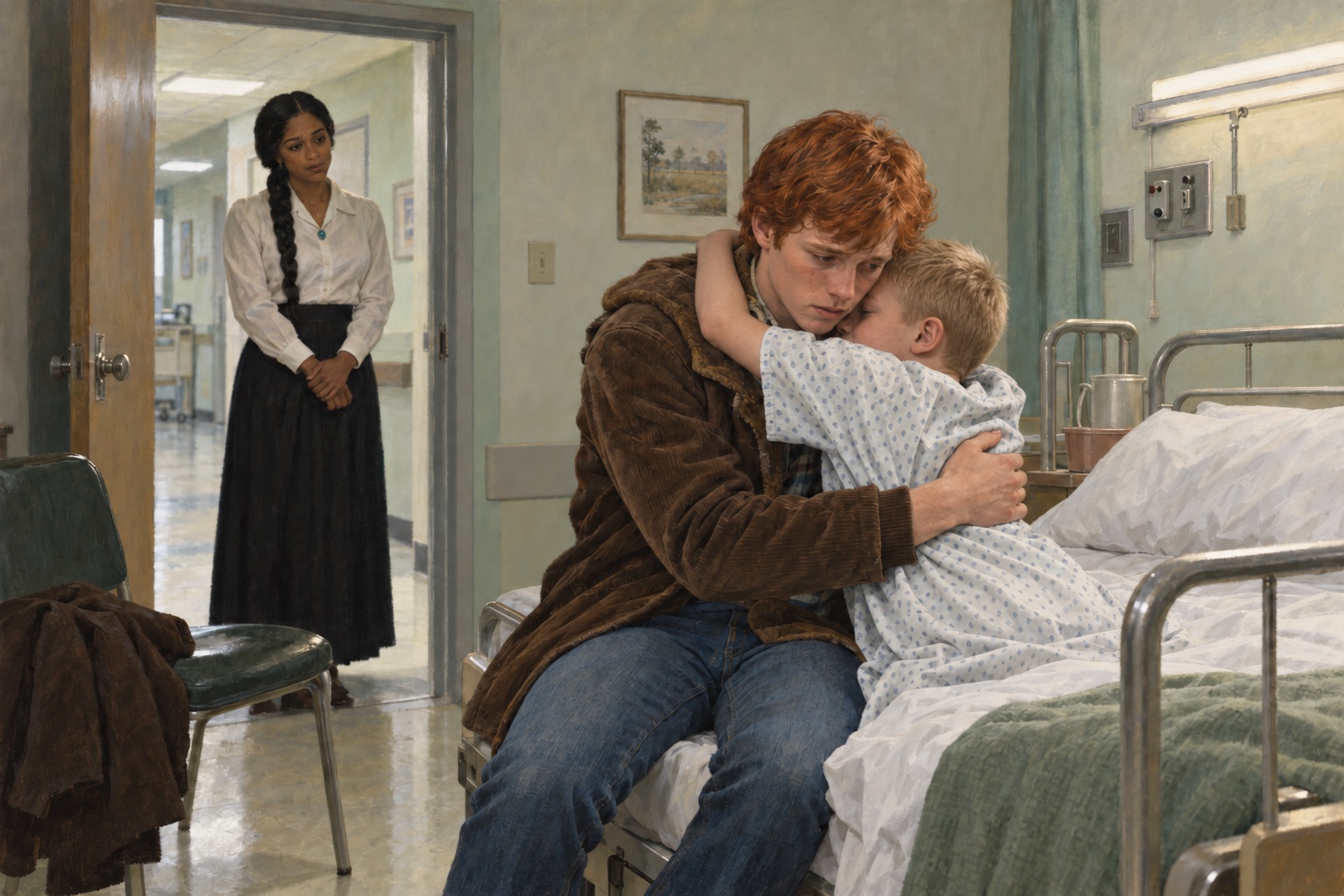
When they reach Dwayne’s room, the door is open, so they walk in.
Dwayne’s lying on his back with the hospital bed tilted up at an angle. His hair has been closely cropped, an improvement over the peroxided mushroom mess Rusty last saw.
“Hello, Dwayne. Look who’s come to see you. Your friend Rusty.”
Dwayne smiles. “You come to see me!”
“How you doing, Dwayne?”
Miss Lowery subtly nods to Rusty and steps out.
Rusty scoots the visitor’s chair slightly closer to the bed and sits.
“You done got a haircut,” Dwayne says. His smile is gone.
“Yep, looks like we got something in common. You got yourself one, too.”
Dwayne frowns. “I didn’t ask for no haircut, though.”
“It looks good, man. I like it.”
Dwayne doesn’t say anything, just stares at Rusty.
In the silence, Rusty fidgets while Dwayne maintains his stare. Maybe this was a bad idea; maybe he’s not the right person for this type of thing. He flirts with the idea of cutting this short, saying, “Hey, Dwayne, great seeing you,” but realizes that would be a king-hell cop-out.
Finally, Rusty asks, “How’s the food in here?”
“It ain’t bad,” Dwayne says. “I like them mash potatoes.”
“I’m a mashed potatoes fan myself.”
The food cart rumbles past in the hall. Dwayne sits up and beckons Rusty to come closer, so Rusty gets out of the chair and approaches the bed.
“Take me with you,” Dwayne whispers. “Sneak me out of here.”
He pronounces “here” like “cheer.”
“Get me out o’cheer.”
Rusty doesn’t think he’s ever seen someone look so defeated.
Forgetting Miss Lowery’s instructions, Rusty leans over and places his arm on Dwayne’s. “I can’t do that, buddy. You’re here to get better. You need to stay here and get better. I’ll tell you what. When you’re better, I’ll come see you sometime. Would you like that?”
Dwayne nods.
Miss Lowery knocks gently on the open door and enters. “Dwayne, it’s time for Rusty to go, and it’s time for your meds.”
“I don’t want him to go.”
“Hey, Dwayne, remember I’m going to see you when you get better. Getting better is the important thing. Give me a hug goodbye.”
Dwayne sits up and Rusty leans over and hugs him. Dwayne holds on to Rusty for dear life. Finally, as Rusty squirms a bit, Dwayne lets go.
“Hang in there, Dwayne—see you later, alligator.”
“After a while, crocodile.”
Before leaving, Rusty gives Dwayne the thumbs-up sign, but Dwayne doesn’t respond. He’s lying there motionless, like he had been when they first walked in.
Rusty’s surprised that Miss Lowery doesn’t say anything on their way back. She seems lost in thought.
Harmon’s reading a newspaper when they return to the consulting room. Although seeing Dwayne was depressing as hell, Rusty feels a sense of release now that it’s over.
“How’d it go?”
“Great! Rusty did great,” Miss Lowery says. “So far around others, Dwayne has refused to talk. This is encouraging.”
Agent Harmon gets up and puts the newspaper back on the counter.
“Hey, y’all mind if I go to the bathroom?” Rusty says. “I’m dying.”
“Of course not,” Harmon says. “It’s down the hall to the right.”
Once Rusty’s gone, Harmon asks, “Did any useful information come up?”
“I don’t think so,” she says, shaking her head, her braid swaying. “But Dwayne really did respond in a positive way.”
Rusty walks in with his hands in his pockets. “What’s next for Dwayne?” he asks. “An orphanage?”
Miss Lowery might be the calmest person he’s ever encountered.
“We’re hoping,” she says softly, “that if Dwayne makes enough progress, we can place him in Epworth’s Children Home. It’s run by the Methodist Church and offers children without functioning families—or in Dwayne’s case, no families—half a chance at a decent life.”
Rusty removes his right hand from his pocket. “Where’s it located?”
“Columbia,” Harmon says.
“Oh, good, because I promised Dwayne I’d come see him sometime. I go to school in Columbia.”
“Oh, that would be wonderful, Rusty,” Miss Lowery says. “They have an active Big Brothers Big Sisters program. Are you familiar with it?”
Squirming, Rusty takes his other hand out of his pocket. “Sort of. An older person mentors a younger person.”
“Yes, Big Brothers take Little Brothers to activities like ball games, circuses, etc.”
“Well, I’m not sure I’m ready for that much of a commitment. I’m a work-study student and all, but I would like to visit him at least once. I don’t want to break my promise.”
“Of course,” she says, while reaching into her purse sitting on the table. Taking out her wallet, she hands him her card.
“You know, Dwayne and I do have something in common.”
“What’s that?” Harmon asks. He’s clearly ready to wrap this up.
“Neither one of us grew up with Ward and June.”
“What?” Harmon says. Rusty can tell Harmon lacks a sense of humor.
“The Cleavers. Leave it to Beaver.”
Harmon’s face remains blank.
Miss Lowery smiles. “Any more questions for Rusty, Agent Harmon?”
“No—and thank you, Rusty. Oh, by the way, that reward should be coming your way in a couple of weeks.”
Rusty smiles. “Yay, thank you. That’s great.”
Miss Lowery gently touches his arm. “I’ll walk you out.”
When they reach the front porch, they shake hands, and she turns to walk back inside.
Rusty watches her leave.
He had planned to go to Rose’s to say goodbye to Gerald, but it’s getting late. He doesn’t want to drive the unfamiliar van 100 miles in the dark to Columbia, so he decides he’ll stay in Summerville tonight and head back in the morning.
Walking back to the van, he almost feels half human again.
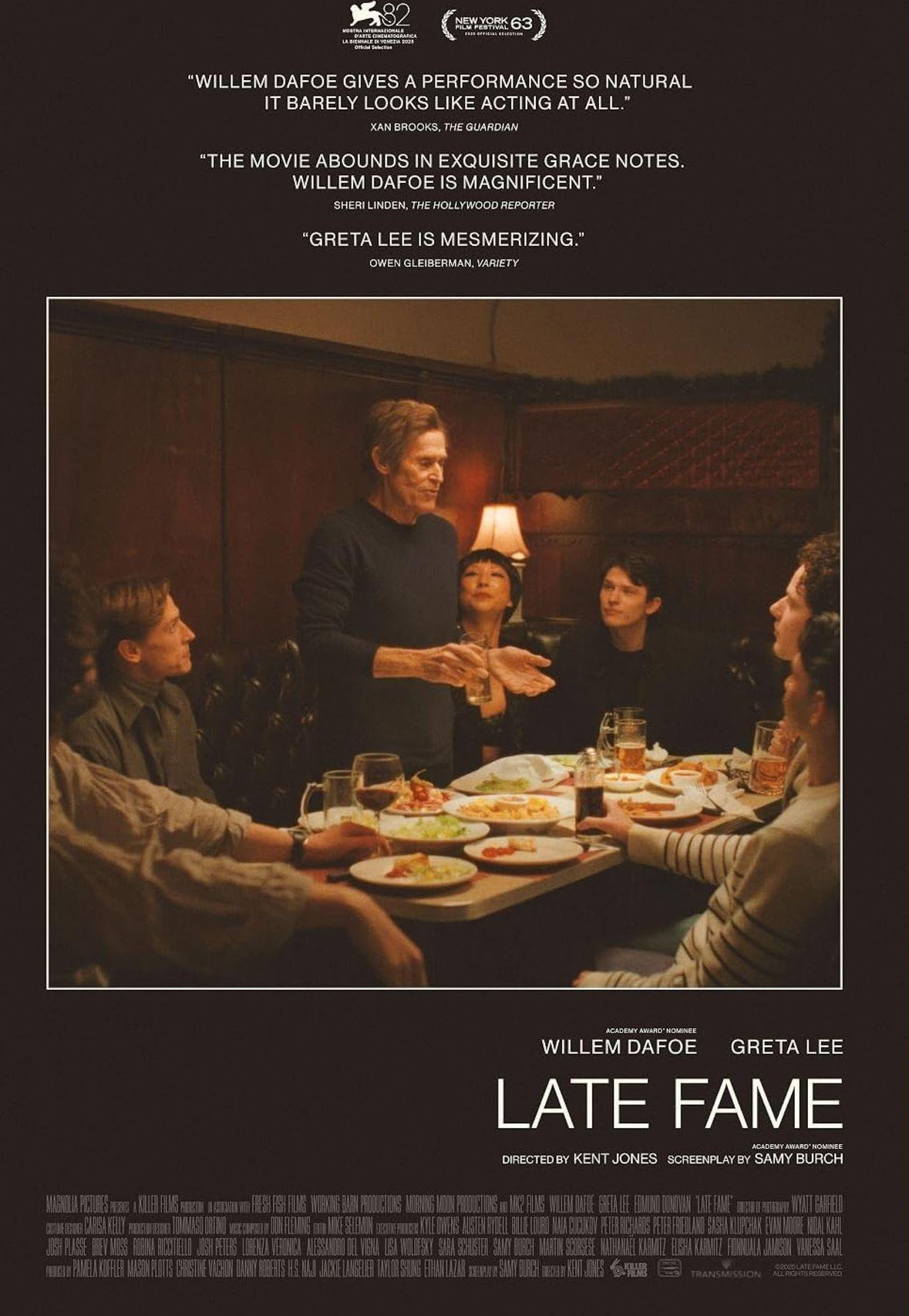
When he’s not fronting the band Danger Muffin, my pal Dan Lotti is a partner in a film company that acquires screenplays. Several months ago at Chico Feo,[1] Dan was all hepped up about a script that his company had optioned called Late Fame. It was in production, and they had landed Willem Dafoe to play the protagonist, Ed Saxberger, a mildly successful 1970s poet who now sorted letters in a post office. Like virtually all poets, even semi-famous ones, Saxberger had been all but forgotten. Nabbing Dafoe for the role seemed like a towering home run. If you’ve seen David Lynch’s Wild at Heart and remember the villain Bobby Peru, you know what I’m talking about.
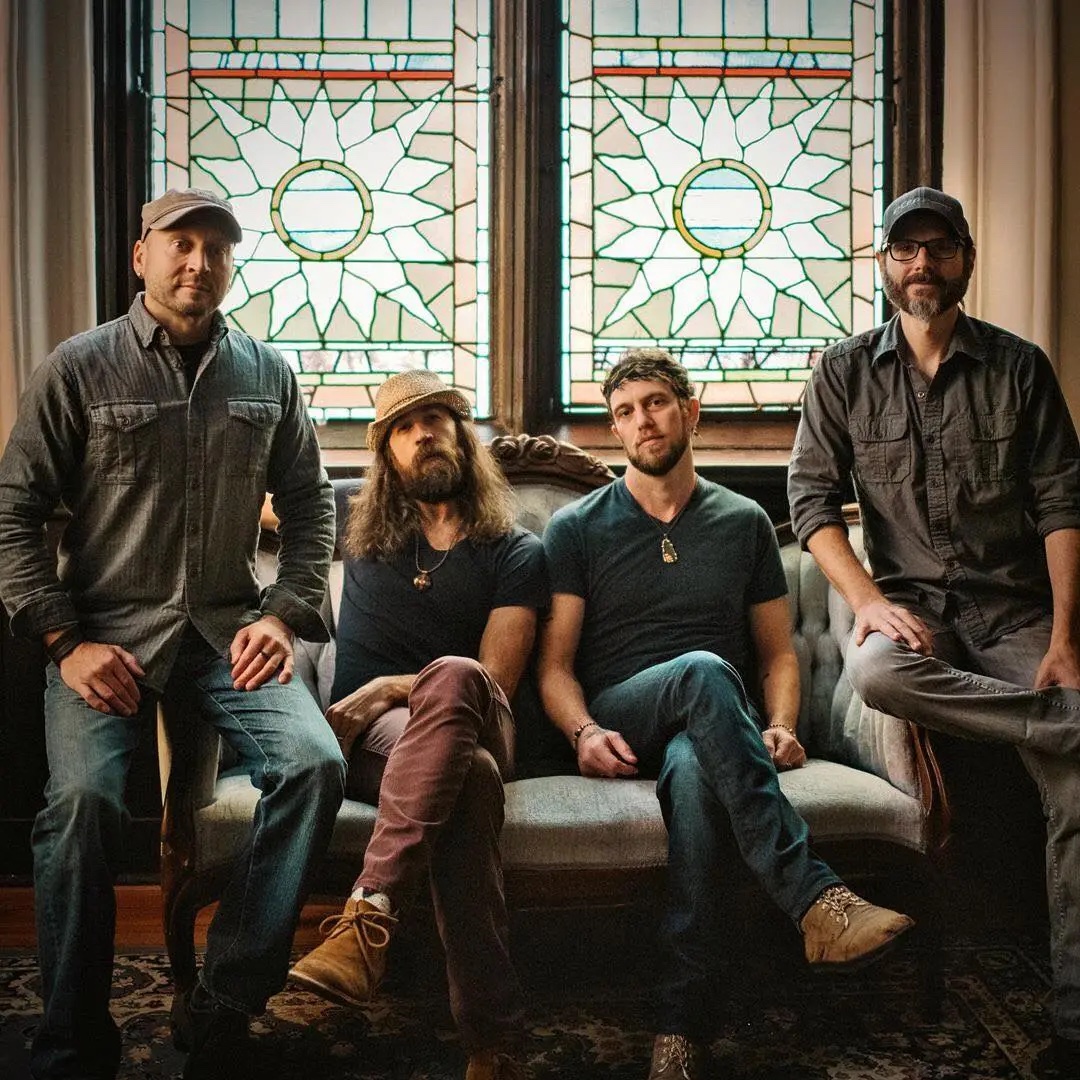
DANGER MUFFIN, DAN LOTTI SECOND FROM THE LEFT
Dan offered to send me a PDF of the screenplay, and, of course, I jumped at the chance to read it.
I’ve only read three screenplays that have made it to what we once called “the big screen.”
Wes Craven’s Swamp Thing
David Boatwright’s Summerville ‘70
Samy Burch’s Late Fame
***
Set in the Village (of course), Late Fame’s opening shots eschew dialogue:
ED SAXBERGER, 70s, sorts the mail. More mail than you could ever imagine. Underground, in the bowels of the post office, basically alone.
He is so comfortable sorting letters it almost seems like a ballet. An art. But not a joyful, playful one– he looks exhausted.
He wears a uniform, eats a tunafish sandwich on his lunch break, sorts more letters, and clocks out.
Elegant.
The screenplay was written by Samy Burch and adapted from a novella by Arthur Schnitzler. When Dan described the movie at Chico, before I’d read the script, I imagined Saxberger as a Bukowski-like wild man who wears his badly damaged liver on his sleeve. Instead, he’s a modest, mild-mannered loner who doesn’t take himself seriously. Then a pretentious gaggle of NYU wannabe artists “rediscover” him and enlist him in a series of self-promotional readings, prompting him to revisit his writing and the press clippings he’d saved but hadn’t looked at in years.
As it turns out, Saxberger’s “late fame” is fairly meager—no Time covers, merely the adoration of an opportunistic, ambitious, but ultimately amorphous literary movement intoxicated by the idea that they’re creating something consequential.
***
Caroline, my expat son Ned, and I finally got to see Late Fame last week at the Terrace, and we thoroughly enjoyed it, a refreshing antidote to the 78-rpm mayhem of The Odyssey. Everything in the film complements everything else—the muted, brown-dominated palettes of the street scenes, Saxberger’s obsolescent stereo equipment playing Ezra Pound reading from one of his Cantos, the vague echoes of Weimar Germany with Gloria vamping “à la Sally Bowles. A fresh breath of stale air, you might say.
It’s the type of movie that stays with you even days later. In the theater, it didn’t occur to me that the down-to-earth guys Saxberger hung with at the pool hall were the complete opposite of the up-in-the-air artistes he was now wasting time with. The deliberate movement of the plot’s gentle arc offered silences that are so rare in contemporary movies. This gave me hope for my current project, WinterBreak, which features an ensemble cast and doesn’t follow what I think of as the Twelve-Dead-Cats template. Life is more complicated than that, and much richer for the complications, I might add.
***
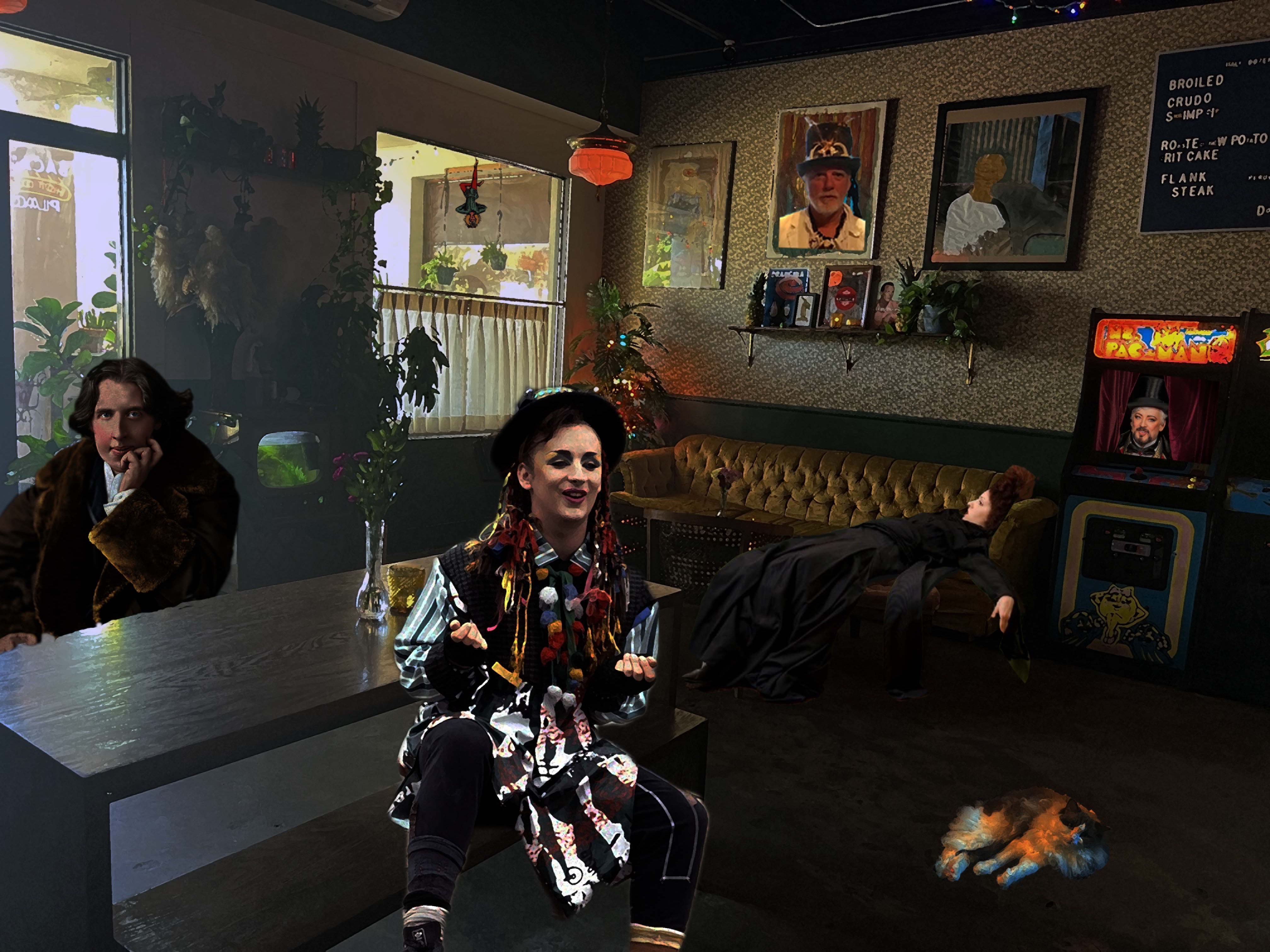
After the movie, some of us gravitated next door to Bar George to talk about the film. Come to think of it, Bar George as a set would have worked for Late Fame with its sofas and tables and quirky artsy décor (see below). When Dan asked me what I thought, I told him how much I enjoyed it, especially the comic Greek chorus of the wannabes. They reminded me of so many of the self-proclaimed poets I encountered in college and graduate school.
I told Dan that even if I’d ever thought I had something important to say, I would never have uttered it aloud. In truth, I’d never thought in those terms. I’d merely hoped my writing might somehow entertain somebody.
He laughed, nodded his head, and Caroline, Ned, and I headed for home.
On the way back to Folly, passing beneath the arched oak tunnel of Riverland Terrace, I thought about the film and Winter Break and the beauty of the late afternoon sun strobing through the leaves and the whole pretentious business of bringing words to life.
DIGITAL COLLAGE: BAR BOY GEORGE BY WESLEY MOORE III
[1] Oops, oh-me-oh-my-oh, rhyming prose is a no-no.
In my new novel Winter Break, lovely Jill Birdsong is sitting in the Ashley Plaza cinema in 1972 with her girlfriends watching the Robert Redford feature Jeremiah Johnson. Here’s a brief excerpt (note: Ollie is her slightly-on-the-spectrum ex-boyfriend from high school):
Although Jill admires the scenery, she never becomes fully absorbed in the story. At the moment, Jeremiah, on horseback, has encountered an Indian burial ground featuring intact human skeletons. If Ollie were with her, he would explain on the way home that in real life those skeletons’ bones would be scattered on the ground because their tendons and ligaments would have decomposed. The slightest scientific inconsistency would ruin a movie for him, whereas she recognizes that filmmakers sacrifice verisimilitude to produce the most profound emotional response they can from an audience. A pile of scattered bones wouldn’t be nearly as creepy as the skeleton she sees now with its mouth wide open in an eternal silent scream.
I’m with Jill on this.Mainstream directors of non-documentaries are under no obligation to depict mundane reality scientifically; they manipulate reality to entertain audiences and produce an emotional response. So when Caroline and I drove to the Terrace Theater last week to see The Odyssey, I wasn’t expecting the dialogue to be rendered in Linear B Greek dactylic hexameter with subtitles in English nor for the episodic plot to be presented in the identical order as the incidents appear in the epic. I merely hoped to be entertained, and if that were to happen, I needed to forget that I was sitting in a theater watching a movie—to echo Coleridge’s brilliant phrase—I needed to suspend my disbelief willingly.
We arrived early so we could enjoy a beer in the lobby when Caroline heard someone calling my name.
“He’s deaf,” Caroline shouted to the woman, who came up to me and said, “I don’t know if you remember me, I’m Soren, I worked with David on the movie.”[1] In fact, she was the assistant director and really impressed me when I visited the set for a cameo. She asked what we were seeing, and when I said The Odyssey, she broke out into an enormous grin and extolled the movie as a masterpiece in visual storytelling.
And to be truthful, the movie was a very quick three hours, which is saying a lot.
On the other hand, during those three hours, I never, except for a couple of instances, successfully suspended my disbelief. Not only that, while I was watching, I pondered how Sam Peckinpah or Federico Fellini might have handled some of these sequences.
The problem isn’t that Nolan sacrificed verisimilitude; for me, he butchered it like the Trojan warriors in the movie who looked like they’d somehow leapt from a video game console onto the screen. We’d just seen the trailer for the new Spider-Man flick, and the fight scenes in the Odyssey were very similar. Both embraced the video-game aesthetic of quick-cut mayhem: time speeded up, bodies being flung against walls (or in the trailer skyscrapers), and an ear-assaulting din of what all hell breaking loose might literally sound like. I was happy that there was little blood, though. I squeamishly prefer cartoon violence, but in the Seventh Circle of Dante’s Inferno, Sam Peckinpah was howling. The extended fight scenes did have one very practical advantage: I could slip out (we were on the aisle), urinate, buy two more drinks, and return, and the scene I’d left would still be roaringly crashing along.
What probably bothered me the most was Odysseus’s flat Midwestern accent and his calling Laertes and Anticlea “Mom and Dad.”[2] And since he talked throughout the movie, his accent consistently swept me away from the ancient Aegean coast to a Walmart in Dayton, Ohio.
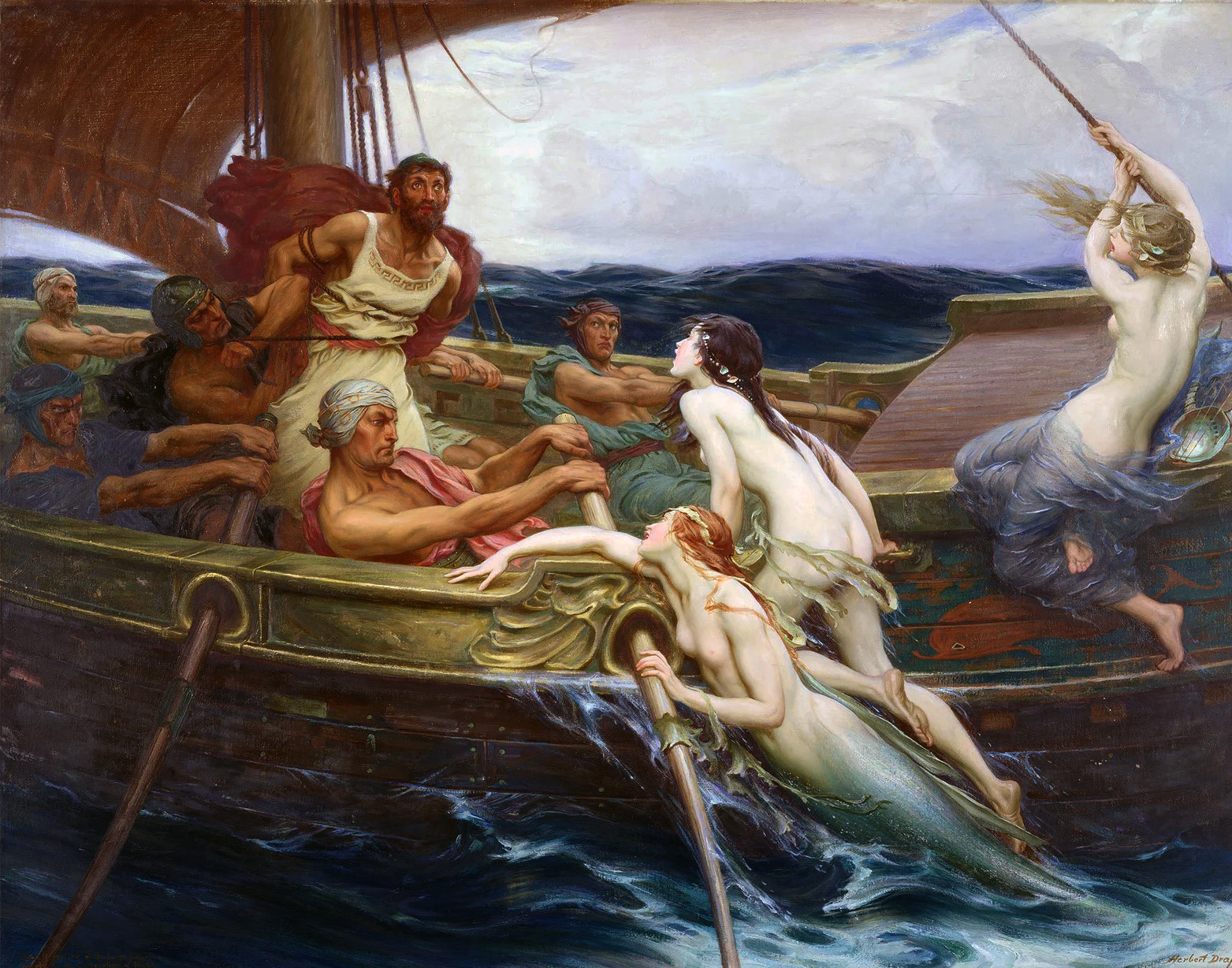
Essentially, Christopher Nolan’s Odyssey is a middlebrow 1950s-era Hollywood epic, but even less sexy. Calypso, the lotus-drug-dealer and Odysseus’s lover, dresses primly, her breasts always carefully sheathed. Circe, the sex-crazed witch in the epic who transforms Odysseus’s crew into swine, is a dowdy, disgruntled middle-aged woman who comes off like an angry old hippie. We don’t descend into Hades (alas, no Cerberus), are denied glimpses of seductive sirens singing out to Odysseus, as he thrashes, bound to the mast of the ship. Fellini, more comfortably situated in Dante’s Second Circle, was howling, nevertheless.
Maybe all of that is the secret of its great success: It inoffensively transforms the butchery and sex and cannibalism into a visual feast palatable to a large cross-section of diners. If you don’t know the Odyssey, haven’t seen Julie Taymor’s Titus or Fellini’s The Satyricon, I suspect you’d be much more inclined to enjoy the spectacle. Soren obviously knows more about movies than I do, and my friend Mary Goff, a talented visual artist and poet, the antithesis of middlebrow, absolutely loved it. We enthusiastically discussed the film in detail for forty minutes, and I was delighted to hear her passionately sing its praises.
We were discussing a movie we’d both seen on the big screen (albeit not an IMAX), and in the age of streaming, that’s something.
[1]Summerville ’70, a fifteen-minute short inspired by my novel Today, Oh Boy, which coincidentally features Logan Marshall-Green, who plays Melanthius in the Odyssey.
[2] In fact, I’d have everyone speak in formal, slightly archaic English to make it seem just a tiny bit foreign.
On my way home from Chevy Chase after celebrating Mighty Julian Levi Moore’s fifth birthday, I recognized the journalist George Will sitting primly at one of the gates at Charleston International with a white-haired woman I assumed was his wife.
He had on a blue-and-white seersucker sports coat (but no bow tie, dammit), and his hair— [cue Warren Zevon]—was PERFECT.
Mr. Will took note of my double take and sat up a little bit straighter.
“Mr. Will,” I said, “I’ve been reading you for years.”
He stood up and shook my hand.
“Well,” he said, “I’ve been writing for years.”
There was a beat of awkward silence.
“By the way, you look great.”
He didn’t smile. “Must be clean living.”
Whenever someone lies and tells me I look great, “clean living” is my tongue-in-cheek go-to quip.
“Well, see you,” I said, then added, “Maybe this national nightmare will be over soon.”
He winced but said nothing.
Of course, in my youth when I fancied myself one part Hunter S. Thompson, one part Mick Jagger, and two parts Dorothy Parker, I held George Will in utter contempt, considering him a privileged prig cosplaying William F. Buckley Jr..
Now, however, as I have mellowed into a neo-post-Burkean bon vivant, I can appreciate Mr. Will’s steadfastness in maintaining his integrity by castigating the Vaudevillian villain who is laying ruin to the American experiment. Indeed, I find myself in my twilight years agreeing with Bill Kristol, David Frum, Jennifer Rubin, and other Republicans I once held in low esteem.
Anyway, if I had to do it all over again, I’d skip politics and ask him what he thought of Dansby Swanson. That’s probably the conversation George Will would have preferred, and in retrospect, so would I.
I’m not going to lie. I’m getting frustrated trying to find an agent for my novel Too Much Trouble. I’ve visited dozens of literary agency websites. They might consider a manuscript involving serial-killer Cub Scout den mothers, dragon-riding interior decorators, sexually repressed werewolves, psychosocially damaged hydro-therapists, or emotionally available Navy SEALs; however, none of them are interested in a coming-of-age novel featuring three college-freshman navigating first love, family, friendship, and loss during one unforgettable Christmas week in 1972.[1]
So the hell with it. Farewell, Too Much Trouble. Hail, The Flacci Conspiracy.
Here’s a brief synopsis of The Flacci Conspiracy.
Following the aftermath of a world-wide pandemic and four years of godless communistic rule from a doddering old fool who blinks his eyes a lot, voters without college degrees flock to the polls and elect an evangelist-backed charismatic felon[1] obsessed with spicing up Washington DC’s stodgy neo-classical architecture with some Rococo glitter. His grand vision includes a White House ballroom, a Triumphal arch, and a restored Reflection Pool.[2]
However, the former leader of NIAID[3], Antonio Flacci, is hell-bent on sabotaging the President’s beautification projects. He decides to start small by ruining the Reflection Pool restoration. There’s a problem, however. The pool is monitored by a half dozen mobile security stations and at least nine camera sets.
Working around the clock, the evil scientists at NIAID come up with a diabolical formula resulting in a potion that when ingested turns people invisible for four hours.
Armed with box-cutters and packets of fertilizer, four invisible Antifa ninjas slit the Reflection Pool’s lining and seed its pristine Bessy Ross blue water with fertilizer, resulting in a virulent outbreak of alga and widespread negative media attention.
I’ll admit I haven’t quite figured out how truth justice, and the American way will be restored, but it will come to me as I’m writing. As my late friend Starkey Flythe, Jr. used to say, “The pen leads the mind.”
Anyway, the very thought of this has restored my will to live.
[1] Picture a combination of the wrestler Gorgeous George and Liberace.
[2] What do you get when you subtract the letters i-h-a-l from Triumphal?
[3] the National Institute of Allergy and Infectious Diseases
[1]Too Much Trouble does feature a serial killer, but the murders take place “off-stage,” and John Henry Wade dies of natural causes (i.e., a case of the flu) before the police can capture after in a high-speed chase through Dorchester County.
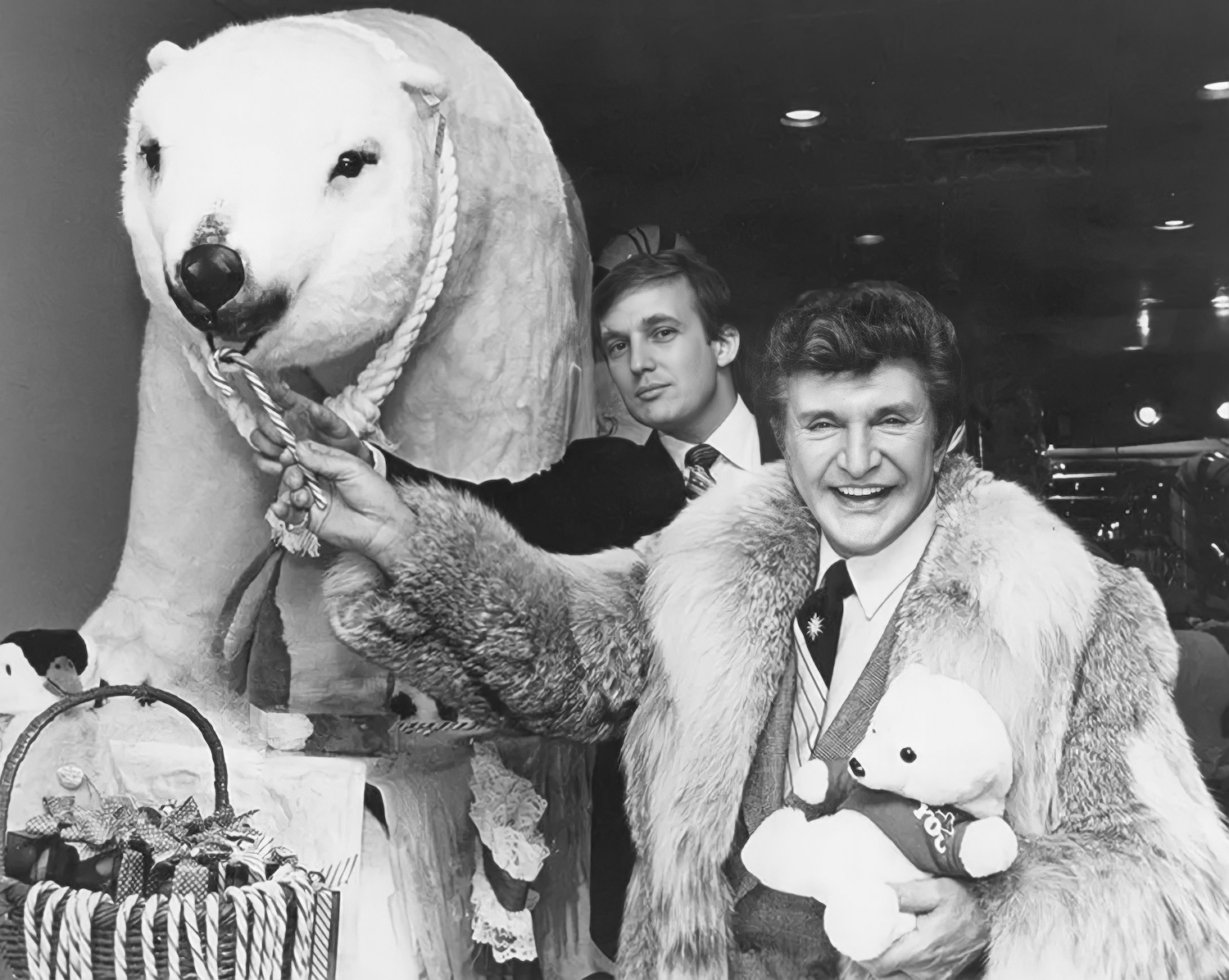
Yesterday afternoon, Caroline and I met Cathy Coulter and Chuck Sulliavan at Lowlife to celebrate Chuck’s 83rd birthday. As so often is the case, Donald Trump, our most Liberacean[1] of presidents, elbowed his way into our conversation because earlier in the day at the G-7 conference in France, he made such an egregious ass out of himself that it would have been downright unpatriotic not to mock him.
After arriving 30 minutes late for a meeting, rather than apologizing to the heads of state assembled there for inconveniencing them, Trump declared himself “the Boss”— a not-so-subtle fuck you to allies we should be at least polite to in public. I guess you could say it’s ironic that someone so obsessed with décor (cf. Liberace) would lack all sense of decorum.
A day earlier, in a slurred speech that lasted over one hour, he called the presidents who preceded him “dumb sons-of-bitches.” Of course, the so-called speech was essentially—like all of his speeches—a tirade, a catalogue of paranoid grievances punctuated occasionally with braggadocio so outrageous that it would make the Wizard of Oz blush.
As we sat there at the bar, it occurred to me that Trump’s family must not really love him. Otherwise, they would stage some sort of intervention. He’s a shambling wreck of a human being, the most insecure person on the third planet from the sun. Let’s hope if there’s an afterlife, his mother and father are howling alongside the likes of Stalin and Lucretia Borgia in the sulphureous flames of everlasting perdition.
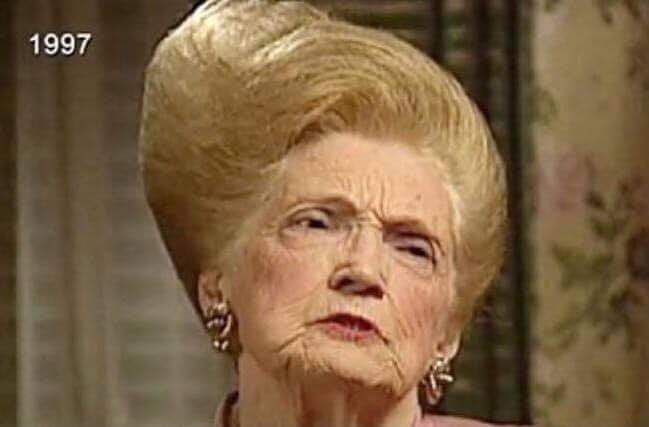
It’s ultimately their fault, his hideous parents’ fault, who look like freaks from some long forgotten Twilight Zone episode (or worse, mishappen demi-demons crammed into a corner of one of Bosch’s canvases). Obviously, they didn’t love him, and that black hole of neglect has fueled his gargantuan insecurities so that it’s now a requirement at cabinet meetings for cabinet heads to perform oratorical fellatio on an obese diaper-wearing wrestling promoter incapable of speaking in coherent paragraphs.
Oh shame, where is thy blush!
Anyway, Chuck said that Trump would never allow an intervention, which is no doubt the case, but if Ivanka, Eric, Donnie, Jr. genuinely cared about him they would.
I suspect that the only person who really loves him is his communication director, Steven Chueng, who loves him the way Odd Job loved Goldfinger, i.e., stupidly.
[1] Liberacean, adj. resembling the flamboyantly gay pianist popular in the previous century.