Happiness

shapeimage_2

Above and beyond the computer screen outside the closed window of my study, palmetto fronds and magnolia boughs shimmer in a sunny morning breeze. Seemingly, inside my computer, Robert Plant (and to a lesser degree Allison Krauss) is pleading for someone somewhere to “please read the letter [he/she] wrote.”

Some algorithm created by Steve Job’s brain trust has selected this song from a mix called Singer/Songwriter that shuffles music I have purchased. I happen not to like the song, nor that album. Critics convinced me to fork out ten bucks to buy it, so I did.  It’s not a big deal, but it has not made me happy. Perhaps the next song will better suit me, and as it turns out, it does, Joni Mitchell’s “Car on a Hill” from Court and Spark, an album I first purchased in 1974.

I think back to the Joni Mitchell concert I attended that year with Debbie Kellam with whom I was madly in love. Now Andrew Marvell is whispering in my ear: deserts of vast eternity.

 photograph by Kaisern Chen

photograph by Kaisern Chen

In his History of Happiness, Darrin McMahon informs us:

Language reveals ancient definitions of happiness. It is a striking fact that in every Indo-European language, without exception, going all the way back to ancient Greek, the word for happiness is a cognate with the word for luck. Hap is the Old Norse and Old English root of happiness, and it just means luck or chance, as did the Old French heur, giving us bonheur, good fortune or happiness. German gives us the word Gluck, which to this day means both happiness and chance.

In other words, etymologically, happiness is happenstance, the luck of the draw, whether it it be a full house or the inherited brain chemistry that creates a naturally sunny disposition.

rw_19-1

McMahon notes that the classical philosophers came to believe that happiness could be attained, not as feeling, but as a state earned through living a virtuous life, “measured,” as McMahon says, “in lifetimes, not moments.” Hence, happiness must be earned through the cultivation of virtues, which Malcolm catalogues for us in Macbeth:

[. . .] justice, verity, temperance, stableness,

Bounty, perseverance, mercy, lowliness,

Devotion, patience, courage, fortitude (4.1, 92-4

In desert-born religions, the world becomes a vale of tears and ultimate happiness only possible in some exalted state, e.g., in prelapsarian Eden, i.e., the past, or in some future state, i.e., at the return of Christ in the millennium or in one of the many mansions of heaven.

Massah ain’t treating you right. Keep working. The low swinging chariot will be here any minute.
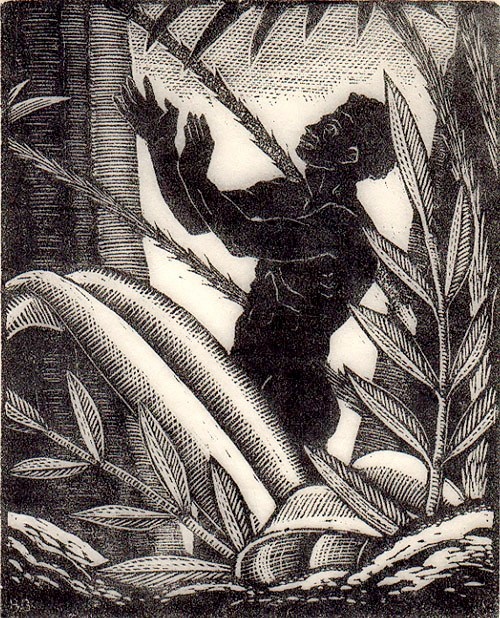
Swing Low, Sweet Chariot by Richard Bennett

Swing Low, Sweet Chariot by Richard Bennett

Now, coincidently, Paul Simons is singing “Slip Sliding Away”:

We work at our jobs
Collect our pay
Believe we’re gliding down the highway
When in fact we’re slip sliding away.

Slip sliding away,
Slip sliding away,
You know the nearer your destination
The more you’re slip sliding away.

The Christian view described above provides a theoretical escape hatch for Simon’s paradox, but left-brained Enlightened philosophers and Founding Fathers supplanted that view and argued that happiness was, again in McMahon’s words, “more than a divine gift, less fortuitous than fortune, less exalted than a millenarian dream.” In fact, it is an American right to pursue it, and God knows we do.

detail from The Palace of Hedonism by Kris Kuksi

detail from The Palace of Hedonism by Kris Kuksi

God bless the Enlightenment! It has taught us that sensuality is not sin, that we deserve happiness because we are, and rather than donning hair shirts and spending our winter nights barefooted in the snow self-flagellating, we should make the best out of a sure thing, the here and now, for, yes, death is just around the corner. In fact, Lucretius, following the wisdom of Epicurus, argued 1600 earlier essentially the same concept.

However, happiness as a constant state is unsustainable in the flux of day-to-day occurrences, medications, moods, adrenal secretions. The classic philosophers and stoics were correct: True happiness is impossible without a foundation of compassion that directs one’s thoughts from the self to others.

In other words, lasting happiness is impossible outside the context of a virtuous life, but, of course, a virtuous life doesn’t guarantee “lasting happiness.”

Hap
BY THOMAS HARDY
If but some vengeful god would call to me
From up the sky, and laugh: “Thou suffering thing,
Know that thy sorrow is my ecstasy,
That thy love’s loss is my hate’s profiting!”

Then would I bear it, clench myself, and die,
Steeled by the sense of ire unmerited;
Half-eased in that a Powerfuller than I
Had willed and meted me the tears I shed.

But not so. How arrives it joy lies slain,
And why unblooms the best hope ever sown?
—Crass Casualty obstructs the sun and rain,
And dicing Time for gladness casts a moan. . . .
These purblind Doomsters had as readily strown
Blisses about my pilgrimage as pain.

Nevertheless, let’s give Epicurus the last word:

It is impossible to live a pleasant life without living wisely and well and justly.  And it is impossible to live wisely and well and justly without living a pleasant life.
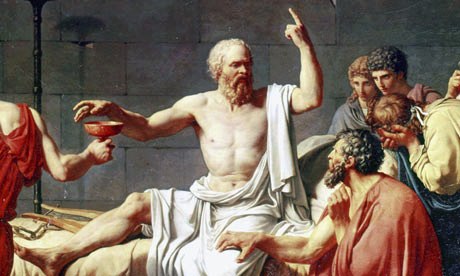
detail from David's The Death of Socrates

detail from David’s The Death of Socrates


My TS Eliot Spring Break

illustration by Wesley Moore

illustration by Wesley Moore

Twit twit twit
Jug jug jug jug jug jug
So rudely forc’d.
Tereu

TS Eliot, “The Waste Land”

Although Yeats gets quoted a lot in these traumatic days – things fall apart, the center cannot hold, etc. – TS Eliot was no slouch himself when it came to apocalyptic naysaying. For example, dig this ditty from “The Waste Land”:

What is that sound high in the air
Murmur of maternal lamentation
Who are those hooded hordes swarming
Over endless plains, stumbling in cracked earth
Ringed by the flat horizon only
What is the city over the mountains
Cracks and reforms and bursts in the violet air
Falling towers
Jerusalem Athens Alexandria
Vienna London
Unreal

Because most of us Americans are consumed with the 24/7 Jerry Springer extravaganza that is the current presidential campaign, I doubt if your casual consumer of the news is aware that Europe’s political turmoil makes ours seem rather bland by comparison.

For example, on New Years Eve in Cologne, Germany, gangs of young males assaulted scores of females celebrating the holiday. Some blame newly arrived Muslim immigrants for the outrages while others suggest caution before jumping to conclusions.

Here’s a snippet from the conservative British paper the Spectator:

The German police made a similar point: they are used to handling drunks. But gangs of young men encircling and then groping women at large public gatherings: who has ever heard of such a thing?

In the Arab world, it’s something of a phenomenon. It has a name: ‘Taharrush gamea’. Sometimes the girls are teased and have their veils torn off by gangs of young men; sometimes it escalates into rape. Five years ago, this form of attack was the subject of an award-winning Egyptian film, 678. Instances of young men surrounding and attacking girls were reported throughout the Arab Spring protests in Cairo in 2011 and 2012. Lara Logan, a CNN journalist covering the fall of Hosni Mubarak, was raped in Tahrir Square. Taharrush gamea is a modern evil, and it’s being imported into Europe. Our authorities ought to be aware of it

On the other hand, here is Ishaan Tharoor from the Washington Post:

To be sure, there are legitimate security concerns posed both by the surge in new arrivals as well as the continuing instability and conflicts in the Middle East. The attacks in Cologne, writes the Algerian novelist Kamel Daoud, were a reminder to the West of the Muslim world’s “sick relationship with women” — a product both of patriarchal and religious norms as well as the stifling legacy of authoritarian rule.

But perverse, misogynist behavior is not the province of just one culture or society. And much of Europe’s anti-refugee hysteria, as my colleague Adam Taylor charted this week, has been overblown and fueled by often misleading innuendo and rumor circulating on social media.

Very few of the identified culprits in the Cologne attacks were themselves refugees. And countries like Poland and Hungary, while leading the conservative charge against E.U. policies that would allow in desperate Middle Eastern asylum seekers, still have minuscule Muslim populations of their own. The risk of a cultural invasion somehow contaminating their societies is, frankly, a phantasm conjured by fear-mongers.

Of course, this week, we Americans were treated to some man-on-woman physicality when police charged Donald Trump’s campaign manager Corey Lewandowski with battery after an encounter with “former Breitbart reporter Michelle Fields.”

In this case, we have video, so you can make up your mind yourself.*


*My personal view is that by the standards of Summerville High School that encounter doesn’t approach “battery.”

The bottom line is that the big blinding, buzzing cacophony of computerized existence obliterates contemplation. The blitzkrieg of information, much of it contradictory, is harmful for a species who has spent most of its existence sitting in small groups on a savannah among birdsong and rustling leaves.

The ruling class – the Koch Bros, etc. – should know that oligarchies lead to revolutions, that the Occupy Movement was a Shakespearian comet of foreboding, but who has time to contemplate history or to think beyond tomorrow’s Dow Jones closing averages?

Then there’s Hillary trying to thread the needle between big business and young debt-ridden would-be socialists as she attempts to be all things to all people.

Meanwhile, followers of Bernard Sanders engage in magical thinking imaging 30+ redneck gerrymandered districts somehow going blue so that he’ll be able to break up the banks, overhaul our healthcare system, make college free while by creating the largest middle class tax hike in the history of our republic.

What we see here in the Republican Party – factionalism – is also playing out in Europe. Things are falling apart – perhaps most alarmingly, glaciers!

Oh, by the way, it’s my spring break, and we all know that April is the cruelest month, so I’ve been having a sort of TS Eliot holiday, riding around with the radio/cd player off, popping Ativans like M&Ms, reciting poetry out loud to myself:

After such knowledge, what forgiveness? Think now
History has many cunning passages, contrived corridors
And issues, deceives with whispering ambitions,
Guides us by vanities. Think now
She gives when our attention is distracted
And what she gives, gives with such supple confusions
That the giving famishes the craving. Gives too late
What’s not believed in, or is still believed,
In memory only, reconsidered passion. Gives too soon
Into weak hands, what’s thought can be dispensed with
Till the refusal propagates a fear. Think
Neither fear nor courage saves us. Unnatural vices
Are fathered by our heroism. Virtues
Are forced upon us by our impudent crimes.

As the Lone Ranger used to say, “Adios!”


Yeats’ s Second Coming, the 2016 Election Edition


Turning and turning in the never-ending news cycle

The primary voter cannot hear the RNC;

Coalitions fall apart; the centre cannot hold;

Donald Trump is loosed upon the world.

The slime-dimmed tide is loosed, and everywhere

The ceremony of commonsense is drowned;

The best lack all conviction, while the worst

Are full of passionate intensity.


Surely some revolution is at hand;

Surely another revolution is at hand.

Another revolution! Hardly are those words out

When a vaunting image out of black-and-white newsreels

Troubles my sight: raised hands at rallies where

A shape with a man’s body and the hair of a troll,

A face with stunted gaze and a sphincter-like mouth,

Spews feces of hate while all about him

Swarm legions of lemming-like whites,

Shouting curses and slugging protesters!

It looks as if a half-century of stony sleep has been

vexed into nightmare by yet another authoritarian,

who now that his hour has come round again

slouches towards Washington to be sworn.

donald sphinx

In the Wind Somewhere

photo red: Hamlet Cloud website

photo red: Hamlet Cloud website

The phrase “ashes to ashes, dust to dust” is a not so subtle suggestion that human beings don’t ultimately amount to much as far as corporeal matters go.

Just ask Hamlet. Here he is next to Ophelia’s freshly dug grave ruminating on what base uses we may return:

Alexander[1] died, Alexander was buried,

Alexander returneth into dust; the dust is earth; of

earth we make loam; and why of that loam, whereto he

was converted, might they not stop a beer-barrel?

Imperious Caesar, dead and turn’d to clay,

Might stop a hole to keep the wind away:

O, that that earth, which kept the world in awe,

Should patch a wall to expel the winter flaw!

Yesterday, we disposed of Aunt Virginia’s cremains,[2] which, and I’m not making this up, smelled like cigarettes. My brother Fleming kept them in his car, and as soon as he opened the door, I could smell that distinctive Virginia smell.

Nothing dealing with Virginia was ever easy. We had planned to scatter the ashes in the Folly River via kayak from our dock, but when Fleming arrived, it was dead low tide, so we decided to try the dock at the Folly River Park instead, hoping on such a chilly day that at 5 o’clock it might be deserted.

The park is across from a Catholic church, which was celebrating mass, so parking was a problem. Nor was the dock deserted. Three young men, National Guardsmen as it turned out, were fishing. It occurred to me that dumping human remains in water where people were fishing would be a gross violation of the Golden Rule, but as luck would have it, they started packing up their gear to leave. As I glanced down the long dock, another man was approaching in the far distance with his dog.

“Look, fellows,” I said. “I want to give you a head’s up. We’re getting ready to scatter my aunt’s ashes, that is, if y’all don’t object.”

“Not at all,” the tallest one said. “Sorry about your loss.”

So Fleming opened the velvet bag, brother David cut open the plastic bag inside, and Fleming poured the contents over the rail and into the water. I had never seen human ashes before, and I was quite shocked how beautiful they were as they drifted down into the water, creating a cloud as they dispersed, as if matter cannot really be created nor destroyed, as if Virginia were getting a second chance via recycling.

As we made our way down the dock to Fleming’s car, as if on cue, the church bells began to chime as mass let out, a beautiful sound, and I thought of this poem by Richard Eberhart:

For a Lamb

I saw on the slant hill a putrid lamb

Propped with daisies. The sleep looked deep

The face nudged in the green pillow

But the guts were out for crows to eat.


Where’s the lamb? whose tender plaint

Said all for the mute breezes.

Say he’s in the wind somewhere,

Say, there’s a lamb in the daisies.

ashes to ashes


[1] I.e., Alexander the Great

[2] A word I learned from the presiding priest at her funeral.

The Unhappy Wanderer

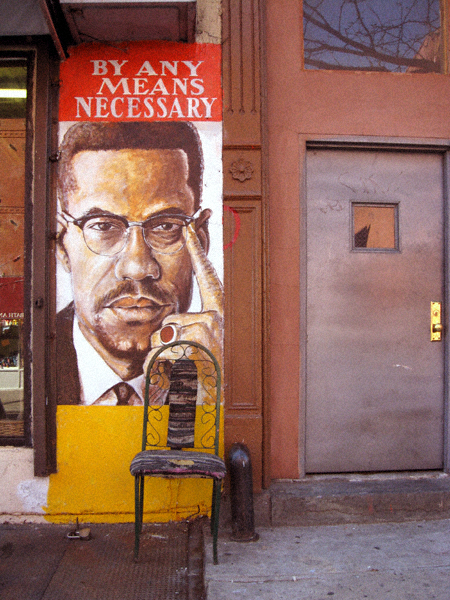
by-any-means-necessaryOn the corner of Robert E Lee Avenue and Malcolm X Boulevard, I pick up a hitchhiker — there’s a knapsack on his back — he’s unwashed, emaciated, Whitmanesque in a Johnny Winter sort of way, somewhere between the ages of 40 and 65.

I’m in a good mood, have just gotten word The Kenyon Review has accepted one of my poems. When I pull over, I sing, “Val-deri, val-dera” as I lean over and open the door for him.

There’s the spring 2014 issue of The Paris Review on the seat, which I stick into the side pocket of the open door. He frowns, takes off the knapsack, which is actually a blackened, tattered bookbag, and struggles to jam it between the seats into the back compartment of my Fiat. Finally successful in the stowing, he sits down and turns and grabs for the seat belt like he’s just fallen overboard.

“Where to?” I ask, once the commotion is over, a little ashamed of myself for singing.

“Ultimately, way out west, I reckon.”

He reeks of cigarettes, campfire, mildew, and that metabolic sour wino sweetish stench that in-excess Mad Dog 20-20 and digestive systems produce.

He says, “Let me amend that. Wherever.”

“Wherever?”

“Drop me off wherever?”

The smell is getting to me as we tool down Malcolm X past Eldridge Cleaver Middle School. I decide I’ll take him to the Interstate exit, which is both headed west and qualifies as wherever.

He turns to me, and I can tell he’s looking at me, so I take my eyes off the not-so-heavy traffic and make eye contact with his barely blue eyes all rheumy and sad and staring at me.

“Who’s your favorite poet?” he asks.

I know the answer to this one: “Me.”

“You’re a poet?”

“Yep, as a matter of fact.”

“Published?”

“You bet.”

“Okay, then. Who’s your second favorite poet?”

Frederick Seidel,” I say, thinking I’ll name someone he’s never heard of.

“Okay,” he says. “You can let me out here.”

“Here? How come?

“Seidel’s a pervert; that’s why.”

You sure you don’t want me to take you to the Interstate?”

“Positive.”

I pull over, he gets out, and I bid goodbye with a sarcastic salute. Self-righteous son-of-a-bitch.

I pull back into traffic, the post-industrial claptrap warehouses scrolling past my side windows, but I can still smell him five blocks away. I have a theory that loud noises drown out odors. I click on the music. Big Brother. Cheap Thrills.

It’s not until I’m past the Huey Newton on-ramp that I realize his bookbag’s still in the back.

No telling what I’m going to find in there.

Cheapthrills

The Curable Romantic

Dark blues make me frantic

Black jazz brings me down.

Once I was romantic.

Now I stay uptown.

“Harlem Madness” – Fletcher Henderson, Ned Williams, and Irving Mills

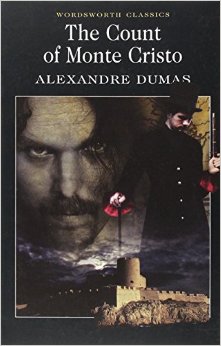
519aMi139BL._SY344_BO1,204,203,200_I was eaten up with Romanticism when I was a boy growing up in Summerville, SC. On any number of bright, sunny spring days, perfect for playing outside, you could find me in the cave of my bottom bunk reading The Count of Monte Cristo or The Complete Stories of Edgar Allan Poe.

I was especially a sucker for doomed protagonists who suffered the perpetual ache of unrequited love, sardonic swashbucklers like Cyrano de Bergerac or Poe’s gloom-devoured intellectuals forever grieving for their lost Lenores. Of course, I didn’t share these somewhat pathological predilections with my friends or family. Maybe if I had, some kind soul might have pointed out that celebrating heartache is unhealthy and Darwinianly ineffective when competing for mates.

A consequence of this peculiar focus is that I developed an anachronistic, almost Victorian, appreciation of females as icons worthy of worship, practicing what Yeats describes in his poem “Adam’s Curse” as “the old high way of love.”*

There have been lovers who thought love should be

So much compounded of high courtesy

That they would sigh and quote with learned looks

Precedents out of beautiful old books;

Yet now it seems an idle trade enough.

“Idle” as in non-productive. In those days, snagging a touchdown pass or smacking a double was a more reliable pathway to a young girl’s heart than penning cliché-ridden verse that doesn’t scan — still is, as a matter of fact.

So I had a string of crushes I worshipped from afar, for example, the beautiful Joanne Elder, whom I would escort around the circumference of Dogwood Circle never daring to clasp her hand and confess my adoration. I had cultivated an ideal medieval maiden in my psyche and projected her onto this not intellectually curious but practical girl. Meanwhile, in any number of carport utility rooms and out in the still abundant woods around the subdivision of Twin Oaks, other less literary 7th graders were learning how to French kiss. I still can clearly remember one day on an overcrowded school bus Joanne’s writing in the dust on the back door’s window the name of Steve Hoates.

[cue funereal violins]

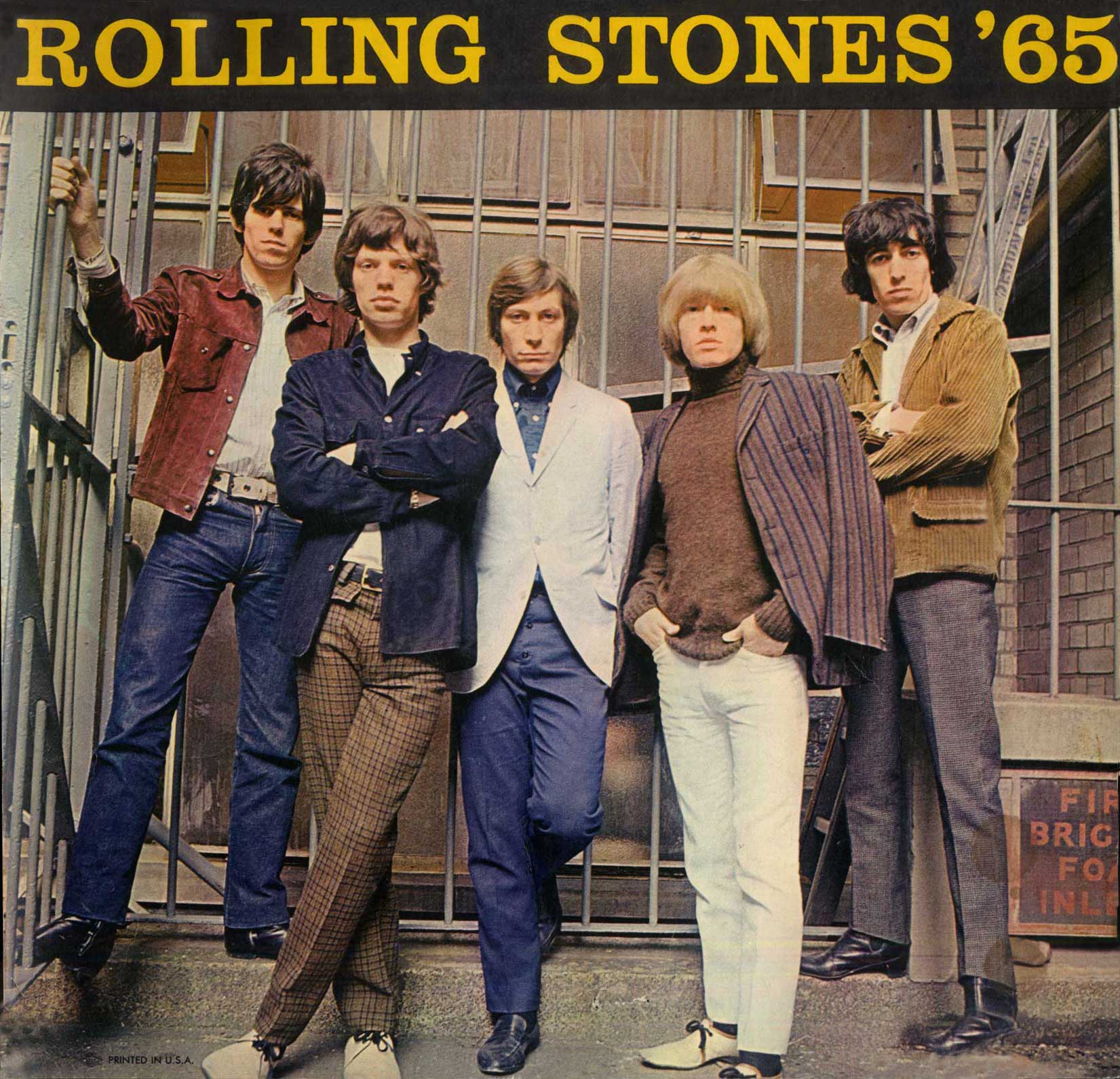
stones-65Puberty itself was a great help in overcoming the blight of romanticism. I began reading less and listening to music more, Mick Jagger replacing Edmond Dantès as a role model, and despite singles like “As Tears Go By,” many Stones songs like “Under My Thumb” and “Stupid Girl” were openly dismissive of “the fair sex,” if not downright misogynistic.

My attitude coarsened a bit.

A couple of real live heartbreaks made me realize that the Marvelettes were right about the vast number of fish teeming in the sea of love. I came to realize that when you “got a heartache,” you’re much better off using your fingers to punch in jukebox selections rather than manipulating typewriter keys.

I figured out that the old Yeats was wiser than younger Yeats. Take it away, Crazy Jane:

A woman can be proud and stiff

When on love intent;

But Love has pitched his mansion in

The place of excrement;

For nothing can be sole or whole

That has not been rent.

Cyrano and Me

Cyrano and Me

*Of course, over a half-a-century later, I realize this attitude of placing females on pedestals is sexist, a byproduct of the patriarchy, etc, but look up at that less-than-ninety- pound weakling right above this note.  He didn’t know any better.

A Kennel of Doggerel for Donald


Guess what? Sometimes the past isn’t prologue.

Take, for example, Donald J Trump.

The pundits just knew he’d sink in the slog

slinging that shit out there on the stump.


Looks as if the pundits were wrong

to base their predictions on Bachmann and Cain,

who got off to strong starts in 2008

but ended up missing the convention-bound train.


They’re not Trump. Both lacking and defying gravity,

he bloviates brandishing a bloodstained skewer.

Confronting him seems like sheer insanity —

like picking a fight with Jessie Ventura.


Guess what? Sometimes the past isn’t prologue.

Take, for example, Donald J Trump.

The pundits just knew he’d sink in the slog

slinging that shit out there on the stump.


Jessie Ventura, former Governor of Minnesota

Jessie Ventura, former Governor of Minnesota

Misbehavior and Punishment

Detail from Viktor Semenovich Vilner - Embankment, Scenes from Dostoyevsky’s ‘Crime and Punishment’, 1971

Detail from Viktor Semenovich Vilner – Embankment, Scenes from Dostoyevsky’s ‘Crime and Punishment’, 1971


Sniggering little schoolboy, keep that up,

and I’m sending you

to detention

in Raskolnikov’s room.


Is that what you want?


Exile in

Rodion

Romanovich

Raskolnikov’s

Room?


A tiny cupboard of a room

about six steps in length.


Toxic urine-colored

paper peeling off its walls.


So low-pitched, the ceiling will

transform you into a hunchback.


One rickety chair.


A slack-springed

sofa for your bed,

chintz gone to rag,

a ratty overcoat for covers,

a balled-up terry cloth bathrobe

for your pillow.


Worse, a tattered copy of

Atlas Shrugged

on the bedside table

to be annotated.


Sniggering little schoolboy,

Is that want you want?


If not, cut it out.


Right now.


Thank you.


Hank and Townes: Long Gone Daddies

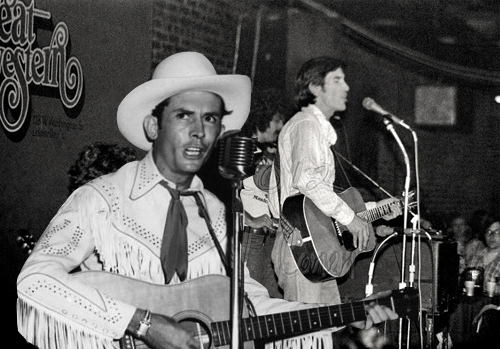
hank and townesToday, January 1st, marks the anniversary of the deaths of two great American songwriters, Hank Williams in 1953 and Townes Van Zandt in 1997.   In addition to their coincidental departure dates, these two shared a lot in common.

They were both long and lanky long gone daddies with dark hair and eyes, and they both had what my granddaddy called “jug ears.” In fact, judging by these two accompanying photographs, I suspect that a DNA test would discover a shared ancestor in the not too distant past.

cropped hankdrunkcropped townes

More significantly, they also possessed the rare ability to create memorable melodies with song lyrics that can stand alone on a page without musical accompaniment.

First Hank:

Hear that lonesome whippoorwill.

He sounds too blue to fly.

The midnight train is whining low.

I’m so lonesome I could cry.

Then Townes:

Everything is not enough.

And nothin’ is too much to bear.

Where you’ve been is good and gone.

All you keep’s the getting there.

Well, to live is to fly, all low and high.

So shake the dust off of your wings

And the sleep out of your eyes.

Theirs was a tragic vision.  To quote Richard Sewell:

[The tragic vision] recalls the original terror, harking back to a world that antedates the conception of philosophy, the consolations of the later religions, and whatever constructions the human mind has devised to persuade itself that the universe is secure. It recalls the original un-reason, the terror of the irrational. It sees man as questioner, naked, unaccommodated, alone, facing mysterious, demonic forces in his own nature and outside, and the irreducible facts of suffering and death. Thus it is not for those who cannot live with unresolved questions or unresolved doubts, whose bent of mind would reduce the fact of evil into something else or resolve it into some larger whole.

Like their artistic archetype Edgar Allan Poe, throughout their abbreviated lives, they were besieged by “demonic forces in their own natures,” and like Poe, they attempted to neutralize those demons through drink and more exotic drugs — in Hank’s case, chloral hydrate and barbiturates, and in Townes’s, codeine and heroin.

However, when it comes to self-destruction, I don’t think either EA or Hank could hold a candle to Townes Van Zandt. Supposedly, Poe gambled to augment his stepfather’s meager allowance, but in Townes’s case, his gambling seemed a deep-seated masochistic addiction.

According to John Kruth’s biography, To Live’s to Fly, not only did Van Zandt literally lose shirts off his back, but in one card game, he also lost his gold dental inlays, which he pulled out with pliers and delivered on the spot as payment.   He also had the propensity to give all his hard earned money away to winos after getting paid for a gig.  Like a crazed character out of Dostoyevsky, he seemed to seek out suffering, perhaps for the sake of his art.


Year after year,

bottle after bottle,

for the sake of the song,

stumbling full throttle,

gig after gig,

swig after swig,

staggering through life,

for the sake of the song.


’97, New Year’s Day,

home from the hospital

he slipped away —

one hand on his heart,

the other on his flask —

the weight of the world

suddenly gone slack,

his windswept world,

forever gone black.


Some say he suffered

for the sake of the song,

cultivated sorrow

for the sake of the song.


Rot gut, suicides, needles, yellow fever,

all the hurt in the world out West,

took up residence in his hollow heart,

like a stick-stirred rattlesnake’s nest.


For the sake of the song,

for the sake of the song,

they say life is short,

but art is long.


For the sake of the song,

for the sake of the song,

right might not be right;

wrong might not be wrong.


RIP, boys.

That Was the Year That Was

One of the many Mongolians who didn't click on this site in 2014

One of the many Mongolians who didn’t click on this site in 2015

Thanks to all of ya’ll who clicked on the blog this year, which received 20.022 hits by visitors from 110 countries. I’d like especially to thank those solo souls in Lithuania, Guadeloupe, Liechtenstein, Ethiopia, the Isle of Man, Libya, Congo-Kinshasa, not to mention whoever it was in Papua New Guinea looking for porn who got sidetracked in Hoodooland.

Of course, several countries were no-shows, including predictable sourpusses like North Korea, Mongolia, and Greenland, but come on, Botswana, Paraguay, and Fiji, where’s your sense of adventure?

Happily, except for a death-haunted January that featured a stem cell transplant, 2015 was a big improvement over 2014, so I thought I’d offer a reprise of some of the most popular posts.

January

Although “Endangered Lowcountry SC Locutions,” featuring my mother and written exactly a week before my her death, was by far January’s the most popular post, I prefer “Super Bowl XLIX Preview,” which I could easily update this year by merely dropping those clunky Roman Numerals designating forty-nine for the sleek – dare I call them Arabic – numerals 5 and 0.

February

20140511_inq_jriordan11-bOne of the top news stories in February was an outbreak of measles at Disney World, which brought to light that luddites on both the far right and far left are not vaccinating their replicated DNA, so I produced this piece “Natural Selection at Work” that features not only a vintage photo of smiling polio victims but also a full color photo of an autistic dog.

February also brought us the Brian Williams scandal, which sent me into true confession mode. Dear Readers, believe it or not, I’m no stranger to “misremembering,” as the self-explanatory title “My Most Cherished Mismemory Debunked” testifies.


March

March came in like a lion with a very popular post, “Ten Literary Riddles.” If you don’t want to see the answers, don’t scroll down past number 10.”

April

granda-and-ted2What better way to celebrate a month dedicated to fools than a post entitled “A Brief Analysis of the Likability of 2016 Presidential Candidates,” which is so fair and balanced that Larry Sally, my most ardently Republican friend, says he more or less agrees with it.

I also caught Dylan in concert for the only-god-knows-how-manyeth-time, and “Review of Bob Dylan Concert 17 April 2015” got a ton of hits.

May

governor-watching-tvMay brought the news that Texas’s wheelchair bound governor was preparing the state for an invasion from the US Federal government, and I realized what a great movie it would make, hence, “The Invasion of Texas – Coming to a Theater Near You Soon!”

Like Donald Trump, I ain’t no fan of political correctness, as this piece “Political Correctness Academy” demonstrates.


June

Folly Beach, my adopted home barrier island, is a frequent subject, and this piece “Folly Beach’s Cat Lady, Potential Serial Killer” still generates some traffic on the site.

Also, in June, I got my hands on the uncorrected proofs of “Elijah’s Wald’s ‘Dylan Goes Electric,’” which was picked up by the mega Dylan website “Expecting Rain: Bob Dylan.” Wald himself weighs in with a comment on the post.

Alas, June also brought us the Charleston Massacre, and this post “Way Past Time” struck a chord.

I also finally got to go to a Jewish wedding: “My First Jewish Wedding.”

July

A lazy month that featured video of a hotdog eating contest (“Celebrating the 4th on Folly after the Alcohol Ban”), a paean to drive-in movies (“Enjoying Genocide at the Drive-in“), and more spoiled elite college student bashing (“America’s Culture of Hyperachievemnt among the Affluent).

August

donald-trump-750x455Oh my God, where has the summer gone? Life is short. I’ll be dead in no time. Better turn to the Good Book. And who better to lead a Bible lesson than the Donald: “Bible Study with Donald Trump.

September

Here’s a poem: “What Guilt Feels Like: A Series of Pickpocketed Similes,” an exercise in collage.

And a behind-the-scenes peek of my decadent lifestyle hanging out with beat poets at Chico Feo: “Folly Beach Life, Ain’t the Good Life, But It’s My Life.”

kaye-paulAnd I’m surprised this post didn’t catch on, a “Casting the Republican Primary Farce,” in which I find photos of dead movie/tv starts who are – drumroll – dead ringers for the Republican candidates.

October

When yellow leaves, or none, or few, do hang upon those bows that shake against the cold, what better time than to go all nostalgic: “That Time I Threatened to Hang Myself If Student Housing Didn’t Transfer me out of That Dorm Suite I Shared with Antithetical Monsters.

November

Actually, not only do leaves not turn yellow where I live, they don’t even fall from the trees: “Whining on Thanksgiving.”

December

Which brings us to December, today, Christmas. I’ll give Santa the final word:

“Santa Agonistes.”

Naw, I get the final word. Thanks so much for reading. I sincerely appreciate it.