Miles Davis, John Coltrane, So What?

Miles Davis at the Vancouver International Jazz Festival, 1986

Miles Davis at the Vancouver International Jazz Festival, 1986

If it weren’t for his furtive, occasionally darting eyes, Mile’s Davis’s 1959 performance of “So What?” (see below) might serve as an ideal video embodiment of the word nonchalance.[1]

I.e., the projecting an aura of a relaxed, confident detachment.[2]

It seems as if no one’s all that into it, maybe not all that interested.

For example, at 2:41, notice Coltrane looking impassive in the background during Miles’s solo, eventually, however, nodding his head in half-assed admiration.

When Coltrane begins his solo, Miles splits for backstage. At 4:28, check out the two white fellows behind Coltrane actually conversing, seemingly deaf to gorgeous notes streaming from the tenor saxophone five feet in front of them.

At 4:40-ish there’s Miles himself in the background smoking a cigarette, detached.

At 5:03, though still offstage, he’s back into the flow of the music, swaying.

Throughout the entire performance, you see people who should be behind the scenes casually milling around, talking.

The obliviousness to momentousness of the music reminds me of that Auden poem describing an “untidy spot” on the canvas of an Old Master’s painting depicting an unnamed martyrdom where “dogs go on with their doggy life and the torturer’s horse scratches its innocent behind on a tree.”

Anyway, when the camera’s on Miles in profile, his body appropriately takes the shape of a question mark.

It’s like Miles is cool cubed, which being too too too cool, threatens to heat up into violence.

There’s tension, calculation in those eyes looking backwards into their skull. They’re not looking at what’s ever opposite of them in that studio.

But it’s the music that really matters. Check it out for yourself. The trumpet saying so what, so what, so what.

Do it, Miles.


[1] I’m imagining an on-line dictionary that provides multiple multimedia examples so that you really get a feel for the word

[2] My definition.


Where Have You Gone, Mary Shelly, a Nation Turns Its Lonely Eyes to You?

Boris Karloff in the 1935 film The Bride of Frankenstein, directed by James Whale.

Frankenstein: Universal Studios; Trump: Matt Rourke/AP

I have divorced myself from politics, not out of despair, but with the clear-eyed recognition that the number of my days has dwindled into a quantity imminently recognizable as finite.  Of course, my days have always been numbered, but with 80% or more of those rotations having disappeared in the rearview mirror, why squander precious unlabored respiration lamenting what you can’t control when you could be watching a Marx Brothers movie or listening to Rashaan Roland Kirk or holding hands while exchanging anecdotes?

boogie

“Boogie boogie boogie!”

That said, I do glance at headlines in the Times, often proclamations from a pathologically insecure man incapable of self-deprecation, a man who extolls self-proclaimed virtues like his “genius” or “sanity.” He boasts of his “top tier education” or his takes credit for the fact that under his watch no one has died in a commercial air crash.  Recently, he has become aweary, aweary of the First Amendment of the Constitution of a republic he would rather rule than govern.  To say that he is an egregious ass is to understate his odium.

Yet a third of the country approves of him and more than that voted for him despite his garish, cartoonish appearance, despite the bankruptcies, despite his impoverished vocabulary, despite his taking pride in grabbing the genitalia of women he has just met.  Evangelical Christians are particularly devoted to him for reasons that defy rational explanation.

Of course, there is no easy explanation how a promoter of professional wrestling has come into the possession of the nuclear codes.  Pundits posit emotions like “resentment” or suggest nativist xenophobia as possible factors.  Then there’s that whipping girl Hillary Clinton whom many people simply abhor.  Recently I’ve read (in passing) that no one, including Trump, thought he could win (which, along with sloth, would explain why there was no transition plan).  So why not throw away your vote on Jill Stein or write in “Oprah Winfrey” since there is no way that Donald Trump could win?

Anyway, I’m contradicting myself by going on like this when I need to be rereading Frankenstein, which is due next Tuesday, the day after we celebrate the life of Martin Luther King, Jr.

I’ll let Mary Shelley have the last word.

 [I]f no man allowed any pursuit whatsoever to interfere with the tranquility of his domestic affections, Greece had not been enslaved, Caesar would have spared his country, America would have been discovered more gradually, and the empires of Mexico and Peru had not been destroyed.

Mary Shelly, Frankenstein, or the Modern Prometheus.


Ode to Lucinda, Southern Apologist Edition

Although I’ve had no correspondence with her except for a couple of emails, I feel like I know Lucinda Williams (who once a very long time ago shared the stage with my back-up spiritual advisor/next door neighbor, James T Crow).

James T Crow

I feel like I know Lucinda because her mama talks like my mama used to talk.

You better do what you’re told.
When I get back this room better be picked-up.

I feel like I know Lucinda because we both grew up in an undiscovered Tennessee Williams play.

These lines from “Greenville” bring to mind my ol’ man:

You drink hard liquor; you come on strong.

You lose your temper when someone looks at you wrong.

And these the premarital I-and-I:

I see you sleeping in the car
Curled up on the back seat
Parked outside of a bar.

And these, the people of my region:

Born and raised in Pineola,
His mama believed in the Pentecost.
She got the preacher to say some words
So his soul wouldn’t be lost

My financial advisor/life coach Jacob T Williams turned me on to Lucinda. One day in ’92 0r ’93, he came down to visit and handed me a gift, a cd, Sweet Old World, Lucinda’s fourth studio album. Sharing music he ardently digs is typical of Mr. Williams (no kin to Lucinda). [1] Jake the Snake is what my personal Life Affirmer/Joke Curator Jim Klein calls “a cat.”

from left to right, I-and-I, Sue Kovacs, Jim Klein, Judy Birdsong

But back to that album: her voice, the arrangements, the tunes, the lyrics – the South.

The last time I saw her perform, she said it was nice to hear some Southern accents. Oh, to be a Southerner now is to be looked down upon,[2] and certainly the blood soaked Bible Belt with its heritage of hatred and poverty and ignorance must seem desitively toxic from afar, but for better or worse, “the land of cotton” is the plantation of American culture. No South would mean no yodeling hillbillies, no moaning blues singers, no Lester Young or Miles Davis.

No South means American cultural impoverishment.  Spills over into meaning no Rolling Stones.

But back to Lucinda. Find me one compilation album she’s on that she doesn’t dominate, whether it be her rendition of “Here in California” on that Kate Wolf tribute record or her duet cover with David Crosby on “Return of the Grievous Angel” on the Graham Parsons tribute album or her heartbreaking interpretation of Hank Williams’ “Cold, Cold Heart” on (guess what) Timeless, a Tribute to Hank Williams.

So when I’m down, like today, I can put on Lucinda and feel somewhat better because misery loves company, because she sings songs that cry commiseration.

But let’s give her the last word(s).


[1] In fact, it was Jake who turned Lo’Quacia and I-and-I onto NOLA Sunday Second Line., which you can join clicking here. If in a hurry, scroll down to the second video.

[2] For example, we’re very unfamiliar with dealing with six inches of snow (unlike Wallace Stevens’ “thin men of Haddam.”)

Say What?

I saw this today on Twitter and have to say I more or less agree:

Obviously, we live in an age of hyperbole, and the obvious question is how come we overstate?

American optimism?

Media saturation?

Ennui?

A compulsion to spraypaint the mundane?

Of course, I have no idea, and certainly eyewitness Judy occasionally informed me the anecdote recently shared had been embellished. Though I hadn’t meant to — it had not been a conscious augmentation — No, I remember distinctly it was a Rottweiler, not miniature schnauzer. I can see the drool dripping from the corner of his all-too-audible snarl.

Could probably pass a polygraph.

Maybe could pass.

No doubt would fail.

Anyway, I’m sort of a pessimist, so the first three words on the above list I rarely use, except in class when I explain that “awesome” has no meaning because it can refer to anything ranging from a neat pair of sneakers to a twin-star double supernova. (I also inform students that “thing” can refer to anything from bellybutton lent to the resurrection of Jesus Christ).

So my hyperfication (good luck looking it up) of language most frequently falls into the realm of describing the unpleasant.

When I say . . .

Horrific      

It means . . .

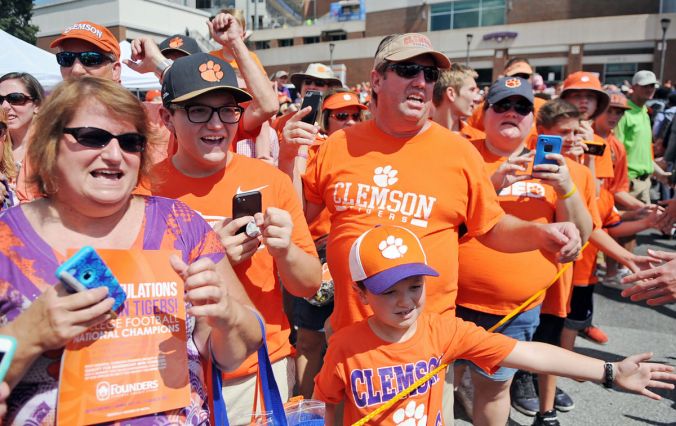
Unpleasant, like  encountering a family of five all dressed in identical orange Clemson sweatshirts and sweatshirts)

When I say . . .

I’ve lost the will to live! 

It means . . .

I need a nap.

When I say . . .  

Menacing

It means . . .

Rather aloof          

Of course, the kingmaster of overstatement is our President. As far as negatives go, Trump’s go-to pejorative is “disaster.” Here’s a sampling via Quartz from the first presidential debate:

  • “Our energy policies are disaster.”
  • “Your regulations are disaster, and you’re going to increase regulations all over the place.”
  • “[Libya] was another one of [Clinton’s] disasters.”
  • “We invested in a solar company, our country. That was a disaster.”

C’mon, Donald. You can do better:

Your energy policies are the equivalent of the Yellow River Flood of 1887 that killed 900,000 Chinese citizens!

Your regulations bring to mind that 68-year-old woman fractured both legs and an arm while exiting the ride vehicle of Peter Pan’s Flight.

Anyway, I’m sure someone in the social sciences or philosophy (probably Steven Pinker) is studying just why we construct such mountainous molehills in our speech.

Get to it, ladies and gentlemen/Steven.  Enquiring minds and all that jazz.

That Was the Year I Wish It Wasn’t

Because for me and my family – and I dare say the nation at large – 2017 was such a doleful twelve months, I thought about not constructing my traditional year-end recap of my blogging; however, going back through the posts has been, if not exactly therapeutic, instructive as dredging up the past has provided me a more detached idea of my state of mind during Judy’s decline. Essentially, the omnipresent Scythe Wielder is ignored, which makes sense, since Judy was a reader, sometimes (not often enough) a proofreader of this blog.

January was Trump obsession month, though my favorite post attacked not the Donald but king hell hypocrite Paul Ryan, suggesting that the arch Catholic should read Flavory O’Connor, but I did stray away from politics  to reminisce about Judy’s and my courting days.

wes-chaplin

In February I fantasied what it would be like to see Trump as a tragic hero and wrote about the practical advantages of memorizing poetry,  Huh?

And celebrated Mardi Gras on Folly Beach by making a film. As it turned out, the celebration supposedly got out of hand.

indian_1jpg

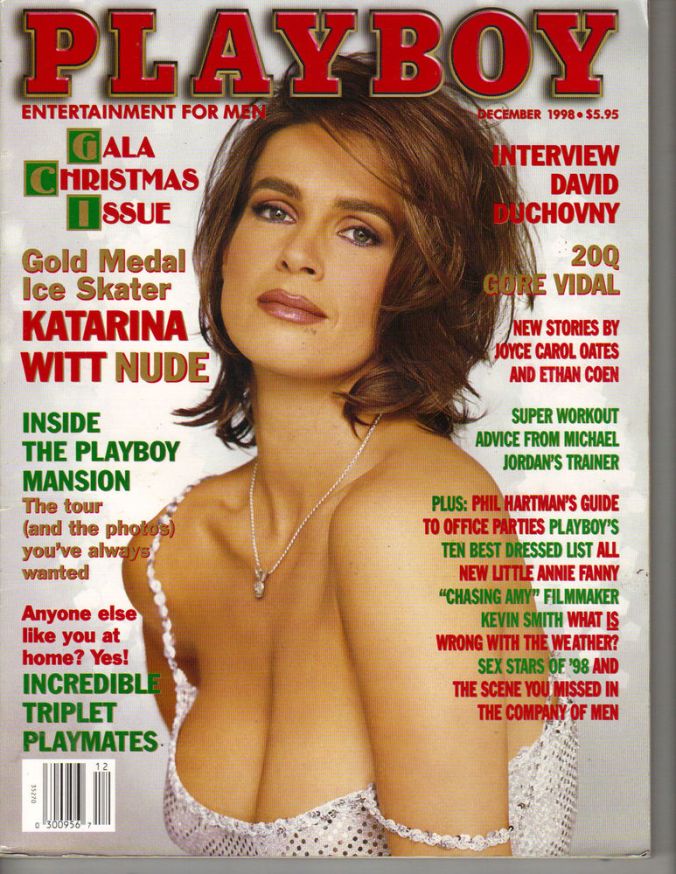
In March, in an act of great generosity I provided stuck fiction writers the titles and scenarios for mass market paperbacks based on Dylan lyricsMore seriously, I offered teenagers, whom I know something about, some good advice, and to offset any pretense of wisdom, told the story of bribing my middle school sons by buying them the issue of Playboy magazine depicted below.

s-l1000

April is supposedly the cruelest month, and it came very close. By now I had abandoned politics and turned my thoughts to avoiding a living death  with the idea of termination looming.  Perhaps I was angry at the universe.  Why else rant about hairstyles?

1415956014182_Image_galleryImage_ADM_GOGOGALA_BT_048_13_No

May

Judy dies.

I grieve.

I deliver a speech.

judy memorial eve cropped (original)

Judy Birdsong Moore 1954-2017

June

The Art of Grieving,

But life goes on.  I learned a new word.  Failson, and reported for jury duty.

gamer

July

As Emily wrote:  “First – Chill – then Stupor – then the letting go –”

Unanswered prayers.

Trafficking in Mockery.

And speaking of failsons. Here’s a shopping guide.

Hey Jude

August

As far as writing goes, I was lazy in August.  I was hanging with a grief counsellor, hanging at Chico Feo, discovering the Island Breeze, preparing for my 32nd year at PG, checking out total eclipses.

Sign at Island Breeze

September

Back to school and into a new classroom.

932319a373a8544d480597af3b74d7ff

October

Definitely, the highlight of the year.  NOLA.  If you haven’t checked this out, you need to.

mother in law exterior

Front Door

November

Judy Birdsong In the Lobby of the Chelsea Hotel 23 April 2011.

December

If typing this in London, leaving tomorrow, need to pack, so I’m out of here.  Thanks to all my repeat readers.  This blog sort of keeps me off the streets and out of trouble.  Happy New Year.

IMG_1409 2

Christmas Eve in London


IMG_2490

Big Ben in an Iron Lung

The first time I visited in ’83, punk ruled.  I talked to a woman in a nurse’s uniform with piercings galore and a pink Mohawk that brought to mind the plumage of an exotic bird that you might encounter in a Sci-Fi magazine. She was sweet as pie as she instructed me how to get to or obtain whatever I had asked.  Last night when I was momentarily lost, the seeming old gent wasn’t quite as accommodating as he waved his cane and growled ‘Je ne sais pas” after I asked for directions to the Tower Hill metro station.  Robert Earl Keen fan that I am,  I put on my most meanincing ugly American mask and hollered, “Ou est la gare? Ou est la gare?” Of course, he ignored me, walking on, stooped over, tapping, disappearing into the fog.

Do you know the Robert Earl Keen song “Whenever Kindness fail?”

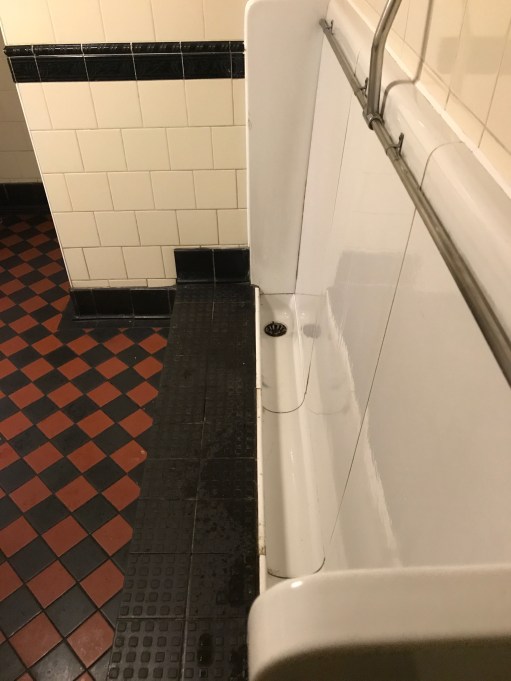
However, the folks — both staff and clientele — at the pub Hung, Drawn, and Quartered were as nice as could be as Ned and I ordered minced pies and local ales.  I like a joint that calls a “toilet” a “toilet,” that makes you go downstairs and pass through double doors to take a piss in a communal urinal.  These conveyances are okay for the Herculeanly endowed, but if you’re hung like Ganymede, and it’s crowded, I suspect it might be embarrassing.

IMG_1412.jpg

At any rate, a good time was had by all.

IMG_1406

So after the pub crawling and 11 hours of uninterrupted sleep (thanks for the earplugs, Loquacia), it’s Christmas Eve, overcast, dank, and gloomy, just like in the illustrations of A Christmas Carol I remember as a boy.

Of course, Ned and I are here to avoid memories of Christmas pasts, but, at least for me, Judy’s omnipresent, snaking with me through the roped maze at Heathrow, the documentation safely stowed, or sitting next to me in a pub pre-children pining for Sally and Jack, the springer spaniels we’d leave behind for two months in 1983.

However, these are good memories to be smiled at, not wept over, and as it turns out, I’m doing some contemporary pining for the left behind as I type this just across from the Tower of London where historically some bigtime pining went down.

IMG_1414

So it’s time to accumulate some new memories to be smiled when tomorrow’s Christmas has come and gone.

IMG_1409 2


Ask Jean Paul: Sage Advice from a Sage

ask jean paulpsd

Dear Jean-Paul:

I don’t know why, maybe I’ve been cursed by a malevolent god or something, but every time I get in a line at a supermarket, it always ends up being the slowest line, no matter what. There can be a line like with 6 people in it and a line with 2 people in it, and if I get in the shorter line, invariably there will be a price check or the customer will pay with rolls of pennies, and sure enough, all the people in the long line, plus newcomers, get served before I do.

Any insights? Suggestions?  It’s driving bat-shit crazy.

Seething in Winton-Salem

Dear Seething,

Grow your own vegetables, raise your own livestock.  


Dear Jean-Paul:

My mother died today. Maybe it was yesterday, I don’t know. I received the telegram today. At any rate, the funeral is in a couple of days, and I don’t feel much like going. It’s so much trouble. I’d have to ask the boss for a day off and all. What would you do if you were I?

M. Meursault

Dear M. Meursault:

 I would go to the funeral and make the most of it. Relax at the wake, enjoy a cigarette or two.  After the service, try to pick up a girl, take in a movie, have a swim. May I also suggest casual sex, a seaside stroll, shooting an Arab or two?


Confused, Out of sorts?  Slightly nauseous?  Having trouble deciding what to be or to do?  Send for Jean Paul’s amazing self-help manual On Being and Nothingness.  Available at Amazon and Barnes and Noble.


Strutting, Cakewalking, Pimp Walking?

“A Man Swaggering” by Paul Standby 1760

He came up maybe to their armpits, the dudecats accompanying him, this ten-ish-year-old mannishboy strutting up King Street in Charleston swinging a watch chain and tapping a cane.

Back then, 1968, I thought naively zoot suit, not pimp outfit. The hat was cocked, the smile triumphant, the cane tapping a tattoo, the chains cycling in time with the jaunt-step.

It was like the two other older taller teens accompanying him were underlings. It was like he was royalty, had some power conferred upon him, this princeling. For what and why I had and have no clue.

I’ve squandered today’s sunlight scouring the 1s and 0s of cyberspace searching for an equivalent, i.e., of a video of a prepubescent boy strutting on a sidewalk, but guess what? There ain’t none but this lighter-shade-than-pale approximation hardly worth plopping down:


I wouldn’t see locomotion quite like the King-Street-Strut until I saw Dr. John take the stage for the first time at Columbia’s 3 Rivers Festival in 2002 or 3.

Hat, cane, strut.

This snippet from the 2008 Newport Jazz Festival is a mere shadow of what I witnessed that evening when I first saw the Doctor making his way to his piano.


Of course, males have been swaggering and females jiggling since time immemorial. Even in the Age of Reason it appears homo sapiens succumbed to the jungle beats of their pulses in attempt to enhance their chance for romance, dominance, offspring.  [See the Paul Standby illustration above]

But back to the 60s and that Mannishboy. Those moves didn’t come from nowhere:


John Jeremiah Sullivan has a fascinating piece in the Winter Swanee Review on the origin of the blues.   Much of the essay deals with “cakewalking,” an African American tradition dating back to plantation days but that was all the rage in the early 20th Century. a staple of minstrel shows.


Did cakewalking in some ways influence what became known as jive-ass-walking/pimp-walking?

This snippet narrated by retired pimp Bishop Don Magic features watch-chain spinning, but it’s really, really lame compared to the vertical twirling of the mannishboy I saw on King Street that day.


So what’s the point of all this?  Good question.  I might have to get back to you on that except to say that if you’re lucky, you might see something amazing you’ll never forget, something that goes way back, has evolved, decayed, and all that jazz.  Or maybe, given how all my memories seem to sport an enhanced version, maybe time burnishes memories?

Or maybe there’s no fool like an old fool:

Guffawing

Girl in Pink Laughing by Claerwen James:

If you want to see human beings in society at their most animated, check out the spasmodic absurdity of a full-blown guffaw.  Here, in Late Empire America, the howler is typically overweight, if not obese, so when he begins to shudder and redden and gaspingly go har-har-har, he’s literally shaking, rattling, and rolling.  [I’m picturing ‘Bama KA pledge (pasty white complexion, dirty blonde buzzcut) who is stoned and watching Austin Powers 3 in a frat house].

If you’re an alien from a Spartan planet  – TriMinicon, let’s say – and encounter for the first time an earthling in a full-throated guffaw, you might be tempted to whip out your Zapgat and instantaneously demolecularize the brute.  (On the other hand, if you’re an extraterrestrial from enlightened Eulipia, you’ll discretely slipslide through a portal vector out of harm’s way).  Whatever the case, you don’t want anything to do with this snorting, teeth-baring biped.  Detaching yourself and viewing guffawing through alien eyes, this species of laughter appears as what-it-is: a loss of self-control, a brain seizure that results in gasping, weeping, and other heaving involuntary spasmodics.

If you think I’m exaggerating, the next time you see some knee-slapper rolling in the aisles, record it on your cell phone.  Later when you’re all alone in a quiet moment, watch the contortions of the subject as if you’re an anthropologist. As ephemeral as it might be,  guffawing is obviously a form of somatic insanity.  It’s simian.  No, check that: monkeyish.


What lurks in the heart of humor that triggers the brain of a humanoid to go apeshit? Here’s a rudimentary answer from Dr. Robert Provine, a neuroscientist at the University of Maryland: “Laughter,” he writes, “is an ancient, unconsciously controlled vocal relic that co-exists with modern speech—-a social, psychological and biological act which predates humor and is shared with our primate cousins, the great apes.”  His research suggests that laughter is fundamentally social behavior, a nervous reaction, a non-verbal method of communication that facilitates social cohesion.

However, we’re talking guffawing here, not the harmonious chuckling of a studio audience. And I’m not so sure that guffawing is all that socially advantageous because it makes you look brain-damaged.  Once you’re in its hairy-handed grip, the guffaw shakes you until it feels like letting go. (You’re Fay Wray; it’s King Kong). What in Darwin’s name could be the mating advantages in such a display?

If a coed unexpectedly comes sauntering into the room where my Bama fratboy is leaning back in congested high-pitched convulsions, I can’t imagine her inner E.O. Wilson Puppet Master Gene prodding her to mate with him.  The frat boy sees her, wishes he could stop the seizure, wishes drool weren’t streaming from the corner of his mouth, but the sight of this lovely, mysterious stranger revs his engine, and the poor boy starts literally howling, his mouth wide open, his beer gut a-quiver; idiotically, he’s slapping himself on the thigh, a complete and utter slave to the Imp of the Perverse.  Again, what kind of humor or situation triggers such a spastic physiological reaction? What could it be  that has thrown this 20-year-old college student to hysteria?

I’m betting nothing positive.  On the DVD, he might have seen Austin Powers take a sip of Fat Bastard’s liquefied feces and complain that the coffee’s “a bit nutty.” The horrible absurdity of unknowingly ingesting shit could very well “slay” our fratboy.   But why?  I’m afraid that when I search my memory for instances of my own personal guffawing, I can’t conjure one example that doesn’t somewhat smack of sadism.  Now, I don’t profess to be in any way typical (or normal, for that matter), and I’m hip to the existential fact that the high Roman decadence that tickled Petronius the Arbiter’s funny bone isn’t likely to prompt peals of laughter from Billy Graham.  Nevertheless, I bet that the vast majority of uncontrollable laughter has its origin in some sort of unwholesome shocking occurrence and is an involuntary response to that shock, and if it is at someone else’s expense, so much the better.

Here’s my earliest remembered guffaw.  The year is 1960 or so, because I’m in my grandmama’s apartment (where I spent the night of the Kennedy Nixon election), so I’m seven years, give or take.  The apartment takes up most of the upper floor of a ramshackle subdivided Victorian house.  It’s the type of place with glass doorknobs and twelve-foot ceilings. On this particular night, we’re getting ready to go to bed or to go home – I can’t remember which – but my brother David finds a half empty Coca-Cola bottle and taunts me with it.  I beg for a sip – to share – just one sip – but he laughingly refuses, and to torture me to the fullest, he throws his head back, lifts the bottom of the bottle to the ceiling, and starts chugging as if it’s a bottle of Champagne and he’s just won the Indianapolis 500.

Unfortunately (at least for David), my father has extinguished his most recent cigarette in the bottle, and when David tastes the butt in his mouth, he screams, spits it out, and starts vomiting as I fall to the floor in convulsions, tears gushing from my eyes, and now, he, too, is guffawing – guffawing and vomiting – though managing to keep his feet in a stagger while I’m rolling on the floor back towards the wall to escape the splattering.

This instance of boomerang karma hardly seems funny at all in retelling it, but as I was typing just now and re-visualizing the event, I actually chuckled aloud.  If my brother were here, and I reminded him of the story, we’d both share a laugh, but we wouldn’t guffaw.  You probably can’t replicate a guffaw, the way you can a maniacal mad-scientist laugh, but you can come close.

Although guffaw’s noun definition: “a burst of coarse laughter” does suggest a certain lack of sophistication, a quick scan of the OED’s quoted usages doesn’t necessarily confirm my notion that “guffawing is involuntary.” In fact, guffaw’s earliest published appearance in the language is a 1720 a quote from someone called Ramsay from his work Wealth: “Syne (sic) circling wheels the flattering guffaw.”  Of course, we lack context here, but Ramsay’s fragment implies the guffaw is artificial in that someone seems to be obsequiously guffawing to kiss-up to a superior, which runs counter to my notion that guffawing on cue is an impossibility (except for your Marlon-Brando/Meryl-Streep caliber actors/actresses).   The second OED entry is more sinister.  It comes from a 1728 translation of the Aesop Fable, “The Ant and the Caterpillar.”   You may recall that in this fable an obnoxious ant accosts a lowly caterpillar with unprovoked scorn.  “Prithee get out of way,” the ant says in Thomas Bewick’s 1813 translation,  “and do not presume to obstruct the paths of thy superiors, by wriggling along the road, and besmearing the walks appropriated to their footsteps.”  The ant continues to berate the poor caterpillar:

In the 1728 translation that the OED cites, the Ant ends his tirade with this: “The airy Ant syne turn’d awa (sic),  And left him with a loud guffa” (sic).  Although smacking of sadism, this example also doesn’t suggest that guffawing is essentially uncontrollable laughter.  A colleague, a Latin teacher and astute student of languages, disagrees with my characterization of guffaw.  He sees it as a sort of contemptuous snort, a growl of contempt.

An Illustration from Thomas Bewick’s 1813 translation of Aesop’s Fables

The OED’s definition of the verb form of guffaw reads “[t]o laugh loudly or boisterously; to laugh coarsely or harshly.”  Cited examples include 1819’s, “they guffaw and smirkle (sic) in their play”; 1853’s “M’Roy guffaw’d like a laughing hyenar” (sic); and 1860’s, “how men grin and guffaw behind her back.”  All of these, I submit, smack of a certain element of unkindness but not that sense of hysteria that I see as a defining characteristic of guffawing, so I’m off on an unscientific Yahoo image search to see if I can detect hysteria in the photographic subjects.  Of course, I’m finding the range of so-called guffaws ridiculously broad, but here are two examples deemed guffawish enough to include the a form of the word guffaw in their titles:

“Guffawed Out” by Phillygee

Sepia Guffawing by Tex Blackmart


Ironically, you wouldn’t be surprised to find these photographs in an image search for “keening:”  Here’s a photo from my Yahoo keening image search:
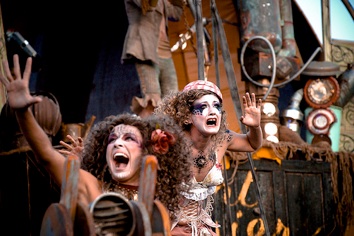
To me, it looks as if the keener on the left’s having a better time than the person in “Guffaw’d Out.”  Any competent Photoshop artist could cut and paste “Guffaw’d Out” on a fitting torso in Poussin’s The Rape of the Sabine Women, and it would fit right in.
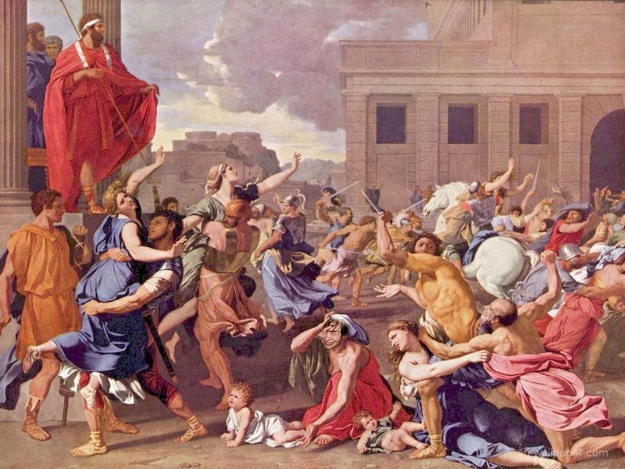
Obviously, the Venn diagram of physiological symptoms associated with guffawing and keening has a whole lotta of shading going on.  The American Heritage Dictionary defines guffaw as “a hearty boisterous burst of laughter.”  The AHD’s definition of boisterous reads “1. Rough and stormy; violent.  2. Noisy and lacking in restraint and discipline.” The verb burst suggests explosion.   So I still maintain that essentially a guffaw is unrestrained and unpremeditated.

On the other hand, my initial hunch that some sort of sadism is involved seems less assured.  For example, what about that guffawing infant in the first photograph?  How can sadism be involved since, surely, an innocent babe isn’t going to revel in another’s misfortune?  Based on my own parental experience with infant guffawing, I’ve noticed the phenomenon usually results from some tactile buzzing-bumble-bee teasing that the little one demands you to repeat time and time again ad nauseum as if she has been frightened out of her wits, then relieved, so now she wants to relive the process as a sort of naturally-selected desensitization exercise.  In fact, it looks to me that the infant in that first photo might be getting tossed in the air, or at least being tilted way back and perhaps undergoing some carnival-ride-thrill-brain-blood displacement.  Come to think of it, what about the appearance and behavior of roller coaster riders and other adrenalin-booster junkies?  Mouths wide open, they scream and laugh and shed tears.  It’s obvious that sobbing, guffawing, and panicking seem to all produce somewhat similar bodily reactions.

So what’s the common denominator?  Fear?  Shock?  Sadism?  Let me toss one last monkey wrench in the works: religious enthusiasm.  In my web surfing for hysterical laughter, every other hit led me to a religious website documenting an epidemic of guffawing in Pentecostal sects across the Late Empire.  The phenomenon, which is known as “holy laughter,” has caused quite a stir in charismatic Christian circles.  Someone named Dr. Cathy Bates (not a fan) fingers the South African evangelist Dr. Rodney Howard-Browne as “the person most responsible for this phenomenon.”   Here’s Howard Browne himself in his book The Touch of God describing “holy laughter”:
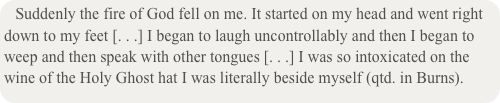
Dr. Burns goes on to describe disapprovingly “[s]ome other phenomena that take place at these laughing revivals: shaking, jerking, loss of bodily strength, heavy breathing, eyes fluttering, lips trembling, oil on the body, changes in skin color, weeping, laughing, ‘drunkenness,’ staggering, travailing, dancing, falling” [. . .]  Obviously, we’ve really wandered into some dark, pre-human irrational sphere that might even give Tarzan’s faithful sidekick Cheetah the heebie-jeebies.

Although laugher may be good medicine, guffawing appears potentially life threatening.  The above description of the god-smitten guffawers certainly seems unhealthy.  We’re talking heart palpitations, elevated blood pressure, staggering (picture one of those raptured revival-goers crossing a busy street), etc.  Yet, guffawing must serve some purpose, because it’s instinctual.  I’m going to offer a guess here [based my noodling around the word in my lazy, unscientific (but convincingly intuitive) way].  I posit that the guffaw, a laugh that goes beyond a belly laugh but doesn’t reach the holy laughter stage, is a physiological response to a startling surprise, a startling incongruity, or a slapstick pratfall of someone who could very well be, but thankfully is not, we.  Suddenly, we, the soon-to be-guffawers, become cognizant of the hilariously horrifying danger inherent in being alive, and this realization quite literally makes us crazy.  Our brainstem short-circuits our cerebrum, and we start howling, a not unpleasant metabolic kickstart.  We’re alive! The person next to us is starting to laugh because we look so ridiculous.   The planet’s spin has gotten us dizzy.  Now she’s guffawing, and the raucous laughter has chased the terror away.  We release accumulated tension and anxiety in a comedic catharsis akin to Aristotle’s description of vicarious psychological benefits of viewing a production of Oedipus Rex.

My most recent guffaw, the last that I can recall, occurred in the morgue of the Medical University of South Carolina, an easy place to feel uneasy.  I had volunteered to chaperone a field trip for the Advanced Biology class at the high school where I teach.  I reckoned that at the morgue I’d be entering would be the Nuke-Plant-grade, mirror-chrome-gleaming medical facility like you would see on Quincy, but when the retired professor guide ushered us into the laboratory, we discovered a dimly lit disorderly space in which an elderly male corpse silently screamed, “Look at me! Look at me!”   I did.  “The old gentleman,” as our guide Dr. Mori called the carcass, lay on its back with head seemingly undisturbed but with its chest cavity open to the sight of little numbered pennant-like triangular flags rising from his various organs.  Oddly, I thought of a putt-putt course, but then I remembered the fetal pigs from Biology II, and anyway, Dr. Mori was into his falsely detached rundown of the organs and explanations of why they might appear as they do – the lungs, for example, blackish in hue from seventy-years of breathing exhaust fumes.

Of course, in various existential reactions ranging from acute curiosity to creeped-out eye-aversion, we formed a circle around the table.  “The brain,” Dr. Mori said, “what about the brain?”  He reached into the sort of white plastic pail that painters clean their brushes in and – presto! –a brain appeared in the palm of his hand, a brain presumably belonging to this former person who had “donated his body to science.”   Dr. Mori went on to add that an unpreserved freshly extracted human brain is about the consistency of jello.  The unpristine condition of this calcified pretender seemed to disgust him, so he flung it back into its plastic pail, producing a splash of liquid (brain juice? formaldehyde?) that besprinkled the shirt/blouse of a boyfriend/girlfriend adjacent pair.  The looks on their faces!  Disgust incarnate!  Revulsion embodied! Horror!

I might have been all right, but I made eye contact with a colleague, who witnessed the same stricken expressions on the faces of the young lovers.  Our guffaws started as vain attempts to smother the impending bellowing, a pursing of our lips, the air pfffff-pfffing through.   Our faces began to flush, and we started rocking back and forth in the vain attempt to throttle the animal within us that was bursting out in a heaving roar of raucous laughter.  Embarrassed, we staggered away from the dead thing, the discomfited professor, and the confused students, but we’re having the time of our lives – we were alive!

Minicuardro David Fernandez

Poor creature! thou lookest like a thing-half made, which Nature not liking threw by unfinished. I could almost pity thee, methinks; but it is beneath one of my quality to talk to such mean creatures as thou art: and so, poor crawling wretch, adieu.

Despite Death’s Persistence

Poor old dead Daddy with his poor old dead brother David outside their poor old dead grandaddy Ackerman’s drug store on Spring Street circa 1937

It’s not surprising that Thanksgiving would be somewhat death-haunted. After all, I was driving Judy’s car to see Judy’s sister and her family.

Once I arrived, I found myself staring at sister Becky because she reminds me so much of Judy. It’s as if they share/d identical metabolisms. Both move/d slowly, deliberately; their eyes blink/ed slowly.[1] Anyway, I warned Becky that if I seemed to be staring at her a lot, sisterly likeness was the reason. She smiled a slow sweet that’s-okay smile.

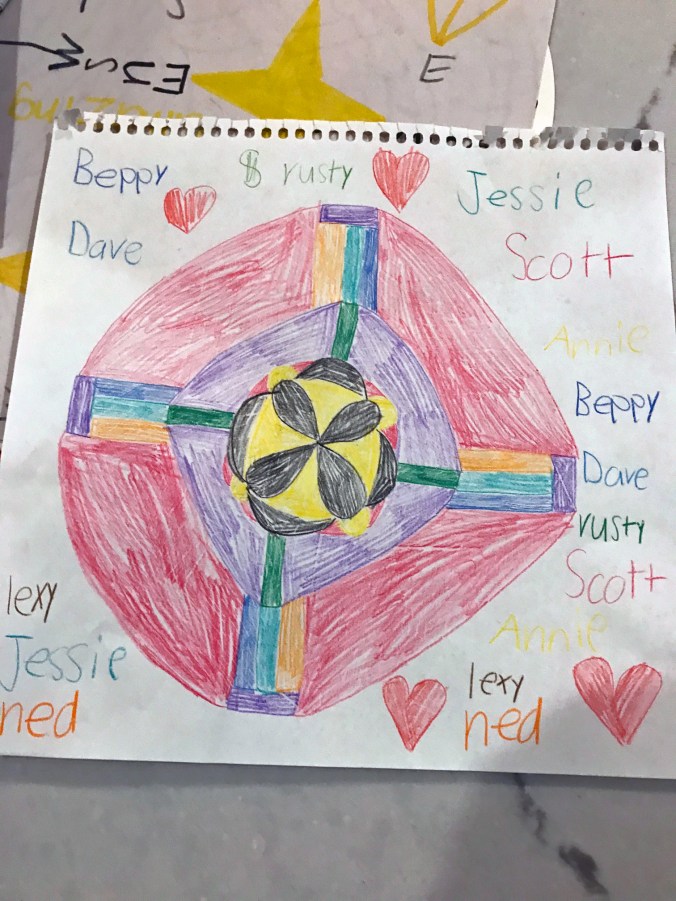
We enjoyed a beautiful five days weatherwise, the setting Reynolds Preserve, a residential golf resort with autumnal foliage ablaze. Companionshipwise, a beautiful five days as well, son Ned was there and brother-in-law Big Dave and my nephew Scott and his wife Jessie and their daughters, the grandnieces, Emily and Annie, six and four, lovely and smart and honest. I overheard Emily say, “[. . .] Aunt Judy, who’s already dead.”

Here’s a mandala Emily drew celebrating the gathering.

artist Emily Hudson, who calls her grandmother Becky “Beppy”

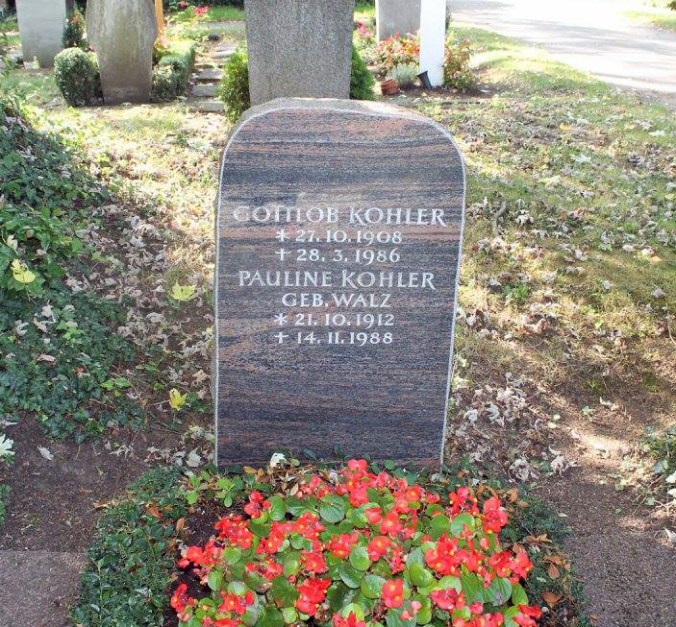
Saturday, on the way back, I stopped in Aiken for an hour and had dinner with my Aunt Maria and cousins Pamela and Scarlet and their brood: spouses, in-laws, children, and children’s children. It seems I only see these kin when someone is dying or dead — Uncle David, Daddy, Mama, Judy — so I wanted to make a point of talking with Aunt Maria, a spry, car-driving eighty-three, while she was upright and smiling. A war bride, she has been living in Aiken County going on 70 years. I especially enjoy hearing what’s left of her now Southern-smothered German accent. Her elongated vowels have unclipped the Teutonic cadences. Yet German lies underneath, like a sonic archeological lower layer.

Aunt Maria’s parents’ gravestone

I could only stay an hour because I wanted to pick up Ms L. Muldoon from the Charleston airport. She had seen the night before a production of James Joyce’s “The Dead” at the New York Irish Historical Society. She texted about the “heaviness” at the end “with the snow and all.”

A few light taps upon the pane made him turn to the window. It had begun to snow again. [Gabriel] watched sleepily the flakes, silver and dark, falling obliquely against the lamplight. The time had come for him to set out on his journey westward. Yes, the newspapers were right: snow was general all over Ireland. It was falling on every part of the dark central plain, on the treeless hills, falling softly upon the Bog of Allen and, farther westward, softly falling into the dark mutinous Shannon waves. It was falling, too, upon every part of the lonely churchyard on the hill where Michael Furey lay buried. It lay thickly drifted on the crooked crosses and headstones, on the spears of the little gate, on the barren thorns. His soul swooned slowly as he heard the snow falling faintly through the universe and faintly falling, like the descent of their last end, upon all the living and the dead.

So when I left Pamela’s, headed back to Charleston, I listened to Donal Donnelly’s reading Episode 6 of Ulysses, the Hades episode, when Bloom rides in a carriage to Dignam’s funeral and burial. I was on back roads, taking Highway 4 through Springfield and Neeses, (dare I say) dying Orangeburg County towns, and it seemed like every four miles I passed a cemetery in some podunk country churchyard with a chain-linked fence surrounding the graves.

Meanwhile, in his carriage Bloom reads from the obituary page of the morning paper the names of the deceased, “[i]nked characters fast fading on the frayed breaking paper.”

Through the carriage window:

White horses with white frontlet plumes came round the Rotunda corner, galloping. A tiny coffin flashed by. In a hurry to bury. A mourning coach. Unmarried. Black for the married. Piebald for bachelors. Dun for a nun.

— Sad, Martin Cunningham said. A child.

Highway 4 is a lovely road that rises and falls through horse country before flattening out near Orangeburg. I usually listen to AM gospel radio stations when passing through Orangeburg County – I dig the vocal groups, the church announcements, and especially, the high-octane iambic admonitions of preacher men– but Joyce and his medium Donnelly had me hypnotized.

Mr Bloom came last, folding his paper again into his pocket. He gazed gravely at the ground till the coffincart wheeled off to the left. The metal wheels ground the gravel with a sharp grating cry and the pack of blunt boots followed the barrow along a lane of sepulchres.

Bloom, who has lost a father to suicide and his young son Rudy to disease, sees death for what it is, inevitable and commonplace:

A pump after all, pumping thousands of gallons of blood every day. One fine day it gets bunged up and there you are. Lots of them lying around here: lungs, hearts, livers. Old rusty pumps: damn the thing else.

I was already in the town of Orangeburg by the time Dingam’s

gravediggers put on their caps and carried their earthy spades towards the barrow. Then knocked the blades lightly on the turf: clean. One bent to pluck from the haft a long tuft of grass. One, leaving his mates, walked slowly on with shouldered weapon, its blade blueglancing.

Dingam was six-feet under, and Episode 6 had run its course, so I reached over for some early Stones.

“Come On” came blasting from the speakers. I had turned the Joyce, as Lucinda Williams would say, “way up high.”

But I didn’t turn it down. I was on the Interstate doing 75 airport bound.


[1] Becky was a 10/10 match for the marrow transplant never to be.