The Herculean Task of Amassing and Cataloging Trump’s Character Flaws

Identifying and classifying the myriad character flaws of Donald J Trump would be a labor worthy of that grand old-fashioned adjective Herculean.

Where would you begin? Would you merely just start randomly listing his flaws as they came to mind?

Mendacity, impulsivity, avarice, hypersensitivity, vengefulness, tastelessness . . .

Already I’m exhausted, but if the catalogue were to reach its epic end, then you would need to classify the flaws; otherwise, the list would be merely be a reams-long enumeration of pejorative words, a document as interesting to read as a newspaper’s legal notices.

We do have, thanks to Dante Alighieri, a time-honored classification system of human frailties based on the 7 Deadly sins. Perhaps one might do less with more by adapting Dante’s system and plug selections from the Himalayan heap of Trump’s character flaws into Dante’s hierarchies rather than creating an exhaustive (and exhausting) list.

Dante’s system, of course, is not itself ideal. For example, most of us have committed multiple sins throughout our lives. Is your place in the Inferno determined by a predominance of one sin over another? Do you designate Rush Limbaugh as predominately gluttonous or avaricious?

Here, we also run across another problem pointed out by Stephen Dedalus in James Joyce’s Portrait of the Artist as a Young Man: sins tend to overlap and feed off each other:

From the evil seed of lust all other deadly sins had sprung forth: pride in himself and contempt of others, covetousness in using money for the purchase of unlawful pleasures, envy of those whose vices he could not reach to and calumnious murmuring against the pious, gluttonous enjoyment of food, the dull glowering anger amid which he brooded upon his longing, the swamp of spiritual and bodily sloth in which his whole being had sunk.

No, Dante won’t do.

Perhaps it would be more fruitful to contemplate how a person who brags about “grabbing pussies” (lust) and gorges on so much fast food that his ass has reached Kardashian proportions (gluttony), who is too lazy (sloth) to oversee a smooth transition into the most powerful office in the world and leaves it to Paul Ryan to come up with a health care plan rather than come up with his own, who is so greedy (avarice) that he stiffs contractors and would rather violate the emolument clause than divest from his financial empire, how a person who is constantly raging (anger) at perceived enemies, who so envies (covetousness) the crowd size of his predecessor’s Inauguration that he squanders his first week of his presidency making a fool out of himself for engaging in easily refuted lying, how a person whose overweening pride (hubris) makes Milton’s Satan and Macbeth and Lear seem like the Dalai Lama in comparison, how a person like Donald Trump could ever be elected President of the United States of America.

trump-fat-2jpg

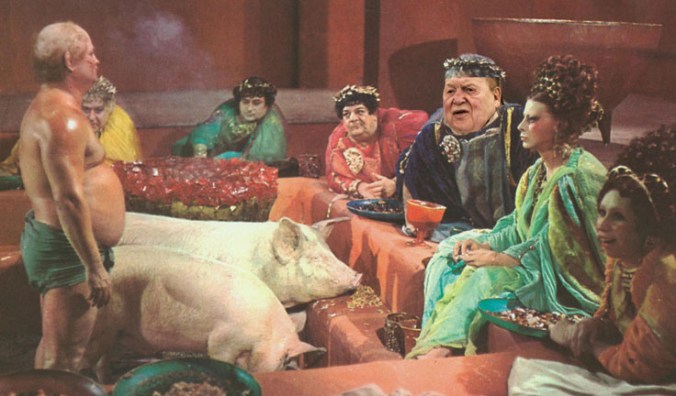
And so what have I left out? His tastelessness. His residency in Trump Tower out Liberaces Liberace in its rococo extravagance. Imagine spending a weekend locked in Trump’s glittering bordello (see top picture) without flinging yourself out one of its windows?

Liberace’s relatively understated master bedroom

Anyway, as the speaker in Springsteen’s “Thunder Road” puts it, “I’m no hero. That’s understood,” so I leave it to someone else to take on the task of providing us with a comprehensive list of Trump’s character flaws.

 

Tales of Bad Parenting

As my regular readers know, I possess an incredibly delicate, depression-prone sensibility. I find large “family friendly” crowds especially nerve-wracking, particularly if those families come from “all walks of life.” I can handle “non-family friendly” gatherings just fine. Heavy metal rock concerts, ecstasy-fueled raves, St. Patrick Day’s pub-crawls, and violent protests don’t bother me a whit; however, a day trip to somewhere like Six Flags hurls me headlong into Sylvia-Plath-like pits of deep despair.

We’re talking Mariana Trench, Dante’s Malebolgia, i.e., super subterranean levels of depression.

Imagine my horror, then, when one Saturday twenty years ago around noon, my 8th grade son Harrison asked if I would take him and his 6th grade brother Ned to the Coastal Carolina Fair.

“It’s the very last day,” he added.

Mental montage:


We were driving on Ashley Avenue in the small beach community where we live.[1] I looked over at my wife Judy whose expression was one that you might encounter if you had just informed someone that she was being sequestered for jury duty for a Gambino brother trial in Newark.

These words came out of my mouth: “You boys ever hear of Playboy magazine?”

They answered in the affirmative.

“Well, what if instead of taking you to the fair, I bought you a copy of Playboy magazine instead?

“You’re kidding, “ Harrison said, the glee in his voice approaching bicycle-under-the X-mas-tree levels.

“I’m absolutely serious,” I said. “By the time we return home, get ready, battle the bumper-to-bumper traffic, find a godforsaken place to park, trudge the five miles to the entrance, we’ll all be exhausted.”

“You’re sure you’re not kidding?”

“Watch me.”

What he left unsaid, but it registered loud and clear: “You’re the greatest dad in the world!”

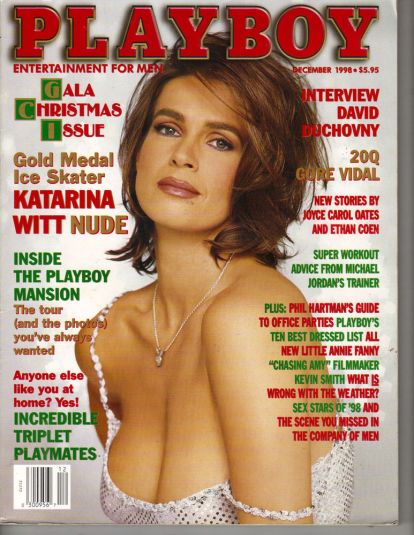
So we pulled into Bert’s Market, and I found the magazine rack and secured the current issue of Playboy, which featured the German figure skater Katrina Witt.[2] The transaction was made, the product sheathed in a brown paper bag.

Once we returned home, the boys scampered into the room and slammed the door.

The next day, while they were out skateboarding, I slinked into the room with the intention of checking out the issue myself, but they had hidden it, as if it were contraband.

Finally, I had to ask them outright if they minded if I took a look at it. I promised to give it back.


[1] Let me hasten to add that despite the tale that is to follow, our two sons have managed to graduate from college (one has a masters in linguistics, the other makes 30K more than his old man who has 31 years of teaching the same gig). In other words, they no longer live with us.

[2] People often ask why both boys majored in German. It just occurred to me that this event might have played a role.


Othello, the Musical Study Aid

othello_micromosaic

Look, boys and girls.  I know you’ve given up reading Shakespeare in its unvarnished King James glory.  I’ve seen clandestine copies of No Fear Shakespeare with its facing page of soulless translation next to “Tomorrow and tomorrow and tomorrow.”  Most of you don’t even go that far but instead check out  Sparknotes or CliffsNotes or Shmoop.  Let’s face it, no matter how faux hip they try to make the summaries sound, they’re still tedious.

Well, I have something better. Here’s a sneak peak of my summary of Othello.  The cool thing is it’s a song.  You just click the arrow below and in under two minutes you get all you need to know about the play.

Check out this free preview:

Sung to the tune of “Volare” or you can click below and hear it sung in the author’s gorgeous coastal South Carolina baritone.


Othello, woe, woe

Lascivious Mo-or.


He strangled Desdemona

For sleeping with another fell-a.


That dark-hearted Dago[1]

Whose name was Iago

He poisoned the pliant Moor’s ear.

He told him his sweetie

Had been indiscrete

With someone he once held so dear.


Othello, woe woe

Lascivious, Mo-or.


The climax comes in Act III

Thanks to a mislaid hanky.

Susceptible to a deadly sin,

The green-eyed monster does the Moor in.


He stabs the circumcised dog thus,

Ending the entire ruckus.


A corpse-strewn bed, not okay,

So villainous Iago dragged away


To face some badass torture

For creating such a tragic rupture


Othello, woe, woe,

Lascivious Mo-or . . .


[1] To my Italian friends: sorry, but Iago has very few rhymes.

Wesley’s Inferno, Canto 1

wesley-canto-1


In the second month of my 64th year,

I awakened in an all but abandoned

strip shopping center


where a scrawny hound

limped up and growled

mouth-foaming, rabid.


Suddenly, a screech —  an owl?

The hound turned around,

so I stepped away leaden-legged, slowly


away, inching straight ahead

with great effort, like in a nightmare,

petrified with dread.


Looking up, I noticed the car,

a cab, parked in the shadow

of a dumpster. “Sir! –“


“Shhhh, chill, thyself,” the driver said, “whoa.”

“Let me introduce myself.

I’m pretty sure you know


“The name Catullus. I’m here to help,

to be your guide,

but sushssssssssh, you whelp,


“you’ll awaken the dead

with that loud mouth.

C’mon, man, don’t be scared,


“Hop in. We’ll head south,

tour the hellscape,

the land of the uncouth.”


Click here for Canto 2.


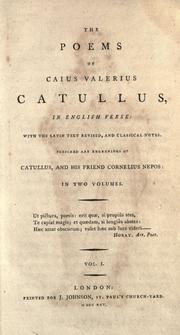
poemsofcaiusvale01catuiala

The Physiognomy of Trump’s Inner Circle

looking_wrong_way_900x506

Over her lifetime, my mother, bless her soul, accumulated an abundance of spurious wisdom based on a combination of unscientific observation and intuition. Sometimes she’d have forebodings and forbid me from doing rather pedestrian things like riding my bike home from the gas station where a flat tire had been patched. “No, I just have this awful, awful feeling,” she’d say. “Something’s bad’s going to happen if you ride that bike.” In other words, I was doomed to be flattened by an 18-wheeler or smack into a tree and spend the rest of my life in a wheelchair. So we’d cram the bike in the back seat and drive on home.

Undoubtedly, her sense of doom has contributed to my rather pessimistic view of the world. You know, irrational thoughts like thinking your team’s going to lose the Super Bowl even though they’ve racked up in the third quarter an insurmountable lead the likes of which has never been overcome in a half-century of Super Bowls.

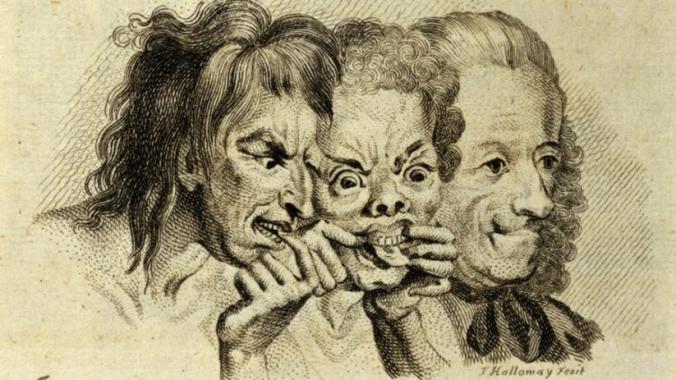
Sometimes, though, I think Mama did hit the mark with her unscientific conclusions — for example, her contention that time etches people’s ultimate personalities onto their faces by their habitually assuming certain telltale expressions, e.g., the angry, scowling malcontent’s mouth carving a perpetual frown, the bland sweet matron’s pleasant expression blanking away wrinkles —  the equivalent of the warning I received as a young child that my “face was going to stick like that” if I kept making grotesque faces.

[Warning: Neck-breaking Segue]

Just for the hell of it let’s take my mother’s theory and apply it to President Trump’s closest advisors.

Ladies, first. Kellyanne Conway.

Okay, I know I’m pulling a Trump here, criticizing a woman’s looks, but I’m not saying Kellyanne’s unattractive, just that she looks mean.  She’s a brittle-looking 49 to me, and no doubt being the target of so much ridicule will only harden her more, turning sinister those ersatz smiles aimed at the cameras of MSNBC.  Perhaps once she possessed a “sunny disposition” but something has soured it.  Working for Trump can’t be good for your soul.

To me she looks like she could be the illegitimate daughter of Phyllis Diller, though without Diller’s self-deprecating wit – a commodity that seems to be lacking across the board among Trump and his staff.

phyllis-conway

I’d cast Kellyanne as the wicked stepmother in the Snow Whites of New Jersey.

As far as looks go, I think Steve Bannon comes off as the coolest.  I like the way his abundant whipped-back hair sometimes falls in his eyes.  He’d, make a great character in a Tennessee Williams play, the rugged terrain of his face blotted with gin-blossoms, his eyes puffy, his spinal fluid pumping white supremacy.


CLEVELAND, OH - JULY 20: Stephen K. Bannon looks at his computer to see who will be the next caller he will talk to while hosting Brietbart News Daily on SiriusXM Patriot at Quicken Loans Arena on July 20, 2016 in Cleveland, Ohio. (Photo by Kirk Irwin/Getty Images for SiriusXM)

Banner’s the absolute opposite of Mitt Romney – disheveled, disorganized, paunchy, atheistic, hungover.*  Sure, he’s evil, but if I had to have 10 beers with one of these dark apostles, he’s be the one I’d choose.

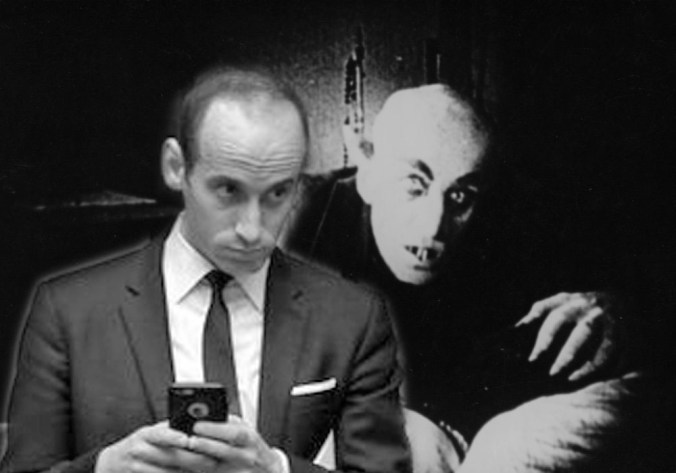
nosferatu-1922-003-max-schreck-00m-kgk

Would definitely choose him over Steven Miller.  I don’t know a thing about Steven Miller, who supposedly works hand on hand with Bannon, but certainly he and Nosterafu share a common ancestor.  His vulture-like demeanor precludes the possibility of empathy.

miller

Then there’s Reince Preibus.

Reince Priebus

I predict he’ll age in warp speed like Abe Lincoln.  Like, I say, working for Trump’s toxic.


*Full disclosure:  *Psychologically it could be that I’m projecting my own self-description on Bannon the way that Trump kept calling Hillary crooked.

Why Paul Ryan Should Read Flannery O’Connor

book-cover

“As far as I am concerned,” she said and glared at him fiercely, Christ was just another D.P.”

Mrs. May to Father Flynn in Flannery O’Connor’s “The Displaced Person”


The most heartbreaking of all Flannery O’Connor’s stories, “The Displaced Person,” seems particularly poignant given the ban on Muslim refugees instated last weekend.[1] Set right after WW2, the story dramatizes the attempted assimilation of a Polish refugee into bigoted backwoods Georgia.

As David Griffith points out in his excellent essay on the story in The Paris Review:

O’Connor takes her title from the Displaced Persons Act, which, between 1948 and 1952, permitted the immigration of some four hundred thousand European refugees into the United States. President Truman signed the bill with “very great reluctance” for what he saw as its discriminatory policy toward Jews and Catholics: the Act stipulated that, in order to be eligible, one must have entered Germany, Italy, or Austria before December 22, 1945, which, according to Truman, ruled out 90 percent of the remaining Jewish people displaced by the war. Similarly excluded were the many Catholics who’d fled their largely Communist countries after the December 22 deadline.

“The bad points of the bill are numerous,” Truman wrote. “Together they form a pattern of discrimination and intolerance wholly inconsistent with the American sense of justice.” He called the decision to enforce the December 1945 deadline “inexplicable, except upon the abhorrent ground of intolerance.”

In the story, O’Connor’s displaced person’s work ethic so far exceeds that of the slothful, under-compensated blacks and whites who work on Mrs. May’s farm that he threatens their livelihoods. Worse than that, he violates Southern taboo of racial purity when tries to contract a marriage between a black field hand and his young Polish cousin languishing in a camp back home.

When an outraged Mrs. May confronts Mr. Guizac about the proposed interracial marriage — “You would bring [that] poor innocent child over here and try to marry her to a half-witted thieving black stinking nigger” — he says quite sensibly, “She no care black [. . .] She in camp three year.”

In the end, xenophobia and bigotry triumph over charity as the displaced person – the one good man to be found in that collection called A Good Man Is Hard to Find – is done away with.

She had felt her eyes and Mr. Shortley’s eyes and the Negro’s eyes come together in one look that froze in collusion forever, and she heard the little noise the Pole made as the tractor wheel broke his backbone.

* * *

Obviously, refugees rank as some of the planet’s most vulnerable souls, driven from their homelands — from their familiar cultures — into alien worlds of gibberish, incomprehensible mores, and worse.

The refugees turned away this weekend had undergone as much as 48 months of vetting from several agencies and pose virtually no terrorism threat whatsoever. No one from the banned countries has ever committed a terrorist attack on US soil – unlike citizens from Saudi Arabia, Lebanon, and Pakistan, who weren’t included in the ban, people from countries where Trump has business interests.

Imagine the refugees’ heartache after so much suffering, boarding a plane headed for their dreamed of destination, only to be turned away and sent on a long, long flight back to perdition.

Of course, it’s not surprising that the sadist Trump would shatter the hopes of the dispossessed to score political points. After all, as many have pointed out, he’s cruel, hosted a reality TV show in which he lovingly embraced the chance to humiliate people with the words “you’re fired.” No one would expect him to take refugees’ plights to heart.

On the other hand, you might think Paul Ryan, who embraces his Catholicism the way Steve Bannon does his booze, would take Jesus’s words more to heart. But Ryan has come out fully supporting the ban.

I’ll let Jesus – the ultimate Displaced Person – have the last say:

Blessed are the poor in spirit: for theirs is the kingdom of Heaven. (Matthew 5:3)
Blessed are those who mourn: for they will be comforted. (5:4)
Blessed are the meek: for they will inherit the earth. (5:5)
Blessed are those who hunger and thirst for righteousness: for they will be filled. (5:6)
Blessed are the merciful: for they will be shown mercy. (5:7)
Blessed are the pure in heart: for they will see God. (5:8)
Blessed are the peacemakers: for they will be called children of God. (5:9)
Blessed are those who are persecuted for righteousness sake: for theirs is the kingdom of heaven. (5:10)
Blessed are you when others revile you and persecute you and utter all kinds of evil against you falsely on my account. Rejoice and be glad, for your reward in heaven is great, for so they persecuted the prophets who were before you. .5:11-12

Oh, by the way, what was the percentage of evangelists’ votes Trump garnered?


[1] The Trump’s claim that it’s not a ban on Muslims rings hollow when the administration offers exemptions to Christians and Jews.

tissot-the-lords-prayer

3 Contrasting Visions of the Trump Presidency

trum-piss

Boy, I really didn’t realize how dark Trump’s vision the US is until I read his inaugural address:

Mothers and children trapped in poverty in our inner cities, rusted-out factories, scattered like tombstones across the landscape of our nation, an education system flush with cash but which leaves our young and beautiful students deprived of all knowledge . . .

I first thought Trump may have actually written this himself. I couldn’t think of a professional speechwriter who would come up with a simile so imagistically clunky as “rusted-out factories scattered like tombstones across the landscape of our nation.”  But it turns out Miller and Bannon are to blame.

Anyway, are you visualizing the image?

Florida National Cemetery, Headstones, war heroes

tombstones

rusted-out factory

rusted-out factory


scattered

scattered

Perhaps there are more than a few rusted-out factories in Michigan, but down here in South Carolina where I live I couldn’t locate one to save my life. I asked my son who drove up from Orlando yesterday how many rusted-out factories he’d seen during the seven hour trip, and he said that the only factory he saw had smoke coming out of the smokestacks.

Also – and I’ll move on – the children in South Carolina suffering from poverty aren’t huddled in inner cities but eking out their existence without Medicaid expansion in shacks that litter the landscape like, um, shacks.

Okay, now that I got that off my chest, I’d like to offer brief synopses of how three thoughtful pundits perceive the Trump presidency, and I’ll go from darkest to brightest for sanity’s sake.

Sarah Kendzior

skSarah Kendzior, the author of The View from Flyover Country, is an anthropologist who specializes in authoritarian states and writes for various newspapers. She considers the accession of Trump as nothing less than catastrophic. She foresees a coming kleptocracy as a fragile democracy succumbs to fascistic institution-gutting by Trump and his mob-like nationalistic white-supremacist cronies.

In 2014 she served as an expert witness for an Uzbek refugee. Here is her account:

My job was to tell the judge about Uzbekistan: a country ruled by a dictator who abuses executive power to obtain personal wealth, threatens independent media and protesters, spies on real and perceived enemies, packs his administration with lackeys and relatives, refuses to disclose his financial holdings, molds public opinion through media domination, persecutes innocent Muslims under the pretext of fighting terrorism, and distracts the citizenry with pageants and spectacle, often proclaiming that he is making Uzbekistan great again.

She goes on to note

American authoritarianism will not be a carbon copy of other states. Mr. Trump’s authoritarianism will exploit pre-existing vulnerabilities – corporate corruption, institutional rot, systemic racism, a weakened economy, a struggling media, celebrity worship – and exacerbate them until our nation is no longer recognizable.

Should this occur, it may look like home, but it will not feel like home. What may be wrenched from us is a fundamental sense of security and sovereignty. When cable outlets are not promoting white supremacists or debating the humanity of Jews – yes, this is what our media airs now – they occasionally document Mr. Trump’s kleptocratic behaviour.

It’s almost dark enough to drive me to the nearest burnt-out strip mall to see if I can score some smack; however, Dr. Kendzior preaches resistance, not submission, and yesterday’s massive protests offer some hope that we’ll not take Trump lying down.

But we are still here, we the people, the inconvenient background players in Donald Trump’s self-serving shakedown of the American dream. We the people have been calling our representatives, demanding to know what is going on. We the people never did form that more perfect union, but we are not about to trade in the red, white and blue for the gold-plated facade of a tyrant tycoon.

We the people look out for each other – even when no one looks out for us.

David Brooks

brooksChances are you’re familiar with David Brooks, the affable guy-next-door conservative columnist for the NY Times and frequent contributor to the soon-to-be privatized PBS.

Brooks is considerably more upbeat about the survival of our democracy:

Some on the left worry that we are seeing the rise of fascism, a new authoritarian age. That gets things exactly backward. The real fear in the Trump era should be that everything will become disorganized, chaotic, degenerate, clownish and incompetent.

He sees hope in the possibility that the polarization Republicans and Democrats will end as the two join forces to quell the megalomaniacal maelstrom that will be Trump’s governing style:

We’ve wondered if there is some opponent out there that could force us to unite and work together. Well, that opponent is being inaugurated, not in the form of Trump the man, but in the form of the chaos and incompetence that will likely radiate from him, month after month.

Brooks ends his most recent column with this Panglossian hope:

With Trump it’s not the ideology, it’s the disorder. Containing that could be the patriotic cause that brings us together.

Peter Leyden

d6qgkbh_400x400According to his by-line, Peter Leyden “is the founder and CEO of Reinvent, a media company.” He sees Trump’s inauguration not as “the beginning of an era – but the end.”

He posits that Trump’s atavistic wish to flip the calendar back to the USA’s manufacturing heyday is doomed because of the evolution of technology into an ever-increasing interconnectedness of digital technologies, which “will be totally global and operate on a planetary scale.”

Whereas Brooks sees Trump uniting the Right and Left, Leyden foresees him being the “vehicle that will finally take down right-wing conservative politics for a generation or two” by “completely and irrevocably alienat[ing] all the growing political constituencies of the 21st century: the Millennial Generation, people of color, educated professionals, women.”

He goes on to say suggest that it’s actually ultimately fortunate that Hillary lost because she “would not have been able to finally bring down the conservative movement and its archaic ideology.”

Wesley Moore

meWesley Moore is a very confused and woebegone blogger. He has no earthly idea what’s going to happen. You can find him at any number of Folly Beach drinking establishments or loitering in the parking lots of burnt-out strip malls.
 

Cruel and Unusual Punishments

a-clockwork-orange-puremovies-620x299

[H]owever unlimited the power of the court may seem, it is far from being wholly arbitrary; but its discretion is regulated by law. For the bill of rights has particularly declared, that excessive fines ought not to be imposed, nor cruel and unusual punishments inflicted . . .

from the Eighth Amendment of the US Constitution

I have always loved the sound of the phrase “cruel and unusual punishment.” Sonically, you get all four of the basic metrical feet in four words, a trochee, an anapest, an iamb, and a dactyl, in that order. Plus the delicious elongation of the long U sounds of cruel and unusual, not mention the internal rhyme of “un” and “pun.”

Mr. Tom Waits, would you please indulge us with a recitation?


Something so horrid shouldn’t sound so enticing.

chair

To me, it’s amazing that some state approved punishments aren’t considered cruel and unusual. Take death by the electric chair, for example.


For execution by the electric chair, the person is usually shaved and strapped to a chair with belts that cross his chest, groin, legs, and arms. A metal skullcap-shaped electrode is attached to the scalp and forehead over a sponge moistened with saline. The sponge must not be too wet or the saline short-circuits the electric current, and not too dry, as it would then have a very high resistance. An additional electrode is moistened with conductive jelly (Electro-Creme) and attached to a portion of the prisoner’s leg that has been shaved to reduce resistance to electricity. The prisoner is then blindfolded. (Hillman, 1992 and Weisberg, 1991) After the execution team has withdrawn to the observation room, the warden signals the executioner, who pulls a handle to connect the power supply. A jolt of between 500 and 2000 volts, which lasts for about 30 seconds, is given. The current surges and is then turned off, at which time the body is seen to relax. The doctors wait a few seconds for the body to cool down and then check to see if the inmate’s heart is still beating. If it is, another jolt is applied. This process continues until the prisoner is dead.  (Wikipedia).

Here’s a link to a more thorough explanation via video.

Although only 9 of the 45 executed in the US in the last 15 years have gone to the electric chair, it is still used, and, therefore, not all that “unusual.” The rest of the state-sponsored offings were rendered via lethal injection, but now that drug companies are balking at providing lethal drugs, the good ol’ electric chair might make a comeback.

To me a truly cruel and unusual punishment would be something like this, not lethal, more like an “enhanced timeout.”

Let’s say some miscreant has mocked someone with a physical disability.

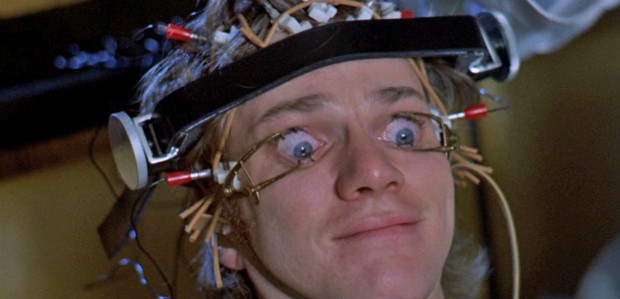
You strap him into an electric chair, inject him with an amphetamine, and force him to watch ten consecutive episodes of Little House on the Prairie.

I guarantee you he’ll never do it again. In fact, he might prefer the actual electric chair and its 2000 volts.

living-room-modern-brown-living-room-theater-wall-unit-with-tv-entertainment-center-set-in-modern-living-room-entertainment-centers


A Year Most of Us Would Like to Forget

Gebhard Fuge: An den Wassern Babylons

Gebhard Fuge: An den Wassern Babylons

A couple of posts ago, I stated that I wasn’t going to do my annual review because I lacked the courage; however, I’ve changed my mind hoping that the exercise might provide some catharsis, serve as a purgative to wash away pity and terror, as I rent my sackcloth and tear out my few remaining  strands of hair.

January

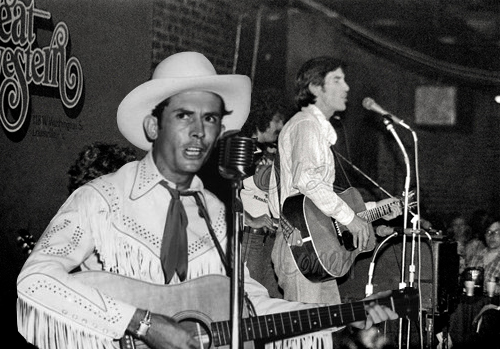
Prophetically setting the tone for horror over the horizon, my very first post this year was a New Year’s Day comparison of Hank Williams and Townes Van Zandt, two doomed cool rocking daddies who both died on New Year’s Day 44 years apart.  Click Here.

hank and townes

Of course, David Bowie would die later that month while those undelightful Bundry Boys, who later would be acquitted, occupied federal property in Montana.  Instead of going there, I’ve linked the cautionary tale of my first acquaintance with alcohol.  Read it and weep. Click Here.

Folly Beach Tales of Intoxication

February

In February my Aunt Virginia died, which led to musing on mortality as my siblings and I scattered her remains to the Folly River.  Click Here.

ashes to ashes

Here’s also a review of Kendrick Lamar’s To Pimp a Butterfly, which I listened to driving to a funeral home after a stranger in a bar the previous evening showed me photographs of her husband’s severed finger stumps, which he had acquired a couple of hours earlier. Click here.

March

patPat Conroy, the father of a close friend, died.  She and her sister stayed with us during his hospitalization. Click here.

In addition, March brought us the news of the return of Judy Birdsong’s T-Cell Lymphoma, which, of course, was profoundly disheartening.

This post was created on Good Friday right after finding out the news.  Click here.

April

Teaching Keats while in despair proved quite difficult but do-able.  Click here.

And, of course, Prince, whom I dubbed “the Lord Byron of Pop, died.  Click here.

screen-shot-2015-12-08-at-7-58-05-am


May

Yet another death, this time a student’s.  Click here.

And I review Don DeLillo’s just released not-exactly-upbeat novel, Zero K.


Edward Hopper: "Morning Sun"

Edward Hopper: “Morning Sun”

June

dylan-ali-2-300x201June brought us a mass shooting in an Orlando Nightclub.  Click here.

Ali, a sort of boyhood hero died, which took me back to the early 60’s when my father tried to teach me how to box.  Click here.

So I decided to cheer myself up by reading the Brothers Karamazov.  Click here.

the author fleeing from an ant attack

the author fleeing from an ant attack

July

Trump + Putin = Love. Click here.

Also, there was that festival of bad taste known as the Republican convention. Click here.

Adelson's luxury suite

Adelson’s luxury suite

August

Okay, how about a little sunshine.  I donned my anthropological pith helmet and crashed a bachelor’s party at Chico Feo (click here) and talked a colleague into letting me publish a brilliant letter she wrote to her students (click here).

September

Snazell, Sarah; Doppelganger; Brecknock Museum and Art Gallery; http://www.artuk.org/artworks/doppelganger-178168

Snazell, Sarah; Doppelganger; Brecknock Museum and Art Gallery; http://www.artuk.org/artworks/doppelganger-178168

In September we travelled to Houston for treatment, and my Judy Birdsong met the other Judy Birdsong, a bright light in a year of darkness (click here).

October

Before Leonard Cohen died, I published this piece after reading David Remick’s splendid New Yorker article.  Click here.

13c6ce05571f948557d191ce5f1d7cb0

Blow Hurricane Matthew, break your checks, rage blow. Click here.

November 

Oh my God NO! Click here.

melania-libertyDecember

So here we are.  On the edge.  Waiting.  But, hey, thanks to all for reading, especially my regular crew.  Happy New Year!
.