The Other Judy Birdsong

Snazell, Sarah, 1965-1999; Doppelganger

Snazell, Sarah; Doppelganger; Brecknock Museum and Art Gallery; http://www.artuk.org/artworks/doppelganger-178168

Several years ago, sometime after the turn of the last century,[1] my wife Judy Birdsong received an invitation to a party in Houston.  Judy replied to the email, stating that the cookout sounded lovely, but she was in Charleston, SC, so doubted that she was the targeted Judy Birdsong.

A bit later, she received another invitation, this one to a PTA meeting, and once again, Judy of Charleston replied to to let the sender know she was barking up the wrong aviary.

Then, more exotically, Judy received a host of emails from Ireland, again addressed to the Houston Judy Birdsong.

As it turns out, the Judy Birdsong of Houston is the daughter of an Irish immigrant mother and Lebanese immigrant father, and one of her 70 odd Irish cousins – no, it must have been a great uncle – was commemorating his 60th year as a priest so the clan was meeting somewhere in the Old Sod to celebrate a memorial mass he was officiating.

Of course, Roman Catholicism = Guilt, so the Houston Judy emailed the Charleston Judy a message of abject apology for all the trouble she’d put her doppelgänger through, and, of course, my Judy, the Charleston Judy, said, no, no, no — it was fun!

Thus began the relationship of the two Judy Birdsongs.  In their subsequent email correspondence, they discovered, among other things, both were the mothers of sons, worked as counselors in schools, were married to fantastic husbands, . . ..[2]

Throughout these erroneous emails, the Judy Birdsongs learned bits and pieces about each other’s lives, would ask how things were going, and in essence, become e-pen-pals.

Then the email tables switched.  The Charleston Judy Birdsong discovered that she must go through a severe regiment of EPOCH chemotherapy, went wig shopping, and emailed herself some jpegs of various wigs that ended up in the mailbox of the Houston Judy Birdsong.

Statements of encouragement and promises of prayers came from Houston.

Judy went into remission, celebrated her older son’s wedding, sent the other Judy photos.

Unfortunately, Judy’s cancer came back, and via the Caring Bridge website, last week the Charleston Judy received following message from Houston Judy on hearing we were headed to the MD Anderson Cancer Center:

Judy Birdsong Moore- our Judy Birdsong story continues. You have been on my mind every single day and today I finally logged in to get an update on you. Holy Moly…..you are coming to Houston? Sweet friend, if you feel up to it (and I will follow your wishes) I would LOVE to come and see you! The 2 Judy Birdsong’s can finally meet! You can’t ask for a better place than MD Anderson….they do amazing things. Please, please give me an update when you are here. After all these years of communicating, I think it’s time for us to meet! Positive thoughts and prayers from me to you. I am back at school too and just dropped off my youngest at UT. All is well here. And HOUSTON is a wonderful place (Hot and humid but I’m sure not as beautiful as Folly).

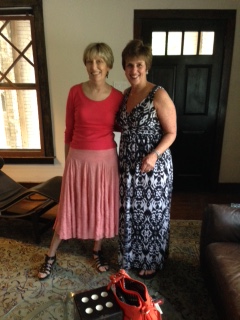
So on Labor Day a knock on the door of our Airbnb apartment produced – you’ve guessed it – Judy Birdsong, who took us on a sight-seeing tour of Houston and to lunch where we could chow down on authentic Tex-Mex, and it was as if we’d known her our entire lives, the conversation as free and natural as it is among soul brothers and sisters.
IMG_0086

All in all, no matter the problems that arise – and they will, they will – the world is a marvelous place full of good, compassionate people, and Judy and I feel so very fortunate to have so many people praying, sending thoughts, and caring for us.

It’s very humbling.

Postscript: Alas, my Judy died on Mother’s Day of 2017, but our 40 years of love will live on as long as my boys and I breathe.


[1] Forgive the pretention, but I just love the mustiness of the phrase.

[2] Actually, I made up the husbands thing to complete my propensity to adhere to the time honored tradition of series of three.  A priest, a rabbi, and an atheist walk into a crack house . . .

On Going Deaf

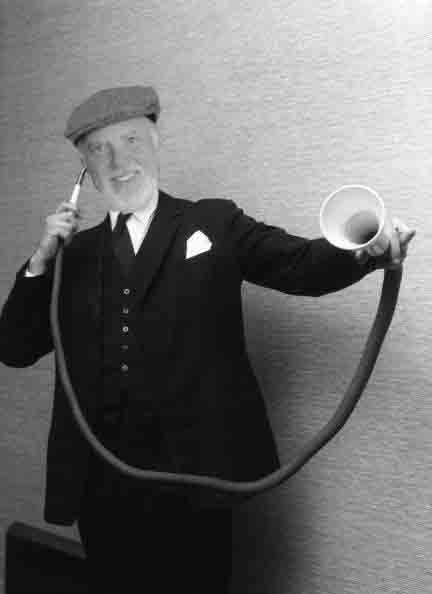
ear-trumpet

In the early ’60’s, as preadolescents (alas there were no “tweens” back then), we’d play a game in which our 11-year-old-selves would pose questions that featured awful binary alternatives: “Which would you rather do: slide down a razor blade into a pool of carbolic acid or kiss [insert name][1]?

Sometimes someone might pose a less silly question like “Would you rather be blind or deaf?” We’d seriously contemplate the awful alternatives, argue back and forth, weigh the good cons versus the bad cons.

Now that I’m practically deaf, I can assure you blindness is preferable. The sounds “deaf” and “death” are indistinguishable to someone losing her hearing.  Once it is altogether gone, you’re trapped in a silent wilderness of mirrors.

Bedrich Smetana

Bedrich Smetana

In September of 1874, the Czech composer Bedrock Smetana’s ears started ringing.  It worsened, crescendoed, went from high-pitched shriek to ocean roar, which eventually led to total trapped-in-a-mirror deafness, a sort of horrible relief.

Here he describes the process in a letter.

That ringing in my head! That noise! … that is worst of all. Deafness would be a relatively decent condition, if only all was quiet in my head. But the greatest torture is caused me by the almost continuous internal noise which goes on in my head and sometimes rises to a thunderous crashing. This dark turmoil is pierced by the shrieking of voices, from strident whistles to ghastly shrieks as though furies and demons were bearing down on me in furious rage.

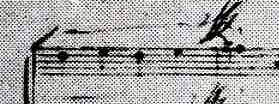
In his late autobiographical composition String Quartet NO. 1 (aka “From My Life”), Smetana dramatizes this phenomenon with a sudden intrusion of a high E into the melody late in the 4th movement a couple a minutes before the end.

Here is the musical notation in his own hand:

Smetana_Quartet_I259

Listen.  Can you hear it? :

* * *

Even though my paternal great aunts suffered hearing loss — Aunt Polly was known to blast drapery rippling farts that she seemed unaware of — I prefer to blame my disability on Bruce Springsteen.  On 1 August 1978 we saw the Boss from the first row at Gaillard Auditorium in Charleston, a terrific concert from the first chords of the Bobby Fuller Four cover of “I Fought the Law” to the encore cover of Gary US Bonds “Quarter to Three.”  However, after the show and for two days afterwards I suffered a milder case of Smetana-like ringing in my ears accompanied by ear-canal itching.

Eventually, however, the ringing and itching stopped, but alas, ever since then my hearing has been in a state of decline.

* * *

In the late summer 2004, when I was visiting for the last time my ALS-stricken bosom friend[2] Tom Evatt, I couldn’t make out some of his whispery rasp, so I nodded stupidly as if I could understand what he was saying.

As I leaned towards him, his face darkened into displeasure.

“What did I just say?”

“Um, I’m not quite sure.”

“GET A HEARING AID!”

That was the first time I was caught out, and I can’t tell you how bad I felt deceiving Tom, but now it’s been another dozen years, and I often find myself nodding stupidly as I attempt to become a lip reader.  The good news, I guess, is that for 6 grand I might be able to get some help via a hearing aid, and the time has come for me to check out that possibility. Otherwise, I fear that among this generation of my students, my legacy will be that of the old deaf coot you could insult right in front of his face, and he would smile and sagely nod his head.

So then I can retire and become the old man in Hemingway’s “A Clean Well-Lighted Place”:

It was very late and everyone had left the cafe Chico-Feo except an old man who sat in the shadow the leaves of the tree made against the electric light. In the day time the street was dusty, but at night the dew settled the dust and the old man liked to sit late because he was deaf and now at night it was quiet and he felt the difference. The two waiters inside the cafe knew that the old man was a little drunk, and while he was a good client they knew that if he became too drunk he would leave without paying, so they kept watch on him.

11th January 1963: A man demonstrating a long distance ear trumpet, at an exhibition of custom-made 19th century hearing aids in London. It is one of the many 19th Century hearing aids owned by Amplivox-Ultratone, and was originally made by F.C. & C.V. Rein & Sons. (Photo by John Franklin/BIPs/Getty Images)

[1] E.g., Phyllis Diller’s daughter Loquacia Quasimodo

[2] Wait along enough and antiquated clichés can come again to life.

The Past’s Future


Fritz Lang's Metropolis

Fritz Lang’s Metropolis

In the early Sixties, my maternal grandparents stayed in a subdivided Victorian house, the upstairs having been split into two apartments, the bottom story uninhabited and warehousing a portion of some wealthy family’s estate: furniture, rugs, an extensive library. We’re talking hundreds and hundreds of books. In the side yard there was a well.  You could remove the cinder block and then the plywood and look down at your reflection in water.

Although not an adventurous child, somehow I gained entrance into those off-limit rooms downstairs, the furniture sheeted, the air stale. I’d sneak down there and explore. After repeated visitations and investigating some of the books I could reach on the lower shelves, I started secretly “borrowing” individual volumes of the Complete Works of Edgar Alan Poe.

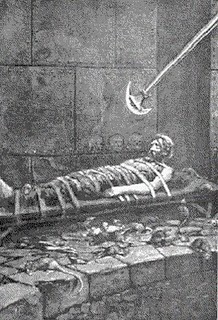
Each slender volume, bound in red, featured sheer paper sandwiching occasional engravings of ravens, subterranean crypts, rats gnawing on ropes of a prisoner contemplating a pendulum. I’d take one volume at a time, terrified I’d get caught. Into the forbidden first-story space I’d sneak, carefully replace last week’s purloined octavo, surreptitiously flip through other volumes, and choose another based solely on the luridness of the illustrations. I was only nine or so, so most of the prose lay beyond my reckoning, but I could manage lots of the poetry and some of the stories (“The Tell Tale Heart,” for example). Unable to distinguish bathos from profundity, I became completely enamored of the singsong silliness of “The Raven,” devoting several stanzas to memory. “Annabelle Lee” could bring tears to my eyes. Something sinister lay beneath those works, so the whole enterprise smacked of trafficking in pornography – though pornography would not have been in my early Sixties vocabulary.

I’d smuggle the forbidden text and read it surreptitiously in bed because I knew my parents/ grandparents wouldn’t approve of my trespassing and borrowing without asking. I liked the musty smell of the books, the way the pages whispered when I turned them, the way the illustrations lay perversely beneath diaphanous paper. Despite the buxom space sirens who cavorted on the covers of pulpy paperbacks, Sixties sci-fi couldn’t compete with the deep purple sublimations of diseased consciousness that I found in Poe.

As a child, the musty past interested me much more than the disinfected future.

pit-pendulum.bmp-2


* * *

In those days, at my grandparents’ apartment, in the afternoons, we’d watch The Micky Mouse Club and Flash Gordon reruns. Flash Gordon appealed to me, not because it was futuristic, but because it was old-fashioned, serials my mother had watched as a redheaded girl at matinees during the Great Depression, the stories more or less Medieval, Ming the Merciless versus Buster Crabbe of the hyacinthine locks, a hero who could probably trace his lineage back to Perseus.

Occasionally, on the Mouse Club, we’d visit Tommowland for a glimpse at the wonders that the future might hold – if there was going to be a future. With Kruschev banging his shoe on the table at the UN and third grade atomic detonation drills, you weren’t so sure. Nevertheless, we would sometimes wonder what it would be like to live in the year 2000, calculating our ages when that distant day would arrive with its flying automobiles and uniform-like clothing.

The Future circa 1955

The Future circa 1955

Accurately imagining the future is not an easy task. I’ve written elsewhere about Huxley and Orwell and their relative prowess at prognostication. On the cinematic side, Fritz Lang and Kubrick deserve a nod. However, in my limited exposure to old-fashioned sci-fi and its forays into the future, I can’t recall anyone predicting the vast availability of information we now enjoy, which strikes me as the most meaningful aspect of the difference between yesteryear and now.

For example, if I were a bit wealthier, for a mere $6500 I could purchase that edition of Poe’s Complete Works I described above. Here’s a description:

New York. George D. Sproul Company. 1902. Lavishly bound in Publisher’s Deluxe custom, 3/4 burgundy crushed morocco and marbled boards. Gilt-tooled spine compartments with fleural motifs.Gilt-tooled raised bands. Marbled endsheets. t.e.g. 8vo. 5.5″ x *.25″. The Monticello Edition. This Edition Limited to only 1000 numbered sets of which this is #330. Illustrated throughout with delightful, tissue-guarded monochrome plates Editied by renowned Poe scholar James A. Harrison, the Monticello Edition of Poe’s Works is one of the scarcest of early compilations, with no complete set appearing at auction in more than thirty years.The 17 Volumes are comprised of: (truncated).

The wonder of it all! My cobwebbed memories come to life, a few keystrokes away! Yes, the volumes were red (okay, burgundy crushed morocco) and, yes, illustrated with tissue-guarded monochrome plates. (Looking for suitable illustrations for this topic, I discovered these volumes in a Google search after I had begun this post – the very volumes that I had treasured as a boy). In a sense, the past is at my fingertips because I can conjure its images.

In 2016, if I have a hankering to view a complete set of Flash Gordon serials, I can have Dale Arden and Ming the Merciless streaming through my computer in virtually no time. World classics of the public domain await plundering – in Latin for the scholar, SparkNotes for the slacker.

O, my baby boomer brothers and sisters, the future is now! Water pours automatically as your hand nears the faucet head; toilets flush, somehow knowing you’ve finished. I can talk to my son in real time and watch him sip a beer in Nuremberg as I languish six hours behind in the States awaiting our own cocktail hour. Somehow, the triumph of capitalism has enabled us to get stuff for free – whether it be the Aeneid or Skype.

Yet, the past still strikes me as more seductive, more fecund, as the future both expands and shrinks us, offering us worlds of information and entertainment, but distracting us from the glories of the natural world, the sunlight illuminating in steps your bedroom wall as you lie there not wanting to get up.

15598853

Hillary, Barry, and Me

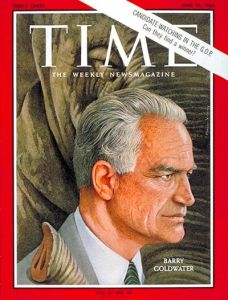
1101630614_400Like Hillary Clinton, I, too, worked for Barry Goldwater in the ’64 election, although I was only 12. Growing up in Summerville, South Carolina, I had inherited this tiny hamlet’s folkways, which is just another way of saying I was a racist, although a relatively benign one. In Summerville, not only could you encounter a “whites only” sign above the laundromat, but also patients in doctors’ offices were segregated into separate waiting areas, like dogs and cats waiting to see a vet.

My parents did not hate black folk – we were taught not to use the n-word and loved our “maid” Alice like an aunt – but my folks deemed “colored people,” as they called them, inherently inferior.[1] Obviously, given that he had voted against the Civil Rights Bill, Barry Goldwater was their man, so our 1964 Ford Falcon station wagon sported an Au(H20) bumper sticker because we wanted “a choice not an echo” and “in our hearts” we knew “he was right.”

The fledging Dorchester County Republican Party had rented the defunct movie theater as Goldwater headquarters where they distributed buttons and bumper stickers, and on a couple of Saturdays played the old Fay Wray King Kong movie for an admission fee of ten cents. Among other nominal duties, my job at the theater was to climb a ladder and position letters on the marquee outside. This theater didn’t have a balcony, and even if it did, I doubt if black children would have wanted to donate their pennies to the Goldwater cause. Once, when I took a short cut through one of their communities on my bike (which also sported a Goldwater sticker), I was pelted with rocks, a valuable lesson that freedom of speech can be dangerous.

Well, obviously, Goldwater lost, and I was heartbroken, but attitudes were slowly changing in Summerville. For one thing, the public basketball courts became integrated, even before the school became fully so. I played three-on-three half-court b-ball there after school and on Saturdays. The black kids had different rules – you didn’t take the ball back past the foul line if you got a defensive rebound – but we all got along well, and I got to be friends with these boys before they became my classmates when Summerville’s black and white schools finally merged in 1969. I remember passing a bottle of Boone’s Farm to my pal Mookie at my friend Adam’s one night as we took turns taking swigs. This action would have enraged my father if he could have seen it, even though he was Alice’s children’s Santa Claus, even when we couldn’t afford it.

And so, like Hillary, I switched political sides, I started cancelling my father’s vote out — my very first one cast for McGovern — and politics became a topic best not broached at the dinner table, along with race, and a host of other potentially explosive issues.

It’s hard to believe it’s been fifty years, and although things are much better now, obviously, white supremacy is still alive in darkened, un-Christian anti-intellectual cesspools, and I suspect I won’t see that change in my lifetime. But things do change; people do change sides. It will be interesting to see how many South Carolinians do in this election – if not completely change sides, go for the libertarian candidate.


[1] Alice, for example, called me “Mr. Rusty.”

You can't see it, but there's a Goldwater sticker on the back bumper

You can’t see it, but there’s a Goldwater sticker on the back bumper

The Fog of Recollection: What We Half Perceive and Half Create


 detail from Aydin Aghdashloo, Memories of Ice & Fire III

detail from Aydin Aghdashloo, Memories of Ice & Fire III

Even as a very young child, I sought escape through books, movies, television, and imagination.  Unlike my first best friend Bert Pearce, nature held no magic for me.   To Bert, a frog was a creature of wonder, something to stare at for fun even though it just sat there like a stone.  From him I learned that they arose from tadpoles, which was cool,  because it was mysterious with intimations of procreation.

I remember dreaming of a pond in kindergarten and being able to breathe while I swam underwater.

The window sill of the kitchen of Bert’s rambling clapboard house on Laurel Street served as a sort of laboratory, lined with prison jars of lizards and frogs and caterpillars, but to me, a frog was a creature likely to pee on you, a creature whose skin or hide or whatever you called it would feel bumpy or slimy or both.  In a word, yucky.

March 2011 018

This would have been 1957.  We were only five, but I remember that Bert, not his mother, made our lunches, always peanut and jelly sandwiches, and when he poured milk in glasses, he poured a bit in one, then the same amount in the other, repeating the process, carefully eyeing the levels, making sure they were absolutely even until they reached the top of the glass.

But with memories, especially distant memories, you never know.  Like dreams, they’re aery, unsubstantial, slippery, unreliable, dubious mental constructs that may bear very little resemblance of what transpired.

For example, maybe he only had one frog in one jar and only made lunch once.droppedImage

My family stared not at frogs or butterflies but at movie and television screens.  Before my youngest brother and sister were born, Mama and Daddy took my brother David and me to drive-in movies, the Magnolia and North-52, where I could experience the first half of adult movies like Cat on a Hot Tin Roof, Butterfield 8, and Vertigo before falling asleep from boredom.  Brother David and I also got to enjoy Winstons, which tasted good like cigarettes should, as we breathed in prodigious quantities of secondhand smoke, which no doubt provided better protection than the Pic insect coil repellent burning away on the dashboard.

0

I recall one vivid memory of going to the concession stand during Vertigo and not being able to find the car on the way back because as Jimmy Stewart suffered his nightmare amid strobing colors on the distant screen, the projection/reflection kept changing the colors of the parked cars like a clicking kaleidoscope, a frightening Kafkaesque experience for a seven-year-old laden with Coca-Colas and popcorn

I’m much more confident of this memory, however, because it has been reinforced by many retellings.

The television stayed on at my house from the time we were up until the Star Spangled Banner signaled that Big Chief Test Pattern was about to appear with his high-pitched warning before the upcoming six-hour blizzard of snow on the screen.  I watched Elvis swivel on Sullivan and later the mop-headed Beatles in skinny pants stand stiffly and play music amid screams.  Watching Ed Sullivan was a sabbath ritual much more practiced than the two-minute drive to church.

Also, every Wednesday for a time my mother took me to Poppleton’s Five and Dime where she bought me cardboard bound reprints of classic novels that cost 59 cents. I can almost still smell the fresh, slightly burnt odor of the pages as I hung with the Swiss Family Robinson or watched Tom hoodwink his pals into whitewashing the fence.

So, unlike my friend Bert, who had left my life and moved to Mt. Pleasant, no doubt collecting samples in the backyard of his new brick home, I became a sedentary soul and traded the beauty of the outside world and its paragon of animals for the inner world of Alice’s Wonderland where playing cards could talk and falling down didn’t hurt.

Illustration by Pedro Campea

Illustration by Pedro Campea

Nature versus nurture?  Chicken or egg?  Was Bert’s fascination with flora and fauna innate or did his mother Carlotta instill his interest?  If Daddy had taken me hunting every Saturday, would I now have antlers holding camo-colored hats in my study rather than shelves stuffed with books?

William Wordsworth addresses this mystery in “Tintern Abbey” when he writes

. . . Therefore am I still

A lover of the meadows and the woods,

And mountains; and of all that we behold

From this green earth; of all the mighty world

Of eye, and ear,–both what they half create,

And what perceive . . .

102-7

Half-create . . . what perceive.  Do we essentially construct our own worlds, our malleable minds morphing like tadpoles into frogs – or, perhaps to employ a more pleasing image, caterpillars into a butterflies?  Do our predilections and experiences constantly reconstruct our minds to conform to their blueprints?

And does the Protean mind we possess at this instant reconstruct memories to adhere to its present decor, replacing the portrait of boring old Gertrude with glamorous, chain-smoking Aunt Sarah, who shot herself in the head with the door cracked open for her first cousin to see?

Get on it, neuroscientists.  I want to know.

Ordinary Objects in the artist creative mind 1887 John Peto paintings

Ordinary Objects in the artist creative mind 1887
John Peto paintings

The Curable Romantic

Dark blues make me frantic

Black jazz brings me down.

Once I was romantic.

Now I stay uptown.

“Harlem Madness” – Fletcher Henderson, Ned Williams, and Irving Mills

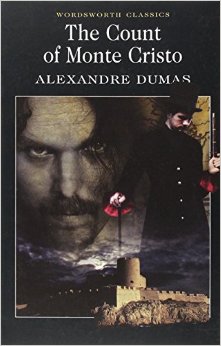
519aMi139BL._SY344_BO1,204,203,200_I was eaten up with Romanticism when I was a boy growing up in Summerville, SC. On any number of bright, sunny spring days, perfect for playing outside, you could find me in the cave of my bottom bunk reading The Count of Monte Cristo or The Complete Stories of Edgar Allan Poe.

I was especially a sucker for doomed protagonists who suffered the perpetual ache of unrequited love, sardonic swashbucklers like Cyrano de Bergerac or Poe’s gloom-devoured intellectuals forever grieving for their lost Lenores. Of course, I didn’t share these somewhat pathological predilections with my friends or family. Maybe if I had, some kind soul might have pointed out that celebrating heartache is unhealthy and Darwinianly ineffective when competing for mates.

A consequence of this peculiar focus is that I developed an anachronistic, almost Victorian, appreciation of females as icons worthy of worship, practicing what Yeats describes in his poem “Adam’s Curse” as “the old high way of love.”*

There have been lovers who thought love should be

So much compounded of high courtesy

That they would sigh and quote with learned looks

Precedents out of beautiful old books;

Yet now it seems an idle trade enough.

“Idle” as in non-productive. In those days, snagging a touchdown pass or smacking a double was a more reliable pathway to a young girl’s heart than penning cliché-ridden verse that doesn’t scan — still is, as a matter of fact.

So I had a string of crushes I worshipped from afar, for example, the beautiful Joanne Elder, whom I would escort around the circumference of Dogwood Circle never daring to clasp her hand and confess my adoration. I had cultivated an ideal medieval maiden in my psyche and projected her onto this not intellectually curious but practical girl. Meanwhile, in any number of carport utility rooms and out in the still abundant woods around the subdivision of Twin Oaks, other less literary 7th graders were learning how to French kiss. I still can clearly remember one day on an overcrowded school bus Joanne’s writing in the dust on the back door’s window the name of Steve Hoates.

[cue funereal violins]

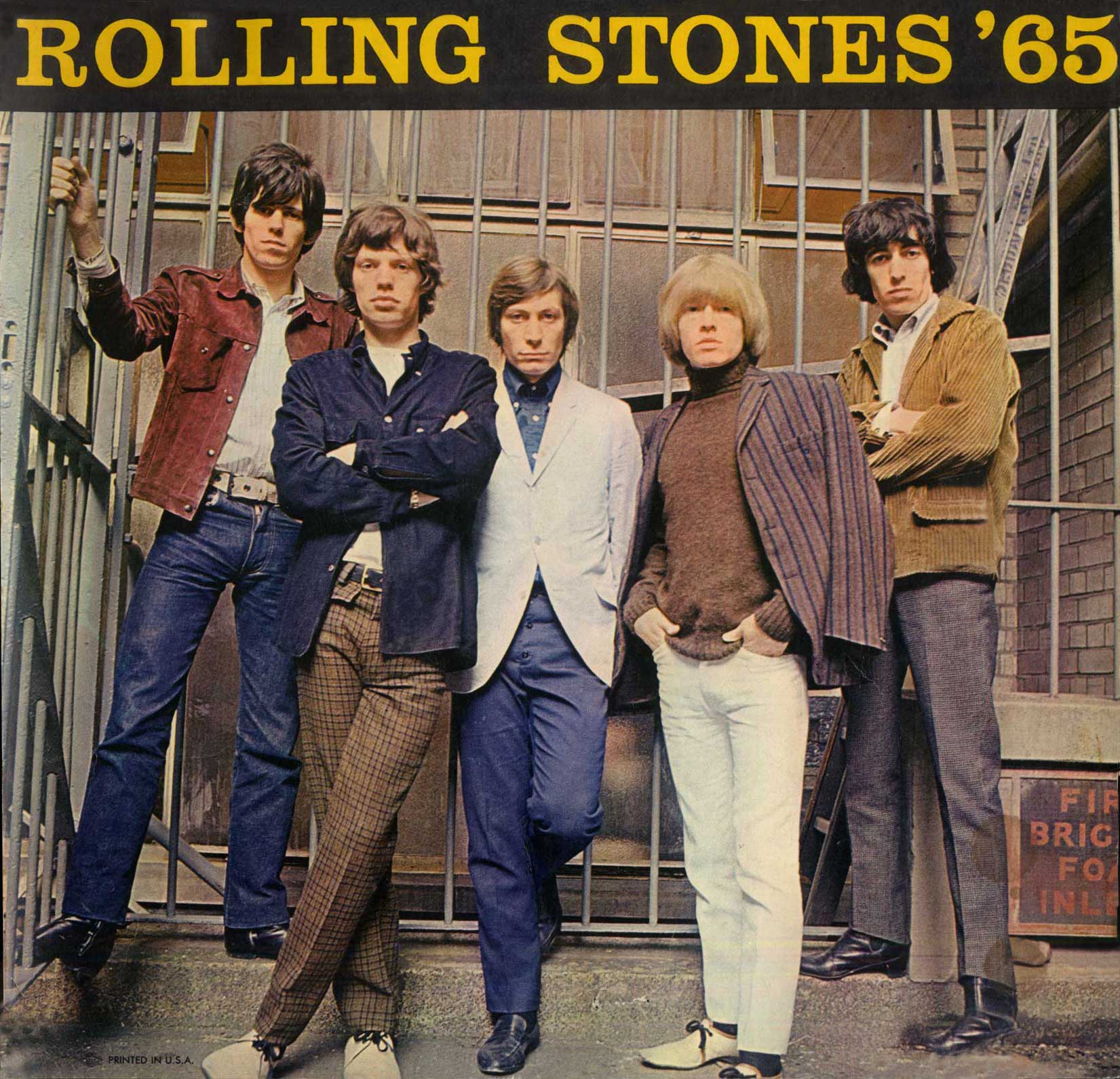
stones-65Puberty itself was a great help in overcoming the blight of romanticism. I began reading less and listening to music more, Mick Jagger replacing Edmond Dantès as a role model, and despite singles like “As Tears Go By,” many Stones songs like “Under My Thumb” and “Stupid Girl” were openly dismissive of “the fair sex,” if not downright misogynistic.

My attitude coarsened a bit.

A couple of real live heartbreaks made me realize that the Marvelettes were right about the vast number of fish teeming in the sea of love. I came to realize that when you “got a heartache,” you’re much better off using your fingers to punch in jukebox selections rather than manipulating typewriter keys.

I figured out that the old Yeats was wiser than younger Yeats. Take it away, Crazy Jane:

A woman can be proud and stiff

When on love intent;

But Love has pitched his mansion in

The place of excrement;

For nothing can be sole or whole

That has not been rent.

Cyrano and Me

Cyrano and Me

*Of course, over a half-a-century later, I realize this attitude of placing females on pedestals is sexist, a byproduct of the patriarchy, etc, but look up at that less-than-ninety- pound weakling right above this note.  He didn’t know any better.

Jive and Prejudice

enhanced-buzz-5008-1375426913-1Coincidentally today, on my 38th wedding anniversary, we finished Pride and Prejudice in the 10th grade Brit Lit survey course I teach.   I’d like to think that over the thirty years I’ve been teaching P&P, I’ve managed to come up with ways to make it engaging for the students, even for some of the boys, who, if they read at all, prefer action-packed fare like Fight Club or sci-fi/fantasy titles like Fine,We’ll Do It in My Spaceship Tower. Unfortunately, for them, in Pride and Prejudice, Napoleon’s troops don’t invade Merton and shish kabob Mr. Wickham, only to be repelled by non-commissioned Darcy and Bingley looking fabulous on their prancing steeds.

Anyway, to prepare students for the pleasures of P&P, you first have to get across that the novel is prototypical, that it’s the mother of modern romantic comedy. [1]

Once that’s established, I concentrate on the characterization, and what a rich array we have. It takes a rather humorless drudge not to find Mr. Collins funny and a very unobservant one not to have encountered an asshole like Mr. Wickham somewhere along life’s escalator ride.

Anyway, today, we looked at the last few chapters, especially the tete-a-tete between Elizabeth and Darcy in “Chapter 60” when she asks him “to account for his ever having fallen in love with her.”

He replies that he couldn’t “fix on the hour, or the spot, or the look, or the words, which laid the foundation,” which could very well describe my own falling in love with Judy Birdsong.

Like Darcy, “I was in the middle before I knew that it had begun.”

Judy jokes that we have a “marriage made in Milwaukee” because we met in graduate school as bartenders at the student union bar – the not quite immortal Golden Spur — back in those halcyon days when 18-year-olds could drink legally. I must have first met Judy B right before the Spur opened for the semester in a meeting conducted by University employees in charge of the Russell House. I cannot say that it was love, or even attraction, at first sight.

In fact, alas, these are the very first words I said to her after she had benignly asked me how it was going.

“You can call me ‘Wesley’” I said, “or ‘Rusty,’ but don’t call me Wes.”

Call me FitzWilliams.

Truth is, I didn’t take much note of her or any of the other neophyte bartenders because I was pissed off. I, the only returning employee besides the manager, had to jump through the hoops of the work-study application process to get my old job back.

^%&*$#%&!

I do remember on opening night we had a reggae band and the manager assigned Judy to exclusively work the cash register, which was really stupid and unfair. I felt sorry for her stuck there  for six-plus hours frenetically ringing up Schlitz Malt Liquors and Lays Potato Chips.

That was in August, but as the weeks progressed, I found myself looking at the schedule hoping that Judy would be sharing my shift. On the surface, we had very little in common. I dabbled in contraband; she didn’t. I had spent a night in jail; she hadn’t. She made straight As; I had racked up an impressive string of Incompletes. She supported Gerald Ford; I supported Jimmy Carter. Her family had a considerable amount of new money; my family had a considerable amount of debt. In short, I was wild, rebellious, immature, and penniless, and she was stable, a conformist, mature, and well-to-do.

Yet, over those weeks I came to appreciate her more and more. I remember one evening when I was checking IDs at the door.  She stopped, and we chatted, and I felt ill at ease. I remember feeling a longing and loneliness bordering on hopelessness as she was leaving.

Miss Judy Birdsong

Miss Judy Birdsong

Unbeknown to me, the crush was mutual, but I could not imagine such a nice, attractive, clever girl being interested in a lout like me, nor did she think that a rogue like I-and-I would be interested in a nice girl like her. However, we started to flirt and “pretend” to have crushes on each other. In fact, I remember coming into the Spur when I had a date with an ex who had dumped me the summer before and Judy’s standing behind the bar with a theatrical frown as she pantomimed wiping away imaginary tears.

What a dumb ass not to figure it out!

The good news is that it didn’t take an elopement and rescue a la Lydia and Darcy to bring us together, but merely alcohol, the liquid Cupid. Although the University was closed on election night in 1976, the Spur was open, and Judy and I were behind the bar, which closed at one, but the staff and a couple of regulars stayed on to continue watching the returns. Somehow after Carter had been declared the winner in the wee hours, one of us  made a move – we can’t remember who – but somehow we found ourselves sitting there on stools at the bar holding hands.

As it turned out, like Darcy and Elizabeth, we had more in common than we had thought, and despite some of Judy’s friends’ reasonable advice that marrying the 1978 version of me was a mistake, she did, and it’s by far the greatest thing that’s ever happened to me or that will ever happen to me.

From Summerville to Folly Beach: Tales of Intoxication

Folly Beach Tales of Intoxication

Trigger warning: The following post tells the story of the first time I got drunk and mentions common topics of intoxication like lying to one’s mother, entertaining foolish possibilities, dancing on tables, and vomiting a retainer-like false tooth out of the window of a moving Oldsmobile going at least 70 mph on an Interstate Highway.

Here’s the sad story of the first time I got drunk, a tale of self-inflicted woe, a narrative featuring Brazilian exchange students and bad choices galore.

It occurred on a Saturday night in the late fall of 1969 when three Summerville High juniors and two Brazilian exchange students decided to skip the parent-sanctioned dance at the American Legion Hut and head to Folly Beach for some more sophisticated fun. My pal – I’ll call him Arthur – had connections, could get us in a Citadel Senior Party. We’d be posing as college students from Wofford in a daring act of James-Bond-like subterfuge [cue 007 guitars].

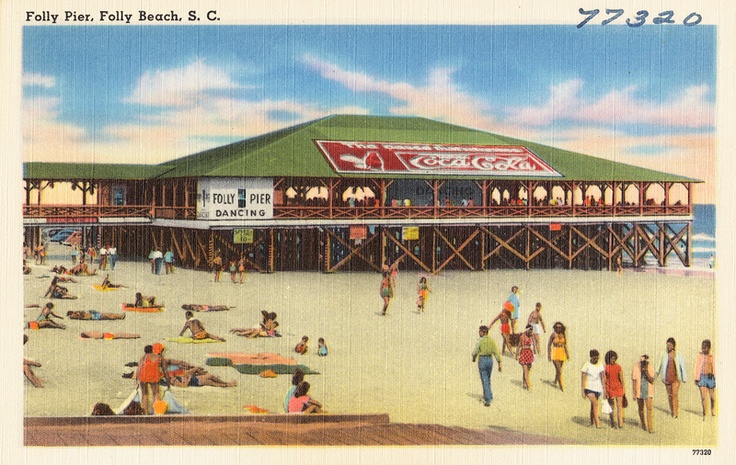
I was all for the change in venue, Folly Pier trumping American Legion Hut for sure. And who knows — it was not out of the realm of possibility — I could conceivably find myself in the arms of some jaded older almost-woman and receive backseat tutelage in the arts of love — about which I had only the slightest of cinematic clues.

It was possible. That very July we had put a man on the moon.

None of us were at the legal beer drinking age of eighteen at the time, but in Summerville in those days, that was not, as the sales clerks say, a problem. If you were tall enough to be able place a quarter and a dime on the counter of S_______’s Grocery, Mr. S________ himself would go back to the cooler and procure for you a Pabst Blue Ribbon beer, place it in a brown paper sack, and presto — fun ahoy! – off you drove.

Our driver was the late Gordon Wilson, a capital fellow, and my other friend — I’ll call him Gene — was someone I’d known for so long we’d been playpen mates.

Two Brazilian exchange students, Paulo and Jacó, who were staying with Gordon, also accompanied us. As it turned out, these two would be our saviors, or at least Jacó would. Thanks to his anti-samba sobriety, his reckoning of his own safety, he volunteered to chauffeur us home (despite not having a valid South Carolina driver’s license).

5c32b4f66bd5488d8cb0f2e45f7d254a

Sure, he got confused about which way to go and got us stuck for a while in a sand dune, but with the help of Good Samaritans, we – make that the Samaritans — somehow extracted the Olds, and we made it home, not only alive/unparalyzed, but in my case, undetected by my parents, even though the doors were locked and I had to crawl through a window (and in my condition my locomotion would make Buster Keaton look like Rudolf Nureyev).  

Okay, I’d be lying if I tried to turn the party into a coherent narrative.

Montage time:

Inside the Folly Pier. Bright lights. Beach music. Citadel cadets, their dates. Bottle-guzzling. Flirting. What you see when looking down from a table you’re dancing on at a Citadel Senior Party.

Slipping and falling and getting up laughing.

Now, I’m in the car. After a long time of not, the car is moving. What’s his name’s driving. We’re going fast. I’m puking out of the window.

I awake, not unlike despair-racked Satan on the burning lake of fire in Paradise Lost; only, actually, I’m in my bed in my underwear and desert boots.

tA7UmXb

No need for montage here. I remember all too clearly.   It felt like someone had jabbed and twisted a screwdriver in the base of my brain after water boarding me during my unconsciousness with bile from Jackie Gleason’s liver.

I vaguely remembered something about my tooth missing. I felt with my hand. No, it wasn’t in my mouth, nor on the dresser, nor in either pocket of my wadded up Levis. Not in the front pocket of my vomit besplattered shirt, whose smell almost prompted a heave. No, my fake tooth was long gone, runover, crushed, obliterated somewhere along the shoulder of I-26.

16-year-old-despair.

I’ve never liked lying, and I’m not good at it. But on this occasion I lied to my mother. I told her I had gotten sick at the dance (technically true) and gone out to vomit (technically true) and lost my tooth somewhere outside the American Legion Hut (patently false).*

She asked me if I had been drinking.

“No ma’am.”

The American Legion Hut in Summerville

She went to look for the tooth because I was in no shape to. I felt fearful and wretchedly guilty, my mother on a Sunday morning scavenging in vain among the discarded beer cans and cigarette butts in the grass of the yard of the American Legion Hut.

The next week, though, Mama got her revenge and tricked me into telling the truth.

The following Saturday, Gordon and I stayed out to 2 am, and when he pulled up to my house, I said. “I sure hope my parents are asleep.”

Like I said, Gordon was a capital fellow. He smiled and said, “Isn’t that them sitting there?”

There, there, very there, as Iago sort of says in Othello, sitting in lawn chairs on the edge of the yard, the tips of their cigarettes glowing orange dots. Gordon let me out without pulling into the driveway, and after offering a meek wave to my parents, drove off down Dogwood Circle.

No, I had not been drinking. I blew into their faces my untainted breath, whose purity did practically nothing to abate my father’s fury. He kicked me in the back of my legs as I walked up the steps. Mama told me that Gordon’s mother had told her Gordon had gotten drunk last week and so had I. I fell for it, cursed Gordon’s mother, which resulted in an “ah-ha!” Mama said she had made that up to trick me. Now I think of it, she probably was lying herself, covering for Mrs. Wilson.

Lies beget lies.

My punishment: I was told that I could no longer be me. I had to start dressing like a preppy and to change my attitude.

But, of course, that was impossible. Like Bob Dylan had sung in that record going on ten years old, I was beyond their command. I did, though, have to go to school without a false front tooth for a month. Being a redhead and freckled, I looked like a skinny Alfred E Neuman. (By the way, that’s actually my head photoshopped on the male hula-hooping dancer on the comic).

AlfredENewmanHippy
Rusty

So I did suffer for my sins and still feel guilty for sending my mother on that wild goose chase. Let’s not forget that “The evil that men boys do live after them./The good is oft interred with their bones.”

*See first comment below.

That Was the Year That Was

One of the many Mongolians who didn't click on this site in 2014

One of the many Mongolians who didn’t click on this site in 2015

Thanks to all of ya’ll who clicked on the blog this year, which received 20.022 hits by visitors from 110 countries. I’d like especially to thank those solo souls in Lithuania, Guadeloupe, Liechtenstein, Ethiopia, the Isle of Man, Libya, Congo-Kinshasa, not to mention whoever it was in Papua New Guinea looking for porn who got sidetracked in Hoodooland.

Of course, several countries were no-shows, including predictable sourpusses like North Korea, Mongolia, and Greenland, but come on, Botswana, Paraguay, and Fiji, where’s your sense of adventure?

Happily, except for a death-haunted January that featured a stem cell transplant, 2015 was a big improvement over 2014, so I thought I’d offer a reprise of some of the most popular posts.

January

Although “Endangered Lowcountry SC Locutions,” featuring my mother and written exactly a week before my her death, was by far January’s the most popular post, I prefer “Super Bowl XLIX Preview,” which I could easily update this year by merely dropping those clunky Roman Numerals designating forty-nine for the sleek – dare I call them Arabic – numerals 5 and 0.

February

20140511_inq_jriordan11-bOne of the top news stories in February was an outbreak of measles at Disney World, which brought to light that luddites on both the far right and far left are not vaccinating their replicated DNA, so I produced this piece “Natural Selection at Work” that features not only a vintage photo of smiling polio victims but also a full color photo of an autistic dog.

February also brought us the Brian Williams scandal, which sent me into true confession mode. Dear Readers, believe it or not, I’m no stranger to “misremembering,” as the self-explanatory title “My Most Cherished Mismemory Debunked” testifies.


March

March came in like a lion with a very popular post, “Ten Literary Riddles.” If you don’t want to see the answers, don’t scroll down past number 10.”

April

granda-and-ted2What better way to celebrate a month dedicated to fools than a post entitled “A Brief Analysis of the Likability of 2016 Presidential Candidates,” which is so fair and balanced that Larry Sally, my most ardently Republican friend, says he more or less agrees with it.

I also caught Dylan in concert for the only-god-knows-how-manyeth-time, and “Review of Bob Dylan Concert 17 April 2015” got a ton of hits.

May

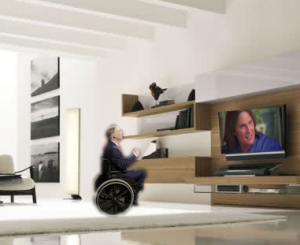
governor-watching-tvMay brought the news that Texas’s wheelchair bound governor was preparing the state for an invasion from the US Federal government, and I realized what a great movie it would make, hence, “The Invasion of Texas – Coming to a Theater Near You Soon!”

Like Donald Trump, I ain’t no fan of political correctness, as this piece “Political Correctness Academy” demonstrates.


June

Folly Beach, my adopted home barrier island, is a frequent subject, and this piece “Folly Beach’s Cat Lady, Potential Serial Killer” still generates some traffic on the site.

Also, in June, I got my hands on the uncorrected proofs of “Elijah’s Wald’s ‘Dylan Goes Electric,’” which was picked up by the mega Dylan website “Expecting Rain: Bob Dylan.” Wald himself weighs in with a comment on the post.

Alas, June also brought us the Charleston Massacre, and this post “Way Past Time” struck a chord.

I also finally got to go to a Jewish wedding: “My First Jewish Wedding.”

July

A lazy month that featured video of a hotdog eating contest (“Celebrating the 4th on Folly after the Alcohol Ban”), a paean to drive-in movies (“Enjoying Genocide at the Drive-in“), and more spoiled elite college student bashing (“America’s Culture of Hyperachievemnt among the Affluent).

August

donald-trump-750x455Oh my God, where has the summer gone? Life is short. I’ll be dead in no time. Better turn to the Good Book. And who better to lead a Bible lesson than the Donald: “Bible Study with Donald Trump.

September

Here’s a poem: “What Guilt Feels Like: A Series of Pickpocketed Similes,” an exercise in collage.

And a behind-the-scenes peek of my decadent lifestyle hanging out with beat poets at Chico Feo: “Folly Beach Life, Ain’t the Good Life, But It’s My Life.”

kaye-paulAnd I’m surprised this post didn’t catch on, a “Casting the Republican Primary Farce,” in which I find photos of dead movie/tv starts who are – drumroll – dead ringers for the Republican candidates.

October

When yellow leaves, or none, or few, do hang upon those bows that shake against the cold, what better time than to go all nostalgic: “That Time I Threatened to Hang Myself If Student Housing Didn’t Transfer me out of That Dorm Suite I Shared with Antithetical Monsters.

November

Actually, not only do leaves not turn yellow where I live, they don’t even fall from the trees: “Whining on Thanksgiving.”

December

Which brings us to December, today, Christmas. I’ll give Santa the final word:

“Santa Agonistes.”

Naw, I get the final word. Thanks so much for reading. I sincerely appreciate it.

Deserts of Vast Eternity

TIME.2No one’s left to answer the questions I have about my first memories, scenes that take place in the gas station/house of my maternal grandparents in the year 1954 or 1955.

World War II has been over for ten years now.

I am two, maybe three. My grandparents, my aunt, maybe my uncle, live in a building that’s part commercial enterprise, part domicile. It’s not a home — or even a house – but the Station. What should be the front yard consists of a narrowing triangle of concrete featuring an island of gas pumps, the apex of the triangle marking the fork where Highway 78 splits into West 5th North Street and Richardson Avenue.   Diesel smells hover as cars swish by night and day, day and night. Out back, a wire fence encloses a treeless dirt yard where an unfriendly German Pinscher prowls.

No nature boy, I-and-I.

It seems at the time of these first memories that my mother and father are living at the Station, too. The upstairs, if subsequent recollections are correct, consists of one ark-like bedroom that has two or three beds and a stand-alone sink. There must be a bathroom downstairs, but I don’t remember it.

My first memory ever is of my parents’ leaving each morning. I descend the steep stairs terrified I’ll fall. I lead with my right foot, step after step, right foot first, until I’m about four steps from the bottom. Then I leap into my father’s outstretched arms, and he slings me around in circles. I don’t want my parents to leave me, but they do, and I spend the rest of the sibling-less day in the domestic section of the building while my grandfather pumps gas or fixes flats and my grandmother works the counter cash register. I can remember feeling sorry for myself as I sat sideways on the bottom step with my knees up. I remember thinking that the day would never end.

Of course, it did, and the one after that, and the one after that . . .

At two-and-a-half, I’d experienced fewer than a thousand days, so in that frame of reference, a day looms large. Now, I have weathered approximately 24,759 days, 2063 full moons, 66 Christmas Eves. Yet, even though my frame of reference of a day has shrunk 2,000-fold, the days – especially, the weekdays  — still seem long.

Tick-tock-tick-tock-tick-tock . . .

But not the years — the years zoom past like cars on a freeway.

Blink, just like that I’m engaged to be married and attending a party with my mother during her 25th high school reunion weekend. My former classmate Emma Jo Mellard is there with her mother as well. We make small talk, comment on time’s winged chariot’s terrifying swiftness.

Blink. I’m swinging my sons in circles above my head.

Blink. I’m looking at a photograph on Facebook of members of my high school class who will attend their own reunion next year if the pandemic abates.

These classmates are wizened, unfamiliar, old, like my own visage in the mirror.

O what shall I do with this absurdity –

O heart, O troubled heart—this caricature,

Decrepit age that has been tied to me

As to a dog’s tail?

Blink.