How Not to Generate a Dating Profile

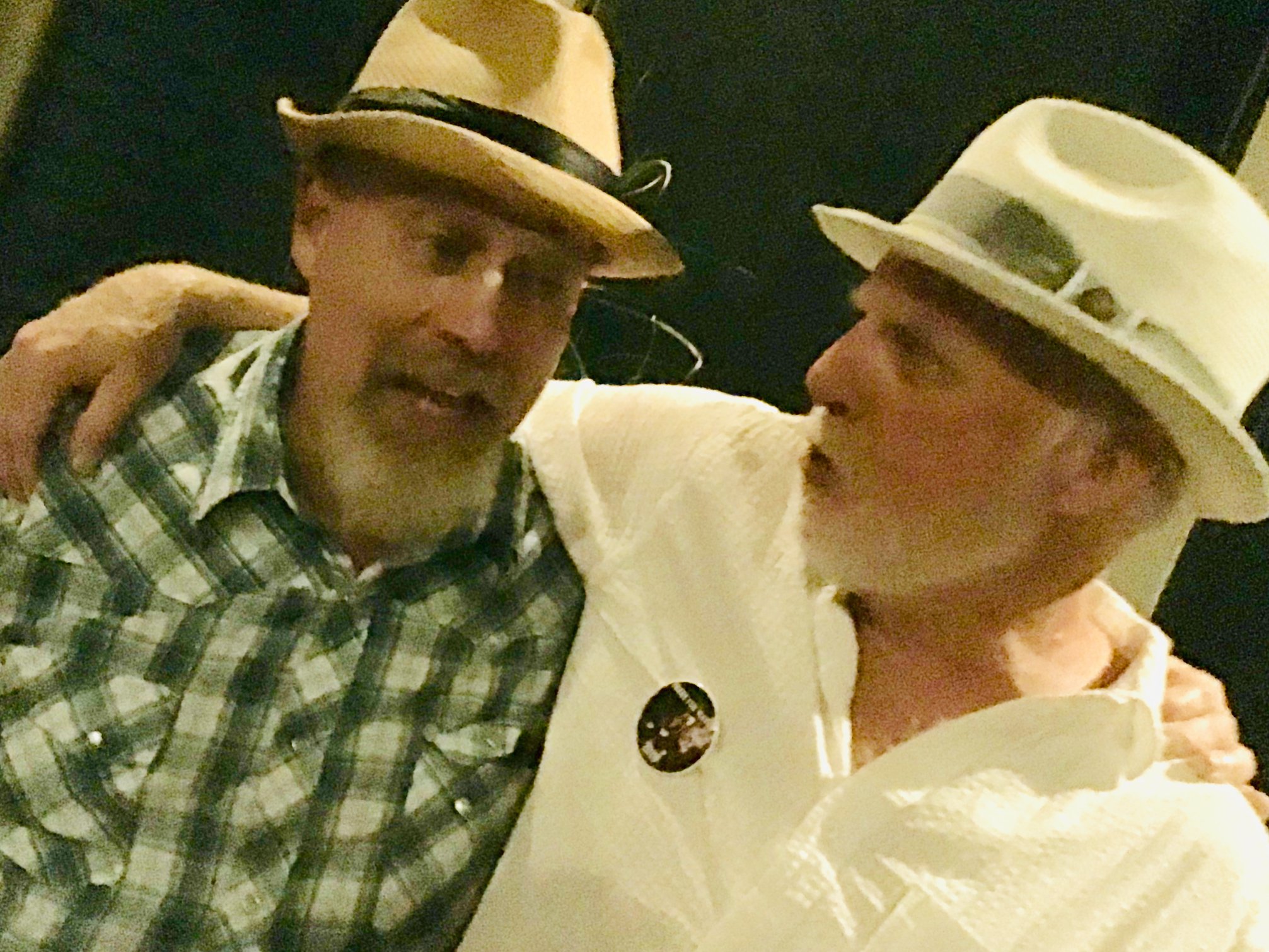
wes and yorick
I’m sure we have a lot in common

People tell me I haven’t missed anything at all by never really dating someone I hadn’t known rather well. The fact is that I’ve never dated a stranger, except for a blind date that was sprung on me without my knowledge when I visited an out-of-town cousin. It was a double date at that, and I was exclusively seeing someone else, which I mentioned to my blind date right away.

I did go on one other date in college with a girl from my hometown I didn’t know well, but we had had a couple of long conversations, and I could tell she was interested.  Plus, we had a host of mutual friends, so it wasn’t as if we needed to strain to find something to talk about.

My late wife Judy Birdsong and I had worked together for months in a bar before we started seeing each other, so we were very comfortable together.  It wasn’t like meeting a stranger for coffee to see how you got along.

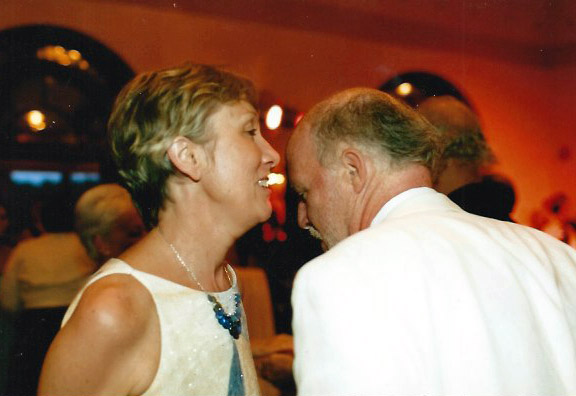
judy wes beth's reception
Judy and I a decade or so ago

Similarly, my wife Caroline and I had been friends and members of the same book club for five years before we started our romance, so ditto.

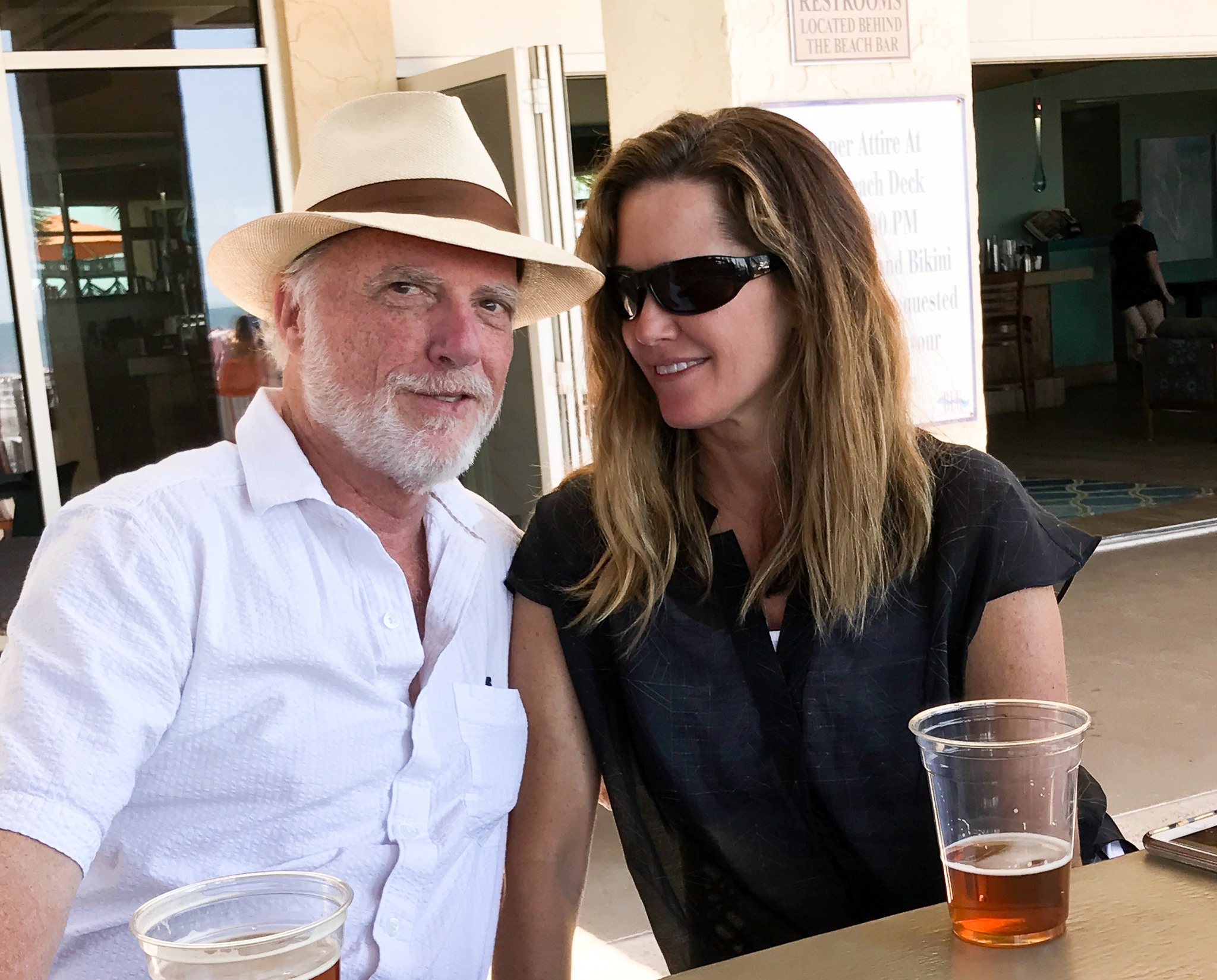
Caroline and Wes Tides-2
Caroline and I

So the long and short of it is that I’ve never created a dating profile for eHarmony or any of the other dating platforms, which no doubt is a good thing because I’ve never really known anyone who has successfully cultivated a lasting relationship through electronic dating (or whatever you call it).

I guess, you need to market yourself, to choose a flattering image, and then to present your personality in a way that would make a congenial spirit willing to devote a few hours in your company.

As a thought experiment, I thought I’d create a theoretical dating profile, just to see what it would be like.

So I filled out this dating profile generator I found on-line.[1]  It asks you questions, you supply answers, and it creates an introductory essay.

Here’s what it came up with.

Good day ladies!

I’m a learned sort of gentleman, who likes nothing more than drinking with the right woman.

The first thing people usually notice about me is my ironic personality, closly (sic) followed by my smashing legs. I am not one of those fake people who pretends not to notice their (sic) own qualities. My legs and ears are top notch. These gems of honesty are just part of the learned person I am.

I work as a retired teacher[2], helping students. This allows me to exercise my skills: eloquence and humor. I would like to tell you about the time I met Dizzy Gillespie, which is true, but it’s important to me that you know I’m honest, so I’ll save the wilder parts of my life for another time.

My life goals include:

  • Meet Eric Idle
  • Become the best retired teacher I can be
  • Help all the students in the world[3]

If you’re the right woman for me, you’ll be intelligent and kind. You won’t be afraid to skinny dip and will have a healthy respect for integrity.

My ideal date would involve writing in Folly Beach with a tall woman by my side. While we’re there, I compliment your proportional face.

Honesty and openness are the most important qualities in a relationship. I will be honest with you, if you will be honest with me. I will never hit on your best friend whilst (sic) you’re visiting a sick relative, never text my ex behind your back while you’re asleep, never post naked photos of you on Facebook. That’s just the kind of gentleman I am.

A nod’s as good as a wink to a blind bat, eh?

I urge you, get in touch,

Kingbeat

As the youngsters say, OMG! Believe it or not, I chose “earnest” as the type of profile I wanted.


[1] From its diction, I’m pretty sure this thing originated in the UK.

[2] Work by not making lesson plans, not grading papers, not teaching classes, not attending faulty meetings.

[3] By remaining retired.

Free Lesson Plan: Teaching Point-of-View

XIR3675

In fiction, especially short fiction, determining the point-of-view of the narration is often key in analyzing the piece.  From whose perspective do we experience the action?  From godlike omniscience; a particular character; or an objective, camera-like recorder?

Take Hemingway’s often anthologized story “Hills Like White Elephants.”   Hemingway presents the action from the objective point-of-view, showing an unmarried couple at a railroad station in Spain arguing about whether they should maintain or abort a pregnancy.  The subject is never explicitly mentioned, nor do we enter either character’s mind.  Essentially, the male is browbeating his lover into having the abortion, though she is hesitant.  Because the presentation is objective, the reader doesn’t necessarily take sides, the way he or she would if the narration had been first person or limited objective from the man or woman’s point-of-view.

Take a peek at the painting above, Pieter Breughel’s Landscape with the Fall of Icarus. Imagine it’s fiction, not a painting.  What if the story were told from plower’s point-of-view or the shepherd’s?  They may have heard the splash but would not have seen Icarus  plummeting into the ocean, or to quote Auden,  “the white legs disappearing into the green water.”  I suggest to students that the omniscient point-of-view is the best mode to depict the action of the painting.

So what follows is an overview of the various points-of-view with an original narrative depicting the same scene from various perspectives.

Here are the basic points-of view:

omniscient

limited omniscient

objective

first person

second person

stream-of-consciousness

Omniscient Point of View

The omniscient point of view provides the author with the most freedom because he is, as the word omniscient suggests, all-knowing.  The narrator can see all,  go anywhere, knows all, can read multiple minds.  This point-of-view is excellent for wide ranging narratives like WW2 sagas and offers excellent economy but is somewhat distancing and demands the action to be rendered in rather straightforward prose.

Here’s the central narrative of this lesson told from the omniscient point of view.

Abby Huffington, an attractive young brunette in her early twenties, sat at her desk before a blank sheet of paper preparing to write a dear john letter to her boyfriend, Ashton Gray.   In the distance a lawnmower sputtered its dull ceaseless hacking growl as an irritating accompaniment to the hangover that clouded her thoughts.  Abby had met Ashton not long after her breakup with Bennington.  She realized now that shouldn’t have jumped into a relationship so soon.  She swung her head to the side, slinging her brown bangs out of her eyes and placed her pen into the corner of her mouth. Just at that moment a bluejay chased a wren from the bird feeder just outside her window.   Taking the pen out of her mouth, she wrote “Dear  Ashton,” thought better of it, then scratched through “Dear.”

Meanwhile, across town in his second story apartment, Ashton Gray with trembling fingers looped his madras tie in front of the mirror over his dresser.  It had been a rough night last night.  Something was bothering Abby.  At Taco Boy she was slinging down Singapore Slings like a sailor.  Now, at the last minute, she had decided that she wasn’t going to accompany him to church.  He walked over to his bedside table and picked up her photograph. Putting it down gently, he turned to retrieve his blazer from his closet and caught sight of his roommate’s calico cat on the hood of his car.  Opening the window, he shouted, “Hey, Jo-Jo, get off of there.”

Note that booth characters and their thoughts are presented in two different settings. This is impossible from the limited omniscient and first person points-of-view.

Limited Omniscient

In limited omniscience, all of the action is experienced through one character’s perceptions but is expressed in the third person.  The narrator intimately knows the character, can step outside of her for description’s sake, can read her thoughts but is tied to her perceptions; therefore, the character must appear in all scenes.

Abby Huffington, a young woman in her early twenties, sat at her desk before a blank sheet of paper preparing to write a dear john letter to her boyfriend, Ashton Gray.   In the distance a lawnmower sputtered its dull ceaseless hacking growl.  It wasn’t that Ashton was a bad guy; it was just that he was no Bennington. At the thought of Bennington’s name, she sighed. Why had she rushed into this relationship with Ashton?  It’s not as if she hadn’t been warned.  Her mother had warned her, Jaclyn had warned her, even her hairdresser had warned her.  She jerked her head to the side, slinging her brown bangs out of her eyes, and placed her pen into the corner of her mouth just as a blue jay chased a wren from the bird feeder that hung just outside her window. Taking the pen out of her mouth, she wrote “Dear  Ashton,” thought better of it, then scratched through “Dear.”

From this point-of-view we’re likely to take sides with Abby because she’s in the center of the action; we read her thoughts, not Ashton’s.  It’s more intimate than the omniscient rendering.

Also, I point out to students the name symbolism, Huffy Abby, dull, gray ASH-ton, and how the bluejay chasing the wren off parallels her chasing Ashton off.  I ask my students if they think the author consciously intended the symbolism, and if they say no, I remind them that I wrote it.

Objective

On the objective point-of-view, the narration is limited to camera-like observations in plain prose.  It’s akin to a stage play or movie and has the advantage of immediacy and verisimilitude. Its major drawback is a lack of economy.

A slender young man in his mid-twenties loops the bottom of his madras tie into position with trembling fingers as he peers into a dresser mirror.  Leaning into the mirror, he bares his teeth to inspect them, then turns and walks over to his bedside table and picks up a photograph of a smiling, fresh-faced brunette. He shakes his head as he gently places the picture back.  Turning, he glances out of the window, suddenly rushes over to it, flings it open, and shouts, “Hey, Jo-Jo, get off of there.”  A calico cat has left eight paw prints on a Dodge Neon sedan parked in front of the building.

Here we’re hardly aware of the central conflict, unlike the the omniscient version where we see both sides in very few words.

First Person

Obviously, in first person a character narrates using the pronoun I and speaks in his or her own voice.  The limitations are the same as limited omniscient, and it’s important to realize that narrator might be unreliable, though readers tend to side with a first person narrator even if he’s a murderer.

I don’t know why I decided to dump Ashton that Sunday.  My splitting headache might have had something to do with it.  I guess I could have delivered the news when he called to see if I wanted to do breakfast before church, but I chickened out, told more or less the truth, that I felt like hell.  His reaction was typical – quiet whining, I’d call it.  Even though he didn’t say anything, even though I couldn’t see him – it’s hard to explain – it’s like I could feel him whining through my cell.  I mean Ashton’s a nice guy and all, but he just didn’t do it for me.  Let’s face it.  I wasn’t over Bennington.  Anyway,  I was hungover, a lawnmower was roaring outside, birds squawking outside my window, so I got out a piece of stationary and had at it.

Note the prose can be as informal and as ungrammatical as you like.

Second Person

In second person, an imaginary you narrates in second person, so essentially it’s just like first person.  Ask students why an author might choose second person instead of first.

It’s Sunday morning, and you’re getting ready for church, trying to whip a half-Windsor into shape.  The problem is you have an awful feeling. Your fiancée has been acting weird lately, really weird.  Last night at Taco Boy she was so drunk she actually started smoking cigarettes.  You ended up practically having to carry her into her apartment, rooting through her purse to get the keys.  You really hope no one saw you, but you bet someone did.  Of course, she’s backed out of going to church. Unlike you, the model of moderation, she’s party, party, party.  You can even see it in her face in that photo you pick up from the end table.   That little sly smile.     You glance outside the window.  Not that cat again.  There he is tracking dirt on the hood of your car.

Stream of Consciousness

Here the narration consists of a person’s stream of disjointed thoughts.  It’s poetic, can reveal deep psychological insight, but too challenging for most readers.

Round and round we go, where we stop is a half-windsor, a half-windsor, son, a half windsor is the most distinguished knot.  Round here, we always stand up straight. Taco Boy, Salem Lites for petes’ sake..  Round here, something ain’t right.  Look at her, look at her.  What you smiling about, girl?    Round here, we stay up very very very late.  What the?  “Hey, Jo-Jo, get off of there.”

So that’s it.  Use the above with my blessing however you see fit.  I have narrative essay assignments for each (except stream-of-consciousness).  If you’d like to use them, let me know how to contact you in the comments.

Wesley Moore
Keystone Kops, Kold Turkey, and House Koncerts

o-HEROIN-facebook copy

Last night, Caroline, Brooks, and I attended Porter-Gaud’s Homecoming, and, of course, several people asked me how I liked retirement and what I was doing with my life.

Well, spending an inordinate amount of time screeching an ATT robots, listening to music manufactured by ATT for people on hold (martial drum machines, melodies based on the three signature tones of their branding, music certainly composed to encourage the holder to hang-up, if not take her own life).  Oh yeah, and talking to American and Asian troubleshooters — all in vain.

It’s Kafka meets the Keystone Kops.  You see, last Friday, my Internet went out.  I glanced out of the window to see a backhoe gouging a hole in my yard.  Subcontractors from Anson had come to repair what didn’t need to be repaired, severed the wire that conveys to me the digital world to which I’ve become hopelessly addicted.[1]

Because the two incompetent subcontractors didn’t “close the ticket,” I was left in limbo.  I finally got a new ticket, an appointment set up on last Tuesday from 4 to 8 pm.  I could track my technician, who at 8 am that morning had just left and at 8:30 pm had just left, the linear map on my screen having forever frozen him one stop from the dispatch center.  Of course, he or she never showed.  There had been “a computer glitch,” and because that ticket was invalid, other tickets that had been issued subsequently to other customers had to be honored.  So they’re supposedly coming out next Tuesday.

In happier news, Caroline and I hosted our very first ever house concert featuring politico sibling singer songwriter Fleming Moore and the hugely talented Danielle Howle, who is going to be included in the Oxford American music cd featuring performers from the Palmetto State.

Here are some photos taken by another Lowcountry musician Stefanie Timmerman.

fleming

Fleming Moore


house shot

Danielle performing during a mud slide

george

George Alan Fox and I discussing the immense panorama of futility and anarchy that is contemporary history

Danielle take us away to some darker dilemma than the First World problems I whine about.


[1] Picture me as Miles Davis going cold turkey, trembling like a victim of Huntington’s disease, beaded sweat bursting into torrents, puddling the rug where I writhe in fetal position.

Republicans Grasping at Straws: Defending the Indefensible

Dum_and_Dee

And those who had lied for hire;
the perverts, the perverters of language . . . 
     Ezra Pound "Canto XIV"

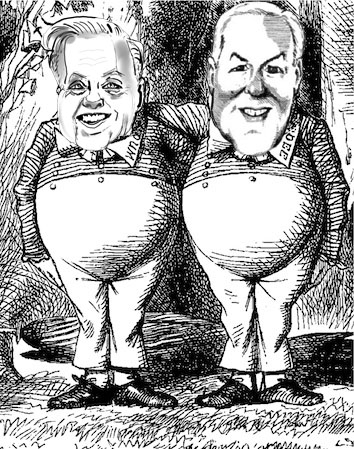
Hey, Lindsey and Tom, I’ve read Emmanuel Kant, and you’re no Emmanuel Kant (Though You Might Qualify as Lindsey and Tom Cant)

Dig these arguments.

Argument 1

Lindsey Graham:  There’s no quid pro quo because Trump didn’t explicitly say, “Hey, man, unless you dig up some dirt on Hunter Biden, we’re not going to sell you any more weapons.”[1]

No, Trump said after President Zelensky mentioned purchasing more Javelin missiles from the US, “Hey, man, we’ve done a lot for you, you not so much for us.  I need a favor.  Dig up some dirt on Hunter Biden.”

See, it can’t be a quid pro quo unless it’s spelled out explicitly.  He needed to say “no dirt on Biden, no weapons.”

We’ll just ignore that soliciting a foreign national to aid in an election is against the law.  Gotta have an explicit quid pro quo.  No explicit quid pro quo, impeachment a no go.

Argument 2

Tom Cornyn: The Whistleblower wasn’t present during the call.  It’s second and third hand information, which automatically renders his claims invalid.

Of course, Linda Tripp wasn’t present when Monica Lewinski performed fellatio on President Clinton, but as the poet says, “But that was in another [century], and besides the wench is dead.”

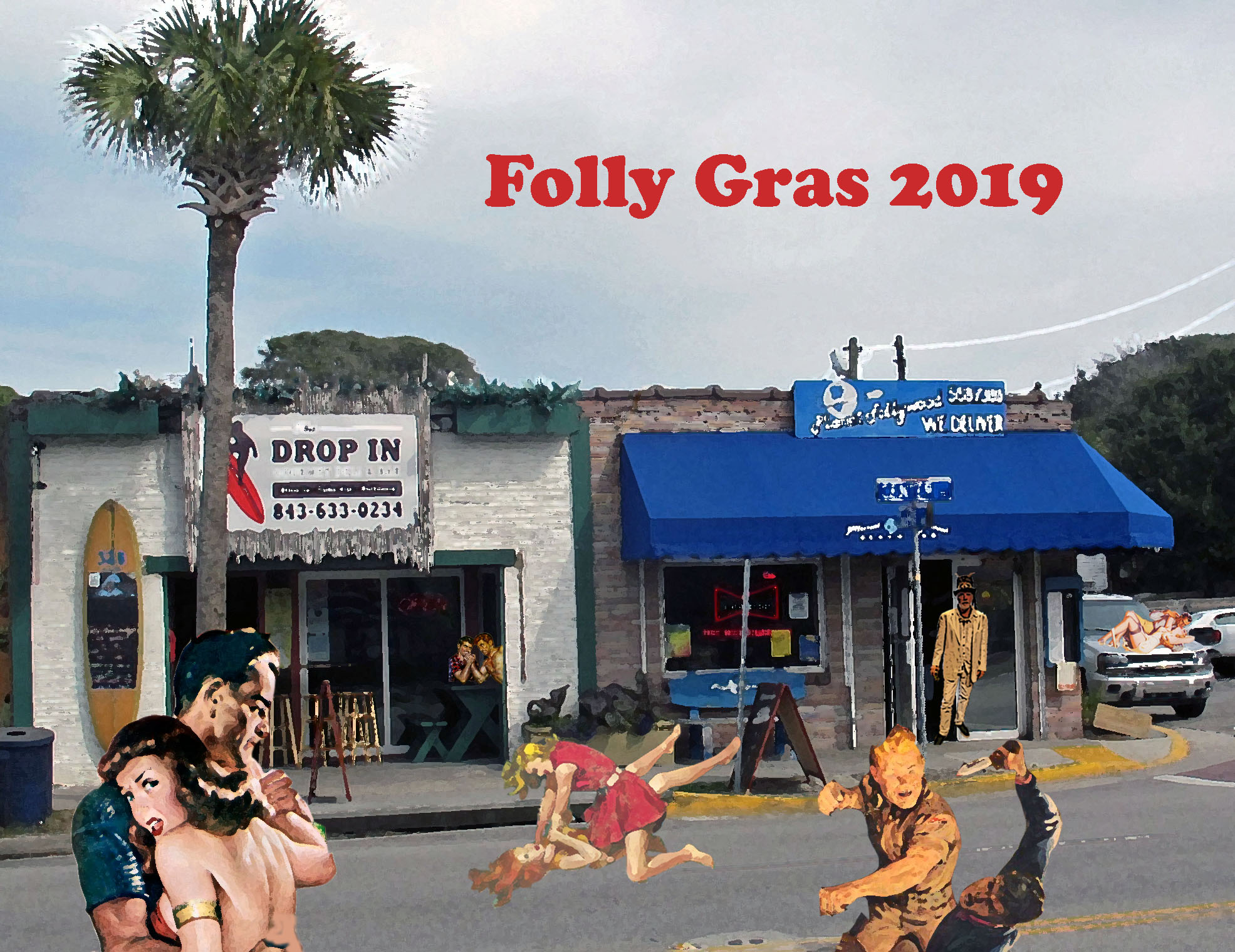
Shall I lower myself to make an argument by analogy?  The hearsay argument is like the rumors about this year’s Folly Gras celebration on beautiful Folly Beach, SC.  People there described a drunken shitshow.  I mentioned it some off-island friends, but they dismissed my account as secondhand and therefore not credible, even though scores of eye-witnesses agreed on what transpired.

Folly Gras 2019 1.0

An artist’s rendition

But wait, back to DC.   Hey, Tom, it seems to me like the transcript memo was pretty damned accurate.  Also, there might be a witness or two who might corroborate?

You’re gaslighting, my man.  You’re from Texas, right?  Remember the Alamo.

Non-Readers

Here’s a partial list of Republican Senators who haven’t bothered to read the nine-page eloquently clear whistleblower complaint:

Mitt Romney

Martha McSally

Lisa Murkowski

Rob Portman

Tim Scott (who had started reading but hadn’t finished it yet)[2]

Todd Young

Mike Baun

Makes you wonder if they’ve ever read the Constitution.  Most Pocket Constitutions consist of 34 pages, and the prose isn’t nearly as accessible.

Anyway, this scandal pales compared to the fact that Hillary stored her emails on a secret server.

Oh Wait, But There Is a Super Duper Private Server Where the Administration Hides Trump’s Conversations with Foreign Leaders

 From Carol E Lee of NBC News:

The whistleblower, whose complaint is at the heart of calls for an impeachment inquiry into Trump, also asserted that White House officials have misused the classified system multiple times to bury “politically sensitive” information detailed in records of the president’s interactions with world leaders. Former and current intelligence officers who spoke on the condition of anonymity said that, if true, such misuse should spark an investigation into the potential mishandling of a classified system.

Oh, by the way, Tom, the validity of this story about the secret server has been corroborated, which brings to mind that old saw that “it’s not the crime; it’s the cover-up.”

We shouldn’t Tax Obliterated Attention Spans with These Damning Extra Added Complications

Although named in Trump’s call as a potential intermediary in digging up dirt on Biden’s son, Attorney General William Barr hasn’t recused himself, and he gets to decide who gets prosecuted.

World Leader Zalensky bragged in the call that he stays at Trump Hotels in New York, which brings to mind that constitutional bagatelle, the Emoluments Clause.

Oh, yeah, and Trump’s suggestion that it would be smart like in the good ol’ days to execute whoever leaked to the whistleblower, which sounds somewhat like witnesses tampering.

Anyway, I’m about to hit 500 words, so I better quit in the off chance my junior senator Tim Scott stumbles across this little piece of debased liberal propaganda.


[1] “Any more weapons in your war against my BFF Vladimir.”

[2] Boooor-ing

Dressing the Part

stringbean-akeman-793x526

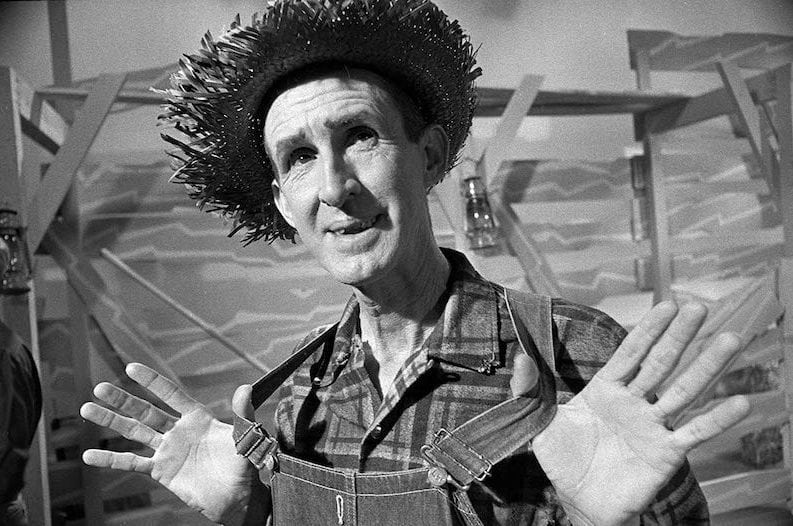
String Bean Akeman

Ken Burns’ latest epic documentary Country Music is [cue embarrassed throat-clearing] educational.

Of course, I’m well aware of the tradition of minstrel shows, but I didn’t realize that at the Grand Ole Opry (and less famous venues) white performers sometimes blackened their teeth, donned battered straw hats, and smoked corncob pipes to appeal to  audiences, who, if you check out vintage videos, appear to be well-dressed and well-groomed.  In other words, for whatever reason —  nostalgia perhaps? — they embraced the stereotypes of impoverished hillbillydom.

Although I don’t remember my maternal great-grandmother, my mama told me that she smoked a corncob pipe, and her son, whom we, the grandchildren, called Kiki, suffered dental deficiencies that made some of those blackened-tooth hillbillies look like Eric Estrada.  Although he spoke perfect grammar (albeit in a thick Dorchester county brogue), Kiki had to quit school in the third grade to work on the family farm.  I remember visiting his sister Creesie, who, in fact, didn’t have indoor plumbing, though she did own a large, imposing, non-functional organ. I was absolutely terrified of roosters, and my scampering to the outhouse was a harrowing experience. You can read about it in detail here.

Kiki was a big fan of country music and performed himself as a young man in quartets.  If I was at his house on a Saturday afternoon, I’d be subjected to about three straight hours of country and western on Channel 5, and I became slightly familiar with some of the artists featured in Burns’ documentary, for example, Little Jimmy Dickens, Ernest Tubb, Porter Wagoner, and Dolly Parton – all of whom I looked down at from the bridge of my freckled Scots-Irish nose.

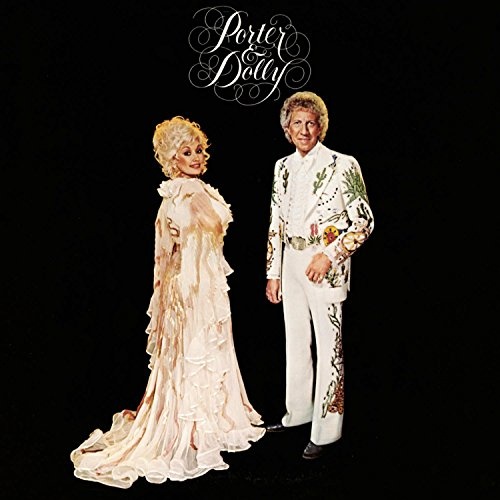
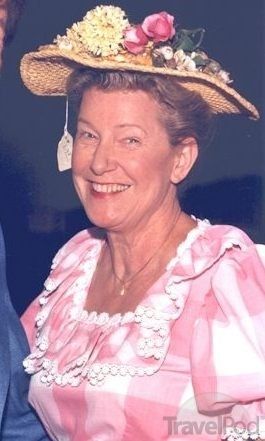
None of the above-mentioned performers chose to come off as impoverished hillbillies. Porter and Dolly had their suits made by Nudie Cohn, who also fashioned Elvis’s stage costumes.  Minnie Pearl, of course, a caricature created by Sarah Ophelia Colley Cannon, wore gingham dresses and her signature straw hat with its $1.98 price tag attached, but she was a gentle satirist, and Minnie such a delightful persona that you couldn’t help but like her.[1]

porter and dolly

minnie

At any rate, I’ve been able to overcome my childhood prejudice and now appreciate Hank Williams, Sr., Waylon and Willie, Steve Earle, Lucinda Williams, Emmylou Harris, Graham Parsons, Roseanne Cash, Dwight Yokum, and several other performers.  The Burns documentary is introducing me to artists who had slipped through the canyon-like crevices of my spotty education.

Perhaps earlier in my life, these country stereotypes hit a little too close to home.  Poor Aunt Creesie, poor Cousin Trim. We didn’t attend either one of their funerals.


[1] By the way, Sarah Ophelia Colley, who had a theater degree from Ward-Belmont College, purchased that famous hat in Aiken, SC.

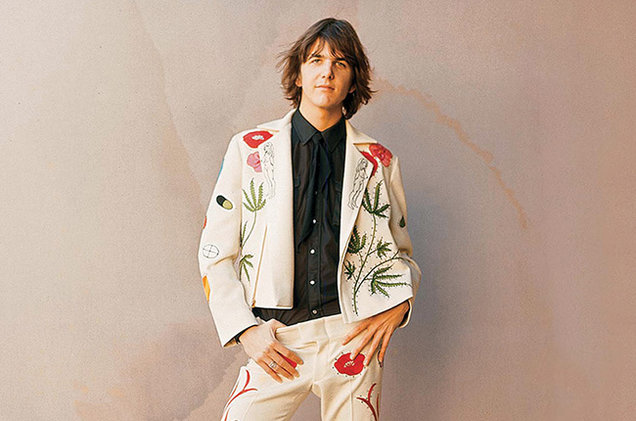
03-Gram-Parsons-Nudie-suit-timeline-bb11-style-2016-billboard-650

The late great Gram Parsons sporting the coolest country costume of all time

Miles Davis’s Restless Musical Journey

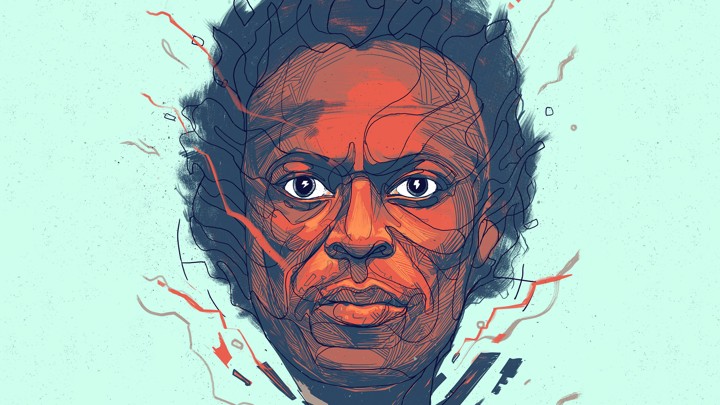
lead_720_405

Illustration by Oliver Barrett of The Atlantic

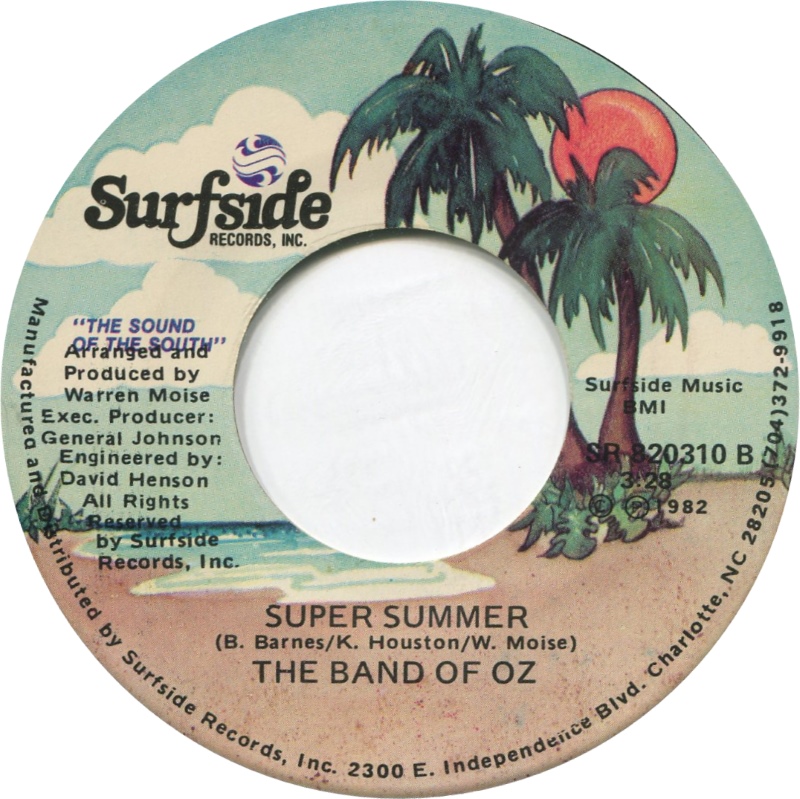
Although I’m not a musician, I seem to find myself hanging with them an awful lot.  For example, in college I roomed with Warren Moise and accompanied him and his band Wormwood on many a gig.  When Warren decided to drop out and make a go at being a professional musician, he invited me to join Wormwood as soundman or light man or something or another, but I stuck to the unglamorous academic life of a sophomore living in Tenement 9 in the so-called Horseshoe of the University of South Carolina.[1]  Later Warren later returned to school, became a lawyer, but still writes songs, like this one recorded by the Band of Oz.

the-band-of-oz-super-summer-surfside

The next year I moved off campus with another musician, Stan Gibbons, who played bass for a rock cover band called Buddy Roe. After Buddy Roe broke up, Stan got into jazz, and it was he who turned me on to the Miles Davis album Bitches Brew, which I didn’t dig, and believe me, I got to hear it on numerous occasions, like non-stop for a couple of months. I still don’t dig it, but now that I’ve finished Ian Carr’s two-inch thick (658 pages) Miles Davis, The Definitive Biography, I have come to appreciate why Davis became such a restless innovator and to see his refusal to settle for the profitable status quo as a mark of heroic artistry.

Born to upper middle class parents, Miles Dewey Davis III grew up in East St. Louis where his father practiced dentistry.  Although he grew up in a household awash in music, it was classical music that his African American family embraced. His sister played the piano and his mother the violin.  As Carr puts it in the biography, “After Emancipation, it was the professional men and ministers of the church who were the heads of the new black society, and they were at pains to get rid of any customs that were too ‘negroid’ or which harked back to slavery.  It often happened that leading black citizens became the most fanatical imitators of white society. ”

However, that great corrupter of youth in those days, the radio, turned Miles onto Louis Armstrong, Buddy Bolden, and Roy Eldridge, so he took up the trumpet, played in the school band, but also at social clubs.  By the time he was sixteen and still in high school, he had joined a music union and came under the tutelage of Clark Terry.  This was in the 40’s.  Once he graduated, he talked his parents into letting him go the Juilliard instead of Fisk University.  At the Juilliard, he lived what Carr calls “a Jekell and Hyde” existence, trafficking with classical music by day and jazz, particularly bebop, by night.

Bebop was the first jazz innovative movement Davis got into.  Soon, he found himself attending Charlie Parker gigs, and in 1945 he joined Charlie Parker’s group. During this period, he shared the stage with such greats as Dizzy Gillespie and John Coltrane.

Unknown

Trane and Dizzy

So began his career, a career that featured a series of departures that usually irked the mainstream jazz community.

Weary of bebop, Davis and cronies Gil Evans and Jerry Mulligan among others started experimenting with the idea of having their instruments imitate human voices, creating  more melodic jazz than bebop.  After this so-called “birth of the cool” phase, Davis, now hooked on heroin, played what is called “hard bop.”  He signed with Prestige records and locked in a room by himself kicked his H habit cold turkey, .  Next came modal jazz, and in 1959 Davis released Kind of Blue, which is the best selling jazz album of all time.  In the 60s as rock replaced jazz as the cool pop music, Miles embraced the sound of the guitar, and “went electric,” much to the chagrin of jazz purists, and hence Bitches Brew.

 After Wynton Marsalis publically criticized Miles for abandoning “real jazz,” Miles responded:

What’s [Marsalis] doin’ messin’ with the past?  A player of his caliber should just wise up and realize it’s over . . . Some people, whatever is happening now, either they can’t handle it or they don’t want to know. They’ll be messed up on that bogus ‘nostalgia’ thing. Nostalgia shit!  That’s a pitiful concept.  Because it’s dead, it’s safe – that’s what that shit is about!  Hell, no one wanted to hear us when we were playing jazz. Those days with Bird, Diz, Trane – some were good, some were miserable . . . People didn’t like that stuff then. Hell, why do you think we was playing clubs?  No one wanted us on prime-time TV.  The music wasn’t getting across, you dig!  Jazz is dead![2]

Point taken: innovation is often frowned upon, misunderstood. Why, after all the success of Born in the USA, did Springsteen follow that up with Nebraska?  Why did Dylan abandon acoustic folk for the electric guitar, and why does he constantly reconfigure his songs so that at a concert he might be halfway through “Blowin’ in the Wind” before you recognize it?

Maybe because for them it has gotten old, stale.  You don’t have to like the new product; I much prefer Kind of Blue to Bitches Brew.  However, unless you’re a great musician, you probably should keep your mouth shut and let the masters do their thing.

It’s your thang, do what you wanna do.

I can’t tell you, who to sock it to.


[1]You can read about my travails with my roomies here, a situation that had me literally threatening to hang myself to university officials.

[2]I suspect Miles used a different mode of expression at Juilliard.


Where Has All the Body Hair Gone?

lead photo

The other night as I was surfing through channels, I stopped to watch a few minutes of Goldfinger, a film whose scenario is about as farfetched as you’ll find outside a fairy tale.

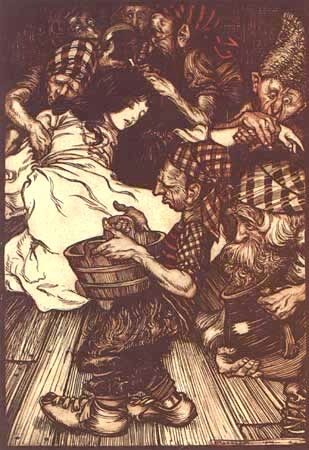
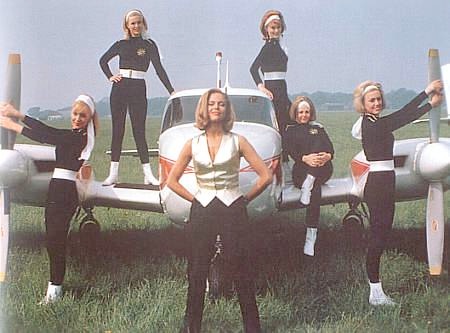
I mean, a virgin sharing accommodations with seven libido-less dwarves (who actually enjoy working in mines) strikes me as more plausible than a fleet of propeller-driven light planes overtaking Fort Knox, enabling an insane gold fetishist to come within seven seconds of detonating an atomic bomb.

rackham_snowdrop3


James_Bond_Goldfinger_Pussy_Galore

6 Cornfed domestic terrorists

Nevertheless, in the first half of the Sixties, James Bond was the paragon of male coolness.  Sean Connery, of course, was Bond’s first incarnation: six-feet-plus of epicurean machismo blended[1] with superhuman savoir faire. Not only is Bond’s frontal lobe capable of performing spectacular main-frame-fast lifesaving calculations, but he can also distinguish by bouquet the year of an obscure Tuscan Vintage or by sight the Chinese dynasty that produced the vase he encounters in the resiquite subterranean compound.

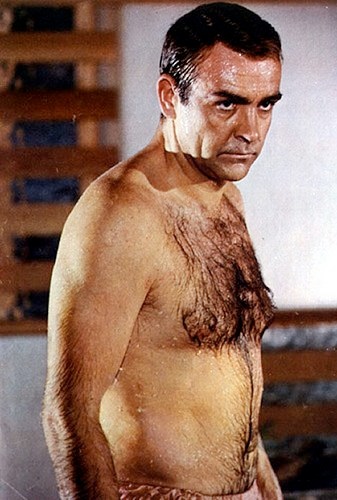
Unlike any of today’s pouting male models (who seem dangerously close to choking to death on their own smugness),  Sean Connery’s Bond was almost as hirsute as Ronnie’s co-star Bonzo.[2]

Dig this, for example:

tumblr_lcesa5DNZY1qbcsb2

as compared to this:

lucianotopcir

For whatever reason, body hair viscerally disgusts Late Empire fashionistas. Mention to anyone under thirty that European women just recently started shaving their armpits, and the retching becomes audible.  Yet, back in the 60’s, testosterone-needy would-be Bonds were actually purchasing chest wigs.

Nowadays, hair removal has migrated down under as a visit to Bond’s old hunting ground,  La Cote d’ Azur, will confirm.[3]

Men as well as women in the Late Empire shave their legs, pluck their knuckle hair, and wax their derrieres.

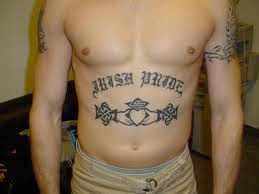
On the other hand, these same trichophobes think nothing about decorating their bodies with indelible designs fashioned by meth-addicted artisans.

gothic tatoo

I don’t think I’d chosen gothic for this particular message.

I really don’t know how body hair became taboo in an age when most men would, if given the choice, choose a large penis over a large IQ, so I’ll leave it to you to ponder such earth shattering questions as I descend the stairs of my book-lined study  [cue the Bond guitars] to munch on some Caspian caviar, have a glass or two of the Macallan’s 55 year-old Lalique, and then [guitars discordantly morphing into banjo picking] watch me some football.

scotch

A bargain at only 14K


[1]Shaken, not stirred

[2]Or, if your prefer, Tarzan’s co-star Cheetah

[3] Or save a few Euros/dollars and consult a voyeur web site.


The Old Masters

Frequent visitors to this blog (all three of you) have no doubt noted a predilection to illustrate my rants with paintings of Bosch and Brueghel, Juvenalian satirists of the highest order; however, when it comes to unflattering depictions of the human race, those two Old Masters share many a Flemish cousin who can also render grotesqueries and human folly with Chaucerian panache.

The Ugly Duchess

Take the above masterpiece, Quentin Massy’s (1466-1530) portrait of Margaret, Duchess of Carinthia, also known as Margaret Maultasch (“Satchel-mouth”), though best known as The Ugly Duchess.  

An exquisite warning to in-breeders everywhere, she, of course, is the great-great-great grandmother of the Duchess Alice encounters in Wonderland.

The Ugly Duchess’s famous issue also include the Cowardly Lion:

AKA Bert Lahr (pictured below in drag)

In Auden’s frequently anthologized poem “Musée des Beaux Arts,” he notes that 

About suffering they were never wrong,

The Old Masters; how well, they understood

Its human position; how it takes place

While someone else is eating or opening a window or just walking dully along [. . .]

He goes on to describe the suffering’s occurring “anyhow in a corner, some untidy spot” and cites Brueghel’s Landscape with the Fall of Icarus as an example.

icarusbreughel

In Breughel’s Icarus, for instance: how everything turns away

Quite leisurely from the disaster; the ploughman may

Have heard the splash, the forsaken cry,

But for him it was not an important failure; the sun shone

As it had to on the white legs disappearing into the green

Water; and the expensive delicate ship that must have seen

Something amazing, a boy falling out of the sky,

Had somewhere to get to and sailed calmly on.

But it’s not only suffering that goes on in the untidy corners of the paintings of Flemish masters; plenty of hankypanky takes place there as well.

Take this example from the above-mentioned Massys, The Ill-Matched Lovers.

Quentin-Massys-Ill-Matched-Lovers-550x373

Note while the lecher’s hand is copping a not-so-surreptitious feel,

Quentin-Massys-Ill-Matched-Lovers-Detail-thumb

the young woman’s transferring his purse to her companion,

Quentin-Massys-Ill-Matched-Lovers-Detail-purse

a literal Fool.

Quentin-Massys-Ill-Matched-Lovers-Detail-fool

Anyway, it’s not all tongue-clucking burlesque; these masters certainly could capture beauty when in the mood [not to mention pre-photographic perfection (check out the instruments at the bottom)].  

2fourmus

Caesar van Everdingen, Pegasus and the Four Muses

Nevertheless, for whatever reason (an overabundance choleric humors, perhaps), I prefer the Old Masters’ satire to their high mindedness. 

42757-wayfarer2-1

I leave you with these details from Bosch’s The Wayfarer.

56

Oink, oink, say the piggies. Splash, splash goes the urine.

Confessions of a Fair Weather Fan

Let’s begin with a string of clichés since this post is about sports.

I sort of admire those die-hard fans who, rain or shine, stay true to their teams.  I know many Clemson fans who would remain in the stands till the bitter end in the good ol’ days when Clemson would occasionally take a drubbing.  Back when Carolina won five straight from the Tigers, I marveled as Clemson devotees posted in unequivocal terms on Facebook that their love was steadfast, that there was no Himalayan peak high enough, no Mariana Trench deep enough, etc.  

Not I-and-I.  During the Gamecocks 21 game-losing streak, you wouldn’t find me anywhere near the am radiobroadcast of the game.[1]  In 1990, when the Atlanta Braves ended up in last place, I wouldn’t even bother to glance at the box scores in the paper.  No, I’m a fair weather fan, one whose tribal affiliations are weak.  

This disinclination to link with hometown teams began in Summerville where high school football seemed to be the center of most people’s lives.  Back in the pre-hippie days, if you weren’t on the team or a cheerleader, you could not be an A-list celebrity.  Going to the games on Friday nights was de rigueur.  In fact, my father, who didn’t give a sou[2]about sports, pulled against the Mighty Green Wave for spite’s sake.  Needless, to say, he never accompanied me to a game, nor, in fact, sat in to watch me strike out in my Little League games. [3]  He had better things to do, and I mean that sincerely.  

So, once I deep-sixed preppydom and donned the bandana hairband of the counterculture, I, too, quit going to the games, spending my Friday nights at my pal Adam’s apartment listening to him and his bandmates jam, drinking PBRs, and smoking stems and seeds. After the games, we’d cruise Tastee Freeze’s parking lot, circling amid the blare of rock-n-roll blasting from the speakers of various cars.  What fun!

Post Preppy I-and-I

So when I matriculated at USC, I wasn’t at all into football and didn’t particularly like the players I had in my classes, those hulking short-haired muscle men with “Nixon’s the One” campaign buttons pinned to their pecs.   As a matter of fact, in college I didn’t attend one single game.

However, under the influence of postgraduate peers, I began following the Gamecocks, and I have always been a Braves fan, even in the most bohemian of my days.  Nevertheless, these affiliations are weak, and I no longer let a broadcast impede on anything more promising, like a party or concert.

All that said, I’m really enjoying the 2019 Atlanta Braves, who, right now are killing it.[4]

It’s fun getting to know the players, and the game itself is so inherently interesting with the many complexities underlying each individual pitch.

So let’s go Bravos, I’m with you some of the way.


[1]These pre-dated the ubiquitous television broadcasts that fans now enjoy.

[2]Let’s keep this French merde going for a while.

[3]To show you what a better father I was than Daddy,  I attended my sons’ games, though bringing a New Yorker magazine with me, which I read during the contests.

[4]Not at this very second; they’re down 4-1 in the top of the fifth.  But they’ve won 9 out of their last 10 and something like 16 out of their last 18.