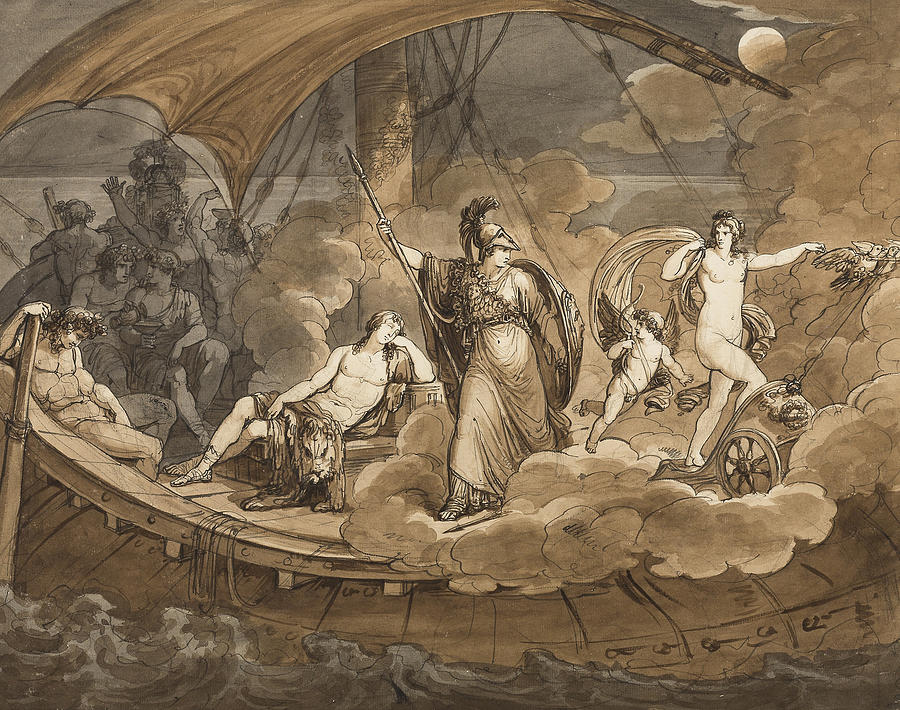
John Keats, “On First Looking into Chapman’s Homer”
In the introduction to her widely acclaimed translation of The Odyssey, Emily Wilson makes the commonsensical point that dressing up the epic in costumes of nineteenth century diction to feign an archaic look doesn’t make much sense given that the Victorian era is only a couple of hundred years closer to a poem that’s 3,000 years old. Instead, she said her “goal was to evoke an experience like the original, using the language of the people who will read it.”[1]
For example, after Athena’s been whining to Big Daddy Zeus about how he’s been neglecting poor Odysseus, we get this:
“Daughter,” the Cloud God said, “you must be joking.”
I’m only four books in, but I swear I’m identifying with the lines from John Keats’ sonnet quoted in the epigraph above.
Wilson brings that ancient world alive in a way I’d call thrilling.
Athena called a favorable wind,
Pure Zephyr whistling on wine-dark sea.
Telemachus commanded his companions
To seize the rigging, so they did, and raised
The pine-wood mast inside the rounded block,
And bound it down with forestays round about,
And raised the bright white sails with leather ropes.
Wind blew the middle sail; the purple wave
Was splashing loudly round the moving keel.
The gentle goddess rode the waves and smoothed the way.
The quick black ship held steady, so they fastened
The tackle down, and filled their cups with wine.
They poured libations to the deathless gods,
Especially to the bright-eyed child of Zeus.
All through the night till dawn the ship sailed on.
This is splendid blank verse, rhythmically propulsive, imagistically rich, a fucking pleasure to read aloud.
In my the-opposite-of-humble opinion, she has supremely succeeded in her attempt “to keep to a register that is recognizably speakable and readable, while skirting between the Charybdis of artifice and the Scylla of slang.”
So, fun ahoy! I’ve found a cure
for my postpartum just gave birth to a novel blues.
[1] Wilson’s quote is from Judith Thurman’s New Yorker article 11 September 2023
I’ve received a contract for my new novel Winter Break. so I thought I’d post a short excerpt. The boy Dwayne is the nephew of a serial killer who picked Rusty up hitchhiking. Bigelow is Summerville’s Chief of Police.
201 Dogwood Circle, 2 January 1973
Rusty’s up early, so he’s in the kitchen when the telephone rings.
Hunched over the comics of the morning paper, working on a bowl of Cheerios, he doesn’t get up from the table to answer the phone. In the Dick Tracy strip he’s reading, a newspaper headline in the first panel screams POLICE SEEK EX-VAUDEVILLE KNIFE THROWER IN UNDERWORLD DECAPITATION.
And Bigelow thinks he has it tough.
He hears Ginny say, “Hello.”
She doesn’t say a word for so long that Rusty forgets she’s on the phone. Finally, he hears, “Yes sir, Mr. Harmon. He’s right here.”
She walks over to Rusty, stretching the spiral cord, and hands him the phone. “Rusty, it’s Special Agent Harmon from SLED. He would like to speak to you.”
As he scrapes his chair back and gets up from the table, his first thought is “shit”—this must be about drugs. He then remembers the stash is still in the deep freezer in Will’s shed. God, idiot! He better get his act together. Jesus Christ.
He takes the phone and turns his back to Ginny and looks out of the window into the toy-strewn backyard. Mary Beth has set her dolls up at a tiny table for a tea party but left them in last night’s rain. He glances down at the jumble of dirty dishes piled in the sink. He can feel his heart racing in his chest.
Ginny stays put, eavesdropping.
“Yes, sir, this is Rusty Boykin.”
A long period of silence. Ginny can see that he’s more relaxed now.
Finally, Rusty says, “Um, I don’t know. I sort of want to turn the page from Uncle Punky and Dwayne. It’d be like revisiting a nightmare. I’ve been sort of creeped out by all of this.”
He turns around to see Ginny standing there. She leans over the kitchen table and picks up her pack of Winstons and shakes out another cigarette.
“Only nine,” Rusty says. “Wow, I thought he was at least eleven or twelve.”
Ginny exhales a long plume of smoke into the ceiling.
“Yes, sir. Okay, okay, I’ll do it. What time?”
“I do. In fact, I was born there. Okay, see you at four. Goodbye.”
His mother’s smoking irritates him. The ash of her cigarette is dangerously long. He reaches for an ashtray on the counter and hands it to her.
“Well?” she says.
“Agent Harmon wants me to go to the hospital and talk to the boy Dwayne. He keeps asking for me, thinks I’m his friend for some reason. Harmon says Dwayne has no one else in the world, so I’m gonna do it, even though I don’t particularly want to, for obvious reasons.”
“I think you should,” Ginny says. “It’s the right thing to do.”
Rusty sighs. “The poor kid is only nine. Man, what a messed-up world.”
Dorchester County Hospital
On the five-minute drive from Scranton Acres to Dorchester County Hospital, Rusty doesn’t like the way the van’s muffler sounds. He knows nothing about auto mechanics or maintenance, but all of a sudden, the rumble out back of the van is too loud. Sometimes a cop will pull you over for that.
He’ll be getting the reward soon. If the muffler needs replacing, he’ll have it replaced. He’s free now from his parents’ chronic financial trauma. He’s not going to blow the reward money. That would take him right back to poverty. Given how strapped for money he’s been his entire life, frugality should be a breeze. Maybe he’ll open up a savings account.
Pulling into the horseshoe driveway at the front of the hospital, he hangs a right into a side parking lot, choosing the farthest parking space possible. The long walk will buy him some time to prepare himself for the oncoming unpleasantness. This couldn’t be taking place in a worse setting. He spent two weeks here when he had rheumatic fever, in this ugly brown brick building that looks like a cross between a textile factory and a Baptist church.
Let’s get this over and get out of town.
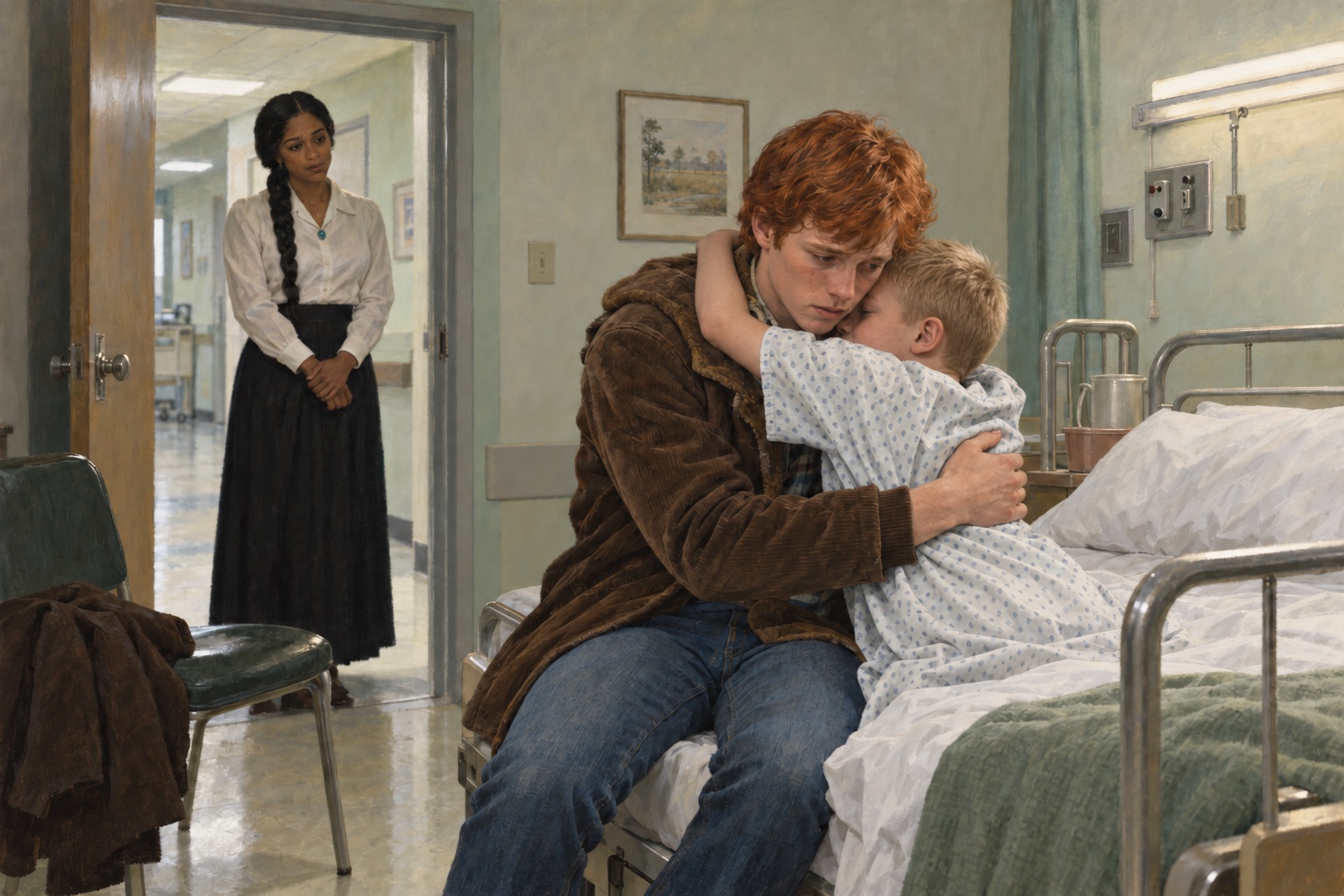
In the lobby, Agent Harmon is sitting with a woman in her mid-to-late twenties. Her glossy jet-black hair is pulled back into a single braid that falls almost to her waist. Except for a turquoise pendant that hangs just below the hollow of her throat, she’s dressed conservatively in a white blouse and black skirt. Harmon’s wearing the standard institutional gray suit and a way-out-of-style skinny black tie.
They both rise as Rusty approaches the sofa.
“Hello, Blanton,” Harmon says. “Thanks for coming. This is Miss Lowery. She’s a social worker who’s been working with Dwayne.”
“Pleased to meet you,” Miss Lowery says, shaking his hand. “And thank you so much for agreeing to see Dwayne. It’s very kind of you.”
Harmon puts his hand on Rusty’s shoulder, guiding him toward the hall. He feels like turning around and running out the front door as fast as his legs will take him.
“Follow me. Miss Lowery is going to brief you on what to expect and what to say and not to say.”
Rusty nods and walks with them to a small fluorescent-lit consulting room with three chairs and a small round metal table. The pervasive chemical smell of the hospital triggers memories of electrocardiograms from his rheumatic fever stay and the image of his asthmatic grandmama gasping for air in an oxygen tent with a terrified look on her face.
Each takes a seat.
Miss Lowery speaks calmly and looks Rusty straight in the eyes. His are blue and nervous, hers brown and gentle.
“First of all, Blanton—”
He interrupts. “Please call me ‘Rusty.’”
She smiles. “Rusty, first of all, you’re not here to ask questions about what happened or to get information from Dwayne.”
Harmon’s nodding. “That’s our job,” he says.
Rusty hadn’t considered that might be why they wanted him to talk to Dwayne. He’s glad it’s not.
Miss Lowery continues, “Children who’ve suffered trauma sometimes latch onto the last person who makes them feel safe. Dwayne keeps referring to you as his friend— ‘my redheaded friend.’ He’s closed down. Rarely utters a word. When he does, he’s asking for you.”
Harmon turns around. “Hey, I just noticed that pot of coffee back there. Anyone want a cup?”
Miss Lowery shakes her head.
“No thanks,” Rusty says. He already has to pee and a cup of coffee might create a crisis.
“Don’t mind if I do.” Harmon scrapes his chair from the table and walks over to the coffee pot.
Miss Lowery returns her gaze to Rusty. “In your conversation, keep things simple. Let him lead, if you can. Don’t contradict him. He may cry; then again, he may not say anything at all.”
“Is it okay to hug him?” Rusty asks.
“Great question, Rusty. If he comes to you, that’s fine, but don’t initiate physical contact yourself. The most important thing is for you to be yourself.”
Easier said than done.
Harmon has chosen to remain standing. His coffee cup says, “Busty Nurse.”
“Any other questions?”
“No, ma’am.”
“Okay, then. He’s in a private room. I’ll take you there.”
Harmon stays behind as Miss Lowery and Rusty walk down the hall, passing a woman pushing a cart stacked with trays. He remembers the smell, like the meat, mashed potatoes, and reconstituted peas are themselves medicine, nasty but supposedly good for you.
Dietitians, a lovely word.
When they reach Dwayne’s room, the door is open, so they walk in.
Dwayne’s lying on his back with the hospital bed tilted up at an angle. His hair has been closely cropped, an improvement over the peroxided mushroom mess Rusty last saw.
“Hello, Dwayne. Look who’s come to see you. Your friend Rusty.”
Dwayne smiles. “You come to see me!”
“How you doing, Dwayne?”
Miss Lowery subtly nods to Rusty and steps out.
Rusty scoots the visitor’s chair slightly closer to the bed and sits.
“You done got a haircut,” Dwayne says. His smile is gone.
“Yep, looks like we got something in common. You got yourself one, too.”
Dwayne frowns. “I didn’t ask for no haircut, though.”
“It looks good, man. I like it.”
Dwayne doesn’t say anything, just stares at Rusty.
In the silence, Rusty fidgets while Dwayne maintains his stare. Maybe this was a bad idea; maybe he’s not the right person for this type of thing. He flirts with the idea of cutting this short, saying, “Hey, Dwayne, great seeing you,” but realizes that would be a king-hell cop-out.
Finally, Rusty asks, “How’s the food in here?”
“It ain’t bad,” Dwayne says. “I like them mash potatoes.”
“I’m a mashed potatoes fan myself.”
The food cart rumbles past in the hall. Dwayne sits up and beckons Rusty to come closer, so Rusty gets out of the chair and approaches the bed.
“Take me with you,” Dwayne whispers. “Sneak me out of here.”
He pronounces “here” like “cheer.”
“Get me out o’cheer.”
Rusty doesn’t think he’s ever seen someone look so defeated.
Forgetting Miss Lowery’s instructions, Rusty leans over and places his arm on Dwayne’s. “I can’t do that, buddy. You’re here to get better. You need to stay here and get better. I’ll tell you what. When you’re better, I’ll come see you sometime. Would you like that?”
Dwayne nods.
Miss Lowery knocks gently on the open door and enters. “Dwayne, it’s time for Rusty to go, and it’s time for your meds.”
“I don’t want him to go.”
“Hey, Dwayne, remember I’m going to see you when you get better. Getting better is the important thing. Give me a hug goodbye.”
Dwayne sits up and Rusty leans over and hugs him. Dwayne holds on to Rusty for dear life. Finally, as Rusty squirms a bit, Dwayne lets go.
“Hang in there, Dwayne—see you later, alligator.”
“After a while, crocodile.”
Before leaving, Rusty gives Dwayne the thumbs-up sign, but Dwayne doesn’t respond. He’s lying there motionless, like he had been when they first walked in.
Rusty’s surprised that Miss Lowery doesn’t say anything on their way back. She seems lost in thought.
Harmon’s reading a newspaper when they return to the consulting room. Although seeing Dwayne was depressing as hell, Rusty feels a sense of release now that it’s over.
“How’d it go?”
“Great! Rusty did great,” Miss Lowery says. “So far around others, Dwayne has refused to talk. This is encouraging.”
Agent Harmon gets up and puts the newspaper back on the counter.
“Hey, y’all mind if I go to the bathroom?” Rusty says. “I’m dying.”
“Of course not,” Harmon says. “It’s down the hall to the right.”
Once Rusty’s gone, Harmon asks, “Did any useful information come up?”
“I don’t think so,” she says, shaking her head, her braid swaying. “But Dwayne really did respond in a positive way.”
Rusty walks in with his hands in his pockets. “What’s next for Dwayne?” he asks. “An orphanage?”
Miss Lowery might be the calmest person he’s ever encountered.
“We’re hoping,” she says softly, “that if Dwayne makes enough progress, we can place him in Epworth’s Children Home. It’s run by the Methodist Church and offers children without functioning families—or in Dwayne’s case, no families—half a chance at a decent life.”
Rusty removes his right hand from his pocket. “Where’s it located?”
“Columbia,” Harmon says.
“Oh, good, because I promised Dwayne I’d come see him sometime. I go to school in Columbia.”
“Oh, that would be wonderful, Rusty,” Miss Lowery says. “They have an active Big Brothers Big Sisters program. Are you familiar with it?”
Squirming, Rusty takes his other hand out of his pocket. “Sort of. An older person mentors a younger person.”
“Yes, Big Brothers take Little Brothers to activities like ball games, circuses, etc.”
“Well, I’m not sure I’m ready for that much of a commitment. I’m a work-study student and all, but I would like to visit him at least once. I don’t want to break my promise.”
“Of course,” she says, while reaching into her purse sitting on the table. Taking out her wallet, she hands him her card.
“You know, Dwayne and I do have something in common.”
“What’s that?” Harmon asks. He’s clearly ready to wrap this up.
“Neither one of us grew up with Ward and June.”
“What?” Harmon says. Rusty can tell Harmon lacks a sense of humor.
“The Cleavers. Leave it to Beaver.”
Harmon’s face remains blank.
Miss Lowery smiles. “Any more questions for Rusty, Agent Harmon?”
“No—and thank you, Rusty. Oh, by the way, that reward should be coming your way in a couple of weeks.”
Rusty smiles. “Yay, thank you. That’s great.”
Miss Lowery gently touches his arm. “I’ll walk you out.”
When they reach the front porch, they shake hands, and she turns to walk back inside.
Rusty watches her leave.
He had planned to go to Rose’s to say goodbye to Gerald, but it’s getting late. He doesn’t want to drive the unfamiliar van 100 miles in the dark to Columbia, so he decides he’ll stay in Summerville tonight and head back in the morning.
Walking back to the van, he almost feels half human again.
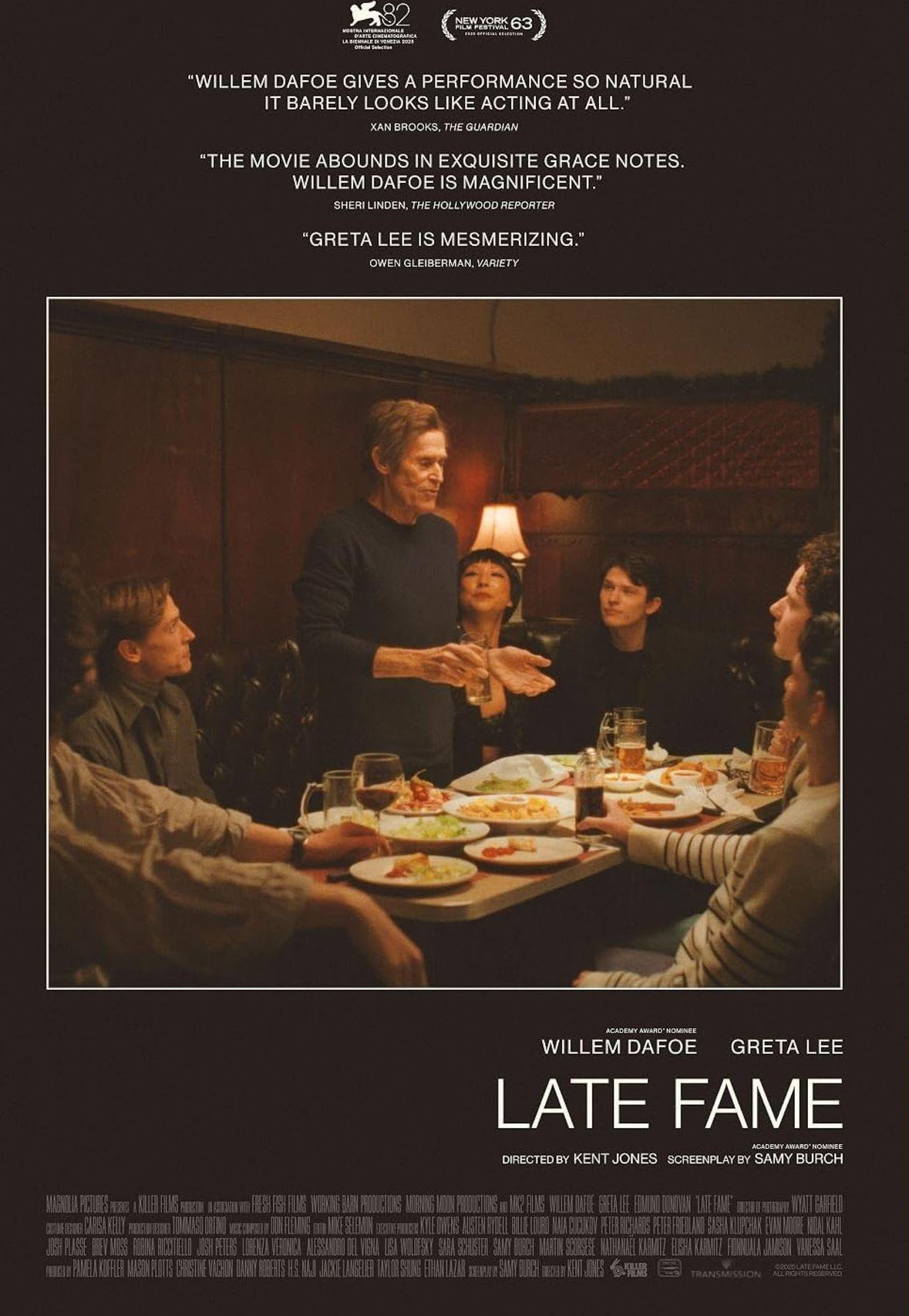
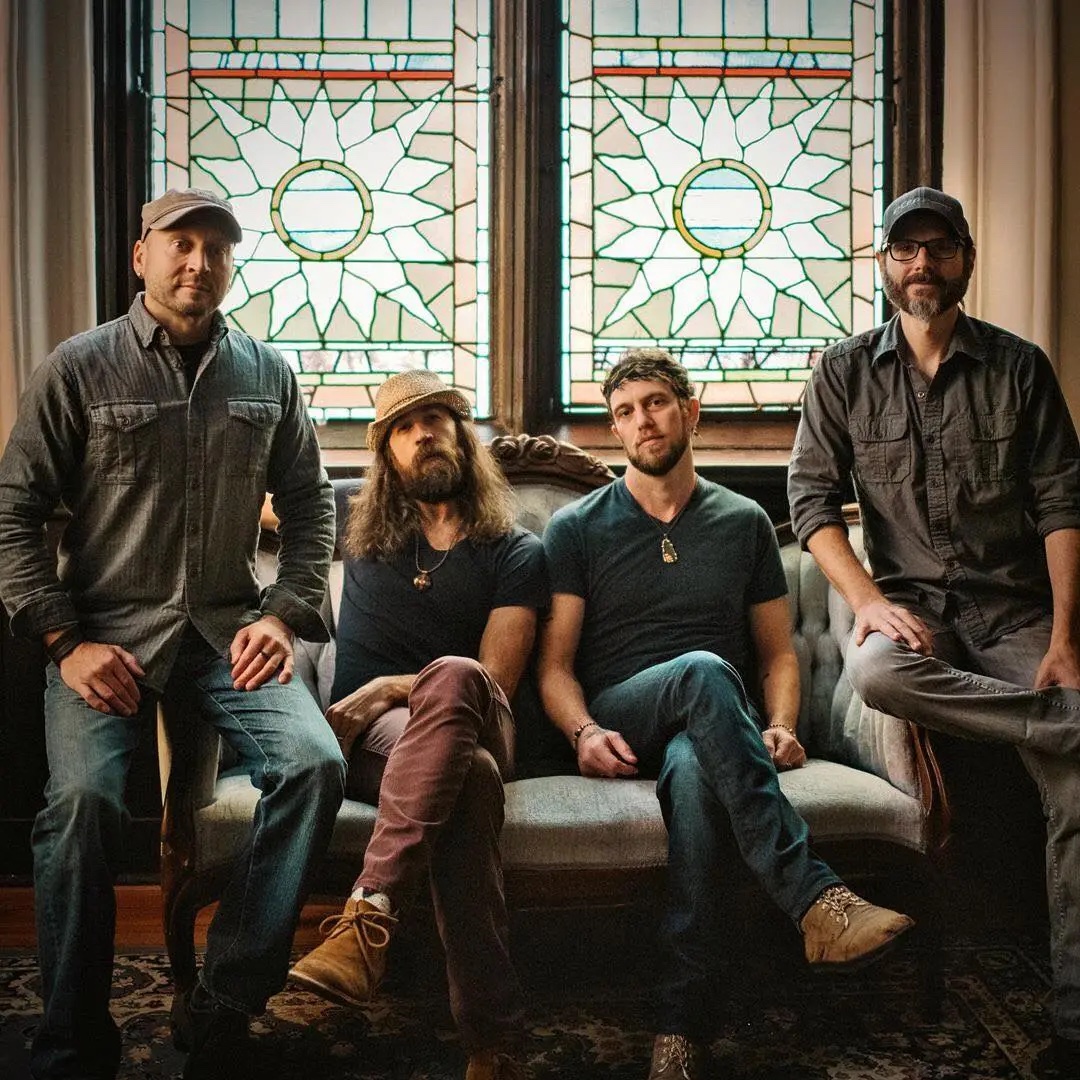
When he’s not fronting the band Danger Muffin, my pal Dan Lotti is a partner in a film company that acquires screenplays. Several months ago at Chico Feo,[1] Dan was all hepped up about a script that his company had optioned called Late Fame. It was in production, and they had landed Willem Dafoe to play the protagonist, Ed Saxberger, a mildly successful 1970s poet who now sorted letters in a post office. Like virtually all poets, even semi-famous ones, Saxberger had been all but forgotten. Nabbing Dafoe for the role seemed like a towering home run. If you’ve seen David Lynch’s Wild at Heart and remember the villain Bobby Peru, you know what I’m talking about.
DANGER MUFFIN, DAN LOTTI SECOND FROM THE LEFT
Dan offered to send me a PDF of the screenplay, and, of course, I jumped at the chance to read it.
I’ve only read three screenplays that have made it to what we once called “the big screen.”
Wes Craven’s Swamp Thing
David Boatwright’s Summerville ‘70
Samy Burch’s Late Fame
***
Set in the Village (of course), Late Fame’s opening shots eschew dialogue:
ED SAXBERGER, 70s, sorts the mail. More mail than you could ever imagine. Underground, in the bowels of the post office, basically alone.
He is so comfortable sorting letters it almost seems like a ballet. An art. But not a joyful, playful one– he looks exhausted.
He wears a uniform, eats a tunafish sandwich on his lunch break, sorts more letters, and clocks out.
Elegant.
The screenplay was written by Samy Burch and adapted from a novella by Arthur Schnitzler. When Dan described the movie at Chico, before I’d read the script, I imagined Saxberger as a Bukowski-like wild man who wears his badly damaged liver on his sleeve. Instead, he’s a modest, mild-mannered loner who doesn’t take himself seriously. Then a pretentious gaggle of NYU wannabe artists “rediscover” him and enlist him in a series of self-promotional readings, prompting him to revisit his writing and the press clippings he’d saved but hadn’t looked at in years.
As it turns out, Saxberger’s “late fame” is fairly meager—no Time covers, merely the adoration of an opportunistic, ambitious, but ultimately amorphous literary movement intoxicated by the idea that they’re creating something consequential.
***
Caroline, my expat son Ned, and I finally got to see Late Fame last week at the Terrace, and we thoroughly enjoyed it, a refreshing antidote to the 78-rpm mayhem of The Odyssey. Everything in the film complements everything else—the muted, brown-dominated palettes of the street scenes, Saxberger’s obsolescent stereo equipment playing Ezra Pound reading from one of his Cantos, the vague echoes of Weimar Germany with Gloria vamping “à la Sally Bowles. A fresh breath of stale air, you might say.
It’s the type of movie that stays with you even days later. In the theater, it didn’t occur to me that the down-to-earth guys Saxberger hung with at the pool hall were the complete opposite of the up-in-the-air artistes he was now wasting time with. The deliberate movement of the plot’s gentle arc offered silences that are so rare in contemporary movies. This gave me hope for my current project, WinterBreak, which features an ensemble cast and doesn’t follow what I think of as the Twelve-Dead-Cats template. Life is more complicated than that, and much richer for the complications, I might add.
***
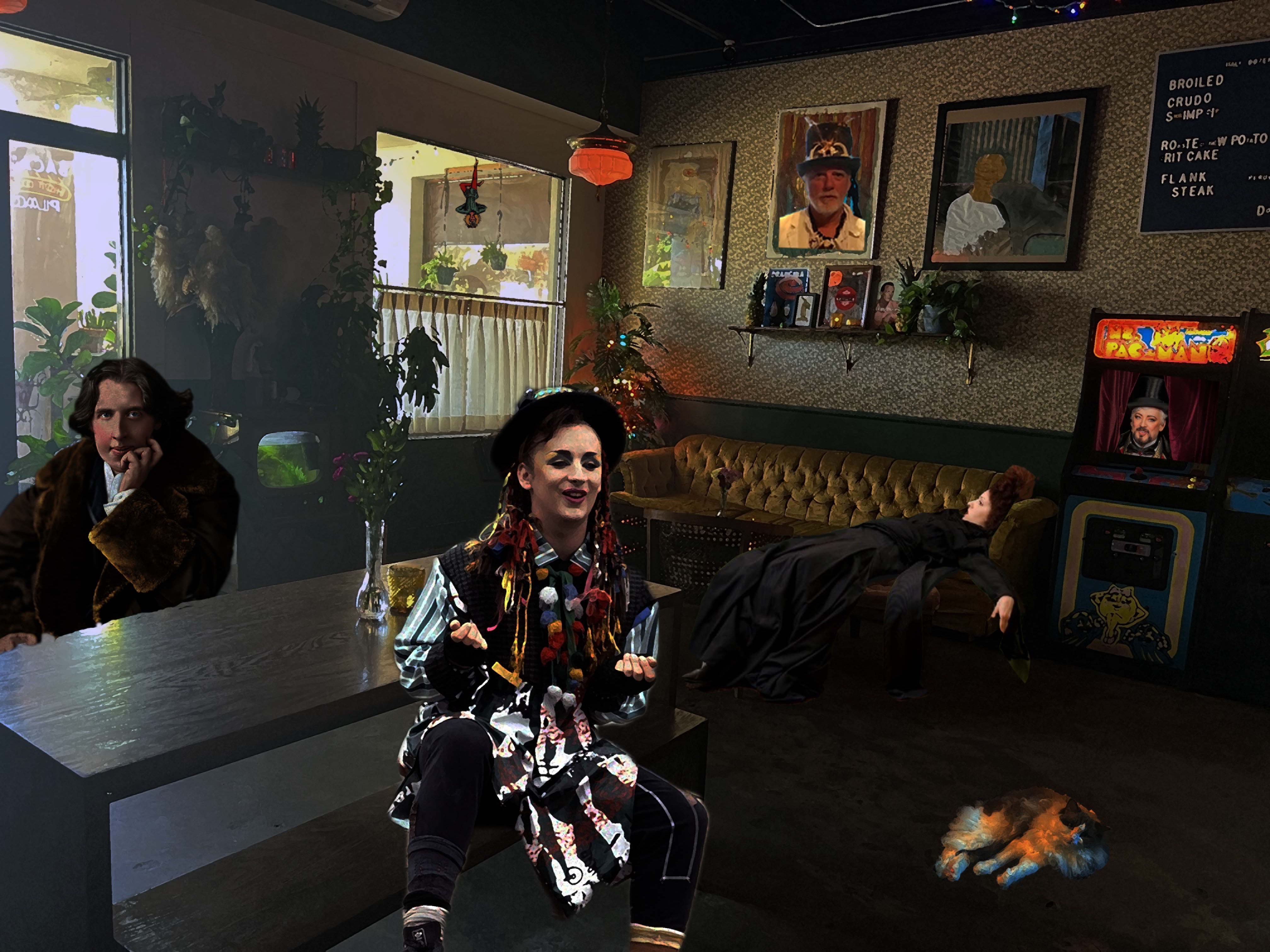
After the movie, some of us gravitated next door to Bar George to talk about the film. Come to think of it, Bar George as a set would have worked for Late Fame with its sofas and tables and quirky artsy décor (see below). When Dan asked me what I thought, I told him how much I enjoyed it, especially the comic Greek chorus of the wannabes. They reminded me of so many of the self-proclaimed poets I encountered in college and graduate school.
I told Dan that even if I’d ever thought I had something important to say, I would never have uttered it aloud. In truth, I’d never thought in those terms. I’d merely hoped my writing might somehow entertain somebody.
He laughed, nodded his head, and Caroline, Ned, and I headed for home.
On the way back to Folly, passing beneath the arched oak tunnel of Riverland Terrace, I thought about the film and Winter Break and the beauty of the late afternoon sun strobing through the leaves and the whole pretentious business of bringing words to life.
DIGITAL COLLAGE: BAR BOY GEORGE BY WESLEY MOORE III
[1] Oops, oh-me-oh-my-oh, rhyming prose is a no-no.