Way, Way Past Time

Yesterday morning I awakened to the news that the 1,001st mass shooting since Sandy Hook had occurred at an Orlando nightclub.   Of course, mass shootings only make up a small percentage of the 32,000 firearms deaths the US racks up every year.


CkzEqS-WEAAQLnj


Be that as it may, when it comes to mass shootings, a very clear pattern emerges as to the weapon of choice among the assailants, the AR-15, the weapon used Friday night in Orlando and six months ago in San Bernardino and in 2012 in both the Aurora, Colorado, theatre shooting and the massacre in Newton, Connecticut, at the Sandy Hook Elementary School.

It’s the same weapon South Carolina State legislator Lee Bright raffled off when he ran against Lindsey Graham in 2014. I’ll let the ironically named legislator speak for himself:

“In the wake of the horrific tragedy in Newtown, Connecticut, gun-grabbers were sure they had the votes to RAM gun control into law,” the email said. “Thanks to the action of Second Amendment supporters all over the country, their schemed failed — even despite my Republican Primary opponent, U.S. Senator Lindsey Graham. … In fact, it’s one BIG reason I’m running for the U.S. Senate. And today, I’m announcing that my campaign is giving away a brand new Palmetto Armory AR-15!”

Capture7

Bright asked supporters to forward the email “to every pro-gun friend and family member you have.”

There is no reason for anyone to own an AR-15 assault weapon (note the nomenclature). For hunting, it might be useful if the game is Godzilla, but for deer or even bear it seems like overkill, not very sporting, and as far as self-protection goes, a shotgun will do.

And please spare me the deluded fantasy that assault weapons are necessary in the event that “they” ever come after “our guns.” Let me assure you that if the “they” is the US Military, your AR-15 is not going to be all that effective against F-15s, armored vehicles, cruise missiles, etc.

But, the doubters ask, if we make assault weapons illegal, only criminals will own them. Well, we have a real world example of what happens when assault weapons are banned in the 1996 legislation that Australia enacted. I quote the NY Times:

The oft-cited statistic in Australia is a simple one: There have been no mass killings — defined by experts there as a gunman killing five or more people besides himself — since the nation significantly tightened its gun control laws almost 20 years ago.

A few of the weapons accumulated in Australia's government's buy back program

A few of the weapons accumulated in Australia’s government’s buy back program

Obviously, it’s way past time for us to do the same. The fact that this latest butcher with a known link to an Islamic radical could purchase an assault weapon is unconscionable, ludicrous, downright un-Darwinian.

Please contact your representatives. I certainly am.

Let Chaucer Be

TCOD-Bodleian-Library
The latest controversy roiling the breasts of English majors at Yale is their being required to take a survey course called “Major English Poets,” a course of study that forces them to become familiar with the works of Chaucer, Spenser, Shakespeare, Donne in the first semester and Milton, Pope, Wordsworth, Eliot, and one other modern poet in the spring. Their beef, according the petition that they’ve delivered to the Department is that “a year spent around a seminar table where the literary contributions of women, people of color, and queer folk are absent actively harms all students, regardless of their identity.” [1]

I heartily disagree, and I’m going to quote at length one of the white men listed above, TS Eliot, from his essay “Tradition and the Individual Talent.”

To proceed to a more intelligible exposition of the relation of the poet to the past: he can neither take the past as a lump, an indiscriminate bolus, nor can he form himself wholly on one or two private admirations, nor can he form himself wholly upon one preferred period. The first course is inadmissible, the second is an important experience of youth, and the third is a pleasant and highly desirable supplement. The poet must be very conscious of the main current, which does not at all flow invariably through the most distinguished reputations. He must be quite aware of the obvious fact that art never improves, but that the material of art is never quite the same. He must be aware that the mind of Europe—the mind of his own country—a mind which he learns in time to be much more important than his own private mind—is a mind which changes, and that this change is a development which abandons nothing en route, which does not superannuate either Shakespeare, or Homer, or the rock drawing of the Magdalenian draughtsmen. That this development, refinement perhaps, complication certainly, is not, from the point of view of the artist, any improvement. Perhaps not even an improvement from the point of view of the psychologist or not to the extent which we imagine; perhaps only in the end based upon a complication in economics and machinery. But the difference between the present and the past is that the conscious present is an awareness of the past in a way and to an extent which the past’s awareness of itself cannot show.

And, yes, and that includes Alexander Pope, who may not be “fun” to read but who provides a nearly flawless mirror to the intellectual world of his century.

For people of color, “queer folk,” and women to have an understanding of the works of great artists and the historical contexts of those works strikes me as the opposite of harmful, especially given that I’m fairly sure Yale offers elective courses that feature other great poets like Derek Wolcott, Elizabeth Bishop, Langston Hughes, and Hart Crane.  Chaucer, Spenser, Shakespeare, and Donne in a sense established the traditions of English poetry, the colloquial, rough-hewn verse of Chaucer and Donne pointing the way for the great Walt Whitman, the smoothness of Spenser no doubt influencing the verse of Christina Rossetti.

One student, Ariana Miele, in an op-ed piece for the Yale Daily News wrote, “We read Chaucer, but we are told to view his misogyny with an ‘objective’ lens.”

Certainly, the Middle Ages were misogynistic, and perhaps Chaucer was typical of his age, but he has also given us the Wife of Bath who offers this bit of wisdom to her fellow pilgrims:

By God, if women ever wrote some stories

As clerks have done in all their oratories,

They would have told of men more wickedness

Than all the sons of Adam could redress.

In other words, women in Medieval Europe did not have their voices heard.

Or this from Iago’s wife Emila from Othello explaining to chaste Desdemona why some women betray their husbands:

But I do think it is their husbands’ faults

If wives do fall: say that they slack their duties,

And pour our treasures into foreign laps,

Or else break out in peevish jealousies,

Throwing restraint upon us; or say they strike us,

Or scant our former having in despite;

Why, we have galls, and though we have some grace,

Yet have we some revenge. Let husbands know

Their wives have sense like them: they see and smell

And have their palates both for sweet and sour,

As husbands have. What is it that they do

When they change us for others? Is it sport?

I think it is: and doth affection breed it?

I think it doth: is’t frailty that thus errs?

It is so too: and have not we affections,

Desires for sport, and frailty, as men have?

Then let them use us well: else let them know,

The ills we do, their ills instruct us so.


I’ve often said that when parents start running a school, that school’s in trouble. When students start running a university, especially when they’re undergraduates, that university’s in big trouble.


[1] Is it possible to study post-colonialism without understanding colonialism? Might knowledge of pre-colonial and colonial art help students better understand colonialism and post-colonialism?

Psalm: Dystopia

il_fullxfull.288899605


From man’s blood-sodden heart are sprung

Those branches of the night and day

Where the gaudy moon is hung.

What’s the meaning of all song?

‘Let all things pass away.’

                                                WB Yeats, “Vacillation”


Once upon a time,

and a very good time it was,

before we put seeds in the ground,

the gods lived inside the snake,

inside the bush, inside of us.


After the capture of the seed,

the plants lost their souls

as the folk toiled

beneath the eyes of a watchful god —

or so they thought.


But over the centuries, as they reaped and sowed,

the sky god began to shrink, to wither

into little more than a whisper.


Later, citizens polished their pianos,

and the factories spewed their soot,

and the dead carp floated upon the lake,

and the coral disappeared from the seas,

which rose year after year –

to reclaim the trade-seared land.


Shadow Boxing Earlier in the Day: Clay vs. Ali

cassius_clayIn my boyhood, before adolescence, I began each day by retrieving the newspaper from what we called the front porch, though, in truth, it was more like an elevated stoop, a 6 x 6 concrete slab. If there were a big story, like the suicide of Marilyn Monroe, I’d read it right there, or if there were an untelevised sporting event I cared about, I’d rip open the sports section to discover the outcome. That was the case on 25 February 1964 when Cassius Clay, as he was called in those days, upset Sonny Liston for the Heavyweight Championship of the World. It was the outcome I had fervently hoped for, and it had happened, despite 7 to 1 odds. I remember sitting on the steps of the stoop, reading the account that included the accusation that Liston had thrown some type of blinding powder in Clay’s eyes.

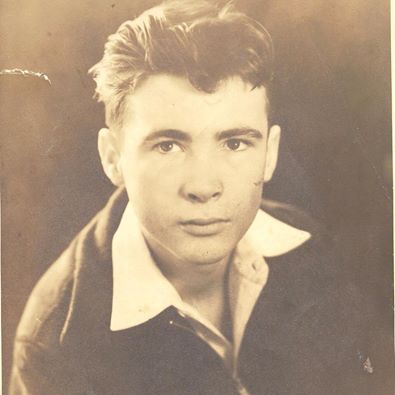
My father had been an amateur boxer in his youth, a welterweight who developed his skills on the sidewalks of Spring Street in Charleston, SC, during the Depression. Every Friday night he’d watch the fights broadcast on the Gillette Cavalcade of Sports as he sat on the sofa smoking cigarette after cigarette, leaning into the television, screaming suggestions to the combatants even though they were hundreds of miles away at Madison Square Garden. He had bought my brother and me boxing gloves and roped off the living room and taught us how to box, to crouch, to throw punches with our “hips” instead of our “arms.” I hated it, being at once weak, blinky, and adverse to pain.

My father in his Spring Street Days, aged 15

My father in his Spring Street Days, aged 15

But I did enjoy watching the matches, and we liked “Cassius Clay,” because he was funny, brash, clever, a rhymer, and, I’m sorry to say, perhaps because he was “light-skinned,” unlike Sonny Liston and Joe Frazier.   Clay, and later, Ali, was also too aware of this distinction in skin tones. Here’s a snippet from Robert Lipsyte’s superb obituary from the Times:

But Ali had his hypocrisies, or at least inconsistencies. How could he consider himself a “race man” yet mock the skin color, hair and features of other African-Americans, most notably Joe Frazier his rival and opponent in three classic matches? Ali called him “the gorilla,” and long afterward Frazier continued to express hurt and bitterness.

Ali would also play upon racial and ethnic stereotypes. Here is a joke he told at a fundraiser in Louisville in 2005:

“If a black man, a Mexican and a Puerto Rican are sitting in the back of a car, who’s driving? Give up? The po-lice.”

And here he is explaining to a Soviet reporter in 1960 why he’s proud to be an American citizen.

“It may be hard to get something to eat sometimes, but anyhow I ain’t fighting alligators and living in a mud hut.”

In some ways, like my father, he was a man of his times.

However, even though these quips might have gotten Ali dis-invited from a speaking engagement at Oberlin, in the course of his life, he displayed more courage than any other athlete I can think of. Ali was a man of his convictions, willing to make unpopular brand-tarnishing decisions like converting to the Nation of Islam and facing the prospect of prison for refusing to be drafted into the Viet Nam War. “I ain’t got nothing against them Vietcong,” he said, adding, “They ain’t never called me no [racial expletive].”

And Ali sacrificed three prime years when boxing commissions around the country stripped him of his titles, and although the backlash was fierce and many journalists refused to call him by his new name, he earned the respect over time for his principled stands, and, even my father, not exactly a devotee of Malcolm X, continued to pull for Ali upon his return to the ring.

Perhaps it was because Ali was such a beautiful, graceful fighter, poetry –not doggerel — in motion or because he was so witty, possessed such a generous spirit, and these attributes transcended by father’s homegrown prejudices.  Later in life Ali said, “Color doesn’t make a man a devil. It’s the heart and soul and mind that count. What’s on the outside is only decoration.”

At any rate, it says something positive about our nation that at his death Muhammad Ali was virtually universally admired by his fellow citizens, even, it would seem, Donald Trump.

All leave you with this ditty from the great Bob Dylan:


I was shadow-boxing earlier in the day

I figured I was ready for Cassius Clay

I said “Fee, fie, fo, fum, Cassius Clay, here I come

26, 27, 28, 29, I’m gonna make your face look just like mine

Five, four, three, two, one, Cassius Clay you’d better run

99, 100, 101, 102, your ma won’t even recognize you

14, 15, 16, 17, 18, 19, gonna knock him clean right out of his spleen”


dylan-ali-2-300x201

The Big-Boned Lady Has Sung

fat lady 1.0

If you believe the pundits – and why should you given that virtually every one of them emphatically assured us that Donald J Trump would never be the Republican nominee? Anyway, if you believe the pundits, they claim that Hillary Clinton’s so-called foreign policy speech Thursday was “a turning point in the campaign.”   If I had the time and patience, I could perhaps construct one of those rapid-fire montages that the Daily Show made famous: [cut to Eugene Robinson: “turning point,” cut to Rachel Maddow: “turning point,” cut to Hendrik Hertzberg, “turning point,”]. A turning point, I assume, in that Clinton has gone from reactive to proactive, has taken control of the news cycle.

People were expecting a boring speech on national security, but instead they got sardonic stand up:

”There’s no risk of people losing their lives if you blow up a golf course deal.”

“Donald Trump says, ‘I know more about ISIS than the generals do. Believe me.’ Well, [semi-eye roll] I don’t believe him.”

The speech was well delivered, more conversational, less strident.

Not surprisingly, Clinton didn’t mention her foreign policy legacy during the speech, the vote on the Iraq war, the debacle in Libya, etc. Essentially, she used Trump’s own words to illustrate just how unstable, intemperate, and megalomaniacal he is, something Ted Cruz and Marco Rubio were loath to do until it was too late. Obviously, Clinton has nothing to lose by alienating the Republican base, that fraying quilt of evangelists, secessionists, country club members, and unreconstructed Confederates.

It may also be a turning point in that on the Friday before the New Jersey and California primaries none of the pundits were talking about the Democratic horserace.

To politically correctly emend that operatic cliché, “the big-boned lady has sung.”

Hillary Clinton is the Democratic nominee, and she might be more of an effective campaigner than we had imagined.

A Tiny Tribute to Ry Cooder

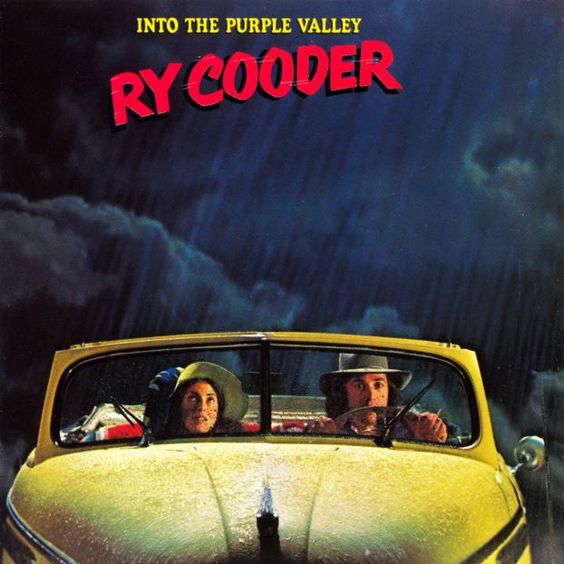
dec3f5679bef6969776aac2c9c638ae0


Ry Cooder is an underappreciated American treasure. Although his exquisite studio session work (with bands as diverse as the Rolling Stones, Captain Beefheart, and Paul Revere and the Raiders) has been invaluable and his delightful original compositions often remarkable, it is his work as an archivist that has enriched my musical knowledge and refined my musical tastes.

Cooder’s an excavator of buried treasures, a discoverer of exotic, beautiful music, whether it be from the Mississippi Delta, Mexico, Cuba, India, or Sub-Saharan Africa. He’s sort of a medium – a vessel through which these songs are filtered and then transformed into a mode that preserves their essence but makes them new.

Check this out, for example, a cover of Washington Phillips’ obscure gospel song “Denomination Blues” from Cooder’s second studio album Into the Purple Valley, released in 1972.


This snippet embodies a remarkable paradox of Cooder’s music — his recordings of dated songs never sound dated — they sound the opposite of stale.

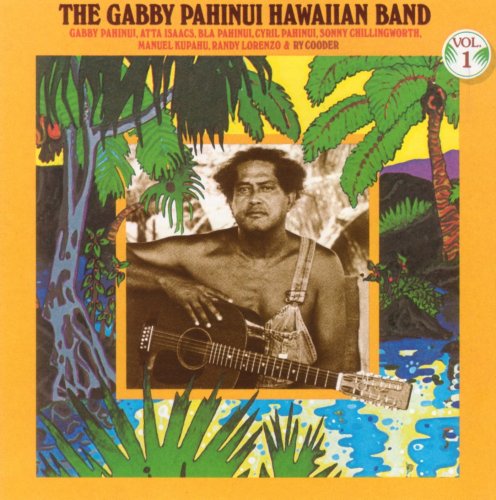
His fourth album, Chicken Skin Music, might be my favorite. On this record, Ry embraces both Hawaiian and Tex-Mex music. Essentially, he blends those formats into country and blues numbers. For example, here are legendary Hawaiian musicians Gabby Pahinui and Atta Isaacs contributing to this old Hank Snow tune:


61-vDizI6xL


Chicken Skin Music also features for the first time now long-time collaborator Flaco Jimenez and his diatonic button accordion. Here they are doing Jim Reeves’ 1959 “He’ll Have to Go” in bolero rhythm.


Not to give you the wrong impression; the cat can also rock, as he does in this cover of Elvis’s “Little Sister,” from the 1979 album Bop Till You Drop, the first major label album ever to be digitally recorded.


Of course, in recent years, Ry’s justly become famous for his collaborations with Cuban musicians in The Buena Vista Social Club, the Malian guitarist Ali Farka Touré, and the Indian sitar player Vishwa Mohan Bhatt.

Here’s a short clip from the Touré collaboration.


Add to that concept albums like Chavez Ravine, My Name Is Buddy, not mention his work with Little Village, the band he formed with John Hiatt, Nick Lowe, and Jim Keltner, and you have a body of work deserving of some sort of Presidential Medal.

I bet in a 100 years Cooder’s recording will not have aged – and that’s always been the test of great art. So c’mon President Biden, Let’s get goin’.


Free to a Bad Home: Unclaimed Killer Punk Rock Band Names


Dead Kennedys

Dead Kennedys

I guess the first punk rock band name that caught my eye was “Dead Kennedys, “ who, by the way, rank as number 6 on DigitalDreamDoor.com’s “100 Greatest Punk Rock Artists” pantheon.

It seems as if choosing a relatively inoffensive name would be a real sellout for a punk band, and what could be the motivation except for some kind of profit motive?

Not to piss on “The Misfits” (#9) or “The Adolescents (#29) or “Streetlight Manifesto (#84), but those are some pretty lame-ass names as opposed to “The Vibrators” (#74) or “Chocking Victim (#67).

Then again, those are not nearly as cool in my humble opinion as these 3 head-snapping double-take inducing names for a punk band who ain’t afraid of clucking tongues.

I offer these un-copyrighted, free of charge.

Idiosyncratic Caucuses

Trans-Vaginal Mesh Settlements

Body Fluid Cleanup Kit

You’re welcome, Johnny Graverobber.

The Trans Vaginal Mesh Settlements

The Trans Vaginal Mesh Settlements

The Whatness-of-the-Right Now

06_10_018861Chapter 1: Losses and Gains

I’m a 47-year-old man who’s lost a portion of my left leg to diabetes, my erstwhile wife to — and I’m not making this up — a yoga teacher ten years her junior.

I would like to think, however, that through these two rather major subtractions, I have gained a greater appreciation for what I’ve come to call the Whatness-of-the-Right Now (WORN), Now I pay heed to the slow softshoe of the keyboard’s clicking, note the redness of the Bic lighter lying next to my empty coffee cup, the grain of the walnut of this desk that once was a tree, the steady samba sway of the branches of magnolia outside my study’s smudged window panes.

As that master of the Whatness-of-the-Right-Now, Van Morrison, once scatted, “It ain’t why why why why why; it just is.”

So I’ve tried to jettison the dichotomy of wise and unwise and replace it with interesting versus uninteresting, which, of course, is inviting Old Man Trouble to crash on your couch. Also, I guess I should mention I have a 17-year-old daughter Bronwyn whom I’m attempting to nudge in the right direction, i.e., a path that leads to happiness. Of course, at her point in life, WORN and opting for what’s-interesting over what’s-not-interesting is as foolish as encouraging her to read The Sound and the Fury in the dad/daughter book club we’ve formed. [1]

Dad, I’ve decided to go to the all-night rave in a club downtown instead of the Drama Club production of Annie. The rave sounds more interesting. Yes, I have my fake ID! Jeez, Dad!

The thing is, though, when WORN kicks in, everything is interesting – even the logo of the Allstate bill that lies next to the empty coffee cup.


images

Why blue?

Are the hands about to receive a communion wafer?

Are we the communion wafer?

Are they the Hands of God?

How come the A is listing to the right?

How much was the creator of the logo paid?


Hang Outs

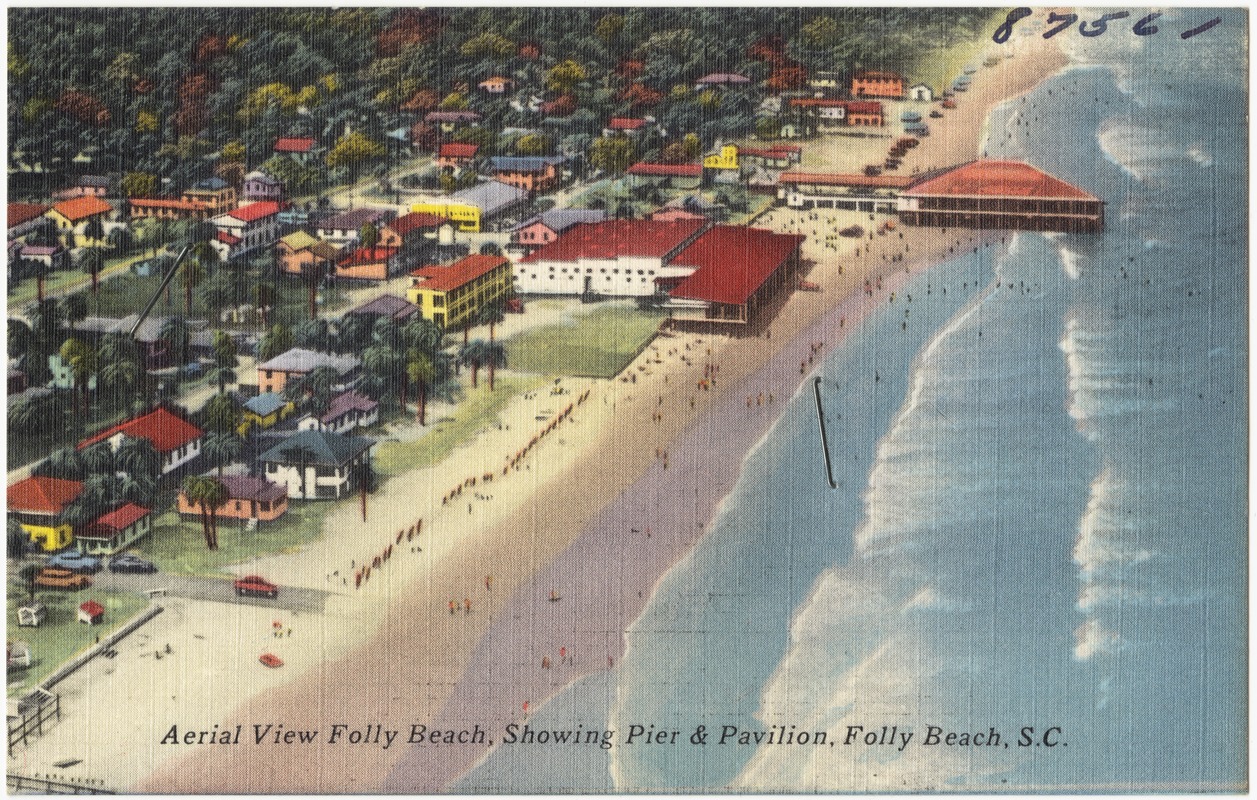
After our divorce, Gwen and I sold our house on Limehouse Street in Charleston, SC, and I moved to a barrier island called Folly Beach, the most bohemian of Charleston’s beaches. I live on the backside facing the Folly River in a small one-story, two-bedroom bungalow propped on pilings, but my study faces the front of the house because I don’t want the constant Darwinian dissonance of pelican plummet – splash – or the baby-butchering sounds of raccoon sex — or the insect-like buzz of  jet skis to distract me as I try to put into words what is happening.

After the amputation, which I prefer to call dismemberment, I retired from my job as the arts editor at the paper and became a househusband, which drove both Gwen and Bronwyn crazy. Did I mention I am a smoker? An occupational hazard in journalism and a must-not for diabetics. Of course, I smoked outside on the verandas (there were two, one upstairs, one downstairs) running along the front the house (whose side faced the street in typical Charleston fashion), but even my smoking on the porches irritated spouse and daughter. Also, I had erectile issues, not-exercising issues, Jameson whiskey issues (another diabetic no-no); nevertheless, Gwen’s affair with the vapid spike-haired Brandon I could have not imagined; her moving out on me and in with him after 22 years of marriage seemed almost goddamned cartoonish. In this case life imitates unimaginative romantic comedies.

Milton’s Satan, one of my boyhood heroes, says that “sometimes solitude is best society,” and I get plenty of it now, but I do every afternoon, depending on my mood and/or the weather, visit one of two Folly Bars, Chico Feo or The Jack of Cups. 


Chico Feo is right across Second Street East from Berts, a small grocery store that’s been in operation for 60 years. I guess you could call Chico Feo an alfresco dining experience featuring Caribbean cuisine or a funky drinking establishment without a roof. It’s in the backyard of an old un-air-conditioned two-story house where they prepare the food, goat curry, beans and rice, tacos.  The bar forms a barrier to the back door of the house where the kitchen is located. Beers are retrieved from coolers, or rather, large ice-filled tubs. Throughout the day whatever bartender’s on duty — Charlie, Tyler, Paul, or Greg — makes the trek across the street to Bert’s to procure more ice.

Chico Feo is only six blocks from my house, so I ride my bike, adding to the island’s quirky charm, a one-legged man with a notebook in his hand peddling a mountain bike on a flat barrier island. By the way, prosthetic legs have come a long way since Flannery O’Connor’s Hulga stumped her way up into the hayloft and into the arms of Manly Pointer. I opted for functionality rather than cosmetics in choosing mine, which I have rather pompously christened “Ahab,” though if you check out this link on eBay, you can find some pretty tempting vintage models, advertised with élan: http://www.ebay.com/bhp/prosthetic-leg

From my private collection :

Rare german steampunk vintage pre WW1 (about 1900 – 1910)  leather wooden foot with metal spring!

Very rare steampunk collectible – stay like this or do some restoation work on it for art design, museum collection or just an outstanding weird item for home design

outside leather is in very good condition for it’s (sic) age, rust on metal braces , inside of socket worn out and very used .

an unique item!

of course not for medical use !!!

mNAsu-ycUT4gj6RTrjTmBCw

Anyway, I usually wear long pants, unless temperature tops 90 or so, and though I admire those who flaunt their prosthetics, like Paul McCartney’s ex-wife, I’m also a great admirer of Ray Charles, whose dark glasses shielded children from at least one awful truth.

The Jack of Cups, my other hang out, is a small brew pub that features kickass Thai-like cuisine, though the owners/chefs are very white people from Santa Monica, as nice as they can be, and very talented when it comes to cooking.

I’m there right now, talking to one of the bartenders, Fiona, an articulate, culturally aware young woman with gorgeous wavy red hair, very pale freckled skin, and prominent hazel eyes that chameleon like change colors from light brown to green. She’s originally from Savannah, and although I wouldn’t quite yet call her Rubenesque, she’s headed in that direction. She actually edited the literary magazine at Bowdoin, has published poetry in on-line journals. We end up talking about Devon, an aspiring fiction writer who works at Berts.

“So, what you working on, Jake?” she says as I turn the page of a manuscript.

“It’s not mine. It belongs to Devon. It’s his latest novel.

Fiona rolls her eyes, adds a theatrical sneer.

Devon is a very upbeat young African American in his early twenties with excellent facial features but who is uncomfortably overweight. If one day Fiona might be Rubenesque, Richard is already giving Sydney Greenstreet a run for his money. Apparently, he spends every moment off work writing (and eating). When he talks about his latest project, he goes manic, as if you might be as interested in his made-up world as he is, which makes him a very poor conversationalist for a practitioner of WORN. He’s not interested in anything else but his “art,”  not sports, not politics.  I don’t think he’s ever asked me a personal question like “how did you happen to lose that leg?”
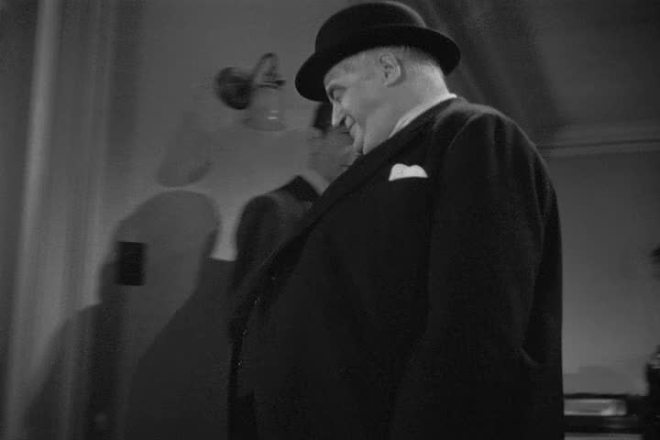
Sydney Greenstreet

Sydney Greenstreet

“You poor, stiff,” Fiona says. “You should’ve just said no. Let me be your role model, pal. When he asked me, I said, ‘no way, amigo, no can do,’ and believe me, he can take no for an answer.”

“Well, I am a man of some leisure, and I told him I’d be brutally honest, which I intend to be.”

“Yeah, and you don’t have to worry about any potential romantic delusions he might harbor  Anyway, What’s it about?”

“It’s sort of hard to explain. I just started it. Two paragraphs in. But according to him, it’s actually a video game, the plot of the novel is a video game, and like those choose-your-adventure books, you – the reader – can opt where to go, to skip 50 pages ahead if you decide to go to a movie, or instead of that, drop some LSD and jump 150 pages ahead.  He fantasizes that they’ll make it into a movie and then ultimately into a video game.”

“Sounds fucked-up. Delusional. Unpublishable.”

“It’s not the plot but the prose I’m dreading.”

“Well, sweetheart, I’ll let you get back to your reading,” she says wiping off the bar. Fiona’s writing a dissertation on film noir and has started to parrot the lingo of Sam Spade and Philip Marlowe.

“Thanks,” I say, and start over reading the manuscript.


[1] Actually, we’re reading Houseman’s A Shropshire Lad, which, though a tad bit sing-songy and cloyingly melancholy, is age appropriate for both of us:


         Loveliest of trees, the cherry now

         Is hung with bloom along the bough,

         And stands about the woodland ride

          Wearing white for Eastertide.


         Now, of my threescore years and ten,

         Twenty will not come again,

         And take from seventy springs a score,

         It only leaves me fifty more.


         And since to look at things in bloom

         Fifty springs are little room,

         About the woodlands I will go

         To see the cherry hung with snow.

Don DeLillo’s Twilight World

image found at Beautiful Decay

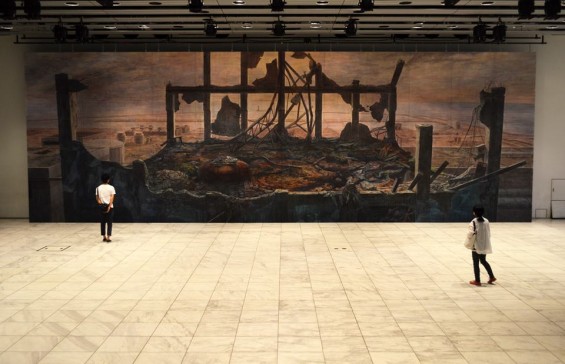
image found at Beautiful Decay Website painting by Hiroshige Kagawa

Don DeLillo is one of the few writers whose books I buy in hardback when they first come out. The rap on him is that he can’t do dialogue, or rather, chooses to have his characters speak in polished packed paragraphs that defy believability, like this exchange between college professors in White Noise:

“How is your car crash seminar progressing?”

“We’ve looked at hundreds of crash sequences. Cars with cars. Cars with trucks. Trucks with buses. Motorcycles with cars. Cars with helicopters. Trucks with trucks. My students think these movies are prophetic. They mark the suicide wish of technology. The drive to suicide, the hurtling rush to suicide.”

“What do you say to them?”

“These are mainly B-movies, TV movies, rural drive-in movies. I tell my students not to look for apocalypse in such places. I see these car crashes as part of a long tradition of American optimism. They are positive events, full of the old ‘can-do’ spirit. Each car crash is meant to be better than the last. There is a constant upgrading of tools and skills, a meeting of challenges. A director says, ‘I need this flatbed truck to do a midair double somersault that produces an orange ball of fire with a thirty-six-foot diameter, which the cinematographer will use to light the scene.’ I tell my students if they want to bring technology into it, they have to take this into account, this tendency toward grandiose deeds, toward pursuing a dream.”

Although there is some truth in the criticism in of the believability of the dialogue, I happen to hang with cats like JT Williams and colleagues like EC who do talk in packed, polished paragraphs that feature words like “metacognition” and “sturm und drang,” so my suspension of disbelief remains airborne when Sister Hermann Marie, a nun in the same novel, responds to the accusation that her belief is a pretense by laying this rap on her accuser: “We surrender our lives to make your nonbelief possible. You are sure that you are right but you don’t want everyone to think as you do. There is no truth without fools. We are your fools, your madwomen, rising at dawn to pray, lighting candles, asking statues for good health, long life.”

No only does my disbelief remain airborne, but I absolutely relish these verbal exchanges.

Edward Hopper: "Morning Sun"

Edward Hopper: “Morning Sun”

Anyway, although I consider DeLillo a superb stylist, it’s not his prose that has me plopping down thirty bills when his books come out, but his ideas, his subject matter, his detached observational perspective as he turns his binoculars from the lonely woman sitting on a bed in an Edward Hopper painting to the bleak, soulless but sunny American landscape that lies beyond that lonely room. DeLillo’s novels are exercises in cultural anthropology, case studies in the integration and synthesis of cultural components. Here’s Murray Suskind riffing on advertising, again in White Noise:

Look at the wealth of data concealed in the grid, in the bright packaging, the jingles, the slice-of-life commercials, the products hurtling out of the darkness, the coded messages and endless repetitions, like chants, like mantras. “Coke is it, Coke is it, Coke is it.” The medium practically overflows with sacred formulas if we can remember how to respond innocently and get past our irritation, weariness and disgust.

DeLillo’s latest, Zero K, is set in Central Asia in what the dust jacket calls “a secret compound where death is exquisitely controlled and bodies are preserved until a future time when biomedical advances and new technologies can return them to a life of transcendent promise.”   This compound is a mazelike campus that is part hospital and art installation, a sort of conflation of Kafka’s Kastle and The Ministry of Love from 1984. Here is the narrator, Jeff Lockhart, whose billionaire father is an investor in the project and a “patient” in the process, describing what I would call residence halls:

The halls were nearly empty, three people, at intervals, and I nodded to each, receiving only a single grudging glance. The walls were shades of green. Down one broad hall, turn into another. Blank walls, no windows, doors widely spaced, all doors shut. These were doors of related colors, subdued, and I wondered if there was meaning to be found in these slivers of the spectrum.

Sometimes the walls turn into movies, throwing the pedestrian into a sort of unwilled virtual reality of interconnected disaster, and these passages swoop into cinematic writing that brilliantly captures moving images and places the reader into the mix as participant:

Fires were burning onscreen and a fleet of air tankers hung a thick haze of chemicals over the scorched treetops.

Then a single figure walking through a town’s empty streets with homes imploded by heat and flame and lawn ornaments shriveled to a crisp . . .

Elsewhere now people wearing facemasks, hundreds moving at camera level, walking or being carried by others, and was this a disease, a virus, long ranks of slow moving men and women . . .

Then a woman seated on the roof of her car, head in hands, flames – the fire again – moving down the foothills in the near distance.

Then grass fires sweeping across the flatlands and a herd of bison, silhouetted in bright flame, going at a gallop parallel to barbed-wire fencing and out of the frame.

There was a quick cut to enormous ocean waves approaching and then water surging over seawalls and sets of imagery merging, skillfully edited by hard to absorb, towers shaking, a bridge collapsing . . .

You get the picture.

The narrator Jeff is there to bid his debilitated stepmother goodbye as she prepares for the big freeze; however, to complicate matters, his perfectly healthy and supremely wealthy father Ross has decided he too wants to end this phase of his life because he doesn’t want to live without his spouse and he is confident that one day they will be awakened into a brave new world. Jeff, not surprisingly, hates this idea of pie-in-the-sky surrender, given that even if it were possible, reawakening in that world may not be as self-affirming as you might imagine.

Given that he was born in 1936, it’s not surprising that DeLillo has turned to a meditation on death, but death-obsession is also a major theme in White Noise. His world is God-vacated, like the paintings of Edward Hopper, a fascinating world, both beautiful and terrible, an exhilarating world to explore, a world very much alive.

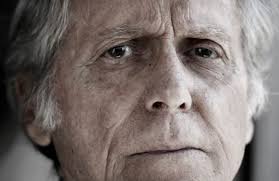
Don DeLillo

Don DeLillo


The Not Do-It-Yourslfer

bent nail 2


I’m no good at hammering nails

or sawing straight, presaged

in kindergarten by my inability

to color inside the lines —

My Friend Flicka’s brown coat

zigzaggingly asymmetrical.

Pressing down too hard,

clutching the crayon as if someone

might try to snatch it away,

too much in a hurry,

I would give up and flip the page,

start anew, scribbling colors,

blunting the tips of the crayons.

Now I beat the bent nail into treated lumber

to protect barefooted grandchildren.

Unusual high tides have lifted

dock planks divorced from rusty nails.

Bang bang bang   bang         bang.

That’s it: it’s time to call a handy man.


il_570xN.747633851_81cp-2