Mind-Forged Manacles

shapeimage_2

C’est l’Ennui!—l’oeil chargé d’un pleur involontaire,
Il rêve d’échafauds en fumant son houka.
Tu le connais, lecteur, ce monstre délicat,
—Hypocrite lecteur,—mon semblable,—mon frère!*

Baudelaire “Au Lecteur”

In our culture of hyper-stimulation, silence has become the rarest of commodities. In the evening of an overcast, humid, post-solstice sabbath, a siren swirls off in the distance while some unseen high-pitched mechanical blower/sandblaster/particle-collider keens like an instrument of torture.

To me, a native of the Lowcountry, summer’s official beginning is a sad occasion. The best weather is already behind us. The drip drip drip of days will winnow with less and less daylight as the ambitious resolutions of early June melt in the heat like wax sculptures – the hot tub not repaired, the school work delayed, the evenings, mornings, afternoons dissipating inevitability into oblivion.


*It’s the soul-stunting boredom – an involuntary tear in the eye.
Smoking the houka, he dreams
of gallows. Reader, you know this exquisite malady.
You, hypocrite reader – my soulmate – my brother!

very loosely translated by I-and-I (who assures you it sounds great in French)

Ennui, by Askerov

Ennui, by Askerov

O, woe is me!

Even though I have access to an array of Robert Altman films I can stream instantly via Netflix, Nashville is not available; the beach that is exactly .32 miles away is teeming with vulgarians, the gorgeous vista behind our house muted by the cloud cover.

Bill Clinton, you can’t even begin to feel my pain!

clintonfrown460

Perhaps, the decadent, entitled, whining dissatisfaction sampled above stems from my disinclination to seek out silence. The East has provided us with techniques to subdue what zen masters call “the monkey mind,” i.e., the brain’s tendency to flash from idea to longing to memory the way a spider monkey slashes from tree to tree to tree.

spider monkey (Ateles geoffroyi)

spider monkey (Ateles geoffroyi)

One of the many beauties of Buddhism is that it provides its practitioners a regimen of exercises that transforms the mind – to switch metaphors – from murky strom-tossed waters into a glassy pool that reflects things as they are. Buddhism relies on self (not supernatural) reliance in the paradoxical quest to annihilate ego.

“If you understand real practice, then archery or other activities can be zen. If you don’t understand how to practice archery in its true sense, then even though you practice very hard, what you acquire is just technique. It won’t help you through and through. Perhaps you can hit the mark without trying, but without a bow and arrow you cannot do anything. If you understand the point of practice, then even without a bow and arrow the archery will help you. How you get that kind of power or ability is only through right practice.”
― Shunryu Suzuki, Not Always So: Practicing the True Spirit of Zen

Jeff League: Bonsai Tree with Blossoms

Jeff League: Bonsai Tree with Blossoms

Oh, but if right practice were only that easy! The changes are oh so slow. After all, according to Buddhist teachings, it’s a regimen that may take lifetimes rather than weeks to perfect.

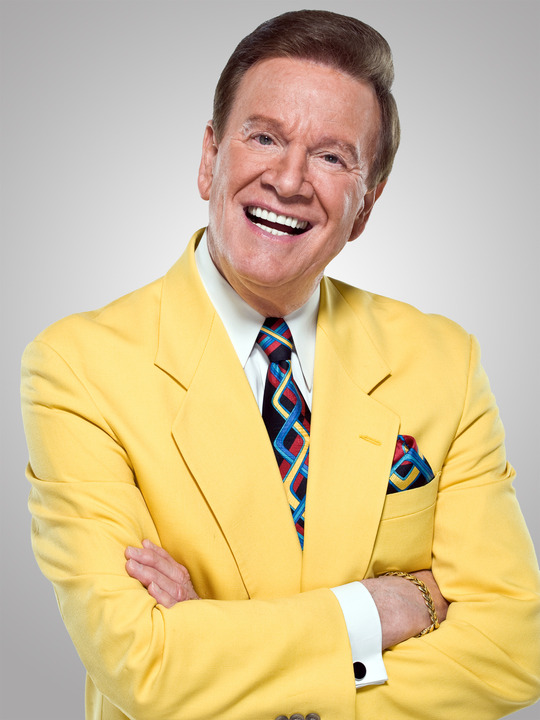
Plus, the Faustian temptations – the webs (worldwide/ otherwise) that stretch out to snare us. Why assume the half lotus when I can watch reruns of What’s My Line? on YouTube or channel surf with a television monitor that provides images that seem more wonderful than the flora and fauna outside my window?

Not to mention the restive hardwired desires for sustenance and sex.

Nevertheless, as the adage goes, charity begins at home, and right practice is ultimately a matter of self will. In fact, Marlowe’s Doctor Faustus offers a superb example of the dangers expressed at the beginning of this post – the tendency to shrug off the profound for the superficial, to squander precious moments in fruitless distractions. Remember, Faustus sold his soul to achieve greater knowledge, to understand how the cosmos functioned, yet soon enough started wasting his powers in trivialities, e.g., playing magical tricks on his adversaries and conjuring illusions like Helen of Troy, the face that launched a thousand ships/And toppled the topless towers of Ilium.
The 16th century equivalent of computer porn.
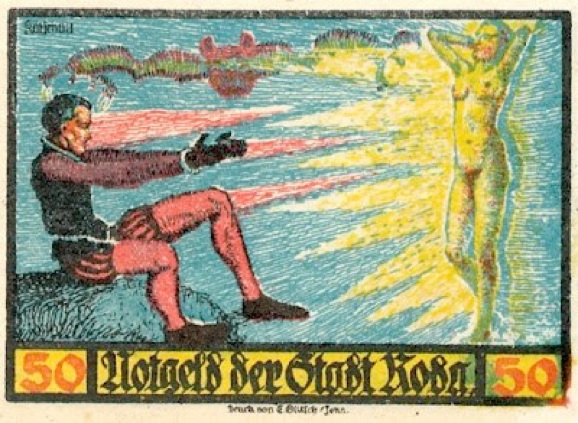
5 D. Fausti Buhlschaft mit Helena aus Graecia

Of course, the mind itself consists of the most delicate of chemical balances. What we so naively consider our substantial selves is an illusion conjured by a delicate mixture of amino acids, monoamines, acetylchlorine, nitric acids, etc.

A hit of illicit acid or a doctor prescribed dose of Prednisone can transform the seemingly substantial you from Jekyll to Hyde, begging the metaphysical/existential question who or what am I?*

Certainly, successful meditation must alter our brain chemistry in some mysterious way that leads to serenity. Here’s an anecdote from Ram Dass (aka Richard Albert) on the subject:


*Note to former students: Cf. Raskolnikov, Harry Haller, Stephen Dedalus, Oedipus, Hamlet, Othello, Emma Bovary, Milkman, Willy Logan, Merseault, Elizabeth Bennet, Raskolinkov, Mr. Kurtz, Dorothea Brooke . . .

In 1967 when I first came to India, I brought with me a supply of LSD, hoping to find someone who might understand more about these substances than we did in the West.

When I had met Maharajji (Neem Karoli Baba), after some days the thought had crossed my mind that he would be a perfect person to ask. The next day after having that thought, I was called to him and he asked me immediately, “Do you have a question?”

Of course, being before him was such a powerful experience that I had completely forgotten the question I had had in my mind the night before. So I looked stupid and said, “No, Maharajji, I have no question.”He appeared irritated and said, “Where is the medicine?”

I was confused but Bhagavan Dass suggested, ” Maybe he means the LSD.” I asked and Maharajji nodded. The bottle of LSD was in the car and I was sent to fetch it. When I returned I emptied the vial of pills into my hand. In addition to the LSD there were a number of other pills for this and that–diarrhea, fever, a sleeping pill, and so forth. He asked about each of these.

He asked if they gave powers. I didn’t understand at the time and thought that by “powers” perhaps he meant physical strength. I said, “No.” Later, of course, I came to understand that the word he had used, “siddhis,” means psychic powers. Then he held out his hand for the LSD. I put one pill on his palm. Each of these pills was about three hundred micrograms of very pure LSD–a solid dose for an adult. He beckoned for more, so I put a second pill in his hand–six hundred micrograms. Again he beckoned and I added yet another, making the total dosage nine hundred micrograms–certainly not a dose for beginners. Then he threw all the pills into his mouth. My reaction was one of shock mixed with fascination of a social scientist eager to see what would happen.

He allowed me to stay for an hour– and nothing happened. Nothing whatsoever.

Although we must cast a skeptical eye on anecdotal evidence, logic itself suggests that we at least give meditation a try, even if it yields something less than guru-dom. If it can help us shed delusions and rediscover wonder in the everyday, why not take the plunge? Meditation is religion neutral – the Southern Baptist and Shite Muslim (they have more in common than you might imagine) can practice meditation in honor of their respective deities.

It has in my negligible experience helped me to focus outside of myself to discover a certain interrelatedness, and the twenty minutes it costs can be scheduled between texting and checking emails – sometime during the evanescent day’s decline into darkness.
Just try to make sure you’re somewhere quiet.

photograph by Judy Birdsong
photograph by Judy Birdsong

Mere Facebook, an Apologia

Not surprisingly, academic naysayers galore bemoan the rise of social media in general and Facebook in particular, claiming a host of pernicious consequences resulting from people spending an inordinate amount of time on their computers, reducing our magical three-dimensional world to an impoverished digital approximation.  These sociologists complain that Facebook junkies stare at gifs of waterfalls rather than hiking down a trail to see one in person, post “happy birthday” on Nana’s wall rather than driving to the nursing home to plant a real kiss on her wizened cheek, or worse, spew typos in cliché-ridden porn tropes while engaging in virtual Facebook Messenger sex.

What r u wherein?

In addition, those carping Cassandras of the Ivy Towers prophesize ultimate unhappiness for inveterate clickers because Facebook usage promotes barren competition as sedentary souls compare their lives with others’.  They vie to amass “the most likes ever” while ruing that rather than sailing to the Bahamas on that glistening Yacht with Brittany and Madison, they’re stuck in their cookie-cutter so-called luxury apartment with nothing else going on on a depressing Sunday afternoon.

Okay, point. Here’s what my Facebook friend Francine Foxworth had for breakfast this morning: Vegan Vanilla Waffles with Vanilla Maple.

Vegan+Vanilla+Waffles+with+Vanilla+Maple+Cashew+Cream+|+Edible+Perspective

Whereas this is what I had

No_65_Spam

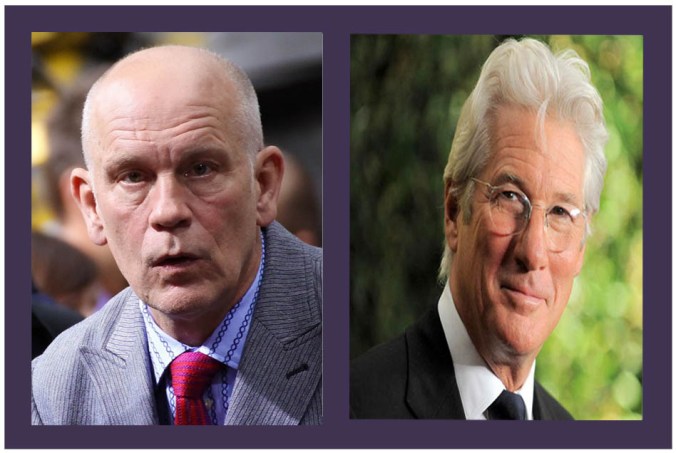
Anyway, these academics claim that Facebook tends to further isolate yourself from others who see the world differently, i.e., it entraps you in a Fox-News-like echo chamber in which you’re bombarded with links to uncritical blog posts that claim that Bernie Sanders is winning the Democratic nomination or the Sandy Hook massacre was staged by the CIA or that women actually prefer bald men like John Malkovich to thick-haired hubba-hubbas like Richard Gere.

gere

In other words, reality can be distorted.

Yeah, but, I believe that even if some of these negative theories are true, the pleasures that Facebook bestows by far counterbalance any negatives.

For example, virtually everyone who changes her profile picture is deemed “gorgeous” by at least one person.

So Pretty!

So Pretty!

All newborns are “beautiful” or precious”

So precious!

So precious!

Plus – and this is really great –Facebook’s  transformed the relative pronoun “this” into a powerful force of good or evil depending on its context.

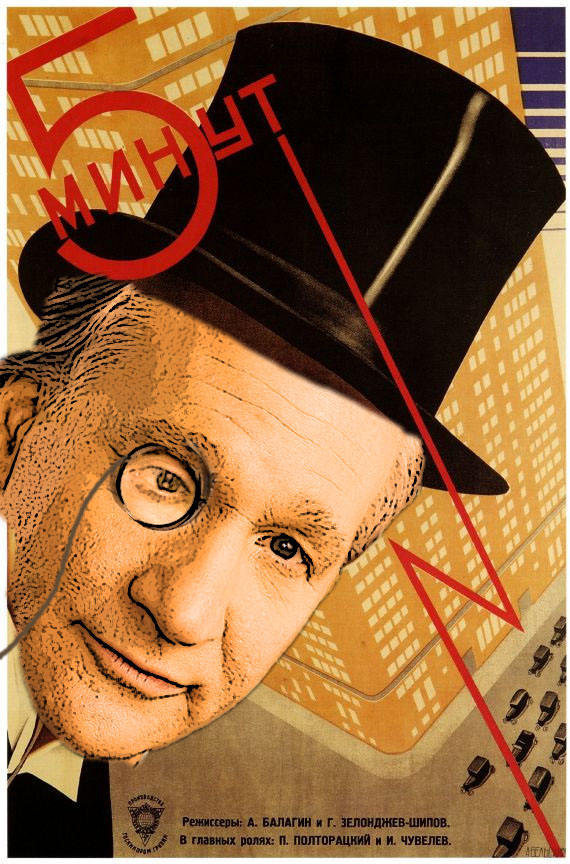
This man:

600full-wink-martindale

This:

tumblr_lrycgjdDL71qbp3zyo1_r1_1280


So, I say keep on posting, keep on peeking, keep on crowing. Believe in yourself.

betty boop facebook


Five Reasons I Feel So Effing Fortunate

  1. There’s no way I’m going to die from Huntington’s Chorea.
  2. The Atlanta Braves are not going to lose a playoff game this year.
  3. Unless something unbelievable happens, I won’t have to endure an image of Chris Christie raising his right hand to take the oath of office.
  4. The statute of limitations has run out on lots and lots of my crimes and misdemeanors.
  5. I can beat the computer at chess, if I set the preferences to the me-vs-Willow-Palin setting.


moore Willow


The Bernie Brigade vs. Bill Maher

Bill Maher
Besides the pathological, farcical triumph of Donald Trump, the most interesting aspect of this election cycle for me is the passion and devotion Bernie Sanders has elicited from a considerable slice of the electorate. Sanders, as we know, speaks passionately about inequalities in income distribution and the degradation of the environment with little modulation in a tone that I would call hectoringly shrill.

His catalogue of campaign promises includes universal healthcare, free college tuition, and breaking up banks, but as far as I can tell, he hasn’t laid out detailed plans about how he could accomplish these goals. His plan, if you could call it that, is starting a revolution, which in a country where a majority of citizens squander their days staring into “mobile devices” and don’t even bother to vote, starting a successful revolution seems about as likely as Franklin Graham being chosen as the grand marshal at a San Francisco LGBT parade.

However, it is emotion, not rationality, that drives the most fervent of Sanders’ supporters, and if you ever speak out against their saint, or even question some of his premises, you can expect a tsunami of invective expressed in metonymic vulgarities likening you to genitalia.

Take the comedian Bill Maher, a former Bernie supporter who has now accepted the inevitable and thrown his support to Hillary. Here is a sampling from the comment section of the website Cosmoso’s post entitled Watch: Bill Maher Shows His True Colors, Calls Bernie’s Plan ‘Santaism’.

First the clip.

Now a sampling of comments:

Linda Carrico: “Dick Head.”

Vince Travis: Bill Maher is just another over 0pinionated asshole and he says what he what thinks his viewers will lap up and call him a very smart feller when in actuality hes a very fart smeller because like I always say opinions are like assholes everybodies got one and they stink (sic)

John Pugs Licitra: I have whatched your show for years…I have always found it informative and entertaining…after tonight, go fuck yourself, and your time warner paycheck… I’m so dissapointed to see what a fraud you are!!!! SHAME ON YOU, John Licit! (sic)

Rather humorless reactions, you might say.

No telling what Louis CJ has coming after this argument by analogy:

I keep going back and forth. Sometimes I think the system is so deeply fucked up that somebody as disruptive as Bernie — maybe he doesn’t even do a good job as president but he jars something loose in our system and something exciting happens. I mean, Hillary is better at this than any of these people. The American government is a very volatile, dangerous mechanism, and Hillary has the most experience with it. It’s like if you were on a plane and you wanted to choose a pilot. You have one person, Hillary, who says, “Here’s my license. Here’s all the thousands of flights that I’ve flown. Here’s planes I’ve flown in really difficult situations. I’ve had some good flights and some bad flights, but I’ve been flying for a very long time, and I know exactly how this plane works.” Then you’ve got Bernie, who says, “Everyone should get a ride right to their house with this plane.” “Well, how are you going to do that?” “I just think we should. It’s only fair that everyone gets to use the plane equally.” And then Trump says, “I’m going to fly so well. You’re not going to believe how good I’m going to fly this plane, and by the way, Hillary never flew a plane in her life.” “She did, and we have pictures.” “No, she never did it.” It’s insane.

Dripping jackhammer!  Quivering Quim!

The Zombie Apocalypse Blues (We’re All Gonna Die!)

Zombie Apcolpse


Born six years and ten months after the atomic bombings of Hiroshima and Nagasaki, I am old enough to remember looking up at the stars above the steeple of the Methodist Church across the street from our rented house to see if I could detect Sputnik inching its way across the night sky.

We’re all gonna die!

Five years later, I would crouch underneath my desk at Summerville Elementary School as we practiced surviving a Soviet nuclear attack.[1]

We’re all gonna die!

A few months ago, I huddled beneath a Harkness table with high school students as we practiced surviving an assault from a deranged assailant.[2]

We’re all gonna die!

* * *

In the swirl of everyday events, it’s sometimes difficult to see strange occurrences as nothing more than mundane. In our particular culture, mass murder has become mundane. I’m not at all surprised to awaken to the news that some disaffected religious fanatic or marginalized bigot clad in body armor has decided to take out his grievances on complete strangers. Chances are that the murderer here in the United States is a native-born citizen of the-home-of-the-brave-and-the-land-of-the- free. Chances are he feels unaccepted so decides to throw a tempter tantrum.

Now, even the loneliest of the alienated can commune with fellow disaffected psyches on the Internet, cross-pollinating hatreds. Omar Mateen, our butcher de jour, actually checked his Facebook page during the carnage to see if the shootings had gone viral. Despite his having sworn fealty to ISIS right before the attack, I suspect that repressed-queerness, a tyrannical father, and high-school unpopularity had as much to do with his rage as geo-political/religious fanaticism.   Maybe he didn’t get enough positive attention when he was growing up. Now, he has gone viral, achieved infamy, set the Internet ablaze by obliterating the lives of his victims, their families, and friends.

Meanwhile, Congress is unwilling to ban the sale of assault weapons to people on no-fly lists, the Republicans have nominated PT Barnum-Meets-Mussolini, the Democrats a woman with a 55% disapproval rate, forest fires roar and oceans rise as satellites galore orbit the Earth keeping tabs and providing entertainment that features zombie apocalypses.

We’re all gonna die!


[1] Did they do this in the “separate-but-equal” African American school across town?

[2] Did little colonists in their one-room schools practice for a possible Indian attack?


Trump, the Ultimately Unfunny Buffoon


Donald Trump caricature, creative commons via Flickr and Jay Ward's Snidely Whiplash photoshopped by WLM3

Donald Trump caricature, creative commons via Flickr and Jay Ward’s Snidely Whiplash photoshopped by WLM3

I hate to admit it, but during the Republican primary season, I found Donald Trump to be amusing, his buffoonery charming in a counter-intuitive way, the way you might find yourself chuckling at Fyodor Karamazov or Snidely Whiplash.

Take for instance, Trump’s Low-Energy-Jeb shtick. Here is a man who embraces his wealth like a teddy bear, a man who flashes his net worth like a grandparent sharing photos of his progeny, a man in his 69th year who on national television mocks the physical posture of a former governor as if they’re running for student council representative for the 8th grade.

But let’s face it: Trump lacks the charm to remain amusing for very long because he lacks the ability to be self-deprecating. Imagine his delivering a speech at the end of a White House Correspondents Dinner or a Don Rickles Hollywood Roast, Trump’s tangerine complexion gone red-orange in rage, drool dripping from the lower left arc of his sphincter-shaped mouth as it arse-belches vengeful rebukes.

No, ultimately, Donald Trump is about as amusing as the Battle of the Somme, and it’s time that we start the very serious business of making sure he’s not elected President of the United States – and that we includes the neo-Manicheans of the Never-Hillary Bernie Brigade.


Way, Way Past Time

Yesterday morning I awakened to the news that the 1,001st mass shooting since Sandy Hook had occurred at an Orlando nightclub.   Of course, mass shootings only make up a small percentage of the 32,000 firearms deaths the US racks up every year.


CkzEqS-WEAAQLnj


Be that as it may, when it comes to mass shootings, a very clear pattern emerges as to the weapon of choice among the assailants, the AR-15, the weapon used Friday night in Orlando and six months ago in San Bernardino and in 2012 in both the Aurora, Colorado, theatre shooting and the massacre in Newton, Connecticut, at the Sandy Hook Elementary School.

It’s the same weapon South Carolina State legislator Lee Bright raffled off when he ran against Lindsey Graham in 2014. I’ll let the ironically named legislator speak for himself:

“In the wake of the horrific tragedy in Newtown, Connecticut, gun-grabbers were sure they had the votes to RAM gun control into law,” the email said. “Thanks to the action of Second Amendment supporters all over the country, their schemed failed — even despite my Republican Primary opponent, U.S. Senator Lindsey Graham. … In fact, it’s one BIG reason I’m running for the U.S. Senate. And today, I’m announcing that my campaign is giving away a brand new Palmetto Armory AR-15!”

Capture7

Bright asked supporters to forward the email “to every pro-gun friend and family member you have.”

There is no reason for anyone to own an AR-15 assault weapon (note the nomenclature). For hunting, it might be useful if the game is Godzilla, but for deer or even bear it seems like overkill, not very sporting, and as far as self-protection goes, a shotgun will do.

And please spare me the deluded fantasy that assault weapons are necessary in the event that “they” ever come after “our guns.” Let me assure you that if the “they” is the US Military, your AR-15 is not going to be all that effective against F-15s, armored vehicles, cruise missiles, etc.

But, the doubters ask, if we make assault weapons illegal, only criminals will own them. Well, we have a real world example of what happens when assault weapons are banned in the 1996 legislation that Australia enacted. I quote the NY Times:

The oft-cited statistic in Australia is a simple one: There have been no mass killings — defined by experts there as a gunman killing five or more people besides himself — since the nation significantly tightened its gun control laws almost 20 years ago.

A few of the weapons accumulated in Australia's government's buy back program

A few of the weapons accumulated in Australia’s government’s buy back program

Obviously, it’s way past time for us to do the same. The fact that this latest butcher with a known link to an Islamic radical could purchase an assault weapon is unconscionable, ludicrous, downright un-Darwinian.

Please contact your representatives. I certainly am.

Let Chaucer Be

TCOD-Bodleian-Library
The latest controversy roiling the breasts of English majors at Yale is their being required to take a survey course called “Major English Poets,” a course of study that forces them to become familiar with the works of Chaucer, Spenser, Shakespeare, Donne in the first semester and Milton, Pope, Wordsworth, Eliot, and one other modern poet in the spring. Their beef, according the petition that they’ve delivered to the Department is that “a year spent around a seminar table where the literary contributions of women, people of color, and queer folk are absent actively harms all students, regardless of their identity.” [1]

I heartily disagree, and I’m going to quote at length one of the white men listed above, TS Eliot, from his essay “Tradition and the Individual Talent.”

To proceed to a more intelligible exposition of the relation of the poet to the past: he can neither take the past as a lump, an indiscriminate bolus, nor can he form himself wholly on one or two private admirations, nor can he form himself wholly upon one preferred period. The first course is inadmissible, the second is an important experience of youth, and the third is a pleasant and highly desirable supplement. The poet must be very conscious of the main current, which does not at all flow invariably through the most distinguished reputations. He must be quite aware of the obvious fact that art never improves, but that the material of art is never quite the same. He must be aware that the mind of Europe—the mind of his own country—a mind which he learns in time to be much more important than his own private mind—is a mind which changes, and that this change is a development which abandons nothing en route, which does not superannuate either Shakespeare, or Homer, or the rock drawing of the Magdalenian draughtsmen. That this development, refinement perhaps, complication certainly, is not, from the point of view of the artist, any improvement. Perhaps not even an improvement from the point of view of the psychologist or not to the extent which we imagine; perhaps only in the end based upon a complication in economics and machinery. But the difference between the present and the past is that the conscious present is an awareness of the past in a way and to an extent which the past’s awareness of itself cannot show.

And, yes, and that includes Alexander Pope, who may not be “fun” to read but who provides a nearly flawless mirror to the intellectual world of his century.

For people of color, “queer folk,” and women to have an understanding of the works of great artists and the historical contexts of those works strikes me as the opposite of harmful, especially given that I’m fairly sure Yale offers elective courses that feature other great poets like Derek Wolcott, Elizabeth Bishop, Langston Hughes, and Hart Crane.  Chaucer, Spenser, Shakespeare, and Donne in a sense established the traditions of English poetry, the colloquial, rough-hewn verse of Chaucer and Donne pointing the way for the great Walt Whitman, the smoothness of Spenser no doubt influencing the verse of Christina Rossetti.

One student, Ariana Miele, in an op-ed piece for the Yale Daily News wrote, “We read Chaucer, but we are told to view his misogyny with an ‘objective’ lens.”

Certainly, the Middle Ages were misogynistic, and perhaps Chaucer was typical of his age, but he has also given us the Wife of Bath who offers this bit of wisdom to her fellow pilgrims:

By God, if women ever wrote some stories

As clerks have done in all their oratories,

They would have told of men more wickedness

Than all the sons of Adam could redress.

In other words, women in Medieval Europe did not have their voices heard.

Or this from Iago’s wife Emila from Othello explaining to chaste Desdemona why some women betray their husbands:

But I do think it is their husbands’ faults

If wives do fall: say that they slack their duties,

And pour our treasures into foreign laps,

Or else break out in peevish jealousies,

Throwing restraint upon us; or say they strike us,

Or scant our former having in despite;

Why, we have galls, and though we have some grace,

Yet have we some revenge. Let husbands know

Their wives have sense like them: they see and smell

And have their palates both for sweet and sour,

As husbands have. What is it that they do

When they change us for others? Is it sport?

I think it is: and doth affection breed it?

I think it doth: is’t frailty that thus errs?

It is so too: and have not we affections,

Desires for sport, and frailty, as men have?

Then let them use us well: else let them know,

The ills we do, their ills instruct us so.


I’ve often said that when parents start running a school, that school’s in trouble. When students start running a university, especially when they’re undergraduates, that university’s in big trouble.


[1] Is it possible to study post-colonialism without understanding colonialism? Might knowledge of pre-colonial and colonial art help students better understand colonialism and post-colonialism?

Psalm: Dystopia

il_fullxfull.288899605


From man’s blood-sodden heart are sprung

Those branches of the night and day

Where the gaudy moon is hung.

What’s the meaning of all song?

‘Let all things pass away.’

                                                WB Yeats, “Vacillation”


Once upon a time,

and a very good time it was,

before we put seeds in the ground,

the gods lived inside the snake,

inside the bush, inside of us.


After the capture of the seed,

the plants lost their souls

as the folk toiled

beneath the eyes of a watchful god —

or so they thought.


But over the centuries, as they reaped and sowed,

the sky god began to shrink, to wither

into little more than a whisper.


Later, citizens polished their pianos,

and the factories spewed their soot,

and the dead carp floated upon the lake,

and the coral disappeared from the seas,

which rose year after year –

to reclaim the trade-seared land.


Shadow Boxing Earlier in the Day: Clay vs. Ali

cassius_clayIn my boyhood, before adolescence, I began each day by retrieving the newspaper from what we called the front porch, though, in truth, it was more like an elevated stoop, a 6 x 6 concrete slab. If there were a big story, like the suicide of Marilyn Monroe, I’d read it right there, or if there were an untelevised sporting event I cared about, I’d rip open the sports section to discover the outcome. That was the case on 25 February 1964 when Cassius Clay, as he was called in those days, upset Sonny Liston for the Heavyweight Championship of the World. It was the outcome I had fervently hoped for, and it had happened, despite 7 to 1 odds. I remember sitting on the steps of the stoop, reading the account that included the accusation that Liston had thrown some type of blinding powder in Clay’s eyes.

My father had been an amateur boxer in his youth, a welterweight who developed his skills on the sidewalks of Spring Street in Charleston, SC, during the Depression. Every Friday night he’d watch the fights broadcast on the Gillette Cavalcade of Sports as he sat on the sofa smoking cigarette after cigarette, leaning into the television, screaming suggestions to the combatants even though they were hundreds of miles away at Madison Square Garden. He had bought my brother and me boxing gloves and roped off the living room and taught us how to box, to crouch, to throw punches with our “hips” instead of our “arms.” I hated it, being at once weak, blinky, and adverse to pain.

My father in his Spring Street Days, aged 15

My father in his Spring Street Days, aged 15

But I did enjoy watching the matches, and we liked “Cassius Clay,” because he was funny, brash, clever, a rhymer, and, I’m sorry to say, perhaps because he was “light-skinned,” unlike Sonny Liston and Joe Frazier.   Clay, and later, Ali, was also too aware of this distinction in skin tones. Here’s a snippet from Robert Lipsyte’s superb obituary from the Times:

But Ali had his hypocrisies, or at least inconsistencies. How could he consider himself a “race man” yet mock the skin color, hair and features of other African-Americans, most notably Joe Frazier his rival and opponent in three classic matches? Ali called him “the gorilla,” and long afterward Frazier continued to express hurt and bitterness.

Ali would also play upon racial and ethnic stereotypes. Here is a joke he told at a fundraiser in Louisville in 2005:

“If a black man, a Mexican and a Puerto Rican are sitting in the back of a car, who’s driving? Give up? The po-lice.”

And here he is explaining to a Soviet reporter in 1960 why he’s proud to be an American citizen.

“It may be hard to get something to eat sometimes, but anyhow I ain’t fighting alligators and living in a mud hut.”

In some ways, like my father, he was a man of his times.

However, even though these quips might have gotten Ali dis-invited from a speaking engagement at Oberlin, in the course of his life, he displayed more courage than any other athlete I can think of. Ali was a man of his convictions, willing to make unpopular brand-tarnishing decisions like converting to the Nation of Islam and facing the prospect of prison for refusing to be drafted into the Viet Nam War. “I ain’t got nothing against them Vietcong,” he said, adding, “They ain’t never called me no [racial expletive].”

And Ali sacrificed three prime years when boxing commissions around the country stripped him of his titles, and although the backlash was fierce and many journalists refused to call him by his new name, he earned the respect over time for his principled stands, and, even my father, not exactly a devotee of Malcolm X, continued to pull for Ali upon his return to the ring.

Perhaps it was because Ali was such a beautiful, graceful fighter, poetry –not doggerel — in motion or because he was so witty, possessed such a generous spirit, and these attributes transcended by father’s homegrown prejudices.  Later in life Ali said, “Color doesn’t make a man a devil. It’s the heart and soul and mind that count. What’s on the outside is only decoration.”

At any rate, it says something positive about our nation that at his death Muhammad Ali was virtually universally admired by his fellow citizens, even, it would seem, Donald Trump.

All leave you with this ditty from the great Bob Dylan:


I was shadow-boxing earlier in the day

I figured I was ready for Cassius Clay

I said “Fee, fie, fo, fum, Cassius Clay, here I come

26, 27, 28, 29, I’m gonna make your face look just like mine

Five, four, three, two, one, Cassius Clay you’d better run

99, 100, 101, 102, your ma won’t even recognize you

14, 15, 16, 17, 18, 19, gonna knock him clean right out of his spleen”


dylan-ali-2-300x201