Tales from Old Summerville

carolina inn

Old Carolina Inn, the first building in Summerville to have an elevator

Before the fast food franchises, before the Wal-Marts, before the sprawl, my hometown Summerville, SC, was a lovely, quiet village nestled in a pine forest 25 miles northwest of Charleston.  Settled just after the Revolutionary War and originally known as Pineland Village, the community in those days offered a haven for plantation owners seeking seasonal escape from malaria-bearing mosquitoes.

Eventually, Pineland Village became known as Summerville, and people started settling there year round. In 1847, Summerville officially became a municipality, and that very year the town council passed one of the first conservation laws in the nation, a statue forbidding cutting down trees of a certain circumference without permission.

Town-Hall-3

Town Hall back in the day

This passion for conservation and appreciation for the beauty of nature resulted in the planting of hundreds of azaleas, camellias, and gardenias throughout the town, both in its municipal parks and in the yards of the old clapboard whitewashed Victorian houses.  In the springtime, what is now called “the Old Village” or “the Historic District” has to rank as one of the most beautiful towns in the nation.  It claims as its official motto “Flowertown in the Pines.”

IMG_1211

St Paul’s Episcopal Church (photo credit Fleming Moore)

In 1950, the year my mother graduated from Summerville High School, the population stood at 3,312; in 1970, the year I began my senior year there, the population had barely grown to 3,839.  However, it almost doubled between 1970 and 1980 and grew a startling 247% to 22,519 from 1980 to 1990.  Since then, the population has doubled yet again, and according to a 2019 estimate, now 52,549 people call Summerville home.  When I go there nowadays, have lunch out or hit a bar, I recognize virtually no one.

However, in the old days, being a native and growing up “Flowertown” meant that everyone knew everyone else, which was a real disadvantage if you were a redhead like me.

“Did you recognize any of the boys?”

“No, but one of them was redheaded.”

“I bet it was Rusty Moore.  I’ll call his mother.”

Everyone in town knew everyone else, but outside of the town limits, there were a number of smaller unincorporated communities like Knightsville, which had its own elementary school, the Boone Hill community, Stallsville, New Hope, etc.  By junior high, children from these communities had matriculated in Summerville schools.  Unfortunately, a few of these rural children were dirt poor.  I remember shoeless White children hopping on the bus on the first day of school. We’re talking about the days of segregation when only a few handpicked African Americans had been integrated into our classes, and they were from downtown and academically talented.  Because academically, we were “tracked,” I rarely interacted with any of the disadvantaged kids from the rural areas, although I became good friends with several prosperous college prep kids from Knightsville.

However, when PE started in the 7th grade, I not only interacted with some of the disadvantaged rural kids, but I also showered with them, and since several had failed a year or two, some sported five o’clock shadows rather than peach fuzz.  PE  is where I first met Bobby Bosheen, the antagonist (and protagonist) of this piece.

My attempts to google Bobby Bosheen have turned up zilch.  I heard somewhere decades ago that he had been chained to a tree and bullwhipped and lost an eye.  Another rumor had him throwing a Hanahan boy off the Folly Pier and killing him in a tribal fight between rival high schools.  Although I doubt that either rumor is true, I don’t doubt that Bobby is no longer among the quick.  To say that he had anger issues is to say that Kanye West has ego issues.  Adjectives like volcanic and nuclear come to mind.  I would like to think that Bobby overcame his rage, that he turned out okay because deep down inside I don’t think he was a bad person.  He had this haunted look about him that suggested his childhood hadn’t taken place on Sunnybrook Farm.

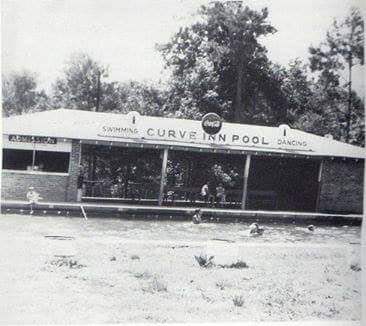
For some odd reason, one Saturday, I let my friend, the late Gordon Wilson, talk me in going to Boone Hill Methodist Church to engage in unsupervised tackle football with the natives of that region.  Bobby was among the crew and had a jolly time swinging elbows, crushing ball carriers, and piling on.  Even though I enjoyed the game about as much as I would a root canal, I think my participation reaped the benefit of Bobby’s vaguely recognizing me and therefore not targeting me as an adversary.  True, he did punch me once as I was sitting in a car at the Curve-Inn Pool, but he was rip-roaring drunk and started fights that night with numerous revelers, including Kenny Reese, a popular basketball player.  The very next week I saw Bobby at Tastee Freeze, and Gordon asked him why he had punched me, and Bobby actually apologized, lamenting, “Whiskey and beer don’t mix.”

tastee freeze

The Old Tastee-Freeze

What really solidified my self-identification as a coward was Bobby’s girlfriend, a large, stringy haired bruiser with discolored teeth and the calves of a linebacker.  Unlike, Bobby, she hated me, hated me viscerally on sight. This was in ’70 or ’71, and I had started to grow my hair long and dress like Neil Young.  She used to position herself outside the entrance of the back of the main building and threaten me.  “I can’t wait to cut your ass, you red-headed bitch,” she said one day with arms crossed blocking the entrance.

red neck gal

I suspected she could have, given that she outweighed me and I hadn’t been in a real fight since the fourth grade, so I turned tail and found another entryway.  Whenever I saw her, I avoided her.  She scared the shit out of me.

The last time I heard something concrete about Bobby was in ’75 when I was bumming a ride back to college with one of my mother’s colleagues, a teacher at Newington Elementary School.  As we passed Morris Knight’s, a beer joint, the husband of the teacher, a non-Summerville native, mentioned that he had made the mistake of going in there one time to shoot pool and had been assaulted and actually beaten with pool cues.  He told me that he had pressed charges against the assailant, who was convicted, but that he couldn’t remember his name, that is was something funny sounding.

“Bobby Bosheen,” I suggested.

“Yes, that’s it!  Bobby Bosheen!”

Of course, Bobby’s anger had to come from somewhere.  I suspect at home he was no stranger to corporal punishment.  Perhaps, like Pee Wee Gaskins, he had been strung upside down naked and beaten with a two-by-four.  If he had been born to one of the families living on Carolina Avenue in a Victorian house with a spacious porch beneath moss draped live oaks among the azaleas, I suspect he and the rest of the world would have gotten along much better.

sville house

Christopher Dickey and Virtual Friendship

IMG_3453

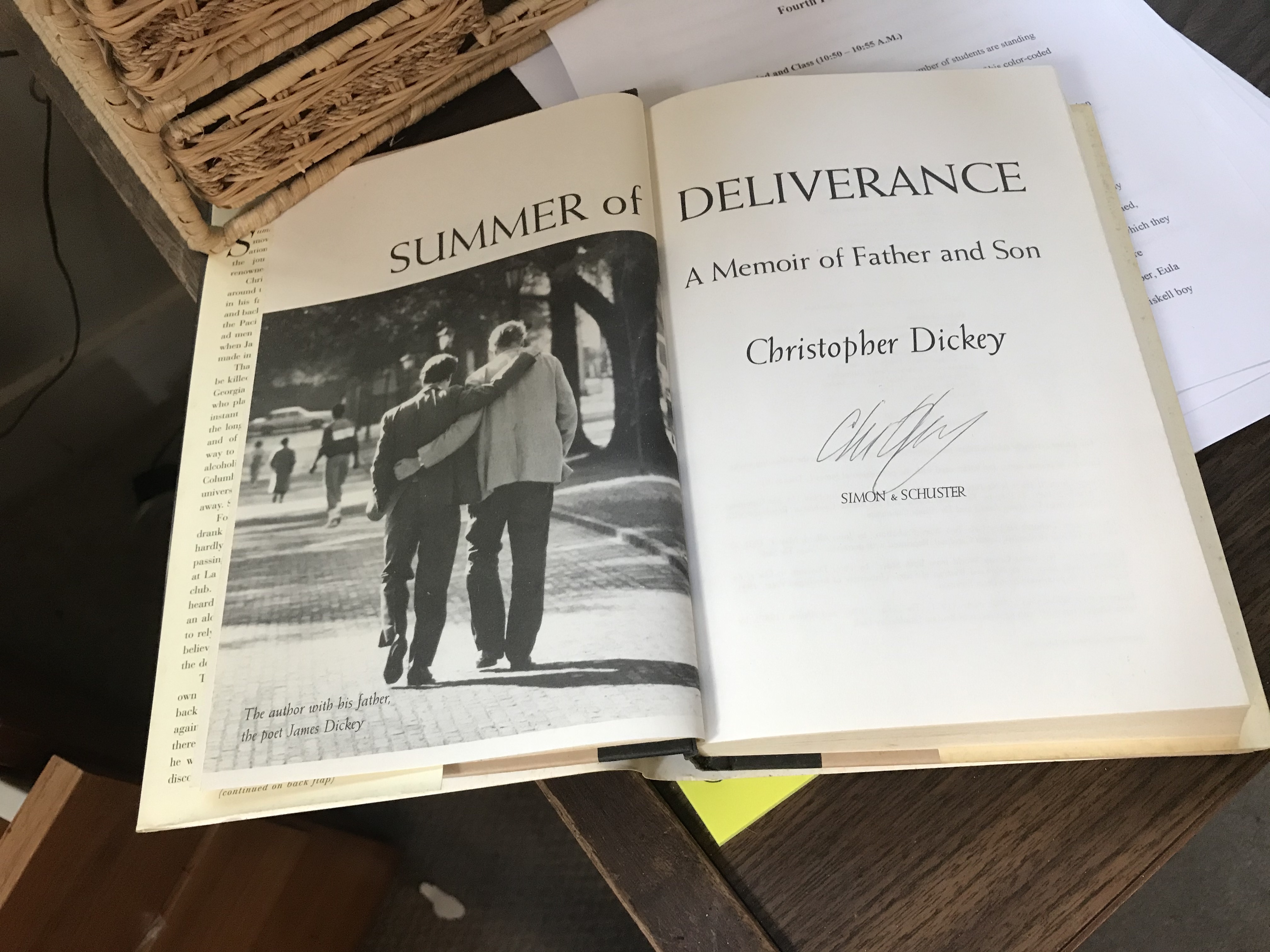
My copy of Chris’s memoir

Alas, I never met the journalist Christopher Dickey, son of the famous poet, in person.

Chris himself was most famous to non-readers for reporting live from the Paris tunnel where Lady Di and Hasnat Khan perished in that horrendous car crash, his voice describing the scene over the unceasing Parisian sirens for what seemed like hours while the couple was trapped in the wreckage. More notably, Chris’s long career in journalism was distinguished by courage and eloquence, whether he was covering wars in Central America or writing about his life as an ex-pat in Paris. He was that rare son who had managed to emerge from a colossal shadow to achieve a measure of greatness on his own.

I first got to know about Chris from his autobiography, The Summer of Deliverance, an account of alienation from and eventual reconciliation with a father who in his drunken days could rival ol’ Fyodor Karamazov in the category of shittiest dad ever. My old man, too, had issues, so I could really identify with Chris’s childhood traumas.

Chris’s father taught me in the fall of 1976, the semester in which both Chris’s mother died and his father remarried.  I had published on this site a somewhat unflattering portrait of James Dickey as a teacher [link] so I was surprised when I received a friendship request on Facebook from Chris.[1]

How did he know I existed? Had he read the blog post?

I bet not. He probably heard about me though our mutual friend Megan Conroy or from my former student Will Cathcart, who was a colleague, or maybe I just popped up in “people who may know.”

Anyway, it really doesn’t matter. What matters is that through his Facebook postings, I felt as if I had grown to know Chris.[2]  He was witty, gentle, kind – and you could see this in his face. He often posted photographs and videos of Parisian street scenes. I love Paris, and having Chris on my feed allowed me to visit vicariously and often. Just yesterday, a mere 19 hours ago, the day of his death, he posted this.

108518920_10158659705736810_3362553331459398583_o

And then the door-of-life slams shut; the lights go out. If I, who didn’t really know him, feel this intense level of loss, it must be absolute devastation for his friends and family.

As they say, may their memories of him be a blessing.

chris dickey


[1] The piece is actually more of an indictment of my own youthful callousness than it is a condemnation of Dickey, who was, after all, grieving.

[2] In fact, Caroline, Brooks, and I were going to try to arrange to meet up with him in Paris this summer before King Coronavirus’s invasion.

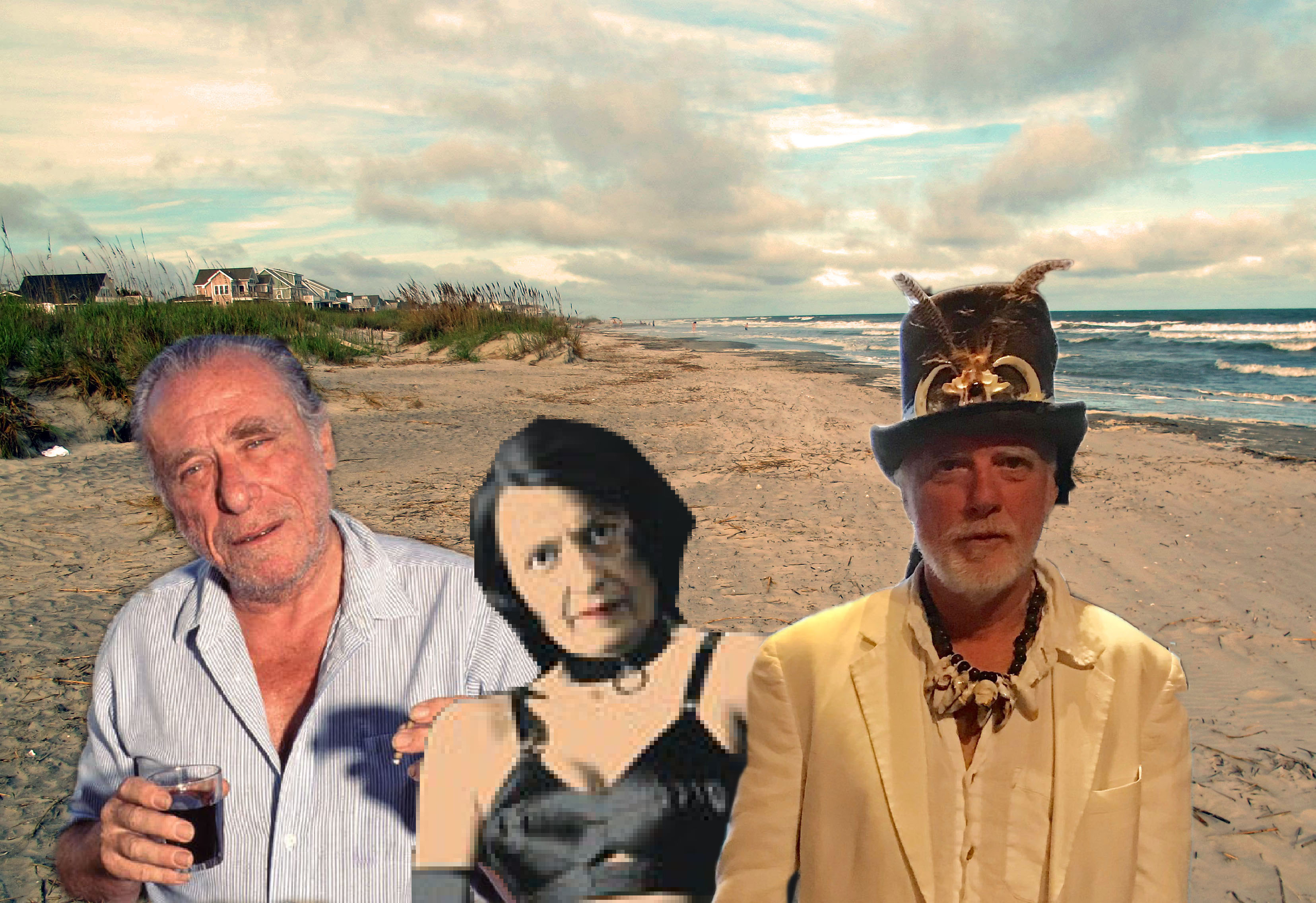
Ayn Rand, Charles Bukowski, and I-and-I

Charles, Ayn, and Wes

Charles, Ayn, and I-and-I enjoying  walk on Folly Beach

Yesterday, as a sort of throw-off laugh line, I mock-consoled a friend on Facebook who mock-lamented that his fourteen year-old-daughter had discovered Charles Bukowski.[1]  So I replied to his message: “Look on the bright side, at least she’s not reading Ayn Rand.”

This attempt at humor pissed off a couple of folks who consider Ayn Rand worth reading, who implied I was narrow minded in suggesting that my friend’s daughter should not be exposed to Rand’s[2] philosophy of Objectivism.

Anyway, in case you haven’t read Rand, here are the first four paragraphs from “Introduction to Objectivism,” from the Ayn Rand Institute’ website:

Ayn Rand’s philosophy, Objectivism, begins by embracing the basic fact that existence exists. Reality is, and in the quest to live we must discover reality’s nature and learn to act successfully in it.

To exist is to be something, to possess a specific identity. This is the Law of Identity: A is A. Facts are facts, independent of any consciousness. No amount of passionate wishing, desperate longing or hopeful pleading can alter the facts. Nor will ignoring or evading the facts erase them: the facts remain, immutable.

In Rand’s philosophy, reality is not to be rewritten or escaped, but, solemnly and proudly, faced. One of her favorite sayings is Francis Bacon’s: “Nature, to be commanded, must be obeyed.”

Reality — that which exists — has no alternatives, no competitors, nothing “transcending” it. To embrace existence is to reject all notions of the supernatural and the mystical, including God.

***

In my teaching days, in trying to explain existentialism to 15-year-olds, I first established that the images we perceive depend upon the nature of our sense organs.  For example, my late dog Saisy wasn’t aware that she didn’t perceive colors, so if she could understand and answer my question, “What color is a bullfighter’s cape,” she’d probably say “grey.”

Of course, I’m able to perceive the color red, but the fact that Saisy couldn’t – that she perceived the world differently – didn’t make her world any less real.  I certainly couldn’t detect those magnetic odors that drove her to abandon eye for nose on our walks, but, likewise, my inability to perceive those smells didn’t make my world any less real, only less detailed.

As Saisy zigzagged, huffing her way along the shoulder of 6th Street staring at the ground and I glanced upwards at an autumn moon in the blue of the sky, we inhabited two very different universes, yet, of course, they are essentially the same place.

saisy eye

Self-portrait in Saisy’s Eye

The great American poet Richard Wilbur makes the same point much more powerfully in these lines from his poem “Epistemology.”[3]

Kick at the rock, Sam Johnson, break your bones:
But cloudy, cloudy is the stuff of stones.

To narrow the discussion, the differences between the perceptions of individual human beings can also be radically different.  For example, when I read a novel, I never encounter visual images; no movie plays in my head.  Rather, I hear the sounds of words that conjure associations that engender vague cloud-like impressions.  When I read, I don’t really look at the construction of words, hence my atrocious spelling, not to mention my piss poor proofreading.  I sometimes wonder if the fact that at 72 still don’t need reading glasses lies in that I have virtually never peered hard at anything in my life.

My wife Caroline, however, does “see” when she reads, so, in essence, our reading experiences are much, much, different; we inhabit two different reading universes, as it were.

None of this, of course, is news.  Wordsworth in 1798 writes of a world that “we half perceive and half create,” and John Hiatt agrees in “A Thing Called Love” when he sings “Whether your sunglasses are off or on/You only see the world you make.”

william and john

William and John

If you take these ideas to the extreme – that we possess a unique world that is ours –  then, as Sartre says, “everything is permitted,” and you end up with a whole lot of solipsism.

The sages of the East provide a better alternative, I think.  Yes, the world we see is an illusive reflection of our senses, the veil of Maya.  However, rather than granting each individual absolute dominion over the world he “creates,” the sages posit that the very idea of individuality is what is illusive – that my perceiving myself apart from that pine right outside my window is false.  I breathe its oxygen while it takes in carbon dioxide; the sun above is actually is embedded in the page I turn, a page that once existed in pine tree wood pulp.

The entire subatomic world is one – I and the universe am one – and to see more clearly, I need to dismantle the elaborate ego I have constructed, that pompous museum filled with flattering self-portraits, films projected on the broken mirror of memory, and other artifacts that distort what is.

museum

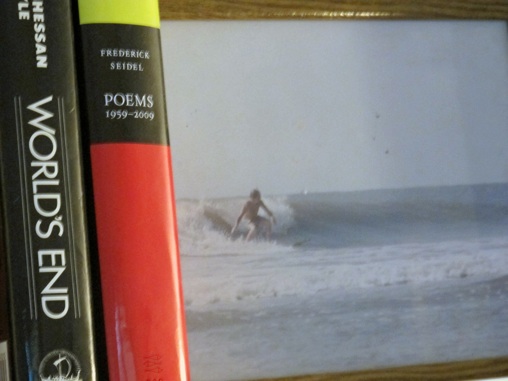
From the surfing wing of the WMoore Museum of Memory

This philosophy – the opposite of Rand’s radical individualism – offers , I think, some hope for an endangered planet: if people could accept the complex inter-relatedness of everything, they might so blithely be building golf courses in deserts on a planet with a finite water supply.

Perhaps somewhere out there – some carpenter’s son, some itinerant carpet salesman, some software engineer  –  is about to receive an updated revelation to shed some much-needed light.

It does seem to happen every 500 years or so, so we’re long overdue.

***

Anyway, bravo for intellectual curiosity, and for Charles Bukowski, who, like Ayn Rand, is not to everyone’s taste.

Here’s a link to a poem of mine extolling poor ol’ Charles.


[1] I think in reality he was rightfully proud of her intellectual curiosity rather than upset that she might be exposed to what Baptist preachers call “filth-uh.”

[2] My wife Caroline pointed out that no one ever refers to Ayn Rand as Rand, the way they do with other philosophers like Marx, Kant, Hume, etc.

[3] Boswell’s account of the incident that prompted Wilbur’s lines: After we came out of the church, we stood talking for some time together of Bishop Berkeley’s ingenious sophistry to prove the nonexistence of matter, and that every thing in the universe is merely ideal. I observed, that though we are satisfied his doctrine is not true, it is impossible to refute it. I never shall forget the alacrity with which Johnson answered, striking his foot with mighty force against a large stone, till he rebounded from it — “I refute it thus.” Boswell: Life

A Round-Up of All the News That’s Fit to Skip

cohen headline Post & CourierI feel very fortunate that Charleston, the nearest largish city to Folly Beach, boasts an excellent daily newspaper, the Post and Courier, which won the 2015 Pulitzer for Public Service.

Now that I’m retired, I spend about an hour each morning perusing the paper, starting with Section A’s front page, which focuses on local matters like our Governor’s mandate that bars close at eleven to flatten the mission-to-mars trajectory of South Carolina’s Coronavirus infections.[1]

Then on Page 2A we have one of my favorite features, “Today in History.”  This section is rife with airliner crashes, coal mine cave-ins, capital electrocutions, and other notable incidents of mayhem that occurred on this date in history.  For example, today (11 July 2020) marks the 216th anniversary of the Hamilton/ Burr duel and the 487th anniversary of Pope Clement VII’s excommunication of Henry VIII.  Henry had incurred Clement’s wrath by annulling his marriage to Catherine of Aragon, making possible his union with Anne Boleyn, an important milestone in his accumulation of spouses.  423 years later Henry’s many marriages would lead to the Herman Hermits hit “I’m Henery (sic) the Eighth, I Am.” (see below)

On a more pleasant note, Big Ben first chimed on this date in 1859, and the word “jazz” appeared in print for the first time in 1915 when the Chicago Tribune ran an article titled “Blues Is Jazz and Jazz Is Blues.”

“Today in History” winds up with a list of celebrity birthdays (Jeff Hanna of the Nitty Gritty Dirt Band, 73) and a quotable quote: “He is happiest, be he king or peasant, who finds peace in his home” ­– Johann Wolfgang von Goethe.[2]

goetheundderorient

Not to be confused with Wolf Blitzer

The next few pages are devoted to spillovers from the front page, and you don’t really get to national stories until A8 where you can check out Trump’s latest Molotov tweets or learn that the US Roman Catholic Church received 1.4 billion in tax payer backed Coronavirus aid to make up for payments dioceses had to fork out because of sexual abuse. Meanwhile Lindsey Graham is adamantly opposed to unemployment extensions because shiftless former bartenders might sit at home whupping themselves up bloody marys after sleeping in on the dole.

International news brings up the rear, as a sort of looking through-a-telescope-from-the-wrong-end perspective.

Finally, the A section ends with the op-ed, including Letters to the Editor, which I merely scan given I suffer from hypertension and devoted my working years to correcting imprecise prose.

Rather than going to the B section, I skip to C, Sports, which has been reduced to two pages, given that there are virtually no scores to report, just idle speculation about upcoming seasons and nostalgic remembrances of Carolina and Clemson highlights.

So, I save the B section for last, for dessert as it were.

B1 is devoted to business. Today’s main story announcing the expansion of a Columbia company seeking a vaccine is counterbalanced by this melancholy below-the fold-headline: “Charleston’s only magic club closes its curtains over coronavirus.”

The party doesn’t really get started until B3 with Dear Abby, who unlike her mother and her mother’s twin sister Ann Landers, is non-judgmental and offers a wealth of good ol’ common sense.  For example, to today’s first correspondent, concerned that some beachgoers might find the large tattoo of a naked angel on his side off-putting, Abby sagely suggests he “go for it” but “use sunscreen,” then allows that not all beachgoers will not be thrilled to see “a large naked angel getting roasted on the sand.”

Despite what I wrote earlier about avoiding amateur writing, I do read three or four obituaries, which appear on B4 and B5. Making an obituary engaging is difficult and most suffer from a paucity of introductory subordinate clauses. I’m always curious to see who “has entered into eternal rest” as opposed to who “has entered into the loving arms of Jesus” or who has simply “died from complications of Parkinson’s disease.”  What I keep looking for, as hopelessly as Ponce De Leon seeking the Fountain of Youth, is for someone to pass away after a long cowardly battle with cancer.”

My daily journey through the paper comes to its end with the comics and puzzle pages.  I start at the very last comic, “Andy Capp,” move up to the top, taking in “Dilbert” and “Zits” “and Baby Blues” back down to the left-hand column and reading upwards “The Wizard of Id,” “Luanne,” and “Mary Worth,” who has really turned out to be a looker in my old age. Even though I don’t enjoy “Judge Parker” and “Beetle Bailey,” I read them anyway, but what I really enjoy is “For Better or Worse,” which features well-developed characters. Making the final turn, I head up the right column enjoying traditional fare like “Blondie,” “Hagar the Horrible,” and “Peanuts.”

tumblr_pi5gcj7H4O1r1r7rjo1_500

[cue wolf whistle]

Finally, I do the one-panels, “Dennis the Menace,” “Bizzaro,” and “Ziggy.”

All that’s left is “Jumble” and “Scrabble.”  I’m always a little bit sad when the journey ends, when I figure out the punny caption in “Jumble” and tally my score in “Scrabble.”

What I dread is the day when the Post Courier goes belly up.  I only hope that it outlives me.  I realize I can get the comics online and obituaries from funeral homes, but it’s not the same.  I want to hear the crinkling of the paper as I open Thursday’s Entertainment supplement to discover what’s going down this weekend, read new album reviews, take the head-on-head Trivia Contest, and enjoy Kayln Oyer’s excellent prose.


[1] I know if I’m drinking in a bar past eleven, I’m much more likely to spraying my words like Sylvester the Cat as I nudge loser to whomever I’m regaling with my slurred wit.

[2] Pronounced “Gur-ta,” not “goth-ee” (or “Blitzer”).


The Miasmic Fog of Contagion: Anger Management and Cell Videos

Goyas-The-Third-of-May-1808-1814-e1562943108495

Given the intransigence of a large number of citizens of the Palmetto State,[1] it seems that it might be quite a while before the miasmic fog of contagion lifts and we can return to a state approaching normalcy, e.g., being able to shake hands during an introduction, whisper an off-color comment into the ear of a barstool companion, or share a hookah with a couple of just-off-the-boat mariners at your friendly neighborhood opium den.

opium addict wes

It’s predictable that so many refuse to wear masks given the irrationality of a substantial number of our citizenry who see freedom as merely a license to do whatever they damn well please, as if American soldiers sacrificed their lives so these troglodytes can rev their unmuffled engines outside your condo at 2 AM, amass an arsenal’s worth of munitions in their basements, keep Bengal tigers as pets, burn barnfuls of autumn leaves during the windiest day of a four-month drought, or scream threatening insults at some senior citizen for suggesting that they follow protocol and cover their faces.

It seems that the Covid-19 contagion has also engendered a pandemic of anger.  Although I only follow a mere 304 folks on Twitter,[2] my feed for the last month has been inundated with videos of white people blowing fuses, or to use a less dated locution – losing their shit – over various perceived slights: most recently, ever-looping reiterations of a short-fused red-faced Allstate agent whose simian presentation makes it look like he’s  being attacked by a pack of rabid coyotes rather than some old biddy not minding her own business.[3]

angry man

I guess the good news is that Little Brother and Sister, armed with their cell phones, are not only watching, but also recording. They seem to be doing a much better job than Big Brother himself, who somehow was nodding when Jeffrey Epstein expired in his prison cell. Perhaps the ubiquity of videos documenting people urinating outside or kicking their neighbor’s dog or using the incorrect fork while eating salads will force people to behave better.

And so, as Kurt Vonnegut famously put it, it goes.

Wouldn’t it be nice, however, if we, like South Korea or Germany, could exercise some self-restraint so we could get back to our old lives. The way it’s going, by the time the second wave hits, collegiate sports might be as passé as college students cramming into phone booths or desperados donning bandanas to hide their faces.

tumblr_inline_ohxujsLEpv1s18x11_500

Excuse me, I have to go. The Major League Baseball Network is rebroadcasting Game 7 of the 1963 World Series.


[1] That’s South Carolina, if you happen to be reading this from Mongolia. (Don’t laugh; in the six years I’ve been publishing this blog, I’ve had three bits from Mongolia, one this year in fact).

[2] BTW, feel free to follow me @rusleymo

[3] If I chided everyone I saw not wearing a mask, I would have lost my voices weeks ago.

Folly Beach, East Coast Macondo

Oh, those were the days . . .

wlm3's avatarYou Do Hoodoo

chico feo in the morning 1.0Chico Feo in the Morning, original art by Wesley Moore

A decade ago, sick of the blood-sucking capitalists at the MLA changing their research paper guidelines every other year, I decided to create my own how-to guide, something I could run off and hand out to students but also update whenever some OCD sufferer at the Modern Language Association decided that placing periods after abbreviations was so last century.

I decided that rather than writing a dry, clinical exposition, I would make this how-to-guide a narrative featuring two fictional Porter-Gaud students, Bennington Rhodes and Robert “Flip” Burger. Bennington, a good student but not particularly interested in literature, goes about the process systematically whereas poor Flip waits to the night before due dates, which, as the omniscient narrator points out, is not the way to go. Not only could I provide students with a handy guide, but I could also mock…

View original post 1,125 more words

These Dreams That Shake Us Nightly

wes bad dream

For some reason the projectionist in the Octoplex of my unconsciousness has been running triple features based on the theme of shirked responsibility. For example, last night ­– or probably more accurately this morning – Mrs. Waltrip, a woman I hadn’t thought about in a half-century, appeared in a dream I’ll entitle Maybe Waiting Until the Day Before the Final Exam to Come to Class for the First Time Was a Bad Idea.[1]

Mrs. Waltrip was my 7th grade math teacher, and hers was the final class of the school day.[2]  I recall she had a verbal tic of punctuating sentences with “op-shoop” and a habit of pointing at equations with her middle finger, an unfortunate peccadillo given the immaturity of her charges. However, what I most remember about her class is how frequently I looked up at stubborn hands of the institutional clock being dragged like a mule to the designation of three o’clock.  If it was a good day – a Monday, Wednesday, or Friday – I’d be headed home, but on Tuesdays or Thursdays I’d end up in the band room sitting in the last seat of the back row of the clarinet section pantomiming my way through “The Stars and Stripes Forever” or “Seventy-Six Trombones.”

Oh, how I wish that after I had failed the musical aptitude test for band in the fourth grade, Mr. Moody had said, “Sorry, Rusty, but I don’t thing band is a good fit for you.” Instead, I’d spend the next four years under his tutelage completely lost, pretending to play, marching in parades, miserably sitting  as a 7th grader in buses with high school students headed to or coming back from Charlotte, Walterboro, or Hanahan. Mr. Moody was all too aware of my incompetence but possessed too kind a heart for both of our goods.

In the summer before my 8th grade year, he called my house one afternoon while I was on the sofa in the den watching reruns of Sea Hunt. He asked me if I was planning to take band next year, and I summoned the courage to say no. After hanging up, I felt at once guilty and relieved (I suspect that he himself was dancing a jig). Summer practice would start in a week, and I wouldn’t be with the band on the football field inhaling (what had become for me) the sad smell of freshly mown grass. I’d be watching old movies or hanging with non-band friends in the neighborhood. Sgt. Pepper’s Lonely Heart’s Band came out that summer, a group more in tune with my musical tastes than “As the Caissons Go Rolling Along.”

But the thing is, I never dream about being an incompetent imposter fingering a clarinet. My bad dreams deal with academics, which, despite my disorganization, I was okay at. In this morning’s dream, Mrs. Waltrip is teaching a high school senior class I need for graduation, but when I show up for the very first time, she’s not angry but sympathetic, and is going to allow me to write a research paper to catch up. The equations on the board might as well be written in Farsi as well as I can reckon, but as the dream transfigures, I find myself at track practice running across a bridge with leaden feet, the research paper unwritten.

The question arises, why now that I’m retired with no real academic responsibilities at all – no essays to write, no essays to grade – do I so often dream that I have let my parents (both dead) and myself down? Why don’t I dream about winning essay or short fiction contests? Or sitting in Ted Savage’s living room with Paul Smith listening to “A Day in the Life?”

Perhaps we can’t undo what has been left undone.


[1] Doesn’t exactly trip off the tongue, does it?

[2] Back then, classes didn’t rotate throughout the week, so her class was always the last class of the day.

Tucker Carlson, Prophet of Doom

6_AE73_Zdzislaw Beksinski

Zdzislaw Belsinski AE73 (or Tucker Carlson’s Vision of the Third Year of the Biden Presidency)

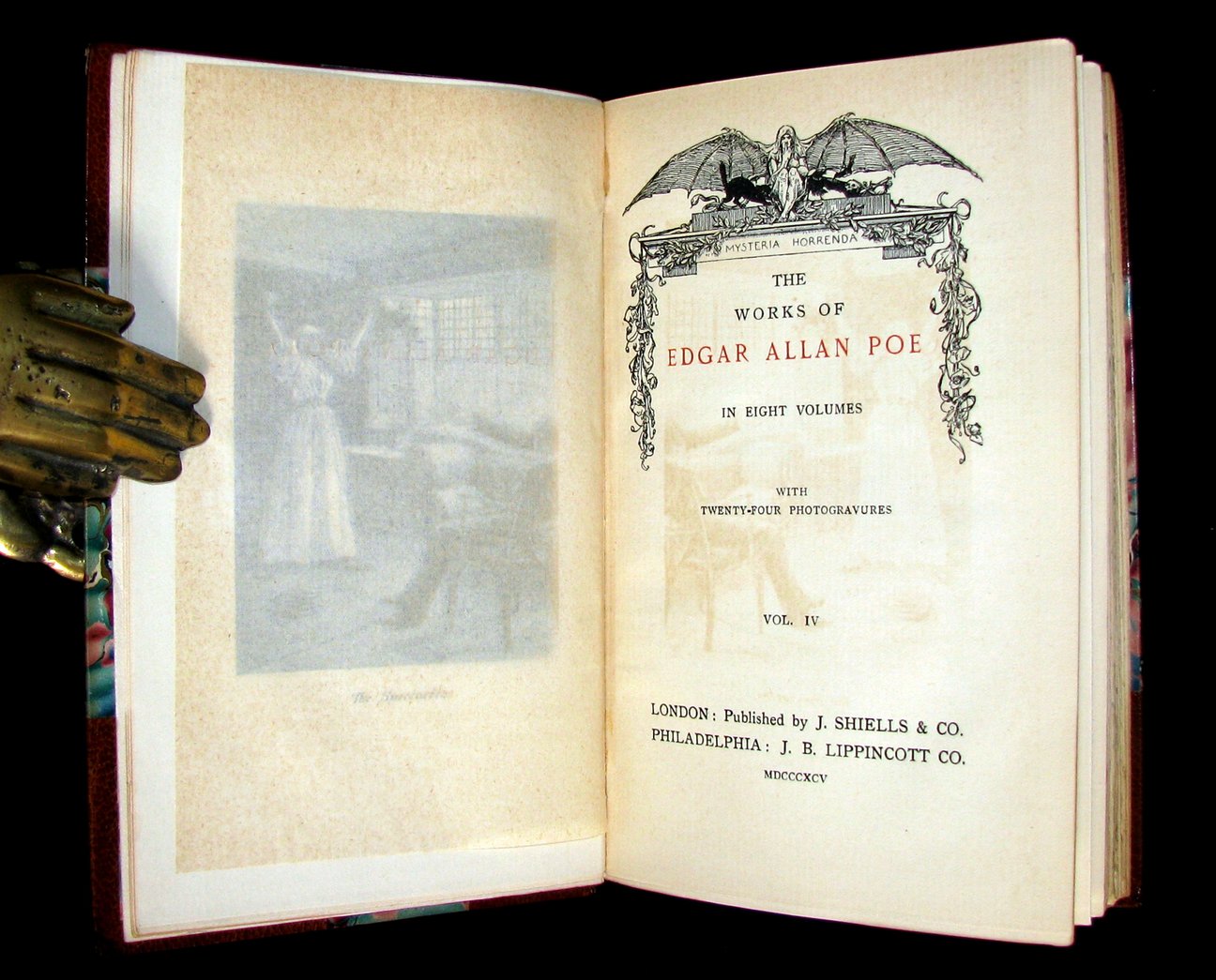
The day before yesterday, 29 June 2020, the Supreme Court struck down a Louisiana law that severely limited access to legal abortions. In addition, US intelligence officials confirmed that in February Donald Trump received a briefing that warned Russia may be contracting members of the Taliban to murder US soldiers serving in Afghanistan. However, despite the newsworthiness of these events,  neither was the lead story of the day. That honor went to King Coronavirus, who continues his conquest of the Deep South in a podunk revival of Edgar Allen Poe’s “The Masque of the Red Death.”[1]

After supper, to catch up on the news of the day, my wife Caroline and I watched CNN’s Anderson Cooper. He presented an acerbic take on the Trump Administration’s attempts to spin a shitshow of Stygian proportions into a triumph of leadership. Trump’s spokesperson Kayleigh McEnany[2] described the 40,000 new US cases (an 80% increase over the last fourteen days) as a “few embers” in the Administration’s successful campaign to contain the disease. I didn’t hear her opine on the SCOTUS decision, but she did claim that Trump hadn’t been briefed on the Russian sponsored bounty hunters, an obvious lie that now has been refuted by multiple sources.

I wonder how Fox News is spinning this,” I asked Caroline.

“I wonder,” she said. “Let’s check it out.”

So, I reached for the remote, scrolled downward on the guide, landed on Fox News, and hit the button. There before me, looking nervously out of sorts, appeared Tucker Carlson.

Let’s see if I can conjure my inner Henry James:

Mr. Tucker Carson, once a boyish presence on cable television, is now beginning to show the wear and tear of nights spent in the garish glare of klieg lighting, his visage crowned by an abundance of hair, brown in color and wavy in texture, his face dominated by two rather small eyes staring straight ahead above a mouth that is thin-lipped and turned ever so slightly downward in what appears to be the onset of a frown.

Carlson

(Sorry about that. I’m rereading James now, and the fits and starts of his formal prose are messing with my thought patterns, bric-a-brac-ing my syntax, de-bebopping the funkification of my everyday speech).

Anyway, Tucker’s lead story dealt with a married couple from St. Louis who rushed out of their palatial home like a Talbots-clad Bonnie and Clyde, the husband, sporting a pink tucked-in polo shirt and brandishing what looked like an assault weapon, his wife wearing white-and-blue horizonal stripes and waving a handgun with her finger actually on the trigger, a gun safety no-no.

c2dd8dc0-bc14-49fe-8d6f-5d5e91ddb480

Why? It seems that a contingent of protesters had breached the borders of their private neighborhood. In the never-ending loop of video accompanying the story, the protesters seemed scant and, as the President might say, “low energy.” However, to the Talbots, they were a mob set to burn down their house. “How could you burn something like that down?” Caroline wondered aloud, noting it looked more like a bank than a house. It seems the protesters were searching for the Mayor’s house and may have mistaken the Talbots as his.

Like I said, this was Tucker’s lead story – not King Coronavirus, not the SCOTUS ruling, not the possibility that Putin is putting  a bounty on the heads of American soldiers and the Commander in Chief  is ignoring it. No, the lead story was a peek into the future of a Biden presidency, the police defunded as hordes of Far-Left Radical Marxists[3] wreak havoc on the sanctity of our gated communities, a prequel to Blade Runner.

This message of impending doom meshed well with the commercials. Because corporate sponsors have abandoned Tucker’s show, the commercials punctuating the segments are what you’d expect to see on Basic cable reruns of My Mother the Car, i.e., advertisements targeting an aged demographic: senior citizens in the market for ointments to relieve their aching joints or some elixir to take the edge off their anxiety. In fact, two different ads were pushing sedatives for anxious dogs. The only upbeat commercial was a 90-second spot hawking a memoir written by Mr. Pillow Man himself, a tale of redemption charting his upward arc from addiction to wealth thanks to the intervention of God Almighty. The rest of the ads promoted miracle chemicals going for $19.99 that can remove decades of accumulated exterior mold in a couple of squirts or patch a leaking roof with a mere swipe of a brush.

What struck me more than anything was how unhappy Tucker looked. Whenever a guest was pontificating, Tucker’s face was frozen in the expression captured above in the photo, his mug unanimated, stamped with consternation, not so much looking like a deer in the headlights, but more like a losing member of a World Series team staring out of the dugout as an unsurmountable deficit ticks away in the final outs.


[1] The setting has been changed from the locked-up castle of Poe’s story to the crowded pews/choirs of mega churches and the close confines of basement bars.

[2] Speaking of podunk, “Kayleigh” sounds like the name of countrified vixen from a soap opera set in an RV campground.

[3] Pardon the tautology.

Twenty Years of Schooling and They Put You on the Day Shift


pleroma

from CG Jung’s Red Book

When I taught senior English back in the Eighties, Nineties, Aughts, and Teens, Herman Hesse’s Steppenwolf played a pivotal role in the curriculum. We used the text to introduce students to psychoanalytical criticism[1], to show them that formalism – or “New Criticism” as it is sometimes called ­– is not the only avenue for analyzing literature.

If our schedules allowed a convenient free period, I’d invite colleague and Arch-Trickster Bill Slayton to engage in a short colloquy with my AP seniors on the Magic Theater sequence of Steppenwolf.  One of Bill’s many talents as a teacher was to relate whatever the kids were reading to their lives, to make it relevant.

He’d begin the discussion by asking where they planned to attend college. Probably afraid they’d jinx themselves, they clamped shut and fidgeted, but Bill coaxed from them an admission that they’d narrowed their prospective lists to a finite number. Then he’d detail the inexorable winnowing that lay ahead by cataloguing the progression of self-limiting choices forced upon them  –  declaring a major, joining a fraternity or sorority (and its attendant conformity), specializing in a profession (divorce law, podiatry, the poetry of George Herbert).

Podiatrist shortage critical - checking pulse (original)

The Podiatrist of Avon

Jungian psychology, he explained, is all about the opposite – expanding your mind by getting in touch with the hidden potentialities Jung called archetypes, cultivating the accountant within (if you’re Lord Byron) or your internal Lord Byron (if you’re Henry James). [2]

Bill subtly suggested that the Western Tao, i.e., mindless materialism, accompanied by a continuing narrowing of focus and interest, might not be the way to go.  Of course, for most of our ambitious and high-achieving students, he might as well have been King Canute demanding that the sea desist (or, to update the allusion, Donald Trump screaming at the Coronavirus to stop spreading).

Bill didn’t mention having children, which, of course, is the ultimate wing-clipper in existential freedom flying. After my marriage to Judy, before we had children, I’d sometimes court danger, learn by going where I should not go, to echo a line from Roethhke. However, after my sons Harrison and Ned arrived, no more non-touristy Jamaican dance halls, no more high-octane chemical cocktails for I-and-I. Obviously, the responsibilities of nurturing and cultivating offspring are enormous. In my reckoning, dying foolishly before the job is done would be dereliction of duty.

Come to think of it, a Jungian analyst might deem my erstwhile adventurous Hemingway wanna-be shenanigans over-kill, an imbalance of energy. Transferring energy from oneself to others is a necessary step in mind expansion, a pebble-drop in the pond of consciousness that generates concentric circles expanding outward.

Of course, you don’t have to have children to accomplish this expansion –  Mother Teresa comes to mind ­– and having children doesn’t necessarily accomplish it either. Selfish parents ignoring or exploiting their children is as old as the Bible and Greek mythology; Huck’s dad, Pappy Finn, is still alive, (if not well).

Teaching literature isn’t only about reading and writing and expanding vocabularies; it is also about employing literature as lens through which to observe the compressed lives of others. I think Bill’s point was despite the inevitable constrictions that the transition from childhood to adulthood entails, an open and inquiring mind is essential in a life well-lived.

The Waking

BY THEODORE ROETHKE

I wake to sleep, and take my waking slow.

I feel my fate in what I cannot fear.

I learn by going where I have to go.


We think by feeling. What is there to know?

I hear my being dance from ear to ear.

I wake to sleep, and take my waking slow.


Of those so close beside me, which are you?

God bless the Ground!   I shall walk softly there,

And learn by going where I have to go.


Light takes the Tree; but who can tell us how?

The lowly worm climbs up a winding stair;

I wake to sleep, and take my waking slow.


Great Nature has another thing to do

To you and me; so take the lively air,

And, lovely, learn by going where to go.


This shaking keeps me steady. I should know.

What falls away is always. And is near.

I wake to sleep, and take my waking slow.

I learn by going where I have to go.


[1] For Freud, you can’t go wrong with “Fall of the House of Usher.”  For Jungian criticism, Thomas Wolfe’s “Child by Tiger” is also an effective text.

[2] According to The Norton Anthology of English Literature, in 1717, “Byron established himself in Venice, where he began a year and a half of debauchery that, he estimated, involved more than two hundred women.” Henry James, on the other hand, died without ever having a significant other, at least in a sexual sense.


The Muse of Unrequited Crushes

ashes-1894-edvard-munch_wikiart

Edvard Munch: “Ashes”

Has there ever been an unrequited love that’s paid more poetic dividends than WB Yeats’s decades long pursuit of unyielding Maud Gonne?*

[cue Robert Johnson: “All my love’s in vain.”]

Here’s a slight sampling:


She bid me take life easy, as the grass grows on the weirs;

But I was young and foolish, and now am full of tears.

“Down by the Salley Gardens”


How many loved your moments of glad grace,

And loved your beauty with love false or true,

But one man loved the pilgrim soul in you,

And loved the sorrows of your changing face;


And bending down beside the glowing bars,

Murmur, a little sadly, how Love fled

And paced upon the mountains overhead

And hid his face amid a crowd of stars.

“When You Are Old”


Half close your eyelids, loosen your hair,

And dream about the great and their pride;

They have spoken against you everywhere,

But weigh this song with the great and their pride;

I made it out of a mouthful of air,

Their children’s children shall say they have lied.

“He Thinks of Those Who Have Spoken Evil of His Beloved”


O  Heart! O Heart, if she’d but turn her head

You’d know the folly of being comforted.

“The Folly of Being Comforted”


Never give all the heart, for love

Will hardly seem worth thinking of

To passionate women if it seem

Certain, and they never dream

That it fades out from kiss to kiss;

For everything that’s lovely is

But a brief, dreamy, kind delight.

O never give the heart outright,

For they, for all smooth lips can say,

Have given their hearts up to the play.

And who could play it well enough

If deaf and dumb and blind with love?

He that made this knows all the cost,

For he gave all his heart and lost.

“Never Give All the Heart”


I could go on and on, but allow me just one more:

We sat grown quiet at the name of love;

We saw the last embers of daylight die,

And in the trembling blue-green of the sky

A moon, worn as if it had been a shell

Washed by time’s waters as they rose and fell

About the stars and broke in days and years.


I had a thought for no one’s but your ears:

That you were beautiful, and that I strove

To love you in the old high way of love;

That it had all seemed happy, and yet we’d grown

As weary-hearted as that hollow moon.

“Adam’s Curse”


Given this inspiration, perhaps I should lament I’ve never suffered unrequited love.

I have, on the other hand, suffered numerous unrequited crushes, but compared to the unstaunched  hemorrhaging of Yeats’s heart, my rejections add up to so many mosquito bites scratched to the point of bleeding but fairly soon forgotten.

Not very inspiring, not the stuff of poetry, merely the stuff of doggerel.


The Lazy Muse of Unrequited Crushes


She sleeps till one each afternoon,

The lazy muse of unrequited crushes.

Never gazes at the waning moon,

Stomps around my brain on crutches,


Lisping doggerel with an interrogative lilt,

Ransacking my drafty garret,

Looking for an obscure line to lift

From Mrs. Elizabeth Barrett


Browning. Womp, womp.


gonne

*When Yeats told Gonne he wasn’t happy without her, she replied, “Oh yes, you are, because you make beautiful poetry out of what you call your unhappiness and are happy in that. Marriage would be such a dull affair. Poets should never marry. The world should thank me for not marrying you.” Norman A. Jeffares, W.B. Yeats, a New Biography.