Doom and Gloom and the Amazon: Halloween Edition

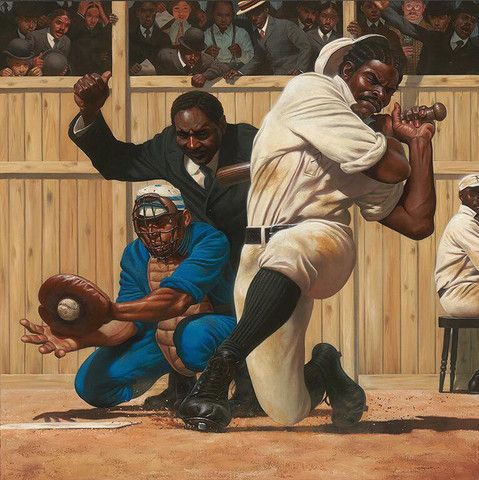
illustration from the Library of Congress

Well, my son Ned who lives in Nuremburg and contracted the Coronavirus early in its planetary conquest, informs me that cases in Germany are again spiking, and sure enough, my phone flashed during last night’s woeful Braves game with the news President Emmanuel Macron has slapped a 9PM to 6AM curfew on the great cities of France. These Post-Christian Europeans with their rational approaches to contagion have been much more adept than we mega-church-building North Americans at containing the disease, so if the virus has returned with a vengeance to that venerable continent, you can bet we’re in store for a not very merry Christmas nor all that happy of a new year.

Add to that dolorous prediction, the reality that roughly half of the US population is going to suffer despair this autumn because their presidential choice will not be inaugurated on January 20th.  

For the Trump faithful, a Biden presidency will bring about the destruction of suburbia. The well-trimmed hedges and lawns of planned communities will soon be covered in the choking kudzu of socialism, with its artificially high minimum wage ushering in hordes of immigrant workers usurping the American way of life. No one will be safe to walk the sidewalks as the police will be defunded and public safety left in the hands of patriotic militias roaming hellscapes in a never-ending dystopian action movie.

For Biden supporters, a Trump presidency means the end of the American experiment as our democratic republic follows Russia, Hungary, and Turkey into the realm of authoritarian kleptocracy. All too soon, they fear, Trump’s visage will appear on Mt. Rushmore while Ivanka’s profile will replace FDR’s on our dimes.[1] A never ending torrent of his mean-spirited and mendacious tweets will corrupt our children with the Trumpian ethos of amorality, and no one will be allowed to protest because fascist militias will terrorize hellscapes in a never-ending dystopian action movie.[2]

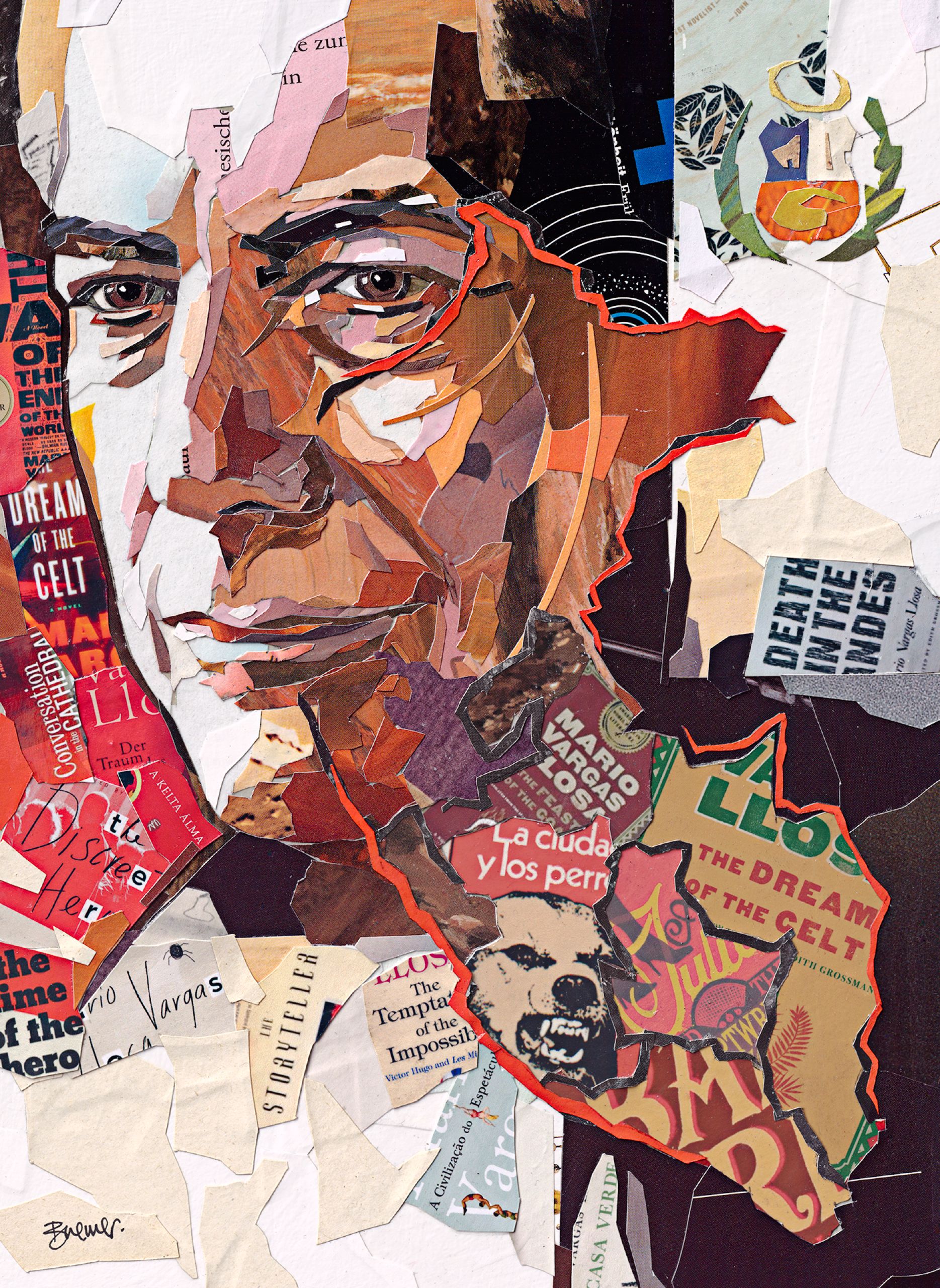
Envy, O my brothers and sisters, the tribes of the Amazon. Here’s a snippet from Nobel Laureate Mario Vargas Llosas 1990 novella The Storyteller:

The great trauma that turned the Incas into a people of sleepwalkers and vassals hasn’t yet occurred [among the Amazonian tribes]. We’ve attacked them ferociously, but they’re not beaten. We know now what an atrocity bringing progress, trying to modernize a primitive people, is. Quite simply, it wipes them out. Let’s not commit this crime. Let’s leave them with their arrows, their feathers, their loincloths. When you approach them and observe them with respect, with a little fellow feeling, you realize it’s not right to call them barbarians or backward. Their culture is adequate for their environment and for the conditions they live in. And, what’s more, they have a deep and subtle knowledge of things that we’ve forgotten. The relationship between man and Nature, for instance. Man and the trees, the birds, the rivers, the earth, the sky. Man and God, as well. We don’t even know what the harmony that exists between man and those things can be, since we’ve shattered it forever.”

So, if once again, we find ourselves in lockdown, stuck at home in a quarantine, it might be a good idea to abandon our screens  – this blog included ­– and wander back into the three-dimensional world and pay a bit more attention to “Man and the trees, the birds, the rivers, the earth, the sky. Man and God, as well” as Llosa’s narrator Mascarita suggests.

Oh, yes, and to keep a wary eye out for those militias. 

photograph by Jason Chambers

[1] By the way, when is the last time you’ve meted out change on a counter to pay for something?

[2] Quick news quiz. Which of the five freedoms of the First Amendment was Judge Barrett unable to recall in yesterday’s Supreme Court Senate Hearing?

Illustration by Patrick Bremer via The New Yorker

Two Stanzas of Ottava Rima Written within Ear Shot of a Skateboard Park (a reading)

Two Stanzas of Ottava Rima Written in Earshot of a Skateboard Park

I said, ‘It’s certain there is no fine thing
Since Adam’s fall but needs much labouring.
WB Yeats

Willie B makes it seem so damned easy,
each iamb in it is appointed place,
but whenever I try it, I feel sleazy,
like a Wordsworth wannabe pissing in the lake.
Yet even to Yeats it didn’t come easy.
A line would take him hours. Better to “break
stones,” he whined, “in all kinds of weather”
than try “to articulate sweet sounds together.”

Form versus execution. I hear the clatter
of skateboarders’ failed attempts at competence.
They flip the board, fall off, curse, batter
their knees as they try to perform the tricks
they see on TV — as if mind over matter
weren’t a myth, as if practice makes perfect,
as if talent can be willed. I say
time to shut down this computer, call it a day.

Irony and Karma, A Comedy Duo for the Ages

Bansky

Okay, as I write this, President Trump languishes at Walter Reed Hospital battling a virus he claims was a “hoax” and would “magically disappear.” Four years ago, he mocked Hillary Clinton’s locomotion and coughing as she suffered from a short-lived bout of pneumonia. 

Ironic? Karmic? Or both?

I like to think of karma and irony as a sort of comedy duo, a married couple, Karma, the female more powerful and profound, and Irony as male, wisecracking, cynical.  They travel hand-in-hand around and around the crumbling empire of post-Modernism, she acting, he reacting, she detached, he involved.  It’s a symbiotic relationship that can help educate us about the benefits and perils of good and bad behavior, so it’s helpful to be able to distinguish one from the other, to discern their similarities and differences.  

Trump Mocking Hillary’s Pneumonia

Irony, of course, is often misunderstood, mistaken for coincidence, as it is throughout the Alanis Morrisette song “Ironic.” 

[Irony’s] like rain on your wedding day
It’s a free ride when you’ve already paid . . . 

Of course, precipitation on your wedding day isn’t ironic, that is, unless it’s a destination wedding in the McMurdo Dry Valleys of Antarctica.[1] A free ride when you’ve already paid isn’t a free ride. The song “Ironic” isn’t ironic, which stupidly makes it sort of ironic. 

Bone fide irony is all about incongruence, the discrepancy between expectation and reality.

I sometimes run across the phrase “irony is dead” when a commentator is highlighting some blatant act of ignored hypocrisy. However, the failure of people to perceive the incongruences that create irony doesn’t mean that irony is dead; it merely demonstrates that irony is dead to them.[2]

Yes, Trump’s calling a disease that smites him a hoax is somewhat ironic, only somewhat because you might not be surprised that a foolish man who flips off science ends up regretting it. However, it is ultimately ironic because, unlike rain on a wedding day, getting ill from a virus you claim is a hoax is incongruent.

What’s not ironic is that Trump’s flaunting of safety protocols, like not wearing masks and eschewing social distancing, has resulted in his infection. That’s karmic. 

Karma,  कर्म in Sanskrit,  means action; karma’s all about cause and effect, as in the cliche “what goes around comes around.”  Is mocking Hillary’s illness the reason Trump’s now fallen ill?  Is it karmic? Only in the sense that it’s indicative of his modus operandi of defying human norms of decent behavior, of embracing a hubris that distorts his perceptions of reality, of cultivating a false sense of invulnerability. Actions such as these will eventually, as the vulgar say, “come and bite you in the ass.”

Irony is surprising; karma is not.


[1] Average rainfall a year 0.00 millimeters.

[2] I remember fondly Misahn Bootay’s response Donald Trump’s tweet proclaiming “The Democrat [health] plan would obliterate Obamacare” during the 2016 midterm elections:

“Not only is irony dead,” he tweeted, “but it’s grave has been dug up and it’s been dressed in gaudy finery and paraded through the streets like the decaying corpse of a medieval pope.”

A Dollar, A Day

Alexander’s Dry Goods (photo courtesy of the Jewish Merchant Project)

Some Saturdays during my preadolescence, my friend Paul Smith and I would ride our bikes from our subdivision Twin Oaks to downtown Summerville and squander our allowances in the shops and drug stores along Main Street. In those days, a dollar and three cents went a rather long way. If you spent judiciously, you could draw out your expenditures for hours before exhausting your funds. 

We’d ride up Lenwood Drive across the canal and the quiet two-lane road that is now Berlin Myers Parkway. From there we pedaled up Rose Hill where we would cut through the Sullivans’ yard and down a leaf-strewn path through woods that led to the black neighborhood on the outskirts of Summerville Elementary. Here in one of the unpainted houses lived my friend Gene Limehouse’s Dah,[1] an ancient cotton-haired woman who smoked a corncob pipe and wasn’t to be messed with. Also along this stretch lived a kid everyone called Squeaky, whom my brother Fleming hung with during the earliest days of his juvenile delinquency, a sort of latter-day Huck and Jim duo.[2]

We’d ride our bikes on the sidewalks in front of Summerville Elementary (i.e., across the street from Beasley’s), past what then was the High School, continuing along the white wooden private school Pinewood and down the big hill in Azalea Park where the sidewalk snaked between two oak trees. Paul and I would pedal as fast as we could down the hill and negotiate the oaks like slalom skiers, then stand up pumping until we hit the commercial district[3]

What used to be Pinewood School is now a seminary

Although our routine wasn’t the same every Saturday, chances are Paul and I would order a six-cent fountain cherry Coke at Guerin’s and sit at one of their wrought iron tables. We’d hit both Ben Franklin and Poppleton’s department stores, buying maybe caps to bang with a hammer, peashooters, or a thin-toothed contraption my mama called a “cootie comb.”  We didn’t venture into Alexander’s or Barshay’s, not being in the market for shoes or looking to rent a tuxedo, but my parents certainly patronized those stores.

Down the lane from Kramer’s was Dr Melfi’s Pharmacy where you could cop a Superman comic for a twelve cents or a Mad Magazine for a quarter. Dr. Melfi displayed pharmaceutical instruments and powders, which gave the establishment an exotic, downright alchemical vibe. It smelled authentic, as if potions were being concocted.

Usually, we’d end our spree at a more prosaic drugstore, Kramer’s, where we’d slide into a booth and spend the rest of our change with a thirty-cent banana split or milk shake. 

Being a red-blooded American, I lived from allowance to allowance, not possessing the self-discipline to save for a baseball glove or board game. Although the nation was in turmoil, we only heard about it distantly in newspapers or the nightly news, Cronkite or Huntley and Brinkley. I remember a “white’s only” sign over one of the lauderomats. Even doctors’ offices were segregated in those days.

Of course, the ride home wasn’t nearly as much fun. We’d pedal back on the other side of Main,  struggle up the big hill we’d sped down a couple of hours earlier. Plus, we might be loaded down with merchandise. Still, it was a good feeling coasting up to your front door, especially if you’d bought something worthwhile to read, like a Mad Magazine or a fifty-nine-cent cardboard bound copy of The Swiss Family Robinson or Treasure Island

I can still almost conjure the delightful smell of the crisp pages of those books. 


[1] Gullah for nanny.

[2] Of course, Fleming would later become well-known as a singer/songwriter and actor.

[3] One day when I was by myself, I encountered a woman in the park with her panties around her ankles peeing directly on the sidewalk. It was thrilling!

Illusion Versus Reality, Ignorance Versus Education

After passing through a wormhole in the space/time continuum, Donald J Trump surveys the hellscape that will be the Biden Administration

If you look at poll numbers devoted to the current US Presidential race, a couple of statistics seem especially noteworthy. Men overwhelmingly support Trump, women Biden, and by wide margins, non-college educated whites prefer Trump over Slow/Sleepy Joe Hiden.[1]

Now, I’m not suggesting that not having graduated from a college means a voter is unintelligent. Shakespeare, Yeats, Faulkner, nor Hemingway graduated from a college or university.[2] I myself am a graduate-school dropout, and despite that the school where I taught for thirty-four years offered to pay my way for a Masters, I declined, despite the salary increase and enhanced status an advanced degree would bring. 

On the other hand, most non-anti-intellectuals would agree that college provides an opportunity intellectually to expand one’s horizons. Potemkin Villages, McCarthyism (co-starring Roy Cohn), wintertime invasions of Russia/USSR, statistical analysis, deductive and inductive logic, cultural anthropology, quantum mechanics, ecological biology, etc. are subjects not necessarily covered in high school, or if covered, not in depth. For example, if you knew that Trump’s personal lawyer in the 1980s, Roy Cohn, was once Joseph McCarthy’s righthand man and spearheaded the Red Scare of the 1950s, you might be a bit more skeptical when Trump or one of his minions accuses the Democrats of McCarthyism.

Cohn and Trump in the ’80s

I sometimes wonder if being a Trump supporter is culturally isolating. I mean, none of the late-night comedians can abide him; virtually every world class musician files a lawsuit whenever one of his or her tunes blasts from speakers at a Trump rally. The artists who support Trump tend to be B-listers at best, like James Woods, Nick Nolte, Ted Nugent, and Kid Rock. Is the fact that our most celebrated actors, musicians and comedians – Meryl Streep and Tom Hanks, Bruce Springsteen and Barbra Streisand, Stephen Colbert and Amy Schumer, e.g. – support Biden over Trump a product of undergraduate brainwashing or a sign of a sophisticated world view? I recently received an invitation to join a group called Writers for Biden, and I’m trying to imagine who would be spearheading a group called Writers for Trump. The poet Billy Collins once told me he didn’t know of any poet who would be willing to read at the Inauguration of George W Bush. I suspect that’s even more so in the case of Donald J Trump.

I will say that Trump has been very successful in creating a cult of personality, as some pictorial depictions of him suggest, echoing, if you will, the enhanced physical renderings of charismatic leaders of yore. 

The truth is that if you buy the argument that the man in heels with dyed blonde hair and orange make-up pictured below is walking through the consequences of a future Biden Administration, you should perhaps consider enrolling in a class devoted to logical fallacies.


[1] If you think Trump’s nicknames for his enemies are clever, chances are you dropped out of school in the 6th grade.

[2] Easy trivia question: Which of the above worthies did not receive the Nobel Prize for Literature?

Shagging Revisited

Early in July, my good friend and former college/grad school roommate Warren Moise wrote an article for the Charleston Mercury describing his former existence as a beach musician in the 60s and 70s. He admitted in the article that he had never learned to shag, which for me was a shocking revelation.

No, British readers, not that kind of shagging!

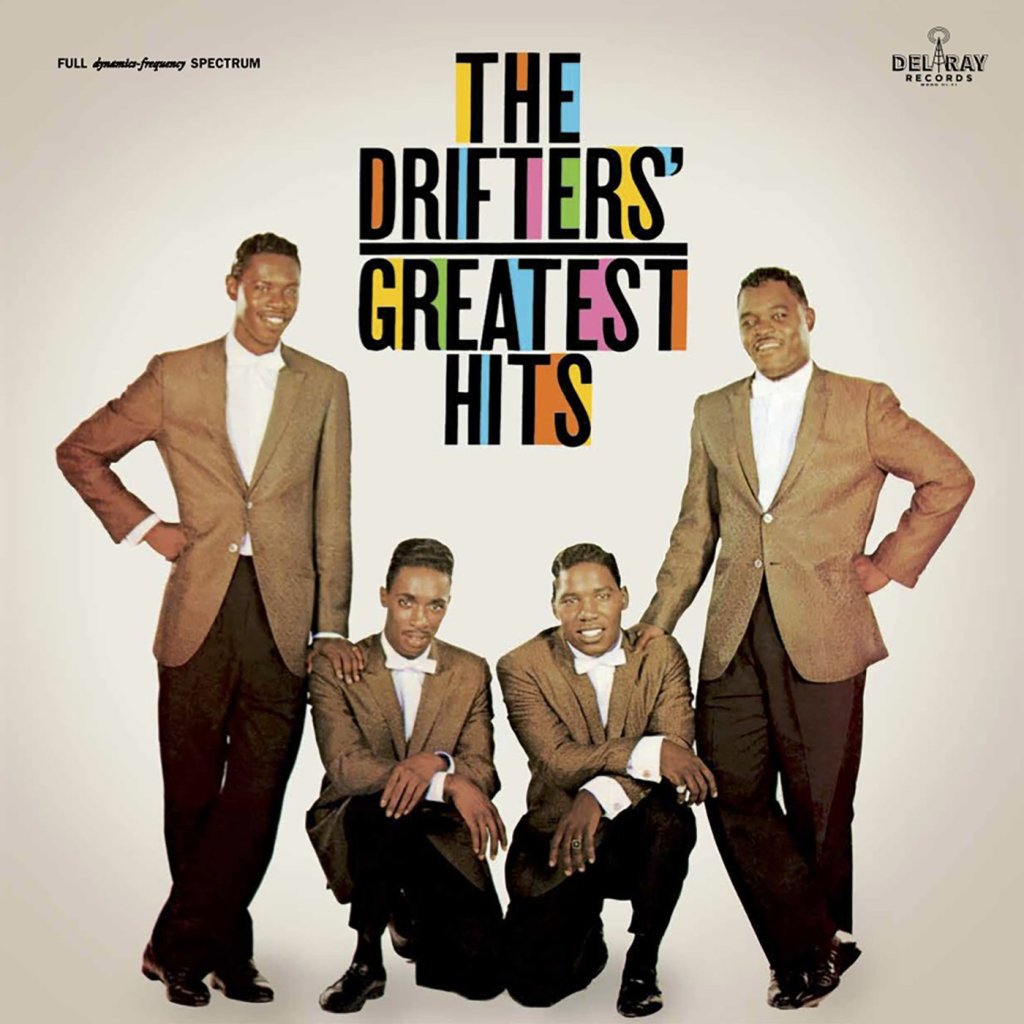
We’re talking about the venerable North and South Carolina dance known as “the shag.” According to the website NCPEDIA, the shag might trace its evolution back to early settlers of the Carolina in an attempt to preserve their European musical lineage. According to the article, in the 1920s and 30s, the shag evolved as dancers adapted it to swing music and jazz. However, the dance really came into its own in 50s and 60s with the advent of Beach Music, a genre made famous by such groups as The Drifters, Tams, and the Embers and performed at beach pavilions up and down the Carolina Coast.

Essentially,  the shag is a two person hand-holding shuffle that allows room for much improvisation. Knowing how to shag is almost a social necessity if you live in Charleston or Myrtle Beach. Nevertheless, like Warren, I, too, never learned how, essentially because I didn’t have the inclination.

Folly Beach, where I live, used to have a shag dance club on Center Street where old people attempted to keep the fires of their youth ablaze, and you can still see lots of shagging at the Sand Dollar Social club on weekends.

Curmudgeon that I am, I saw members of the old shag club as victims of their youth, incurable nostalgia-holics stuck, like a stylus on a scratched record, in a repetitive rut, so I wrote the following rather acerbic poem. 

If you look closely, you can detect the traces

Of teenagers drowned in the puddles of their faces.

Perhaps this is beauty’s curse, the clinging,

King Canute by the seaside singing:

Stop in the name of love. But the aging process

Stops for no one. There’s no recess

In decay’s school day, no stopping the seasons,

Even if you’re sockless and sporting Bass Weejuns.

Advice to Parents Who Want to Help Their Children Compose Essays

Going through some files this morning, I ran across this speech I delivered at Middle School Parents Night at Porter-Gaud a few years ago.

My principal, the excellent Maureen Daily, asked if I’d address parents on the subject of stepping back and allowing their sons and daughters to learn through trial and error. It seems that a rash of them had been overly involved in essay compositions.

Anyway, what follows is the speech I gave that night, which I, of course, consider good advice.

* * *

Hi, I’m Wesley Moore, Chair of the English Department, and I’d like to share some advice on your involvement with your son’s or daughter’s writing.  

Writing, of course, is a process, so we teach it in steps. In class, we conduct exercises in stimulating thought for germinating ideas (what the vulgar call “brainstorming”). We work with introductions, body paragraphs, conclusions. We talk about diction, especially verb selection, how action verbs bop down the boardwalk whereas passive verbs are not all that interesting because it takes seemingly forever for them to get where the reader wants to get to.  Each teacher spends focused time with each individual student in instilling the virtues of good writing.

A student who learns to write well needs to propel the two-wheeler herself.   If you insert your diction into her essay, she doesn’t get to hear in the editing process that “maybe you could find a more specific word here” or “read the sentence outloud.”   It’s through individual labor and through repetition that writers learn their craft, not from their editors.  Parents who rewrite their children’s drafts actually retard the process.

So please, as difficult as it is, remove yourselves – the training wheels – and let your children have a go at it.  Skinned knees are rarely fatal.  As someone who has taught here 27 years in both the Middle and Upper Schools, I assure you that if allow your children the academic space to inhale the air of our classrooms, they will be become excellent writers.  I personally guarantee it.

One last thing, a grade is merely a snapshot in time.  No one in the media is brandishing Rick Perry’s 6th grade report card.   You can fail the 8th grade twice and get into Harvard.  Grade obsession creates unnecessary stress and can lead to shortsighted pettiness – students haggling over a point on a quiz that equals one-ten-thousandth of a point on a yearly average.  

The thrill of the A never compensates for all of the day-to-day fret that grade obsession spawns.  I myself have a son who made a C in 6th grade Spanish for the year – O, tears and lamentations! – who later graduated magna cum laude in German and received a Fulbright to teach American literature in Kiel to German high schoolers.[1]  Now, he’s back home unemployed.  Who knows, maybe in two more years he’ll be teaching at a university.[2]

Go with the flow.


[1] What I didn’t add was that his Spanish name was Jesus, and the first sentence of the report card comment read, “I’m so disappointed in Jesus.”

[2] Update: He later went on to get a Masters in linguistics, taught for a few years at a Florida prep school, and now is back in Germany getting a Masters in American Lit.

A Night in the Summerville Jail

The Old Summerville Jail

He’s in the jailhouse now
Well I told him once or twice
To stop playin’ cards and a-shootin’ dice

                                                            Jimmie Rodgers

Well,  given that I’ve waxed nostalgic about Summerville’s azaleas, the Curve Inn Pool, our village idiots, and county hospital, I think it’s high time I turned my misty memories to a local institution you may not have visited – the Summerville Jail.

I spent one memorable night there in the summer of 1972, the summer before my junior year of college, after a group of friends and I engaged in a series of what educators nowadays call “bad decisions.” We’d smoked a joint (mostly seeds and stems) on our way to downtown Charleston to patronize a basement bar called Hog Pennys. There, of course, we downed a couple of beers, no doubt Old Milwaukees because they offered two extra ounces. [1]  On the way back home to Summerville, I suspect we did another joint. I know for sure the Kinks just released album Everybody’s in Showbiz was blasting from the speakers of the car’s cassette player. 

An appropriate snippet from the album

I guess it was only eleven or so when we pulled up to our hometown poolroom. We weren’t close to drunk or even all that high. After a couple of games of nine ball, we decided to call it a night.  

Another friend, Keith, who hadn’t accompanied us on our journey to the peninsula, asked if he could bum a ride home, so we all piled into the car. At some point, a revolving blue light clicked on behind us. It seems the driver – I’ll call him Billy – hadn’t come to a complete stop at the most recent stop sign.

There were two different bags of cannabis, belonging to different passengers. My perhaps flawed memory has us tossing them back and forth like in that old childhood game hot potato. Someone stuffed one of the baggies beneath the front passenger’s seat. The policeman approached the driver’s side, and as the fellow riding shotgun leaned over to make sure the baggie was well hidden, the officer took note.

“What is that?” he demanded.

“Uh uh uh.”

So we were all hauled downtown to the Summerville Jail, an adjunct to the police station itself, located in those days at 225 West Luke Avenue.  

The thing is that the officer did not procure the other bag, which created a very convenient out for this very inept liar. When the interrogators tried to put, as they say in crime novels, “the screws to me,” I could honestly say I didn’t know who had been in possession of the one baggie of impotent marijuana –  less than a nickel’s worth – that had been confiscated. 

Anyway, we were all ushered into the same cell without being fingerprinted or having mug shots taken. I recall an intercom with its red flight aglow, so we didn’t blab about what had happened. The police instructed us to call our parents, though Keith told the jailer that his mama had recently suffered a heart attack, so he’d rather spend the night in jail than wake her up with a phone call. I felt really bad for him because he was perfectly innocent.

One-by-one, my fellow inmates were released to their unhappy progenitors. When my father and mother arrived, my father was so boiling mad that I told the jailer I’d rather spend the night than be released, and he agreed that it might be a good idea.

Keith and I ended up in different cells, neither of which had bed linen, pillows, or a toilet seat, and I can’t begin to tell you how unpleasant it is waking up about 85 times in the middle of the night and remembering you’re in the clink. Morning did at last dawn, and we were served a poolroom hamburger for breakfast. My mother showed up to retrieve me; (thank goodness my father was at work). I assured Mama that the marijuana didn’t belong to me ­– it didn’t – but I did lie and claimed I hadn’t smoked any. Like I’ve said, I’m a terrible liar, but in this case my mother believed me.

We were supposed to be tried in St. George, and all of us but one made the trip. We sat there among other miscreants of Dorchester County on the pew-like benches of the courtroom. A self-important man with a Southern drawl called out cases and the accused stood up to acknowledge their presence . One trial involved statutory rape. Not only did they make the accused stand, but also the teenaged girl who was his victim, though she looked of age to me. Finally, the names of the last trial were called. Our names never were. Seems as if our no-show friend’s parents and procured a lawyer and had the case dropped. 

Sad to say, but the last time I saw that friend was in June of 2014 at the funeral of another of that carload. Because I don’t make it to Summerville often, I don’t think I’d seen my late friend or the no show in the new century. We sat next to one another in the pew, but neither of us brought up the incident. Sadly, it had created some bad blood.


[1] 18 was the legal drinking age back in those more lenient days.

Me in 1973 (note spray-on tans had yet been invented)

The Curve Inn Pool, Make Me Feel So Good, Make Me Feel All Right

Of all the songs on the jukebox at Summerville’s long-gone Curve Inn Pool, songs like the Byrd’s “Eight Miles High” and Bobby Fuller’s “I Fought the Law,”[1] my favorite was “Gloria” – not the Van Morrison original but a cover by an obscure Chicago band, Shadows of Knight. 

Somehow the Knight’s lead singer Jim Sohns’s gritty growling imitation of a Northern Irishman trying to sound like an American fit the funky working class vibe of the Curve-Inn, which you could join for the entire summer for a measly eleven dollars.[2] I can’t remember if the swimming facility at Miler Country Club featured a jukebox, but I’m absolutely positive you wouldn’t find anyone there perched on the rail of the high dive with the adjectives “sweet” and “sour” tattooed on each of his pectorals. In fact, those were the first homemade tattoos I ever witnessed, the equivalent of stick drawings compared to colorful tapestries you see sprawled across the epidermides[3] of hipsters nowadays.

Summerville coach and administrator Olin McCurry owned and operated the Curve-Inn, and he was there six days a week overseeing the establishment, shirtless and sporting one of those pith helmets bwanas wear in old Tarzan movies. I can see his son, little more than a toddler back then, also shirtless and waddling behind him.  I think the McCurrys were neighbors of ours when we lived on Laurel Street. I remember Laura McCurry, who was a few years younger than me,[4] conversing with my mother like an adult at the tennis courts as I rode my bike around and around the metal nets.

My most memorable summer at the Curve Inn was the summer of ’66. I had a so-called girlfriend named Francine Light, who had delivered me a note two days before school let out for the summer asking if I’d be her beau. I had been admiring her from afar forever, so I was thrilled. I remember walking her to the school buses that afternoon, my hair parted on the wrong side so it would hang over one ear, which no doubt looked ridiculous, though daringly out of dress code.

The problem was that I was so shy I rarely called Francine that summer, and when I did, I couldn’t figure out what to say. She came to the Curve-Inn a couple of times with her little brothers in tow, but all too soon wearied of my awkward non-engagement. I remember sending a message via a female friend to tell Francine I loved her, but the friend came a couple of days later to report that Francine didn’t love me back.

[cue Herman’s Hermits] “Why does the sun keep on shining?/Why does the sea rush to the shore?”

In reality, by no means did that crush-gone-wrong darken my summer. We played Marco Polo, devoured Zero candy bars and Cokes, perfected our cannonballs, back flips and gainers.

Oh yeah, and got an earful from that jukebox standing among puddles in the shade of the pavilion.

G – L – O – R – I – A 


[1] By the way, when I saw Springsteen on the front row of Gaillard Auditorium in The Darkness on the Edge of Town tour in ‘78, the Boss began with a cover of “I Fought the Law,” and I recognized it two chords in.

[2] Cool quote from Sohns, “The Stones, Animals, and Yardbirds took the Chicago blues and gave it an English interpretation. We’ve taken the English version of the blues and re-added a Chicago touch.”

[3] Forgive my pedantry, but epidermides is preferred over epidermises as the plural form, though both are acceptable.

[4] More pedantry: If any former students are reading this, note how I have broken a grammatical rule – it should be “older than I” – so I don’t come off as a constipated, um, pedant.

Extended Definition: Kafkaesque

It’s certainly not surprising that almost any cool sounding word is likely to be picked up by the subliterati and its meaning distorted, especially by people ignorant of the word’s origins.

Take the word “Kafkaesque,” for example.  How many people who haven’t read Kafka throw the word around as if it only means “weird-ass strange,” not aware that to be Kafkaesque an event must be characterized by surreal distortion and a sense of impending danger.  

Let me offer an example of a not even close to Kafkaesque incident from the Police Blotter of the 11 October 2017 edition of my hometown weekly, The Folly Current.


BAD NIGHT FOR EVERYONE

The R/O[1] was dispatched to Center Street around 1:30 a.m. in reference to a Hit-and Run. Upon arrival, he found the suspect vehicle in the roadway, with the 44-year-old female driver in the driver’s seat, passed out with the car still running. Two victims were also on the scene and said the suspect had backed into their car hard, then drove off. They had followed the car to Center Street. The R/O opened the suspect’s door and then she woke up and asked what was going on. The officer immediately noticed the suspect had bloodshot eyes and impaired motor function. She also smelled like alcohol. The officer asked the woman to step out of the car to look at her back bumper. The woman complied, and nearly fell down getting out of the car. In the process, her boob fell out, and the officer had to ask her to cover up. During the discussion, the suspect asked several times, “what do you need again?” The woman became aggressive with the officer and refused to follow instructions on field sobriety tests. Then she resisted arrest and had to be manhandled into the patrol car. She refused to provide a Breathalyzer test sample, and was arrested for Driving While Intoxicated, Leaving the Scene of an Accident, and Resisting Arrest. While being transported to the county jail, the suspect made several declarations, including that the R/O was violating her, that she was going to tell her lawyer and her sister who is in the media business, and that the R/O was a “wannabe white boy.” The officer notes the suspect made “so many derogatory statements during the arrest, the breath test and all the transports, I couldn’t write them all down, but have it recorded on body camera.”

[1] Blotterspeak for responding officers


Okay, while this incident might well be described as “bizarre,” it is by no means rises to the dada nightmarish distortion of a Kafka story. To be Kafkaesque, it would have to go something like this:


SCHLECHTE NACHT FüR ALLE

The R/Os, conjoined biracial twins (Cuban/Chinese) sporting a freshly laundered uniform (complete with his-and-his golden-fringed epaulets) are shark fishing from the pier at 1:30 a.m. when their supervisor dispatches them to Hauptstraße [1] in reference to a Hit-and Run.

Upon arrival, they find the suspect’s Citroen parked in the middle of Hauptstraße with its 44-year-old female driver – a dead ringer for Marlene Dietrich – in the driver’s seat passed out with the car still running and her cigarette holder in her hand, the cigarette still lit, its ash a gravity-defying six centimeters long.

The two hit-and-run victims, unemployed Lithuanian circus clowns in costume, are also on the scene and report (in heavily accented English) the suspect had backed into their car hard, then fishtailed off, headed beachward.  The victims hopped into their vehicle and trailed in hot pursuit.

One of  R/Os opens the suspect’s door. She stirs slowly into consciousness and asks, “Wo bin ich?”[2]  

The officers immediately take note of the suspect’s bloodshot eyes and impaired motor function. She moves and speaks as if through a green aspic salad reeking of Schnapps.

In falsetto unison, the officers ask the woman to step out of the car to look at her back bumper, The Citroen seems to spit her out in disgust as if she were a chunk of rancid Meeräsche. [3]

Teetering on her stilettoes, she stumbles into the open arms of one of the circus clowns. In the process, her right breast falls out, and the officers, again in unison, ask her to adjust her décolleté, which she accomplishes beneath muttered curses.

Interrogation begins. During the discussion, the suspect asks several times, “Was brauchst du nochmal?”[4]

During her field sobriety tests – reciting the 23th Psalm backwards, walking on her hands on the sidewalk in front of St. James pub – she emits a howling a scream that sets off the car alarms of the vehicles parked along the bars and restaurants. Having had enough, the officers manhandle her into the patrol car as ants crawl from her ear.

Refusing to provide a Breathalyzer test sample, the R/Os handcuff her and charge her with Driving While Intoxicated, Leaving the Scene of an Accident, and Resisting Arrest. While being transported to the county jail, the suspect accuses the R/Os of groping her and threatens that to tell her lawyer Rudy Giuliani and her sister Laura Ingram, who is in the media business.  She calls the R/Os wannabe weiße Jungs.[5]

One of the R/Os notes, the suspect made “so many derogatory statements during the arrest, the breath test and all the transports, I couldn’t write them all down, but have it recorded on my Luis Buñuel body camera.”


So there, that’s Kafkaesque, Lynchian, messed-up, creepy.

That’s it. Thanks for listening to my Ted Talk.

from R Crumb’s book Kafka

[1] Center Street

[2] Where am I?

[3] mullet

[4] What do you need again?

[5] White boy