Trump as Satiric Butt

2-rabelais-gargantua-1873-granger

Traditionally satire has been classified as Horatian or Juvenalian in honor of two ancient Roman practitioners of the genre. Horace (65-8 BCE) cleverly but gently mocked Roman opinions and institutions that he considered worthy of ridicule. In Horatian satire – Geoffrey Chaucer falls into this category – you get the feeling that overall the satirist generally is fond of humankind (in spite of itself) but wishes to poke fun at its foibles, perhaps in hopes of ameliorating them. Almost all of non-literary contemporary satire falls into this category. For example, Mad Magazine, The Daily Show, and Saturday Night Live exemplify characteristics of Horatian satire, particularly in their employment of exaggeration and irony, holding up, as it were, a funhouse mirror to human nature.

Take SNL’s satires of Hillary Clinton and Donald Trump, for instance. Despite exaggerating those politicians’ personas, the skits do so with good humor. The writers portray Hillary as incredibly calculating and Trump as a bit of a buffoon, but certainly neither comes off as monstrous (despite thin-skinned Trump’s overreactions) as they very well might in a Juvenalian satire.  The fact that Clinton herself has appeared in some skits underscores the “gentleness” of the satire.

Unlike Horace, whose satires might be likened to the clucking of a tongue, Juvenal’s[1] satires are more like spitting into the face of the target. Juvenal held humankind in utter contempt, like his artistic soul brother Jonathan Swift, and employed scatology – images of excrement, disease, and filth – to transform the object of the satire into a monster. In Juvenalian satire, the motive is not so much to emend but to mock, as Swift does in his portrayal of the Yahoos in Gulliver’s last voyage. The ill-fated Charlie Hebdo satires on Muhammad offer another example of Juvenalian satire’s mean-spirited mockery.

If Trump finds the rather light touch of SNL’s satire outrageous, let’s hope he never encounters a Juvenalian satirist’s assessment of his character.

For example, a Juvenalian satirist might come up with the following Trump Insult Kit (based on those Shakespearian insult kits you can find on the Internet). Essentially, these “kits” have three columns, the first two containing adjectives culled from Shakespeare’s plays and the third containing nouns. Scanning the columns, you choose adjectives from the first and second columns and attach them to a noun of your choice from the third column, coming up with something like, “Ye churlish, toad-spotted miscreant.”

Rather than copping words from Shakespeare’s plays, however, the Juvenalian satirist (who shall remain nameless) that came up with the Trump Insult kit mined the scatological recesses of the gothic Anglo-Saxon subterranean wing of his or her vocabulary to choose caustic, ugly words to ridicule Trump’s appearance – his Kraft-cheese colored epidermis, his corpulence, etc. The idea is someone this hideous needs to be described hideously.  It’s as if the satirist has gone beyond stooping to Trump’s level but has out Trumped Trump in a vulgar way that brings to mind Rabelais, another Juvenalian satirist.


***

The Donald Trump Trolling Insult Kit


Choose a term from each column to create a salutation for your next reply to one of Trump’s tweets:


Hepatitis-hued                                     canker-encrusted                              shrivel-dick

Tangerine-tinted                                  syphilitic                                             pus sac

Spray-painted                                       diarrheic                                              sewer spawn

Swag-bellied                                         sociopathic                                          rat’s turd

Cheezit-colored                                   micro-cephalic                                     boar’s snout

Dabbo-brained                                     tick-ridden                                           bed-wetter

Soul-stunted                                        triple-chinned                                      piece-of-shit

Sphincter-mouthed                             fecal-friendly                                       piss pool

Crotch-crippled                                  snot-spewing                                      scum-slurper

Shit-flecked                                         imbecilic                                              offal-gorger

We suggest you mix and match on different days for variety’s sake: “You, tangerine-tinted, tick-ridden boar’s snout” on Monday but then perhaps “You swag-bellied, triple-chinned scum-slurper on Friday.

* * *

Ultimately, Horatian satire tends to be more palatable for most audiences because, let’s face it, Juvenalian satire is disgusting  —  it’s meant to be.  The prudish consider it crude, in bad taste, which ultimately is the point.

Think of it as a Lear-like lacerating scream penetrating the desert air.  It might not help in any practical way, but releasing righteous indignation is cathartic and in that sense healthy — at least for the satirist herself.


[1] Late 1st, early 2nd century CE

A Very Cursory Review of The Stones’ “Blue and Lonesome”

stones

When I was a teenager, I came awfully damned close to becoming an idolater, a worshiper of Mick Jagger, whom I considered the coolest cat in non-Christendom. He provided non-athletes like I-and-I a deviant path to popularity. Rather than snagging winning touchdown passes on the gridiron, we could pump and grind on the dance floor, slouch down the halls instead of swagger, ditch rah! rah! rah! for so what.

Plus Jagger somehow transcended his ugliness. Livered-lipped and as muscular as a spear of asparagus, his charisma, aided and abetted by that 200-watt grin of his, dazzled away those physical shortcomings. He made us ugly boy children with pepperoni complexions feel as if we had a shot.

best-htw
Actually, as far as music went, I preferred the mid-60s Animals to the mid-‘60s Stones, but when “Jumpin’ Jack Flash” and “Honky Tonk Women” hit the airwaves, I became a true Stones believer. In fact, even now when I hear Charlie Watts hit the cowbell that initiates “Honky Tonk Women,” I let loose a beatific smile.

A string of Stones’ albums of the Late ‘60s and Early ‘70s are arguably the greatest rock-n-roll records in the history of the genre – Beggers’ Banquet, Let It Bleed, Sticky Fingers, and Exile on Main Street – a series of masterpieces. In both sound and sense, they expressed my anger, my disdain for society. I can remember fantasizing in high school about taking over the main building and blasting “Midnight Rambler” over the intercom system as a clarion call for destruction.

However, as the hormones settled down, my fascination with Jagger and Company waned. Truth be told, I haven’t bought a new Stones album since Tattoo You. Let’s face it: in the realm of rock, it’s hard for performers to maintain their creativity past middle age.

On the other hand, in the realm of the blues, it is not only possible but not all that unusual for a bluesman or woman to continue to improve –like Yeats, to continue to create masterworks right up to the end. Sure, Etta James lost some of her range over the years, but it didn’t diminish her artistry. She had so much more heartache to tap into. As they say, you got to suffer if you want to sing the blues, and I’m here to tell you getting old is all about suffering – looks fade, loved ones die, minds go bad, civilization declines.

As Willie B himself put it:

An aged man is but a paltry thing,

A tattered coat upon a stick, unless

Soul clap its hands and sing, and louder sing

For every tatter in its mortal dress.

Old age is all about tatters, and so is the blues.

Blind Willie McTell

Blind Willie McTell

So when I heard the Stones were going to come out with an album dedicated solely to the blues, I looked forward to it. Jagger actually plays a pretty mean harp. Charlie Watts is a great drummer. Keith and Ronnie can hold their own. However, after one, albeit cursory, listen of Blue and Lonesome, I have to express some mild disappointment.

The tracks sound to me – how should I put this – like approximations – maybe mannered? – though I wouldn’t go far enough to say inauthentic. My favorite cut on the record, “I Hate to See You Go,” is a fine rendition, but then again, as Mick himself once said in an interview way back when, “Why listen to us do ‘King Bee’ when you can listen to Slim Harpo do ‘King Bee?’” – or in this case, why listen to Mick do “I Hate to See You Go” when you can listen to Little Walter do it?


You can check out the Stones’ version here.

Maybe the problem lies in that the Stones tried to make these tunes sound too authentic instead of making them sound fresh. Certainly, their cover of “I Should Have Quit You, Baby” pales, not only to Little Milton’s version, but also Led Zeppelin’s.

That said, I’ll probably end up buying Blue and Lonesome anyway. Maybe it will grow on me. I wouldn’t be surprised.  When it comes to records, sometimes not being wowed at first is good for longevity’s sake.

mick-jagger


Recasting To Kill a Mockingbird

ewell-atticus

The other day I put a poll on Twitter asking which character from To Kill a Mockingbird most resembles Donald Trump. Unbelievably, the results ended up tied, 50-50 between Bob Ewell and Mrs. Dubose.[1]

The other choices were Prosecutor Gilmer and Atticus himself.

Of course, Atticus is the throw-away, obviously-wrong answer, like letter D in the test on Macbeth I gave yesterday:

According to your Beloved Taskmaster,[2] who wrote Macbeth?

A. Christopher Marlowe B. The Earl of Oxford

C. William Shakespeare D. Ten million monkeys randomingly typing

Gilmore, the prosecutor of Tom Robinson, is like Trump a bigot and in the movie suffers a Trumpian oral fixation, but Gilmore is too mild mannered to be the Donald. When Robinson on the stand admits he didn’t charge white Mayella Ewell for doing her chores because he pitied her, Trump would have been all over that perversion of ‘60s Alabama race relations, dramatizing the incident minstrel-show-style mocking both Robinson’s speech patterns and his mangled arm.

giphy

That leaves two choices, Bob Ewell and Mrs. Dubose. If it were a multiple choice test instead of a poll, you’d have to go with Ewell. One, there’s the gender issue, and, of course, Ewell, unlike wheelchair bound Mrs. Dubose, actually destroys people’s lives.  Plus her poison-of-choice is morphine whereas Donald’s is Diet Coke.[3]

Nevertheless, in the poll, my vote would go to bitter, belligerent Mrs. Dubose, based entirely on this one scene.

Note the mollification after the buttering up.


[1] Sigh, the vote was 1 to 1.

[2] I.e., I-and-I, your beloved blogger.

[3] Imagine, if you dare, Trump drunk.

The Death of Irony


canopy-bed

Old habits die hard. On the morning Irony plans to end it all, he puts a ridiculously upbeat polka record on the crank-up gramophone that shares a bedside table with a bottle of multi-vitamins and a half-liter of Jameson’s. As always, he rattles two of the tablets into his palm, pops them in his mouth, uncorks the adjacent bottle of Jameson’s, takes a slug, and washes the vitamins down  – all to the oom-pah of manic tubas, trombones, trumpets, and accordions.

The décor of his windowless room: an eclectic mixture of elegance and shabbiness. Maxwell Parrish’s Daybreak hangs on the one wall not lined with bookshelves. Hanging next to the Parish poster a black-and-white photograph of a pyramid of human skulls courtesy of Pol Pot. Both clash with the overly florid Victorian wallpaper. A chandelier hangs from the vaulted ceiling; a lava lamp pulsates atop one of the bookshelves.

parrish
Day Break by Maxwell Parrish

Irony recalls an old New Yorker cartoon featuring a firing squad posed to shoot a prisoner who refuses the offer of one last cigarette. The caption: “No thanks, I’m trying to quit.”

The needle of the gramophone slides across the 78 record’s end.

Thump thump, thump thump.

He carefully lifts the tone arm of the gramophone, gently replaces it in its cradle, removes the record, using two hands, careful not to smear the shellac resin with his fingerprints. He slides the disc into its plastic sleeve and then into the cardboard cover. He removes a lighter from the pocket of his bathrobe and tries to light the corner of the album cover. It doesn’t ignite, so he places the record back into its rightful place in the rack.

weiners-001

He shuffles out into the hall to retrieve the paper, its headline announcing the President’s bestowing Medals of Freedom to David Allan Coe, David Duke, Steve Bannon, Ann Coulter, Steven Segal, and Vladimir Putin.

In dressing for his suicide, Irony’s as meticulous as Quentin Compson, though, of course, Irony is no gentleman, far from it. He prepares his own shaving lather, applies it with a brush, and whips out his straight razor.

Why not just end it right here with one deft swipe across the jugular? No, too melodramatic. Plus, he’s already bought the rope. That would be a waste.  Instead, he applies his pancake makeup and then riffles through his costumes.

Irony lives in the Tower of Song, and although he’s been around for a long time (he can count Aristophanes and Voltaire as fans), nothing lasts forever. Nowadays, when he goes out on the boulevard, even in his polka-dotted shirt and checkered pants, virtually no one recognizes him.   He’s a has been. When Pete Hegseth, an alcoholic National Guard officer, is chosen over god knows how many more competent generals for Secretary of Defense, it’s time to hang it up.

Or in Irony’s case, to hang himself.

He pulls out a suitcase from underneath his four-poster canopied bed, heaves it up on the mattress, and snaps it open. The rope he retrieves from the wardrobe, the noose already fashioned. Even though nowadays, it’s not uncommon to see pedestrians with assault rifles slung over their shoulders or with holstered six-shooters dangling from their hips strolling into a 7-11, Irony doesn’t want to be seen on the sidewalk carrying a rope.  After placing it in the suitcase, he gently closes the lid, snaps it shut.

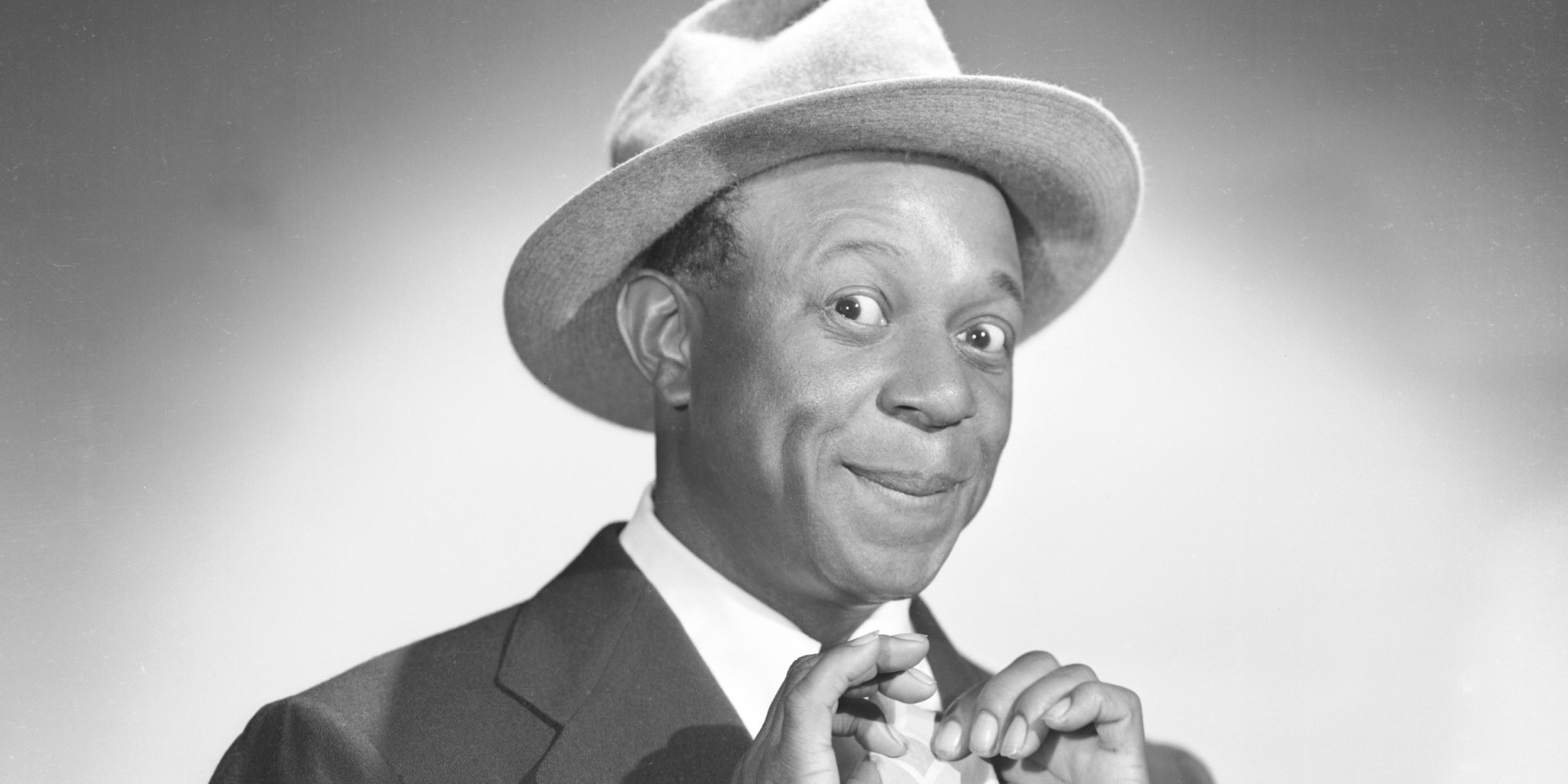
The elevator man in the Tower of Song is Eddie Rochester Anderson.

Eddie "Rochester" Anderson
Eddie “Rochester” Anderson

“How you doin’ today, Mr. Irony,” Eddie says as Irony steps into the elevator.

“Fine and dandy — except I’ve lost the will to live.”

Rochester cackles. “You sure are a card. Yes sir-ree. Looks like you headed on a trip. Where you goin’?

Staring up at the descending lighted numbers of floors, Irony says, “I’m headed to that undiscovered country from whose bourne no traveler returns.”

“Sounds like a real vacation.”

The elevator clunks to a stop, and Rochester slides open the cage before the big door opens up into the lobby.

“Catch you on the flip side,” he says. “Bon voyage.”

Irony is displeased to discover that the day is not bright and sunny; rather, it looks as if Ingmar Bergman might have had a hand in casting the weather – a dark, miasmic day beneath leaden skies guaranteeing rain.

He hails a cab, gives the driver the address of Big Dick’s Halfway Inn, Home of the Original Minnow Shot. Looking out of the window, he sees a bus of about-to-be deported immigrants thundering past.

Irony removes his IOS device, inserts his ear buds, scans iTunes for the “Up With People” theme song, and hits play.


How Democritus and Heraclites Might Have Reacted to the Trump Election

four-elements


This evening after a series of minor vexations – son sick, Gamecocks clobbered, eye invaded by wayward particle – I got to thinking about Horace Walpole’s observation that “[l]ife is a tragedy for those who feel, and a comedy for those who think.” I quote Walpole when I’m teaching tragedy and ask students to offer an interpretation.

It’s a hard question, hard to put the answer into words.

Of course, to address the question, you need context.   For example, let’s examine the thinking/ feeling/comedy/tragedy conundrum from the perspective of Trump’s election.

(I know some of you may have supported Trump, perhaps because you feel immigrants are overrunning the country or that massive tax cuts will defy history and fuel an economic boom or that you consider Hillary Clinton/Barack Obama Satanic spawn or some/all of the above).

However, the [tautology alert] a priori premise in this thought experiment is that Trump is a vulgarian with authoritarian tendencies whose boorish pronouncements during the campaign have eroded codes of civility and whose total lack of a sense-of-history and intellectual curiosity make his election as leader of the free world very, very unfortunate.

Not to mention his pathological avariciousness.

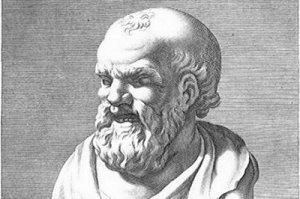
Democritus

Democritus

Okay, let’s bring in the cynical pre-Socratic philosopher Democritus, aka “the laughing philosopher.”

Seneca claimed that Democritus, whom he called “the Mocker,” laughingly held human beings in disdain, modeling a detached amusement at the foibles of the masses. In temperament think Bill Maier as opposed to Louis Black.

If human folly is laughable, this election might very well provoke Democritus to guffawing at this turn of events:

A swindler and pathological liar who pleads guilty to fraud a week after the election and who referred to his opponent as “Crooked Hillary” with the help of Fox News and Russian hackers (not to mention the New York Times) convinces a majority populace that he’s “more trustworthy” than she.

[cue laugh track]

Coal miners in Kentucky counties who have decreased their uninsured rate by almost twenty percent vote 93% to 6% for a man who wants to abolish the estate tax.

[cue laugh track]

Thinkers like Democritus take the long view.   Human folly is essentially history’s major motif. Thinkers are familiar with not only Huck Finn’s the “Duke and the Dolphin” but have read Swift and Shakespeare and perhaps Horace and Juvenal.

In their view, only incredibly naïve pollyannas would expect their generation to be less prone to foolishness than their forebears. Most of humankind is purblind, always have been, always will be.

After all, anyone reading this will be literally dead in 80 years. So what if the American Experiment fails? So what if Arizona once again boasts a view of the Pacific? Letting the little people decide was a very, very bad idea.

Just desserts.

By the way, should I add that this view might be considered elitist?

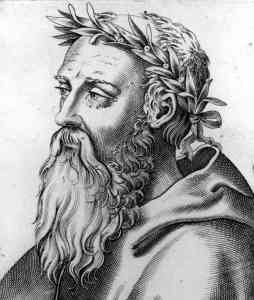
Heraclitus

Heraclitus

Heraclitus, on the other hand, aka the “weeping philosopher,” was a feeler, invested in the here and now. So what if Swift’s view of Yahoos was essentially correct? Those yahoos who voted for Trump in Kentucky lives will not get any better but actually worse: they will lose that recently acquired insurance, babies will die, and those promised coal mining jobs ain’t coming back ever.  Once again, they’ve been lied to.

How horrible, Heraclitus laments, that such chicanery is so rewarded. A spoiled, 70-year-old adolescent tweets preposterous lies and pays no apparent price for his dishonesty and in the mean time transforms the Founding Fathers’ republican democracy into an authoritarian kleptocracy!

People are real, not abstractions to be mocked. Pain is real.

In fact, sorry. My eye is killing me. I got to sign off.


fallout1


Thank God It’s Monday (or Tuesday)

shapeimage_2

Ah, get born, keep warm

Short pants, romance, learn to dance

Get dressed, get blessed

Try to be a success

Please her, please him, buy gifts

Don’t steal, don’t lift

Twenty years of schoolin’

And they put you on the day shift.

Bob Dylan, “Subterranean Homesick Blues”

Another Thanksgiving has come and gone, and for some reason, even though it’s only Friday morning, already a Sunday evening sadness has descended, which is essentially the consequence of wrong-thinking.

I’ve committed a common error, perceiving life as linear, a journey. A pilgrimage. But there’s a real problem in perceiving our existence in this manner, because the payoff of a journey or pilgrimage is reaching the final destination – Emerald City or Canterbury Cathedral – and, of course, when we reach the end of our life’s journey/pilgrimage, we’re no longer we but something to be disposed of, to be burned or buried.

detail from All Our Yesterdays, Michael Bilotta

detail from All Our Yesterdays, Michael Bilotta

Alan Watts:

And then you wake up one day, about 40 years old and you say “My God! I’ve arrived.” ”I’m there.” And you don’t feel very different from what you always felt And there is a slight letdown because you feel is a hoax And there was a hoax. A dreadful hoax They made you miss everything. We thought of life by analogy with a journey, with a pilgrimage, which had a serious purpose at the end and the thing was to get to that end. Success or whatever it is, maybe heaven, after you’re dead. But we missed the point the whole way along. It was a musical thing and you were supposed to sing, or to dance, while the music was being played.

Ulysses to Achilles in Shakespeare’s Troilus and Cressida:

Time hath, my lord, a wallet at his back,

Wherein he puts alms for oblivion

Yet, I keep wishing away the present, for the workday to end, for the workweek to end, for football season to begin or the holidays to arrive, or for retirement.

Cindy Streit Mazzaferro: Sometimes Broadway, Sometimes the Catskills

Cindy Streit Mazzaferro: Sometimes Broadway, Sometimes the Catskills

But who are they – the they Watts accuses of making us “miss everything?”

Well, as Porfiry Petrovich  famously said to Rodion Romanovich Raskolnikov when the latter asked him who had killed the old pawnbroker and her sister:

“What do you mean, who killed?” he asked as if he couldn’t believe his own ears.  “Why, Rodion Romanovich, you killed!  You committed the murders, yes.”

The they are we.  We possess free will, BF Skinner be damned.  How many sages have walked upon the earth extolling us to consider the lilies of the fields or that it is better to travel well than arrive?

Those sages say we must murder that conception-of-self psychologists call the ego, abandon the self-delusion that a homunculus somewhere inside our brain is the sum total of who we are, to realize that we and the lilies of the fields and the clouds in the sky and the birdcall are one.

Easier said than done.  Droughts can decimate fields, and although form is emptiness, the swirling subatomic particles of an axe can do real damage.  Food and shelter demand, unless you’re a Trump or Kennedy, labor, and most of us labor under the supervision of someone more powerful, whether it be a foreman or the always-right customer.  And, in truth, a very few people own and control almost everything, but we do ostensibly have autonomy over our lives (at least for the time being here in the good ol’ US of A).


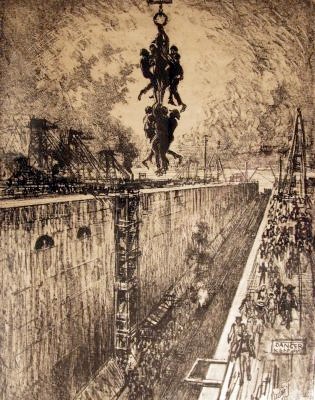
Joseph Pennel: End of Work Day, Gatun Lock

Joseph Pennel:
End of Work Day, Gatun Lock

Ultimately, I think, it’s crucial to find employment that we love and to train our minds to concentrate on the bits and pieces of that employment, whether it be whisking an egg, laying a brick, or constructing a math test, in other words, to enjoy the music of the moment rather than racing forward in our minds to the final cymbal crash of the coda.

It’s hard to do, especially with all of the distractions, the mechanical slicing of time into periods, shifts, breaks, etc. – but we certainly don’t want to end up like John Marcher in Henry James’s “The Beast in the Jungle”:

He had justified his fear and achieved his fate; he had failed, with the last exactitude, of all he was to fail of; and a moan now rose to his lips as he remembered she had prayed he mightn’t know. This horror of waking–THIS was knowledge, knowledge under the breath of which the very tears in his eyes seemed to freeze. Through them, none the less, he tried to fix it and hold it; he kept it there before him so that he might feel the pain. That at least, belated and bitter, had something of the taste of life. But the bitterness suddenly sickened him, and it was as if, horribly, he saw, in the truth, in the cruelty of his image, what had been appointed and done. He saw the Jungle of his life and saw the lurking Beast; then, while he looked, perceived it, as by a stir of the air, rise, huge and hideous, for the leap that was to settle him. His eyes darkened–it was close; and, instinctively turning, in his hallucination, to avoid it, he flung himself, face down, on the tomb.

So, ladies and gents, let’s don our dancing shoes before it’s too late.

51bdc1c3985c09d44e20898262ffaf02


Trump’s First Year: Predictions

cole_empire_0


Inauguration Day

A la Shakespeare’s Julius Caesar and Macbeth, natural phenomena go haywire. The earth becomes feverous and shakes; lions are seen strolling up K Street. By clock it is day, but night has strangled the sun, casting darkness about the capital. When Trump places his hand upon the Bible, his palm and fingers are seared. Franklin Graham blames all of these unnatural events on the LBGTQ community.

Kid Rock recites an Inaugural poem.

O-Da-Lin in the USA

Yo,Yo,Yo, Yo Da Lin in the USA

A delicious break from socialists.

Yo Da Laheeeeoooooooo

Here we go, Prez; take it away!

Cash bars are set up at all of the Inaugural Balls. Trump pockets the profits.

The Rest of January

Led by Paul Ryan and Mitch McConnell, Congress scraps Medicare and replaces it with vouchers and tax credits entitling bearers deep discounts in burial/cremation services.

dscn1788

February

Lorne Michaels goes missing.

Trump signs an executive order making Moscow Washington’s “Sister City.”

President Trump nominates Roy Moore for the Supreme Court.

March 

Attorney General Jeff Sessions charges Hillary Clinton with treason.

President Trump signs an executive order replacing Arabic numerals with Roman Numerals.

NBC cancels SNL.

hillary-perp

April

April is the cruelest month, breeding

Lilacs out of the dead land, mixing

Memory and desire, stirring

Dull roots with spring rain.

May 

Jared Kushner successfully accomplishes a hostile takeover of the New York Times. The New York Times buys the New York Post. The New York Post buys the Washington Post. The Washington Post buys The Village Voice.

Celebrations break out in trailer parks across America as Congress abolishes the Estate Tax.

June

President Trump celebrates his LXXI birthday at the Eastern Whitehouse in St. Petersburg, Russia. He and Putin announce a new joint Trump/Putin resort in the Crimea.

July

Hillary Clinton begins a hunger strike.

August

Trump takes a month off. Congress recesses.

Card carrying communists Santa and Mrs. Claus drown in Arctic Ocean.

SNL replaced by comedy show starring Andrew Dice Clay.

santa-and-nrs


September

Trump awards Howard Stern a Presidential Medal of Freedom Award.

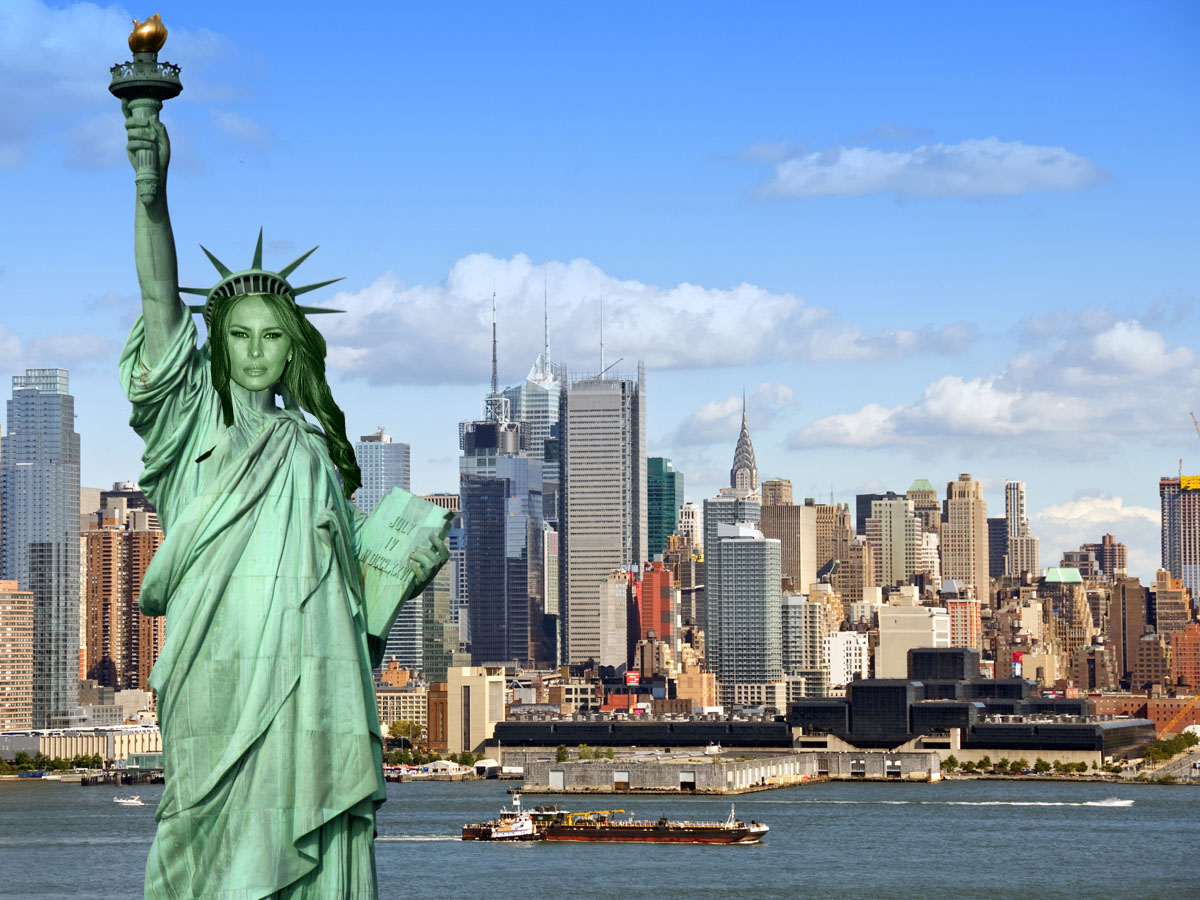
The Statue of Liberty takes her own life, and Trump replaces her with a statue of Melania.

melania-liberty

October

Evangelicals lobby Trump to ban Trick or Treating as a satanic communistic ritual that encourages the redistribution of candy among the masses.

Trump refuses in what the NY Times editorial board calls “the greatest act of personal heroics since Sir Thomas More was beheaded for his convictions.”

November   

Congress repeals the ACA and replaces it with free first aid kits to all uninsured families (while supplies last).

December

Hillary Clinton dies in captivity.

America is finally great again.

I Think Perhaps I’ve Taught Too Long

distruption-copy-copy


I think perhaps I’ve taught too long —

None of my pop cultural references register.


Allusions to Barney Fife, Ricky Ricardo,

Beaver Cleaver, Hoss Cartwright

Produce stares as blank as if I’d dropped

Anaximenes’s or Parenides’s names

at a Tea Party conclave.


Anyone out there have any idea

Who has replaced Eddie Haskell

As the prototype for insincere obsequiousness?

Or Ozzie and Harriet as avatars

Of wholesome vacuity?


If you know, please text me.


The teenagers I teach have never listened to

Mitch Ryder and the DE-troit wheels

Or Wicked Wilson Pickett,

Have never heard Koko Taylor sing

“Wang Dang Doodle.”


When the fish head fills the air

Be snuff juice everywhere

We’re gonna pitch a wang dang doodle all night long


All night long . . .


What’s an uncomfortable kind of old scarecrow to do?

Bone up on Dr. Dre and Beyonce?

Binge watch Modern Family and The Big Bang Theory?


No suh, un-uh, no thank you.


I think it’s time to take that proverbial timecard

And check out of this here career,

Transplant my ass to Lisbon’s Bairro Alto

Spend the uneventful

Dwindling days sipping IPAs

In that lovely park overlooking

The lower, less ancient, sections of the city.

the author and his son, the King of Nowhere

the author and his son, the King of Nowhere


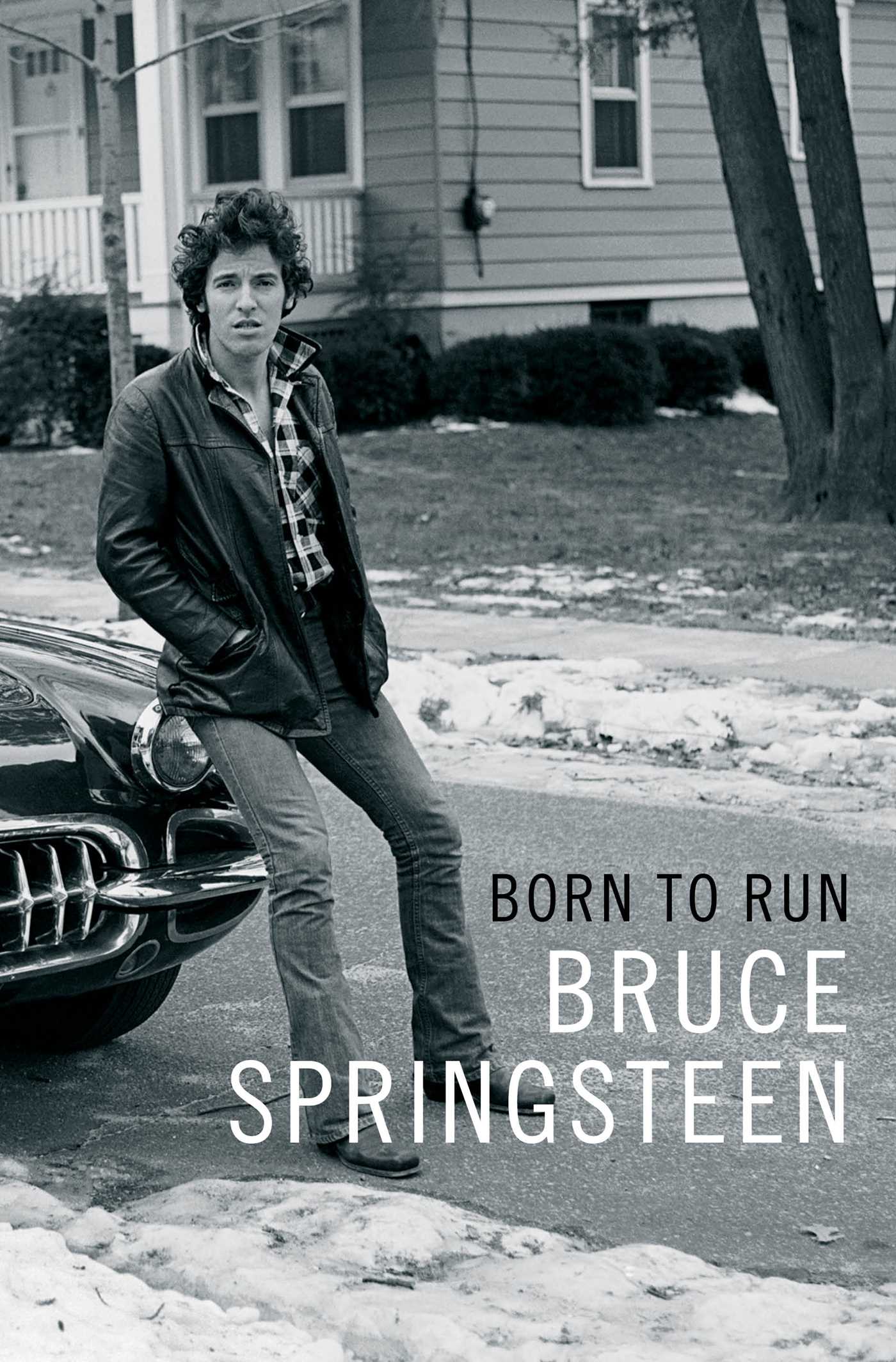
Springsteen’s Autobiography

born-to-run-9781501141515_hr

I’m reading Springsteen’s autobiography Born to Run, and as much as I admire the Boss, I have to admit at first I was somewhat put off by his prose, which seemed mannered in that it was a bit too wham bam for my ear – too self-conscious — or as Richard Ford puts it in his Times review, “a tad more rock ’n’ roll highfalutin” than I [Ford]” needed.”

One example: “There, even that great tragedian Roy Orbison, a man who had to sing his way out of an apocalypse waiting around every corner, had his ‘pretty woman’ and a home on ‘Blue Bayou.’”

Not that it’s bad prose– not at all – how inconceivable would it be for the lyricist of “Wild Billy’s Circus Story” to produce lousy prose:

Oh, and a press roll drummer go, ballerina to-and-fro

Cartwheelin’ up on that tightrope

With a cannon blast, lightnin’ flash, movin’ fast through the tent, Mars-bent

He’s gonna miss his fall, oh, God save the human cannonball

And the flyin’ Zambinis watch Margarita do her neck twist

And the ringmaster gets the crowd to count along, ninety-five, ninety-six, ninety-seven

However, 165 pages in, I’ve grown accustomed to his narrative voice and am completely immersed in his story, especially now that Springsteen’s bittersweet childhood has come to an end – though bittersweet might be a bit too cheery a descriptor for what amounts to living in a series of ramshackle rental houses with a father who considered his son “an intruder, a stranger, a competitor [. . .] and a fearful disappointment.”

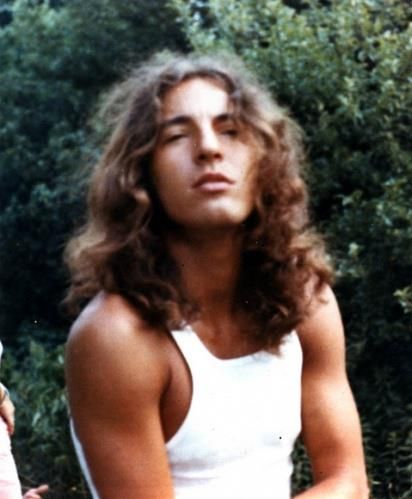
young Springsteen

young Springsteen

Truth is, the late 60’s weren’t all that conducive for filial felicity given the zeitgeist of revolution, sex, drugs, rock-n-roll, longhair, and lawlessness (not to mention bralessness). Some mothers and fathers throughout the land were slow to concede that their sons and daughters were beyond their command. It took my old man a couple of years to get the picture, and several of Springsteen’s descriptions of his father could very well describe the man for whom I’m named:

At our house, there were no dates, no restaurants or nights out on the town. My father had neither the inclination, the money, nor the health for a normal married social life. I never saw the inside of a restaurant until I was well into my twenties [. . .] My father was a misanthrope who shunned most of humankind.

Springsteen does a spectacular job for depicting the sociological tribalism of Central New Jersey with the rah-rahs (preppies), greasers (northeastern rednecks), blacks, and working class kids, and also, he’s really good at creating tangible settings for the dramas he cinematically recreates. The dramatization of his rise from garage guitarist to regional phenom is especially instructive. We’re talking grit – crashing beneath a boardwalk on the Jersey Shore, shivering in the back of a truck racing through the frigid heartland, living at nineteen on his own in commercial spaces where his “bedroom” consisted of a mattress lying on cold, hard concrete.

What I have discovered about Springsteen himself so far is that from the very beginning he was tremendously ambitious, straight-edged (no booze or drugs ever), meticulous, and obsessive when it came to producing a genre of music he had studied with the profundity of a scholar possessing an encyclopedic historical knowledge of his subject matter.

I’m only a quarter of the way through, but I can assure you that the Springsteen has paid his dues and remained true to the workingman ethos of his background. He doesn’t claim to be a genius – and I agree he’s not a genius the way I consider Tom Waits a genius – but when you get down to the nitty-gritty, I can’t think of any rocker’s body of work that can compete with his in light of Matthew Arnold’s criteria for greatness, i.e., the total number of superb works produced in light of the breadth and significance of those works’ themes.