3:24 A.M. Tuesday and Counting

Alas, Lonnie sliding into second in Game 7 of the '91 Series when he had a clear path home in a 0-0 tie.

Alas, Lonnie sliding into second in Game 7 of the ’91 Series when he had a clear path home in a 0-0 tie.


Another ditty courtesy of my major muse, Insomnia, who brings us those dark hours when ghosts— in this case Lonnie Smith of the 1991 Atlanta Braves — crawl out of their shallow graves to grieve us.


A coon must be prowling round the water garden,
rattling gravel, or else frogs would be drowning out
the barking of that distant dog.

Sometimes with the windows open
I can hear the ocean, but not tonight —
just the whisper of insistent desperate yipping.

Here come the croaks — that’s better,
the hoarse sturm und drang of their desires
seem to trivialize mine.

When’s the last time I let out
a primal scream? Was it in the ’91 Series when
Lonnie Smith failed to round third and score?

Too bad I can’t slam shut my mind
like the lid of a laptop. Too bad Lonnie got deked.
Too bad that was then and now is now.


Trafficking in Mockery

[Warning: if you are a language purist, you may find the following sentence offensive because it contains toxic levels of tautology, that rhetorical error more commonly known as redundancy, or “needless repetition”.]

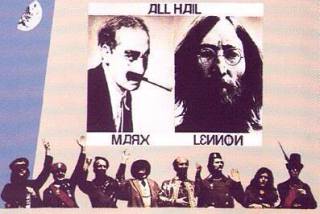
marx-lennonLike so many of my fellow left-leaning quasi-communistic bleeding-heart progressive liberal pinkos, I listen to NPR in the mornings on the way to work and in the afternoons on my way home. I teach at an academy where I attempt to indoctrinate the sons and daughters of prominent citizens into post-Enlightenment thinking. In other words, via a survey of British literature, I guide students out of the fog-bound valleys of medieval worldviews. We begin our journey in the dragon-ridden wastes of Beowulf’s Geatland, hike along an upward trail past Canterbury Cathedral, through the killing fields of Macbeth’s Scotland, as we climb Alexander Pope’s metaphoric mountain, reaching three months later the summit of the 20th Century where we can enjoy the far-reaching vistas that history and science afford. It’s a thankless often dangerous, trek, but, by Darwin, damn it, someone needs to do it.

Anyway, listening to NPR is about as sun-splashed and uplifting as the Marianas Trench. Each morning and afternoon familiar voices catalogue the latest beheadings, mass migrant drownings, pandemics, news from Syria, coup d’etats, and/or pronouncements from Ted Cruz; in other words, I get a daily digest of TS Eliot called “the immense panorama of futility and anarchy that is contemporary history.”

Bamiyan Buddhas, before and after

Bamiyan Buddhas, before and after

I particularly find upsetting when fanatical Islamists (speaking of fog-bound medievalism) destroy the artistic heritage of their civilizations, for example the Taliban’s destruction of 1700 year-old sandstone statues known as the Bamiyan Buddhas in the Hindu Kush Mountains of central Afghanistan or ISIL’s bulldozing an 8th BCE Assyrian gateway in Arslan Tash.

It brings to mind William Butler Yeats’ poem “Nineteen-Hundred and Nineteen,” written during the Irish Civil War. The poem takes a despairing look at the human propensity to destroy what is beautiful. It’s divided into six sections marked by Roman numerals, and the first section is divided into six stanzas of ottava rima.

Here’s the first stanza, eight lines with the rhyme scheme ABABABCC, and in rhyme impoverished English, making those three rhymes sound like straightforward speech is the mark of a master poet.

MANY ingenious lovely things are gone

That seemed sheer miracle to the multitude,

protected from the circle of the moon

That pitches common things about. There stood

Amid the ornamental bronze and stone

An ancient image made of olive wood —

And gone are Phidias’ famous ivories

And all the golden grasshoppers and bees.

He’s alluding to now lost artistic wonders of the ancient world like Greek sculptor Phidias’ statue of Zeus in Olympia and his statue of Athena that once graced the Parthenon. Yeats was a mystic, so he was apt to believe that the mutability of the moon could affect earthly events. Nothing tricky here: beautiful things disappear in time.

Here’s the second stanza of Section I:

We too had many pretty toys when young:

A law indifferent to blame or praise,

To bribe or threat; habits that made old wrong

Melt down, as it were wax in the sun’s rays;

Public opinion ripening for so long

We thought it would outlive all future days.

O what fine thought we had because we thought

That the worst rogues and rascals had died out.

He’s suggesting that like the ancients his generation also had noble “things” when they were young, “things” like established, disinterested laws, humane traditions, etc. His calling these noble institutions “toys” suggests indignation at being so naïve back in the day. Optimistic Victorians (though Irish, Yeats was born in 1865 and spent a good bit of time in London) enjoyed decades of peace and prosperity, and optimistic members of that generation thought that progress would continue perpetually. WWI, the Russian Revolution, and the Irish Revolution disabused them of that illusion. Indeed, it seems to this NPR listener that “the worst rogues and rascals” will never die out.

Stanza 3 of Section I is an elaboration of these ideas:

All teeth were drawn, all ancient tricks unlearned,

And a great army but a showy thing;

What matter that no cannon had been turned

Into a ploughshare? Parliament and king

Thought that unless a little powder burned

The trumpeters might burst with trumpeting

And yet it lack all glory; and perchance

The guardsmen’s drowsy chargers would not prance.

Note the Biblical allusion to Isaiah’s prophecy in Isaiah 2:4 that swords will be changed into ploughshares in the coming ages of peace. Yeats seems to be saying, even though we didn’t literally change weaponry into agricultural implements, armies were sort of theatrical relics, “showy thing[s]” that had to be hauled out every so often in parades to make sure “drowsy chargers,” i.e., horses, would keep in practice for performances.

However,

Now days are dragon-ridden[1], the nightmare

Rides upon sleep: a drunken soldiery

Can leave the mother, murdered at her door,

To crawl in her own blood, and go scot-free;

The night can sweat with terror as before

We pieced our thoughts into philosophy,

And planned to bring the world under a rule,

Who are but weasels fighting in a hole.

This stanza needs no interpretation. Its anger is palpable, and I love the lines “The night can sweat with terror as before/We pieced our thoughts into philosophy,” which serve as a great description of the nakedness a tragic figure like Job or Lear suffers when his world view has been brutally stripped from him.

The next stanza, however, is not so transparent:

He who can read the signs nor sink unmanned

Into the half-deceit of some intoxicant

From shallow wits; who knows no work can stand,

Whether health, wealth or peace of mind were spent

On master-work of intellect or hand,

No honour leave its mighty monument,

Has but one comfort left: all triumph would

But break upon his ghostly solitude.

I’ll paraphrase: he’s talking about people intellectually astute enough to look at the dead end hopelessness of the human condition without seeking escape through platitudinous bullshit, people who realize that all of civilization one day will be rubble. Despite the difficulty in carving a 55 meter Buddha in the face of a cliff or composing an oeuvre of gorgeous poems, these works will one day disappear. The “one comfort” I guess is that triumph might distract those people from their ghostly solitude, their heroic stoicism in the face of futility.

Section I ends with this stanza:

But is there any comfort to be found?

Man is in love and loves what vanishes,

What more is there to say? That country round

None dared admit, if such a thought were his,

Incendiary or bigot could be found

To burn that stump on the Acropolis,

Or break in bits the famous ivories

Or traffic in the grasshoppers or bees.

Yep, what we love disappears, and vandals burn and loot and sell artifacts; they “burn” and “break in bits” and traffic in stolen artifacts.

The poem seethes with anger in a mocking tone that turns on itself. Here’s the killer 5th section:

Come let us mock at the great

That had such burdens on the mind

And toiled so hard and late

To leave some monument behind,

Nor thought of the levelling wind.


Come let us mock at the wise;

With all those calendars whereon

They fixed old aching eyes,

They never saw how seasons run,

And now but gape at the sun.


Come let us mock at the good

That fancied goodness might be gay,

And sick of solitude

Might proclaim a holiday:

Wind shrieked — and where are they?


Mock mockers after that

That would not lift a hand maybe

To help good, wise or great

To bar that foul storm out, for we

Traffic in mockery.

Yipes!

Yeatsian gyre

Yeatsian gyre

A problem with Yeats — perhaps I should say the problem with Yeats — was that he had crazy ideas, ideas like history transpires in circular motions like an electric current running up the coils of an outstretched Slinky. He thought that the 20th Century had whirled us into a new age of barbarism, and, of course, the 20th Century sucked, and the 21st continues to suck.   In another, better poem of his, “The Second Coming” he wrote, “The best lack all conviction/While the worst are full of passionate intensity, “ which rather aptly describes the characters featured on Morning Edition and All Things Considered – conviction-less Hillary and Jeb on the one hand and passionately intense Osama Ben Laden and Abu Bakr al-Baghdad on the other, two bigots who certainly didn’t make it very far up science’s summit.

Better, I suspect, to turn off the damn radio, roll down the window, and let the wind blow back your hair – that is, if you have hair.

[1] Interesting, when I used “dragon-ridden” to describe Beowulf’s Geatland, I had forgotten the term appears in Yeats’s poem. O beware of plagiarism, O seeker of academic aid. Cite your sources. Orwellian search engines lie in wait.

Guilty Pleasures

David Carr

David Carr

In the wake of the the death of David Carr, the New York Times, his employer, ran a series of reverential articles extolling his wit, reporting skills, craftsmanship, generosity, work ethic, etc. He was by all indications what my friend Jim Klein calls a “cat” — short for “hep cat” — what Cab Calloway defines in his Hepster Dictionary as “a guy who knows all the answers, understands jive.”

While I was checking out Carr postmortem, I ran across a video [VIEW HERE] of him and his colleague, film critic AO Scott, discussing “guilty pleasures” — in Scott’s words “the stuff you like but maybe you don’t want other people to know you like.”

They rattled off rather bland shit (the appropriate word) that they didn’t mind admitting they enjoyed, like reading the New York Post and watching Jersey Shore (more heroic admissions might have included Japanese Massage Porn or collecting vintage tampon cases, but who can blame them?).

Carr and Scott then roamed the Times Building “on a dirty Safari,” as Carr put it, eliciting from their colleagues embarrassing indulgences that no self-respecting cat would ever admit to, like listening to on a regular basis the Archies’ song “Sugar, Sugar.”

narcissismI bring up guilty pleasures because I’m re-reading Christopher Lasch’s The Culture of Narcissism, a book I once defended in a published letter in Newsweek, a book that President Jimmy Carter cited in a widely panned speech accusing his countryman of suffering from a malaise, a book I had hoped in this second reading would prove Lasch a forgotten prophet, but, alas, Lasch’s cultural analysis turns out to be self-righteous, all-knowing, hectoring, in short, a heaping pile of Freudian gobbledygook.

Like when you read about a strange exotic disease and start thinking you’re experiencing its symptoms, I’m fairly certain now that me-myself-and-I suffer from a narcissistic personality, that I’m an utterly self-absorbed asshole in constant need for affirmation from others, someone who has constructed a way-too-cool persona to cover his pathetic insecurities. Unlike most narcissists, however, I have formed a couple of lasting relationships, and I don’t have any interest in celebrity culture, so perhaps there’s hope for me.

Therefore, in an attempt to remove the way-too-cool mask of my persona, I thought it might be therapeutic to admit to a couple of my guilty pleasures (despite the narcissistic indulgence of doing so in the first place more or less confirms my self-diagnosis). Nevertheless, here goes.

Guilty Pleasure #1. I love reading obituaries and consider myself a master critic of the genre. I read perfect strangers’ obits from the first sentence through their career recaps down through the survivors all the way to where memorials can be sent. I especially take note of verbs indicating passage from this life to non-being. Just last Sunday I read about some 98-year-old who “has stepped into the glory.”

Guilty Pleasure #2. What started out as an anthropological exercise of studying television series The Lone Ranger as an artifact from the Late Fifties has degenerated into a full-blown addiction. How can someone who earns his living teaching literature suspend his disbelief and squander hours watching a show where horses gallop from the wide open plains directly into a film set with fake trees? How can he ignore the never-ending chain of coincidences? The guns shot crisply from hands 20 meters away?  Good questions. Search me.

Guilty Pleasure #3. The Monkees. Not as bad as the Archies, But close. I hasten to add I only own one song, “I’m Not Your Steppin’ Stone.” It could be worse. “Daydream Believer,” for example.

Okay, enough of this confessional shit. I need to get back to writing my memoirs.

The Invasion of Texas – Coming to a Theater Near You Soon!

I’ve just come up with a great idea for a movie, an action packed contemporary shoot-‘em- up extravaganza and cautionary tale mixed into one, Masada meets Waco, a tale of states right patriotism, the importance the 2nd amendment, and the nefariousness of a godless federal government led by a closet Muslim who signs executive orders as frequently as Phil Mickelson signs autographs.

I’m going to call the movie The Invasion of Texas.

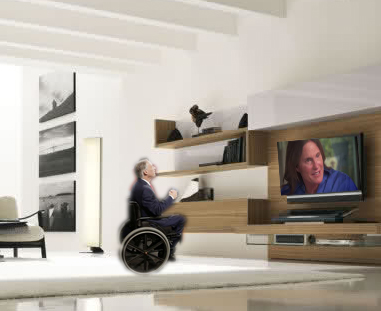
governor watching TV

Here’s a blitzkrieg scenario. The federal government plans a massive multi-state military simulation exercise called Jade-15, ostensibly  to train the army for foreign desert engagements; however, the entire operation’s real goal is to take over Texas, place it under martial law, and to confiscate all weaponry from Texas’s citizenry.

The movie opens with the governor channel surfing from abomination to abomination, the Bruce Jenner Diane Sawyer interview, a Fox News special on Benghazi, Miley Cyrus twerking.  His cell’s ringtone “Don’t Mess with Texas” goes off.

It’s Chuck Norris (playing himself) asking for an emergency meeting.

maxresdefault


Using the image above, Morris explains what the feds are really up to.  The governor calls up the national guard and gives Norris permission to go underground.

The movie flashes back and forth from White House/ISIS planning sessions and Norris planning sessions.  Employing carrier pigeons to evade the prying eyes and ears of the NSA, Norris assembles a ragtag group of Dirty Dozen-like patriots insurrectionists (e.g., Ned Nugent, Sarah Palin, etc) who develop an elaborate plan to thwart the bad guys, i.e the USA.

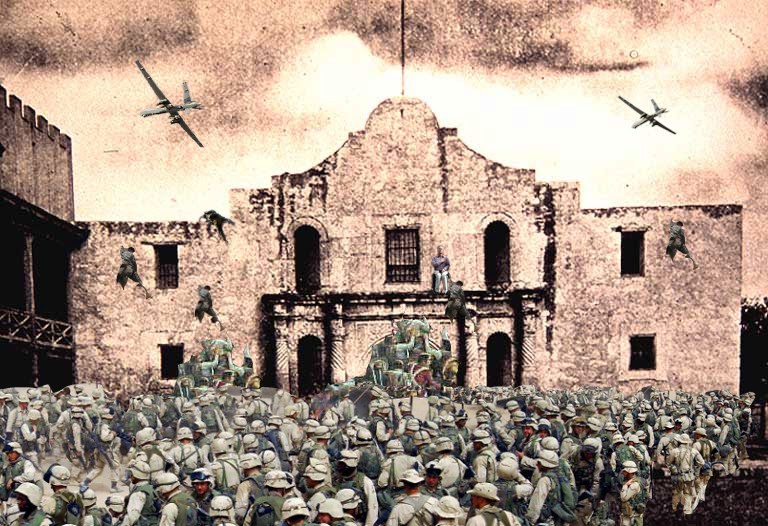
Jade-15 is launched, and the Texas Patriots counter the attack but find that their shotguns, hunting rifles, snub-nose revolvers, and even their AK-17s are no match against the tanks, F-17 Fighters, attack drones, Navy Seals, Green Berets, Army Rangers, and nuclear arsenal that the USA has at its disposal.  the Lone Star State defenders, including the governor, are driven back to San Antonio where they seek refuge in the Alamo.

In the last scene the governor Custer-like with a pistol takes down Indian American soldier after American soldier until his handgun jams and the camera mercifully pans skyward into a setting sun.

The End


alamo attack

Celebrity Calvacade

Richard Avedon's 1972 photograph of Oscar Levant

Richard Avedon’s 1972 photograph of Oscar Levant

Back in the day, I prided myself on my prowess as a popular entertainment trivia master, both in the contemporary and vintage categories, though, admittedly, I’m talking way back in the day when there was no such thing as trivia nights at bars or reality tv — not to mention personal computers or the Internet.

We’re talking the Late Fifties, Sixties and Early Seventies when they were fewer bands, movie and television stars, and gameshow hosts. Back in the day when someone might be billed as “a comic sidekick.”

One of the reasons for my encyclopedic knowledge was my grandparents’ letting me at a wee age stay up to the wee hours to watch the Tonight Show — we’re talking before the mighty Johnny Carson, we’re talking Steve Allen and Jack Paar.

Back during the live era, celebrities sometimes came on “doped up” as my grandfather put it — people like Judy Garland and Oscar Levant, whose presence both troubled and fascinated me. The quaint phrase “all hepped up on goofballs” comes to mind. Note how cavalier Paar is about Levant’s condition.

On one of his appearances Oscar Levant’s hands were shaking so badly he couldn’t light his cigarette. I’ll never forget it as long as I live.

Back then, late night television wasn’t a constant corporate Hollywood movie marketing inside joke fest. Truman Capote would show up on Johnny Carson to impugn Brando’s intelligence or Sammy Davis, Jr’s singing chops.

Also, I watched a helluva lot of old movies on weekdays during the summer in the mornings and late at night on the weekends in those pre-cable days when movies constituted a goodly chunk of broadcast television’s abbreviated 6 am to 2 am day, movies that featured George Raft, Myrna Loy, William Powell, the Marx Brothers, Fred Astaire/Ginger Rogers, Micky Rooney, Humphrey Bogart — you know the TCM MGM line-up.

The game show What’s My Line was one of my favorites with its sophisticated panel that included Bennett Cerf, James Joyce’s American publisher. Each week they’d blindfold the panelists and bring out a celebrity whom the panelists would try to identify through a series of questions — celebrities like Salvador Dali or Carl Sandberg. Descendants of Oscar Wilde, these witty New York sophisticates on the panel were fun to hang out with, even for a nine-year-old.

Well, boys and girls, my days of trivia supremacy are over. When I flip through an issue of Vanity Fair, I’ve never heard of 80% of the swells captured in various parties. This morning, the imp of the perverse bade me hit the Red Carpet Met Gala LINK on the Times, and I realize that when it comes to celebrities, I don’t know a Ethan Hawke from a Shankshaw Redemption.

I recognized a few — I hadn’t realized that surfer Kelly Slater was a patron of the arts – but what really surprised me was how many of these celebrities go by just one name, like they’re walking brand names. Of course, I’ve heard of Beyonce, Rihanna, and Usher, but who in tarnation are Solange, Grimes, Common, and Miguel?

Call me a square, a crotchety old man (who else would use the word “tarnation” ) shaking his cane at these new celebrities, but something tells me I’d rather hang out with Judy Garland and Oscar Levant than Christopher Kane and FKA Twigs.

Gimme a D, Gimme a U, Gimme a H.  What does that spell?

Gimme a D, Gimme a U, Gimme a H. What does that spell?


Time’s Winged Educational Chariot

tumblr_m5hcfaWVuu1qbyk5qo1_500This marks the fourth year of my teaching second-generation students – the sons and daughters of students I taught the in 1980’s.

It’s somewhat surreal – I was 32 when I stumbled into my first class of high school students, never having taught adolescents before. My teaching experience came from Trident Technical College, a community college that offers vocational training and some associate degree programs. There, many of my students were my age and older, some of them Viet Nam vets who certainly knew much more than I did about certain facts of life.

Classroom management was never a problem, except for that one night in a Developmental Studies class when a young blonde-haired man showed up drunk and red-eyed and started hitting on women in the back of the classroom. At the break, I mentioned to him he couldn’t come to class stoned, and he assured me that the red glazed look in his eyes came from welding all day. Nevertheless, he agreed to quit hitting on the woman.

No, classroom management wasn’t a problem at Tech; the problem there lay in that many students lacked basic academic skills, and I became a decent developmental studies teacher because I came up with some mechanical steps that students could follow in constructing sentences so that their writing wouldn’t mirror their speech.

If a student wrote, “My sister eat at her boyfriend house,” I’d have him find the verb.

“Who eat?” I’d ask.

“Sister.”

Then I’d have him plug in a pronoun for the subject. If the pronoun was “he,” “she,” or, “it,” the verb needed an “s”; if the pronoun was “they,” no “s.” Getting him to add an apostrophe “s” for the possessive was a more difficult task, but that was merely a 2-point error versus the 10-point subject/verb disagreement deduction. The final exam consisted of writing a 150-word paragraph with fewer than 30 points of grammatical or mechanical errors. If he passed, he could go on to enter the small engine repair or welding certificate program or take classes for an associate degree.

The vast majority of these students wanted to better themselves, many were receiving GI bill checks, so getting them to pay attention wasn’t a problem. Although the job wasn’t intellectually stimulating, it was rewarding. I felt as if the Dalai Lama would approve.

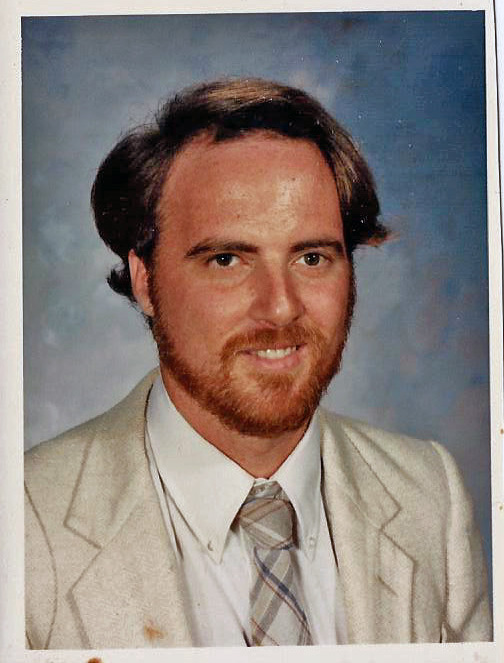
I-and-I in my 1985 annual photo

I-and-I in my 1985 annual photo

Fastforward to 1985, my first class of seniors at Porter-Gaud. I asked each on that first day to introduce herself and tell me a little about herself and discovered that among these young scholars sat a “cocaine dealer,” a “Soviet spy,” etc. Whenever one of them offered one of these puerile bits of misinformation, the class erupted in gales of laughter as if Robin Williams stood before them performing a monologue.

The good news is that I was able to rein them in fairly quickly with a couple of scathing, sarcastic counterpunches. No, my problem here was not a lack of academic ability but roiling hormones and the unsettling fact that many of these students were much more intelligent than I when it came to brain circuitry.

The good news is that I was profoundly hipper and knew my stuff when it came to literature and writing. By the end of the year, I hated to see them go.

Next year will mark the 30th year since they graduated from high school, and to me, as I tumble faster and faster down the Great Hour Glass’s avalanche, it seems as if just last month my mother was preparing to go to her 30th high school reunion!

So here I am at the same school teaching the second generation, who are taller and better behaved (but less worldly and mature) than their progenitors, and it’s really eerie how much they can look alike, virtual doppelgängers in some cases.

I do my best not to show them favoritism, but it’s hard.

And to be truthful, I’m feeling the tug of time, feel like Yeats that old age has been tied to me “as a dog’s tail.” I get the feeling that some of the students think of me as ancient, the way they once thought of Blackburn Hughes, a colleague who was the age I am now when I first started teaching, and that it might be easy to pull something on me, the old coot. Even a couple of colleagues occasionally make playful cracks about my age, facetiously asking if I would like to join the faculty track team to challenge the students.

I-and-I at graduation in 2014

I-and-I at graduation in 2014

The good news is that I’m still hipper than these 30-something whippersnappers (where were they when I saw Sonny Terry and Brownie McGhee perform in the bar where I worked, the Sonny Terry who played with Woody Guthrie on such songs as “Hard Traveling” “Bow Weevil Blues,” and “We Shall Be Free?) and I still know my lit and writing shit, so why not keep on another year or two despite the great demoralization of the bureaucratic technocracy that rules 21st century education, despite the irritating intrusion of a few arrogant fathers and snippy mothers, whom I certainly could teach a thing or two.

What shall I do with this absurdity—
O heart, O troubled heart—this caricature,
Decrepit age that has been tied to me
As to a dog’s tail?

Yeats, “The Tower”

1973 Versus 2015

large_v43ez7xKqqbM35phWHqlq27P1jwSunday, as I was [cue robotic voice] circuiting through satellite channel choices, I ran across Woody Allen’s Sleeper, a movie I found hilarious when I first saw it in 1973 at the Ultravision Theater. The Ultravision is now long gone but in those days was a part of a shopping center located on the corner of Ashley River Road and Highway 7, about five miles north of the downtown peninsula of Charleston, South Carolina.

In the forty-two years since, much has changed around Charleston. For example, Highway 7 in those days was still wooded in spots but now has been renamed Sam Rittenberg Boulevard. We’re talking five lanes of suburban sameness, what James Hillman aptly describes as “the nowhere that is everywhere,” that ubiquitous stretch of fast food franchises, retail outlets, and convenience stores leading into virtually every city in the USA.

The plot of Sleeper tracks Miles Monroe, a latter-day Rip Van Winkle who subjected unwillingly to cryopreservation in 1973 awakens 200 years later to confront the brave new world of the future. In case you haven’t seen it, the movie’s a sort of conflation of Huxley and Hemingway, sci-fi futurism meets the Spanish Civil War, at once a farce and homage to Buster Keaton, the Marx Brothers, and Charlie Chaplin — a dystopian comedy.

Seeing the film again got me thinking about the tricky business of trying to predict the future, an exercise fraught with potential failure. Brave New World missed the monorail at times; 1984, perhaps a more accurate prophecy, nevertheless got some aspects of the future wrong as well.

Watching Sleeper, I started wondering, “How different is a day in 1973 when the movie was released to a day in 2015?” We’re talking 42, not 200 years, but that’s almost half a century, and we’re in a new millennium.

Pretend you’re an anthropologist, detached from our culture. Remember, younger readers, that 1973 was pre-digital, the age of the 8-track cassette, the first non-radio music available for cars and trucks. No email, no personal computers, though some people did have touchtone phones.

What would it be like to have been in suspended animation for the last 42 years and suddenly to find yourself in the year 2015?

* * *

Awakening in 2015 versus 1973
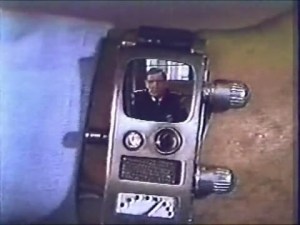
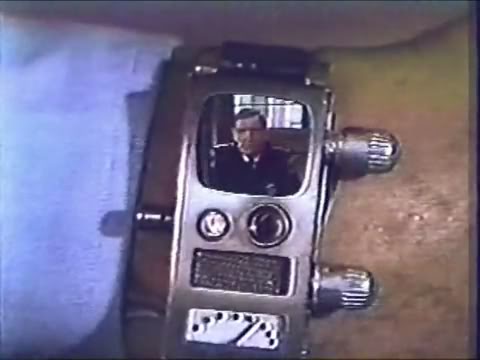
Dick Tracy's Two-Way Radio Watch

Dick Tracy’s Two-Way Radio Watch

Rather than an ac/dc alarm clock radio chiming you into consciousness, chances are your wake-up mechanism is a small computer roughly the size of a pack of cigarettes but much thinner. This device also offers the ability for you to look at your friends while you communicate with them, whether they’re across the street or half a world away — it’s the “picture phone” futurists used to dream of as a earthshaking marvel — but the truth is that you virtually never use its visual capabilities to communicate with your friends or family, nor do you, in fact, use it to talk to people as you would on a more conventional phone. You prefer to “text” them, to type super-abbreviated messages, like “OMG, CSL!”

Dressing for Work

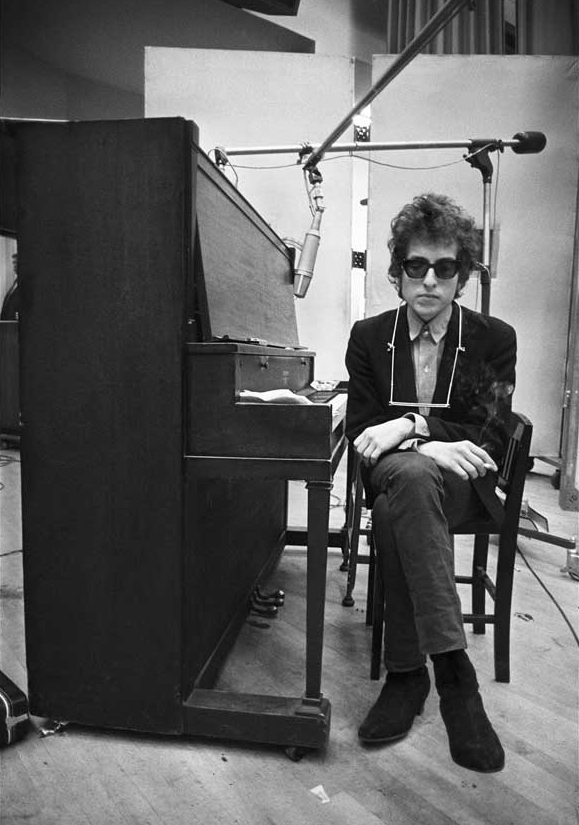
Surprisingly, dress hasn’t changed all that much at all. No unitard suits with rocket logos hang in the closet. In fact, half the young people you see at the college could be either Bob Dylan or Joan Baez circa ’65.
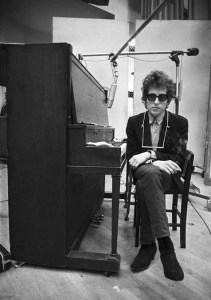
 

Dylan '65

Dylan ’65

2015 hipster

2015 hipster


Preparing Breakfast

Although invented in 1946 and marketed as Radarange, microwaves weren’t widely available for residential use until the late-70’s, so the unfrozen-you might be surprised that you can zap a bowl of oatmeal in a minute and a half, but chances are you’d rather pull into the drive-thru lane at Bojangles for some artery-clogging ham biscuits because retrieving the oatmeal from the cabinet, pulling the milk from the fridge, and punching in the cooking time of the oatmeal is way too much trouble.

In fact, one of the significant differences you might notice if you were to awaken after a 42-year nap is the epidemic in obesity that characterizes your 21st century community.

Commuting

Same ol’, same ol’ — no flying cars, no monorails, no individual jetpacks.

Mass transit hasn’t progressed at all. The T in Boston is even dingier than it was in ’73.

In fact, the coolest vehicles on the roads are the oldest, e.g. that 1973 VW microbus that you just passed driven by some old man with a ponytail.

Here in Charleston, you find routes have widened lane-wise and a skinny lane on the shoulder is reserved for bicycle traffic but that the traffic is terrible, Manhattan-like, bumper-to-[fiberglass]- bumper.

DUI non-licensed drivers still putt around on mopeds with cardboard license “plates” that read “Moped.”

The mini-computer we carry can give us directions while we drive, which truly seems futuristic. Road maps are obsolescent. You can choose either a male or female voice and actually speak into the mini-computer and ask the voice for information.

On the Job

Whether you’re an employee at Boeing, a Seven-Eleven, or a school district, cameras record your comings and goings. Your mini-computer is also equipped with a camera, so it’s not only Orwell’s Big Brother keeping tabs but also corporate brother and little brother — literally, your little brother might record a video of you committing some act of malfeasance.

Chances are, if you work indoors, you spend hours dealing with email, and if you don’t delete them on a daily basis, they proliferate like tapeworms, and even if you’re framing houses in the great outdoors, emails ping in your pocket like pinball machines as your mini-computer receives messages, from not only friends but also from corporations and even conmen.

TMI.

Writing

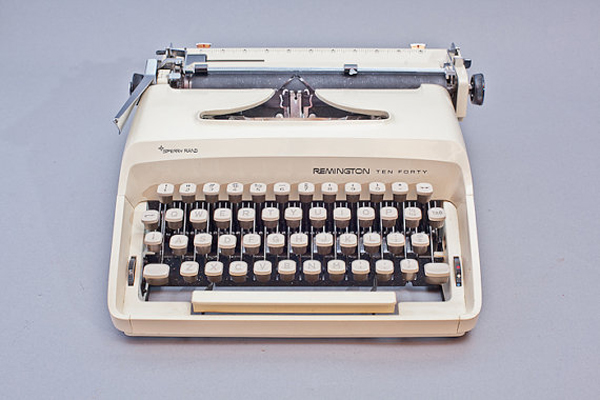
typewriterOh my God! No more retyping a page because you typed too close to the bottom, no more correction tape, no more spelling errors! You can cut passages and paste them into your document. Virtually any fact can be looked up on a computer, vital information like Lumpy Rutherford’s actual first name on the ’60’s sitcom Leave It to Beaver. It’s the information Age.


Happy Hour

After work, you still go to a bar, but chances are you can’t smoke in there, and the number of different beers is staggering. The 25 cent happy hour Bud has given way to the $8 “Avery, the Maharaja Imperial India Pale Ale.” Beer experts slosh malted beverages around their palates distinguishing piney aftertastes and assessing the wattage of the hops.

Evening Entertainment

Broadcast news has not changed one iota – a white male reads to you in between reports from far flung locales.

On the other hand, you can suck virtually any movie you want to see out of the sky instantaneously, even old flicks like the Marx Brothers’ A Night at the Opera, a film impossible to see in ’73 unless it miraculously appeared at an arthouse cinema or on the late late show on TV.

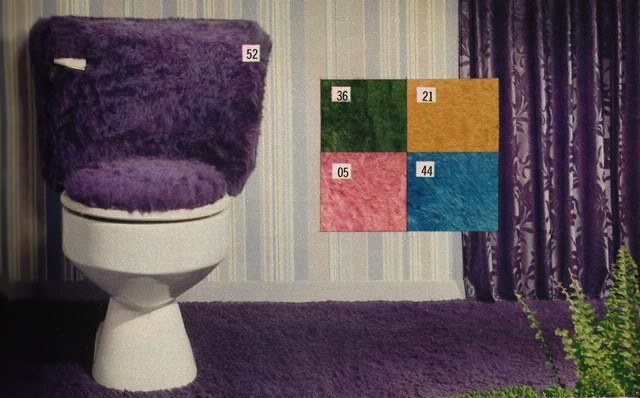
You can also record television programs and stop them to go to the toilet, which still looks essentially like it did in 1973.
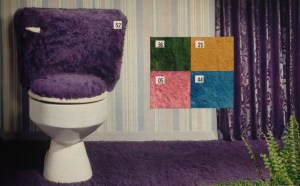
1973 toilet

1973 toilet

2015 toilet

2015 toilet


Or you can groove to music you can purchase 24/7 and listen to immediately. Wanna hear “Working Class Hero” by John and Yoko? No problem. You can download it on your mini-computer for a dollar and a quarter.

A working class hero is something to be

(As far as entertainment goes you’re a king or queen).

Keep you doped with religion, and sex, and T.V.

Politics

Here’s something that might surprise you. The nation has lurched way way rightward. The Republicans running for president today would consider Richard Nixon a commie. He after he wrote this in 1973:

It is time to bring comprehensive, high quality health care within the reach of every American. [We should] assure comprehensive health insurance protection to millions who cannot now obtain it or afford it, with improved protection against catastrophic illnesses. This will be a plan that maintains the high standards of quality in America’s health care. And it will not require additional taxes.

The current president, although a centrist by European standards, is branded a socialist by his opponents.

Despite the rightward shift in the country, when it comes to social issues, people are much more open-minded. A majority believe gays should have the right to marry, a concept that was as alien in 1973 as the idea that many leading candidates running for the presidency in the 21st century would reject science, not only evolution but also objective data documenting rising temperatures.

Religion

Many have left traditional churches that conduct liturgical services and have also abandoned fire-and-brimstone preachers. Instead, they hang out in jeans at megachurches on Sundays and listen to Christian rock performed by live bands.

Many others have abandoned religion altogether.

Still fewer proclaim, as they have for the last 2,000 years, that the end time is near.

Overall

These changes have all occurred in my adulthood and therefore I take them for granted. What would seem like a miracle in ’73 – for example to freeze the live broadcast of a football game, back track, and watch a play again in slow motion — seems mundane.

We’re distracted, alienated, walk down the street with our earbuds booming as we stare into that ubiquitous device that we think we can’t live without while songbirds fly over us unheard and unseen.

Still, I can watch a Shakespearean performance virtually whenever I want to, which in a way makes me richer than Nebuchadnezzar.

Sleep 2.0.1

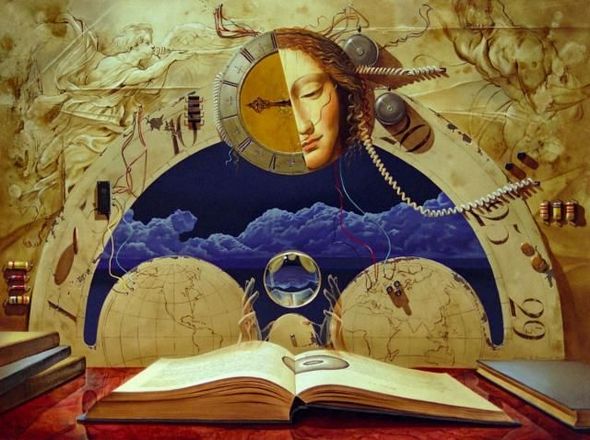
painting by Jefferey Batchelor

painting by Jefferey Batchelor

In 1985, I lost the knack of sleeping, and I blame it on Porter-Gaud School. Even the year before I started teaching there, I slept, if not like a baby, like a serene thirty-something who enjoyed the more than occasional malted beverage and could count on eight interrupted hours.

However, in August of 1985, the night before my very first day of teaching high school, my eyes popped open at 3 am like two too tightly wound window shades springing to the top of the sill.

Suddenly, I’m awake and awake and awake. That inaugural night, I kept repeating in my head, “I got to get asleep, I got to get asleep, I got to get asleep,” huffing along like “The Little Train That Couldn’t,” but I didn’t drift off until  a scant forty minutes or so before the alarm was set to blast me awake.

So, of course, I shuffled muck-headed through that first day like an extra from Dead Men Walking, making, as zombies tend to do, a bad impression.

This pattern of sleepless nights has persisted ever since, and I have written about my chronic insomnia HERE (seriously) and HERE (comically).

However, I swear on my freshly deceased mother’s grave, I’ve never suffered insomnia quite as bad as last night/this morning, so to try to block out those para-paranoid thoughts that swarm like bats at 3am on weeknights, I composed an Italian sonnet in imitation to Sir Philip Sidney’s famous Sonnet 39, “To Sleep.” It’s an intricate form, with iambic pentameter as its meter and an abbaabbacdecde rhyme scheme that severely limits vocabulary. I thought that the exercise would wear me out as I lay there Homer-like in the dark without pen or paper, but alas, it did not.

So here it is, and I dedicate it to my fellow insomniacs.


                                          To Sleep 2.0.1

“Sleep that knits up the ravell’d sleeve of care” – Macbeth

Yo, Morpheus, you sadistic bastard,
Where the fuck are you? Snorting crystal meth
with the Sand Man? Can’t you see I’m a wreck,
tossing and turning like mad — backwards,
sideways? Even bedbugs have left in distress
in search of a habitat less turbulent. Fuck,
man, I swear I’ll put a noose around my neck!
My sleeve of care has unraveled past my wrist,
all the way up to my elbow! Swerve in a sestet?
How? Why? Nothing changes hour-after-hour:
drip drop drip drop drop drop drop – disturbing
thought follows disturbing thought. My sweat-
ing self craves relief! You have the power,
sweet Morpheus, to sing me to sleep. Sing!

Leaf Subsides to Leaf

for my brother David on his 59th birthday


Apartment buildings
rise in time-lapsed
construction.

Their parking lots
fill with cars
that start
to come and go
like ants in lines of labor
faster and faster.

Inside, on the wall,
the fluttering
day calendar
sheds its leaves
like confetti.

Last fall snapped
like a twig.

Winter opened and closed
like the door of a freezer.

This spring, a sneeze.

The coming summer, a sigh.

Swoosh . . .

david

Review of Bob Dylan Concert 17 April 2015

Here’s what to expect — and what not to expect — in the early 2015 dates of Bob Dylan’s Never Ending Tour.

Do expect a prompt beginning right around 8 PM when the lights go down, the audience reacts, the musicians take the stage, and the lights come up again dimly. Dylan doesn’t like the have his photograph taken — it’s forbidden — and the relatively darkened stage makes capturing a decent image virtually impossible. On the two occasions when the stage is well lit, if you attempt a surreptitious snap, beware of flashlight wielding ushers who will spot-light you in the act and bark at you like a hall monitor.

17 April 2015 photo by Ned Moore (who received a tongue-lashing for attempting to preserve history)

17 April 2015 photo by Ned Moore (who received a tongue-lashing for attempting to preserve history)

Don’t expect the audience to arrive on time, to be able to sit still and listen, or to remain silent during the performance. Throughout last night’s show at the North Charleston Performing Arts Center, audience conversation constantly hummed beneath the music like static. Of course, you could blame Dylan for not keeping their attention, but I suspect these folk would behave the same way during the Sermon on the Mount, especially if they had been swilling down beer and overworking their kidneys.

Do expect a superb, tight band: guitarists Stu Kimball and Charlie Setxon, bassist Tony Garnier, drummer George Receli, and multi-instrumentalist Donnie Herron playing mostly steel guitar but also banjo and fiddle. As my companion James T Crow aptly observed, these musicians performed more like an orchestra than a band, like an ensemble working together inventively and unselfishly for the sake of each individual song.

Expect Dylan to look cool in a white suit and hat, to strike poses, to shuffle in minimalistic dance moves, to play the harmonica, and to shuffle back and forth between a piano on the side of the stage to center stage where he sings behind a mike stand. Don’t expect much from either his harp-blowing or piano playing, but expect every time he hits a note on the harp for the audience to erupt in delight as if Sonnyboy (Rice Miller) Williamson had just risen from the dead.

Also, if you’re a true Dylan fan, expect to be pleasantly surprised by his voice, which sounded much healthier than when I last saw him in May of 2013, and seemed to improve as the night went on. If you’re not a true Dylan fan, expect to be disappointed by its gravelly timbre and lack of range. As another concert companion, Keith Sanders, puts it, “You can always tell when somebody doesn’t know much about Dylan because they start off talking about his voice.”

Don’t expect a jukebox full of greatest hits. And don’t expect the three “standards” he plays — “She Belongs to Me,” “Tangled Up in Blue,” and “Blowing in the Wind,” to sound like the records — in other words, expect non-standard standards. However, expect to be blown away by the reconfiguration of “Blowing in the Wind.”

For the set list click HERE.

Ultimately, be prepared to see a legend showcase gems from his recent work in a sort of smorgasbord of American musical styles: shuffles, mambos, boogies, country waltzes, torch songs, blues laments, ’50’s pop.

Expect the concert to end around ten, for Dylan not to introduce the band, or to even bow. I don’t know if you can expect what we heard last night — a rare audible “thank you” and “we’re gonna take a short break.”

I see I’m at the end of my typed page, so as Dylan put it at the end of his MusiCares speech: “I’m getting out of here. I’m gonna put an egg in my shoe and beat it.”