Packing for Mars

mars


You may have been asked what one book you would want to have with you if you were stranded on that proverbial desert island, you know, the one with ever ripening fruit falling from the trees and bacteria-less fresh water bubbling from springs and handy flint lying around for sparking palm frond fires, an island where you could kick back and be sedentary rather than spending all day searching for edible grub worms.

desert island

My suspension of disbelief won’t allow it. I’ve found a better hypothetical opportunity for selecting a limited library, a trip to Mars. According to Tom Kizzia of the New Yorker, NASA is prepping astronauts for a Martian mission, a voyage that would take them “a hundred million miles from home, no longer in close contact with mission control.”

“Staring into the night for eight monotonous months,” Kizzia asks, “how would they keep their focus? How would they avoid rancor or debilitating melancholy?”

Lauren Leveton heads NASA’s Behavioral Health and Performance program, and if I were to be chosen for the 3-year round trip to Mars (because of planetary motion, you’d be stuck on the surface for months), I’d love for her to allow me to bring three hardback bound books, ancient non-electronic artifacts with paper pages that turn and can be annotated with a sturdy #2 pencil. She might begin by telling me to choose one poem, one novel, and one play. As much as I love non-fiction, I would want works that recreate the Earth and its denizens as vividly as possible, which means dramatization.

The Poem

Of course, you’d want an epic, something worthy of your own journey, and the obvious candidates the Iliad, Odyssey, and Aeneid leap to mind; however, I don’t read Linear B Greek or Latin, so I have to rule those three out. My poem must be in English, so nothing’s lost in translation, and the obvious choice seems to be Paradise Lost, which contains all time and space, justifies the ways of God to men, describes not only Eden’s earthly paradise but also many an exotic non-mythical locale in ravishingly beautiful baroque language. Also, he’s managed to embed much of the Bible and Greek mythology into the mix. You get as much of pre-18th century human history as possible in a mere 10,000 lines.

Dig this epic simile that vivifies the number of fallen angels rolling on the fiery seas of Milton’s hell:

[Satan] stood and call’d

His Legions, Angel Forms, who lay intrans’t

Thick as Autumnal Leaves that strow the Brooks

In Vallombrosa, where th’ Etrurian shades

High overarch’t imbowr; or scatterd sedge

Afloat, when with fierce Winds Orion arm’d

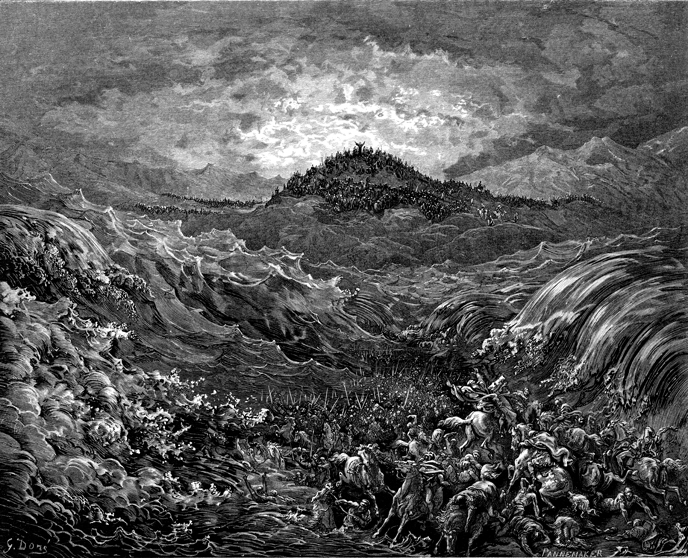
Hath vext the Red-Sea Coast, whose waves overthrew

Busiris and his Memphian Chivalry,

While with perfidious hatred they pursu’d

The Sojourners of Goshen, who beheld

From the safe shore their floating Carkases

And broken Chariot Wheels, so thick bestrown

Abject and lost lay these, covering the Flood,

Under amazement of their hideous change.
dore # 2

The brilliance and beauty of these lines amaze, the fallen angels compared to fallen leaves, then floating sedge on the Red Sea, the setting where Moses escaped the Pharaoh’s army, who like the Fallen Angels dared defied Yahweh.

But no, it’s not Paradise Lost I’m packing but Walt Whitman’s “Song of Myself :

The smoke of my own breath,

Echoes, ripples, buzz’d whispers, love-root, silk-thread,

crotch and vine,

My respiration and inspiration, the beating of my heart, the

passing of blood and air through my lungs,

The sniff of green leaves and dry leaves, and of the shore and

dark-color’d sea-rocks, and of hay in the barn,

The sound of the belch’d words of my voice loos’d to the

eddies of the wind,

A few light kisses, a few embraces, a reaching around of arms,

The play of shine and shade on the trees as the supple boughs

wag,

The delight alone or in the rush of the streets, or along the

fields and hill-sides,

The feeling of health, the full-noon trill, the song of me rising

from bed and meeting the sun.

Every time I read it, it makes me come more alive, and I absolutely love its catalogues. Walt would remind me of the cities farther and farther away on the out, closer and closer on the way back:

The blab of the pave, tires of carts, sluff of boot-soles, talk of

the promenaders,

The heavy omnibus, the driver with his interrogating thumb,

the clank of the shod horses on the granite floor,

The snow-sleighs, clinking, shouted jokes, pelts of snow-balls,

The hurrahs for popular favorites, the fury of rous’d mobs,

The flap of the curtain’d litter, a sick man inside borne to the

hospital,

The meeting of enemies, the sudden oath, the blows and fall,

The excited crowd, the policeman with his star quickly

working his passage to the centre of the crowd,

The impassive stones that receive and return so many echoes,

What groans of over-fed or half-starv’d who fall sunstruck or

in fits,

What exclamations of women taken suddenly who hurry

home and give birth to babes,

What living and buried speech is always vibrating here, what

howls restrain’d by decorum,

Arrests of criminals, slights, adulterous offers made,

acceptances, rejections with convex lips,

I mind them or the show or resonance of them — I come and I

depart.

And also he’d be right there in the capsule with me:

Speeding through space, speeding through heaven and the

stars,

Speeding amid the seven satellites and the broad ring, and

the diameter of eighty thousand miles,

Speeding with tail’d meteors, throwing fire-balls like the rest,

Carrying the crescent child that carries its own full mother in

its belly,

Storming, enjoying, planning, loving, cautioning,

Backing and filling, appearing and disappearing,

I tread day and night such roads.
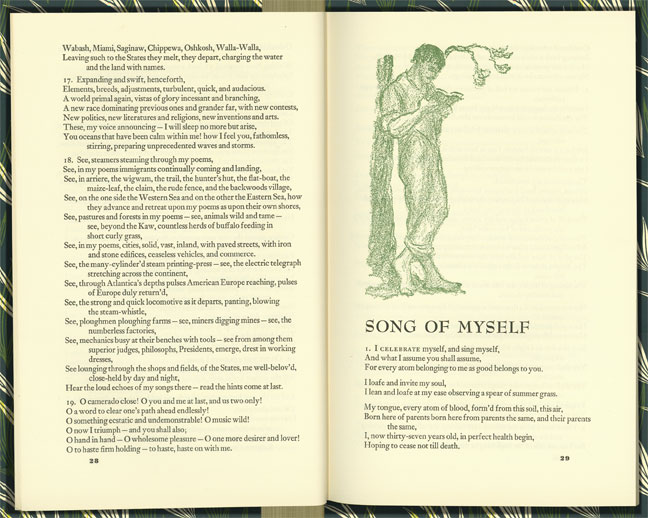
song of myself

The Novel

No time wasted here. Despite Faulkner’s great achievement, it’s Joyce’s Ulysses, which brings to life the human condition like no other work I know. I can shoot the rapids of Stephen Dedalus’ consciousness, or Leopold Bloom’s, or his wife Molly’s. I can walk the vivid streets of Dublin, day and night. I can adjust to and savor each new style as Joyce shifts from one episode of the Odyssey.

 Yes!

The Play

Although I virtually have it memorized already, I’d bring along my old pal, the Danish Prince. He’s a lonely sort, and as Harold Bloom says, the most intelligent human ever. I suspect I’d prefer his company to my fellow astronauts, technical folk who remind me of camp counselors, and Hamlet is a worthy companion for Walt and Leopold and plays no small role in Ulysses. And, yes, the poetry!

Uh-oh, Dr. Leveton has informed me I can take only one!

Given the above, which one would you choose?
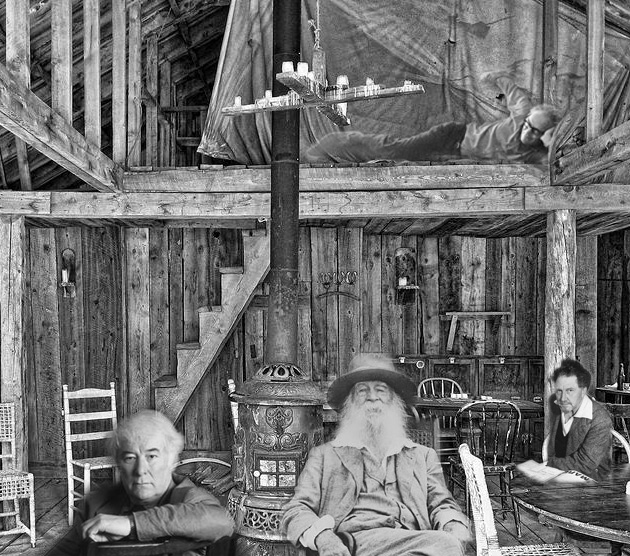
Walt Whitman’s Boys

daddywalt


It was you that broke the new wood.

Ezra Pound, “A Pact”

Old Ezra said to ditch the metronome
and use the musical phrase instead,
locked doors, keyholes, camisoles, not ideas.

Robert Lowell made it personal.
Mental illness was his muse,
his fingers trembling as the typewriter clacked.

Seamus Heaney brought us down to earth,
his pen scratching old words across the page,
bogs, tors, spades, blackberries, frogs.

But Old Walt Whitman was the daddy of them all,
whirling his words like a hurricane,
snapping trees, flooding streets, derailing trains.

A Week of Caitlyns

Sampan massacre scene from Apocalypse Now

Sampan massacre scene from Apocalypse Now

I don’t remember ever seeing the name Caitlyn spelled with a “y” before this week, but now, this morning it appears in two incarnations on the front page of my local paper, Charleston, SC’s Post and Courier. One “Caitlyn” belongs to the decathlon 1976 Olympic gold medal winner formerly known as Bruce, the other to a 15-month-old Chocolate Staffie mix whose muzzle had been wrapped shut with electric tape right here in Charleston.

Caitlyn, sometimes spelled as Caitlin, is an Irish female given name. It’s a lovely trochee with its long A and liquid L, and I suspect you’d lose a bit of its lilting cadence if you were to Anglicize it to Katelynn, though that would be a killer name for an Americana singer from Natchez.

Caitlyn the dog has become an international phenomenon, and for sure, it ‘s heartbreaking to think of the suffering she must have endured (I can’t bring myself to post a picture of her), and it’s encouraging that the sadist who tortured her has been arrested. I’m reminded of my own recently deceased German longhaired pointer/ border collie/ Cerberus mix, Saisy, who had been starved and tied to a post with a two-foot rope before noble souls rescued her. She ended up fairly okay, though, except for food issues, which never really went away, but over the years, she quit flinching when you leaned over to pet her head or rub her muzzle and quit snapping at you if you petted her for too long.

I miss her every day.

The late, great Saisy

The late, great Saisy

For some reason, many of us tend to care more about pets, especially dogs, than other people. I noted this evolutionary oddity over the years through showing the film Apocalypse Now to high school students as a follow up to their reading Heart of Darkness, the novella the film is loosely based on.

Set in Viet Nam, the film earns its R-rating via violence. In one particularly harrowing scene, known as the Sampan massacre, American soldiers machine gun to death an entire family of Vietnamese transporting produce on a boat – men, women, and children – when the soldiers panic after a Vietnamese girl runs to protect a puppy.  As the family is ripped apart by bullets, my students sit there silently; however, when one of the soldiers – Chef – finds the surviving puppy and picks it up roughly by its scruff, the room fills with highly audible disapproving oooohs.

Meanwhile, stories like the one below we hardly hear about, and most of us don’t care about:

[Kansas Governor] Brownback has often characterized his opposition to expanding Medicaid and other poverty programs, in Wright’s words, as a “moral rejection of dependency.” Last June, for example, Brownback told the Heritage Foundation’s Daily Signal Web site that Kansas had not expanded Medicaid because “We’re trying to push people that are able-bodied right now to get a job.” Similarly, Brownback pledged in his State of the State address this year to continue “helping people move from dependence on the government to independence.”

But, in practice, Brownback’s resistance to Medicaid expansion is causing some people to move from independence to desperation. [Nation editor Kai] Wright spoke with several Kansans who are suffering because of Kansas’s severe eligibility requirements. Far from the right-wing caricature of lazy moochers, they are hard workers who aren’t looking for a handout. One woman, RaDonna, is too sick to hold down food, let alone a full-time job. Yet, as a childless adult, she doesn’t qualify for Medicaid — and the state rejected her application for disability benefits. While RaDonna now lives with her sister, Cathy, she insists on helping with the laundry and dishes to earn her keep. “She can’t do the whole sink full of dishes without stopping and sitting down for a while,” Cathy says.

No, we’re more interested in Bruce Jenner’s transformation into Caitlyn and argue about whether he’s courageous or merely an attention-starved ex-Kardashian in-law.  After all, the poor will always be with us.

In the courage department, though, I give the nod to RaDonna.

Adventures in the USSR (featuring Dizzy Gillespie in a cameo appearance)

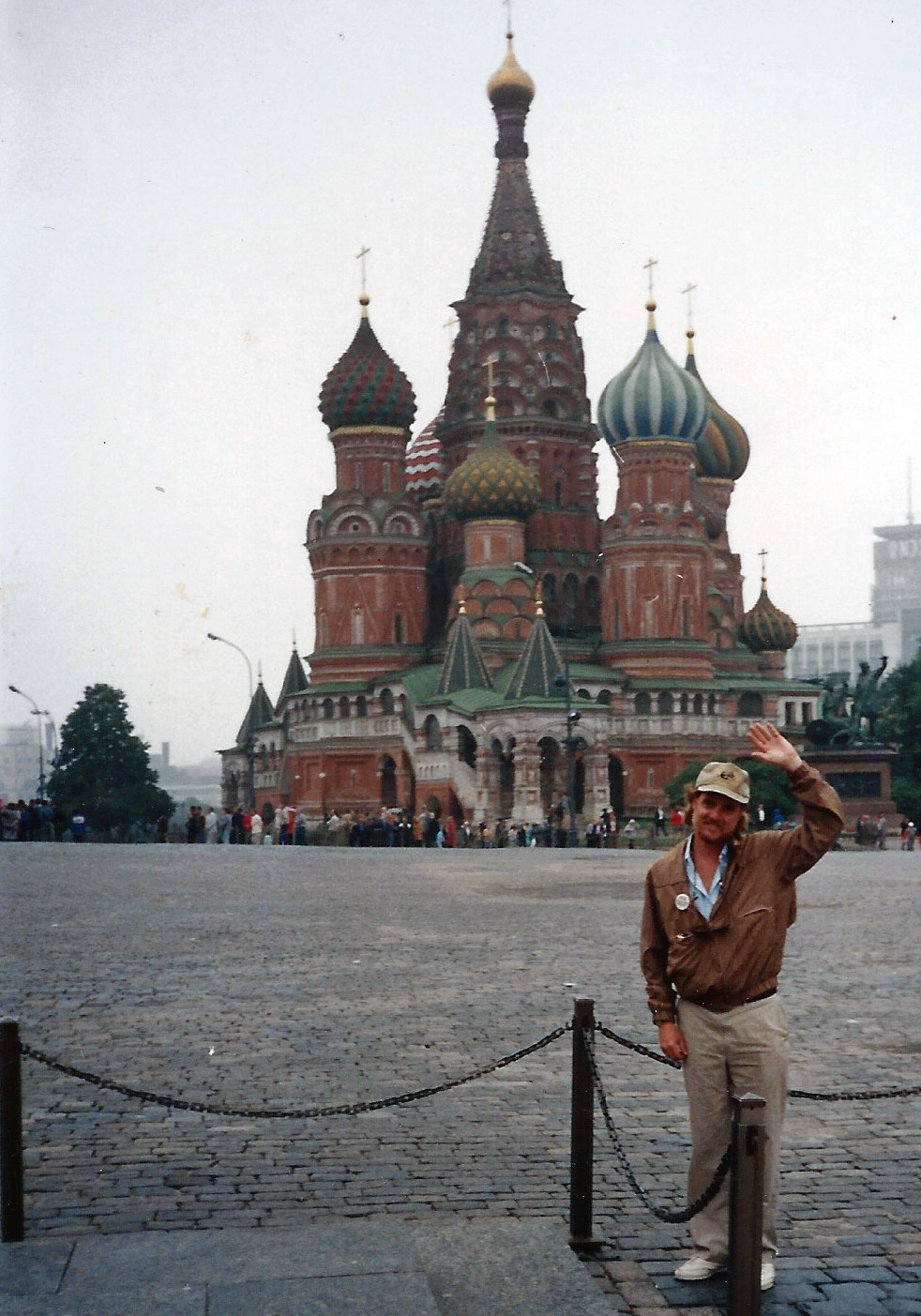
the author back in the day

the author back in the day

Chances are I’ll never return to Russia, the country formerly known as the Soviet Union, where I spent twenty-eight days in June of 1989, a quarter of a century ago and counting. I didn’t realize it at the time, but I was taking a last peek at an empire on the brink of collapse, and indeed I didn’t experience the police state I thought I’d encounter. My naive expectation was that the KGB would sweep down on jaywalkers and haul them off to some gulag in Irkutsk, but what I found instead were swarms of black-marketers openly operating everywhere I wandered, exchanging money or swapping a Soviet flag for a pair of blue jeans or sunglasses.

During a long sunshiny night on the Gulf of Finland, just west of Leningrad, an East German tourist pulled a knife on me.  I had knocked on the door of his room where five men were bellowing patriotic songs at 3 AM. At first, the knife-wielder and his non-English speaking compatriots invited me in to share beer and sausage, but after I communicated that I was from the US, one pulled out a knife. The others quickly quieted him and produced snapshots of their children to establish our brotherhood. I didn’t carry photos of my own boys who were five and four at the time and would have appreciably “aged” when I would see them next.

I was one of four chaperones in charge of twenty high school students and two college freshmen. It was a frenetic trip that took us from Leningrad to Moscow to Siberia, then westward down through Uzbekistan, Kazakhstan, Soviet Georgia, then finally back to Moscow. However, it was Leningrad — now St. Petersburg — the setting of Crime and Punishment — that was the most surreal.

The ornate subways of St. Petersburg/Leningrad

The ornate subways of St. Petersburg/Leningrad

Criss-crossed with canals, Leningrad was a beautiful city of 18th century pastel-colored buildings (and, of course, so is St. Petersburg today). However, back then, its citizens were the most morose human beings I’ve ever encountered. To a man and woman (I don’t remember seeing any children), they shuffled along wearing expressions of total, abject despair. Even on the two-story escalators leading to and from the gorgeous subway stations, lovers who faced each other holding both hands wore the expressions of people about to be taken away to be shot.

In fact, the only time I saw anyone smile was on a city bus. I was by myself and had mastered the arcane procedures of dealing with city transportation. You bought a ticket, an unofficial looking thin sheet of paper, from a machine at the station and then punched it yourself on the bus.  However, you didn’t give it to the driver; you just held onto it in perpetuity. In other words, the buses operated on the honor system.

Anyway, I was seated next to a woman whose mien made images of Mary at Golgotha look upbeat in comparison. As we sat there in stony silence — no one conversed with each other — a thin East German tourist, a David Byrne lookalike in a dark suit and skinny tie, boarded with a ticket in his hand. He was as jittery, as nervous as I’ve ever seen anyone in my life. He stood there trembling, turning this way and that, holding the ticket up beseechingly, so I got up and showed him what to do. He punched the ticket, and as I turned around, every single person on the bus hit one sarcastic clap in unison, and on their collective faces a pained smile broke through the ice of their glacial unhappiness.  It was as if they had forgotten how to smile, as if they were using muscles unaccustomed to exercise.  

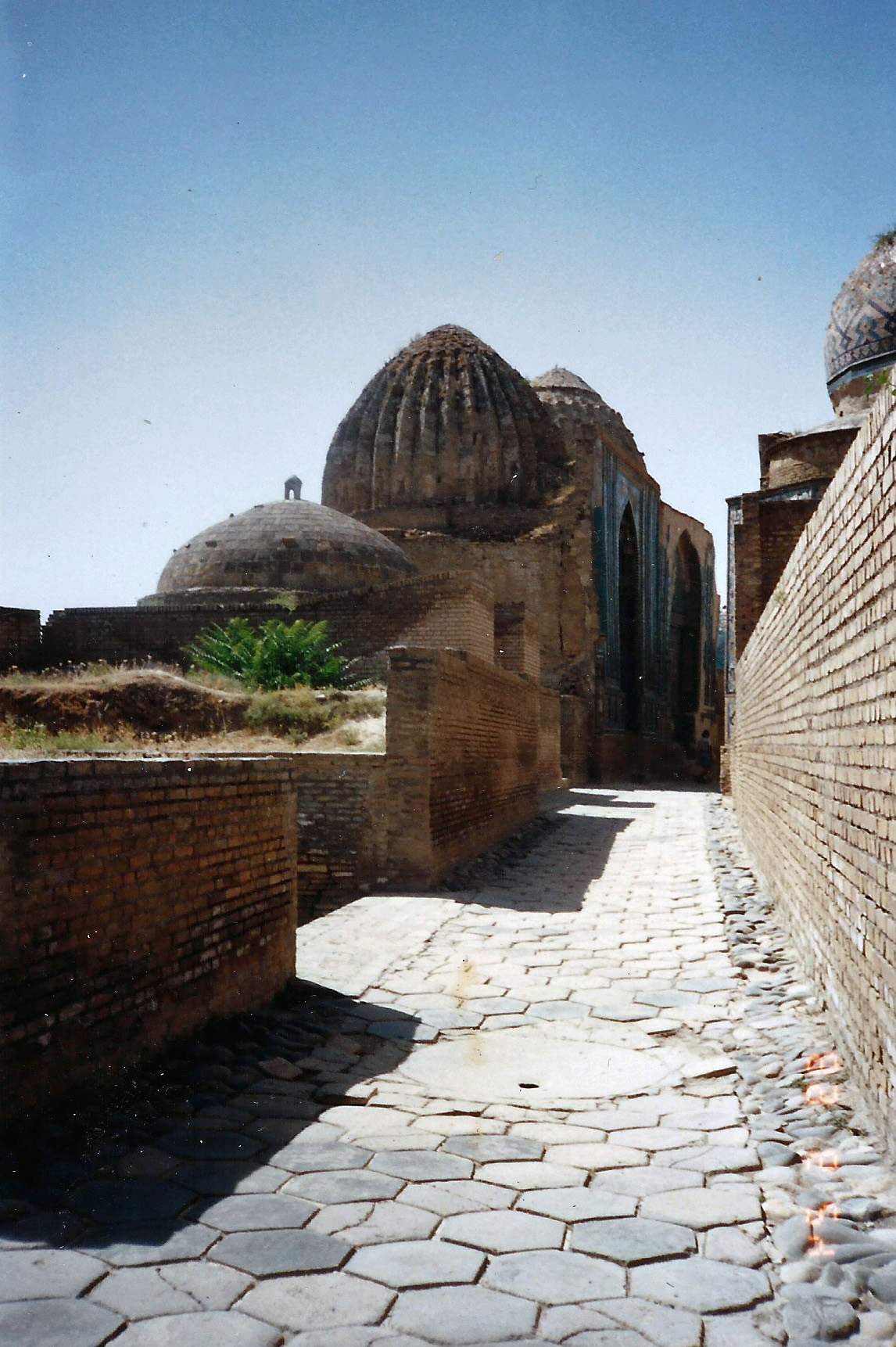
Moscow was slightly less Kafkaesque, and the further east you travelled, the happier the citizenry and the better the food. I would never have guessed that Siberia would be more upbeat than Leningrad. The Islamic Republics were interesting (and deafeningly quiet). In a hotel in Samarkand one afternoon, I purchased a two-dollar Heineken and handed the bartender a five in US currency. He handed me a twenty pound British note and some kopecks for change. I tried to explain that it was too much, but he misunderstood and thought I was complaining. I explained the situation to Sasha, our Intourist guide, and he said, “Keep it. These people are pigs.”

So we left Samarkand the next day for Bukkara. At dinner that night, Sasha summoned me and explained that he had just talked on the phone with the bartender from Samarkand who “had tears in his voice, tears in his voice.” Unless I reimbursed the £20, the bartender, a father of five, would lose his job. So, of course, I forked it over, not at all sure Sasha was on the up-and-up. 

an alleyway in Bukkara 1989

an alleyway in Bukkara 1989

Our final destination was the Republic of Georgia. Two months before, an anti-Soviet demonstration had been brutally crushed by the Soviet Army in what is now known as the Tbilisi Massacre. Soviet troops were still heavily present. Nevertheless, Georgia was the most pleasant place we encountered. People wore colorful clothes and seemed much more prosperous. 

Not surprisingly, I was ever so eager to return home to my family, to sidewalks that didn’t need mowing, to signs sporting the Roman alphabet, to well-stocked grocery stores where you didn’t receive your change in mixed combinations of foreign currencies.

Standing waiting in Heathrow for our London to Washington flight, a student asked me if I’d ever heard of Dizzy Gillespie.

“Of course,” I said.

“Well, he’s standing right over there. He just finished an interview.”

And, sure enough, there he was, a tall black man with glasses sporting a jazz dot.

I approached him and said, “Mr. Gillespie. I hate to bother you, but it would be a great honor to shake your hand.”

“Ne parle pas Anglais, he replied.

“Ah, come on, Dizzy,” I said. “I’m from South Carolina.”

He smiled broadly, and in a thick Southern African American accent asked, “Where? Myrtle Beach?”

It was music to my ears.

Dizzy Gillespie, a native of Cheraw, South Carolina

The Not So Advanced Training Institute

The Destruction of Sodom and Gomorrah The Golden Haggadah, c. 1320

The Destruction of Sodom and Gomorrah
The Golden Haggadah, c. 1320

Well, when it comes to stanching libidinal urges, in the case of Josh Duggar, the un-spared rod, limited access to secular entertainment, daily devotionals, and home-schooling were to no avail. Despite his family’s full literal embrace of five-thousand-year-old cultural dictates of nomadic sheepherders (no seed-spilling, frontal hugging, uppity females, e.g.), Josh succumbed to, depending on your point of view, Satan’s solicitations and/or the human hard-wired propensity to seek sexual contact.

As Dana Milbank[1] writes in this morning’s Washington Post, it’s somewhat troubling that such a weird ass family (all of the 19 children’s first names begin with J) would receive boot licks from virtually every Republican seeking their party’s nomination for the presidency. As Milbank points out,

A quarter of Americans are evangelical Christians, but only a small fraction of them are like the Duggars. Only 3 percent of American kids are home-schooled, as the Duggars are. Only 7 percent of Americans think using birth control is morally objectionable, as the Duggars do. As for the percentage of Americans who favor arranged-in-all-but-name marriages? The answer is so obvious there’s no need to ask the question.

Josh Duggar and Jeb Bush

Josh Duggar and Jeb Bush

So why the kowtowing?

Republican primary voters tend to be really conservative radical.

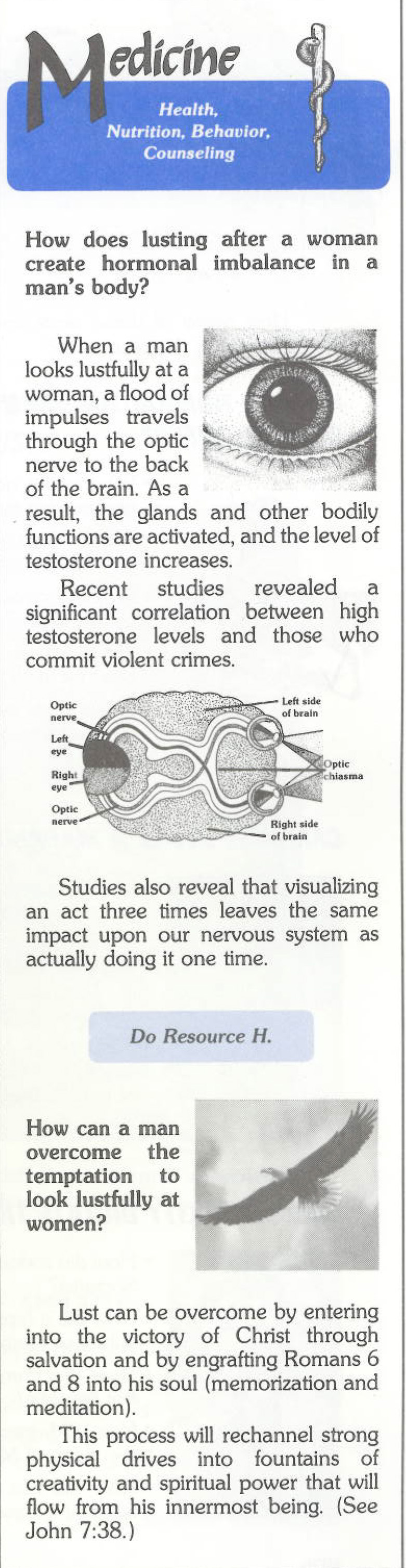
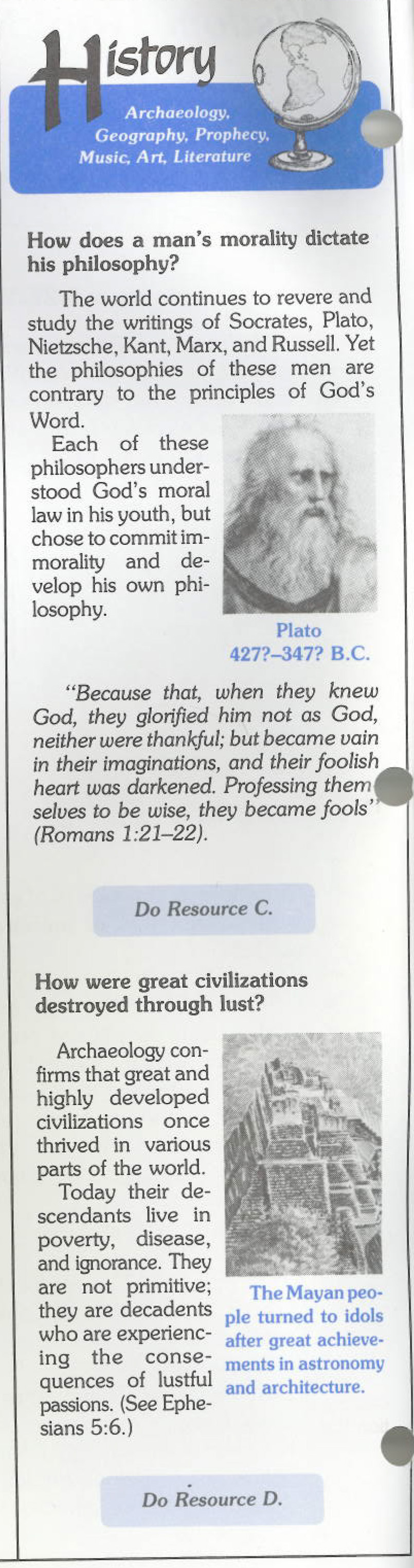
Now that I’ve answered Dana’s question, I thought I’d shift to what I find more interesting, the Duggar family’s homeschool curriculum, the Advanced Training Institute, founded by someone called Bill Gothard (not making up the name) who himself is currently on “indefinite administrative leave” because 34 women have accused him of sexual harassment. Be that as it may, thanks to the website Gawker, I have obtained a work sheet from the ATI, which I would like to share for your entertainment.

According to Gawker,

The lessons themselves consist of bizarre, forced attempts at inserting some type of traditional education into biblical passages. Which is where you get questions such as: “How did the ‘Socratic method’ of reasoning come from a sodomite manner of living?” “How can graphs help to visualize the consequences of lust?” And “How do prime numbers illustrate the principle of ‘one flesh’ in marriage?”

For example, here are three examples from “Wisdom Worksheet” On Matthew 5:27-28. (Click on Images for larger viewing)

medicine history science

Obviously, photography is also a manifestation of modernism that the institute finds dangerous.

[1] Milbank claims not to “join in the schadenfreude on the left over the latest case of hypocrisy among family-value conservatives,” but I’d love to see the results of a polygraph strapped to him as he was typing that statement. But come to think of it, Denny Hastert has bumped the Duggars from “the latest case of hypocrisy among family-value conservatives.” Remember during Clinton’s impeachment when Hastert was railing against him?

School’s Out for the Summer

helicopter helicopter

Cue Alice Cooper’s “School’s Out for the Summer,” or, if you prefer, that older ditty, “No more pencils, no more books, no more teacher’s nasty looks,“ which might be updated from my perspective to “no more laptops, no more iPads, no more helicopter moms and dads.”

In case you older readers don’t know, parents can now go on line to keep track of their darlings’ academic progress via an app called “net classroom.” We teachers must post grades from pop quizzes, written homework assignments, vocabulary quizzes, essays, and oral presentations to a site that parents can log onto to mark the progress (or lack there of) of their progeny.

In my 30 years teaching at a prestigious Independent School, I’ve noticed a significant change in parental ambitions for their sons and daughters, which may reflect a national shift from legacy to meritocracy. Back in ’85, before the curse of instantaneous messaging, back when we wrote progress reports by hand, bearing Bic ballpoints down to insure our “good jobs” made it through the carbons onto the yellow and pink sub-copies, parents, many of them laidback lifelong Charlestonians, took more or less a hands-off approach to their children’s education. They seemed to trust that we knew what we were doing. A “C-” here or a “C+” there wasn’t going to keep Drayton Rhett Ball Rutledge Manigault out of Sewanee.

In fact, in the ‘80s, I can only remember one unpleasant encounter with a parent, and I didn’t even teach her son. She was angry because they had missed a deadline for a trip we were taking to the Soviet Union, an unrectifiable problem given deadlines for procuring visas. The conversation seemed to go on for hours.   It was like breaking up with a lover. We kept saying the same things over and over. My wife kept looking over and giving me the index-finger-across- the-neck slice, the universal sign of cut her off now.

The other parental interaction I remember was much more positive. A father, in fact a board member, came up to me and said, “I saw where you failed the boy on that Moby Dick test. Thank you! I caught him with those goddamned CliffNotes. Good job!”

(By the way, that rapscallion student, despite failing a major test that term, did manage to get accepted to Harvard, go to Northwestern for Medical School, and complete a post-doc at Yale).

Over the years, some parents have lost perspective on the weighting of grades. They seem to think that the tiniest assessment might make the difference between their replicated DNA’s attending Stanford or having to slum it at some state university. They seem to have forgotten that we can learn a great deal from our failures. (For example, you’ll never catch me again climbing an extension ladder with a couple of high-gravity IPAs sloshing around in my bloodstream). Anyway, these overweening parents squander their peace of mind by checking grades every hour (I’m not exaggerating) and probably blanch all of the joy of learning from their children who refuse to take intellectual risks because missing one question might make the difference between a distinguished medical career versus 60-hour shifts as an assistant manager at a suburban Sam’s Club.

When a student complains to me about such a parent, I suggest that she demand to see her parent’s high school report cards, which must be preserved given they had studded with A-pluses. Obviously, this suggestion doesn’t endear me to those parents.

But, hey, like I say, school’s out for the summer, so what the hell? Think I’ll put the top down, lay some rubber as I’m leaving the parking lot, crank up Alice Cooper’s anthem and gun it down Folly Road on my way home to the Edge of America.

tumblr_nbwd89geEb1rluzljo1_500

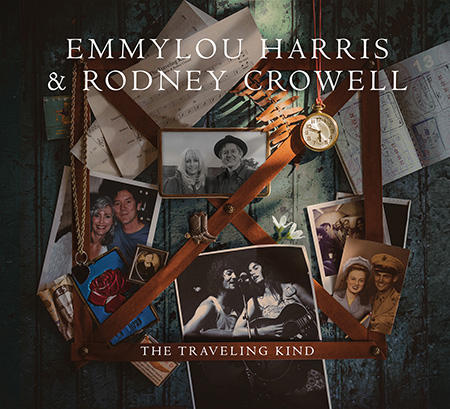
A Very Brief Peek at What to Expect in the 2015 Emmylou Harris and Rodney Crowell Tour

emmylou-harris-rodney-crowell-the-traveling-kind-450x409n

Expect a fairly prompt start. Slated for a 7:30 beginning, the lights went down at 7:41 with Emmylou, Rodney, and the band unceremoniously taking the stage clad in what could be street clothes. For really big shots in the music industry, these two are as unpretentious as you get.

The songs – 20 of them – came in quick succession punctuated occasionally with pleasant banter directed at the audience, comprised of mostly old folks. Last night’s show was part of Charleston’s Spoleto Arts Festival, which may have had something to do with the audience’s advanced age. Several of them stiffly fled as the band took their bows as if they didn’t realize that encores were sure to follow.

The set list sandwiches cuts from their new album of duets — The Traveling Kind – between covers and selections from their previous work. They kicked off with a cover of Lucinda Williams’ “I Just Wanted See You So Bad,” (which actually appears on the new album), then went right into “Grievous Angel.” Highlights from the pre-album phase included “Poncho and Lefty,” “Red Dirt Girl,” and “Love Hurts.”

Before they launched into the new songs, Emmylou remarked that she and Rodney had somehow managed to achieve longevity without getting much radio play. Then she said that she’d rather be on a jukebox than a radio to cheers from the audience.

I may have enjoyed the new stuff even more than lead-in tunes. The band — some of whom are not the musicians performing on the record – consisted of Steuart Smith on pedal steel, John somebody on drums, Michael somebody alternating between stand-up and electric bass, a killer keyboardist who also played accordion on the delightful “La Danse de la Joie,” and impressive Australian lead guitarist Jed Hughes who thrilled the crowd with searing solos.

Emmylou announced that we’d just heard most of the new album and then treated us to five more songs.

The lights came up, some septuagenarians headed for the exits, and then Emmylou came back on the stage alone and said that she only played this song – “Hickory Winds” — in South Carolina, and Rodney and the rest of the band ambled out one by one to join in.

So ultimately, what you can expect is 100 plus minutes of Americana music performed by a couple of national treasures.

Political Correctness Academy

eugene_nanook1-l
Warning: Through no fault of the author’s, the following fascinating and informative piece contains language that marginalized people may or may not find offensive.

* * *

You’ve no doubt all heard the probably specious story that Eskimos have something like 300 or 600 or 300,600 different words for frozen water whereas we denizens of warmer climes only have a handful – sleet, snow, hail, slush, etc. The idea is that because they spend so much time dealing with frozen water they can distinguish subtle differences in its consistency and so it follows that —

Beep Beep Beep!

Un-oh, a new word processing app I just purchased, Offensive Connotative Terminology (OCT), has just generated a pop-up that informs me that “Eskimo” means “raw meat eater,” a pejorative name given to them by enemy tribes to the south and that E-words would rather we refer to them as Inuits, even though, as it turns out, Inuits do in fact eat raw meat. (No wonder then that there is a paucity of synonyms in the Inuit language for fire).

Fellini's "Little Person" nun from his film "Amarcord"

Fellini’s “Little Person” nun from his film “Amarcord”

I’ve lost my train of thought. Where was I? Oh yeah, that creepy obsession Fellini and David Lynch have with midgets. What’s the scoop on that?

Beep Beep Beep!

The damn thing’s gone off again. Looks like the word “midget” set it off. Let’s see, here’s a link in the pop-up that might offer an explanation.

[click]

Midget, denotation, “very small fly.” Popularized by PT Barnum and therefore associated with freak shows. Politically correct alternatives, “little person,” “dwarf,” “person with dwarfism,” or “person of short stature.”

Forget it, no way I’m going to write about Fellini and Lynch now. Try crafting a sonorous sentence with “person of short stature,” and to my sensibility “midget” conjures a less ominous image than “dwarf,” but anyway, I gotta go. I think I used “midgets” instead of “dwarves” in a piece I wrote about Folly Beach’ s freak show of a tavern, the Sand Dollar Social Club, a while back, so I better go back and edit it. [LINK TO SAND DOLLAR PIECE]

Beep! Beep! Beep!

OTC Suggestion: replace “freak show” with “side show.”

Okay, that’s it. I’m out of here.

Spring

749px-Marble_time


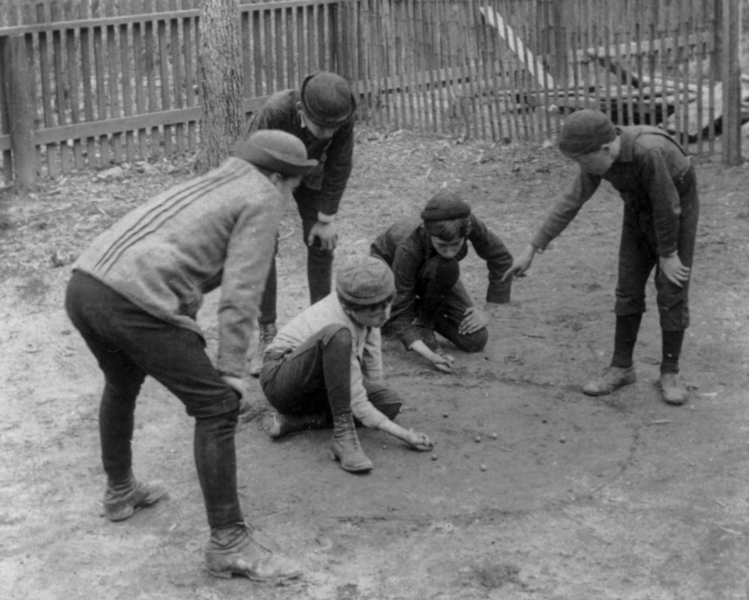
Imagine your father at seven, at recess, down on one knee

outside the stick scrawled circumference of a marble ring.

In his drawstring bag: clambroths, corkscrews, steelies, crystals.

A cat’s eye rests on his cocked thumb, crocked in the pocket

of a curved index finger catapult. He prepares to shoot,

to run the ring, to gather lootlike handfuls.


Imagine your mother a gum machine. Round

and finite, an array of flavors in strata, waiting for

puberty’s pennies, the shiny orbs, one by one,

patiently waiting their turn

to spin clanging down the chute

battering the hinged door that dispenses.

27e0a735a6ef82c1ae91e057cadd80d8

A Lonely Impulse of Delight

reefer_boyI suspect that I’m approaching the Guinness World Record for the highest number of adolescent behavioral modification assemblies attended by a member of the species homo sapiens sapiens.   I saw my very first around 1970 when I was a high school student myself.  It was an anti recreational drug film with a plot about as believable as Plan 9 from Outer Space’s scenario of ETs resurrecting the Earth’s dead to prevent scientists from producing a doomsday weapon that would destroy the universe.

The high school film featured predatory pushers who give away cannabis so they can hook their victims on “harder stuff,” more lucrative drugs like LSD. They snare two victims, air-traffic controllers.   Of course, eventually in the control tower during the descent of two planes, our acid-addicted protagonists suffer flashbacks featuring vintage psychedelic special effects – woo-WOO-woo-WOO . . .

Note the year, 1970.   Some kids in my high school were not unfamiliar with cannabis when they were herded into the auditorium to watch the film. The idea of people giving it away would have been a fantasy-come-true for them. Not surprisingly, feeding students inaccurate information tends to make them dismiss the entire message, even aspects that are true.

Like that 1970 didactic school assembly, many of the school assemblies I’ve sat through in my 29 years as a high school teacher have been misguided. Over the years, I’ve been bombarded with slides of chancre-encrusted genitalia as the physician describing the abominations reminded us that he didn’t take Medicaid patients, I’ve squirmed in my seat as a highway patrolman walked us through horrific photographs of mangled corpses who would have been lucky to have been pulled over for a DUI, I’ve listened attentively as a paraplegic described the sickening feeling of realizing he had no feeling in his lower body, and perhaps worst of all, I’ve suffered through forty-five minutes of a one-armed woman in a tank top running up and down the aisles of the auditorium to show and tell us just how one “bad decision” had robbed her of not only an arm (thanks to the tank top we could see all too plainly the gnarled stumplet at her armpit) but of a promising volleyball career.

On the other hand, I have also witnessed a very effective anti-recreational drug assembly conducted by a neurologist from MUSC who leveled with the students and admitted that cannabis did not necessarily lead to harder drugs and the odds of their dying from smoking it were negligible. However, she did convincingly portray via x-ray images how recreational drugs can adversely affect the amygdala, that wonderful compact cluster of neurons “up there” that triggers pleasant feelings. She argued that prolonged use of drugs like marijuana essentially destroys a person’s ability to feel joy. In fact, mighty Keith Richards more or less says the same thing in his autobiography. He quit heroin, he says, because he spent almost all of his time figuring out how to score but didn’t even get off anymore. To get off, the abuser needs more frequent and stronger doses and eventually ends up incapable of experiencing pleasure, and even if the abuser were to quit, his ability to experience joy may be forever impaired.

Dean Potter 1972-2016

Dean Potter 1972-2016

I thought of that assembly when I learned Sunday of the death of Dean Potter, a dare devil extraordinaire who got his kicks free-climbing precipitous rock faces, often solo, using only his hands and feet, i.e., unaided by ropes, safety harnesses, etc. He did carry a parachute in case he fell. Once he reached a summit, he might leap off and parachute down or jump off in a suit equipped with Rocky-the Squirrel wings and glide through the air like a superhero until he had to yank the ripcord and parachute to safety. This very extreme sport is called “wingsuit-flying,” and if you’re unfamiliar with it, check out the video below of Potter in action and the next one of someone named Alexander Polli threading the needle so to speak.


Alas, with his friend, fellow wingsuit flyer, Graham Hunt, Mr. Potter died last Saturday trying to replicate a “flight” they had taken earlier. Like the video just above, they attempted to negotiate a notch, and according to news reports, Hunt hit the side of the wall while Potter cleared the notch, but then crashed.  A witness reports hearing “disconcerting, loud sounds in succession that suggested impact.”

I know very little about adrenaline rushes outside of the relatively safe experience of dropping down the face of an overhead wave in a hurricane swell, but to Potter that would be the drug equivalent of a cup of decaf.   Did each accomplished unbelievable feat with its requisite adrenaline rush spur Potter on to attempt even more audacious exploits? Was his thrill-seeking analogous to needing stronger and stronger fixes?

Maybe not. Potter had done the flight before, but whatever the case, he died doing what he loved, and how many of us can claim that?

An Irish Airman Foresees His Death

I know that I shall meet my fate
Somewhere among the clouds above;
Those that I fight I do not hate
Those that I guard I do not love;
My country is Kiltartan Cross,
My countrymen Kiltartan’s poor,
No likely end could bring them loss
Or leave them happier than before.
Nor law, nor duty bade me fight,
Nor public man, nor cheering crowds,
A lonely impulse of delight
Drove to this tumult in the clouds;
I balanced all, brought all to mind,
The years to come seemed waste of breath,
A waste of breath the years behind
In balance with this life, this death.

~WB Yeats