In the Brit Lit high school survey course I teach, around Halloween we do Macbeth with its witches, shrieking owls, and rooky woods. I’m fortunate enough to have available a projector and stream-able copies of Orson Welles’ 1948 movie, the 1979 Trevor Nunn PBS production, and the more recent 2010 Rupert Gould Great Performances movie starring Patrick Stewart and Kate Fleetwood. Alas, we don’t possess Polanski’s psychedelic 1971 Macbeth, but you can cop clips from YouTube. Anyway, I thought I’d share my approach as an offering to novice teachers because even though I’ve been in the business for thirty plus years, I still remember all too well not having a clue that first year as I improvised my way through my classes without a scrap of sheet music.
And believe me, brothers and sisters, I ain’t no Miles Davis, not by a long shot.
Anyway, here’s what I do.
In the 8th and 9th grades, students have read Romeo and Juliet and Julius Caesar, so they’re already hip to triangular plots and blank verse.
Before the first reading assignment, I offer a bit of background: The Queen is dead, James has arrived — he who has written a book on witches — and, oh yeah, Guy Fawkes has just attempted to pull a 9/11 on the British Parliament. Thanks to both our excellent history department and V for Vendetta, most of my students are hip to the 5th of November. In short, the dark clouds of the Jacobean Period have blotted out the Elizabethan sun.
To whet their appetite, on the day I assign the first reading, I show them the Polanski version of 1.1.
Of course, there’s a lot to discuss: language, paradox, the nature of evil, patriarchal views of women, dramaturgy, cinematography.
Day 1 (45 minutes): The next day, after a reading quiz[2], perhaps over accentuating an iamb here or there, I read aloud the wounded Sergeant’s recap of Macbeth and Banquo’s battles.
Once we’re all on the same page action-wise, I mention paradoxes, a major motif. I tell them that every time I run across a paradox, I’m going to make the ah-ooh-ga submarine sound. Over the course of the play, clever students chime in with their own ah-ooh-gas, and whenever a paradox appears, I see most of the other students writing in the books (which they own).
I pick up the action with “Scene 3” “Enter Macbeth and Banquo” and ask for volunteers to read the various parts. Sometimes, I stop a reader and ask, “Can you hear the iambs marching?” I do so throughout the entire play whenever I think the meter is especially worth noting.
“The queen, my lord, is dead.”
Of course, during 1.3 the ah-ooh-gas come fast and furious.
I try to elicit via Socratic questioning the thematic implications of the twinning of “foul” and “fair.”
Then I introduce the “garment motif” and employ the sound of Parisian siren to signal when garment images occur.
I ask for new reading volunteers and have then start with [Enter Ross].
From there, I read Duncan’s “There’s no art/To find the mind’s construction in the face./He was gentleman on whom I built/An absolute trust.”
“What are the next two lines of the play?” I ask.
“Enter Macbeth,” a couple of students say. Bubble light bulbs flash over a few heads.
Their homework is to finish reading Act 1.
Day 2 (45 minutes):
The last motif I distinguish with sound effects is darkness, which is signaled by a melodramatic bum-bum-bum-BUM, the clichéd tension builder of many a bad movie.
We begin by talking about Lady Macbeth’s character, what various critics have to say, and jump to her “unsex me” speech, which I read.
I then have a female read the “Oh, never/Shall sun that morrow see” speech.
I then ask the students to reread Macbeth’s soliloquy, show them Ian McKellen’s rendition, and we dissect the soliloquy.
We end the class with a screening of Dame Judi and Sir Ian bringing the Act 1 to a close.
Assignment: read all of Act 2.
Day 3 (85 minutes)
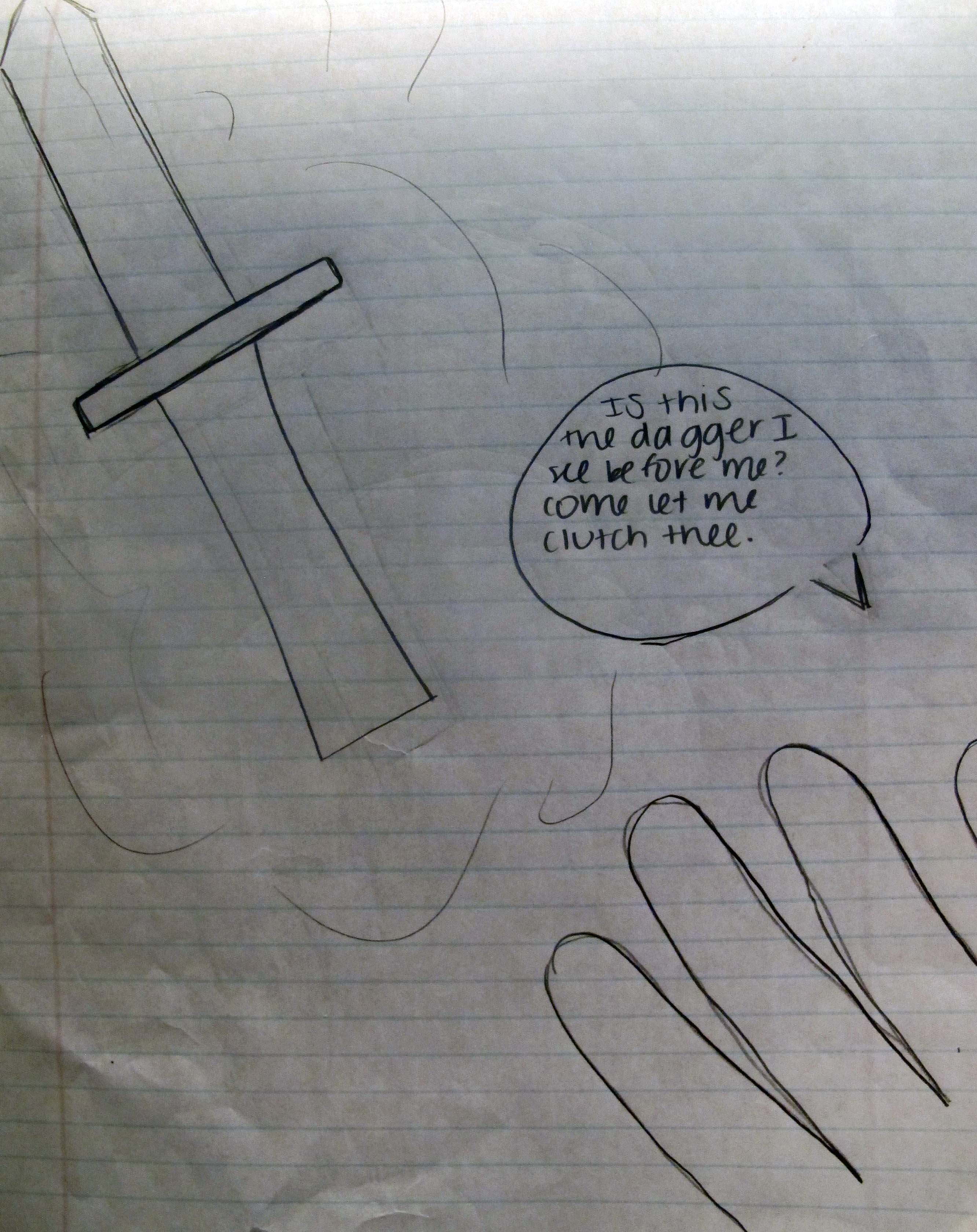
I break the students into groups of three and have them “story board” the “Is this a dagger I see” speech. I encourage them to visualize the scene and then to create 15 to 20 panels depicting how they would choreograph the action providing quotes on the panel. Then we reconvene as a class, and the students present their visions. Here are a view examples from this year.
After the presentations, I show then Orson Welles’, Roman Polanski’s, Trevor Nunn’s, and Rupert Gould’s renditions of the scene.
We discuss.
Homework assignment; Act 3.1 – 3.3
Day 4 (45 minutes)
I have students read 2.2 aloud, and we discuss Macbeth’s and Lady Macbeth’s post-murder behavior, especially noting the dichotomy between bloody hands making “the multitudinous seas incarnadine” and a “little water” clearing them of the deed.
They’re familiar with comic relief, and I skip the Porter’s monologue and head straight into the dialogue with Macduff, pointing out that essentially it’s a “penis joke.”
(At the end of the Macbeth unit, we watch the entire Gould/Patrick Stewart film, which transforms the Porter scene into a heightening of tension as he obscenely spits out the jokes in front of Lady Macduff and her children).
We don’t spend much time on the rest of the scene, but I do highlight the irony inherit in Macbeth’s “Had I but died an hour before this chance” speech.
After the students are clear on plot info – the somewhat confusing murdering of the grooms, the flight of Malcolm and Donaldbain — we shift to Act 3.
I draw a triangle on the board with Act 3 at the apex. We use Aristotle’s term “peripetia” instead “climax,” and I ask them about the turning points of Romeo and Juliet and Julius Caesar. We draw rising action parallels among the R & J’s marriage, Caesar’s assassination, and Duncan’s murder.
I read the “To be thus is nothing soliloquy,” and we discuss it.
OLYMPUS DIGITAL CAMERA
I don’t spend much time on the murderers but do point out that the canine catalogue reflects the Chain of Being concept so near and dear to the English back then.
Rather than analyzing the banquet scene, I show them Nunn’s version. I do a little stand-up, depicting the scene in modern terms using whoever is President as Macbeth (Reagan was my first victim; Hillary will be my last)[3].
Class ends with the “blood will have blood speech.”
Reading assignment Act 4.1 – 4.2
Day 5 (45 minutes): Although my students are rhythmically challenged, we attempt a hip hop reading of “double double toil and trouble.”
Despite it’s full-frontal geriatric nudity, I show them Polanski’s version and then Nunn’s.
That leaves the butchering of the Macduff family.
Day 6 (85 minutes)
While I’m critiquing rough drafts, I assign students speeches to paraphrase: Malcolm’s “I grant him bloody,” Malcolm’s “With this there grows,’ Malcolm’s “But I have none,” and Macduff’s “Fit to govern,” and Malcolm’s “Child of integrity.”
In paraphrasing, I ask students to provide 3 alternatives for every significant word, e.g., “sudden” might be rendered “impulsive, spasmodic, non-reflective.”
I hand back their rough drafts, and we look closely at the speeches.
We end the class with Ross’s entrance and the delivery of his horrid news.
Reading assignment: Read Act 5
Day 7 (45 minutes).
I show them Nunn’s rendition of 5.1 featuring Judi Dench’s blood-curdling shriekscream, certainly the greatest scream in the history of “moving pictures.’
Afterwards, I read “Tomorrow, and tomorrow, and tomorrow,” and we analyze it as poetry. I mention nihilism, read the first paragraph of The Sound and the Fury and then show the Nunn version featuring Sir Ian.
We discuss the play in the context of tragedy, the dissolution of Macbeth as a human, the metathesis of his sinning, the moral implications.
Days 8 – 11.
We view the Gould/Stewart/Fleetwood film in its entirety, stopping the action whenever necessary for commentary. This full viewing, of course, is time-consuming, but these students face a very demanding test, and seeing the complete play performed I think is crucial. It is, after all, great art.
Of course, if you plan using any of this, you’ll need to adjust it according to your students and schedules, and in my case, the days have not necessarily been consecutive. For example, a day of Wordly Wise vocabulary might be utilized to align an 85-minute class.
It’s up to you to pull it all together in discussion.
At any rate, keep fighting the good fight.
[1] Note, our classes meet three times a week for 45 minutes and once for 85 minutes.
[2] These reading quizzes are frequent, one for virtually every assignment.
First of all, killing Embryo Hitler is verboten. It’s absolutely necessary that Mother Hitler has birthed Baby Hitler before you kill him because, as you have often noted, abortion is an abomination.
Warning: Baby Hitler is not going to be sporting that signature mustache or that off-putting hairstyle. In other words, he’s going to appear to be a sweet, innocent bundle of joy. I dare say that you won’t be able to identify him as Austrian much less as the future architect of the Holocaust. The bottom line is that killing Baby Hitler is going to be sort of like putting a pit bull puppy to death. Unless you’re a sadist, what you’re about to do is going to be very unpleasant.
I suggest offing the would-be Fuhrer shortly after his birth because newborns, despite the “beautifuls” and “adorables” you see next to their images on Facebook posts, tend to be wizened little squirming red-faced creatures that resemble very old people, whom we associate with death anyway, which makes slaying a newborn a tad bit easier, psychologically speaking, than dispatching a two-week old.
No matter the age, before ending his life, make sure to clad Baby Hitler in a miniature Nazi romper complete with swastikas. Believe me, you don’t want him sporting anything emblazoned with bunny rabbits.
Of course, the paramount question is how. Even though gassing him or strapping him in a miniature electric chair is neither cruel nor unusual given that it has been a state-sanctioned means of dispensing with our capital criminals, those methods strike us as excessive.
I suggest perhaps applying a lethal dose of cyanide to his pacifier, which again I suggest be in the form of a swastika.
But ultimately, Jeb, it’s your call.
At any rate, good luck, and God bless help the United States of America!
The “concert series” Porchfest originated in Ithaca, New York, in 2007 as a means for musicians to share songs with their communities in informal settings. Not only has the Ithaca Porchfest grown from 20 performers to more than a 100, the concept itself has spread across the country all the way to Folly Beach, SC, the so-called Edge of America, and yesterday (8 November 2015) Folly held its second iteration of what I hope will become an annual event.
Here’s a list of yesterday’s performers and their locations:
122 East Ashley (Home of Chico Feo)
2pm-Jim Crow
3pm-Charlie Stonecypher
4pm-Jess Strickland
204 East Ashley (Home of Omar Colon)
2pm~Riddle & Bartlett
3pm~Podunk
4PM~A Martini with The Olivettes
306 East Arctic Ave (Home of Noelle and Campbell Brown)
2pm~Gaslight Street
3pm~Noelle Brown & The Troublemakers
4pm~Danielle Howle
120 West Arctic (Home of Teresa Parrish and Mat Nelson)
2pm~Sweet T- Teresa Parrish
3pm~Eddy Boston
4pm~Slaton Glover and friends
Danielle Howe (photo by Fleming Moore)
Alas, I couldn’t take it all in, but to give you a taste, here’s a six-minute clip featuring my next door neighbor Jim Crow and my youngest brother Fleming. I wish my battery had lasted long enough to add Charlie Stonecypher, but you know what they say about the plans of mice and men.
No, not co-joined twins, but Senator and Mrs. Rubio
The other night on Hardball I saw a pundit pooh-pooh questions about Marco Rubio’s inability to manage his personal finances because it was “very relatable” to the electorate. I guess the assumption here is the typical American voter casts her ballot according to how closely a candidate’s biography corresponds to her own.
Via MSNBC, here’s a handy, cheat sheet regarding Rubio’s money management woes:
“The basic outline is made up of a few embarrassing elements. During his time as a Florida legislator, for example, Rubio occasionally mixed personal and business expenses, including using party money to repair his minivan, and charging $10,000 to attend a family reunion, which is legally questionable, before eventually paying the money back. He also co-owned property with a scandal-plagued colleague, failed to detail the mortgage on financial disclosure forms, and then faced foreclosure.
“There’s also the odd liquidation of Rubio’s retirement account – even after the senator received a seven-figure book deal – and the fact that he took on more than $900,000 in debt when his net worth was about $8,300.”
Okay, I get living beyond your means is as American as a bucket of fried chicken, but how many Tea Party folk fork out 10K to a family reunion? Rubio boasts ad nauseam that his father worked as a bartender at a hotel and his mother as a housekeeper in a casino.
So what’s the scoop on needing ten grand to attend a Rubio reunion? Did rich non-bartending/hotel cleaning relatives host the reunion or was it his wife’s family reunion? Where was it held, Singapore? The only family reunion I’m ever invited to is in Aiken, SC, a three-hour drive, and we’re talking potluck not haute cuisine.
Here’s what I wish I could relate to in the Rubio bio: “a seven figure book deal,” but alas, all I can relate to when it comes to Marco is his claim that his parents fled Castro’s Cuba when in fact they split under Batista. No, my parents didn’t flee Cuba; I mean I can relate to exaggerating a story for so long the embellishments become calcified into a memory that I believe actually happened. That is, I believe it until some killjoy like Judy Birdsong corrects me by pointing out the old lady twins who lived across the street from us in the story I’m telling were not in fact co-joined twins but just dressed alike and often stood very close together.*
But even though I can relate to Rubio’s “misstatements,” do I want to vote for him because he and I share a propensity to bullshit?
Same goes for Ben Carson. Someone — it may have been General Westmoreland — told Carson if he applied to West Point he would be a cinch to get in, which morphs into being offered a full scholarship (never mind that West Point doesn’t award scholarships).
Oh yeah, besides his bullshitting, I can also relate to Carson’s getting facts wrong (e.g., none of the signers of the Declaration of Independence having been in politics), but what I can’t relate to is his being soft-spoken, highly successful, and getting a 7 figure book deal.
The truth is, I don’t vote for people because they seem as fucked up as I am or whether or not it would be fun having a beer with them.
I vote for them according to how well I like their spouses.
Sorry, Lindsey.
*Obviously, Judy B can really relate to Ben Carson having herself separated co-joined twins.
There’s nothing that irritates me more as a teacher than a 9th grader offering unsolicited pedagogical advice. For example, today a freshman suggested that I not make my vocabulary quizzes cumulative, or if I felt I had to dip into previous lessons, I only go back one or two. “That way,” she said, “we’d do better on the quizzes.”
In situations like this, rather than seguing into a “best practices” mode and patiently explaining that the goal is for students to remember the word for life, not merely for a week, and that resurrecting words from earlier lists should prompt them to review words from previous lessons, I reminded the student that she merely has an 8th grade education and therefore is about as qualified to offer pedagogical advice to a 30-year veteran teacher as I am to command a nuclear submarine.
Another student countered, “But that’s her opinion, and she should be able to state it freely.”
“Well,” I said, “I think that given that I just responded to it suggests that she stated it freely. My point is merely that in the area of teaching vocabulary Euthanasia [(cough) not her real name] doesn’t know the findings of the latest studies on cognitive retention or really understands that ensuring students make high marks on vocabulary quizzes isn’t my primary goal.[1] Therefore, her offering advice in an area in which she doesn’t possess expertise might be seen by some – I-and-I for example – as arrogant.
Of course, everyone who can read and write thinks he’s capable of teaching English. Believe me, as a former Department Chair, I’ve read many a cover letter from literature lovers in mid-life funks wanting to switch careers from real estate sales to teaching Hemingway.
However, despite HL Mencken’s contention that “[t]he worst idiots, even among pedagogues, are the teachers of English,” I submit it ain’t as easy as it looks in the movies, and it gets old getting professional and philosophical advice from novices.
Perhaps next time, I’ll ask the irritant to diagram on the board one of Faulkner’s sentences from Absalom, Absalom .
Or, better yet, just go into the best practices mode.
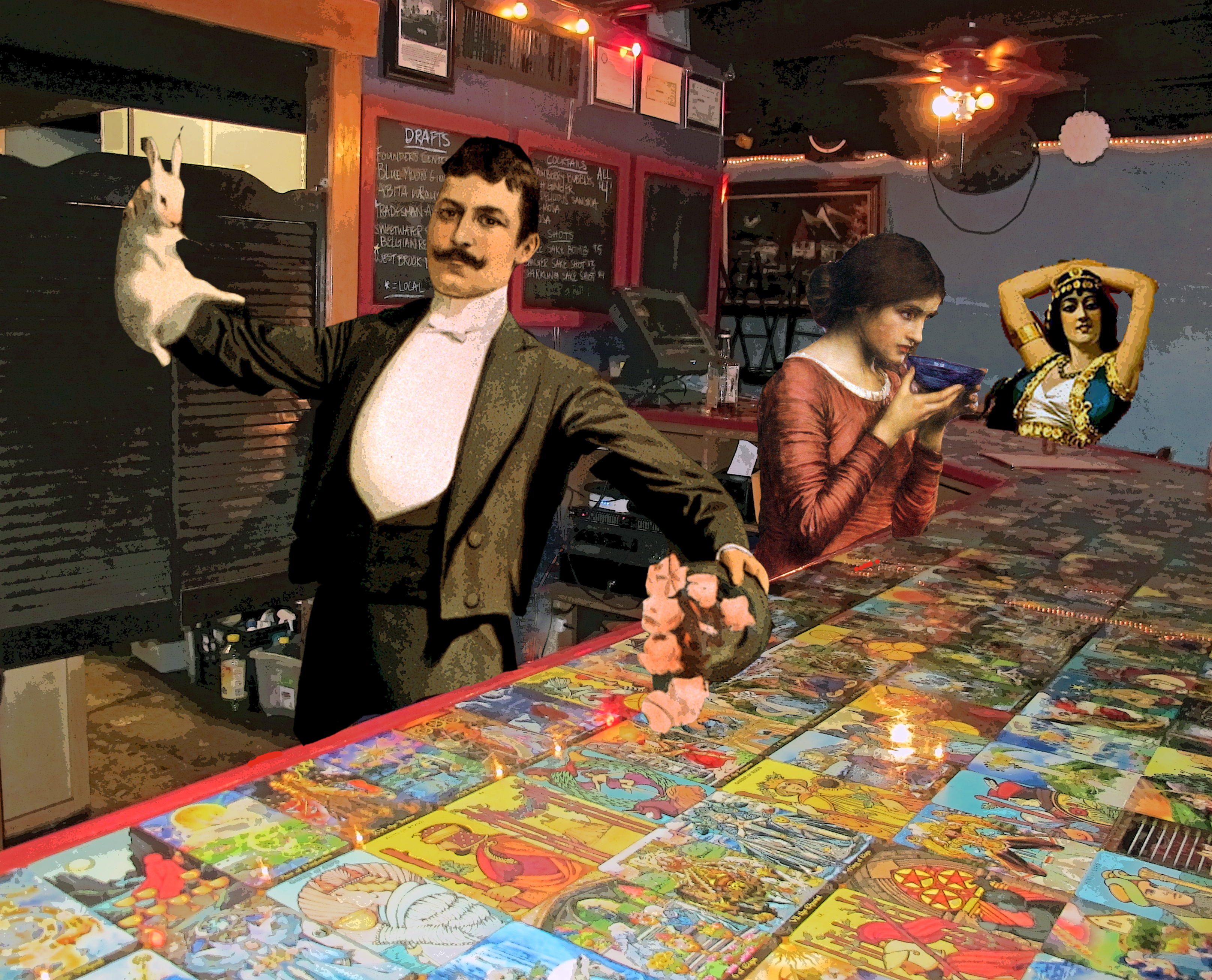
Last Thursday, I was at one of my favorite Folly Beach oases, the Jack of Cups, talking Halloween with the Jessie, an impressively sophisticated twenty-something bartender who double majored in philosophy and theater in college, a young woman who can expound on Kant and Hegel as well as Kurt Cobain and Patti Smith.
I confessed that I rarely indulged in dressing up for Halloween, but that perhaps the most creative costume I put together was in grad school when I decided to transform myself into the personification of a libido. After I described the costume (black tee and jeans, white pancake makeup, red-laced fringed Lone Ranger-like mask, phallic walking stick), Jessie said that coincidentally she had been talking to three of her friends about doing Halloween as the chorus of Nirvana’s “Smells Like Teen Spirit” – you know, a mulatto, an albino, a mosquito, a libido.
She went on to say that when she had mentioned the idea to someone else, the person had made a sour face and declared the concept “offensive.” What was really cool, Jessie claimed, was that her friend who originally had come up with the idea was biracial and loves the word mulatto and that she, Jessie, has been diagnosed with Ocular Albinism, Type 1, so coming up with a mosquito and libido would have been all they needed to pull it off.
I said, “Go for it. How humorously inappropriate for the politically correct crowd to chide, given the ironic brilliance of the concept.”
Naw, she had abandoned the idea for an easier one. She was going as David Bowie from his Ziggy Stardust days and her fiancé was going as the mid-70’s David Bowie a la the Young Americans album. She said she and her fiancé were going to make out at parties, which, I said, made delicious narcissistic sense.
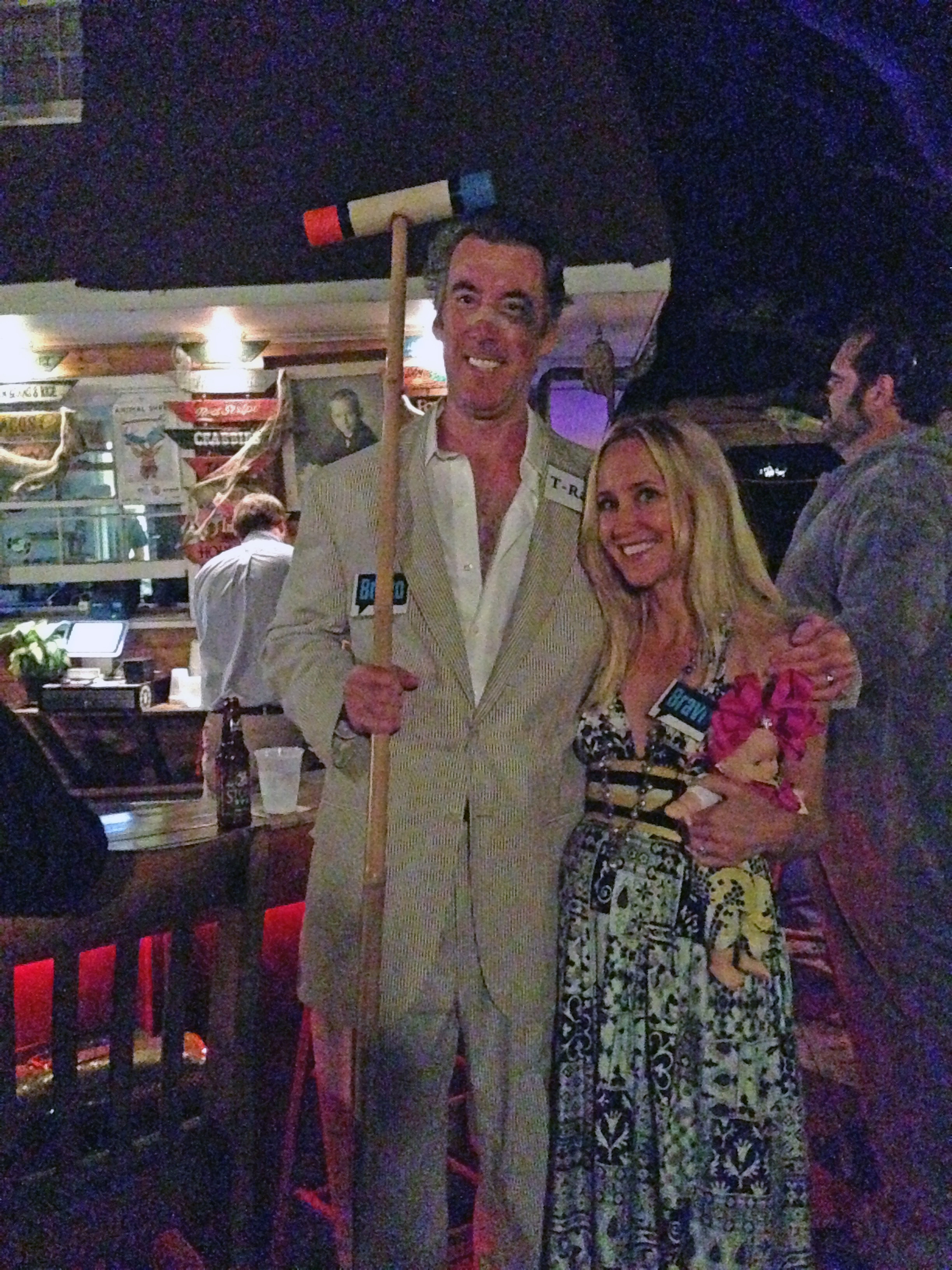
Anyway, last night I decided at the last minute to wander down to Center Street on Folly to see what was out there, hoping against hope that I might run into twin Bowies sucking face. No such luck, but I did run into Thomas Ravenel and Kathryn Dennis.
No one’s left to answer the questions I have about my first memories, scenes that take place in the gas station/house of my maternal grandparents in the year 1954 or 1955.
World War II has been over for ten years now.
I am two, maybe three. My grandparents, my aunt, maybe my uncle, live in a building that’s part commercial enterprise, part domicile. It’s not a home — or even a house – but the Station. What should be the front yard consists of a narrowing triangle of concrete featuring an island of gas pumps, the apex of the triangle marking the fork where Highway 78 splits into West 5th North Street and Richardson Avenue. Diesel smells hover as cars swish by night and day, day and night. Out back, a wire fence encloses a treeless dirt yard where an unfriendly German Pinscher prowls.
No nature boy, I-and-I.
It seems at the time of these first memories that my mother and father are living at the Station, too. The upstairs, if subsequent recollections are correct, consists of one ark-like bedroom that has two or three beds and a stand-alone sink. There must be a bathroom downstairs, but I don’t remember it.
My first memory ever is of my parents’ leaving each morning. I descend the steep stairs terrified I’ll fall. I lead with my right foot, step after step, right foot first, until I’m about four steps from the bottom. Then I leap into my father’s outstretched arms, and he slings me around in circles. I don’t want my parents to leave me, but they do, and I spend the rest of the sibling-less day in the domestic section of the building while my grandfather pumps gas or fixes flats and my grandmother works the counter cash register. I can remember feeling sorry for myself as I sat sideways on the bottom step with my knees up. I remember thinking that the day would never end.
Of course, it did, and the one after that, and the one after that . . .
At two-and-a-half, I’d experienced fewer than a thousand days, so in that frame of reference, a day looms large. Now, I have weathered approximately 24,759 days, 2063 full moons, 66 Christmas Eves. Yet, even though my frame of reference of a day has shrunk 2,000-fold, the days – especially, the weekdays — still seem long.
Tick-tock-tick-tock-tick-tock . . .
But not the years — the years zoom past like cars on a freeway.
Blink, just like that I’m engaged to be married and attending a party with my mother during her 25th high school reunion weekend. My former classmate Emma Jo Mellard is there with her mother as well. We make small talk, comment on time’s winged chariot’s terrifying swiftness.
Blink. I’m swinging my sons in circles above my head.
Blink. I’m looking at a photograph on Facebook of members of my high school class who will attend their own reunion next year if the pandemic abates.
These classmates are wizened, unfamiliar, old, like my own visage in the mirror.
Donald Trump, don’t wear a suit and tie. Opt for the casual look. Since when did you let society dictate what’s wrong and right? Quote Colonel Kurtz from Apocalypse Now as you wave your arm in a dismissive, sweeping motion. Say, “I’m beyond their lying, petty morality.”
Speaking of the Apocalypse, Ben Carson, if someone tries to pin you down on your recent statement that Medicare needs to be abolished, dodge the question with the phrase, “In light of the eschatological truths espoused by Seventh Day Adventism . . . ”
Go into the nuts and bolts of what will occur when Jesus returns and why Medicare won’t be necessary in the post-Apocalyptic Millennial Reign of the Saints. That should sew up Iowa.
Come out swinging, Jeb [Bush]. That is, embrace your Wasp-ness and carry a Big Bertha Driver with you on stage. Every time Trump starts blathering about how great he is, step back and take a couple of practice swings. When the moderator asks you to comment on Trump’s insults, simply say, “New Money.”
Marco Rubio, when the moment avails itself, address Jeb in Spanish. Insist that he answer you in Spanish. We keep hearing that his Spanish is flawless, but how can it be given that his English syntax is the auditory equivalent of an unsolved Rubik’s Cube? This ploy will demonstrate to Latinos that you’re the one, hermano.
John Kasich, embrace the 2000 candidate John McCain and do some “straight talking.” Say what your said on NPR this morning, that the public (read Republican primary voters) are ill-informed fantasists when it comes to understanding how governments and societies function. In other words, they are the living embodiments of how our educational system is in desperate need of a massive overhaul.
Second Tier Debaters, tough luck. You’re doomed. Forget it. Play it cool.
If a genuine Buddhist, I should have compassion for fellow sentient being Trey Gowdy, who had risen so high so quickly, but who last Thursday splatted back to earth with all of the grandeur of plugged duck.
The contrasting looks on his and Hillary’s faces as he left the hearings declared winner and loser, she, hanging around, flashing smiles; his face, shellacked with sweat, wore the expression of a highway patrolman on his way to ring the doorbell of the next of kin.
Virtually no one to the left of Jennifer Rubin, including Genghis Khan Charles Krauthammer, thinks anything positive came out of last Thursday’s inquisition as far as the Republican Cause goes. In between classes during the hearing, I checked my Twitter feed to find this well-crafted 126-character tweet (complete with a dash) from former Reagan speechwriter Jon Podhoretz: “Why doesn’t Pomero just go over and swear her in as president now – if he goes on like this he’ll practically get her elected.”
In hectoring tones, Pomero demanded to know why Hillary hadn’t fired anyone in light of Benghazi attack.
“I followed the law, Congressman,” Clinton answered. “That was my responsibility.”
“You’re telling me you had no authority to take anyone’s paycheck . . .”
“It is my position that in absence of finding dereliction or breach of duty, there could be no action taken . . . “
[Shouting]: “[The ultimate] decision was to put them back [with] full back-pay and keep them on as employees! [. . .] The folks in Kansas don’t think that is accountability.”
No, in Kansas, even if no underling is ultimately to blame, someone needs to have her paycheck taken anyway. Even if no one is really ultimately accountable, a scapegoat must be found.
How could this process of allowing intemperate, showboating backbenchers like Pomero to take turns asking questions lead anywhere but to a disjointed free-for-all contradiction of Gowdy’s claim that the hearing was not about Hillary?
Representative Martha Roby of Alabama, the most un-Republican-looking Republican woman since Mary Todd Lincoln, asked Hillary if she’d gone home that night of the attacks and if she’d spent the night alone, which elicited laughter from both Hillary and some spectators.
“I don’t know why that’s funny [. . .] I don’t think that’s funny at all.”
If this strategy of giving everyone a chance to ask questions could have been avoided, if, say, representatives could have submitted their questions to Gowdy and he synthesized them into some kind of coherent avenue of inquiry, maybe the hearing could have been a success politically for the Republicans. I don’t know how much autonomy a select committee chairman has in piloting an investigation, but if Gowdy could have organized it differently, he is ultimately to blame for the fiasco.
But actually, the real culprit is that fan-of-the-Pope John Boehner who sanctioned the creation of the vengeful panel in the first place. After all, a bi-partisan but Republican-led committee had already conducted and completed a thorough investigation. The entire premise that the committee’s existence was based on “finding out the truth” instead of politically wounding the presumptive Democratic nominee is a lie — bad karma — and if “the best laid schemes o’ mice and men/Gang aft agley,” certainly that must be true of the worst laid schemes.
Despite Gowdy’s insistence that it “was not about” Madame Secretary, he’s the one who initiated the questions concerning the Blumenthal emails – what a few commentators have referred to as “a rabbit hole” as in [cue the Jefferson Airplane] Alice. It seemed as if the committee was ignorant of the fact that people in very high places have other more sophisticated ways of communication than email. As they kept hectoring Hillary about emails, my apolitical wife asked, “Well, what do the emails have to do with what happened in Benghazi?”
Good question, Judy Birdsong.
Does Gowdy actually truly believe that he is impartial? Does the author of this blog really consider himself a genuine Buddhist?
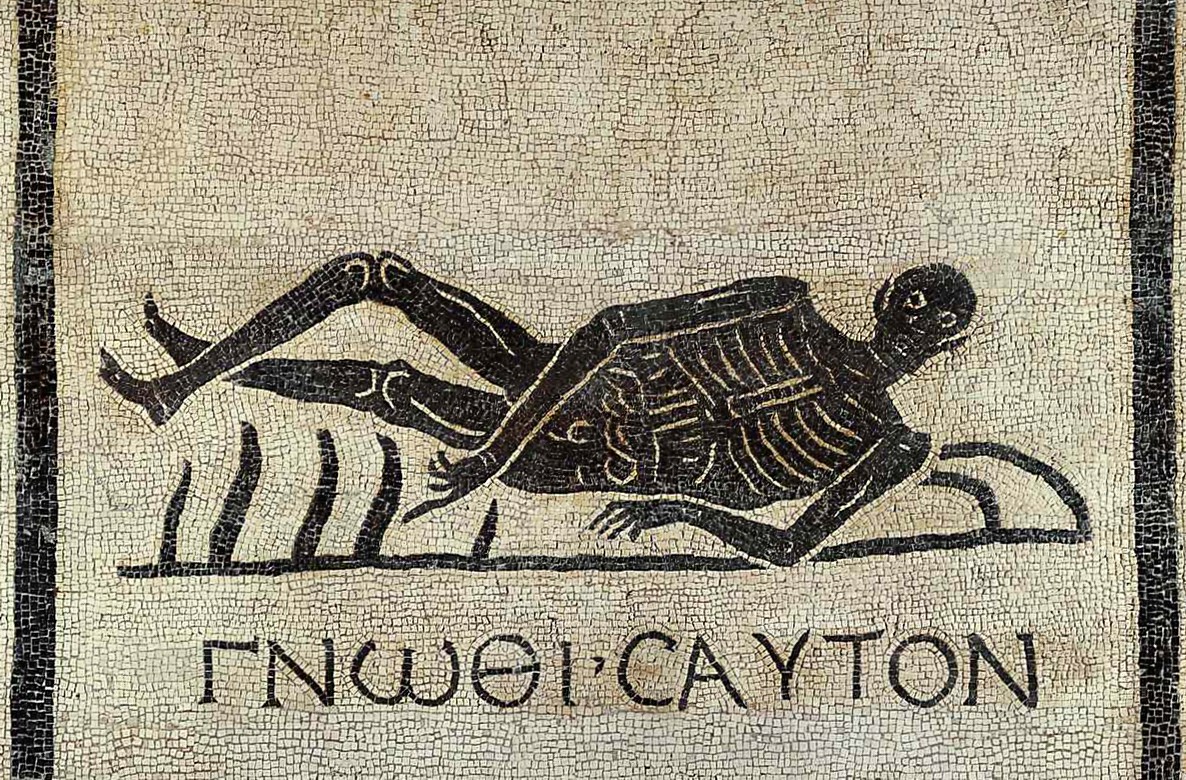
If so, trips to Delphi are warranted — Know thyself!
















 You Do Hoodoo