Sound, Sense, Shakespeare, and Arts Education

Last Monday night I attended a rehearsal of Romeo and Juliet at the Threshold Repertory Theater. My friend Paul O’Brien, chairman of the Threshold’s board, invited me to the rehearsal to hear Chris Marino, a director and Shakespeare expert from Chicago, give a workshop on playing Shakespeare. Paul had worked with Chris before on a production of Hamlet, so I jumped at the chance.

Christopher Marino

Christopher Marino

When I arrived, the rehearsal was already underway. Romeo, Mercutio, and Benvolio were sitting in folding chairs with highlighted scripts in their hands as Chris Marino stood before them looking the part of director.   A tall man in his forties, he wears his almost shoulder-long dark-hair parted in the middle, Oscar Wilde style, and also sports an Elizabethan-worthy goatee.

The three actors were working on 1.4, the scene after the masquerade ball when drunken Mercutio gives his famous Queen Mab speech. Chris stopped the scene and provided a quick ten-or-so-minute lecture on blank verse. It occurred to not-so-perceptive me that some — if not most — of the cast may not have performed Shakespeare before or even know what blank verse is. They’re actors, after all, not academics.

Chris explained that blank verse is unrhymed iambic pentameter – in other words, each line contains five iambs, a succession of alternating unaccented and accented syllables as in “the CAT will MEW and DOG will HAVE his DAY.” He explained that English is essentially iambic and meter provides help in memorizing lines, especially for those Elizabethan actors who put on “eleven performances of ten different plays in two weeks.”

Then Chris said something I’d never considered: when Shakespeare violates the iambic scheme, the offbeat signals something amiss, and the actors should take heed and ponder what’s the matter. For example, in the opening prologue, the line “From AN | cient GRUDGE | BREAK to | NEW MUT | ti NY” violates the unstressed stressed pattern as it describes and echoes the breakdown of law and order that Verona suffers because of the Montagues’ and Capulets’ on-going feud. This echoing of sound and sense is what makes poetry poetry — it creates the magic that renders airy words into palatable images.

Chris was brilliant in his explication of how the sounds of words contribute to their meaning. Throughout the session, he constantly prodded the actors and actresses to reach deep into their psyches to mine emotions that corresponded to their characters’ situations, using the words of the text as guideposts.

For example, in this particular production, the director has decided to use the often cut prologue that begins 2.1

Now old desire doth in his deathbed lie,

And young affection gapes to be his heir.

That fair for which love groaned for and would die

With tender Juliet matched, is now not fair.

Now Romeo is beloved and loves again,

Alike bewitchèd by the charm of looks,

But to his foe supposed he must complain,

And she steal love’s sweet bait from fearful hooks.

Being held a foe, he may not have access

To breathe such vows as lovers use to swear.

And she as much in love, her means much less

To meet her new beloved anywhere.

But passion lends them power, time means, to meet,

Tempering extremities with extreme sweet.

After musing why Shakespeare might have added this seemingly unnecessary plot summary, Chris prompted the actress who was to speak the lines in the play to consider who might say something like this, in other words, prompted her to think of the sonnet not as a mere public service announcement but as the words of a flesh-and-blood human being with ideas and prejudices. Through Socratic questioning, he prompted her to analyze the speech’s diction, which prompted the actress to detect some bias in favor of Juliet’s family, the Capulets. Juliet is called “tender,” and the speaker subtly points out Romeo’s fickleness with the phrase “and loves again” — after all just a few hours ago he had considered himself hopelessly in love with Rosaline. Thus, the actress was transformed from a spokesperson into a character, a cousin of Juliet’s perhaps.

This delving into what it means to be human is a hallmark of the art of acting and one of the reasons art education is crucial for our schools.   Yes, we need to know how to read and write and to add and subtract, and, of course, science, especially when even at this late date, our state legislators demand that South Carolina’s citizenry be reminded that our state fossil, the wooly mammoth, was created on the 6th day.

Nevertheless, in this age of materialism, the arts are absolutely crucial as well. Music, painting, sculpture, and acting provide us with insights into what it means to be human and vehicles for expression that bring to light and air the communal essence of our very own beings.

I envy those actors in Romeo and Juliet who must channel their individual souls to breathe life into words printed on a page, who help us see the old and young playing out the age old drama of life as we live it.

So I raise my bloody mary to the arts.

45


The Grill

Hit arrow for sound.

In memory of Paul Yost 1955-2014


I’m tearing apart paper,

newsprint, the obituary page,

shredding descriptions of lives:

of fathers, mothers, sisters, brothers,

bachelors, partners, husbands, wives,

shredding their black-and-white

faces, their smiles, their stares,

ripping also the memorial verses

loved ones have left,

wadding it all up

to fuel my charcoal chimney.


Yet not enough.


So here comes the sports page,

the World Cup, accounts of pop flies

dropped, ripe for ripping,

ripped, balled, stuffed, ready

for the match’s fiery effacement.


And that poor chicken! hatched, harried,

pecking its food among hordes,

pulled from transport crates,

shocked for the throat cutter’s convenience,

plucked, eviscerated.


This one’s also been

deboned, yet not sold soon enough,

skewered by butchers along with

aging onions and overly ripe peppers.


After its scraping, red and black,

slightly rusted, the grill stands ready,

top open, at attention.


I place the chimney

upon the barred metal, pour in

the briquettes, and torch the

shredded lives of others,

their wins and losses,

and watch the smoke

rising into the dissipation

of the silent, cloud-shifting sky.


The Screaming Js Address Same Sex Marriage at Our Lady of the Chico Feo

Proponents of traditional marriage have suffered legal setback after setback in the last couple of years as the populace has undergone a sea change in its opinion of whether or not people of the same sex should enjoy the emotional and legal benefits of marriage.

As a high school English teacher, I’ve witnessed this shift towards tolerance toward homosexuality firsthand. As recently as the early 90’s, gay students (and even non-athletic males) suffered taunts — some muttered, others clearly voiced — about their presumed orientation.   The word “gay” was often used as a pejorative term, as in that song or that shirt is “so gay.” However, nowadays, I never hear “gay” used pejoratively, and even more positively, gay students are treated with respect (at least in the halls and classrooms). This spring, I assigned an essay that prompted students to find an op-ed piece with which they disagreed, to analyze its reasoning, and to rebut its arguments. Out of 37 students, three students (two boys and a girl) chose to defend same sex marriage.

Not surprisingly, opponents are up in arms. The National Organization for Marriage is planning a march on Washington next week to show the nation they have not given up what they consider a holy war. Of course, many of these folks base their arguments on Judeo-Christian scripture, which they claim corresponds with natural law.

Take it away Bishop Morlino of Madison, WI:

Marriage is, and can only ever be, a unique relationship solely between one man and one woman, regardless of the decision of a judge or any vote. This is not based on any private sectarian viewpoint, but on the natural moral law that is universally binding on all peoples, at all times, and inscribed into our human nature, as man and woman from the beginning of creation. It behooves us to safeguard the sacred ecology of all nature, especially of our human.

Huh? Not based on “any private sectarian viewpoint” but “on natural moral law?” Obviously, the Most Reverend slept through his anthropology classes and skipped those OT passages written in the heyday of polygamy. Furthermore, his argument ignores evolution with the idea of “natural law inscribed into our human nature.” All in all, it’s preposterous.

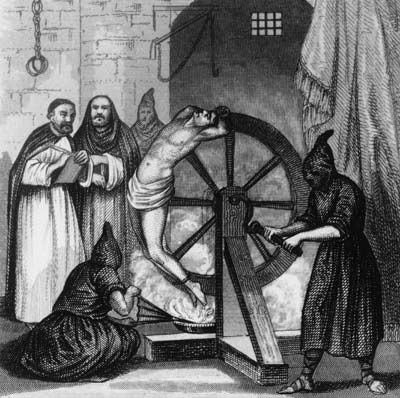
Then, there are the whiners. Here is Doug Mainwaring playing the persecution card. (I would like to point out to him that if he thinks what he describes is persecution, he ought to read a history of the Inquisition). He writes

No tactic of the powers opposing Judeo-Christian mores has proven more effective than political correctness. Why? Non-adherents are threatened with social isolation and anaclitic depression. Thus, the peer pressure that dominates middle schools, high schools, and college campuses retains all its horrifying power [ my emphasis] to intimidate American adults, causing multitudes to suppress free inquiry.


A sufferer of the4 "horrifying power" of political correctness

The horror of politically correct torture


Good old fashioned torture from the Inquisition

Good old fashioned torture from the Inquisition


At any rate, in Late Empire America hedonism trumps unscientific dogma any day of the week. I’ll give the Screaming Js on the final word on the subject. They preached this sermon last Sunday night at Our Lady of the Chico Feo.


What Kind of STD Are You?

lossy-page1-468px-%22WE_ARE_HELPING_TO_STAMP_OUT_SYPHILIS%22_-_NARA_-_516062.tif


 What Kind of STD Are You?


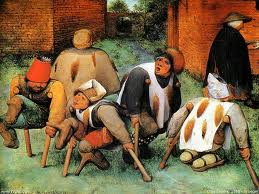
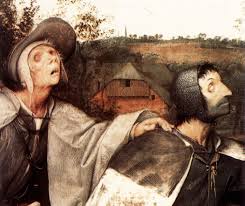
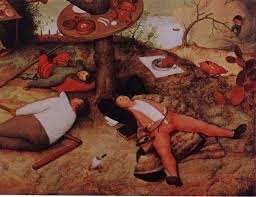
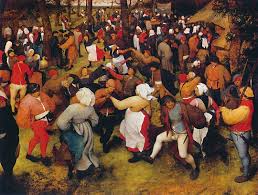
1.  Which painting by Brueghel best captures the real you?

images-3 images-2 images-1 Unknown


2.  Which of the cultural figures below you most admire?

DMK17


Unknown-1


3. What sounds most romantic to you?

A.  Hooking up with a total stranger in a hostel in Belgrade.

B.  Getting wasted on absinthe in ’20’s Paris.

C.  Sharing needles with that someone special.


If  you answered A to number 3, you’re chlamydia.

If you answered B to number 3, you’re  syphilis.

If you answered C to number 3, you’re already dead.

STD-facts-Disease


Male Initiation Rites for Moderns

On the same day that I read Charlie Geer’s superb essay on the difficulties of attempting to educate girl-crazed Andalusian pubescent males, I ran across this eye-catching headline on the Internet: Man arrested again for sex act with inflatable pool raft.

As it turns out, yesterday, once again, one Edwin Tobergta of Hamilton, Ohio, succumbed to his compulsion to fornicate with pool rafts of various shapes, sizes, and colors.

The story, reported by the Hamilton Middleton Journal-News includes these highlights (or lowlights) from Tobergta’s rap sheet:

  • Last November, Tobergta was sentenced to prison for 11 months . . . for also having sex with a pool raft while in public view.
  • Tobergta was arrested in June 2013 after stepping out of his back door naked and having “sexual relations with a rubber float,” according to a Hamilton police report.
  • In August 2011, Tobergta was arrested at his home after he was seen engaging in sexual conduct with a pink inflatable swimming pool raft.
Edwin Tobergta looking dashing in prison orange

Edwin Tobergta looking dashing in prison orange

Of course, Tobergta’s behavior seems almost whimsical compared to even more sexually frustrated assailants like Elliot Rodger who killed six people and injured 13 because he was fairly sure they wouldn’t go out with him on a date if he ever could muster the courage to ask.

In addition, incidents of males assaulting females on college campuses, if what I read is accurate, have reached epidemic proportions.


What can we do to protect ourselves and our pool toys from the onslaughts of these maladjusted males? Certainly, Congress’s moderating guns laws seems about as likely as People anointing Pee Wee Herman as the sexiest man alive, and even though some colleges are disassociating themselves from Greek organizations, sexual assault certainly isn’t exclusively a fraternity phenomenon. It seems truly pathetic for Americans to sit around helplessly awaiting the next inevitable outrage.

It seems that at least we have to try to do something.

Well, I’ve spent the better part of today puzzling over the crisis of males in our society and have come to the conclusion that much of their problem lies in our culture’s lacking effective male initiation rites.

Let’s face it, unless you’re Jewish and go through a Bar Mitzvah, if you’re a male, your ultimate initiation rite has been sitting through your high school graduation listening to boring speeches and watching other people besides yourself get awards, and although I realize this experience can be grueling, it is in fact nothing compared to the initiation rites of primitive cultures. In your case, some old man hands you a diploma (sometimes rolled in a phallic tube, other times in the form of a book), and presto, you’ve supposedly been changed from a boy to a man.

Compare that ritual to this:

The Okipa ceremony of the Mandan Indians opened with a Bison Dance, followed by a variety of torturous ordeals through which warriors proved their physical courage and gained the approval of the spirits. The Okipa began with the young man not eating, drinking, or sleeping for four days. They are then led to a hut, where they had to sit with smiling faces while the skin of their chest and shoulders was slit, and wooden skewers were thrust behind the muscles. Using the skewers to support the weight of their bodies, the warriors would be suspended from the roof of the lodge, and would hang there until they fainted. To add agony, heavy weights were added to the initiate’s legs. After fainting, the warrior would be pulled down and the men (women were not allowed to attend this ceremony) would watch the warrior until he awoke, proving the spirits’ approval. After awakening, the warrior would sacrifice the little finger on both hands, each finger being severed by the initiate with a hatchet. Finally, the warrior would be taken outside where he would run around the central plaza of the village a number of times.

 The okipa ceremony as witnessed by George Catlin, circa 1835.


The okipa ceremony as witnessed by George Catlin, circa 1835.

Now, there’s a ritual that kills the boy and births the man. What if we could fashion something similar for our twelve and thirteen year old boys? I’m sure a professional anthropologist could come up with something more scientific, but here’s one idea.

In the summer of their twelfth year, boys would think they were going by school bus to summer camp, but the bus would be “hijacked” by ninja clad elders who would immediately confiscate the boys’ cell phones and erase all the data before the eyes of the terrified tweens (this would, of course, symbolize the erasure of childhood).

Then the boys would be taken to a building of complete, utter darkness, stripped naked, seated on toilets, and told if they make a sound, they’ll be taken out and shot. In the completely darkened room, a young male not with the group and unseen by the boys would whimper and be dragged out screaming. An elder would fire a gun in the air outside the compound to signal the whimperer had been executed.

For the next three days the boys would be forced to fast seated on the toilets while listening to the elders read the complete works of Ralph Waldo Emerson.

Finally at dawn on the fourth day, they would rise from the toilets, be escorted outside (i.e. leave childhood’s womb) where a nutritious breakfast awaits. Then each boy would receive a tattoo on his inner thigh of the male symbol and be issued new, cool camp clothes.  Of course, they would be sworn to secrecy about the ritual with the warning that anyone who squealed would undergo a much more harrowing ritual in the future.

Like I said, undoubtedly a professional could come up with something better, but, by God, something needs to be done!

Invisible Friendships: Voices

Over the years, my friend (and one-time collaborator) Dr. Paul O’Brien has guest-lectured for my classes in various capacities, e.g., to introduce Beowulf or Hamlet or the genre of poetry. In the poetry intro, he begins by reciting “Who Goes with Fergus” in his rich baritone but then admits he doesn’t exactly know what it means:

 Who will go drive with Fergus now,

And pierce the deep wood’s woven shade,

And dance upon the level shore?

Young man, lift up your russet brow,

And lift your tender eyelids, maid,

And brood on hopes and fear no more.


And no more turn aside and brood

Upon love’s bitter mystery;

For Fergus rules the brazen cars,

And rules the shadows of the wood,

And the white breast of the dim sea

And all disheveled wandering stars.

But he does know that he loves the way it sounds, its imagery.

He goes on to tell the students that poetry can be “your companion, your friend.”

In this context, I’ve found Yeats’ “To a Friend’s Whose Work Has Come to Nothing” a comfort on days like today when I’m down:

 Now all the truth is out,

Be secret and take defeat

From any brazen throat,

For how can you compete,

Being honor bred, with one

Who were it proved he lies

Were neither shamed in his own

Nor in his neighbors’ eyes;

Bred to a harder thing

Than Triumph, turn away

And like a laughing string

Whereon mad fingers play

Amid a place of stone,

Be secret and exult,

Because of all things known

That is most difficult.

However, this phenomenon of literary friendship is not only limited to poetry; I count Frank Bascombe, the narrator of Richard Ford’s trilogy, a pal, and every time I finish one of the Bascombe novels it’s like saying good-bye to someone I’ll miss hanging out with. I’ll miss Frank’s voice. (Though rumor has it Frank survived Hurricane Sandy and will tell us about it in a new short story).

I’ve recently run across a new companion, J.I.M. Stewart, whose Eight Modern Writers is the final volume of The Oxford History of English Literature, published in 1963.   Now you might expect – or should I say one might expect – a critical volume sporting such a title to be as dry as unbuttered melba toast; however, reading Stewart is like listening to an erudite uncle with a whiskey in his hand and a barb in his throat.

Here he is one Yeats, the featured poet above:

Yeats has too vigorous a dramatic sense to make any kind of grateful stroll out of old age’s necessary descent from Helicon to the Academy, or to accompany it with pleasant murmuring of years that bring the philosophic mind. Rather he is going to be carried down kicking, and his masters are going to find a rebellious pupil:

I mock Plotinus’ thought

And cry in Plato’s teeth

And here is Stewart chiding the master:

 [In “Under Ben Bulben”] there are no such things, we want to tell him, as “Base-born products of base beds.”

And one more on reading the first part of Joyce’s Ulysses:

Indeed, it’s as if we’re locked inside of Dedalus’s mind, and although an interesting place, we sometimes find ourselves beating our fists wishing to get out.

As it turns out, Stewart (1906- 1994) was a novelist himself, and in a less serious pursuit wrote over 50 detective novels under the pseudonym Michael Innes.

At any rate, I’m very happy to be spending this week in his company.


James Innes Michael Stewart

James Innes Michael Stewart


Review of Art Garfunkel at the Circular Congregational Church

If at this late date in human history, you need any more proof in the viability of existentialism as a philosophy, dig these antithetical assessments of Art Garfunkel’s current tour from the Ticketmaster site:

The good:

Show was amazing!! Art has a voice that radiates energy & music into an outstanding performance! He is also a truly humble artist who is attentive to the audience & performs for everyone’s enjoyment, including his own. Truly a masterpiece in the music world.

The bad:

 Art’s voice is shot. I liked hearing the old songs, but Art could not reach the high notes. Spent way too much time on poems. concert was just over an hour, did not feel I got my money’s worth.

The ugly:

What a HUGE dissappointment (sic). I can’t believe that his promoters/family would actually allow him to tour and charge to hear him try to sing. It felt like I was at a BAD Karoke (sic) show. It was like to going to see Baryshnikov or a famous dancer at one time, hobble all over the stage. I saw Donovon (sic), James Taylor, and Melanie within the last few years and they sounded wonderful. I would not recommend this show to anyone.

Last night I caught the Charleston incarnation of the tour at the Circular Congregational Church. Billed as an intimate evening with Art Garfunkel, the show featured Mr. Garfunkel reading prose poems, singing songs accompanied by guitarist Tab Laven, reminiscing, and answering questions from audience members. And intimate it was. As I made my way to my second row pew, I snapped this photo of the set list which was lying on the sound board at the back of the sanctuary.

set list 7 June 2014

set list 7 June 2014


In the first prose poem, which he read from the back of an envelope, Garfunkel acknowledged his vocal problems and intimated anxiety about the quality of his performance. Three years ago Mr. Garfunkel had to cancel a series of concert dates with Paul Simon and has recently undergone surgery to remedy vocal chord paresis. This clever stratagem of acknowledging his medical problem established the concert as a work-in-progress, what he later called a “workshop performance.”

Even without the paresis, given that he’s 73, you would expect some diminishment of Mr. Garfunkel’s vocal range (dig Billie Holliday at 44 in her last recordings). However, I can attest that Garfunkel’s voice is not “shot.” True, it might be described as a bit “reedy,” and it lacks the angelic resonance it possessed when he sang with Simon; however, he did hit the high notes and to see him physically struggle to do so and to hear him succeed were uplifting (pun unintended). The songs were beautiful.

(If the second reviewer above thinks Garfunkel’s voice is shot, he dare not go to a Dylan concert).

Perhaps heroic is too strong a word, but the performance was brave, and throughout he projected a demeanor of humility and good humor. For example, as he read from his prose poems, he’d mockingly pull out an invisible pencil and pretend he were editing some phrase.   The show, especially the vocals, brought to mind Dylan Thomas’s admonition to “rage, rage against the dying of the light.” Interestingly, in one of his poems, Mr. Garfunkel echoed a phrase from Thomas’s “My Craft and Sullen Art” but misidentified it as a line from Yeats, which is appropriate in its own way, given Yeats’ struggle in old age with the “dying of the light.”

An aged man is but a paltry thing,

A tattered coat upon a stick, unless

Soul clap its hands and sing, and louder sing

For every tatter in its mortal dress . . .

Mr. Garfunkel’s vocal cards may be a bit tattered, but let me assure you, his soul is in fine fettle, and for me the performance was worth every penny.

a church bulletin

a church bulletin

Good Night Moon with Trigger Warning

I had not heard of a “trigger warning” until I read the New York Times article of 17 May 2014, but I must say the phenomenon doesn’t surprise me because twice in six years as an English Department chair, I have had parents complain about required reading, not because of graphic sex or violence, but because children might find the dénouements of A Hand Maid’s Tale (rising seniors) and Of Mice and Men (rising 8th graders) depressing. “Why,” the mother of the senior whined, “with so many uplifting books out there, do you have to choose such a depressing one?”

In my email I patiently explained that “unlike most movies, great literature provides students with a realistic portrait of the world and endows them with the vicarious experience that comes with experiencing the struggles, triumphs, and, yes, defeats of its characters.” Or, in other words, life is a bitch, a tale told by an idiot, full of sound and fury, signifying nothing. We all die, almost all of us unpleasantly, our last breaths rattling out as our bodies spew the contents of our bladders and colons in a Dantean horror blast of shit and piss, so experiencing these bummer experiences secondhand might provide us with a wee bit of inoculation.

By the way, the previous sentence should have, according to many college students across the country, been preceded by a trigger warning in case a reader had witnessed a loved one’s dying and suffer from reading the sentence post traumatic stress. A warning like this: “If you have ever witnessed the cessation of life, please don’t read the following sentence because it graphically describes said cessation.”

Students at several universities are demanding that professors attach trigger warnings to their syllabi to protect the hypersensitive from abstract re-exposure to rape, suicide, violence, foul language, misogyny, drug overdoses, traffic accidents, flat tires, unpleasant smelling locker rooms, Barry Manilow concerts . . .

The first five of the above catalogue suggest that we might have to bid adieu to Mr. Faulkner, not to mention Master Will himself. The Times article actually begins with a Rutgers’ student’s complaint that The Great Gatsby needs a warning because “a variety of scenes that reference gory, abusive and misogynistic violence.”

Plus, Tom cries like a baby when he sees a box of dog biscuits.

Good Night Moon with Trigger Warning

On the Road to Curmudgeonry

Although I don’t think my cantankerousness is robust enough to earn me the title of curmudgeon, I do, like everybody else, have my pet peeves. With any luck, however, as old age increasingly enfeebles me and the Charleston area accumulates more visitors and residents so that I am exposed to more and more Late Empire Americans, I may end up producing enough bile to earn the designation of curmudgeon and join the ranks of my beloved WC Fields, HL Mencken, and Winston Churchill.

WC Fields

WC Fields

To be a curmudgeon, I think you once had to be an idealist, an idealist who got taken, taken by a lover, a con artist, a pastor, or merely to summer camp against your will.

Also, Curmudgeons tend to be physically unattractive (see above list) since very attractive people have a much easier path in life. They get out of more speeding tickets, have more audience members pulling for them in game shows, enjoy more frequent admiring looks from strangers, etc. Of course, if you happen to be good-looking and long to be a curmudgeon, don’t despair. Old age will undoubtedly ameliorate that problem as these two before and after photos of Ginger Rogers demonstrate.

images mqdefault

In my case , I can’t blame falling short of curmudgeonry on rugged good looks or athletic prowess. No, I blame my wife Judy Birdsong for holding me down, providing me with love and care (not to mention family money) so that I’ve lived a prosperous, fulfilling life doing more or less as I please. It’s really hard to hate the world while you’re gazing out over a gorgeous river view

Now, if she had run off with the produce man at Piggly Wiggly or suffered from a shopping disorder or developed a penchant for crystal meth, I no doubt by this time be bitter enough to make Andy Rooney look like Mr. Rodgers.

Yet, I do have the potential. Just this afternoon as I rode my bike to the abandoned Coast Guard Station at the end of the island (sounds like a Hardy Boys’ adventure site), rather than enjoying the scenery, I found myself grumbling over a number of irritants from which a competent Buddhist would detach himself.

In fact, when I got home I compiled a list of my 9 most cherished irrational hatreds, and I thought I’d share them with you because, as they say, disgruntlement enjoys company. The list begins concretely but becomes more abstract as we hit home.

#9 – Golf carts on city streets, especially golf carts driven my attractive couples with black labs. I encountered 5 golf carts on my 6 mile ride, one of which I had to pass because it was going so slowly. I dunno, there’s something smug about puttering around on one of those goddamn things. I don’t mind the old crone who feeds the islands’ feral animals using one because she’s got to be at least 90 and probably is unable to operate an automobile, but the rest of you, get a blanking bicycle.

#8 Hummers – These monstrosities, the anti-golf carts, roar self-indulgence, scream fuck the planet, exude a menacing militarism that give drivers of Mini-Coopers like me the heebie-jeebies. Plus when they park next you, you need a periscope to back-up safely into traffic.

#7 Leaf blowers – gardening’s equivalent of the Hummer, these infernal replacers of the rake create a Dresden-scaled bombing assault on the ear drums of anyone a hundred yards away. Plus, they simply blow leaves into gutters or the woods without properly recycling them, robbing future generations of the pleasant aroma of burning leaves in autumn (and the occasional exciting newspaper story of someone’s house burning down).

#6 – Bottle rockets – These goddamn irritants ought to be illegal. Wait, on Folly they are illegal. Nevertheless, for hours on end on holidays, they’ll scream their way upward and pop their pops, sprinkle their colored fire, and terrify dogs, frogs, marsh birds, minks, otters, deer, and schizophrenics.

#5 – The sound and smell of dentists’ drills doing their work.


#4 – The idea that the greater the number of people praying for something, the more likely God will grant the prayers. For one thing, God is a monarch (that’s why he’s called Lord) not a little-d democrat. When little Bentley flips his three-wheeler and breaks his neck, I doubt if lighting up the switchboard of God’s consciousness is going to make a difference if Bentley recovers or not. It’s really not giving God too much credit, is it? I say pray, but pray for wisdom, guidance, “thy-will-be-done.”

#3Forcing people to use euphemisms. Hey, people, words that describe unpleasant phenomena take on negative connotations, and no matter how many euphemisms you come up with to replace those tainted words, their shelf-life of political correctness is going to be short. Already, I’m getting dirty looks whenever I describe my flip phone as “a special needs phone.”

#2Patriotic bumper stickers. This irritant seems to be less of a problem now that Obama is president. For whatever reason, I don’t see as many “Proud to Be an American” stickers brandished on the bumpers of pick-ups, but guess what, Daddy-O, if you had been born in Iran, you’d be proud to be an Iranian.

#1Numbered lists on the Internet like the 10 worst Movies no one should have to ever sit through again and my 9 most cherished irrational hatreds. That’s a meme that’s got to go. Use your imagination you hit-starved bloggers!

Well, dear readers, there you have it, my stab at curmudgeonry.