Frank Speaking

“Well, I try not to hope for too much [. . .] It puts pressure on the future at my age.  If you know what I mean.  Sometimes a hope’ll slip in when I’m not paying attention [. . .] That I’ll die before my wife does, for instance.  Or something about my kids.  It’s pretty indistinct.”

Frank Bascombe from Richard Ford’s Let Me Be Frank With You

Bill Walsh of Live-5 Weather

Bill Walsh of Live-5 Weather

It’s a bleak morning, the day before Thanksgiving. Last night on the side porch when I sensed a drop in temp, I boldly predicted that our tubby foppish weatherman Bill Walsh was wrong. The chill in the air meant that high pressure was pushing the dismal, life-negating, leaden, dripping sky turds out to sea and that we’d awake to blue skies and the possibility of the Moore/Birdsong nuclear family foursome enjoying a beer at my favorite meeting place, the open air bar known as Chico Feo, home of the $2 PBR, the $3 All Day IPA, home of homeless, Greg and Odie.

But I was wrong, and Bill was right. Today dawned — if you can even call it that — as bleak as ever — with low dark clouds scudding in the same direction as the river and a wind so strong it’s sloshing the water in the birdbath.

Despite the mournful weather, I’ve been enjoying the company of a very old friend, Frank Bascombe, the protagonist of what now are known as the “Frank Bascombe books” — The Sportswriter, Independence Day, The Lay of the Land, and Let Me Be Frank With You, the last a surprise gift from Judy Birdsong.

Richard Ford

Richard Ford

Although the phrase “Frank Bascombe Books” might suggest to the uninitiated tales of detection or spydom, these novels follow the quotidian life-journey of a once-promising fiction writer who turned to the easier craft of sportswriting but even abandoned that for the even easier money of real estate sales, at which he excelled. Their author, Richard Ford, like his protagonist, for a while worked as sportswriter, but praise be to whatever he didn’t give up fiction-writing for real estate. The second book in the Bascombe series, Independence Day, got him a Pulitzer and a Faulkner Pen award.

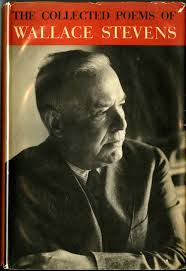
Now, in this latest book, a collection of four interrelated stories, Frank is 68, retired, and living in post-Sandy Haddam, New Jersey, a city name that conjures in the echo chamber of my juke-box-like mind Wallace Stevens’ great lines:

O thin men of Haddam,

Why do you imagine golden birds?

Do you not see the blackbird

Walks around the feet

Of the women about you?

imagesFrank Bascombe has taken Stevens’ advice about jettisoning the wanna-be for the what-is. He seeks to see things as they are, un-misted by sentiment. Here he is in the last story “The Death of Others” talking about simplifying his life:

Indeed for months now — and this may seem strange at my late moment in life (sixty-eight) — I’ve been trying to jettison as many friends as I can, and am frankly surprised more people don’t do it as a simple and practical means of achieving well-earned, late-in-the-game clarity. Lived life, especially once you hit adulthood, is always a matter of superfluity leading on to less-ness. Only (in my view) it’s a less-ness that’s as good as anything that’s happened before — plus it’s a lot easier.

In addition to paring down friendships, Frank is also eliminating certain words and phrases from his vocabulary, words that he believes “should no longer be usable – in speech or any form.” He continues, “Life’s a matter of gradual subtraction” and “a reserve of fewer, better words could help, I think, by setting an example for clearer thinking.”

Here are some of the words and phrases on the chopping block:

poop

friggin’

We’re pregnant

What’s the takeaway

awesome

no problem (as a substitute for thank-you)

soft landing

sibs

hydrate (when it means drink)

reach out

It’s been quite a pleasure growing old with Frank, who in The Sportswriter at 38 tried to overcome the death of his son Ralph by willing away irony but succumbed to what he calls dreaminess and the temptations of extra-marital embraces, which wrecks his marriage and to a lesser extent his writing career.

I’d call him a practical existentialist,* a nephew of good ol’ Binx Bolling from The Moviegoer. What I really love about Frank, though, is his voice, his way with words, how he expresses what I sometimes think so much better than I ever could, for example this description of a mealy-mouthed preacher — “Fike’s morning devotionals all have the tickle-your-funny-bone, cloyingly Christian pseudo-irreverence calculated to make God Almighty as just one of the boys” or this description of searing pain: “my neck had started zapping me, and I’d begun feeling the first burning-needles-prickle-stabs in the soles of my feet, sensations that now [. . .] had travelled all the way up my groinal nexus and begun shooting Apache Arrows into my poor helpless rectum.”

Alas, I’m afraid this book may be the last we hear from Frank, another notable subtraction from the subtractions that old age brings.

If so, so long, pal. It’s been great knowing you.


*I don’t look in mirrors anymore. It’s cheaper than surgery.


On Teaching

For some teaching is a calling – my colleagues Ralph Nordland and Chuck McCarver come to mind. To them, it’s as if teaching is a vocation in the religious sense. These individuals devote their lives in almost monastic fashion to educating young people, in Ralph and Chuck’s cases, educating young people about the profundities and intricacies of history, a subject they revere almost religiously.

James Gasque

James Gasque

These dedicated teachers approach the academic year like generals mapping out a campaign. No improvisation for these masters. Each precisely planned class (to abruptly shift metaphors from the martial to the aesthetic) creates a distinct picture but also serves as a mosaic piece that occupies a place in an arrangement of other pieces that collectively form a “bigger picture” – in Ralph and Chuck’s cases, portraits of civilizations. We’re talking here – if you’ll allow one last metaphor shift — – motifs, tapestries.*

Not coincidently, these teachers demand much, receive much in return, and are almost universally revered by their students.

Another teacher of this ilk was the late James Gasque, a legend at Dreher High School and Heathwood Hall in Columbia.


*I wish I could blame my inability to sustain a metaphor on over-exposure to the attention-span obliterating frenetics of Sesame Street, but that was before my day.

* * *

Still other teachers enter the profession because they love children as a species. They think science or math is cool but don’t live and breathe their chosen subjects the way the “called” teachers do.

Still others — like me — stumble into teaching because they haven’t planned their lives out well, and, in my case, as HL Mencken said, “all that’s required of an English teacher is that he can read and write.”

Plus, you get the summers off.

* * *

Who in his right mind would spend the majority of his life in high school?  I hated it when I was a student at Summerville High: the hierarchies of popularity, the drab concrete walls plastered with bright propagandist posters, the jock friendly administration that suspended you when exercised your First Amendment rights by wearing a black armband to protest a stupid war. The principals, vice-principals, coaches considered non-conformity a personal affront.

T-A67107LIn my case, I majored in English in college because I enjoyed reading and especially poetry. I remember being in kindergarten and checking out old editions of Mother Goose from Summerville’s Timrod Library. I read the rhymes out loud, despite suffering from a speech impediment that rendered s-sounds lispingly and prevented me from pronouncing L-and-R sounds. Hick-o-wee, dick-o-wee, dock.

At any rate, I ended up being a teacher thanks to a series of fortuitous accidents.   Engaged to be married and having dropped out of grad school with 27 hours, I was unemployed and responded to an ad in the paper to teach at community college even though I lacked both of the requirements it demanded, a Masters degree and teaching experience. The ad said to contact Ed Bush, English Coordinator.

So I did, not by sending him a letter or resume but by showing up on campus, standing in a drop-ad line with students, and being hired on the spot, sans resume, sans transcript. As they say, timing is everything.

Years later Ed Bush, who was close friends with the English Chair at my current school, suggested me as a replacement for someone who had been fired. I didn’t realize that the Chair himself had been forced to resign, but thanks to the compassion of the incoming chair (she felt bad for the departing chair who wanted me), I was hired.

Despite my lack of credentials and high school experience, I had published a couple of short stories, and as it turns out, being a working writer is advantageous in teaching writing, so all in all, it’s worked out all right, despite my lack of dedication, my not particularly liking children any more than I do adults or old people, despite my inability to shovel propagandist bullshit (like consoling the losing team by telling them everyone is a winner) or my inability to buy into the latest pedagogical methodology. Yawn.

Anyway, if every teacher were super dedicated, the kids would have 10 hours of homework a day, which might lead to an armed insurrection, or in the case of independent schools, a mass exit for less Spartan education.

So I raise my glass to the average teacher, the Joe or Joanna who does the best she can without sacrificing the rest of her life — romantic relationships, outside hobbies, lazy Sunday afternoons — for the sake of the hormonally unbalanced. After all, it ain’t the best paying job; plus society holds you to a higher standard in your personal behavior than it does doctors, lawyers, and Congressmen.

Designer Porn

Overheard a student say he couldn’t wait until the Fifty Shades of Grey movie came out, so I thought I’d excavate this May 2012 post from the Purgatorio of my defunct blog Late Empire Ruminations.

THE BATH IS A white stone, deep, egg-shaped affair, very designer. Christian leans over and fills it from the faucet on the tiled wall. He pours some expensive looking bath oil into the water. It foams as the bath fills and smells of sweet, sultry jasmine.

EL James, Fifty Shades of Grey

DSC06444Sometimes, heroic individuals sacrifice their happiness, peace of mind, even their lives for the greater good. One thinks immediately of Sarah Smith, pantomime artiste, who, according to her memorial plaque in Postman’s Park, London: Died of terrible injuries received when attempting in her inflammable dress to extinguish the flames which had enveloped her companion January 24 1863.

Think of Sydney Carton, the doomed ne’er-do-well of A Tale of Two Cities, ministering unto the young seamstress as he awaits his self-chosen beheading to save the life of Charles Darnay and the happiness of his beloved Lucie.

Yours Truly

Yours Truly

Or, if you will, think of your humble blogger subjecting his all too delicate sensibility to the vulgarities of EL James’s hyperventilated prose so that he can save you from the experience.

Of course, if you’re reading this blog, you’re hip to the Fifty Shades of Grey phenomenon – the blockbuster bestseller supposedly every woman is devouring, a novel so entrancing that it has transformed ardent feminists into devotees of male domination. That paragon of journalistic integrity Fox News proclaims:

Everyone from so-called “mommy bloggers” to hardcore feminists is hailing the tome as a triumph for women, in spite of the book’s strong themes of female submission at the hands of a high-powered man.

Personal Note: As I read that hardcore feminists see the book as a triumph for women, I feel cognitive dissonance – dyspeptic, incessant – surging from my belly to my esophagus. I am in its Sartrean thrall! Holy Hell, hardcore feminists, how can it be my left brain murmurs as I clamber from my antique desk chair and pad across discount carpet into the master bath to retrieve my Thorazine.

More from Fox:

Television host Dr. Drew Pinsky recently called the book a “rape fantasy” on his HLN show.  Women writers laughed off Pinky’s remarks, saying there is absolutely no reason for men to weigh in on this issue at all, and certainly no reason for them to use the term rape.

Arch-Feminist Jessica Wakeman of Frisky

Arch-Feminist Jessica Wakeman of Frisky

“Why is Dr. Drew speaking on behalf of the fantasies and desires of women, let alone women he hasn’t even met?” Jessica Wakeman of the women’s blog The Frisky told Fox411.

The novel chronicles the sexual awakening of Anastasia Steele, a seemingly asexual college senior English major who has only been kissed twice because none of the fellows she’s met can flip her switch the way that Edmond Dantès and Heathcliff do. Somehow or another, the college newspaper her roommate edits lands an interview with publicity-shy Christian Grey, a man who possesses the beauty of Adonis and the net worth of Nebuchadnezzar. Alas, Ms Steele’s domineering roommate Kate is too sick to conduct the interview so she sends in her stead Ms. Steele, who, perhaps too concerned with the unruliness of her hair or the largeness of her eyes, doesn’t bother to google Mr. Grey in preparation of the interview.

As Steele enters the headquarters of “Mr. Grey’s global enterprise,” the lavishness of the decor works its magic on her like skilled foreplay.

Behind the leather chairs is a spacious glass-walled meeting room with an equally spacious dark wood table [huh?] and at least twenty matching chairs around it. Beyond that, there is a floor to ceiling window and a view of the Seattle skyline that looks out through the city toward the Sound. It’s a stunning vista, and I’m momentarily paralyzed by the view. Wow.

As soon as she lays eyes on Grey, Anastasia’s long repressed hormones break free from the Bastille of their repression, clambering in waves from down there, up, up, up into her cerebral cortex where they hungrily devour all synapses devoted to critical thinking.

So young – and attractive, very attractive. He’s tall, dressed in a fine gray suit, white shirt, and black tie with unruly dark copper-colored hair and intense, bright eyes that regard me shrewdly*. It takes a moment for me to find my voice.

Anastasia swoons as her bare skin comes into contact with Grey’s Rolex

Anastasia swoons as her bare skin comes into contact with Grey’s Rolex

*n.b., Anastasia has not lost her voice because Christian Grey’s tie has copper hair and is shrewdly regarding her. Suggested edit for subsequent editions: Slap a period after tie, capitalize the w of with, place a comma after eyes, substitute he for that, add an s to regard, and you’ll see that it’s Grey not the tie who sports copper hair and is doing the regarding.

Grey himself possesses all of the charm of a Bond villain and employs the same stilted politesse:

“Business is all about people, Miss Steele [. . .] My belief is to achieve success in any scheme one has to make oneself master of that scheme, know it inside and out, know every detail. I work hard, very hard to do that.”

Well, to make 514 page story short, Steele wants to add unconfident Anastasia to his collection of contracted submissives, to have her willingly perform various acts stipulated by the contract she signs  — in short, to completely dominate her. In essence, his wealth and beauty have transformed her from an unconfident, gawky lover of English literature into as vapid a tween as you’ll ever encounter at a Justin Bieder concert.

There is a state-of-the-art [cooking] range. I think I have the hang of it [. . .] Amy Studt is singing in my ear about misfits. This song used to mean so much to me; that’s because I’m a misfit. I have never fitted in anywhere [. . .] I whisk some eggs and turn and Christian is sitting at one of the stools of the breakfast bar, leaning on it, his face supported by his steepled hands. He’s still wearing the T-shirt he slept in. Just-fucked hair really, really suits him, as does his designer stubble.

Amy Studt

Amy Studt

W-t-f, my superego scolds, designer stubble , please! Look at all of the books that remain unread, Remembrance of Things Past, The Mill on the Floss, e.g. – put that trash down immediately. “Okay,” I murmur, my face reddening with shame . . .

Okay, enough, but the question remains – what is it about this poorly written, cliche-ridden, salacious piece-of-shit that has all of womankind in the Late Empire in its throes?

I’m probably wrong, but I don’t think it’s the sex. After all, Mr. Grey doesn’t deflower Ms Steele until page 117. I think the Anastasia’s fast-paced, commodity-laden first person narrative (it reads like a diary) must trigger some atavistic impulse in women to relive their early adolescence. Perhaps they find Anastasia’s lack of confidence endearing, the tug-of- war between her “subconscious” and “inner goddess” familiar, and as they vicariously live her life, their inner tweens emerge, shattering, as Anastasia might put it, their critical faculties into a thousand little pieces.


The Grammarians: Covers

Roll over, Edmund Burke!

??????????????????????????????????????????????????????????????????????

Believe it or not, George Wills, Tucker Carlson, and David Brooks played together in a cover band in the early ’80’s called the Grammarians.  Here’s an exclusive playlist of their first and only album, a self-published collection of cover songs with grammatically correct lyrics. Unfortunately, all of the albums have been bought by the Koch Brothers and destroyed, along with the original tapes.

Here’s what we’re missing:

“I Can’t Get Any Satisfaction” – The Rolling Stones

“It Isn’t I, Babe” – Bob Dylan

“Love Me Tenderly” – Elvis Presley

“Everyone Has Something to Hide Except for My Monkey and Me” – the Beatles

“Whom Do You Love” – Bo Diddley

“What Did I Say” – Ray Charles

“There’s Nothing like the Real Thing” – Marvin Gaye and Tammy Terrell

“Lie Down, Sally” – Eric Clapton

“There Isn’t Any Sunshine When You Are Gone” – Bill Withers

“I Feel Well” – James Brown

The Return of the Ethnologist

As Folly Beach’s most eminent ethnologist — why mince words — I have devoted much of the last two decades living among the natives, sharing their waves, participating in their Dionysian rituals, floating in their float frenzies, watching their parades. (You can read my previous studies here: ST PATRICK’S  DAY, FOLLYPALOOZAFLOAT FRENZY, XMAS PARADE).

10525673_812489918818714_5466518348644206312_n
Today, I again don the pith helmet to participate in the Folly Porch Fest, an odd ritual. Native householders invite complete strangers to play musical compositions on their front porches. Afterwards, the participants will gather at Chico Feo as the sun sets for the so-called After Party.

I, too, will be there, having sacrificed the experience of getting to watch my beloved alma mater’s mighty eleven lose to their orange-clad rivals from that phallus-shaped state that claims the alligator as its totem.

Why? you ask. Because I place science above mere personal pleasure.

Nevertheless, as time’s winged chariot has swept me from bushy-headed youth to Gobi-domed senescence, I find myself turning my studies to more sedentary pursuits as I zoom out from the folkways of the small strip of land appropriately named Folly Island to obtain a wider purview of American culture.
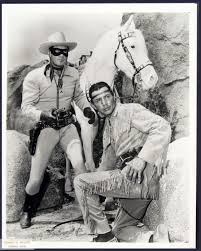
images-2More specifically, I have been studying old episodes of the Lone Ranger and the Roy Rogers Show, comparing the popular entertainment of the Cold War era with the irony-surfeited popular entertainment of the new millennium.

As it turns out, the Lone Ranger series attempted by subterfuge to eradicate bigotry through the symbiotic relationship that the Lone Ranger and Tonto share, the former an alienated white man devoted to establishing law and order in the territorial West, the latter a red man whose nobility so outshines those of the rustlers, murderers, and con men he battles (between commercials for funeral insurance and orthopedic beds) that it should be plain even to Lester Maddox or George Wallace that it’s not the color of a man’s skin that determines the content of his character.

I’ve accumulated a container-ship worth of data to support this argument, but shall offer only three short examples, which appeared in 1956’s Season Five. In episode 204, “A Message from Abe,” the Lone Ranger disguises himself as Abe Lincoln and delivers the Gettysburg Address to a town foaming at the mouth to lynch an innocent.   In episode 216, “Mission for Tonto,” the “noble savage” explains to an incredulous gunshot victim why he Tonto is helping him despite the bigotry he had displayed against the “Redskin” who is now saving his life.

Tonto: All men are brothers. Some have white skin, some have red skin, some have black skin, but we all bothers.

Lastly, in episode 217, “Canuck” the Lone Ranger explains to a French Canadian émigré why the town has persecuted his family. “It’s the age old human tendency to dislike people who speak a different language,” the Masked Man explains.

03_lone_ranger_5As a pre-pubescent viewer growing up in the segregated South, these lessons didn’t consciously register with me, nor, not surprisingly, did I pick up on the obvious gayness — albeit celibate — that the Lone Ranger and Tonto embrace since I didn’t have a clue about heterosexual sex, much less homosexuality.

On the other hand, The Roy Rogers Show possesses all of the high-mindedness of a trained seal act. The setting is some odd anachronistic town in the Old West where everyone locomotes via horse except for comic sidekick Pat Brady who drives a jeep named Nellybelle.

Roy and his wife Dale Evans run a cafe where Pat Brady is chef. Although Roy and Dale are champions of justice, they do seem to take a bit of sadistic pleasure in mocking poor Pat Brady who obviously suffers from some sort of mental disability that might be termed in those politically incorrect days as “mild retardation.” Think of him as the dim-witted father of Barney Fife.

The highlight of each episode is a bare knuckled fist fight where the combatants exchange a series of jaw-crunching haymakers that might give a rhinoceros a concussion. (The Lone Ranger and Tonto augment judo moves with their fisticuffs).

As in the Lone Ranger, justice always wins over nefariousness, and irony never rears its mocking head.

Comical Sidekick Pat Brady

Comical Sidekick Pat Brady


The Little Things I’m Thankful For

My school highlights a virtue each month, and not surprisingly, given the season, this month’s virtue is Thankfulness. Each morning a quote extolling gratitude appears in the daily announcements, and these quotes make sense to me. You’re much better off, much more likable, if you project an aura of humility as opposed to one of entitlement.

Not to be a whiner, but the last 6 months have been a trying time, what with the death of a childhood friend/college buddy, our deck catching on fire (same day), Judy’s diagnosis of cancer, a rat infestation resulting in the replacement of our air-conditioning duct work (objective correlative for cancer), my mother’s stroke, the death of another dear friend, not to mention the return of the Chicken Curse.

But what the hell? I can think of some people who’ve had it worse. — Job from the OT, the chick in Boxing Helena, Bruce Jenner — so I’ve decided to compile a list of the little things I’m thankful for — not obvious big things like being thankful I’m not a leper or that a gigantic asteroid isn’t hurtling towards earth in a collision course — but the little things that can make a big difference in your day-to-day existence.

1. I’m thankful I’ve gotten over my former compulsion to blindly follow the strictures of correct grammar; otherwise, this piece would be called “Little Things for Which I’m Thankful,” and I would have typed “the compulsion blindly to follow the strictures of correct grammar.”

2. I’m thankful I don’t live next door to a motorcycle mechanic.

3. I’m thankful I’ve never been stuck in an elevator — especially stuck in an elevator with either or both of Car Talk announcers (I know one’s dead but so is Buford Pusser, and I’m thankful I’ve never been stuck in an elevator with him as well).

Diamond Dogs

Diamond Dogs

4. I’m thankful that in 1974 my girlfriend talked me out of getting David Bowie’s Diamond Dogs album cover tattooed on my chest.

5. I’m thankful that no one in my family “talks in tongues.”

6. I don’t know about you, but I’m thankful Dylan went electric.

7. I’m thankful that our rescue dog Saisy doesn’t suffer worse mental problems than PTSD, an insatiable appetite, the propensity to snap at people who pet her for too long. I’m also thankful that Kelly Campbell didn’t sue us when Saisy bit Kelly’s hand off.

8. After decades of drinking Old Milwaukee, Schlitz, Milwaukee’s Best, Carling Black Label, Bud, Miller, Busch, I’m thankful for the craft beer movement.

9.  I’m thankful that despite my tragic – let’s call it Sophoclean – vision of the world, I still possess what my grandmother called “a naturally sunny disposition.”

10.  I’m also thankful for my blog readers. Now, rather than waiting around for rejection slips, I can publish whatever I want, no matter how shitty.

Happy Thanksgiving!

Buford Pusser

Buford Pusser


South Carolina’s Musical Heritage

To say South Carolina is a colorful state is like saying Orson Welles had a weight problem, Yul Brenner was follicularly challenged (better add a reference someone under 60 might recognize) or Justin Bieber isn’t what you would call winsome.

Damn right we’re colorful – got a Asian-Indian-American governor against immigration, a black senator backing legislation that makes it more difficult for blacks to vote, a white not-so-closeted gay senator against marriage equality. Got a state university that houses its “Honor College” in a building named for former governor/senator who went by the moniker “Pitchfork Ben” and was an outspoken advocate of white supremacy and lynch laws.

hunleyfuneral11We put on elaborate funerals for found Confederate bones, wear seersucker suits, interbreed, whoop it up all the time (cf. Southern Charm). In fact, I hear James L Petigru’s quote that South Carolina’s “too small to be a republic and too large to be an insane asylum” so often it’s almost become a cliché.

Given our eccentricities, it follows South Carolina boasts a bumper crop of potent popular music, and it does — to a certain extent.

* * *

Each year the magazine The Oxford American puts out a Southern Music edition that comes with a cd featuring an eclectic selection of songs from the South. The last few years, the editors have featured the songs of one state; e.g., Louisiana, Alabama, Mississippi, Arkansas, and Tennessee have all had cds devoted to their home grown music. Because of the rich treasure trove these states possess, the editors have refrained from choosing the states’ most famous or most accomplished musicians but have opted instead for a [redundancy alert] smorgasbord of arcane eclecticism. For example, you won’t find Iris DeMent or Robert Lockwood, Jr. on the Arkansas cd; however, Suga City makes the cut.

Iris DeMent

Iris DeMent

Whenever the Oxford editors get around to culling some tunes for the South Carolina cd, they’re not going to have a profound number of musicians to choose from, but damn, they’re going to have some true masters who hail from the Palmetto State. The problem, I suspect, will be which James Brown or Dizzy Gillespie tune to showcase.

What follows is my South Carolina cd with the caveat that I ain’t no expert and will no doubt omit some obvious choices. Also, I’m not listing the musicians/songs in the order that would appear on the cd but in the order they occur to me.

* * *

One gripe I have with the Oxford cds is that they can sound a bit too archive-y, if you know what I mean. I like listening to cds in the car on the way to work, not necessarily listening to them as an exercise in musical scholarship. Therefore, I’d match the following SC musicians with these songs.

Maurice Williams and the Zodiacs – “Stay” [Lancaster, SC]

The Swingin’ Medallions – “Double Shot of My Baby’s Love” [Greenwood]

The Marshall Tucker Band – “Can’t You See” [Spartanburg]

Eartha-Kitt-Bad-But-Beautiful-375528Because Eartha Kitt’s “C’est Bon” has already appeared on an earlier Oxford compilation, I’d go with maybe “I Want to be Evil” or “Je cherce un homme.” {North]

Of course, the geniuses Dizzy Gillespie [Cheraw] and James Brown [Barnwell] have left profound bodies of work. I’m too lazy to even try to come up with representative songs. It’s no fun, too fraught with danger.

 * * *

Okay we have 6 songs so we need at least 14 more. SC beach music needs more representation than the Medallions, so Bill Pinckney’s Drifters [Daizell, SC] is an obvious choice. Let’s go with “There Goes My Baby.”

Chubby Checker - Twisting USA Album CoverChubby Checker [Spring Gulley] checks in [forgive me] with “Let’s Twist Again” because it’s such pure rock-n-roll, but “Limbo Rock” would be a close second.

As far as country/Americana goes we got Bill Anderson [Columbia] “Po Folks” and the country swing of Uncle Walt’s Band [Spartanburg] featuring Champ Hood, David Ball, and the late Walter Hyatt. “Gimme Some Skin” would be my choice.

I love gospel, and we have an impressive number of groups to choose from, but in deference to my pal Jo Humphreys, I’m going with the Brotherhood Gospel Singers [Mt. Pleasant] “Mary, Don’t Weep.”

Now, it’s blues time. The Reverend Gary Davis’s {Laurens County] “You Got to Move” or “Prodigal Son” will be familiar to Rolling Stone aficionados. Pinkey “Pink” Anderson {Laurens] certainly deserves the nod above Drink Small [Bishopville].

Though I’m not a big fan, it would be churlish not to include Hootie and the Blowfish [Charleston]. You choose.

Now for some lesser known South Carolina artists. Julius Cobb’s {Greenville] soul ballad “Great Big Change in Me” with its horns and killer vocal (featuring talking) is an obscure gem (and my former roommate Warren Moise once played keyboards with one of his bands). You can listen to “Great Change in Me” HERE.

Even though they’re from North Carolina, we could sneak Jump Little Children into the mix, but why do that when you could include The Fire Apes’ [Charleston] “Let Me Know” or “Lori.”

killerwhales_largeEver heard of the Killer Whales [Charleston]? Well, I have, and their cover of the Melodians’ “Johnny Too Bad” adds a much needed Caribbean lilt into the mix.

How bout some jazz fusion funk via Alphonse Mouzon [Charleston? “Funky Snakefoot” will do in a pinch.

Okay, I’m down to two Do I want to throw a bone to the younger set with a selection from Iron & Wine or add a couple of unrepresented country crooners like Josh Turner?

Naw, I’m going with the Blue Dogs’ “Walter” [Charleston] and Danielle Howle’s [Columbia] “Oh Swear.”

Jim Crow

Jim Crow

By the way, if you’re reading this before 15 November 2014 and are in the Charleston area, come out and see two of my favorite acts at the Folly Beach Front Porch Festival, i.e. Jim Crow going solo and Po Dunk led by brother/frontman John Fleming Moore. It starts at 2 at various venues in walking distance of Center Street.


Thank you, Obama

Remember the halcyon days before 9/11 when you could pack liquids in your carry-on bags and saunter shod right up to the metal detector without feeling terrified that you were going to set the damn thing off and be subjected to a strip search?

I’m talking about those by-gone days when passing through airport security was as informal and quaint as the tip of a cap.

Guess what, my friend. Those days are over.

Thank you, Obama!

ObamaRadicalMarxist-1

What do Ed McMahon, Farrah Fawcett, Michael Jackson, Karl Malden, Robert McNamara, Walter Cronkite, Les Paul, William Safire, David Carradine, and Gidget have in common?

They all died in the summer of 2009, the so-called Summer of Death. Wikipedia posits that “the sheer number of celebrity deaths, coupled with increasing nostalgia in the population of Western Nations, may have increased the outpouring of grief during the summer.”

What Wikipedia conveniently forgets to mention is that the Summer of Death was the first summer of the Barack Hussein Obama administration!

Thank you, Obama!

How often do passenger flights end up disappearing without a trace? Can you name one? By the way, Amelia Earhart doesn’t count because her ill-fated journey wasn’t a passenger flight but an experimental attempt to circumnavigate the globe.

Flight 739

Flight 739

Okay, there are two. The first one was the Flying Tiger Line Flight 739 that had been chartered by the US government in 1962 to transport soldiers to Viet Nam. After refueling in Guam, the plane took off, made routine radio contact, and was never heard of again. The second, of course, is Malaysian Airlines flight 370. What do the years 1962 and 2014 have in common? Democratic administrations, that’s what.

Thank you, Obama!

Ever seen those heartbreaking before-and-after photos of Lincoln at the beginning and the end of his presidency? If you think he aged during those 49 months dig these photos of me, one taken before Obama’s Presidency, the other taken during his presidency.  Can you guess which is which?

rusty prom wes with tux


Thanks a lot, Obama! (and Harrison Moore for the idea)

Mojo Malfunction

mojo bags


An experimental African-Chaucerian doggerel dub


Mojo bag, black cat bone,

my gris-gris ain’t working

on her heart of stone.


Adamantine-hard,

cold as Iceland steel,

it know how to beat

but not how to feel.


So I went to see the hoodoo man

down at the shaman shack.

begging for some conjuration

to launch me a love attack.


A week’s pay he took from me

and handed me a sachet sac.

He claim it reversal be so strong

it could turn Strom Thurmond black.


The very next day when the sun uprose

and I was moaning in bed,

she slid a note beneath my door,

and this is what it said:


“I done slap a ‘straining order

on your obsessive ass.

I’m sick and tired, fool,

of this never-ending harass.


“Get yo ass to the record store

and check out the Marvelettes.

I wouldn’t be your lover, baby,

if you owned 76 Corvettes.


“Listen to that song they sing,

‘Too Many Fish in the Sea.’

Cast yo line in another pond

And for Christ’s sake, let me be.”


I cry: O, what yo gonna do, mama,

when yo problems get like mine?

Take a mouth full of sugar,

drink a bottle of turpentine.


Mojo bag, black cat bone,

my gris-gris ain’t working

on her heart of stone.


Free Lesson Plan: Teaching Jung Via Borges (Machete Edition)

Background

One question teachers abhor is “Did I miss anything in class yesterday?”

Seniors, what follows is what you missed in class Tuesday. Teachers, if you’re looking for a lesson plan in teaching Jungian literary criticism, scroll down to “More Background.”

Although I don’t consider Jung’s theory of the Collective Unconscious scientifically valid, I do think it offers a compelling example of how humans tend to project their biology onto Nature/the Cosmos in the conjuration/production of myth/scientific theory.

To oversimplify, Jung believed that each human inherits through her genes a vast network of unconscious latent symbols – what he called archetypes – and that this inherited, universal set of unconscious preconceptions answers the question: Why do religions and myths parallel one another? These preconceptions take root and bloom in the context of various climates but maintain many similar, basic characteristics despite being products of unique cultures.

According to Jung, both Taos tribesmen and Tibetan monks possess the self-same archetypes – the same building blocks of mythology – and, though separated by 12,458 kilometers and profound cultural differences, both produce medicine wheels/mandalas out of sand that – well, see for yourself:

navajo_sand_painter original_1345070734


Joseph Campbell popularized this idea of the universality of mythic motifs with his book The Hero with a Thousand Faces. In it he charted the prototypical hero(ine)’s journey. Often, the hero is the product a miraculous birth (Moses, bulrushes) and is called upon to begin a quest (God, Moses), but sometimes he ain’t too keen on it (Moses, stuttering).

2013-02-28-HeroesjourneyThe journey starts with a Departure from the Homeland and a passage across a Mystical Threshold into a strange Other World. There the hero(ine) undergoes trials, receives supernatural aid, visits the Underworld (e.g., Hades/the belly of a whale), and finally returns with special knowledge to become Master/Mistress of Both Worlds. Variations abound, but the basic motifs are universal.

Campbell supports his universalist argument with an epic catalogue of examples from a broad range of “primitive, Oriental, and Occidental” hero myths.   Once again, to oversimplify, the circular journey of the hero(ine) is in essence the journey of maturation from childhood and adolescence into adulthood — through mid-life crisis — and finally into the realm of wisdom.

In other words, the trials of the mythic hero are an outward projection of an individual’s inward journey into his unconscious where the individual unearths archetypes, brings them to the surface, and harnesses their energy.

Jung called this process of bringing archetypes to light individualization.

Individualization

If you’ve read Herman Hesse’s Steppenwolf, you’ve vicariously undergone individualization.

Here’s an amphetametic synopsis of Steppenwolf with Jungian archetypes in bold:

steppenwolf-001Harry Heller’s has confused his ego with his persona (public mask), which reduces him to a mere intellectual, a self-important bore who c/rudely criticizes the household art of a former colleague who has invited him to dinner. Haller attributes his gauche behavior to an inner beast, his shadow (instinctual territorial/sexual badness), which he calls the Steppenwolf. (Think Jekyll/Hyde, Bruce Banner/Incredible Hulk).

Haller’s ego has decided to cut his/its throat, but in a bar meets Hermine, his anima/doppelganger (inner female/twin), who teaches him how to dance, arranges for him to get laid, and blows his mind in a trippy Magic Theater where he discovers his two-dimensional view of himself as intellectual/wolf is over simplistic bullshit. *

Unfortunately, Haller never quite comes to understand that it’s his narcissism that makes his so wretchedly unhappy. Haller can’t, as Pablo, the Self archetype (inner Buddha/Jesus) points out, laugh at himself.

Okay, here’s how Jung claims individualization ideally works: Your ego recognizes that your public face (persona) isn’t the real you, that there’s something lurking beneath, the shadow. You tend to project your dark side, your shadow, on individuals who outwardly exhibit repressed negative aspects of your psyche that you don’t want to face (e.g., I hate the comedian Dennis Miller because he’s an arrogant, pompous, vocabulary-brandishing, ideologically opinionated asshole).

The anim/a/us* (the opposite sexed component of your psyche) plays the role of mediator by introducing your ego to its shadow. The ego knowingly incorporates the shadow’s negative but powerful instinctual wisdom into your waking consciousness, and presto, the ego has incorporated three submerged archetypes – the persona, the anima, and the shadow — into conscious recognition, which deepens and cultivates its/your humanity.

*Choosing “bullshit” instead of “hogwash” suggests I have successfully incorporated my shadow.


More Background

I teach a course called “Psychoanalytical Criticism, Modernism, and Paris in the 20’s.” Here’s what we did in class Tuesday, which I’m going to present as if it’s a lesson plan for teachers surfing the web for ideas about how to introduce students to the Jungian concepts of ego, persona, shadow, and doppelganger (mysterious twin).

Free Lesson Plan

Rene Magritte : Not to be Reproduced.

Rene Magritte : Not to be Reproduced.

This lesson occurred in an 85-minute block class, but, of course, can be divided into two or even three 40-45 minutes classes (i.e., if you incorporate the previous day’s lesson).

On the day before this lesson, Monday, I gave a lecture on the hero’s journey, socratically eliciting from students examples of heroic magical births from popular culture. E.g., Me: “You know of any heroes who had miraculous births?” Student: Yeah, Superman. Me: Explain, etc. We followed Campbell’s designated steps (see above) full circle with students citing parallel situations from other stories they’ve read.

For Tuesday’s homework, they read John Galsworthy’s “The Japanese Quince,” a freebie from the Public Domain you can download HERE.

Amphetametic synopsis of “The Japanese Quince”:

Mr. Nilson, “well known in the city,” with “firm, well-coloured cheeks” and “neat brown moustaches” and “round, well-opened, clear grey eyes” is troubled by a strange sensation in his throat and “a feeling of emptiness just under his fifth rib.”

Uncharacteristically, he walks outside to “take a turn in the Gardens” and hears a “blackbird burst into song.” The blackbird is “perched in the heart” of a tree in bloom. Mr. Nilson smiles and pauses: “the little tree was so alive and pretty! And Instead of passing on, he started there smiling at the tree.”

Feeling smug that he’s all alone there exclusively to enjoy the tree, he discovers that a “stranger” is standing next to him. He recognizes the stranger as his next-door neighbor Mr. Tandram, “well-known in the city” and who is “of about Mr. Nilson’s own height, with firm well-coloured cheeks, neat brown moustaches, and round, well-opened, clear grey eyes.” Both wear identical outfits and have newspapers clasped behind their backs.

The two engage in an awkward conversation about the tree, which they discover is a Japanese Quince because it is labeled.

It suddenly strikes Mr. Nilson that “Mr. Tandram looked a little foolish,” so he says “good morning” and retreats back into his house as does Mr. Tandram in the identical fashion.

The story ends with this sentence: “Unaccountably upset, Mr. Nilson turned abruptly into house and opened his morning paper.”


Amphetametic new critical reading of “The Japanese Quince”:

The protagonist, whose name can be transposed as “Son-of-Nothing” is a flat, static character who isn’t conscious of the story’s central conflict: that he leads a static, loveless life (note he feels an emptiness beneath his fifth rib where his heart should be).

In his adventure outside he encounters organic nature, the glories of spring, beautiful birdsong, but his encounter with his alter ego/antagonist Mr. Tandram, whose name can be transposed as “drop of boredom,” drives him back inside the sterile confines of his constricted existence.

The fact that protagonist and antagonist are both flat static characters beautifully meshes with the story’s theme of soulless materialism and the difficulty of overcoming entrenched routine.

Amphetametic Jungian reading of “The Japanese Quince”:

An ego who has confused its persona with itself is confronted by the doppleganger archetype who attempts to have the ego to see the absurdity of its persona in a mirror..  The story also can be read as a non-hero’s journey: he leaves home, crosses the threshold into a mysterious land, only to be frightened and to retreat home without having gained the secret to existence.


Before we discuss “The Japanese Quince,” I ask my students answer the following questions on paper in 100 words or fewer: Who am I? Where am I headed? Why? I assure them that I’m not going to take up their writing nor have them read their responses outloud unless they want to.

I then hand them this short piece by Borges:

Borges and I

The other one, the one called Borges, is the one things happen to. I walk through the streets of Buenos Aires and stop for a moment, perhaps mechanically now, to look at the arch of an entrance hall and the grillwork on the gate; I know of Borges from the mail and see his name on a list of professors or in a biographical dictionary. I like hourglasses, maps, eighteenth-century typography, the taste of coffee and the prose of Stevenson; he shares these preferences, but in a vain way that turns them into the attributes of an actor. It would be an exaggeration to say that ours is a hostile relationship; I live, let myself go on living, so that Borges may contrive his literature, and this literature justifies me. It is no effort for me to confess that he has achieved some valid pages, but those pages cannot save me, perhaps because what is good belongs to no one, not even to him, but rather to the language and to tradition. Besides, I am destined to perish, definitively, and only some instant of myself can survive in him. Little by little, I am giving over everything to him, though I am quite aware of his perverse custom of falsifying and magnifying things.

Spinoza knew that all things long to persist in their being; the stone eternally wants to be a stone and the tiger a tiger. I shall remain in Borges, not in myself (if it is true that I am someone), but I recognize myself less in his books than in many others or in the laborious strumming of a guitar. Years ago I tried to free myself from him and went from the mythologies of the suburbs to the games with time and infinity, but those games belong to Borges now and I shall have to imagine other things. Thus my life is a flight and I lose everything and everything belongs to oblivion, or to him.

I do not know which of us has written this page.

Obviously, once again we have here a conflict between an ego and persona. Elicit Socratic responses from the students so they understand the nature of the conflict.

We then discuss “The Japanese Quince.”

I then have them read another piece by Borges called “El Etnógrafo.” I’m indebted here to William Rowlandson’s essay ” Confronting the shadow: the hero’s journey in Borges’ ‘El Etnógrafo,'” which you can purchase for $32.95 + tax HERE. If I weren’t teaching an 85 minute class I would have assigned the story for homework.

Here it is in English:

The ethnographer

Jorge Luis Borges

Translated by Andrew Hurley

I was told about the case in Texas, but it had happened in another state. It has a single protagonist (though in every story there are thousands of protagonists, visible and invisible, alive and dead). The man’s name, I believe, was Fred Murdock. He was tall, as Americans are; his hair was neither blond nor dark, his features were sharp, and he spoke very little. There was nothing singular about him, not even that feigned singularity that young men affect. He was naturally respectful, and he distrusted neither books nor the men and women who write them. He was at that age when a man doesn’t yet know who he is, and so is ready to throw himself into whatever chance puts in his way — Persian mysticism or the unknown origins of Hungarian, the hazards of war or algebra, Puritanism or orgy. At the university, an adviser had interested him in Amerindian languages. Certain esoteric rites still survived in certain tribes out West; one of his professors, an older man, suggested that he go live on a reservation, observe the rites, and discover the secret revealed by the medicine men to the initiates. When he came back, he would have his dissertation, and the university authorities would see that it was published. Murdock leaped at the suggestion. One of his ancestors had died in the frontier wars; that bygone conflict of his race was now a link. He must have foreseen the difficulties that lay ahead for him; he would have to convince the red men to accept him as one of their own. He set out upon the long adventure. He lived for more than two years on the prairie, sometimes sheltered by adobe walls and sometimes in the open. He rose before dawn, went to bed at sundown, and came to dream in a language that was not that of his fathers. He conditioned his palate to harsh flavors, he covered himself with strange clothing, he forgot his friends and the city, he came to think in a fashion that the logic of his mind rejected. During the first few months of his new education he secretly took notes; later, he tore the notes up — perhaps to avoid drawing suspicion upon himself, perhaps because he no longer needed them. After a period of time (determined upon in advance by certain practices, both spiritual and physical), the priest instructed Murdock to start remembering his dreams, and to recount them to him at daybreak each morning. The young man found that on nights of the full moon he dreamed of buffalo. He reported these recurrent dreams to his teacher; the teacher at last revealed to him the tribe’s secret doctrine. One morning, without saying a word to anyone, Murdock left.

In the city, he was homesick for those first evenings on the prairie when, long ago, he had been homesick for the city. He made his way to his professor’s office and told him that he knew the secret, but had resolved not to reveal it.

“Are you bound by your oath?” the professor asked.

“That’s not the reason,” Murdock replied. “I learned something out there that I can’t express.”

“The English language may not be able to communicate it,” the professor suggested.

“That’s not it, sir. Now that I possess the secret, I could tell it in a hundred different and even contradictory ways. I don’t know how to tell you this, but the secret is beautiful, and science, our science, seems mere frivolity to me now.”

After a pause he added: “And anyway, the secret is not as important as the paths that led me to it. Each person has to walk those paths himself.”

The professor spoke coldly: “I will inform the committee of your decision. Are you planning to live among the Indians?”

“No,” Murdock answered. “I may not even go back to the prairie. What the men of the prairie taught me is good anywhere and for any circumstances.”

That was the essence of their conversation.

Fred married, divorced, and is now one of the librarians at Yale.

8465_originalHere, as Rowlandson points out, we have the journey of the hero, Murdock, a “respectful” and trusting young man, i.e., uninitiated, who leaves his university to live with Native Americans who represent Jung’s shadow.  Through his initiation Murdock learns “to dream in a language that was not that of his fathers.” As Rowlandson points out, one of Murdock’s ancestors had been killed by “Indians” who in Western culture have been traditionally denigrated as “savages.” After a series of trials, the shaman of the tribe gives Murdock “the tribe’s secret doctrine.” He then returns home an utterly changed human being.

Note the difference from him and Mr. Nilson/Tandram

I end the class by having volunteers read their answers of who they are, where they are headed, and why.

So, yes, absentee, you did miss something Tuesday. You should borrow someone’s notes.