
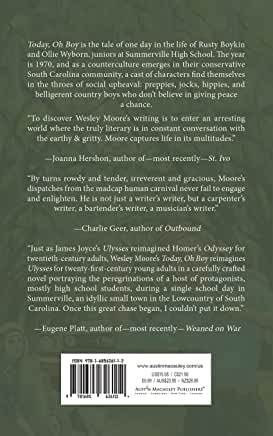
In my new novel Winter Break, lovely Jill Birdsong is sitting in the Ashley Plaza cinema in 1972 with her girlfriends watching the Robert Redford feature Jeremiah Johnson. Here’s a brief excerpt (note: Ollie is her slightly-on-the-spectrum ex-boyfriend from high school):
Although Jill admires the scenery, she never becomes fully absorbed in the story. At the moment, Jeremiah, on horseback, has encountered an Indian burial ground featuring intact human skeletons. If Ollie were with her, he would explain on the way home that in real life those skeletons’ bones would be scattered on the ground because their tendons and ligaments would have decomposed. The slightest scientific inconsistency would ruin a movie for him, whereas she recognizes that filmmakers sacrifice verisimilitude to produce the most profound emotional response they can from an audience. A pile of scattered bones wouldn’t be nearly as creepy as the skeleton she sees now with its mouth wide open in an eternal silent scream.
I’m with Jill on this. Mainstream directors of non-documentaries are under no obligation to depict mundane reality scientifically; they manipulate reality to entertain audiences and produce an emotional response. So when Caroline and I drove to the Terrace Theater last week to see The Odyssey, I wasn’t expecting the dialogue to be rendered in Linear B Greek dactylic hexameter with subtitles in English nor for the episodic plot to be presented in the identical order as the incidents appear in the epic. I merely hoped to be entertained, and if that were to happen, I needed to forget that I was sitting in a theater watching a movie—to echo Coleridge’s brilliant phrase—I needed to suspend my disbelief willingly.
We arrived early so we could enjoy a beer in the lobby when Caroline heard someone calling my name.
“He’s deaf,” Caroline shouted to the woman, who came up to me and said, “I don’t know if you remember me, I’m Soren, I worked with David on the movie.”[1] In fact, she was the assistant director and really impressed me when I visited the set for a cameo. She asked what we were seeing, and when I said The Odyssey, she broke out into an enormous grin and extolled the movie as a masterpiece in visual storytelling.
And to be truthful, the movie was a very quick three hours, which is saying a lot.
On the other hand, during those three hours, I never, except for a couple of instances, successfully suspended my disbelief. Not only that, while I was watching, I pondered how Sam Peckinpah or Federico Fellini might have handled some of these sequences.
The problem isn’t that Nolan sacrificed verisimilitude; for me, he butchered it like the Trojan warriors in the movie who looked like they’d somehow leapt from a video game console onto the screen. We’d just seen the trailer for the new Spider-Man flick, and the fight scenes in the Odyssey were very similar. Both embraced the video-game aesthetic of quick-cut mayhem: time speeded up, bodies being flung against walls (or in the trailer skyscrapers), and an ear-assaulting din of what all hell breaking loose might literally sound like. I was happy that there was little blood, though. I squeamishly prefer cartoon violence, but in the Seventh Circle of Dante’s Inferno, Sam Peckinpah was howling. The extended fight scenes did have one very practical advantage: I could slip out (we were on the aisle), urinate, buy two more drinks, and return, and the scene I’d left would still be roaringly crashing along.
What probably bothered me the most was Odysseus’s flat Midwestern accent and his calling Laertes and Anticlea “Mom and Dad.”[2] And since he talked throughout the movie, his accent consistently swept me away from the ancient Aegean coast to a Walmart in Dayton, Ohio.
Essentially, Christopher Nolan’s Odyssey is a middlebrow 1950s-era Hollywood epic, but even less sexy. Calypso, the lotus-drug-dealer and Odysseus’s lover, dresses primly, her breasts always carefully sheathed. Circe, the sex-crazed witch in the epic who transforms Odysseus’s crew into swine, is a dowdy, disgruntled middle-aged woman who comes off like an angry old hippie. We don’t descend into Hades (alas, no Cerberus), are denied glimpses of seductive sirens singing out to Odysseus, as he thrashes, bound to the mast of the ship. Fellini, more comfortably situated in Dante’s Second Circle, was howling, nevertheless.
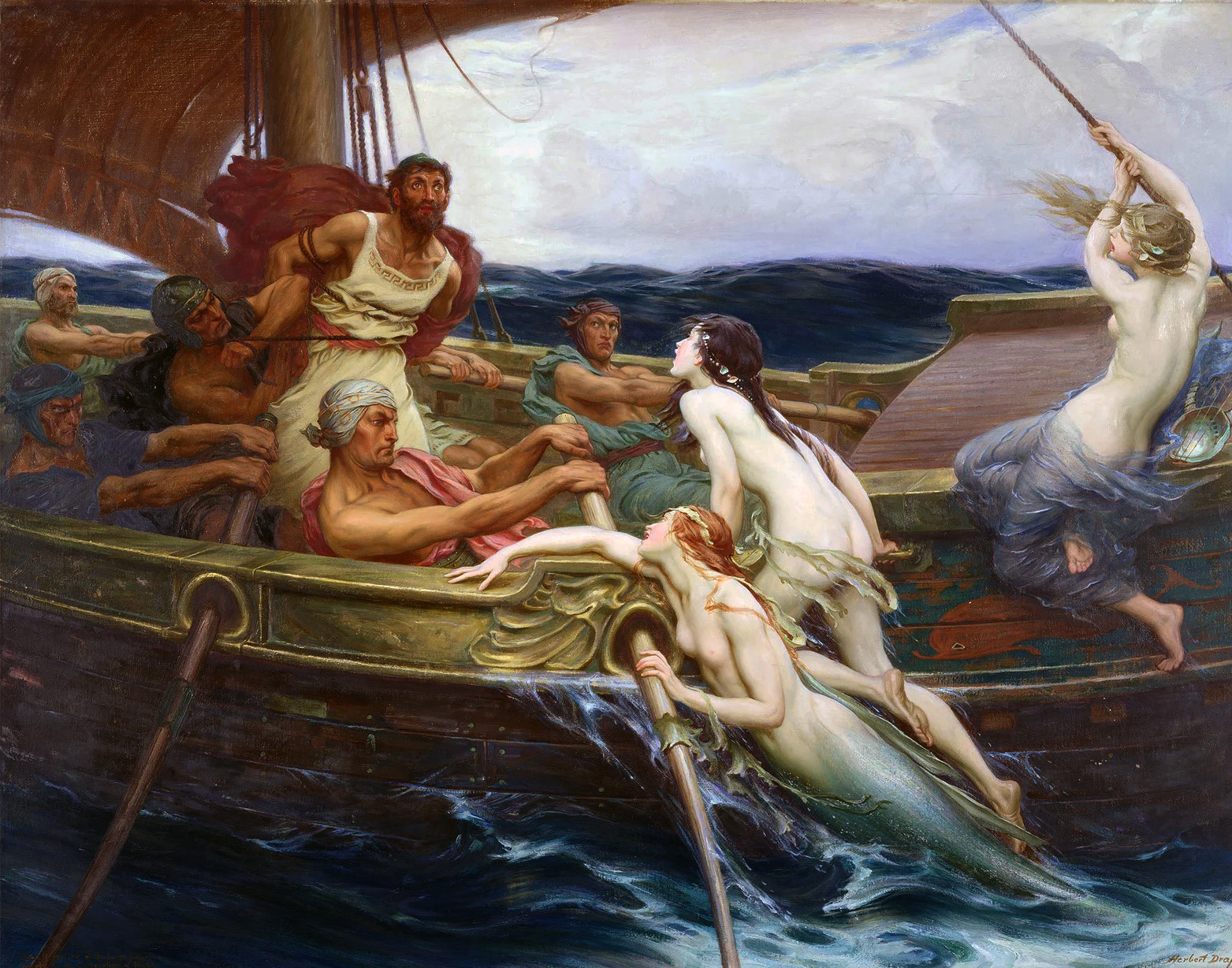
Maybe all of that is the secret of its great success: It inoffensively transforms the butchery and sex and cannibalism into a visual feast palatable to a large cross-section of diners. If you don’t know the Odyssey, haven’t seen Julie Taymor’s Titus or Fellini’s The Satyricon, I suspect you’d be much more inclined to enjoy the spectacle. Soren obviously knows more about movies than I do, and my friend Mary Goff, a talented visual artist and poet, the antithesis of middlebrow, absolutely loved it. We enthusiastically discussed the film in detail for forty minutes, and I was delighted to hear her passionately sing its praises.
We were discussing a movie we’d both seen on the big screen (albeit not an IMAX), and in the age of streaming, that’s something.
[1] Summerville ’70, a fifteen-minute short inspired by my novel Today, Oh Boy, which coincidentally features Logan Marshall-Green, who plays Melanthius in the Odyssey.
[2] In fact, I’d have everyone speak in formal, slightly archaic English to make it seem just a tiny bit foreign.
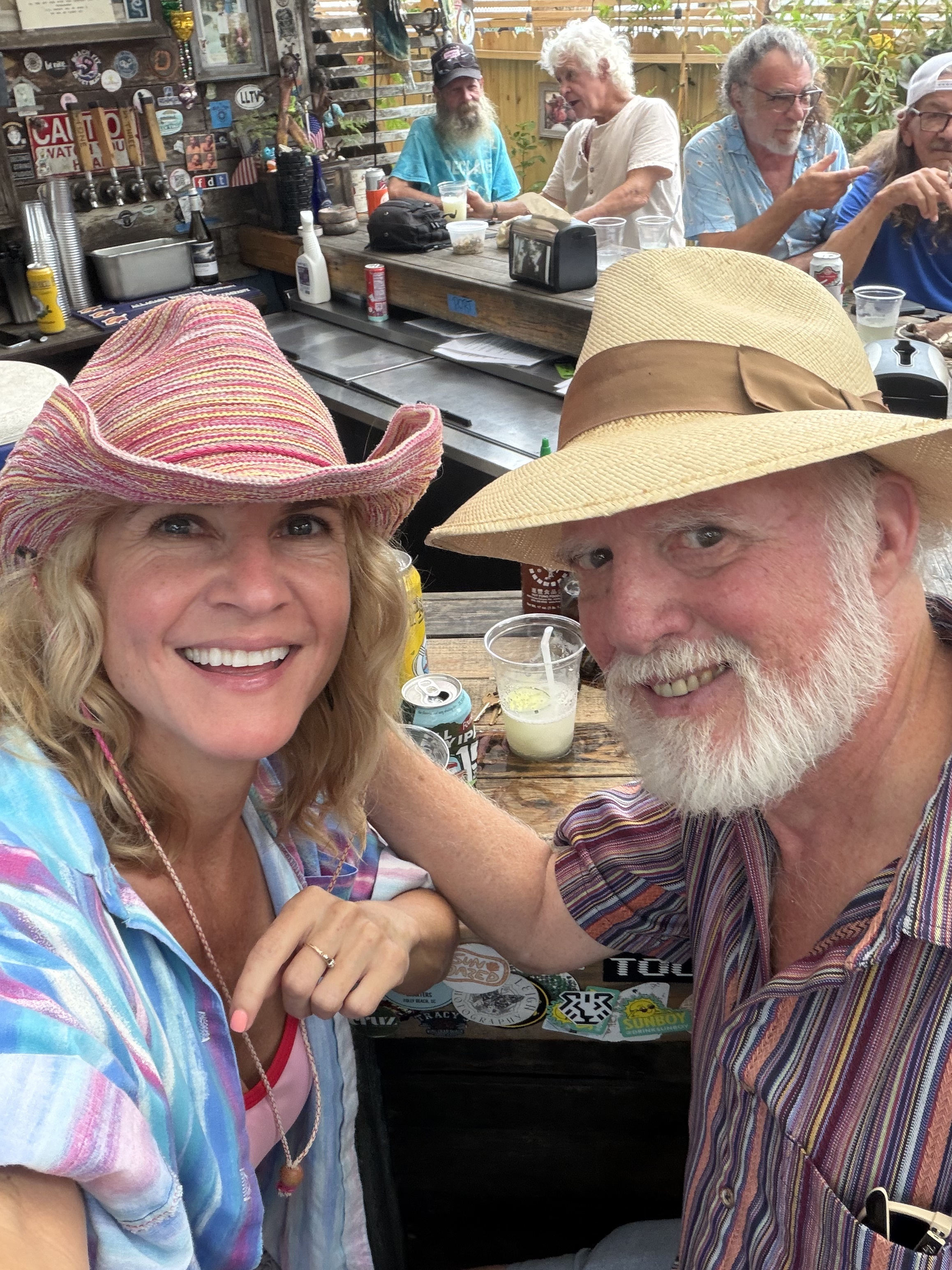
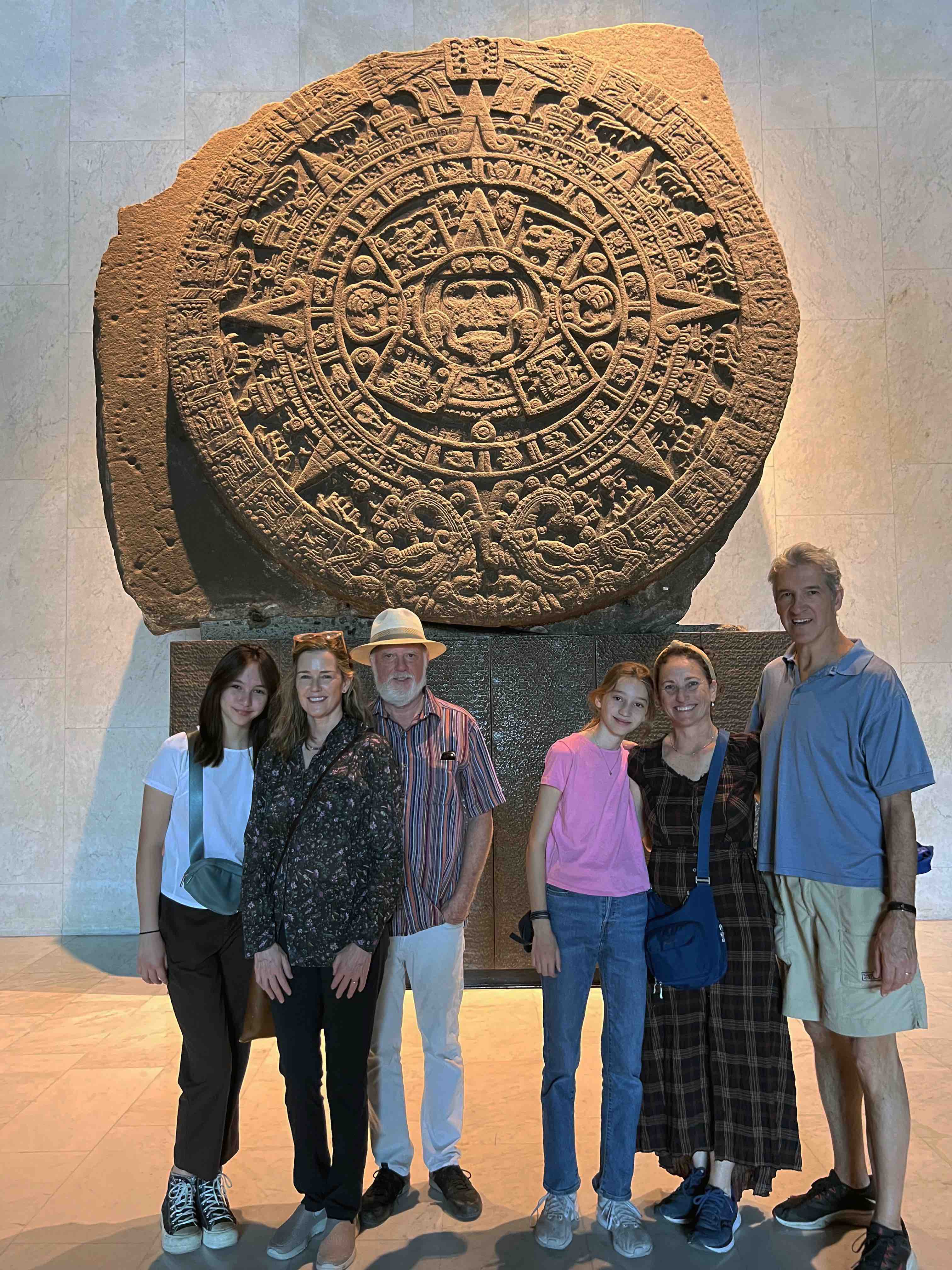
Mary Goff and the Reviewer (photo credit JB)













 You Do Hoodoo