
Ode to Oblivion
“Form is emptiness, emptiness form”
The Heart Sutra
The sum of nothing,
vacuity cubed,
silence so profound,
saints and sages
stuff their ears
with cotton.
Ode to Oblivion
“Form is emptiness, emptiness form”
The Heart Sutra
The sum of nothing,
vacuity cubed,
silence so profound,
saints and sages
stuff their ears
with cotton.

On a clear March afternoon in 1977 after we had decided to get married, I remember riding shotgun in Judy Birdsong’s gold-flecked Camaro headed over the Gervais Street Bridge in Columbia, South Carolina, and thinking to myself as I watched her hair fluttering in the open window wind, “Oh no, in twenty-five years she very well may be dead.”[1]
A fairly morbid thought for a twenty-four-year-old, but it runs in the family.
And, um, duh, every organism, whether it be goldfish, hamster, kitty cat, or puppy dog– not to mention house plants and patches of Saint Augustine – is doomed to die. Healthy people repress the thought or look forward to an afterlife or rationalize that there could be no genetic diversity without death or like Wallace Stevens hail death “the mother of beauty.”
Not Thomas Hardy. For him, death is ever-present, lurking in even the most pleasant of settings. Here’s a poem he wrote shortly after his first wife Emma’s death.
During Wind and Rain
They sing their dearest songs—
He, she, all of them—yea,
Treble and tenor and bass,
And one to play;
With the candles mooning each face. . . .
Ah, no; the years O!
How the sick leaves reel down in throngs!
They clear the creeping moss—
Elders and juniors—aye,
Making the pathways neat
And the garden gay;
And they build a shady seat. . . .
Ah, no; the years, the years,
See, the white storm-birds wing across.
They are blithely breakfasting all—
Men and maidens—yea,
Under the summer tree,
With a glimpse of the bay,
While pet fowl come to the knee. . . .
Ah, no; the years O!
And the rotten rose is ript from the wall.
They change to a high new house,
He, she, all of them—aye,
Clocks and carpets and chairs
On the lawn all day,
And brightest things that are theirs. . . .
Ah, no; the years, the years;
Down their carved names the rain-drop ploughs.
These lives aren’t “solitary, nasty, brutish and short” but rather pleasant. In fact, the first five lines of each stanza are positive, describe harmonious family gatherings. However, each stanza ends in a refrain that foreshadows what Andrew Marvel called “deserts of vast eternity.”
The critic John Foy describes the poem’s structure as “double-looking,” pointing “to both life and oblivion.”
“This rhetorical pattern, replicated in all four stanzas, contains two thematic perspectives, where the first five lines point one way and the last two point another. It acknowledges Hardy’s understanding of the terrible duality inherent in the nature of things. We are here for a while, and then we are gone. In his stanza, the heedlessness and the impending dissolution don’t cancel each other out. They exist together in tragic equipoise, five lines to life, two lines to dissolution, bound together by the structure”.
John Foy, “Form as Moral Content in Thomas Hardy’s ‘During Wind and Rain’”
To love a poem doesn’t mean you have to embrace the poem’s theme. For example, although I’m not a Christian, I’d haul Paradise Lost with me to the proverbial desert island (or on a spacecraft headed to Mars). Despite that sudden morbid thought in 1977, I haven’t spent my life brooding over its inevitable end. In fact, I’m fine with oblivion, didn’t mind at all my pre-existence, yet I really love Hardy’s poem, especially its last line, the music of it, the three accented final words and the image of a raindrop like a tear running down a name carved in stone.
And, as it turned out, Hardy remarried a woman named Florence Dugdale who wrote to a friend, “Perhaps you have read, if you have the English papers, that I am now the proud and very happy wife of the greatest living English writer – Thomas Hardy. Although he is much older than myself it is a genuine love match – on my part, at least, for I suppose I ought not to speak for him. At any rate I know I have for a husband one of the kindest, most humane men in the world.”
A happy ending of sorts for Hardy, a rarity in his works.
[1] Actually, it was 40 years later that she died.
(a polemic prose poem)
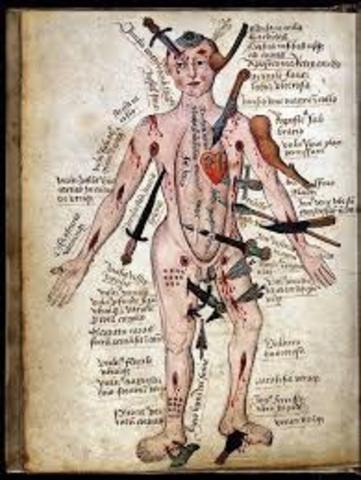
Seems to me that if you’ve read somewhere that a Covid vaccine reshuffles your DNA or magnetizes your epidermis or implants monitoring devices into your metabolism so that Satanic pedophiles can keep tabs on your comings and goings, that you’d want to wear a mask to avoid contracting a disease so mighty that it actually hospitalized superhuman Donald J Trump, who boasts an immune system so powerful your everyday microorganisms spontaneously combust if they dare enter the inner sanctum of his imperial badassness.
But, hell no, your garden variety anti-vaxxer is also an anti-masker. I saw a video today that captured a Tennessee school board meeting where health professionals arguing that masks help to stem infection were verbally ambushed by a pack of sign-bearing parents fearful that requiring their children to wear masks during a virulent resurgence of a pandemic would be the first step down a slippery slope of freedom-confiscation that eventually would lead to the United States becoming a country where citizens receive affordable healthcare.
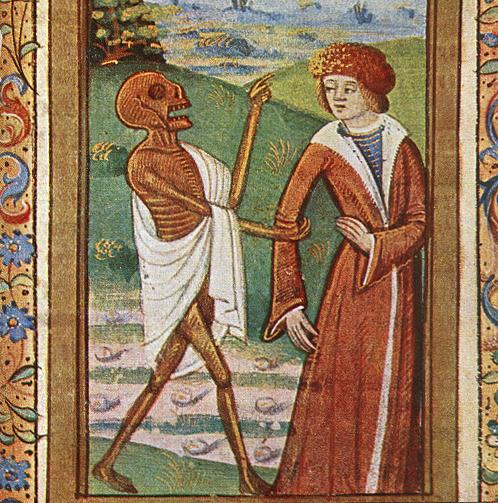

Got Them Ol’ Metaphysical Summer Solecist Oblivion Blues Again
Time hath, me Lord, a wallet at his back
Wherein he puts alms for oblivion.
Ulysses to Achilles, Troilus and Cressida, Shakespeare
They say the sun’s lease will lapse one day,
after we ourselves have been evicted
and lost our senses.
Extinctions come and go,
like summer solecists,
year by year.
So no humans will be around to fret
about the extinction of their
solar system’s center,
no zillionaires boarding lonely spaceships
to escape the inescapable – oblivion’s
dreamless kingdom,
the realm of non-existence, where once
before we were were-not but
did not care to know.

Say What?
“And empty words are evil,” Odysseus to Agamemnon in Hades, Book XI, The Odyssey
They say Homer didn’t write the Odyssey –
The dactyls, the plot, or the sirens’ song.
That idea doesn’t appeal to me.
Practically everything they say is wrong.
They say you can’t teach old dogs new tricks,
That years are short while days are long,
They say you can’t play cricket with a sticky wicket,
But practically everything they say is wrong.
They say you can trust conventional wisdom,
That Leos and Geminis don’t get along.
They say CEOs shun cannibalism,
But practically everything they say is wrong.

My Least Favorite Things
With apologies to Oscar Hammerstein and Richard Rogers
Inoperable cancer and olecranon bursitis
Terrorist attacks sponsored by Isis.
Red painful blotches from jellyfish stings
These are a few of my least favorite things
Undercooked pork that triggers trichinosis
Clueless close talkers with rancid halitosis
Bulls being slaughtered in Andalusian rings
These are a few of my least favorite things
When the Braves win
When Aretha sings
When I’m feeling glad
I simply remember my least favorite things
And then once again I’m sad
Inoperable cancer and olecranon bursitis
Terrorist attacks sponsored by Isis
Red painful blotches from jellyfish stings
These are a few of my least favorite things . . .
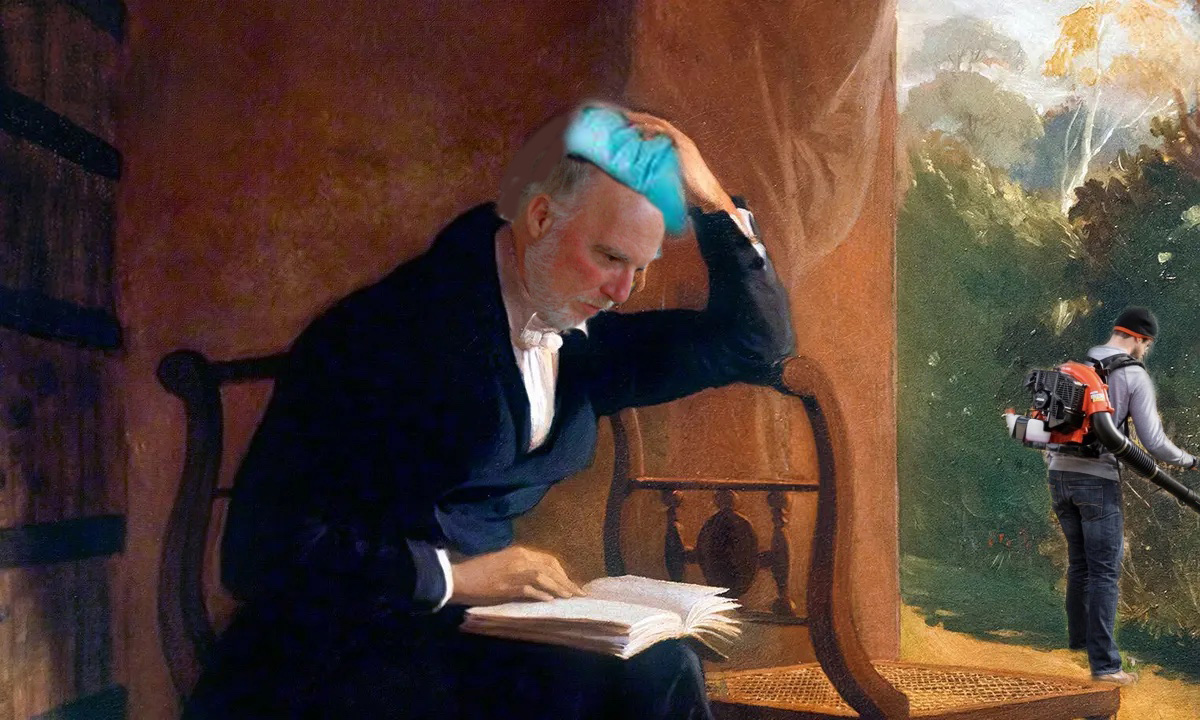
Stop in the Name of Sleep before I Get My Gun
a drowsy numbness pains
John Keats, “Ode to a Nightingale”
My head throbs, and dyspepsia dis-mays
my corporal frame, as though I’d drunk
twelve high-gravity IPAs
and into a drunken snoring stupor had sunk.
O, give that leaf blower a rest,
neighbor, as a favor. It’s not yet eight
this balmy May morning, and over there a nest
of nightingales rests. Please shut up, okay?

When we visited my late wife’s grandmothers in their assistant living facility, parked on the porch were ancient creatures in wheelchairs with mouths open like maws, their bodies gnarled in uncomfortable looking positions, and I hoped, like the old wanderer in the “Pardoner’s Tale,” that Death would be timely in my taking.
You, Archibald MacLeish
To feel how swift how secretly
The shadow of the night comes on …
Misremembering the season,
the week, the day,
whatever the reason
for this purgatoric stay,
the names of next of kin,
gone, forgotten. How to pray,
gone, forgotten. Manifold sins,
gone, forgotten. Autonomy,
long gone, forever forgotten.
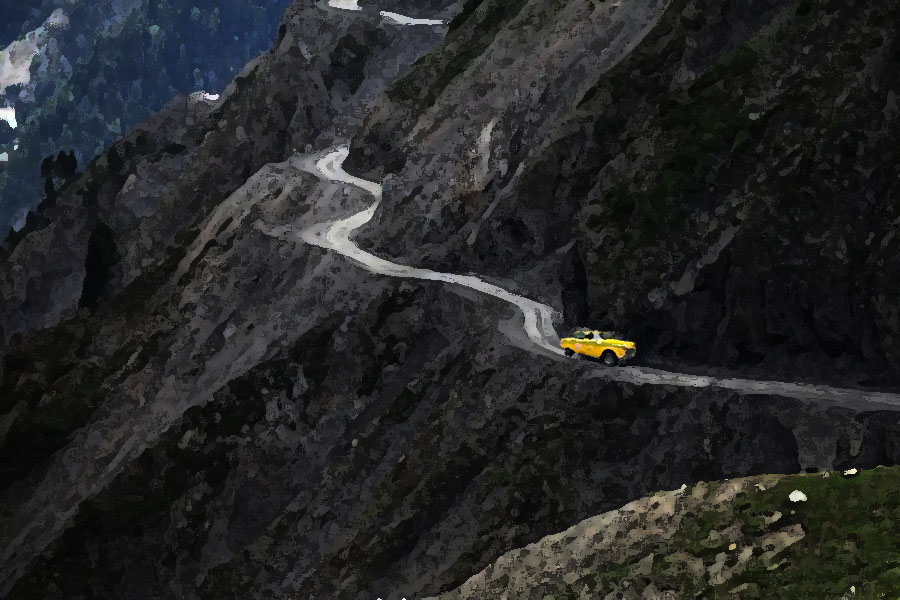
But, for the unquiet heart and brain,
A use in measured language lies;
The sad mechanic exercise,
Like dull narcotics, numbing pain.
Tennyson, “In Memoriam”
When it became clear that my wife Judy Birdsong would not recover from a rare form of Non Hodgkins lymphoma that had come roaring out of remission, I sought ways to numb myself, and following the example of my ol’ pal Alfred Tennyson, I began a poetic exercise in which I strung lines of unmetered terza rima together in a crude parody of Dante’s Inferno. The plan was to compose nine cantos of nine stanzas in honor of Dante’s Babylonian algebra.
When Judy died, I had completed four Cantos, but I decided to finish it anyway. Even now, though happily remarried, I’m determined to finish [nervous bad-pun cough] the goddamned thing, even though it’s silly and flawed.
No one can accuse me of not being self-indulgent.
Canto 7, The Malebolgia
No sooner than the rum had hit my belly,
Catullus stopped the cab, put on the parking brake.
“Get out,” he shouted, my spine turning to jelly,
My hand trembling DT-ish in the dark.
“You can’t be serious,” I said, looking askance.
“Listen, you pusillanimous punk,” he barked.
“Get out! Now! ASAP, STAT!”
So, I sheepishly opened the door, stepped into the gloom
And peered through the dark at the expanse
That lay below the rim of the cliff, an abyss of doom
That Catullus called the Malebolgia,
A circular series of ditches, a living tomb,
Fraught with fire and strewn with boulders,
A prison for con men, hypocrites,
Fake magicians, corrupt office holders,
And the like, each confined to a dire ditch
Well-suited for shit-slinging shysters.
“We’ll wait here,” he said, “for the witch
Hecuba to fly us down on her whirly
Bird of a broom. The road ends here.”
For whatever reason, Catullus had turned surly,
And began to rant and swear,
Cursing God and Darwin,
As we waited for Hecuba,
Who kept us waiting, waiting, waiting,
My head spinning like a dervish, a dervish, a dervish –
Fainting, fainting, fainting . . .
Last night I had the privilege to read a portion of my poem “Disorder Above Key West” accompanied by the immensely talented musician and painter Nathan Stephenson.
The Back Roads to Tallahassee
Took the back roads to Tallahassee
to avoid the monotony of mile markers,
dead armadillos, and exit signs.
Took the back roads, took my time.
Didn’t make it quick enough to see him die,
but my step-mama filled me in,
sucking on a Marlboro like a man,
“A horrible death, a horrible death,” she said,
over and over, shaking her head.
I didn’t know what to say. “Too bad.”
“He fought it hard,” she said, “screamed
‘Get that Gotdamn light out of my face,’
then up and passed.” She’d took a picture
and showed it to me. Looked like
all dead people look – his eyes froze,
his mouth froze open like a fish.
No, my daddy and me didn’t get along,
the house not big enough to hold
the two of us. Like in that
Springsteen song. We’d cuss each other
and sometimes come to blows. Of course,
me, 35, half his age, been able whip him
for a while. He sure whipped me
back then before, cracking a buckled belt.
Can’t quite pity the poor dead bastard,
laying there waxy with his hair slicked back
in that Sears and Roebuck suit, striped tie,
his mouth glued closed, his eyes glued shut.
His daddy beat him, and that daddy
beat that daddy before that. I ain’t
got no offspring, but got my own
business, mind my own business,
so I have the time to take my time,
to take the back roads, to avoid
traffic, to miss all them 18-wheelers in a hurry
to reach them warehouses they can’t abide.
 You Do Hoodoo