The 5 Greatest Rock-n-Roll Covers of All Time

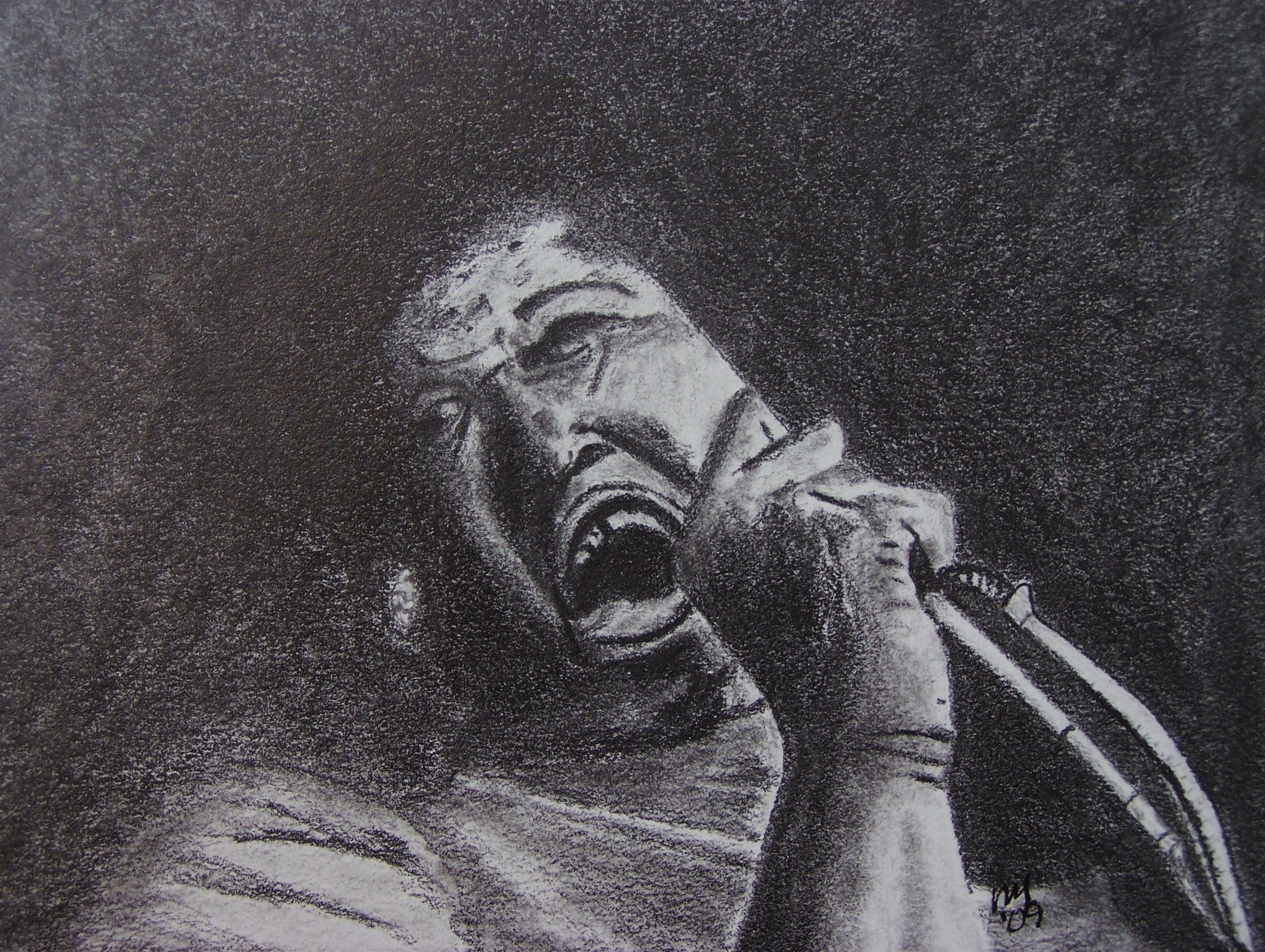
BigMamaTwoWillie Mae “Big Mama Thornton” by Nick Young

A couple of weeks ago when I was luxuriating in vast open freedom of spring break, the musician Howard Dlugasch and I sat at the bar at the newly opened Jack of Cups Saloon (nee Brew Pub) on Folly discussing the difficulties local musicians face in performing original compositions at bar gigs. “No,” he said, “They don’t want to hear originals. They all want to hear covers. They all want to hear Journey.”

Howard Dlugasch

Howard Dlugasch

Howard’s lament got me thinking about covers themselves, and I began cataloging what I consider the greatest covers of all time, a Herculean task if you stop to think about it.  I immediately jettisoned jazz, decided to limit my purview to rock and folk. After racking my brain, I decided to limit my list to five, and certainly many will disagree with the following choices.

Before I announce my top five, though, I ought to provide the criteria I used in the construction of this pantheon.

1) The original song had to be significant in both its music and content.  By content I mean both the degree of significance of the lyrics’ poetic purpose and the poetic quality of the lyrics themselves.  Alas, this criterion eliminates Hendrix’s great cover of “Wild Thing.”

2)  The cover of the song had to make the song, as Ezra Pound would say, new.

3) The musicianship had to be first class.

Rather than attempting to rank the covers from “grooviest” to least “groovy,”¹ I’ve copped out by presenting the 5 Greatest Covers of all time in chronological order from oldest cover to most recent.

¹I retrieved these vintage terms from the Teen Beat files located in the adolescent wing of my memory museum.

  • Elvis Presley’s cover of Big Mama Thornton’s recording of Jerry Leiber and Mike Stoller’s “Hound Dog”  Thornton’s 1953 recording is killer, backed by badass bass and drumming and some imitative barking.  Hit the arrow for a 20 secondish listen:

elvis-presley-songs-hound-dog

Before Presley, others had recorded the song, and some critics claim that Presley was actually covering a Bob Wills cover or a Freddie Bell and the Bellboys cover. Nevertheless, Presley was aware of and liked the Thornton original, and so I contend he’s covering the original, not a covering a cover.  At any rate, Elvis and his producer Steve Sholes have twanged the tune to rockabilly with some aggressive drum rolling.

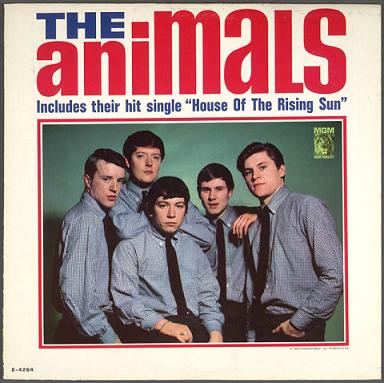
  • Next comes the Animals cover of the traditional folk song “Rising Sun Blues,” a song whose roots go to 18th Century England and a popular genre called “the Unfortunate Rake.” Immigrants  transported the song across the Atlantic and transplanted the setting to New Orleans.  Some contend the song’s narrator is a woman turned whore after being abandoned by a rake, which is the scenario Dylan employs in his cover, a recording that precedes the Animals’. The earliest recorded version is by Clarence “Tom” Ashley in 1934, which tells the tale from a male perspective.  Here’s a snippet from an early ’60’s version by Ashley and the great Doc Watson.  Note the featured lyrics are much different from the Animals version.

 the_animals

Ashley/Watson:  

The Animals:

Electric guitarist Hilton Valentine’s minor key arpeggio and Alan Price’s organ transform the song into what the critic Dave Marsh called “the first rock folk hit.”

  • Jimi Hendrix’s 1968 recording of Bob Dylan’s 1967 release “All Along the Watchtower.”

jimi-hendrix

Dylan:

Hendrix: 

Now, that’s what I call making it new.

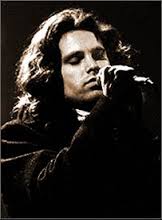
  • The Doors 1970 live version of Bo Diddley’s “Who Do You Love”  This selection is perhaps the most controversial.  However, I’m going with it.  Listen.

images

Bo Diddley:

The Doors: 

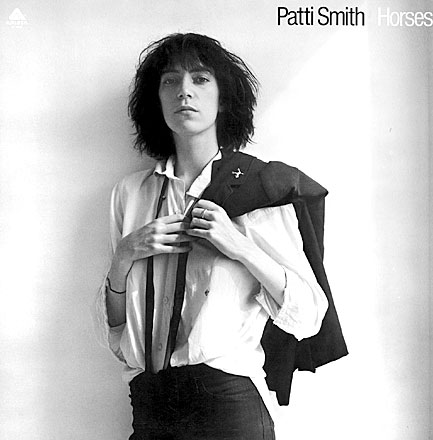
  • Also, perhaps, controversial, I rank Patti Smith’s 2007 cover of Nirvana’s 1991 “Smells like Teen Spirit” in the top five.  Here Smith substitutes banjos and fiddles for electric guitars and replaces Cobain’s solo with a poem that elevates the song from an anthem of teen angst to some sort of post apocalyptic nightmare.

6a0120a7b5f86a970b015437e241f9970c-800wi

Nirvana:  

Patti Smith:  

Well, there you go.  Would love to hear some comments.  Obviously, I also stayed away from soul music because rating covers there would be almost as hard as jazz.  Also, I’ve dissed Janis, whose cover of “Piece of My Heart” should probably bump Morrison and Smith off this list.

Vulgarity as Poetry

Freud-benefits-sup_1952707b

Let’s say you’re browsing Twitter and run across a sponsored post by John Bolton, the former UN Ambassador, one of the architects of the second Iraq war, that invasion launched by Bush and Company to purge non-existent weapons of mass destruction from Saddam’s non-existent stockpiles because, despite Iraq’s not having an air force or a navy that could deploy those non-existent weapons of mass destruction, Saddam posed a “present and growing danger.”

And let’s say that rather than financing this ruinously expensive, absolutely unnecessary war through raising taxes, the Bush Administration introduced legislation that slashed taxes, which depleted Clinton’s 280 billion surplus that cratered into a 1.2 trillion deficit under Bush.

And, finally, let’s say that besides virtually bankrupting our nation, this absolutely unnecessary war resulted in 4.488 American deaths, 500,000 Iraqi deaths.

Oh, yeah, the John-Bolton-sponsored post on Twitter that triggered the above screed:

“Barack Obama. Worst president ever? Vote here.”

Obviously, my first three paragraphs exceed Twitter’s 140-character limit; plus, let’s face it, the explanation is tediously verbose and doesn’t even address the outrageous hubris that Bolton exhibits, this man who has made a mistake so grievous that he ought to have blinded himself Oedipus-like and be tapping his staff across the Arabian Desert in an attempt at expiation.

How, you ask, can anyone successfully address the outrageousness of Bolton’s question in the constricted medium of Twitter?

Here’s how:

Andrew Otis Weiss ‏‪@ThatWeissGuy‬ Mar 21
.‪@AmbJohnBolton Go back to selling oatmeal and diabetes meds, you blood splattered fuck (emphasis mine).

Colonel Kurtz, what do you have to say about Andrew Otis Weiss’s response to Bolton’s tweet?

Yes, it is genius, a perfect putdown, more graphic than even a photoshopped picture. Weiss has melded sound, sense, and image into a barbarous haiku: you blood-splattered fuck.

The introductory “you,”  accusatory, echoing that expletive for disgust we emit when coming upon fresh roadkill -eww – the adjective “blood-splattered” with its connotations of careless butchery, the onomatopoetic splat, the thudding consonance of the terminal D-sounds  (plus the word turd imbedded in splattered subliminally adding shit into the  mix).

But then the clincher, the noun fuck.  No, not dickdick won’t do – no, not prickprick won’t do – the vowels too short, too effete – but fuck – the abyss.  You blood-splattered fuck, you casual slaughterer of half a million human beings.

Bravo, Andrew Otis Weiss, def poet of the absolutely perfect insult!

Skulls-at-Sang-prison-Dc-Cam-pic-600x

First Sentences, First Impressions

Ishmael

We’ve all been told of the importance of first impressions, which are particularly crucial when trying to publish a piece of fiction. Stephen Corey, former editor of the Georgia Review, once told me that if a story didn’t grab him by sentence three he chunked it into the rejection pile. He said he received approximately 300 manuscripts a month, which meant that to get a story into that quarterly publication, you were going against 1200 other combatants.

I suspect with novels the pressure isn’t quite as intense; nevertheless, certainly a rollicking good first sentence has to be advantageous.

Take Jay McInerney’s first from Bright Lights, Big City, a sentence that falls beneath a chapter title that reads “It’s Six A.M. Do You Know Where You Are”

 You’re not the kind of guy who would be at a place like this at this time in the morning.

It certainly hooked me, as I found myself all-coked-up in “either the Heartbreak or Lizard Lounge” – my second person narrator wasn’t sure which – “talking to a girl with a shaved head.”

Of course, some writers don’t opt for the old in medias res commencement but take us way back in time, as Thomas Sterne does with Tristan Shandy’s contemplatiion of the act of his procreation:

I wish either my father or my mother, or indeed both of them, as they were in  duty both equally bound to it, had duly considered how much depended upon what they were then doing;—that not only the production of a rational Being was concerned in it, but that possibly the happy formation and temperature of his body, perhaps his genius and the very cast of his mind;— and, for aught they knew to the contrary, even the fortunes of his whole house might take their turn from the humours and dispositions that were then uppermost;—Had they duly weighed and considered all this, and  proceeded accordingly,—I am verily persuaded that I should have made a quite different figure in the world, from that in which the reader is likely to see me.

Others attempt to establish mood:

During the whole of a dull, dark, and soundless day in the autumn of the year, when the clouds hung oppressively low in the heavens, I had been passing alone, on horseback, through a singularly dreary tract of country; and at length found myself, as the shades of the evening drew on, within view of the melancholy House of Usher.

Or to encapsulate theme like this:

It is a truth universally acknowledged, that a single man in possession of a good fortune, must be in want of a good wife.

Or this:

It was the best of times, it was the worst of times, it was the age of wisdom, it was the age of foolishness, it was the epoch of belief, it was the epoch of incredulity, it was the season of Light, it was the season of Darkness, it was the spring of hope, it was the winter of despair, we had everything before us, we had nothing before us, we were all going direct to Heaven, we were all going direct the other way — in short, the period was so far like the present period, that some of its noisiest authorities insisted on its being received, for good or for evil, in the superlative degree of comparison only.

Nor does the quality of first sentence, I might add, signify the over all quality of the work as a whole.  Certainly Joyce’s first sentence of Portrait of the Artist as a Young Man – “Once upon a time and a very good time it was there wasa moocow coming down along the road and this moocow that was down along the road met a nicens little boy named baby tuckoo. . . .” is more arresting than the first sentence of Ulysses –  “Stately, plump Buck Mulligan came from the stairhead, bearing a bowl of lather on which a mirror and a razor lay crossed.” – but few would rank Portrait over Ulysses in overall quality.  And certainly, George Eliot’s first sentence of Middlemarch – “Miss Brooke had that kind of beauty which seems to be thrown into relief by poor dress.” – though interesting, doesn’t even begin to signal the grandeur that is to follow.

Well, you wonder, what is the greatest of all first sentences written in English?  “Call me Ishmael?”  Or “A throng of bearded men, in sad-colored garments and gray, steeple-crowned hats, intermixed with women, some wearing hoods, and others bareheaded, was assembled in front of a wooden edifice, the door of which was heavily timbered with oak, and studded with iron spikes?”

No, by my reckoning, the greatest first sentence of any novel anywhere came from the typewriter of Nabokov.

Lolita, light of my life, fire of my loins. My sin, my soul. Lo-lee-ta: the tip of the tongue taking a trip of three steps down the palate to tap, at three, on the teeth. Lo. Lee. Ta.

After reading that, would not be compelled to read on?

Vladimir Nabokov

Vladimir Nabokov

The Lighter Side of the Son of Sam

Back in the summer of ’77 when we hepcats were making that awkward transition from lobbing Molotov cocktails to burning our way across the dance floors of disco, David Berkowitz – aka the Son of Sam – killed 6 people and wounded several others. As far as serial killing goes, this paltry total can’t compare to the number of victims dispatched by Ted Bundy, John Wayne Gacy, or South Carolina’s own Peewee Gaskins; however, Berkowitz PRed his way to the top of the nation’s serial killing charts by leaving a series of cryptic notes like this ditty:

Note from Son of Sam Killer David Berkowitz

What narcissistic nonsense.  Of course, alley cats are going to mate and sparrows sing – if the feline and avian survivors of Chernobyl don’t let a cataclysmic environmental disaster affect their reproductive compulsions, certainly a couple of gunshots ringing out in a Brooklyn night ain’t going to affect their behavior.*

Of course, the media didn’t pay as much attention to Peewee as they did to David.**   Peewee was no poet, and if he had been, his poems would have sounded something like this:

Whose corpse this is I ought to know

cause I’m the one what kilt it so.

I hope nobody come ‘round here

to watch me in the lake it throw.


*This from National Geographic’s website: On the other hand, Mousseau admits that some birds have thrived [at Chernobyl]: drab, non-migratory birds seem to be doing very well, “possibly because they have no competitors,” he said. These birds don’t use up their carotenoids, which are powerful antioxidants, to create colorful plumage, and they don’t need to spend extra energy on long migrations, so their immune systems may be stronger, Mousseau theorized.

** How many serial killers are you on a first name basis with?

image

At any rate, during the Son of Sam’s spree, while bartending at the Golden Spur, I came up with what I thought was a brilliant idea: to form a comedy terrorist group called “The Lighter Side of the Son of Sam.” These slapstick desperadoes would attack obnoxious celebrities like Tom Snyder of the Tomorrow Show and make him perform demeaning acts on camera, stuff like, you know, like making out with one of Liberace’s exes while David Jones of the Monkees sang “Day Dream Believer” at gunpoint. Nobody would get seriously hurt, and the madcap band of practical jokers would always somehow get away to punk some other obnoxito in the unforeseeable future.

This idea returned to me after I watched the second episode of the Bravo reality show Southern Charm. Wouldn’t it be wonderful if some latter day version of the Lighter Side of the Son of Sam could infiltrate the filming and wreck some boomerang karma on the vapidiots appearing on the show? Let’s see. How to punish Shep? I got it! How about updating Sartre with a little No Exit action by locking up Shep, Rosie McDonnell, and Dennis Rodman in a Motel 6 room for forty days and forty nights? [cue demonic laughter]

rosie, shep, and Dennis

Rosie and Dennis could entertain Shep by performing a two man/woman show of Who’s Afraid of Virginia Woolf or entertain him by wrestling for the remote that operates a TV that gets only the Lifetime Network and the Shopping Channel.

Just some good old fashioned retributive fun brought to you by that band of lovable losers, the Lighter Side of the Son of Sam!

Time, Time, Time Ain’t on My Side

But at my back I always hear

Time’s wingèd chariot hurrying near

Marvell, “To His Coy Mistress

 I have measured out my life with coffee spoons

Eliot, “Prufrock”

Of course, time seems to pass more rapidly as we age because of the forever diminishing frames-of-references that years represent.

For example, when I was five, a student at Miss Marion’s kindergarten, a year was a fifth of my life and seemed as expansive as a continent.  The previous Christmas seemed like a far distant outpost several time zones removed, separated by a progression of slow transpiring days that unfurled and closed like lazy morning glories.

[check out the vines on the left as Cat Stevens rejoices]

Now, that I’m 61, a year seems like one revolution on a Tilt-a-Whirl that’s gone haywire in Max Sennett short – each successive whirl faster – last Christmas seeming a day or two ago and the next a day or two away.

But here’s the thing.  For the past week it’s as if I exist in a Rod Sterling directed Twilight Zone adaptation of a Kafka short story.

Every time I reach for something, it’s the very last one available!  It’s ubiquitous.  Uncanny.

For example, the day before yesterday, I had to replace the toilet paper roll in the master bath and the very next day needed to replace the roll in what we euphemistically call “the powder room.”  Coincidence – of course – but then last night as I unfurled the dental floss, the spool unwound and spit out the last remaining thread . This morning’s dry dog food scooping found the cup hitting the bottom, the food not completely done, but within three or four days of depletion.

And here’s the clincher: at school, I forgot to hit the staple function on the copier in the work room,[1] so had to staple my Romanticism tests by hand, and guess what, not only did the first stapler I used run out of staples, but the next one did as well!

To be honest, though, there was plenty of looseleaf paper to distribute to my students who are at this very moment in time explaining why this stanza of Wordsworth’s “Ode: Intimations of Immortality” conforms to the subject matter and poetic conventions of Romanticism:

What though the radiance which was once so bright

Be now for ever taken from my sight,

Though nothing can bring back the hour

Of splendour in the grass, of glory in the flower;

We will grieve not, rather find

Strength in what remains behind;

In the primal sympathy

Which having been must ever be;

In the soothing thoughts that spring

Out of human suffering;

In the faith that looks through death,

In years that bring the philosophic[2]

9c42678f7430e9dcb89d033ce6cc5fdf


[1] By the way, in those halcyon days before email, the copy room called the Lounge, and perhaps the fact that we in the working world are so busy there’s no time for contemplation may also play a role in the seeming acceleration of time’s passage.

[2] Of course, when I was copying my rubric for grading my students’ responses the copier ran out of paper.  I swear!

Why I Ain’t Inviting Jesus to My Fantasy Dinner

Image

Once upon the time, our local paper published a Thursday supplement that targeted local geographical communities like “West Ashley,” “East Cooper,” “Summerville,” etc. In those supplements a column called “Do You Know?” featured interviews with faux celebrities like the heads of recreation departments, popular bartenders, and other notable citizens that help make life more bearable for us First World sufferers. We’d learn the towns and cities of their births, their idea of a fun weekend, their favorite dishes, and inevitably, their chosen guests at a “fantasy dinner.”

Without a doubt, the most popular fantasy dinner invite of all time was Jesus. Not Jesus Alou, mind you, but the Jesus, the one from Nazareth. I’ll get into why choosing accompanying guests is problematic with Jesus at the table, but first, let’s address a gargantuan challenge involved with entertaining Joseph and Mary’s first born.

He speaks Aramaic!

If you’re thinking, yeah, but he’s the Son of God, a miracle worker, let me remind you he was also Mary’s son, i.e., half human and sometimes plagued with doubts (cf., Gethsemane). From my reading of the Gospels, it’s not as if he had a clear pipeline to God through which the latter would walkie-talkie-like tell him what to do. Turning water into wine, casting out demons, walking on water seem like veritable pieces of cake compared to mastering a language that didn’t even exist when you were alive.

No, if I had the chance to meet Jesus in the flesh I’d want him all to myself, to be able to look him in the eye, perhaps to pantomime messages back and forth, to have the focus to be only on him. In other words, I don’t want Leonardo or Nietzsche, or Lady Gaga distracting me with Jesus in the house.

C’mon folks, invite fun folk who speak the same language to your fantasy dinners: Groucho, Dorothy Parker, Oscar Wilde, Jane Austen, or if you wanna get shit-faced with the dead, Richard Burton or Christopher Hitchens.

Oops, this just in from my superego: “It’s a fantasy, jackass, make believe. You can have Jesus speak English if you want.”

Okay, then. What about dress? Nice casual? A clean robe for Jesus, a diaphanous jumpsuit for Lady Gaga? And what to serve? Loaves and fishes? Wiener schnitzel?

Like, I said Richard Burton and Christopher Hitchens . . .


sparknotes: Bravo’s Reality Series Southern Charm

Image

General Info

Context

Southern Charm is a reality television show created and broadcast by Bravo, a basic cable satellite channel.  Begun in 1980 as a suscription-only platform devoted to cultural programs, Bravo originally featured a PBS-like mix of international and independent films, musical shows such as Jazz Counterpart, and stage productions like the Texaco Showcase presentation of Romeo and Juliet

Interestingly enough, the evolution of Bravo mirrors the decline of Western Civilization itself. After MGM and GE took over the channel, programming shifted from highbrow entertainment to decadent reality shows like Queer Eye for the Straight Guy and the various Real Housewives shows.  Bravo’s shift from high to low is a microcosm of a macrocosmic degradation.  For example,  during the Elizabethan Period, educated people considered Shakespeare’s Romeo and Juliet pop art, middle brow entertainment that nevertheless enthralled even the rotten-tomato-toting lower classes of London.  Now almost 400 years later, even most college educated people consider Shakespeare too highbrow, and theatre goers in London would much rather sit through The Lego Movie rather than a production of Twelfth Night.

It is within this context – the decline of civilization and in this case, Late Empire American culture – that Southern Charm takes its cues.  Not unlike Petronius’s skewering of the excesses of Nero’s Rome, (e.g., the Romans’ obscene ostentatious consumption of food; their round-the-clock drunkenness; their loveless, indiscriminate sexual couplings), Southern Charm documents the decadent and extravagant lifestyles of a group of Republicans who live in the most glamorous city of a state that refuses to expand Medicaid.

Oh, yeah, there’s one significant difference: whereas Petronius mocked the excesses of decadent Roman culture, Southern Charm celebrates it.  It would appear that people’s lives are so impoverished that they would rather live vicariously through vacuities than engage with other humans in bars and restaurants.  Academics disagree as to whether Bravo’s management is cynically exploiting the “stars” of their shows in a post modern commentary on the poverty of contemporary culture or simply stuffing their pockets with money and not giving a shit.

Plot Overview

Set in the tourist and retirement mecca of Charleston, South Carolina, Southern Charm follows former South Carolina Treasurer Thomas Ravenel as he readjusts to life outside of prison after doing 10 months for buying and distributing cocaine.  Although the show purports to explore the life of Charlestonians, Ravenel is the only local featured (see characters).  Besides Ravenel, the show focuses on five other main personalities, two women, and three men, all white and seemingly a couple of decades younger than 50-year old Ravenel.  The cast also consists of minor characters: mothers, fathers, hook-ups, carriage tour horses, polo ponies, etc.

Essentially, the show explores the main characters’ interactions as they engage in tedious conversations in ever shifting scenic spots as they eat, drink, woo, reject, seduce.  As in most other “reality shows,”  the viewer peeks in on the principals’ daily routines, in this case at their plantations or town houses or out on-the-town in swanky shops, restaurants and nightclubs. In addition viewers also get to hear the characters’ personal takes on the events as they smugly backbite into the camera.

Character List

thomas-ravenel-headThomas Ravenel – the son of successful politician “Cousin” Arthur Ravenel and a graduate of the Citadel, Thomas himself aspired to be a politician, unsuccessfully running for the Republican nomination in South Carolina for the US Senate but later being elected as State Treasurer.  A backer of Rudy Giuliani in the 2008 Republican nomination battle, he supported Ron Paul in 2012.  Of course, Ravenel’s 2008 coke conviction brought his political career to a screeching halt.

A hedonist, polo player, and wealthy man about town, Ravenel feels pressure to settle down, marry, and sire male heirs. Here’s Thomas on his way to his plantation on Edisto talking to his father about what Thomas hopes to be a bourgenining romance:

cameran-eubanks-headCameron Eubanks – a native of the Palmetto state but not of Charleston, Cameron likes, according to Bravo’s website, “boating or laying (sic) on the beach with a good book.” (The Carpetbaggers perhaps?)  So far on the show, she parties with the boys and engages in non-witty repartee.  Having just turned 30, she offers subtle hints of her biological clock’s ticking as she shifts careers from cosmetics to real estate.

craig-conover-headCraig Conover – Drawn from Delaware to the College of Charleston, 25-year-old Craig has stayed on in the Holy City (don’t they all) to attend the troubled Charleston Law School.  The spawn of an incredibly athletic family, Craig seems more down-to-earth than other cast members, perhaps because he “finds meditation in diving, golfing, and shooting guns.”

“Om, Fore, Boom!”

jenna-lee-king-headJenna King – Aspiring fashion designer Jenna hails from Sumter, South Carolina and manages somehow to be simultaneously country cute and avant garde cool (see hair).  This globe trotting graduate of Trident Tech has a passion for animals, especially horses.

william-shepard-rose-iii-headShep Rose – Listing his profession as raconteur, Shep nevertheless ends each sentence with the interrogative lilt made famous by Vally Girls.  He’s a man of many diverse interests, like drinking, dressing like a preppy, talking, fornicating, listening to the Grateful Dead, and hanging out with Republicans.  Perhaps not the most perceptive of raconteurs, Shep describes his friend Whit (see below) as “an elitist hipster” despite the latter’s penchant for wearing pajama-looking shirts and silver chains around his neck.

whitney-sudler-smith-headWhitney Sudler-Smith – Self-proclaimed composer of “brilliant screenplays and ingenious independent films that few will see” (it appears that he and your humble sparksnote reporter have something in common).  Despite having directed a film about Halston that has been “screened” on Showtime, Whit lives with his hideous mother in what the producers of the show call an “urban plantation.”  He and Shep are “partnering” to open just what Charleston needs – a sophisticated rock-n-roll bar.

Themes, Motifs, and Symbols

Themes:

Not unlike The Great Gatsby, which doesn’t have a likable character in the entire novel, Southern Charm centers on the privileges and decadent lifestyles of a cast of wealthy characters; however, unlike Gatsby, not one of the characters in Southern Charm is even vaguely interesting.  A quote from the National Lampoon’s parody of “Desiderata” comes to mind:

Be assured that a walk through the ocean of most souls
Would scarcely get your feet wet.

Major themes include the tension between enjoying a hedonistic lifestyle and settling down, the difficulties of maintaining successful bromances when libidos get out of hand, and lastly, how cool everyone is because they live in Charleston.

Motifs – the need to procreate, lavish dinners, hangovers, hooking up, unresponsive women turning down swashbucklers accustomed to bodice-ripping, Ravenel’s tarnished reputation. Old buildings.  Nice things.

Symbols – Charleston = Rome.  Whiteness is also a symbol.  African Americans are virtually nonexistent. Maybe that’s why no one smokes weed.

Quotes

“I am a cunning linguist.” – Thomas Ravenel, putting the moves on Catherine.

“I don’t like Brandy [her seemingly closeted gay son’s romantic female interest].  I don’t like Brandy.  I don’t like Brandy.  Have I made myself clear?  I don’t like Brandy” – Whit’s mother.

“I often wake up drunk,”  – Shep.

Discussion  Questions:

Discuss the title.  Is it serious or ironic?  Identify elements that one might find charming.

Compare and contrast Shep and Craig.  What do they share in common?  How are they different? Which one would you murder first?

Mothers and fathers play an important role in the series.  Given how their children turned out, why do you think they’re so eager to have them replicate?

Whom do you hate least and why?


House of Cards = Small Batch Bourbon

Image

Television and film tend to caricature Southerners.  We’re all familiar with the types – the drawling sadistic sheriff who looks as if he has swallowed a sack of horse feed whole; the I-do-declare coquettish belle all aflutter, the tart-tongued steel magnolia, the wiser-than-he-lets on Negro manservant, etc.

Yawn.

Therefore, when I finally got around to peeking in on House of Cards for the first time last weekend, what a pleasure to witness Kevin Stacey’s portrayal of Congressman Frank Underwood, who not only sounds like a real Southerner but who also rises above the stereotypes non-Southerners generally associate with someone from Dixie – rightwing politics and racism – which is not to say that Frank is an admirable character.  Part Richard III, part Iago, he’s the apotheosis of Machiavellian machination, a son of a bitch who makes the historical LBJ seem like Atticus Finch in comparison.

Frank not only sounds like a Southerner, but he has a way with words reminiscent of those who have grown up in the oral tradition of story telling, a tradition that appreciates a clever, alliterative turn of phrase.  Here he is provoking NEA union boss Marty Spinella into assaulting him:  “I’m a white-trash cracker from a white-trash town that no one would even bother to piss on. But here’s the difference. I’ve made something of myself. I have the keys to the Capitol. People respect me. But you, you’re still nothing. You’re just an uppity dago in an expensive suit turning tricks for the unions.” Some of my favorite moments occur when Frank turns directly to the camera in Shakespearean asides looking you, the viewer, in the eye and saying shit like this, “Every Tuesday I sit down with the speaker and the majority leader to discuss the week’s agenda. Well, ‘discuss’ is probably the wrong word… they talk while I imagine their lightly-salted faces frying in a skillet.”

Frank hails from Gaffney and represents South Carolina’s 5th Congressional District, a district that just a few years ago had as its representative courtly Democrat Congressman John Spratt, Davidson-educated, a man of immense integrity, as unlike Frank as Henry V is from Macbeth.  Of course, now the district has fallen in Republican hands.  It would appear as if Democratic elected officials in South Carolina like Spratt and Fritz Hollings have gone the way of the Carolina parakeet – that is, offstage forever.

At any rate, if you like small batch bourbon, chances are you’re going to like House of Cards. Although occasionally you may find your suspension of disbelief in peril, in fact, on the verge of Hindenburging, but the characterization is superb, complex, including Frank’s ruthless, insecure, profoundly unhappy wife Claire and his doppleganger of a mistress Zoe; even his chief of staff comes off as an authentic human being.

The series is strong, tasty, addictive, and capable of knocking you smack dab flat on your ass, like Jefferson’s Reserve, a great small batch bourbon that I wish I had some of right now.

The Delicate, Censorious Damsels of Wellesley

Image

In case you haven’t heard, a number of delicate damsels and/or censorious puritans at the so-called liberal arts college Wellesley have gotten their granny panties in a knot over a temporary outdoor installation of art by Tony Matelli entitled The Sleepwalker.

Warning: the image below may be offensive to you, especially if you’ve been sexually assaulted by an older male somnambulist undergoing chemotherapy.  

140206_DX_WellesleyNudeStatue.jpg.CROP.promo-mediumlarge-2

The account below comes from the “Globe,” the newspaper, of course, no stranger to controversy having covered in its day the banning of many works in Boston including Whitman’s Leaves of Grass, Hemingway’s The Sun Also Rises, and the Everly Brothers’ Wake Up Little Susie.”¹

Anyway, “Zoe Magid, a Wellesley College junior majoring in political science, started a petition on Change.org with other students asking college president H. Kim Bottomly to have the statue removed.” The petition in part reads

[T]his highly lifelike sculpture has, within just a few hours of its outdoor installation, become a source of apprehension, fear, and triggering (sic) thoughts regarding sexual assault for many members of our campus community [. . .] While it may appear humorous, or thought-provoking to some, it has already become a source of undue stress for many Wellesley College students, the majority of whom live, study, and work in this space.

Here’s a thought, Zoe.  Given that you’ve only been out of high school for 3 years, why not leave the selection of temporary art installations to professionals who know what they’re doing and stick to those skills you’ve mastered, like Tweeting (#philistine),  You’re following in the footsteps of Jesse Helms and John Ashcroft, the latter who famously had the piece of filth below covered with curtain in the Robert F Kennedy Department of Justice Building because exposure to an aluminum breast is, well, um, not necessary.

544px-Spirit_of_justice

Not only are poly sci majors down on The Sleepwalker, but art history major Annie Wang² also wants the statue removed because she sees it as an “assault”.:

“I think art’s intention is to confront, but not assault, and people can see this as assaulting,” Wang said. “Wellesley is a place where we’re supposed to feel safe. I think place and a context matters, and I don’t think this is the place to put it.”

I just don’t get it.  The statue ain’t exactly Gustave Courbet’s L’Origine du monde, and I believe my 83-year-old mother could out run the poor [pardon the tautology] unhip, unattractive, tightie-whitie wearing somnambulist.  I suspect that what really offends these young ladies is that the statue embodies unbeautifully the thing they most fear: growing old.

___________________

1.  I shit you not.

2.  By the way, I’m offended by Ms Wang’s surname because it brings to mind verbal assaults I suffered in locker rooms after PE in junior high school.

Portrait of the Artist as a Young Asshole

the author circa 1976

the author circa 1976

I was such a loser in the mid-Seventies [see above photo] that I actually failed at dropping out of grad school.  That’s right.  Talking about the epitome of incompetence, failing at dropping out of school ranks right up there with attempting suicide by swallowing a handful of artificial sweeteners.

It’s not all that long of a story.  After getting dumped by an ex-fiancée in July of ’76, I said to myself, “This here grad school thang ain’t working out.”[1]  I decided to go back to Summerville and tread water because, after all, home is the place where, when you have to go there, they have to take you in.[2]

Impoverished, I had been working two jobs (tending bar in the University Union, washing dorm dishes).  Unable to afford textbooks, I checked Whitman, Dickinson, Hardy, Epson, Yeats, and, Auden out of libraries, racking up fines as fast as empty beer cans.  In the wee hours, I slapped together underdeveloped essays on manual typewriters.  When I made it to class, I shuffled in sporting  pre-grunge grunge and reeking of cannabis.  Occasionally, I might manage an insightful comment in class or turn an arresting phrase in an essay, but, that ain’t gonna get you a tenure track job, much less a degree.

On the plus side, my fellow students treated me deferentially because not-seeming-to-give-a-shit somehow had come to be  – maybe always has been – an admired American trait; on the minus side, my professors were absolutely immune to my slouching charm.

So, on the sunny Monday morning after my revelation that my learning to read and write in a foreign language, passing comps, and writing a board approved dissertation was not likely to occur in the next academic year, I informed my bosses I was quitting, dropping out of school, going home.  I blamed my sudden departure on a family emergency, which was true in the sense that a series of family emergencies over the course of my young life had jangled my nerves.  I was having what was called in those days “A NERVOUS BREAKDOWN.”

Of course, I didn’t bother to inform the University of my departure.

* * *

Three weeks later I very slowly came to consciousness in a hospital in Hilton Head.  To this day, I have no idea how long I was there or how I got home.  I do know that no charges were filed and that I had stitches still in my back, sutures I assumed were self-dissolving but weren’t.

I had forgotten how much Summerville sucks.  My landlady/mother insisted that I participate in cattle calls for manual laborers at temp agencies, which got real old real fast even though they never chose me.   [again, see above photo].

So I called my pal Jake-the-Snake, who had been placed in a managerial position at the Golden Spur, the Student Union bar, and his boss hired me on the condition I could cop work study status, hoop jumping I resented, especially since there was a whole slew of new bartenders who had been hired straight up, people like Veda Smith and Judy Birdsong, legitimate graduate students with assistantships who didn’t need jobs in the first place.

Nevertheless, I successfully accomplished the task of being officially classified as financially challenged, and found myself once more racking up student loan debt, tending bar, and slapping together underdeveloped essays on manual typewriters in the wee hours.

But I vowed to myself that I would never ever fail at dropping out of grad school again, and indeed, at the end of the spring semester of ’77, I successfully pulled it off!


[1] I speak to myself in the vernacular.

[2] Frost’s publisher insisted he drop the subsequent line  although they wish you’d stay the fuck away.

Judy Birdsong Moore 4 February 1978

Judy Birdsong Moore 4 February 1978