Celebrating the 4th on Folly after the Alcohol Ban

10th Street Easy 4 July 2012

10th Street East 4 July 2012

Has it already been three years since Folly Beach’s infamous 4th of July fiasco?  You know, when busloads of “patriotic” vulgarians descended Attila-the-Hun-like on 10th Street East to stage a Jersey-shore-like shitshow, trashing the strand, tussling with police, resisting arrest, chanting USA! USA! USA!

Fortunately, I was up in Baltimore sampling Natty-Bos at the One-Eyed Cat and missed the carnage, but as all Lowcountry residents know, after the 10th Street Conflagration of 2012, Folly Beach City Council outlawed alcohol on the beach, which sent shivers of dread up and down the curved spines of dedicated hedonists from Awendaw to Edisto, from South Battery to Pimlico.

OMG, what’s next? No smoking on the beach, “a no shirt, no service” sign at Bert’s, the renaming of Arctic Avenue to Ronald Reagan Boulevard?

onlooker with dog 1.0Well, I’m happy to report that despite the alcohol ban Folly remains Folly, a safe haven for sybarites of all stripes, for grannies with tattooed palm trees rising in wrinkles from their bikini bottoms, for aspiring white hip hop stars weighing in at 204 kb[1], or for those methadone clinic alums taking it one day at a time. In other words, for my fellow misfits, my out-of-step brothers and sisters.

Yesterday, for example, Judy Birdsong and I rode bikes down to Chico Feo to check out their annual 4th of July hotdog eating contest. As a matter of fact, yesterday was a historic day in the annals of hotdog eating contests. Legendary frankfurter swallower Joey Chestnut, the King of the Hotdog Inhalers, was upset up at Coney Island by Matt “the Megatoad” Stonie to end 8 straight years of triumph.


They sure do things in a hurry up North.  Here’s a hotdog eating contest on Folly Time:


Now that’s what a call gentility and an affirmation of the wisdom of ragwatercat’s brilliant socio-cultural study Dealing with Yankees for Dummies.

Actually, I don’t find hotdog eating contests all that captivating, especially the Folly variety, which has all of the excitement of televised fishing.  No, I’d rather stake that corner of the bar where the breezes always blow and watch a true master at work, Charlie, the best bartender in the Charleston area now that Steve Smoak has hung up his bar rag.

Groove on, Master, groove on to the dulcet tones of the Screaming J’s.

.[1] Damn right, I’ve gone metric; that’s 450 lbs. for you Medieval measurers

More Dorothy Day, Less Franklin Graham

Brooks quixote_04David Brooks, whom I like personally from his television and radio appearances, but with whom I rarely agree, has a thought-provoking but quixotic op-ed piece in yesterday’s Times.

Brooks begins with a blunt statement of fact: “Christianity is in decline in the United States.” He goes on to point out that its “gravest setbacks are in the realm of values,” particularly in the realm of sexual permissiveness. Premarital sex is virtually universal, out-of-wedlock pregnancy no longer a cause for shame, adultery considered a trivial misstep, etc.

On the homosexual side, not only does gay love dare speak its name, but it shouts it out, Martha-Reeves-and-the-Vandellas style. Gay lovers have stepped from the shadows of alleyways and stroll openly holding hands on the sunny side of our streets, their streets, and to that, most of us — and least the people I hang with — shout Hallelujah!

Of course, others disagree. Brooks quotes Rod Dreher, author of How Dante Can Save Your Life, who suggests that it is “time for Christians to strategically retreat into their own communities, where they [can] keep ‘the light of faith burning through the surrounding cultural darkness.’” Dreher adds, “We have to accept that we really are living in a culturally post-Christian nation. The fundamental norms Christians have long been able to depend on no longer exist.”

Of course, Christianity is complicated. Jesus himself never considered himself a Christian. After all, on the night before his execution, he was celebrating Passover.

Although Christianity and Islam have incorporated elements of Judaism, they aren’t syncretic in the sense that they don’t see Yahweh, Jesus, or Allah as cultural masks for a universal deity that transcends tribal affiliations. In other words, fundamentalists in these religions mistake their myths for history, and this literalism has been [gross understatement alert] problematic (cf. the Inquisition).

Science is the enemy of literalism. Obviously, Noah would have a hard time rounding up penguins in Mesopotamia. Less obviously, scholars agree that Judaism was originally a polytheistic religion and that there is virtually no archeological evidence of an Egyptian captivity. On the Christian side, N.F. Gier writes in God, Reason, and the Evangelicals:

There is no record of Caesar Augustus’ decree that “all the world should be enrolled” (Lk. 2:1).  The Romans kept extremely detailed records of such events.  Not only is Luke’s census not in these records, it goes against all that we know of Roman economic history.  Roman documents show that taxation was done by the various governors at the provincial level.[1]

So some people, naively in my view, tend reject the mythic truth of Judaism and Christianity when they dogmatically argue that the bible is literally true. Millennials especially have little patience with ancient edicts that restrict their behavior. They dismiss it all as “a big bunch of bullshit.”

Enter genetics. I believe that the great shift in US citizens’ acceptance of homosexuality lies in its not being a choice but a biological imperative. Commonsense tells us that we don’t choose our sexual orientations. No one remembers that special day during puberty when she decided to opt for boys instead of girls. So it follows that if people are hard-wired to love certain sexes, why not allow people of both sexual persuasions to make lifelong commitments? Doing less seems uncharitable, and in one sense, un-Christian.

Brooks urges Christians to abandon their “decades-long culture war that has been fought over issues arising from the sexual revolution” and to “consider a different culture war, one just as central to [their] faith and far more powerful in its persuasive witness.”

Here’s his alternative:

The defining face of social conservatism could be this: Those are the people who go into underprivileged areas and form organizations to help nurture stable families. Those are the people who build community institutions in places where they are sparse. Those are the people who can help us think about how economic joblessness and spiritual poverty reinforce each other. Those are the people who converse with us about the transcendent in everyday life.

In other words, he urges the religious right to become missionaries in their own culture. I love the idea, but alas, as many of the commentators on the piece point out, this solution ain’t going to happen.

After all, Nikki Haley, Bobby Jindal, and Rick Perry attend Christian-themed prayer rallies but in the name of ideology refuse to expand Medicaid in their states, essentially preventing their indigent populations from receiving healthcare.

But, yes, Mr. Brooks, I agree. A cultural war that “is s more Albert Schweitzer and Dorothy Day than Jerry Falwell and Franklin Graham, more Salvation Army than Moral Majority” is a concept devoutly to be wished.

[1] I fault the copy editor for that inelegant sentence, which could have been cast: “Roman documents show that various governors at the provincial level levied taxes.”

My First Jewish Wedding

For whatever reason, I’ve attended very few weddings in the course of my lifetime. As a child, I only remember one, and hick that I am, the very first rehearsal dinner I attended was my own. It may indeed have been the first time I ever sat down at a table with place cards, and I was totally ignorant of rituals involved – toasting, for example – which seemed to go on as long as the Pleistocene Age. In his toast, my father quoted Nipsey Russell’s criteria for the perfect woman: “deaf, dumb, over-sexed, and owning a liquor store.”

It was a long night.

Of course, I have gone to several weddings since and served as a groomsman in one, but until yesterday, I had never attended a Jewish wedding, and this one happened to be the wedding of my older son.

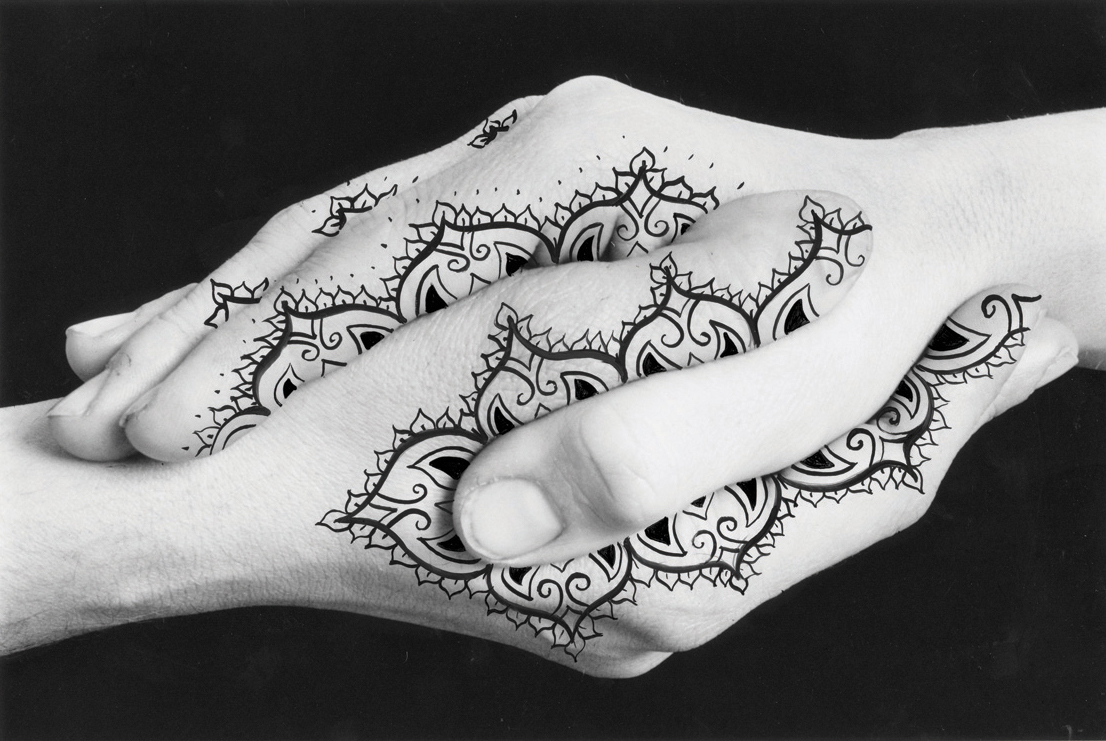
The ceremony took place at the Monaco Hotel, in Washington, DC, that city of “northern charm and southern efficacy,” to quote President Kennedy.[1] However, in this case, the setting was perfect. The hotel is right across the street from the Chinatown Metro exit. (DC’s Chinatown, by the way, boasts the highest density of Mexican restaurants this side of San Antonio). Anyway, you could hop on a train and hit the museums, which younger, single, available son Ned and I did to catch the Iranian artist Shirin Neshat‘s exhibit at the Hirshhorn. Her photographs and films create an aura of beautiful strangeness and remind you just how different and alike human beings can be, and, of course, there is nothing more universal than marriage ceremonies.

photograph by Shirin Neshat

photograph by Shirin Neshat

More, importantly, you could walk from the hotel to the rehearsal dinner at 600 F Street and avoid cab/Uber fares, not to mention vehicular manslaughter. It amazes me that in 2015 that the bride’s parents still pay for the wedding and the groom’s parents pay for the rehearsal dinner, but in this case, doing so saved the Birdsong-Moores from putting a second mortgage on their house or my having to sell my prized collection of very well-used — snap, crackle, pop — LPs dating back to the early ‘60’s .

If I do say so myself, the dinner went off well, the Lebanese food was excellent, and we ran out of alcohol just about when we were supposed to be out of there.

Like I said, I’ve only been to two rehearsals before, my own and one of a friend. Judy Birdsong and I had a no-frills, bagpipe-less ceremony that my father-in-law clocked at 23 minutes. My friend’s rehearsal was much longer, but I think that was attributable to the bedroom-slipper sporting wedding director’s being in the first stages of Alzheimer’s.

A Jewish wedding is more complicated, though. At the rehearsal, Taryn and Harrison pantomimed circling around each other, first Taryn circling Harrison, then Harrison circling Taryn — sort of like a cross between flamenco dancers and prizefighters — and then they interlocked arms and circled as a pair. It was very beautiful. Then her brother Logan went over and pantomimed picking something up and reading from it, and we practiced processing and recessing a couple of times, and that was it.

Rabbis seem much more involved in weddings than Protestant ministers, or this one, the excellent Arnold Saltzman, was.  Short, slightly stooped, smiling that comfortable smile that those who have made peace with metaphysics do, he looked as if he had stepped out of central casting. As it turns out, he is a big deal, has composed four symphonies and an opera and was an internationally sought-after cantor until a virus did in his vocal chords. Relaxed, he made slight jokes, even during the ceremony. When I thanked him at the rehearsal for performing the service on his Sabbath, he waved his hand dismissively and said, “This is about love.”
wedding day

wedding day

The day of the wedding dawned with drizzle, which eventually turned into a downpour, but for me, who had nothing much to do except practice reading a poem and memorizing my toast, it was a non-issue. The bridesmaids and groomsmen weren’t so lucky. At noon, they were off on a five-hour photo shoot in various locations around the capital.

Judy had an appointment with a make-up person at eleven-thirty and came back to the room with fake eyelashes and a Buster-Keaton-thick coat of pancake make-up. She went back to lighten it a bit, but the woman knew what she was doing because over the course of the day it faded, and by the time of the ceremony, she looked less like Joan Rivers and more like herself. Here’s a picture of her ordering at a Mexican Restaurant in Chinatown a couple of hours later.

IMG_2050

The family pictures were taken in the lobby at 4:45, and then we went to a room for the “signage.”   Rabbi Saltzman produced a certificate of marriage and had witnesses read prayers and sign documents. Judy and Taryn’s mother, Susan, also read a prayer. There’s a board, suitable for framing, written in Hebrew and English on the left-hand side and with art the bride and groom choose on the right-hand side. This board is what brother Logan had been holding in pantomime during the rehearsal.

* * *

Finally, it was time.

We walked down the hall and waited just outside the Paris Ballroom. Inside, a stringed quartet had been playing Jewish folk music. The wedding director opened the double doors, the quartet started playing again, and the groomsmen processed followed by Judy, Harrison, and me locked arm in arm, followed by the bridesmaids, and then by Taryn and her parents, Chris and Susan, locked arm-in-arm. I prefer this ritual to the Christian procedure where the groom appears from seemingly nowhere at the altar and the bride comes in escorted by only her father.

Of course, a room full of loved ones made the proceedings more emotional than the rehearsal. Parents sit in a row that would be behind the altar in a Christian ceremony, so we had a really intimate view of the proceedings. The bride and groom did their circling, the Rabbi prayed, talked, chanted; then father Chris and I were summoned to read, he a passage from the “Song of Songs” and I from the ee cummins poem “I Carry Your Heart”:

here is the deepest secret nobody knows

(here is the root of the root and the bud of the bud

and the sky of the sky of a tree called life; which grows

higher than soul can hope or mind can hide)

and this is the wonder that’s keeping the stars apart

Like the poem, the service was beautiful. The board came out, brother Logan and mother Susan read from it.  The Rabbi spoke and sang, rings were produced.  First Taryn, then Harrison, read letters to each other explaining why each had fallen in love.  Vows were exchanged, Harrison smashed a glass with his foot — Mazel Tov! — and they were married, man and wife without kissing.  Then before recessing, they turned beaming and faced each side of the audience who flanked them rather than being arranged in rows behind.

Another nice touch is that when we the parents processed, we did so so abreast, arm-in-arm, a now joined family ourselves, the Birdsong-Moore-Antigones or the Antigone-Birdsong-Moores.

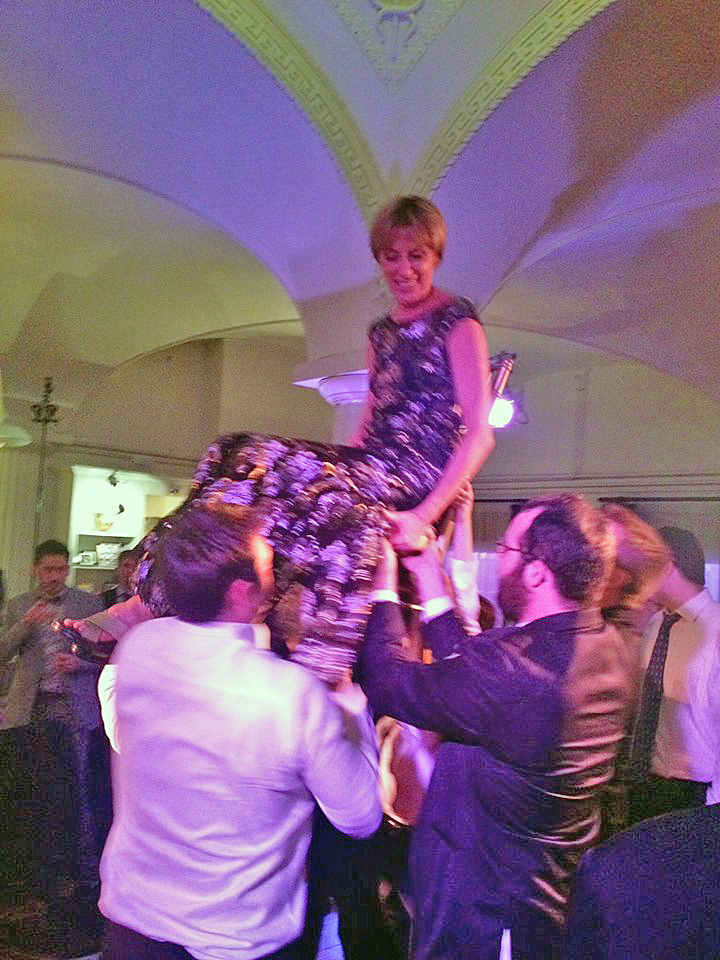
11692700_10205384243299647_870698187978786767_nThis post has gone on long enough, so I’ll skip the delightful reception, the delicious dinner, the toasts – though I have to mention the hoisting in chairs, which, is actually a lot of fun in a carnival ride type of way.

Being surrounded by people I love was so wonderful, my brothers and sister and nephews and nieces and their spouses, my in-laws, old friends I’ve known longer than Judy, the friends I’ve met since our marriage or during my career, new friends I met at the ceremony. How nice every single one of Taryn’s friends were with their warm smiles, handshakes, and hugs.

We danced the rest of the night away doing the Wa-Wa-tusi like Bela Lugosi.

I’ll leave you with the final line of my toast:

“I look forward to the birth of our first granddaughter, Wesleyanna Susan Christine Birdsong Antigone Moore – be fruitful and multiply!”

[1] Hat tip to Richard O’Prey for turning me on the phrase.

Wedding Traditions, U-Street, and Boiled Peanuts

13th Street in the U-Street Corridor

13th Street in the U-Street Corridor

We’ve fled the heat, humidity, and high drama of Charleston to celebrate the marriage of our elder son, Harrison, in DC. In fact, I’ve just put the finishing touches on a couple of toasts I’ll be delivering, one at the rehearsal party and one at the reception dinner.

Not surprisingly, wedding traditions vary north and south of the Mason-Dixon line. Traditionally, wedding receptions down south didn’t include a sit-down dinner. Mine certainly didn’t. It was held at a swanky club atop a high rise in Decatur, Georgia, but the guests stood as they munched on heavy hors d’oeuvres and sipped champagne. No one raised a glass in a communal toast. That had been done the night before at the rehearsal dinner.

My first sit-down postnuptial dinner caught me by surprise. A transplant from Chicago’s sister had married, and when Judy Birdsong and I sauntered into the reception at the Country Club of Charleston, we figured the festivities would last forty-five minutes or so, and this was back in the day of baby-sitters. Nevertheless, it was lovely and lavish and no doubt very expensive. Perhaps that’s why Southerners didn’t throw big sit-down shindigs after weddings – we were too poor.

At any rate, my first toast will be of the welcoming variety, and I’ll save the heavy Faulknerian bombast for the wedding reception. In the meantime, I’ve been gadding about the District checking out the U Street Corridor where we’ve rented an apartment (tomorrow we transfer lodgings to the Monaco Hotel where the ceremony will take place).

Scrub It Off!

Scrub It Off!

The U-Street Corridor is DC’s version of Harlem, dubbed as the “Black Broadway” by Pearl Bailey back in the day, and our apartment is located on the same block as Duke Ellington’s boyhood home. Of course, there are no Confederate flags flying here, but I did notice this perhaps problematic display on the façade of the famous eatery Ben’s Chili Bowl.

Of course, in keeping with the tradition of Birdsong frugality, we’ve been riding the Metro instead of taking cabs, and what has struck me about that experience is the incredible interiority of the commuters as they stare into their cell phones or into space as they listen to music through their ear buds. It’s as if they’ve pulled the blinds on the outside world. Need I mention that in general people are not as friendly up here?

Obviously, it’s been a horrible week in Charleston, and the Confederate flag is an embarrassment, but one thing I’m not embarrassed about is hailing from the South. We’re an odd bunch for sure, but we know how to tell a story, draw out a vowel, and boil us up some peanuts. Imagine American music without the South – imagine American culture without the South.

All I can say is praise be for blacks and crackers, hillbillies and debutantes.

Way Past Time

1When I was growing up in South Carolina in the ‘50s and ‘60s, the Confederate Battle flag represented for me “the Lost Cause,” that noble, heroic, and tragic conflict fought to ensure that states had the right to govern themselves. My home state had led the way and seceded from the Union rather than suffer the indignity of having others – foreigners from New York or Ohio — impose their views and tariffs upon its sovereignty.

States Rights as the War’s rationale had been preached to me by my father and reinforced in the South Carolina history courses I took in the third and eighth grades. Those textbooks claimed that economic sanctions, not slavery, had ignited the tinderbox, and although a few bad apples taint every barrel, the vast majority of slaveowners were benign ladies and gentleman who loved Mammy and Uncle Remus. And if you doubted these truths, you could watch Gone with the Wind to see for yourself how positively symbiotic the relationship between whites and blacks had been.

So when the South Carolina began to celebrate the War’s centennial, 9-year-old-me was happy to see the Battle Flag hoisted upon the dome of the Capitol beneath Old Glory and our distinctive state flag with its palmetto and crescent moon. It didn’t occur to me that the Confederate flag’s presence had anything to do with the Civil Rights movement, and even it it had, I probably wouldn’t have cared. After all, wasn’t the Civil Rights movement a replay of the war, outsiders imposing their wills on us?

Flash forward a half a century, and guess what, I’ve learned a thing or two. For example, I’ve read the Declarations of Secession of the Confederate states. Here’ are the first two paragraphs of Mississippi’s:

In the momentous step, which our State has taken of dissolving its connection with the government of which we so long formed a part, it is but just that we should declare the prominent reasons which have induced our course.

Our position is thoroughly identified with the institution of slavery – the greatest material interest of the world. Its labor supplies the product, which constitutes by far the largest and most important portions of commerce of the earth. These products are peculiar to the climate verging on the tropical regions, and by an imperious law of nature, none but the black race can bear exposure to the tropical sun. These products have become necessities of the world, and a blow at slavery is a blow at commerce and civilization. That blow has been long aimed at the institution, and was at the point of reaching its consummation. There was no choice left us but submission to the mandates of abolition, or a dissolution of the Union, whose principles had been subverted to work out our ruin.

So much for trade tariffs being the cause of the war, and if indeed, slavery is the reason the South seceded, then doesn’t it follow that the Lost Cause was evil? Here’s Robert E Lee on the subject:

So far from engaging in a war to perpetuate slavery, I am rejoiced that slavery is abolished. I believe it will be greatly for the interests of the South. So fully am I satisfied of this, as regards Virginia especially, that I would cheerfully have lost all I have lost by the war, and have suffered all I have suffered, to have this object attained.

As someone who teaches literature, I’ve also learned a thing or two about symbols, that they must be interpreted within their contexts  — white Moby Dick doesn’t symbolize purity. e.g.  It follows that symbols’ meanings change as their historical contexts change.

For example, as The Jewish Visual Library points out,

Throughout its history, the swastika represented life, sun, power, strength and good luck. In the early 20th century, it was still considered a positive symbol. During World War I, it was found on shoulder patches of members of the American 45th Division and the Finnish air force. Only after the Nazi period did its connotation change.

In the USA, you have the existential right to maintain that the original symbolism of the swastika is its true meaning, but if you decide to wear one as a lapel pin, you’re likely to be frowned upon.

Now when I see the Battle Flag, I think of Lester Maddox or George Wallace or Dylann Roof, not of Robert E Lee. As Allan Gurganus put it in a NY Times editorial in 1996, “the forces of hatred have co-opted [the flag].” Or to quote my friend and former student David Connor Jones, “I find it odd that all my erudite southern friends who still defend the flag do not have the decal on their cars, much less fly it at their homes. Why do you think that is?”

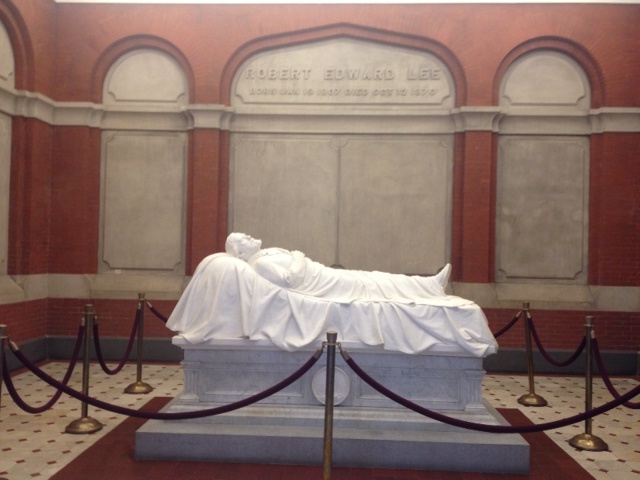
photo-3-JPGIn another editorial appearing in the Roanoke Times last July, David Cox, former rector of RE Lee Memorial Church in Lexington, writes about Washington and Lee University’s removal of Confederate flags from its chapel:

Confederate battle flags, or their replicas, surrounded the statue [of Robert E Lee] from 1930 until last week, when the university removed them. To me, their absence pays more homage to the memory of its most famous president than their presence. Judging from the thousands of his letters I’ve read in exploring his faith, for all his deeds, heritage and acclaim (and animosity) accorded him, Robert Edward Lee was at heart a humble soul striving to do his duty to his God and his country. Those flags didn’t fit the person who came to Lexington in 1865.

He also adds, “Someone wrote me of a woman asking Lee what to do with an old battle flag. Lee supposedly responded, ‘Fold it up and put it away.’ Though I’ve not verified the account, it is consistent with his letters and acts of his last years. He was always looking ahead.”

Let’s follow General Lee’s example and remove the flag from the State House grounds so we can turn our attention to more meaty matters — like gun control.

Idle Speculation

Denmark Vesey

Denmark Vesey

A former housemate of mine, James Paul Rice, has a historical novel coming out next year based on the 1822 Denmark Vesey uprising. Being a native of the Lowcountry of South Carolina, I was somewhat familiar with Denmark Vesey, but he came absolutely alive for me as I read Mr. Rice’s novel in manuscript.  Several pivotal scenes from the novel are set at the Emanuel African Methodist Episcopal Church, which Vesey helped to found in 1816.

It is at this church that last night’s horrific mass murders took place. The alleged murderer, Dylann (sic) Root, can be seen in a photograph wearing a jacket with two white supremacist patches, one from South Africa and the other from Rhodesia. Is it possible that the Vesey connection played a role in Root’s selection of settings? After all, he’s from Columbia, which has a number of more conveniently located AME churches. Why drive all the way down to Charleston?  Did Root choose Emanuel because of its historical significance? Its connection with not only Vesey but with the Civil Rights movement?  Did he know that Dr. King had preached there?

I can’t help but think of Cass Mastern’s “spider web” theory from Robert Penn Warren’s  All the King’s Men – his theory about the karmic connections of events through time:

[Mastern] learned that the world is like an enormous spider web and if you touch it however lightly, at any point, the vibration ripples to the remotest perimeter and the drowsy spider feels the tingle and is drowsy no more but springs out to fling the gossamer coils about you who have touched the web and then inject the black, numbing poison under your hide. It does not matter whether or not you meant to brush the web of things. Your happy foot or your gay wing may have brushed it ever so lightly, but what happens always happens and there is the spider, bearded black and with his great faceted eyes glittering like mirrors in the sun, or like God’s eye, and the fangs dripping.

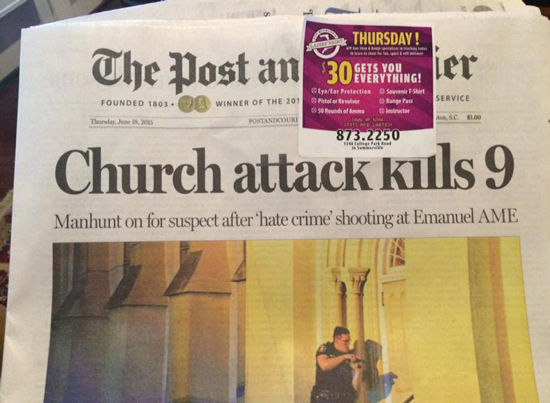
gunadOf course, I’m merely speculating, and it doesn’t ultimately matter. Nine God-fearing people are dead because of the pigmentation of their skin. Another young white male starved for attention has gotten it in the worst way. The Confederate battle flag is flying on our State House grounds at full staff as I type this and will continue to fly for another generation or two. In the foreseeable future, assault weapons will still be easier to obtain than driver’s permits. In fact, the awful headline in this morning’s Charleston paper was somewhat obscured by an advertising sticker from a gun shop. Intemperate souls will suggest that the worshippers should have been packing heat, and if that’s what it’s come to here, that grandmothers cannot go to church unarmed, then “American” can no longer be used as an adjective for civilization.

No, let me end with another quote from All the King’s Men:

After a great blow, or crisis, after the first shock and then after the nerves have stopped screaming and twitching, you settle down to the new condition of things and feel that all possibility of change has been used up. You adjust yourself, and are sure that the new equilibrium is for eternity. . . But if anything is certain it is that no story is ever over, for the story which we think is over is only a chapter in a story which will not be over, and it isn’t the game that is over, it is just an inning, and that game has a lot more than nine innings. When the game stops it will be called on account of darkness. But it is a long day.

Folly Beach’s Cat Lady, Potential Serial Killer?

Greetings From Folly Beach, SC

Greetings From Folly Beach, SC

There’s a high profile, eccentric old lady on Folly Beach whom I encounter practically every day feeding feral cats. I’d say she’s in her mid-to-late 80s, and even if you were to straighten out her stoop, she wouldn’t hit 4’10.” Not surprisingly, people who don’t know her name – and I don’t – call her the Cat Lady.

Every block or so she has placed plastic containers, and every afternoon feral cats gather in anticipation of her arrival. Sometimes, she has a helper, but on most days when I see her, she is alone, wearing an expression of great seriousness as she leans over dumping dry cat food into the bowls. In fact, I saw her this afternoon when I was headed to Chico Feo for a pre-supper malted aperitif. Staring off into space, she had her hands on her hips, like a diminutive, determined, female edition of General Patton. Obviously, this diurnal “mission trip” is her raison d’etre.

Of course, feeding feral cats is an environmental no-no. According to FETA (not exactly an anti-animal organization):

Many people who encounter feral cats start feeding them, but feeding alone can actually make the situation worse. Feeding ferals increases their ability to give birth to even more kittens who are destined to suffer and die premature deaths. It is essential to get these cats off the streets in order to prevent not only their own suffering, but that of their offspring. Feeding should only be done as a prelude to trapping, to get cats accustomed to eating in a certain place at a certain time.

The article goes on to state that feral cats have abbreviated life spans, suffer from a multitude of maladies thanks to non-vaccination, and even if their autism rates are super low (I just made that up), the food can also attract non-feline varmints. The Cat Lady learned this the hard way last year when a rabid raccoon took a chunk out of her, an event so newsworthy it made the Charleston papers.

Folly Beach is certainly no “Mayberry by the Sea” – its official civic moniker is the Edge of America – but even after the coon attack, the authorities, Sheriff-Taylor-like, look the other way as she putts along in her cart circumnavigating the island. Maybe they figure what the hell, stopping her would kill her, so what if scores of cats suffer or some surfer comes down with a case of rabies? Sometimes targeted human compassion trumps common sense, and going by Haruki Murakami’s brilliant novel Kafka on the Shore, feral cats dig the freedom of homelessness.

ILLUSTRATION BY SAM BOSMA

ILLUSTRATION BY SAM BOSMA from The New Yorker

One of the characters in the novel, Satoru Nakata, through circumstances too complex to relate here, has obtained the ability to converse with cats. People hire him to find their lost pets. Nakata usually begins his investigations in city parks where the ferals hang. In one incident, he strikes up a conversation with a stray and asks the cat his name. “I used to have one when I lived with people,” the cat says, “but I’ve forgotten what it was.” You get the idea [absurd mixed-animal-metaphor-cliché alert] that wild horses couldn’t drag him back to domestication.


I’ll admit that the Cat Lady has irritated me on occasion, blocking my path when I’m running late, but even if her head isn’t in the right place, her heart certainly is. Nevertheless, I sense something sinister about her, so for fun, I’m outlining a murder mystery set on Folly in which she’s a serial killer. What’s really enjoyable is deciding whom among the people on Folly I don’t like she murders, in what order, and how. Hey, it’s summer time. It keeps me off the streets, safe from a potential attack by a mad, foaming calico.

Packing for Mars

mars


You may have been asked what one book you would want to have with you if you were stranded on that proverbial desert island, you know, the one with ever ripening fruit falling from the trees and bacteria-less fresh water bubbling from springs and handy flint lying around for sparking palm frond fires, an island where you could kick back and be sedentary rather than spending all day searching for edible grub worms.

desert island

My suspension of disbelief won’t allow it. I’ve found a better hypothetical opportunity for selecting a limited library, a trip to Mars. According to Tom Kizzia of the New Yorker, NASA is prepping astronauts for a Martian mission, a voyage that would take them “a hundred million miles from home, no longer in close contact with mission control.”

“Staring into the night for eight monotonous months,” Kizzia asks, “how would they keep their focus? How would they avoid rancor or debilitating melancholy?”

Lauren Leveton heads NASA’s Behavioral Health and Performance program, and if I were to be chosen for the 3-year round trip to Mars (because of planetary motion, you’d be stuck on the surface for months), I’d love for her to allow me to bring three hardback bound books, ancient non-electronic artifacts with paper pages that turn and can be annotated with a sturdy #2 pencil. She might begin by telling me to choose one poem, one novel, and one play. As much as I love non-fiction, I would want works that recreate the Earth and its denizens as vividly as possible, which means dramatization.

The Poem

Of course, you’d want an epic, something worthy of your own journey, and the obvious candidates the Iliad, Odyssey, and Aeneid leap to mind; however, I don’t read Linear B Greek or Latin, so I have to rule those three out. My poem must be in English, so nothing’s lost in translation, and the obvious choice seems to be Paradise Lost, which contains all time and space, justifies the ways of God to men, describes not only Eden’s earthly paradise but also many an exotic non-mythical locale in ravishingly beautiful baroque language. Also, he’s managed to embed much of the Bible and Greek mythology into the mix. You get as much of pre-18th century human history as possible in a mere 10,000 lines.

Dig this epic simile that vivifies the number of fallen angels rolling on the fiery seas of Milton’s hell:

[Satan] stood and call’d

His Legions, Angel Forms, who lay intrans’t

Thick as Autumnal Leaves that strow the Brooks

In Vallombrosa, where th’ Etrurian shades

High overarch’t imbowr; or scatterd sedge

Afloat, when with fierce Winds Orion arm’d

Hath vext the Red-Sea Coast, whose waves overthrew

Busiris and his Memphian Chivalry,

While with perfidious hatred they pursu’d

The Sojourners of Goshen, who beheld

From the safe shore their floating Carkases

And broken Chariot Wheels, so thick bestrown

Abject and lost lay these, covering the Flood,

Under amazement of their hideous change.

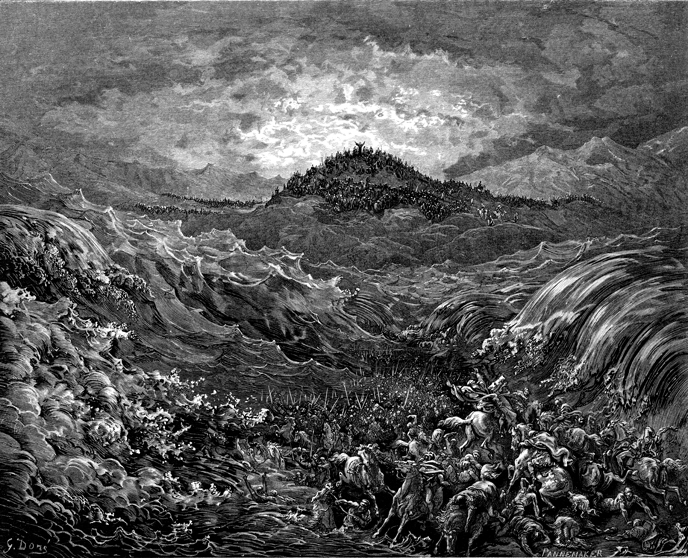
dore # 2

The brilliance and beauty of these lines amaze, the fallen angels compared to fallen leaves, then floating sedge on the Red Sea, the setting where Moses escaped the Pharaoh’s army, who like the Fallen Angels dared defied Yahweh.

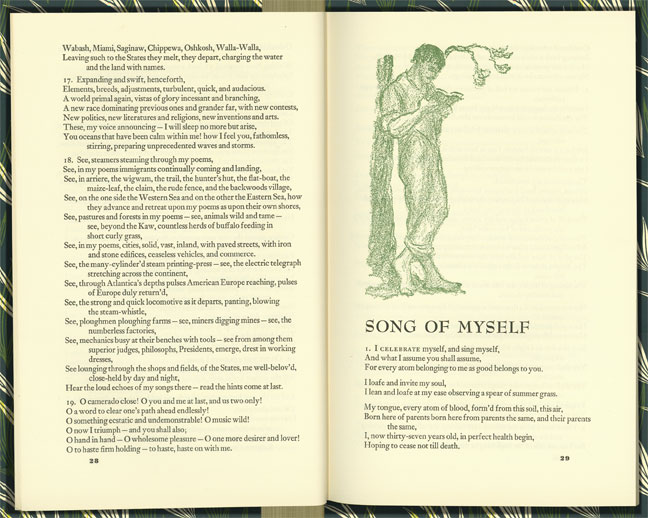
But no, it’s not Paradise Lost I’m packing but Walt Whitman’s “Song of Myself :

The smoke of my own breath,

Echoes, ripples, buzz’d whispers, love-root, silk-thread,

crotch and vine,

My respiration and inspiration, the beating of my heart, the

passing of blood and air through my lungs,

The sniff of green leaves and dry leaves, and of the shore and

dark-color’d sea-rocks, and of hay in the barn,

The sound of the belch’d words of my voice loos’d to the

eddies of the wind,

A few light kisses, a few embraces, a reaching around of arms,

The play of shine and shade on the trees as the supple boughs

wag,

The delight alone or in the rush of the streets, or along the

fields and hill-sides,

The feeling of health, the full-noon trill, the song of me rising

from bed and meeting the sun.

Every time I read it, it makes me come more alive, and I absolutely love its catalogues. Walt would remind me of the cities farther and farther away on the out, closer and closer on the way back:

The blab of the pave, tires of carts, sluff of boot-soles, talk of

the promenaders,

The heavy omnibus, the driver with his interrogating thumb,

the clank of the shod horses on the granite floor,

The snow-sleighs, clinking, shouted jokes, pelts of snow-balls,

The hurrahs for popular favorites, the fury of rous’d mobs,

The flap of the curtain’d litter, a sick man inside borne to the

hospital,

The meeting of enemies, the sudden oath, the blows and fall,

The excited crowd, the policeman with his star quickly

working his passage to the centre of the crowd,

The impassive stones that receive and return so many echoes,

What groans of over-fed or half-starv’d who fall sunstruck or

in fits,

What exclamations of women taken suddenly who hurry

home and give birth to babes,

What living and buried speech is always vibrating here, what

howls restrain’d by decorum,

Arrests of criminals, slights, adulterous offers made,

acceptances, rejections with convex lips,

I mind them or the show or resonance of them — I come and I

depart.

And also he’d be right there in the capsule with me:

Speeding through space, speeding through heaven and the

stars,

Speeding amid the seven satellites and the broad ring, and

the diameter of eighty thousand miles,

Speeding with tail’d meteors, throwing fire-balls like the rest,

Carrying the crescent child that carries its own full mother in

its belly,

Storming, enjoying, planning, loving, cautioning,

Backing and filling, appearing and disappearing,

I tread day and night such roads.

song of myself

The Novel

No time wasted here. Despite Faulkner’s great achievement, it’s Joyce’s Ulysses, which brings to life the human condition like no other work I know. I can shoot the rapids of Stephen Dedalus’ consciousness, or Leopold Bloom’s, or his wife Molly’s. I can walk the vivid streets of Dublin, day and night. I can adjust to and savor each new style as Joyce shifts from one episode of the Odyssey.

 Yes!

The Play

Although I virtually have it memorized already, I’d bring along my old pal, the Danish Prince. He’s a lonely sort, and as Harold Bloom says, the most intelligent human ever. I suspect I’d prefer his company to my fellow astronauts, technical folk who remind me of camp counselors, and Hamlet is a worthy companion for Walt and Leopold and plays no small role in Ulysses. And, yes, the poetry!

Uh-oh, Dr. Leveton has informed me I can take only one!

Given the above, which one would you choose?

A Week of Caitlyns

Sampan massacre scene from Apocalypse Now

Sampan massacre scene from Apocalypse Now

I don’t remember ever seeing the name Caitlyn spelled with a “y” before this week, but now, this morning it appears in two incarnations on the front page of my local paper, Charleston, SC’s Post and Courier. One “Caitlyn” belongs to the decathlon 1976 Olympic gold medal winner formerly known as Bruce, the other to a 15-month-old Chocolate Staffie mix whose muzzle had been wrapped shut with electric tape right here in Charleston.

Caitlyn, sometimes spelled as Caitlin, is an Irish female given name. It’s a lovely trochee with its long A and liquid L, and I suspect you’d lose a bit of its lilting cadence if you were to Anglicize it to Katelynn, though that would be a killer name for an Americana singer from Natchez.

Caitlyn the dog has become an international phenomenon, and for sure, it ‘s heartbreaking to think of the suffering she must have endured (I can’t bring myself to post a picture of her), and it’s encouraging that the sadist who tortured her has been arrested. I’m reminded of my own recently deceased German longhaired pointer/ border collie/ Cerberus mix, Saisy, who had been starved and tied to a post with a two-foot rope before noble souls rescued her. She ended up fairly okay, though, except for food issues, which never really went away, but over the years, she quit flinching when you leaned over to pet her head or rub her muzzle and quit snapping at you if you petted her for too long.

I miss her every day.

The late, great Saisy

The late, great Saisy

For some reason, many of us tend to care more about pets, especially dogs, than other people. I noted this evolutionary oddity over the years through showing the film Apocalypse Now to high school students as a follow up to their reading Heart of Darkness, the novella the film is loosely based on.

Set in Viet Nam, the film earns its R-rating via violence. In one particularly harrowing scene, known as the Sampan massacre, American soldiers machine gun to death an entire family of Vietnamese transporting produce on a boat – men, women, and children – when the soldiers panic after a Vietnamese girl runs to protect a puppy.  As the family is ripped apart by bullets, my students sit there silently; however, when one of the soldiers – Chef – finds the surviving puppy and picks it up roughly by its scruff, the room fills with highly audible disapproving oooohs.

Meanwhile, stories like the one below we hardly hear about, and most of us don’t care about:

[Kansas Governor] Brownback has often characterized his opposition to expanding Medicaid and other poverty programs, in Wright’s words, as a “moral rejection of dependency.” Last June, for example, Brownback told the Heritage Foundation’s Daily Signal Web site that Kansas had not expanded Medicaid because “We’re trying to push people that are able-bodied right now to get a job.” Similarly, Brownback pledged in his State of the State address this year to continue “helping people move from dependence on the government to independence.”

But, in practice, Brownback’s resistance to Medicaid expansion is causing some people to move from independence to desperation. [Nation editor Kai] Wright spoke with several Kansans who are suffering because of Kansas’s severe eligibility requirements. Far from the right-wing caricature of lazy moochers, they are hard workers who aren’t looking for a handout. One woman, RaDonna, is too sick to hold down food, let alone a full-time job. Yet, as a childless adult, she doesn’t qualify for Medicaid — and the state rejected her application for disability benefits. While RaDonna now lives with her sister, Cathy, she insists on helping with the laundry and dishes to earn her keep. “She can’t do the whole sink full of dishes without stopping and sitting down for a while,” Cathy says.

No, we’re more interested in Bruce Jenner’s transformation into Caitlyn and argue about whether he’s courageous or merely an attention-starved ex-Kardashian in-law.  After all, the poor will always be with us.

In the courage department, though, I give the nod to RaDonna.

Adventures in the USSR (featuring Dizzy Gillespie in a cameo appearance)

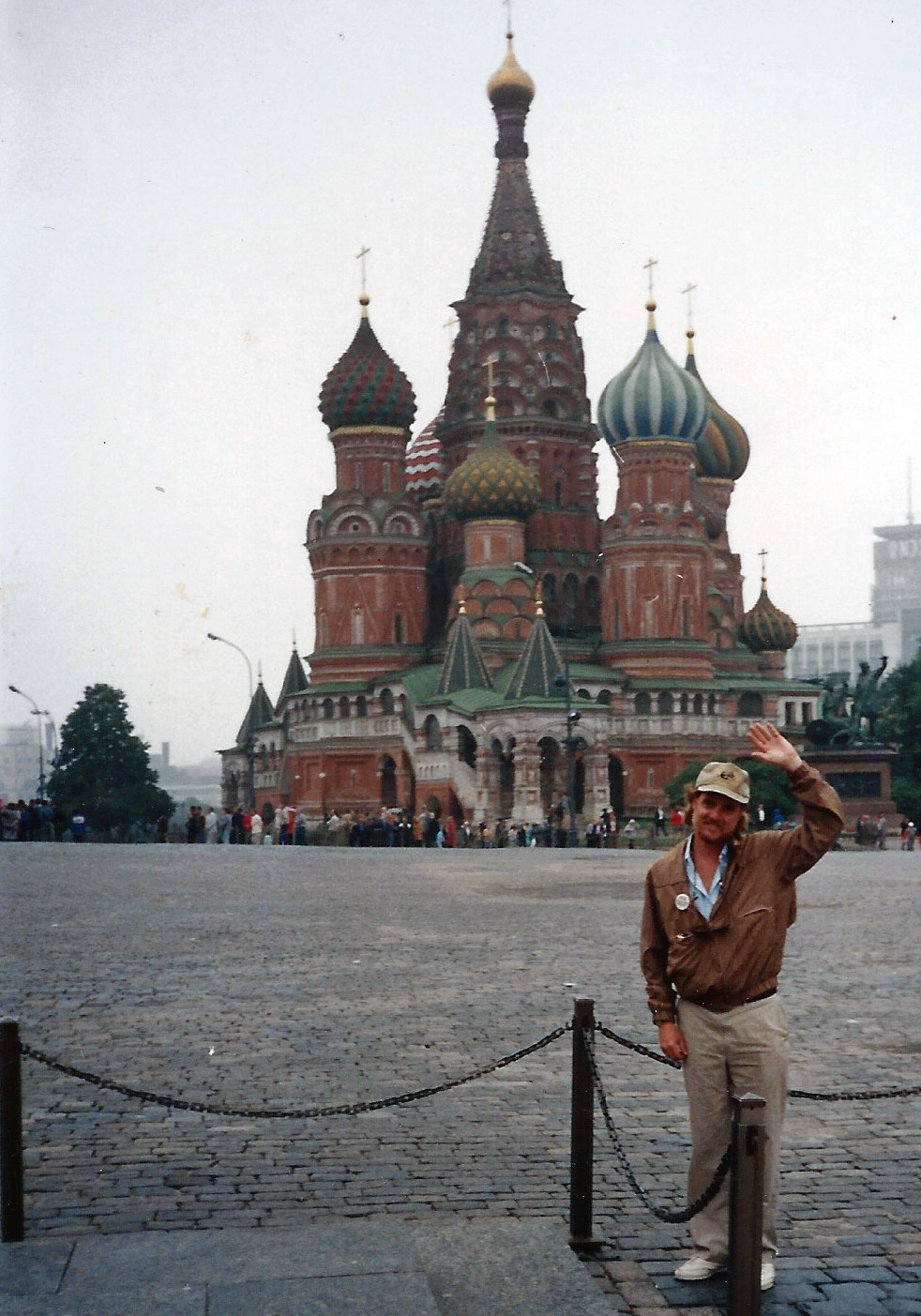
the author back in the day

the author back in the day

Chances are I’ll never return to Russia, the country formerly known as the Soviet Union, where I spent twenty-eight days in June of 1989, a quarter of a century ago and counting. I didn’t realize it at the time, but I was taking a last peek at an empire on the brink of collapse, and indeed I didn’t experience the police state I thought I’d encounter. My naive expectation was that the KGB would sweep down on jaywalkers and haul them off to some gulag in Irkutsk, but what I found instead were swarms of black-marketers openly operating everywhere I wandered, exchanging money or swapping a Soviet flag for a pair of blue jeans or sunglasses.

During a long sunshiny night on the Gulf of Finland, just west of Leningrad, an East German tourist pulled a knife on me.  I had knocked on the door of his room where five men were bellowing patriotic songs at 3 AM. At first, the knife-wielder and his non-English speaking compatriots invited me in to share beer and sausage, but after I communicated that I was from the US, one pulled out a knife. The others quickly quieted him and produced snapshots of their children to establish our brotherhood. I didn’t carry photos of my own boys who were five and four at the time and would have appreciably “aged” when I would see them next.

I was one of four chaperones in charge of twenty high school students and two college freshmen. It was a frenetic trip that took us from Leningrad to Moscow to Siberia, then westward down through Uzbekistan, Kazakhstan, Soviet Georgia, then finally back to Moscow. However, it was Leningrad — now St. Petersburg — the setting of Crime and Punishment — that was the most surreal.

The ornate subways of St. Petersburg/Leningrad

The ornate subways of St. Petersburg/Leningrad

Criss-crossed with canals, Leningrad was a beautiful city of 18th century pastel-colored buildings (and, of course, so is St. Petersburg today). However, back then, its citizens were the most morose human beings I’ve ever encountered. To a man and woman (I don’t remember seeing any children), they shuffled along wearing expressions of total, abject despair. Even on the two-story escalators leading to and from the gorgeous subway stations, lovers who faced each other holding both hands wore the expressions of people about to be taken away to be shot.

In fact, the only time I saw anyone smile was on a city bus. I was by myself and had mastered the arcane procedures of dealing with city transportation. You bought a ticket, an unofficial looking thin sheet of paper, from a machine at the station and then punched it yourself on the bus.  However, you didn’t give it to the driver; you just held onto it in perpetuity. In other words, the buses operated on the honor system.

Anyway, I was seated next to a woman whose mien made images of Mary at Golgotha look upbeat in comparison. As we sat there in stony silence — no one conversed with each other — a thin East German tourist, a David Byrne lookalike in a dark suit and skinny tie, boarded with a ticket in his hand. He was as jittery, as nervous as I’ve ever seen anyone in my life. He stood there trembling, turning this way and that, holding the ticket up beseechingly, so I got up and showed him what to do. He punched the ticket, and as I turned around, every single person on the bus hit one sarcastic clap in unison, and on their collective faces a pained smile broke through the ice of their glacial unhappiness.  It was as if they had forgotten how to smile, as if they were using muscles unaccustomed to exercise.  

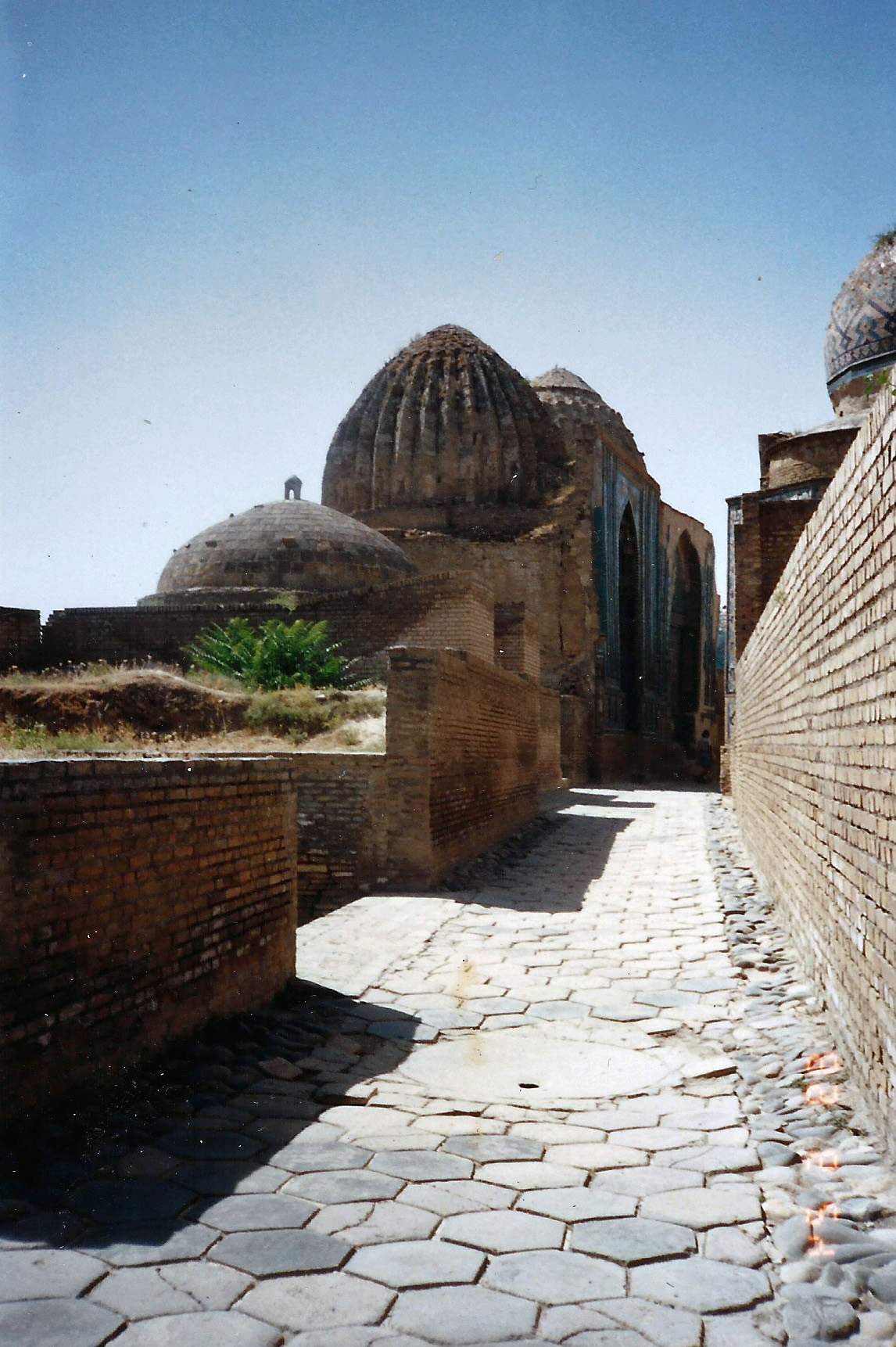
Moscow was slightly less Kafkaesque, and the further east you travelled, the happier the citizenry and the better the food. I would never have guessed that Siberia would be more upbeat than Leningrad. The Islamic Republics were interesting (and deafeningly quiet). In a hotel in Samarkand one afternoon, I purchased a two-dollar Heineken and handed the bartender a five in US currency. He handed me a twenty pound British note and some kopecks for change. I tried to explain that it was too much, but he misunderstood and thought I was complaining. I explained the situation to Sasha, our Intourist guide, and he said, “Keep it. These people are pigs.”

So we left Samarkand the next day for Bukkara. At dinner that night, Sasha summoned me and explained that he had just talked on the phone with the bartender from Samarkand who “had tears in his voice, tears in his voice.” Unless I reimbursed the £20, the bartender, a father of five, would lose his job. So, of course, I forked it over, not at all sure Sasha was on the up-and-up. 

an alleyway in Bukkara 1989

an alleyway in Bukkara 1989

Our final destination was the Republic of Georgia. Two months before, an anti-Soviet demonstration had been brutally crushed by the Soviet Army in what is now known as the Tbilisi Massacre. Soviet troops were still heavily present. Nevertheless, Georgia was the most pleasant place we encountered. People wore colorful clothes and seemed much more prosperous. 

Not surprisingly, I was ever so eager to return home to my family, to sidewalks that didn’t need mowing, to signs sporting the Roman alphabet, to well-stocked grocery stores where you didn’t receive your change in mixed combinations of foreign currencies.

Standing waiting in Heathrow for our London to Washington flight, a student asked me if I’d ever heard of Dizzy Gillespie.

“Of course,” I said.

“Well, he’s standing right over there. He just finished an interview.”

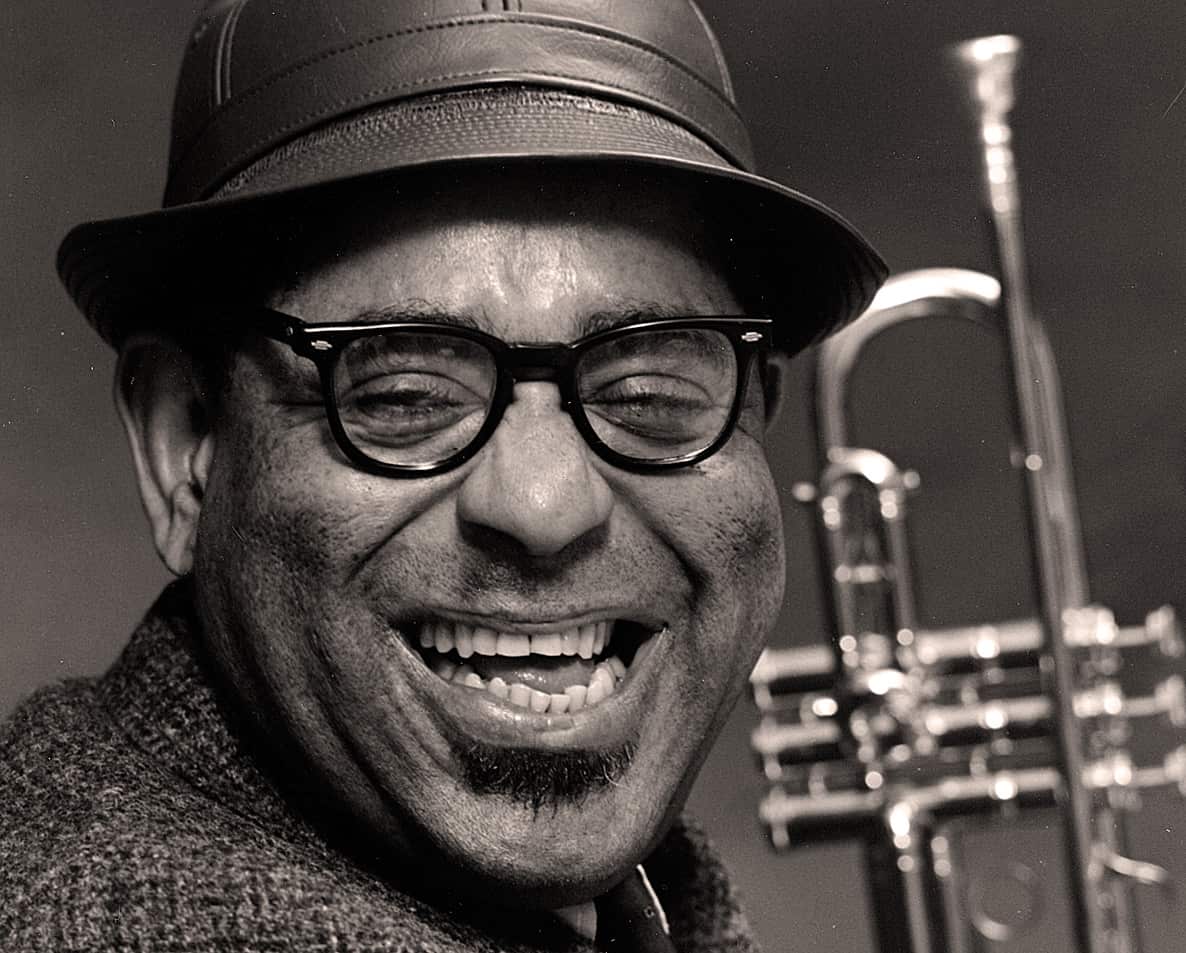
And, sure enough, there he was, a tall black man with glasses sporting a jazz dot.

I approached him and said, “Mr. Gillespie. I hate to bother you, but it would be a great honor to shake your hand.”

Ne parle pas Anglais, he replied.

“Ah, come on, Dizzy,” I said. “I’m from South Carolina.”

He smiled broadly, and in a thick Southern African American accent asked, “Where? Myrtle Beach?”

It was music to my ears.

Dizzy Gillespie, a native of Cheraw, South Carolina