Protest the Rising Tide of Intolerance

As Crass Casualty and Dicing Time[1] would have it, in the week of my wife’s memorial service, I have to box up the contents of my classroom for a move to a brand new Upper School building.

This chore is especially taxing because when I moved into a former colleague’s room a quarter a century ago, he asked if he could keep some of his books in the room, which were housed in three enormous bookcases that belonged personally to him. I said, sure. He eventually died without heirs. His collection includes some of his late mother’s books as well. There are inscriptions. “To Catherine S____________ 1925.”

Of course, I also have books, 31 years worth, not to mention file cabinets gorged with quizzes, study guides, lecture notes, honor contracts, resumes, book order receipts, etc.

So I’m in the process of sifting through the contents, recycling, shredding, and yesterday I discovered this anti-bullying speech I gave to the Upper School during the first Clinton Administration. I don’t know the exact date, maybe 1994. At any rate, I haven’t altered the text, so some of the allusions may seem odd or anachronistic.

At any rate, I think the speech holds up fairly well, so why not expose it to a wider audience than the 300 or so who originally heard it?  I doubt if it will alter the behavior of bone fide bullies (like our current president), but it could offer the victims of bullies some solace.

I’ve also included the video clips that accompanied the speech.


[Note the original movie clip went a bit longer and depicted an older nurse who delivers the food the younger nurse was incapable of providing.]

John Merrick, the Elephant Man, is, of course, an extreme example of someone being shunned because of the way he looks, but we all know that every day all types of people are excluded for all types of reasons — it might be their race, their looks, the way they talk, their sexual orientation, the way they dress.  I took a poll of my classes and discovered that 100% of my students, every single individual, has been made fun of here at Porter-Gaud, and I mean maliciously.  I suspect everybody in this auditorium has been shunned, been put down at one time or another, been made fun of.  We all know what it feels like, and it doesn’t feel good.

A couple of weeks ago, I saw Maya Angelou, perhaps America’s most famous living poet.  She was being interviewed by David Frost on PBS.  Maya Angelou is black and grew up in segregated Arkansas.  So like John Merrick, she knows what it’s like to be excluded.  Growing up as a little girl in Arkansas, she probably wouldn’t have been able to see the movie The Elephant Man because of the color of her skin.

When Maya Angelou was only 10-years-old, she was raped.  After the rape, she refused to talk for over a year.  Her pain was so terrible she couldn’t give voice to it.  She remained silent, mute. I guess sort of like John Merrick, she couldn’t find the words she needed.

Fortunately, she eventually did find her voice and became a poet.  In a poem she read at President Clinton’s inauguration, she linked humankind to extinct species such as dinosaurs and mastodons and voiced her concern that we may follow in their footsteps and become “lost in the gloom of dust and ages.”  She sees a real danger in fragmentation.  She writes

[. . .] the Asian, the Hispanic, the Jew
The African and Native American, the Sioux,
The Catholic, the Muslim, the French, the Greek
The Irish, the Rabbi, the Priest, the Sheikh,
The Gay, the Straight, the Preacher,
The privileged, the homeless, the Teacher.
They hear. They all hear
The speaking of the Tree.

And what is the tree saying?

Do not be wedded forever
To fear, yoked eternally
To brutishness.

In the interview, David Frost asks Maya Angelou what the poem means, and she says, “It means we have to stop minimizing other people’s lives.”

We have to stop minimizing other people’s lives.

Look at John Merrick.  The Elephant Man.  An extreme case, as I said, but look how others minimized him.  In the movie, the doctor Treves at first is more interested in John as a specimen than he is as human, but at least he treats him humanely.  The younger nurse is so weak a person she runs like a child when she sees “the elephant man.”  Runs screaming out of the room. [The following references don’t appear in the above clip].  Did you notice the second, older nurse?  She never makes eye contact with Merrick.  That’s what people do when they are uncomfortable; either they avoid eye contact, or they giggle, or both.  This older nurse is beyond the giggling stage so instead she stays busy making the bed and talks about Merrick as if he were an idiot or weren’t there.

She is minimizing his life.

The head of the hospital is eager to get rid of Merrick.  He is minimizing Merrick’s life.  And not only John Merrick’s life, but his very own life.  Because as it turns out, John Merrick possessed an extraordinary soul.  His indomitable spirit has made him famous — the stuff of biographies, plays, movies.  The head of the hospital would have been long forgotten if he had not encountered John Merrick.  And how will the head of the hospital be remembered in these biographies, plays, and movies?  His legacy lies in how he treated John Merrick.  And I suspect that’s how we will be remembered after we leave Porter-Gaud.  Others will remember us in light of how we treated them.

Now, this assembly’s not really about John Merrick.  it’s about us — about you and me — and how we treat people.  Do we minimize other people in the mistaken belief that we “grow” when we “put them down?”

That we grow when we exclude someone from our group?

Let’s face it.  Everyone has weak points. We may be great at volleyball but lousy in math.  Great in math but hopeless in history.  We all have features we’re self-conscious about. Frankly, I’d just as soon not be bald, but like John Merrick, I didn’t have the luxury of choosing my parents. Nobody does.

Genetics deals us our facial features, our body types, our athletic prowess (or lack thereof), our intellectual potential, and even, according to the latest studies, our sexual orientation.  We have no control over our parents’ wealth.  Whether or not they’re getting divorced.  Where we were born.

Of course, it’s really no mystery why people harass and pick on others.  It’s obviously to compensate for low self esteem.  Inevitably cowardice is also involved.  Bullies rarely pick on the golden boy star quarterback who looks as if he’s stepped off the cover of Seventeen Magazine and sports 1550 SAT scores.  The victims are going to be someone younger, smaller, less popular.

So when we hear somebody cutting someone else down, we ought to tell him or her to quit. We’ll be doing, not only the victim a favor, but also the bully a favor, because frankly, he’s making an ass out of himself.  To those who see through the psychology, it’s embarrassing. Moreover, in doing nothing when we see unkindness occur we are abetting the creation of a climate that allows bullying  to flourish.

We should be the heroes, not the villains, in the movies of our lives.

Of course, cutting people down isn’t the only way we can minimize their lives.  Sometimes we shut others out because they are different.  Ignoring someone is also minimizing his or her life. It’s obviously not as bad as being overtly cruel, but we do actually cheat ourselves when we hide in our little homogenous groups.

Let me give you an example.

I have a friend, Josephine Humphreys, who is a somewhat famous novelist.  She wrote Rich in Love, a novel on the 9th grade reading list.  You older students and faculty members might remember that her son Willy actually played Merrick in a senior play production of The Elephant Man a couple of years ago.  Anyway, Jo grew up South of Broad, grew up in the Episcopal Church, attended Ashley Hall, in other words, lived a fairly typical Porter-Gaud-like life.  However, she and her husband Tom are now in the process of producing records — cds that is — for local gospel groups.  How did this come about?  Through serendipity and the willingness to try new things.

About four years ago, Jo and Tom went to a gospel concert at Spoleto and were knocked out by this local quartet called the Brotherhood.  They decided they wanted to see them again.  The only thing was that back then the Brotherhood only performed in all black churches.

That didn’t stop Jo.

I asked Jo what it was like being a middle aged white woman going as a complete stranger to an all black church.  She said she was nervous and that some of her white friends told her not to go, that blacks wouldn’t want her at their church, that it was intrusive.  But she said to me, “You know, Wes, I’m 50 years old and that type of thing I don’t have time for.”  So she and Tom went, were welcomed warmly, loved it.  Over time, they became very good friends with the Brotherhood and their wives.  Jo says that every time she hears them, they restore her faith in the world.  She firmly believes that getting to know the Brotherhood is one of the very best things that has happened to her.  And it’s been great for them, too.  With Jo and Tom’s help, they’ve gained a wider audience and have toured Europe.  Their European audiences loved them; they loved their European audiences.

The courage to take a chance and reach out has certainly enriched Jo’s life.  The Brotherhood’s lives.  And some Europeans’ lives as well.

But the thing is — integration isn’t only about mixing colors — it literally means “to make whole by bringing all parts together.”  As long as we cut others off, as longs as we limit our peers by only seeing them as computer nerds, jocks, rednecks, math people, preppies, 7th graders — we too are cut off.  We’re a piece of something.  The stranger you see everyday at lunch sitting by himself may have an important gift to share — might possess a missing piece of your puzzle.

For example, in the film after Treves discovers that Merrick can speak, Treves leaves the hospital room and encounters Merrick’s sadistic manager, a man who exploited Merrick by exhibiting him in freak shows and who severely beat him. The manager threatens Treves by saying he will go to the authorities unless Treves does not release Merrick.  The head of the hospital overhears the conversation and orders the manager out, saying he’s sure the authorities would be glad to hear of how he treated Merrick.  The hospital head tells Treves he would like to meet the patient the next afternoon.  Treves knows there is no chance keeping Merrick in the hospital if Merrick does not show himself to be mentally competent.


There’s no telling what wonders may exist in that person we have shut out.  Merrick had already learned the “23rd Psalm” from the Bible and the Book of Common Prayer.  Where, no doubt, he also ran across these words, the wisest words I know of to be found anywhere:

Do unto others as you would have them do unto you.

Thank you for your attention.  Any announcements . . .


[1] i.e., fate
The Elegy Season

For me, this is the elegy season.

When Judy was dying, I distracted myself by doing algebra, solving equations, but now she’s gone, I’ve been reading elegies, reminding my selfish self that losing a loved one is what happens here and all the time, as this link to a Facebook page abundantly demonstrates.

The old famous elegies don’t do it for me, not “Lycidas” nor “Adonais” nor “Elegy Written in a Country Churchyard” nor even Tennyson’s heartbreaking but morbid “In Memoriam.”

Old Yew, which graspest at the stones
That name the under-lying dead,
Thy fibres net the dreamless head,
Thy roots are wrapt about the bones.

The seasons bring the flower again,
And bring the firstling to the flock;
And in the dusk of thee, the clock
Beats out the little lives of men.

O, not for thee the glow, the bloom,
Who changest not in any gale,
Nor branding summer suns avail
To touch thy thousand years of gloom:

And gazing on thee, sullen tree,
Sick for thy stubborn hardihood,
I seem to fail from out my blood
And grow incorporate into thee.

Auden, on the other hand, is closer to my taste, not his hokey “Funeral Blues” elegy quoted in Three Weddings and a Funeral, but this one called “The Cave of Making” for his friend and fellow poet Louis MacNeice:

Seeing you know our mystery
from the inside and therefore
how much, in our lonely dens, we need the companionship
of our good dead, to give us
comfort on dowly days when the self is a nonentity
dumped on a mound of nothing,
to break the spell of our self-enchantment when lip-smacking
imps of mawk and hooey
write with us what they will, you won’t think me imposing if
I ask you to stay at my elbow
until cocktail time: dear Shade, for your elegy
I should have been able to manage
something more like you than this egocentric monologue,
but accept it for friendship’s sake.

But the elegy that has – forgive the phrase – slain me is Donald Hall’s “Without,” which captures so beautifully – an awful word to use here – captures the horrors of dying of blood cancer and the empty feeling for who’s left over.

An excerpt:

vincristine ara-c cytoxan vp-16

loss of memory loss of language losses

pneumocystis carinii pneumonia bactrim

foamless unmitigated sea without sea

delirium whipmarks of petechiae

multiple blisters of herpes zoster

and how are you doing today I am doing

***

one afternoon say the sun came out

moss took on a greenishness leaves fell

the market opened a loaf of bread a sparrow

a bony dog wandered back sniffing a lath

it might be possible to take up a pencil

unwritten stanzas taken up and touched

beautiful terrible sentences unuttered

***

the sea unrelenting wave gray the sea

flotsam without islands broken crates

block after block the same house the mall

no cathedral no hobo jungle the same women

and men they longed to drink hayfields no

without dog or semicolon or village square

without monkey or lily or garlic

You can read the entire poem here.

Cool Rocking Daddy Missing Libido Blues


[I] had pretty plumage once.

                                                WB Yeats “Among School Children”


A good while back, my libido stole one of my bags,

packed his Hawaiian shirts and leisure suits,

hitched a ride downtown to Calhoun Street

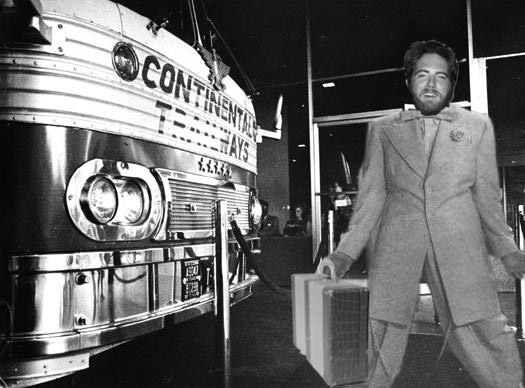
and hopped a Trailways bus to Mexico.


Can’t really say I miss him all that much,

that Wicked Wilson Pickett shtick:


Uh, you know I feel alright!
Ha, Feel pretty good y’all
!


All that preening Mick Jagger wannabe shit.


No, as my dead old lecher

Daddy Yeats once wrote,


Better to smile on all that smile, and show 

There is a comfortable kind of old scarecrow.


Still, it’d be nice to get a postcard, every now and then,

from some bordello somewhere south of the border.


Good Night, Sweet Judy


Judy Birdsong

Maybe at last being but a broken man

I must be satisfied with my heart . . .

WB Yeats “The Circus Animal’s Desertion”


Since my wife Judy Birdsong’s death last Sunday, I have been unable to write anything but clichés. Courageous battle. Unending love. Flights of angels.

Fortunately, my friend Aaron Lipka was able to express what I am feeling in an email he sent to my friends and colleagues at the school where I teach. I’d like to present it as a prelude to the slideshow I made for the funeral home visitation.

I can’t express in strong enough terms the gratitude for all of you who have sent love, thoughts, prayers, solace. Now that my Judy’s gone, I don’t have a guide to steer me within the bounds of good taste, so please bear with me when I stray, which I’m sure I will.  As they say, the past is prologue.

Here’s Aaron’s message:

One and all,

I have been thinking about what to say in this email.  Sometimes, words are not what we need, and electronic consolation can seem cold and impersonal. Whatever I can say here today will risk falling sadly short of what is useful or necessary.

And yet words are all I have to give.

Death is sad, and scary.  In the face of loss, I have listened to our school community reach out with compassion to Wesley, and I have heard others tell of the benevolent and graceful individual whom we knew as Judy Birdsong.  The cumulative message I have received this week, however, is neither sad, not scary at all.

It has been a celebration of a life lived, full of love.  It is a story that has refused to be marred in the face of hardship or sorrow.  In the sharing of the story of her life, I feel her presence with us.  Her memory is very much alive, and it is radiantly beautiful.

I consider myself fortunate to have known her, in my small way.  And I judge Wesley to be a lucky man; not for his loss, but for the many years he had to spend with Judy.  We should all hope to share such love in our lives.

I hope to see many of you at Chico Feo on Folly Beach this afternoon, 4 pm, and together lift a glass to commemorate the life and love of Judy Birdsong.  In our shared words, she will be among us.

Penitus ex animo,

Aaron


Trump, Shakespeare, and Willy Loman

Shakespeare would begin his Trump play with the inauguration speech. We’re now in Act 2, and the Comey sacking is a very important complication in the plot. Although the chaos of the firing and its aftermath is not what Aristotle called the peripetia, the turning point of a tragedy, it is the equivalent of the murder of Banquo in Macbeth, a brazen act that deepens suspicion.

Now, no one but a Kool-Aid swilling soul-selling Party Person (e.g., Jeffrey Lord) can dismiss that Trump has obstructed justice in the canning of Comey. After all, Trump has admitted as much on national television.

Speaking to NBC’s Lester Holt, Trump contradicted the farcical original rationale that he was just following the suggestion of the deputy attorney general who saw impropriety in Comey’s handling of the Clinton email scandal. No, Trump admitted that he had wanted to fire Comey all along: “When I decided to [fire Comey], I said to myself, you know, this Russia thing with Trump and Russia is a made up story.” In other words, he canned Comey because of the investigation. Comey’s people have subsequently claimed that Trump demanded from Comey an oath of loyalty when he summoned him to dinner at the White House in the first week of the Presidency. Makes the conversation Bill Clinton had with Loretta Lynch on the tarmac seem way too much ado over nothing.

As one of my Twitter pundits put it, there’s a reason lawyers instruct their clients to keep their mouths shut.

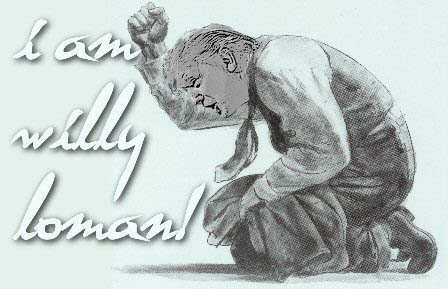
The problem with this Shakespeare analogy, though, is that Trump lacks the stature to be a tragic figure. He’s more like Pantalone from commedia dell’arte than Macbeth or Julius Caesar. There is, however, something about him that evokes, at least in me, pity. He betrays a sort of childish vulnerability that suggests a boyhood devoid of love or attention. Like Willy Loman, he’s pathetic, not tragic. When he’s sitting down in an interview, I sense his insecurity in the shifting of his eyes and the movement of his hands.* He’s dying to be loved. Approval is his crack. He might be bigger than life, but then again he is so much less a man or woman than your average sympathetic bartender.

I suspect the peripetia is just around the corner in Act 3 when his taxes come to light.

Republicans will commence their ratlike run from Trump’s sinking ship, Spicer will continue play the role of the comic butt, and Bannon will eventually land a spot on Fox News.

In a tragedy, Bannon would hang himself.

We’re talking farce, not tragedy.


*Don’t get me wrong.  Trump is a buffoon whose brain resembles a pinball machine.  I’d love to see the above-mentioned pussy-grabbing hands stymied by a pair of handcuffs.

The Long View

Stefano Vita

Note: Last week, and a very difficult week it was, our guidance counselor asked me to “offer some words of wisdom” for the upcoming senior milestone dinner, and I agreed, though it’s a difficult task if you don’t like trafficking in clichés.

So what follows is a sort of rough draft, which I’ll more or less memorize, and then deliver it to the seniors, their parents, my colleagues, and whoever else shows up.


Good evening and first I’d like to congratulate the class of 2017, and all of the people who have helped you reach this point: your grandparents, parents, siblings, friends, teachers, the obstetricians/midwives who brought you into the world, everybody — because no one who has ever made a speech like this has failed to mention that you had a lot of help along the way, and you did.

Mrs. Kimberly has asked me if I might convey some “words of wisdom” as you prepare to leave this familiar place, so I’m going to give it a shot, and at the very least end this talk with the best advice about succeeding in college there is. So stay tuned.

Here goes.

One of life’s biggest challenges is staying awake – and I don’t mean that in the literal sense of not dozing off as you’re tooling down the Crosstown but staying awake to the wonders of the world.

Wordsworth has a sonnet that starts

The world is too much with us, late and soon,

Getting and spending, we lay waste our powers,

Little we see in nature that is ours,

We have given our hearts away, a sordid boon.

What Wordsworth means, I think, is that the day-to-day grind blinds us to the miracles of being. Focused on the upcoming chemistry exam or speeding ticket court date, we don’t notice the wren perched on branch above singing its heart out or the glint of sunlight on the distant river or maybe even the river itself.

We forget [acid head voice] that, like, hey, man, we’re on the third planet from the sun swirling in concert with a spiral galaxy spinning like a Frisbee through interstellar space.

A had a jolt a couple of months that reminded me of my own place in nature. My son Harrison and his wife Taryn gave Judy and me a DNA test kit so we could check out our ancestry. When the results came in and I logged on to discover my makeup, the first thing I noticed was the drawing of a cave man and the message “You have 58% more Neanderthal DNA than the general population.”

illustration source: The New Yorker

“Ah ha. That explains a lot. My deep-set eyes, prominent brow, inability to factor quadratic equations.”

Now, Neanderthals went extinct 40,000 years ago. Let’s for the sake of argument say a generation is 30 years. That means, in my case, it took 1,333 successful matings to come up with me. If my Neanderthal Mema had died in childbirth from an older sibling, I wouldn’t be here. Ditto if my sub-Saharan ancestor had stepped on a snake or my Norse ancestor hadn’t raped and pillaged that Irish village. You get the picture. It’s the same with everyone everywhere. That we exist at all is truly miraculous. We’ve all had miraculous births.

One of the most universal human myths – it extends from Borneo the Hebrides – is the hero’s journey. The hero, like you, has had a miraculous birth, and, like you, is called to leave his home on a quest of discovery. You’re at the part of the journey called “crossing the threshold.” Having mastered crawling, walking, riding a bike, reading, writing, calculating, solving equations, understanding the rise and fall of empires, conjugating another language’s verbs, it’s time to go.

You’re leaving the familiarity of your home to encounter new and strange beings, and, of course, it’s not going to be all smooth sailing. You’re going to be tested in more ways than one.

The good news is that you’ve been equipped with an excellent education, not only academically but also in the realm of ethics. My charge to you is not only to stay awake to the miracles surrounding you but to also strive to be a good person because I sincerely believe that if you don’t live a life of integrity you won’t be truly happy. I say this not only in the context of my own experience but also in what great literature tells us about the human condition.

Each night we go to sleep assured that the sun will rise again in the morning; however, of course, one morning it won’t, at least for us. Keep in mind the immense unlikelihood of your existence, your miraculous birth, the beauty of the world.  Look up more than occasionally at that night sky Hamlet calls a “majestic roof fretted with golden fire.”  Step boldly over that threshold into adulthood with your eyes and ears wide open.  In other words, wide awake.

How great, how exciting to be just now venturing forth.

Oh yeah, that surefire advice about succeeding in college. I promise each and every one of you will be successful if you follow this one instruction:

GO TO CLASS!

It’s harder than you might think.

To all my former students, it’s been an honor teaching you, and certainly an honor addressing all of you tonight. I wish you all the very best.

On Literary Fiction, Fantasy, Sex, and Death

It’s that time in the academic year when we select books for summer reading, and, of course, one of the many considerations our department weighs is the suitability of the book for the age of the reader.  Not surprisingly, puritanical parents tend to be especially frightened of fiction’s potential to somehow harm their children. Even if a novel doesn’t contain, as the movie people put it, sexual situations, it might very well deal with death.  Sex and death are the yin and yang of possible parental complaints.

Actually, I think perhaps the greatest danger that novel reading might pose lies not in the depiction of sex and death but in the extremely slim possibility that novels’  heightened realities might, like the speaker in Yeats’s “The Stolen Child,” lure impressionable readers into magical worlds that seem so much more alluring than the soulless six-lane highways and cell towers of the real world.  In other words, the danger is that the child might become a bookworm, bury himself between the covers, and withdraw from the realm of people, places. and things.

Away with us he’s going,

The solemn-eyed:

He’ll hear no more the lowing

Of the calves on the warm hillside

Or the kettle on the hob

Sing peace into his breast,

Or see the brown mice bob

Round and round the oatmeal chest.

For he comes, the human child,

To the waters and the wild

With a faery, hand in hand,

For the world’s more full of weeping than he can understand.

Yeats, “The Stolen Child”

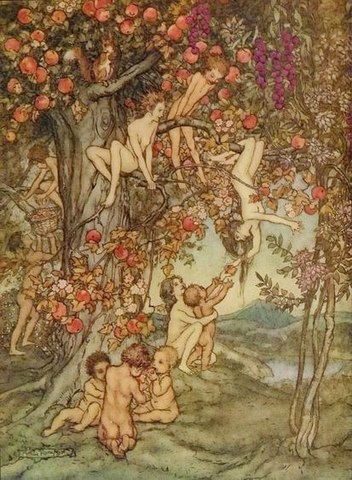
Arthur Rackham

However, the problem with fairyland is that like Eden/Paradise it ultimately bores predatory primates unless, like buddhas, we can dismantle our egos and embrace the sheer bliss of existence, and if we can do that, to turn a phrase of Milton’s Satan, then “we ourselves are paradise”  – or, if you prefer Hamlet, “[we] could be bound in a nutshell and consider [ourselves] king[s] of infinite space.”

The scene depicted above, for example, looks like fun, except when you start considering the question of the aging process, estrogen and testosterone.  As Wallace Stevens wrote, “Death is the mother of beauty,” and without Death’s majesty, we’re back in the undifferentiated sexless world of amoebas.

Unlike the magical world of Yeats’s poem, the fairyland of most children’s books is fraught with conflict, which is the very stuff of fiction, as Bruno Bettelheim expounded in The Uses of Enchantment.  According to him, fairy tales with their wicked stepmothers, ogres, crones, and abandonment provide a roadmap of sorts to help children negotiate the treacherous ascent to adulthood as the tales shed a flickering light on their subterranean  unconscious sexuality.  For example, according to Bettelheim, the familiar beginning of the “Snow White” introduces children to not only the concept of death, but also to the blood link of menstruation and procreation.

As she sewed she looked up at the snow and pricked her finger with her needle.  Three drops of blood fell into the snow.  The reed on the white looked so beautiful that she thought to herself, “If only I had a child as white as snow, as red as blood, and as black as the wood in this frame.”

Soon afterward she had a little daughter who was as white as snow, as red as blood, and as black as ebony wood, and therefore they called her Little Snow-White.  And as soon as the child was born, the queen died.

There you have them both– sex and death.

Several years ago I was congratulating an acquaintance on her daughter’s well-received first novel, and the mother said wistfully that she wished her daughter had written something less controversial, something more like, and she specifically cited this title, “Hansel and Gretel.”   In other words, a narrative about childhood abandonment and cannibalism is less horrible than a narrative about the various sexual encounters one experiences coming of age in a late empire.

Snow White, as we switch from Freud to Friedan, agrees to become a chaste hausfrau rather than take her chances wandering the wolf-prowled woods.  Yet, like her tower-incarcerated cousin Repuntzel, the pull of a sexual partner will liberate her from the narrow confines of chastity, in Snow White’s case, a glass coffin. Repuntzel, interesting enough, is the rescuer rather than the rescued as her tears of compassion restore the eyesight of the feral prince who has been wandering Oedipus-like in a barren desert.

Essentially Repuntzel is the story of how two become one and then three.

Ernst Liebermann

Of course, it’s not fairy tales that’s making the top-ten challenged books lists in high school but less subliminal fare like Love in the Time of Cholera, The Color Purple, and A Clockwork Orange. Actually, excellent literary novels tend by their very nature to be moral because they portray life realistically – promiscuity doesn’t bring happiness, avarice creates misery, and honor ennobles.  Also, good books, whether they contain sexual situations or violence, provide vicarious experience for the uninitiated.

In our discussion about summer reading last Wednesday, our department chair wanted to have his seniors read Margaret Atwood’s The Hand Maid’s Tale.  I lauded the novel but warned him that when I had been chair, I eventually removed the novel because of constant complaints from parents in consecutive years. One mother complained bitterly about how depressing the novel was and thought it dangerous for adolescents to be exposed to so much negativity.

Here’s a snippet from the letter I wrote her:

It is a legitimate question to ask why so much contemporary literature is so negative.  After all, looking towards Hollywood one rarely ever encounters an unhappy ending. However, unlike most movies, great literature provides students with a realistic portrait of the world and endows them with the vicarious experience that comes with experiencing the struggle, triumphs, and, yes, defeats of its characters.  For example, Hamlet — about as tragic a work of literature as you’ll ever encounter — provides a realistic portrait of a fallen father, a mother’s obscenely hasty remarriage, the dissolution of a love affair, and about as many corpses as will fit on a stage.  Yet, when we finish reading (or seeing) the play, we’re not depressed but can share in the nobility of a person’s battle against “a seas of troubles” and say with Hamlet “what a piece of work is a man, how noble in reason.”  Moreover, we can perhaps learn from Hamlet’s mistakes.  They have become a part of our experience because Hamlet is to us a fellow human being.

As far as The Hand Maid’s Tale is concerned, Margaret Atwood has said she wrote the novel in light of the subjugation of women in Iran and Afghanistan.  She does, I think, a masterful job of recreating that experience for American and European readers.  It’s much easier to emphasize with Offred, the protagonist, because she is of our world. We experience her shame and helplessness with her.  In addition, the central of the novel is a positive one: human love is unconquerable and very much worth dying for.

Ah, there it is again, that word dying.

She says, ‘But in contentment I still feel

The need of some imperishable bliss.’

Death is the mother of beauty; hence from her,

Alone, shall come fulfillment to our dreams

And our desires. Although she strews the leaves

Of sure obliteration on our paths,

The path sick sorrow took, the many paths

Where triumph rang its brassy phrase, or love

Whispered a little out of tenderness,

She makes the willow shiver in the sun

For maidens who were wont to sit and gaze

Upon the grass, relinquished to their feet.

She causes boys to pile new plums and pears

On disregarded plate. The maidens taste

And stray impassioned in the littering leaves.

I would also add that a life of reading great literature helps in a way to face death’s awful but necessary reality because as Hamlet himself says, “If it be now, ’tis not to come. If it be not to come, it will be now. If it be not now, yet it will come—the readiness is all.”

By the way, we are going with The Hand Maid’s Tale.

The Clothes Oft Proclaim: A Brief But Polemical History of Fashion

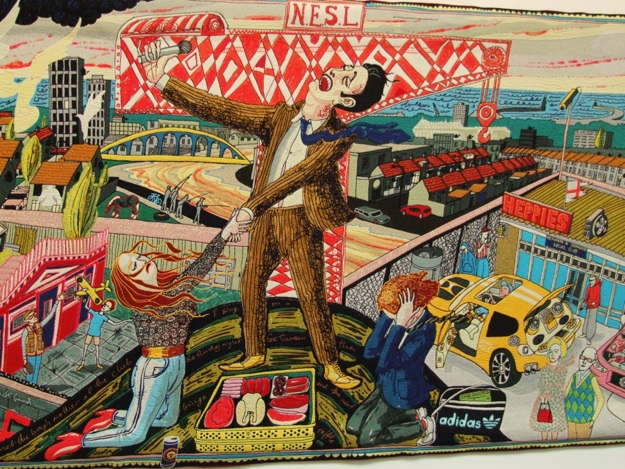
Grayson Perry, Agony in the Car Park

“The clothes oft proclaim the man,” Polonius to his son Laertes in Hamlet

One of the hallmarks of the Late Empire is its tendency towards hyper-hedonism, that compulsion to pleasure our palates with exquisite cuisine, pamper our bodies with Swedish massages, dance the diminishing succession of nights away.[1]

Obviously, this behavior runs counter to the work ethic of that Original American Entrepreneur of Self-Help – Mr. Ben Franklin – and also contradicts to the self-abnegation of that Oratorical Furnace of Fire and Brimstone  – Rev. Jonathan Edwards.

His sermon  “Sinners in the Hands of an Angry God” provoked staid Colonial New Englanders to moan aloud, not unlike a congregation of AME funeral-goers.   “What can I do to be saved,” the New Englanders hollered after hearing Edwards’ dispassionately delivered descriptions of what lay in store.

For example:

To help your conception, [Edwards says] imagine yourself to be cast into a fiery oven, or a great furnace, where your pain would be as much greater than that occasioned by accidentally touching a coal of fire, as the heat is greater. Imagine also that your body were to lie there for a quarter of an hour, full of fire, and all the while full of quick sense; what horror would you feel at the entrance of such a furnace! and how long would that quarter of an hour seem to you! And after you had endured it for one minute, how overbearing would it be to you to think that you had to endure the other fourteen! But what would be the effect on your soul, if you knew you must lie there enduring that torment to the full for twenty-four hours…for a whole year…for a thousand years!

The centuries-long backsliding of our nation from the Salem of the Puritans to the Sodom of Hollywood has been attributed by what’s left of Edwards’ followers to the Warren Court’s removal of a not-so-omnipresent God from school, leftwing college professors, etc.

However, the contemporary French philosopher Gilles Lipovetsky fingers consumerism (aided and abetted by fashion) as whatdunit in the secularization and eventual narcissism of Occidentals [2] as he traces Westerners’ relationship with their clothing (and sense of self) from the 14th Century until now.

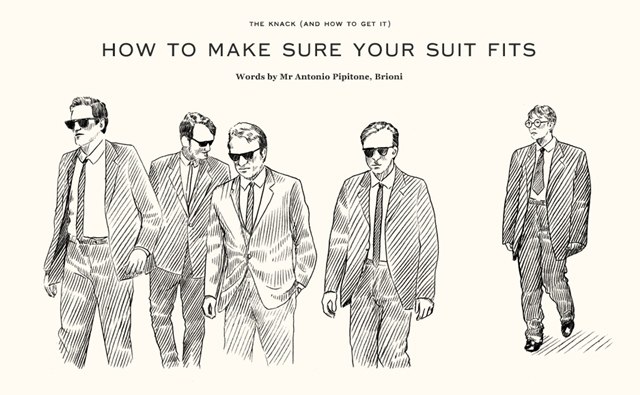
Mr-Porter-Suits-Fit1

Here’s a crystal clear methylamphetic synopsis of Part 1 of Lipovetsky’s The Empire of Fashion: Dressing Modern Democracy (Trans. Catherine Porter):

Before the Late Middle Ages, in what should be be called the Golden Age of Transvestism, both men and women wore traditional dresses whose cuts remained the same for thousands of years. Folk placed a “positive value on [. . .] social continuity of models inherited from the past.”

timeline1

In the mid-14th, men started wearing exposed hose and short doublets instead of robes while women continued to drape their bodies much as they had before.  Before then, royalty had sported more luxurious duds as a distinguishing characteristic between them and their subjects.  However, as the styles differentiated between the sexes and commerce and banking arose, a bourgeoise developed, and uppity royal wannabes started copying the dress of their betters.  Royals had to jack up the sartorial splendor, the bourgeoise countered, and the millennial old stasis in fashion was over.  This phenomenon “democratized fashion,”  “equaliz[ed] appearance,” “undermined traditional behavior,” and “created a thirst for novelty.”

canterbury-tales-480

People started to be more aware of their individuality; courtly love established an overvaluation of women.[3]

God migrated from the center of Medieval consciousness to the periphery of post-Enlightenment consciousness before being gunned down by Nietzsche in the 19th Century.

nietzsche31

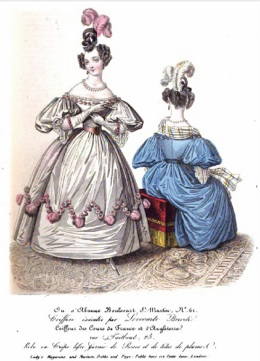
Haute Couture ruled for a century and established live modeling and the fashion seasons, spring and fall, changing styles even more often than editors of  MLA manuals; however, ready to wear via manufacturing overthrew the Haute Couture hierarchy of made-to-order fashion.

1835-01 Lady's Magazine & Museum Vol. VI pdf 76

In the 50’s and 60’s the thrust of fashion shifted from concentrating on appearing wealthy to appearing young as mass-media-manipulated youths rejected their parents’ mores.  Clothes became more unisexual with girls wearing pants and boys long hair.

ap691208033.jpg

Now in 2017, essentially [cue Cole Porter] anything goes.  The designers can no longer dictate styles to consumers – micro minis or midis or maxis are all okay.  Both men and women would rather appear young than wealthy –  older mothers want to look like their young daughters rather than vice versa.   This cultivation of youth now extends to men who in increasing numbers dye their hair, purchase facial creams, and sport earrings.

untitled

Lipovetsky’s good news:  individualism triumphs – we’re our own masters.  Bad news: we’re narcissists (who almost by definition are incapable of happiness).

2010_01_PatrickMcDonaldInterview

What are the odds that Mr. Patrick McDonald is easily upset?

Lipovetsky argues in Part 2 that this narcissistic self-autonomy is on the whole positive, and he makes many excellent points.  I’ve in a previous post linked Lipovetsky’s debate with a skeptical Mario Vargas Llosa.

I’m not up to determining whether the almost unlimited freedom of self-indulgence/self-determination that post-industrial capitalism has bestowed [4] is worth the concomitant loss of our not knowing history’s deep lessons and literature’s grandest moments.

Instead, I’m going to address the rightful (or wrongful) cause of the prevalent narcissism that characterizes Late Empire America.

It’s not so much that the godless left has deconstructed the religious underpinnings of American society but that amoral capitalism has usurped the glamor of certain seductive countercultural lifestyles and incorporated images of that decadence into its advertising campaigns.

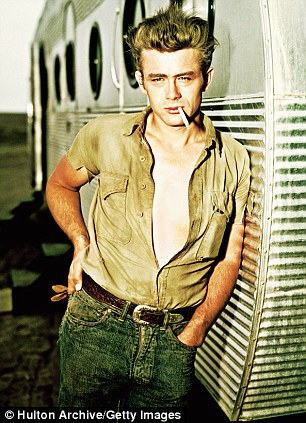
Take James Dean as an early example.  His in-your-face alienation in Rebel Without a Cause preceded the prayer-in-school ban of 1962, and I doubt that the film’s director Nicholas Ray underwent a successful leftist indoctrination in his one semester at the University of Chicago. However, with young fans flocking to that movie, advertisers noting Dean’s appeal incorporated Dean’s persona into campaigns.

article-2596209-1CCE8D8000000578-4_306x423

Why did young fans flock to the film?  Because a character “no one understands” appeals to adolescents.  In a recent post I cited Jackson Lears who has pointed out that capitalism successfully co-opts bohemianism  by installing rip machines into assembly lines at jean factories to accommodate Kurt Cobain wannabes.  When ripped jeans aren’t cool anymore because everyone is wearing them, something new takes their place and on and on till the last syllable of recorded time.  Cha-ching goes the cash register.  Zip goes the barcode scanner.

We can characterize “consumer society” empirically by listing some of its features:  a higher standard of living, an abundance of goods and services, a cult of objects and leisure, a hedonistic and materialistic morality.

Giles Lipovetsky The Empire of Fashion: Dressing Modern Democracy

So Don’t blame us lefty teachers, Rick Santorum, et al; it ain’t our fault.


[1] Faulkner advised writers that they needed to “kill all their darlings” in the editing process.  Imagine the tears I shed when I axed “like Maenads all hepped up on the blood of speed freaks torn asunder” from the end of the first sentence.

[2] I continue my quixotic campaign to restore Oriental and Occidental into respectability.

[3]  By the way, sisters, like Chuck Prophet, I bow down before every woman I see.

[4] E.g., my ability to share my thin understanding of fashion’s progression with anyone on the planet who has internet access.

On Star Wars, Samurais, and a Future So Bleak Everyone Will Wear Mining Helmets

by WLM 3 based on Zdzistaw Beksiński

I’m ashamed to say that I’ve never seen any of the Star Wars movies — not the blockbuster first installment of 1977 nor any of the vast array of sequels and prequels that in subsequent decades have rolled off the Lucas assembly line like so many gold-plated Model-Ts.

As a subscriber to the NY Times crossword puzzle, I have been punished for being ignorant of such worthies as Jabba the Hutt and Obi-Wan Kenobi, the same way I have punished for not having read any of the Harry Potter books.[1]

What’s the 5 letter word for first name of the astromech droid that appears in every Star War movie?

Search me.

I did try to read the first Potter novel but got about as far as I did when I attempted The Hobbit as an eighth grader. Blame my lack of interest on a leaden suspension of disbelief. I prefer Robin Hood to the Arthurian legends, the Lone Ranger to Flash Gordon, Sopwith Camels to starships. In other words, I don’t dig fantasy and most science fiction, which is not to say they’re not worthy genres. I don’t dig opera either, but I realize my lack of appreciation stems from ignorance and that I’m ultimately missing out on something truly wonderful.

But as far as Jabba the Hutt and Harry Potter go, personal predilections are no excuse for my ignorance. As a self-anointed anthropologist/social critic/prophet-of-doom, it should be my duty to study these cultural phenomena, these projections of our collective psyches, these myth-equivalents that shed light on “deep down things.” [now removing tongue from cheek]

Nevertheless, it ain’t gonna happen. I still haven’t read Proust or become closely acquainted with the films of the supposedly great Soviet director Tarkovsky so the idea of spending the ever decreasing number of my allotted Sunday afternoons matriculating into Hogwarts is way too much of a cross to bear.

What has brought these considerations to mind is that last week a candidate for a position in our English Department taught a demo class to my 9th graders as a sort of audition. Surprisingly, rather than reprising some proven boffo performance of poetic analysis from his past, something tried and true — as most aspirants do — he decided to go with what I am teaching, Orwell’s 1984.

He started the lesson by discussing Newspeak and the implications of the ruling party’s attempt to strip language of all nuance, a topic we’d already covered at length. Why complicate your life by having hundreds of words like grackle, wren, and bunting when the simple word bird would suffice? Does language play a role in helping us distinguish nuances?

Is the Jesuit Pope a communist from Argentina?

Do heavy, furry, hibernating, clawed mammals defecate in areas thickly covered with trees?

Are rhetorical questions possible in Newspeak?

Things got cracking when he shifted from language to genre. He said that he first read the novel as an undergraduate in a science fiction course. He asked the students to define science fiction and coaxed them into coming up with the idea that science fiction is a realistic depiction of the human condition featuring technology that doesn’t yet exist but is central to the plot.

He then asked if Star Wars were science fiction. One student said that no, it was fantasy, and the teacher agreed pointing out that each planet has a singular topography – desert or swamp or city or forest – so what we’re essentially dealing with is the planet earth. He added that the weapons are essentially swords, and spaceships lie well within the reality of current technology. He argued that we’re talking magic, not science here, and basically Star Wars is a Samurai movie set in outer space. As his name suggests, Obi-Wan Kenobi is in a sense a by-product of Japanese cinema, particularly Kurosawa’s 1958 samurai epic The Hidden Fortress.

The teacher then shifted back to Orwell, and the students identified telescreens[2] as the technology that qualifies 1984 to be considered as science fiction. In 1948, the year it was written, television was in its infancy, and telescreens did not exist (nor did they in the teacher’s undergraduate days).

They do now, however. After all, when I was with my wife in Houston at MD Anderson at the beginning of the school year, I taught this very class via Skype, which is essentially a telescreen but one that allows for two-way communication. So according to this line of thinking, 1984 can no longer be considered “science fiction.”

The teacher pulled his cell phone from his pocket and said, “Unlike the citizens of Oceania, we subscribe to our telescreens, actually pay Big Brother to collect the goods on us. (Of course, these aren’t the exact words he used).

Anyway, he went off on a rift on technology and dystopia and an era in the near future (about the time they’d be graduating from college) when automation might be eliminating quaint old human orchestrated procedures like cancer surgery. He mentioned nanobots replacing surgeons, and I imagined hordes of ravenous Pac-Men seeking out and devouring malignant cells.

A rather sobering and a subtle suggestion that future competition might be, shall we say, cut-throat, and that studying might be a good strategy, especially when it’s not only coal miners and sales clerks who will be out of work but also CPAs and surgeons.

At any rate, class ended, and the actors marched off leaving me alone in my room (101, by the way) contemplating a smog-smothered future where it’s always twilight or pitch black night, a future where hordes of the unemployed have devolved into urban tribal communities, in other words, the world of Blade Runner.

But, hey, fa-la-la-la live for today, in this case Sunday, 9 a.m EST. With Kim-Jong un, Putin, and the Donald rattling their lightsabers, we might not have to worry about the future at all.

So I think I’ll have a bloody mary and look out over the real life Darwin-themed drama my back deck provides.

Or maybe scrounge up a copy of À la recherche du temps perdu.

photo from our back deck of a wood stork


[1] As far as Star Wars goes, I do know that Darth Vader is evil, Princess Leia wears white, and that Luke Skywalker is the coming of age hero.

[2] Telescreens are ubiquitous two-way-mirror-like devices that allow the party to spy on citizens and to broadcast propaganda.


I Have Measured My Life Out with Barrooms

Juarez Muchado
“A Bar in Copacabana

The mornings, evenings, afternoons . . . 

TS Eliot, “The Love Song of J Alfred Prufrock

I started hanging out at bars at a very young age because whenever my mother left me alone with my old man, he’d throw me in the car and head off to some hole-in-the-wall near the Navy Base. There were no such things as kiddy car seats in those days. Come to think of it, there were no seatbelts either, at least in the cars we owned. Nor were we stowed in the backseat for safety’s sake.

Whenever Daddy hit the brakes, he’d reflexively extend his right arm as a barrier to prevent us from hurtling into the dashboard with its array of dangerous knobs, seemingly designed with poking out eyes in mind. I was only thrown into the dashboard once when my grandmother let me stand up in the front seat. I lost my front baby teeth, and one of my permanent front teeth grew in discolored and had to be capped. The cap kept falling off, and what was left of the tooth had to be drilled down to fit on another cap. Eventually, when there was hardly anything left, it had to be pulled, which made me look like Alfred E Newman until we acquired a retainer like false tooth.[1]

At any rate, sometimes, if you’re lucky, natural selection doesn’t work out the way it’s supposed to.

That grandmother, a Baptist, despised demon alcohol and considered bars dens of iniquity, though she and her sisters (Pearl and Ruby) traded pharmaceuticals like jelly beans.[2] My mother, though less severe, didn’t like to come home and discover us missing. The story is that she could mysteriously intuit what bar we were at by flipping through the Charleston phone book, which was much thinner in those days in before the Old South turned into the Sunbelt. According to the dubious story, she’d call the bar, offer a description, get the old man on the phone, and he would come dutifully home with little me in tow.

My vague memories of hanging in bars with my father in the mid-Fifties may be manufactured. They may be based more on movies I’ve seen featuring dark, small, smoky spaces. I do clearly remember him playing pinball machines, a cigarette dangling from his mouth. These were in the days before aluminum cans were equipped with pop-tops, a great invention. Back then, bartenders opened cans of beers with small metal openers [see illustrations below] and had to make two openings to create airflow to help gravity along.

That reminds me. When I was around ten, my father had this foolish idea that I needed to drink one beer a week to gain weight – as if the weight gain would be equally distributed along my skeletal frame instead of creating a stick-legged, stick-armed tween with a beer belly. I absolutely detested the taste of beer. Now that I think of it, it may have been a ruse to allow us to have beer in the house.

The next bar I visited in my youth was a roadhouse called Morris Knight’s, a one-story honky-tonk-like establishment about a half-mile from my house. It consisted of two rooms, one with a bar and stools (where they sold candy and fireworks to kids in the day time) and a back room with a vending pool table and a jukebox. One night when we were camping out, we made an excursion there to score some Squirrel Nut Zippers and encountered staggeringly drunk men and women. The fat woman bartender kicked us out, informing us it was no place for children. It seemed at once both sinful and fascinating, Felliniesque in a po-dunk sort of way.

The S & S poolroom, where I hung out in high school, wasn’t, strictly speaking, a bar, though they did sell both draughts and canned beers. They served the most delicious hot dogs ever thanks to their secret chili recipe. Sometimes my mother would have a craving for one, and Daddy would go fetch her “a poolroom hotdog” because “ladies” didn’t dare step inside.

It was tacitly understood that I was not to go into the poolroom, but I did for the first time when I was a 7th grader, the victim of peer pressure. You couldn’t get away with sneaking in there, though, because you would come home with the telltale poolroom smell, a sort of sour smoky odor laced with fried food.

The poolroom was sort of a grander Morris Knight’s and employed young black boys to rack the tables and collect the dime it cost to play a game of nine ball. When the game was over, you’d holler “Rack!” Gambling was allowed. I saw a friend of mine, Glenn Farrar, win a hundred dollars in about forty minutes one time. It was a Friday, payday.  Tensions ran high.

Anyway, my parents eventually didn’t mind my hanging out there, and in the early 70’s a couple of girls actually started frequenting, which sullied their reputations. By then, the hissing sound of the double metal can opener had been replaced by the plunk of tabs you tore off.

You had to be somewhat circumspect in the poolroom, though. Using a word like “whom” might end up getting your “ass cut,” as we locals put it. You weren’t allowed to cuss, though. A “No Profanity” sign was displayed prominently behind the bar beside prints of monkeys shooting pool and playing poker.

You could drink legally at eighteen in those days, so college was where I learned the art of making eye contact with the bartender, the advantages of busing your own tables by returning your bottles, and how leaving a tip could help you get served faster when the joint was busy.

My freshmen year I hung at a place called the Opus that served only Bush Bavarian beer, or at least that’s my memory, but they tore the Opus down to build the new Law School. There was also the Campus Club, a cool space with a wraparound scaffolding-like structure that created a sort of second story but was open to the space below, like the saloons you sometimes see in old Westerns. I liked sitting there in the afternoons after class when dust-moted sunbeams bore down on the tables like spotlights.

Here it is in its new iteration as “The Hunter Gatherer”

I never really liked the Golden Spur, the bar located in USC’s student union building, a sort of cafeteria-like soulless place where unadventurous students hung. Ironically, I ended up tending bar there along with my future wife, who had white-lied to her parents and told them that she worked at “the student center.” The bar did boast some really cool musical acts, like Sonny Terry and Brownie McGee. That may have been my best job ever. If we went out after work, it was to Oliver’s Pub on Devine Street, a private club where you could drink on Sundays.

Like a chip off the ol’ block, I started taking my two sons to bars early in their lives.  When then they were pre-adolescents, on nights their mother attended classes to get yet another graduate degree, we’d eat out at bars. Our favorites were the Acme Cantina on the Isle of Palms and Station 22 on Sullivan’s Island. The boys were on a first name basis with the bartender, Fronz, at the Acme, and with Cathy Coleman at Station 22. The big difference between my childhood experience and theirs is that their mother didn’t mind at all, especially on 25-cent wing night.

Now, our sons are in their 30’s, and, of course, we still enjoy venturing out to a bar when they’re home, and Folly Beach where their mother and I now live may have more bars per capita than anywhere in this side of Vegas.  Our favorites are Chico Feo and the Jack of Cups, but the Surf Bar is top-notch as well.

By the way, the worst bar I ever visited was outside of Leningrad on the Bay of Finland.  Black walls, red lights, bad vodka, the reek of Turkish cigarettes, drunken Finns looking for love. It made Morris Knight’s look like a Dairy Queen.


[1] You can read a sad, alcoholic-themed story about that very tooth here.

[2] My grandfather hid half-pints of rum in his dress shoes in his closet.