From the Journal of Percival Reginal Ignatius Morehouse

[Editor’s note: Dr. Morehouse is the esteemed editor of Latinate Locutions for the Habitually Silent.]

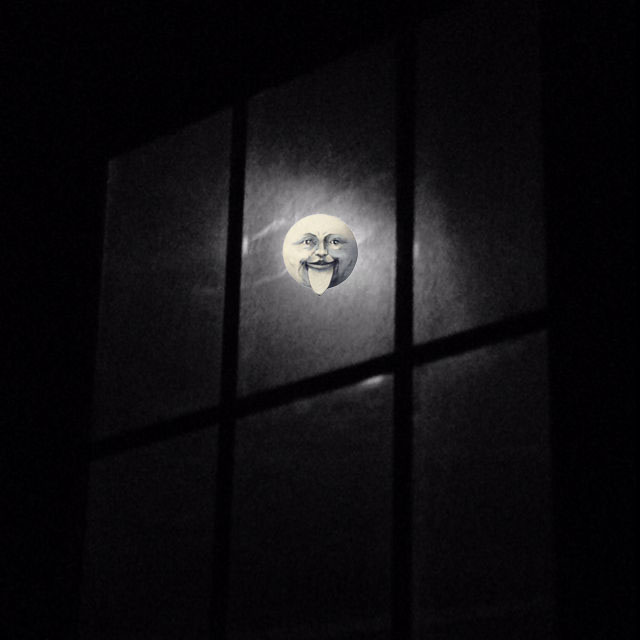
Perhaps what occurred last Friday is the result of the moon’s and the sun’s elliptical longitudes differing by 180 degrees, for in the wee hours, having been prompted from my recumbent position in the arms of Morpheus by a corporal need for vesical relief, I noticed from the bathroom window that the lunar hemisphere facing me was completely sunlit, appearing as a circular disc illuminating the night sky.

You know, it’s possible that these geriatric spouses’ curtailed narratives possess smidgens of veracity. No, I didn’t bay at the full moon, nor did thick fur suddenly pullulate from my epidermis in a lupine metamorphosis; however, the synapses of my cerebral cortex did misfire – if that’s the word –  into a subversive ideation, a completely impractical plan of action, as if the Imp of the Perverse had commandeered my common sense. 

Or as Ovid might say, Habeo cilium barbam supra Fundamentum meum.

A few hours after Dawn had painted the eastern sky with her rosy digits, I descended the stairs to find my consort standing before a pile of dishes  an accumulation of platters in that domestic space where meals are prepared.

“Beloved,” I said, “how would you like to engage in an impractical odyssey that would have us motor from the Holy City to her sister city Savannah for lunch and then turn around and drive home in time to retrieve Haselden from the halls of academe?”

A smile of enchantment beamed from that face capable of launching a thousand ships, a face so beautiful it might prompt Mrs. Menelaus herself to google “plastic surgeons.”

Consort vis-a-vis Rossetti’s Helen (aka Mrs. Menelaus )

Still smiling, she queried, “But do we have time?”

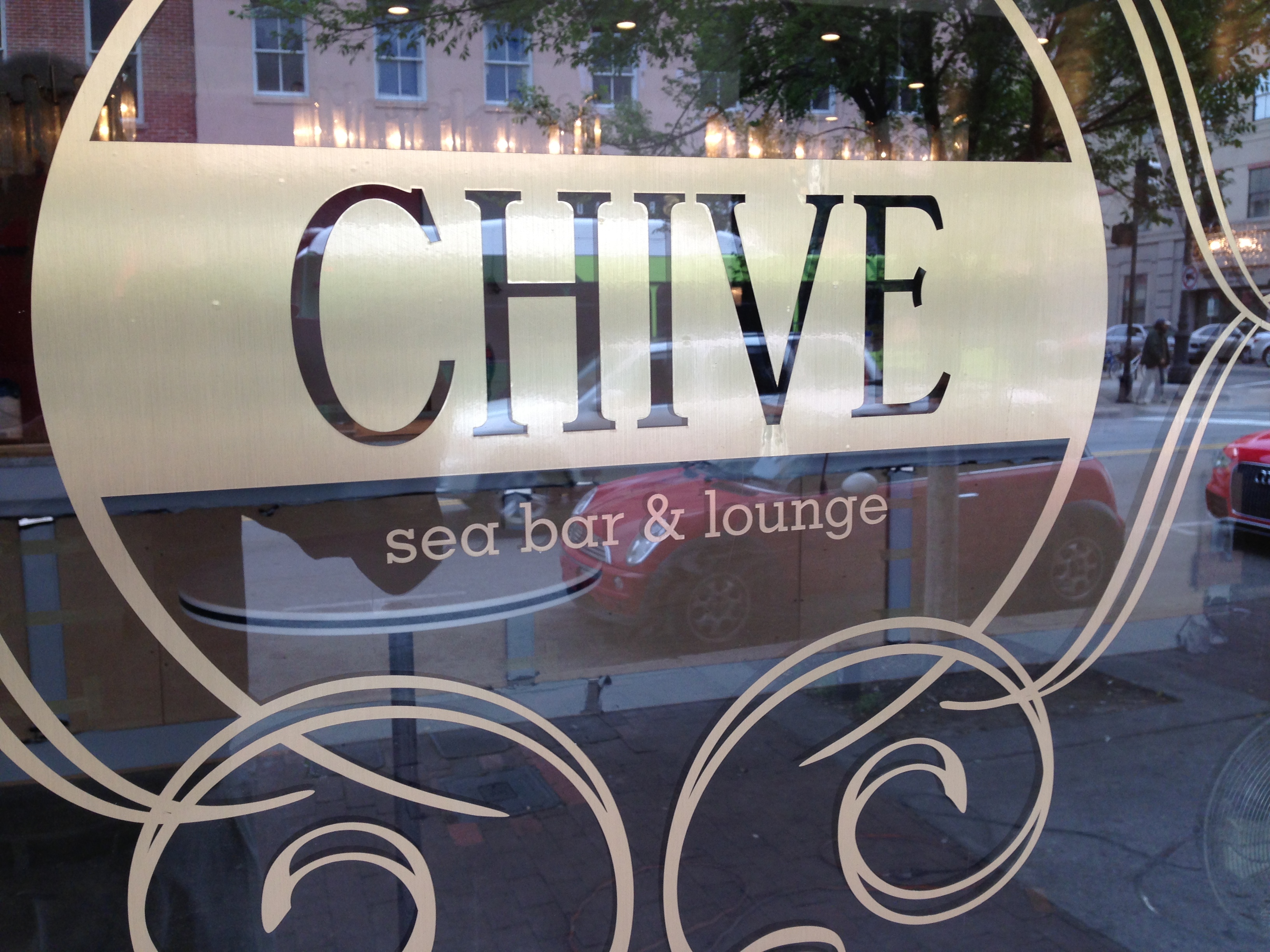
“Yes, my darling,” I replied. “I have officiated a marriage of science and serendipity. If we depart in thirty minutes, we can arrive at Chive Seabar & Lounge on Broughton Street at eleven when it opens, enjoy a repast of an hour-and-a-half, and then drive home and arrive at Haselden’s educational institution by 2:30 post meridian.”

Savannah, Georgia

By nine, we were in transit, headed south on Highway 17S, motoring past the three Rs: the Red Top Community, Rantowles, and Ravenel, the last hamlet infamous for its severe enforcement of municipal strictures governing vehicular speed. On we progressed through Jacksonboro, past the quaint Edisto Motel, and that notorious naval launch site that has been christened with the unfortunate appellation of “Cuckold’s Landing.” 

After what NASCAR aficionados term a “pitstop”* (where I encountered the abomination below), we merged onto I-95, and in a mere hour found ourselves traversing the Savannah River and into the city itself.

*No, I do not suffer from a lisp.


Exactly at 10:55, our cellular amanuensis Siri informed us that “the destination is on your left,” and much to our astonishment, a parking space devoid of vehicle presented itself for the taking.

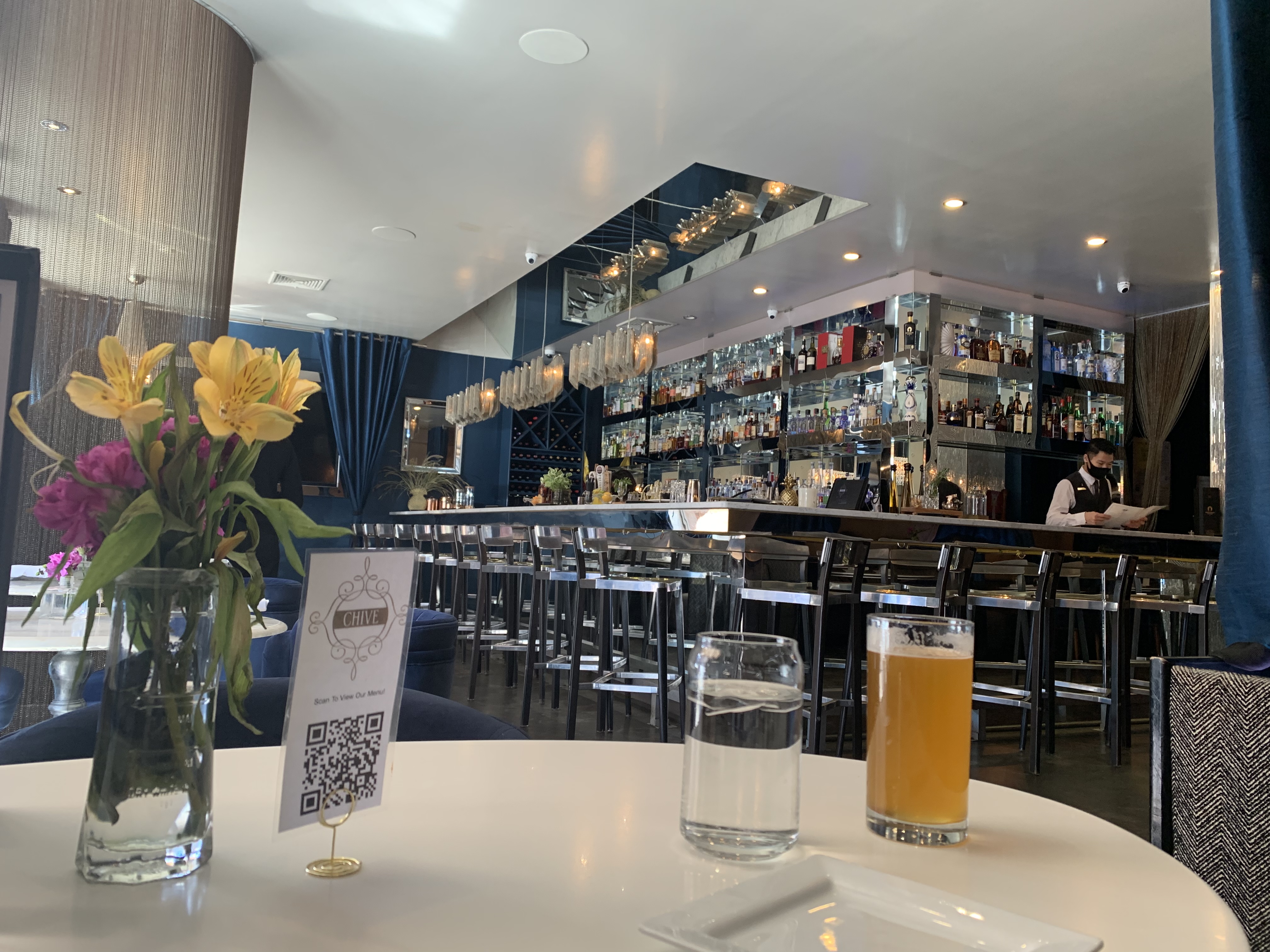
Even though what happened next might mislead the reader to consider the narrative a fictional account, just as my consort and I reached the door of Chive Seabar & Lounge, a masked woman of Asian heritage somersaulted the sign from closed to open, unsheathed the deadbolt and ushered us in to a corner table. 

Otherwise, the restaurant was devoid of customers.

We ordered mussels in a yellow curry festooned with onions and pickled cucumbers, skewered scallops, and a mushroom salad, which in honor of Mr. Biden’s election, we shared socialistically. 

Each dish was a savory culinary concoction of toothsomeness. And though castigated in verse for his winged acceleration, Time’s airborne Pegasus-propelled transport did not seem in a haste-post-haste mode, so the luncheon progressed in a comfortable sequence of leisurely elapsing.

By 12:30 PM, after the remuneration of the computation of the meal’s reckoning had transpired, we had exited, were ensconced in our automobile, and retracing the trip in reverse order.

The only glitch in an otherwise splendid sojourn was that we arrived at Haselden’s educational institution forty-five minutes early, although, truth be told, that miscalculation afforded us a premiere position in the vehicular parade known as – pardon the vulgarity – “the pick-up line,” but then again, our prolonged  idleness also presented me with the opportunity to chide the English Department Chairman for refusing my suggestion of adding Tristram Shandy to the 6th grade reading list.

At any rate, it was a full day, and I am now more than ready to close the leaves of this journal and retreat once again into Morpheus’s narcotic embrace.

8:45 PM, 29 January 2021.

Woody Guthrie, Chimney Sweeps, and Taxation

I’m not requiring Woody and Pete to wear masks because they’re dead

When Jennifer Lopez hit the first note of Woody Guthrie’s “This Land Is Your Land” during the Inauguration,  I wondered if she would include those two stanzas my elementary school music teacher omitted when we sang it in the early 60s. It was during the folk revival, and for some odd reason Guthrie’s song had acquired a sort of Kumbaya campfire wholesomeness.[1]

J-Lo did leave out the stanzas, but then again “This Land” had been fused into a medley with “America the Beautiful,” and the negative omitted lyrics don’t mesh well with the latter song, essentially a paean celebrating America’s beauty and God’s bestowal of grace.

Here are the oft-omitted stanzas of Guthrie’s song.

In the fifth stanza, the wayfaring narrator –  presumably Guthrie himself – encounters

[. . .]  a high wall there that tried to stop me
A sign was painted said: Private Property,
But on the back side it didn’t say nothing —
God blessed America for me.
This land was made for you and me.[2]

In addition, this verse didn’t make the cut:

One bright sunny morning in the shadow of the steeple
By the Relief Office I saw my people —
As they stood hungry, I stood there wondering if
God blessed America for me.
This land was made for you and me.

The latter stanza brings to mind stanza from William Blake’s “London”:

How the Chimney-sweepers cry

Every blackning Church appalls, 

And the hapless Soldiers sigh

Runs in blood down Palace walls.[3]


(Allow me here a quick aside: note the difference between song lyrics and poetry, how the former lacks the evocative rhythm and the compression of the latter. So, no Bennington, you may not bring song lyrics instead of poem. With song lyrics all you’ll talk about meaning when I want you to demonstrate how rhythm, rhyme, imagery, symbolism, diction, etc. underscore the meaning).


Guthrie and Blake both, two centuries apart, complain about disparities of wealth and point out religion’s failure to redress wrongs.

And let’s face it.  Wealth in the US is not evenly distributed, and the disparity between rich and poor is widening.

For example, the wealthiest 1% possess ~ 40% of the nation’s wealth, the bottom 80% own ~ 7%.

I’m too lazy to perform computations to determine how much money Jeff Bezos rakes in a week compared to the total income I earned in 34 years of teaching nor the even deeper disparity between Jeff’s income and a minimum wage employee’s.

On the other hand, no one forced me to major in English or to drop out of graduate school. My meager gifts and temperament don’t calculate into untold riches. I don’t begrudge Bezos’s success. He is highly intelligent, hardworking, and ruthless when it comes to business – advantageous qualities for one seeking to amass billions. 

What gripes me (and should the rest of us 99%ers, even Confederate flag-waving militiamen) is that billionaires like Donald Trump can get away with paying $750 in income taxes in a given year. Don’t we have evidence enough that massive tax cuts for the super wealthy don’t result in a trickling down of their wealth but instead create massive budget deficits, deficits that Republicans don’t care about until the second they’re out of power?

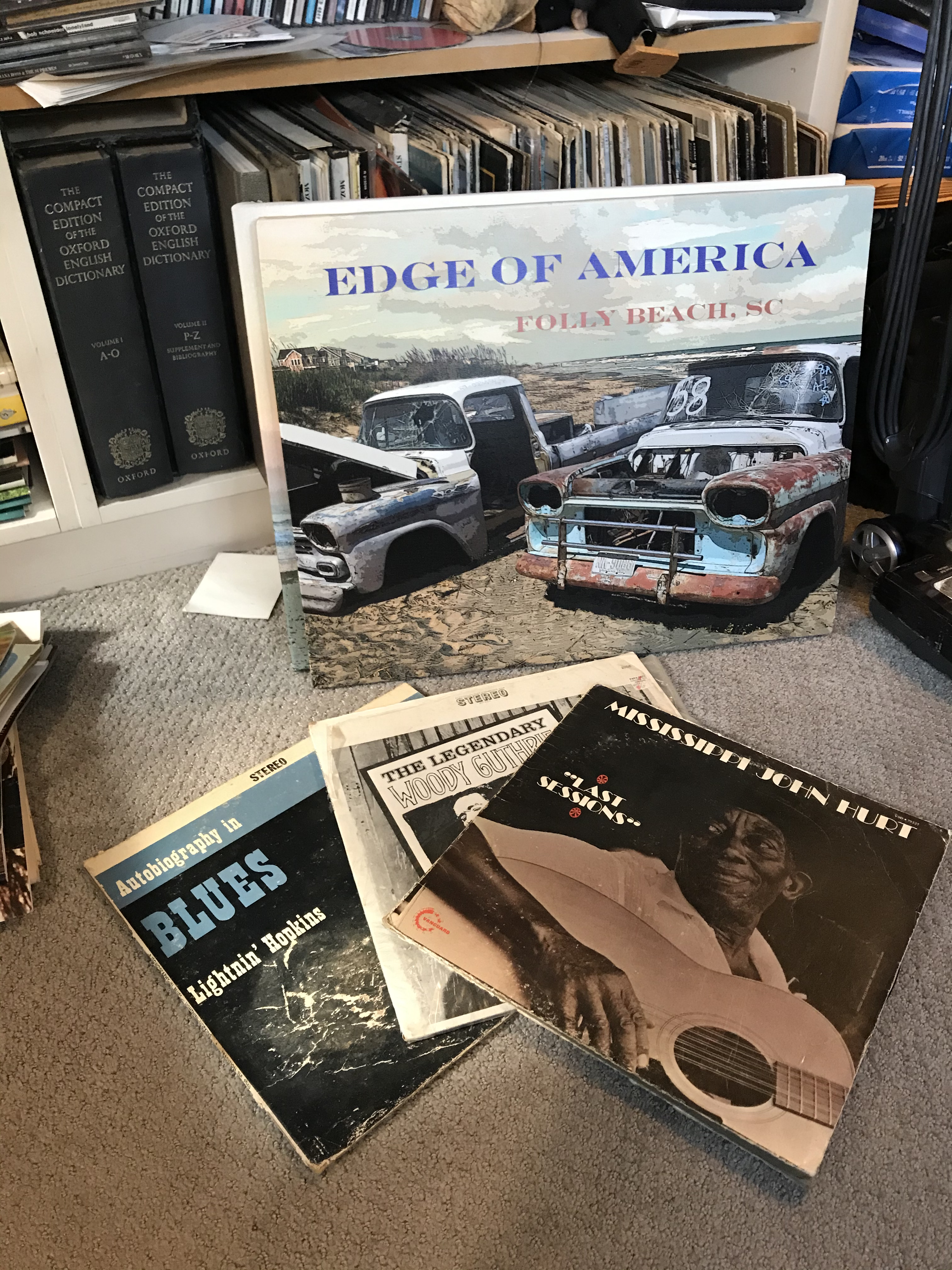
Well, it’s a new day and all that jazz. The times, they may be a changing. However, given the narrow margins of Democratic control of Congress and the on-going gerrymandering of districts by Republican dominated state legislatures, I wouldn’t bet even one of my vintage folk LPs on any significant changes transpiring.

Speaking of capitalism, that fake painting produced by the author is for sale

But then again, if Trump breaks away from the GOP and starts a third party that recruits crazies like Laura Boebert and Marjorie Taylor Greene to run for House and Senate seats against establishment Republicans and Democrats, that could result in a more European-like US economy.

It’ll be interesting to see what happens.

I’ll leave you with this Guthrie ditty:

This song was written in New York City
Of rich men, preachers and slaves
Yes, if Jesus was to preach like he preached in Galillee,
They would lay Jesus Christ in his grave.

Hear that, Franklin Graham?


[1] Driving my stepdaughter to school this morning with Springsteen’s “Born in the USA” playing, I mentioned that it was a highly misunderstood song because people mistook the oft repeated line “Born in the USA” as jingoistic crowing rather than an indictment of the narrator’s mistreatment as a war veteran even though he had, not only been born in the US, but also fought for the US. 

“It doesn’t sound very positive to me,” she said. 

[2] Native Americans have taken issue with the inclusion of Guthrie’s song in the ceremonies because it ignores that “this land [that] belongs to you and me” was stolen from them, though I would give Guthrie a break here in that the lyrics suggest that the land belongs to everyone equally and somewhat calls into the legitimacy of  private ownership itself. After all, he was com-MU-nist.

[3] I’ve presented Blake’s stanza as it was published, i.e., with random capitals and missing apostrophes. Give me an S, give me an I, give me a C. 

Beware of Baphoons: an Extended Definition

painting by Olayinks Taylor-Lewis

More and more I see the bare feet of passengers in SUVs  propped up on dashboards in the posture of the baboon pictured above.

Hurtling along I-81 doing 70-plus, the footloose lefty below fills in her lottery ticket trusting the laws-of-average when it comes to trips per-auto-collision while discounting them when it comes to the odds she’ll claim the Powerball jackpot and spend the rest of her days flying in private jets to luxury boxes to sip mint juleps as she watches the horses run at Pimlico.

Let’s call her foolish.  Certainly, despite her simian posture, baboonish is way too inappropriately pejorative.

The man below, a recent recipient of the Presidential Medal of Freedom, claims that volcano eruptions, not industrial pollution, are depleting the ozone layer and that “Columbus saved the Indians from themselves.” 

Here’s Rush via on personal responsibility concerning drug abuse: 

If there’s a line of cocaine here, I have to make the choice to go down and sniff it [. . .]. If there were a gun here, it wouldn’t fire itself. I’ve got to reach for it and pull the trigger [. . .] We are rationalizing all this responsibility and all the choices people are making and we’re blaming not them, but society for it. All these Hollywood celebrities say the reason they’re weird and bizarre is because they were abused by their parents. So we’re going to pay for that kind of rehab, too, and we shouldn’t. It’s not our responsibility.

From  the LA Times’:

Radio talk-show host Rush Limbaugh was booked on drug charges in Florida on Friday, and his lawyer said Limbaugh had agreed to a deal enabling him to avoid prosecution in the prescription case if he continued treatment for addiction problems and avoided any other run-ins with the law.

Let’s call him a buffoon.  Although crude in his intellectual machinations and often grotesque in his bodily incarnations, Rush is too slick to be called a baboon.


Once, in the picturesque Irish village of Roundstone,  Judy Birdsong, JT Crow, and I had what would have been a delightful noontime meal if a shirtless hirsute man and his morbidly obese wife had not plopped themselves next to us at the luncheon counter. Alas, in this case, no-shirt received service. Although he hadn’t shaved any Arabic numerals in his dorsal fur, he did resemble the fellow below.

I don’t think baboonish is too severe a descriptor.


Once a student of mine mistyped baphoon for baboon, and I thought too myself, “What a great word,”  a cross between a buffoon and a baboon.  It sounds just like what it means. Here’s my definition: a baphoon is a humanoid whose buffoonery crosses crudely into the ass-displaying, territorially aggressive subhuman behavior, a combination of buffoonery and boorishness characterized by passionate overreaction. (Note, baboons don’t possess Second Amendment rights, but baphoons do).  

This illustration should go in the dictionary next to the definition:

Of course, most of us only encounter baboons in zoos, and generally we can avoid buffoons if we avoid certain venues; however, baphoons tend to aggressively invade our territory, so they’re a different matter all together. Whatever you do, don’t try to reason with them.

An Orgy of Ennui Gives Way to the Roaring’ Twenties Revisited

The publishers of the vocabulary series Wordly Wise seem obsessive in their campaign to promote the word ennui. It appears in the 9th, 10th, and 11th grade workbooks, and I can’t think of any other word that appears in multiple editions.[1] Here are pages 76 and 77 from Book 6, which we used for our 9th grade students.


Note that the words “yokel,” “ennui,” “transient,” and “orgy” appear in the same lesson and how quaint yokel’s definition comes off: a “gullible country fellow” and how orgy’s definition – “wild, abandoned merrymaking” – sidesteps its sexual content altogether. I learned early in my career that having students write sentences using unfamiliar words was a waste of time, for the same reason I discouraged them from consulting thesauruses: they more often than not misuse the word because they don’t know its connotations. (Here’s a great example of thesaurus misuse from an earlier post).

If they are unfamiliar with the words, students tend to come up with sentences like this:

The landscape company sent over some yokels to dig our koi garden.

We had an orgy at the pep rally with lots of loud cheering.

Or let’s see if we can use both words in one sentence.

The yokels had a veritable orgy of tobacco juice ejaculations as they dug a koi pond in our back yard.

Anyway, back to ennui.  Certainly, ennui transcends mere boredom. It’s more like a malaise, a world weariness, an existence where even orgies seem like a drag. When I taught the word, I also taught John Berryman’s “Dream Song 14.”

Life, friends, is boring. We must not say so.   
After all, the sky flashes, the great sea yearns,   
we ourselves flash and yearn,
and moreover my mother told me as a boy   
(repeatingly) ‘Ever to confess you’re bored   
means you have no

Inner Resources.’ I conclude now I have no   
inner resources, because I am heavy bored.
Peoples bore me,
literature bores me, especially great literature,   
Henry bores me, with his plights & gripes   
as bad as achilles,

who loves people and valiant art, which bores me.   
And the tranquil hills, & gin, look like a drag   
and somehow a dog
has taken itself & its tail considerably away
into mountains or sea or sky, leaving            
behind: me, wag.

Now that’s ennui!

Well, having endured a year of a pandemic, we all may be suffering to some degree of ennui, despite Netflix, Spotify, Amazon Prime, and TikTock. For most people, simple human contact is a need, whether it be at a sold-out concert or merely in the simple act of shaking hands with a just-introduced barroom companion.

But, hey, it’s the 20s, and the end of Covid (our Spanish flu) in sight. With the Trump Administration (not exactly the equivalent of WWI but pretty damn gruesome) over, and with the legalization of cannabis (our Prohibition) sweeping across the land, we just might set the decade a-roarin’.

In fact, my beloved and I are getting a head start by going full tilt Gatsby (while keeping a sharp eye out for roadside yokels) as we celebrate what we hope to be a new era of love and prosperity).

Happy New Year!


[1] In my 34-year career at Porter-Gaud School, I taught 7th, 8th, 8th, 10th, 11th, and 12th grades, including AP Literature and Composition, so I’m very familiar with the Wordly Wise series. 

Recipe for Rusty-O Chicken, a Mexican-Style Easy-to-Fix Delicioso Dish

A decade or so ago, my Porter-Gaud colleague Jimmy Owens turned me on to a recipe whose only prep was pouring Picante sauce over chicken breasts. My sons dubbed the dish “Jimmy-O Chicken.”  Over the years, however, I’ve made so many changes to the recipe that I now call it my own, “Rusty-O Chicken,” the O in honor of both Jimmy and the recipe’s Mexican flavoring.

It takes only ten minutes max prep, and is, as Cousin Minnie would say, “DEE-licious,” so Dear Readers, here it is.

1. Pre-heat the oven to 350 degrees.

2. Cut four chicken breasts (I use scissors) into hunks that are a bit bigger than bite-sized and coat them with chicken taco seasoning.

3. Pour a complete bottle of Picante sauce over the nuggets.

4. After draining a can of black beans, dump it on top of the Picante sauce.

Sprinkle a packet of Mexican cheese over the concoction.

6. If you choose, arrange black olives over the cheese.

7. Bake for about forty-five minutes or until bubbly.

8. Serve over white rice.

It Ain’t Orwellian, You Patronizing, Hubris-Bloated Blatherskite

Sen. Josh Hawley (R-Mo.) gestures toward a crowd of supporters of President Donald Trump gathered outside the U.S. Capitol to protest the certification of President-elect Joe Biden’s electoral college victory Jan. 6, 2021 at the US Capitol in Washington, DC. Some demonstrators later breached security and stormed the Capitol. (Francis Chung/E&E News and Politico via AP Images)

Although by no means do I consider myself an Orwell scholar, I did teach 1984 for a number of years, so I can claim a fairly deep acquaintance with its text, so it irks me when I see or hear the adjective Orwellian employed as a sort of catchphrase to describe any situation that occurs when information brought to light results in negative political consequences.[1]  

For example, take Senator Josh Hawley (R MO) seen above co-opting the Black Power clenched fist from the 60s to show his solidarity with the soon-to-be rioters amassing outside the Capitol last week. Because Hawley spearheaded a Senate faction that challenged electors during the certification process and exacerbated the grievances of the mob that ransacked the Capitol, Simon and Schuster rescinded a contract to publish one of those PR tomes aspiring presidential candidates produce prior to launching their campaigns.  According to Hawley, a private for-profit corporation’s decision to back out of a book deal after its author had played a role in encouraging a violent takeover of the Capitol building “could not be more Orwellian.” He goes on the call the cancelled contract “a direct assault on the First Amendment” as “[t]he Left look[s] to cancel everyone they don’t approve of.”

Actually, there is nothing “Orwellian” about Simon and Schuster’s decision not to publish Hawley’s book. Now, it would have been Orwellian if Simon and Schuster had translated the text into Newspeak and manufactured a fake biography of Hawley’s life or had company spies record Hawley’s every move or had had him seized and transported to a reeducation facility. However, if my First Amendment right meant that a publishing company that earned 184 million dollars in sales last year was obligated to publish my novel Today Oh Boy, I would be one very happy fiction writer.[2]

In fact, the insurrectionists’ subsequent identification by the authorities as commissioners of crimes stemmed not from the omnipresent surveillance of Big Brother but from their own narcissistic need to record themselves in live streams and selfies and to capture their fellow rioters in action to demonstrate how important they all are. To echo William Blake’s phrase from his poem “London,” our “manacles” are “mind-forged” in that we ourselves choose to bind ourselves to devices that track our every movement, our purchases, our internet searches. We are, if not exactly Big Brother, Little Brother and Little Sister, documentarians of our own little lives, seeking fame thorough exposure, amassing “likes” to validate our existence in a culture that reckons worth by numbers.


[1] In fact, I’ve developed an overarching lesson plan in teaching the novel as a whole that you can find here.

[2] Here’s a free sample.

Election Fraud Madness in Poe and Way Beyond

As I was joy scrolling through my Twitter feed this morning, basking in what I fear will be short-lived solace, I ran across this tweet from Lapham’s Quarterly regarding the death of Edgar Allan Poe, my first literary hero.

https://www.laphamsquarterly.org/democracy

Originally tweeted by Lapham’s Quarterly (@laphamsquart) on January 5, 2021.

I’ve written elsewhere about my discovery of Poe when I was a small boy trespassing in a sequestered library. A few years later, Mrs. Morgan, my seventh-grade teacher, read out loud “The Tell Tale Heart. ” As she mimicked the madman narrator’s voice, she began pounding her palm on her desk to approximate the sound of the beating heart the narrator imagines he hears beneath the floorboard where he has deposited the remains of his murder victim. It was out-of-character for Mrs. Morgan to read a complete story out loud, but it certainly held our attention.

The first paragraph of that story, which as a child astonished[1] me, now produces a wry smile: 

True! –nervous –very, very dreadfully nervous I had been and am; but why will you say that I am mad? The disease had sharpened my senses –not destroyed –not dulled them. Above all was the sense of hearing acute. I heard all things in the heaven and in the earth. I heard many things in hell. How, then, am I mad? Hearken! and observe how healthily –how calmly I can tell you the whole story.

Throughout the tale Poe cultivates dramatic irony through the raving narrator’s insistence that he’s perfectly sane, demonstrated in the special care he took in suffocating the old man (whom he claims he loved) and the rational steps he took in dealing with the corpse.

If still you think me mad, you will think so no longer when I describe the wise precautions I took for the concealment of the body. The night waned, and I worked hastily, but in silence. First of all I dismembered the corpse. I cut off the head and the arms and the legs. I then took up three planks from the flooring of the chamber, and deposited all between the scantlings.

Rereading it just now for the first time in a half-century produced a chuckle, not, I suspect, the effect Poe was seeking. 

Anyway, I became a Poe aficionado, devouring all of his short stories and most of his poems, reveling in the dead weight of distracting details that characterize his tales, his Latinate diction and erudite references, the creepy Freudian obsessions of tubercular lovers and diabolical murderers. 

In fact, when I began teaching Poe, I used his work to introduce students to psychoanalytical criticism, demonstrating how “The Fall of the House of Usher” could be read as an allegory of Freudian repression as Frederick Usher buries his sister (hints of incest) in the crypt beneath his house only to have her break from her casket with superhuman strength, crashing forth to clasp him in her deathly embrace. Also, we analyzed Poe’s story “William Wilson” through the lens of Jungian criticism, with the mysterious other William Wilson, the narrator’s nemesis, representing the doppelgänger archetype, a sort of superego that unconsciously undermines the narrator’s attempts at perpetrating crimes. In doing so, we looked at his biography to see how life events creep their way into his fictions.

illustration Of William Wilson by Ben Jones

Alas, poor Poe, the victim of “coopering,” an unwitting pawn of election fraud in those halcyon days when you didn’t need doctored software or mail-in ballots or dead Venezuelan politicians to steal an election. You could just ply a toper with demon rum or laudanum, change his clothes, drag him from polling place to polling place, a sad end to a consistently sad existence: an orphan whose father flew the coop before his son’s mother became consumptive and died; an orphan adopted by a cruel – in this case –  stepfather who tried to mold the sensitive child into someone he wasn’t; an orphan whose child bride cousin, like his mother, also wasted away with tuberculosis; an orphan who was his own worst enemy, whose panning of an anthology edited by a friend led to a literary feud that resulted in the former friend’s writing a scurrilous biography that depicted Poe as an opium addled madman, a legacy that still lives on.

Meanwhile, 170 years later, we still have our madmen and women, confabulating about pedophiliac Democratic cabals devoted to Satan worship, evangelical in their quest to disseminate their fever dreams to the masses.

And today’s the day when what has been a pro forma constitutional rite will be transformed into a circus while Proud Boys and Lizard Squads and other fringe groups take to the streets, a slightly more sophisticated attempt at undermining an election than dragging an impoverished writer through the alleyways of Baltimore. Today’s madcap spectacle might make an entertaining action-packed novel or movie – or perhaps a cynical dark comedy like Dr. Strangelove.

This brand of madness and mayhem, however, doesn’t suit Poe’s talents as a storyteller. I’m thinking Dickens or Twain would be better able to do justice to the likes of Sidney Powell, Lin Wood, and Rudy Giuliani, or maybe a movie directed by Robert Altman or Quentin Tarantino might be the way to go..


Lin Wood Yippee-Ti-Oh

Anyway, fun ahoy. The let the games begin.


[1] I love the sound of astonished, which originally meant to turn to stone, an ear-pleasing blend of an Anglo-Saxon prefix, root, and suffix.

An Idle and Most False Imposition

The author

Cassio: “Reputation, reputation, reputation! Oh, I have lost my reputation! I have lost the immortal part of myself, and what remains is bestial.” Othello 2.3

When I was growing up, my mother often warned little ol’ red-headed I-and-I that a good reputation is an invaluable commodity and once lost virtually impossible to reestablish.

How discouraging then, to discover via an unsolicited email from MyLife that my reputation is three points lower on average than my neighbors’, and, of course, I can’t help but wonder what misdeed or combination of misdeeds have contributed to the sullying of my character in relation to, say, the fellow who lives on the corner, a year-round resident whose hurricane shutters have been securely latched for at least the last five years and who makes Howard Hughes seem gregarious in comparison.. 

Tom Waits, “What’s He Building in There?”

I mean, if I lived in the exclusive planned communities of Kiawah, Wild Dunes, I’on, or Daniel Island, it wouldn’t surprise me if my reputation lagged behind those of the fine families who have chosen to sequester themselves from the mere middling and who sleep secure knowing that architectural guidelines prevent the couple across the street from painting their house in any contraband pigment that might upset the soothing balance of sameness that surrounds them.[1]

But I live on Folly Beach, the so-called Edge of America, the notorious setting for the 4th of July riots of 2012 and the disastrous Follygras debacle of 2019. Fatal drug overdoses among residents, though not common, are not unheard of. Look, I can count the number of manicured lawns on one hand whereas the number of yards strewn with broken down lawnmowers and the rusted remnants of bicycles would require an abacus to calculate. To be deemed less reputable than the average Folly resident raises questions.

Folly Gras 2019 by Wesley Moore III

For example, how significant is three percentage points in reckoning of my reputation? How does my driving my MG Midget down steps leading to the University of South Carolina’s Campus Police headquarters in 1978 figure into the algorithm? Are there statutes of limitations on youthful indiscretions, like the time or two I was escorted from drinking establishments ? Do my occasionally outré fashion choices affect negatively my score as the tabulators of character scan the internet for images of me, and does the fact that most of those images feature me holding an alcoholic beverage and grinning a shit eating grin negatively affect my score?

Charley Neely and I-and-I

Who knows? The good news is that I boast a stellar credit score, am not looking for employment, and my sweet mother is none the wiser resting in peace in the churchyard of St. Paul’s Episcopal Church.


[1] I suspect that perpetually shut hurricane shutters would be frowned upon. 

Twitter, a Bastion of Un-Rugged American Non-Individualism

“But after I got them to leave and shut the door and turned off the light it wasn’t any good. It was like saying good-by to a statue. After a while I went out and left the hospital and walked back to the hotel in the rain.”


Frederick Henry after his wife’s death in Hemingway’s A Farewell to Arms


Although I enjoy Twitter as a medium through which I can follow intelligent journalists and receive breaking news faster than I can on cable news networks, it teems with self-pitying grandstanders, which I find off-putting. Desperate for sympathy in numbers, these popularity seekers bombard feeds with truncated accounts of their personal travails, as if a casual scroller clicking a heart or typing a phrase of consolation is meaningful in any significant way. 

Here’s a sample of o-woe-is-me tweets culled in the last two days:

My only child has a fever and chills. She is driving home alone, from a testing site. I am dying inside.

Talked at my dad earlier today, hoping he could hear me. Got the call tonight. My dad died from Covid. In a nursing home. Alone.

My dad got home from MON-GENERAL at 1:30 p.m. He died at around 1:55 Does anyone care?

It’s my birthday. I’m home alone. No one cares. 

No, as it turns out, lots of people care, given that these cri de couers rack up thousands of responses from sympathetic followers (their laments limited, however, to 280 characters), and I myself also care in the very limited way in that I’m sorry when anyone suffers, and certainly there’s more than enough of that going around on a planet where approximately 150,000 humans die on a typical day and many more than that on a day during a worldwide pandemic.[1]

On the other hand, it’s also depressing for me to note that the rugged individualism and stoicism that once defined the American character is as dead as Davy Crockett.[2]

Look, no one is a stranger to heartache. I was holding the hand of my wife of forty years when she died on Mother’s Day, of 2017,  but the last thing I can imagine doing is logging on to Twitter seeking sympathy before her corpse had been buried or cremated or come to think of it, even after that.

It was, of course, very moving to receive so many handwritten expressions of sympathy from our relatives and friends, and I also would have appreciated unsolicited sympathy from a total stranger who might have written, “I read your wife’s obituary in the paper, and she seemed like a wonderful person. I’m sorry for your loss.”  However, it would have been very less meaningful if I had solicited sympathy by posting on Facebook, “My darling Judy is dead. Does anybody care? How about flooding my mailbox with sympathy cards?”

Sorry about this hard-hearted, cynical grousing, but my spiritual advisor, Mencken Bierce Twain, thought it would be a good idea to get it off my chest. 

Anyway, here’s to a happier 2021 when I hope fewer folks will have occasion to post about the trauma of COVID.


[1] Not to mention the death of pets, debilitating diseases, house fires, hurricanes, homelessness . . . 

[2] As exemplified by self-pitier-in-chief President Donald Trump, who is about as stoic as Blanche DuBois.

2020, the Year in Review

Well, ladies and gents, despite this being a year of too many foul subtractions, too much self-isolation, and a cluster bombed political landscape about as verdant as a WWI battlefield, this blog has enjoyed significant success, if you count success in the number of visitors who peeked in and the total number of hits registered on the site.

A record shattering year with 37,840 hits and 22,969 visitors from 132 countries

Perhaps, we can attribute this growth in readership to the old adage misery loves company.

At any rate, here’s a look backward at some of what I consider the worthiest posts. To revisit the posts, hit the highlighted word, which will transport you to the piece in its entirety. In January I was ignorant that old man contagion was hiding behind a tree laying (sic) in wait to throw at brick.[1]Nevertheless, not realizing that many would turn to the solace of spirits (not to mention IPAs and spiked seltzers) in the coming months, prophetically I posted a pro-alcohol piece .

To counterbalance the somewhat positive with sort of negative, I also produced this piece on the great American songwriter Stephen Foster. 

February

On February 15th, Caroline and I visited Mosquito Beach’s Island Breeze for the last time, not knowing it was the last time. Alas and Alack!

By 29 February, the virus was flourishing, so I published this enlightening expose on vultures.

March

The Charleston community lost a richly talented English teacher, a learned Charleston historian, and lovely human being, Erica Lesesne.

Also, my pal the poet Jason Chambers allowed me to read and record on of his compositions.


April

April is, as Eliot, put it, is the cruelest month, so I brought this post up from the dead land, the first post directly dealing with the pandemic

I also wrote a poem dedicated to my friend Richard O’Prey, who is alive and well I’m happy to say. 

May

My wife Caroline wrote this brilliant villanelle in memory of my first wife Judy Birdsong who died on Mother’s Day of 2017. There’s an audio clip of Caroline reading that accompanies the text of the poem.

I also bid farewell to Porter-Gaud’s Class of 2020 who lost out on the springtime rituals of severance they so richly deserved. 

June

With the year half done, I came up with this pandemic parody of of William Ernest Henley’s “Invictus.” 

July

In July, I began a series dedicated to my native town of Summerville. Here’s the most popular one that brings together two rather antithetical citizens of that once quaint village. 

August

Not much going on in August. Here’s another one from the Summerville series chronicling my first night ever spent in a jail.

September

For some odd reason, I had death on my mind

October

Another pandemic poem, this one on the wearing of masks. 

November

With the election seemingly over, I posted this celebratory poem

Also, here are a handful of videos celebrating George Alan Fox and Chico Feo’s  Songwriters’ Soap Box Open Mike Extravaganza.


December

Ah, those lazy crazy deathly dangerous days of college.

Thanks to all of you who stop by and read the blog, especially my regulars, Rodney, Bill and Dana, Furman, Sue, Gary, and, of course, my siblings, and my loving, patient, and beautiful wife Caroline.


[1] With apologies to Ry Cooder