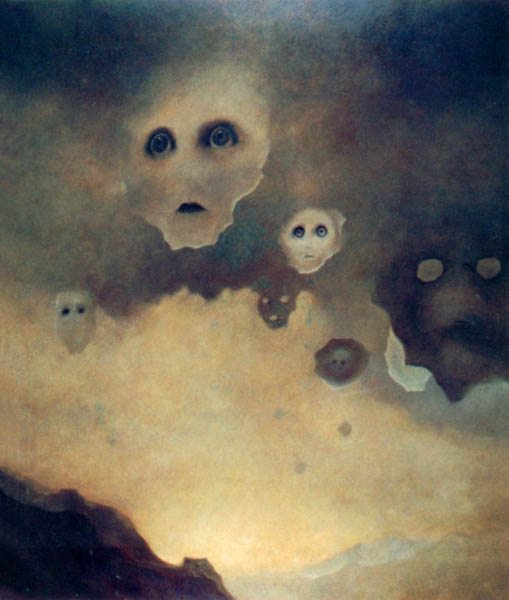
These Terrible Dreams That Shake Us Nightly

Zdzistaw Belinski

These Terrible Dreams That Shake Us Nightly

                                                                                                Macbeth (3.2.18-28)

In the wee hours this morning, I suffered through one of my post-retirement nightmares, a reprise of I’ve Never Been to Class and the Final Exam Is Tomorrow.  However, in this morning’s remake, I’ve transitioned from slack-ass student to unconscientious teacher.

In the dream, I’ve returned to class after a holiday with no lesson plans, no homework assignments, with nothing but empty words, my in-class bantering the equivalent of padding an essay with strings of superfluous phrases that take up space but denote next to nothing.

I hate dreams like this!

Well, I’ve decided rather than squandering thousands of dollars in therapy paying for advice from a virtual stranger who probably hasn’t read Ulysses – not to mention Jung and Freud – I’ll prepare lesson plans for phantom dream classes in the hope that I can short circuit my old-fashioned neurosis by being prepared.

Although I only taught history for four semesters in the last two years of my career, I really enjoyed whupping up assignments for the one-foot-out-of-the-door seniors who signed up for that elective, America in the Sixties.[1]

So, my first vaporous assignment is for a history class.

[Confession: Yes, MAGAs, you’re correct: many teachers (but not all) strive to indoctrinate students, which the following assignment certainly attempts to do].[2]

Assignment: Undoubtedly, in the last fifty years, the two most popular Presidents within the Republican Party were Ronald Reagan and Donald Trump.

Although they shared certain characteristics (species, gender, race, celebrity, divorces, party affiliation, fetishization of the Second Amendment), they also differed in several significant ways (in geopolitical attitudes vis a vis Russia, in their views of free trade vs tariffs, in their demeanors, in their adherence to Constitutional traditions).

In a well-developed essay devoid of superfluous phrases that take up space but denote next to nothing, compare Ronald Reagan and Donald Trump, exploring both similarities and differences. Make sure to address three of the above areas of difference.

In your conclusion, speculate on societal dynamics that explain such a radical shift in Republican ideological viewpoints. Aspects to consider: Fox News, declines in literacy, the prevalence of social media, socio-economic disparities . . .

It’s trickier for an English class because in my nightmare, it’s inevitably my British Lit survey that I’ve not prepared for, which begins with the Anglo-Saxon epic Beowulf and ends with Seamus Heaney.

It’s spring and we haven’t gotten past Chaucer!!!

I’m doomed! There’s no way to prepare. Cue Lady Macbeth’s scream in the Trevor Nunn BBC production.


[1] I suspect that course might be the root of my incompetent teacher nightmares because I felt as if I were shortchanging the students given my lack of knowledge, my ignorance of Chicago style research methodology, and my dearth of experience in organizing and implementing a history course.

[2] E.g., when I taught Old Testament in the 7th grade, I ended the unit by having students write a “character sketch ” of Yahweh. Almost every essay was negative: Yahweh was insecure, a “jealous God,” a belligerent Asshole who drowned innocent puppy dogs and kitty cats because His own Creation sucked. Not to mention, that his chosen one to regenerate the earth, ark-builder Noah, got shit-faced post-deluge and passed out naked in his tent, which freaked out his sons. Couldn’t Yahweh have found a Jimmy Carter equivalent instead? Isn’t he supposed to be omniscient?

Dysfunction, So-Called Strong Men, and American Idiocy

Be thankful (if you’re not reading this from Russia)[1] that the cosmic crap throw of innumerable permutations of space/time has landed you in a nation that doesn’t ambush males lounging in neighborhood saloons, drag their startled selves to recruitment centers, and in less than a week, transport their untrained asses to the killing fields of the front lines as cannon fodder in an idiotic war instigated by a short-of-stature Napoleon wanna-be.[2]

Russian conscripts saying goodbye

It would be nice if my fellow Americans (especially elected Republican representatives and senators) would take the long view and recognize so-called strong men (i.e., authoritarian rulers) short circuit collaboration, gum up the machine of government with ego, and therefore create dysfunctional nations, because, just saying, not only are two heads better than one, but a few hundred heads are even better than two.[3]  

It’s not as if the Trump administration functioned as a well-oiled drama free machine, as if the Donald possesses a vision that extends beyond his next iPhone notification. Oh sure, if Trump were president, he would have magically insulated the U.S. from the universal phenomenon of global inflation. [Cue the Lovin’ Spoonful]: Do you believe in magic? Do you believe in the heresy of evangelicals; do you believe the rantings of a damaged girdle-sporting narcissist who wears more make-up than Mae West in her Myra Breckinridge days?

Trump without make-up

Alas, power trumps decency. Lindsey Graham and Tim Scott and the rest of them will keep their cowardly lips sealed. Look what happened to Liz Cheney.  There is – no offense Jesus – short term profit in the forfeiture of one’s soul.

Double alas, propaganda can be effective, especially when targeting the under-educated,[4] so I’m expecting that even despite the January 6 Committee’s powerful case that Donald Trump and his minions attempted to sabotage via coup the peaceful transfer of power in the United States of America, that Donald Trump (aided and abetted by state legislatures) will be elected as POTUS in 2024.

We, to quote one of my TTC students from 1978, “done gone cruzy.”

George Bellows: Dancing at the Insane Asylum

[1] So far this year, the blog has 24 hits from Russia, so it’s possible.

[2] Diagram that goddamn sentence grammar technicians.

[3] Cf: the US Constitution

[4] C.f.:

An Appreciation of David Bowie’s “China Girl”

Before I begin this paean on the exquisite pop/rock masterpiece “China Girl,” I thought I’d mention that some consider Bowie’s 1983 hit racist because he portrays a diminutive Asian female in stereotypical ways, and, [throat clearing], the sexualization of Asian females has been a Western European/North American thing for centuries.[1]

Take Graham Greene’s The Quiet American, for example, in which the narrator Fowler and his antagonist Pyle clash over the possession of Phoung, a Vietnamese husband-hunter who doesn’t even rate a name in Good Reads’ summary. There she’s merely “Fowler’s beautiful Vietnamese mistress.”

Anyway, Bowie considered “China Girl” a “very simple, very direct statement against racism.”

For an opposing view, here’s a link to “An Asian’s Take on ‘China Girl'”: https://rethinkreviews.medium.com/an-asians-take-on-david-bowie-s-china-girl-232e2a6aaeb4

Anyway, whether it’s racist or antiracist[2], the song itself, its dynamic progression from the bubbly pop of the first verse through the escalation of the narrator’s increasing angst, is masterful as it gradually morphs from a Jackson-5-like pop tune into an echo chamber of Weimer Republic decadence. Throughout, Bowie’s phrasing is pliant as he adjusts his voice to the narrator’s successive moods as he transitions from the sunshine of verse one to “visions of Swastikas” in verse four.

The song begins with a riff that Jonathan Kim (the author of the linked article) describes as a “little plunky Asian-style riff” that “is the musical equivalent of someone saying “Ching chong ching.”

On the other hand, it’s catchy, cheerful sounding and segues into the first verse where the narrator’s calm baritone contemplates his Chinese lover.

I couldn’t escape this feeling with my China girl
I feel a wreck without my little China girl
I hear her heart beating, loud as thunder
Saw these stars crashing

In the second verse, the mood darkens slightly, but Bowie’s voice remains relatively upbeat.

I’m a mess without my little China girl
Wake up in the morning, where’s my little China girl?
I hear her heart is beating, loud as thunder
I saw these stars crashing down

After the chorus, in the third, stanza, a sense of anxiety shadows the vocal as the tempo increases. Also, Bowie renders a sort of rock-a-billy hiccup with the line “I could pretend that nothing really meant too much.”  A hiccuppy muffled semi-sob sort of.


I’m feeling tragic like I’m Marlon Brando
When I look at my China girl
And I could pretend that nothing really meant too much
When I look at my China girl

What follows is an instrumental interlude in which the thumping of bass and drums replaces the tinkle-tinkle lightness of the verse two verses, which then leads to what I called above “a Weimer decadence.”

I stumble into town
Just like a sacred cow
Visions of swastikas in my head
Plans for everyone
It’s in the white of my eyes

My little China girl
You shouldn’t mess with me
I’ll ruin everything you are
You know
I’ll give you television
I’ll give you eyes of blue
I’ll give you a man who wants to rule the world

The narrator sees himself as a negative influence, as a potential dictator perhaps, a man with some sort of dark mission, but when he gets into one of these moods, his Chinese lover soothes him, tells him to “shut his mouth.”

And when I get excited
My little China girl says
“Oh, baby, just you shut your mouth”
She says, “Ssh”
She says “Ssh”
She says
She says

A 25-second guitar solo replaces “ssh” as the direct object, and then the verse is repeated two more times before we come full circle and return from the realm of rock to bubbling pop as the playful Chinese riff returns, the bass stepping aside, out of the way.

Supposedly, Bowie adapted an earlier Iggy Pop version, and gives him co-writing a credit.

Obviously, I really admire the song, think it transcends the typical arc of a pop song yet remains, as they used to say on Bandstand, “danceable.”


[1] I struggled with what noun to use to describe the chronic Western sexualization of Asian females. I tried “predilection” and then “propensity” and finally “tradition” before opting for “thing,” the weakest of words that can describe anything from belly button lint to the resurrection of Jesus. Sometimes, though, you have to choose sound over sense.

[2] After all, as my bosom buddy Hamlet sez: “There’s nothing neither good nor bad but thinking makes it so.”

Cliffs of Fall Frightful, Sheer, No Man Fathomed

Alexandre Coll

Cliffs of Fall Frightful, Sheer, No Man Fathomed

Who needs actual supernatural ghosts when we all have harrowing memories haunting us?

Take combat veterans for example. Like poor Wilfred Owen who lived just long enough to write this before getting killed in WWI.

Bent double, like old beggars under sacks,
Knock-kneed, coughing like hags, we cursed through sludge,
Till on the haunting flares we turned our backs,
And towards our distant rest began to trudge.
Men marched asleep. Many had lost their boots,
But limped on, blood-shod. All went lame; all blind;
Drunk with fatigue; deaf even to the hoots
Of gas-shells dropping softly behind.

Gas! GAS! Quick, boys!—An ecstasy of fumbling
Fitting the clumsy helmets just in time,
But someone still was yelling out and stumbling
And flound’ring like a man in fire or lime.—
Dim through the misty panes and thick green light,
As under a green sea, I saw him drowning.

In all my dreams before my helpless sight,
He plunges at me, guttering, choking, drowning.

If in some smothering dreams, you too could pace
Behind the wagon that we flung him in,
And watch the white eyes writhing in his face,
His hanging face, like a devil’s sick of sin;
If you could hear, at every jolt, the blood
Come gargling from the froth-corrupted lungs,
Obscene as cancer, bitter as the cud
Of vile, incurable sores on innocent tongues,—
My friend, you would not tell with such high zest
To children ardent for some desperate glory,
The old Lie: Dulce et decorum est
Pro patria mori.

Even if you were lucky enough to escape the trenches of that war, the beach heads of the second, the jungles of Viet Nam, and the deserts of the Middle East, you still have no doubt a host of melancholy memories that can arise in the wee hours like ectoplasmic phantoms.

Sundays too my father got up early
and put his clothes on in the blueblack cold,
then with cracked hands that ached
from labor in the weekday weather made
banked fires blaze. No one ever thanked him.

I’d wake and hear the cold splintering, breaking.
When the rooms were warm, he’d call,
and slowly I would rise and dress,
fearing the chronic angers of that house,

Speaking indifferently to him,
who had driven out the cold
and polished my good shoes as well.
What did I know, what did I know
of love’s austere and lonely offices?

Robert Hayden

Lady Macbeth says, “What’s done is done,” but that’s not true as long as the subcranial electric impulses that are our memories decide to break out of their tombs and rattle their chains.

No worst, there is none. Pitched past pitch of grief,

More pangs will, schooled at forepangs, wilder wring.

Comforter, where, where is your comforting?

Mary, mother of us, where is your relief?

My cries heave, herds-long; huddle in a main, a chief

Woe, world-sorrow; an an age old anvil wince and sing –

Then lull, then leave off. Fury had shrieked ‘No ling-

ering! Let me be fell: force I must be brief.'”

O, the mind, mind has mountains, cliffs of fall

Frightful, sheer, no-man-fathomed. Hold them cheap

May who ne’er hung there. Nor does long our small

Durance deal with that steep or deep. Here creep,

Wretch, under a comfort serves in a whirlwind: all

Life death does end and each day dies with sleep.

Gerard Manley Hopkins

Pernell McDaniel at Chico Feo

photo credit George Fox

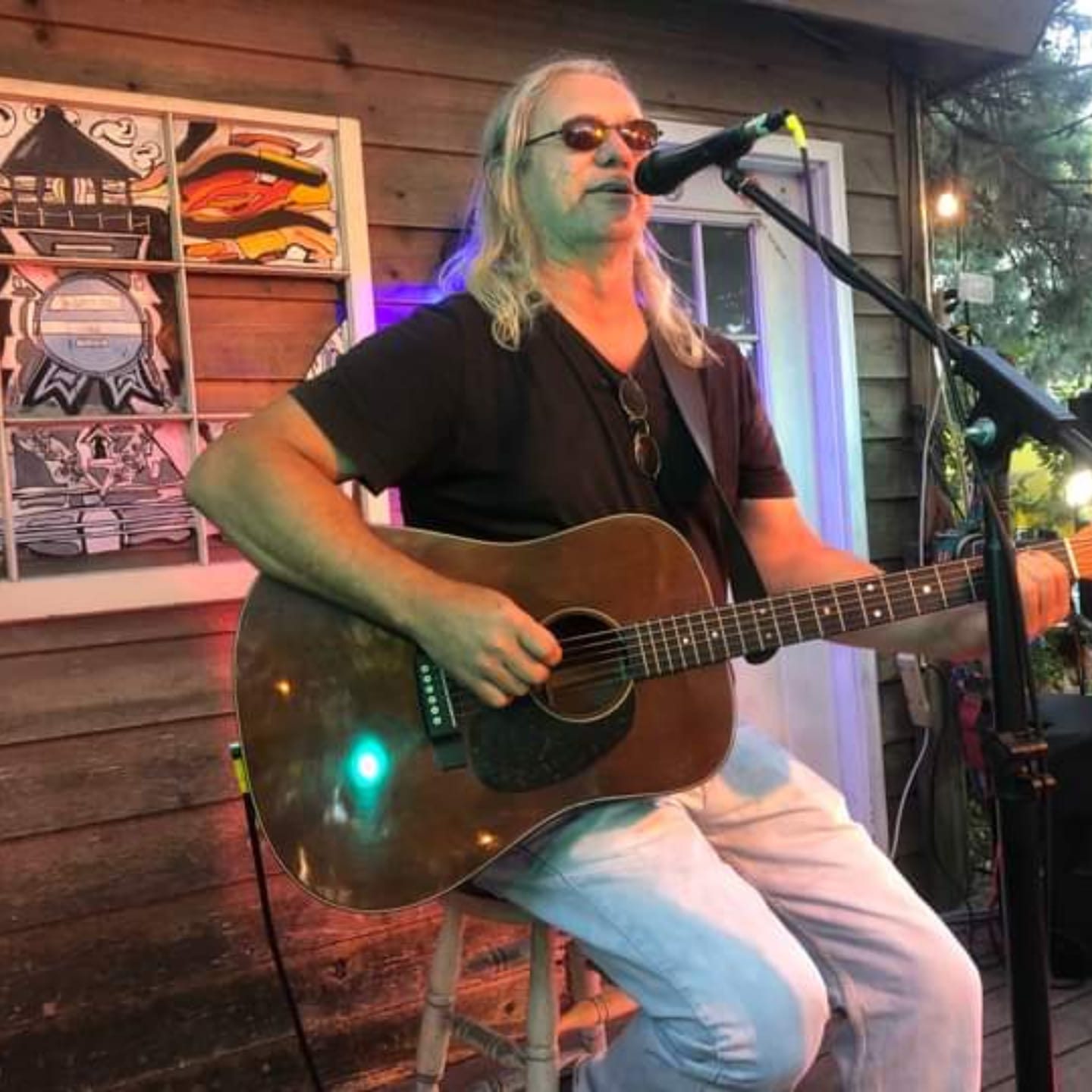
One of the premier artists at Chico-Feo’s Singer/Songwriter open mic Mondays, Pernell McDaniel performs a wide range of originals. Whether he is singing about his beloved grandfather, star-crossed interracial couples, or the abundant goods available at Bert’s Market, his melodies and lyrics seamlessly meld into well-crafted crowd pleasers.

Here he is performing “The Ballad of Chris and Willy” on 19 September 2022.

The lyrics appear beneath the video.

Enjoy!

THE BALLAD OF CHRIS AND WILLY

On the other side of the tracks
On the shady side of town
Two young bucks worked a corner spot
Sharing their love around
Pimpin’ riffs and rhymes
And layin’ down beats and tracks

Chris and Willy made their way
Climbin’ each others backs
Scrapin’ and scratchin’ A
nd tryin’ to get ahead
Where street cred and the dollar bill
Was all the pride they had

And then the big time struck
Like a lightning bolt
And they got swept away in the fray
Not knowin’ that their crooked paths
Would cross again one day

Chorus

Yeah, Chris and Willy had a lifelong feud
Kinda like they never had Nothin’ much better to do.
But, Chris and Willy Never had a real fight
Until a bald headed woman Came between ’em At the Oscar’s one night

Willy married a time or two
And wound up with a chick named Jada.
She was a swinger with alopecia.
She was low hanging fruit for a hater.

Chris got rich on SNL
And later on the silver screen.
His money was green.
But, he was an A-list star
‘Cause his jokes were all so mean.
Then one night at the Oscar’s Willy had a nomination.
And Chris was MC-ing center stage
And tryin’ to be an aggravation.
In a single lapse of judgement
Chris joked about Jada’s scalp.
And Willy stormed the stage
And slapped the taste Out of Chris’s mouth!
Tears filled Willy’s eyes
As he reached his front row seat
While Chris was tryin’ to keep his cool
And checkin’ for loose teeth.
Jada scanned the crowd
Then beamed at Willy in adoration.
But Willy couldn’t let it go
Without one last indignation.
In a voice that thundered Like the cannon fire
When Sherman raped the South He said
“Don’t let my wife’s name Come outa your fuckin’ mouth!”

Yeah, Chris and Willy had a lifelong feud
Kinda like they never had Nothin’ much better to do.
But, Chris and Willy Never had a real fight
Until a bald headed woman Came between ’em At the Oscar’s one night

Screen-Faced Nation

Megan Posey

George Fox’s Monday Night extravaganza known as the Singer/Songwriter Soapbox provides local musicians and poets a venue to showcase their original works, and many of them are damned good, like Jason Chambers, Chuck Sullivan, among a host of others.

Last night Megan Posey recited – not read – recited “Screen-Faced Nation,” a performance you can check out in the video below. This twenty-something has some serious chops. Check her out.

Note: the incompetent videographer [embarrassed throat clearing] didn’t start shooting until the fifth line, but you can read the entire poem below the video.

Screen-Faced Nation

by Megan Posey

I’m reporting to you live from Addictionville, USA

Found in the collective mind of humankind

Where substances and behaviors disguised as property investors

Develop land on top of your bulldozed dopamine receptors

Uppers, downers, booze, gambling, sex, shopping and food

Are just some of the towns long established moguls of real estate

The city was historically inhabited by massive huddles of the tired and poor

And though many transients were lured in by the pleasure and escapism that dangled as bait

It was an exit on the interstate that you would probably just ignore

But that is clearly that is no longer the case

We’ve become a needle-armed, powder-nosed, screen-faced nation.

Pundits are puzzled over what led to the gentrification

But I’d like to shift your attention back to 2010

When we had just demolished OxyContin

And nicotine was undergoing renovation

The cigarette was outdated but we hadn’t yet created

A plan to market vaping to the younger generation.

So there was some land available in town

And a growing family looking to settle down

That’s when Social media began to break ground

And construct their now all-encompassing compound

But look beyond the flimsy facade of connection

And you’ll see an opium den filled to the brim with junkies

Fiending for their next self-esteem injection

This just in

Property crime in the area has now reached an all-time high

Your focus, motivation, and creativity are being jacked in broad daylight

But the truth is you hand them over without so much as a fight

See, you were so scared of getting left behind

That you closed your eyes and got in line with the blind

Until one day you woke up with your head pounding on a cold, hard floor

You tried to escape, but what did you find?

The foyer had turned to a labyrinth of corridors

And there was just no easy way out anymore

Even if you could manage to free your mind

These days you still gotta have at least one foot in the door

It’s sad to watch people waste their whole lives in this podunk town

They’re like stillborns in the underbelly who never started to crown

A real individual could have been born and that’s a hefty cost

But so long as you search outside of yourself for the way

It does not matter what turn you take, you will always end up lost

In the unnavigable wasteland of Addictionville, USA

A Certain Girl

Pleasure Chest in action

I’m somewhat embarrassed to admit that until last night I didn’t know that “A Certain Girl” was an Ernie K-Doe tune. I only knew the song from the Warren Zevon cover. Thanks to the killer Asheville band Pleasure Chest for educating my ass.

Here’s a snippet of Pleasure Chest’s cover and the original below that.

Your turn, Ernie.

PS. I just got reeducated by my friend Jake. Allen Toussaint wrote the song, not Ernie K-Doe.

BTW, here’s a photo of Jake and Allen himself.

Allen Toussaint and Jake Williams

Everybody’s in Showbiz

The democratization of media means that we’re all stars now. Self-styled comedians flood TikTok with their bits, musicians upload videos, retired English teachers with lowly BAs spew cultural observations in blog posts as if they’re social scientists.[1]

You don’t need any talent or expertise to do any of this, only the right software and an internet connection.

Seems as if everyone, whether it be Marjorie Taylor Greene or Mr. Disgruntled Cattleman from Wyoming, has the infomercial eye-contact, emphatic-hand gesturing down as they look you in the eye from whatever sized screen they appear on.

I noticed years ago that Trump himself had incorporated some stand-up body language in his rallies, particularly the [cue New Yorker sarcastic voice] who-would-have-thunk-it shrug.

More than ever, politics has morphed into showbiz. Do the above-referenced MTG and her not-all-that-comical sidekick Laura Boebert ever attend committee meetings, or is all they do is hold mikes and pace back and forth pretending that they’re rightwing incarnations of Paula Poundstone? [2]

Seems like a waste of taxpayers’ money from where I’m scrolling.

Oh, yeah, then there’s this, not to be outdone.


[1] That would be I-and-I, Dear Reader.

[2] Marjorie Taylor Greene has been stripped of her committee assignments, so in her case, the answer is no.

Words, Words, Wordle

Brain Food

Polonius: What are you reading?

Hamlet: Words, words, words.

I rationalize my obsession with word games by thinking of them as therapeutic strategies to stave off senility. By working through the NYT, Washington Post, and New Yorker crosswords each day, the reasoning goes, I’m keeping my synapses clean, firing them like sparkplugs, raging, raging against the dimming of the light. A simpler and more truthful explanation is that I enjoy word games, and if I really cared about my cognition, I would replace my daily rounds at Chico Feo with trips to Crosby’s Seafood Market to stock up on salmon, trout, albacore tuna, herring, and sardines.[1]

Anyway, of all the on-line opportunities for etymological engagement, my favorite is the New York Times’s Spelling Bee. And no wonder. I’m literally[2] a genius at it.

See for yourself.

Here’s today’s game. I’m one word short of achieving Queen Bee status and have until 3 AM to find that last, remaining, elusive word (one that I’ve probably never encountered).

A word game I really suck at is Scrabble Grams, a subsidiary of the Scrabble Empire, copy right circled R.  As in Spelling Bee, you must unscramble seven “tiles” into words, the longer the more profitable, a seven-letter word yielding a 50-point bonus.  Essentially, you’re playing a game of Scrabble against Samuel Johnson and Noah Webster, and in that sense, the best you can hope for is a tie.

That I’m good at Spelling Bee but bad at Scrabble Grams lies in the layout. I react to the circular much better than the linear it would seem.[3]

Wordle, which has taken the world by storm, is as much a logic game as it is a word game. You have five chances to unscramble a jumble of five letters, and as you progress down the grid, you can see a dwindling number of letters available, so in essence, you’re engaged in deductive reasoning.

Today I lost, ruining my streak, despite having the first three letters in place by the third row.

Wordle 407 X/6

⬛🟩🟩⬛⬛

⬛🟩🟩⬛⬛

🟩🟩🟩⬛⬛

🟩🟩🟩⬛⬛

🟩🟩🟩⬛⬛

🟩🟩🟩⬛⬛

Oh, woe is me, alack and alas!  How all occasions do inform against me! Fie on it! Fie!

Hey, but there’s always tomorrow and tomorrow and tomorrow . . . but then again one day there won’t be a tomorrow, and then again, that’s a consummation devoutly to be wished, according to Hamlet, who after almost three acts worth of peppering Polonius with barbs, eventually stabs him to death.

So, Hamlet is finally successful in shutting him up.

The sword is mightier than the pen, you might say.

And with that, Adieu!


[1] Oh, but the Little Devil on my shoulder is citing clinical studies that claim that social interaction is beneficial for the elderly.

Here’s a sample, “Results: Qualitative analysis identified eateries, senior centers, and civic groups as key places to socialize. We identified significant positive associations between kernel density of senior centers, civic/social organizations, and cognitive function. Discussion: Specific neighborhood social infrastructures may support cognitive health among older adults aging in place.

BTW, Chico Feo is technically an “eatery” and Hamlet calls Polonius a “fishmonger,” though he’s probably using slang for “procurer” as in “pandar” or “pimp” rather than a merchant of high fatty fish that enhance mental acuity.

[2] A very dangerous adverb, yes, a precarious modifier (though not literally).

[3] By the way, I’m an atrocious speller, as my regular readers have no doubt noticed.

Monsoon Season

Oh, I say let it rain every day.  Pour.  Flood the Crosstown.  Swell the Edisto.  Let the weeping sky paint the marsh even greener so mosquitos swarm and bats dive and devour and thrive. Out on the deck when I see their zigzagging swoops and hear the frogs croaking, I know that our habitat is healthy.  

the green, green marsh of home

Give me a jungle any day over a desert.  Jungles, which are pro-life/pro-women, give rise to animism and soulful art; deserts, on the other hand, are anti-life/anti-women, give rise to tyrannical patriarchies and edicts against pictorial art.  In the jungle everything has soul; in the desert virtually nothing does.  

A combination photo of the 180-foot-high Buddha statue in Bamian, central Afghanistan on Dec. 18, 1997, left, and after its destruction on March 26, 2001. (Muzammil Pasha, Sayed Salahuddin/Reuters)

Allow me to save a hundred or so words:

Here is Rajiv Malhotra’s take on the difference between jungle and desert cultures:

The difference in attitudes toward order and chaos is one of the chief differences discussed at length in the book [i.e., Malhotra’s Being Different: An Indian Challenge to Western Universalism]. It is worth considering why the Indian religious imagination so unequivocally embraced the notion of diversity and multiplicity while others have not to a similar extent. Since all civilizations have tried to answer such existential questions as who we are, why we are here, what the nature of the Divine and the cosmos are etc., why are some Indian answers so markedly different from the Abrahamic ones?

Sri Aurobindo offers us a clue. In Dharmic traditions, unity is grounded in a sense of the Integral One, and there can be immense multiplicity without fear of “collapse into disintegration and chaos”. He suggests that the “forest” with the “richness and luxuriance of its vegetation” is both an inspiration and metaphor for India’s spiritual outlook. A quick look at world cultures and civilizations reveals how profoundly the geography and the human response to it affected those cultures. So it may well be that the physical features and characteristics of the subcontinent, once lush with tropical forests, also contributed to its deepest spiritual values (in contrast to those that were born, as the Abrahamic religions are, in the milieu of the desert).

The forest has always been a symbol of beneficence in India – a refuge from the heat, and abundant enough to support a life of contemplation without the worries of survival when worldly ties had to be severed for the pursuit of spiritual goals. (The penultimate stage of life advocated for individuals in Dharma traditions is called “vanaprastha” or “the forest stage of life”). Forests support thousands of species that survive interdependently and contain complex life and biology that changes and grows organically. Forest creatures are adaptive; they mutate and fuse into new forms easily. The forest loves to play host; newer life forms migrate to it and are rehabilitated as natives. Forests are ever evolving, their dance never final or complete.

Of course, deserts can possess their own austere beauty, and given their lack of resources, human survival may well have depended on highly competitive survivalists whose creator was jealous and capable of drowning virtually all of his creation for wandering from the steep and stony way, and certainly the Hindu deity Kali isn’t exactly a benign creature herself, a destroyer extraordinaire but forgive me, I’ve wandered from my meteorological focus . . . 

It isn’t raining rain you know/ It’s raining violets.