Be thankful (if you’re not reading this from Russia)[1] that the cosmic crap throw of innumerable permutations of space/time has landed you in a nation that doesn’t ambush males lounging in neighborhood saloons, drag their startled selves to recruitment centers, and in less than a week, transport their untrained asses to the killing fields of the front lines as cannon fodder in an idiotic war instigated by a short-of-stature Napoleon wanna-be.[2]
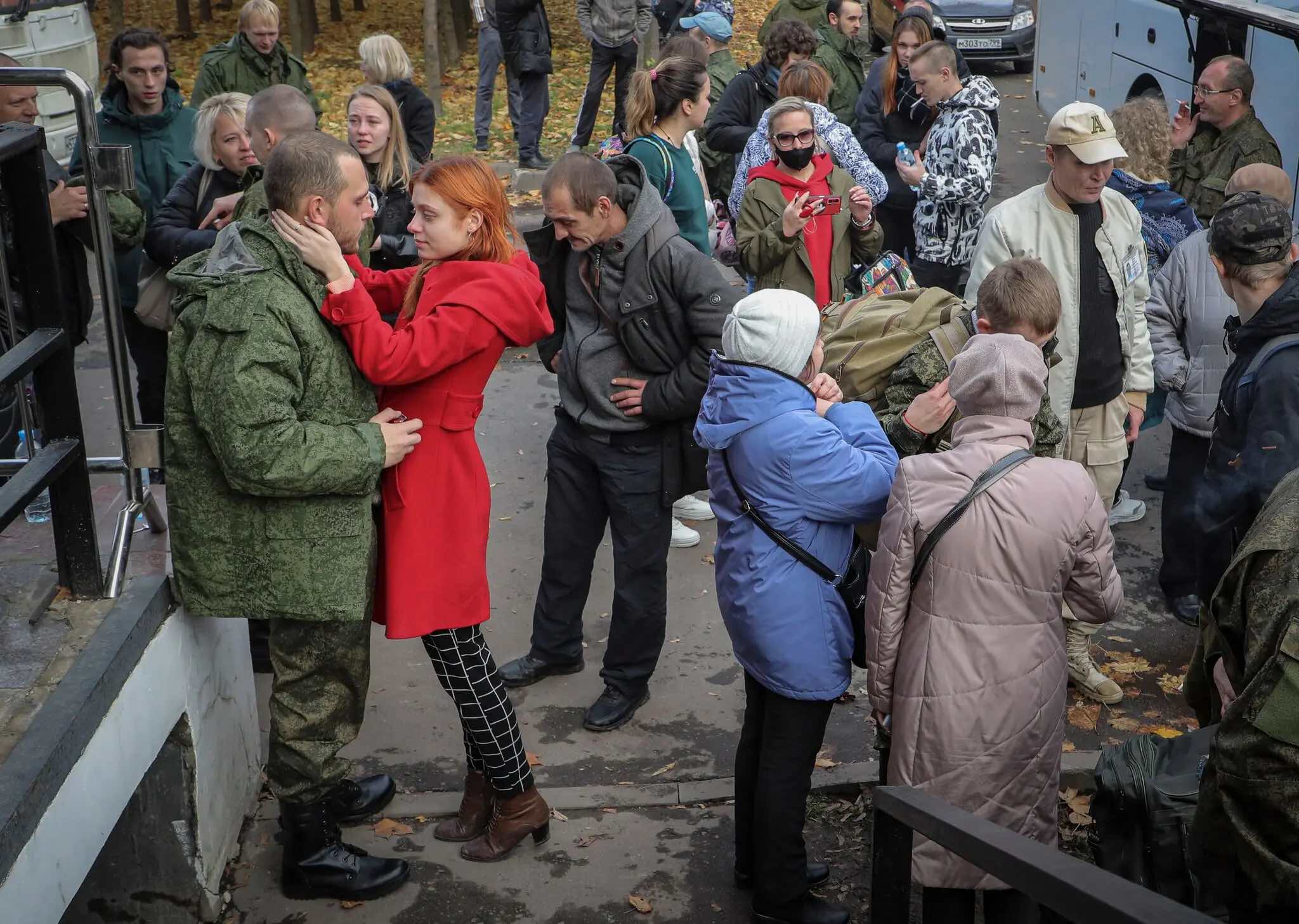
Russian conscripts saying goodbye
It would be nice if my fellow Americans (especially elected Republican representatives and senators) would take the long view and recognize so-called strong men (i.e., authoritarian rulers) short circuit collaboration, gum up the machine of government with ego, and therefore create dysfunctional nations, because, just saying, not only are two heads better than one, but a few hundred heads are even better than two.[3]
It’s not as if the Trump administration functioned as a well-oiled drama free machine, as if the Donald possesses a vision that extends beyond his next iPhone notification. Oh sure, if Trump were president, he would have magically insulated the U.S. from the universal phenomenon of global inflation. [Cue the Lovin’ Spoonful]: Do you believe in magic? Do you believe in the heresy of evangelicals; do you believe the rantings of a damaged girdle-sporting narcissist who wears more make-up than Mae West in her Myra Breckinridge days?
Trump without make-up
Alas, power trumps decency. Lindsey Graham and Tim Scott and the rest of them will keep their cowardly lips sealed. Look what happened to Liz Cheney. There is – no offense Jesus – short term profit in the forfeiture of one’s soul.
Double alas, propaganda can be effective, especially when targeting the under-educated,[4] so I’m expecting that even despite the January 6 Committee’s powerful case that Donald Trump and his minions attempted to sabotage via coup the peaceful transfer of power in the United States of America, that Donald Trump (aided and abetted by state legislatures) will be elected as POTUS in 2024.
We, to quote one of my TTC students from 1978, “done gone cruzy.”
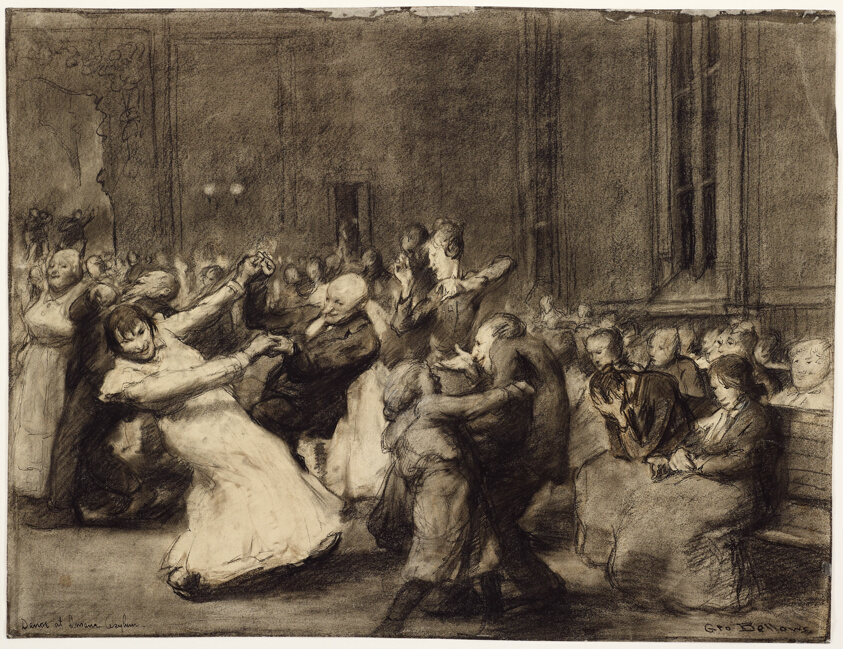
George Bellows: Dancing at the Insane Asylum
[1] So far this year, the blog has 24 hits from Russia, so it’s possible.
[2] Diagram that goddamn sentence grammar technicians.
Before I begin this paean on the exquisite pop/rock masterpiece “China Girl,” I thought I’d mention that some consider Bowie’s 1983 hit racist because he portrays a diminutive Asian female in stereotypical ways, and, [throat clearing], the sexualization of Asian females has been a Western European/North American thing for centuries.[1]
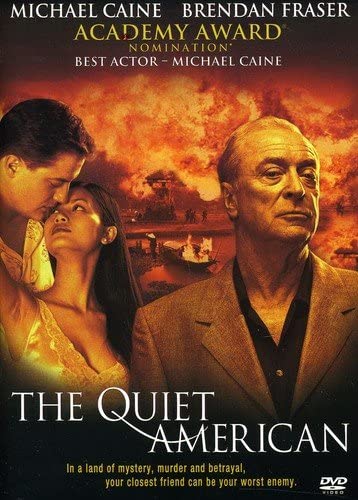
Take Graham Greene’s The Quiet American, for example, in which the narrator Fowler and his antagonist Pyle clash over the possession of Phoung, a Vietnamese husband-hunter who doesn’t even rate a name in Good Reads’ summary. There she’s merely “Fowler’s beautiful Vietnamese mistress.”
Anyway, Bowie considered “China Girl” a “very simple, very direct statement against racism.”
Anyway, whether it’s racist or antiracist[2], the song itself, its dynamic progression from the bubbly pop of the first verse through the escalation of the narrator’s increasing angst, is masterful as it gradually morphs from a Jackson-5-like pop tune into an echo chamber of Weimer Republic decadence. Throughout, Bowie’s phrasing is pliant as he adjusts his voice to the narrator’s successive moods as he transitions from the sunshine of verse one to “visions of Swastikas” in verse four.
The song begins with a riff that Jonathan Kim (the author of the linked article) describes as a “little plunky Asian-style riff” that “is the musical equivalent of someone saying “Ching chong ching.”
On the other hand, it’s catchy, cheerful sounding and segues into the first verse where the narrator’s calm baritone contemplates his Chinese lover.
I couldn’t escape this feeling with my China girl I feel a wreck without my little China girl I hear her heart beating, loud as thunder Saw these stars crashing
In the second verse, the mood darkens slightly, but Bowie’s voice remains relatively upbeat.
I’m a mess without my little China girl Wake up in the morning, where’s my little China girl? I hear her heart is beating, loud as thunder I saw these stars crashing down
After the chorus, in the third, stanza, a sense of anxiety shadows the vocal as the tempo increases. Also, Bowie renders a sort of rock-a-billy hiccup with the line “I could pretend that nothing really meant too much.” A hiccuppy muffled semi-sob sort of.
I’m feeling tragic like I’m Marlon Brando When I look at my China girl And I could pretend that nothing really meant too much When I look at my China girl
What follows is an instrumental interlude in which the thumping of bass and drums replaces the tinkle-tinkle lightness of the verse two verses, which then leads to what I called above “a Weimer decadence.”
I stumble into town Just like a sacred cow Visions of swastikas in my head Plans for everyone It’s in the white of my eyes
My little China girl You shouldn’t mess with me I’ll ruin everything you are You know I’ll give you television I’ll give you eyes of blue I’ll give you a man who wants to rule the world
The narrator sees himself as a negative influence, as a potential dictator perhaps, a man with some sort of dark mission, but when he gets into one of these moods, his Chinese lover soothes him, tells him to “shut his mouth.”
And when I get excited My little China girl says “Oh, baby, just you shut your mouth” She says, “Ssh” She says “Ssh” She says She says
A 25-second guitar solo replaces “ssh” as the direct object, and then the verse is repeated two more times before we come full circle and return from the realm of rock to bubbling pop as the playful Chinese riff returns, the bass stepping aside, out of the way.
Supposedly, Bowie adapted an earlier Iggy Pop version, and gives him co-writing a credit.
Obviously, I really admire the song, think it transcends the typical arc of a pop song yet remains, as they used to say on Bandstand, “danceable.”
[1] I struggled with what noun to use to describe the chronic Western sexualization of Asian females. I tried “predilection” and then “propensity” and finally “tradition” before opting for “thing,” the weakest of words that can describe anything from belly button lint to the resurrection of Jesus. Sometimes, though, you have to choose sound over sense.
[2] After all, as my bosom buddy Hamlet sez: “There’s nothing neither good nor bad but thinking makes it so.”
Who needs actual supernatural ghosts when we all have harrowing memories haunting us?
Take combat veterans for example. Like poor Wilfred Owen who lived just long enough to write this before getting killed in WWI.
Bent double, like old beggars under sacks, Knock-kneed, coughing like hags, we cursed through sludge, Till on the haunting flares we turned our backs, And towards our distant rest began to trudge. Men marched asleep. Many had lost their boots, But limped on, blood-shod. All went lame; all blind; Drunk with fatigue; deaf even to the hoots Of gas-shells dropping softly behind.
Gas! GAS! Quick, boys!—An ecstasy of fumbling Fitting the clumsy helmets just in time, But someone still was yelling out and stumbling And flound’ring like a man in fire or lime.— Dim through the misty panes and thick green light, As under a green sea, I saw him drowning.
In all my dreams before my helpless sight, He plunges at me, guttering, choking, drowning.
If in some smothering dreams, you too could pace Behind the wagon that we flung him in, And watch the white eyes writhing in his face, His hanging face, like a devil’s sick of sin; If you could hear, at every jolt, the blood Come gargling from the froth-corrupted lungs, Obscene as cancer, bitter as the cud Of vile, incurable sores on innocent tongues,— My friend, you would not tell with such high zest To children ardent for some desperate glory, The old Lie: Dulce et decorum est Pro patria mori.
Even if you were lucky enough to escape the trenches of that war, the beach heads of the second, the jungles of Viet Nam, and the deserts of the Middle East, you still have no doubt a host of melancholy memories that can arise in the wee hours like ectoplasmic phantoms.
Sundays too my father got up early and put his clothes on in the blueblack cold, then with cracked hands that ached from labor in the weekday weather made banked fires blaze. No one ever thanked him.
I’d wake and hear the cold splintering, breaking. When the rooms were warm, he’d call, and slowly I would rise and dress, fearing the chronic angers of that house,
Speaking indifferently to him, who had driven out the cold and polished my good shoes as well. What did I know, what did I know of love’s austere and lonely offices?
Robert Hayden
Lady Macbeth says, “What’s done is done,” but that’s not true as long as the subcranial electric impulses that are our memories decide to break out of their tombs and rattle their chains.
No worst, there is none. Pitched past pitch of grief,
More pangs will, schooled at forepangs, wilder wring.
Comforter, where, where is your comforting?
Mary, mother of us, where is your relief?
My cries heave, herds-long; huddle in a main, a chief
Woe, world-sorrow; an an age old anvil wince and sing –
Then lull, then leave off. Fury had shrieked ‘No ling-
ering! Let me be fell: force I must be brief.'”
O, the mind, mind has mountains, cliffs of fall
Frightful, sheer, no-man-fathomed. Hold them cheap
May who ne’er hung there. Nor does long our small
Durance deal with that steep or deep. Here creep,
Wretch, under a comfort serves in a whirlwind: all
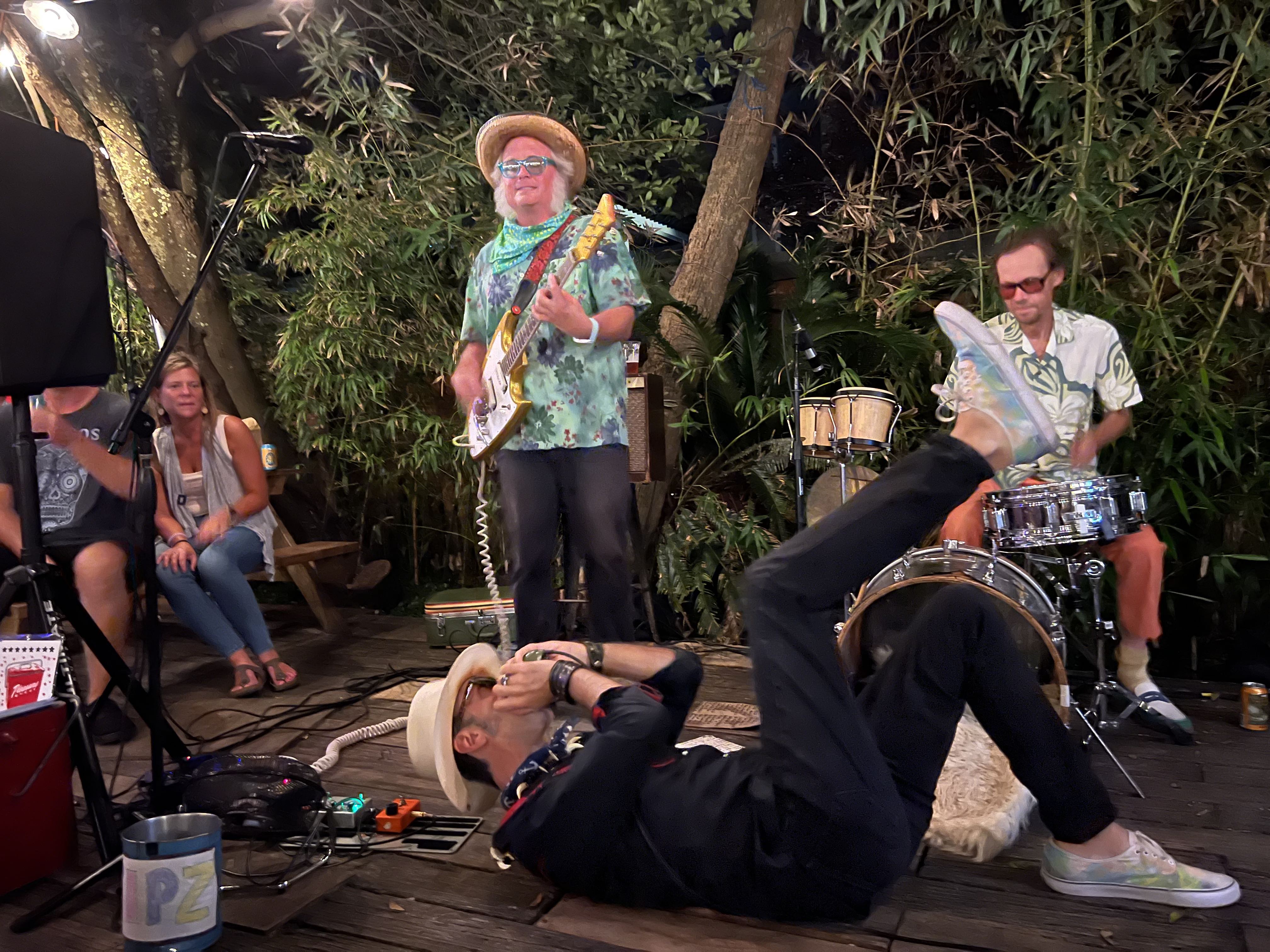
One of the premier artists at Chico-Feo’s Singer/Songwriter open mic Mondays, Pernell McDaniel performs a wide range of originals. Whether he is singing about his beloved grandfather, star-crossed interracial couples, or the abundant goods available at Bert’s Market, his melodies and lyrics seamlessly meld into well-crafted crowd pleasers.
Here he is performing “The Ballad of Chris and Willy” on 19 September 2022.
The lyrics appear beneath the video.
Enjoy!
THE BALLAD OF CHRIS AND WILLY
On the other side of the tracks On the shady side of town Two young bucks worked a corner spot Sharing their love around Pimpin’ riffs and rhymes And layin’ down beats and tracks
Chris and Willy made their way Climbin’ each others backs Scrapin’ and scratchin’ A nd tryin’ to get ahead Where street cred and the dollar bill Was all the pride they had
And then the big time struck Like a lightning bolt And they got swept away in the fray Not knowin’ that their crooked paths Would cross again one day
Chorus
Yeah, Chris and Willy had a lifelong feud Kinda like they never had Nothin’ much better to do. But, Chris and Willy Never had a real fight Until a bald headed woman Came between ’em At the Oscar’s one night
Willy married a time or two And wound up with a chick named Jada. She was a swinger with alopecia. She was low hanging fruit for a hater.
Chris got rich on SNL And later on the silver screen. His money was green. But, he was an A-list star ‘Cause his jokes were all so mean. Then one night at the Oscar’s Willy had a nomination. And Chris was MC-ing center stage And tryin’ to be an aggravation. In a single lapse of judgement Chris joked about Jada’s scalp. And Willy stormed the stage And slapped the taste Out of Chris’s mouth! Tears filled Willy’s eyes As he reached his front row seat While Chris was tryin’ to keep his cool And checkin’ for loose teeth. Jada scanned the crowd Then beamed at Willy in adoration. But Willy couldn’t let it go Without one last indignation. In a voice that thundered Like the cannon fire When Sherman raped the South He said “Don’t let my wife’s name Come outa your fuckin’ mouth!”
Yeah, Chris and Willy had a lifelong feud Kinda like they never had Nothin’ much better to do. But, Chris and Willy Never had a real fight Until a bald headed woman Came between ’em At the Oscar’s one night
George Fox’s Monday Night extravaganza known as the Singer/Songwriter Soapbox provides local musicians and poets a venue to showcase their original works, and many of them are damned good, like Jason Chambers, Chuck Sullivan, among a host of others.
Last night Megan Posey recited – not read – recited “Screen-Faced Nation,” a performance you can check out in the video below. This twenty-something has some serious chops. Check her out.
Note: the incompetent videographer [embarrassed throat clearing] didn’t start shooting until the fifth line, but you can read the entire poem below the video.
Screen-Faced Nation
by Megan Posey
I’m reporting to you live from Addictionville, USA
Found in the collective mind of humankind
Where substances and behaviors disguised as property investors
Develop land on top of your bulldozed dopamine receptors
Uppers, downers, booze, gambling, sex, shopping and food
Are just some of the towns long established moguls of real estate
The city was historically inhabited by massive huddles of the tired and poor
And though many transients were lured in by the pleasure and escapism that dangled as bait
It was an exit on the interstate that you would probably just ignore
But that is clearly that is no longer the case
We’ve become a needle-armed, powder-nosed, screen-faced nation.
Pundits are puzzled over what led to the gentrification
But I’d like to shift your attention back to 2010
When we had just demolished OxyContin
And nicotine was undergoing renovation
The cigarette was outdated but we hadn’t yet created
A plan to market vaping to the younger generation.
So there was some land available in town
And a growing family looking to settle down
That’s when Social media began to break ground
And construct their now all-encompassing compound
But look beyond the flimsy facade of connection
And you’ll see an opium den filled to the brim with junkies
Fiending for their next self-esteem injection
This just in
Property crime in the area has now reached an all-time high
Your focus, motivation, and creativity are being jacked in broad daylight
But the truth is you hand them over without so much as a fight
See, you were so scared of getting left behind
That you closed your eyes and got in line with the blind
Until one day you woke up with your head pounding on a cold, hard floor
You tried to escape, but what did you find?
The foyer had turned to a labyrinth of corridors
And there was just no easy way out anymore
Even if you could manage to free your mind
These days you still gotta have at least one foot in the door
It’s sad to watch people waste their whole lives in this podunk town
They’re like stillborns in the underbelly who never started to crown
A real individual could have been born and that’s a hefty cost
But so long as you search outside of yourself for the way
It does not matter what turn you take, you will always end up lost
In the unnavigable wasteland of Addictionville, USA
I’m somewhat embarrassed to admit that until last night I didn’t know that “A Certain Girl” was an Ernie K-Doe tune. I only knew the song from the Warren Zevon cover. Thanks to the killer Asheville band Pleasure Chest for educating my ass.
Here’s a snippet of Pleasure Chest’s cover and the original below that.
Your turn, Ernie.
PS. I just got reeducated by my friend Jake. Allen Toussaint wrote the song, not Ernie K-Doe.
The democratization of media means that we’re all stars now. Self-styled comedians flood TikTok with their bits, musicians upload videos, retired English teachers with lowly BAs spew cultural observations in blog posts as if they’re social scientists.[1]
You don’t need any talent or expertise to do any of this, only the right software and an internet connection.
Seems as if everyone, whether it be Marjorie Taylor Greene or Mr. Disgruntled Cattleman from Wyoming, has the infomercial eye-contact, emphatic-hand gesturing down as they look you in the eye from whatever sized screen they appear on.
I noticed years ago that Trump himself had incorporated some stand-up body language in his rallies, particularly the [cue New Yorker sarcastic voice] who-would-have-thunk-it shrug.
More than ever, politics has morphed into showbiz. Do the above-referenced MTG and her not-all-that-comical sidekick Laura Boebert ever attend committee meetings, or is all they do is hold mikes and pace back and forth pretending that they’re rightwing incarnations of Paula Poundstone? [2]
Seems like a waste of taxpayers’ money from where I’m scrolling.
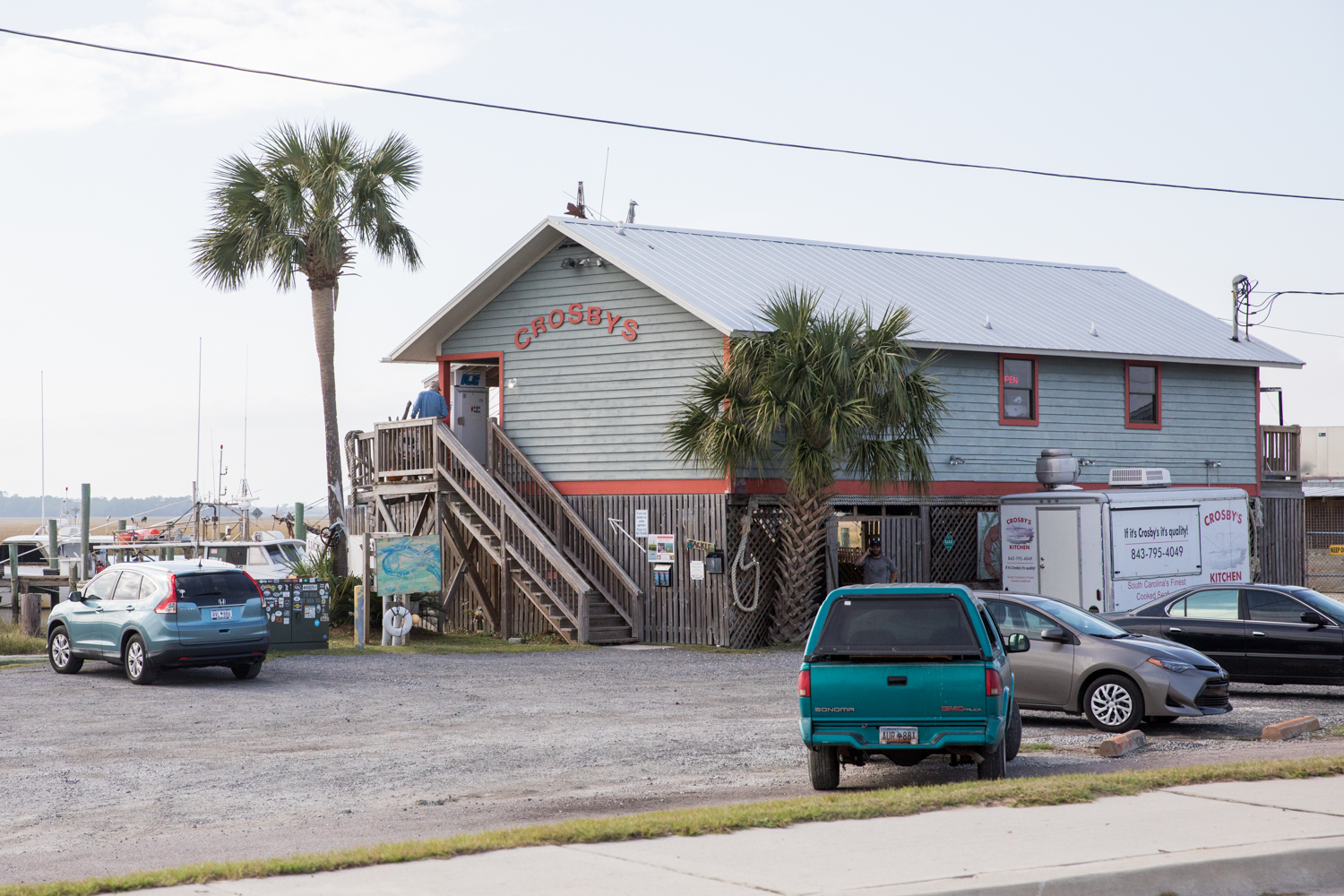
I rationalize my obsession with word games by thinking of them as therapeutic strategies to stave off senility. By working through the NYT, Washington Post, and New Yorker crosswords each day, the reasoning goes, I’m keeping my synapses clean, firing them like sparkplugs, raging, raging against the dimming of the light. A simpler and more truthful explanation is that I enjoy word games, and if I really cared about my cognition, I would replace my daily rounds at Chico Feo with trips to Crosby’s Seafood Market to stock up on salmon, trout, albacore tuna, herring, and sardines.[1]
Anyway, of all the on-line opportunities for etymological engagement, my favorite is the New York Times’s Spelling Bee. And no wonder. I’m literally[2] a genius at it.
See for yourself.
Here’s today’s game. I’m one word short of achieving Queen Bee status and have until 3 AM to find that last, remaining, elusive word (one that I’ve probably never encountered).
A word game I really suck at is Scrabble Grams, a subsidiary of the Scrabble Empire, copy right circled R. As in Spelling Bee, you must unscramble seven “tiles” into words, the longer the more profitable, a seven-letter word yielding a 50-point bonus. Essentially, you’re playing a game of Scrabble against Samuel Johnson and Noah Webster, and in that sense, the best you can hope for is a tie.
That I’m good at Spelling Bee but bad at Scrabble Grams lies in the layout. I react to the circular much better than the linear it would seem.[3]
Wordle, which has taken the world by storm, is as much a logic game as it is a word game. You have five chances to unscramble a jumble of five letters, and as you progress down the grid, you can see a dwindling number of letters available, so in essence, you’re engaged in deductive reasoning.
Today I lost, ruining my streak, despite having the first three letters in place by the third row.
Wordle 407 X/6
⬛🟩🟩⬛⬛
⬛🟩🟩⬛⬛
🟩🟩🟩⬛⬛
🟩🟩🟩⬛⬛
🟩🟩🟩⬛⬛
🟩🟩🟩⬛⬛
Oh, woe is me, alack and alas! How all occasions do inform against me! Fie on it! Fie!
Hey, but there’s always tomorrow and tomorrow and tomorrow . . . but then again one day there won’t be a tomorrow, and then again, that’s a consummation devoutly to be wished, according to Hamlet, who after almost three acts worth of peppering Polonius with barbs, eventually stabs him to death.
So, Hamlet is finally successful in shutting him up.
The sword is mightier than the pen, you might say.
And with that, Adieu!
[1] Oh, but the Little Devil on my shoulder is citing clinical studies that claim that social interaction is beneficial for the elderly.
Here’s a sample, “Results: Qualitative analysis identified eateries, senior centers, and civic groups as key places to socialize. We identified significant positive associations between kernel density of senior centers, civic/social organizations, and cognitive function. Discussion: Specific neighborhood social infrastructures may support cognitive health among older adults aging in place.
BTW, Chico Feo is technically an “eatery” and Hamlet calls Polonius a “fishmonger,” though he’s probably using slang for “procurer” as in “pandar” or “pimp” rather than a merchant of high fatty fish that enhance mental acuity.
[2] A very dangerous adverb, yes, a precarious modifier (though not literally).
[3] By the way, I’m an atrocious speller, as my regular readers have no doubt noticed.
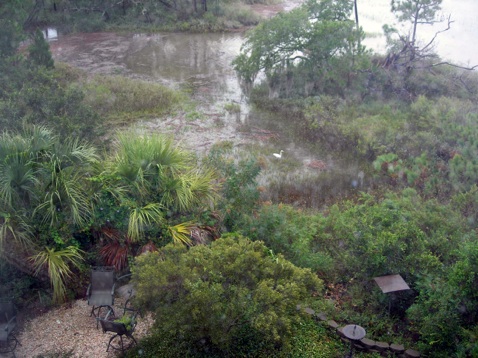
Oh, I say let it rain every day. Pour. Flood the Crosstown. Swell the Edisto. Let the weeping sky paint the marsh even greener so mosquitos swarm and bats dive and devour and thrive. Out on the deck when I see their zigzagging swoops and hear the frogs croaking, I know that our habitat is healthy.
the green, green marsh of home
Give me a jungle any day over a desert. Jungles, which are pro-life/pro-women, give rise to animism and soulful art; deserts, on the other hand, are anti-life/anti-women, give rise to tyrannical patriarchies and edicts against pictorial art. In the jungle everything has soul; in the desert virtually nothing does.
A combination photo of the 180-foot-high Buddha statue in Bamian, central Afghanistan on Dec. 18, 1997, left, and after its destruction on March 26, 2001. (Muzammil Pasha, Sayed Salahuddin/Reuters)
Allow me to save a hundred or so words:
Here is Rajiv Malhotra’s take on the difference between jungle and desert cultures:
The difference in attitudes toward order and chaos is one of the chief differences discussed at length in the book [i.e., Malhotra’s Being Different: An Indian Challenge to Western Universalism]. It is worth considering why the Indian religious imagination so unequivocally embraced the notion of diversity and multiplicity while others have not to a similar extent. Since all civilizations have tried to answer such existential questions as who we are, why we are here, what the nature of the Divine and the cosmos are etc., why are some Indian answers so markedly different from the Abrahamic ones?
Sri Aurobindo offers us a clue. In Dharmic traditions, unity is grounded in a sense of the Integral One, and there can be immense multiplicity without fear of “collapse into disintegration and chaos”. He suggests that the “forest” with the “richness and luxuriance of its vegetation” is both an inspiration and metaphor for India’s spiritual outlook. A quick look at world cultures and civilizations reveals how profoundly the geography and the human response to it affected those cultures. So it may well be that the physical features and characteristics of the subcontinent, once lush with tropical forests, also contributed to its deepest spiritual values (in contrast to those that were born, as the Abrahamic religions are, in the milieu of the desert).
The forest has always been a symbol of beneficence in India – a refuge from the heat, and abundant enough to support a life of contemplation without the worries of survival when worldly ties had to be severed for the pursuit of spiritual goals. (The penultimate stage of life advocated for individuals in Dharma traditions is called “vanaprastha” or “the forest stage of life”). Forests support thousands of species that survive interdependently and contain complex life and biology that changes and grows organically. Forest creatures are adaptive; they mutate and fuse into new forms easily. The forest loves to play host; newer life forms migrate to it and are rehabilitated as natives. Forests are ever evolving, their dance never final or complete.
Of course, deserts can possess their own austere beauty, and given their lack of resources, human survival may well have depended on highly competitive survivalists whose creator was jealous and capable of drowning virtually all of his creation for wandering from the steep and stony way, and certainly the Hindu deity Kali isn’t exactly a benign creature herself, a destroyer extraordinaire but forgive me, I’ve wandered from my meteorological focus . . .
It isn’t raining rain you know/ It’s raining violets.
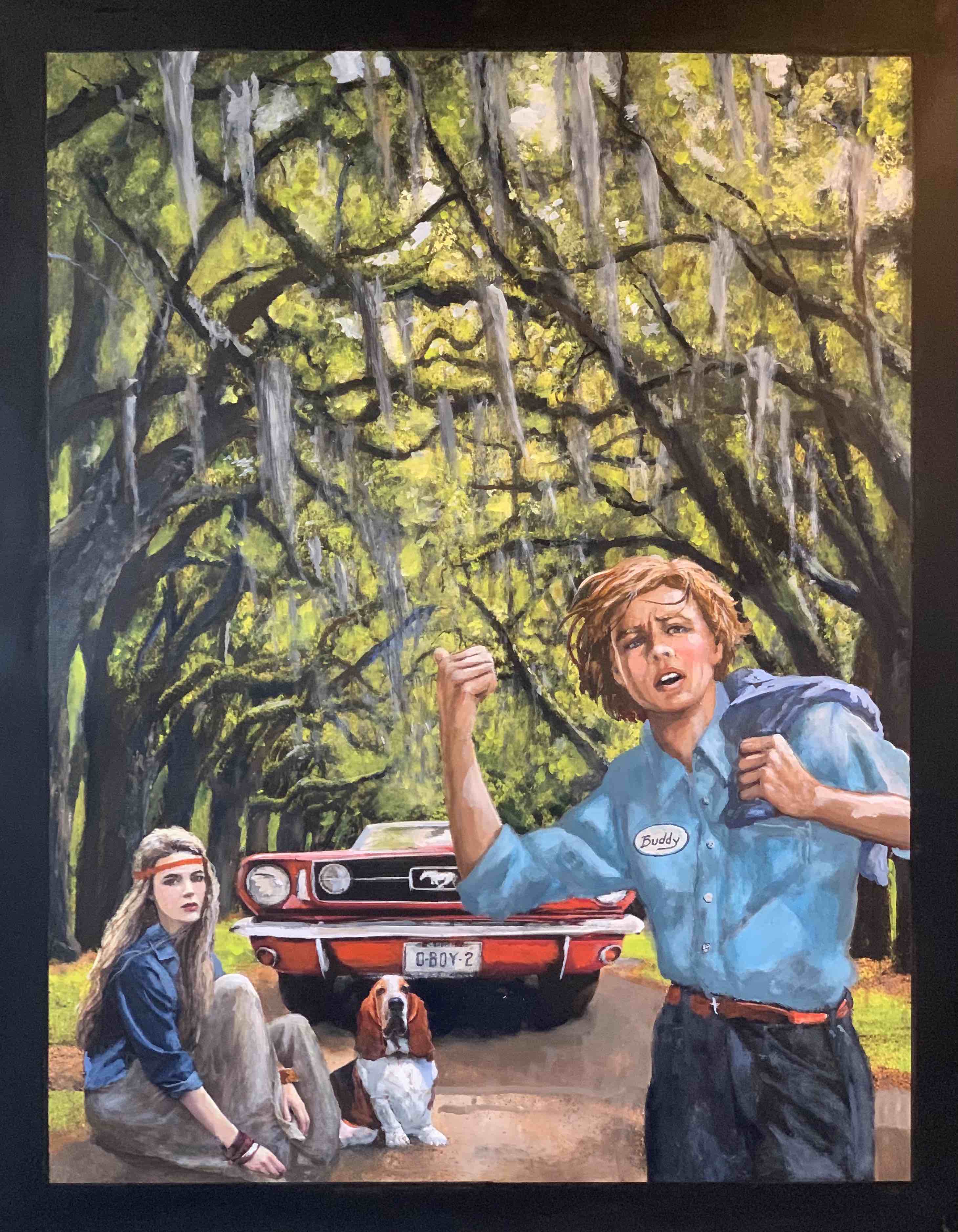
Painting of the cover of Today, Oh Boy by David Boatwright
My novel Today, Oh Boy, which is supposed to appear in early September of 2022, takes place during the daylight hours of Monday 12 October 1970 in Summerville, South Carolina. The title comes from the Beatle classic “A Day in the Life” as does the epigraph of Book 1, “Surfaces” –
And though the news was rather sad Well, I just had to laugh.
Here are the first couple of paragraphs:
A mango-hued, pockmarked bulletin board hangs on a classroom wall of pale lime green concrete blocks, the bulletin board pencil-stabbed and compass point-gouged. Among the graffiti are the names of the star-crossed lovers: Sandy + Tripp. Tragic Tripp, whose body was found last week tangled in blackberry bushes along the banks of the Ashley River, his skull smashed after falling off Bacons Bridge.
S-A-N-D-Y + T-R-I-P-P.
Rusty Boykin, a skinny, freckled redhead sitting on the bulletin board row in Mrs. Laban’s homeroom, traces his index finger in the depression of Sandy’s name. He supposes it’s Tripp’s work – the letters inartistic, juvenile. Sandy hasn’t been to school since Tripp’s death, four class days ago, and now it’s Monday, and she’s still not here. She should be sitting right in front of Rusty, her honey-colored hair hanging like a curtain to her waist.
For Rusty and his friends Alex Jensen and Will Waring, Tripp’s death, though “rather sad,” is less than heartbreaking because he was a belligerent bully with a ferocious temper. Despite that the word “tragic” appears in its second sentence, Today, Oh Boy is a comic novel.
Now, no way am I comparing this trifle of mine to Joyce’s Ulysses; however, I got the idea of writing it after listening to a 38-cd audio version of Joyce’s novel, that is, the idea of writing a novel that features one day in the life of a community with a wide cross-section of citizens. The chapter of Ulysses that especially intrigued me has come to be known as “Wandering Rocks.”
Here’s Julia Galeota’s summary from the Yale University’s Campus Press website:
“The Wandering Rocks,” the tenth episode of James Joyce‘s Ulysses relates the activities of citizens in the streets of Dublin between three and four o’clock. Composed exclusively of nineteen short vignettes that feature collectively nearly all of the characters of Ulysses, this tenth of Joyce’s eighteen episodes “is both an entr’acte between the two halves and a miniature of the whole” (Blamires 93).
Here’s a snippet, the last paragraph of “Wandering Rocks”:
Thither of the wall the quartermile flat handicappers, M. C. Green, H. Thrift, T. M. Patey, C. Scaife, J. B. Jeffs, G. N. Morphy, F. Stevenson, C. Adderly, and W. C. Huggard started in pursuit. Striding past Finn’s hotel, Cashel Boyle O’Connor Fitzmaurice Tisdall Farrell stared through a fierce eyeglass across the carriages at the head of Mr E. M. Solomons in the window of the Austro-Hungarian viceconsulate. Deep in Leinster street, by Trinity’s postern, a loyal king’s man, Horn-blower, touched his tallyho cap. As the glossy horses pranced by Merrion square Master Patrick Aloysius Dignam, waiting, saw salutes being given to the gent with the topper and raised also his new black cap with fingers greased by porksteak paper. His collar too sprang up. The viceroy, on his way to inaugurate the Mirus bazaar in aid of funds for Mercer’s hospital, drove with his following towards Lower Mount street. He passed a blind stripling Opposite Broadbent’s. In Lower Mount street a pedestrian in a brown macintosh, eating dry bread, passed swiftly and unscathed across the viceroy’s path. At the Royal Canal bridge, from his hoarding, Mr Eugene Stratton, his blub lips agrin, bade all comers welcome to Pembroke township. At Haddington road corner two sanded women halted themselves, an umbrella and a bag in which eleven cockles rolled to view with wonder the lord mayor and lady mayoress without his golden chain. On Northumberland and Landsdowne roads His Excellency acknowledged punctually salutes from rare male walkers, the salute of two small schoolboys at the garden gate of the house said to have been admired by the late queen when visiting the Irish capital with her husband, the prince consort, in 1849, and the salute of Almidano Artifoni’s sturdy trousers swallowed by a closing door.
And my pale imitation:
On the north side of South Carolina Highway 17-A just around a curve from a two-story high school, a redheaded sixteen-year-old boy in a silk-screened blue jean jacket walks backward with his thumb thrust out. Inside the school, another sixteen-year-old boy, this one dark-haired and wearing wirerimmed glasses, translates a passage from Don Quixote. A mile and a half to the east as the crow flies, a basset hound[2] with a red collar zigzags his way toward Bacons Bridge Road, a route that merges with Highway 61, crosses the Ashley River, then runs parallel to the river through a scenic tunnel of moss-draped oaks where antebellum plantations and gardens attract tourists in the spring. Meanwhile in one of the growing housing developments just outside the quaint town of Summerville, a middle-aged woman in a pink robe fills a tomato-stained glass with tap water and leaves it in the sink. Back at the school, a younger, plumper woman chastises a hyper Jewish kid with braces. Another set of ancient oaks embower a driveway where a maroon VW bus and a white VW bug follow one another out onto Carolina Avenue in the verdant heart of Old Summerville. Back at the school, two students are putting their art supplies away in anticipation of the end of class while a red Mustang hurtles in the opposite direction of—and past—the redheaded hitchhiker. The Mustang slams on brakes, does a screeching, tire-smoking 180, and slides to a stop in the opposite lane. Startled, the redheaded boy does a nervous little Chaplinesque dance as electricity whiplashes in a rush up his spine. He suddenly realizes that it’s her car, hears her New Jersey accent calling his name, asking him where he’s headed, inviting him to hop on in, and he begins to run toward the passenger side door. Around the curve at the school, a series of electric bells go
RRRRRRRIIIIIIIIIIIIIIIINNNNNNNNNG!!!
and a tall, slender math student picks up her things to head to English while on the first floor directly under her classroom, an orange-haired typist clumsily removes a sheet of onion paper from a typewriter that has seen better days.
A couple of pre-publication readers, the brilliant Cintra Wilson the most prominent, complained that despite that the novel’s funny and stylistically sophisticated, it suffers from an overload of characters and too many sudden shifts, though sudden shifts shouldn’t, I would think, bother readers who grew up on Sesame Street. After all, Book 1 is called “Surfaces,” which attempts to provide portraitures of the classes of people who made up Late 60s Summerville High – jocks; a handful of selected African Americans; college prep kids, non-college-bound home economics, shop, and agriculture students; a small but ascendant number of “hippies;” and the teachers who taught them – which brings to mind the paintings of my artistic hero Pieter Breughel the Elder who overloaded his canvases with a glut of personages. You could also say that about my Photoshopped faux paintings.
At any rate, I hope you buy the novel and more importantly enjoy it. We’re in the process of planning a launch at Buxton’s Books and hope to have events at independent Summerville bookstores as well.
[1] I must have fallen asleep during the writing-workshop lesson on crafting brisk, attention-grabbing titles. By the way, in case you suffer from Irony Deficiency, that I used a first-person pronoun four times in the title playfully suggests that the article will not be modest.
[2] The basset hound, Hambone Odysseus Macy, is off on an epic adventure of his own. He’s later picked up from the side of the road by Alex Jensen who rechristens him Mr. Peabody after the erudite dog from the Bullwinkle cartoon. References to comic figures abound in the novel. In fact, one of the teachers, Colonel Claude Toby Dukenfield, shares the same name with WC Fields, on whom he based.