An Ode to Bartenders

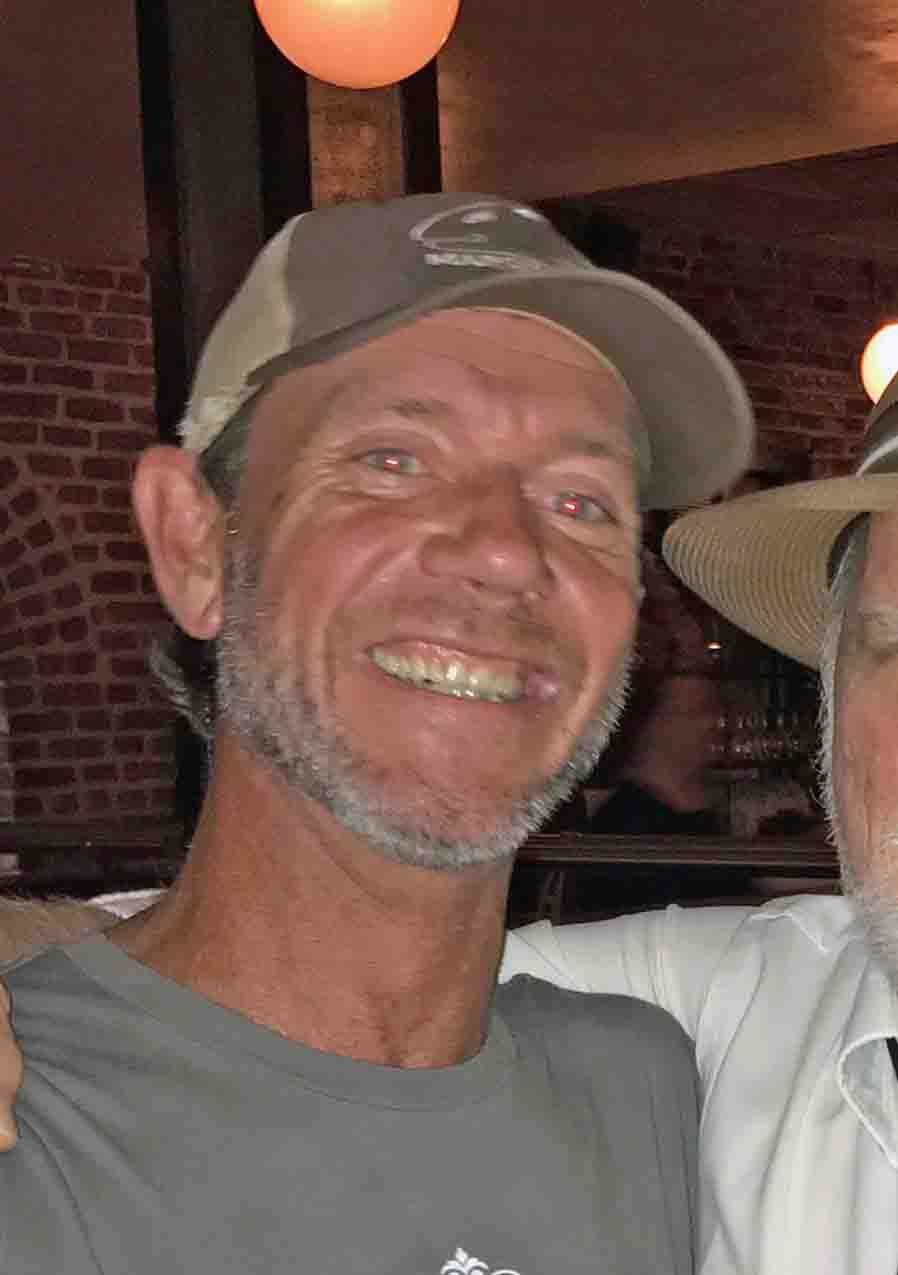
From left to right, Hank, Charlie, Greg, and Jen

To my mind, the most important component of a great bar is a great bartender.  I’d rather be enjoying a cocktail in in a seedy dive with a personable bartender than drinking in splendor at the Castell Rooftop Lounge with an aloof one. Of course, it’s in the best interest of a bartender to be friendly, given that he or she obviously would like to be tipped, and it goes without saying that bartenders should be attentive, efficient, and if you’re a regular, reaching for what they know you drink as you climb upon your stool at the bar. However, the very best bartenders end up being something more than just a friendly face; they become confidants.
One of the all time great bartenders I’ve encountered is Steve Smoak, who used to work at Rue de Jean on John Street.  When the joint was packed, you’d see Steve busting his ass.  It was as if he were dancing, pouring to a rhythm.  In those inside smoking days of yore, one time I saw him with a drink in his left hand slide past a customer, light her cigarette with his right hand, and deliver the drink in his left hand to another customer two stools down — all in one fluid motion.

It was literally entertaining to watch, almost like one-man ballroom dancing

If Rue was really crowded, and Steve saw me stuck behind a throng, he’d step out from behind the bar and deliver my Jameson’s.  Perhaps the biggest favor he ever did was talking me out of resigning from my job.  After listening carefully to my tale of woe one week night, he said, “Wes, I’ve talked to lots of your former students.  Don’t be a fool and quit over something like this. Swallow your pride.  It’s not worth quitting over.”

Even though Judy Birdsong, my late wife, had given me permission to quit, I did swallow my pride, took Steve’s good advice, and continued my career..

Steve Smoak

Chico Feo is my go-to hangout because of the bartenders, Hank, Greg, Jen, Kelly, and Phillip, and I miss those who have left for greener pastures, like Jude and Charlie.

I’d rank Charlie right there with Steve Smoak as far as greatness goes.  During Judy’s long illness, Charlie offered a sympathetic ear and later dating advice when I began seeing Caroline.[1]  He had become a sort of confidante.


Alas, Charlie left Chico for a downtown peninsula gig in a basement bar associated with the restaurant One Broad Street.  I’d been missing my man, so last Wednesday, Caroline and I stopped in to see him during Cotillion.

The place is friendly, cozy, well appointed, and rumor has it the pizzas are the best in town – and cheap. However, its most valuable asset is Charlie, a master bartender and a helluva a guy – intelligent, articulate, easy going.  Going downtown can be irritating with traffic and parking, but hanging out with Charlie makes it well worth the hassle, and as it turned out, an empty parking place was waiting for a customer right at the front door.
img_3506

From left to right, Charlie, Amy, Caroline

So check it out.  Tell Charlie Wesley sent you.



[1]I hadn’t been on a date since November of 1976.

Escape

Marcel Robert: La Fin de l’Hiver

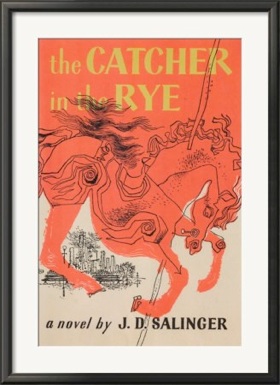
A few years ago, I received an email from a stranger requesting to “interview” me in conjunction with her School of the Arts project on The Catcher in the Rye.  As it turned out, the interview ended up being a survey of written questions that I answered electronically.

    Q.   How old was I when I first read Salinger’s novel?

    A.   Old/young enough to have had my complexion likened to a pepperoni pizza.

    Q. My initial reaction to the book?

    A. Respectful underwhelment.*

     Q. Did I identify with Holden?

     A. Yes, we shared a nostalgia for childhood in a darkening world.

     Q. Have I ever taught Catcher?

     A. No, but it has appeared on my reading lists.

      Q. How do I feel about censorship?

      A. Liberal to a degree: yes, you may read Lolita; no, you may not read Justine.

      Q. What do I think is  theme of The Catcher in the Rye?

      A. Adolescence is a particularly hard time for idealists who have begun to realize the

           Himalayan heights of the bullshit they must conquer in order to succeed in the adult

           world.


*In tribute to my two sons’ degrees in German, the “w” in “underwhelment” is pronounced like a “v.”

The student’s query/project struck me as quaint.  Certainly, hapless Holden’s naive attempt to efface the “fuck you” some churl has scratched into the wall of his sister’s elementary school no longer outrages parents of the Late Empire who blandly witness each January the obscene decadence of Super Bowl Halftime Extravaganzas.  After all, the novel is a year older than I, so Holden (if he was fifteen in the year of Catcher’s publication) would have been born in 1936 and if not dead subsisting now off of Social Security and Medicare, a wizened old man in a wheelchair, his orange hunting hat cocked at a jaunty angle in some subsidized assistant living facility.

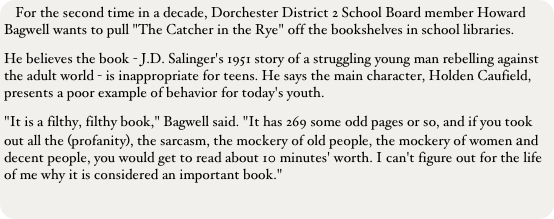
Last I heard of Catcher causing commotion was twenty  years ago.  This account comes from The Post and Courier.

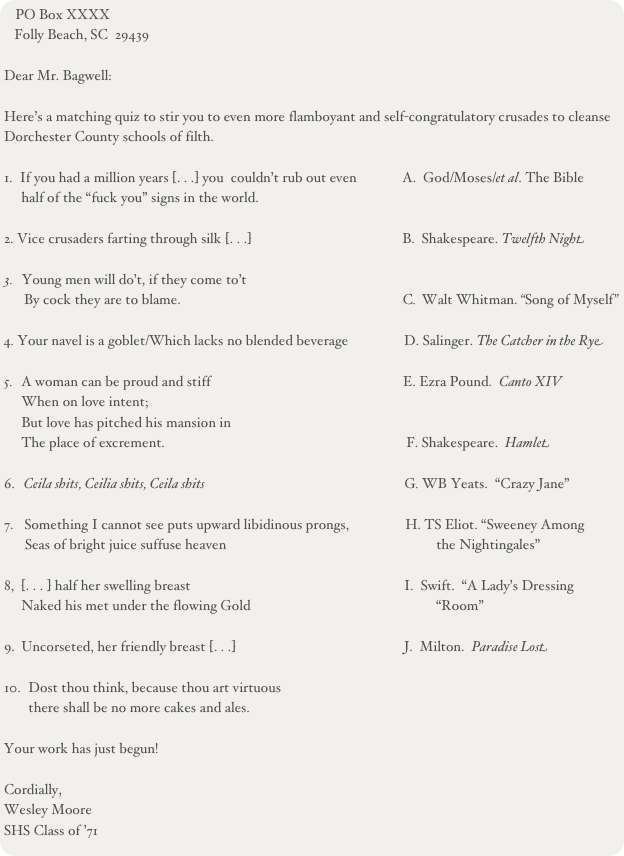
Perhaps because Mr. Bagwell had pilfered from my former high school’s library and because I had grown up just down the street from him, I felt chagrined enough to send him the following correspondence (signed with my return address):

Answers: 1.D  2. E  3. F  4. A  5. G  6. I  7. C  8. J  9. H  10.  B

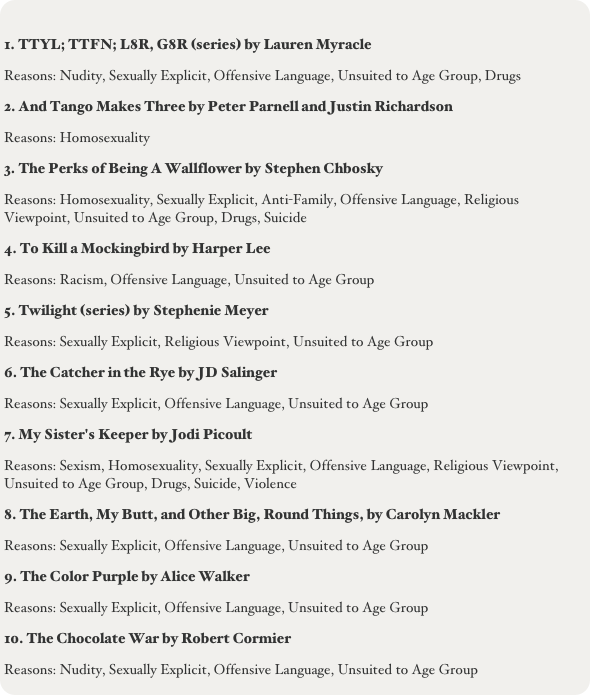
At any rate, the student’s interview request prompted me to do some digging into what texts have now replaced Catcher in the Late Empire as catalysts for censorship, those books in 2011 that rile parents into pitching protests, so I googled “most challenged books,” and lo and behold, there in the top 10 was Catcher, along with that other adolescent mind-warper, To Kill a Mockingbird.

No, I was wrong.  Some Late Empire parents still see Holden as a threat; this confused boy still scares shitless certain curtained consciousnesses that seek to shelter their darlings from the muck and mess of the ever looming out there.

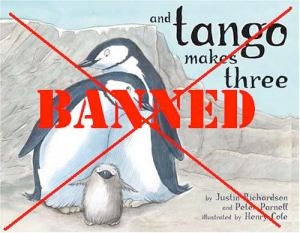
The degradation of childhood in the Late Empire is a curious phenomenon.  In some ways it ends way too soon (sex at fourteen) and lasts way too late (under-employed and living with mom at thirty-four).  Books are considered more dangerous than movies, an unclothed human body much more offensive than graphic violence.  However, I truly believe there is little to fear in a good book because it portrays life as it is lived.  Virtually no one gets horny reading the sexually explicit passages from The Color Purple (nor, for that matter, desires to become a homosexual penguin after finishing And Tango Makes Three).

Of course, in the beginning, puritans considered any novel dangerous because novels dealt with worldly matters, tempting readers, especially vulnerable young ladies, from God’s Holy Word into the profane and vulgar concoctions of scribblers who entertained rather than edified.  I don’t know about you, but essentially, my early reading was all about escape.  I’d rip through every Hardy Boys cardboard bound adventure I could get my hands on wishing I lived in a town blessed with abandoned mills, haunted houses, and inept criminals.  Television in those days consisted of two stations that played soap operas in the mornings and afternoons of scorching summer days so reading novels offered a way to slip through the looking glass into jungles where apemen swung through the trees with scantily clad English girls clinging to their backs.

Eventually, I graduated to biographies, books about dinosaurs and deep space, classics like Tom Sawyer and The Count of Monte Cristo, yet even reading those non-controversial tomes posed the danger of a sedentary, cloistered lifestyle that spurned the Wordsworthian glories of nature’s here and now.  In other words, through books you could abandon your own precious life for the abstractions of the printed page, curl up in the bed of one of the houses houses below, and become deathly pale.

Marcel Robert: La Fin de l’Hiver

Of course, nowadays, computers have replaced books as the vehicles for escape, and now, thanks to cell phones, it’s not unusual to see someone walking on the beach oblivious to the plunging pelican as the beachcomber stares downward manipulating the screen of that tiny computer.  Even though books may have blinded Milton, they are easier on the eyes than this infernal monitor you’re staring at.


2018 Recap: Ch-ch-ch-anges

Click fiend that I am, I’ve decided to once again do a round-up, a sort of greatest hits [insert ironic cough] of the pieces I posted this year, significantly fewer than in years of yore (67 to be exact, as opposed to 141 in 2016 and 142 last year).

So hold onto your hats or toupees or do rags; here we go.


January


Miles Davis at the Vancouver International Jazz Festival, 1986

For whatever reason, in January I wrote mostly about music, an appreciation of a Miles Davis/John Coltrane video of “So What?” and a profile of two contemporary artists I admire, John Hiatt and Lucinda Williams. My favorite, however, is this meditation on the distinction between verse and poetry.


February


I only published three posts in our shortest month, the best two, I think, a short memoir celebrating lethargy  and a paean to Ireland that I composed after listening to the last of my 42 cds of Joyce’s masterwork Ulysses.


March


March was a bit more productive.  I fantasized about the reign of terror I’d wage against those who violated my very few grammatical pet peeves if, as I have always dreamed, I could manage to overthrow the government and declare myself a sun god.

I also produced a satirical series of haikus, a form of poetry I detest, which you can experience through the magic of my recorded voice, that gorgeous Lowcountry baritone that so many have come to know and love.


April


The filmmakers: Andrew Austin and Adam Ward

A filmmaker named Andrew Austin crashed at my house, and I reviewed his documentary The Power of Glove.  I also posted yet another lament on the process of aging, but my favorite is entitled “Good Advice, Take It or Leave It.

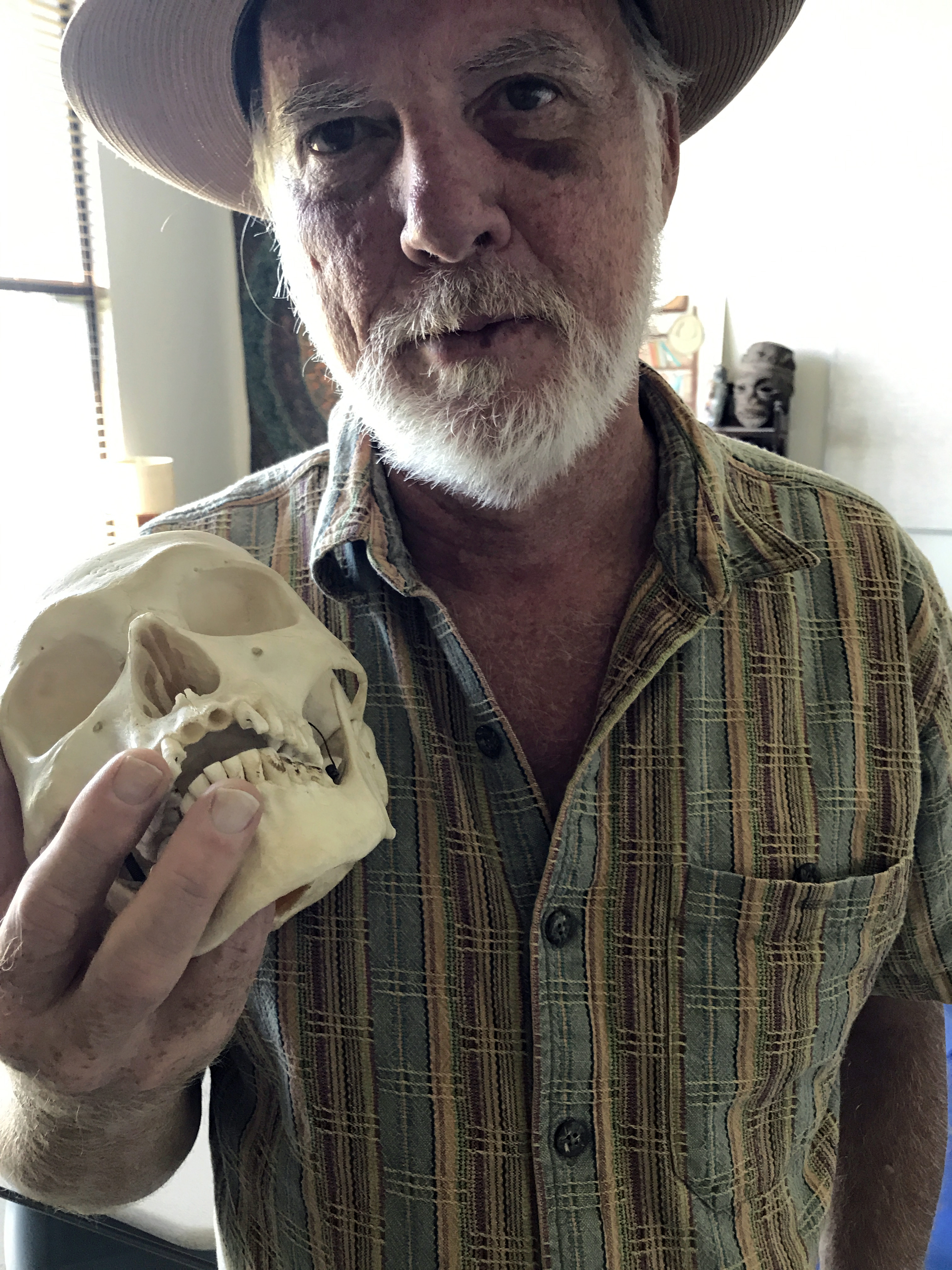
My dating profile picture for eharmony


May


In May, on the anniversary of his mother’s death, I reblogged my son Ned’s moving post from his site The King of Nowhere.  In addition, I sort of like this one on the importance of providing students with the traditional Western canon (not a very popular viewpoint nowadays).


June


June found me, my fiancée, Caroline, and her daughter in Andalucia to visit my great friend Charlie Geer.

Check this  travelogue out, which features some flamenco.


July


The Widow of Ephesus by Philip Banken

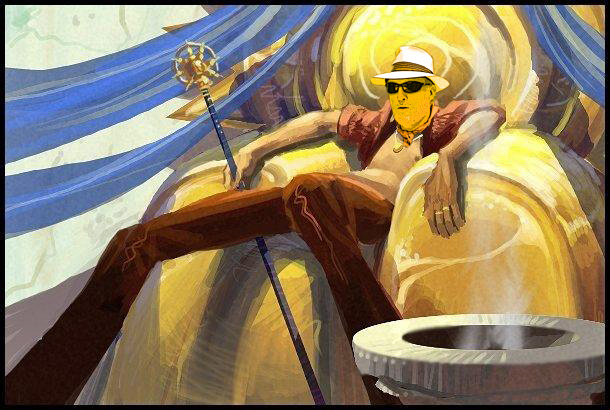
In my opinion, the very best post from July is “The Widow of Ephesus Conquers Her Eating Disorder” ; however, if you hate Trump, you might like “How Could Such a Clownish Spray-Painted Raccoon-Eyed, Combed-over Lard-Ladled Cement Tongued Buffoon End Up Being a Cult Figure?

Oh yeah, and “Prufrock Turns 103” deals with men’s inability to have Platonic relationships with very attractive women.

August


Caroline and I married in August, hung out at the Grove Park Inn, sandwiched between crashing at Chico Feo on Folly Beach and at a Luke-Dogg’s pad outside of Asheville.  Here’s the scoop.


September


Ugh, Bret Kavanaugh, another would-be hurricane, but on a more positive note, a profile of my brother, the musician Fleming Moore.


October


Slim pickings.  A rambling piece called “It’s All about Me. Me, Me!” and once again a reposting from Ned’s blog on Kavanaugh.


November


In November, Caroline and I attended a festival in Beaufort honoring Pat Conroy, and I announced my retirement publicly in this post, as I whined about all those essays I’ve graded throughout my 33-year teaching career.

December

If you haven’t checked out “Idle Questions,” please do so and make sure to hit the link, scroll to the very end, and read the dictionary, which is actually a cross-referencing narrative.


Thank all of y’all who follow me.

The very best to each and every one of you, especially Rich O’Prey and Rodney Gantt.

Happy New Year!


His Own Worst Enemy


tossing red meat


Despite his bluster about one of the greatest landslides in American electoral history, Donald Trump actually squeaked out a narrow Electoral College victory (a flip of 80,000 votes collectively in Pennsylvania, Wisconsin, and Michigan would have resulted in a Madame President Clinton).  As far was the popular vote went, Trump lost the election by 2,864,974 votes.

Given those numbers, it would have been judicious for Trump to try to expand his base rather than consistently bending over backwards to accommodate its xenophobic inclinations, which aren’t shared by a majority of Americans.  For example, he could have cut taxes for the middle, rather than the donor class, and worked on infrastructure, but he remained and remains fixated on immigration.

Let’s look at some numbers.  

On the week of 16 December  2018, according to Gallup, Trump’s approval level stood at 38%

Here’s a recent Pew poll on Americans’ views on immigration:


Present level Increased Decreased No opinion
% % % %
2018 Jun 1-13 # 39 28 29 4
2017 Jun 7-11 38 24 35 3
2016 Jun 7-Jul 1 ^ 38 21 38 3

Of course, we’re talking about legal immigration here.  Nevertheless, the most recent number is that only 29% want to see immigration decreased, which is nine points lower than the number of voters who approve of Trump.  

Trump’s making illegal immigration the cornerstone of his midterm election rally blitz in the campaign’s last days didn’t work out very well for him.  Although Republicans kept control of Senate, in fact increasing the majority by two seats, they did so by winning in red states.  The Democrats, on the other hand, took over the House by flipping forty Republican seats as suburbanite Republicans abandoned their party and Independents went heavily blue .  

So what does Trump do?  Doubles down by rejecting a budget deal passed by both the House and Senate and shutting down the government.

Why?  Because Rush Limbaugh and Ann Coulter got their panties in a knot, assailing his manhood.*   

Trump’s pathological need for attention and adulation is his worst enemy.  These rallies, populated by fanatical and inchoately angry rural white people must satisfy some atavistic tribal need in him.  The fact that they need to be under-educated and misinformed doesn’t seem to matter to him.  


He’s his own very worst enemy.

Meanwhile, our government is rudderless.  We have an acting chief of staff, and acting attorney general, and an acting secretary of defense.

I’ll resist the urge to quote from Yeats’s “The Second Coming,” which has become almost a cliché.  Instead, I’ll leave you with a snippet of his “Nineteen Hundred and Nineteen.”


Come let us mock at the great 

That had such burdens on the mind 

And toiled so hard and late 

To leave some monument behind,

Nor thought of the levelling wind.  


Come let us mock at the wise;

With all those calendars whereon 

They fixed old aching eyes, 

They never saw how seasons run, 


And now but gape at the sun.  

Come let us mock at the good 

That fancied goodness might be gay, 

And sick of solitude 

Might proclaim a holiday: 

Wind shrieked — and where are they?  


Mock mockers after that 

That would not lift a hand maybe 

To help good, wise or great 

To bar that foul storm out, for we Traffic in mockery.


* I concede forcing you to picture Rush Limbaugh in panties isn’t in keeping with the holiday spirit. Sorry about that.

Encyclopedias

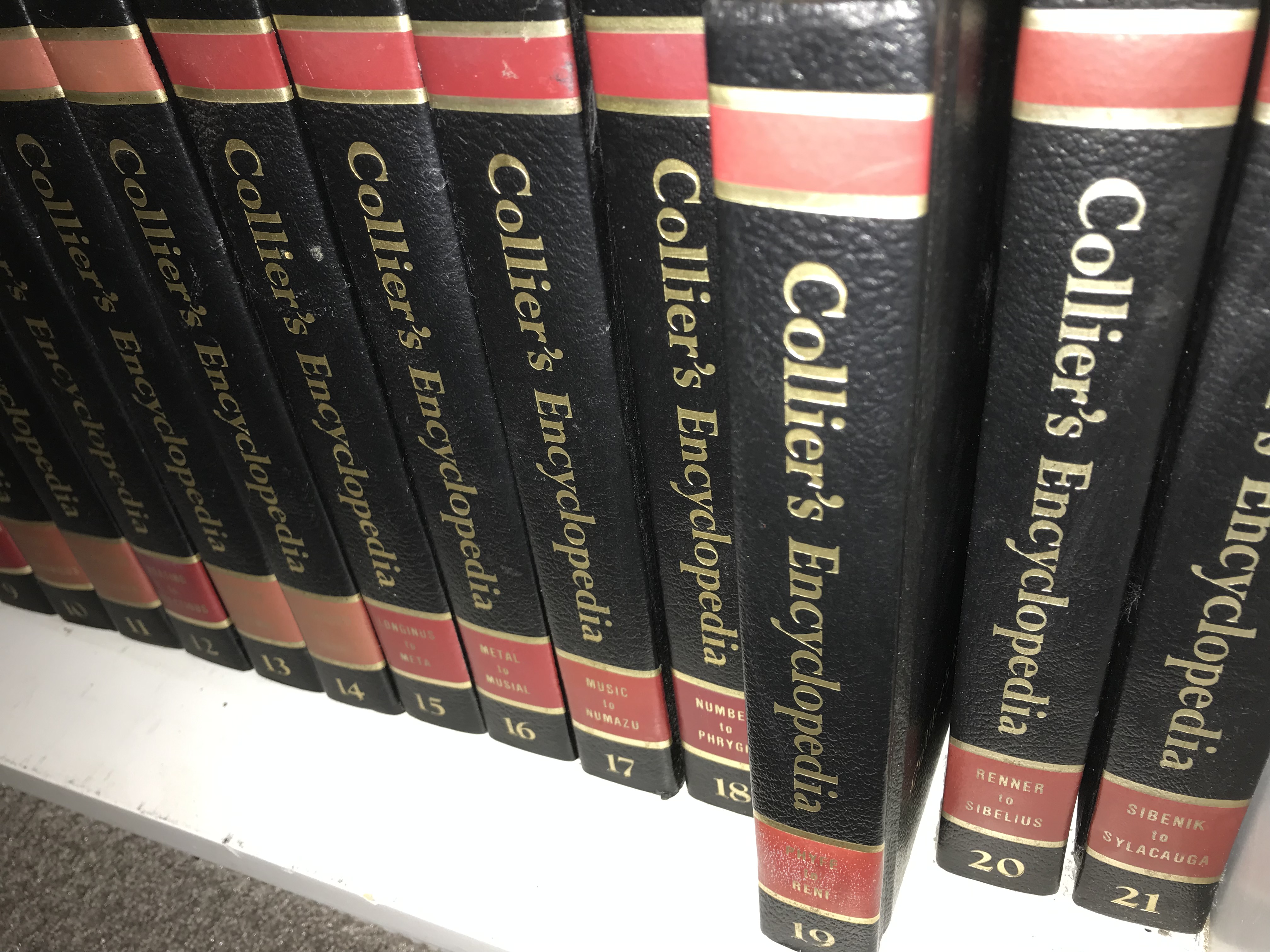
I actually still own a set of encyclopedias, Collier’s, which takes up more than a yard of my precious bookshelf space in my drafty garret/book depository. Judy Birdsong and I bought the set in 1983 from a traveling salesman in Rantowles when Judy was pregnant with Harrison.

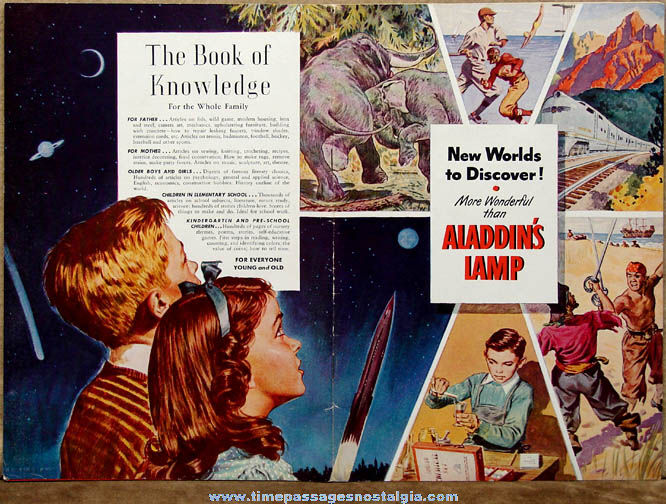
I had grown up with the Encyclopedia Americana and its companion set for children, the Book of Knowledge, which I loved, not only for the magic tricks and entertaining scientific articles, but also for the images of naked female breasts sported by the likes of Aphrodite and La maja desnuda. The Book of Knowledge had abridged novels like Treasure Island and A Christmas Carol, plus children’s verse galore.  I see this evening it’s possible to purchase a complete 1952 [1] set for $250 from Amazon, which seems like a bargain.

I’m tempted, but no, there’s no room at the inn, as it were.

For the hell of it, from my Collier’s set, I’ve randomly pulled out “Volume 19, Phyfe to Reni.”

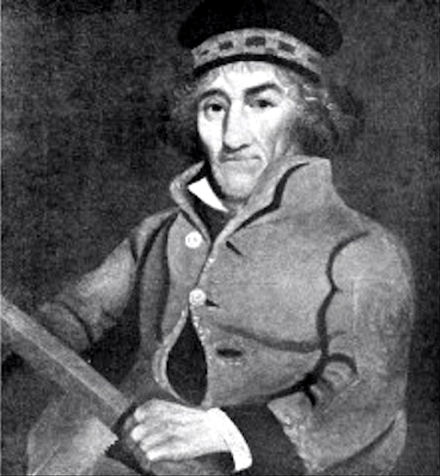
As it turns out, the first entry, “Duncan Phyfe“ [faif], was an 18th and 19th century American cabinetmaker.  Born in Scotland, Phyfe moved to New York City about 1783.

Not surprisingly, a hick from the Lowcountry of South Carolina, I  hadn’t heard of him.

In approximately, 350 words, the author of the entry, Donald D. Milliken, offers this rather faint praise of the cabinetmaker:

Phyfe was an adapter rather than an originator of furniture designs, but he did create a style.

Wikipedia’s entry, on the other hand, runs to almost a thousand words and provides a more glowing assessment:

Although he did not create any new furniture style, he interpreted fashionable European trends in a manner so distinguished and particular that he became a major spokesman for Neoclassicism in the United States, influencing a whole generation of American cabinetmakers.

Collier’s doesn’t mention the 1922 Metropolitan Museum’s exhibition of his work, the first ever for a cabinetmaker.

In addition, Wikipedia provides some fun facts to know and share.  For example, did you know Karl Shapiro in his poem “The Fly” refers to Phyfe? I remember this poem from my “Contemporary Poetry” course from 1973, but, of course, I didn’t bother looking up “Duncan-Phyfe.”

O hideous little bat, the size of snot,

With polyhedral eye and shabby clothes,

To populate the stinking cat you walk

The promontory of the dead man’s nose,

Climb with the fine leg of a Duncan-Phyfe

The smoking mountains of my food

And in a comic mood

In mid-air take to bed a wife.

F. Scott also drops Phyfe’s name in this passage from Tender is the Night:

She wept all over a set that cost a fortune, in a Duncan Phyfe dining-room […]

Homophonic Phyfe even shows up in a season one episode of Andy of Mayberry “A Plaque for Mayberry,” when Barney Fife claims Duncan as an ancestor.

A sofa of his can be found in the Green Room of the White House, and a replication of one of his chairs is “one of the world’s largest roadside attractions” in the furniture-making city of Thomasville, NC.

I admit, Collier’s possesses a bit of musty charm;  no doubt it is probably much more accurate than Wikipedia, but you can’t cut and paste from Collier’s. You got to type out the stilted prose yourself.

Very few are going to bother to do that nowadays, so maybe it makes sense to ditch the staid black and red bound beauties for a set of something else, like, say, the 1952 set of the Book of Knowledge. I can relearn some of those magic tricks and entertain my bar mates today and future neighbors at the assisted living home tomorrow.

the man himself


[1]Coincidentally, the year of my birth, way back in the Truman Administration.

Here They Come – and I Ain’t Talking About Immigrants

markku-lahdesmaki-robots

image credit: Markku Lahdesmaki’

If y’all think these immigrants are nefarious, stealing our lawn-mowing and curing-cancer jobs, you’re really going to resent the robots.

Of course, they’ve been displacing factory workers for decades, but they’re getting ready to start driving our taxis, buses, and semis. If you don’t think that’s a big deal, on your commute tomorrow, count delivery trucks parked outside convenience stores, supermarkets, and liquor stores; check out the garbage trucks rumbling off to the landfill; take note of those cement trucks on the way to the soulless and practically treeless developments where the houses look like inbred siblings.

Where are these drivers, mostly males, going to find gainful employment?  How are they going to earn a living?

Not at Uber or Lyft.

Use your imaginations, dental hygienists.  I suspect you’re not long for this world of employment if you’re counting in decades.

Surgeons?

Maybe barbers will survive —  or maybe not. Rather than boring you with chitchat about professional sports, your robotic barber could be programmed to sing arias or replicate Lenny Bruce’s stand-up routines, depending upon your predilections.

Of course, they’ll have personalities, like Siri does, sort of.  I find myself asking “please” and calling her by name. “Siri, would you please call Loquacia Muldoon?”

She sometimes direct-addresses me using my childhood moniker Rusty.   We’re one little happy master/slave duo. “No, sorry, Rusty, I can’t chant the Odyssey in Linear B Greek.”

Our mechanic servants will be charming, whether urbane, or folksy; you’ll get to choose, to designate their personalities, i.e., if you’re one of the lucky ones, i.e., employed, i.e., not scrounging around the Blade Runner hellscape picking through garbage.

I have to admit, though, the only robots I’ve ever encountered that I like are the ones on Mystery Science Fiction 3000.

The rest of them — the Jetsons‘ robot maid, for example, the Class M-3 Model B-9 General Utility Non-Theorizing Environmental Control Robo from Lost in Space, and even Hal from 2001, a Space Odyssey– bore me.

Working folks and professionals should find robots much more frightening than Guatemalan refugees. Automatons don’t need Social Security or Medicare or Xmas bonuses.   They don’t get black lung or pregnant or ask for raises.

Or pop bennies on cross-country trips in their sixteen-wheelers.

F142558306 copy

A Dwarfish Thief vs. a Man of Integrity

like a giant’s robes upon a dwarfish thief

I suspect that you would be hard pressed to find two individuals as diametrically antithetical as Donald Trump and Robert Mueller.

Granted, they’re both New Yorkers of German descent, prep schools alums, and Ivy leaguers.

Also, Republicans.

On the other hand:

Mueller

A family man, married (and is still married) to his high school sweetheart

Trump

Multi-married, adulterous, a pussy-grabber and porn-star aficionado

Mueller

Marine Corps, Vietnam, Purple Heart, Bronze Star

Trump

Bone Spurs, Studio 54, tangerine tan, gold-plated foyer

Oh, yes, and there’s this: Mueller is learned, patriotic, and meticulous. Trump, on the other hand, embraces ignorance, has attempted to sell out his country for personal profit, and impulsively spews from his mouth whatever his gut secretes.

The distinctions that define these men will ultimately lead Mueller to triumph and Trump to disgrace. While Mueller has been assembling a staff of formidable prosecutors, amassing a mountain of documentary evidence, and demonstrating laser like focus, Trump has been appointing hacks to positions for which they’re not qualified, playing golf and multitasking, (i.e., watching Fox News while tweeting).

29 November 2018, was the beginning of the end for Donald Trump. Cohen’s guilty plea makes it clear that Trump and son lied about his negotiations with the Russian government in the prospective building of a Trump Tower in Moscow, which goes a long way in explaining Trump’s embrace of Putin, despite the annexing of Crimea, and why the Republican Party deleted anti-Russian planks from its platform right before the convention.  Trump even considered offering Putin a $50 million penthouse in that tower to sweeten the deal.  Oh yeah, also today, Deutsche bank, Trump’s biggest lender, was raided. Besides himself, it’s Mammon that Trump worships, money before country.

Foolish man, house of cards on sand, ka-bam.

So, I suspect, in a matter of months, we’ll be able to exclaim, like Angus in Macbeth, “Now does he feel his title/ Hang loose about him, like a giant’s robe/ Upon a dwarfish thief.”

Despite the weaklings in an enabling Republican Congress, it appears that thanks to one patriotic Republican, Robert Mueller, the rule of law will triumph.

Tied to a Stake


Tied to a Stake


“They have tied me to a stake: I cannot fly,

 But bear like I must fight the course.”

                                                                        Macbeth

Insomnia’s got me tied to the stake,

And the dogs of thought are snarlin’.


Is 3 AM too early, or is it too late?

How about fronting me a Klonopin, darling?


Too much screen time, not enough exercise,

A gumbo of gone-bad cod bubbling in my head.


O god, three hours from now, I’ll have to rise,

and shuffle off to class, the walking dead.


Open your books to page 77

Let’s see what John Berryman has to say


in this poem that he directs towards heaven,

in this poem where he pretends to pray:


Forsake me not when my wild hours come;

grant me sleep nightly, grace soften my dreams.


My speed freak heart’s drowning him out like a drum,

Way too much caffeine, not enough cream.


Peek-a-Boo

During a scavenger hunt to cop some eye-arresting images for a commentary on our Orwellian world, I ran across this rather disquieting tidbit.

For the past few years, federal agencies have defended body scanning by insisting all images will be discarded as soon as they’re viewed.  The Transportation Security Administration claimed last summer, for instance, that “scanned images cannot be stored or recorded.”

Now it turns out some police agencies are storing controversial images after all.  The U.S. Marshal’s Service admitted last week that it had surreptitiously saved tens of thousands of images recorded with a millimeter wave system at the security checkpoint of a single Florida courthouse.

Way to go fundamentalist Islamic terrorists! Thanks to your penchant for slaughtering innocents,  your females’ burka-shrouded mysteries (including ankles, knee caps, and eye-brows) are now on display for gawking infidels stationed at TSA monitors. Worse, downloaded images of your wives, daughters, sisters, and mothers are being passed along to police agencies where they’re no doubt swapped like baseball cards, ending up on the hard drives of buzzed-cut, steely-eyed cretins who joined the force hoping that working in law enforcement would stem the perverted sexual fantasies that have haunted them ever since that fifth-grade Boy Scout campout.

Obviously, most reasonable people value their lives over their modesty as evidenced by our trips to proctologists and gynecologists; however, I wonder if these scanners might be a bit of  (if you’ll forgive the expression) overkill.  After all, we have metal detectors, pat downs, etc, and it’s not as if planes are dropping from the sky like confetti.

Of course, whenever we discover that we’re being spied on, whether it’s by the government or the cookie-dispensing porn site we you visit, George Orwell comes to mind. Most would agree, I think, that when it comes to winning the dystopian prophecy contest, we have to award the laurel to Eric Blair (Orwell) over the estimable Aldous Huxley. All in all, Late Empire America c. 2018 resembles Orwell’s Oceania of 1984 much more than it does Huxley’s London in the Year of Ford 632.

Not that Huxley’s novel isn’t impressively prophetic.  Brave New World certainly foretells the cult of consumerism, the proliferation of recreational sex, the consumption of hallucinogens; however, we don’t live in a peaceful World State where citizens consciously eschew individuality and discount death, and although genetic engineering does exist, our legions of pizza delivery drivers and cosmetologists haven’t been pre-programmed into those occupations by soulless biologists in state-run human hatcheries.

Orwell, on the other hand, gave us newspeak (Reagan officially dubbed the MX Missile with its 300-kiloton W87 nuclear warhead as The Peace Keeper); perpetual war against inscrutable, unconquerable, and sometimes interchangeable enemies (e..g., terrorism /our sometime friend Saddam); and a society in which its citizens are monitored (see above).

Donald Rumsfeld and Saddam Yukking it up antebellum

But what Blair/Orwell failed to foresee is that Big Brother would have a fraternal twin, Big Business,  who seems the more dominant of the two and who also is gathering information about you and me with more zest and much more efficiently.

Lots of entities keep track of our seemingly insignificant gestures.  E.g., our monetary gift to John Spratt’s reelection campaign of 2006 has been dully noted, digitalized, and appears on the Web.  No telling who’s monitoring your Facebook shenanigans, scrutinizing those photographs of you posted by your ex-girlfriend’s husband documenting that unfortunate evening at your recent high school reunion.

And, who really minds a security camera recording a thug snatching your purse at the Kwik Shop?  Like virtually everything nowadays, surveillance poses complicated questions.  Whatever the case,  whether you’re picking your nose as you hurry across the parking lot of your campus or purchasing online an audio recording of De Sade’s Justine, your action has been recorded and duly noted.

Privacy is impossible is the wired world.