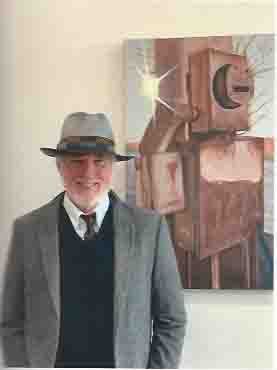
Do Lawd, Tennyson!

lf

At the tender age of five, playing a card game called Authors, I first encountered Alfred, Lord Tennyson with whom I would forge a rocky relationship.

The Authors deck held eleven sets of four cards depicting an eclectic array of writers, a disparate mishmash of talents: Louisa May Alcott, James Fenimore Cooper, Dickens, Hawthorne, Washington Irving, HW Longfellow, Sir Walter Scott, Shakespeare, RL Stevenson, Twain, the insufferable John Greenleaf Whittier.[1]  You drew and discarded and drew trying to make a “book” of all four. I played Authors a lot with my mother when I was sick with rheumatic fever, so, I knew these writers’ names and faces before I read them – and the titles of a few of their works.[2]

Although I don’t remember exactly, I probably first read Tennyson’s poetry in junior high. His “Charge of the Light Brigade” appears in virtually every 7th grade anthology.

Half a league, half a league,

Half a league onward,

All in the valley of Death

Rode the six hundred.

Tennyson, as you probably know, is descended from Mother Goose on his father’s side.

Pease porridge hot, pease porridge cold,
Pease porridge in the pot, nine days old;
Some like it hot, some like it cold,
Some like it in the pot, nine days old.

Although I was obsessed with nursery rhymes in kindergarten, for whatever reason Tennyson never flipped my switch.  I preferred Americans, Frost, ee cummings, Edna St. Vincent Millay, whose very name sounds like a poem. As an undergraduate, I took a Victorian Lit class for about a week but quit attending, not showing up again until the last no penalty drop day so I could cop the signature of the disheveled tweedy professor.

“So nice meeting you, Mr. Moore,” he said without irony. “I was hoping you’d show up again before the drop day passed.”

I smiled, thanked him, felt guilty.

I didn’t seriously study Tennyson until I took a grad course after I started teaching. That summer, I read him carefully, and although I prefer Browning, I learned to appreciate aspects of Tennyson, despite the Victorian bric-a-brac of his verse and his excessive morbidity.[3] The man was a master of versification. Here’s my favorite phrase of his: “the slow clock ticking.”  Try to say it fast.

You can’t.

It captures sonically the slowness of monotonous waiting.

On the other hand, the source of that phrase, the poem “Mariana,” gives center stage to a minor character from Measure for Measure who in Act 5 fornicates with her fiancé in a pitch-black room as part of a comic switcheroo. Her fiancé thinks he’s fornicating with someone else. It’s an elaborate ruse choreographed by the Duke, in part to force their marriage.

Here’s a parodist addressing the cognitive dissonance between the play and poem.

Mariana of the moated grange

about to get laid in Shakespeare’s play,

mopes in Tennyson night and day,

pretty fucking passing strange.

Tennyson’s poem imagines her waiting for her lover who has abandoned her because she lost her dowry at sea.

Here is the poem’s refrain, repeated with minor variations seven times.

She only said, “The day is dreary,

He cometh not,” she said;

She said, “I am aweary, aweary,

I would that I were dead!”

***

Nevertheless, I do admire Tennyson’s great elegy “In Memoriam,” that Moby Dick of mourning, written for his dear, dear friend Arthur Henry Hallam who had died of a stroke at the age of twenty-two.


hallam

Arthur Henry Hallam

The poem is written in a stanza now known as the “In Memoriam stanza,” a quatrain of tetrameter with the rhyme scheme ABBA, a very rigid form that makes fluidity extremely difficult (see above parody), especially when stringing several stanzas together.

After the death of my wife Judy Birdsong, I decided to reread “In Memoriam” to remind myself that mourning was in fact rather commonplace, that others, thousands, millions, billions have had to face heart-rending disseverment, “the blight man was born for.”

Well, I discovered my grief was in no way as profound as Tennyson’s, as deep as his, perhaps because I had had time to prepare myself (or perhaps because I am not as deep or as profound).

Nevertheless, these lines really struck a chord:

But, for the unquiet heart and brain,
A use in measured language lies;
The sad mechanic exercise,
Like dull narcotics, numbing pain.[4]

Anyway, after teaching Tennyson for the very last time this week, it occurs to me that I must be practicing psychological projection, attributing to Tennyson unconscious qualities that I have denied in myself.  How else to explain how often he has appeared in this blog? For example, here is a short story in which the narrator costumes himself as Tennyson to go panhandling as part of academic research. Type “Tennyson” in this blog’s search engine and eight posts appear, most of them mocking him.

Why the obsession?  What is it within me that I’m projecting on him?  Humorlessness?  Hypersensitivity?  Sing-song metrics? Pessimism?

Calling that great dissector of all things Victorian, Dr. Freud.

tennyson


[1]Blessings on thee, little man,
Barefoot boy, with cheek of tan!

[2]Because I was bedridden for three months, my mother taught me how to read, even though I wouldn’t enter kindergarten for another month after my illness.

[3]E.g., Ah, sad and strange as in dark summer dawns

The earliest pipe of half-awaken’d birds

To dying ears, when unto dying eyes

The casement slowly grows a glimmering square;

So sad, so strange, the days that are no more.

[4]During the last week of Judy’s life, I actually did algebra for recreation, sought escape in symmetry.


Straight Outta Wilmington

It’s been a while since I’ve donned the ol’ pith helmet to engage in some good ol’ fashioned anthropology.  However, this weekend my erstwhile grief counselor and now lawfully wedded wife Caroline (pictured below) and I travelled up Highway 17 to Wilmington, North Carolina to catch her friend Edie Senter in an all-female DJ contest held before an Ice Cube concert.[1]

The only other rap performance I’d attended was a Ludacris show at a multi-stage street festival, so I was curious if Ice Cube might offer a more diverse subject matter than Ludacris’s narrow obsession with “bitches” and “hos.”

We had VIP tickets, which allowed us a perch above the groundlings and provided us with easy access to refreshments in a semi-enclosed area. Edie’s husband Dustin, a club owner and impresario, hosted us as we took in the sights and sounds of the celebration, part of Wilmington’s Azalea Festival. After the event, he took us to one of the clubs for some further late empire partying.

Dustin and I-and-I

The MC in charge, a fellow whose name I didn’t catch, provided some fairly entertaining tunes but suffered from that common malady of radio personalities, an unassailable love of the sound of his own voice.  In addition, he had the tedious habit of extolling the audience to raise the decibel level of their responses.

“I can’t hear you?” etc.

Anyway, I especially enjoyed Edie’s performance. Beaming 100-watt smiles while bopping to the beat, she clearly loves spinning,

Here’s a way too short snippet.


If there were a God, Edie would have won instead of coming in second, but the flawed Queen-for-a-Day applause meter reckoning had her ending up in second.

I thoroughly enjoyed Mr. Cube and wish I had been familiar with his work.  When I mentioned to my 40-something pals at school I had been seeing the former founding member of NWA, they started gnawing their arms with envy.  Once again, this snippet in short and at a distance.


One last peek into the dangerous life of an ethnologist from the one of Dustin’s clubs.


[1]Even though I perform hip-hop under the stage name, Nilla Puddin’, I know about as much about rap as I do the regional cuisine of Lombardy.

In Populous City Pent


Far from our southern border where children torn from their parents languish in cages, the din of a Midtown Manhattan construction project is wreaking genuine havoc.

Think Noah’s Ark:

How for so many bedlam hours his saw

Soured the song of birds with its wheezy gnaw,

And the slam of his hammer all the day beset

The people’s ears.

But here, we’re talking jackhammers, pile drivers.

Dig this from yesterday’s NYT:

Ms. Brown, who has lived on the block since 1969, blames the cacophony in part for her new $5,000 hearing aids.

Her miniature poodle, Dorian Gray, has been even more affected: he’s taking Trazodone, a tranquilizer. (“One tablet orally up to three times daily as needed for calming during construction,” the bottle helpfully directs.)

[snip]

Apart from Dorian Gray’s anxiety, Ms. Kelly’s dog, Lola, now shakes even when the jackhammers are idle. The cat living at No. 66, Titania of the Greil, is “overgrooming” and fighting irritable bowel syndrome, while Meadow at No. 51 is a “nervous wreck.” Birds on the block have stopped singing, one resident complained.

Poor Dorian, no more languid lolling, alas.

The Alms of Palsied Eld

Consume my heart away; sick with desire

And fastened to a dying animal

It knows not what it is

WB Yeats


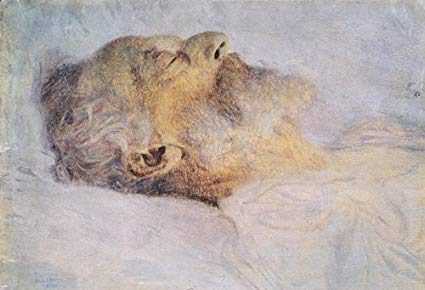
Gustav Klimt

Gustave Klimt: Old Man on His Deathbed 

One of the coolest speeches concerning the decrepitude of old age is the Duke’s contempto mundi screed in Measure for Measure, delivered to poor Claudio who has (to use guidance counsellors’ dearest cliché´) made a bad choice.

He’s impregnated his fiancée.

Not a capital crime, you muse.  Well, fornication hadn’t been until the Duke’s successor Angelo took over the government and started enforcing every law on the books, no matter how ancient or unjust.  Addressing Claudio on the eve of his supposed execution, the Duke offers some words of recompense for a life cut short (and a rather lurid peek into a future none of us wants to consider):

If thou [old person] art rich, thou’rt poor;

For, like an ass whose back with ingots bows,

Thou bear’st thy heavy riches but a journey,

And death unloads thee. Friend hast thou none;

For thine own bowels,[1] which do call thee sire,

The mere effusion of thy proper loins,

Do curse the gout, serpigo, and the rheum,

For ending thee no sooner. Thou hast nor youth nor age;

But, as it were, an after-dinner’s sleep,

Dreaming on both; for all thy blessed youth

Becomes as aged, and doth beg the alms

Of palsied eld; and when thou art old and rich,

Thou hast neither heat, affection, limb, nor beauty,

To make thy riches pleasant [. . .]

Yeah, but!  There’re still crossword puzzles, unread novels, Fletcher Henderson recordings, sunsets, that majestic roof fretted with golden fire, Shakespeare himself . . .

***

Nevertheless, I, too, admit I’d rather die than get shipped off to a nursing home.  Luckily, my late wife Judy’s parents avoided that fate as did my daddy and my mama (and both sets of grandparents). My wife Caroline’s father is still going strong alone at eighty.

Unfortunately, Judy’s grandmothers ended up in a “home,” and each trip down to St. Simons when Birdie and Gramma were among the quick included the resiquite visit to the motel-like care facilities where they languished.

Although the two women had been nothing alike before their relocation – Birdie a gardener and world traveler, Gramma sedentary, a knitter –  afterwards, their conversation consisted of the same broken record, a litany of complaints: stolen jewelry, bad food, bodily decay, a life not worth living.

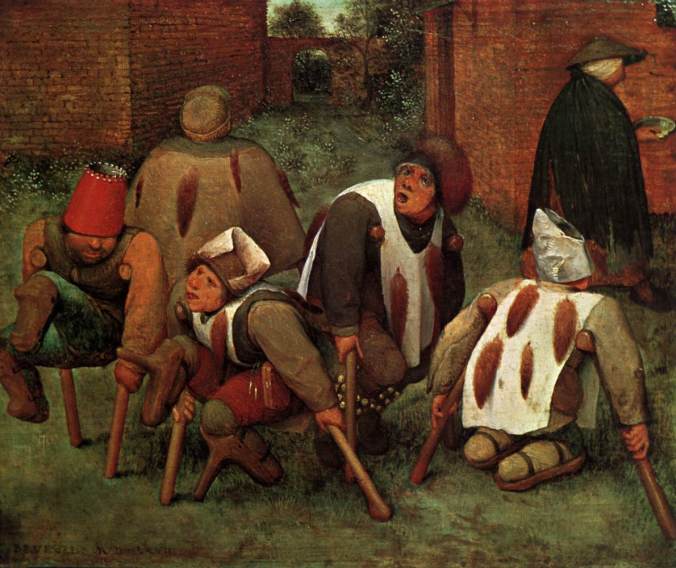
Still, they appeared to be in much better shape that the wheel-chair bound specimens parked on the front terrace as you walked in. It was like something out of Brueghel or Bosch: skeletons, twisted into fetal position, oblivious, with open maws, or others, non-comatose, but wild-eyed and confabulating, living a hallucination.

08crippl

Breughel: The Beggars


Terrible to witness, but a brave soul must stare down horror if he or she wants to go wide-eyed and laughing to the grave.

* * *

No one –  no matter how successful or accomplished – can be assured that he or she won’t end up warehoused in some facility.

Among the famous names to have been shunted [at Motion Picture Country House] are Johnny Weissmuller, best known for playing Tarzan, and Oscar-winning actress Mary Astor who was remembered for sitting aloofly at her own dinner table.

The actor DeForest Kelley – Dr McCoy from Star Trek – spent his last days enjoying the picturesque palm trees and topiary. Hattie McDaniel, the first African-American to win an Oscar, for her portrayal of “Mammy” in Gone with The Wind, and director Stanley Kramer, who was nominated for nine Oscars, were also residents.

To think that Tarzan spent his last days cooped up in a Hollywood nursing home!  Gazing at picturesque palm trees and topiary ain’t gonna cut it for someone who swung through the jungle on vines.

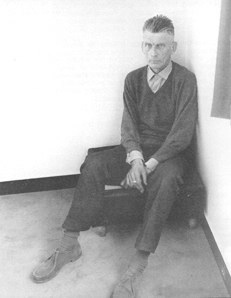
Then there’s Samuel Beckett, who ended up in a Paris maison de repos.

About a year ago, after falling in his apartment, he moved to a nearby nursing home, where he continued to receive visitors. He lived his last year in a small, barely furnished room. He had a television set on which he continued to watch major tennis and soccer events, and several books, including his boyhood copy of Dante’s ”Divine Comedy” in Italian.

On July 17 this year, his wife died and he left the nursing home to attend the funeral. Late this year, after he became ill, he was moved to a hospital. There are no immediate survivors.


samuel_beckett

Damn, Beckett dies in a Beckett play.

***

Who better to have the last word than Philip Larkin?

Perhaps being old is having lighted rooms

Inside you head, and people in them, acting

People you know, yet can’t quite name; each looms

Like a deep loss restored, from known doors turning,

Setting down a lamp, smiling from a stair, extracting

A known book from the shelves; or sometimes only

The rooms themselves, chairs and a fire burning,

The blown bush at the window, or the sun’s

Faint friendliness on the wall some lonely

Rain-ceased midsummer evening. That is where they live:

Not here and now, but where all happened once.


[1]In my case, Harrison and Ned

Green and Dying

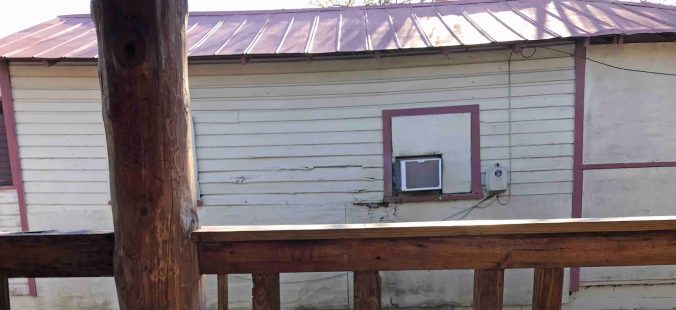
The other evening as the sun was sloping toward its western bower, I sat on the porch of the Surf Bar enjoying the sway of shadows dancing on the tin roof of the dilapidated building across from me.  My eyes slowly panned down to the building’s façade, and the dull, cracked, and rotting planks suddenly struck me as magical. Even the window-unit air-conditioner seemed to me beautiful in the golden light of the afternoon.

A sad thought intruded: I have squandered the vast majority of my life pent in the small room of my consciousness with the venetian blinds slatted shut.  In other words, I have stumbled here and there for the last sixty-six years, lost in self-absorption, rarely noticing anything of interest when actually everything should be of interest.

So I went home and reread Robert Frost’s great poem “Directive,” which begins with the brilliant line, “Back out of all this now too much for us,” which echoes the first line of Wordsworth’s sonnet, “The world is too much with us,” an arena of responsibility and labor where “we lay waste our powers” in the realm of “getting and spending.”

In “Directive” Frost tries to lead us out of that blind little room of our consciousness with its spreadsheets and closed venetian blinds into “a house that is no longer a house/Upon a farm that is no longer a farm/And in a town that is no more a town,” in other words, into a landscape of ruin where folks once lived, a ghost town of sorts.

In soothing tones, the old poet becomes our guru.  He, paradoxically, “only has at heart [our] getting lost”  —  “lost enough to find [ourselves]”  —  guiding us through a grove of trees whose “excitement  [. . .] sends light rustle rushes to their leaves.”  At our final destination, we receive “a broken drinking goblet like the ‘Grail’” our guide has retrieved from “the instep arch/Of an old cedar at the waterside,” a child’s toy he had stolen from a playhouse and hidden in that tree.

He ends the poem with these lines:

“Here are your waters and your watering place.

Drink and be whole again beyond confusion.”

Here’s the complete poem:

Back out of all this now too much for us,
Back in a time made simple by the loss
Of detail, burned, dissolved, and broken off
Like graveyard marble sculpture in the weather,
There is a house that is no more a house
Upon a farm that is no more a farm
And in a town that is no more a town.
The road there, if you’ll let a guide direct you
Who only has at heart your getting lost,
May seem as if it should have been a quarry—
Great monolithic knees the former town
Long since gave up pretence of keeping covered.
And there’s a story in a book about it:
Besides the wear of iron wagon wheels
The ledges show lines ruled southeast northwest,
The chisel work of an enormous Glacier
That braced his feet against the Arctic Pole.
You- must not mind a certain coolness from him
Still said to haunt this side of Panther Mountain.
Nor need you mind the serial ordeal
Of being watched from forty cellar holes
As if by eye pairs out of forty firkins.
As for the woods’ excitement over you
That sends light rustle rushes to their leaves,
Charge that to upstart inexperience.
Where were they all not twenty years ago?
They think too much of having shaded out
A few old pecker-fretted apple trees.
Make yourself up a cheering song of how
Someone’s road home from work this once was,
Who may be just ahead of you on foot
Or creaking with a buggy load of grain.
The height of the adventure is the height
Of country where two village cultures faded
Into each other. Both of them are lost.
And if you’re lost enough to find yourself
By now, pull in your ladder road behind you
And put a sign up CLOSED to all but me.
Then make yourself at home. The only field
You see is no bigger than a harness gall.
First there’s the children’s house of make believe,
Some shattered dishes underneath a pine,
The playthings in the playhouse of the children.
Weep for what little things could make them glad.
Then for the house that is no more a house,
But only a belilaced cellar hole,
Now slowly closing like a dent in dough.
This was no playhouse but a house in earnest.
Your destination and your destiny’s
A brook that was the water of the house,
Cold as a spring as yet so near its source,
Too lofty and original to rage.
(We know the valley streams that when aroused
Will leave their tatters hung on barb and thorn.)
I have kept hidden in the instep arch
Of an old cedar at the waterside
A broken drinking goblet like the Grail
Under a spell so the wrong ones can’t find it,
So can’t get saved, as Saint Mark says they mustn’t.
(I stole the goblet from the children’s playhouse.)
Here are your waters and your watering place.
Drink and be whole again beyond confusion.


Visiting What?

Last week Porter-Gaud honored my colleague Bill Slayton and me by naming us Visiting Writers for 2019, joining such luminaries as Billy Collins, Dori Sanders, and Pat Conroy, to name only three.  Of course, the head of the program chose us not on the merit of our canons but to honor us in the year of our retirement.  To be honest, my publishing history is as thin as Donald Trump’s skin, though I do have both a poem and a short story in anthologies catering to South Carolina writers.

Although Bill and I both felt a bit odd about reading unpublished works to a packed auditorium, the students were quietly attentive and asked good questions when we visited English classes.  One of the highlights for me was having my poem ‘The Grill” projected on a screen and analyzed by the teacher, Dr. Lehman, and his students.

I wrote the poem in the wee hours after having almost burned my house down.  I had placed a charcoal chimney on a log on my deck as I had dozens of times before; however, on this night — perhaps the log had dried out over time– in the course of two or three hours, the log caught fire, igniting the deck.  Luckily, Judy Birdsong and I were sleeping with the windows open, smelled the smoke, called the Folly Beach Fire Department, and they put it out before it could spread to the house.

After they left, knowing that sleep was out of the question, I got on line only to discover that one of my sweetest friends from childhood had succumbed to cancer, so I sat down and wrote the poem, a bitter comment on the transitory nature of life.[1]

Here’s the first stanza:

I’m tearing apart paper,

newsprint, the obituary page,

shredding descriptions of lives:

of fathers, mothers, sisters, brothers,

bachelors, partners, husbands, wives,

shredding their black-and-white

faces, their smiles, their stares,

ripping also the memorial verses

loved ones have left,

wadding it up

to fuel my charcoal chimney.

Dr. Lehman and students asked about diction and line breaks.  For example, did I break the first line after “paper” and the second after “page” to create an alliterative and assonant pairing at the end of the line? Why repeat the word “shredding?”

The sad fact of the matter is that what I do I do by instinct.  My ear, not my brain, told me to break the lines there, and “shredding,” like so many words of Anglo-Saxon origin, sounds like what its conveying, the sibilant sound of paper being ripped.  I did, however, consciously add “partners” to my catalogue of decedents to include gays.

Then comes a one-line stanza, quadrupled spaced.

Yet not enough.

Dr. Lehman cut the line and moved it to join the preceding stanza, changing it from this:

wadding it up

to fuel my charcoal chimney.


Yet not enough.


So here comes the sports page,

the World Cup, accounts of pop flies


to this:

wadding it up

to fuel my charcoal chimney.

Yet not enough.


So here comes the sports page,

the World Cup, accounts of pop flies

The change actually bothered me, and I asked him to put it back in its proper place.  He told the students that we poets are very meticulous about matters such as these, and I guess I proved him correct.

He then highlighted the following stanza, which he admires most about the poem.

So here comes the sports page,

the World Cup, accounts of pop flies

dropped, paper ripe for ripping,

ripped, balled, stuffed, ready

for the match’s fiery effacement.

“Lots of plosives there Mr. Moore,” he said, and I said, “Yeah, it’s an angry poem. “  I mentioned that I did consciously end the second line with “flies” to sort of simulate dropping a baseball.

Anyway, what I learned about myself is that I’m not very analytical when I write a poem; nevertheless, it might seem as if I am, which suits me.

So let this self-indulgent post end a week of self-indulgence, so I can go back to my little life as an English instructor.  I will leave you, however, with the complete poem:


The Grill

In memory of Paul Yost 1955-2014

I’m tearing apart paper,

newsprint, the obituary page,

shredding descriptions of lives:

of fathers, mothers, sisters, brothers,

bachelors, partners, husbands, wives,

shredding their black-and-white

faces, their smiles, their stares,

ripping also the memorial verses

loved ones have left,

wadding it up

to fuel my charcoal chimney.


Yet not enough.


So here comes the sports page,

the World Cup, accounts of pop flies

dropped, paper ripe for ripping,

ripped, balled, stuffed, ready

for the match’s fiery effacement.


And that poor chicken! Hatched, harried,

pecking its food among hordes,

pulled from transport crates,

shocked for the throat cutter’s convenience,

plucked, eviscerated.


This one’s also been

deboned, yet not sold soon enough,

skewered by butchers along with

aging onions and overly ripe peppers.


* * *


After its scraping, red and black,

slightly rusted, the grill stands ready,

top open, at attention.


I place the chimney

upon the barred metal, pour in

the briquettes, and torch the

shredded lives of others,

their wins and losses,

and watch the smoke

rising into the dissipation

of the silent, cloud-shifting sky.


[1]What we didn’t know at the time was that Judy, too, had cancer that would be diagnosed at the end of the month.

The Shelf Life of Euphemisms

Breughel The Beggars

It’s just a matter of time before officially mandated euphemisms, words like handicapped, for instance, acquire the connotative stench of the word they were chosen to replace, in this case crippled.  The linguist Steven Pinker calls the phenomenon “Euphemism Treadmill.”

Back to ambulatory disabilities. In the Seventies, well-meaning advocates declared the word crippled cruel and decided the word handicapped was more humane. They insisted that handicapped replace crippled, airbrushing, as it were, an unpleasant sound associated with a sad state – withered limbs, club feet, braced legs, thick-souled shoes.1

When you picture a cripple, what do you see?

I see a ratty Victorian coat draped across the shoulders of a stooped Dickensian character with a cane.

Now close your eyes and picture a handicapped person.

For me, he or she is wheelchair bound.  However, unlike crippled, the word handicapped covers a much wider range of maladies; it’s not limited to problematic arms legs or or spines.  Elmer Fudd and Sylvester the Cat have speech handicaps, for example.

The word crippled is crisp, a trochee, the double p-sounds limping. It comes to us from two words of German origin, crypel and crēopel related to the word creep.

Handicapped is less specific, more metamorphic, having originated, not in the distant mists of Anglo-Saxon barbarity but in the 17th Century describing strange pastime called “hand in cap.”

Here’s the OED’s account:

Mid 17th century: from the phrase hand in cap; originally a pastime in which one person claimed an article belonging to another and offered something in exchange, any difference in value being decided by an umpire. All three deposited forfeit money in a cap; the two opponents showed their agreement or disagreement with the valuation by bringing out their hands either full or empty. If both were the same, the umpire took the forfeit money; if not it went to the person who accepted the valuation. The term handicap race was applied (late 18th century) to a horse race in which an umpire decided the weight to be carried by each horse, the owners showing acceptance or dissent in a similar way: hence in the late 19th century handicap came to mean the extra weight given to the superior horse.

Handicapped spread from racetracks to golf courses and enjoys in the arena of sport non-pejorative connotations. It suggests the possibility of success despite a disadvantage, yet it, too, has fallen out of favor. Disabled person is now preferred over handicapped.

Would you rather be crippled or handicapped or disabled? No doubt one day disabled too will fall out of favor for some new attempt to soften the sense of the situation.

This phenomenon of euphemisms falling out of favor has a long history.

Take these deposed onetime legitimate descriptors of levels mental incapability.

Idiot, imbecile, moron.

For example, the blog Medium provides this succinct explanation of what these no longer clinical terms once meant.

1910, the Association of Medical Officers of American Institutions for Idiotic and Feeble-Minded Persons adopted three classifications of people we know today as intellectually disabled, as defined by a newly invented way to measure intelligence we now call the IQ test. “Morons” were the most intelligent — they had IQs between 50 and 70. “Imbeciles” with IQs between 25 and 50 were the second level. Those below 25 would remain “idiots.”

Of course, the problem with these terms is that people started insultingly applying them to non-imbeciles, non-idiots, non-morons, so I can see why changing them made some sense. For example, HR McMaster, Trump’s former national security advisor, called his boss “an idiot,” as had White House chief of staff John Kelly, according to the Washington Post. Ousted Secretary of State Rex Tillerson called Trump a “moron.” Although others have called Trump an imbecile – actress Sonam Kapoor, e.g., – I can’t find an example of one of his staff members employing the term. In addition, no one, to my knowledge, has called Trump “retarded,” (though Trump himself used that term to describe his former attorney general Jeff Sessions).

Maybe “mentally incapacitated” will survive. What an ineffective insult that term would make, a nerf insult, not suitable for a staccato attack during a road rage incident. “What the fuck you think you were doing, you fucking mentally incapacitated person, you?”
Although I would rather be handicapped than disabled, I’d prefer to be mentally incapacitated rather than imbecilic. I told my mother once after she chided me for using the word piss, that I’d bring in a jar of urine and a jar of piss, and if she could correctly label which was which, I’d never use the word piss ever again until the day I passed away or croaked.


[1]Yes, “air-brushing sounds” is indeed a mixed-metaphor. Cluck your tongues, you stepchildren of Freud!

The Considerable Talents of Danielle Howle

photo credit: Fleming Moore


In November of 2014, I published a post entitled South Carolina’s Musical Heritage where I imagined The Oxford American had chosen me to curate a cd of songs produced by natives of the Palmetto State.  I complained that a few of the songs in the Oxford Southern Music series were “a bit too archive-y” and that my cd would not suffer from that preciousness.  You could listen to my compilation without reaching for the fast forward button to skip some pocket-comb-and-tissue band from the 1930s inserted into the mix to establish the curator’s erudition.

Here’s what I came up with:

Maurice Williams and the Zodiacs’  “Stay”

The Swinging Medallions’ “Double Shot of My Baby’s Love”

The Marshall Tucker Band’s “Can’t You See”

Eartha Kitt’s “C’est Bon”

Dizzy Gillespie’s “Salt Peanuts “

James Brown’s “Doing It to Death”

The Drifters’ “There Goes My Baby”

Chubby Checker’s “Let’s Twist Again”

The Brotherhood Gospel Singers’ “Mary, Don’t Cry”

The Reverend Gary Davis’s “Prodigal Sun”

Hootie and the Blowfish[1]“Only Want to Be with You”

Julius Cobb’s “Great Big Change in Me”

Uncle Walt’s Band’s “Gimme Some Skin”

Alphonse Mouzon’s “Funky Snakefoot”

Blue Dogs’ “Walter”

Danielle Howle’s “Oh Swear”

Well, last night, I finally got to meet the last name on that list – not last because least but last because youngest.  Danielle Howle is truly a treasure.  She’s blessed with incredible chops; a gift for melody; a soul capable of alchemizing suffering into poignant but not sentimental art; a sharp, dry wit that makes her stage banter funnier than most of the stand-up acts I’ve seen recently.  Oh, yeah, and charisma.  Obviously, you can’t learn charisma, you can’t will charisma, you can’t ask the Lord Almighty to grant thee charisma.  You either got it or you don’t.  And she gots it in containership loads.

See for yourself as she and keyboardist Alex Goyette playing at the Listening Room at Summerville’s Homegrown Brewhouse:


To say I’m a fan is obviously an understatement.  Check her out whenever you can,  Also, her opening act George Alan Fox and Jesse Pritchard were also  killer.


I-and-I backstage with Danielle Photo Credit: Fleming Moore

[1]Not a big fan, but it would be churlish not to include them.

Deepening Shades


The death of friends, or death

Of every brilliant eye

That made a catch in the breath –

Seem but the clouds of the sky

When the horizon fades;

Or a bird’s sleepy cry

Among the deepening shades.

Yeats, “The Tower”


Cast a cold eye,

On Life, on Death.

Horseman, pass by!

Yeats’s Epitaph


Because I’m retiring at the end of this year, I’m often asked if I’m “counting down the days.”

Actually, I’m not.  When this semester ends, I’ll be not teaching at Porter-Gaud for the rest of my life.  Why rush that?

Instead, I’m relishing – or at least trying to relish – the last opportunity of teaching specific content: poems I love, vocabulary lessons I know by heart, characters who are more real to me than many of my acquaintances. For example, my main man from Heart of Darkness Charlie Marlow and I will part company in May. Every spring for thirty years he and I have hung out for two weeks or so. I’ll miss the sound of his voice, what he has to say about truth and lies, of savagery and civilization. Of course, I could look him up next year or the year after, but I know I never will. There’s no need for me to accompany him up the Congo River ever again.

Yesterday I taught Blake for the last time.  We read and discussed the Chimney Sweeper poems, “London,” and “The Poison Tree.” It suits me to be done with those poems; nevertheless, I savored intoning each syllable to the class and afterwards enjoyed exploring the poems’ meanings.

I was angry with my friend;

I told my wrath, my wrath did end.

I was angry with my foe:

I told it not, my wrath did grow.


And I watered it in fears,

Night & morning with my tears:

And I sunned it with smiles,

And with soft deceitful wiles.


And it grew both day and night.

Till it bore an apple bright.

And my foe beheld it shine,

And he knew that it was mine.


And into my garden stole,

When the night had veiled the pole;

In the morning glad I see;

My foe outstretched beneath the tree.


I tried as best I could to convey how these rhythmic, rhyming words capture the toxicity of repression and deceit and how the consciousness of the speaker of the poem is not universal, i.e., that his consciousness is not ours nor ours his.  We talked about existentialism and how the theory of existentialism ties into Wordsworth’s perception that reality arises — is concocted — from “eye, and ear, — both what they half create, /And what perceive.”  I cited Hamlet’s observation that “Nothing is neither good or bad but thinking makes it so” and his claim that he “could be bound in a nutshell” yet think himself “king of infinite space,” that is, if he didn’t have “bad dreams.”

The speaker of “The Poison Tree” is pleased that his foe is dead, so, according to his reckoning, “God’s in His heaven, and all’s right with the world.” After all, the speaker has invested a lot of energy cultivating the poison apple.  His joy in his neighbor’s demise contradicts traditional religious and secular moral teaching and perhaps is off-putting to many readers; nevertheless, it makes sense that he expresses his thoughts in jaunty, happy rhythms.

After all, as Pope says, “The sound must seem an echo of the sense.”

In these dwindling last weeks, I’ll also bid adieu to Blake, Byron, Shelley, Keats, Tennyson, Browning, Conrad, Yeats, Joyce, Eliot, and Auden as they sing their swan songs. After that, I’ll be free to “embrace the trivial days and ram them with the sun,” to paddle out in glassy surf while my colleagues are taking roll or telling some boy to tuck in his shirt.   I’ll be free to read what I choose, to make some new literary friends.  It’s about time I got acquainted with Swann and his daddy Marcel Proust.

Until then, I hope to savor each and every class period rather than looking ahead and counting them down like Advent calendar squares, or a prison sentence, or the way I count down the essays left to be graded or the report card comments left to be composed.

Yes, I am looking forward to not grading essays and writing report card comments. I have three sets left to finish before 8:00 a.m. Wednesday.

An Old Manuscript Resurfaces

Last night I was talking to my wife Caroline about the experience of having written a pre-word-processing novel in my late twenties. I told her how the idea of the story had come to me and how the narrative had almost effortlessly unspooled from my imagination.

It was 1980, and I had managed to get an agent, who shopped it around, but to no avail.  Eventually the agent mailed the manuscript back with a letter from Viking claiming I had talent, but the book was a downer. Perhaps to show me she was no slacker, the agent mentioned that she had received other, less-charitable rejections.

I casually mentioned to Caroline that I still had the manuscript somewhere in my study, which surprised her, and she asked me to go upstairs to see if I could find it.  I eventually located it in the back of a file cabinet.

I hadn’t looked at it in thirty-five years and expected to be totally embarrassed, but as I started reading, I thought to myself, “Some of this ain’t half bad.”

For example, I think the excerpt below captures fairly well that awful feeling when something you’ve done has seemingly ruined your life forever.

In the wee hours, the narrator, fifteen-year-old Kenny Stevenson, has been deposited home by the police after his girlfriend nearly drowned in a hot tub during an unsupervised party.  He has awakened in his room the next afternoon.  His hectoring mother, a difficult woman even on a good day, has just burst in and denigrated him in raw angry hurtful language.  Overwhelmed, broken, in considerable physical pain, he screams an obscenity back at her.

I couldn’t believe I had said it, but I had — had hollered the words at pointblank range, — and as soon as the they hit her, she started screaming and crying and punching me all over my face with her fists. I was getting ready to start crying, too, not because the punches hurt any more than my body already hurt, but because there was nothing left to do. Finally, she quit and ran out of the room sobbing, slamming the door real hard.

I could hear the sobbing disappearing down the hall, so I scrunched a pillow over my head so I couldn’t hear or see.  It felt like my body was getting ready to out-sob hers, and I was gonna let it.  I was looking forward to letting it out.  I moved the pillow out of the way, opened my mouth, ready to gush tears all over the place, but the only thing that came out was a sort of foghorn honk.  It sounded horrible, like a rhinoceros call or something, like an eighty-year-old Tarzan’s pathetic holler.  I honked it four times, and with each honk, I felt the rhinos stampeding in my head, trampling down everything that used to be.  It was like everything that used to be had been washed away in vomit.  Now I was actually trying to cry like a baby, but my body wouldn’t let me. All I could do is let out a jungle honk, and then there was silence, except for the sound of my panting.

Even though the air-conditioner was on, I must have left the window open to throw up sometime during the night.  Eventually, my panting slackened, which turned into silence, and silence gave way to cars swishing in the street.  Or was that the wind rustling through the trees? I made myself get up.  It wasn’t easy, but I did it and went over to the window and squatted down beside it. I pulled the shade back, and the light stabbed my eyes. For a second or two, yellow blobs  floated right in front of me, but as my eyes gradually got used to the light, the blobs faded away, and I could see the world outside tending to business as usual – people in cars going somewhere, Mrs. Ayers walking down to her mailbox, Hambone in the shade shooing flies with his tail.

I would’ve traded places with any of them – even Mrs. Ayers. At least their lives, no matter how boring, were the same as they had been yesterday.  Mine had changed, changed for good, and all of a sudden, I knew what I had to do.

I had to split.