2019 Yearly Review

chico-bachelor-party

Although a bit early, I’m posting my annual recap of my favorite posts of the year because Monday we’re headed to NOLA where the Right Rocking Reverend Rusty will officiate his very first wedding as Jacob McLeod Williams and Darsey Virginia Walker enter the holy state of matrimony. This event will take place on 28 December a couple of hours after LSU takes the field against Oklahoma, so the Right Reverend has crafted a service that screams brevity is the soul celebration.

Anyway, let’s get this here celebration started.

January

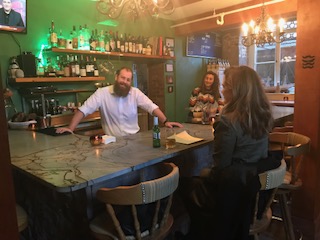
charlie2019’s first month yielded only five posts, one an excerpt from a novel Caroline’s editing for me in hopes of eventual publication. Also there’s a piece mocking South Carolina’s attorney general for calling marijuana “the most dangerous drug” and a meditation on angels,” which is probably the most well written.  However, I’m going to feature my “Ode to Bartenders,” those kind souls who ply us with spirits and sometimes offer sage advice.

February 

I was more productive in February, which also features a novel excerpt that I discovered mouldering in a drawer.  There’s also a poem honoring my late friend Larry “Buck” Howard, and a couple of others of note, but I’m going to provide links to only two, my dyspeptic (though eloquent) disparagement of Super Bowls and a link to an interview with my brother, the musician Fleming Moore,  in which he performs a song inspired by my son Ned.

March 

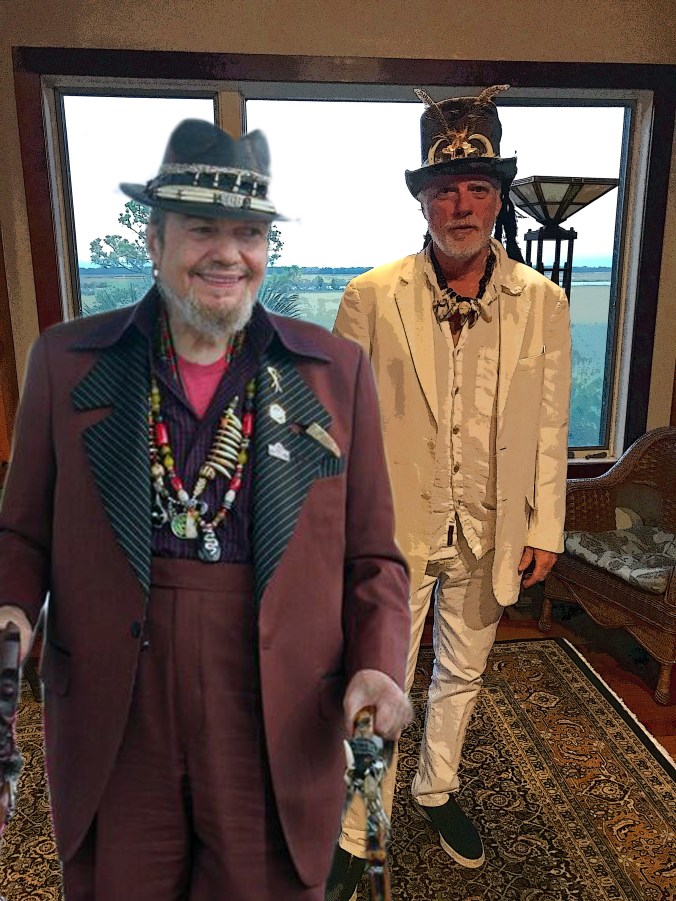
0a1b5119-5f49-41d3-a0d3-f2d0668baea3

photoshopped by Jake McDonald

Again, not much to choose from here in sheer numbers. I wrote about mindfulness, euphemisms, a Danielle Howle concert, and teaching poetry. Also, I wrote about sharing Porter-Gaud’s Visiting Writer honor with my man Bill Slayton, which you can read here.

April 

As lilacs bred out of the dead soil, mixing memory with desire, I wrote about Sunday morning blues and the phenomenon of curiosity.  Alfred “Do Lawd” Tennyson makes an appearance as does dying in nursing homes. On the bright side, Caroline and I did head up to Wilmington for the battle of the DJs, topped off with an Ice Cube concert.

May  

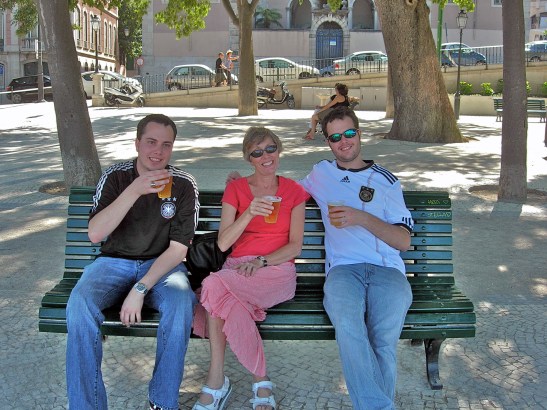
judy and the boys portugal

In May I taught my last class, mused on poetry, and wrote this tribute to my late wife Judy Birdsong who died on Mother’s Day in 2017.

June 

Hey, retirement resulted in a much more productive month of blogging, but in June one of my heroes died, the great Mac Rebennack. AKA Dr. John, whom I lauded in two separate posts.  Here is the more ambitious of the two,a lexicon of Dr. John locutions. 

July  

van

From left to right, Caroline, I-and-I, Cheryl, Chris, Kathy (photo credit Joe Brown)

I’m providing links for two posts, the first a narrative of epic proportions, our trip to see the greatest rock-n-roll band in history and a poem that I’m proud of, “Ode on a Tattooed Torso.”

Tattooed Torso

August

August was hopping.  Caroline and I saw Steve Earle in Florence, SC, both on the sidewalk and in concert.  I wrote about the all but forgotten psychedelic band Blue Cheer and the spectacular TV series Deadwood, reviewed Once Upon a Time in Hollywood, and channeled Joseph Campbell, which, I think is the most noteworthy of the posts.

September 

September got off to a shitty start with the Gamecocks losing to North Carolina.  Once again, music seems to be an obsession.  Here’s a post about country music  and one on Miles Davis. 

October 

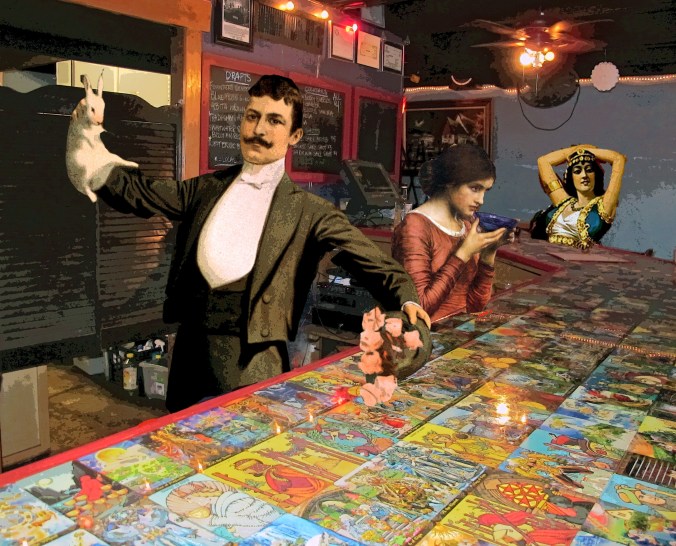
jack of cups 1.0 (original 2)

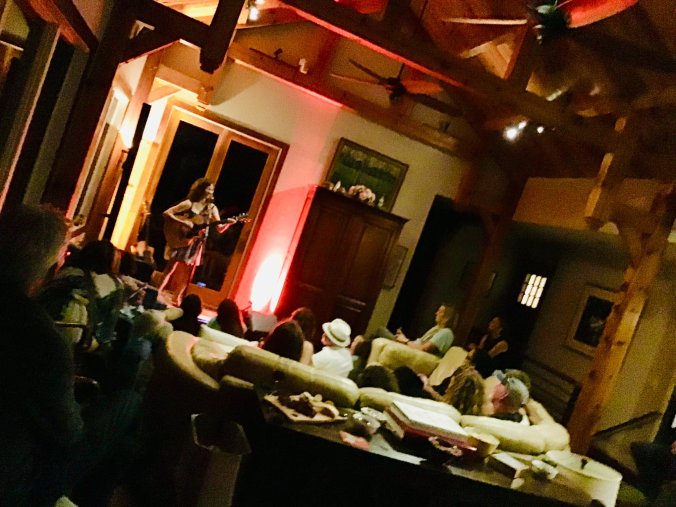
Lots of retreads here from the old blog.  I did, however, launch my art career , and Caroline and I hosted our first house concert. 

house shot

 November 

Saw a bad movie, wrote a bad poem, mocked an asshole YA author.

December

Only three, four counting this one, maybe “The Towering Dead” is the best, but I do like the account of the Phish concert as well.

So, hey, if you’re a repeat customer, thanks so much for reading this blog.  I sincerely appreciate it, and stay tuned to find out how Mac and Darsey’s wedding turned out.

Dr. Hoodoo Dr. John Wesley


Swapping Stories, Southern-Style

hotel-columbia-demolition-11-21-1971-700x754

I actually witnessed this implosion in November of 1971.  Stayed up all night to see it right before dawn with my personal bodyguard Haboo Garbowski, a bear of a mannishboy.

Yesterday, I had the pleasure of hanging out with old college friends who attended the University of South Carolina with me in the early to mid-70s, and, of course, we told stories because that’s what old Southern boomers do.[1]  We relive the past because, as the song says, “old times [here] are not forgotten.”[2]

The majority of these tales are comedic, thematically connected. For example, the time when ol’ so-and-so was wandering around someone’s house in the wee hours drunk as a skunk wearing only an oxford dress shirt as he stumbled around munching on a chicken drumstick, and another, even more embarrassing incident, when an extremely inebriated newlywed became disoriented and crawled naked in bed with his mother-in-law. Here, the written word is no substitute for the oral transmission, the whoops and hollers, the rhythm of the vernacular.

That story led to one about a young woman who house sat for B and D.  This woman, a free spirit, slept in the nude. One morning, she stepped out onto the deck in her naked majesty and closed the sliding doors.  CLICK.  She tried to reopen the door, but it wouldn’t budge. All the other doors were locked as well.

Fortunately, she had her phone in her hand, which she had picked up out of habit, a rather absurd situation, to be outside naked except for a cell phone, which brings to mind this lovely ditty from Robert Graves.[3]

For me, the naked and the nude
(By lexicographers construed
As synonyms that should express
The same deficiency of dress
Or shelter) stand as wide apart
As love from lies, or truth from art.

Lovers without reproach will gaze
On bodies naked and ablaze;
The Hippocratic eye will see
In nakedness, anatomy;
And naked shines the Goddess when
She mounts her lion among men.

The nude are bold, the nude are sly
To hold each treasonable eye.
While draping by a showman’s trick
Their dishabille in rhetoric,
They grin a mock-religious grin
Of scorn at those of naked skin.

The naked, therefore, who compete
Against the nude may know defeat;
Yet when they both together tread
The briary pastures of the dead,
By Gorgons with long whips pursued,
How naked go the sometimes nude!

Well, by Graves’ definition, she was naked, not nude, as naked as a jaybird, as my grandmother would say, who herself has relocated to “the briary pastures of the dead,” but that’s another story.

Obviously distressed, the young woman called one of the owners, D, and asked her if she should ask people in the neighboring house for help, but D said, “We live at the end of a dirt road.  We don’t have neighbors. I’ve hardly ever talked to those people.”

The good news, though — and how lucky is this – the house was equipped with a trap door.  All she had to do was fetch the ladder, find the trap door, push it open, and enter from below, which, bless her heart, she did successfully.

This narrative led to other getting locked out of the house stories, like poor ol’ Sherman T who was told he could crash at that very house, but found it locked. His door knocking coming to naught, he decided to crash on a lounge chair next to the pool.

“So I wrapped myself in towels,” he said.  “They were dog towels. I spent the night wrapped up in dog towels under the moon.”

Of course, I have a couple of getting out of the house stories (here’s one), but the one I was going to tell involved in-laws, a rental house in St. Simons, and the Swimming Pool Q’s.

“The Swimming Pool Q’s,” D and B shouted.  “They’re good friends of ours!”

So instead of hearing my lame story we talked about the Pool Q’s, which had nothing to do with my favorite story of the evening , the Great Mount Pleasant Mushroom Disaster, but I’ll have to tell you that one in private the next time I see you.

I’ll leave you with this peek of the Pool Q’s until the folks at YouTube remove it because of copyright concerns.


[1] Pardon the redundancy.

[2] Despite the copious amounts of intoxicants involved in many of these stories.

[3] Graves doesn’t distinguish “nekkid,” unlike Lewis Grizzard, who famously  explained, “There’s a big difference between the words, ‘naked’ and ‘nekkid.’ ‘Naked’ means you don’t have any clothes on. ‘Nekkid’ means you don’t have any clothes on … and you’re up to something.”

The Towering Dead

me and the reaper seranade

Nor for the towering dead/ With their nightingales and psalms

Dylan Thomas, “In My Craft or Sullen Art”

Hamlet describes death as “the undiscovered country from whose bourne/ No traveler returns,” phrases that betoken death’s mystery, a subject so profound that you can almost get away with slipping in a moth-eaten word like “betoken.”

victorian-post-mortem-photography-tm.jpg

Don’t say “cheese”

On the other hand, Wallace Stevens designates Death as the mother of beauty.

pieter_brueghel_heimkehr_der_jaeger_1010967-1.jpg

Woody Allen pigeonholes it as one of the two things that come only once in a lifetime.*

woody_allen_0731


*The other is sex

***

My first 3-D encounter with a human’s death happened when I was around twelve or so on a rare Sunday when we’d all gone to church together, even Daddy.  In those days TV consisted of a couple of channels,  so we would occasionally drive for amusement, motoring around and through Summerville, circumnavigating the past –  riding past clapboard houses where we used to live, past our former maid’s dilapidated cottage, past the crossroads where my grandfather’s gas station had stood before it burned down.

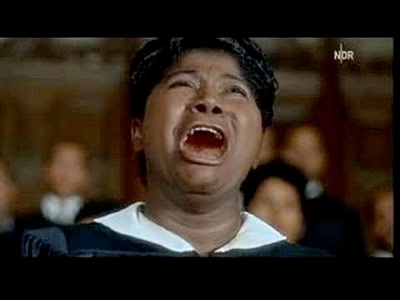
On this particular summer’s day, we encountered a cluster of hysterical people on the sidewalk right across the street from Dorchester County Hospital.  The windows of our un-air-conditioned Ford Falcon were down, and as we rolled past, I witnessed a Mahalia-Jackson-sized woman throwing her hands back in the air while screaming over and over, “My Mama left me, My Mama left me!”

As our car crawled on, I caught sight of the outline of the body, already covered, the screams receding as Daddy sped up and drove straight home.

Later that day, we traveled to Lake Moultrie with our neighbors, another rarity, and I saw Mrs. Delasanti’s pubic hair peeking out of her bikini bottoms.

A first for me.  Forbidden.  Thrilling.

So, on that Sunday, I sort of got a peek at both sides of the coin, the tomb and womb, and, unfortunately, the tomb won out.  Death had ruined my day.

“My Mama’s left me, My Mama’s left me!” rang out as I lay me down to sleep that night.

Horace Walpole has described life on this planet about as pithily as anybody: “This world is a comedy for those who think, a tragedy for those who feel.”
Mahalia.jpg

Mahalia Jackson

***

Over the years, I have become much more of a thinker than a feeler.  I’d like to believe that education, fairly wide reading/traveling, my dabbling in Buddhism, and maturity have brought about my detachment (rather than a callousness acquired from the onslaught of horrific images I’ve been bombarded with in over a half-century of a media-saturated life:  JFK’s shattering skull, Vietnamese monks immolating themselves, starving African toddlers with bloated bellies, Donald J Trump raising his hand to take the oath of office).

Of course, since that first encounter with death, I have witnessed others, loved ones, shuffling off their mortal coils. As I held my mother-in-law’s hand as she was in the thrall of dying, she looked up at the ceiling, gazing intently at whatever she saw up there, and said, squeezing my hand, “Rusty, this is overwhelming.”

My beloved Judy had a harder time, though mummified by morphine, her breathing labored,  yet right before the end, she quieted down, and I recited to her over and over “may flights of angels sing thee to thy rest,” and I’m also almost positive she was at least dimly aware of my presence and words because she sort of smiled for awhile before she became still.

***

I have an oncologist friend who once told me that out there (wherever that is) lurks enormous amounts of anonymous funding for a dedicated (if not fanatical) group of scientists/physicians who believe that they can conquer aging and death-by-disease, a prospect that frankly gives me the heebie-jeebies.  In that world, all deaths would be accidental, the afterlife a occupancy-challenged condo.  I imagine suicide rates would skyrocket. How weary, stale, flat, and unprofitable would seem the never-ending daily routines in that Malthusian nightmare of a world!

I told my friend, “They don’t know the story of the Sibyl.”

“No they don’t,” he concurred.

1508x1512-Sistine_Chapel_Frescos-Michelangelo_Buonarroti-14751564-Sibyls-Cumaean_Sibylimage.png

Translation: “I saw with my own eyes the Sibyl of Cumae hanging in a jar, and when the boys said to her, Sibyl, what do you want? she replied I want to die.”

***

No, I believe that Wallace Stevens got it right:  Death is the mother of beauty.

Who would trade his or her short-lived ability to discern beauty for the undifferentiated undying existence of amoeba and paramecia, or prefer the perfect two-dimensional monotony of prelapsarian Eden to the depth and complexity of postlapsarian Babylon with its gardens full of fading flowers and kiss-stealing star-crossed lovers?

Biologically speaking, sex is what creates diversity, and its cost is death, the cessation of being, or, as Philip Larkin put it in “Aubade”:

        [. . . ] no sight, no sound,
No touch or taste or smell, nothing to think with,
Nothing to love or link with,
The anesthetic from which none come round.

Death for sex, not a bad trade off by my reckoning.

Unlike Larkin, death holds no special dread for me.  Although I don’t believe in an afterlife, the idea of having my short-leased indestructible matter recycled into another form appeals to me.  I think a burial at sea sounds exquisite – a quick re-entry into the animal world via ingestion.

In this interim between womb and tomb – let us be thankful to have ended up here and now and agree with Dylan Thomas that wise men at their end know dark is right.

Though, rather than raving as Dylan Thomas suggests, I’d like to think of myself in those final instants as surrendering to the fitting inevitability of it all.  To try to enjoy the fleeing images of my consciousness as they’re jettisoned into nothingness.

After all, form is emptiness and emptiness form.

Heart_Sutra_01.jpg

An Old Man and Phish

Cu1j-hvW8AAu-yQ.jpg_large

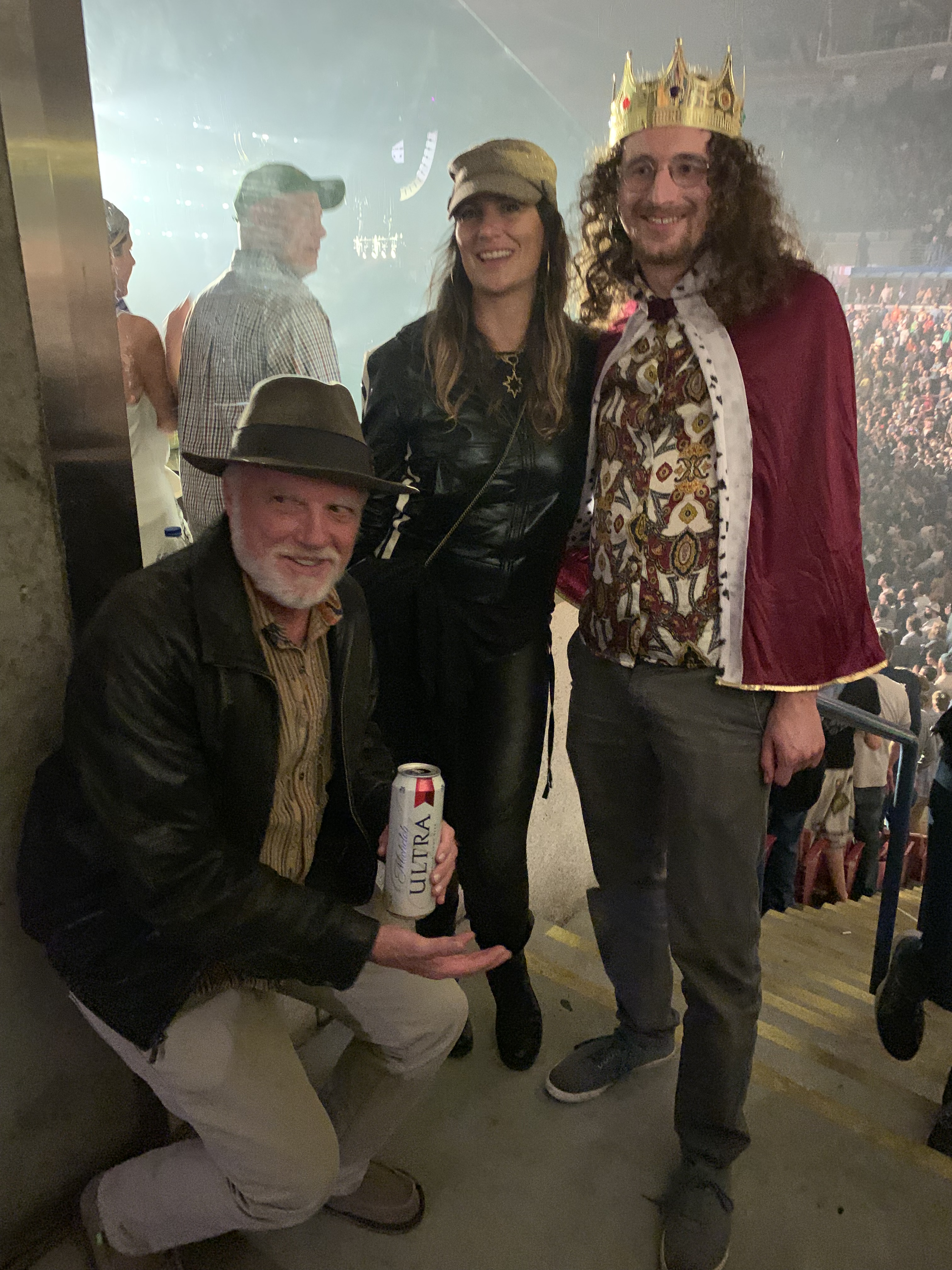
Last night at the Phish concert I met a young man named Will wearing a crown . We struck up a conversation on the floor of the ugliest arena this side of Vladivostok, the North Charleston Coliseum.  Will asked me how many of Phish’s shows I’d seen.  I said, “None, nada, not a fan.” Tongue in cheek, I told him that I was there in the capacity of a cultural anthropologist who studies cults.  Smiling, he asked if I would like some chemical stimulation to aide in my explorations and whipped out a small wooden box containing a white chalky worm of a substance.

“What’s that?”  I asked.

“LSD,”  he said matter-of-factly.

IMG_1671.jpeg

In the mists of the previous century, I had dropped acid a few times, but it didn’t look like this stuff he was showing me.  Back then it came in tabs.  You put it on your tongue, and in the course of an hour, the people you didn’t particularly like appeared in your friend’s living room at a great distance, wee insignificant presences on the edge of a psychedelic horizon. To wax not very poetical, it fucked you way way up.

I declined his kind offer, and he looked genuinely disappointed.

This was King Will’s tenth show.  He had left Birmingham, Alabama, at four a.m. and driven straight to the coliseum. I had expected, from what I’d read, to see a lot more people in costumes, and there were a few sparkly capes and a couple of medieval get-ups, but all in all, an ungracious un-plenty of dress-up. The audience consisted  predominantly of white males in the mid-30s to mid-40s range.[1]  Everyone I encountered — couples strolling by, customers waiting in line for $14 Bud Lite Tallboys, audience members jostling for positions on the floor — were incredibly well-mannered.  I wish I’d kept a count of the number of excuse me(s) and sorry(s) I heard. The audience’s devotion to Phish, it seemed to me, had united them in a common ethos of let-the-good-times-roll hedonism, a communal mellowness that was quite pleasant.

Standing there in the throng of the sold-out arena, I thought of Trump rallies and the very different vibe of those mass gatherings.  I imagined the cultists coming to see Trump, feeding on the communal buzz, having somehow been dosed with some low-wattage gummy bears, and instead of Donald J stalking on stage, out comes Phish singing a cappella “Nothing Could Be Finer Than to be in Carolina in the morning,” which, in fact, was their first song. How would the MAGA folk react?  They would love it, I suspect.  Sweet harmony.

After “Carolina in the Morning,” the band cranked into their stock-and-trade, jazzy improvisational forays into eclectic genres, funk, folk country, the blues, a cocktail mix of the Dead, Santana, Frank Zappa.  Alas, I’ve never been into jam bands, the riffs outpacing my attention span, failing to hypnotize me, unlike the people up in the stands, who were swaying, smiling, singing along whenever a lyric would intrude on a solo.

It’s genuinely a phenomenon, a cult of sorts, sold-out show after sold-out show, three nights in a row, completely fresh set lists, many taking in all three performances, an orgy of good vibes. Here’s the pre-intermission set list provided by a kind extrovert.

IMG_1663

Me, alas, too damned cerebral, jotting down notes, my pith helmet blocking the strobe of a million-dollar lightshow, a stationary dot among the sway.


[1] I don’t recall seeing an African American among the audience.

What’s Become of All the Dear, Dead Typewriters?

underwood.jpg

I miss the sound of clicking-clacking typewriter keys.

My very first typewriter was an Underwood that I bought for next to nothing, a slow-motion engine like the one above whose keys would sometimes stick, freezing in midair before they could imprint a letter on the scrolled paper.  The keys were small and round and perched aloft by long metal attachments. When you hit them, they sort of catapulted through the ribbon onto the paper. At the end of a line, you had to yank a metal flange so the carriage would return to the left margin, producing a clear audible “ding.” As it turned out, the ribbon couldn’t be replaced unless I could locate a time machine, so the Underwood and I had a short-lived romance, little more than a fling.

Nevertheless, with it I composed a few very bad poems, love poems or satiric poems in tiny typeset.  Only a couple of the satiric ones survive, written in a self-invented fifteen-line rhyming stanza form I called the bonnet, in honor of my favorite bartender, Hartley Bonnet, who worked at Oliver’s Pub on Devine Street in Columbia. It was a private club, so you could drink on Sundays.  Jimmy Buffett was a member. He was dating a girl from Columbia, whom I heard he eventually married.

I think my daddy provided me with my first electric typewriter, a throw off from his business, and after banging on the Underwood, I had a hell of a time adjusting to the gentle touch that the sensitive electric model demanded.  At first, the keys would stutter when I banged them, a staccato hiccup that meant starting over, or positioning correction tape to efface my mistake, or if I had splurged and bought erasable bound paper, scrolling up, erasing the errata, repositioning the paper, and retyping. If I were writing a research paper, sometimes when I was typing a footnote, the paper would shoot out because I’d misjudged, typed past the bottom of the  page, the last couple of strokes hitting the black cylinder where the paper should be.

Here’s what a typed page looked like:

IMG_2392

And a close up of a correction.

IMG_2393

I was typing  the words to that soon-to-be abandoned novel when I lived in the Manigault House on East Bay Street, which was divided into three apartments, one upstairs and one downstairs in the main house.  The third apartment,  ours, was two stories on the back end and sported an upstairs porch overlooking the projects.

manigault house

wesley porch typing

wesley limehouse typing 1

One day, my neighbor, whose name I didn’t know, asked me if I were a writer.  “Well, sort of,”  I said, pleased to think I may have possessed an author’s aura.  “I’m working on a novel.”

He told me he could hear my typing through the walls.

When I landed a state government contract to crank out descriptions of various jobs you could get with an associate degree from the local community college, I went ahead and bought a Tandy computer and printer.  This was early, in the days before hard drives, and this contraption sported ten-inch twin disc drives.  The salesman assured me that ten-inch disc drives would be the wave of the future.  One drive accommodated a ten-inch floppy disc that contained the word processing program, the other a blank disc for your writing. The printer was sort of like a typewriter and produced clicking sounds.

When I first started teaching at Porter-Gaud, I would type out my carbon-backed report cards and feed them individually into the printer, making me way on the cutting edge of technology.

Of course, I wouldn’t go back to those lesser technologies. In fact, I could if I wanted to; an electric typewriter is languishing in my attic. On the other hand, I think something is lost by not having to retype manuscripts after editing a page by hand, which encourages polishing, and you can make editing changes too rapidly without having time to digest the alterations.  Of course, a meticulous, patient person can still edit the old way, but as this typo-plagued blog attests, I’m not that person.

Time’s winged chariot and all that jazz.

Speaking of jazz, here’s a video of the poet Eddie Cabbage accompanying some cool cats, including the late Vinny Youngblood, up on the porch in the upstairs Chico Feo Airbnb as Tim Brown looks on.

Beach Bum Bummer, Boomer Edition

thebeachbum_1024x1024

Caroline and I have invested/wasted time over the Thanksgiving holidays checking out two films and a flick. On Monday night, we watched an HBO documentary on the photographer Robert Mapplethorpe and an experimental film called Notes on an Appearance, a slow-cut edited paean to stasis, directed by Ricky D’Ambrose, .

On the following evening, we watched the recent stoner film The Beach Bum directed by Harmony Korine and starring Matthew McConaughey, Snoop Dog, Isla Fisher, and featuring Jimmy Buffett playing himself.

Here’s my amphetaminic spoiler-infused synopsis.[1]

Moondog, the eponymous beach bum, is supposedly a genius poet, though the pap he recites isn’t even, strictly speaking, verse, much less poetry.  Perpetually drunk and stoned, he divides his time cavorting with multiple sexual partners in Key West or at his obscenely rich wife’s mansion in Miami.

Despite being deemed loveable by a host of movie critics, including the New Yorker’s Anthony Lane, Moondog shows up late for his daughter’s wedding, strides up to the couple taking their vows, grabs the groom’s crotch to measure his manhood, and calls him “a limp dick.”

Tee-hee.

After the ceremony, Moondog and his wife (who has been having an affair with Snoop Dog’s character Lingerie) go for a drunken drive, crash the car, and Moondog ends up a widower cut out of his late wife’s will until he publishes a significant collection of poetry.[2]

Pissed off at having his inheritance delayed and predicated on productivity, Moondog recruits a host of homeless people and trashes his daughter’s house (tee hee), which results in his going to rehab to avoid prison. At the rehab facility, he and an arsonist named Flick (get it?) become buddies.  They escape in a golf cart that somehow outraces the pursuit.

Short of money, the unlovable rogues attack and rob an old man in a mechanical wheelchair, bringing to mind A Clockwork Orange, except in that movie brutalizing an old man managed to be funny, thanks to Alex’s “Singing in the Rain” routine, whereas in The Beach Bum the assault seems simply cruel.

Moondog and the Flick split ways, and our antihero takes up with Captain Wack, who charters a swim-with-the-dolphins business.  With a family of tourists on board, including pre-pubescent children, Moondog spews vulgar sexual terms (the daughter actually puts her hands over her ears).  Despite his love for dolphins, Captain Wack can’t distinguish them from sharks, dives in to model swimming with them, and loses a foot.[3]

After copping some magic muse-like ganga from Jamaica, curtesy of Lingerie, Moondog writes what Wikipedia calls “a poetic memoir,” receives critical acclaim, and wins the Pulitzer.  Now, he can receive his inheritance, 17 millionaire dollars in cash delivered in a freshly purchased yacht.  Sailing off into the sunset, Moondog purposely sets fire to the money (which killjoy me thinks could have bought some food insecure children a Big Mac or two).  The yacht explodes; some bills rain down about a party that has gathered to celebrate the occasion.  Of course, Moondog escapes unscathed as he floats along in a dingy, one of Dionysius’s chosen.

The End.


Now, don’t get me wrong; I can love movies that thumb their cinematic noses/give double barrels to the establishment, movies like A Night at the Opera or Jean Vigot’s Zero for Conduct, and I’m okay with a dash of  gratuitous sex, but as my wife Caroline so aptly put it, the entire movie is gratuitous.

What exactly is the point? Unlike Fellini’s The Satyricon, The Beach Bum isn’t mocking Late Empire extravagance or moral turpitude; it’s celebrating it, hence the presence of that Apostle of Hedonism, the venture capitalist Jimmy Buffet, who, I understand, is  marketing “a string of Margaritaville retirement homes” where the bald and cellulite-ridden can bask in what remains of their days (and nights).

Wasting away in Margaritaville

IMG_1458


Here’s a spiel for you golden-agers:

“It’s always been that happy place in your mind, the spirit of adventure in your soul. It’s the state of mind when it all comes together in one of life’s perfect moments. When your mind wanders to this paradise, why not follow it home?” reads the site. “We have heard your call… Minto Communities and Margaritaville welcome you to Latitude Margaritaville!… Inspired by the legendary music and lifestyle of singer, songwriter and best-selling author Jimmy Buffett, your new home in paradise features exciting recreation, unmatched dining and FINtastic nightlife. With Minto’s 60 years of experience developing award-winning, master-planned communities and building quality homes for over 80,000 families, innovative new homes are a given.”

Perhaps if Donald Trump weren’t president, I might have been less caustic in this review, but to me, Moondog is what Trump would be like as a stoner: vulgar, narcissistic, privileged, someone whose supposed “genius” gives him license to be a perpetual asshole.  Although Moondog shares some characteristics with Jeff Spicoli of Fast Times at Ridgemont High and The Dude of The Great Lebowski, he, unlike those sympathetic characters, is arrogant, entitled, not in the least bit clever.

That said, he only harms himself, his family, and the occasional wheelchair bound Boomer. I just happen to find Barabas of Marlowe’s farce The Jew of Malta to be much more of a hoot.

FRIAR BARNARDINE. Thou hast committed—

BARABAS. Fornication: but that was in another country;
And besides, the wench is dead.


[1] Charleston’s own The City Paper pegs the plot as “hilarious misadventures” and rogerebert.com calls it a “funny, ultimately sweet movie.”

[2] Several times this not yet published collection of words is referred to as a novel, though what we get at the end is a Pulitzer winning collection of poems.  It’s almost as if the screenwriter, Mr. Korine, doesn’t know the difference.

[3] Okay, no doubt a fan of the film will note that this is a farce, that the shark fins are cardboard, that it’s not supposed to be realistic, to which I say, Moondog-style, fuck off.


A Series of Subtractions

IMG_1402

Photo credit: Caroline Tinger Moore

A Series of Subtractions


If you make the mistake of living too long,

old age can seem like as a series of subtractions.


The trees are in their autumn beauty,

The woodland paths are dry.


That romping pup you chose a flashbulb pop ago,

today, a husk headed to the vet to be put down.


Like the one before that and the one before that.

Jack, Sally, Bessie, Saisy, Ruskin, Milo,


Completing their abbreviated seven stages

right before your clear . . .  fogging . . . rheumy eyes.


The trees are in their autumn beauty,

The woodland paths are dry.


And the musicians and authors you’ve loved

seem to be dropping like dragonflies.


Foster Wallace, Zevon, Petty,

Toni Morrison, Prince, Winehouse, Reed,


Kaput, no longer cranking them out,

Deaf to the doo-da-doo-a-doohs of the colored girls.


And who in the hell are these movie stars

in the paper celebrating birthdays today?


The trees are in their autumn beauty,

The woodland paths are dry.


Quit your whining, boomer, time’s a-wasting,

beneath a mountain of books you haven’t read.


No use crying over spilt water bowls,

inevitability.


The trees are in their autumn beauty,

The woodland paths are dry.


The Death and Resurrection of Pan

pan dead

Several springs ago, I wrote about the Death of Satan, ruing his demise, fretting that without the fetters of everlasting, agonizing imprisonment, Christianity offers no concrete constraints on human misbehavior, a simple, “I’m sorry, Jesus,” sufficing to cleanse a lifetime of sadism, bigotry, predation.

Poof!  Forgiven!


Sistine_Madonna_Group_of_Angels_Raphael_1440x1080

With Satan alive and well, imagine Josep and Idi facing the everlasting wrath of Jonathan Edwards’ or Father Arnall’s God!

First, Preacher Edwards:

Tis everlasting Wrath. It would be dreadful to suffer this Fierceness and Wrath of Almighty God one Moment; but you must suffer it to all Eternity: there will be no End to this exquisite horrible Mis- ery: When you look forward, you shall see a long Forever, a boundless Duration before you, which will swallow up your Thoughts, and amaze your Soul; and you will absolutely despair of ever hav- ing any Deliverance, any End, any Mitigation, any Rest at all; you will know certainly that you must wear out long Ages, Millions of Millions of Ages, in wrestling and conflicting with this almighty mer- ciless Vengeance; and then when you have so done, when so many Ages have actually been spent by you in this Manner, you will know that all is but a Point to what remains. So that our Punishment will indeed be infinite. Oh who can express what the State of a Soul in such Circumstances is! All that we can possibly say about it, gives but a very feeble faint Representation of it; ’tis inexpressible and in- conceivable: for who knows the Power of God’s Anger

Your turn Father Arnall.  Can you render “the faint representation” of eternity a little more concretely?

You have often seen the sand on the seashore. How fine are its tiny grains! And how many of those tiny little grains go to make up the small handful which a child grasps in its play. Now imagine a mountain of that sand, a million miles high, reaching from the earth to the farthest heavens, and a million miles broad, extending to remotest space, and a million miles in thickness; and imagine such an enormous mass of countless particles of sand multiplied as often as there are leaves in the forest, drops of water in the mighty ocean, feathers on birds, scales on fish, hairs on animals, atoms in the vast expanse of the air: and imagine that at the end of every million years a little bird came to that mountain and carried away in its beak a tiny grain of that sand. How many millions upon millions of centuries would pass before that bird had carried away even a square foot of that mountain, how many eons upon eons of ages before it had carried away all? Yet at the end of that immense stretch of time not even one instant of eternity could be said to have ended. At the end of all those billions and trillions of years eternity would have scarcely begun. And if that mountain rose again after it had been all carried away, and if the bird came again and carried it all away again grain by grain, and if it so rose and sank as many times as there are stars in the sky, atoms in the air, drops of water in the sea, leaves on the trees, feathers upon birds, scales upon fish, hairs upon animals, at the end of all those innumerable risings and sinkings of that immeasurably vast mountain not one single instant of eternity could be said to have ended; even then, at the end of such a period, after that eon of time the mere thought of which makes our very brain reel dizzily, eternity would scarcely have begun.

A whole long lot of misery, O my brothers and sisters!

***

When I posted “Satan Ist Tot,” it hadn’t dawned on me that Satan is Pan’s doppelgänger, hoofed and horned, half-human and half-bestial, our intermediary between the celestial and the cesspool, heaven and earth.

Perhaps one of the most curious events in the ancient world is Plutarch’s announcement of the death of Pan, which occurred during the reign of Tiberius (14-37 CE). Here’s Plutarch relating the story via Philip the Historian in On the Obsolescence of Oracles:

As for death among such beings, I have heard the words of a man who was not a fool nor an impostor. The father of Aemilianus the orator, to whom some of you have listened, was Epitherses, who lived in our town and was my teacher in grammar. He said that once upon a time in making a voyage to Italy he embarked on a ship carrying freight and many passengers. It was already evening when, near the Echinades Islands, the wind dropped, and the ship drifted near Paxi. Almost everybody was awake, and a good many had not finished their after-dinner wine. Suddenly from the island of Paxi was heard the voice of someone loudly calling Thamus, so that all were amazed. Thamus was an Egyptian pilot, Cnot known by name even to many on board. Twice he was called and made no reply, but the third time he answered; and the caller, raising his voice, said, ‘When you come opposite to Palodes, announce that Great Pan is dead.’ On hearing this, all, said Epitherses, were astounded and reasoned among themselves whether it were better to carry out the order or to refuse to meddle and let the matter go. Under the circumstances Thamus made up his mind that if there should be a breeze, he would sail past and keep quiet, but with no wind and a smooth sea about the place he would announce what he had heard. So, when he came opposite Palodes, and there was neither wind nor wave, Thamus from the stern, looking toward the land, said the words as he had heard them: ‘Great Pan is dead.’ Even before he had finished there was a great cry of lamentation, not of one person, but of many, mingled with exclamations of amazement. As many persons were on the vessel, the story was soon spread abroad in Rome, and Thamus was sent for by Tiberius Caesar. Tiberius became so convinced of the truth of the story that he caused an inquiry and investigation to be made about Pan; and the scholars, who were numerous at his court, conjectured that he was the son born of Hermes and Penelopê.”

Of course, the death of Pan coincides with the life of Jesus, and Christian philosophers have taken Plutarch’s pronouncement as the ending of the old order and the beginning of the new.

James Hillman (whose prose style I detest but whose anti-Buddhist ideas intrigue me) writes

When Pan is dead, then nature can be controlled by the will of the new God, man, modeled in the image of Prometheus or Hercules, creating from it and polluting in it without a troubled conscience.  (Hercules who cleaned up Pan’s natural world first, clubbing instinct with his willpower, does not stop to clear away the dismembered carcasses left to putrefy after his civilizing creative tasks.  He strides on to the next task, and ultimate madness).  As the human loses personal connection with personified nature and personified instinct, the image of Pan and the image of the devil merge. Pan never died, say many commentators on Plutarch; he was repressed. Therefore as suggested above, Pan still lives, and not merely in the literary imagination.  He lives in the repressed which returns, in the pathologies of instinct which assert themselves, as Roscher indicates, primarily in the nightmare and its associated erotic, demonic, and panic qualities.

Perhaps, then, Satan hasn’t actually died but merely morphed back into his prototype, Pan.  They both have served as lords of the underworld, Satan in his hell, Pan in our unconsciousnesses.  Certainly, it’s difficult to imagine Jesus smiling and nodding his haloed head as he looks upon Jonathan Edwards’ and Father’s Arnall’s visions of eternal damnation.  After all, Jesus himself supposedly comes from the primordial ooze of Mary’s stock as well as from the stars.  Part of Pan no doubt dwelt in him as well.

It’s a shame, by my heretical reckoning, that the Gnostic Gospel of Thomas didn’t make the ecclesiastical cut.  In that quizzical compendium Jesus strikes me as being much more soulful.  For example, here he is in “Saying 70”:

Jesus said, “If you bring forth what is within you, what you
bring forth will save you. If you do not bring forth what is
within you, what you do not bring forth will destroy you.”

Here is Elaine Pagels, the Harrington Spear Paine Foundation Professor of Religion Princeton University:

The Gospel of Thomas also suggests that Jesus is aware of, and criticizing the views of the Kingdom of God as a time or a place that appear in the other gospels. Here Jesus says, “If those who lead you say to you, ‘look, the Kingdom is in the sky,’ then the birds will get there first. If they say ‘it’s in the ocean,’ then the fish will get there first. But the Kingdom of God is within you and outside of you. Once you come to know yourselves, you will become known. And you will know that it is you who are the children of the living father.”

O for a rapprochement between Jesus and Pan, lamb and goat, inside and out, here and now!

meltitsm copy

Perry Mason, a Corrupt Nation Turns Its Not Easily Entertained Eyes to You

monkey-whisperer_600

I grew up on Perry Mason, viewing the show with my parents virtually every Saturday night up until I was old enough to go out and create my own trouble. Until then, I enjoyed watching the virtuoso attorney leisurely handle the one case he had per week. I mean, that burly barrister was hands-on.  He’d drive around LA and its environs half the night sleuthing, make house calls galore, and be in the office the next morning alert and ready to go. Most importantly, however, he used his prodigious mind to solve each and every case in a bang-bang third act confession, all the loose ends neatly wrapped-up — ta da!

One of the pundits covering the Impeachment Inquiry evoked that great lawyer’s name, warned us not to expect the proceedings to be “Perry Mason.”  Indeed, after the first “episode” featuring Taylor and Kent, media critics complained that the proceedings lacked “pizzazz.”  No way the American public whose attention spans have been decimated by fast cut editing, screen memes, multi-tasking, and herky jerky gifs could ever focus on a series of uninspiring factual questions.

Nevertheless, Devin Nunes, who, I understand, is suing a cow, has likened at various times the proceedings to an actor’s audition, a circus, and a crusade. To be truthful, he and his shirtsleeve henchmen Jim Jordan have been the most animated performers, especially Jordan who rat-a-tats details of debunked conspiracy theories like a carnival barker, and when finished, exudes the smug, self-congratulatory demeanor of  an overconfident high school debater. Every melodrama needs a villain to hate, and from my admittedly left-of-center perspective, I find the two to be, well, for lack of a better word, deplorable.  Boo!  Hiss!

Despite Nunes’ contention that the Inquiry is tanking ratings-wise,[1] I found Tuesday’s and Wednesday’s broadcasts to be fascinating. I especially enjoyed Democratic Counsel David Goldman’s questioning of Timothy Morrison, who appeared beyond uncomfortable as he continually looked left at his lawyer to make sure what he was saying wouldn’t result in a perjury indictment. Watching him squirm, his eyes darting as if he expected some predator to swallow him at any moment, reminded me of what great literature often depicts: consistently telling the straight truth is preferable to prevarication. [2]  What a difference in demeanor between him and William Taylor, who calmly looked his questioners in the eye, answered their inquiries, and actually smiled while being assailed.

BBX36ba

Wednesday’s NY Times morning teaser posited three possibilities for Ambassador Gordon Sondland’s testimony.  He could lie, plead the Fifth, or fess up. As it turns out, the episode might have been billed as The Monster Bus Show, as Ambassador Sondland flattened the upper echelon of the Trump Administration, including Mick Mulvaney, Rick Perry, Mike Pompeo, Mike Pence, and that Master of Reality Television himself, Donald J Trump, who before leaving for wherever on his helicopter read from a piece of paper: “I don’t know him very well.  I have not spoken with him much.  This is not a man I know well.  He seems like a nice guy though.”

C’mon, Donald, learn your lines.  It’s so much more realistic.

For his part, at least at the beginning of the festivities, Sondland seemed calm – some have used the adjective debonair – perhaps secure in having decided to tell the truth and knowing he has millions of dollars at his disposal for securing topnotch legal counsel.

Of course, it would have been more dramatic if Trump burst into the chamber, fell to his knees, and blurted out a tearful confession like the murderers on Perry Mason.

At the end of each episode, Perry, his detective Paul Drake, and secretary Della Street huddle to explain how the case was solved.  How fun would it be to  peek in on Adam Schiff, David Goldman, and Nancy Pelosi connecting the dots in the Speaker’s office after today’s testimony

But, like I said, this is reality television, not an adaption of an Erle Stanley Gardner courtroom drama. That doesn’t mean, however, that the action necessarily lacks interest, especially given the stakes.


[1] From what I understand, television ratings don’t take into account streaming, which I suspect is how most of us viewers are accessing the proceedings.

[2] Compare Hester Prynne to Arthur Dimmesdale and Roger Chillingworth.