I hesitate in this family blog[1] to broach the provocative subject of political spouses, those other halves who often elicit irrational and vehement emotional responses from the brave and the free. For example, some members of my extended family despise Hillary Clinton with such an amped-up animus you might think that she had deliberately poisoned one of their beloved pets. I mean, I can see how someone might find Hillary off-putting somehow, but good lord, what could she possibly have done to generate such animosity? Is marrying and constantly forgiving a philanderer, not initially taking his name, working outside the home, and murdering your ex-law partn– choosing garish brightly colored monochromatic pantsuits so wrong?
These irrational responses to candidates’ spouses, however, can also be positive (in a manner of speaking). For example, I know a delightful, compassionate, witty woman who idolizes Laura Bush as if she were St. Teresa of Avila. After enduring an earnest catalog of Laura Bush’s many virtues – poise, spunk, and good taste – I asked my interlocutor (I’m waxing Buckleyean this morning) if she knew that Laura was a smoker. Oh-no-she’s not. Oh-yes-she-is. I mentioned the smoking not because I consider it a character flaw but because I merely wanted to suggest to my friend that Mrs. Bush wasn’t absolutely a paragon of virtue. However, Laura is all right. My son Harrison briefly spoke with her at a Congressional picnic, and he said she was chatty, asking him for whom he worked, mentioning that she and George (as she referred to W) had flown once with Harrison’s Congressman (Bud Cramer) in some kind of official capacity. He said she came off as a genuine and humble person.
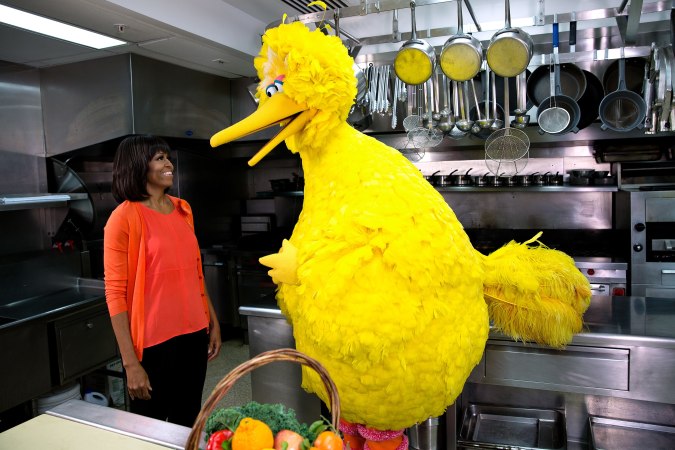
Michelle Obama seemed to be a fairly popular First Lady within the realm of the non-poisonedly partisan and non-racist segment of our population. I somehow never picked up that her father’s side came from the Gullah population of the Lowcountry of South Carolina. Anyway, she embodied upward mobility, following her brother to Princeton and becoming the first family members to receive a college degree. Then off to Harvard Law and later to land a job at a prestigious firm where she met her future husband, ol’ whathisname. Anyway, she was poised and delivered some killer convention speeches . . .

Good Golly, Miss Molly
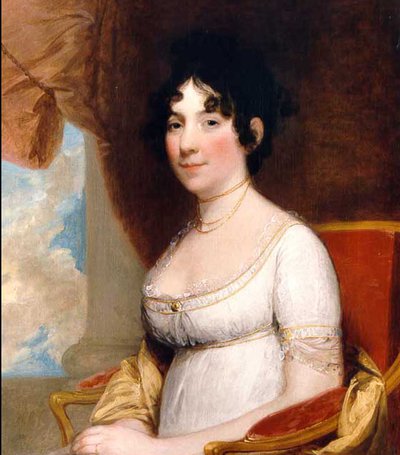
Which brings us to Melania Trump, who is the first First Lady you can check out nude if the inclination strikes you. (I myself have no desire to see any first lady nude except perhaps Dolly Madison.) Anyway, early in Trump’s term, I sympathized with Melania, wrote this pieceabout her, but then after her wearing a ”I Really Don’t Care, Do You?” raincoat while visiting detention center for migrant children, my sympathy dissipated.
At first after the brouhaha, she said there was no message intended by wearing the coat, but later claimed that she was sending a message to the leftwing media, not to the detained children, which begs the question, if she didn’t really care what the media thought, why bother to wear the coat? Anyway, as some wag has pointed out, Melania can come off pretty creepy, looking as if she’s trying to bend spoons with her mind.
Okay, who’s next? Jill Biden or will we get another dose of Melania or – I shudder to imagine it — will an Adderall overdose or massive heart attack usher in First Lady Karen Pence, aka “Mother?” Or then Biden could win and keel over post inauguration, and we’d get our First Gentleman.
Who knows? I certainly don’t.
[1] Many of you have told me how sometimes the entire family, youngsters and oldsters alike, enjoy gathering around the old monitor and reading these posts aloud).
Back in my teaching days, I’d sometimes ask my students what they considered the worst invention in the history of mankind. Typical answers included gunpowder, nuclear weaponry, Whoopie cushions, etc.
I’d do my ol’ slow shake of sage educator’s head routine and admit that those contraptions were indeed pernicious but that the worst invention in mankind’s horrid history was the clock, which was a by-product of womankind’s worst discovery, agriculture.[1]
I’d go on and invite them to imagine a world without clocks, a world of delicious imprecision governed by states of light rather than the ticking of mechanical hands or the silent progression of illuminated digits.
Now that most of us have placed ourselves under house arrest, we can experience for a time an existence not governed by sixtieths – seconds, minutes, hours – especially if we don’t have children involved in distance learning.
Here’s a snippet from a Facebook post written by a former student of mine who suffers from an auto-immune disorder:
Oddly, as the next week took shape, with the kids out of school and the shutdown picking up steam, my anxiety eased. It wasn’t because I was less concerned about the virus and my potential exposure, but because so many other self-imposed stressors were instantly out of my life. Just like the pollution in Venetian canals seemingly cleared up after a short period of decreased activity, my mind seemed to clear up when we couldn’t race from work, to after school activities, sports practices, piano lessons, social commitments, and whatever else had previously cluttered my schedule. We couldn’t grab dinner on the go, and stopping in at the grocery store 3-4 times a week no longer made sense. We went on more walks and bike rides the week of March 16th than the previous six months. We watched the sunset each night from our back porch instead of driving 45 minutes to volleyball practice. We’ve had family meals almost every night. We’ve had family movie nights, and we haven’t missed a church service because our church quickly got online. We’ve reached out to friends over Facetime, text, or calls that we’ve not found time to connect with before. And we see others doing the same. In short order, despite a deadly threat, I was more relaxed than I’d been in a long time.
Yes, the world is too much with us, late and soon, getting and spending, and as Ulysses points out to Achilles in Shakespeare’s Troilus and Cressida, “Time hath, me Lord, a wallet at his back/Wherein he puts alms for oblivion.”
No telling what will follow this pestilence — recession, depression, repression, armed insurrection? I dunno. What I do know is that my coffee cup is empty and that there’s a bottle of Jameson’s on the kitchen counter. I think I’ll have another cup sweetened by another dollop and enjoy this beautiful mid-April morning while the getting’s good.
[1] Most anthropologists posit that pre-agrarian female gatherers put two and two together regarding seeds and soil, which would explain the Pandora and Eden myths. Hunting’s fun. Plowing desert soil not so much. It’s all her fault.
I’ve never been one for neatness – in my dress, in my handwriting, in my housekeeping, in my prose. I blame this lackadaisical attitude on the South’s losing what a few of our stubborn old folks still insist on calling “the War Between the States.” Don Doyle’s fascinating study New Men, New Cities, New South: Atlanta, Nashville, Charleston, Mobile, 1860-1910 details Charlestonians’ postbellum refusal to do business with Northerners, unlike the folks in Atlanta and Nashville, who resumed trading with the victors and flourished. Meanwhile, on the coasts, we sat around with empty pockets talking about the good ol’ days while the paint peeled from the clapboard of our houses. With no money to keep up appearances, the heat aiding and abetting our lethargy, we became tolerant of a certain sleepy seediness. There are many exceptions, of course, but I am not one of them.
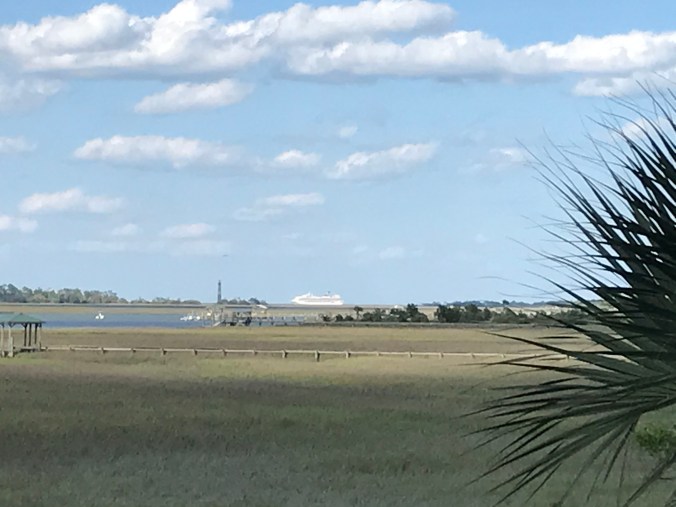
I prefer hodgepodge to uniformity, black-eyed susans to manicured lawns, the eastside to the westside of Folly Island (though the westside also has delightful pockets of funkitude). Although you constantly hear how Folly has changed – and it has – many homes and lots tucked away on the east side from Second to Ninth retain a rustic tinge – a vibe I have come to call paradoxically rural Folly.
Here’s a brief tour.
I do not find/ The Hanged Man. Fear death by water.
We’ve all been asked the desert island question, what recordings we’d choose, what three books we’d take if limited to that magical number.[1] Although being stuck inside the house with the Chico Feo blues again is vaguely akin to being stranded on some palm shaded atoll in the South Pacific, many of us do possess (unlike Robinson Crusoe) the ability to order out, whether it be rib-eyes from Omaha, Toots and the Maytals from Apple, or Grady Hendrix’s latest novel The Southern Book Club’s Guide to Slaying Vampires.
This quarantine offers those of us who have been idled a chance to catch up on our reading. I know that eBooks are all the rage, but this old curmudgeon prefers printed paper, to strum pages with his thumb, to be able to reckon the heft of the tome and how much is left.
Recently, the excellent local independent bookstore, Buxton Books, hosted a poetry reading featuring David Tillinghast, a former professor of mine. Although Amazon is cheaper, that faceless conglomerate doesn’t provide the opportunity to meet authors and hear them read aloud from their works. In this age of e-tail, independent book and record stores need our support, but during the pandemic, even more so. The next time you order a book, please consider ordering from your local bookseller.
My most recent acquisition from Buxton Books is Joanna Hershon’s latest novel St. Ivo, which is being released tomorrow (14 April 2020) by Farrar, Strauss, and Giroux. I met Joanna and fell in love with her work when she came to Porter-Gaud School as our visiting writer in 2009. At the time of her visit, her most recent novel, The German Bride, had not been released. Joanna was kind enough later to mail me a copy, and, man oh man, the novel transported me right out of my reading chair to 19th Century Berlin and eventually to our own wild, wild West.
Joanna Hershon (source Good Reads)
Here’s a snippet from the thank you letter I sent her:
The breadth of the book is remarkable. You’re able to concretely conjure the sights and smells of Berlin, the passage overland, the starkness of Santa Fe, the Shein Brother’s store, and the stage couch’s journey. Indeed, the last part of the novel, the trip to San Francisco, is a tour de force. You turn something inherently boring – a slow crawl over virtually featureless terrain – into a psychologically fascinating page-turner.
I was fortunate enough to read an advance copy of St. Ivo, and once again, Joanna’s work has captivated me. She possesses the ability to create a tangible world of sights, sounds, odors, and actions while creating characters who come alive on the page. As her characters negotiate that vivid outer world Joanna has created, the reader is also privy to the rich inner world of their memories, aspirations, and fears. The novel is suspenseful, mysterious. I can’t express it better than Nell Freudenberger’s dust jacket blurb: “Vivid and cinematic . . . St. Ivo has the eerie quality of a fairy tale, as if something inexplicable might be waiting around the next bend in even the most familiar path.”
Oh, yeah, and the prose, at once beautifully crafted yet unobtrusive. Here’s Sarah remembering getting her first pair of glasses as a child:
The case was blue. She wore them on the trip home. While sitting in the back seat of the car, she looked out the window. It was as if the world had suddenly announced itself in every leaf on every tree. She hadn’t realized that one could actually see the shapes of leaves, that it was even possible from a distance. The ordinary view was crystalline suddenly and all too much. She remembered now the sound of her father’s gravelly voice and the static on the radio; she remembered returning the glasses to their blue suede case. She’d closed her eyes for the rest of the trip. This, she realized, was how she felt just then.
So afford yourselves a chance to take an imaginative trip, for a few hours to get out without the chance of contagion, to enter a vivid world whose dangers will thrill you without actually endangering you.
[1] Shakespeare’s complete works (duh), Joyce’s Ulysses,Norton’s Anthology of Poetry.
John Prine’s first album came out in 1971, the year I graduated from high school and entered college. I can’t remember if it was David Williams or Mitch Kellam who turned me on to it, but in any case, has a better debut album ever been released? I mean “Illegal Smile,” “Hello in There,” “Sam Stone,” and “Angel from Montgomery” all on the same record, a masterpiece.
What distinguishes Prine from most from most other songwriters is a combination of imagination and empathy. Like a talented fiction writer, he creates characters we care about and places them in a world that’s palpably real.
Take, “Hello in There,” a song about the loneliness of old age. The lyrics stand up remarkably well by themselves unaccompanied by music:
We had an apartment in the city
Me and Loretta liked living there
Well, it’d been years since the kids had grown
A life of their own left us alone
John and Linda live in Omaha
And Joe is somewhere on the road
We lost Davy in the Korean war
And I still don’t know what for, don’t matter anymore
Ya’ know that old trees just grow stronger
And old rivers grow wilder ev’ry day
Old people just grow lonesome
Waiting for someone to say, “Hello in there, hello”
Me and Loretta, we don’t talk much more
She sits and stares through the back door screen
And all the news just repeats itself
Like some forgotten dream that we’ve both seen
Someday I’ll go and call up Rudy
We worked together at the factory
But what could I say if asks “What’s new?”
“Nothing, what’s with you? Nothing much to do”
So if you’re walking down the street sometime
And spot some hollow ancient eyes
Please don’t just pass ’em by and stare
As if you didn’t care, say, “Hello in there, hello”
Not only could John do sad, he also could be really funny. Take “Illegal Smile,” for example.
When I woke up this morning, things were lookin’ bad
Seem like total silence was the only friend I had
Bowl of oatmeal tried to stare me down… and won
And it was twelve o’clock before I realized
That I was havin’ no fun
But fortunately I have the key to escape reality
And you may see me tonight with an illegal smile
It don’t cost very much, but it lasts a long while
Won’t you please tell the man I didn’t kill anyone
No I’m just tryin’ to have me some fun
Last time I checked my bankroll,
It was gettin’ thin
Sometimes it seems like the bottom
Is the only place I’ve been
I Chased a rainbow down a one-way street dead end
And all my friends turned out to be insurance salesmen
But fortunately I have the key to escape reality
And you may see me tonight with an illegal smile
It don’t cost very much, but it lasts a long while
Won’t you please tell the man I didn’t kill anyone
No I’m just tryin’ to have me some fun
Well, I sat down in my closet with all my overalls
Tryin’ to get away
From all the ears inside my walls
I dreamed the police heard
Everything I thought… what then?
Well I went to court
And the judge’s name was Hoffman
Ah but fortunately I have the key to escape reality
And you may see me tonight with an illegal smile
It don’t cost very much, but it lasts a long while
Won’t you please tell the man I didn’t kill anyone
No I’m just tryin’ to have me some fun
Well done, hot dog bun, my sister’s a nun
When John contracted the Virus, I figured that with only one lung, he was a goner, and sure enough, he’s a long gone daddy now. However, what a body of work he has left behind. If his debut self-titled album is the only one you know, check out this link from Billboard.
And I’ll leave you with this duet with Iris Dement before the YouTube people snatch it away.
Trouble took my money, Cadillac’s gone
Best suit of clothes, all raised up in the closet, oh lord
But I’m so glad
Trouble don’t last, always
“Trouble You Can’t Fool Me” as performed by Ry Cooder
I was born on a rare snowy December afternoon in Summerville, South Carolina, during the waning weeks of the Truman Administration. It was the very same year that J. Fred Muggs, the chimp on NBC’s Today show, was born and the year the first issue of Mad Magazine appeared. Six months later, on June 19th, 1953, Julius and Ethel Rosenberg received 1700 volts of electricity in New York State’s Sing Sing Correctional Institute.
Hello, World; hello, Cold War.
Mama, look an H-Bomb (sung to the tune of “Shortening Bread”)
I remember standing in the weeds of the front yard of our two-bedroom rented house watching Sputnik travel across the night sky and recall squatting underneath a desk in the third grade during the Cuban Missile Crisis. Also, there was a sign hanging in the stairwell of Condon’s Department Store designating it as an official fallout shelter. I’ll admit the sign creeped me out whenever I saw it, but to say I grew up under the specter of nuclear annihilation would be inaccurate. The skies of my childhood were mostly sunny. I had escaped polio, my parents and pets lived long lives, though I did, come to think of it, suffer from an unrelenting series of unrequited crushes.
John F Kennedy had the top of his head blown off when I was a fifth grader. I remember my teacher Miss McCue dabbing her eyes, but no tears were shed at my house. The following year our Ford Falcon station wagon sported a “Goldwater for President” bumper sticker, and I lamented when I woke up on 5 November 1964 to learn that ol’ AuH2O had been buried in a landslide. My first year of high school, James Earl Ray picked off Martin Luther King, and the following year Sirhan Sirhan shot Bobby Kennedy at point blank range after he had won the California Primary. Of course, all the while men and boys in body bags were flying in from Southeast Asia, and African Americans were being battered with billy clubs across the South.
Geopolitically speaking, it was a lousy time to grow up. You sort of winced when you picked up the paper each morning.
Well, I don’t know, but I’ve been told
The streets in heaven are lined with gold
I ask you how things could get much worse
If the Russians happen to get up there first
Wowee! pretty scary!
Now, I’m liberal, but to a degree
I want ev’rybody to be free
But if you think that I’ll let Barry Goldwater
Move in next door and marry my daughter
You must think I’m crazy!
I wouldn’t let him do it for all the farms in Cuba.
Bob Dylan, “I Shall Be Free No. 10”
The Seventies, Eighties, and Nineties seemed less traumatic. September 11th, of course, was horrible, but you have to be extraordinarily unlucky to be killed by an international terrorist. You’re more likely to be gunned down in a theater, school, night club, church or synagogue by a red-blooded American.
Whatever the case, Apocalypse was in the air. Stephen King and Cormac McCarthy wrote about it. Across both large and small screens zombies marched and pandemics raged.
Horror is all the rage in Late Empire America. Walking your rescue dog past young Bentley’s house, you can hear heavy gunfire and explosions emanating from his manipulations of a video console. Hmm, sounds like he’s playing Mortal Kombat Armageddon, or is it World of Welfare: Let’s Kill the Bloodsuckers?
All of this got me to wondering when the West quit writing utopias a la Thomas More and started portraying the future world as a nightmare. Of course, my go-to unscholarly source is Wikipedia, and it anoints Jonathan Swift’s Gulliver Travel’s as the first dystopian “literature” – though Oedipus Rex might lay some claim to being the first, with its plague-ridden Thebes ruled by a tainted king whose sexual misdeeds make the Clinton/Lewinski dalliance seem downright wholesome in comparison. But Oedipus Rex predates empire, and I suppose you must have an empire, a nation state, or a polluted planet to qualify as a dystopian society. My colleague Aaron Lipka tells me the civilization must be a fallen one in a dystopian society.
So what we have been dreading has arrived, a crippling pandemic; we have become actors ourselves in a historical drama. Nothing in my past can compare to what’s going on right now, and, of course, economically no one really knows what’s going to happen, but with all due respect to the President, we have seen something like this before.
In fact, Elizabeth Kolbert of the New Yorker provides a succinct history of pandemics in the 30 March issue. Here’s a brief catalogue:
541-50 CE – the Bubonic plague known as the Justinianic plague spreads from Egypt to Britain, playing a significant role in the fall of the Roman Empire.
1400s through 1720: smallpox. “Parents would commonly wait to name their children until after they had survived smallpox.” Exported to the Americas, smallpox essentially wiped out indigenous populations.
1817 – now – Cholera, a resurgent pandemic whose latest outbreak has killed approximately 10,000 Haitians in 2010.
20th century – influenza, polio, measles, typhus . . .
21st century – influenza, Ebola, Covid-19 [to be continued].
Forgive the cliché, but what goes around comes around. Here are Kolbert’s final three paragraphs:
Whenever disaster strikes, like right about now, it’s tempting to look to the past for guidance on what to do or, alternatively, what not to do. It has been almost fifteen hundred years since the Justinianic plague, and, what with plague, smallpox, cholera, influenza, polio, measles, malaria, and typhus, there are an epidemic number of epidemics to reflect on.
The trouble is that, for all the common patterns that emerge, there are at least as many confounding variations. During the cholera riots, people blamed not outsiders but insiders; it was doctors and government officials who were targeted. Smallpox helped the Spanish conquer the Aztec and Incan Empires, but other diseases helped defeat colonial powers. During the Haitian Revolution, for example, Napoleon tried to retake the French colony, in 1802, with some fifty thousand men. So many of his soldiers died from yellow fever that, after a year, he gave up on the attempt, and also decided to sell the Louisiana Territory to the Americans.
Even the mathematics of outbreaks varies dramatically from case to case. As Adam Kucharski, a professor at the London School of Hygiene & Tropical Medicine and the author of “The Rules of Contagion” (forthcoming in the U.S. from Basic Books), points out, the differences depend on such factors as the mode of transmission, the length of time an individual is contagious, and the social networks that each disease exploits. “There’s a saying in my field: ‘if you’ve seen one pandemic, you’ve seen . . . one pandemic,’ ” he writes. Among the few predictions about covid-19 that it seems safe to make at this point is that it will become the subject of many histories of its own.
The good news, however, is that at least as far as contagion goes, we non-medical personnel are the masters of our fate. We can distance ourselves, wash our hands if we go out, and train ourselves not to touch our faces. In the catalogue of pandemics, Covid-19, to quote a physician I saw online, “is a wimpy virus,” done in by a simple soap. Perhaps, if you allow me to wax all Panglossian, some good will come out of all of this, greater respect for science maybe, a reconfiguring of our medical insurance situation, a change of political leadership, a more equitable distribution of wealth.
Hang in there, y’all. Who knows?
Thinking of Noah, childheart, try to forget
How for so many bedlam hours his saw
Soured the song of birds with its wheezy gnaw,
And the slam of his hammer all the day beset
The people’s ears. Forget that he could bear
To see the towns like coral under the keel,
And the fields so dismal deep. Try rather to feel
How high and weary it was, on the waters where
He rocked his only world, and everyone’s.
Forgive the hero, you who would have died
Gladly with all you knew; he rode that tide
To Ararat; all men are Noah’s sons.
Richard Wilbur, “Still, Citizen Sparrow”
[1] I’ve scoured the Internet in vain seeking the issue in which this ditty appeared. However, I’m confident the lyrics are accurate because it’s one of the myriad of selections recorded in the juke box of my brain.
I think I’ve mentioned before that the use of vulgar language has grown apace (as they used say) in recent years. At least Richard Nixon spewed his vulgarity and profanity[1] behind closed doors (though the tapes were running). I can’t imagine Jimmy Carter or Ronald Regan saying BULLSHIT when addressing the nation as Trump did in a tweet last October.
I heard in person Beto O’Rourke say “shit” in a stump speech last summer, and on Twitter, oh do Lawd, even such staid conservatives as Bill Kristol and Jennifer Rubin will occasional tweet an obscenity. Don’t get me wrong: I’m not squeamish. Vulgar language doesn’t offend me. I’m only pointing out a Late Empire anthropological trend.
For some reason, twenty or so years ago, the Muse of Light Verse, Hiccuppia, descended upon me and whispered the following in my tiny little ears:
A Meditation on the Sounds of Indecorous Words
By Gorgons with long whips pursued
How naked go the sometime nude!
Robert Graves
Fellatio is a lovely word,
Operatic in a way:
“The role of Fellatio will be played
By Mr. Richard Cabot Clay.”
Sodomy, on the other hand,
Lacks that light Italian ring.
Biblical, confessional.
A cry of pain! A serpent’s sting.
Cunnilingus could be a caliph
Thundering across desert sands,
Seeking long lost treasure troves
Guarded by jinn in distant lands.
Fuck, of course, isn’t exotic.
Its harsh cough can cause vexation,
But when a car door smashes your fingers,
it sure beats fornication.
The idea, obviously, it that vulgar words can be beneficial in certain situations. I used to encourage my students to use them sparingly, or those Anglo-Saxon monosyllables would lose their magic, wouldn’t be there for them when they need them to express rage or alleviate pain.
I can recall my late wife Miss Birdsong using the f-word only once, and it certainly got my attention. If I recall correctly (and I do), a second person pronoun followed the present tense verb.
On the other extreme, dig this cat who is featured in Sean Dunne’s documentary film American Juggalo.
Here he is ruminating on his adventures at a Juggalogathering and how being a Juggalo has made him a better person. You should hit the link and fast-forward to 5:09 and hear him for yourself because I can’t begin to do justice to his intonations, rhythms, phrasing.
Juggalo: The only way I got that vomit off me was to get to the fuckin raid.
Interviewer: What happened?
Juggalo: I got fucked up. I was drinking Caribou Lou on the fuckin carnival rides and fuckin got fucked up. Apparently, I fuckin passed out and then my fuckin homeboy fuckin comes, shows up out of nowhere, and gets me to the fuckin tent, and man, I fuckin fell out in the middle of the fuckin road. I had motherfuckers come ask me how I am. That how bad it was. I was a fuckin spectacle, and shit, I don’t give a fuck because it was fuckin righteous.
I’ll tell you for real about being a Juggalo, man. That shit made me the motherfucker I am today. Honest to God, man. If it wasn’t for Jay and [inaudible] that shit wouldn’t be on. I don’t wanna fuckin think about the kind of motherfucker I would be. I grew up a fuckin decent, fuckin good-hearted motherfucker. I’m a fuckin nice person. I can cook like a motherfucker who makes some straight up motherfuckin grub. Fuckin chicken fried steak, fuckin collard greens, fuckin mashed potatoes and all that. Fuckin sausage gravy biscuits, fuckin everything, man. I fuckin cook like a motherfucker.
I wanna find me a skinny ass little bitch and make her fat, and then we’ll lose weight together, and then we’ll bond.
[amiable maniac laughter]
But, o my brother, my dear Juggalo, what you gonna scream when you’re entangled in the metal mess of your wrecked car waiting on the Jaws of Life to extricate you?
Then again, an vulgarity can be sometimes effective when one is on the verge of a massive cerebral hemorrhage. Take it away Jeff Tiedrich:
listen to this lying sack of amphetamine-fueled shit as he wheezes, mispronounces and stumbles over the one-syllable words on his extra-large-type printout. what an utter fucking embarrassment