Farewell, Porter-Gaud Class of 2020

DJI_0125-L

photo of Class of 2020’s Day of Caring lifted fro Porter-Gaud’s website

I’m distressed that Porter-Gaud’s sterling class of 2020 cannot celebrate publicly the important rite of high school graduation. Last night, they should have donned their flowered dresses and seersucker suits to celebrate baccalaureate at the Church of the Holy Communion on Ashley Avenue. Beforehand, I would have ducked into a nearby bar, Fuel, and consumed two IPAs, then jauntily rounded the corner on foot to greet the progression of faculty members and seniors waiting in front of the church. Everyone would be smiling, the parents proud, the siblings impatient, looking forward to it being over.

Once inside, I would gaze up at the Jesus-of-Color who looks over the congregation from the stained glass behind the altar, listen to the lovely choral music, watch the senior choir members leave the altar and disappear backstage[1] to shed their robes. Then they would reemerge and take their seats with the rest of the graduating class, a transition fraught with emotion. Finally, I would strain my ears to try to catch the homily but undoubtedly fail, my hearing having been destroyed by the Rolling Stones, Bruce Springsteen, and heredity. The final “amen” would be intoned, the seniors would march out nodding and smiling to the congregation as they headed for the freedom of the late afternoon sunlight, fading, the last few hours of their childhoods fading.

church

Church of the Holy Communion

I feel a special connection to this class. They were with me during my late wife’s illness and death. I especially remember teaching a short story to two sections of them as 9th graders on Skype from Houston where Judy was getting consultations, a melancholy prelude to the last weeks of their education.  I also taught three sections of them as sophomores the next year when Judy died.

Porter-Gaud undeservedly has the reputation with some in the community of being  a haven for “a bunch of spoiled rich kids,” but it’s a terrible misrepresentation. Just ask the leaders of Charleston’s charitable organizations. They’ll set you straight. When I returned to school the Wednesday after Judy’s death, all three of the whiteboards in my classroom had been covered with their hand-written condolences and sweetly drawn hearts and musical notes.

board

Love manifest.

What a remarkable group of young people, talented in so many different ways. I would love to hear the graduation speeches, discover who has won the academic awards, and watch each receive that hard-earned diploma, but, of course, it’s impossible. Pandemics are indifferent to sentimentality.

A few years ago, our Head of School asked me if I knew of a suitable poem that he might read at graduation, and I suggested this one:

To a Daughter Leaving Home

When I taught you

at eight to ride

a bicycle, loping along

beside you

as you wobbled away

on two round wheels,

my own mouth rounding

in surprise when you pulled

ahead down the curved

path of the park,

I kept waiting

for the thud

of your crash as I

sprinted to catch up,

while you grew

smaller, more breakable

with distance,

pumping, pumping

for your life, screaming

with laughter,

the hair flapping

behind you like a

handkerchief waving

goodbye.

—Linda Pastan


I know they’ll be fine. They’ll certainly get over this disappointment – even make wry jokes about it  – but I did want to honor them in some small way and to let them know that I wish I could say goodbye in person and that they will not be forgotten.


[1] Bad role model that I am, I’m too lazy to look up the correct ecclesiastical term. PS. Update, a friend of mine who is a priest has enlightened me: “In ecclesiastical terms, they left the sanctuary via the sacristy and chapel and re-entered the nave to be seated with their classmates. ” Hat tip to Brian McGreevy.

A Statistical Foray into the Funkification Ratios that Separate Folly Beach, SC from the Isle of Palms and Sullivans Island (Not to Mention Kiawah)

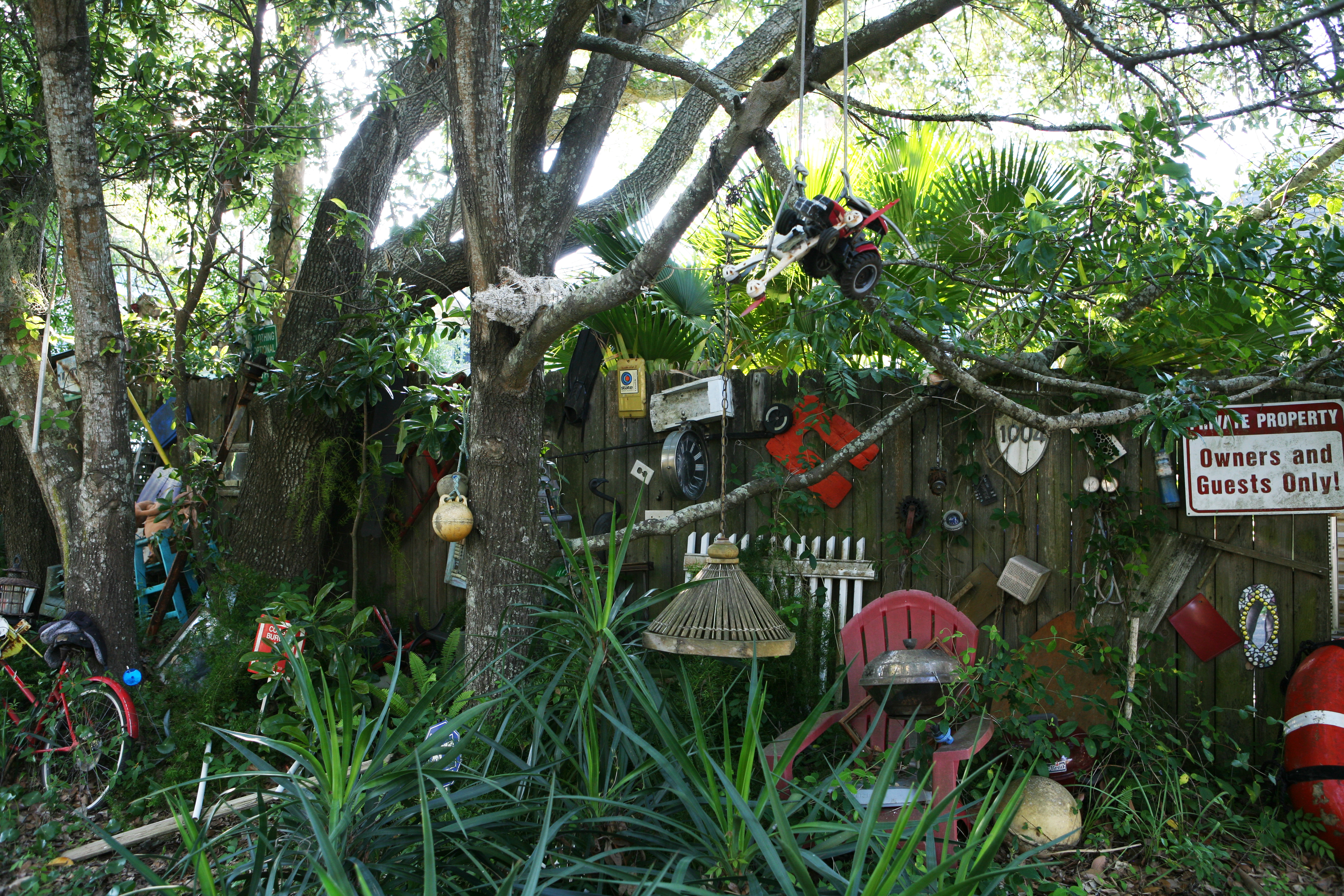
bill's art installation

photo by Caroline Tigner Moore

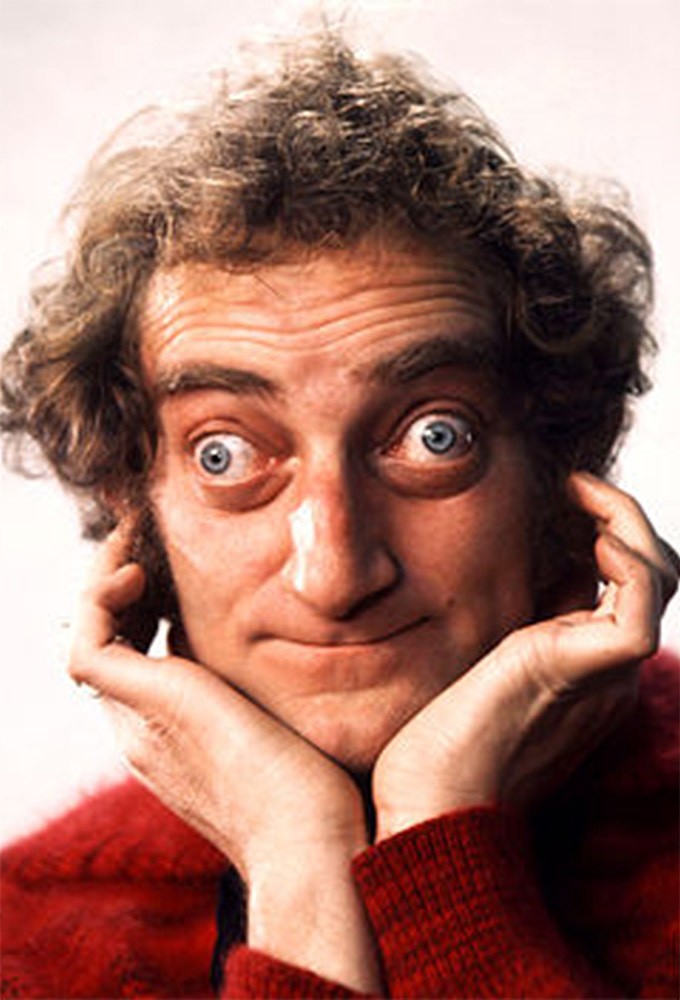
To say Folly Beach is peculiar is to say the sun is hot, night is dark, and that Marty Feldman never graced the cover of People magazine as the “Sexiest Man Alive.”  After all, Folly Beach is – in the now famous phrase coined by my friend and former boss Bill Perry – the Edge of America.[1]

marty

the late great Marty Feldman

I’ve always liked the sound of the word peculiar. According to my very own OED  (whose print Superman with telescopic vision would have difficulty decoding), peculiar comes to English from the Latin peculium, originally meaning “property in cattle.” That cow over there – let’s call her Elsa –  belongs to US Representative Devin Nunes. She’s peculiar to Representative Nunes in that she’s his alone. She’s peculiar to him.  But it’s also peculiar that Devin Nunes is suing the cow known as “Devin Nunes’ Cow.” I’m not making this up. [2]

Over time, as words are wont to do, the definition of “peculiar” branched out from the pasture of private ownership and took on the meaning of being different from others. Not surprisingly, being different acquired somewhat of a negative connotation, because to many, especially those intent on keeping up with the Joneses, being different (or unusual) is often not a good thing.

No PR person would ever come up with the phrase “Edge of America” to promote Kiawah Island. Kiawah doesn’t mind being different in an exclusive or unique way, but it certainly doesn’t want to come off as edgy, and it’s succeeded. Kiawah is about as edgy as Jack Nicklaus.

Not to be confused with Jack Nicholson.  I remember seeing an interview with Jack Nicholson not long after the actor Hugh Grant’s arrest for solicitation. The interviewer (maybe Barbra Walters) asked Jack why someone rich and good-looking and married to a beautiful woman (i.e., someone like Hugh Grant) would require the services of a prostitute.

“Peculiarities,” Jack said with his trademark leer, “peculiarities.”

So another denotation of peculiar  – actually the number one denotation – is “strange or odd,” like walking in “polka dots and checkered slacks,” to borrow a phrase from Elvis Costello (and to avoid examples of possible outré sexual inclinations that might have prompted Mr. Grant to seek peculiar connubial pleasures outside the bounds of his marriage).

Good God, I’ve wandered far afield from paragraph one. Actually, what I want to know is what makes so Folly different from its barrier island neighbors, the Isle of Palms and Sullivans Island?  What is it about Folly that makes it so peculiar?

folly pc

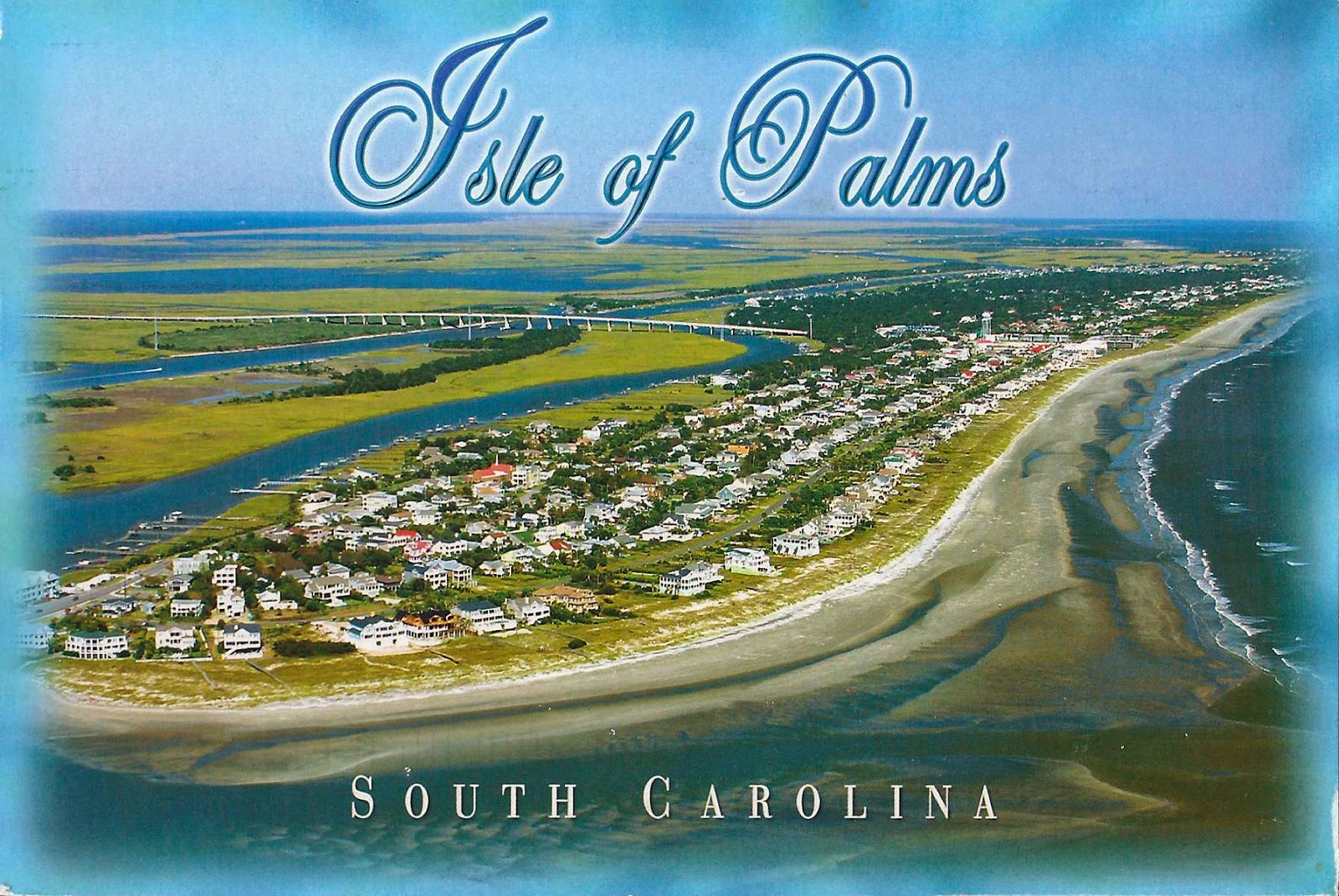
IOP pc

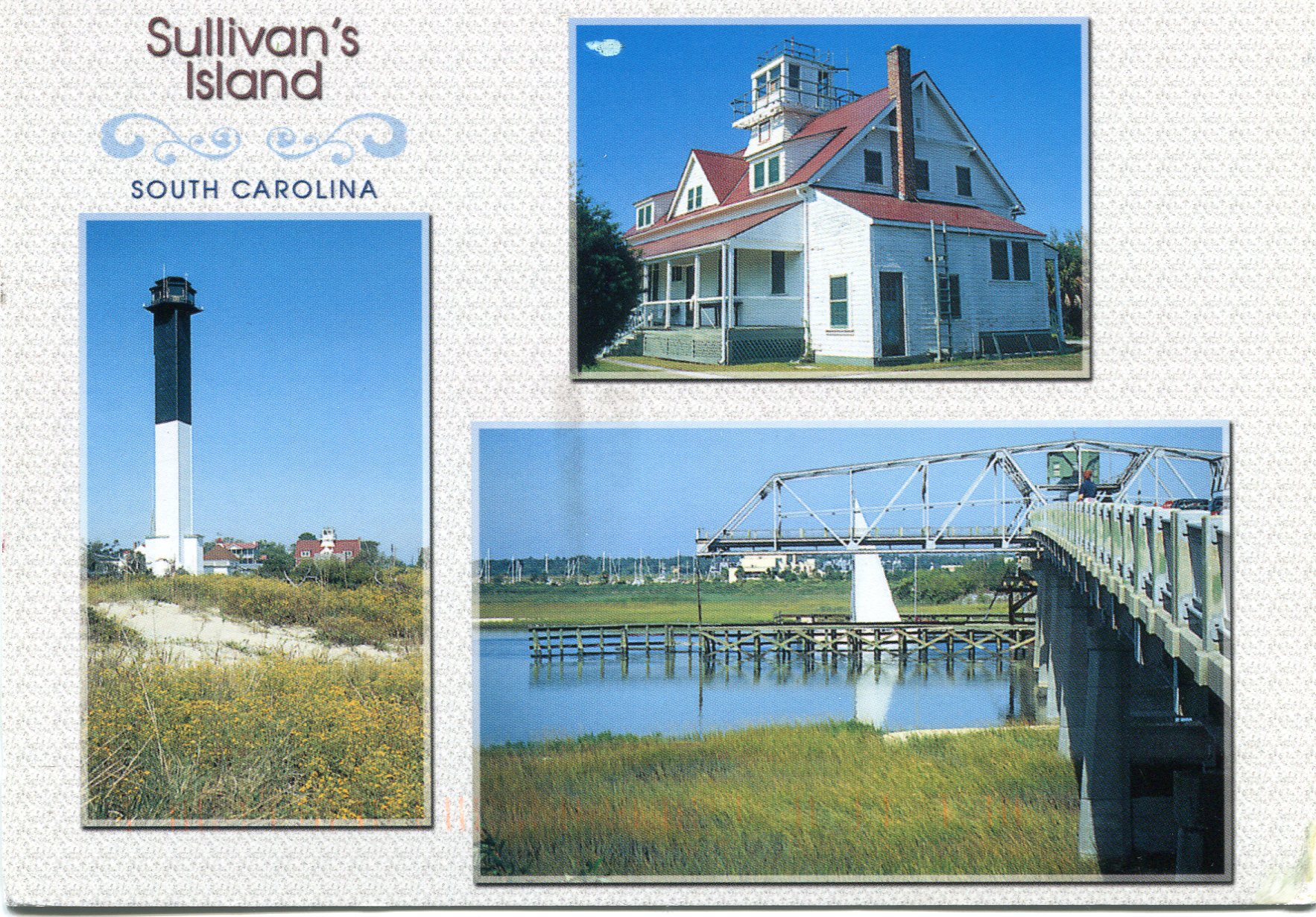
usa-south-carolina-sullivans-island

To attempt to find the answer to this ultimately useless question, I did some googling on Yahoo (mixed metaphors is where it’s at) and compared the demographics of the three island communities.[3]

2021 Population:

Folly Beach  1,035 (61.15% 1-year decline!)

Isle of Palms 4,318 (1.21% 1-year decline)

Sullivan’s Island 2,220 (.09% 1-year increase)

2021 Median Ages

Folly Beach 62 (18.3% 1 year increase)

Isle of Palms 51.7 (3.54% 1-year decline)

Sullivans Island 51.7 (strange that Sullivan’s and IOP’s median age is exactly the same)

Once again, Folly is the median.

2021 Poverty Rate

Folly Beach 16.2% (61.3% 1-year increase)

Isle of Palms 2.51% (2.43% 1-year decrease)

Sullivan’s Island 10.1%

2021 Median Household Income

Folly Beach

$76,250 (14.3% 1-year decline)

Isle of Palms

$134,917 (4.97% 1-year growth)

Sullivan’s Island

$229,118

Median 2021 Property Value

Folly Beach $632,700 (1.36% 1-year growth)

Isle of Palms $883,200 (8.33% 1-year growth)

Sullivan’s Island $2,000,001

Ethnicity

Folly Beach 100% (non-Hispanic) white

Isle of Palms  96.2% (non-Hispanic) white, Asian (non-Hispanic) 1.97% Other (Hispanic 0.556%), and White (Hispanic) 0.44%

Sullivan’s Island 100% (non-Hispanic) white

Average commute time

Folly Beach  24.6 minutes

Isle of Palms 27.9 minutes 

Sullivan’s Island 16.7 minutes

Conclusion

So let’s face it. That was a waste of time. If you’re going to come up with an answer, demographics aren’t going to help. You need to go maybe to history or —

Wait, Caroline just popped into the drafty garret to ask what I was up to, so I told her I was trying to determine via demographics why Folly was more peculiar, funkier, than the IOP and Sullivans.

“More barstools per capita,” she immediately said.

Damn!  Being so much smarter, why in the hell do women make so much less than men?

Yes, Caroline: Planet Follywood, Sunset Cay, the Washout, Jack of Cups, Drop-In, Loggerheads, the Crab Shack, Taco Boy, Coconut Joe’s, Lowlife, The Bounty Bar, Rita’s, the Tides, Chico Feo.

I’m sure I’m leaving somebody out – and except for one, none of them smack of commerciality.


[1] Wisely, Bill copyrighted the phrase.

[2] https://www.latimes.com/opinion/story/2019-10-20/abcarian-sunday-column

[3] Data for Folly and IOP from Data USA, Sullivans Island from various sources.

In Living Memory

Patchwork_Face_1997_Oil_pastel_75_x_55_cm


In memory of Judy, on the anniversary of her death, a villanelle about Everyday Use and the grafting of new life, in which she has the last word ~  Caroline Tigner Moore


In Living Memory
a villanelle

There hangs a patchwork quilt above our bed
A stained and storied past in pastoral,
Skylit purple, indian summer red;

Clary, sea glass stitched with auburn thread.
Tuck to rimple, soft in autumn’s thrall,
A damocletian quilt above our heads.

Aboard the river bark where we were wed,
The innocents stood by in quiet pall
As each we swore to share our daily bread.

And like a bruise that first appears bright red
Then blue and green and ochre in its sprawl
We lay this patchwork quilt across our bed.

So stitch together prints of all our dead,
In orisons, from labyrinthine walls.
Her face was viridescent while she bled,

But now at peace… and lovely overhead,
A Pride of India[1] shades her, green and tall.
Here lies a patchwork quilt across our bed.
“What you see is what you get,” she said.

Caroline Tigner Moore


[1] “Pride of India” is an alternate name for a crepe myrtle.

Romanticizing Defeat

hopper

Edward Hopper

Any sports fan who grew up in the Sixties has seen the intro to ABC’s Wide World of Sports hundreds, maybe, over a thousand times:


Of course, here, “the agony of defeat” makes better theater than “the thrill of victory.” Watching fans hoisting a futbol hero on their triumphant shoulders or a grand prix racer popping a cork in the winner’s circle lacks the high drama of witnessing an Olympian pinwheeling off of a ski jump ramp or a motorcyclist skipping stone-like across a lake of asphalt.

Even as exhilarating as it is to see a big wave surfer survive a precipitous drop and then ascend the crashing slope of a breaking avalanche, I’m still not sure that it produces the vicarious adrenaline rush of one of those Wagnerian wipeouts that make you grit your teeth and shudder in wonder. [Warning, in addition to harrowing wipeouts, this compilation has a soundtrack that might make Sid Vicious cringe].


* * *

If you’re a Southerner born near Charleston, South Carolina, in the early Fifties, you grew up in the shadow of defeat. When I was a child, the “War” my granddaddies talked about wasn’t Korea, or WW2, or the Great War, or the Spanish American War. It was the War Between the States.[1]

Among the fanatical, that defeat was a miasma that hung in the air like an enervating narcotic.  My friend Don Doyle convincingly argues in New Men, New Cities, New South: Atlanta, Nashville, Charleston, Mobile, 1860-1910 that citizens from Charleston and Mobile were so traumatized after Appomattox that they couldn’t bring themselves to do business with Northerners,[2] perceiving it as treasonous – unlike folk from Atlanta and Nashville. While those two cities readjusted to postwar changes and modernized, Charleston and Mobile stubbornly wallowed in the romanticizing of the Lost Cause, rationalized that defeat was somehow noble­ –  tragedy, after all, being the highest of literary genres.

As late as 1988, VS Naipaul in the New Yorker wrote about his visit to Charleston when he interviewed a non-Reconstructed blue blood celibate who monklike had abandoned all worldly pleasures for a life devoted to lamenting the fall of the Confederacy.  I think I encountered this person in 1978 when my late wife Judy and I lived on Limehouse Street, a block from the Battery. You could see this fellow – or one like him – assume catatonic postures as he stared out towards Ft. Sumter, not moving a muscle for something like twenty minutes. He almost seemed like an apparition.

So, if you grew up in this culture, a culture that had fetishized defeat, and you were cursed with a Romantic bent of mind, you might come to see defeat as inevitable, or worse, as preferable – defeat being more Romantic.  Yeats masterfully expresses that sentiment in a gorgeous ottava rima stanza whose beauty deepens the tragedy because you realize that Yeats’ canon, too, will be disappear when the annals of civilization are wiped away.

He who can read the signs nor sink unmanned

Into the half-deceit of some intoxicant

From shallow wits; who knows no work can stand,

Whether health, wealth or peace of mind were spent

On master-work of intellect or hand,

No honour leave its mighty monument,

Has but one comfort left:  all triumph would

But break upon his ghostly solitude.

                        “Nineteen-Hundred and Nineteen”


Indeed, there might be some truth to idea that defeat builds character in the Dostoyevskian sense of suffering being good as a regimen for redemption, or even if, like me, you think eternal life seems as about as likely as Dan Brown’s receiving the Nobel Prize in literature, repetitious disappointment can, if you live long enough, inure you, to reverse Gerard Manley Hopkins – “More pangs will, schooled at forepangs, [less] wilder wring.”

IMG_8919

photograph by Caroline Tigner Moore

But let’s get real. Losing sucks, as does the pathology of obsessively dwelling on lost causes, whether they be wars, loved ones, or championships. Although the season of spring has been a time of loss for me in the past, I’m making the most of this spring’s beautiful weather, sitting each afternoon on the deck with my beloved wife Caroline talking about literature and art, checking out the play of light and shadow on the spartina, noting the mated robins who nest nearby as they dart back and forth, reveling in how much clearer the air seems, going through the photos Caroline has taken of Folly during the quarantine, discovering through them hidden gems never before noticed, treasuring the rich life afforded us on this funky, narrow strip of a barrier island we call home.

IMG_9185


[1] I never heard any of my people call it the War of Northern Aggression, and I always called it the Civil War myself without ever being reprimanded.

[2] cf. Southern governors refusing federal stimulus money.


If Richard Wilbur Were Alive and a Much Less Talented Poet, He Might Write Something Like This about This Latest Quarantine


Greenblatt-Shakespeare


If Richard Wilbur Were Alive and a Much Less Talented Poet, He Might Write Something Like This about This Latest Quarantine


Master Will didn’t waste his time,

When the authorities shut down the Globe.

Stuck at home, he wrote King Lear.

Deep into the dark he dove.


Sixty years later, when the plague returned,

Sir Isaac, too, avoided idleness.

Sitting beneath an apple tree,

He invented calculus.


No obsessive tweeting for those two,

No staring all day at computer screens.

They found much better things to do

Than reposting the latest kitty memes.


201712_Why-Poetry-Matters_Article


To Distance or Not to Distance

Alas, the other day a woman, who (perhaps not coincidentally) happened to be an enthusiastic lover and promoter of animal life, perished when she wandered too close to an alligator on Kiawah Island.

Here’s Post and Courier reporter Gregory Yee Gyee’s account of the unfortunate incident, which I have subtitled, “The Report Said.”

[The victim] Covert saw an alligator in a pond behind her friend’s home on Salt Cedar Lane and wanted to get closer, the report said.

The friend told deputies that Covert was on the back steps of her home and eventually moved down toward the pond.

″(She) kept yelling for her friend to get away and saw her friend was about four feet from the edge of the water when the big alligator came up and attacked her friend,” the report said.

The friend’s husband grabbed a shovel while Covert’s friend called 911, the report said. The husband tried to hit the alligator in a bid to make it release Covert, but those efforts were not successful.

The alligator dragged Covert under the water, the report said.

“She stated her friend never screamed,” the report said.

Will this unfortunate incident go viral as a sort of parable for the dangers of violating social distancing during what I have come to call Da Cora?

I’m betting not.

reopening+columbia+sc-55

Patrons waiting outside Jake’s, a Columbia, SC restaurant on 4 May 2020 (photo by Sean Rayford via Soda Citizen)

Damn, why didn’t I sell my Boeing stock and reinvest it in some cut-off jean manufacturer?

Anyway, in the USA, divided as it is, we have two opposing factions clashing across social media about how we should handle the contagion, and, not surprisingly, ideas about how to deal with the crisis tend to align themselves to opposite ends of the political spectrum.

On the one hand, we have the left, citizens who believe in science and place human life above economic considerations. They see the denizens of nursing homes as memaws and papaws, not as statistical models who have in many cases outlived the expected average lifespan of 78.54 years.

The left believes opening too soon is ill-advised, that a new wave of contagion will result, which will wreck the economy the other side hopes to rescue by reopening restaurants, barbershops, beauty salons, tattoo parlors, and strip joints.[1]

The left has faith in human rationality, believes that restaurants will remain empty because people won’t feel safe. They believe we all should wear masks, as much to protect others as ourselves. Ideally, some would like social distancing to continue until a vaccination is available.

On the other hand, we have the right, Gadsden-flag-waving, mask-eschewing rugged individualists who don’t want the government treading on them. They cite articles from outlier scientists who claim the infection and death tolls are statistically insignificant, that the way to overcome Da Cora is to have a majority of the population get infected and  develop antibodies, which eventually will choke off the virus. Embracing social Darwinism, they argue that young folks (with a few exceptions) tend to suffer only mild symptoms, so let’s get them infected so they can develop antibodies, recover, and go back to serving those beers and inking those biceps, and if the aged and others suffering from pre-existing conditions die, well, that’s too bad –  that’s the way that nature works.

Of course, things would be much better if we had adequate testing to determine whom it’s safe to be around and who isn’t, but the fact of the matter is that we don’t.  I personally don’t know what ultimately is right. I tend to seek a middle way in life’s dilemmas. Is there one to be found here? Dunno. Maybe?

Anyway, at least in South Carolina, where I live, the Governor is reopening the state. I also read in this morning’s paper that the beaches are letting non-residents back on. Yesterday, here on Folly, restaurants were offering outdoor dining, and when I went for pick-up at Chico Feo, the customers were, unlike at Jake’s, practicing safe social distancing.

organic mask

One of my personal heroes, Kenny, modeling one of nature’s very own protective masks

At Chico, there were one-way entrances and exits and bottles of hand sanitizer available. Nonresidents were being allowed on the island at seven, but I was safely at home by then and didn’t gander back out to take a peek.

At any rate, I would suggest that if you’re old (like me) and/or suffer from an underlying condition, you might want to postpone that barbed-wire tattoo or foray to the Wild, Wild Joker Club.

But, hey, it’s up to you, dear existentialist.


[1] Lap dances, I have read, occur much closer than the six feet of separation epidemiologists consider safe.

My Very Brief Membership in Carlos Castaneda’s Church of the Shamanistic Upward Flight of Liberation

OLYMPUS DIGITAL CAMERA

Peyote consumption, dear readers, was the central ritual of the religion I practiced for at least 12 hours.  Yes, for the first time ever, I publicly acknowledge that for a day-and-a-half, I was a member of  Carlos Castaneda’s Church of the Shamanistic Upward Flight of Liberation.

It’s a long story, one ill-suited for this genre.  Perhaps an epic poem would be too grandiose, but certainly a blog post in no way could do justice to the hero’s journey Johnny Dryer and I took across this great country of ours in search of Carlos Castaneda.

However, now, that I’ve let it out, I guess I do owe my reader(s) a bare bones narrative.

LA street

LA circa 1973

In the spring of ’73 my good friend Johnny Dryer and I decided that after a harrowing semester of cutting classes, attending keg parties, and watching pretentious foreign films, that we deserved a sabbatical, so we skipped the spring semester to hitch across the country to California to see if we could find the famous anthropologist/would-be shaman Carlos Castaneda, who recently had slipped out of public view and moved into a large house somewhere in L.A.

I’ll spare you the details of the memorable rides we hitched, e.g., our sitting in the back of rig of an eighteen-wheeler with a trucker’s wife (Janelle) as we witnessed the driver go through can after can of the Old Milwaukee he had stowed in a cooler on the passenger’s side.  (After finishing a beer, he would smash the can with the palm of his hand as if it were a Dixie Cup and fling it out of the window, sometimes while passing slow-moving vehicles at night on the downslope of foothills). [1]

Or the time we were picked up by a bus transporting a professional female roller derby team.

Let’s just say that it was a cross continental zig zag that took us from Tijuana to Denver but that eventually we arrived at the City of Angels alive but thinner.

I have to give Johnny 100% of the credit (and the blame) for not only turning me on to the mind-expanding philosophy of Carlos Castaneda and his mentor Don Juan, but also for the brilliant detective work in our eventual successful tracking down Castaneda’s house (Think The Big Sleep meets Easy Rider).  No, by the time we hit L.A., I was one lovesick puppy, moping around like a latter-day Troilus, missing my beloved girlfriend, Cressida  Debbie.  Johnny is the protagonist of this tale, I merely the comic morose sidekick.

We did at last get to meet the Master, the Manson-lite entourage that surrounded him, and found him to be a very short, charismatic narcissist whose megalomania didn’t quite jive with the shamanistic attributes that Don Juan projected in The Teachings of Don Juan: A Yaqui Way of Knowledge.

And though I fully expected for my initiation to the sacrament of peyote to ignite spirit-spawned visions of totemistic reality (an albino aardvark, say, speaking truths to me in an ancient Yaqui tongue that I could mysteriously understand), the truth is that I became paranoid and dared not open my mouth for fear that I might sound as idiotic as the rest of drug-crazed groupies surrounding Carlos.

peyote sofa

From left to right, yours truly, Johnny Dreyer, unknown dude, unknown chick, Carlos unknown chick, unknown dude having a bad trip.

Perhaps Gringo idiots like us co-opting sincere Native American religious rites and transforming them into New Age bacchanalia played a role in the Supreme Court’s 1990 decision to bar Native religions from using peyote, a sacred plant that had been part of their ceremonies for centuries; nevertheless, Oregon v. Smith represents a bone fide assault against an individual’s right freely to practice religion, a decision reached by a majority of conservative justices, who later would claim it’s okay for Hobby Lobby not to provide employees with birth control because it contradicted the owners’ religious beliefs.

It’s enough to drive you to drugs.


[1] Hat tip, Furman Langley. Please note, reader, that this post is classified as fiction.

How “Karen” Became a Synonym for A** H***

-karen-353908

© Provided by MediaWorks NZ Limited

Oddly enough, the organization that keeps track of the popularity of baby names is the Social Security Administration, the same friendly people who constantly fill my in-box with phishing alerts as enterprising young folks seek to make a quick buck bamboozling boomers.

For the last five years or so, the most popular names for girls are in descending order: Emma, Olivia, and Ava, the terminal “ah” sound dominating.

These names seem rather old-school to me, e.g., Emma Wodehouse, Olivia from Twelfth Night, and St Ava[1] have been around for centuries.

On the other hand, up-and-coming girls’ names sound much more exotic. Here are the top trending choices for this year’s pink clad newborns: Meaghan, Dior, Adalee, Palmer, Oaklynn, Haisley, Keily, Novah, Yara, and Ensley, five out of ten scoring a red-squiggly underline from my spell checker.

One female name that you won’t find on any popularity lists is Karen, which recently has entered our lexicon in the form of a common noun denoting a certain irritating sort of entitled mom easily offended and quick to ask to speak to the management.

Here’s Urban Dictionary top definition (which violates the rhetorical stricture of placing the word to be defined in a category and distinguishing it from other members of the category):

TOP DEFINITION

Karen

gives raisins to kids on Halloween

drives an SUV to carpool her kids to soccer practice… better hope the ref doesn’t make a wrong call because she will sue!

love to use snapagram to post her workout selfies

after a long day of talking to managers and driving her kids around she sits down with her mom friends at book club and drinks lots and LOTS of wine

“oh my god Karen do you really have to talk to the Burger King manager every time they forget to give you a ketchup packet.“

“LOL! Yes!! I have to Facebook and instasnap it to all my friends to make sure everyone knows to watch out LOL!!!”

##karen #soccermom #probablyaboomer

by omgurmomsaboomer November 27, 2019

I had never heard of the term Karen as a common noun until the other day when I ran across it in Brian Hick’s column in our local paper, The Post and Courier. He wrote, ironically, “Because, of course, public health decisions should be based on the protests of some Karen in front of a Baskin-Robbins and not, you know, the fact-based recommendations of epidemiologists.”

I found the phrase “some Karen” odd, and, as so often happens when you run across a new word or locution, I started seeing “Karen” all over the place, especially on Twitter, the high church of herd mentality.

So I wondered why Karen and not Cindy or Debbie or Caitlin. So I went to my number one source for literate explanation, VOX.

The “Karen” meme has multiple origins, each one using the idea in slightly different ways. But one of the most prominent uses developed on Reddit, thanks to a redditor known for posting amusingly bitter invectives about his ex-wife — posts so amusing, they inspired a high school student to make an entire subreddit, r/FuckYouKaren, devoted to turning his saga into a meme.

Karmacop97 is a 17-year-old from Irvine, California. He made the subreddit two years ago as a joke and named it after the now-deleted user account Fuck_You_Karen. At first, karmacop97 told me, the subreddit was “just to compile the lore behind this guy’s relationship,” which he viewed as likely being a parody. The villainous Karen had taken the kids and then the house, both typical parts of the “Karen” meme. Soon, a few thousand redditors had subscribed to make memes based on the redditor’s enraged posts — but when that aggrieved user eventually deleted his account and vanished shortly after the subreddit’s creation, the forum kept growing. Since then, the subreddit has grown from 4,000 redditors to more than 435,000 — and the memes posted there call out all kinds of “Karen”-ish behavior.

In particular, the “Karen” has evolved into a figure known for her hypocrisy, rudeness toward working-class staff, and anti-science beliefs.

So there you have it. Like the name Bubba, which has come to designate an unsophisticated  white Southerner, we have Karen, a name that now is an insult, designating an entitled, unsophisticated pain-in-the-ass white woman with an untrendy hair-do, which is too bad if your name happens to be Karen. The first Karen that comes to my mind is a former colleague who is the antithesis of the meme’s caricature. She’s witty, compassionate, well-educated, a believer in global warming and vaccination – and she’s not a boomer!


[1] BTW, Today (29 April) is St Ava’s  Saint’s Day. Cured by blindness by St. Rainsfredis, she was elected abbess at Dinart, Hainaut in c. 845.


1549963515-640x510


Wild Kingdom 2020, Folly Beach Backyard Edition

bunting uncnscious

To tell the truth, I’m not a fan of nature documentaries. For one thing, I don’t need to be constantly reminded that exotic habitats are rapidly disappearing from our poisoned planet, nor do I enjoy the spectacle of claws, talons, and incisors ripping the flesh from scampering rodents, warthogs, zebras, giraffes, antelopes, or baby elephants. The whole Darwinian horror show of survival shivers me timbers, sends rushes of disgust up my spinal cord.

And who in the hell are you supposed to pull for?  The pride of lions with their adorable cubs and dead-beat dads need to eat, but the elands about to be preyed upon seem somehow more sympathetic. Inevitably, after the kill come packs of scurvy hyenas (who also need to eat) who chase off the lions and take over the flesh-ripping and ravenous swallowing. Yuck.

Not surprisingly, given my delicate sensibility, in my youth I became an avid indoorsman, an inept male incapable of stringing a rod and reel (or baiting a hook for that matter) but one who could distinguish Jimmy Cagney from George Raft, Buster Keaton from Harold Lloyd. Why go traipsing through insect infested swamps when you can read “The Big Two-Hearted River” while sipping on a peaty single-malted Scotch?

That said, I happen to live in a spot that provides wide open views of the Folly River, which boasts an abundance of wildlife. Out back I’ve seen dolphins, otters, a mink, herons, egrets, ospreys, bald eagles, wood storks, bats, racoons, and rats. About twenty years ago, my late wife Judy Birdsong cajoled me into building a bird feeder, which consisted of a sheet of plywood positioned on a metal pole in the backyard. Judy would scatter seeds there, and birds would visit, chasing each other off until that fateful day when a red-tailed hawk swooped down and snatched one of the birds while the rest frantically peppered the plate glass windows that provide us our views. Afterwards, Judy insisted I disassemble the feeder, which suited me fine.

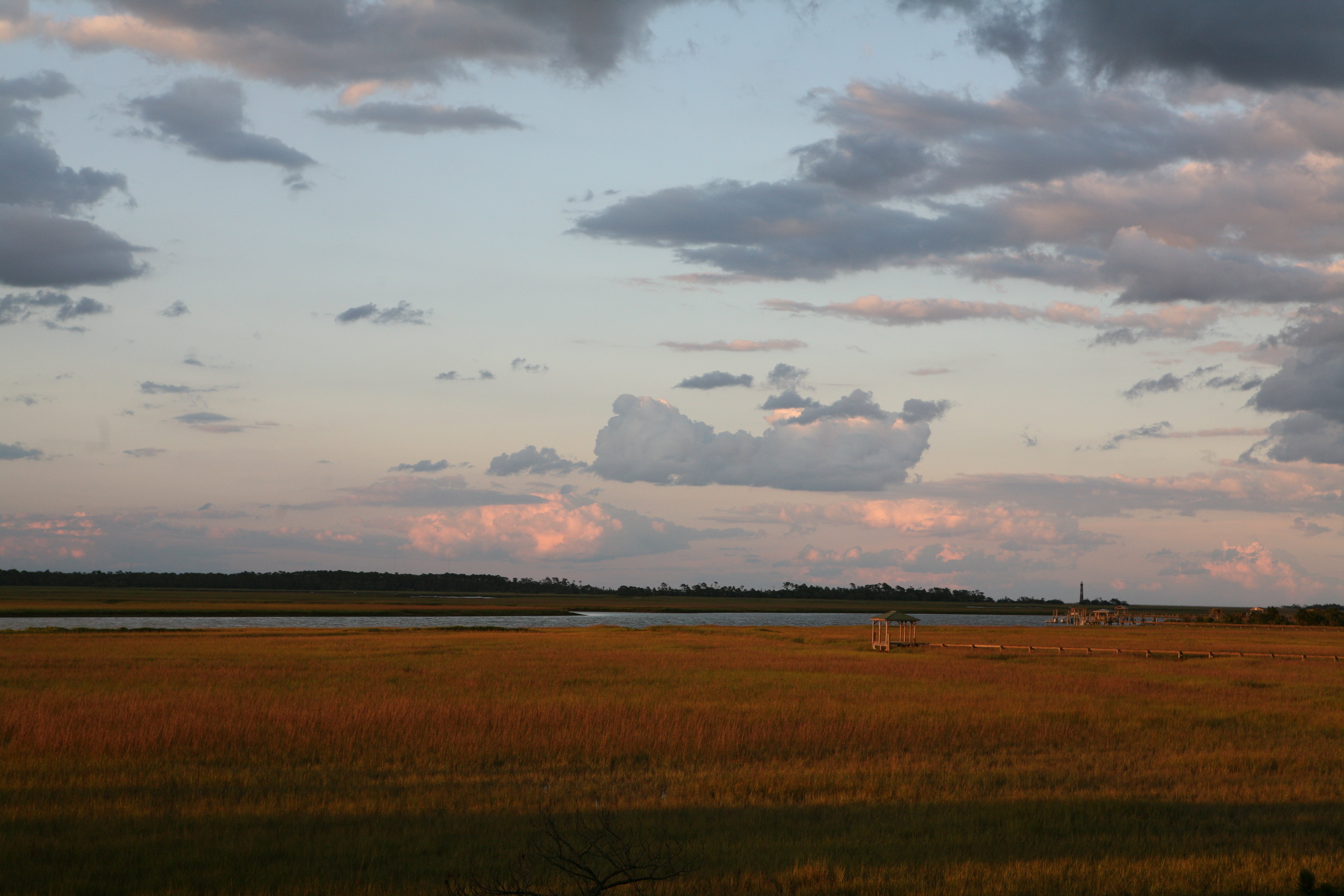
Don’t get me wrong. I have nothing against sunlight, consider vitamin D an asset. In fact, my favorite watering hole Chico Feo is an al fresco bar that closes when it rains or gets too cold. So now with Chico Feo shut down during the quarantine[1], my wife Caroline and I spend our happy hours on our back deck enjoying a couple of pre-dinner libations. This April has featured unusually low humidity, and it’s enjoyable looking out over golden sunlight dappling the greening marsh and watching merchant ships in the distance sliding past the Morris Island Lighthouse in and out of Charleston Harbor.

IMG_4125


IMG_3083

So there we were yesterday sitting on our deck enjoying our ridiculously highbrow conversation (was Wallace Stegner’s Lyman Ward a more sympathetic amputee than Hemingway’s Harry Morgan) when Caroline suddenly stood up cried, “Oh, no!”

“What’s the matter?”

A bird just slammed into the window and dropped to the ground!”

“What kind of bird?”

“I think it was a cardinal,” she said.

“Oh, it’ll probably come to,” I said, unmoved (and unmoving), but Caroline was already scampering down the steps to comb through the Asiatic jasmine for fallen bird, which, amazingly she found in a couple of minutes, a male painted bunting, not a cardinal, inert but not dead.

IMG_3117

Caroline picked him up and placed him in a net we use for scooping out our water garden and placed the net in the middle of the yard. We watched intensely, hoping for some movement, but there was none. Then the shadow of a large bird darkened the deck, and sure enough, we looked up to see a red-tailed hawk cruising.

So both of us went down and placed the net in a wax myrtle for greater camouflage. The bunting was now standing, but otherwise not moving, looking like the taxidermized Carolina Parakeet (long extinct) that was displayed in the Old Charleston Museum off of Calhoun Street.

Caroline noticed that maybe his claw was entangled in the mesh of the net, and as she reached down, the bunting flew off into a thicket of Elaeagnus, where I think he and his mate nest.

We cheered!

The gorgeous fellow will live to see another day –– maybe.

IMG_3123

And as far as the red-tailed hawk is concerned, let him eat rats.

hawk 3 (original)


[1] You can on some days still get takeout.

Sunday Evening Blues

Melancholy_ Wes (1894)

“Monday, Monday, just can’t trust that day,” sing the Mama and Papas, but T Bone Walker in “Stormy Monday” argues Tuesday is just as bad.

Not so for Steve Wright of the Easy Beats, who feels better on Tuesdays, claiming that “even my old man looks good.”

It’s Wednesday morning at five o’clock when that Beatles girl slips away from her parents to meet “a man from the Motortrade.”

Tripping on acid, Donovan claims “the gulls go willing spinning on Jersey Thursday,” referring not to the scavenger gulls of Asbury Park but to the ones of the isle between England and Normandy.

Again, the Easy Beats: “On Monday, I got Friday on my mind.”

Twenty-four hours later, Tom Waits is gassing her up, hand on the wheel, arm around his sweet one in his Oldsmobile, looking for the heart of a Saturday night.

That leaves the Christian sabbath, Sunday, Bloody, Sunday. Lucinda Williams and I can’t seem to make it through Sunday. [sigh]


Sunday Evening Blues


On Sunday nights

I remember

lying on the bottom bunk

in my pajamas,

wishing I’d done my homework,

listening to the stampeding notes

of Bonanza’s theme song

echoing from the den as I dreaded tomorrow.


In the stasis of quarantine,

it seems I should be able to shake

this chronic case

of the Sunday blues.


After all, Monday mornings don’t matter anymore.

I don’t need machines to measure minutes,

yet that childhood sadness endures,

indelible, resistant to erosion,

carved into the tombstones

of so many Sabbaths. [1]


[1] Yes, dammit, the shortening of each successive line of the last stanza is intentional.