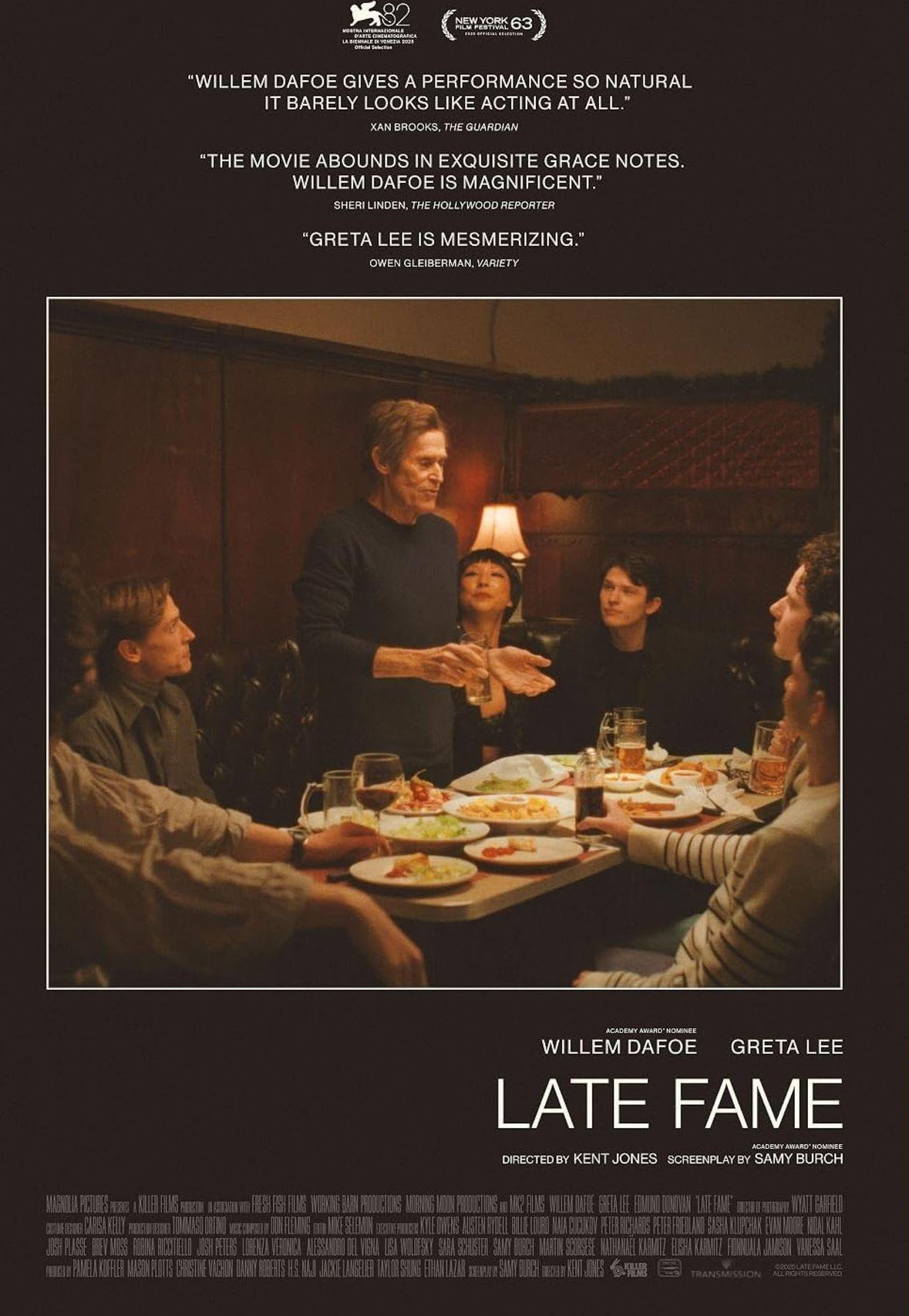
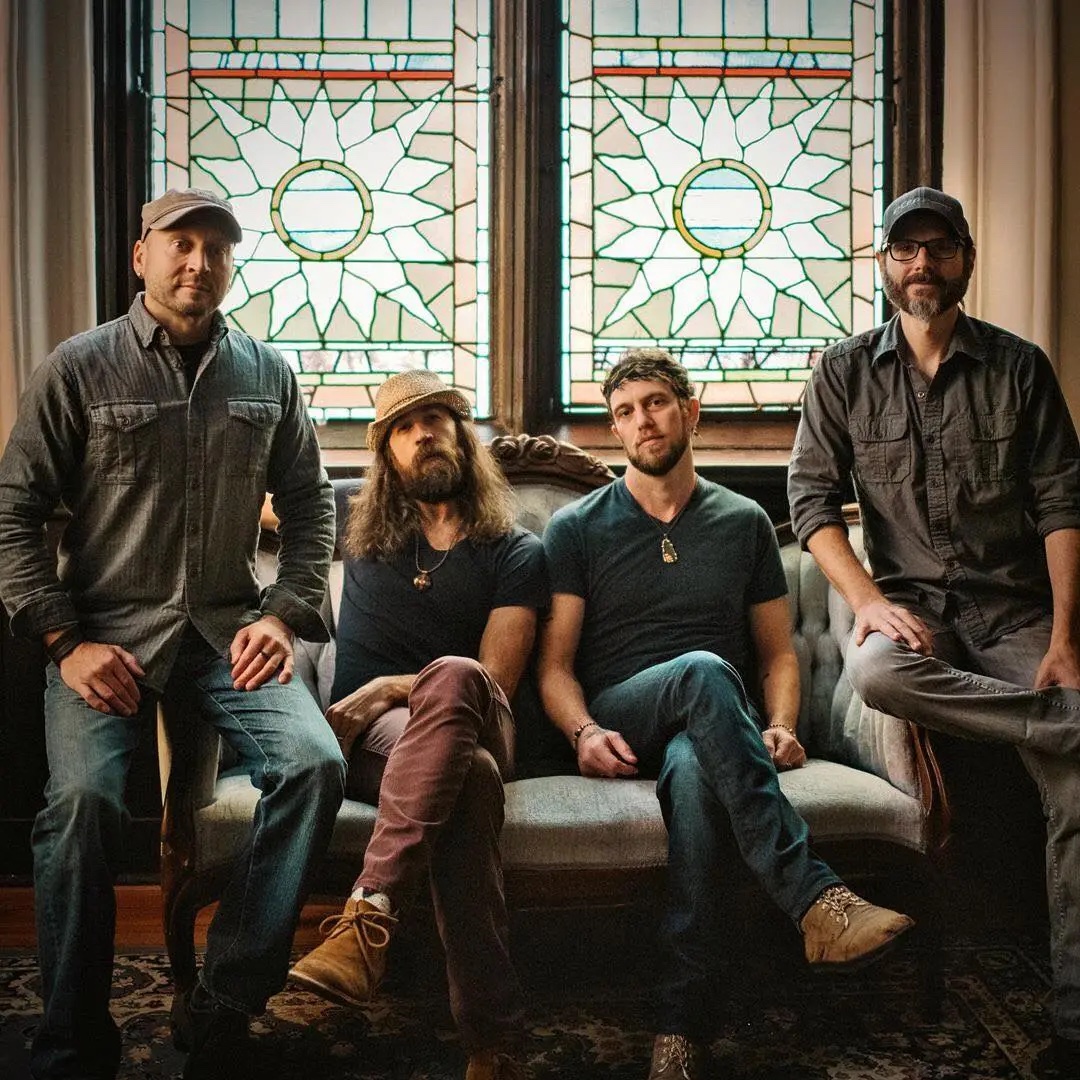
When he’s not fronting the band Danger Muffin, my pal Dan Lotti is a partner in a film company that acquires screenplays. Several months ago at Chico Feo,[1] Dan was all hepped up about a script that his company had optioned called Late Fame. It was in production, and they had landed Willem Dafoe to play the protagonist, Ed Saxberger, a mildly successful 1970s poet who now sorted letters in a post office. Like virtually all poets, even semi-famous ones, Saxberger had been all but forgotten. Nabbing Dafoe for the role seemed like a towering home run. If you’ve seen David Lynch’s Wild at Heart and remember the villain Bobby Peru, you know what I’m talking about.
DANGER MUFFIN, DAN LOTTI SECOND FROM THE LEFT
Dan offered to send me a PDF of the screenplay, and, of course, I jumped at the chance to read it.
I’ve only read three screenplays that have made it to what we once called “the big screen.”
Wes Craven’s Swamp Thing
David Boatwright’s Summerville ‘70
Samy Burch’s Late Fame
***
Set in the Village (of course), Late Fame’s opening shots eschew dialogue:
ED SAXBERGER, 70s, sorts the mail. More mail than you could ever imagine. Underground, in the bowels of the post office, basically alone.
He is so comfortable sorting letters it almost seems like a ballet. An art. But not a joyful, playful one– he looks exhausted.
He wears a uniform, eats a tunafish sandwich on his lunch break, sorts more letters, and clocks out.
Elegant.
The screenplay was written by Samy Burch and adapted from a novella by Arthur Schnitzler. When Dan described the movie at Chico, before I’d read the script, I imagined Saxberger as a Bukowski-like wild man who wears his badly damaged liver on his sleeve. Instead, he’s a modest, mild-mannered loner who doesn’t take himself seriously. Then a pretentious gaggle of NYU wannabe artists “rediscover” him and enlist him in a series of self-promotional readings, prompting him to revisit his writing and the press clippings he’d saved but hadn’t looked at in years.
As it turns out, Saxberger’s “late fame” is fairly meager—no Time covers, merely the adoration of an opportunistic, ambitious, but ultimately amorphous literary movement intoxicated by the idea that they’re creating something consequential.
***
Caroline, my expat son Ned, and I finally got to see Late Fame last week at the Terrace, and we thoroughly enjoyed it, a refreshing antidote to the 78-rpm mayhem of The Odyssey. Everything in the film complements everything else—the muted, brown-dominated palettes of the street scenes, Saxberger’s obsolescent stereo equipment playing Ezra Pound reading from one of his Cantos, the vague echoes of Weimar Germany with Gloria vamping “à la Sally Bowles. A fresh breath of stale air, you might say.
It’s the type of movie that stays with you even days later. In the theater, it didn’t occur to me that the down-to-earth guys Saxberger hung with at the pool hall were the complete opposite of the up-in-the-air artistes he was now wasting time with. The deliberate movement of the plot’s gentle arc offered silences that are so rare in contemporary movies. This gave me hope for my current project, WinterBreak, which features an ensemble cast and doesn’t follow what I think of as the Twelve-Dead-Cats template. Life is more complicated than that, and much richer for the complications, I might add.
***
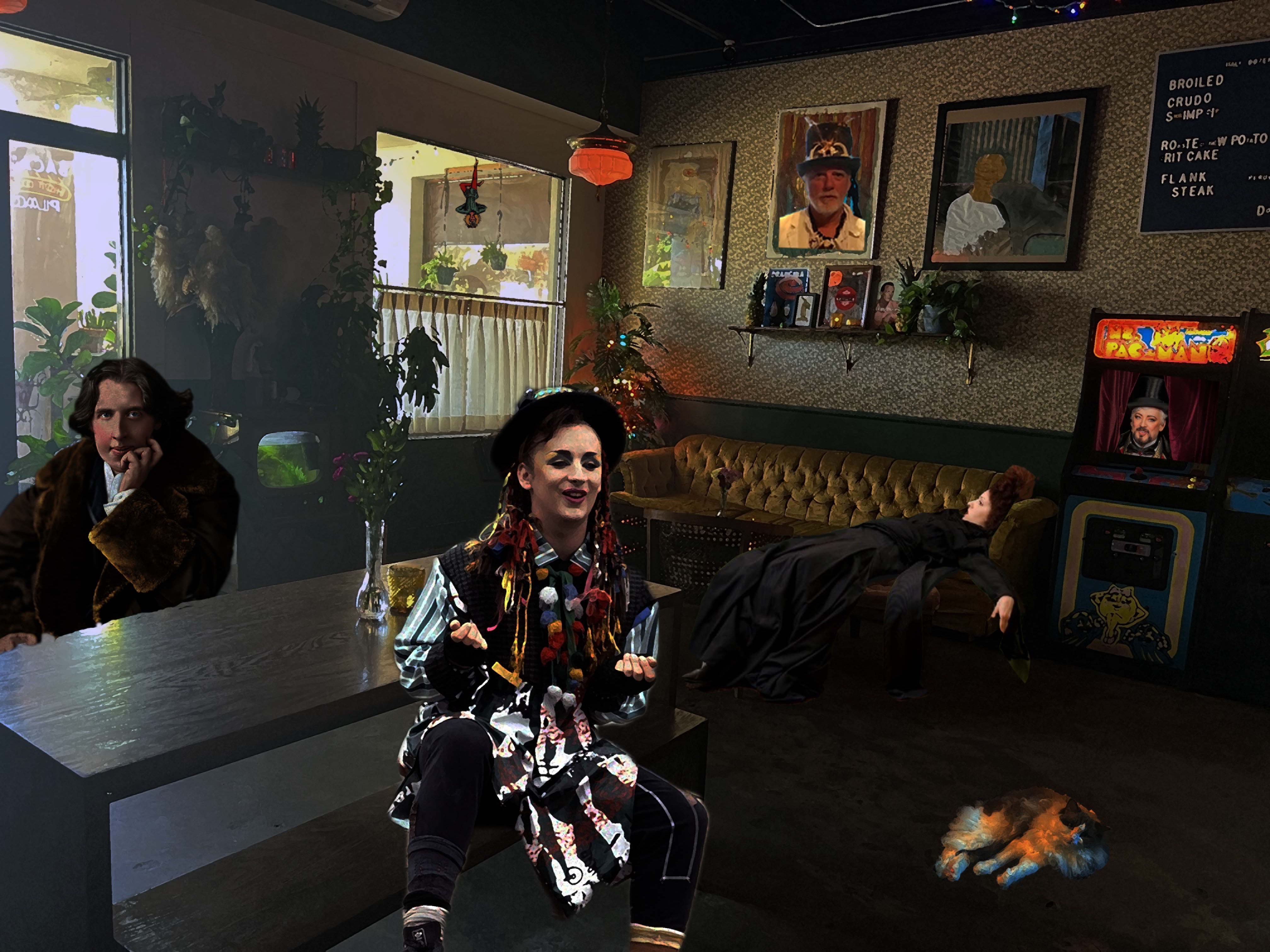
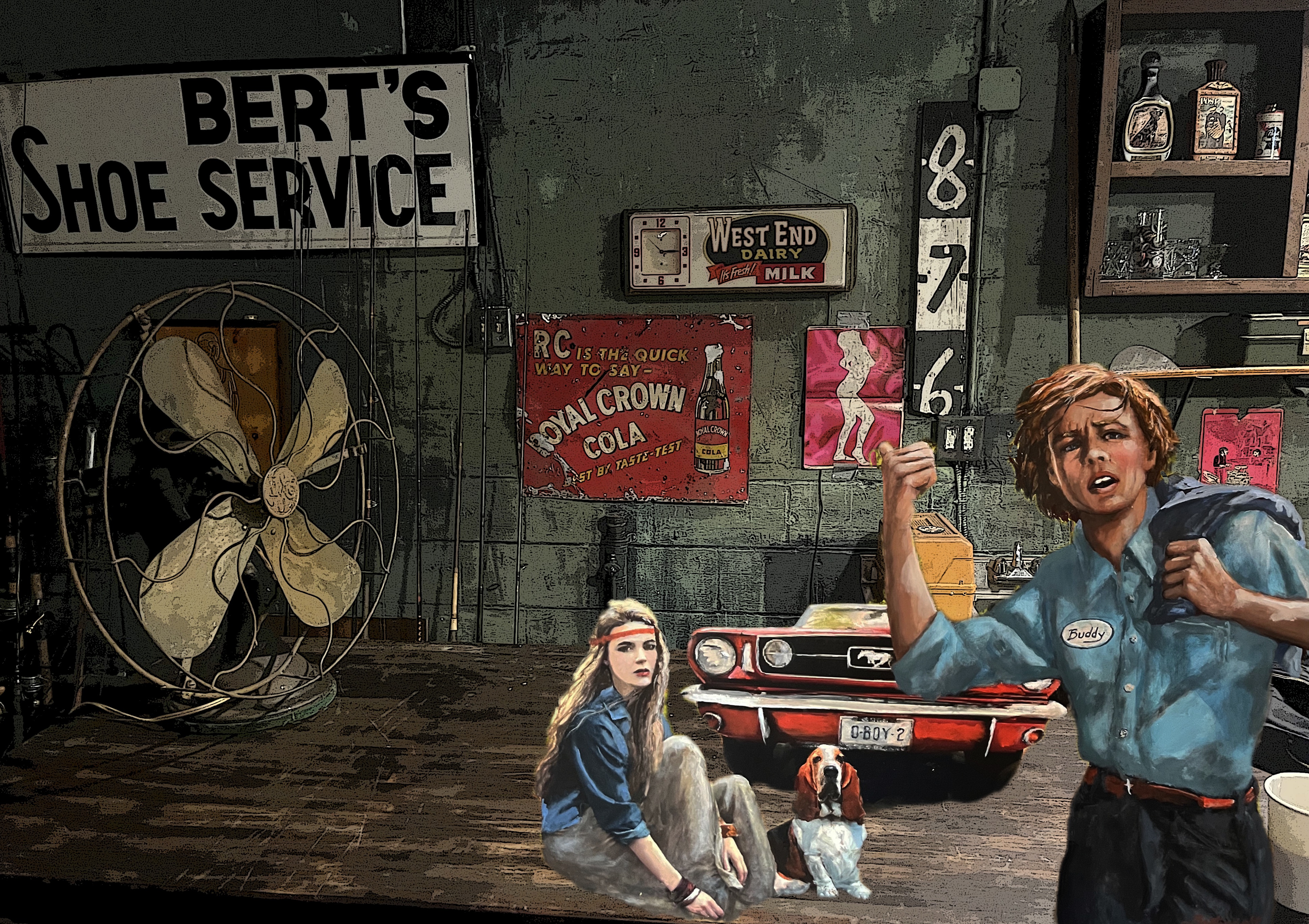
After the movie, some of us gravitated next door to Bar George to talk about the film. Come to think of it, Bar George as a set would have worked for Late Fame with its sofas and tables and quirky artsy décor (see below). When Dan asked me what I thought, I told him how much I enjoyed it, especially the comic Greek chorus of the wannabes. They reminded me of so many of the self-proclaimed poets I encountered in college and graduate school.
I told Dan that even if I’d ever thought I had something important to say, I would never have uttered it aloud. In truth, I’d never thought in those terms. I’d merely hoped my writing might somehow entertain somebody.
He laughed, nodded his head, and Caroline, Ned, and I headed for home.
On the way back to Folly, passing beneath the arched oak tunnel of Riverland Terrace, I thought about the film and Winter Break and the beauty of the late afternoon sun strobing through the leaves and the whole pretentious business of bringing words to life.
DIGITAL COLLAGE: BAR BOY GEORGE BY WESLEY MOORE III
[1] Oops, oh-me-oh-my-oh, rhyming prose is a no-no.
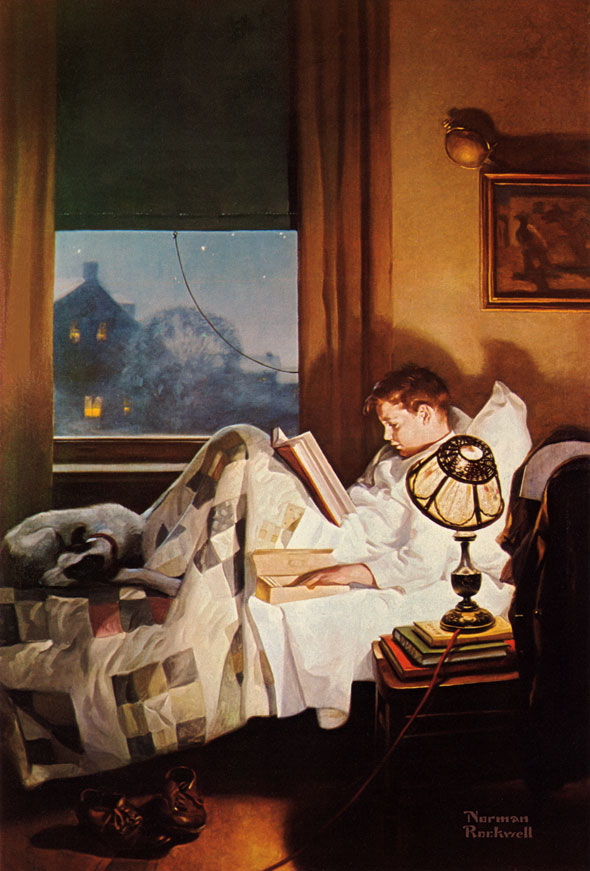
When I was five years old living in Biloxi, Mississippi, I was fortunate enough to contract rheumatic fever, an autoimmune reaction to untreated strep throat that triggers the immune system to rev into overdrive, attacking healthy tissue along with invasive streptococcus bacteria. I say “fortunate” because the disease left no permanent heart valve or joint damage and no doubt changed the course of my life because, to echo Jagger and Richards’ “Street Fighting Man,” what’s a poor bedridden boy to do but play with puppets, put together picture puzzles, and be read to?
Whether for good or ill, these lifelong habits have formed my character.
Spending a week in a hospital ward and another month in bed on Laurel Street in Summerville contributed to my becoming an avid indoorsman. Even in my young adulthood, I preferred the vicarious adventures reading provides —hunting down that great white whale with Ahab and the boys—to actual deep sea fishing, which I’ve done once but never will again. Not that it wasn’t interesting seeing flying fish skim across the surface of the ocean and that waterspout lazily twisting in the grey distance, but when all is said and done, Wordsworth’s nature just ain’t my thing.
Of course, I’ve moved on from picture puzzles of my pre-kindergarten hospital bed to more sophisticated pastimes like crosswords, sudoku, Wordle, Connections, and Spelling Bee. Solving a set series of on-line puzzles has become an unalterable beloved morning ritual during my retirement.
As far as puppetry goes, you can catch a video of a late life puppet show by hitting this LINK.
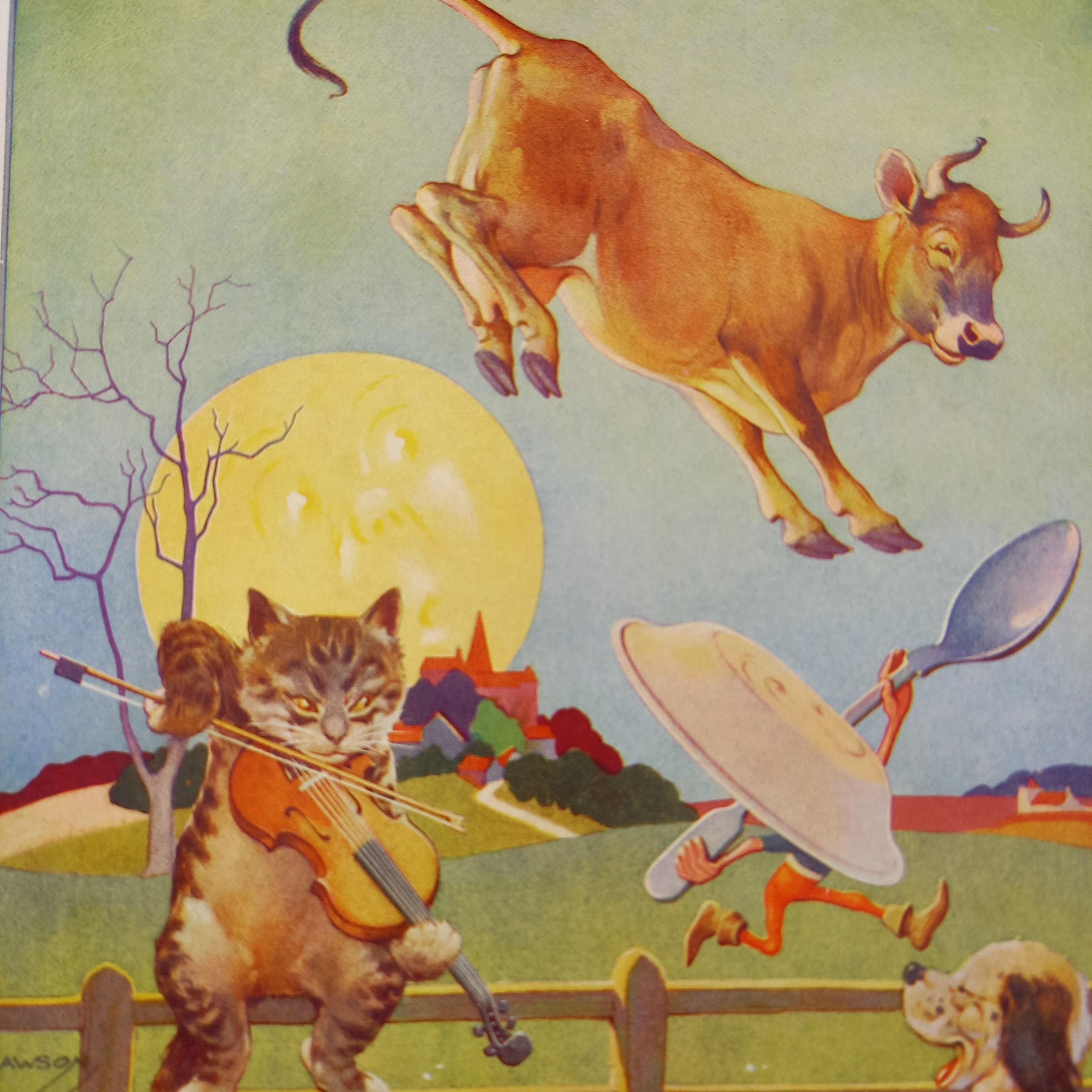
But more importantly, back in the day — the summer of 1957 to be precise— by mother read to me. I especially liked the Uncle Wiggily books, featuring a set cast of characters like Peetie Bow-Wow and Neddie Stub tail, the bear chap, and I also enjoyed Mother Goose and the brothers Grimm’s fairy tales.
Newtonian physics de damned!
Hey, diddle, diddle,
The cat and the fiddle,
The cow jumped over the moon;
The little dog laughed
To see such sport,
And the dish ran away with the spoon.
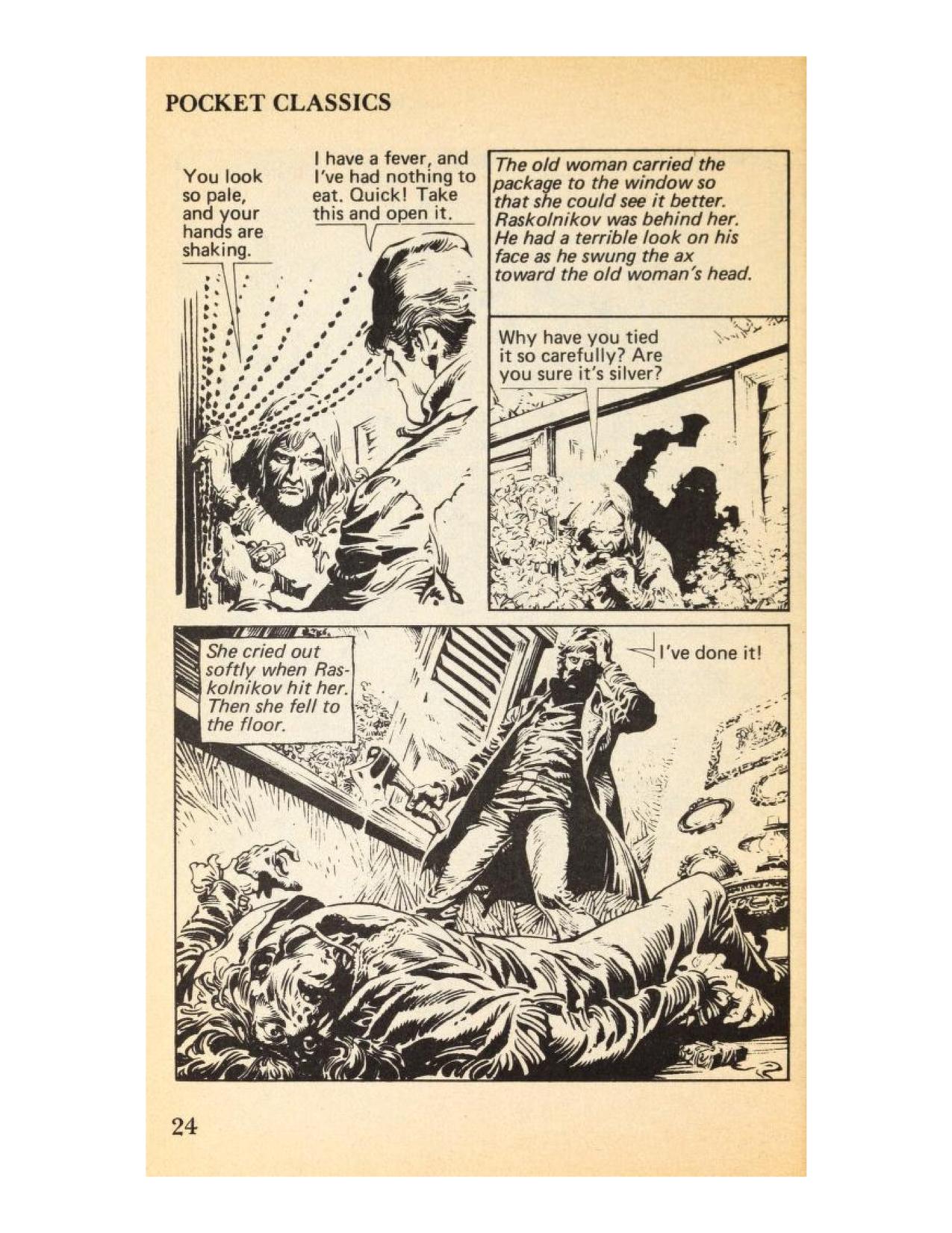
After I learned to read myself, I started collecting Classic Illustrated comic books in which the authors and artists attempted to jazz up novels like Dostoyevsky’s Crime and Punishment with action packed illustrations that actually belie the dark claustrophobic interiority of the novel’s 720 some odd pages.
Anyway, in retrospect, I’m okay with swapping two months of playing tag out-of-doors to the subsequent decades of living a life of imagination, and, of course, I know Ernest Hemingway, Cormac McCarthy, and my pal Jason Chambers have proven one can both love literature and the wonders of nature. Indeed, that love no doubt has deepened their understanding of how it all works.
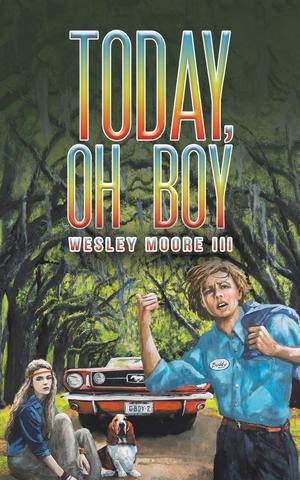
Each December, I assemble a month-by-month retrospective with links to what I consider that year’s greatest hits. Alas, in 2025, we have what my curmudgeonly grandfather Kiki would call “slim pickings.” Most years, I crank out 60 or so posts; however, this year I only produced 40 (and not a one in November). The good news is that the paucity of publishing is a by-product of greater productivity elsewhere. I’ve just finished Too Much Trouble, a sequel to Today, Oh Boy. The new book is essentially “a Southern Gothic romantic Comedy,” and who doesn’t love a “meet cute” during a serial killer’s murderous spree?
Now I’m attempting to land an agent so I can upgrade publishers, a tedious exercise in filling out forms on on-line platforms. Here’s a common request: Inone sentence, pitch your novel.
“Oh, y’all, it’s so good, set in 1972, a page turner, literary, with characters you care about, a weird ass combination of pathos and fun, Harry Met Sally meets Night of the Hunter.
Already, even before official publication, David Boatwright is working on a screenplay, and his short film Summerville 1970, inspired by Today, Oh Boy, has recently won a handful of awards on the festival circuit.
So, anyway, grab a beverage, kick back, and gaze into the rearview mirror of 2025 as Jalopy USA races towards the edge of a cliff.
NOTE: WORDS IN BOLD ARE LINKS TO THE POSTS.
January
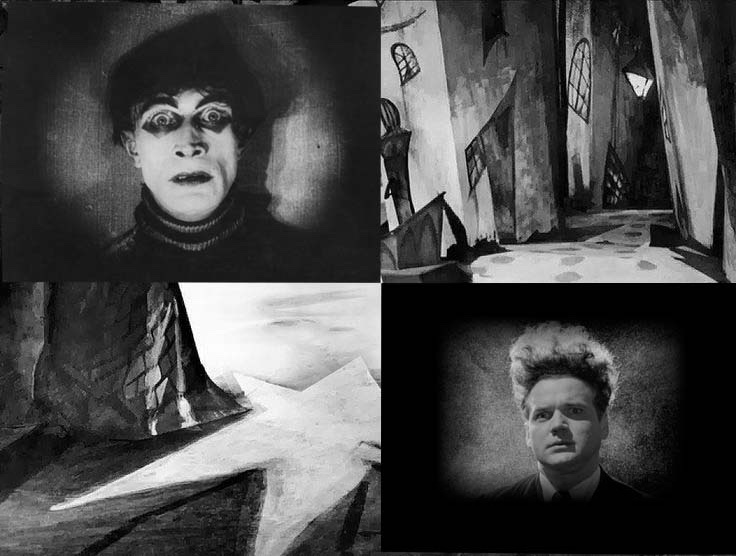
One of my favorite filmmakers David Lynch died in January, which prompted Caroline and me to take in several of his works, including Blue Velvet, Twin Peaks, and, of course, Eraserhead.
February
I’m what our narcoleptic president would consider “a lunatic leftwing communistic fascist low IQ individual,” so I revel in doing political hatchet Howitzer jobs on Donny; however, for the sake of my sanity, I’m only including two in this retrospective, and this one is more of a hit job on Nancy Mace than it is an excoriation of 45/7.
As an astute reader might infer from the above, I’m also not a fan of Lindsey Graham.
After reading the next one, entitled “Bad Poems, Fake Paintings, and Commerce,” you’ll definitely gonna wanna DM me so you can buy one of these fake paintings before they become unaffordable. By the way, Lowlife Bar now features the very first image in the post on the back of their hoodies. Lowlife’s located on the first block of East Hudson. Go grab you a hoodie before they sell out.
April
I attempted, unsuccessfully it would seem, to transform Today, Oh Boy into a screenplay, and this post explores the differences in the genres from a narrator/filmmaker’s perspective. Click: Novels Vis-a-Vis Screenplays.
May
Here’s what you get when you ask AI about Summerville 70.
“Summerville 70” refers to a recent 15-minute short film, an adaptation of a chapter from Summerville native Wesley Moore III’s novel Today, Oh Boy, depicting life and coming-of-age lessons in Summerville, SC, during the summer of 1970, directed by David Boatwright and produced by Paul Brown, which premiered in late 2025 and has been winning film festival awards.
(AI needs to work on its syntax. You could practically hang yourself with those dangling modifiers.
Anyway, I visited the set and gave Hitchcock a run for his money in fat boy cameo appearances.
June
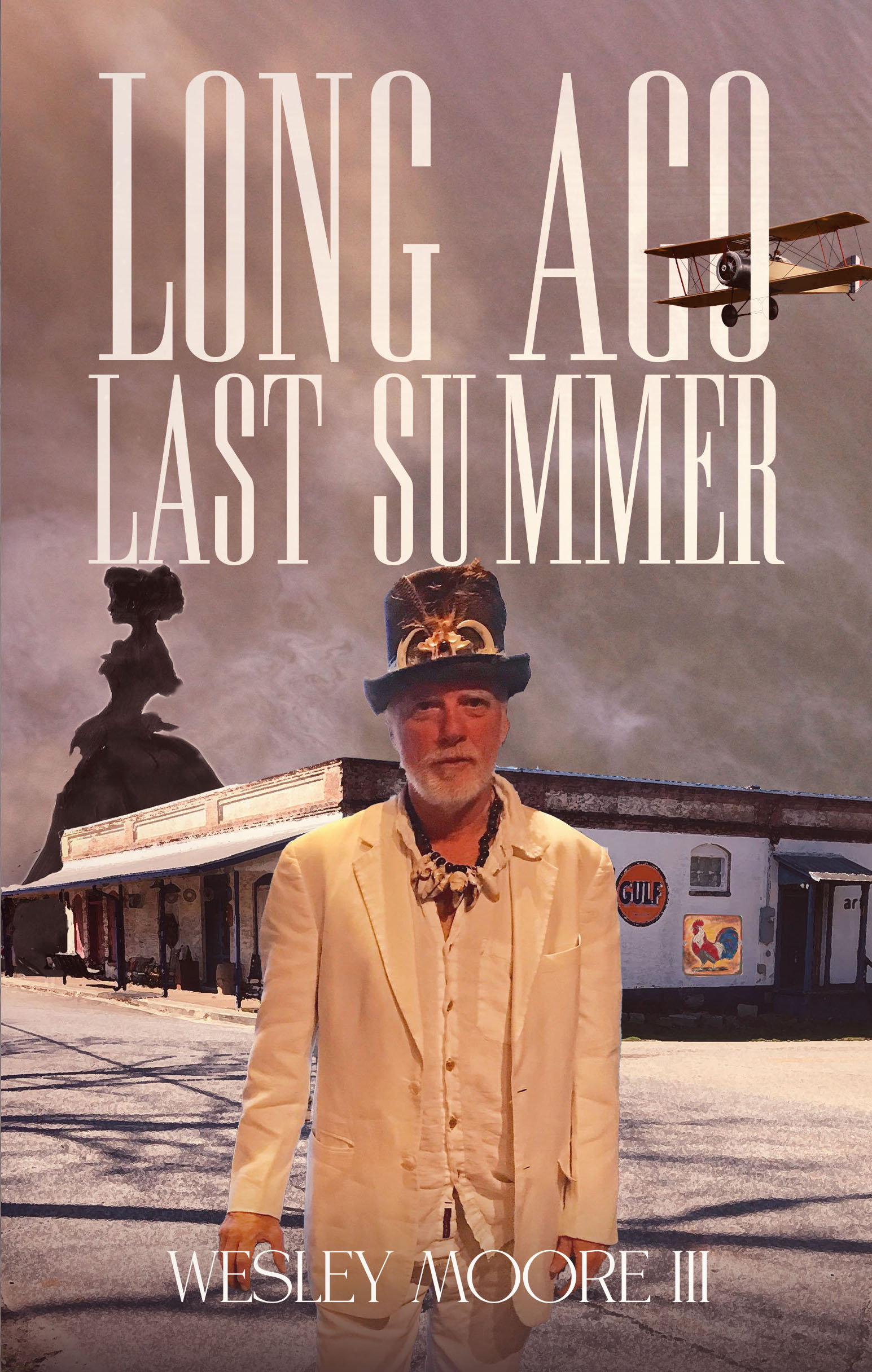
Oh, yeah, I had a book come out in June. Here’s eloquent Alex Werrell’s introduction ofLong Ago Last Summerat its launch at Buxton’s Books, which was, to quote my friend Lee Robinson quoting Alan Shapiro, “the storm before the calm.”
Probably my favorite and most oft-repeated personal anecdote is my half-hour ride to Folly Beach chauffeured by none other than that legendary folk hero and serial killing cut-up Donald “Pee Wee Gaskins,” nee Donald Parrot, AKA Junior Parrot.[1]
In fact, the Kirkus review of my memoir Long Ago Last Summer highlights the Pee Wee incident:
One of the standout pieces involves the author hitchhiking to Folly Beach as a teenager—he and his brother survived an encounter with someone who was likely the serial killer Donald “Pee Wee” Gaskins. Even though the hitchhiking story is only four pages long, it fits a lot of frightening intrigue into a short space; the reader not only learns who Gaskins was, but gets to see the monster in action, doing things like casually burning a boy with a cigarette. [2]
Of course, during that harrowing hitch-hiking experience, Pee Wee didn’t formally introduce himself or the beer-swilling, cigarette smoking ten-year-olds accompanying him, but twenty years later when I read his autobiography Final Truth, I put two-and-two together when he mentioned that he’d take nephews on beach excursions to Folly.
By the way, the memoir also boasts an original poem entitled “Pee Wee Gaskins Stopping at a Lake House on a Summer Evening.” Because of its macabre content and abject vulgarity, I dare not post it here in its entirety, but I will share its first stanza:
Whose corpse this is I ought to know
Cause I’m the one what killed it so.
I hope no one comes by here
To watch me in the lake it throw.
So you can imagine how delighted I was last week to receive unsolicited through the mail a pre-publication copy of Dick Harpootlian’s upcoming book Dig Me a Grave: The Inside Story of the Serial Killer Who Seduced the South.
I’ve not quite finished it, but when I do, I’ll post a review here. For now, I’ll just say it’s a real page turner written in noirish prose as Harpootlian, who prosecuted Pee Wee, weaves the narrative of Pee Wee’s life with his own. Exposure to cold blooded killers transforms Harpootlian from an underground newspaper publisher[3] into a prosecutor of murderers and from an anti-capital punishment advocate into a diehard (forgive the pun) proponent.
And as luck would have it, just last night I was privileged to hear my pal David Boatwright and his band Minimum Wage perform David’s song “Pee Wee Gaskins” at art reception at Redux Contemporary Art Center where Buff Ross is showing some of David’s murals that have lost their original homes in Charleston’s real estate shuffles.
The murals are so great. My favorite is a street scene in which Fredick Douglas is operating a Trolly Car that runs from White Point to the Neck.
Cool ass art is displayed throughout the building, which is located at 1054 King Street.
It’s not every day you see an ad for a James Brown inflatable sex machine sex toy.
Anyway, here’s a snippet of Minimum Wage performing “Pee Wee”Gaskins.” The iPhone video doesn’t do it justice.
[1] He’s also the namesake of an Indonesian punk rock band.
[2] It’s floundering at number 1,125,593 on the Amazon Best Sellers list, so why don’t you do a senior citizen on a fixed income a favor and order yourself one.
[3] The Osceola, which I read as an undergrad at USC
At my age, with 2.7 billion heartbeats (and counting) above my belt and 26,598 days (and counting) marked off my calendar, I’m not surprised when I learn that one of my highschool classmates has departed for “that undiscovered country from whose bourne no traveler returns.”[1]
A couple of weeks ago, for example, news that my junior-and-high school acquaintance Roanld Pinkney had died appeared on Facebook. Ronald was one of the pioneering Blacks who integrated Summerville schools years before wholesale integration. No telling what indignities he suffered in silence. I’ve likened these pioneering Blacks to Jackie Robinson, intelligent, thick skinned stoics courageous enough to subject themselves to abuse for progress’s sake. Ronald was a genuinely good guy, and I toyed with the idea of attending his funeral, but didn’t, of course, because I’m selfish.
However, this Wednesday when I turned to the obituary pages of the Post and Courier and saw the name Adam Martin Reiley Jacobs VII, I was taken aback. Although Adam and I lost touch after he was drafted and I left for college, he was one of my best friends in my last two years of high school. I often stayed at Adam’s house, or we’d hang for days at Jerry Locklair’s beach house across from the Washout.
The thing is, even though I hadn’t seen Adam since his Uncle Sammy’s funeral a quarter century ago, I’ve been hanging out with him over the past few years because he’s the inspiration for the character Will Waring in my novel Today, Oh Boy.Perhaps that’s why I’m taking his death so hard.
Right now I’m in the process of writing a sequel to the novel set in 1972 when characters from Today, Oh Boy return to Summerville for Christmas after their first semester of college.[2] Will has just been drafted, has received orders to report to Fort Jackson in early January.
Last Wednesday, the morning I learned of Adam’s death, I had just finished writing a scene where Rusty’s visits Will at his place. For Christmas, Rusty gifts Will his beloved blue jean jacket with the rolling paper icon Mr. Zig Zag silkscreened on the back. [3] Will had openly coveted the jacket.
“Damn, Rusty, you scared me!”
“Sorry, man. I knocked, but those headphones make you as deaf as Helen Keller.”
Will stiffly rises from the sofa, and they shake hands.
“I guess you’ve heard the news,” he says.
“God, yes. I’m so sorry, man. Whatcha gonna to do?”
“Bite the bullet. I thought for a second about going to Canada, but I’m just gonna bite the bullet and hope like hell I don’t end up in Nam.”
Will looks – what’s the word? – haggard – though 20-year-olds aren’t supposed to look haggard. In their friendship triad, it was always Will who preached chill to AJ and Rusty, chastising them for what he dubbed their “reel-to-reel anxiety.”
Rusty extends his arm that holds the present. “Merry Christmas!”
“Man, looks like whoever wrapped this was on smack.”
“Guilty but not guilty,” Rusty says.
Will removes the paper and sees that it’s the Zig Zag jacket. He pauses, holds it out at arm’s length to admire the silk-screening.
“Wow, man, thanks, but I can’t accept this. Though really appreciate the gesture.”
“But I want you to have it.”
“When I wear it, people behind me will mistake me for you.”
“So you’re planning on dying your hair red?”
“You mean like a dick on a dog?”
They both laugh.
After Today, Oh Boy was accepted for publication, I worried that Adam might read it and get pissed off I had partially based Will’s character on him. I worried that Adam might not appreciate the scene where he and AJ share a joint or how I portrayed his mother, a source of comic relief, though she’s really not his mother (and I find her sympathetic).
There’s a bit of solace in that no one in the novel comes off worse than Rusty, the character based loosely on me. Wesley Moore III probably has the strongest case for a lawsuit. But the thing is, even though Rusty and I had red hair and both our parents smoked like fiends, he’s not really me. He’s much stupider than I was, but also much nicer. When an interviewer once asked my pal Josephine Humphreys if any of the characters in her novels were based on her, she said, “No, but I sometimes let them wear my sweaters.” I can relate.
When I posted news of Adam’s passing on Facebook, I was surprised by how people seemed to be moved by his death even though their constant refrain was “I haven’t seen him in 50 years.”
Here’s my brother David’s response, “This has affected me more than I would have thought.” Mutual friend Susan Wallace Hoppe, though she hadn’t seen Adam since the 1970s, wrote, “This death has really hit hard.”
Why? Why are we so moved by his death when he’s been absent from our lives for a half century?
I believe it’s because Young Adam was handsome, charismatic, kind, modest and came to be a sort of icon in the early days of Summerville’s rather tepid counterculture. He was an artist, a drummer, a rebel, a sympathetic friend. In our minds, he’s the avatar of our youth, so to speak, a sort of immortal. But, of course, he wasn’t immortal. If dashing Adam is dead, we can’t be far behind.
I was expressing all of these sentiments to my wife Caroline, and she said she thought that Adam would be grateful to be in the novel because he’ll come to life whenever someone reads the book.
I don’t know if Adam would have liked Will, but I’d like to think so. I created him to be likable like Will. He’s, in a way, the most humane character in Today, Oh Boy.
In fact, at least in the novel, I’d rather be Will than Rusty.
Given that my novel Today, Oh Boy inspired David Boatwright’s and Paul Brown’s short film Summerville 1970, I won’t pretend that my critical assessment of their movie possesses the clear-eyed detachment that disinterest fosters.
On the other hand, the number of authors who hated film adaptations of their work is legion. For example, Gore Vidal considered the adaptation of his novel Myra Breckenridge “not just a bad movie [but also] an awful joke” and Donn Pearce, the author of the novel Cool Hand Luke, hated its screen adaptation. “They did a lousy job,” he said, “and I disliked it intensely.” Other unhappy authors include Ken Kesey, Stephen King, and PL Travers. Like I say, a lot of authors have hated films based on their works.
Therefore, my admiration of the project was by no means guaranteed.
That said, I loved Summerville 1970.
photo credit Joan Perry
Shortly after David Lynch’s death, Caroline and I watched a documentary about Lynch’s transition from painting to movie making. In the documentary, he described a revelation he experienced at film school: it suddenly occurred to him that he could make “moving paintings” rather than merely “moving pictures.”
In other words, Lynch attempted to render each scene of his movies so visually interesting that each still could be frozen and stand alone as a painting.
Like Lynch, Boatwright is also a painter, and like Lynch, studied at the American Film Institute in LA. Summerville 1970 is a “painterly film,” rich in color and artistic in layout.
For example, check out this photograph Caroline took of my cameo appearance during the premiere Friday night.
When Caroline showed the shot to me, she said, “It looks like a painting.”
“Wow, yeah, that looks like it could have been painted by Hopper,” I said.
“Or [Thomas Hart] Benton,” she replied, which indeed is more accurate.
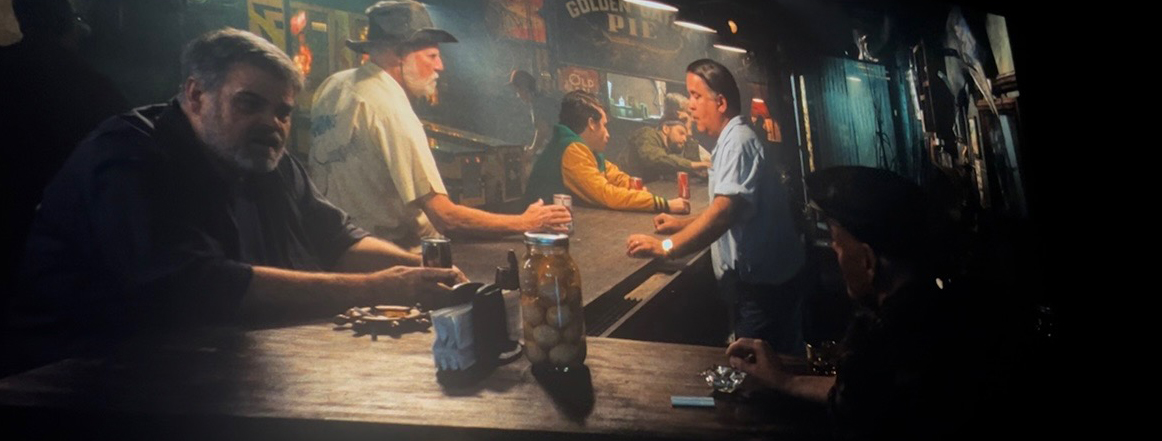
One of the most vexing problems a short story writer and short film creator faces is having to constrict action within a confined space and time. David does a terrific job of compressing the events of poolroom chapter of the novel into a fluid narrative that doesn’t have one second of down time. The movie has, as all good stories must, a beginning, a middle, and end. Crisply edited, the plot unfolds efficiently with a disquieting subtle sense of foreboding. Of course, any work of fiction requires conflict, and in addition to the central physical conflict of rednecks attacking a hippie, we have other conflicts as well: a developing high school crush, the vet’s anguish, and the lost basset hounds’ wandering.[1]
To simplify matters, David took four of my characters – Rusty Boykin and Ollie Wyborn, the co-protagonists, and Jill Birdsong and Sandy Welch, the female leads – and fused them into two characters, i.e., into a single male and a single female. In the film, the character Rusty is actually more Ollie than Rusty. For example, in Summerville 1970, Rusty, like Ollie, hails from Minnesota and knows karate. On the other hand, like the Rusty of the novel, cinematic Rusty has embraced the counterculture of the late ’60s and early ’70s. In the novel, Ollie is a conformist who wants to attend the Air Force Academy. Because the film is limited to fifteen minutes, these changes make a lot of sense.
The Jill Birdsong character of the movie closely resembles Jill of the novel, only she’s less straightlaced and less shy, though the character does maintain a quiet shyness, nevertheless.
Olivia Brooks, the actress who portrays her, is superb, as is Thomas Williams, who plays Rusty.
Not only do the main characters shine, but the minor characters do as well. Patrick Basquill’s Bobby Ray Bossheen exudes mindless menace, and his two redneck cohorts, the twin brothers Andre and Remy Levesque, come off as authentically belligerent, not-too-bright country boys. In addition, David Mandell is a stabilizing force as the compassionate bartender who attempts to maintain peace. Jill’s wisecracking friend Nanci played by Sara Rudeseal is spot-on as well.
My favorite character of all is David Boatwright’s invention, a Viet Nam vet who tells a horrific war story to the bartender and later breaks up the fight outside the tackle shop. The actor, Logan Marshall Green, makes the vet’s PTSD seem all too real as he draws heavily on his cigarette with shaking hands, knocking back whiskey after whiskey as he shares his horrible memory of a situation that brings to mind My Lai.
In addition, the costumes, sound, and editing are all superb. It’s truly a pleasure to watch, and I hope you get a chance to see it.
BTW, here’s a LINK to a review of Today, Oh Boy that provides a link to its Amazon and Barnes and Noble pages. . Rumor has it that it might be screened again at the Terrace for the general public. Fingers crossed.
[1] I got the idea of writing Today, Oh Boy after listening an audio book of Joyce’s Ulysses. The basset’s actual name is Hambone Odysseus Macy, but the kids who find him on the side of the road dub him Mr. Peabody. He is the Ulysses character in the novel who wanders all over Summerville to finally making his way home safely to his family.
Obviously, I’m a huge fan of the novel as a literary genre. Just the other day, I was explaining to someone at Chico Feo how literary novels can be treasure troves of vicarious experience because they feature lifelike characters who behave like real people. These novels aren’t didactic, but by co-experiencing Emma Bovary’s tragic vanity, you might glean that fabricating a persona through conspicuous consumption is not the way to go.
In other words, rather than discovering through personal experience that purchasing a vintage Rolls Royce Silver Shadow will likely destroy your credit and leave you destitute, you can witness rabid Emma’s spending sprees, yet not personally suffer the consequences of her foolhardiness.
Of course, part of Emma’s problem is that she mistook the romance novels she misread as real life, the way I misperceived the Long Ranger as real life when as a five year old in Biloxi, Mississippi, I leapt from the top of my chest of drawers onto a rocking horse that catapulted me face first on a wooden floor, a hard lesson (literally) in appreciating the difference between illusion and reality. If I had read about a fool boy doing that in a book, I never would have tried it myself.
As Laurence Perrine states in his wonderful textbook Literature, Sound, Structure, and Sense, “inexperienced readers” [of commercial fiction] want their stories to be mainly pleasant. Evil, danger, and misery may appear in them, but not in such a way that they need be taken really seriously or are felt to be oppressive or permanent.” A steady diet of happy endings could inculcate in an unsophisticated reader (or movie goer) the misperception that things always work out.
In other words, evil, danger, and misery need to be taken very seriously.[1]
Of course, the puritans, those “vice crusaders farting through silk,” who have taken over the schoolboards in our budding authoritarian state are aware of the potential for fiction to alter attitudes. For example, reading a novel that portrays a gay teenager as a decent, sincere person doing her best to navigate the perilous journey of adolescence might suggest to a homophobic sixteen-year-old that gay people are worthy of respect and empathy.
The vice crusaders certainly don’t want that.
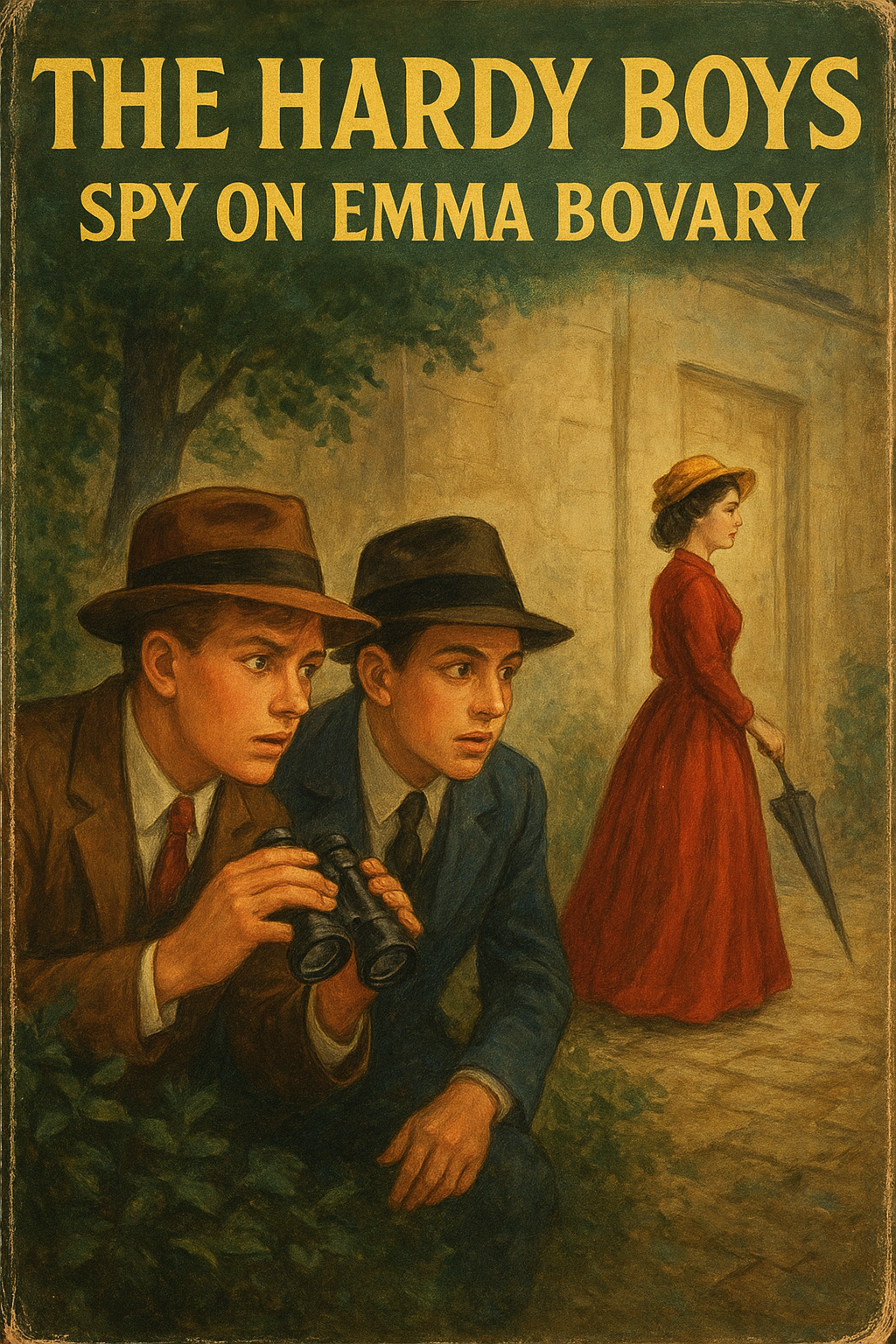
Just for the hell of it, after rereading Jo Humphrey’s brilliant but under-appreciated novel Fireman’s Fair –set in the disorienting wreckage of post Hurricane Hugo Charleston – I switched to escapist fiction, and for the first time since I read it out loud to my sons, ripped through the Hardy Boys series’ first title The Tower Treasure.
Whereas Jo’s book featured an array of well-rounded characters, The Tower Treasure trots out a series of underdeveloped static, one-dimensional mouthpieces: the indulgent dad, ace detective Fenton Hardy, his wife, a homemaker who doesn’t merit a first name because all she does is make sandwiches, and the boys themselves, Joe and Frank, and their various “chums” and female friends.
(A sidenote to budding fiction writers: avoid elaborate dialogue tags like “‘You’re elected,’ the others chorused.'”[2])
Truth be told, I actually enjoyed The Tower Treasure, which, despite its flaws, boasts a fast-moving plot that creates temporary suspense, but I never feared that the one of the two helmetless boy detectives would crash his motorcycle and end up a paraplegic.
And, of course, the novel also offers sociological insights into the attitudes of White people in the early 20th century and how those attitudes changed as the series progressed through the decades, e.g., Mrs. Hardy’s earning a first name –– Laura –– and eventually working outside the home as research librarian.
Someone (but not me) should do a scholarly paper on how the Hardy Boys novels reflect the social mores of their times and how those changing mores are reflected in changes in the novels’ depiction of the white enclave of Bayport, a city in New York in some novels and New Jersey in others.
After all, the ways things are going here in the dumb-downed US, the Hardy Boys may replace Animal Farm as required reading.
[1] Just last week a cook a Chico Feo, Jorge, who had a valid visa and a green card, was apprehended by ICE as he played by the rules by visiting his immigration office. ICE handcuffed him and swept him away to god knows where. I don’t foresee a series of hairbreadth escapes in his future but, rather, disorienting displacement, maltreatment, in sum, a horrible existence. A novel dramatizing his sad journey could offer insights into the human condition; however, although an action novel depicting his escaping might be fun to read, it would literally be escapism, a means to avoid our everyday humdrum.
[2] That the six “youths” in the scene all “chorus” the exact phrase “you’re elected” is distracting and Hindenburgs my suspension of disbelief.
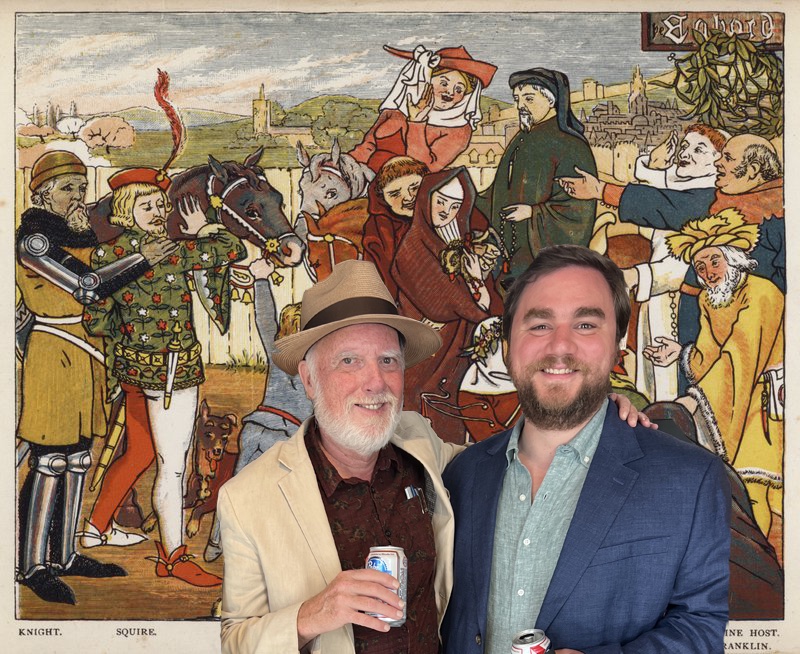
My former student and forever friend Alex Werrell has, as my mother used to say, “a way with words.” I discovered that talent when I taught him in an honors Brit Lit survey several years ago at Porter-Gaud School. When we were reading Chaucer’s Canterbury Prologue, Alex, an opera buff, turned me on Alessandro Moreschi, “the last castrato.” Chaucer hints that the Pardoner has been, as we callous pet owners say, “fixed.”
I explained to the horrified students that boys with beautiful voices were sometimes disencumbered of their testosterone-producing testicles to preserve the youthful timbre of their angelic voices, “a small price to pay for art’s sake,” I’d joke.
Playing Moreschi’s recording of “Ave Maria” became a tradition in my British Lit course. Forgive the cliche, but talons raking a blackboard would be a more pleasant sound. What a pleasure to watch the students squirm!
Alex ended up at Yale where he earned a BA and MA in English and became the mentee of the great literary critic Harold Bloom. After Yale, Alex remained in New Haven, published essays in Salon, and taught, first at the Hopkins School, and now at Taft.
After I heard Alex deliver a masterful eulogy for his grandfather, I selfishly thought that, hey, I could tap him for my memorial service, but fortunately, by having him introduce me at the book launch for Long Ago Last Summer, I was able to hear him sing my praises while among the quick.
Forgive my vainglory in posting Alex’s speech below, but once a jackass, forever, a jackass (me, not Alex).
After all, it’s not every day that you can applaud being called a “motherfucker.”
Take it away, Alex:
Bearing in mind my grandmother’s suggestion for any speech — all great orators should study Shakespeare, she said, and learn his most important lesson: “All’s Well That Ends” — I won’t catalogue all that Wesley Moore has written, taught, and done.
You’d need a TI-84 to add up the lives he molded, shaped, and changed — and if he were to receive royalties for every lesson plan of his that I’ve copied, this book launch would be in Mallorca. It is a gargantuan and daunting task to try to introduce this Renaissance raconteur, writer, poet, teacher, and philosopher king, so I’ll outsource the job responsibly and sustainably to Cecil Franklin, who was once asked by a reporter to describe his little sister: “Call Aretha a great blues singer and you’re telling the truth. Call her a great gospel singer and no one will argue. Call her a great jazz singer and the greatest jazz artists will agree. Bottom line—she’s all three at once. And in the language of the jazzman, that’s what’s called a motherfucker.”
Wesley Moore is all that and more.
His latest work is a testament to that LongAgo Last Summer transports and transforms, synthesizes and sympathizes; short fiction gives way to essays which inspire poetry and deep, graceful swan dives into memory.
Like a casserole in the Donner Pass, this “Southern Gothic gumbo” has a lot of himself mixed in. Given that, one of the many reasons why Long Ago Last Summer is brilliant is that it is precisely the opposite of that scourge of modern texts, generative AI. And while talking about generative AI at a book launch feels a bit like reading “The Ballad of Hollis Brown” at a baby shower, that menacing technology walks among us now. Like one of the foundational sins coursing through the Southern Gothic, AI perverts creation and devalues the human; the fullness of what it means to be a human does not matter half as much as mere production, production, production. In dramatic contrast, Long Ago Last Summer is a thrillingly human book because Wesley Moore stands for what matters: connection, imagination, integrity.
Searching for the book on Amazon — (And, please, gracious hosts: this was for research purposes only; the only destination wedding I want for Jeff Bezos is at the bottom of the ocean.) — I wanted to see what the heartless algorithm might suggest as “related books.” One was Walter Isaacson’s biography of Einstein which, given Mr. Moore’s excellent lessons on relativity and cultural Modernism, seemed fitting. Then there was Rhinestone Cowboy, Glen Campbell’s autobiography. I don’t have an explanation for that one.
What might the algorithm consider when determining whether to recommend Long Ago Last Summer to a prospective reader? It could be something as simple as geolocation: did this person grow up within twenty miles of a filling station that offers both diesel and barbecue? Or maybe it’s that stray google search for city ordinances concerning the accidental murder of a domestic cat. Maybe it’s looking up sterling silver hallmarks of the Confederacy and then looking up statutes of limitations for stolen Confederate silver. Or maybe it’s trying to find higher resolution images of Pee Wee Gaskins.
While the algorithm is good at pushing polyester blends off of Temu, I have a feeling it would struggle with Wesley Moore’s newest book. In no small part that’s because it’s hard to categorize. As Wesley himself said on television, “It’s really not a novel.”
In 1925, as she was struggling to write To the Lighthouse, Virginia Woolf found herself frustrated. Writing in her diary that she needed “a new name” for her books “to supplant ‘novel,’” Woolf floundered about trying to find the right word: “A new — — by Virginia Woolf. But what?” she writes.
The word Woolf ends up on is “elegy” — a word that feels fitting for this book. To be clear, this is not because, as Mr. Moore says, he’s retired and living on a fixed income, nor is it even because of biplane rotors and headless fathers and tubercular aunts.
Instead, it feels so fitting to me because Mr. Moore spent so many classes in English 10 on such poems, insisting that we memorize Blackburn Hughes’s list of the four “greatest English elegies.” To help us in that endeavor, Mr. Moore demonstrated the rhythmic swish-swish of Gray’s heroic quatrains with an epee. Doing his best impression of Stevie Wonder’s star role in the John Milton biopic, Mr. Moore recited bits of Lycidas. And, in his Lowcountry baritone, he intoned Tennyson’s In Memoriam.
Elegy is no stranger to anyone who has grown up in the South. An elegy has but one requirement: it must defy the laws of linear temporality, enabling the past to persist. Time becomes fluid; what for Tennessee Williams was Suddenly, Last Summer, unbearably close, is, for Mr. Moore, Long Ago Last Summer, unbearably distant. The reversal that so haunts Flannery O’Connor’s Misfit — Jesus’s setting the world off balance, taking dead Lazarus and making him walk like a natural man — is the foundation of elegy: a reversible alternation between presence and absence. Reflecting on Mrs. Ramsay in To the Lighthouse, Vanessa Bell writes to her sister Virginia how “it is almost painful to have [Mother] so raised from the dead.” Milton ends Lycidas with talk not of yesterday and of death, but of “To-morrow” and “pastures new.” Reading through the night the letters Arthur Henry Hallam wrote him, Tennyson finds himself surprised by dawn — and, in a flash, understands that “East and West” had “mixt their dim lights, like life and death, / to broaden into boundless day.”
The fourth great elegy is “Adonaïs, “written by Percy Shelley for John Keats, who died in an apartment overlooking the Spanish Steps in Rome, hemorrhaging up what little remained of his lungs at only 25.
Mr. Moore’s voice always took on a different timbre when he read to us Keats and Shelley. I cannot read their poems without feeling as if I’m back in his classroom — wind-up nuns, Rashaan, paleological timeline and all. His humanity and his teaching have become grafted to the Young Romantics in my mind’s eye. Throughout their poetry are traces of birdsong, so precious and so vital to both short-lived poets — and so like the traces of Judy Birdsong, so precious and so vital, in this work in front of us.
Shelley, mourning Keats, likens life to a “dome of many-colored glass” that “stains the white radiance of Eternity.” The many pieces of colored glass lovingly assembled here — with Caroline’s steady hand, keen eye, and beautiful verse — are aptly described by the author as a “mosaic” of his life.
The glue that binds these pieces — the guide for navigating the disparate stories, poems, and essays — is memory. “Memory…ties it all together.”
In the spirit of elegy and memory, I’ll close with some words from Mr. Moore’s former colleague Erica Lesesne, who once defined what it meant to be a hero: “Ethical, competent, non-judgmental, yet communicating high ideals and expectations, thereby influencing others to risk their own best sides in a seethingly adolescent environment.”
It is a pleasure to introduce one of my heroes, Mr. Moore. As he writes, “Let’s crank up the old Victrola.”
Vaudeville Meets William Faulkner Meets The Hallmark Channel
On Friday, I had my first interview involving my new book Long Ago Last Summer. Lorne Chambers, who owns the Folly Current and has an MFA in writing from the College of Charleston, met me at Chico Feo where we chatted about creative writing in general and Long Ago in particular over a couple of beers.
Occasionally, I didn’t know how to respond to Lorne’s excellent questions because Long Ago is such a strange book that it can’t be easily categorized. When you’re trying to sell something, it’s helpful to have a clear, simple message like it’s “a coming-of-age novel” or a “dystopian sci-fi epic” or “a romantic comedy.” With Long Ago Last Summer it’s more like Vaudeville meets William Faulkner meets The Hallmark Channel.
In essence, it’s a memoir, which is embarrassing enough because of the egocentricity inherent in thinking my life is so noteworthy that it warrants being shared with others. And in many ways, my life has been unadventurous. I enjoyed a long lasting, loving marriage for 38 years, a stable teaching career for 34 years, reared two successful sons, owned a succession of dogs, remarried as a widower and gained a remarkable stepdaughter. I’m well-travelled, I guess, but that’s not unusual in this day and age. To adapt a cliche: my adulthood has not been much to write home about as far as excitement goes.
On the other hand, I grew up in the segregated South, a very dark, fascinating place, a fallen civilization forever picking its scabs but then licking those newly opened wounds. The little Lowcountry town of Summerville where I grew up had two (what I’m going to uncharitably call) village idiots, among other eccentrics, like the old crone Miss Capers, religious fanatics galore, creepy good humor men, and more alcoholics per capita than most places this side of the Betty Ford Center.
Much of the book deals with an awakening consciousness that develops in a Southern Gothic setting, or, as the back cover puts it, Long Ago Last Summer “embodies the profound paradoxes of Southern culture against a landscape dotted with antebellum plantations, shotgun shacks, suburban subdivisions, Pentecostal churches, and juke joints.”
However, Long Ago is not a typical memoir in that it’s fragmentary, a collage of sorts, a mosaic, a smorgasbord or gumbo that runs the gamut from lighthearted vignettes to bleak accounts of terrible wrongdoing. If I were going to wax hyper-pretentious, I’d call it neo-Modernistic because like Eliot’s “The Waste Land,” it pieces together fragments to create a narrative held together by recurring themes. In this case, Sothern Gothicism, alienation, insomnia, and the vagaries of memory and reality.
Short fiction, verse, essays, and parodies that can stand alone out of their context occur chronologically to trace my life from its beginnings in 1952 to the present. Long Ago is, as stated in the preface, “a guided tour of the haunted houses and cobwebbed attics of my youth” followed by my college experience, my meeting and falling in love with Judy Birdsong, her illness and death, and my finding new love after her departure. In fact, included in the collection is a villanelle written by my wife Caroline that deals with Judy’s lingering presence in our marriage. In some cases, fiction is juxtaposed with non-fiction so that it’s not necessarily clear which is which.
In other words, Long Ago Last Summer is really weird, like its subject matter.
I’m appearing next week on Fox News 24’s midday show to attempt to explain all of this to viewers who may or may not have heard of TS Eliot and/or Modernism or vaudeville for that matter.
Also, weather permitting, I’m reading brief samples Monday, May 26 around 7:20 at George Fox’s open mic Soap Box at Chico Feo.
When my friend David Boatwright, who produced the cover of Today, Oh Boy, approached me about adapting the poolroom chapter from the novel into a fifteen-minute film, I jumped at the chance. David whipped out a script, which I approved, then later made some significant changes.
Near the end of the novel, which is set in 1970, Rusty Boykin, an ADD-riddled hippie-wanna-be from Summerville, South Carolina, and Ollie Wyborn, a straightlaced, straight-A transplant from St. Paul, Minnesota, join forces in thwarting an attack from a pair of rednecks whose favorite pastime is, to use the Lowcountry lingo of the day, “cutting ass,” i.e., beating up people they don’t cotton to.
David’s major change in the second draft of the script was fusing Rusty and Ollie into one character, which I again approved, given I had complete confidence in his intelligence and talent, and because as a practical matter, there’s virtually no room for character development in a fifteen-minute movie. Another significant change, which added gravitas to the film, David created a new character, a Viet Nam vet who relates a harrowing account of wartime mayhem to the bartender, played my former student, David Mandell.
So anyway, David Boatwright and his producer Paul Brown raised the needed money and assembled a crew of costume designers, cinematographers, assistant directors, sound people, make-up artists, art directors, property managers, actors, a stunt coordinator, a basset hound, etc. and shot the film in four days.
The exterior shots, which included fisticuffs and car chase, were filmed on bucolic Wadmalaw Island and the interior shots at the defunct West Ashley restaurant Bearcat, which has been transformed into a ’70s era bait and tackle shop/bar complete with pinball machines and a functioning jukebox on loan from my friend Thom Piragnoli.
I asked David if I could have a cameo, and he said, of course, so yesterday I spent twelve amazing hours on the set being part of an incredibly complicated matrix of moving parts.
When I arrived at seven, an actor was seated having his hair tended to. One of the make-up women said she would do my hair next, and I explained, “But I have no hair,” removing my hat, and she said, “Great!,” meaning, I take it, less work for her. After I introduced myself, another woman said, “Oh, these young actors can’t wait to meet you. They’re walking around with the book.”
Indeed, they were incredibly appreciative. Each one sincerely thanked me for writing the novel. Two actors, twins brothers playing rednecks, asked me why their characters were so angry. When the actor Logan, who played the Viet Nam vet, thanked me for, in his words, “creating all of this,” I told him that, in fact, David had created his character and dialogue. He said yes, but I had created the world around him. To my mind, his performance and speech are the climax of the film.
I abstractly knew that it would be cool to see characters I had created “come to life,” but had underestimated how gratifying it ended up being. It was especially moving to see Jill Birdsong, modeled on the high school version of my late wife Judy Birdsong, performing her role, and I especially enjoyed the actor Patrick Basquill, who brought the bully Bobbey Ray Bosheen to life. The creepiness he brought to the role reminded me of William Dafoe’s portrayal of Bobby Peru in David Lynch’s Wild at Heart.
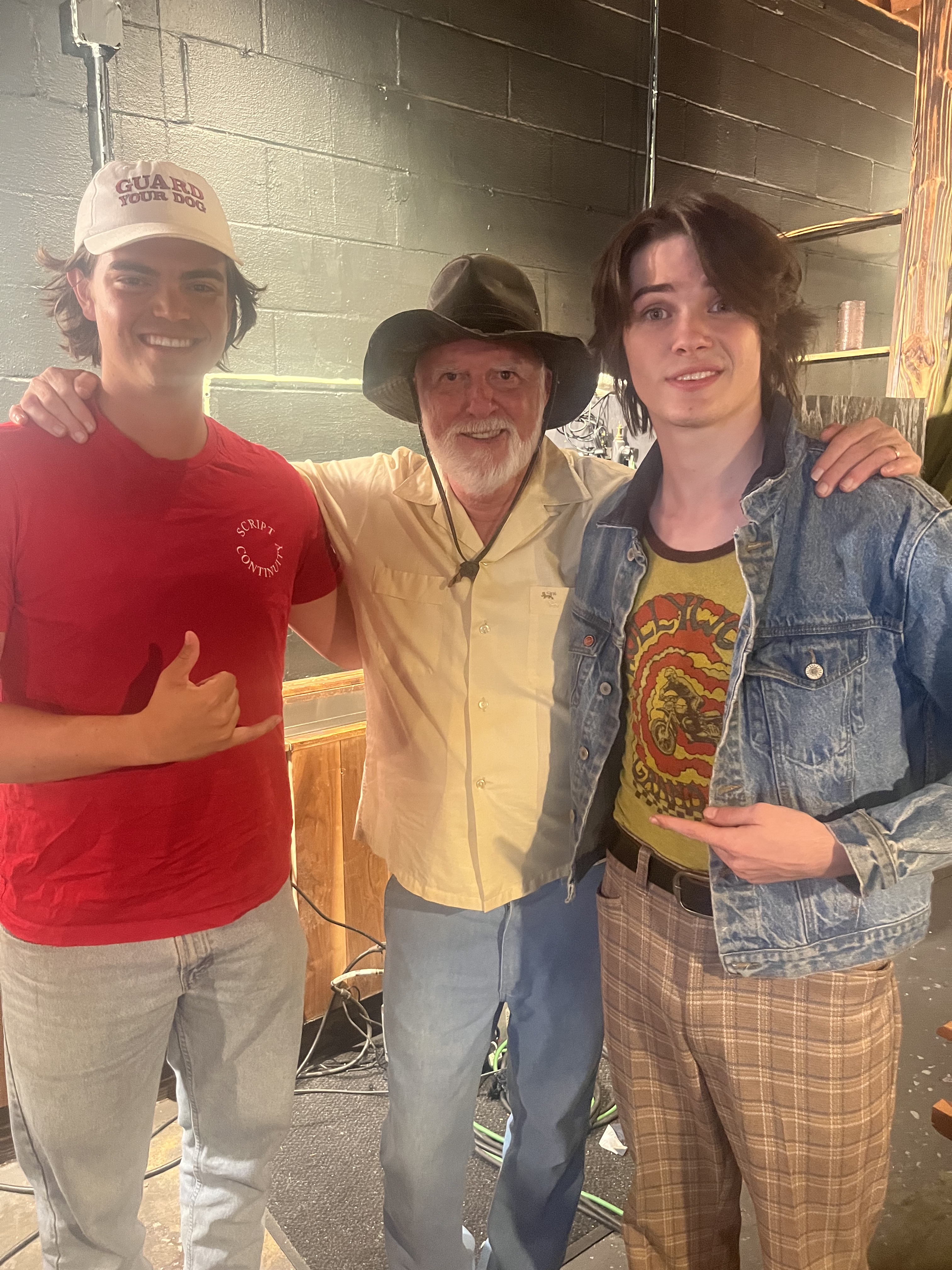
Also, it was really weird to hear the name “Rusty,” my childhood nickname, called out throughout the day. Sometimes, I thought they were referring to me. And Thomas, the actor who plays Rusty, looks a lot like I did in high school, except he has blue eyes, high cheek bones, brown hair, and isn’t riddled with freckles and acne.
In other words, he’s skinny.
from left to right, Thomas Beck, Rusty Moore, and “Rusty Boykin”
It was such a wonderful day, the best ever in my life as a writer, and I can’t wait to see the finished product, entitled Summerville 1970, which will make the festival circuit and premiere sometime in the fall at the Terrace Theater on James Island.
Before I end this way too egotistical account, I want to acknowledge my wife Caroline Tigner Moore, without whom the manuscript of Today, Oh Boy would have been found in a drawer after my demise, rather than becoming a published novel.
Caroline has encouraged me throughout but also has bravely said, “Un-uh, that doesn’t work, why don’t you do this instead.” She’s tactfully guided me through the interviews and the whole befuddling process of my post-teaching career, including offering encouragement in my avocation of creating “fake paintings.”
After my beloved Judy Birdsong died, I imagined the lonely life of a wounded epicurean, but Caroline has enriched my life in ways I could not have imagined, especially in establishing a loving family that includes my wunderkind stepdaughter Brooks, who is as kind as she is brilliant, and a trio of pets, KitKat, the demi-mutt, and our blue-eyed ragdoll cats, Juno and Jasmine.
Love to them and to you!
PS. Here’s a link to the Kirkus review of Today, Oh Boy that includes an interview and links to purchase it via Amazon and Barnes and Noble, or better yet, get it from your local independent book store, which in Charleston is Buxton Books.











 You Do Hoodoo