The Bernie Brigade vs. Bill Maher

Bill Maher
Besides the pathological, farcical triumph of Donald Trump, the most interesting aspect of this election cycle for me is the passion and devotion Bernie Sanders has elicited from a considerable slice of the electorate. Sanders, as we know, speaks passionately about inequalities in income distribution and the degradation of the environment with little modulation in a tone that I would call hectoringly shrill.

His catalogue of campaign promises includes universal healthcare, free college tuition, and breaking up banks, but as far as I can tell, he hasn’t laid out detailed plans about how he could accomplish these goals. His plan, if you could call it that, is starting a revolution, which in a country where a majority of citizens squander their days staring into “mobile devices” and don’t even bother to vote, starting a successful revolution seems about as likely as Franklin Graham being chosen as the grand marshal at a San Francisco LGBT parade.

However, it is emotion, not rationality, that drives the most fervent of Sanders’ supporters, and if you ever speak out against their saint, or even question some of his premises, you can expect a tsunami of invective expressed in metonymic vulgarities likening you to genitalia.

Take the comedian Bill Maher, a former Bernie supporter who has now accepted the inevitable and thrown his support to Hillary. Here is a sampling from the comment section of the website Cosmoso’s post entitled Watch: Bill Maher Shows His True Colors, Calls Bernie’s Plan ‘Santaism’.

First the clip.

Now a sampling of comments:

Linda Carrico: “Dick Head.”

Vince Travis: Bill Maher is just another over 0pinionated asshole and he says what he what thinks his viewers will lap up and call him a very smart feller when in actuality hes a very fart smeller because like I always say opinions are like assholes everybodies got one and they stink (sic)

John Pugs Licitra: I have whatched your show for years…I have always found it informative and entertaining…after tonight, go fuck yourself, and your time warner paycheck… I’m so dissapointed to see what a fraud you are!!!! SHAME ON YOU, John Licit! (sic)

Rather humorless reactions, you might say.

No telling what Louis CJ has coming after this argument by analogy:

I keep going back and forth. Sometimes I think the system is so deeply fucked up that somebody as disruptive as Bernie — maybe he doesn’t even do a good job as president but he jars something loose in our system and something exciting happens. I mean, Hillary is better at this than any of these people. The American government is a very volatile, dangerous mechanism, and Hillary has the most experience with it. It’s like if you were on a plane and you wanted to choose a pilot. You have one person, Hillary, who says, “Here’s my license. Here’s all the thousands of flights that I’ve flown. Here’s planes I’ve flown in really difficult situations. I’ve had some good flights and some bad flights, but I’ve been flying for a very long time, and I know exactly how this plane works.” Then you’ve got Bernie, who says, “Everyone should get a ride right to their house with this plane.” “Well, how are you going to do that?” “I just think we should. It’s only fair that everyone gets to use the plane equally.” And then Trump says, “I’m going to fly so well. You’re not going to believe how good I’m going to fly this plane, and by the way, Hillary never flew a plane in her life.” “She did, and we have pictures.” “No, she never did it.” It’s insane.

Dripping jackhammer!  Quivering Quim!

Trump, the Ultimately Unfunny Buffoon


Donald Trump caricature, creative commons via Flickr and Jay Ward's Snidely Whiplash photoshopped by WLM3

Donald Trump caricature, creative commons via Flickr and Jay Ward’s Snidely Whiplash photoshopped by WLM3

I hate to admit it, but during the Republican primary season, I found Donald Trump to be amusing, his buffoonery charming in a counter-intuitive way, the way you might find yourself chuckling at Fyodor Karamazov or Snidely Whiplash.

Take for instance, Trump’s Low-Energy-Jeb shtick. Here is a man who embraces his wealth like a teddy bear, a man who flashes his net worth like a grandparent sharing photos of his progeny, a man in his 69th year who on national television mocks the physical posture of a former governor as if they’re running for student council representative for the 8th grade.

But let’s face it: Trump lacks the charm to remain amusing for very long because he lacks the ability to be self-deprecating. Imagine his delivering a speech at the end of a White House Correspondents Dinner or a Don Rickles Hollywood Roast, Trump’s tangerine complexion gone red-orange in rage, drool dripping from the lower left arc of his sphincter-shaped mouth as it arse-belches vengeful rebukes.

No, ultimately, Donald Trump is about as amusing as the Battle of the Somme, and it’s time that we start the very serious business of making sure he’s not elected President of the United States – and that we includes the neo-Manicheans of the Never-Hillary Bernie Brigade.


Let Chaucer Be

TCOD-Bodleian-Library
The latest controversy roiling the breasts of English majors at Yale is their being required to take a survey course called “Major English Poets,” a course of study that forces them to become familiar with the works of Chaucer, Spenser, Shakespeare, Donne in the first semester and Milton, Pope, Wordsworth, Eliot, and one other modern poet in the spring. Their beef, according the petition that they’ve delivered to the Department is that “a year spent around a seminar table where the literary contributions of women, people of color, and queer folk are absent actively harms all students, regardless of their identity.” [1]

I heartily disagree, and I’m going to quote at length one of the white men listed above, TS Eliot, from his essay “Tradition and the Individual Talent.”

To proceed to a more intelligible exposition of the relation of the poet to the past: he can neither take the past as a lump, an indiscriminate bolus, nor can he form himself wholly on one or two private admirations, nor can he form himself wholly upon one preferred period. The first course is inadmissible, the second is an important experience of youth, and the third is a pleasant and highly desirable supplement. The poet must be very conscious of the main current, which does not at all flow invariably through the most distinguished reputations. He must be quite aware of the obvious fact that art never improves, but that the material of art is never quite the same. He must be aware that the mind of Europe—the mind of his own country—a mind which he learns in time to be much more important than his own private mind—is a mind which changes, and that this change is a development which abandons nothing en route, which does not superannuate either Shakespeare, or Homer, or the rock drawing of the Magdalenian draughtsmen. That this development, refinement perhaps, complication certainly, is not, from the point of view of the artist, any improvement. Perhaps not even an improvement from the point of view of the psychologist or not to the extent which we imagine; perhaps only in the end based upon a complication in economics and machinery. But the difference between the present and the past is that the conscious present is an awareness of the past in a way and to an extent which the past’s awareness of itself cannot show.

And, yes, and that includes Alexander Pope, who may not be “fun” to read but who provides a nearly flawless mirror to the intellectual world of his century.

For people of color, “queer folk,” and women to have an understanding of the works of great artists and the historical contexts of those works strikes me as the opposite of harmful, especially given that I’m fairly sure Yale offers elective courses that feature other great poets like Derek Wolcott, Elizabeth Bishop, Langston Hughes, and Hart Crane.  Chaucer, Spenser, Shakespeare, and Donne in a sense established the traditions of English poetry, the colloquial, rough-hewn verse of Chaucer and Donne pointing the way for the great Walt Whitman, the smoothness of Spenser no doubt influencing the verse of Christina Rossetti.

One student, Ariana Miele, in an op-ed piece for the Yale Daily News wrote, “We read Chaucer, but we are told to view his misogyny with an ‘objective’ lens.”

Certainly, the Middle Ages were misogynistic, and perhaps Chaucer was typical of his age, but he has also given us the Wife of Bath who offers this bit of wisdom to her fellow pilgrims:

By God, if women ever wrote some stories

As clerks have done in all their oratories,

They would have told of men more wickedness

Than all the sons of Adam could redress.

In other words, women in Medieval Europe did not have their voices heard.

Or this from Iago’s wife Emila from Othello explaining to chaste Desdemona why some women betray their husbands:

But I do think it is their husbands’ faults

If wives do fall: say that they slack their duties,

And pour our treasures into foreign laps,

Or else break out in peevish jealousies,

Throwing restraint upon us; or say they strike us,

Or scant our former having in despite;

Why, we have galls, and though we have some grace,

Yet have we some revenge. Let husbands know

Their wives have sense like them: they see and smell

And have their palates both for sweet and sour,

As husbands have. What is it that they do

When they change us for others? Is it sport?

I think it is: and doth affection breed it?

I think it doth: is’t frailty that thus errs?

It is so too: and have not we affections,

Desires for sport, and frailty, as men have?

Then let them use us well: else let them know,

The ills we do, their ills instruct us so.


I’ve often said that when parents start running a school, that school’s in trouble. When students start running a university, especially when they’re undergraduates, that university’s in big trouble.


[1] Is it possible to study post-colonialism without understanding colonialism? Might knowledge of pre-colonial and colonial art help students better understand colonialism and post-colonialism?

The Big-Boned Lady Has Sung

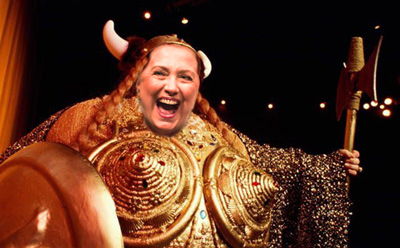
fat lady 1.0

If you believe the pundits – and why should you given that virtually every one of them emphatically assured us that Donald J Trump would never be the Republican nominee? Anyway, if you believe the pundits, they claim that Hillary Clinton’s so-called foreign policy speech Thursday was “a turning point in the campaign.”   If I had the time and patience, I could perhaps construct one of those rapid-fire montages that the Daily Show made famous: [cut to Eugene Robinson: “turning point,” cut to Rachel Maddow: “turning point,” cut to Hendrik Hertzberg, “turning point,”]. A turning point, I assume, in that Clinton has gone from reactive to proactive, has taken control of the news cycle.

People were expecting a boring speech on national security, but instead they got sardonic stand up:

”There’s no risk of people losing their lives if you blow up a golf course deal.”

“Donald Trump says, ‘I know more about ISIS than the generals do. Believe me.’ Well, [semi-eye roll] I don’t believe him.”

The speech was well delivered, more conversational, less strident.

Not surprisingly, Clinton didn’t mention her foreign policy legacy during the speech, the vote on the Iraq war, the debacle in Libya, etc. Essentially, she used Trump’s own words to illustrate just how unstable, intemperate, and megalomaniacal he is, something Ted Cruz and Marco Rubio were loath to do until it was too late. Obviously, Clinton has nothing to lose by alienating the Republican base, that fraying quilt of evangelists, secessionists, country club members, and unreconstructed Confederates.

It may also be a turning point in that on the Friday before the New Jersey and California primaries none of the pundits were talking about the Democratic horserace.

To politically correctly emend that operatic cliché, “the big-boned lady has sung.”

Hillary Clinton is the Democratic nominee, and she might be more of an effective campaigner than we had imagined.

Cults of Personality, Similarities between Trump and Sanders

The Scream

Alas, it seems as if the revolution Bernard Sanders has tried to foment has devolved into a prolonged elitist temper tantrum.

Certainly, the impoverished of our country, the “32.8 million adults” who live in “food insecure households,” have not shown up in sufficient numbers at caucuses or voted in primaries, as Sanders himself has acknowledged, bemoaning the fact that “poor people don’t vote.”[1] To make matters worse, when they do, they don’t vote overwhelmingly for him — at least according to the Washington Post:

“Sanders has lost Democratic voters with household incomes below $50,000 by 55 percent to 44 percent to Clinton across primaries where network exit polls have been conducted.”

Sanders has, on the other hand, done a bang up job with younger voters, undergraduates and college-educated millennials, who, if they haven’t actually read Das Kapital themselves, have had it sympathetically explained to them by liberal high school and college instructors.[2] The bad news is that a minority of these supporters have taken “the revolution” rhetoric a bit too much to spleen and turned violent, most notably hurling chairs in general and the c-word in particular at Barbara Boxer during last week’s Nevada Democratic Convention. Afterwards, Bernie supporters bombarded the state chairperson with obscene and threatening voicemails, including a threat to kill her granddaughter, and vandalized the venue where the event was held. Unlike the thugs associated with Trump, who can be identified by their baseball caps and Gadsden “Don’t Tread on Me” tattoos, vulgarians of the Bernie brigade tend to sport pork pie hats and Tibetan mandala ink. Otherwise, you really can’t tell them apart from their behavior.

And, not to put to fine a point on it, despite their antithetical ideologies, Sanders and Trump themselves share remarkable similarities in their MOs.

For example, both propose grandiose policy initiatives without providing details about how these policies would be implemented. Trump, famously, will make America great again by somehow getting Mexico to build and finance a gigantic wall on its side of the border and by coercing China into changing its monetary policy. How, you ask? Don’t ask; trust. Likewise, Sanders will break up banks “too big too fail” and provide free college tuition for American citizens. How you ask? Don’t ask; believe.

What we essentially have in both cases is a cult of personality.

There is a one significant difference, though. Trump condones if not encourages violence at his rallies:

There may be somebody with tomatoes in the audience,” Trump warned people at a rally in Iowa last month. “If you see somebody getting ready to throw a tomato, knock the crap out of them, would you? Seriously. Okay? Just knock the hell — I promise you, I will pay for the legal fees.”

On the other hand, Sanders doesn’t actively condone violence, but rather, merely rationalizes, makes excuses:

“Our campaign of course believes in non-violent change and it goes without saying that I condemn any and all forms of violence, including the personal harassment of individuals. But [my italics], when we speak of violence, I should add here that months ago, during the Nevada campaign, shots were fired into my campaign office in Nevada and apartment housing complex my campaign staff lived in was broken into and ransacked.”

He could, for example, have said something to the effect of “the behavior of a minority of my supporters at the Nevada caucuses was unconscionable, and I want to emphatically condemn it and express my regret that it was done in my name and to make it unequivocally clear to any follower of mine behaving in such a manner that you’re hurting, not helping, our campaign.” He could have also added, “It’s Hillary Clinton who espouses violence as a solution to geopolitical problems, not us.”

I’m not going so far as Josh Marshall and claim that “[t]he tone and tenor of a campaign always come from the top” and “knowledgeable sources” claim “in the last few weeks anyone who was trying to rein it in has basically stopped trying and just decided to let Bernie be Bernie.” However, a lawyer for the Democratic Party in Nevada offered this characterization of the convention violence: “At no time did any Sanders representative make anything more than token gestures towards peace in the hall, and at the times of most intense crisis offered little more than shrugs and smirks.”

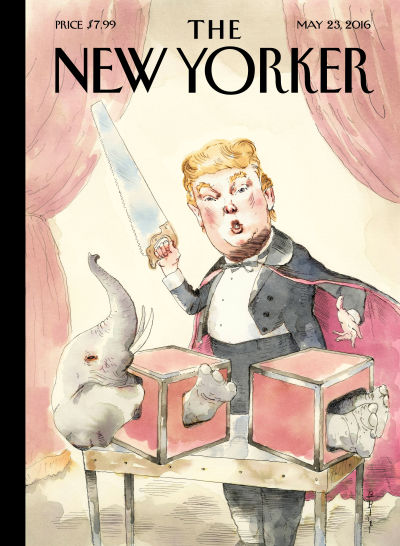
Whatever the case, the New Yorker cover artist this week could have replaced the caricature of Trump with Bernie and replaced the elephant with a donkey, and we would have essentially the identical message. It’s not mere happenstance that Chris Matthews interviewed Ralph Nader in tonight’s edition of Hardball.

05_23_16-400

[1] http://www.feedingamerica.org/hunger-in-america/impact-of-hunger/hunger-and-poverty/hunger-and-poverty-fact-sheet.html

[2] In fact, I’m talking about myself here.


Dialectics

Let’s face it, nuance went out with the rise of cable news.  Not only do politicians not reach across the aisle to seek compromises, but they essentially don’t associate with members of the other parties.  Gone are the days when polar politicians like Orrin Hatch and Teddy Kennedy could become bosom friends, when Ronald Reagan and Tip O’Neil could “after six o’clock” be friends.


No, nowadays, middle ground is no man’s land.

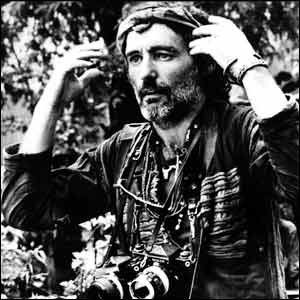
Yesterday, as I was showing my tenth graders a clip from Apocalypse Now in conjunction with teaching Heart of Darkness, it occurred to me that the photojournalist’s speech to Willard as Kurtz reads from TS Eliot’s “The Hollow Men” is a superb commentary on contemporary American politics.  I offer it without comment except for the tidbit that one of the epigraphs for “The Hollow Men” is “Mistuh Kurtz – he dead,” so essentially Kurtz is reading a poem in which he appears.


The Hollow Men

Mistah Kurtz-he dead
A penny for the Old Guy

I

We are the hollow men
We are the stuffed men
Leaning together
Headpiece filled with straw. Alas!
Our dried voices, when
We whisper together
Are quiet and meaningless
As wind in dry grass
Or rats’ feet over broken glass
In our dry cellar

Shape without form, shade without colour,
Paralysed force, gesture without motion;

Those who have crossed
With direct eyes, to death’s other Kingdom
Remember us-if at all-not as lost
Violent souls, but only
As the hollow men
The stuffed men.

II

Eyes I dare not meet in dreams
In death’s dream kingdom
These do not appear:
There, the eyes are
Sunlight on a broken column
There, is a tree swinging
And voices are
In the wind’s singing
More distant and more solemn
Than a fading star.

Let me be no nearer
In death’s dream kingdom
Let me also wear
Such deliberate disguises
Rat’s coat, crowskin, crossed staves
In a field
Behaving as the wind behaves
No nearer-

Not that final meeting
In the twilight kingdom

III

This is the dead land
This is cactus land
Here the stone images
Are raised, here they receive
The supplication of a dead man’s hand
Under the twinkle of a fading star.

Is it like this
In death’s other kingdom
Waking alone
At the hour when we are
Trembling with tenderness
Lips that would kiss
Form prayers to broken stone.

IV

The eyes are not here
There are no eyes here
In this valley of dying stars
In this hollow valley
This broken jaw of our lost kingdoms

In this last of meeting places
We grope together
And avoid speech
Gathered on this beach of the tumid river

Sightless, unless
The eyes reappear
As the perpetual star
Multifoliate rose
Of death’s twilight kingdom
The hope only
Of empty men.

V

Here we go round the prickly pear
Prickly pear prickly pear
Here we go round the prickly pear
At five o’clock in the morning.

Between the idea
And the reality
Between the motion
And the act
Falls the Shadow
For Thine is the Kingdom

Between the conception
And the creation
Between the emotion
And the response
Falls the Shadow
Life is very long

Between the desire
And the spasm
Between the potency
And the existence
Between the essence
And the descent
Falls the Shadow
For Thine is the Kingdom

For Thine is
Life is
For Thine is the

This is the way the world ends
Not with a bang but a whimper.

art by Claire Lambe

art by Claire Lambe


Andrew Sullivan’s Take on “This Dystopian Campaign”

facists

[. . .] individuals going about their business in the assurance of perfect safety

Joseph Conrad, Heart of Darkness

Last night as I watched the Indiana Primary returns on MSNBC, Steve Schmidt, John McCain’s 2008 campaign manager, splashed some very frigid water on the prevalent view that Hillary Clinton is a shoo come November. Schmidt pointed out that the conventional wisdom of a Clinton victory doesn’t factor in unexpected events that could alter the electoral landscape.

I had encountered a very similar but more cogent argument earlier in the day via Andrew Sullivan:

Those who believe that Trump’s ugly, thuggish populism has no chance of ever making it to the White House seem to me to be missing this dynamic. Neo-fascist movements do not advance gradually by persuasion; they first transform the terms of the debate, create a new movement based on untrammeled emotion, take over existing institutions, and then ruthlessly exploit events. And so current poll numbers are only reassuring if you ignore the potential impact of sudden, external events — an economic downturn or a terror attack in a major city in the months before November. I have no doubt, for example, that Trump is sincere in his desire to “cut the head off” ISIS, whatever that can possibly mean. But it remains a fact that the interests of ISIS and the Trump campaign are now perfectly aligned. Fear is always the would-be tyrant’s greatest ally.

Sullivan offers this warning in an impressively constructed and detailed argument that commences with Plato’s theory on why democracies ultimately give way to tyranny. Sullivan’s reading of Plato is that “the views and identities” of the populations of what he calls late democracies “become so magnificently diverse as to be mutually uncomprehending.” As religious orthodoxy wanes, so does certainty. Much of the citizenry loses respect for authority. No one has the authority to tell anyone what to do or think:

The very rich come under attack, as inequality becomes increasingly intolerable. Patriarchy is also dismantled: “We almost forgot to mention the extent of the law of equality and of freedom in the relations of women with men and men with women.” Family hierarchies are inverted: “A father habituates himself to be like his child and fear his sons, and a son habituates himself to be like his father and to have no shame before or fear of his parents.”[1] In classrooms, “as the teacher … is frightened of the pupils and fawns on them, so the students make light of their teachers.” Animals are regarded as equal to humans; the rich mingle freely with the poor in the streets and try to blend in.[2] The foreigner is equal to the citizen.

With the proliferation of blogging, social media, etc., “there are dramatically fewer elite arbiters to establish [what] is actually true.” The result is that “without such common empirical ground, the emotional component of politics becomes inflamed and reason retreats even further. The more emotive the candidate, the more supporters he or she will get.”

I’m not quite sure Sullivan is right on this point. Certainly, Bernard Sanders is more “emotive” than Hillary Clinton (or at least his emotions seem more genuine), but she has approximately 2 million more votes. However, I do believe that the more emotive the candidate, the more passionate his or her supporters — something we see in the ardor of both Bernard Sanders’ and Donald Trump’s bandwagons.

Interestingly, enough, although he’s writing about Trump’s followers, Sullivan’s words could just as easily describe Sanders’ most ardent supporters:

And what’s notable about Trump’s Sanders’ supporters is precisely what one would expect from members of a mass movement: their intense loyalty. Trump Sanders is their man, however inarticulate they are when explaining why. He’s tough, he’s real, and they’ve got his back, especially when he is attacked by all the people they have come to despise: liberal Democrats and traditional Republicans moderate Democrats.

The bottom line is that Sullivan argues Donald Trump is very, very dangerous, and that we cannot afford to be sanguine:

And so those Democrats who are gleefully predicting a Clinton landslide in November need to both check their complacency and understand that the Trump question really isn’t a cause for partisan Schadenfreude anymore. It’s much more dangerous than that. Those still backing the demagogue of the left, Bernie Sanders, might want to reflect that their critique of Clinton’s experience and expertise — and their facile conflation of that with corruption — is only playing into Trump’s hands. That it will fall to Clinton to temper her party’s ambitions will be uncomfortable to watch, since her willingness to compromise and equivocate is precisely what many Americans find so distrustful. And yet she may soon be all we have left to counter the threat. She needs to grasp the lethality of her foe, moderate the kind of identity politics that unwittingly empowers him, make an unapologetic case that experience and moderation are not vices, address much more directly the anxieties of the white working class—and Democrats must listen.

[1] On many more than one occasion, I have seen and heard students openly mock their parents.

[2] Pre-ripped jeans are all the rage with the moms at my school.

apocalysenow_dennishopper_kurtz-787639

The Unhappy, Self-Righteous Warrior

In your spleen, you know he's right

In your spleen, you know he’s right

I’m wondering if the pro-Bernie bombardments on my Facebook feed have diminished because his followers are losing faith in his high-mindedness or because the algorithms dictating what I see there have determined I consider Sanders a tiresome scold, an inflexible ideologue, a magical thinker, a self-righteous prick capable of cruelty.

Let’s take the last charge first. Here’s a piece from the 16 April 2016 New York Times:

In Vermont, however, Mr. Sanders was known for belittling opponents at times, rather than merely challenging their ideas. During one debate in the 1986 governor’s race, Mr. Sanders was asked if he viewed Governor Kunin as “the lesser of two evils,” given his descriptions of the Democratic and Republican parties as “Tweedledum” and “Tweedledee,” and if he thought he might contribute to her political “demise.”

Mr. Sanders chuckled and then looked at Ms. Kunin, seated a few feet away.

“Governor, how does it feel to be the lesser of two evils?” he asked. “I think that really is what this campaign is about.” Ms. Kunin was stone-faced.[1]

Here’s an example of self-righteousness:

Peter Smith, the Republican candidate for governor in 1986 and the congressman Mr. Sanders ousted in 1990, said that Mr. Sanders used passion to create “a contrast between him and his opponent that may not, in fact, exist.” Mr. Sanders’s aides in the 1990 campaign said they would regularly taunt Mr. Smith about his positions on issues like the minimum wage, which the congressman would dispute, and then Mr. Sanders would come forward and accuse Mr. Smith of dishonesty. As a result, a running theme of that campaign was that Mr. Sanders had integrity and Mr. Smith lacked it.

“The tool he uses is his intensity and his belief that, on the major issues he cares about, there is only one right answer,” Mr. Smith said. “And it is his.”

No wonder Sanders wanted to meet the Pope — he could meet a peer in infallibility.

In his current race, of course, he has abandoned the high road he promised to take and has now launched a series of negative ads even though the only way he could possible win the nomination is if Clinton is indicted over her email server. In the 2008 cycle, Clinton found herself in a similar position mathematically, and although she didn’t drop out (as I wished she had), she did start to tone down her attacks on Obama. Although Sanders has backed off from questioning Clinton’s qualifications, you can bet either Cruz or Trump will use Sanders’ quotes in blistering TV ads.

Of course, if in the unlikely event that Sanders were to be the Democratic nominee, it would take an unprecedented landslide in Congressional races to provide him with the pie-in-the-sky Democratic majorities needed to enact legislation so he could break up the banks, provide free tuition, etc. However, Sanders doesn’t bother to raise money for Congressional races. I guess he believes the force of his righteousness is contagious or either he doesn’t want to dirty his hands, like Brutus in Shakespeare’s Julius Caesar, raising tainted money.[2]

I can’t help but wonder if Senator Sanders’ hatred of Wall Street trumps his compassion for people, if he sees them as abstractions, figures on a spreadsheet. Certainly, some of his supporters who don’t bother to vote for down ballot Democrats in primary and caucuses and say they’ll sit out an election between Clinton and Trump or Cruz.

So what if the ACA is overturned, if Trump gets to appoint the next Supreme Court justice, if Medicaid is slashed if it means you have to vote “for the lesser of two evils?”

Of course, none of the above will convince the true believers of the Bernie Cult. As someone on my Twitter feed said, “Admitting you’re for Hillary sort of feels like coming out in the ‘60s.”  Sanders supporters tend to take criticisms of him personally as if he’s a religious figure beyond censure. If Clinton supporters took criticisms of her personally, they’d very well might need hospitalization.

I sort of dread posting these comments, and I certainly expect a tsunami of dyspepsia in response to this post; however, I felt that venting a bit of spleen of my own might be therapeutic this melancholy spring.

[1] Cf “self-righteous prick.”

[2] Cf. “magical thinker”

Shakespeare’s 2016 Election Endorsement

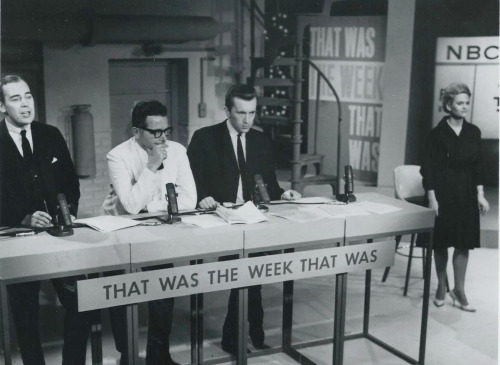
tumblr_nthmbnnhJR1r9xd1wo1_500I remember the 400th anniversary of Shakespeare’s birth back in 1964. I was 12 and wouldn’t have made the connection, but someone mentioned the anniversary of the Bard’s birthday on a TV program I was watching.   I can’t swear to it, but I think the show might have been That Was the Week that Was, which was broadcast live on Friday nights and satirized the week’s news, a sort of prototypical cross between The Daily Show and Onion TV, only with lots of musical skits.

Unfortunately, the show has essentially been lost – only the pilot survives along with some amateur audio recordings, one of which you can listen to on YouTube if you’re a nostalgia junkie or history freak.

Interestingly enough, the episode on YouTube from 12 June 1964 mentions a stop-Goldwater movement within the Republican Party and features a skit lampooning unsophisticated Goldwater supporters.

8baae185de80f51c0b9df60316bdc5f8I’d forgotten what cigarette ads sounded like – Raleighs came with coupons —  and also forgotten about Twist-O-Flex watchbands that were so flexible you could tie them in a knot.

Ultimately, for me, though, in 2016 the skits fall flat. Topical humor has a short shelf life, especially if you’re blindly listening to a visual medium — unlike Master Will’s humor, which can still provoke laughs from high school sophomores who don’t need to see it performed to find it funny.

April 23 marks the 400th anniversary of Shakespeare’s death, and so, obviously, the 52-year span of his life fits within mine. If he had been born in 1964, he would have arrived in an election year when Barry Goldwater, much to the chagrin of the Republican establishment, became the nominee, and if he had died in 2016, he would have survived just long enough to see Trump’s triumph in the New York primary, much to the chagrin of the Republican establishment.

In fact, at least according to the very dated AL Rowse book I just finished, Shakespeare was a very political writer himself, which a quick google search readily reinforces. In fact, the greatthinkers.org website offers UVA professor Paul Cantor’s series of 25 lectures on “Shakespeare and Politics.”

So the question arises – whom would Shakespeare have supported for President this cycle.

Will was, after all, a monarchist, a conservative in the old form of the word – one who valued tradition, order, and obedience, so no way he’s feeling the Bern or could suffer a buffoonish upstart like Trump.  Cruz?  That modern day Malvolio? Forget it.  Hillary?  I doubt it.

I say Jeb!

shakespeare for jeb


My TS Eliot Spring Break

illustration by Wesley Moore

illustration by Wesley Moore

Twit twit twit
Jug jug jug jug jug jug
So rudely forc’d.
Tereu

TS Eliot, “The Waste Land”

Although Yeats gets quoted a lot in these traumatic days – things fall apart, the center cannot hold, etc. – TS Eliot was no slouch himself when it came to apocalyptic naysaying. For example, dig this ditty from “The Waste Land”:

What is that sound high in the air
Murmur of maternal lamentation
Who are those hooded hordes swarming
Over endless plains, stumbling in cracked earth
Ringed by the flat horizon only
What is the city over the mountains
Cracks and reforms and bursts in the violet air
Falling towers
Jerusalem Athens Alexandria
Vienna London
Unreal

Because most of us Americans are consumed with the 24/7 Jerry Springer extravaganza that is the current presidential campaign, I doubt if your casual consumer of the news is aware that Europe’s political turmoil makes ours seem rather bland by comparison.

For example, on New Years Eve in Cologne, Germany, gangs of young males assaulted scores of females celebrating the holiday. Some blame newly arrived Muslim immigrants for the outrages while others suggest caution before jumping to conclusions.

Here’s a snippet from the conservative British paper the Spectator:

The German police made a similar point: they are used to handling drunks. But gangs of young men encircling and then groping women at large public gatherings: who has ever heard of such a thing?

In the Arab world, it’s something of a phenomenon. It has a name: ‘Taharrush gamea’. Sometimes the girls are teased and have their veils torn off by gangs of young men; sometimes it escalates into rape. Five years ago, this form of attack was the subject of an award-winning Egyptian film, 678. Instances of young men surrounding and attacking girls were reported throughout the Arab Spring protests in Cairo in 2011 and 2012. Lara Logan, a CNN journalist covering the fall of Hosni Mubarak, was raped in Tahrir Square. Taharrush gamea is a modern evil, and it’s being imported into Europe. Our authorities ought to be aware of it

On the other hand, here is Ishaan Tharoor from the Washington Post:

To be sure, there are legitimate security concerns posed both by the surge in new arrivals as well as the continuing instability and conflicts in the Middle East. The attacks in Cologne, writes the Algerian novelist Kamel Daoud, were a reminder to the West of the Muslim world’s “sick relationship with women” — a product both of patriarchal and religious norms as well as the stifling legacy of authoritarian rule.

But perverse, misogynist behavior is not the province of just one culture or society. And much of Europe’s anti-refugee hysteria, as my colleague Adam Taylor charted this week, has been overblown and fueled by often misleading innuendo and rumor circulating on social media.

Very few of the identified culprits in the Cologne attacks were themselves refugees. And countries like Poland and Hungary, while leading the conservative charge against E.U. policies that would allow in desperate Middle Eastern asylum seekers, still have minuscule Muslim populations of their own. The risk of a cultural invasion somehow contaminating their societies is, frankly, a phantasm conjured by fear-mongers.

Of course, this week, we Americans were treated to some man-on-woman physicality when police charged Donald Trump’s campaign manager Corey Lewandowski with battery after an encounter with “former Breitbart reporter Michelle Fields.”

In this case, we have video, so you can make up your mind yourself.*


*My personal view is that by the standards of Summerville High School that encounter doesn’t approach “battery.”

The bottom line is that the big blinding, buzzing cacophony of computerized existence obliterates contemplation. The blitzkrieg of information, much of it contradictory, is harmful for a species who has spent most of its existence sitting in small groups on a savannah among birdsong and rustling leaves.

The ruling class – the Koch Bros, etc. – should know that oligarchies lead to revolutions, that the Occupy Movement was a Shakespearian comet of foreboding, but who has time to contemplate history or to think beyond tomorrow’s Dow Jones closing averages?

Then there’s Hillary trying to thread the needle between big business and young debt-ridden would-be socialists as she attempts to be all things to all people.

Meanwhile, followers of Bernard Sanders engage in magical thinking imaging 30+ redneck gerrymandered districts somehow going blue so that he’ll be able to break up the banks, overhaul our healthcare system, make college free while by creating the largest middle class tax hike in the history of our republic.

What we see here in the Republican Party – factionalism – is also playing out in Europe. Things are falling apart – perhaps most alarmingly, glaciers!

Oh, by the way, it’s my spring break, and we all know that April is the cruelest month, so I’ve been having a sort of TS Eliot holiday, riding around with the radio/cd player off, popping Ativans like M&Ms, reciting poetry out loud to myself:

After such knowledge, what forgiveness? Think now
History has many cunning passages, contrived corridors
And issues, deceives with whispering ambitions,
Guides us by vanities. Think now
She gives when our attention is distracted
And what she gives, gives with such supple confusions
That the giving famishes the craving. Gives too late
What’s not believed in, or is still believed,
In memory only, reconsidered passion. Gives too soon
Into weak hands, what’s thought can be dispensed with
Till the refusal propagates a fear. Think
Neither fear nor courage saves us. Unnatural vices
Are fathered by our heroism. Virtues
Are forced upon us by our impudent crimes.

As the Lone Ranger used to say, “Adios!”