In 1985, I lost the knack of sleeping, and I blame it on Porter-Gaud School. Even the year before I started teaching there, I slept, if not like a baby, like a serene thirty-something who enjoyed the more than occasional malted beverage and could count on eight interrupted hours.
However, in August of 1985, the night before my very first day of teaching high school, my eyes popped open at 3 am like two too tightly wound window shades springing to the top of the sill.
Suddenly, I’m awake and awake and awake. That inaugural night, I kept repeating in my head, “I got to get asleep, I got to get asleep, I got to get asleep,” huffing along like “The Little Train That Couldn’t,” but I didn’t drift off until a scant forty minutes or so before the alarm was set to blast me awake.
So, of course, I shuffled muck-headed through that first day like an extra from Dead Men Walking, making, as zombies tend to do, a bad impression.
This pattern of sleepless nights has persisted ever since, and I have written about my chronic insomnia HERE (seriously) and HERE (comically).
However, I swear on my freshly deceased mother’s grave, I’ve never suffered insomnia quite as bad as last night/this morning, so to try to block out those para-paranoid thoughts that swarm like bats at 3am on weeknights, I composed an Italian sonnet in imitation to Sir Philip Sidney’s famous Sonnet 39, “To Sleep.” It’s an intricate form, with iambic pentameter as its meter and an abbaabbacdecde rhyme scheme that severely limits vocabulary. I thought that the exercise would wear me out as I lay there Homer-like in the dark without pen or paper, but alas, it did not.
So here it is, and I dedicate it to my fellow insomniacs.
To Sleep 2.0.1
“Sleep that knits up the ravell’d sleeve of care” – Macbeth
Yo, Morpheus, you sadistic bastard,
Where the fuck are you? Snorting crystal meth
with the Sand Man? Can’t you see I’m a wreck,
tossing and turning like mad — backwards,
sideways? Even bedbugs have left in distress
in search of a habitat less turbulent. Fuck,
man, I swear I’ll put a noose around my neck!
My sleeve of care has unraveled past my wrist,
all the way up to my elbow! Swerve in a sestet?
How? Why? Nothing changes hour-after-hour: drip drop drip drop drop drop drop – disturbing
thought follows disturbing thought. My sweat-
ing self craves relief! You have the power,
sweet Morpheus, to sing me to sleep. Sing!
Every time I go to see Bob Dylan, I figure it’s going to be my last, so when the concert’s over and the scarecrow graces us with a bow, I bid him a silent good-bye. I suspect I’ll do the same this Friday when Mighty Keith Sanders, Crafty Ned Moore, and I-and-I meet up at the North Charleston Performing Arts Center to witness the Master croak his way through a set list that is mostly melancholy. Dylan is obviously a restless man, a loner, no stranger to heartache yet wise enough to know it ain’t just about him.
Since I’ve argued HERE that Dylan deserves a Nobel prize in Literature, I thought I’d share my favorite lyrics from the tunes he’ll play Friday night, many of them works from recent albums.
“Things Have Changed”
People are crazy and times are strange
I’m locked in tight, I’m out of range
I used to care, but things have changed
“She Belongs to Me”
You will start out standing
Proud to steal her anything she sees
But you will wind up peeking through her keyhole
Down upon your knees
“Beyond Here Lies Nothing”
Down every street there’s a window
And every window made of glass
We’ll keep on lovin’ pretty baby
For as long as love will last
Beyond here lies nothin’
But the mountains of the past
Workingman’s Blues #2
I’m tryin’ to feed my soul with thought
Gonna sleep off the rest of the day
Sometimes no one wants what we got
Sometimes you can’t give it away
“Duquesne Whistle”
The lights on my native land are glowing
I wonder if they’ll know me next time ’round
I wonder if that old oak tree’s still standing
That old oak tree, the one we used to climb
“Waiting for You”
Well, the king of them all
Is starting to fall.
I lost my gal at the boatman’s ball.
The night has a thousand hearts and eyes.
Hope may vanish, but it never dies.
“Pay in Blood”
Another politician pumping out the piss
Another angry beggar blowing you a kiss
You got the same eyes that your mother does
If only you could prove who your father was
“Tangled Up in Blue”
She lit a burner on the stove
And offered me a pipe
“I thought you’d never say hello,” she said
“You look like the silent type”
Then she opened up a book of poems
And handed it to me
Written by an Italian poet
From the thirteenth century
And every one of them words rang true
And glowed like burnin’ coal
“Love Sick”
I see, I see lovers in the meadow
I see, I see silhouettes in the window
I watch them ’til they’re gone and they leave me hanging on
To a shadow
“High Water” (For Charley Patton)
Well, the cuckoo is a pretty bird, she warbles as she flies
I’m preachin’ the word of God, I’m puttin’ out your eyes
I asked Fat Nancy for somethin’ to eat, she said, “Take it off the shelf”
As great as you are man, you’ll never be greater than yourself
“A Simple Twist of Fate”
A saxophone someplace far off played
As she was walkin’ by the arcade
As the light bust through a beat-up shade where he was wakin’ up,
She dropped a coin into the cup of a blind man at the gate
And forgot about a simple twist of fate
“Early Roman Kings”
Ding dong daddy
You’re coming up short
Gonna put you on trial
In a Sicilian court
I’ve had my fun
I’ve had my flings
Gonna shake em all down
Like the early roman kings
“Forgetful Heart”
Forgetful heart
Like a walking shadow in my brain
All night long
I lay awake and listen to the sound of pain
The door has closed forevermore
If indeed there ever was a door
“Spirit on the Water”
I wanna be with you in paradise
And it seems so unfair
I can’t go to paradise no more
I killed a man back there
“Scarlet Town”
If love is a sin, then beauty is a crime
All things are beautiful in their time
The black and the white, the yellow and the brown
Its all right there in front of you in Scarlet Town.
“Soon After Midnight”
It’s now or never,
More than ever,
When I met you I didn’t think you’d do,
It’s soon after midnight,
And I don’t want nobody but you
“Long and Wasted Years”
It’s been a while,
since we walked down that long, long aisle
We cried on a cold and frosty morn,
We cried because our souls were torn
so much for tears
so much for these long and wasted years.
“Blowin’ in the Wind
Yes, ’n’ how many times must the cannonballs fly
Before they’re forever banned?
He ends the with a Sam Smith/Mary Bilge cover of “Stay with Me” whose theme jives well with the above
Guess it’s true, I’m not good at a one-night stand
But I still need love ’cause I’m just a man
These nights never seem to go to plan
I don’t want you to leave, will you hold my hand?
Backed by killer musicians, the poor ragged old minstrel continues to travel the road “like Big Joe Turner looking east and west from the dark room of his mind.” Sure, the set is dark, but what do you expect from an aging master?
It’s not like Yeats’ “Circus Animal Desertion” is a toe tapper.
. . others in Elysian valleys dwell, Resting weary limbs at last on beds of asphodel
A lovely word, with its three vowel-laden syllables, indolence: the Latin word for grieving – dolor – sandwiched between a negative prefix and a noun suffix.
It originally denoted a state of not grieving, of avoiding trouble, but lapsed in time to mean laziness, what Ozzie and Harriet would call not giving a “hoot,” what the Bellamy Brothers would call not giving a “rip,” what Johnny Depp would call not giving a “shit.”
In other words, high school seniors after spring break.
The path to graduation leads through fields of poppies past the prom into the prison block of final exams.
Meanwhile, they sit with their heads on their desks, their glazed eyes like marbles staring vacantly as a boring old baldheaded shuffling jackass reads out loud lines of poetry
That young men, tossing on their beds, Rhymed out in love’s despair To flatter beauty’s ignorant ear.
A professor friend of mine at the College of Charleston who teaches a freshman course entitled The Nature of Solitude: Sacred & Secular, Voluntary & Involuntary invited me to come and cover Kafka’s “Metamorphosis,” so I thought I’d share with any instructors out there the approach I took. Since the course is philosophical, not literary, rather than discussing the structure or aesthetics of the work or taking a Freudian or Marxist approach to the narrative, I’ve opted to approach the work more practically.
I decided to begin the hour-and-fifteen minute class with a keynote presentation that highlights the remarkable unlikelihood that any of the students sitting in the class actually have come into being (see “Slide 4” for further explanation) to underscore the horrible tragedy of the stunted life of the Metamorphosis’s protagonist, Gregor Samsa. In addition, the presentation also suggests that mythology and its talented stepsister literature offer interesting ways to cop insight into, not only our lives, but science as well. In fact, the presentation suggests that science itself is a myth, albeit a self-correcting one. Finally, I wanted to alert students to the human propensity of projecting our biology onto the cosmos as a way of explaining mysteries outside of ourselves. Of course, you can view the presentation all at once, but I have provided how I deal with each slide below the presentation.
Slide 1
As you can see, the first slide, the title slide, consists of two images, the first a sperm cell crashing into an ovum, the second, an artist’s rendering of a comet or meteor crashing into earth, which is science’s current best guess as to what engendered the chemical reactions that led to life. I do the ol’ Socratic method, asking the students to identify what’s going on in each slide.
Slide 2
Slide 2 consists of Wordsworth’s famous sonnet “The World Is Too Much with Us,” as in the work-a-day world overwhelms me with its mind-numbing responsibilities and anxieties, which, of course, relates to “The Metamorphosis.” As you recall, Gregor who has awakened in the form of a gigantic beetle seems more worried about getting to work on time than he does about horrible fact that he has been transformed from a mammal to an insect who still possesses a human consciousness.
The poem offers a plethora of potential Socratic questions as you relate the sonnet to the novella. I actually talk about the structure of the sonnet, its volta in line 9, but the main focus is what the speaker of Wordsworth’s sonnet and Gregor Samsa have in common and what the sonnet and Dylan’s lyrics have in common.
Slide 3
Slide 3 quotes a stanza from Dylan’s “Subterranean Homesick Blues,” which offers a beautifully truncated catalogue of childhood. Note the anxiety inherent in Dylan’s ditty. (By the way, you can read my argument why Dylan deserves a Nobel Prize in literature HERE).
Slide 4
The fourth slide is an excerpt from the movie Adaptation, which didn’t successfully make the trip from my hard drive to the Internet, but you can view it here:
Obviously, ultimately, Nicolas Cage’s character’s question how did I get here has a very complicated answer. For him to exist on this tiny planet swirling around a run-of-the-mill star much has had to happen, much of which from my perspective seems random, the first meteor which brings life, the second meteor that brings death to the dinosaurs and their displacement by mammals; then you have to factor in the long odds of that particular sperm hitting that particular egg through the long line of his ancestors culminating with his parent’s coupling on that particular day of his conception, a day when his mother didn’t have a headache, a coupling that led to one of 250,000 sperm cells in what I call the most important-race-of one’s-life reaching the finish line of one of mother’s 300 or so ova, a process that resulted in him, and by extension, you, C of C freshman, or you, blog reader.
Slides 5 & 6
These slides underscore the long odds of existence, emphasizing just what a shame it is for poor Gregor to live such a stunted life given the enormous odds of existence. Here, I sneak in Buddhist doctrine, and talk about the Samsa family dynamic, the office manager, etc.
Slide 7
I talk about myth here, not as untruths, but in the Joseph Campbell mode as symbolic structures that embody profound truths.
Slide 8
This slide suggests that science is often wrong about details (not theories). If I had written “quark” instead of “electron” in my 1970 chemistry test, I would have been correct but had my answer marked wrong. By the way, I’ve photoshopped my 1970 self into this slide (the redheaded one leaning over the desk) to show the freshmen what I looked like 45 years ago and to horrify them with the realization that they too one day will look like me now [cue maniacal laughter]
Slide 9
The discoverer of the quark, Murray Gell-Mann named it after a word from James Joyce’s novel Finnegan’s Wake, suggesting that scientists like literature, that disciplines are all interrelated.
Slide 10
A reprise of Slide 8
Slide 11
In Slide 11, I ask if anyone recalls the Greek creation myth of Uranus and Gaia. If no one does, I retell it, which is essentially, the sky Uranus had sex with the earth Gaia and life began, which, brings us back to the first slide. The current scientific theory and the Greek myth are essentially the same.
For the rest of the period, I let the students talk about “The Metamorphosis” and give them wide range. Of course, given the title of the course, Gregor Samsa’s involuntary solitude should be brought up.
I’ve always been contemptuous of commercial self-improvement because it so smacks of the time clock — protestant fear of predestined damnation meets hedonism lite.
On the one hand, who but a churl would be against sharing good advice?
On the other hand, who but a charlatan — a snake oil salesman — would seek pecuniary profit from enlightening the masses?
Answer to above question (in chronological order): not Siddhartha, not Jesus.
After all, in the age of the Internet, good advice can be disseminated at no cost. No longer is it necessary to decimate acres of loblollies to inform the huddling masses of the magic steps/habits/protocols that successful/happy/thoughtful people take/inculcate/follow to achieve a less fucked-up state that they have been muddling through.
So in the spirit of altruism, here’s the title of my unwritten masterpiece in the genre:
7 Steps That Sentiment Beings Sick with Desire and Fastened to Dying Animals Take to Get the Most out of the Ever-Foreshortening Days Left to Them.
Climb aboard!
Here are the 7 Steps in chapters:
Chapter 1: Step 1: Sunday
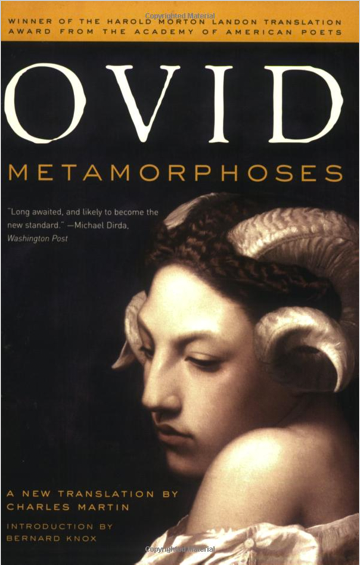
Sequester yourself for an hour — especially you non-church/temple types — and read from various myths — good translations of Ovid’s Metamorphosis, Native American trickster tales, Irish folklore, e.g. — and think about how what you’re reading relates to the universal human condition.
Chapter 2: Step 2: Monday
Take a half-hour off after having done something you have dreaded but have completed –e.g. gone to work, to court, to hell in a hand basket — and then listen to thirty minutes of the Blues, and by listen, I mean not only to the instruments, but also to the lyrics.
Delia, Delia.
Poor girl, she’s gone.
With all I hate, she done left me all alone.
She’s all I got; it’s gone.
Blind Willie McTell by R Crumb.
Chapter 3: Step 3: Tuesday
Put down for at least an hour your cell phone, joystick, remote control, and unhand that mouse.
Get into a non-escapist novel. When’s the last time you’ve read Huck Finn? If you’re reading this blog, I goddamn guarantee you’ll enjoy Huck (not to mention it’s time better spent than reading any blog).
Chapter 3: Step 3: Wednesday
Read slowly, carefully and out loud a ballad, which shouldn’t take up any more than 15 minutes.
I’d start early with folk ballads like “Lord Randall” and steadily work my way up chronologically to literary ballads like XJ Kennedy’s “Down in Dallas.”
Down in Dallas, down in Dallas,
where the wind has to cringe tonight,
Lee Oswald nailed Jack Kennedy up
on the cross of a rifle sight.
Chapter 4: Step 4: Thursday
Spend 45-minutes to following up on something you’ve discovered so far in your reading.
Chapter 5: Step 5: Friday/Saturday
Watch a universally acclaimed motion picture or attend local theater (and by that I mean see a play).
* * *
If you were to so regulate your animal spirits, it would cost you ~6 hours of time you otherwise squander lost in social media, trapped in the repetitive sturm und drang of video games, or seated in front of the flat screen.
Of course, I’m being facetious by suggesting this regimen. This regulation of dabbling in the arts would be destined to fail for the same reason diets fail. After a while, the spirit rebels against the assembly line sameness of eating healthy vegetables or reading outloud every Wednesday quatrains of tetrameter.
However, I can tell you this, reading good fiction can provide invaluable vicarious experience because it creates characters true to life. Cynical Mr. Bennett in Pride and Prejudice, despite his delightful wit and clever putdowns, suffers mightily for his detached parenting and refusal to listen to good advice, and his suffering certainly could have been catastrophic if not for Mr. Darcy.
This ARTICLE my friend Ed Burrows sent me scientifically supports the idea that good fiction can also increase your “moral intelligence.”
Dig this:
A 2013 study by the psychologists David Comer Kidd and Emanuele Castano explored the causal relationship between reading high-quality literary fiction and the ability to take the perspective of others, as measured by one of several well-tested tools, such as judging others’ emotions and eye-gaze directionality for interpreting what someone is thinking. The researchers found that participants who were assigned to read literary fiction performed significantly better on these “mind reading” tests that measured where subjects were looking and how they judged the emotions of others than did participants assigned to the other experimental groups, which did not differ from one another.
Think of reading good fiction and poetry as discovery, not escape.
Hyperbole – over exaggeration — has always been my go-to cheap way to get a laugh, e.g., Marty Feldman was ugly enough to raise a blister on a bulldog’s ass, ugly enough to back a buzzard off a gut-wagon, ugly enough to send Mother Teresa packing.
However, I’ve decided to forego bombast here and merely say the last eighth months have been difficult. Rather than exaggerating, overreacting, getting all melodramatic on you, I’m merely going to tell it, as they used to say, like is.
[cue mournful violins]
The first of the succession of events thatwould have driven Job into atheism occurred last May when I offered my resignation twice overa miscarriage of justice that makes a Stalinist show trial seem fair over the administration’s insistence that I apologize to an eighteen-year-old for placing him/her in a non-honors class. The forced apology seemed to me likebetrayal like not fully appreciating an employee with three decades of service to an institution he had faithfully supported financially and verbally, an institution that now seemed to him unconscionably unfair to value students’ Kim-Jong-Un bat-shit crazy irrational parents more than its teachers.
Because of my cowardice of the insistence of wives (actually I only have one), colleagues, and my favorite bartender Steve Smoak, I relented and told the student in front of his/her parents in administrative offices and in front of administrators that I regretted hurting the student’s feelings, which I do, though I continue to maintain I delivered the placement news with compassion. Looking back on it, I wish I had doused myself with kerosene and lit a match in an act of self-immolation expressed resentment to the inquisitors assembled audience. Ha, that would have shown them!
Anyway, the incident has left me disillusioned, which, strictly speaking is a good thing (ain’t no Tooth Fairy, Easter Bunny, Santa Claus, Meaning-to-Life) but nevertheless depressing. However, I now realize that incident pales in comparison to the subsequent shit that was about to go down.
The second and third events happened on the same day, 17 June 2014, when my deck caught on fire and I learned that a childhood friend had died. In the blaze, I lost two surfboards, one a Sunshine shaped by Claude Codgen, the loss of which ordinarily I might lament by donning sackcloth, smearing myself with ashes, renting my garments as I howled to the Indifference above by feeling sorry for myself, but Paul’s death prevented that indulgence.
Instead, I wrote this bitter poem, which now seems downright prophetic predictive.
Hit arrow for sound.
The Grill
In memory of Paul Yost 1955-2014
I’m tearing apart paper,
newsprint, the obituary page,
shredding descriptions of lives:
of fathers, mothers, sisters, brothers,
bachelors, partners, husbands, wives,
shredding their black-and-white
faces, their smiles, their stares,
ripping also the memorial verses
loved ones have left,
wadding it all up
to fuel my charcoal chimney.
Yet not enough.
So here comes the sports page,
the World Cup, accounts of pop flies
dropped, ripe for ripping,
ripped, balled, stuffed, ready
for the match’s fiery effacement.
And that poor chicken! hatched, harried,
pecking its food among hordes,
pulled from transport crates,
shocked for the throat cutter’s convenience,
plucked, eviscerated.
This one’s also been
deboned, yet not sold soon enough,
skewered by butchers along with
aging onions and overly ripe peppers.
After its scraping, red and black,
slightly rusted, the grill stands ready,
top open, at attention.
I place the chimney
upon the barred metal, pour in
the briquettes, and torch the
shredded lives of others,
their wins and losses,
and watch the smoke
rising into the dissipation
of the silent, cloud-shifting sky.
No, something far, far worse was in store – my beloved Judy’s diagnosis of a virulent strain of T-Cell lymphoma, which you can read about HERE.
So, the incidents detailed above that seemed at the time like the end of the universe so vexing declined in the hierarchy of woe to mere inconveniences.
The good news, the very good news, is that Judy’s treatments have been successful, she’s in remission, and as I write this, she’s getting pumped with bone-marrow killing chemo in preparation for a stem cell transplant that offers real hope for a permanent cure. Of course, I might add, that celebrating getting bone-marrow-killing chemo suggests that your life has been a tale-told-by-an-idiot,-full-of-sound-and fury, signifying nothing less than rosy .
If only I could end the story here, but by far the most tragic event of this narrative occurred, appropriately enough, on Halloween, when my good friend Nancy suffered a massive stroke, she, the beloved wife of my better friend Ed, which brings to mind Frost’s bitter lines:
No more to build on there. And they, since they
Were not the one dead, turned to their affairs.
The final three instances of misfortune in this catalogue of woe actually pale in comparison with Judy’s cancer and Nancy’s stroke.
First, my mother is in hospice and suffering mental turmoil in the forms of hallucination and restlessness, but she’s 83, unlike Judy (60) or Nancy (69), and I’ve always thought Ecclesiastics makes the most sense of anything in the Old Testament.
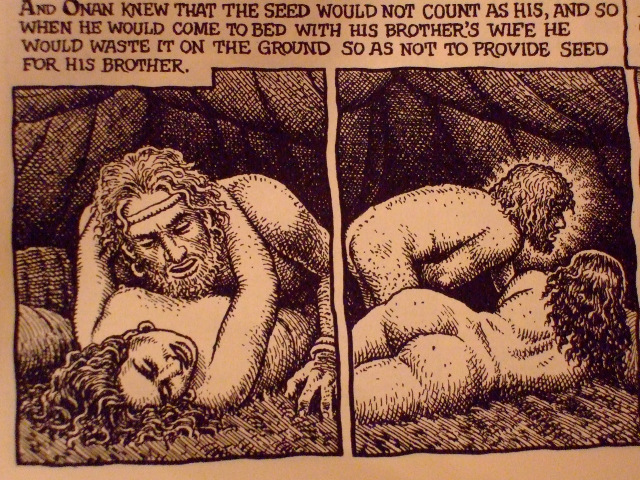
from Robert Crumb’s graphic bible
(Imagine the Byrds recording a hit song using Bible verses from Genesis 38, 9-10:
Onan from his brother’s wife
Prematurely withdrew,
And for practicing birth-control,
Onan Yahweh slew).
As for my falling off a ladder and wrenching my back last Saturday, I attribute that to my idiocy, carelessness.
However, the last thing, the last fucking thing, has shattered the Hemingway mask of stoicism I’ve been sporting.
On the eve of her transplant, Judy found our dog Saisy dead on the living room carpet, lying there as if asleep, save for the frozen mouth.
Fuck, dear readers, I don’t like to think of myself as a whiner, but fuck.
Last night the shamanic JT Crow, one of my spiritual advisors, came over for pizza, and we started yapping about the HBO series Treme, which chronicles the travails of (perhaps too many) characters trying to get their lives together in those wretched days just after Katrina wasted New Orleans.
Although Mr. Crow, who goes by Jim (and, by the way, voted for Obama), and I agree that New Orleans itself is the protagonist of the narrative and that the music [cue James Brown] is bam BAM BAM BAM BAM! – OUT-OF-SIGHT!!!! – we mildly disagree about the overall quality of the production.
For one thing,, I think some of the acting sucks — the Hindenburg of my disbelief has crashed a few times. For example, the Davis McAlary character’s parents don’t seem like the decadent uptown parents of a wastrel son but like actors playing the decadent uptown parents of a wastrel son. I start wondering where they’re really from, if they get along off the set, etc.
Even Declan MacManus doesn’t do a very good job of playing Elvis Costello.
Davis McAlary played by Steve Zahn
Anyway, the most interesting difference of opinion between Crow and me concerns the above-mentioned character Davis McAlary, whom Jim likes but whom I’d like to see sporting orange overalls and a leg shackles while gigging trash amid swarms of mosquitoes on the side of a desolate Louisiana road.*
Do I need mention that Jim’s nicer than I am**?
Jim considers Davis a good person at heart, but to me his picture should appear next to asshole in the American Heritage Dictionary of Vulgarity.*** Because of some sort of megalomaniac disorder, Davis feels entitled to ignore the playlist of the radio station where he works because the playlist isn’t authentic enough, never mind that it’s during a Beg-O-Rama (aka Pledge Drive) and the station is teetering on the edge of financial collapse. Davis feels entitled to steal a bottle of $200 wine from a lover’s restaurant even though it’s teetering on the edge of financial collapse (though he does leave her as compensation some vintage out-of-print music he looted from a record store). He also aims his speakers outwards from his windows towards his neighbors’ house and blasts them with New Orleans’ hip hop. Working as a concierge, he sends young Mormon volunteers to authentic but dangerously located clubs so they can experience the real New Orleans, etc.
The would-be cat ain’t got no clue about existentialism. He’s about as tolerant as Boko Haram.
*Obviously, Zahn is going a terrific job of acting if I’ve developed such an animus towards his character.
** E.g., I was sitting on Jim’s couch one evening getting machine-gun blasted with hate tweets from a disgruntled former colleague, and when I started punching in a retaliation, Jim stopped me and said, “Don’t do that. The poor man is suffering.”
Also, Jim has seen two seasons as opposed to my two episodes. Maybe Davis changes as the narrative progresses (but it seems to me to be dramatically viable it would take a road-to-Damascus Jesus-hurled thunderbolt).
***Aaron James’s definition from Assholes, A Theory: n., a person who “allows himself to enjoy special advantages and does so systematically” because of “an entrenched sense of entitlement,” and who “is immunized by his sense of entitlement against the complaints of other people.”
But then, sitting there with Crow, I had to concede that if Davis lived on Folly Beach, my little slice of purgatory, it would be fun to hang with him on a casual basis, given his passion, knowledge, and exquisite taste in music. That got me to thinking about some less than noble characters I hung with in my troubled youth, which, of course, got me thinking about Shakespeare’s Othello.
[Feared reader response: WTF! Huh? Time to click out of this joint].
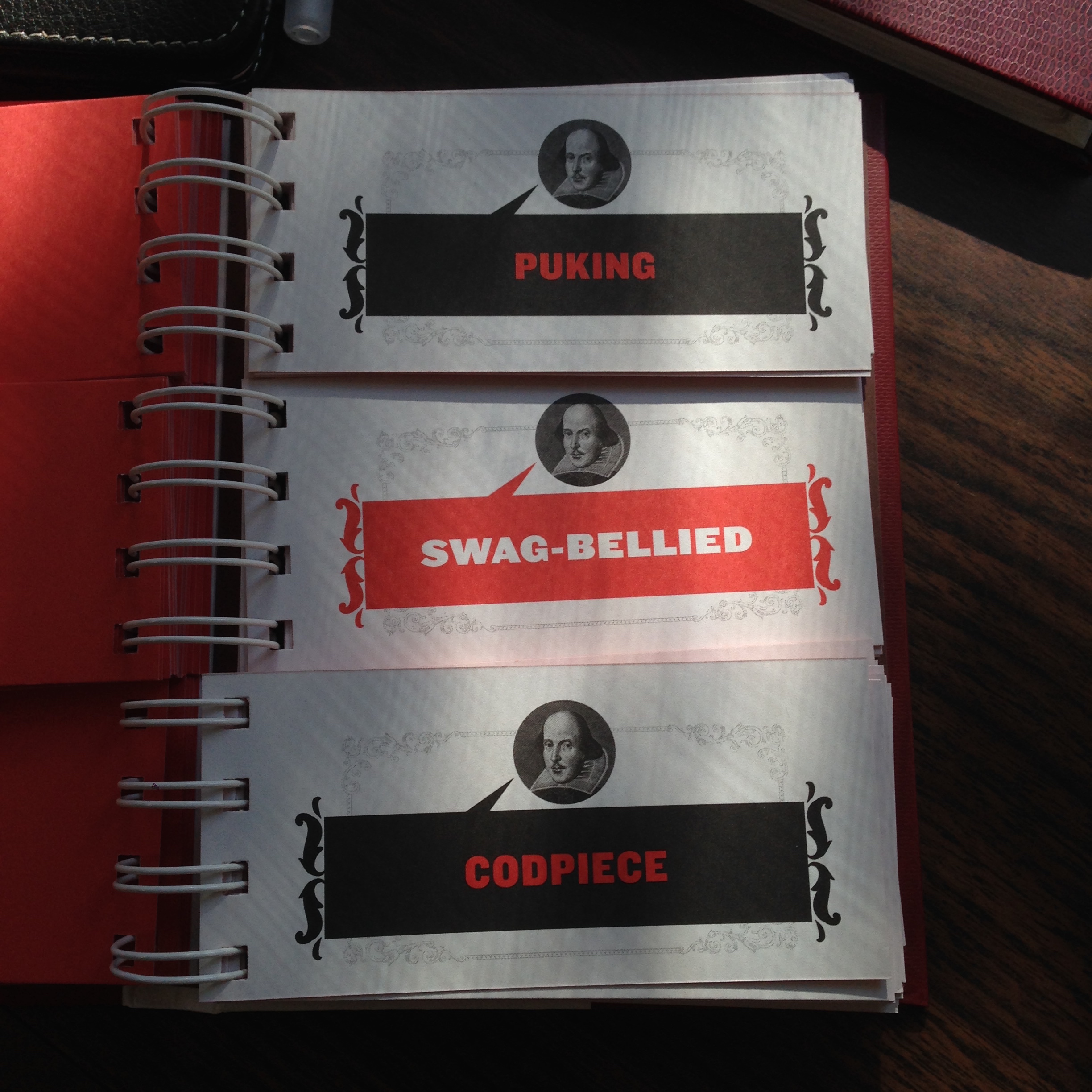
Sample Page from Shakespeare Insult Generator
As it happened, Jim’s Xmas present to me, a Shakespeare Insult Generator, was on the table next to us, and it got me to thinking.
A SIG allows you to randomly select two adjectives from any play in the canon and affix them to a Shakespearean noun to create curses for, as PEE WEE GASKINS might say, “them what we love to hate.” For example, flipping through the kit with my left hand as I type, I see I could call Davis a “churlish, beef-witted braggart” or a “mammering, hollowed geck.”
One of the adjectives in the kit is “swag-bellied,” which I actually recognize from 2.3 of Othello. In the scene, Iago, as sociopathic a character in all of literature, is regaling his comrades with descriptions of the English’s domination in the consumption of alcohol over formidable but lesser rivals:
Cassio: Fore God, an excellent song!
Iago: I learned it in England, where indeed they are most potent in potting. Your Dane, your German, and your swag-bellied Hollander – drink, ho! – are nothing to your English.
Cassio: Is your Englishman so exquisite in his drinking?
Iago: Why he drinks with facility your Dane dead drunk; he sweats not to overthrow your Almain; he gives your Hollander a vomit ere the next pottle can be filled.
Let’s face it, if you were on Iago’s good side, i.e., if he’s not robbing you blind or plotting to bring about your total destruction, he’d be an entertaining drinking buddy, much more clever than pretty boy Cassio.
Ah, but here’s the rub. Shakespeare inserts this true-to-life comic skit in the infernal machinery of a tragedy, the skit underscoring dimensions of character, e.g., Cassio’s naivety and Iago’s verbal cleverness.
Shit, then, why am I watching Treme when I could be watching Henry IV, Episodes 1 and 2?
Because, for one thing, Falstaff can’t rip up a piano and sing like Dr. John.
Oh yeah, Mac Rebennak does an Emmy-deserving job of playing Dr. John in Treme.
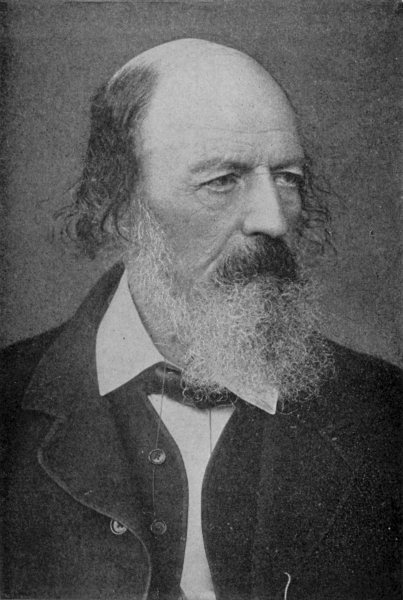
Bells toll inside my head as I reach for my Alfred Lord Tennyson outfit. It’s Victorian black with matching cravat, mourning cape, matching hat. There’s even a beard, luxuriant and curling, that came with the costume, but I can’t find the whiskers anywhere. Been three years since I’ve donned this get-up, a Halloween present from sweet deceased Adelaide, who passed away in a Hampton’s Inn all alone in the not-so-new millennium. Actually, she made the costume and bought the beard from Hocus Pocus.
I’m getting into character, reading “In Memoriam”:
I sometimes hold it half a sin
To put in words the grief I feel;
For words, like Nature, half reveal
And half conceal the Soul within.
I’ve taken to panhandling.
No, it’s not a lifestyle choice, but part of my thesis, a paper I’m writing on selling-and-psychology, a study in which I report on my experimentation with different modes of panhandling, comparing the hourly wage of me playing a wheel-chair bound Iraqi war veteran ($12.34) with the hourly wage of me playing a shyster hipster holding a sign that reads “Haven’t been high in two days ($4.56).[1] I’m hoping to shed some light on what makes people part with their money in situations of charity, combining my love of acting, my interest in marketing, and my curiosity about how the human mind works. So today I’m going out begging in the guise of Alfred Lord Tennyson. It’s a dreary, leaden day, very Tennysonian.
I consider brain chemistry to be sort of like weather – sunny, rainy, partly cloudy, partly sunny. Part of it, of course, is genetics — look at the Hemingways — but life events can affect brain weather, too. Maybe if Tennyson’s best friend Arthur Henry Hallam hadn’t dropped dead Tennyson might have been a cheerier poet, like EE Cummings or Maya Angelou. Who knows?
I’ve decided to set up shop, so to speak, North of Calhoun in the bar district, which you might think is unsafe, but I’ve never had a problem, and anyway, I’m packing a Smith & Wesson. 22 LR Rimfire, not gun enough to kill someone but big enough to chase off a knife wielder or unarmed thug.
The one thing that’s bothering me, though, is the lack of a beard. I’m only 26 years old, and a beard would help. Of course, I wear make-up. Thanks to the College’s Theater Department’s make-up department, I’ll be sporting a gray complexion and those woeful looking, sympathy-spawning bags under my eyes that made Tennyson look like the saddest creature that ever crawled across the face of the earth:
The sparrow’s chirrup on the roof,
The slow clock ticking, and the sound
Which to the wooing wind aloof
The poplar made, did all confound
Her sense; but most she loathed the hour
When the thick-moted sunbeam lay
Athwart the chambers, and the day
Was sloping toward his western bower.
Then said she, “I am very dreary,
He will not come,” she said;
She wept, “I am aweary, aweary,
Oh God, that I were dead!”
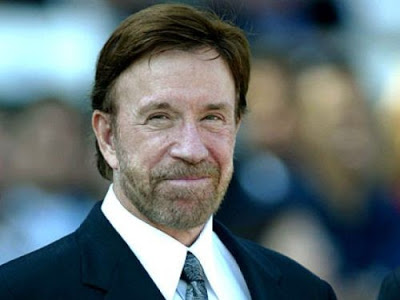
It was through theater I first met Adelaide, a student production of Chekov’s Three Sisters. She played Irina, I Vassily Vasilyevich Solyony. It wasn’t bad as student productions go. The only problem, though, is I had this thing for Adelaide/Irina, but she had a boyfriend, a spoiled preppy entitled piece of shit, so I didn’t make it verbally known to Adelaide that I had this thing for her, though from what others tell
Chuck Norris
me it was as obvious as Cyrano’s nose or Chuck Norris’s toupee. I kept waiting for her to make the first move, but she never did. It goes without saying neither did I.
Kristopher my make-up man has done his magic, including providing me with a real enough looking beard, so I’m walking rather self-consciously from the parking garage to King with a folding lawn chair strapped to my back, a bucket for the proceeds, a book of Tennyson’s poems, and a sign that simply says “alms.”
I find a spot on the corner of King and Morris, put my sign out and start to read Tennyson, finding snatches of verse ripe for memorization, little ditties like
Me rather all that bowery loneliness,
The brooks of Eden mazily murmuring,
and try to ignore the occasional rude comment about beggars and street performers. Of course, I could whip out the Rimfire and cap one of them, taking my performance art to a new level, but that’s not, as Adelaide used to say, the Buddha way.
Finally, after 4 minutes and 32 seconds, I get my first score, two single dollar bills dropped. I say,
And if ever I should forget
That I owe this debt to you
And I for your sweet sake to yours,
O, then, what shall I say? —
If ever I should forget,
May God make me more wretched
Than ever I have been yet!
At the one hour mark, I start reciting Tennyson as I see people approaching, though I avoid eye contact.
Doors, where my heart was used to beat
So quickly, not as one that weeps
I come once more: the city sleeps;
I smell the meadow in the street.
At the two hour mark, I start making eye contact before chanting the quote, straining to counterfeit that stare dogs give when they think you might have a treat for them.
Since we deserved the name of friends
And thine effect so lives in me,
A part of mine may live in thee
And move thee on the noble ends.
So here I sit in this Halloween costume, chanting Tennyson in the name of soft science. My thoughts return to that Halloween party three years ago. Adelaide dressed up like Emily Dickinson, hair parted in the middle, a white dress, for she was the Empress of Calvary. No one got the joke, two depressive poets on a non-date. Perhaps she should have worn black because that’s what people picture when they imagine Emily Dickinson.
I felt a Funeral, in my Brain,
And Mourners to and fro
Kept treading – treading – till it seemed
That Sense was breaking through –
Ring out the old and all that jazz. Adelaide OD-ed in a Hampton Inn in Conyers, Georgia, and that’s about as unromantic as it gets.
It’s time for me to move on, I guess.
Good, God, now I’m even starting to think in slant rhymes. I get up, abandoning the role, take off the itchy beard, and look for some ragged someone I can pass the cash off to.













 You Do Hoodoo