How to Talk Mac Rebennack’s Oola-Ma-Walla-Malla Argot


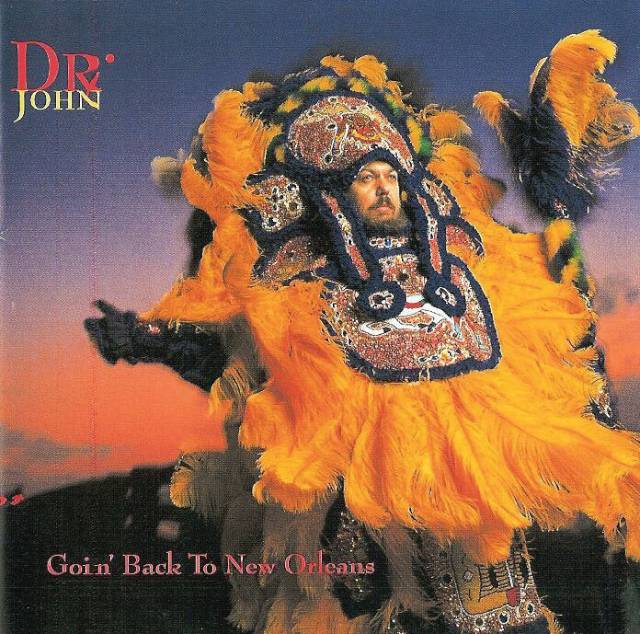
Here’s a brief glossary of perhaps unfamiliar words and phrases from Mac Rebennack’s autobiography Under a Hoodoo Moon.


ax a musician’s instrument, derived from Mafia lingo, according to Rebennack

B drinkers – uncool bar customers

belly rub – a dance

bomolatchee –  a huge reefer, e.g. a Rasta spliff.

bonnaroo – cool, great, swell

boost, booster – to shoplift; a shoplifter

Chang Moi rocks  – a type of heroin

companfonkilation  – merging two songs and pulsing them with syncopation

Of all the songs on the album, the one that probably gave me the greatest kick was “Litanie des Saints,” my compafonkification of two pieces of music, Louis Gottschalk’s classical “‘Bamboula, Danse des Negres” and the chants I heard at various gris-gris churches over the years.


decks of gage – stacks of rolled up joints

desitively – positively, absolutely

dope sick – needing a fix

When we started working on the record, Wayne told me, “I can’t work no more like this.  I’m dope sick.  I need some serious money.”

down-goings – a play on “what’s going down” but in the sense of the process of sinking into further trouble

dry hump – a dance

ear bead – a blind man locating someone’s bodily presence

Ray [Charles] got an ear bead on him [and] knocked Charley on his ass.

Fess – Professor Longhair

Professor Longhair

fessee – the argot of professor Longhair (see propedeller, propelacter, e.g.)

festoon – Professor Longhair’s term for fun

flusturations – incidents that frustrate and fluster

One of the flusturations of this job was that when I delivered something I thought was good, many times Johnny didn’t put it out.

FonkLiterally, “a syncopation on or around a beat.”

 Fonky, fonked– a derivation of funky, but more emphatic, more positive, having the positive vibe associated with fonk.

In the bat of an eye, I’m out on the fonky streets of Fort Worth, smelling rawhide and cowpies, headed for the airport and blue skies.

This approach fonked up the more abstract northern jazz sound.

funksterators – funk creators, musicians that play funk

forever-and-one-year – a long prison sentence

frolic presto – to play music fast

Come on, boys.  Let’s frolic presto.

funky – the music of funk, cool, but less emphatic than fonky.  Rebennack uses both spellings, but fonky seems richer then funk.

get a sick off  –  score narcotics to counteract withdrawal

He needed to get his sick off.  His habit was an oil burner.

goofer dust – a hoodoo concoction

a combination of dirt from a graveyard, gunpowder, and grease from [church] bells; if you throw it into somebody’s eyes, it’ll blind them, and throwing it behind them while they’re walking will put a curse on them.

gris-gris – New Orleans styled voodoo, magic

hang paper – forge checks

hipped – turned on to new information

He hipped him to the fine points of hustling gigs.

in need of a little brain salad surgery – needing to get high

jingle jungle – the business of writing jingles for advertisements

junk-a-dope-a-nals – any intoxicatingy pharmaceutical ending in “nal”

A lot of them went for goofballs: Nembutal, Seconal, tuinal, phenobarbital.  The nals we used to call them – the junk-a-dope-a-nals.

lushing – drinking, doping

making cake – earning money

marble-lized – immortalized

“I think I marble-lized you.” Rebennack to Queen Julia Jackson after dropping her name in a song.

marygeranium– of or relating to marijuana

The truth was, I think my mother unconsciously dug reefer, or at least enjoyed the idea of a marygeranium high.

methodonian – an addict who has transitioned from heroin to methadone

ministrations – technical applications

We were all loaded and Rose was screaming and the doctor was doing his ministrations and it looked like the child was just about to come out when the doctor turned to us, real annoyed, and said, “Man, y’all can’t be smoking and doing all that shit in here, Get out!”

mootahs – reefers

muscle – bouncers

They had their own muscle working in the clubs or out on the street.

oaks and herbs – splendid, irie, as the Jamaicans say

And the second one said, “Everything’s oaks and herbs” – which means everything’s cool because they had smoked lots of herbs.

ofays – white people

The source of their bigotry seemed to be that the West Bank ofays were scared that black guys would take off with their women.


one-to-too-long-a-time –  any prison sentence

Now he’s in Angloa Penitentiary doing one to too long a time.

oola-ma-walla-malla language – specialized argot created by cats to confuse squares

‘plexed out – seriously frustrated by

They were truly down characters and kept me from getting ‘plexed out behind all the changes.

pluck – booze

He was a garbage head, a cat who would drink cheap pluck, smoke a bag of reefer, pop all the pills he could pop, then chase it all down with a shot of dope.

propedeller, propelacter – a drum pedal

“John, that ain’t what I want you to play on your foot propedeller.”

John said, “Whaaat?”

Fess said, “You know, I want you to propel the groove with your foot propelacter.”

rum-dums – winos, sots

One night a couple of rum-dums got into a fight and started throwing cans of corn and tomato juice around and busted up the store, making a hell of a gumbo in the process.”

shucker – a pretender

My voice was low and froggy; Shine had a husky voice, too, but was a real singer, not a shucker like me.

slotted – transitioned into a niche

I slotted into a different musical groove.

spew – a drum fadeout

stone – solid, set in stone, unalterable

There was a whole language and lifestyle that went along with being a stone dope fiend.

Leonard just didn’t have the stupidity to become a dope fiend or a weed or pill head; he was never anything but a stone character.

Cutting the album [Gumbo] was a stone kick from first to last.

tighten – to pay back owed money

Tomming – being an Uncle Tom

tragic magic  – heoin addiction

trashers – rock stars who wreck hotel rooms or ballrooms

traumatical – traumatic

All of this was very traumatical for me.  I’ve seen friends’ throats slit, my partner on the morgue table, kids getting turned out – it’s all very heavy, and a lot of it was stuff I’d forgotten until just recently when I went through rehab.

tricknology, tricknologists – the act of conning, fooling someone; con men, scam artists


The Lighter Side of the Apocalypse

Crumbling civilizations and apocalyptic doom are all the rage.  I should know. They’ve been my shtick for the 8 years I’ve been publishing blogs.  As I decline into the vale of years, what could be more natural than to project my own serotonin-starved vision of bleakness onto the world at large, to float like a dark cloud above the carnival, to cast a shadow on the festivities?

That is no country for old men. The young
In one another’s arms, birds in the trees –
Those dying generations – at their song . . .

I suspect that this tendency of the aged to proclaim hell-n-handbaskets is a biological imperative as old as agriculture.  Remember the Greek myth of the Golden Age? Grandmama’s tales of the good ol’ days back on the farm?  How the Coca-Colas of your youth tasted so much better hissing from the fountain with a dollop of cheery juice?  [I suspect that Great Grandmama’s was even more pleasurable packing that eponymous ( i.e., not-so-secret) ingredient].

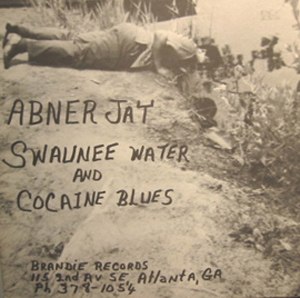
[cue Abner Jay]

As my aging body slouches towards dissolution, the world fast forwards beyond my capabilities and understanding.  As I carefully negotiate the crowds, pedestrians rush past staring into boxes the size of cigarette packs, manipulating buttons with their thumbs.

Honk honk!

Pouring pollution from their tail pipes, vehicles the size of city states shimmer like mirages in the gridlock.  Tinted windows obscure whoever inside has jacked up Jay-Z so loud that the bass lines sound like King Kong pounding on war drums.

Back home, my television offers more channels that I have the strength and/or attention span to cycle through: kung fu movies, costume jewelry emporiums, forty-year-old quiz shows, twenty-year-old football games, infomercials on ab-crushers, propagandists posing as news anchors.

Not to mention the kids these days, tattooed and pierced, playing the exotic dancer on Instagram, fantasizing about vampires, ending every statement with an interrogative lilt, sounding all alike whether they hail from Harlan, Kentucky or Exeter, New Hampshire.

An electorate with the attention span of a muscle spasm.

Well, if biologically I’m in decline, then the world must be in decline.  Some corporate evil force is somehow manipulating us!

***

Back in my g-g-generation’s swaggering youth, we shrugged off atomic annihilation the way we did parking tickets.  Wisely, we didn’t fret over scenarios of nuclear winters and genetic mutations because it was more fun (and made more sense} to devote our springtimes engaging in the lovedance beneath batik bedspreads in hippie vans, dormitories, and/or seedy apartments.  The future existed as merely an abstraction.

In the immortal words of the Tams: Be young, be foolish, but be happy.

All too imminent horrowshow scenarios (e.g., getting drafted and sent to Nam) relegated more speculative disasters to paranoia’s hinterlands.  Our elders – as I do now – articulated the Roman analogies, only targeted the bacchanalia of Woodstock rather than the Trimalchio’s Banquet of conspicuous excess that characterizes Late Empire capitalism (my favorite whipping child).

Despite their self-decorations, today’s youth strike me as more concerned about our planet and future generations than we proliferates.  They wisely love their planet and understand the delicate balances that sustain existence.  They fear not the sudden nuclear explosion (which may be naive given proliferation) but the gradual erosion of resources and climate change.

I say bravo! Live for today as you think ahead,  mindfully turning down the AC before you climb the stairs with your lover. Tune out the hyperbolic curmudgeons (like me) and cultivate your gardens.

Be young, be wise, but be happy.  And save the planet!  Vote!

Commiseration Via Poetry

antidepressant-Mirjana-Veljovic

Antidepressant by Mirjana-Veljovic

In college, back in the fall of 1972, my sophomore poetry teacher assigned our class the task to compile an anthology of contemporary poems that revolved around a common theme.  I chose despair because I reckoned that depression might be a common theme for poets, a notoriously withdrawn and navel-gazing lot.  I figured poems of despair, unlike, say, political poems or poems dealing with domestic bliss, would make for easier harvesting because they would exist in greater abundance.

So, I checked out anthologies and skimmed poem titles and promising poems hoping to amass thirty or so specimens to satisfy the minimum requirement. In 1972, Auden and MacLeish were alive, Sylvia Plath less than a decade dead, Anne Sexton about to kill herself in a couple of years, so many of the poems I looked at had been written mid-century.

Of course, I have lost my anthology, which was hand written and received a B (likely the lowest grade given), but I do remember two of the poems I included.  One was Auden’s “As I Walked Out One Evening,” whose rhymes and rhythms I liked and whose rather childish message was right up my cynical alley:

I walked out one evening,

Walking down Bristol Street,

The crowds upon the pavement

Were fields of harvest wheat.


And down by the brimming river

I heard a lover sing

Under an arch of the railway:

‘Love has no ending.


‘I’ll love you, dear, I’ll love you

Till China and Africa meet,

And the river jumps over the mountain

And the salmon sing in the street,


‘I’ll love you till the ocean

Is folded and hung up to dry

And the seven stars go squawking

Like geese about the sky.


‘The years shall run like rabbits,

For in my arms I hold

The Flower of the Ages,

And the first love of the world.’


But all the clocks in the city

Began to whirr and chime:

‘O let not Time deceive you,

You cannot conquer Time.


‘In the burrows of the Nightmare

Where Justice naked is,

Time watches from the shadow

And coughs when you would kiss.


‘In headaches and in worry

Vaguely life leaks away,

And Time will have his fancy

To-morrow or to-day.


‘Into many a green valley

Drifts the appalling snow;

Time breaks the threaded dances

And the diver’s brilliant bow.


‘O plunge your hands in water,

Plunge them in up to the wrist;

Stare, stare in the basin

And wonder what you’ve missed.


‘The glacier knocks in the cupboard,

The desert sighs in the bed,

And the crack in the tea-cup opens

A lane to the land of the dead.


‘Where the beggars raffle the banknotes

And the Giant is enchanting to Jack,

And the Lily-white Boy is a Roarer,

And Jill goes down on her back.


‘O look, look in the mirror,

O look in your distress:

Life remains a blessing

Although you cannot bless.


‘O stand, stand at the window

As the tears scald and start;

You shall love your crooked neighbour

With your crooked heart.’


It was late, late in the evening,

The lovers they were gone;

The clocks had ceased their chiming,

And the deep river ran on.


auden

WH Auden

The other poem I remember including, a much better poem, is Archibald McLeish’s, “You, Andrew Marvell.”  As it turned out, the very next year I would hear MacLeish read the poem in person, he who was born the year that Tennyson died.

You, Andrew Marvell

And here face down beneath the sun

And here upon earth’s noonward height

To feel the always coming on

The always rising of the night:


To feel creep up the curving east

The earthy chill of dusk and slow

Upon those under lands the vast

And ever climbing shadow grow


And strange at Ecbatan the trees

Take leaf by leaf the evening strange

The flooding dark about their knees

The mountains over Persia change


And now at Kermanshah the gate

Dark empty and the withered grass

And through the twilight now the late

Few travelers in the westward pass


And Baghdad darken and the bridge

Across the silent river gone

And through Arabia the edge

Of evening widen and steal on


And deepen on Palmyra’s street

The wheel rut in the ruined stone

And Lebanon fade out and Crete

High through the clouds and overblown


And over Sicily the air

Still flashing with the landward gulls

And loom and slowly disappear

The sails above the shadowy hulls


And Spain go under and the shore

Of Africa the gilded sand

And evening vanish and no more

The low pale light across that land


Nor now the long light on the sea:

And here face downward in the sun

To feel how swift how secretly

The shadow of the night comes on …


Unknown

Archibald MacLeish

Sometimes, like this morning, when sleep has stood me up and I don’t feel so hot mentally, I seek a dark poem with which I’m not familiar as a way to commiserate with a stranger who might have it worse than I-and-I.

And lo and behold I discovered this poem by Jane Kenyon a couple of hours ago. Jane Kenyon, who died of leukemia, was the subject of the superb book-length elegy Without by her husband Donald Hall.  I read the poem in the New Yorker in the mid-Nineties right after I had recovered from a serious case of clinical depression. You can read one of the poems from the collection here, but I would love to share with you Jane’s poem, which I find profound and beautiful:

HAVING IT OUT WITH MELANCHOLY” BY JANE KENYON

  1. FROM THE NURSERY

When I was born, you waited
behind a pile of linen in the nursery,
and when we were alone, you lay down
on top of me, pressing
the bile of desolation into every pore.

And from that day on
everything under the sun and moon
made me sad — even the yellow
wooden beads that slid and spun
along a spindle on my crib.

You taught me to exist without gratitude.
You ruined my manners toward God:
“We’re here simply to wait for death;
the pleasures of earth are overrated.”

I only appeared to belong to my mother,
to live among blocks and cotton undershirts
with snaps; among red tin lunch boxes
and report cards in ugly brown slipcases.
I was already yours — the anti-urge,
the mutilator of souls.

  1. BOTTLES

Elavil, Ludiomil, Doxepin,
Norpramin, Prozac, Lithium, Xanax,
Wellbutrin, Parnate, Nardil, Zoloft.
The coated ones smell sweet or have
no smell; the powdery ones smell
like the chemistry lab at school
that made me hold my breath.

  1. SUGGESTION FROM A FRIEND

You wouldn’t be so depressed
if you really believed in God.

  1. OFTEN

Often I go to bed as soon after dinner
as seems adult
(I mean I try to wait for dark)
in order to push away
from the massive pain in sleep’s
frail wicker coracle.

  1. ONCE THERE WAS LIGHT

Once, in my early thirties, I saw
that I was a speck of light in the great
river of light that undulates through time

I was floating with the whole
human family. We were all colors — those
who are living now, those who have died,
those who are not yet born. For a few
moments I floated, completely calm,
and I no longer hated having to exist

Like a crow who smells hot blood
you came flying to pull me out
of the glowing stream.
“I’ll hold you up. I never let my dear
ones drown!” After that, I wept for days.

  1. IN AND OUT

The dog searches until he finds me
upstairs, lies down with a clatter
of elbows, puts his head on my foot.

Sometimes the sound of his breathing
saves my life — in and out, in
and out; a pause, a long sigh. . . .

  1. PARDON

A piece of burned meat
wears my clothes, speaks
in my voice, dispatches obligations
haltingly, or not at all.
It is tired of trying
to be stouthearted, tired
beyond measure.

We move on to the monoamine
oxidase inhibitors. Day and night
I feel as if I had drunk six cups
of coffee, but the pain stops
abruptly. With the wonder
and bitterness of someone pardoned
for a crime she did not commit
I come back to marriage and friends,
to pink fringed hollyhocks; come back
to my desk, books, and chair.

  1. CREDO

Pharmaceutical wonders are at work
but I believe only in this moment
of well-being. Unholy ghost,
you are certain to come again.

Coarse, mean, you’ll put your feet
on the coffee table, lean back,
and turn me into someone who can’t
take the trouble to speak; someone
who can’t sleep, or who does nothing
but sleep; can’t read, or call
for an appointment for help.

There is nothing I can do
against your coming.
When I awake, I am still with thee.

  1. WOOD THRUSH

High on Nardil and June light
I wake at four,
waiting greedily for the first
note of the wood thrush. Easeful air
presses through the screen
with the wild, complex song
of the bird, and I am overcome

by ordinary contentment.
What hurt me so terribly
all my life until this moment?
How I love the small, swiftly
beating heart of the bird
singing in the great maples;
its bright, unequivocal eye.

Unknown-1

Jane Kenyon

Happy Hump Day!


Retirement

“My Lonely Room” by Jerry Cordeiro

My mother’s family has produced an uncanny number of recluses.  For example, my Aunt Virginia spent three-quarters of her youth holed up in her room in a rocking chair listening to the same Barbara Streisand albums over and over and over again.  Eventually, she transitioned into a halfway house for mentally ill, which required her to coexist with others, but she later was liberated to a subsidized apartment where she resumed her Emily Dickinson like existence. Three people besides her immediate family attended her funeral. [1]

Virginia at a New Years Eve party in 1964

Her father, whom we called Kiki, also retreated almost full-time to his bedroom.  There he listened to the radio (Paul Harvey, baseball games) or played the ukulele while crooning Hawaiian songs and/or yodeling. In his later years, he took his meals in that room where he stacked dirty plates on the floor next to the door for my grandmother to retrieve and wash after he had consumed the country meals she prepared and delivered.

In his sixties, Kiki began acting oddly, putting his alarm clock upside down on his bedside table, mowing the lawn at five a.m.  Eventually he was placed in a home in Columbia called Crafts-Farrow.  I was in college in Columbia at the time, so I borrowed my girlfriend’s car to visit him.  I met him in a large room where other patients and family members milled around.

He immediately recognized me and started relating hard-to-believe tales of the abuse he was suffering.  He said, “Rusty, help me escape. Ask them if we can go for a walk; then we can ride away.  Just let me out on the side of the road.  You’ll never have to see me again.”

I explained that he’d get better if he stayed there. As I was leaving, I asked a fat lady at a desk near the door to keep an eye on him, explained that he was planning to escape, and she let out a maniacal, unhinged laugh.  Ends up she was a patient herself.

The good news is that he did get better and returned to Summerville and the house and [mocking cough] enjoyed a much better attended memorial service.

His son, my Uncle Jerry, worked on a spy ship tracking Soviet missile launches and had purchased the house where they lived.  When he retired, he also spent the majority of his time alone in his room, which was more like a suite, on the opposite end of the house from his father.  My grandmother had her own room, so essentially, you had this nuclear family who had little to do with each another living together in their separate cells.

My grandmother was the exception.  She spent her days in the living area watching television from dawn until the Indian test pattern shut things down after The Tonight Show starring Jack Paar and later Johnny Carson. One spring when I was in grad school, I visited and was almost blown out of the door by the hotness blasting from a gas heater even though the temperature outside was in the seventies.  Obviously, though not ensconced in her room, she didn’t get outdoors very often.

My mother, on the other hand, was extroverted and vivacious. She was the only sibling to have children. In the summers, she took us to the Curve In Pool or the beach and loved yard work.

Although I’m not geared for extended periods of solitude, I can appreciate its appeal. In my case, I’d opt for a darkened room with no radio and no Streisand, just a grandfather clock and a never-ending supply of camphor-soaked handkerchiefs in honor of Faulkner’s Mrs. Caroline Compson. I’d lay the handkerchiefs upon my furrowed forehead as the clock audibly ticked away seconds and marked with chimes the quarter hours and knelled away the hours — one, two, three, four, five, six, seven, eight, nine, ten, eleven, twelve — while the planet rotated and revolved its way into my oblivion.

“Hey, Wes, have any plans for retirement?”

“Yeah, I plan to take it easy.  Hey, know where I might be able to cop some camphor?”


[1]You can read about how he disposed of her ashes here.


A Mean Case of the Sunny Sunday Morning Blues

Suffering from a bad case of the Sunny Sunday Morning Blues, I slouched across the hall from our boudoir to my drafty garret/book depository and composed a boring blog post that interpreted the Eden myth as a mythological explanation for the loss of leisure following the transition from food foraging to agriculture.

[Yawn]

I cited scripture:

“In the sweat of thy face shalt thou eat bread, till thou return unto the ground; for out of it wast thou taken: for dust thou art, and unto dust shalt thou return.”

And

“Unto the woman he said, I will greatly multiply thy sorrow and thy conception; in sorrow thou shalt bring forth children; and thy desire shall be to thy husband, and he shall rule over thee.”

I argued hunting and gathering were fun, citing statistics (“36.82 million hunting licenses, tags, permits and stamps were issued in 2017”).

[Yawn]

I pointed out that in the 21stcentury North Americans actually pay their hard earned money to pick strawberries and referenced a study that found “[a]nthropometric comparison between !Kung foragers in transition with settled Kavango horticultural pastoralists in Namibia indicate that the move from nomadic foraging to settled village life had deleterious effects on nutrition status for the !Kung.”[1]

[Yawn]

I commented on life expectancy:

Foragers often have long lives compared to people in the industrial societies of the 19th and early 20th centuries.  Richard Lee discovered that 10% of the San were over 60 years of age and the elderly, blind, senile, and crippled were supported by their families.  In the United States today, 10-15% of the people are over 60 and life expectancy is in the low to mid 70’s.  However, living to an advanced age in the Western World is a very recent trend primarily resulting from modern medicine.  In 1900, the average life expectancy in the United States was only 50.  At the time of the American Revolution, it was 35.  By comparison, the San lived relatively long, healthy lives.[2]

[Yawn]

I marveled that, according to the Kuhn Academy website, “[Foragers] spent “a large portion of their time in ‘leisure’ activities — conversation, joking, singing, and dancing. Decisions were reached by consensus, with women having relative equality with men. Chiefs were designated, but they had little additional power.”  In other words, food foragers enjoy an egalitarian society.

Truly paradise lost, I was going to argue: time not diced into ever-disappearing units of 60 – no Sunday morning blues — but a life imbued with meaning and imbedded in nature where rituals reinforce and playfulness abounds.

However, before I finished the post, my son Ned called me from Nuremberg for our weekly chat.  In the course of catching me up, he mentioned that he had attended a lecture entitled “Boobalicious?!  Production of the feminine breast in the comic medium” where he learned that comic villainesses ten to have firmer, higher breasts than their softer, more supple nemeses, heroines.

Then it suddenly occurred to me that foragers don’t have comic books and that they don’t fetishize breasts.  In other words, that their lives aren’t that great after all.

So farewell, food foragers, hail conical Mammalia! [3]


[1]Kirchengast, S. (1998). Weight status of adult !Kung San and Kavango people from northern Namibia. Annals of Human Biology25, 541–551.

[2]https://www2.palomar.edu/anthro/subsistence/sub_2.htm

[3]Now that’s a subject I could sink my teeth imagination into.

Curiosity

The experts – those focused folk whose curiosity has prodded them to explore and conquer narrow realms – inform us that curiosity is not an instinct but a drive, whether primary (innate) or secondary (learned) they can’t agree.  Curiosity’s strange doubleness – it can be good or bad, can lead to cures or kill the cat – is imbedded in its etymology, from L. curiosus “careful, diligent; inquiring eagerly, meddlesome,” akin to cura “care” coming to English via the Normans from O.Fr. curios “solicitous, anxious, inquisitive; odd, strange.”

On the other hand, we have to grant that instincts are good, given that they’ve been selected for survival.  Unlike a drive, an instinct is a fixed behavior, inflexible, the compulsion that impels your dog to wallow in rotting carcasses whenever the chance occurs.  He’s not curious, not wondering what it feels like to immerse himself in that putrefied puddle of dead pelican. No, instinct compels him to mask his smell to stalk his prey more effectively (even though he’s on a supervised walk and has never even successfully killed a cockroach).

Furthermore, this instinct to swaddle himself in stench will never succumb to your vain attempts at behavioral modification; e.g.,  no matter how many times you blast him with the garden hose.  No matter how many times you batter him with Anglo-Saxon epithets worthy of Jerry Lee Lewis with his hands smashed in the door of a Cadillac, you’ll not be able to dissuade your dog from rolling around in rot.

Behavior born of curiosity, however, can be deprogrammed; e.g.,  sticking his nose in a corner and having it snapped by a rattrap might dissuade Mr. Dog from poking his snout there again.

No, if curiosity were an instinct, we’d have no choice whether or not to enter that peep show on Heart Attack and Vine that promises nude contortionist siamese twins who can twist themselves into chinese characters that foretell the future.

No, we walk on by furtively glancing, placing our hands over our pocketed wallets or clutching tighter our purses.   We may wonder what it’s like in there, but most of us don’t wander in, even if we’d somehow tailed Tom Waits down the dark end of the boulevard.

Therefore, because of its double nature, we don’t really classify curiosity as a virtue, although without it, life is arid, impoverished. Alastair Reid’s poem nails the paradox:


Curiosity

may have killed the cat; more likely

the cat was just unlucky, or else curious

to see what death was like, having no cause

to go on licking paws, or fathering

litter on litter of kittens, predictably.


Nevertheless, to be curious

is dangerous enough. To distrust

what is always said, what seems

to ask odd questions, interfere in dreams,

leave home, smell rats, have hunches

do not endear cats to those doggy circles

where well-smelt baskets, suitable wives, good lunches

are the order of things, and where prevails

much wagging of incurious heads and tails.

Face it. Curiosity

will not cause us to die–[*]

only lack of it will.

Never to want to see

the other side of the hill

or that improbable country

where living is an idyll

(although a probable hell)

would kill us all.

Only the curious

have, if they live, a tale

worth telling at all [. . .]

How sad to take someone’s word for it without doing a little digging, to believe an inherited, unexamined ideology.  To sit in front of Fox News slurping Kool-Aid or believing that the cosmo adheres to Marxist economic principles.


*Well, unless we’re really stupid. Google “Darwin Awards.”

In my experience, the most curious students have been the happiest.  I’m thinking especially now of Willy Schwenzfeier, who seemed equally fascinated by the mysteries of quantum mechanics and the denizens of Faulkner’s Yoknapatawpha County.  Sitting up front, he was insatiably curious, asking questions, smiling constantly.  I dare say that Willy is probably one of the least bored individuals on the planet.  Whether this wonder of the world was inherent or fostered by his parents, I cannot say, but I do know that it served Willy well in high school.  To be curious is to be entertained, and, let’s face it, despite John Berryman’s great “Dream Song 14″  boredom amounts to an inability to ignite curiosity.

We should, however, like Odysseus, exercise caution in our curiosity, to make sure we’re securely lashed to the mast and all the shipmates’ ears are plugged with wax, and that if we decide to slip into that peep show to keep an eye on the exits and a hand on that wallet or purse.

“Odysseus and the Sirens”, 1902, by Otto Greiner

Do Lawd, Tennyson!

lf

At the tender age of five, playing a card game called Authors, I first encountered Alfred, Lord Tennyson with whom I would forge a rocky relationship.

The Authors deck held eleven sets of four cards depicting an eclectic array of writers, a disparate mishmash of talents: Louisa May Alcott, James Fenimore Cooper, Dickens, Hawthorne, Washington Irving, HW Longfellow, Sir Walter Scott, Shakespeare, RL Stevenson, Twain, the insufferable John Greenleaf Whittier.[1]  You drew and discarded and drew trying to make a “book” of all four. I played Authors a lot with my mother when I was sick with rheumatic fever, so, I knew these writers’ names and faces before I read them – and the titles of a few of their works.[2]

Although I don’t remember exactly, I probably first read Tennyson’s poetry in junior high. His “Charge of the Light Brigade” appears in virtually every 7th grade anthology.

Half a league, half a league,

Half a league onward,

All in the valley of Death

Rode the six hundred.

Tennyson, as you probably know, is descended from Mother Goose on his father’s side.

Pease porridge hot, pease porridge cold,
Pease porridge in the pot, nine days old;
Some like it hot, some like it cold,
Some like it in the pot, nine days old.

Although I was obsessed with nursery rhymes in kindergarten, for whatever reason Tennyson never flipped my switch.  I preferred Americans, Frost, ee cummings, Edna St. Vincent Millay, whose very name sounds like a poem. As an undergraduate, I took a Victorian Lit class for about a week but quit attending, not showing up again until the last no penalty drop day so I could cop the signature of the disheveled tweedy professor.

“So nice meeting you, Mr. Moore,” he said without irony. “I was hoping you’d show up again before the drop day passed.”

I smiled, thanked him, felt guilty.

I didn’t seriously study Tennyson until I took a grad course after I started teaching. That summer, I read him carefully, and although I prefer Browning, I learned to appreciate aspects of Tennyson, despite the Victorian bric-a-brac of his verse and his excessive morbidity.[3] The man was a master of versification. Here’s my favorite phrase of his: “the slow clock ticking.”  Try to say it fast.

You can’t.

It captures sonically the slowness of monotonous waiting.

On the other hand, the source of that phrase, the poem “Mariana,” gives center stage to a minor character from Measure for Measure who in Act 5 fornicates with her fiancé in a pitch-black room as part of a comic switcheroo. Her fiancé thinks he’s fornicating with someone else. It’s an elaborate ruse choreographed by the Duke, in part to force their marriage.

Here’s a parodist addressing the cognitive dissonance between the play and poem.

Mariana of the moated grange

about to get laid in Shakespeare’s play,

mopes in Tennyson night and day,

pretty fucking passing strange.

Tennyson’s poem imagines her waiting for her lover who has abandoned her because she lost her dowry at sea.

Here is the poem’s refrain, repeated with minor variations seven times.

She only said, “The day is dreary,

He cometh not,” she said;

She said, “I am aweary, aweary,

I would that I were dead!”

***

Nevertheless, I do admire Tennyson’s great elegy “In Memoriam,” that Moby Dick of mourning, written for his dear, dear friend Arthur Henry Hallam who had died of a stroke at the age of twenty-two.


hallam

Arthur Henry Hallam

The poem is written in a stanza now known as the “In Memoriam stanza,” a quatrain of tetrameter with the rhyme scheme ABBA, a very rigid form that makes fluidity extremely difficult (see above parody), especially when stringing several stanzas together.

After the death of my wife Judy Birdsong, I decided to reread “In Memoriam” to remind myself that mourning was in fact rather commonplace, that others, thousands, millions, billions have had to face heart-rending disseverment, “the blight man was born for.”

Well, I discovered my grief was in no way as profound as Tennyson’s, as deep as his, perhaps because I had had time to prepare myself (or perhaps because I am not as deep or as profound).

Nevertheless, these lines really struck a chord:

But, for the unquiet heart and brain,
A use in measured language lies;
The sad mechanic exercise,
Like dull narcotics, numbing pain.[4]

Anyway, after teaching Tennyson for the very last time this week, it occurs to me that I must be practicing psychological projection, attributing to Tennyson unconscious qualities that I have denied in myself.  How else to explain how often he has appeared in this blog? For example, here is a short story in which the narrator costumes himself as Tennyson to go panhandling as part of academic research. Type “Tennyson” in this blog’s search engine and eight posts appear, most of them mocking him.

Why the obsession?  What is it within me that I’m projecting on him?  Humorlessness?  Hypersensitivity?  Sing-song metrics? Pessimism?

Calling that great dissector of all things Victorian, Dr. Freud.

tennyson


[1]Blessings on thee, little man,
Barefoot boy, with cheek of tan!

[2]Because I was bedridden for three months, my mother taught me how to read, even though I wouldn’t enter kindergarten for another month after my illness.

[3]E.g., Ah, sad and strange as in dark summer dawns

The earliest pipe of half-awaken’d birds

To dying ears, when unto dying eyes

The casement slowly grows a glimmering square;

So sad, so strange, the days that are no more.

[4]During the last week of Judy’s life, I actually did algebra for recreation, sought escape in symmetry.


Straight Outta Wilmington

It’s been a while since I’ve donned the ol’ pith helmet to engage in some good ol’ fashioned anthropology.  However, this weekend my erstwhile grief counselor and now lawfully wedded wife Caroline (pictured below) and I travelled up Highway 17 to Wilmington, North Carolina to catch her friend Edie Senter in an all-female DJ contest held before an Ice Cube concert.[1]

The only other rap performance I’d attended was a Ludacris show at a multi-stage street festival, so I was curious if Ice Cube might offer a more diverse subject matter than Ludacris’s narrow obsession with “bitches” and “hos.”

We had VIP tickets, which allowed us a perch above the groundlings and provided us with easy access to refreshments in a semi-enclosed area. Edie’s husband Dustin, a club owner and impresario, hosted us as we took in the sights and sounds of the celebration, part of Wilmington’s Azalea Festival. After the event, he took us to one of the clubs for some further late empire partying.

Dustin and I-and-I

The MC in charge, a fellow whose name I didn’t catch, provided some fairly entertaining tunes but suffered from that common malady of radio personalities, an unassailable love of the sound of his own voice.  In addition, he had the tedious habit of extolling the audience to raise the decibel level of their responses.

“I can’t hear you?” etc.

Anyway, I especially enjoyed Edie’s performance. Beaming 100-watt smiles while bopping to the beat, she clearly loves spinning,

Here’s a way too short snippet.


If there were a God, Edie would have won instead of coming in second, but the flawed Queen-for-a-Day applause meter reckoning had her ending up in second.

I thoroughly enjoyed Mr. Cube and wish I had been familiar with his work.  When I mentioned to my 40-something pals at school I had been seeing the former founding member of NWA, they started gnawing their arms with envy.  Once again, this snippet in short and at a distance.


One last peek into the dangerous life of an ethnologist from the one of Dustin’s clubs.


[1]Even though I perform hip-hop under the stage name, Nilla Puddin’, I know about as much about rap as I do the regional cuisine of Lombardy.

The Alms of Palsied Eld

Consume my heart away; sick with desire

And fastened to a dying animal

It knows not what it is

WB Yeats


Gustav Klimt

Gustave Klimt: Old Man on His Deathbed 

One of the coolest speeches concerning the decrepitude of old age is the Duke’s contempto mundi screed in Measure for Measure, delivered to poor Claudio who has (to use guidance counsellors’ dearest cliché´) made a bad choice.

He’s impregnated his fiancée.

Not a capital crime, you muse.  Well, fornication hadn’t been until the Duke’s successor Angelo took over the government and started enforcing every law on the books, no matter how ancient or unjust.  Addressing Claudio on the eve of his supposed execution, the Duke offers some words of recompense for a life cut short (and a rather lurid peek into a future none of us wants to consider):

If thou [old person] art rich, thou’rt poor;

For, like an ass whose back with ingots bows,

Thou bear’st thy heavy riches but a journey,

And death unloads thee. Friend hast thou none;

For thine own bowels,[1] which do call thee sire,

The mere effusion of thy proper loins,

Do curse the gout, serpigo, and the rheum,

For ending thee no sooner. Thou hast nor youth nor age;

But, as it were, an after-dinner’s sleep,

Dreaming on both; for all thy blessed youth

Becomes as aged, and doth beg the alms

Of palsied eld; and when thou art old and rich,

Thou hast neither heat, affection, limb, nor beauty,

To make thy riches pleasant [. . .]

Yeah, but!  There’re still crossword puzzles, unread novels, Fletcher Henderson recordings, sunsets, that majestic roof fretted with golden fire, Shakespeare himself . . .

***

Nevertheless, I, too, admit I’d rather die than get shipped off to a nursing home.  Luckily, my late wife Judy’s parents avoided that fate as did my daddy and my mama (and both sets of grandparents). My wife Caroline’s father is still going strong alone at eighty.

Unfortunately, Judy’s grandmothers ended up in a “home,” and each trip down to St. Simons when Birdie and Gramma were among the quick included the resiquite visit to the motel-like care facilities where they languished.

Although the two women had been nothing alike before their relocation – Birdie a gardener and world traveler, Gramma sedentary, a knitter –  afterwards, their conversation consisted of the same broken record, a litany of complaints: stolen jewelry, bad food, bodily decay, a life not worth living.

Still, they appeared to be in much better shape that the wheel-chair bound specimens parked on the front terrace as you walked in. It was like something out of Brueghel or Bosch: skeletons, twisted into fetal position, oblivious, with open maws, or others, non-comatose, but wild-eyed and confabulating, living a hallucination.

08crippl

Breughel: The Beggars


Terrible to witness, but a brave soul must stare down horror if he or she wants to go wide-eyed and laughing to the grave.

* * *

No one –  no matter how successful or accomplished – can be assured that he or she won’t end up warehoused in some facility.

Among the famous names to have been shunted [at Motion Picture Country House] are Johnny Weissmuller, best known for playing Tarzan, and Oscar-winning actress Mary Astor who was remembered for sitting aloofly at her own dinner table.

The actor DeForest Kelley – Dr McCoy from Star Trek – spent his last days enjoying the picturesque palm trees and topiary. Hattie McDaniel, the first African-American to win an Oscar, for her portrayal of “Mammy” in Gone with The Wind, and director Stanley Kramer, who was nominated for nine Oscars, were also residents.

To think that Tarzan spent his last days cooped up in a Hollywood nursing home!  Gazing at picturesque palm trees and topiary ain’t gonna cut it for someone who swung through the jungle on vines.

Then there’s Samuel Beckett, who ended up in a Paris maison de repos.

About a year ago, after falling in his apartment, he moved to a nearby nursing home, where he continued to receive visitors. He lived his last year in a small, barely furnished room. He had a television set on which he continued to watch major tennis and soccer events, and several books, including his boyhood copy of Dante’s ”Divine Comedy” in Italian.

On July 17 this year, his wife died and he left the nursing home to attend the funeral. Late this year, after he became ill, he was moved to a hospital. There are no immediate survivors.


samuel_beckett

Damn, Beckett dies in a Beckett play.

***

Who better to have the last word than Philip Larkin?

Perhaps being old is having lighted rooms

Inside you head, and people in them, acting

People you know, yet can’t quite name; each looms

Like a deep loss restored, from known doors turning,

Setting down a lamp, smiling from a stair, extracting

A known book from the shelves; or sometimes only

The rooms themselves, chairs and a fire burning,

The blown bush at the window, or the sun’s

Faint friendliness on the wall some lonely

Rain-ceased midsummer evening. That is where they live:

Not here and now, but where all happened once.


[1]In my case, Harrison and Ned

Visiting What?

Last week Porter-Gaud honored my colleague Bill Slayton and me by naming us Visiting Writers for 2019, joining such luminaries as Billy Collins, Dori Sanders, and Pat Conroy, to name only three.  Of course, the head of the program chose us not on the merit of our canons but to honor us in the year of our retirement.  To be honest, my publishing history is as thin as Donald Trump’s skin, though I do have both a poem and a short story in anthologies catering to South Carolina writers.

Although Bill and I both felt a bit odd about reading unpublished works to a packed auditorium, the students were quietly attentive and asked good questions when we visited English classes.  One of the highlights for me was having my poem ‘The Grill” projected on a screen and analyzed by the teacher, Dr. Lehman, and his students.

I wrote the poem in the wee hours after having almost burned my house down.  I had placed a charcoal chimney on a log on my deck as I had dozens of times before; however, on this night — perhaps the log had dried out over time– in the course of two or three hours, the log caught fire, igniting the deck.  Luckily, Judy Birdsong and I were sleeping with the windows open, smelled the smoke, called the Folly Beach Fire Department, and they put it out before it could spread to the house.

After they left, knowing that sleep was out of the question, I got on line only to discover that one of my sweetest friends from childhood had succumbed to cancer, so I sat down and wrote the poem, a bitter comment on the transitory nature of life.[1]

Here’s the first stanza:

I’m tearing apart paper,

newsprint, the obituary page,

shredding descriptions of lives:

of fathers, mothers, sisters, brothers,

bachelors, partners, husbands, wives,

shredding their black-and-white

faces, their smiles, their stares,

ripping also the memorial verses

loved ones have left,

wadding it up

to fuel my charcoal chimney.

Dr. Lehman and students asked about diction and line breaks.  For example, did I break the first line after “paper” and the second after “page” to create an alliterative and assonant pairing at the end of the line? Why repeat the word “shredding?”

The sad fact of the matter is that what I do I do by instinct.  My ear, not my brain, told me to break the lines there, and “shredding,” like so many words of Anglo-Saxon origin, sounds like what its conveying, the sibilant sound of paper being ripped.  I did, however, consciously add “partners” to my catalogue of decedents to include gays.

Then comes a one-line stanza, quadrupled spaced.

Yet not enough.

Dr. Lehman cut the line and moved it to join the preceding stanza, changing it from this:

wadding it up

to fuel my charcoal chimney.


Yet not enough.


So here comes the sports page,

the World Cup, accounts of pop flies


to this:

wadding it up

to fuel my charcoal chimney.

Yet not enough.


So here comes the sports page,

the World Cup, accounts of pop flies

The change actually bothered me, and I asked him to put it back in its proper place.  He told the students that we poets are very meticulous about matters such as these, and I guess I proved him correct.

He then highlighted the following stanza, which he admires most about the poem.

So here comes the sports page,

the World Cup, accounts of pop flies

dropped, paper ripe for ripping,

ripped, balled, stuffed, ready

for the match’s fiery effacement.

“Lots of plosives there Mr. Moore,” he said, and I said, “Yeah, it’s an angry poem. “  I mentioned that I did consciously end the second line with “flies” to sort of simulate dropping a baseball.

Anyway, what I learned about myself is that I’m not very analytical when I write a poem; nevertheless, it might seem as if I am, which suits me.

So let this self-indulgent post end a week of self-indulgence, so I can go back to my little life as an English instructor.  I will leave you, however, with the complete poem:


The Grill

In memory of Paul Yost 1955-2014

I’m tearing apart paper,

newsprint, the obituary page,

shredding descriptions of lives:

of fathers, mothers, sisters, brothers,

bachelors, partners, husbands, wives,

shredding their black-and-white

faces, their smiles, their stares,

ripping also the memorial verses

loved ones have left,

wadding it up

to fuel my charcoal chimney.


Yet not enough.


So here comes the sports page,

the World Cup, accounts of pop flies

dropped, paper ripe for ripping,

ripped, balled, stuffed, ready

for the match’s fiery effacement.


And that poor chicken! Hatched, harried,

pecking its food among hordes,

pulled from transport crates,

shocked for the throat cutter’s convenience,

plucked, eviscerated.


This one’s also been

deboned, yet not sold soon enough,

skewered by butchers along with

aging onions and overly ripe peppers.


* * *


After its scraping, red and black,

slightly rusted, the grill stands ready,

top open, at attention.


I place the chimney

upon the barred metal, pour in

the briquettes, and torch the

shredded lives of others,

their wins and losses,

and watch the smoke

rising into the dissipation

of the silent, cloud-shifting sky.


[1]What we didn’t know at the time was that Judy, too, had cancer that would be diagnosed at the end of the month.