Sickroom Notes from a Whiny, Wounded Epicurean

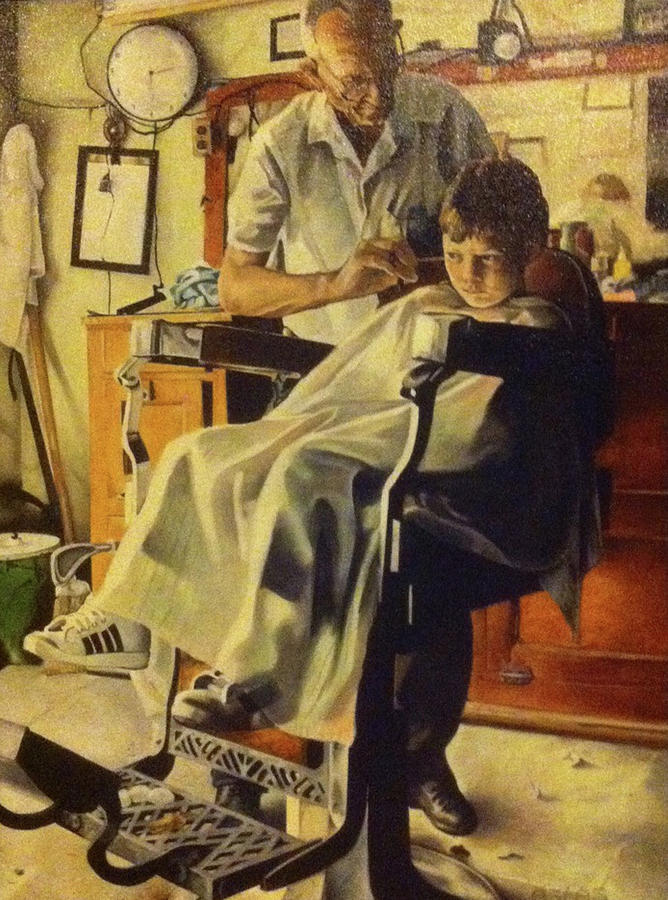
painting by H. James Hoff

Sickroom Notes from a Whiny, Wounded Epicurean[1]

Perhaps boasting non-stop about my superhuman immune system for the last thirty years wasn’t all that judicious. Oh, you should have heard my cock-a-doodle-doing![2].

My immune system makes Arnold Schwarzenegger look like Denver Pyle.

I haven’t been ill since the fall of the Berlin Wall.

An airborne virus does a one-eighty when it sees me bopping down the boulevard, etc. 

And it’s true that in my thirty-four years at Porter-Gaud, I maybe missed ten or so days in total, most often because of laryngitis.[3]

Well, comeuppance has arrived, taken off his mask, and sneezed in my face. For the last four days, when it comes to coughing fits, I’ve been giving tubercular John Keats and DH Lawrence a run for their money. Although doubly vaccinated, I drove the day before yesterday for a Covid test, which unsurprisingly was negative. Afterwards, I retreated to bed, ministered to by nurse Caroline, who throughout my malady has plied me with chicken broth, hot tea, and good advice, like not going the Singer/Soapbox Open Mic the previous Monday[4]

Let’s face it: a summer cold isn’t exactly kidney stones or a case of the shingles (not to mention bone cancer), so the source of this whine festival lies not so much in physical discomfort but in the boredom I’ve experienced, borderline ennui. I felt so drained Wednesday afternoon, I couldn’t read anything longer than a tweet, and scrolling down my feed is disheartening, with all that talk of the decline of democracy coming from the likes of Steve Schmidt and Bill Kristol. And I have two books I’m rarin’ to read, Peter Guralnick’s Looking to Get Lost: Adventures in Music and Writing and James McBride’s The Good Lord Bird, which until today lay on my bedside table like a couple of concrete blocks, heavy, cumbersome. Petite misère but for a second or two, misery nonetheless.

But, hey, I must be on the mend because I’m sitting at my desk and taking this opportunity to roll my right foot over a frozen water bottle to combat a king hell case of plantar fasciitis I’ve developed walking to and from bars on Folly Beach in flip flops.

Like they, say, there’s no fool like an aged, wounded epicurean.

still from WF Murnau’s film The Last Laugh


[1] No one can accuse me of click-baiting with that title.

[2] And no doubt you have if you know me personally.

[3] I also took a couple of personal days along the way, one to see the third game of the ’91 World Series, another to see the Stones in Columbia, and several during my late wife’s last week.

Missing school is a drag. It’s more work to miss than to trudge through (and I never got close enough to students infect, I’d like to think).

[4] I’d made a solemn promise to Kelly West I’d be there for her debut poem, and who would break a solemn vow because of what at that time was merely a scratchy throat?

Amnesia Comes A-Calling

Exactly five years ago an ambulance carted me off the MUSC emergency room after I bonked my head on the floor, lost consciousness, and came to suffering from a strange case of amnesia.

The bedroom smoke detector had gone off, and I leapt to my feet before my blood could be pumped into my brain. My late wife Judy described my falling “as straight-backed like a tree – timber!”  When I regained consciousness, the first thing I said was, “Judy, why are you bald?”

She looked surprised. “I have cancer. Don’t you remember?”

“What kind of cancer?”

“Lymphoma.”

“Lymphoma! What type of lymphoma?”

“T-Cell.”

“Oh no!”[1]

I [forgive me] absent-mindedly wandered to my study and got on the computer as Judy awakened our neighbor Jim who waited with us – I think – until the ambulance arrived.

When I got to the hospital, physicians began quizzing me. “Who’s running for President?”

Although it was July and Hillary and Trump had secured the nominations, I catalogued who had run against them in the primaries as if those contests hadn’t been settled. The last six months had been erased from my memory.

So, they wheeled me down to run tests, and over the course of a couple of hours, my memory slowly returned.

Before releasing me, a doctor asked, “Now, how far back can you remember?” 

I recited the first couplet of The Canterbury Tales.

“WHAN that Aprille with his shoures soote
The droghte of Marche hath perced to the roote . . . “
 

So, memorizing the first twenty lines did have some practical utility after all!


[1] It’s strange that I hadn’t forgotten the types of lymphoma, which I had learned after Judy’s diagnosis.

The Devil’s Workshop

“An idle mind is the devil’s workshop” – English Proverb

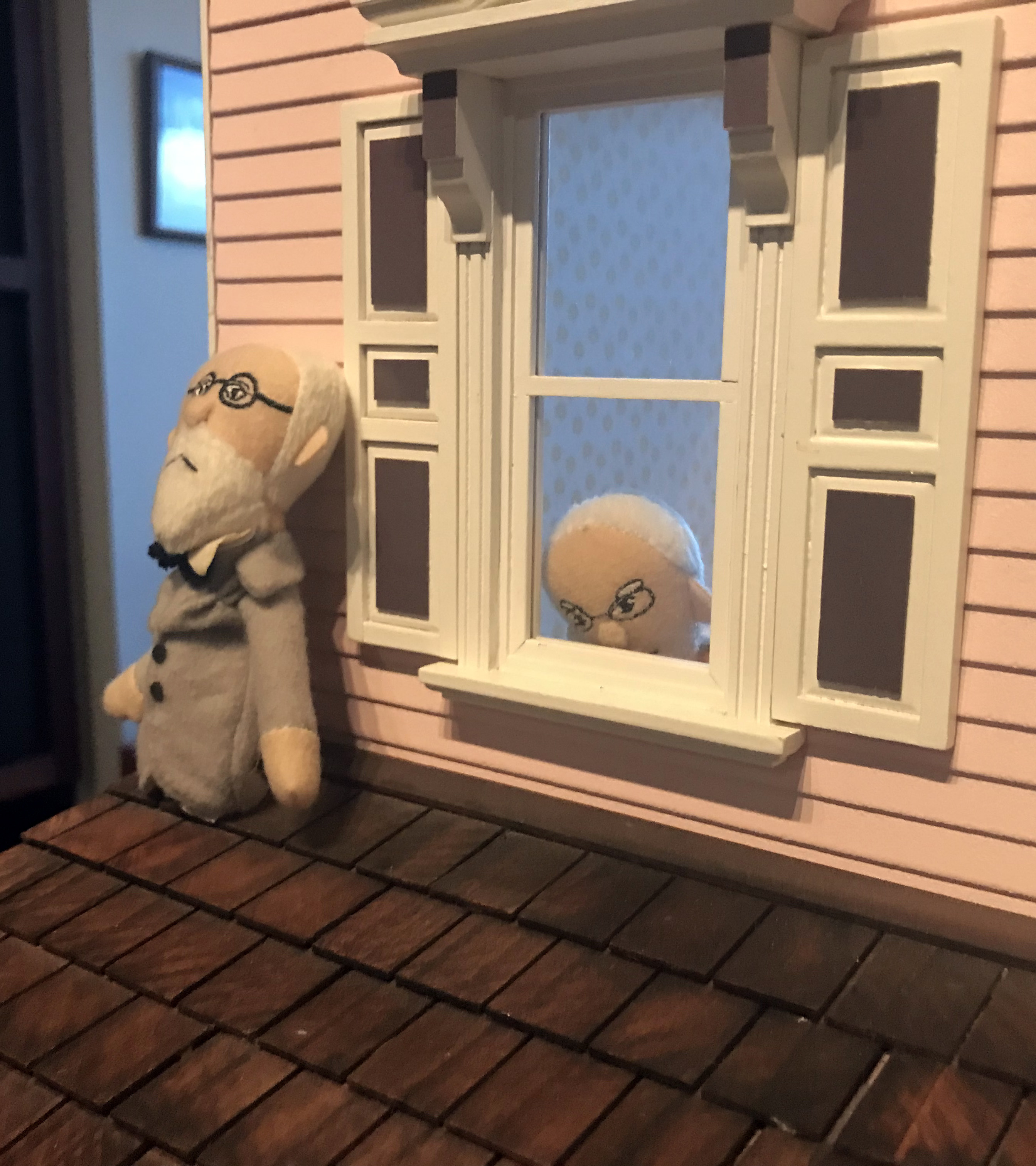
Some weirdness going down on the back side of the Edge of America.

Freud is about to leap from the second story, and Jung is whispering, “Jump, jump, jump.”

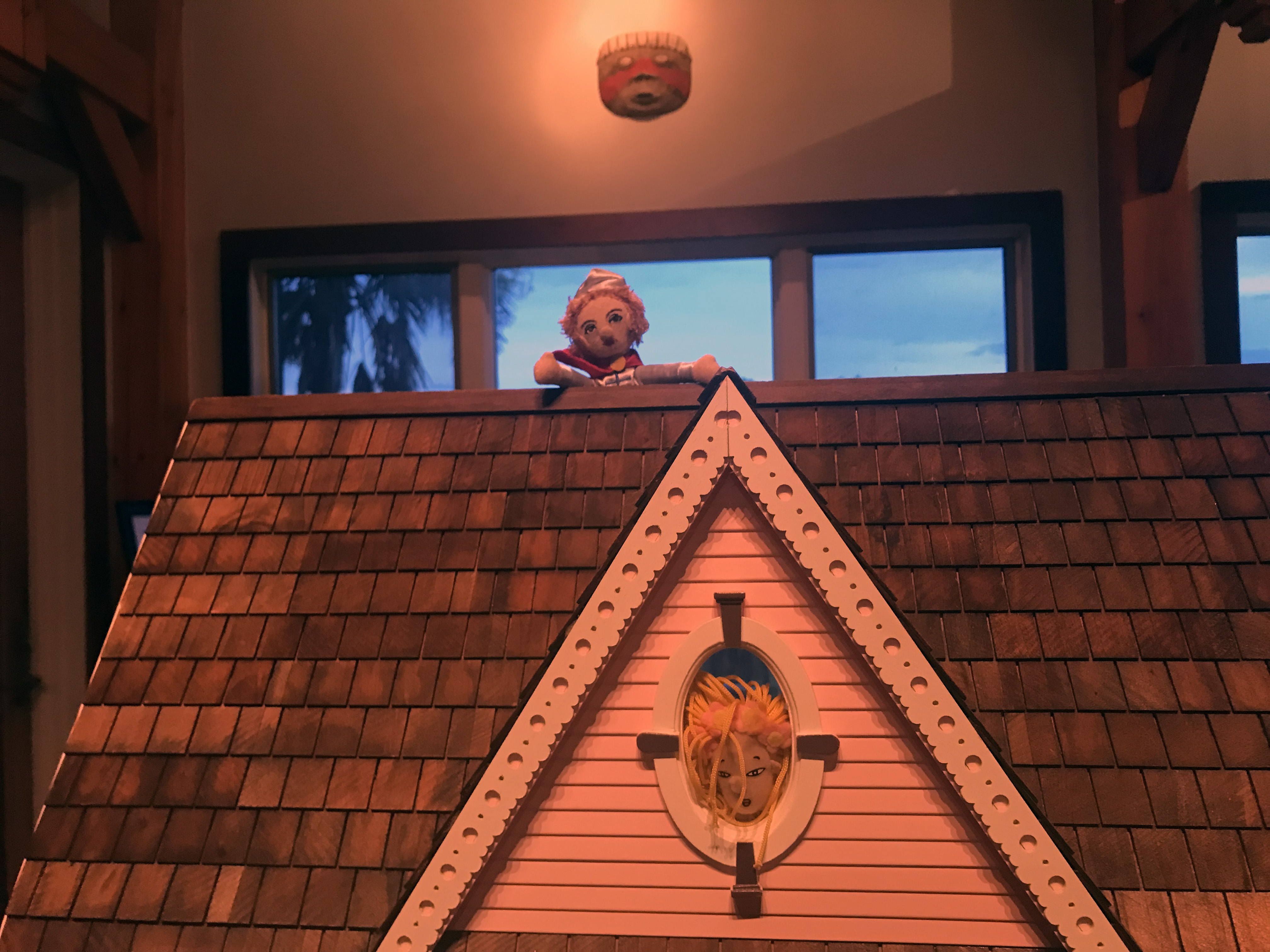
We have a madwoman in the attic, and a saint on the roof, Ophelia and St. Joan.

“Her sin is her lifelessness.”

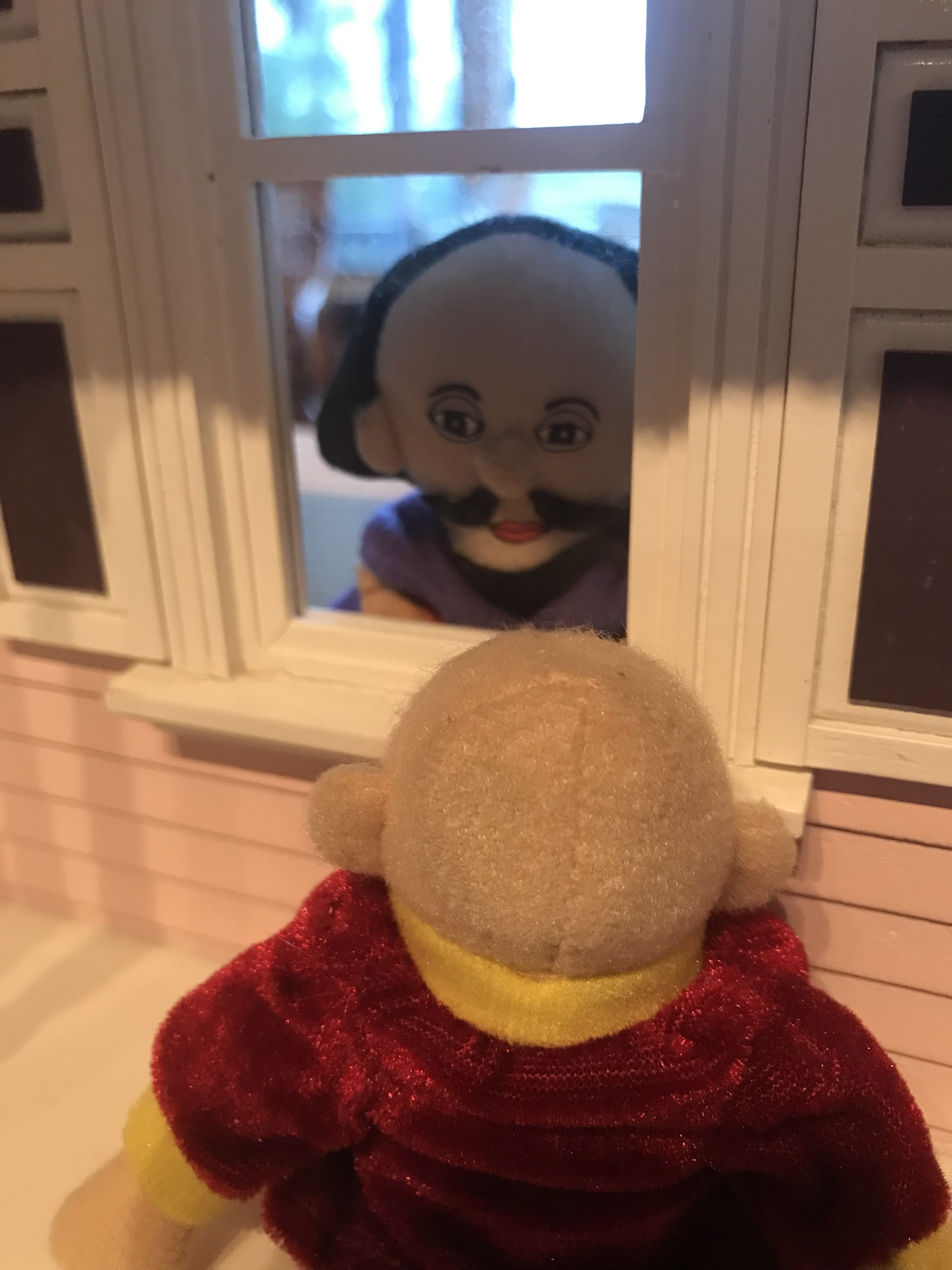
Master Will and the Dalai Lama engaged in a staring contest.

All these people that you mentioned
Yes, I know them, they are quite lame
I had to rearrange their faces
And give them all another name
Right now I can’t read too good, don’t send me no more letters, no
Not unless you mail them from Desolation Row

Bob Dylan, “Desolation Row”

Oh, Those Old Southern Barbershops of Yore

Barbershop by Joan Estes

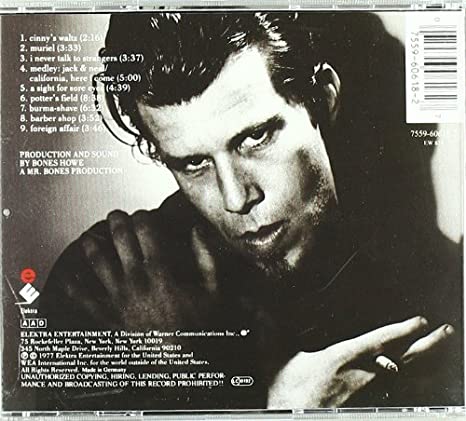
One of my favorite Tom Waits songs is “Barber Shop” from the 1977 album Foreign Affairs. It’s a jazzy, Beat poet-like monologue propelled by stand-up bass and drums. The song condenses a cascade of rhyming cliches into an archetypical visit to a Mid-20th Century barbershop.[1]

He sets the scene with one ass-kicking couplet:

Bay rum lucky tiger butch wax cracker jacks

Shoeshine jawbreaker magazine racks.

Then he treats us to typical idle barbershop chatter:

Morning Mr. Ferguson, what’s the good word with you?

[snip][2]

You lost a little round the middle and you’re looking real good.

[snip]

What’s the low-down Mr. Brown? I heard your boy’s leaving town.

[snip]

Throw me over the sports page, Cincinnati looking good.

[snip]


The hair’s getting longer, you know the skirts are getting shorter,
And don’t you know that you can get a cheaper haircut
If you wanna cross the border.

If your mama saw you smoking, well, she’d kick your ass.
Now you put it out you juvenile and put it out fast.

Well, if I had a million dollars what would I do?
I’d probably be a barber not a bum like you.

Still got your paper route now that’s just fine.
And you can pay me double because you gypped me last ti
me.

In Summerville, South Carolina, my hometown, going to the barbershop was not one of my favorite activities, right up there with visiting the dentist. In pre-adolescence, we patronized Homer’s, which conformed almost perfectly to Waits’s depiction. My father took me in those days because he thought women didn’t belong in barbershops – the way men didn’t belong in “beauty parlors” – because their presence would curtail free expression, whether it be an off-color joke by the males or juicy lady gossip by the females. 

At Homer’s you could get a shoeshine and a shave. I remember watching the barbers sharpen their razors on strops after they’d lathered the reclining recipients with soft-bristled brushes. To me, it looked scary. 

Mr. Homer, as we called him, employed another barber, Ben, a robust, heavy-set Filipino proficient but not fluent in English. Whenever someone came in with flipflops, he’d bellow, “How ‘bout a shoeshine?” and then laugh loudly at his own joke.[3]

At barber colleges, they must have a course in how to engage in small talk. Truth be known, I’ve never enjoyed Q and A small talk from service providers, whether they be barbers, dental hygienists, or the Porter-Gaud dad who peppered me with questions while performing my vasectomy. 

Also, sometimes small talk can seem like lying. 

“Don’t you think Gone with the Wind is the greatest movie of all time?”

“Uh, maybe.”

Anyway, in adolescence, I ditched Homer’s for a barbershop I think was called Bryant’s, which was owned and operated by African Americans, though think they only cut White people’s hair. It was located a couple of doors down from. Dr. Melfi’s Pharmacy, my go-to source for Mad Magazines

Bryant’s didn’t conform at all to Waits’s Homer’s-like barbershop. It had a New Orleans vibe with ornate shrines set up to honor JFK and MLK, Jr. with other photographs of less famous civil rights icons along with Hubert Horatio Humphry campaign buttons. It also seemed not as glaringly well-lit as Homer’s. On the other hand, I don’t think they offered comic books or magazines to flip through while you waited.

The barbers at Bryant’s weren’t all that big on small talk either, which suited me just fine. I think the last time I had my hair cut there was in August right before my junior year of high school. After that, I started cultivating a “freak flag” do and would get slight trims from girls I knew, just enough snipped so I wouldn’t get thrown out of school. Hair couldn’t touch your collar, and sideburns could only come down halfway down your ear. I had a friend named Gray who actually wore a short-haired wig to school.

The last old-fashioned barbershop I patronized was Gloria’s on Center Street at Folly Beach not long after we moved there in the very late Nineties. Like my ol’ man, I took my boys to the shop to get their hair cut. Gloria’s cat had full range of the joint, and although it didn’t seem all that hygienic, it was picturesque, and she only charged me five bucks because I’m bald. A proud lesbian, her small talk wasn’t all that small.

Now, of course, the building has been converted into a tourist bar. 

Ah, no; the years, the years; 

Down their carved names the rain-drop ploughs.

On a brighter note, I’ll leave you with Waits’s song. Enjoy.


[1] In fact, when I taught the Beats in my American Lit class, I played the song for my students on a Porter-Gaud phonograph, a relic that nevertheless produced high quality sound, albeit not stereophonic.

[2] [snip] designates I’m omitting lines; though, I’ll confess, it’s an onomatopoetic play on the action of the song. 

[3] Interestingly enough, we children called him Ben, not Mr. Ben, the way we called our maids Lucille or Alice while they called us Mr. Rusty or Mr. David. 

Hanging with Dylan

An incident that occurred yesterday engendered a frustrating dream last night, or to be more accurate, this morning. 

On most weekday afternoons around five o’clock, I walk to Chico Feo for two or three beers. Yesterday was particularly lovely with its offshore breeze and low humidity. I found a seat at the bar and chatted with someone named Thomas about Charles Bukowski. Later, I learned from my friend Jim that the operator of Folly toll booth of the 1920s could refuse entrance to undesirables. Right before leaving, I hung awhile with the swashbuckling twenty-something surf crew, Connor, Nathan, Ike, etc. Eventually, I forked over fifteen bucks to bartender Gavin for three low potency IPAs (tip included) and began my seven-block trek back to East Huron for a chat on the deck with Caroline before she prepared fried chicken, air-fried broccoli, and couscous for dinner. 

When walking home, I take various routes, depending on the heat and shade or my mood. Yesterday afternoon, I took East Erie to 4th Street, and as I made the turn, I spotted a couple in their forties playing badminton. She was wearing a knee-length floral dress and giggling girlishly as she retrieved what we vulgarians call the “birdy.”[1]

Lovely, I thought, wholesome.

As I turned right from 4th to Hudson, I encountered eight or so short-term renters who had placed the largest inflatable pool I’d ever seen in the side yard. Three of the young men, in their late twenties or early thirties, splashed around sitting in the pool while three or four women stood over them with their wine. Completing the tableau was a springer spaniel in profile defecating, his head facing the pool. 

It was a wonderful sight to see, the cast of characters spaced harmoniously, the modest one-story cream colored clapboard house in the background, the dog triangular. I thought, “Man, Edward Hopper would love this,” and then, “I ought to take a picture,” but I had already passed and knew that if I turned around, the dog likely would have finished its business.

In this age of unlimited photo-shooting, many of us – and I’m including myself here – feel that if we don’t have a photo, it didn’t happen. I remember visiting the Louvre years back and marveling at Japanese tourists viewing masterpieces through the lens of cameras and my ruing their inability to nakedly gaze in appreciation of the art in and of itself. But now here I was approaching the fifth block of Hudson and chiding myself for both not taking the picture and for regretting not taking the picture, which led to more general musings about behavioral oddities in the age of social media.

Fastforward ten hours or so. 

I’ve bumped into Bob Dylan on Folly, a younger version than I one I last saw in concert.[2] He’s dressed modestly and is relatively friendly. Afraid of alienating him, I don’t share what a pivotal role he played in my life or ask any of the thousands of questions that have popped up in my now teeming brain. 

I’m desperate, though, to take a picture, to prove to the world I was hanging with Bob. He is on Folly for an exhibit of his art, and I ask if I can take a picture of one of his paintings, but he doesn’t answer . I walk away to fiddle with my phone so I can take a photo, but when I come back, he has vanished, replaced by a core of festive people saying, “We heard that Dylan was just here.”

Yes, he had been, and I had been in his presence, sort of, but sort of not, because rather than living the moment, I abstracted the experience by wanting photographic proof, validation for my coolness, hoping that some of his immortality would rub off on me.

A day late and a springer short

[1] I can’t bring myself to use “shuttlecock” even though “giggling girlishly as she retrieved the shuttlecock” sounds more musical, an improvement over “what we vulgarians call the ‘birdy.’”

[2] I don’t know if this is related, but Bill Murray was at Chico Feo three weeks ago, and I had no inclination whatsoever to engage him in any way or to take a photo. Also, a couple of Christmases ago, I met Stephen Colbert at a relatively small house party. We conversed about Porter-Gaud, his alma mater and where I used to teach. During the party, only one person asked to have his picture taken with him, which I considered très gauche. 

Daliesque Playing Field

The cliché “level playing field’ has a pleasant lilt to it; it’s a sweet-sounding pair of trochees followed by a vowel-laden accented syllable. Fairness, it proclaims, should be a prerequisite. Unfortunately, the playing field of US politics is tilted way right – it’s warped, Daliesque, unsettling, at least for small-d democrats.  

For example, Wyoming has two senators; DC has zero, though more people reside in the District of Columbia than on the lone prairies of the Tumbleweed State. For me, it’s weird that the dispersion of a smattering of like-thinking people in the boondocks should have more say than a concentration of like-thinking people in urban areas, that folks in Albin WO (pop. 181) should have the same Senatorial representation of folks in the Bronx (pop. 1.435 million), but that’s the case, the plan from the get-go – though I doubt that a majority of the Founding Fathers would be happy with the rejection of Enlightenment thinking that characterizes the philosophies of many in the Hinterlands. 

To quote a song from the days of my youth that looped a lot on AM radio: “Something’s happening around here/ What it is ain’t exactly clear.”

I realize that Twitter is also skewed, the extremes getting more than their share of attention, but according to my Bloomsday[1] feed, many Republicans tweeters are cheering for Putin in today’s summit today over Biden. 

Gimme a C, gimme a U, gimme an L, gimme a T.  What does that spell? 

Atavism. 


[1] 16 June 2021

Confessions of an Indoorsman

drafty garret claustrophobia

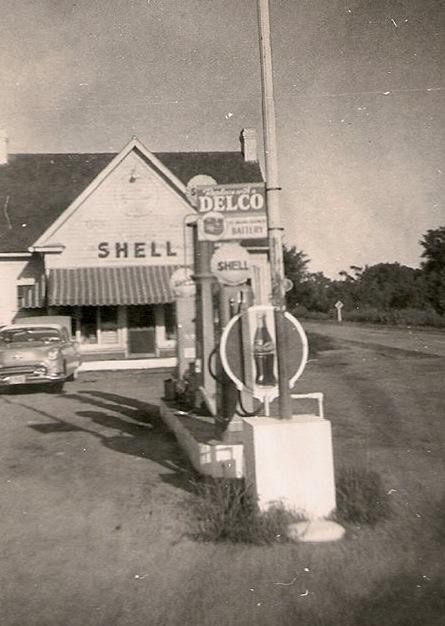
Back in the early 50s when I first became aware of sensations, diesel fuel was a predominant smell, and I grew to savor it. My grandfather owned a service station, and early in my life for a year or so our family lived there in a commercial building that doubled as a domicile. We called this abode “The Station.” Out front it was all concrete, though there was a grassless backyard with one lone sycamore tree standing on the edge of the property. 

A Doberman pincher named Ace roamed the desert domain of the backyard, and he was about as friendly as Cerberus, the three-headed canine guardian of the Greek Underworld. So I spent my days inside safe from traffic and attack dog, a preschooler cut off from nature. There wasn’t that much nature to see at the Station anyway. The only wildlife I remember encountering were a black snake sunning on summer pavement and bats zigzagging overhead at dusk.

At night, eighteen wheelers rushed past in swooshes, sounding somewhat like waves breaking on a beach. In fact, the Station was sort of like a barren island standing in a sea of cement. We lived in isolation.

The Station in the 50s

What a contrast to the town of Summerville itself, “Flowertown in the Pines,” a garden of earthly delights where the sweet ephemeral smell of tea olive wafted in front and back yards among the other flowering shrubs, azaleas and gardenias.

We had moved from the Station to Laurel Street across from the Playground with its swings, sliding boards, a foot-propelled merry-go-ground, and a bell-shaped contraption we called the “ocean wave.” Unfortunately, I contracted rheumatic fever at Laurel Street and spent three months confined to bed after a weeklong stay in Dorchester County Hospital. Like Ace the Doberman and highway traffic, disease also kept me inside before I started kindergarten.

Did these early experiences of mandatory house arrest contribute to my becoming “an indoorsman?”[1]

Dunno. Maybe? Whatever the case, a prefer the not-so-great indoors. I’d much rather hunker down in a dark basement bar in Asheville than hike the Appalachian Trail.

ocean wave

Now, however, I live on the Folly River, and the windows that line the outer walls of our house look out over the marsh to uninhabited Long and Morris Islands. Now I can’t avoid nature; it’s been thrust upon me, even in our air-conditioned living room. Sitting on the sofa or out on the screened porch or deck, I have witnessed owls, wood storks, ospreys, painted buntings, egrets, bats, deer, bald eagles, river otters, and minks, not to mention the frogs that inhabit our water garden and fill the night with constant croaking. Also, I’ve seen my share of Wild Kingdom carnage, hawks swooping down to snatch birds, ospreys lumbering over the house with fish in their talons.

I still spend an inordinate time cooped up in my study, which I have dubbed “the drafty garret.” Cut off from the outside word, I spend way too much time staring into an iMac screen reading depressing news stories and fiddling around with words.

However, I still savor the evocative odor of diesel and the memory-producing aroma of tea olive and the flora and fauna of the backside of the Edge of America.  In other words, I enjoy being, whether indoors or out, thanks in great part to my wife Caroline and her daughter Brooks. Oh yeah, and KitKat, whom I’ve grown very fond of, a chihuahua terrier mix that wouldn’t have been my first pick of dog crossifications. Unlike Ace, her bark is worse than her bite.

Anyway, It’s summertime, and at least for now, as the song says, “the living is easy.”


[1] I was, on the other hand, an avid surfer until my mid-60s when old age made me feel as if I’d been in a minor auto accident after each surf session.

Porter-Gaud’s Stellar Class of 2021

Commencement Set-Up (image from Walton Sign and Graphics)

Surprisingly, I haven’t missed teaching much at all – until last night when I crashed Porter-Gaud’s Class of 2021’s graduation. These were the last students I had taught and wanted to see them as a group one last time.

Because of the pandemic, the ceremony took place in the stadium, not the Green, and there was no stately procession to the tune of “Pomp and Circumstance.”

The candidates-for-graduation sat with their families in rows designated by blown-up images of their senior portraits printed on large cardboard placards. Large video screens straddled the temporary stage that had been set up in front of the home seats, so once it got dark enough you could see the students receive their diplomas close up.[1] Traditionally, on the Green, faculty members presenting awards share the stage with the graduates, but last night, faculty, administrators, and staff sat six feet apart on white wooden folding chairs diagonally facing the stage. 

As a non-invitee, I was not hip to the change, so after parking my car in the Lower School lot, I headed to the Green, but the gates were locked, and a weird, Twilight Zone silence prevailed. I heard the soft growl of a golf cart, and my pal Andrew of the Security Staff allowed me hop abroad with a couple of grandparents and whisked me to the stadium about five minutes before the ceremony began.

Several faculty chairs were empty, and my friend Kael Martin graciously invited me to grab one.

Truth be told, attending graduation was not one of my favorite Porter-Gaud responsibilities. In fact, I didn’t enjoy my own high school graduation with all the speeches and award presentations. However, what made last night so special for me was seeing just how grown up the sixteen-year-olds I had taught two years ago seemed. On a day-to-day basis, you don’t notice the transformation; however, twenty-four months is one-ninth of their lives, and the changes were profound. They were taller, leaner, more confident. I hadn’t realized how much I had missed them. What hadn’t changed was their openness and friendliness.

By all accounts from my colleagues – and I heartily agree – the Class of 2021 was superlative, one of the top classes ever. They were dealt a bad hand by historical forces beyond their control and made the best of it with stoicism, good humor, and grace. 

I wish every last one immense success and happiness. 


[1] You know, like an arena rock concert.

image credit, Jamie Elliott

Abbreviated Pee Wee Gaskins Account

Pee Wee Gaskins

Here’s an abbreviated PG version from a longer post describing the summer afternoon when my brother and I were picked up hitchhiking by serial killer Pee Wee Gaskins. You can access the original post here; however, it’s R-rated because of language and violence.

***

I don’t remember how we — my brother David and I — ended up in the middle of the back seat on that beat-up old Buick. Did one of the boys get out and let us in? Did we crawl over the boy? We were seventeen and fourteen, and the boy maybe seven, but he had a cigarette in his mouth and a beer in his hand.

“Where y’all going?” The driver asked.

“Folly Beach,” I said.

“We’ll take you there then.”

He was a very short man chauffeuring a carload of Cub Scout-aged juvenile delinquents. There were four of them, all younger than David and I, all smoking, all drinking cans of Old Milwaukee.

For forty something minutes en route from Summerville, we had been stuck hitching on the side of St Andrews Boulevard across the street from a typewriter repair shop . It was David’s first time hitchhiking. Sure, the car looked sketchy, but we were desperate.

Once we were settled in the back seat, the seven-year-old next to me got out the empty casing of a Bic pen, loaded it with a spitball, and shot the driver in the back of the neck. He whirled around and stubbed the glowing orange tip of his cigarette into the boy’s arm, which immediately brought forth a yowl, tears, and a cacophony of spiteful laughter from the rest of the crew.

It was weird enough to witness a seven-year-old with a beer and cigarette in hand crying, but as I slouched down in my seat, I noticed that the driver had three spitballs lodged in the creases of the back of his neck.

The boys asked the driver to tell them about the [racial epithet] he had killed last week, but he wasn’t forthcoming. Then they asked him how many men he had killed in total. I assumed they were merely trying to frighten us. Throughout the twenty-minute trip, the boys liberally jettisoned trash, including empty beer cans from the moving car. I was hoping — how I was hoping — that a police car might pull us over but no such luck. Needless to say, their language was filthy.

But true to his word, the driver took us all the way to Folly. In those days, before the Holiday Inn obstructed the view, you could see the ocean itself as you crossed the bridges, and what a welcome sight it was. I told the driver to please let us out in front of the police station, that my daddy was chief of police, and he did, and then two of the boys tossed empty beer cans at us, and the car pulled away in a cloud of smoke.

Happily, we ran into some friends from Summerville at the Washout so didn’t have to hitch home; however, I can’t say that I learned my lesson and continued to hitch until I purchased my first car at age 25, thanks to Ralph Birdsong, my soon-to-be father in law. [You can read about a subsequent and in many ways scarier hitchhike encounter here].

So, I more or less thought about the incident as time spent in a Flannery O’Connor story until my late wife Judy purchased for me as a whim Pee Wee’s autobiography from the dollar bin at a Mount Pleasant book store. To my horror, I read that Pee Wee used to take his nephews and their friends down to the beach occasionally but would “never do no murders on them trips” because you couldn’t trust kids not to blab.

I can’t say for absolutely sure it was Pee Wee, but I do know this: there was evil in that car. You could sense it; it was palpable.

Booze Hounds Extraordinaire

Willie and Ernesto

Although sometimes mocked, often parodied, Ernest Hemingway’s prose is clean and compact. 

Here is prepubescent Nick Adams, who has just witnessed a Caesarian operation and a simultaneous suicide, headed back to camp after an emergency call with his physician father.

They were seated in the boat, Nick in the stern, his father rowing. The sun was coming up over the hills. A bass jumped, making a circle in the water. Nick trailed his hand in the water. It felt warm in the sharp chill of the morning. 

In the early morning on the lake sitting in the stern of the boat with his father rowing, he felt quite sure that he would never die. 

Prolife: sunrise, a bass jumping, warm water.

Here’s Nick a decade or so later after a stint in the trenches:

The coffee was bitter. Nick laughed. It made a good ending to the story. His mind was starting to work. He knew he could choke it because he was tired enough. He spilled the coffee out of the pot and shook the grounds loose into the fire. He lit a cigarette and went inside the tent. He took off his shoes and trousers, sitting on the blankets, rolled the shoes up inside the trousers for a pillow and got in between the blankets.

Nick’s practicing the art of un-seeing, concentrating on simple actions to shut down synapses so they won’t flash like artillery fire in the darkness of the night. Eight mechanical declarative sentences without introductory clauses or phrases to describe a series of mechanical, mundane actions. Mindfulness to choke off memories.

I wonder how Nick would get along with Quentin Compson, one of William Faulkner’s offspring?

Here’s Quentin in Absalom, Absalom ruminating about the legend of Thomas Stupen’s arrival in Yoknapatawpha:

Out of quiet thunderclap he would abrupt (man-horse-demon) upon a scene peaceful and decorous as a schoolprize water color, faint sulphur-reek still in hair clothes and beard, with grouped behind him his band of wild [racial epithets] ]like beasts half tamed to walk upright like men, in attitudes wild and reposed, and manacled among them the French architect with his air grim, haggard, and tatter-ran. Immobile, bearded, and hand palm-uplifted the horseman sat; behind him the wild blacks and the captive architect huddled quietly, carrying in bloodless paradox the shovels and picks and axes of peaceful conquest. Then in the long unamaze Quentin seemed to watch them overrun suddenly the hundred square miles of tranquil and astonished earth and drag house and formal gardens violently out of the soundless Nothing and clap them down like cards upon a table beneath the up-palm immobile and pontific, creating Sutpen’s Hundred, the Be Sutpen’s Hundred like the oldentime Be Light.

Like Faulkner’s prose, Quentin is overwrought.

Although we don’t know what eventually happens to Nick Adams in his later life, we do know where Quentin’s going to end up, self-drowned in the Charles River. And, of course, we do know what happens to Nick’s alter ego, Ernesto himself, dispatched in Idaho by a self-inflicted shotgun blast.[1]

We in the West insist on judging. Who is the greater author, Hemingway or Faulkner? I would say Hemingway is the better writer; I find his crisp cinematic prose superior to Faulkner’s adjective-laden forays into over-description. They’re working at cross purposes, though; Hemingway wants you peel back the prose that leaves so much unsaid to explore what’s underneath while Faulkner wants you to see and feel the rush of reality as it sweeps past in torrents. 

That said, I believe that Matthew Arnold would agree that Faulkner is the greater author. After all, he created an intricately linked multigenerational population of men and women, flesh and blood, White, Black, and Red, who embody two centuries of history. That’s not to say Hemingway isn’t great. In fact, I can’t think of a more powerful, better crafted story than his “A Clean Well-Lighted Place” – if you want to judge by one piece rather than a body of work.

I happen to admire both immensely and applaud their tragic visions, admire their courage in exploring godless darkness, empathize with their need to self-medicate. 

For me, Hemingway is rum, Faulkner whiskey. It’s Hemingway in the summer, and Faulkner in the winter for me.

Bless their moldering corpses, I say. And yours, too, Mr. James Joyce, another booze hound extraordinaire. 


[1] Faulkner, on the other hand, drank on and on until his 64th year.