What Exactly What Does a Comet Smell Like; Plus, Why Is It So Hard to Describe Smells?

Osmanthus fragans

Osmanthus fragans

Words certainly fail us when it comes describing smells – flowers, sewers, and as it turns out, comets.

How, for example, can we convey the odiferous deliciousness of Osmanthus fragans (aka tea/sweet olive), that evanescent wafting olfactory hint of autumn?

The adjective “sweet” doesn’t do much good. Cherry sweet? Peach sweet? Rancid wino-breath sweet?

No, sweet olive smells like sweet olive.

Essentially, all you can do to attempt to replicate the experience of smelling is to employ a noun and have the reader associate that noun with the smell: pine, smoke, cedar.

Fred Swan, a wine expert, offers this explanation of why:

Aromas bypass the thalamus entirely. They go from the olfactory bulb to part of the amygdala. The amygdala is also crucial for processing long-term memories and some aspects of emotion. So, with apologies to the brain surgeons among you who will be writhing in pain at this generalization, our sense of smell is uniquely tied to our memories and emotions but is more separated from our words than the other senses.

Yes, for me, sweet olive whispers of childhood, Mama Blanton’s backyard, football season, pine cones shedding, shredding, littering the ground and sidewalks in flakes of orange and brown.

I certainly won’t live to see the day when our computers are able to reproduce smells by a stroke of a keyboard. You can digitalize a photo, digitalize a sound, but you can’t digitalize an odor.*

This inability to capture odors isn’t that big of a deal, unless you’re trying to imagine how something alien smells — like a wild boar, a 19th Century Parisian courtesan, or say, a comet.

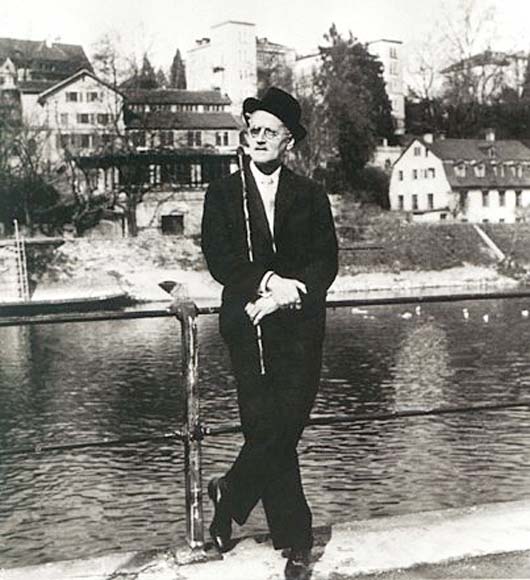
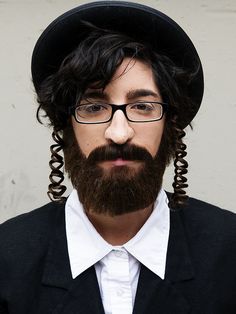
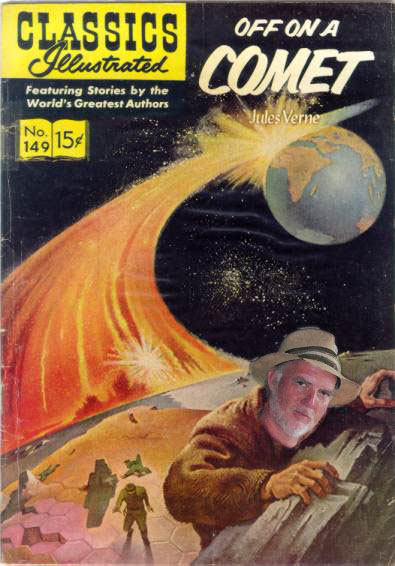
the author wishing he had a gas mask

the author wishing he had a gas mask

News flash: According to scientists at the University of Bern, comets exude an impossible to imagine combination of hydrogen sulphide (rotten eggs/farts), ammonia (horse shit), formaldehyde (fetal pigs ripe for dissection), hydrogen cyanide (almonds), methanol (rubbing alcohol), sulphur dioxide (vinegar), and carbon disulphate (who knows?).

The nose boggles trying to conjure the combination. Certainly the obvious go-to phrase “smells like shit” won’t do.

Calling Father Arnall:

Consider then what must be the foulness of the air of [a comet]. Imagine some foul and putrid corpse that has lain rotting and decomposing in the grave, a jelly-like mass of liquid corruption. Imagine such a corpse a prey to flames, devoured by the fire of burning brimstone and giving off dense choking fumes of nauseous loathsome decomposition. And then imagine this sickening stench, multiplied a millionfold and a millionfold again from the millions upon millions of fetid carcasses massed together in the reeking darkness, a huge and rotting human fungus. Imagine all this, and you will have some idea of the horror of the stench of [a comet]. (Joyce, Portrait of the Artist as a Young Man}

Or something like that.

*Hat tip to Aaron Lipka.

Going Back in Time Down Highway 162 South

drowning treesBecause we don’t work from June through July, Judy Birdsong and I tend to take trips to far flung places like Chicago, New Orleans, Lisbon, Paris.

We had planned last summer to head out on a whim in late July to a yet-to-be-decided somewhere, like Nova Scotia or the Pacific Northwest, but just after the 4th, Judy was diagnosed with PTCL-NOS, a more-often-than-not fatal non-Hodgkin’s lymphoma.

I’ll spare you the Lifetime movie of our dealing with uncertainty, calling our sons with bad news, the cheery waiting room posters pushing upcoming studies for the recently relapsed. To make a long, painful story short, after four rounds of in-hospital 96-hour continuous EPOCH chemo, Judy’s last PET scan came back “completely normal.” Although the process is far from over, the quick disappearance of the cancer bodes well for a permanent cure.

Time, then, to celebrate. We hadn’t vacated town since last October’s Leaf Festival to see Dr. John and the New Orleans brass band the Soul Rebels*, so we decided to drive down to Edisto last Sunday before Judy’s fifth round of chemo** and visit Botany Bay, 5,000 acres of what once were cotton fields from plantations that are [cue “Tara’s Theme”] no more.

Botany Bay’s main attraction, though, is a three-mile stretch of pristine beach whose bleached dead trees succumbing to the assault of the encroaching ocean serve as poignant symbols of what the ravager Time has in store for all of us. The copious shells that crunch under your feet and decorate the trees along the strand like grave ornaments offer their own testimony that time, time, time, ain’t on our side.


*Click HERE to see a video of Judy, the Soul Brothers, and Dr. John in action.

** She still has two more rounds of chemo, a stem cell transplant, and perhaps radiation before it’s over.

 The Drive Down

Rantowles

This trip down to Edisto took us right past the first house owned, a brick-veneer 3-bedroom ranch-style monstrosity custom-built by a good ol’ boy who couldn’t believe we were taking out the red and orange shag carpet he had just put in last year. We didn’t have the heart to tell him the red sink in the green bathroom was also slated for removal. The house’s redemption was that it overlooked Logbridge Creek, which connected to the Intercoastal Waterway. The view from the backyard and bedroom bay window was like, as my friend Steve Rey put it, a cover off of South Carolina Wildlife.

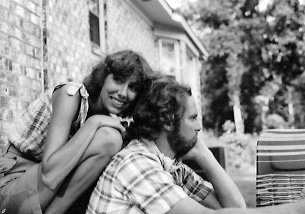
Judy and Me at our first house in Rantowles

Judy and Me at our first house in Rantowles

So Judy and I detoured right down Chaplin’s Landing Road to check out those digs of yore.

Guess what?

It’s changed. Our old dirt road is now a paved street lined with handsome houses that make our original seem like an embarrassing uncouth great uncle, you know, the one who wears suspenders that clash with his flannel shirt. A large Beware of Dog sign graced the busy front yard with its un-pruned Azaleas, garden do-dads, and array of automobiles.

Hollywood

Once we got back on Hwy 162 headed towards Edisto, we discovered that things haven’t changed that much since the early ’80’s, in fact, haven’t changed much since I was a boy.

Lining the road stood small modest domiciles, a mixture of wooden cottages, manufactured homes, and dilapidated house trailers. Business establishments include Parry Ruth’s Beauty Parlor, Youmans Natural Gas, small engine repair shops — lots of family owned businesses. The one incorporated town you pass through, Hollywood, hasn’t suffered the ever growing proliferation of traffic lights that plague the Charleston area. However, I don’t remember this antique store whose outside sentinel certainly headembodies the theme of the post.

Nevertheless, on the drive down, I felt as if I were once again in the Old South, here where black country folk seem to outnumber white country folk, and what a pleasure to see brothers and sisters in all of their finery chatting on the steps of an AME church.

Well, a couple of things had changed. The house trailer we remember perched on concrete block stilts is gone, along with a full sized mattress that hung like a hammock with four chains dangling from the boughs of a giant live oak, each chain attached to one of the mattress’s four corners.

Hollywood to Botany Bay

churchOnce you’re out of Hollywood, you enter even deeper into the disappearing South, pass through tunnels of moss-festooned live oaks, transverse bridges offering marsh vistas, pass a generous sampling of white-washed churches of various denominations. Genteel establishments like the Old Post Office Restaurant closed on Sunday stand as mute reminders of days gone by.


The Beach at Botany Bay

Natural Resources runs the Preserve, so you have to stop and sign in. The friendly ranger, who looked like he might be a volunteer, provided us a map and warned us of what not to do (collecting a shell can cost you a $470 fine), and gave us a brief history of the plantations that once stood on the property.

The beach is being engulfed by the sea, which has created a sort of graveyard of entangled trees, some blanched white and prone, others with beautiful swirls of root wood, other’s standing alone in the ocean like a crazy old doomed King Canute.

A variety of shells carpet the sand, but a chambered nautilus I saw not among the Darwinian litter.

tangleHow wonderful to be alive on this island of the dead! How wonderful to know the little that we know.

The Plantation Ruin Tour

Ain’t nothing left to speak of — an ice house, a tabby tool shed, dikes, and part of a plantation house’s foundation.

I couldn’t help but think of the slaves on this Sabbath, their only day off, nothing much to look forward to.  Their cottages used to line the Creek, according to our map.  Evil.

The six mile dirt road drive was pretty enough, but after four so hours of unrelenting beauty, I longed for the familiar squalor of Chico Feo’s.

We hauled ass home opting for the short cut via Toogoodoo Road where you can go 60 and not encounter another car for miles and miles.

shellsbutterflies

James Dickey and Me

james-l-dickeyIntro

Like hundreds of other po-dunk wannabe poets, I took James Dickey’s verse seminar course when he was poet-in-residence at the University of South Carolina. That semester — the Fall of ’76 – ended up being a significant one for Dickey, who in the course of its 15 weeks became a widower and a bridegroom.

I had first heard of Big Jim Dickey from my high school English teacher Mrs. Clarice Foster, who described him as “a brilliant young poet who had written a fairly good novel.” The novel, of course, was Deliverance, which came out in ’70, my senior year, two years before the release of the movie. Deliverance the movie made Dickey famous, a drinking buddy with Burt Reynolds, but perhaps exacerbated his propensity of making a colossal ass of himself.

Big Jim Dickey (by Robert Fowler)

Who started calling

Big Jim Dickey

Big Jim Dickey?

Big Jim Dickey,

That’s who.

Bobby’s poem summarized what the slumming literary crowd I hung around thought about Dickey. The cat could write dazzling poems, but his my-genius-gives-me-the-license-to-breach-the-customs-of-polite-society got old fast. He could make you feel uncomfortable, embarrassed, like your own father could in your late teens when you started to figure out a lot of what he said was bullshit. I lacked compassion back then, I thought I knew more than I did, and I now rue my lack of respect.

James Dickey was a near great, if not great poet, and I squandered a chance to learn more from him.

From “Cherrylog Road”

We left by separate doors

Into the changed, other bodies

Of cars, she down Cherrylog Road

And I to my motorcycle

Parked like the soul of the junkyard

Restored, a bicycle fleshed

With power, and tore off

Up Highway 106, continually

Drunk on the wind in my mouth,

Wringing the handlebar for speed,

Wild to be wreckage forever.

James Dickey

dickey with hatFall Semester 1976

Smiling, stooped, gregarious, he sat at the head of the seminar table wearing two or three watches on both wrists. Dickey was often – I wouldn’t call it drunk – but more like inebriated – eloquent, narcissistic, rarely bothering to comment on the fixed-form ditties he had us crank out each week.

More typically, he’d talk about himself, famous poets he’d known, the goings-on of the set of Deliverance.   He called the good-looking females in the class “Sugar Face.” One week on Tuesday and Thursday, without providing us the text to see, he read aloud the same essay by Sir Herbert Read.   No one mentioned to him the error on that Thursday when he began reading the piece for the second time – not I-and-I, not the hanger-on poets who attended the class every semester without registering, not his grad assistant.

In short, he was a terrible teacher that semester, that is, until some veins in his wife’s esophagus ruptured, which he described in class with a graphic eloquence that was at once paradoxically impassioned and detached. It was like watching a poem coming to be in 3-D – he at first thinking a burglar had attacked her when he encountered her limp body bleeding profusely on the floor of their house. He held her in his arms there on the floor as she lost half her body’s blood.

Warning: the Following Contains Off-Putting Name Dropping

Several years ago our friend Jo Humphreys, author of Dreams of Sleep and Rich in Love, invited Judy and me to a party in honor of her mentor Reynolds Price. After Jo introduced us, Mr. Price and I got on the subject of James Dickey who had recently died. Price told me he had great affection for “Jim” but that Jim was “insane” in a way that was hard to characterize and that it was impossible to be a woman and to be his friend.   Mr. Price also said that one time at a party, Dickey had picked him up off the ground and said something to the effect of that though he — Dickey — didn’t sleep with men, if he ever were to, he’d want to sleep with him — Price.

Elizabeth Bishop and Robert Lowell

Elizabeth Bishop and Robert Lowell

Fall Semester, continued

Mrs. Maxine Dickey survived that night and hung on for a month or so before she died. While she was in the hospital, Elizabeth Bishop came to campus for a reading. Dickey — or his graduate assistant — arranged for us during our class time to meet Bishop and hear her read a poem or two.   The meeting hadn’t been announced, so we followed Dickey, leading the way down the street from our classroom to a Victorian house a block away.

So we met Elizabeth Bishop, I ignorant of what an honor it should be. She looked like an Episcopalian grandmother with her neatly coiffed white hair and  matching plaid blazer and skirt. Her demeanor utterly contrasted with Dickey’s, like George Will versus Screaming Jay Hawkins, to make a crude analogy.

What I didn’t know was that Elizabeth Bishop and her friend Robert Lowell held Dickey in contempt. Later that night after the official reading, Dickey asked Bishop to sign some books and pose for a photograph with him and refused, saying, “Sir, I do not pose for pictures.”

One of the great things about having Dickey on campus was the writers he could summon. During my time in Columbia, in addition to Elizabeth Bishop, I got to hear Robert Penn Warren, Archibald MacLeish, and Robert Lowell.

For the Last Wolverine

They will soon be down

To one, but he still will be

For a little while    still will be stopping

The flakes in the air with a look,

Surrounding himself with the silence

Of whitening snarls. Let him eat

The last red meal of the condemned

To extinction, tearing the guts

From an elk. Yet that is not enough

For me. I would have him eat

The heart, and, from it, have an idea

Stream into his gnawing head

That he no longer has a thing

To lose, and so can walk

Out into the open, in the full

Pale of the sub-Arctic sun

Where a single spruce tree is dying

Higher and higher. Let him climb it

With all his meanness and strength.

Lord, we have come to the end

Of this kind of vision of heaven,

As the sky breaks open

Its fans around him and shimmers

And into its northern gates he rises

Snarling   complete    in the joy of a weasel

With an elk’s horned heart in his stomach

Looking straight into the eternal

Blue, where he hauls his kind. I would have it all

My way: at the top of that tree I place

The New World’s last eagle

Hunched in mangy feathers    giving

Up on the theory of flight.

Dear God of the wildness of poetry, let them mate

To the death in the rotten branches,

Let the tree sway and burst into flame

And mingle them, crackling with feathers,

In crownfire. Let something come

Of it    something gigantic     legendary

Rise beyond reason over hills

Of ice   SCREAMING    that it cannot die,

That it has come back, this time

On wings, and will spare no earthly thing:

That it will hover, made purely of northern

Lights, at dusk    and fall

On men building roads: will perch

On the moose’s horn like a falcon

Riding into battle    into holy war against

Screaming railroad crews: will pull

Whole traplines like fibers from the snow

In the long-jawed night of fur trappers.

But, small, filthy, unwinged,

You will soon be crouching

Alone, with maybe some dim racial notion

Of being the last, but none of how much

Your unnoticed going will mean:

How much the timid poem needs

The mindless explosion of your rage,

The glutton’s internal fire    the elk’s

Heart in the belly, sprouting wings,

The pact of the “blind swallowing

Thing,” with himself, to eat

The world, and not to be driven off it

Until it is gone, even if it takes

Forever. I take you as you are

And make of you what I will,

Skunk-bear, carcajou, bloodthirsty

Non-survivor.

                                        Lord, let me die       but not die


Out.

James Dickey

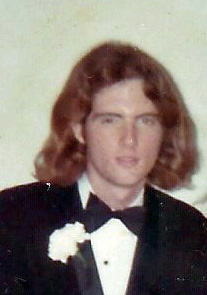
the author in 1976 photo by Judy Birdsong

the author in 1976 photo by Judy Birdsong

Fall Semester completed

In the other class Dickey was teaching that semester, Dickey had met his soon-to-be new wife.   He married her, one of his students, Deborah Dodsen, two months after Maxine’s death.

I myself had met and fallen in love with my future wife Judy Birdsong that semester.

Later Contact

When I started teaching high school in the mid-Eighties, I called Dickey to ask him if it would be all right if I had a student writing a paper on Deliverance phone and interview him to so he could use the author as a source.

Mr. Dickey — as I addressed him over the phone — couldn’t have been nicer. He asked what year he had taught me, who my friends were, claimed to remember me, and welcomed the student’s call.

The last time I saw Dickey was in ’97. He had selected a poem of mine to be included in anthology of his students’ work published by USC Press. There was a reception for the poets where we could buy books and have him sign them.

He was a changed man, thinner, the combover replaced by a buzz cut;  he was calmer, almost courtly. We chatted as he signed three books I had bought for my parents, my in-laws, and a friend.

I really regret that I didn’t have him sign one for me, but the line was long, and I didn’t want to be that person.

A Teachable Moment Botched

Time is the school in which we learn — John Didion, The Year of Magical Thinking

Yesterday before class, a petite, clear-eyed fifteen year-old announced that she has decided that she doesn’t want to grow old, that she wants to make great contributions to the world, and then die at 60. She added, “Mr. Moore, that means that if that happens, then 25% of my life is over!”

This is what we call in the my business[1] a “teachable” moment, and I botched it. I should have called on Alexander Pope, that four-foot, six-inch[2] colossus:

In fearless Youth we tempt the Heights of Arts,

While from the bounded Level of our Mind,

Short Views we take, nor see the lengths behind,

But more advanc’d, behold with strange Surprize

New, distant Scenes of endless Science rise!

So pleas’d at first, the towring Alps we try,

Mount o’er the Vales, and seem to tread the Sky;

Th’ Eternal Snows appear already past,

And the first Clouds and Mountains seem the last:

But those attain’d, we tremble to survey

The growing Labours of the lengthen’d Way,

Th’ increasing Prospect tires our wandering Eyes,

Hills peep o’er Hills, and Alps on Alps arise!

Although our flowers fade (I too had pretty plumage once!), the world becomes increasingly more interesting as we gain perspective, and as the social preoccupations of adolescence dissipate, the “cool people,” if given the choice, would rather hang with Charles Bukowski than Wink Martindale, with Joan Didion rather than Kim Kardashian.

Kim Kardashian

Kim Kardashian

Joan Ddidion

Joan Didion

But, like I said, I botched it. I turned to of all people Marcus Aurelius and paraphrased the following:

Were you to live a thousand years, or even thirty thousand, remember that the sole life which a man can lose is that which he is living at the moment; and furthermore, that he can have no other life except the one he loses. This means that the longest life and the shortest life amount to the same thing. For the passing minute is every man’s equal possession, but what has gone by is not ours. Our loss, therefore, is limited to that one fleeting instant, since no one can lose what is already past, not yet what is still to come — for how can he be deprived of what he does not possess?

Like, I said, I botched it. I told her and the rest of the students to think lineally only so far ahead that they can salvage more of the present for their enjoyment, in other words, to get that rough draft out of the way early Saturday morning so it won’t be squeaking like a wobbling wheel in the back of your mind all day. But I told them not to think too far into the future, not to dream about their freshman year at Duke or their wedding day or their future contributions to humanity.

I write this as my beloved is receiving a blood transfusion and have come myself to live the advice I gave those students yesterday. It’s always now. The future is not ours. The past is kaput. I hear a bird’s staccato chirp outside my open window on this gorgeous Saturday and wish him or her the best.


[1] Schools, alas, have taken on the corporate model, though they still give lip service to the “family” metaphor.

[2] 1.37 meters for my European readers

What do Salem, the Rosenbergs, and Ebola Have in Common?

To say that Americans tend to overreact in times of stress is like saying Spaniards roll their Rs, New Yorkers honk their horns, and drivers with Confederate flags decals on their pick-ups support the 2nd Amendment.

article-2451403-18A3707800000578-728_638x546Overreaction Exhibit A: The Salem Witch Trials

Okay, a couple of tweens, Elizabeth Parris and Ann Putnum, throw conniption fits.

Next thing you know, 200 hundred people have been accused of witchcraft and 20 executed — hanged by descendents of freedom lovers who fled England and the horrors of the “Anglican Inquisition” so they could practice religion in “their own way.”

Overreaction Exhibit B: McCarthyism, aka The Red Scare:

Okay, a couple of Jews leak atomic secrets to the USSR; therefore, artists/Jews = witches, and the color red becomes anathema.

1863232_origThank God Jesus wasn’t working in Hollywood. They would have crucified black-listed his commie Jewish robe-wearing ass for sure.

Overreaction Exhibit C: The 2003 Iraqi War

Thanks to the brilliant choreography of the attacks themselves, images from Ground Zero bewitched us (in a way the collapse of the Murrah Building in Kansas City didn’t)[1], but scapegoating Saddam because he happened to be Muslim and prone to gassing Kurds hasn’t worked all that great. Just ask the Iraqis, the Syrians, the Turks, and ironically, the Kurds.

Overreaction Exhibit D: ISIS or ISIL (or whatever you wanna call those benighted medieval mother-daughter-and cousin fuckers).

Once again, theatrics. Beheadings appall civilized people, the way that Texas blithely executes minorities appalls Scandinavians. Executions are barbaric. On the other hand, you reap what you sow (see above). But let’s look beyond theatrics and do some serious assessments before we blunder into yet another[whatever the desert equivalent of a quagmire is].

7-ebola-apv2Overreaction Exhibit E: Ebola

By my anecdotal reckoning, Ebola has led every single newscast I’ve encountered in the last 3 weeks – NPR, the CBS news, MSNBC, etc. I don’t know if this over attention is mere fear-mongering for ratings or yet another instance of American overreaction. I suspect that the odds of my dying from stray pellets from a shotgun while I paddle my kayak in the Folly River are much greater than my contracting and dying from Ebola. I read recently that it’s not even all that contagious, that measles, for example, is 9 times as contagious.

C’mon, America, get a grip. Let’s go apeshit about something real, like the disappearance of bees, the drying up of our aquifers, the return of the Chicken Curse.

[1] No rounding up of survivalists for internment in Japanese-like WW2 camps.

A Very Short Plea to Listen to What You Read

I’ve decided to devote the scant few years left of my teaching career attempting to get readers to sound out the music of language.

I hate that multi-taskers register words as mere mute visual signs while some MP3 drowns out the onomatopoetic echoes that very well might make what they’re reading magical. Like, for example, the auditory drop you physically feel when you read Hardy’s lines, “Down their carved names/The rain drop plows.”

Say it outloud. Feel the drop drop from your palette into the empty air.

musicOr this from “The Waste Land”: “Drip drop drip drop drop drop drop.”

Say it outloud. Eliot’s mimicking the song of the wood thrush.

I hate the idea of a student sitting on a Green somewhere reading Ishmael’s killer opening riff of Moby Dick, his ears plugged with ear buds streaming Nick Drake into a brain that cognitive scientists claim hasn’t fully formed.

That can’t be good for you.

The Alienation of the Lone Ranger

On Fridays untethered from chemo tubes and free to flush whenever she likes, Judy Birdsong leaves Roper Hospital. Although she’s happy to get back to Folly, she isn’t up for a night of doing the wa-wa-tusi at the Sand Dollar Social Club, so we sit together on the sofa, she surfing the Web, me searching for something to watch on TV.

IFAs far as television goes, the Birdsong-Moores watch on average fewer hours per week than the typical American does in a day (five to seven depending on what site you check to get the data). If we think of it, on Tuesdays we turn on Making It Grow, but outside of college football, the occasional Turner Classic movie, or a kickass series like True Detective, watching the tube just ain’t our thing. In fact, the last major network series I member watching on a regular basis was the first season of 24.

Last night, though, was one of those Fridays, and in search of something to distract me, I left the small orbit of choices in “Rusty’s” designated Dish Network guide and ventured into the vast realm of viewing choices that lie beyond — programming that targets every conceivable viewing niche imaginable — from sci-fi to Japanese animation to Gerbil Week on the Small Caged Pets Network, or SCPN.

For a while, I hung out at [cue amused trombones] the Hang Out festival, an outdoor concert somewhere near a beach in Alabama featuring Edward Star and the Magnetic Zeroes, Gary Clark, Jr., Wilco (by far the most interesting), and Dave Matthews, but, alas, I grew bored with the redundant camera cuts from frenetic jamming musicians on stage to clichéd crowd shots of swaying hippie chicks, Frat boys, and if my eyes weren’t playing tricks on me, a redneck or two.

So I rapidly clicked through the scrolling choices of the guide until I ran across a Lone Ranger episode from 1952, the year of my birth. The Lone Ranger was one of the first TV shows I remember watching. (The only earlier one I remember is Howdy Doody. whose theme song I can still sing).[1] Anyway, as a kid, I really dug the Lone Ranger, Tonto, the black mask, the silver bullets, the horse-hoof-like theme song from William Tell’s Overture, and the repetitions of “Hi-Ho Silver, away!” and “Who just was that masked man?” Also, it didn’t hurt that the last name of the actor who played the Lone Ranger was Moore, but I think what I most liked about the Lone Ranger was his isolation, his alienation. Although I wouldn’t be able to conceptualize this as a child, the Lone Ranger has rejected what he considers a corrupt culture, not only Western Culture in general, but specifically, the lawless culture of the Old West itself, which in a way makes him a heroic antihero, a true man of mystery.

I entered the action about two-thirds through the episode. A Mexican grandfather and his grandson had been arrested by Gates, a corrupt tax-gatherer, who confiscated the haciendas of citizens who couldn’t pay. The Lone Ranger had lifted some damning documents and was galloping a breakneck speed through the dark night to show them to the governor. The image I first saw was the grandfather begging Gates to kill him, an old man, instead of his grandson, Don Rodrigo, a young man.   Gates warns if they can’t retrieve the documents, both will be shot by a firing squad at dawn. Tonto tries to bust the two out of jail, but he himself is captured and thrown into the communal cell.

51DHVNCRPSLThe Lone Ranger franchise began as a radio show, and this early episode seems oddly bound to the traditions of radio narratives. For instance, the episode features a narrator with a velvety radio baritone who intones “as Gates continues to interrogate the prisoners” [on screen actors mutely interact with each other], then segues into “the Lone Ranger pushes his mighty stallion Silver at top speed across the desert to the Governor’s” [on screen: the Ranger flailing away at a white horse galloping at breakneck speed].

Although, admittedly, the plot is lame, it has an unmistakable theme, which one of the characters on more than one occasion speaks outloud: American citizens must fight to insure that their way of life is not taken away by dictatorial assholes like Gates.

The episode ends in a predictable manner,[2] and what followed was a full-length in color movie from 1958, The Lone Ranger and The City of Lost Gold. The film begins with the creation legend of the Lone Ranger narrated by music-backed chorus of male singers[3] telling us what we’re seeing: an ambush, five dead Texas Rangers, one survivor discovered by an Indian on a painted horse, six graves (one for the survivor as well so the world will think he’s dead), a masked man loading silver bullets into a revolver, the masked man and his Indian savior galloping off in a cloud of dust.

I didn’t make it far into this movie, by far enough to notice the Lone Ranger seems opposed to taking human lives (he’s really good at shooting guns out of hands) and that the screen writers and director didn’t pull punches when depicting racial prejudice. Interestingly enough, given one of the current NFL controversies, a sheriff tells Tonto, who is seeking a doctor, “We don’t allow no redskins in here.” When Tonto refuses to leave, he has his ass kicked by the police.

In checking Wikipedia, I discovered, among other things, that the Lone Ranger speaks correct grammar and never uses slang. The silver bullets signify to him the preciousness of human life. I also learned that one of the writers copped the word” Kemosabe,” the term Tonto uses when he addresses the Lone Ranger, from “the name of a summer camp in upper Michigan.” By the way, in Spanish, tonto means foolish, so in Mexico he is known as toro.

Also, and this is really weird: The Green Hornet is a radio spinoff from The Lone Ranger. The Green Hornet character, according to Wikipedia, is “the son of the Lone Ranger’s nephew Dan [Reid]” and that “[i]n the Green Hornet comic book series [. . .] the Lone Ranger makes a cameo appearance by being in a portrait in the Reid home.” However, “[c]ontrary to most visual media depictions ,[. . . ] his mask covers all of his face.”   It seems as if the Lone Ranger franchise really keeps close reins on its property rights.

After being exposed briefly again to this boyhood hero of mine, I recognize the Lone Ranger’s affinity to both Natty Bumppo and Ishmael, alienated, like them, from his culture and seeking, like them, only male companionship with a native Other.

No, it’s not the Green Hornet the Lone Ranger reminds me of, but Caine from Kung Fu. The Lone Ranger’s reluctance to kill people seems more Eastern than Western, if not downright un-American.kungfu1

[1] Actually, the lyrics aren’t that difficult: “It’s Howdy Doody time/It’s Howdy Doody time/It’s Howdy Doody time/It’s Howdy Doody time . . .

[2] Actually, the episodes of the episode are broken into odd segments that are sandwiched between seemingly interminable commercials aimed at octogenarians, the catalogue of potential side effects seeming to take as long as the episodes themselves. My favorite side effects of the night, both appearing in the same sentence, “If you get an erection that last more than three hours or your breasts starting making milk, stop taking [can’t remember the product] and see a doctor.” I swear I’m not making that up.

[3] Think of the narrative chorus in The South Park episode on Mormonism.

On the Rocks

photo by Wesley Moore

photo by Wesley Moore


Dost thou think, because thou art virtuous, there shall be no more cakes and ale?

                                            Twelfth Night


“Right now I need a drink.”


“What do you mean by need?”

a concerned citizen asks.


“I mean

I need a drink

the way Yin needs Yang,

Apollo Daphne,

like polio-stricken FDR

after riding six hours

in an open car

through driving rain

needed a stiff bourbon

to buck him up.


“So that’s what I mean

when I say,

‘I need a drink.’


So, kind citizen,

I mean cakes and ale.


Or better yet

a scotch on the rocks.”

Shagging

If you look closely, you can detect the traces

Of teenagers drowned in the puddles of their faces.

Perhaps this is beauty’s curse, the clinging,

King Canute by the seaside singing:

Stop in the name of love. But the aging process

Stops for no one. There’s no recess

In decay’s schoolday, no stopping the seasons,

Even if you’re sockless and sporting Bass Weejuns.

carolineshagging

Inherit the Hot Air

This morning’s edition of The Post and Courier features clashing “conservative” columns by Senator Mike Fair and assistant editor Frank Wooten on natural selection’s being taught in public schools.   David Brooks versus Paul Krugman this ain’t.   Think, rather, The Emperor of Lilliput debating Bottom the Weaver.

Since Mr. Wooten’s column is a response to Senator Fair’s, I’ll begin with his, which poses some syntactical challenges for the reader .

He begins by announcing his world view is Christian and he has “that perspective on issues when it applies.” He complains that some who perpetrate subtle attacks “on some issues promoted by Christians” like evolution ignore the Christian bias in other issues, for example, legislation Fair has promoted to help “inmates, women, children, etc” — as if Christianity held a patent on human kindness, as if compassion could not manifest from other religions or mere humanism. By the way, in my travels I have run across ragged beggar children, but I’ve never thought to myself, “Hey, I’m not a Christian, so I’m not going to give that grimy by-product of a random series of accidents and mutations any of my tourist dollars.”

Fair then goes on to claim that “the courts have placed a stranglehold on the search for truth in science.” What in the hell does this mean? Are anti-evolutionary scientists being arrested, convicted, and imprisoned Galileo-like so they can’t continue their quest to prove evolution fallacious? He then goes on to write, “The ‘truth’ must conform to Darwinism, or it is not allowed. I don’t suppose it matters what your eyes see or your mind tells you.”

What he means by that last sentence I can only guess. Do his eyes see a cloud floating above, and does his mind tell him there’s a white bearded, golden robed masculine God sitting on a throne up on that cloud who created our solar system in 6 days 6,000 years ago?

Then Fair careens off on a tangent and argues that “Noah, Webster, a Founding Father (Webster, by the way, spent the Revolution as an undergraduate at Yale), was considered the Father of Education” (ah, the obscuring cloak of the passive voice), and Founding Father Webster declared, “The Christian New Testament is the Moral Law for the United States,” which certainly should be news to the Navaho, Cherokee, and Sioux tribes.

This rhetorical path leads Fair to the Supreme Court, which in essence has embraced “atheism, a religious belief,” to be “allowed to be a factor in driving Darwinism in public schools.” So, a religion, after all, is driving public policy, and that religion is atheism.

He then writes

The Big Bang Theory confirming the truth of a beginner, judged to be a conclusion or debate that is not allowed; many facts are excluded from science and astronomy because of their non-atheistic implications that point directly to intelligence.

I have no idea what he means by the string of phrases masquerading as a sentence that begins the quote, but I wish he’d offered an example or two of scientific facts that have been banned from textbooks because those facts “point directly to intelligence.”

He asks rhetorically, “Why should a young person care about character if he is just a random conglomeration of particles” and ends with “we are all here for a purpose, and random causes do not fit with the facts.”

From the film version of "Inherit the Hot Air starring from left to right Frank Wooten, Sen. Mike Fair, and Wesley Moore

From the film version of “Inherit the Hot Air” starring from left to right Frank Wooten, Sen. Mike Fair, and Wesley Moore

Mr. Wooten begs to disagree with Senator Fair. He wonders if these “South Carolina folks who still see perceive evolution as a threat to Christianity” have seen Inherit the Wind.”

My guess is probably not, but if they had, they no doubt would identify with William Jennings Bryan, not Clarence Darrow.

Although Wooten blithely ignores some of the problems evolution poses for Christianity, he makes a credible case for the separation of religious belief and scientific education.

He fears that op-ed pieces like Fair’s that reject “basic science” undermine “true conservatives who fairly object to anti-American slants in textbooks,” slanted stuff that mentions the massacre at Wounded Knee and questions the detonation of atomic bombs on civilian populations, acts that suggest that maybe the Christian New Testament is not the Moral Law for the United States after all.