Monsoon Season

Oh, I say let it rain every day.  Pour.  Flood the Crosstown.  Swell the Edisto.  Let the weeping sky paint the marsh even greener so mosquitos swarm and bats dive and devour and thrive. Out on the deck when I see their zigzagging swoops and hear the frogs croaking, I know that our habitat is healthy.  
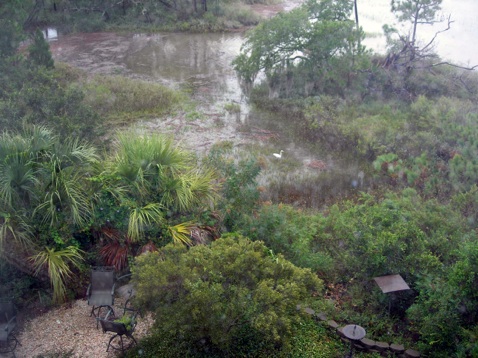
the green, green marsh of home

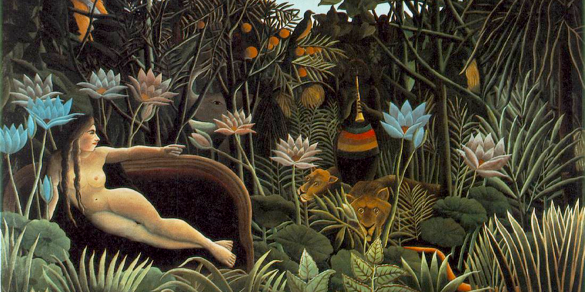
Give me a jungle any day over a desert.  Jungles, which are pro-life/pro-women, give rise to animism and soulful art; deserts, on the other hand, are anti-life/anti-women, give rise to tyrannical patriarchies and edicts against pictorial art.  In the jungle everything has soul; in the desert virtually nothing does.  

A combination photo of the 180-foot-high Buddha statue in Bamian, central Afghanistan on Dec. 18, 1997, left, and after its destruction on March 26, 2001. (Muzammil Pasha, Sayed Salahuddin/Reuters)

Allow me to save a hundred or so words:

Here is Rajiv Malhotra’s take on the difference between jungle and desert cultures:

The difference in attitudes toward order and chaos is one of the chief differences discussed at length in the book [i.e., Malhotra’s Being Different: An Indian Challenge to Western Universalism]. It is worth considering why the Indian religious imagination so unequivocally embraced the notion of diversity and multiplicity while others have not to a similar extent. Since all civilizations have tried to answer such existential questions as who we are, why we are here, what the nature of the Divine and the cosmos are etc., why are some Indian answers so markedly different from the Abrahamic ones?

Sri Aurobindo offers us a clue. In Dharmic traditions, unity is grounded in a sense of the Integral One, and there can be immense multiplicity without fear of “collapse into disintegration and chaos”. He suggests that the “forest” with the “richness and luxuriance of its vegetation” is both an inspiration and metaphor for India’s spiritual outlook. A quick look at world cultures and civilizations reveals how profoundly the geography and the human response to it affected those cultures. So it may well be that the physical features and characteristics of the subcontinent, once lush with tropical forests, also contributed to its deepest spiritual values (in contrast to those that were born, as the Abrahamic religions are, in the milieu of the desert).

The forest has always been a symbol of beneficence in India – a refuge from the heat, and abundant enough to support a life of contemplation without the worries of survival when worldly ties had to be severed for the pursuit of spiritual goals. (The penultimate stage of life advocated for individuals in Dharma traditions is called “vanaprastha” or “the forest stage of life”). Forests support thousands of species that survive interdependently and contain complex life and biology that changes and grows organically. Forest creatures are adaptive; they mutate and fuse into new forms easily. The forest loves to play host; newer life forms migrate to it and are rehabilitated as natives. Forests are ever evolving, their dance never final or complete.
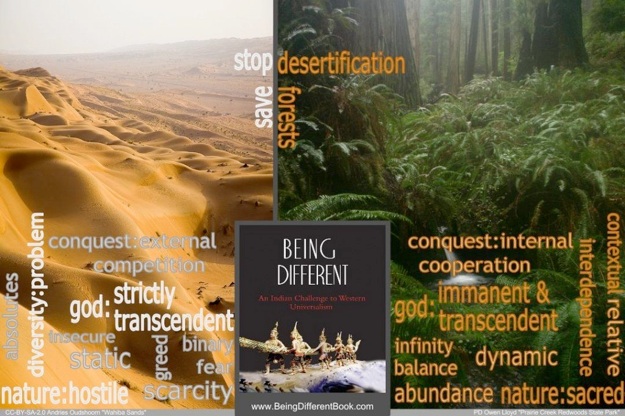
Of course, deserts can possess their own austere beauty, and given their lack of resources, human survival may well have depended on highly competitive survivalists whose creator was jealous and capable of drowning virtually all of his creation for wandering from the steep and stony way, and certainly the Hindu deity Kali isn’t exactly a benign creature herself, a destroyer extraordinaire but forgive me, I’ve wandered from my meteorological focus . . . 

It isn’t raining rain you know/ It’s raining violets.


Trafficking In Mockery

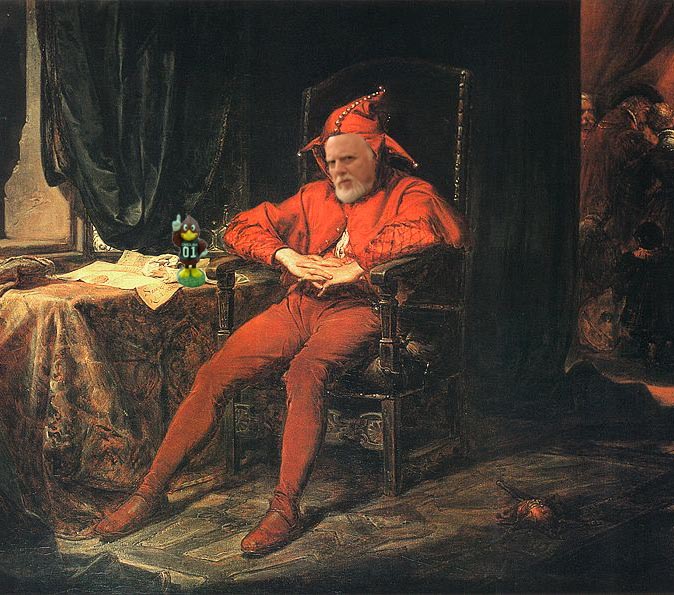
illustration by Pawel Kucynski

Constant change, or anicca, is a central concept of Buddhism, one of the three marks of existence, along with dukkha (suffering) and anatta (non-self). The Gautama Buddha (c. 567- 487 BCE) taught that attaching to impermanence (e.g., your childhood goldfish, your adolescent puppy love, your undergraduate hairline, your spouse, your existence) ultimately results in sorrow. To escape the natural inclination to become attached to objects of desire, Gautama Buddha points out a pathway that enables one to transcend ego, i.e., to enter a state of anatta, in which one becomes not even zero but this [1] [                    ].

The concept of constant change is inherent in quantum mechanics, cellular division, and, more obviously, in the shifting shapes of the clouds above. Everything is always in a state of flux. Not only did Eastern sages like Gautama come upon this concept of constant change, but also so did the Greek pre-Socratic philosopher — a contemporary of Gautama — Heraclitus, whose dates are c. 535 BCE – 475 BCE.

It’s easy to imagine Heraclitus’s most famous saying “No man ever steps into the same river twice” coming come from one of Gautama’s sermons. Unlike serene Gautama who suggested “a middle way,” Heraclitus, known as “the weeping philosopher,” was profoundly pessimistic. No doubt his pessimism contributed to what I hope are apocryphal accounts of his death.

According to Neanthes of Cyzicus, Heraclitus, suffering from dropsy, attempted to cure himself by covering his body with manure and lying out in the sun to dry, but he was made unrecognizable by the dung covering and was finally eaten by dogs. [2]

Heraclitus and Democritus
Johanness Moreelse

Not surprisingly, impermanence has been the theme of many a poet, and my main man WB Yeats is no exception. Take his masterpiece “Nineteen Hundred and Nineteen.”

Many ingenious lovely things are gone

That seemed sheer miracle to the multitude.

He offers examples of ancient art that has been lost:

[ . . .] There stood

Amid the ornamental bronze and stone

An ancient image made of olive wood –

And gone are Phidias’ famous ivories

And all the golden grasshoppers and bees.

Or as the latin poet Aaron Lipka puts it:

Vita brevis, ars longa,
tamen non est sempiterna.

Yeats goes on to lament the end of the pax Victoria when “a great army [was] but a showy thing.” However, in 1919 the “days are dragon-ridden,” and “[t}he night can sweat with terror as before/ We pieced our thoughts into philosophy.”

He adds that he (or she) “who knows no work can stand [. . .] has but one comfort left: all triumph would/But break upon his ghostly solitude.”

He ends the first section of the poem with this stanza:

But is there any comfort to be found?

Man is in love and loves what vanishes,

What more is there to say? That country round

None dared admit, if such a thought were his,

Incendiary or bigot could be found

To burn that stump on the Acropolis,

Or break in bits the famous ivories

Or traffic in the grasshoppers or bees.

(Or, in the case of Hobby Lobby, traffic in stolen ancient Mesopotamian clay cuneiform tablets, perhaps looted by ISIS.)

Is what Yeats calls “ghostly solitude” anatta?

Probably not. In Section 3, he refers to a Platonic theory of an afterlife. This theory holds that the greater a person’s accomplishments, the more likely those accomplishments will encumber her in her passage to the next world. Therefore, “if our works/Could vanish with our breath/That were a lucky death/For triumph can but mar our solitude.”

From the Cambridge Introduction to WB Yeats:

Before the poet can take comfort in his conclusions, it dawns on him that the evanescence of mortal triumphs is precisely what makes us love them. The fact that great works vanish does not make it easier to cast off our attachment to them. Indeed it makes it harder.

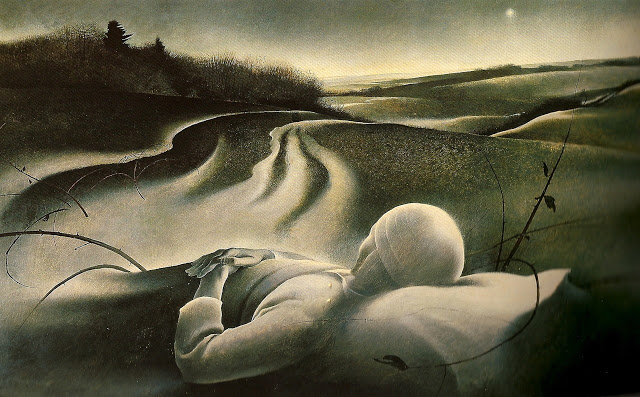
Andrew Wyeth

Today marks the 8th Sunday since my Judy died. The Buddhist ideal of total detachment, although wise, is better suited for one with a monastic temperament. If you are a husband or wife, a father or mother, a pet owner, a lover of Billie Holiday or the Marx Brothers, detachment is inexcusable. That doesn’t mean, however, you should embrace Heraclitus’ model and wallow in melancholy.

Weep when you must; party when you can.

Also, cynicism, though not ideal, can offer some satisfaction:

Come let us mock at the great

That had such burdens on the mind

And toiled so hard and late

To leave some monument behind,

Nor thought of the levelling wind.

Come let us mock at the wise;

With all those calendars whereon

They fixed old aching eyes,

They never saw how seasons run,

And now but gape at the sun.

Come let us mock at the good

That fancied goodness might be gay,

And sick of solitude

Might proclaim a holiday:

Wind shrieked — and where are they?

Mock mockers after that

That would not lift a hand maybe

To help good, wise or great

To bar that foul storm out, for we

Traffic in mockery.


[1] Insert “the sound of one hand clapping? The formula “form = emptiness; emptiness = form? The inexpressible mental concept of non-concept? Your original face before you were created?

[2] Janet Fairweather.“The Death of Heraclitus,” Greek, Roman, and Byzantine Studies.

Lear’s Fool on Zoloft – a Bagatelle


Lear’s Fool on Zoloft – a Bagatelle

And I’ll go to bed at noon.
King Lear 3.6.85

Fetal position is bad for your back,
but so is its opposite the rack.

Lift life with your legs the stoics say
while theists insist you pray.

Avoid extremes, the Buddha teaches
Prufrock avoids all flesh (including ripe peaches) —

unlike silken pajama-clad hedonist Hugh Hefner,
whose rented house is getting on up there.

Trouble here, trouble there,
Trouble, trouble everywhere!

What this adds up to I really don’t know.
So rage, wind! Crack your cheeks! Rage! Blow!

[cue Doris Day] – scratches – Que sera sera . . .

wes the fool