A Roundabout Trip to Cuckold Landing

Joan Weston

Joan Weston

An unlovely sentence from Wikipedia: “Creutzfeldt-Jakob disease causes the brain tissue to degenerate rapidly, and as the disease destroys the brain, the brain develops holes, and the texture changes to resemble that of a kitchen sponge.”

CJD, by the way, killed Joan Weston, aka the Blonde Bomber, aka the Big Blonde Amazon, who skated her way into the Roller Derby Hall of Fame with the San Francisco Bay Area Bombers. I watched both roller derby and wrestling when I was a boy and considered Joanie, as the announcers sometimes called her, a beauty.

Again, from Wikipedia, “Weston was a mentor to many professional Roller Derby skaters that made it on a team. She was said to take rookies under her wing.”

(Not surprisingly, Weston didn’t take not-destined-to-be rookies who didn’t “make it on a team” under her wing).

The word “rookie,” by the way, was coined in the late 19th century, “perhaps as an alternation of recruit, influenced by rook, a gregarious Eurasian crow with black plumage and a bare face, nesting in colonies in treetops.”

Here’s a great stanza from a song from Love’s Labors Lost in which the word rook appears:

When shepherds pipe on oaten straws,

And merry larks are ploughmen’s clocks,

When turtles tread, and rooks, and daws,

And maidens bleach their summer smocks,

The cuckoo then, on every tree,

Mocks married men; for thus sings he,

“Cuckoo;

Cuckoo, cuckoo!” O, word of fear,

Unpleasing to a married ear!

“Cuckoo” displeases a “married ear” because it sounds like “cuckold,” a married man whose wife has, as many a bluesman has put it, “another mule kicking in his stall.”  Let Muddy Waters tell you about it.

“When I picked up the receiver,/The party said, “Another mule kicking’ in your stall.”

The following nugget comes from the Wordorigens Discussion Forum:

The allusion to the cuckoo on which the word cuckold is based may not be appreciated by those unfamiliar with the nesting habits of certain varieties of this bird. The female of some Old World cuckoos lays its eggs in the nests of other birds, leaving them to be cared for by the resident nesters. This parasitic tendency has given the female bird a figurative reputation for unfaithfulness as well. Hence in Old French we find the word cucuault, composed of cocu, cuckoo, cuckold, and the pejorative suffix ald and used to designate a husband whose wife has wandered afield like the female cuckoo. An earlier assumed form of the Old French word was borrowed into Middle English by way of Anglo-Norman. Middle English cokewold, the ancestor of Modern English cuckold, is first recorded in a work written around 1250.”

11224584_10206667078984560_762045676183454566_nEO Wilson explains that the average human ejaculation contains ~180 million sperm while women possess a scant 400 or so ova.  Why then, genetically speaking, would a man stick with one woman when he could be inseminating dozens?  Because prehistorically the chances of offspring surviving (and the man’s genes replicating) were significantly higher if the man helped protect his offspring. This state of affairs, Wilson argues, explains the male tendency to jealousy and to violence when he discovers “his woman” has been untrue.  Given all that genetic firepower, who wants to raise an unfaithful mate’s child from an interloper?

Got a wife in Chino, babe, and one in Cherokee/
The first one says she’s got my child, but it don’t look like me.

There’s a boat landing near Green Pond, SC, called Cuckold Landing. The sign used to read “Cuckholds (sic) Landing,” but it’s been corrected.

By the way, clicking on google images for “Cuckholds Landing” yields several pornographic images and this intriguing teaser:

The Magnificent Cuckold | Paul Bargetto‪

‪Paul Bargetto directed The Magnificent Cuckold in October 2007 at the Connelly Theater in New York City. The Magnificent Cuckold is a penetrating study of …

I swear the ellipses are real!

mc_front_final

Harsh Discords and Unpleasing Sharps

a rather unflattering depiction of Pope

a rather unflattering depiction of Alexander Pope

Nowadays, Alexander Pope is so unpopular that the Robin Williams character in Dead Poets Society demanded his students rip Pope’s poems from their texts.   Certainly, the polished closed heroic couplets that flowed from Pope’s quill would make an incongruous soundtrack for what Eliot called “the immense panorama of futility and anarchy that is contemporary history.” Yep, the minuet has given way to slam dancing; fixed poetic forms have followed their cousin the typewriter into obsolescence.

Adieu. Toot-a-loo. Later.

Nevertheless, when it comes to the poetic confluence of sound and sense, very few poets can equal that four-foot six-inch Colossus, Alexander Pope, that satiric terror who immortalized his enemies in his verse.

Here he is on synthesizing sound with image and movement:

Tis not enough no Harshness gives Offence,

The Sound must seem an Echo to the Sense.

Soft is the Strain when Zephyr gently blows,

And the smooth Stream in smoother Numbers flows;

But when loud Surges lash the sounding Shore,

The hoarse, rough Verse shou’d like the Torrent roar.

When Ajax strives, some Rocks’ vast Weight to throw,

The Line too labours, and the Words move slow;

Note how via spondees he slows down the first half of line six, a lesson learned by Frost in his short poem “The Span of Life”:

The old dog barks backwards without getting up.

I can remember when he was a pup.

Not only do the four consecutive stressed beats of old dog barks back echo what a bark sounds like, but their slowness also reinforces the dog’s old age, his sluggishness. On the other hand, the opening anapests of line two suggest the bounding energy of a puppy. Here the sound does indeed “seem an echo to the sense.”

Ultimately, Pope’s dictum demands that when describing ugliness, poets need to make their poems sound ugly, so I thought it might be interesting to check out a few great poets depicting unpleasant images and to see how successful they are in creating dissonance.

Let’s start with Chaucer’s description of the Summoner from “The Prologue to the Canterbury Tales.”

Click the arrow for sound:

A SOMONOUR was ther with us in that place,
That hadde a fyr-reed cherubynnes face,
For saucefleem he was, with eyen narwe.
As hoot he was and lecherous as a sparwe,
With scalled browes blake, and piled berd,
Of his visage children were aferd.
Ther nas quyk-silver, lytarge, ne brymstoon,
Boras, ceruce, ne oille of tartre noon,
Ne oynement, that wolde clense and byte,
That hym myghte helpen of his whelkes white,
Nor of the knobbes sittynge on his chekes.
Wel loved he garleek, oynons, and eek lekes,
And for to drynken strong wyn, reed as blood;
Thanne wolde he speke and crie as he were wood.

Fast-forwarding 200 years, here’s Edmund Spenser’s personification of Gluttony from Canto 3 of Book 1 of The Faerie Queene (I’ve modernized the spelling):

And by his side rode loathsome Gluttony,

Deformed creature, on a filthy swine,

His belly up-blown with luxury

And also with fatness swollen were his eyes

And like a Crane his neck was long and fine

With which he swallowed up excessive feast,

For want whereof poor people did pine;

And all the way, most like a brutish beast,

He spewed up his gorge, that all did him detest.

Although Spenser succeeds in creating disgusting visual images, I’m not so sure he’s completely successful in creating sonic dissonance.  On the other hand, note the dissonance of these lines from Gerard Manley Hopkins describing Industrial England.

And all is seared with trade; bleared, smeared with toil;
And wears man’s smudge and shares man’s smell: the soil
Is bare now, nor can foot feel, being shod.

Now that’s brilliantly untuneful. Read it out loud. The rhyme toil/soil is deliciously dissonant, and seared/bleared/smeared ranks up there in rankness as well.

I’ll leave you with Master Will piping some appropriately sour notes:

It is the lark that sings so out of tune

Straining harsh discords and unpleasing sharps.

That’s Juliet talking, lying in her bridal bed with Romeo, realizing that the bird singing outside her window is not, as she hoped, the nightingale.

Time to get up, star-crossed lovers, and march off to your doom.

No, that’s too dark of a way to end this post.

A Meditation on the Sound of Indecorous Words

Fellatio is a lovely word,

Operatic, in a way:

“The role of Fellatio will be sung

By Mr. Richard Cabot-Clay.”

*

Sodomy, on the other hand,

Lacks that light Italian ring:

Biblical, confessional,

A cry of pain! a serpent’s sting!

*

Cunnilingus could be a caliph,

Thundering across Arabian sands

Seeking long lost treasure troves

Guarded by Jinn in distant lands.

*

Fuck, of course, isn’t exotic.

Its harsh cough can cause vexation.

But when a car door smashes your fingers,

It sure beats fornication.

~Wesley Moore

That Time I Threatened to Hang Myself If Student Housing Didn’t Transfer Me Out of That Dorm Suite I Shared with Antithetical Monsters

the poster Bo-Syph Ruined

the poster Bo-Syph Ruined

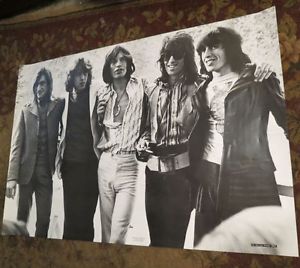
It’s the beginning of the spring semester of 1973, and my best friend, my roommate Warren, has quit school, has split to go on tour with a band called Wormwood. My other suitemate George, who prefers to be called Bo-Syph, is a full-blown alcoholic who disapproves of pot smoking. After he first moved in, he ruined my Rolling Stones poster by peppering it with darts, which, of course, also marred the walls beneath.

All day and night George/Bo-Syph sits in his matchbox of a room drinking 16-oz. cans of Busch Bavarian beer while watching a black-and-white TV the size of a cafeteria tray. The floor of his room doubles as a closet and a depository for empty beer cans, fast food wrappers, and yellowed newspapers. His main source of exercise is walking to Burger King and emptying ashtrays in his room once they have sufficiently overflowed.

One night before Warren split, George developed the DTs, and Warren and I had to escort him, wounded-soldier style, to the infirmary. George doesn’t go to class, doesn’t purchase textbooks. In fact, he only has had one social encounter that I know of. A girl from his hometown came to visit him, and they fucked robustly for two straight days, rarely leaving the room. She could have been cast as the lead in The Mama Cass Story, though she wore elastic pants, not tied-dyed mumuus, and had an upstate South Carolina accent so caustic I was afraid it would rust the radiators.

When I arrive at my room after Christmas break, the first thing I notice is that someone has affixed a cross on the wall over Warren’s bed. There’s also an altar on a shelf with two white candles. It turns out that my new roommate is named Charlie, a graduate student working on a Masters degree in music. Short and plump, with thinning blonde hair and a pinkish completion, he could be Truman Capote’s first cousin.

Like Warren, he plays keyboards, but unlike Warren, he wears pajamas to bed. Each night before retiring, in his pale blue pajamas, he lights his altar candles and gets on his knees to pray. Five minutes later, after audible amens, he rises, snuffs out the candles, crawls into bed, and starts snoring like a bronchitis-ridden wildebeest.

The setting of the story; the downstairs window on the far left is our suite

The setting of the story; the downstairs window on the far left is our suite

Given my nocturnal habits, I rarely witness Charlie’s prayer ritual, but on the brick walkway leading to our dorm, I can sometimes hear his snoring as I return from bar hopping or studying in the library. When I open the door to the suite, both inner bedroom doors are closed. My bedroom is dark; blue light flickers from beneath George’s.

The snoring begins with a harsh, hellish, rasping intake, and then there is a slight pause that offers the false hope of cessation – only to be shattered by an exhalation that roars like a phlegm-powered flame-thrower.

This Dantean progression loops all night long, over and over and over, over and over and over.

By Valentine’s Day, I’m at the end of my rope, so desperate that despite my fear of bureaucracy, I make an appointment with University Housing. Well washed and wearing a collared shirt, I tell a nice youngish woman that I’m desperate, that I’m living the Southern Gothic with two antithetical freaks right out of Flannery O’Connor, one a 30-year-old closeted religious fanatic with no apparent friends, the other the 20-year-old a racist alcoholic gun-fetishist, the equivalent of a stereotypical Mississippi sheriff in a ‘60’s movies.

I beg. I plead. “You got to get me out of there,” I say. “Look,” I say, “if you don’t move me out of there, I’m going to hang myself, not only that, but I’ll tape a sign to my shirt that says, ‘I have hung myself because the Housing Department wouldn’t move me.”’

The attractive young woman smiles and assures me that I will be hearing from them, but I never do.

Ultimately, though, living with George and Charlie made me revaluate my place in humanities’ continuum. Maybe I wasn’t as fucked up as I had thought. Compared to Charlie and George, I was practically Wally Cleaver. Maybe there was hope for me after all.

Bad People or Bad Choices?

08c157706766b6c658696b9fb7a185b4In my youth, parents, principals, teachers, den mothers, filmstrips, and preachers taught that every action was a reflection of your character.

In fact, it probably went deeper than that: your very thoughts needed to remain pure, ideally never straying from avenues of indoctrination, but at the very worst, if you found yourself hankering to do bad, tempted to wander across the tracks to the dark side of town, that thought had to be doused, snuffed, strangled, eliminated.

Reputation was a commodity of immeasurable worth, more precious that bullion. One misstep could obliterate a lifetime of probity, sullying forever your once good name and by association tarring your otherwise innocent family with the pitch of ignominy.

The public elementary school I attended that taught these lessons blithely ignored the separation of church and state. We prayed to Jesus every morning, were served fish sticks in the cafeteria every Friday. However, the teachers weren’t so much saying that your eternal life was on the line, but that bad habits metastasize like cancers, and the progression downward could be precipitous, a lie begetting a theft, a theft begetting a life of crime, and the next thing you know, you’re wearing stripes in Sing Sing, or in my case, at the Columbia Correctional Institute.

Well, as Mr. Dylan predicted, the times have changed.

Half a century later, at the Episcopal School where I teach, we don’t condemn students’ misdeeds as character flaws but refer to them as “bad choices.” Just because you cheat on a test and get caught doesn’t necessarily mean you’ll cheat one day on your taxes. Impulsiveness is no longer the prompting of Satan but, more plausibly, the product of pubescent chemical imbalances, and even premeditated malfeasance can be attributed to immature brains still in the process of growing, a process that science now claims is not completed for most people until the age of 25.

east-of-eden-julie-harris-james-dean-1955Although I disapprove of the cliché the phrase “making bad choices” has become, I do think it wise not to declare someone ultimately a bad person for making even a serious moral mistake. If someone thinks he’s inherently bad, like Cal Trask in Elia Kazan’s film of Steinbeck’s East of Eden, he might conclude that fighting his immoral inclinations is a lost cause and use his self-assessment as an excuse to do whatever the hell he wants.

Poor Cal had adopted the persona of a self-romanticizing narcissist, a very bad choice indeed.

Could We at Least Quit Calling These Radicals Conservatives?

bringthewarhome_revisionI came to age in a relatively quiet, orderly decade, the Sixties. I mean, of course, quiet, orderly compared to now. Back then, the anarchists, the ones who wanted to overthrow the Republic, were leftists (the SDS, Black Panthers, etc.).

You had your occasional violent protests, but you could go to class or Bible study without worrying about getting gunned down by some disaffected mama’s boy or redneck jihadist. No one really ever worried that these ‘60’s leftists could topple the Republic.

Nowadays, the anarchists are right-wingers whom the media call “conservatives,” and thanks to gerrymandering, forty or fifty of them have managed to get elected to Congress. Some of these fire-breathers make Abby Hoffman and Rennie Davis look like [archaic reference warning] Ward and June Cleaver.

If the “You, Lie!” Joe Wilsons don’t get their way, like, if they don’t succeed in defunding programs they despise like Planned Parenthood, they throw tantrums and do all they can to shut down the government, or, worse, have the nation default on its debt. It’s as if their vision of the world stops at the zigzagging borders of their benighted gerrymandered districts.

TEA Party Sign 00I repeat: the media refer to these ideological, emotion-driven anarchists as conservatives. Joe Wilson, who screamed “You Lie!” to the President of the United States in a State of the Union Address, is considered a conservative!

I sort of worry that Joe and his ilk, unlike Abby and Rennie, could conceivably topple the Republic, or at the very least, sabotage its economy. It appears that the Founding Father’s system doesn’t work nowadays, and a parliamentary system might be preferable. If an irrational minority can completely undermine a rational majority, we have big time, perhaps, insolvable problems, and because of gerrymandering, the chances of Freedom Caucus members being defeated in a general election are as unlikely as Miley Cyrus converting to Mormonism.

The members of the Freedom Caucus are not conservatives, but radicals, so could we please start calling them radicals.

That might be a tiny but meaningful first step.

During the Deluge Blues

During the Deluge Blues

Got the stranded, sodden, ennui blues, baby.

Sick and tired of this here deluge, baby.

Rains day and night, no end in sight.

We talking federal emergency blight.

*

Done run out of booze, way low on beer,

Water in the road up over my ear,

Sharks feasting on feral cats —

even I-and-I ain’t going out in that.

*

So come here, mama, let’s hunker on down.

It ain’t like we gonna literally drown.

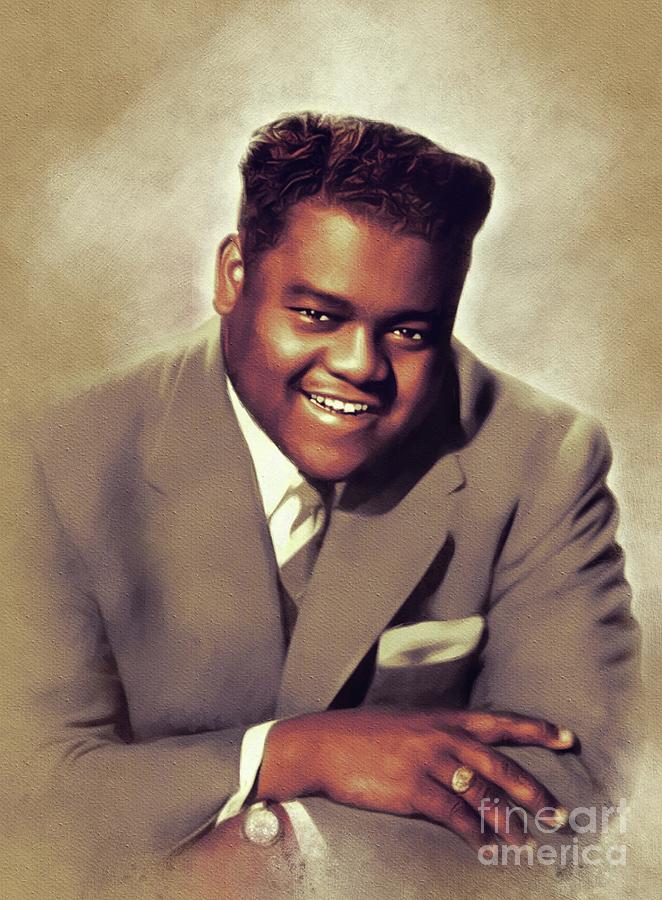
We can play us some Fats Domino

On that thousand dollar stereo

And get our thrill on Blueberry Hill.

*

Got the stranded, sodden, ennui blues, baby.

Sick and tired of this here deluge, baby.

Rains all day and night, no end in sight.

But Fats gots us feeling all right, baby.

Do Me a Favor and Ditch the Thesaurus

bookworm_thumbnail_cropActually, I’m probably one of the few English teachers who discourage students from mining Thesauruses for synonyms.[1]  Too often, I’ve found, students select unfamiliar words that don’t quite work in context.

He whimsically set the rodent trap with refrigerated smores.

I suggest students only resort to a Thesaurus if they know the perfect synonym – if it’s on the tip of a neuron connected to the tip of their tongues. In other words, if after racking your brain, you can’t quite conjure that perfect word, give in to the Thesaurus, but if you don’t find it there, only choose an alternative from your speaking vocabulary.

Oh, but for a writer, finding the perfect word is a nice an exquisite problem to have in the expansive, supple, exalted, vulgar language of English, a hybrid/mixed breed of German, Norse, and French.

[If you click here, you can watch I-and-I deliver a  3 minute, 56 second lecture on the history of English at the famous Folly Beach dive Chico Feo.]

In other words, English is a mutt – or to use an alternative French-based locution, the product of miscegenation – and that’s propitious/a good thing because it provides a wealth of diversity.

Of course, when it comes to selecting the right word, context is everything. French words tend to soften situations, words of Anglo-Saxon to tell it like it is.

Pity the serfs sweating blood in the moor; envy the bon vivants perspiring champagne at the Belgian spa.

It’s just a class thing – the French aristocrats perspired and urinated, the Anglo-Saxon peasants sweated and pissed. Back in the days of testosterone, my mother once overheard me saying “pissed off” and chastised/yelled at me for my use of vulgar language, and I told her that I’d bring in a jar of piss and one of urine and that if she could distinguish one from the other, I’d quit pissing altogether.

Piss is onomatopoetic – like whiz, tinkle – playful. Urine, not so much.

And then, you throw American English in the mix – and the choices become even more complicated as you try to determine/figure out if lonely or lonesome is the word that best fits the situation you’re attempting to capture/nail.

NOT: After the debacle in the park, Miss Brill felt for the first time the enormity of her lonesomeness.

BUT: The coyote’s howl deepened the lonesomeness of the desolate prairie.

So, if your hateful, bile-ridden uncle’s from London, he might be a misanthrope, if he’s from Boston, a curmudgeon, but if he’s from my home town Summerville, he’s nothing but a mean ol’ cuss.

You get to decide, but stick to the words you know, and when in doubt, aim low.

Class over. I have to go powder my nose.


[1] Forgive the quaint “mining Thesauruses,” but “clicking on a Thesaurus website” lacks that pedagogical, pretentious patina of dust.

Casting the Republican Primary Farce

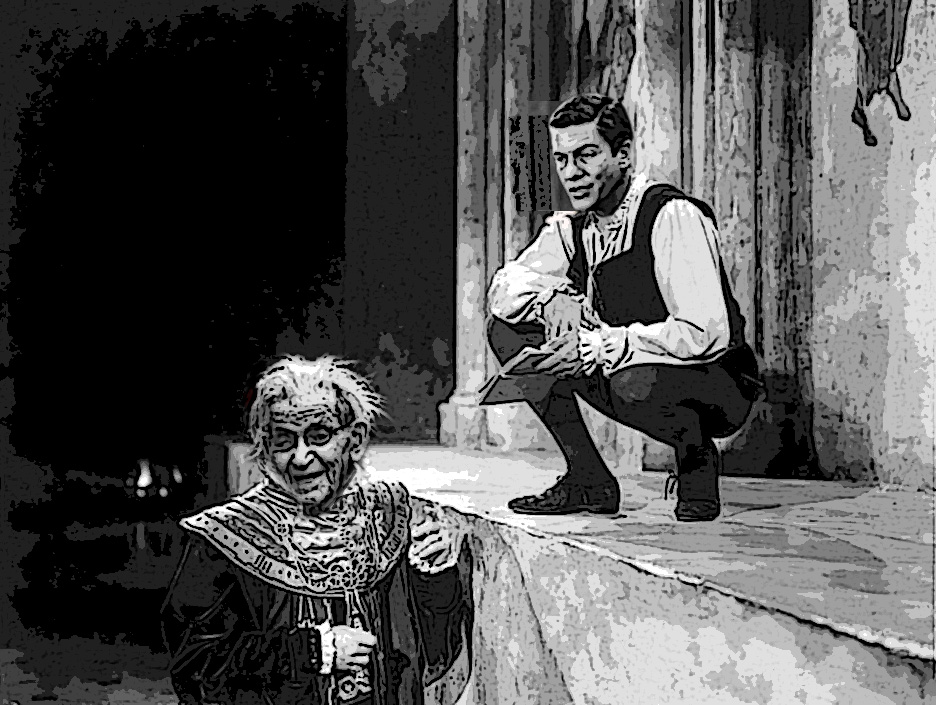
corey van dyke hamletYears ago, circa The Hog Breeders’ Gazette, back in his Mozart spinning DJ days at SC Public Radio, Robert Fowler and I cast an entire production of Hamlet using comedy stars from early television — Dick Van Dyke as the Prince, Professor Irwin Corey as Polonius, Bill Dana as the grave digging clown, etc.

Let me assure you, if you had been there (and had spent the earlier part of the day as we had), you would have found our casting howlingly hilarious. We even considered creating a Play Bill like poster, an artsy mixed media something or other that could showcase the shtick, but back then, to create art, you had to be able to draw, to know how to develop photos in darkrooms. Now, praise Huxley, if you can afford an Apple laptop and a Photoshop license, art is much more egalitarian, its modes of production not so tilted in favor of talent and technique.

Yes, happily for me, the days of talent have faded like those old photos developed in dark rooms, and hacks like I-and-I can manifest multimedia fairly easily, spit out poems, songs, digital art, manifestos, or homemade Mother’s Day cards.

This morning, for example, after reading a sardonic email from a friend mocking Jeb’s musings on multiculturalism, it occurred to me that if I were casting a farcical movie mocking the Republican presidential campaign, I’d want Peter Sellers to play Jeb (the smart) Bush.

Imagine Sellers in the role, hunching his shoulders, assuming Bush’s ursine posture. Imagine with his genius for mimicry, his ability to make incarnate misstatement via misstep, Sellers’ executing a low energy pratfall.

Well, one thing led to another, and I started thinking about the other candidates. Fiorina, Cruz, Paul, Trump. What comic would best be able to portray them in this screwball comedy?

Who should play whom?

The problem we face at this early stage is that we don’t know who the protagonist will be. Nevertheless, we know Trump will play a leading role, so let’s cast him first.

Donald Trump

I’d go with Jerry Van Dyke, Dick’s venerable brother.

Van Dyke/Trump

Van Dyke/Trump

Let’s face it, we don’t need an Olivier to play the Donald.  We’re talking Borscht Belt slapstick skit television shit.  If he were’t dead  84, Jerry could desitively handle it. Anyone who has seen even one episode of My Mother the Car can vouch for that. All the director would need to do is to get the appropriate wig from wardrobe, have Jerry learn how to pinch his mouth into an anus-like circle, and bluster.


Carly Fiorina

Arthur/Fiorina

Arthur/Fiorina


Who better than Bea Arthur to play Carly Fiorina?  When you think about it, both have a lot in common — two eyes, two ears, two nostrils, two husbands.  The former a champion for civil rights for women, the latter a campion for civil rights for herself.


Marco Rubio

Newton/Rubio

Newton/Rubio


If the lights are bright enough and he starts sweating, Wayne Newton looks a helluva lot like Marco Rubio.  Or vice versa.  Come to think of it, Rubio might think about approximating Wayne’s coif, Richie Valens-meets-Ronald Reagan.


Ted Cruz

Al Lewis/Cruz

Al Lewis/Cruz


I’ve said this before — and now it’s become a sort of internet meme – but damn, Ted Cruz is a dead ringer for Grandpa Munster.  If only Ted could muster a little of bit of Grandpa’s charisma, he might have a chance.


Chris Christie

christie /fleason


If he could have put on, say, a hundred pounds or so, Jackie Gleason would have made a killer Christie.


Rand Paul


Kaye/Paul

Kaye/Paul


Who better to capture that hard-to-pin-down-elfin quality that Paul exudes than Danny Kaye?


Scott Walker

Skeleton/Walker

Skeleton/Walker


And finally, the great Red Skeleton as the late lamented Scott Walker.  As they say, two pictures are worth two thousand words.

If college’s so scary, why not join the army?

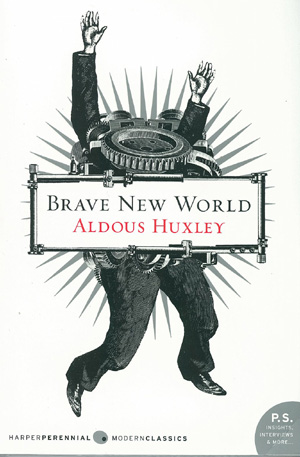
brave-new-world-bookHow did Orwell and Huxley not predict this dystopian commonplace of Late Empire America – a generation of highly gifted, hypersensitive students in higher education who jolt into Viet Nam vet flashback mode at the mere mirroring in fiction of a situation that once traumatized them? We’re talking situations as insignificant as garden variety bullying, students who police speech the way the KGB policed Solzhenitsyn.

It’s gotten so bad Chris Rock and Jerry Seinfeld won’t play college campuses anymore.

It only takes two generations. The progeny of grandparents who heaved across the Pacific in malodorous, un-air-conditioned steerage take grand mal umbrage if you assume they’re good at math. According to Greg Lukianoff and Jonathan Haidt, “a student group at UCLA staged a sit-in” during a class of an education professor and “read a letter aloud ‘expressing their concerns about the campus’s hostility toward students of color’” because the professor “had noted that a student had wrongly capitalized the first letter of the word indigenous” and “[l]owercasing the capital I was an insult to the student and her ideology.”

140206_dx_wellesleynudestatue-crop-promo-mediumlarge-2I wrote about one instance of this hypersensitivity last February [The Delicate, Censorious Damsels of Wellesley] after reading that outraged students had gotten up a petition to remove a statue that they found offensive (a pasty, slightly overweight bald man sleepwalking in his briefs) because of its “triggering thoughts regarding sexual assault for many[1] members of our campus community.” The key word here is triggering – you see the statue, it flips on a memory of a sexual assault you suffered, so your personal trauma demands that public artwork be censored.

Nagasaki c. 1946

Nagasaki c. 1946

Okay, I’ll go ahead and admit my prejudice. My old man was a tough guy. He was stationed at Nagasaki right after the bomb blast when he was 17. He didn’t talk about it at all, but he did tell me one story when I was in college and he was drunk [trigger warning: depravity] involving a prostitute, a chest of drawers, and a baby’s corpse. I suspect this incident didn’t contribute to the mental health of a seventeen year old, but it didn’t prevent him from watching WW2 movies nor did he demand the world make accommodations for that mischance.

On the other hand, I don’t disagree with Kate Manne’s contention in her Times’ editorial that a voluntary “heads-up” to students on potentially shocking content makes sense — it seems like good manners to me. On the other hand, mandatory warnings on novels like The Great Gatsby are worthy of Swiftean scorn. The reactionary Scots-Irish-English mongrel me says, “If college’s so scary, why not join the army?”

Wallace Steven wrote in “A High-Toned All Christian Woman,” “This will make widows wince. But fictive things/Wink as they will. Wink most when widows wince.”[2]

Nowadays, it’s the most elite of the younger generation doing the wincing. Doesn’t bode well. A wave of fresh immigrants just might do us a world of good.

maxresdefault

[1] 7, 15, 38, 161, 323?

[2] By “this” he means highly imaginative art

Poets on Pain

Expressing physical pain in words is next to impossible.

Here’s a short poem by Trumbull Stickney (1874-1904), who died of a brain tumor:

Sir, say no more.

Within me ’tis as if

The green and climbing eyesight of a cat

Crawled near my mind’s poor birds.

Certainly, if any one would know about pain, the Empress of Calvary would.

Pain has an element of blank;

It cannot recollect

When it began, or if there were

A day when it was not.

It has no future but itself,

Its infinite realms contain

Its past, enlightened to perceive

New periods of pain.

But no one, I mean no one, can top poor John Keats when it comes to embodying illness in words :

Ode to a Nightingale

MY heart aches, and a drowsy numbness pains

My sense, as though of hemlock I had drunk,

Or emptied some dull opiate to the drains

One minute past, and Lethe-wards had sunk:

‘Tis not through envy of thy happy lot,

But being too happy in thine happiness,

That thou, light-wingèd Dryad of the trees,

In some melodious plot

Of beechen green, and shadows numberless,

Singest of summer in full-throated ease.

O for a draught of vintage! that hath been

Cool’d a long age in the deep-delvèd earth,

Tasting of Flora and the country-green,

Dance, and Provençal song, and sunburnt mirth!

O for a beaker full of the warm South!

Full of the true, the blushful Hippocrene,

With beaded bubbles winking at the brim,

And purple-stainèd mouth;

That I might drink, and leave the world unseen,

And with thee fade away into the forest dim:

Fade far away, dissolve, and quite forget

What thou among the leaves hast never known,

The weariness, the fever, and the fret

Here, where men sit and hear each other groan;

Where palsy shakes a few, sad, last grey hairs,

Where youth grows pale, and spectre-thin, and dies;

Where but to think is to be full of sorrow

And leaden-eyed despairs;

Where beauty cannot keep her lustrous eyes,

Or new Love pine at them beyond to-morrow.

Away! away! for I will fly to thee,

Not charioted by Bacchus and his pards,

But on the viewless wings of Poesy,

Though the dull brain perplexes and retards:

Already with thee! tender is the night,

And haply the Queen-Moon is on her throne,

Cluster’d around by all her starry Fays

But here there is no light,

Save what from heaven is with the breezes blown

Through verdurous glooms and winding mossy ways.

I cannot see what flowers are at my feet,

Nor what soft incense hangs upon the boughs,

But, in embalmèd darkness, guess each sweet

Wherewith the seasonable month endows

The grass, the thicket, and the fruit-tree wild;

White hawthorn, and the pastoral eglantine;

Fast-fading violets cover’d up in leaves;

And mid-May’s eldest child,

The coming musk-rose, full of dewy wine,

The murmurous haunt of flies on summer eves.

Darkling I listen; and, for many a time

I have been half in love with easeful Death,

Call’d him soft names in many a musèd rhyme,

To take into the air my quiet breath;

Now more than ever seems it rich to die,

To cease upon the midnight with no pain,

While thou art pouring forth thy soul abroad

In such an ecstasy!

Still wouldst thou sing, and I have ears in vain—

To thy high requiem become a sod.

Thou wast not born for death, immortal Bird!

No hungry generations tread thee down;

The voice I hear this passing night was heard

In ancient days by emperor and clown:

Perhaps the self-same song that found a path

Through the sad heart of Ruth, when, sick for home,

She stood in tears amid the alien corn;

The same that ofttimes hath

Charm’d magic casements, opening on the foam

Of perilous seas, in faery lands forlorn.

Forlorn! the very word is like a bell

To toll me back from thee to my sole self!

Adieu! the fancy cannot cheat so well

As she is famed to do, deceiving elf.

Adieu! adieu! thy plaintive anthem fades

Past the near meadows, over the still stream,

Up the hill-side; and now ’tis buried deep

In the next valley-glades:

Was it a vision, or a waking dream?

Fled is that music:—do I wake or sleep?

After reading that, my scratchy throat and lethargy seem almost heavenly. O for a draught of John Jameson!

0af2ebb0a36738aeb8bcbb526d1d25fa