Of all the causes which conspire to blind. Man’s erring judgement, and misguide the mind, What the weak head with strongest bias rules, Is PRIDE, the never-failing vice of fools.”
Alexander Pope, “An Essay on Criticism”
Is it really, really such an odious task during a pandemic to put on a mask?
In the Trump White House, no mask is the rule, Targeting the base, those Kool-Aid mainlining fools.
Masks remind voters of the invisible dread That’s left more than 200,000 Americans dead.
What dat? Sistah Karma done come a-calling unexpected? Kayleigh and Kellyanne done been infected?
Along with Thom Tillis, Hope Hicks, Mike Lee, not to mention Donald J Trump and the First Lady?
Do Lawd! White House itself got more cases than New Zealand, a country of just under five million people?
So is it really, really too much to ask in a goddamn pandemic to put on a goddamn mask?
I wondered the other day is there’s even such a thing as “conservative poets” anymore.[1]
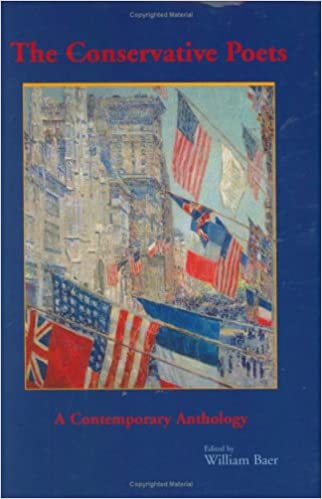
Well, it didn’t take me long to discover an anthology entitled The Conservative Poets: A Contemporary Anthology, edited by William Baer, who offers this estimation of the contemporary literary landscape:
Although it often seems that liberals and the radical Left have assumed complete hegemony over the arts, especially the literary arts, there exists a remnant of very talented American poets who create beautiful, serious, witty, moving, and diverse poetry from a conservative point of view. This unique anthology illustrates the wide range of these determined and sometimes defiant artists, who hope that their work will encourage more like-minded Americans to learn the poetic craft and pursue the literary endeavor.
By the way, Baer is a genuine scholar. Here’s his bio from Amazon:
WILLIAM BAER is the author of ten books, including ” ‘Borges’ and Other Sonnets”; “Fourteen on Form: Conversations with Poets”; “Luis de Camoes: Selected Sonnets”; and “Writing Metrical Poetry”. The Founding editor of “The Formalist: A Journal of Metrical Poetry” (1990-2004), he is currently the director of the Richard Wilbur Poetry Series, the poetry editor and film critic for “Crisis,” and a contributing editor to “Measure.”
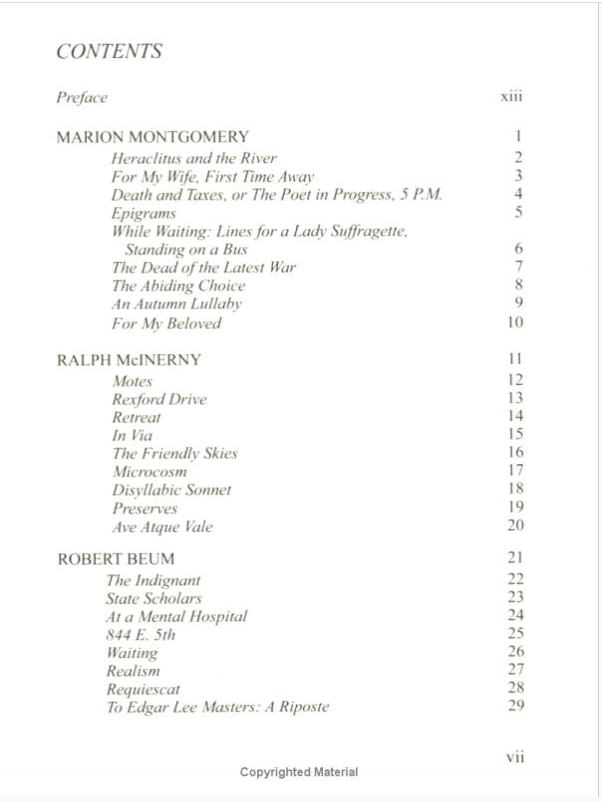
Here’s a screenshot of the table of contents.
I tried to track down some of these poets, only to discover most had, to quote Richard Wilbur himself, “gone from this rotten/Taxable world to a standard of higher living.” The late Marion Montgomery’s “While Waiting: Lines for a Lady Suffragette, Standing on a Bus” certainly seems to adhere in some ways to an antifeminist’s view of what Montgomery might call the “fair sex.”
Ah, Lady. Ah. It is a stirring sight.
Franchisement by the gods is now complete.
You now have won the inalienable right
Of standing on your own two feet.
Alas, Montgomery checked out of this Motel 6 of Sorrow in the penultimate year of W’s second term, so it would not be accurate to name him as a conservative poet writing today.
Editor Baer in his preface admits that most of the anthologized poems’ conservatism lies in their traditional forms rather than politics, but adds, “Some, myself included, would even tend to see meter as a poetic representation of the provident order of God’s universe.”[2]
So I continued my search and found a website from 2016 called Scholars & Writers for America. Beneath its banner this: “Given our choices in the presidential election, we believe that Donald J. Trump is the candidate most likely to restore the promise of America, and we urge you to support him as we do.”
Scrolling down my screen past names like Burton W Folsom, Jr., author of The Myth of the Robber Barons and Steve Mosher of the Population Research Institute looking for a poets or novelists, I discovered, to my delight, at the bottom of the screen, Thomas C McCollum, novelist.
Here’s the second paragraph of text from McCollum’s website, from an article by Louise Cook, the editor of Absolute Marbella Magazine:
If one were to view all aspects of Thomas McCollum’s professional and avocational life, one might be very tempted to call him a Renaissance man–albeit with a strong entrepreneurial bent. Wisely McCollum leaves all such pretentions to others, preferring the doing rather than the talking about.
What follows is a most-interesting-man-in-the-world litany: Can-Am racing, bull running in Pamplona [Spain she helpfully adds], man-eating crocodile hunting, a golf-addiction, insurance sales, original pen and ink drawings street-corner sales, med-school matriculation, med-school abandonment, medical laboratory founding, medical laboratory selling, retirement to Marbella, Spain, “to live out all the fantasies of his youth. He has camped, safaried, and traveled to every continent on earth.”[3]
McCollum has published four novels: Whipsocket, Tainted Blood, Palmer Lake, and Uncle Norm.
Here are the first and last sentences from Publisher Weekly’s review of Tainted Blood.
Readers willing to suspend disbelief beyond belief may find McCollum’s first novel an interesting medical thriller; others will be dismayed by characters manipulated by incredible plot contrivances.
McCollum makes the medical details microscopically authentic, but too many standard diatribes against government agencies, characters who speak polemic as often as they do dialogue and a conclusion that’s painfully anticlimactic render a hot topic tepid. (my italics)
Now compare that MSM review to this one for Uncle Norm from Christopher Feigum, Grammy Award winner and Metropolitan Opera Singer:
“Thomas McCollum has delivered a book of operatic proportions…a tale full of intrigue that tempts us to explore the what ifs of life and the possibility of encountering one profound love. Whether he is delighting pygmies with donuts or sharing his smuggled discoveries along the way, Uncle Norm is a warm, comical hero deeply connected to his fellow lost soul in the Congo, Ottobah Cuguano, and their shared faith in everlasting friendship. As they strive to break down racial barriers and transform the world, their adventures amaze the restless traveler in all of us. This timely piece is a declaration that we each have the choice to leave behind a better place than we found.”
Oh, yeah. There is also this snippet from of all places, Publisher’s Weekly describing Tainted Blood: “an interesting thriller…McCollum makes the adventure microscopically authentic.” Hmmm. “an interesting thriller . . . microscopically authentic.” Where have I seen that before?
So anyway, if you happen to be a Trump supporter who feels somewhat culturally isolated, there are indeed “conservative” literary artists out there working today, maybe not on the analogous level of Jon Voight and Bruce Willis, but they are out there.
[1] I don’t mean conservative in the old-fashioned sense of embracing traditional values and being skeptical of innovation, like Alexander Pope, but in its contemporary sense of someone rejects the Enlightenment and institutions of liberal democracy.
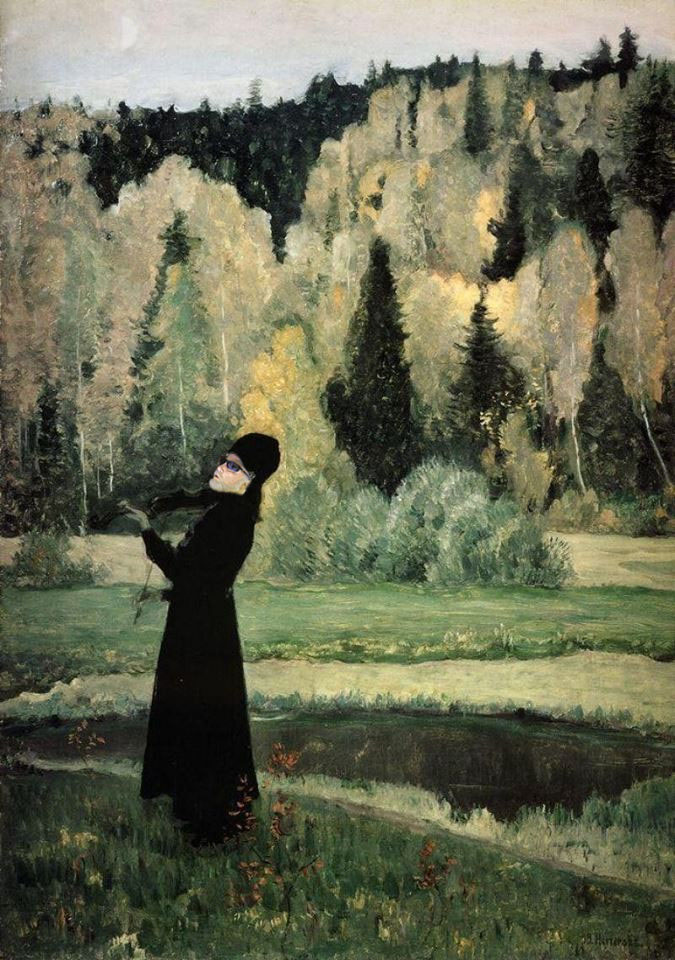
“Elegy: Blind Musician” by Mikhail Vasilevich (photoshopped by I-and-I)
. . . I need not rehearse The rosebuds-theme of centuries of verse.
Richard Wilbur, “A Late Aubade”
Although posthumous fame is essentially worthless to what Perry Mason and Hamilton Burger call the decedent,[1] humans tend to want to be remembered after their deaths, hence tombstones, epitaphs, and those memorial verses we find on obituary pages. As I have no doubt mentioned before, I actually enjoy reading the obituary page, even the obituaries of complete strangers. Perhaps it’s the poet in me who is interested in how the writer goes about compressing a life into the narrow confines of a column of newsprint.[2] Generally, however, I skip the memorial verses, which are generally godawful jingles heavy on end rhyme.
For example, below you’ll find a bit of elegiac verse I copped from a publication called National Post. On its website, I found a page devoted to “Memorial Verses” with this option:
Choose a verse from the appropriate category. Alternatively you may want to copy and paste the verse into the place a notice order form. When placing a notice, please identify the verse by its number to your Classified Telesales Representative. You may also change any of the verses or write your own.
Conveniently, the editors have classified verses by relationships: “Mother, Sister, or Daughter; Father, Brother, or Son; Wife or Husband; Children; Friend or Kin; Armed Forces; Prayer Corner.”
Here’s the first choice listed for a mother.
A wonderful mother, woman and aide, One who was better God never made; A wonderful worker, so loyal and true, One in a million, that mother was you. Just in your judgment, always right; Honest and liberal, ever upright; Loved by your friends and all whom you knew Our wonderful mother, that mother was you.
Of course, in my native state of South Carolina, not many would want to tar the woman who labored to bring them into the world with that vile word “liberal.” Last night during the debate between Nancy Mace and Joe Cunningham, the former used the word “democrat” and “liberal” as if they were synonymous with depravity.
Thank (in this case, given the diction of the verse) God that the purchaser has the option of changing the diction.
Just in your judgement, always right;
Honest and reactionary, ever upright.
Indeed the alliteration in “right” and “reactionary” and “upright” is an auditory improvement.
So it has occurred to me that in my retirement from teaching, I could make a few extra bucks composing memorial verses.
Let’s face it, almost anyone could do better than whoever wrote the above abomination. I mean, the syntax of “One who was better God never made” is so tortured it’s possibly in violation of the Geneva Convention.
Perhaps I could target sentimental agnostics and atheists who want their loved ones remembered, but less hyperbolically.
Our mother has succumbed to a terminal disease,
A mother who taught us manners, to say “please”
And “thank you” and “may” instead of “can,”
Who raised us without the help of a man,
Our deadbeat dad who skipped town one night,
Forever disappearing in dishonorable flight.
Yet, Mom endured life’s hardships with stoic good grace,
An exemplary example for the human race.
Loved by her friends, her children, and pets,
We appreciate that she tried her very best.
Good night, deceased mother, may you rest in peace
Safe in the cliché of death’s eternal sleep.
What do you think? Should I give it a try? Bill myself for the hours and then write it off my taxes? Anyway, if you’re in the market – fortune forbid – you know how to get in touch.
[1] This reminds me of a bit of dialogue from a WC Fields movie I ran across yesterday thanks to my pal Ballard Lesemann. A patron at a bar says to Fields, the bartender, “I understand you buried your wife a few years ago,” and Fields replies, “Yes, I had to. She was dead.”
[2] Unfortunately, I myself have become a somewhat prolific obituary writer, having composed posthumous bios for both my father and mother-in-law, my own parents, my maternal aunt and uncle, and for my beloved Judy Birdsong. The stylistic part is not easy. The memorialist needs to deftly insert introductory subordinate phrases and clauses to break the monotony of fact-filled declarative sentences.
The Ballad of Old Buck Howland

For years and years he lived right here
in a tent on the edge of Folly.
He brewed his beer and wrote his poems
in the shade of a stunted loblolly.

He played at working construction,
could drive a nail I guess,
but what Buck was really good at
was downing his Inverness.

He’d have a drop in the morning,
he’d have a drop at noon,
he’d have a drop at midnight,
‘neath the light of a winter moon.

The cold on Folly ain’t that bad
(unless you stay in a tent),
but Buck would hum all through the night,
shivering but still content,

content because his poems would clack
from that old Underwood,
clack-clack-clacking, like a woodpecker,
on the edge of the stunted wood.

The VA doctors warned him
to change his lifestyle soon,
but Buck was a stubborn cuss.
He loved the light of the moon.

They found him dead inside a shed
on the side of Folly Road,
and in his hand he held a poem,
the last one he ever wrote:

            Drunk me some wine with Jesus [it read]
            At this here wedding in Galilee.
            He saved the bestest for second
            And provided it all for free.

            So I quit my job on the shrimp boat
            To follow Him eternally,
            No longer bound by them blue laws
            Enforced by the Pharisee.

            And we had us some real good times
            Till them Pharisees done Him in.
            Ain’t got no use for the religious right
            After I seen what they done to Him.

            Then when Saul Paul stole the show
            I sort of drifted away.
            Cause he never quite did understood
            What Jesus was trying to say.

            Paul was like a Pharisee,
            Cussing this, cussing that,
            Giving the wimmins a real hard time,
            Gay bashing and all like that.

            So I stay at home most nights now
            Trying to do some good,
            Offering beggars a little snort
            Whilst praying for a Robin Hood.

            Drunk me some wine with Jesus,
            It was the bestest day I ever seen.
            Drunk me some wine with Jesus,
            Partying with the Nazarene.

I can think of worse things
to have in your hand when dead
across the bridge on Folly Road
inside an old tool shed.
Early in July, my good friend and former college/grad school roommate Warren Moise wrote an article for the Charleston Mercury describing his former existence as a beach musician in the 60s and 70s. He admitted in the article that he had never learned to shag, which for me was a shocking revelation.
No, British readers, not that kind of shagging!
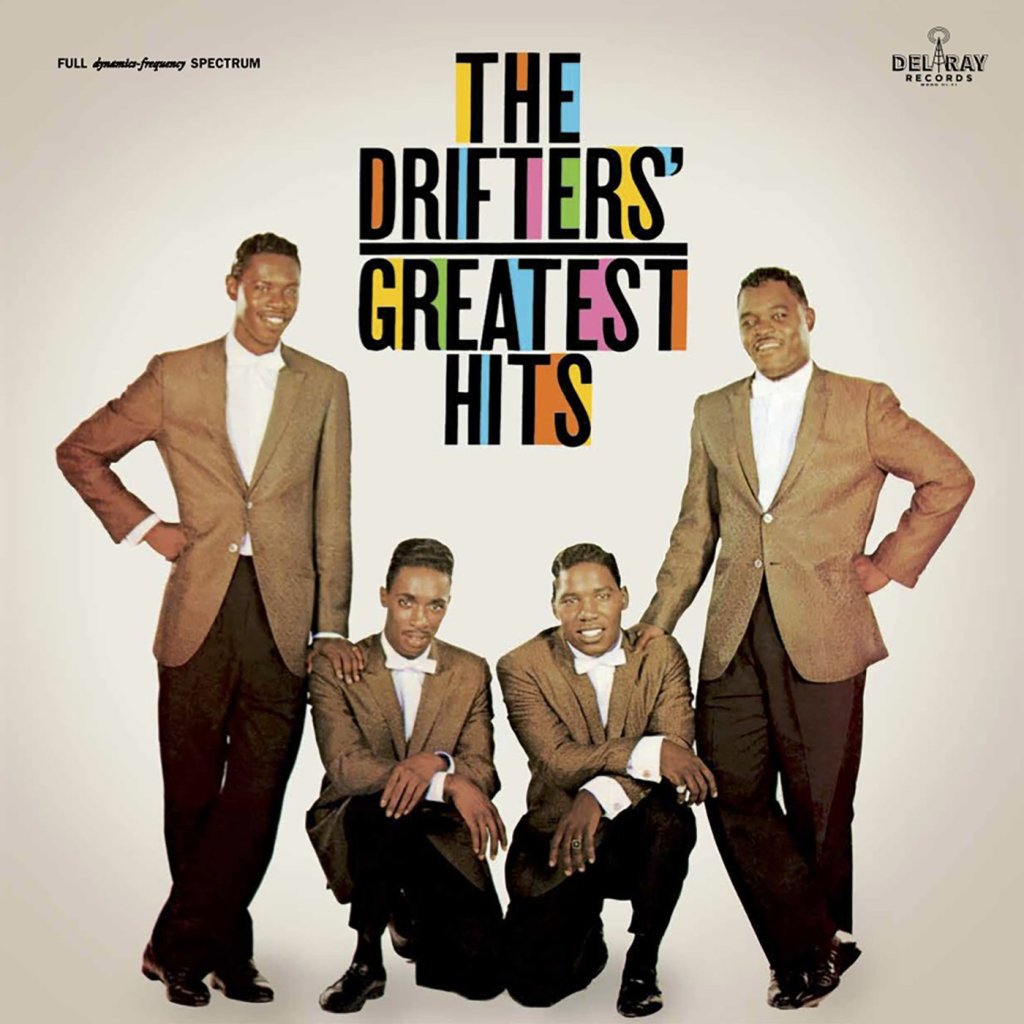
We’re talking about the venerable North and South Carolina dance known as “the shag.” According to the website NCPEDIA, the shag might trace its evolution back to early settlers of the Carolina in an attempt to preserve their European musical lineage. According to the article, in the 1920s and 30s, the shag evolved as dancers adapted it to swing music and jazz. However, the dance really came into its own in 50s and 60s with the advent of Beach Music, a genre made famous by such groups as The Drifters, Tams, and the Embers and performed at beach pavilions up and down the Carolina Coast.
Essentially, the shag is a two person hand-holding shuffle that allows room for much improvisation. Knowing how to shag is almost a social necessity if you live in Charleston or Myrtle Beach. Nevertheless, like Warren, I, too, never learned how, essentially because I didn’t have the inclination.
Folly Beach, where I live, used to have a shag dance club on Center Street where old people attempted to keep the fires of their youth ablaze, and you can still see lots of shagging at the Sand Dollar Social club on weekends.
Curmudgeon that I am, I saw members of the old shag club as victims of their youth, incurable nostalgia-holics stuck, like a stylus on a scratched record, in a repetitive rut, so I wrote the following rather acerbic poem.
If you look closely, you can detect the traces
Of teenagers drowned in the puddles of their faces.
Perhaps this is beauty’s curse, the clinging,
King Canute by the seaside singing:
Stop in the name of love. But the aging process
Stops for no one. There’s no recess
In decay’s school day, no stopping the seasons,
Even if you’re sockless and sporting Bass Weejuns.
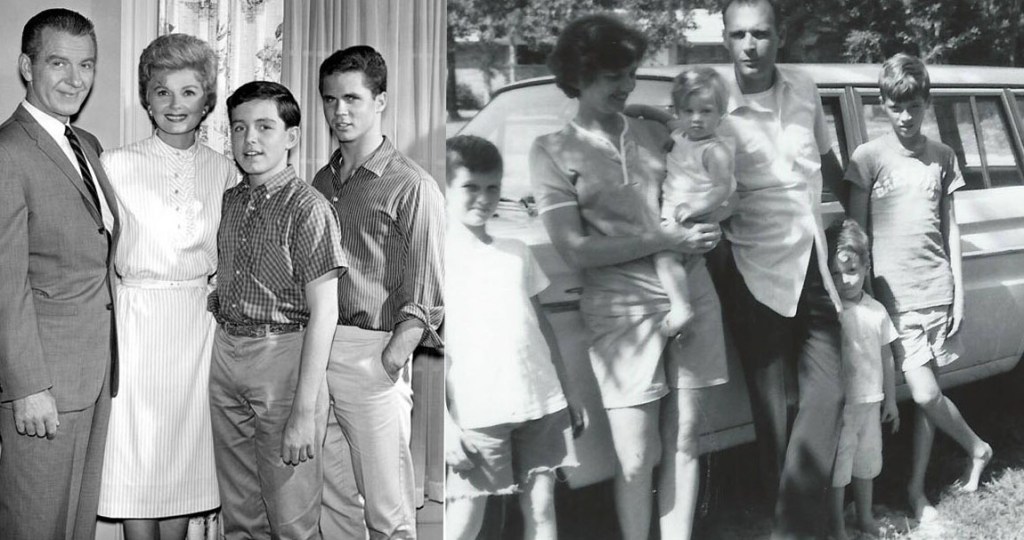
In some ways my childhood homelife
was not unlike the sit-com Cleavers’ –
we lived in a house in the USA with a yard, slept in beds, and ate
          homecooked meals.

On the other hand, my mother didn’t wear pearls
as she dumped overflowing ashtrays
into a pedal-operated plastic receptacle,

my father watching TV, cursing LBJ, baring his tobacco-stained teeth,
much less restrained in the den than Ward in tie and cardigan,
turning the pages of the afternoon newspaper, which happily
          we had in those days.

In fact, Ward and June never watched TV or talked politics.
He never held his boys down, arms pinned, to tickle them
as they laughed hysterically in anguished howls on the floor.

There were apparently no black people where the Cleavers lived,
no juke joints on the edge of town, no bootleg whiskey,
no Wilson Pickett records, no Muddy Waters, no mojo magic.

                               ***

Mr. Cleaver played golf; my father flew airplanes,
performed snap rolls and loops and hammerhead stalls.
On rare occasions I accompanied him in the cockpit.

More often, though, I was down below, neck straining,
calmly watching his daring acrobatics,
like the son of a trapeze artist who knows the act by heart.

It was an expensive hobby, but one well-suited to
an adrenaline junkie, paradoxically
terrified by the thought of undertow dragging him out to sea to drown.

Like the Cleavers, my parents never divorced,
Died, in fact, in the very same bed a decade apart,
Next to a window overlooking our overgrown lawn.

No tombstones bear the Cleavers’ names;
alive and well in reruns, they relive their lives
in thirty-minute arcs resolved with smiles.
Like a tramp choir crying, like a coat made out of lead, ink spilled in water, a bird beating about the cruel wires of a cage . . .
Wesley Moore “What Guilt Feels Like”
O wolves of memory! Immensements!
Philip Larkin, “Sad Steps
Yes, some memories should be locked away In impenetrable safety deposit boxes, The keys thrown away,
Those faux paus of yore, poxes That that have pitted your past. Oh my God, how could you have been so obnoxious?
Better yet, let’s wrap those indiscretions in x-ray aprons and cast Them into oblivion’s untroubled ocean, Chanting like defrocked priests, “What is done is done, what is past is past is past.”





 You Do Hoodoo