Different Sides of the Same Coin

Warren Moise and I experienced similar childhoods in that we grew up as White males in relatively small South Carolina towns in the Fifties and Sixties, both graduating from high schools that were integrated in the 1970-1971 school year.

Here’s a quote from the back cover of Warren’s excellent historical memoir The Class of ’71.[1]

When the Class of ’71 began first grade as young children in 1959, they lived in a totally segregated society. Except for some few prior student transfers and with limited other exceptions, the Black and White members of the Class of ’71 had never met, played music together, gone to church with one another, eaten food at the same lunch counters, or swum together in the same pools. All of that would change on the first day of their senior year. 

In Summerville, South Carolina, where I lived, even physicians’ waiting rooms were segregated into White and Black sections. In fact, Bryan’s, the Black owned barbershop that I patronized, only cut White people’s hair.  John F. Kennedy, Malcom X, Martin Luther King, and Robert Kennedy were assassinated within five years of one another when we were students. A cultural revolution was underway. 

Again, to quote Warren:

Soul music, oxford shirts, and oxblood Wejuns penny loafers were disappearing from the streets of Gamecock City[2]every day, It was as if the 1960s were burning rubber in a Chevelle V-8 Super Sport on Highway 15 South leaving town toward Paxville. At the same moment, the 1970s were rollin’ into town on Highway 15 North inside a Volkswagen van painted with slogans of peace, love, and daisies.

Warren and I met our freshman year in Thornwell dorm the fall of 1971 at the University of South Carolina and became fast friends, deciding to room together in Tenement Nine on the Horseshoe the next year, which we did until Warren left college to pursue a musical career.[3]

Warren and I circa 1972

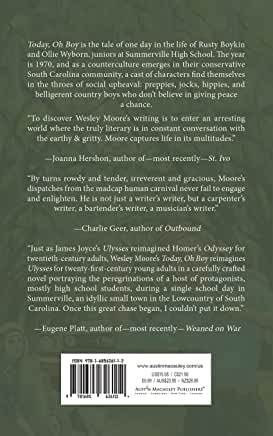
We also shared houses when Warren returned to USC to earn his undergraduate degree in history in 1974 -1976. Unfortunately, we more or less lost contact after school. Oddly enough, fortyish years later we both ended up writing books about being in high school the same year. My novel Today, Oh Boy takes place during the course of one day, October 12, 1970, a month or two after Warren began his senior year at Edmunds high school.[4]

So, The Class of ’71 and Today, Oh Boy cover some of the same terrain, small towns transitioning from the Old to New South, the tumultuous raging of hormones, adolescent crushes, physical violence engendered by culture clashes. 

In my not-all-that-humble opinion, they offer interesting perspectives from non-fictive and fictive landscapes in that pivotal school year that ended the Sixties and ushered in the Seventies.

We better stop
Hey, what’s that sound?
Everybody look, what’s going down?

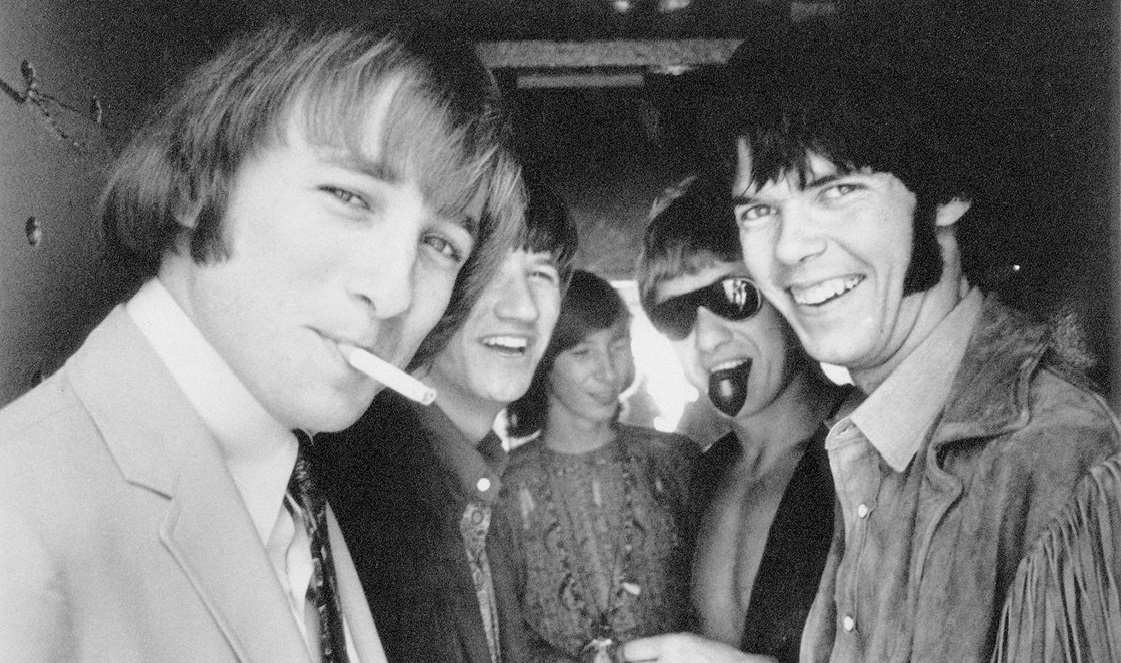
from “For What It’s Worth,” lyrics by Stephen Stills

[1] I don’t know if there’s such a thing as a historical memoir. The Class of ’71 contains multitudes – it’s a history of Sumter County, a coming-of-age story, a judicial and political chronicle of desegregation, a sociological review of the cultural changes of the late Sixties, a profile of serial killer Pee Wee Gaskins. In short, it’s difficult to succinctly classify. Here’s some more expansive. You can purchase the book HERE.  It’s a great read propelled by well-crafted prose. 

[2] I.e., Sumter, South Carolina.

[3] You can read the horror story of the roommate who replaced him HERE BTW, Warren’s musical career was successful. He’s a member of the Beach Music Hall of Fame, though he abandoned life on the road for a career in law.

[4] Actually, I decided to delay Summerville’s integration until the next year, which we novelists have the freedom to do. You can purchase Today, Oh Boy HERE.

A Little Madness in the Spring

A Little Madness in the Spring

I recently ran across a balding fellow, probably in his early forties, wearing a grey too-snug tee-shirt that read “Every Day Is a Good Day.” Of course, I get the subtext: life is miraculous on the cosmic impersonal plane – the nighttime sky, as Hamlet put it, a “brave o’erhanging firmament, [a] majestical roof fretted with golden fire,” not to mention down below “the beauty of the world, the paragon of animals.” We should be thankful for the chain of events that gave rise to a consciousness that allows us to appreciate and contemplate these wonders around us. The subtext of the subtext is that this wonderfulness is the handiwork of a benevolent deity. Every day is a good day because it’s a colorful shard in the ever-shifting kaleidoscope of a creator god’s abracadabra. 

But, as we all know, a day’s goodness or badness depends on an individual’s experience during that 24-hour period. For example, at Chico Feo I just heard a horrific account of a traffic fatality that happened on Folly Beach last night. A car crammed with six drunks doing 65 in a 25-zone barreled into a golf cart driven, as the story was told to me, by a woman who had just gotten married that very day on the island.[1]

So, I might suggest, that the tee shirt’s message be edited: “For me, every day is a good day” instead.

And print this on the back.

A little Madness in the Spring
Is wholesome even for the King,
But God be with the Clown —
Who ponders this tremendous scene —
This whole Experiment of Green —
As if it were his own!

                                    Emily Dickinson


[1] The fellow who related the story said she was in her bridal gown.

Lost Youth, or “I Had Pretty Plumage Once”

Me in 1973 (all photos by James Huff)

Lost Youth, or “I Had Pretty Plumage Once”

And I though never of Ledaean kind

Had pretty plumage once—enough of that,

Better to smile on all that smile, and show

There is a comfortable kind of old scarecrow.

                                                                        WB Yeats, “Among School Children”

Poverty is not all that terrible if you’re in college. After all, most students live in dormitories, and for my first two years of undergraduate school, the dorms I lived in were officially known as “The Tenements,” the oldest dorms on campus, picturesque but Spartan. And when I say Spartan, I mean tres austère –  no air-conditioning in the summer; hand-searing radiators in the winter; merely two telephones in the hall, one for on campus communication, the other a pay phone you had to feed quarters during long distance calls. And perhaps the worst indignity of all, there were no stalls around the three toilets lined up in the flashback-inducing black-and-white diamond-tiled bathroom. Whenever nature called, the residents of Tenement 9 shielded themselves with open newspapers to create a modicum of privacy. No one, conversed, i.e., no one shot the shit while shitting.

OMG! TMI!

Even though I couldn’t afford it, I moved off-campus my junior year, and after a couple of nightmare rentals in the fall and winter of my senior year, my housemate Warren Moise, along with a host of other impoverished students, moved into the once genteel abode of 1830 Greene Street conveniently located on campus.[1] I’m fairly certain than none of us owned an automobile. SLED paid a visit our first week, and half the residents were carted off to jail for simple possession. Luckily, Warren, Jim, and I were off when police came a calling.

1830 Greene Street

Interestingly enough – and least for me – I had lunch with my Greene-Street housemate Warren Thursday and then encountered another Greene-Street housemate that afternoon when I was signing copies of my novel Today, Oh Boy in Summerville.[2] I hadn’t seen Jim Huff or his wife Jane in this century – in fact, not since the late 80s or early 90s. Jim had been lease-signer of 1830 Greene and therefore collected our $20 rent each month (there were eight of us) and utility money and money to buy kerosine for the enormous furnace that consumed fuel as rapidly as RJ McCarthy downed his 24-ounce cans of “the Bull,” aka Schlitz Malt Liquor. Every room except for the kitchen and the two bathrooms was utilized as a bedroom, including the living room and the conservatory where I slept, only assessable through Mr. McCarthy’s room. 

Hail, affordable housing; farewell, privacy.

Jim Huff circa 1975

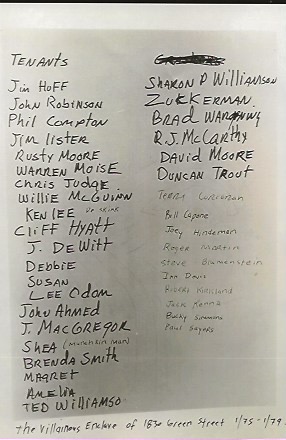
Here’s a list Jim compiled of the house’s residents, including girlfriends who spent multiple nights.

At the signing in Summerville, Jim gave me some photographs he had taken back in the day, which I so much appreciate. They demonstrate quite eloquently that whatever I may have gained in monetary wealth, I have equaled in girth, but lost in hair.

Anyway, it was great seeing Warren, Jim, and Jane, though I must admit that the photos have engendered a wee bit of melancholy.

Ah, no; the years O!

And the rotten rose is ript from the wall.[3]


[1] If you’re in the mood for some Night of the Hunter noir, click HERE and read about a couple of harrowing experiences we suffered before moving to Greene Street.

[2] Get ’em while they’re hot. LINK.

[3] You can read the rest of the poem here. LINK.

My Novel “Today, Oh Boy” IS Out Today, Oh Boy!

Fourteen months after its acceptance, my novel Today, Oh Boy is out and available at

Buxton Books

Barnes and Noble: LINK

Amazon paperback: LINK*

Amazon ebook: LINK

Coming soon to Guerin’s Pharmacy in Summerville and Bert’s Market on Folly Beach


Upcoming Events:

Book Launch at Buxton Books


Reading and signing from 6:30-7:30 p.m. near Hutchinson Square during Third Thursday on Apr. 20 (featuring music by Fleming Moore).

Reading and signing at Porter-Gaud School April 29th from 5:00 – 6:00 PM


Media

Story in the Charleston City Paper by Bill Thompson LINK

Interview with Eugene Platt in The Post and Courier LINK

Interview with Mary Reagan in the Summerville Journal Scene LINK

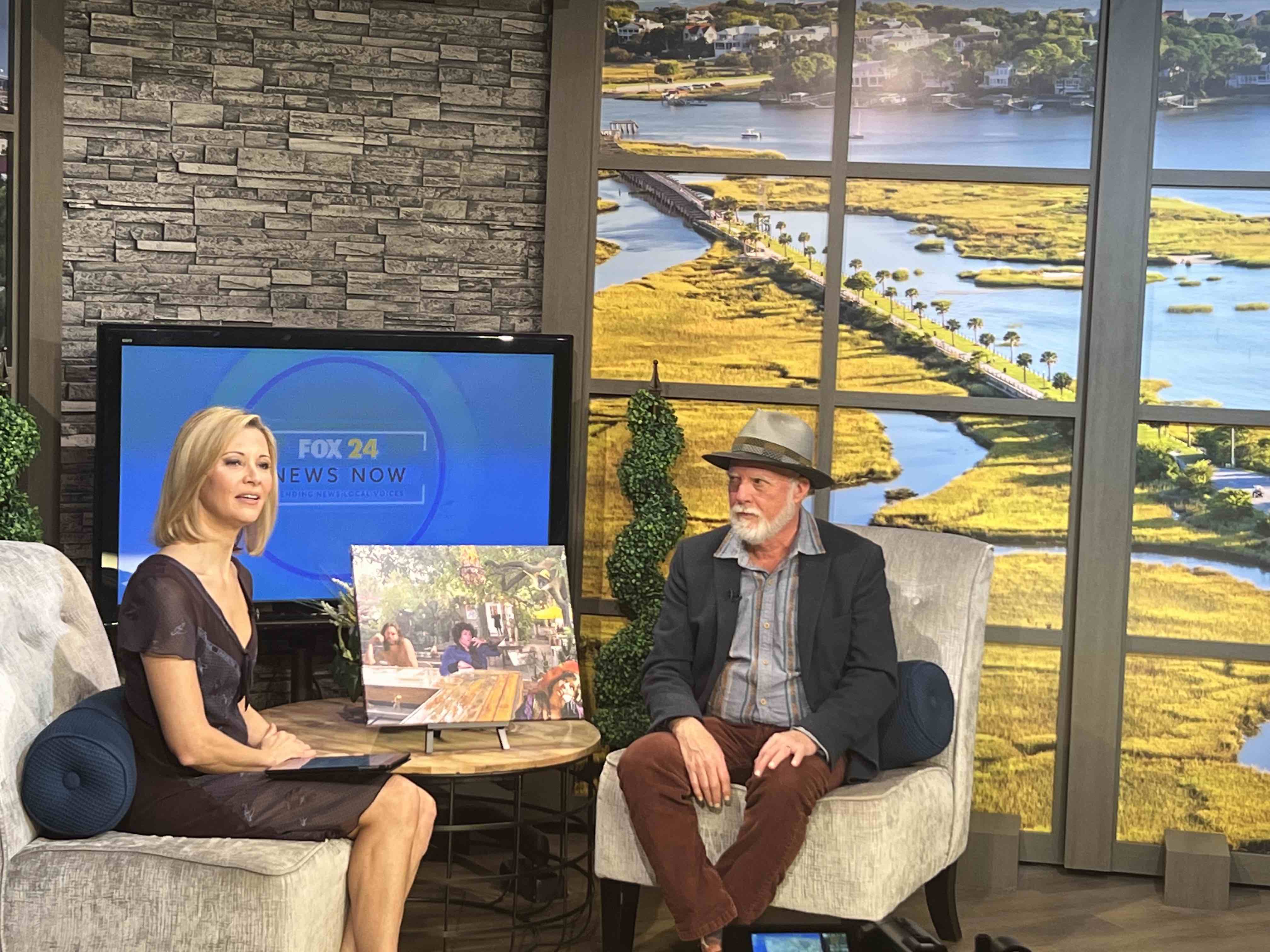
Television interview with Leyla Gulen. Click Below

Get ’em while they’re hot!


*Note, the back cover is displayed on Amazon’s paperback link:

Late Life Hullabaloo

I’ve written on Hoodoo previously that I don’t blame young people for holding golden-agers, i.e., senior-citizens, i.e., their elders, i.e., old farts in contempt as we shuffle along taking tiny steps, fumbling for our checkbooks while striking up conversations with grocery store clerks, or poke along doing 45 in passing lanes, oblivious to the hustle and bustle of Late Empire capitalism.

Even I-and-I, a forgetful 70-year-old, have been known to disparage my fellow geriatrics when their egocentricity (or declining faculties) don’t take in account the needs of others. No doubt I get on young people’s nerves myself, an overly dressed gadfly Oscar Wilde wannabe nodding my head and droning on about myself on barstools and in dentist offices.

Yet here I am in my twilight the author of a little ol’ bagatelle of a YA novel written on a 12th-grade-plus reading level, and I’m shamelessly promoting it as if it’s the great American novel.  Three newspaper articles have appeared that focus on my late life productivity[1], and I’ve also appeared on midday local television program talking about me, me, me, not exactly a fascinating subject.

Ultimately, it’s much ado about not much.

Yet it does give me something to do and to dread.

My sons and their significant others are coming to the book launch[2] (Harrison and Taryn from Chevy Chase, Ned and Ina from Nuremburg), Old and new friends will be there. Eugene Platt, who has recently published his collected poems Weaned on War will introduce me, an honor for sure. I see the launch as a sort of funeral I get to enjoy before I die.

However, I do want to set it down here that I’m a little ashamed of myself for all this hullabaloo. There’s something a little tawdry about it, a little needy. 

Rather, I should 

like a laughing string

Whereon mad fingers play

Amid a place of stone,

Be secret and exult

or better yet, as the young people say STFU.

Cheers!


[1] I’m also, to use a polite term, a digital collagist.

[2]Buxton Books, 120 King Street, 11 April 2023 6 PM rsvp@buxtonbooks.com

Southern Gothic Surveillance Meets Two Deadly Sins

Darkness has Crept in at Midnight by James Christopher Hills

The Alex Murdaugh murder conviction saddens me, not because I think he’s innocent, but because I didn’t want it to be true, didn’t want to believe that the Sophoclean shit show the prosecution posited could be real, that a father could premeditatively gun down his son, splattering his brains, then utilizie a different weapon to gun down the mother of that son, shooting her five times, the final shot to the head.

[Cue Kurtz: the horror, the horror.]

I was chatting with a stranger at the bar at Chico Feo yesterday afternoon about the trial and about the ubiquity of surveillance. I mentioned that Siri, Apple’s arbitress[1] of data, sang like – if not a canary – like a soulless automaton out of Orwell, providing law enforcement with information about how many steps Alex had taken, how fast he was walking before and after the event. The black box of his Suburban also ratted him out, digitally informing SLED that his SUV had hit seventy on the bumpy dirt road on his way to the house of his Alzheimer’s ridden Mama in the dark of a night as black as any in Southern gothic literature. 

It out Faulkners Faulkner.

The stranger had his own story about super-surveillance. I didn’t know this, but there are magnetic (for lack of a better word) homing devices that you can affix to someone’s car and track its movements just like they did in the Bond movie Goldfinger.

He had purchased several and affixed one to his then girlfriend’s car because he correctly feared that she was cheating on him. On the last day of their relationship, he drove to where her car was parked, discovered her as she was leaving an apartment complex, and thanked her for showing him what kind of person she really was. 

Happily, no shots were fired. Even, at least in his telling, the recrimination was mild-mannered.

Anyway, in this case, even if his girlfriend didn’t possess a cellphone and drove an early model computerless automobile, she still would have been busted.

Let’s face it, Big Brother’s corporate siblings, his little brothers, our cell phones, automobiles, etc. are watching us, and we pay them to. Could the knowledge our every move is monitored move us to emend our sinful ways. After all, if we don’t slaughter our families, cheat on our lovers, or binge watch Monkees videos, we have nothing to worry about.


[1] Even though I consider myself “woke,” I like the sound of feminine suffixes, and, on another topic, realize that the personality that is Siri is not an employee but merely a voice strung together with ones and zeroes. 

If my grandmother hadn’t been diagnosed with terminal throat cancer at the age of 42, you wouldn’t be reading this sentence.

You’re writing your autobiography. What’s your opening sentence?

T. Coraghessan Boyle and Me

When prepping for my trip to “the Hostess City of the South” to hear T. Coraghessan Boyle read at the Savannah Book Festival, I searched high and low (literally) for my copy of his short story collection Greasy Lake to get him to autograph it. Oh, I own probably two-thirds of the thirty-one books he has published, but I especially wanted his signature on Greasy Lake because it is stained with my blood, now a brown smear after thirty-eight years of residence on page whatever. 

It had been in my hand when I stood up in the back of a pick-up truck to tell the driver Larry Howland he needed to turn right, which he did suddenly, catapulting me Buster-Keaton-style out of bed of the pickup onto the hard pavement of Folly Beach’s Ashley Avenue.[1] When I stumbled to my feet, I was bleeding from my head and right hand. I must have picked the book off the pavement, thus the blood stain. Anyway, I couldn’t find Greasy Lake anywhere, not in my drafty garret, nor in the book-choked guest room where I keep my valuable volumes, like the one pictured below.

So, I took Water Music instead, Boyle’s first novel and a first edition to boot, probably a felicitous turn of luck for the heirs of the Moore Living Trust given that it will likely fetch a better price at the upcoming the estate sale, whenever that is – let’s hope not soon.

Anyway, I’m a huge fan, especially of his early short stories, manic riffs like this first paragraph from “Green Hell,” a parody of all those movies involving plane crashes and jungles:

There has been a collision (with birds, black flocks of them), an announcement from the pilot’s cabin, a moment of abeyed hysteria, and then a downward rush. The plane is nosing for the ground at 45-degree angle. Engines wheezing, spewing smoke and feathers. Lights flash,  breathing apparatus drops and dangles. Our drinks become lariats, the glasses knives. Lunch (chicken croquettes, gravy, reconstituted potatoes, and imitation cranberry sauce) decorates our shirts and vests. Outside there is the shriek of the air over the wings; inside, the rock-dust rumble of grinding teeth, molar on molar. My face seems to be slipping over my head like a rubber mask. And then, horribly, the first trees become visible beyond the windows. We gasp once and then we’re down, skidding through the greenery, jolted from our seats, panicked, repentant, savage. Windows strain and pop like light bulbs. We lose our bowels. The plane grates through the trees, the shriek of branches like the keen of harpies along the fuselage, our bodies jarred, dashed and knocked like silver balls in a pinball machine, And then suddenly it’s over; we are stopped (think of a high diver meeting the board on the way down). I expect (have expected) flames.[2]

Boyle might resent this comparison, but his early stories remind me of the early Woody Allen movies, inventive, farcical, satiric, hilarious.

Here’s one last example from “The Big Garage,” an homage to Kafka, where the protagonist B. fills out an application to get an appointment to repair his Audi that has been towed to a Kastle-like nightmarish auto repair establishment:

B. Takes a seat beside the Cougar women and stares down at the form in his hand as if it were a loaded .44. He is dazed, still tingling from the vehemence of the secretary’s attack. The form is seven pages long. There are questions about employment, annual income, collateral, next of kin. Page 4 is devoted to physical inquiries: ever had measles? leprosy? irregularity? The next delves deeper: do feel people are out to get you? why do you hate your father? The form ends up with two pages of IQ stuff: if a farmer has 200 acres and devotes 1/16 of his land to soybeans, 5/8 to corn a 1/3 to sugar beets, how much does he have left for a drive-in movie? B. glances over at the Cougar woman. Her lower lip is thrust forward, a blackened stub of pencil twists in her fingers, an appointment form, scrawled over in pencil with circled red corrections, lies in her lap.

The Savannah reading, which was well attended, took place in a Lutheran church. Caroline and I had good seats/pews, but because of the acoustics of the church or the PA system or most likely my defective hearing, I had a hard time making out much of what he was reading, which I could tell was a fine performance, complete with acted out voices from several characters and emphatic gesturing.

Afterwards, we strode over to a square a block away where tents were set up for signings. We were about fourth in line, and once we shook hands, I mentioned that I used to teach “The Big Garage,” and as it turned out a student of his had made a film from it.[3] We had, what I would call a meaningful conversation. He said he really enjoys channeling disturbed male characters like in the story he had just read “because we’re all such saints.”[4]

Caroline asked if he minded if she took our photo, and he smilingly consented. And here we are, I gazing up like a beaming schoolchild in the presence of Micky Mantle.


[1] It’s one thing to trick fate, but to trick natural selection is especially gratifying. Although, to be truthful, I had already procreated, my older son Harrison being just over a year old and my younger son Ned at the time nestled in utero inside of luckily not-to-be-widowed-at-31 Judy Birdsong.

BTW, I have immortalized Larry, who in his fifties changed his name to Buck, with this BALLAD.

[2] I’ve always been a sucker for razzmatazz prose, like this sentence from James Wolcott: “An orange Elvis squirted from a can of Cheez Whiz, the Trump of The Apprentice bent the distortion field of Reality TV until it fit him like a girdle.”

[3] Here’s a link. Tap on media and look under the column FILM.

[4] From an interview: “Some writers just write about their own lives. Well, I don’t want to do that. I want to have a really boring life. A quiet, boring life so no one wants to write a biography. I’m the only writer in history only to have one wife, for instance.

The Hyper Southern Gothic Murdaugh Saga

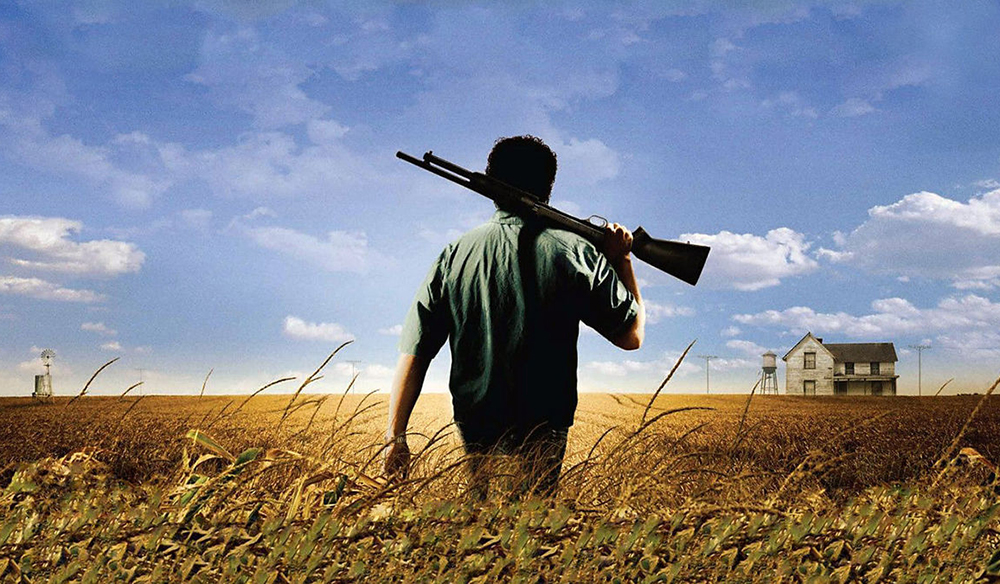
image via The Beat who copped it from Shotgun Stories

The Hyper Southern Gothic Murdaugh Saga


coming soon to a drive-in theater near you


Boating under the influence, 
involuntary manslaughter
				way down south 
					in the godforsaken backwater
							of Colleton Country, South Carolina,
				we have, 
					in addition to addiction, a double homicide –
										alleged filicide – 
	mother and son dispatched 
	via assault weapon and shotgun,
				a botched faux murder/staged suicide, 
						and earlier, in the abode of the accused,
							a housekeeper tumbling 
								down steps to her death.
								.
		
		Did I mention 
		insurance theft, 
		crystal meth, 
		financial skullduggery,
		abandoned mills,
		prescription pills?


It's as if William Faulkner 
and Flannery O'Connor
joined forces with 
Harold Robbins. 

Add an ebon dash
of E.A. Poe
and presto:
you got the hyper Southern Gothic Murdaugh saga.