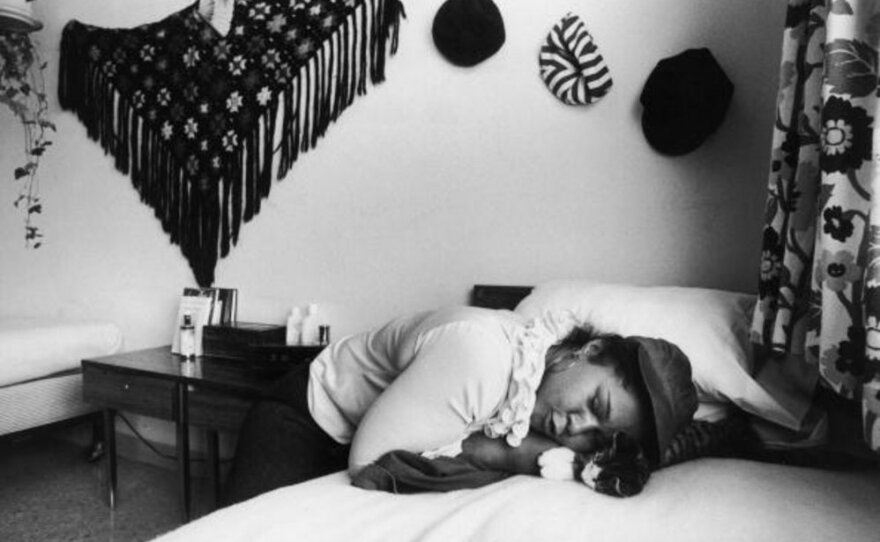
A veteran who has interviewed over 800 authors, Rodger is a real pro. I’m fortune to have had the opportunity to discuss my novel “Today, Oh Boy” with him.
non-fiction
The Age of Miracles Rambling Redux Blues

Years ago I saw Barbara Walters interview Jack Nicholson on one of her specials. The British actor Hugh Grant had just been busted for solicitation, so Barbara asked Jack why someone as goodlooking and famous and rich as Hugh Grant would require the services of prostitutes.
Jack donned his patented devilish grin and said, “Peculiarities. Peculiarities.”
Which brings us to Louis CK.
I first caught Louis on the Letterman Show back in the days of VCRs when I prerecorded Dave for civilized midmorning viewing. If I remember correctly, Louis didn’t do standup that night but walked over and took a seat next to Dave. Louis started riffing on the entitlement of whiny airline passengers who carp about minor inconveniences while soaring o’er the plains of Nebraska where wagon trains once rambled through “Injun” territory in months-long treks.
“You’re sitting in a seat in the air, for Christsakes!”
[c.f. Cormac McCarthy’s Blood Meridian.]

Earlier this evening, perched on a barstool at Chico Feo, I almost texted my wife Caroline, who is in New York City, to complain that my boredom was approaching John Berryman red alert levels:
Dream Song 14
Life, friends, is boring. We must not say so.
After all, the sky flashes, the great sea yearns,
we ourselves flash and yearn,
and moreover my mother told me as a boy
(repeatedly) ‘Ever to confess you’re bored
means you have no
Inner Resources.’ I conclude now I have no
inner resources, because I am heavy bored.
Peoples bore me,
literature bores me, especially great literature,
Henry bores me, with his plights & gripes
as bad as achilles,
Who loves people and valiant art, which bores me.
And the tranquil hills, and gin, look like a drag
and somehow a dog
has taken itself and its tail considerably away
into mountains or sea or sky, leaving
behind: me, wag.
John Berryman
But I didn’t want to darkcloud any fun Caroline was having, and anyway, I got into a conversation with a travelling nurse named Elise who is doing preop duty for a couple of months at Roper Hospital where my late wife Judy Birdsong stayed every other two weeks getting 96 hours of continuous chemo during the first stint of her cancer. Yet, the thing is, I don’t have a negative feeling about Roper. I told Elise how I had come to appreciate the nurses there. They were absolutely wonderful. They knew/know life from a perspective of pain. They are brothers and sisters of mercy.
I asked her what she was reading. She said she didn’t enjoy reading, had never enjoyed reading, that she would rather “watch things,” so of course I told her I was novelist, which elicited headshaking and a rueful chuckle.
We continued to make small talk. I asked her superficial questions about her life, thinking I might create a character like her for a minor role in some future fiction, maybe a confidant. I appreciated her forthrightness.[1]
On my walk home, Bob Dylan’s “Just Like Tom Thumbs Blues” got stuck in my head, so I started singing it, walking along singing, checking out the afternoon’s fading, shimmering, almost nervous sunlight. When I-and-I am afflicted by these songs looping in my head, the only cure is to listen to the song as a form of exorcism.
Like Louis CK’s disgruntled flier, I had forgotten that I live in an age of miracles. Now I am sitting in front of my computer listening to Bob sing “Tom Thumb’s Blues” and reading the lyrics against the static background of the iconic Highway 61 Revisited album cover that – look – I’ve conjured from a Cloud and presented below.
But now I realize that for fifty years I have misheard the lyrics. For example, the first line isn’t “When you’re down in Wallace”; it’s “When you’re down in Juarez,” which makes a lot more since given that “Sweet Melinda speaks good English” and “the authorities just sit around and boasts.” In other words, the song is about being down and out in Mexico. I also mistook “Rue Morgue Avenue” for “Remark Avenue,” which I sort of like better. My favorite line from the song is “Well, I started off on burgundy but soon hit the harder stuff,” which I always thought was “hardest,” which definitely would be better, going from burgundy to heroin, instead of going from burgundy to Jim Beam.
Anyway, I’ve exiled my boredom to an ice floe in Antarctica. “It’s all good,” as the young people say after you’ve bumped into them and apologized.
[1] “Forthrightfulness” ought to be a word.
Functional Allusions
I’ve always been a big fan of allusions because they infuse whatever the writer is conveying with even more meaning, offering subtext or cross references that deepen. If you don’t pick up on the references, no harm done. If you do, God is in his heaven, and all’s right with the world.[1]
Here’s what I’m talking about: in the Richard Wilbur ‘s poem “A Late Aubade,” the speaker is trying to talk his lover into cutting class so they can continue to lie in bed in what I’m assuming is an interlude between another session of lovemaking.
Here’s, as the vulgar say, the money shot:
It’s almost noon, you say? If so,
Time flies, and I need not rehearse
The rosebuds-theme of centuries of verse.
If you must go,Wait for a while, then slip downstairs
And bring us up some chilled white wine,
And some blue cheese, and crackers, and some fine
Ruddy-skinned pears.
Rehearse, as in re-hearse, as in death mobiles, black limousines, but then – BAM – the allusion to Robert Herrick’s, “To the Virgins to Make Much of Time”:
Gather ye rosebuds while ye may,
Old Time is still a-flying;
And this same flower that smiles today
Tomorrow will be dying.
Carpe Diem!
Or, as Andrew Marvell put it:
The grave’s a fine and private place,
But none, I think, do there embrace.
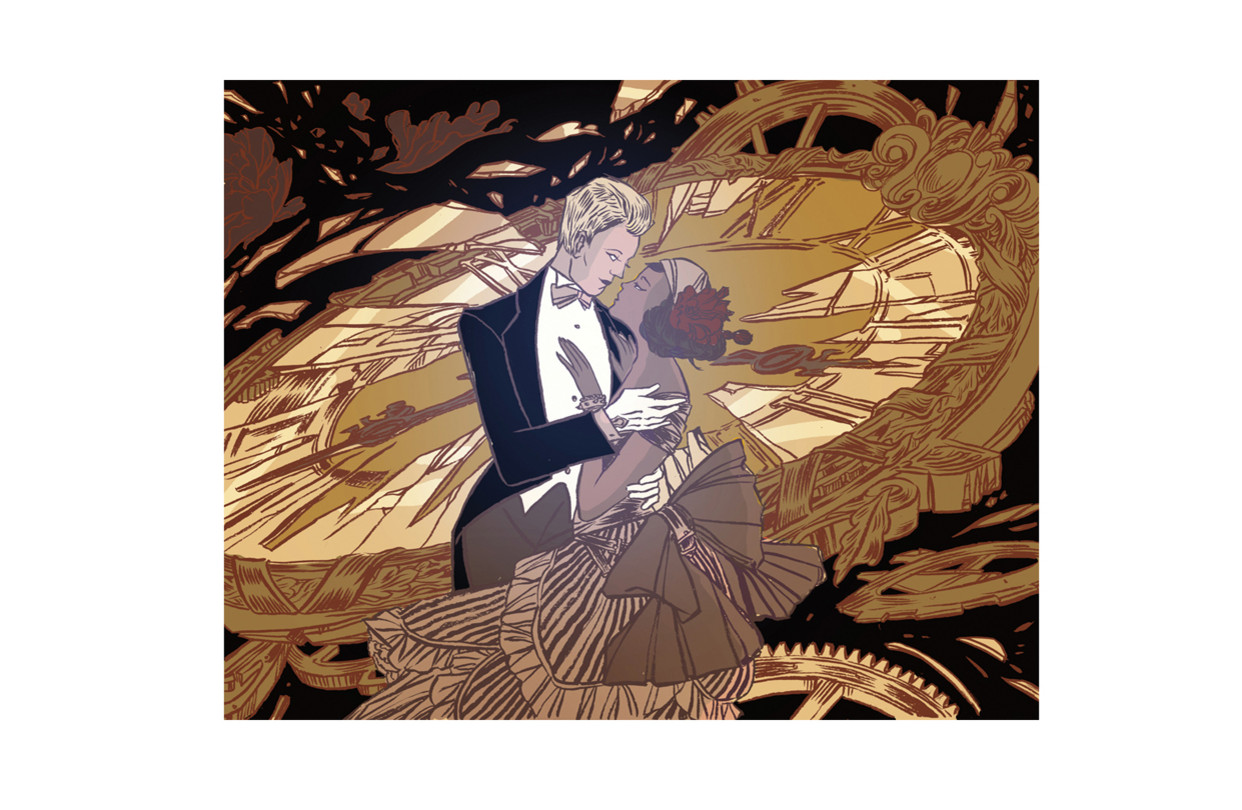
ILLUSTRATION: YAO XIAO
[1] BTW, I wish I did, but I don’t believe in anthropomorphic Semitic deities. “God is in his heaven” is an allusion, albeit an ironic one, to the Victorian poet Robert Browning.
Episode 3 of “My Boys Were Back in Town, Backroads Edition Featuring Joel Chandler Harris
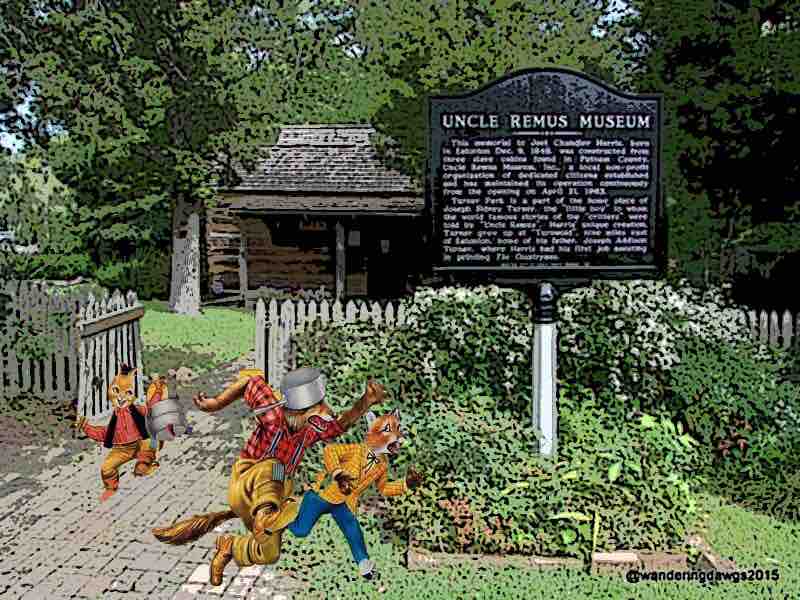
Episode 3 – Eatonton’s Rural Literary Legacy
[In episode 2, My ex-pat son Ned and I wended our way through backroads headed to Reynolds, formally known as Reynolds Plantation, just outside of Greensboro, Georgia, to reunite with his Aunt Becky at Uncle Dave].
Around four-thirty on Thursday, Ned and I arrived at Reynolds where we negotiated the security gate rigamarole. At the house, Becky and Dave greeted us warmly, plied us with drinks after our long (well, six hour) journey, and we did some catching up. It turns out that Becky and Dave had recently suffered a hair-raising flight from New Jersey to Atlanta, the inside of the plane perpetually rocked by turbulence for the entire time they were airborne. As she was exiting the plane, Becky found it especially disconcerting to see the pilot and copilot exchanging high fives. She informed Ned if she were going to visit him in Nuremberg, she was likely to take an ocean liner.
On Friday, Dave, who is overseeing the construction of one of the houses his son Scott is building in Reynolds, headed off to work, and Becky drove Ned and me to Eatonton so we could check out the Georgia Writer’s Museum, home of the Georgia Writer’s Hall of Fame.
Eatonton is a lovely, sleepy verdant town that reminds me of the Summerville of my youth. It seems like a pleasant place to retire, that is, if you’re not a Folly Beach hedonist hellbent on cha-cha-cha-ing yourself to death.
The museum itself, located in a coffeeshop, struck me as the literary equivalent of a science fair, consisted of tables lined up with poster board information. Eatonton and its environs have produced a remarkable number of noteworthy writers including Alice Walker, Jean Toomer of Harlem Renaissance fame, and Joel Chandler Harris, who adapted African folk tales in book form, creating the Uncle Remus stories. Milledgeville, the home of Flannery O’Connor, is a mere twenty miles south.

The museum houses both Joel Chandler Harris’s and Flannery O’Connor’s typewriters, plus an exhibit delineating the evolution of machines of writing, starting with primitive typewriters and ending with a progression of computers getting smaller and sleeker through the decades.

As I slowly strolled along the exhibits, The fact that Joel Chandler Harris had been born in the Barnes Inn and Tavern caught my eye. Being born in a tavern seemed odd, colorful, so I read on.
Here’s a short version of his life:
The year of his birth is uncertain, either 1845 or 1848. His mother Mary, an Irish immigrant who worked at the inn, was impregnated by a cad who abandoned his infant son and Mary. She named the baby Joel Chandler Harris after her attending physician.
Of course, illegitimacy, as it was called in my youth, was especially problematic in the antebellum South.[1] In addition to that disadvantage, Joel was redheaded and stammered, which made him a target for bullies.[2] The stigma of his “lowly” birth haunted him throughout his youth and early adulthood.
Fortunately, Dr. Andrew Reid, a prominent Eatonton physician, provided Mary and Joel with a small house behind his mansion. He also paid for Joel’s tuition (in those days public education didn’t exist in the South). Mother Mary fostered Joel’s future literary prowess by reading to him out loud, which helped him to develop the remarkable memory he would utilize in assembling the Uncle Remus tales. She read him Goldsmith’s The Vicar of Wakefield so often that he could recite lengthy passages by heart.
At fourteen, Harris dropped out of school and went to work for a newspaper, Joseph Addison Turner’s The Countrymanwith a circulation around 2,000. There Harris mastered the basics, including typesetting. Addison allowed Harris to publish his own stories and poems. Eventually, Harris moved into Turnwold Plantation, Addison’s home, located nine miles outside of Eatonton. Here Harris had access to a voluminous library and where he began devouring the classics and contemporary authors such as Dickens, Thackery, and Poe.
At Turnwold, Harris spent hundreds of hours in the slave quarters. Wikipedia claims that Harris’s “humble background as an illegitimate, red-headed son of an Irish immigrant helped foster an intimate connection with the slaves. He absorbed the stories, language, and inflections of people like Uncle George Terrell, Old Harbert, and Aunt Crissy,” who in amalgam became the narrator of the Brer Rabbit Tales, Uncle Remus.
I was unfamiliar with Harris’s biography, but what strikes me as truly remarkable is that he replicated these stories in dialect without any written sources. He essentially gave voice to and preserved these tales that had been stored in the brains of Africans, transported across the Atlantic in slave ships, and told and retold in slave cabins throughout dark nights of captivity.
Because of the Disney movie, Song of the South, Harris has been tarred (pun intended) as being a racist, which is unfortunate. What Harris did was preserve a rich trove of folklore featuring an African trickster who used his wiles to outfox foxes, tales where the underdog prevails. Of course, you can accuse Harris of cultural appropriation, but to my mind, the dialect enriches the tales, making them much more linguistically interesting.
After the war, Harris moved up in the world of journalism, working at the Atlanta Constitution for nearly a quarter century, and addition to the Remus tales, he published novels, short stories, and humorous pieces. Luminaries such as Theodore Roosevelt and Mark Twain were among his admirers. Alas, he was an alcoholic, and died from complications from cirrhosis of the liver at 59.
After our visit to the museum, Becky gave us a driving tour of the area, which includes a dilapidated chapel where Alice Walker’s ancestors are buried. We arrived back at Reynolds in the early afternoon, looking forward to Cousin Scott’s arrival the next day. At the museum, Ned had bought me Jean Toomer’s Cane, a literary mosaic of poems and short stories that brings to life a subculture, which reminds me of my work-in-progress Long Ago Last Summer, an up close and personal exploration of real life Sothern Gothic.
In short, it was a very meaningful morning and afternoon for Ned and me.
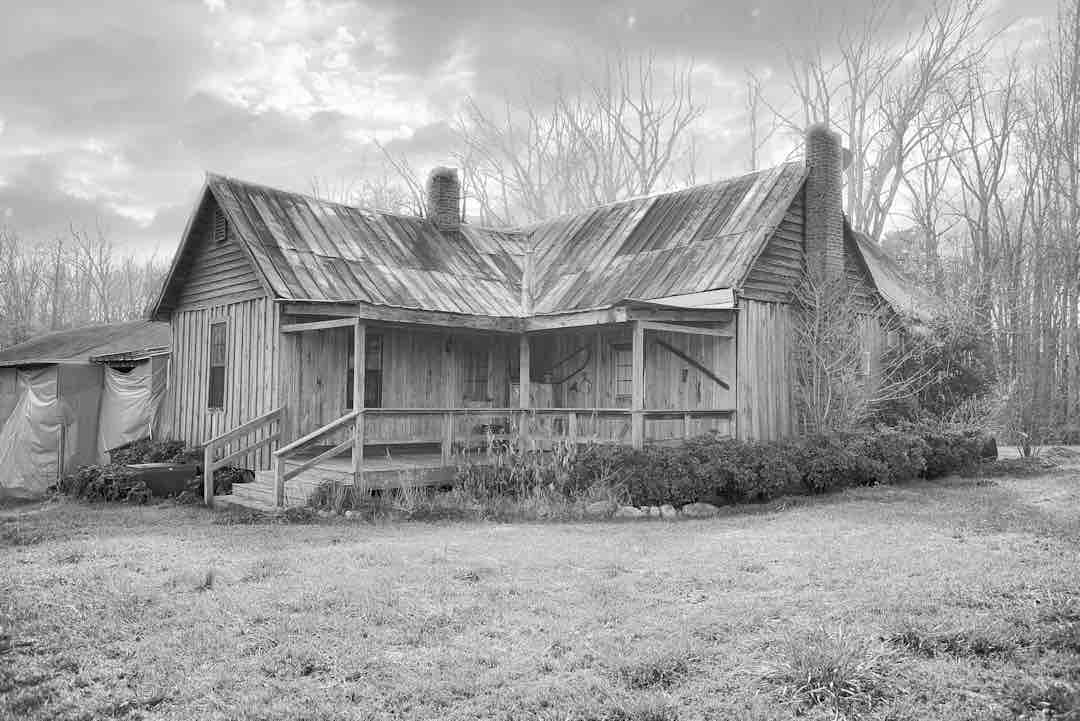
Alice Walker’s Childhood Home around 1910
[1] Of course, “bastard” was the preferred 19th Century nomenclature.
[2] As a former redhead, I can emphasize. If interested, check this LINK out.
My Boys Are Back in Town, Episode 2: Blind Willie’s Gravesite

EPISODE 1 of “My Boys Are Back in Town: Joel Chandler Harris Backroads Edition” ended with my son Ned, who lives in Germany, and I-and-I embarking on a backroads trip to northern Georgia. It was Ned’s idea to see his mother’s sister Becky and her husband Dave during Ned’s two weeks in the States, and I volunteered to come along. My sister-in-law Becky is a Birdsong, and growing up, my boys were much closer to the Birdsongs than the Moores. The Birdsongs resembled the Brady Bunch, a prosperous blended family of non-smokers and non-alcoholics/drug addicts. The Moores, on the other hand, more or less resembled a mashup of the Addams Family and Tennessee Williams. For example, Becky had never vomited on Ned in a station wagon after picking her up from a halfway house to celebrate Christmas in dysfunctional Snopesville. Alas, the same can’t be said of his chain-smoking bipolar Aunt Virginia.
As a bonus, when Becky and Dave’s son Scott heard we were coming, he decided to drive over from Atlanta to share the weekend with us.
With my bonus daughter Brooks in school, she and my wife Caroline couldn’t make the trip. Caroline, cognizant of Ned and my spaciness, made sure were had packed the essentials – tangles of electronic chargers, sufficient socks and underwear, gifts for the hosts, and a cooler of various malted beverages.
We took off on Thursday morning around ten, but there was a problem: when I punched Google maps, my phone informed me that I was not connected to the internet. Since Ned’s German phone was dataless, we turned around and retraced the block or two we had traveled on Hudson Avenue, Folly Beach, SC. I climbed the stairs to my wifi-rich drafty garret to troubleshoot. No sooner than I had fired up the iMac, Ned called from below, “It’s ATT, dad. ATT’s down.” So I retrieved a venerable relic of a roadmap, and we were off.
Caroline and I had made this trip a couple of years earlier when I had introduced her to Becky and Dave, so I was somewhat familiar with the first leg of that took us to the fringes of Walterboro. On the previous trip, Caroline and I had made a pilgrimage to Blind Willie McTell’s grave outside of Thomson, Georgia, and headed back towards the Savannah River, Caroline caught sight of a truly weird roadside attraction, a junkyard turned art installation that included a crashed helicopter and a sexy mannikin in a telephone booth[1]. Ned was eager to see it in person and share it with his friend Claudia, who is a prominent German artist.

This is what had caught Caroline’s eye
We headed down 17 South and stopped in the Red Top community to fill Caroline’s Prius with the cheapest gas in South Carolina. We were about a mile or so from Ned’s first childhood home in Rantowles, so we made a brief detour, noted the changes (or at least I did; Ned was yet not walking when we moved to the Isle of Palms). I noticed that the shrubs Judy and I had planted were still going strong, had, in fact, outlived her. Her ghost accompanied us throughout the trip, a pleasant though somewhat melancholy companion.
At Jacksonboro, right past the now defunct Edisto Motel Restaurant, which had in the day conjured the best fried seafood I’ve ever eaten, we took highway 64 West towards the heart of murderous Murdaugh country, Colleton County. That’s where we discovered that ATT was back, and we need no longer rely on yesteryear’s technology to get us to Allendale, before we crossed the Savannah River into Georgia.
Allendale is a lovely word, harkens back to Merry Old England, Robinhood and all that jazz, but the city nowadays is a decaying corpselike town of abandoned motels, convenience stores, and restaurants.[2] Ned has perhaps inherited from the Moore side of his genetic heritage a morbid sensibility. Rather than getting the hell out of there, we tooled slowly, taking it all in, taking what used to be called photographs.

We decided to visit Blind Willie’s grave on this trip, and the art installation on the way back, since we had left late because of the ATT snafu.
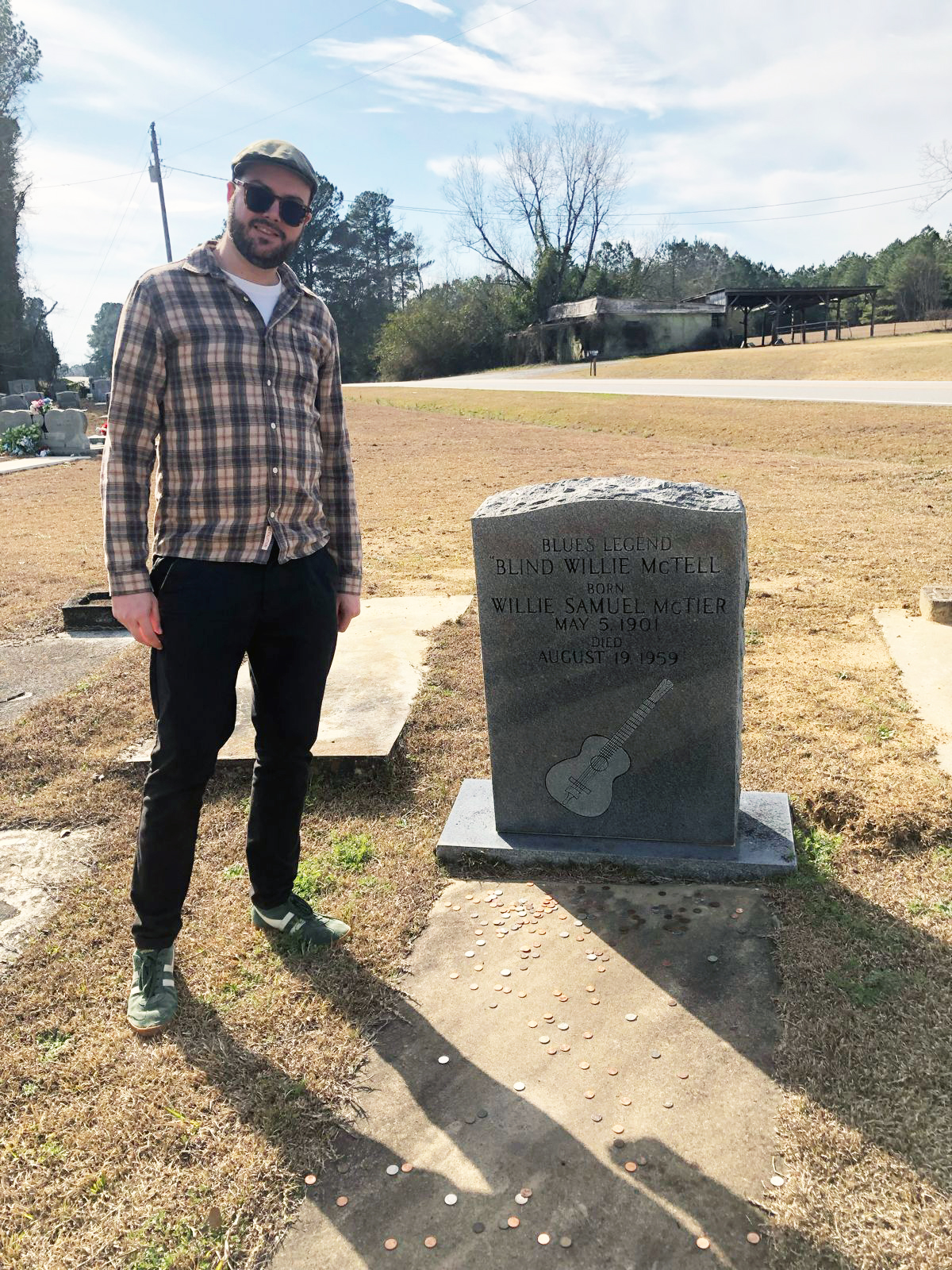
The grave is located in the yard of a small, red-bricked Baptist Church outside of Thomson. By the way, not only was Blind Willie a great bluesman, but he’s also the eponymous source of one of Dylan’s underappreciated masterpieces.
Here’s a snippet from “Blind Willie McTell”:
See them big plantations burning
Hear the cracking of the whips
Smell that sweet magnolia blooming
See the ghosts of slavery ships
I can hear them tribes a moaning
Hear that undertaker’s bell
And I know no one can sing the blues
Like Blind Willie McTell
Ned and stood by the grave, Ned tossed some German Euros on the slab, and with that mission accomplished, we made our way to Becky and Dave’s.[3]
In the next episode, Becky introduces us to the Georgia Writer’s Hall of Fame in Eatonton where I learn some stuff and Ned buys me a book after I buy Becky a book.
Now that’s what I call a “cliffhanger” or maybe a “coat hanger.”
Here’s Dylan himself singing the above-quoted verse:
[1] Here’s a LINK if interested.
[2] It makes the Trenchtown of the Jimmy Cliff’s The Harder They Fall look like Beverly Hills. It’s the opposite of Reynolds, where Becky and Dave live, a picturesque golf community of rolling hills and million dollar houses on and adjacent to Lake Oconee.
[3] Note to those who read episode 1. No, we didn’t pick up a blind hitchhiker, complete with red-tipped white cane. Never trust a teaser.
My Boys Are Back in Town: Joel Chandler Harris Backroads Edition
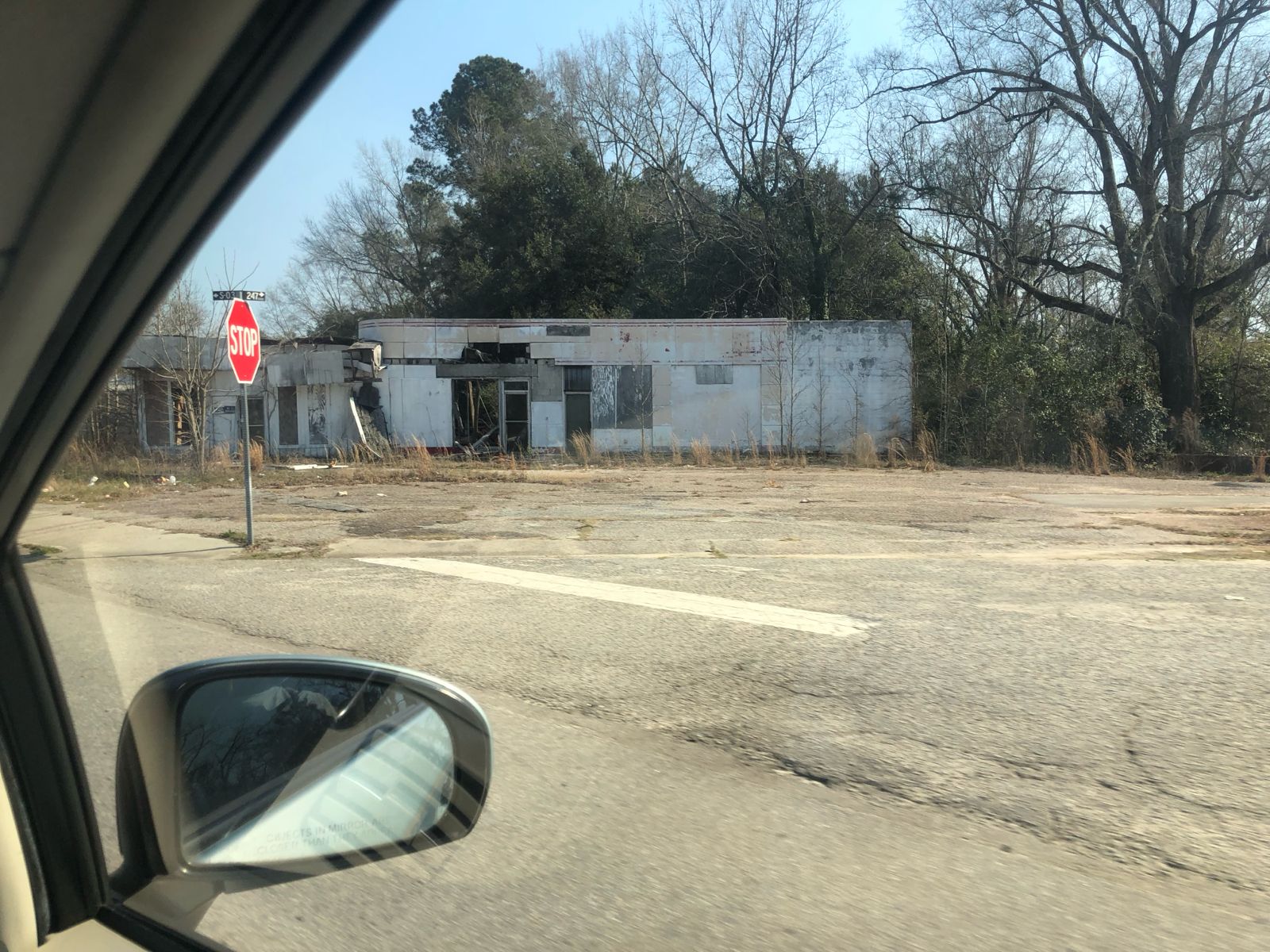
On the main drag through Allendale, SC.
Episode 1
Family Time
My far flung sons, Harrison up in Chevy Chase. and Ned over in Nuremburg, came for a visit in mid-February. It’s rare to be together in one place; however, Ned decided to come down for two-plus weeks during an academic break, and Harry took a couple of days off to join Caroline, Brooks, and me with his wife Taryn and their boy, Julian Levi Moore, the mighty mini-mensch, my grandson.
Harry and Taryn rented a bright yellow cottage around the corner, something you might encounter in a Winslow Homer watercolor, one of the many spiffed-up two-bedroom houses on Folly that in rental brochures affect a Key West vibe.
Julian, who is two-and-a-half, is as verbal – as his late grandma Judy would say – “as all get out.” Though he conflated our house with the state of South Carolina, and would say when he was in the rental, “I wanna go to South Carolina, I wanna go to South Carolina.” [1]

the mighty mini-mensch
We all had a great time, and the boys and I got to hang in a bar reminiscing about days of yore – surfing on the Isle of Palms, playing wiffle ball in our backyard, bedtime readings, and movies in theaters we’d seen together, starting off with Snow White and ending up with David Lynch’s Mulholland Drive.

Harrison (left) and Ned at Lowlife
We also got to celebrate Brooks’ 15th birthday, a festive occasion for sure!
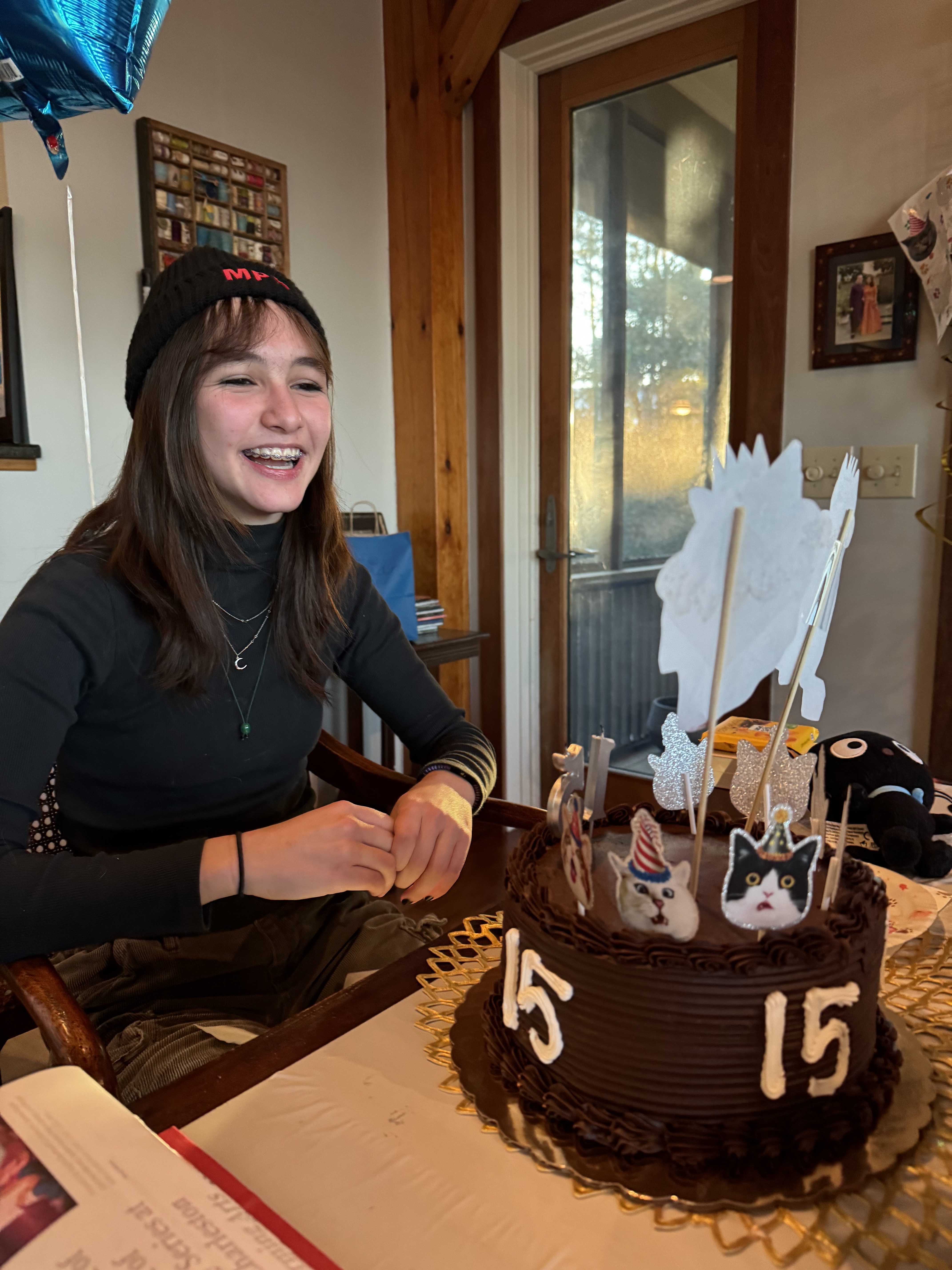
Brooks
But, alas, Harrison had to get back to work, so we sad our sad goodbyes, sad for me anyway, because of the limited number of these encounters left as my twilight continues its necessary progression.
[Hello, sorry to interrupt, but I’m Marcus Aurelius, and I do not approve of that previous paragraph.]
You’re right, Marcus, that sounded whiny. And, sure, we can FaceTime. It’s not like when we depended on handwritten letters for communication. I remember my uncle Jerry’s infrequent missives to my grandmother when he was in the service. That had to be tough.
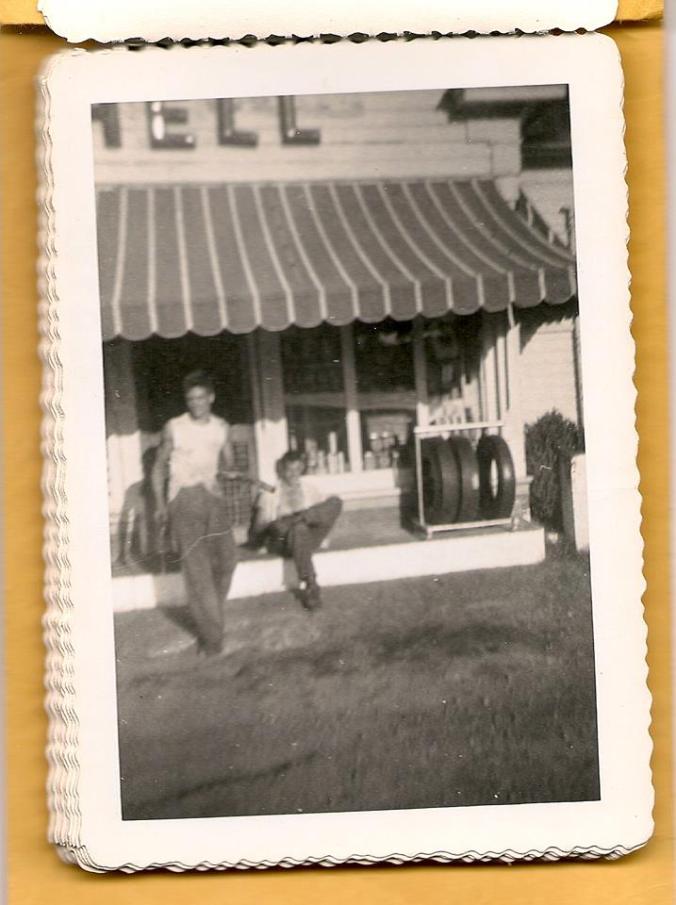
Uncle Jerry (standing) at my grandparents’ service station in Summerville
Back Roads Road Trip
Abandoning Caroline and bonus daughter Brooks, Ned and I took off to see his Aunt Becky, Uncle Dave, and Cousin Scott in Reynolds, nee Reynolds Plantation, a golfing development on Lake Oconee between Greensboro and Eatonton, Georgia.
I almost always go on the back roads because you don’t see shit like this on the Interstate.

Or curiosities like this.

We had a problem, though. ATT had crashed, Ned’s German phone was dataless, so [gasp], we’d have to negotiate the labyrinthian lefts and rights, rights and lefts, four way stop signs on Highways 17 South, 64 West, etc. etc. with an anachronistic road map, a document incapable of saying out loud in a soothing yet robotic tone, “At the light, take a right, Stonewall’s Calvary Road.”
How does the trip go? Do we pick up a blind hitchhiker complete with red tipped white cane?
Find out next time to Episode 2, “Allendale Ain’t Looking So Good, Though Come to Think of it, Neither Am I.”
[1] When hearing our waitress Jaime at Jack of Cups Saloon list food kids might like, before she was finished, he looked her in the eye, and said, “Grilled cheese please.”
An Existential Country Song in Search of a Tune
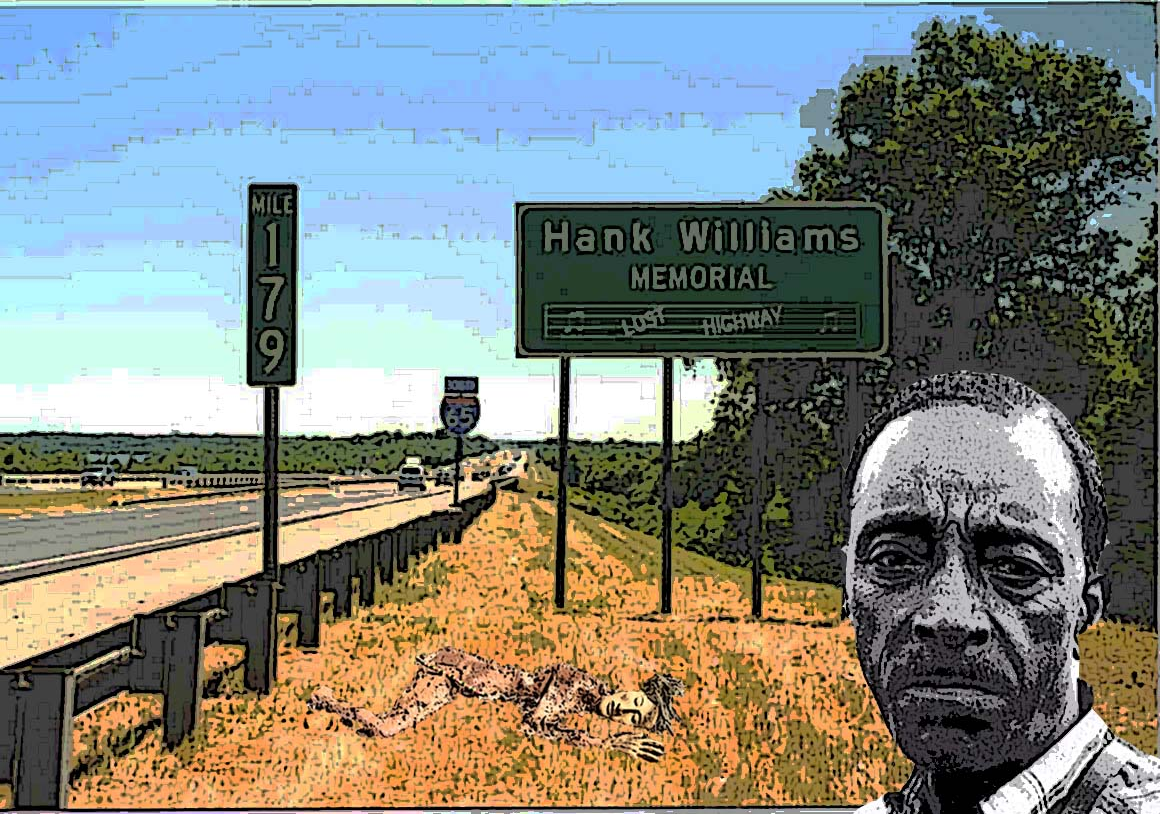
An Existential Country Song in Search of a Tune
with apologies to Mississippi Fred McDowell
After I fell into the ditch of despair,
Jesus quit returning my calls,
So I decided to self-medicate
and got hooked on phenobarbital.
*
Ended up losing my job,
losing my wife,
lost custody of my twin girls,
done ruined my life.
*
Chorus:
Jesus ain’t on the main line,
The phone just rings and rings.
Please pick up your phone, Good Lord.
So I can earn my wings.
*
I shuffle along Hank’s Lost Highway
skinny, stooped, dejected,
one of them obviously homeless men
Society has rejected.
*
Chorus:
Jesus ain’t on the main line,
His phone just rings and rings.
Please pick up the line, Sweet Jesus.
So I can earn my wings.
*
The universe is a lonesome place
When you ain’t got no God
Everything so sad and empty,
a blank billboard, a meaningless facade.
*
So please pick up the phone, sweet Jesus,
Lift me out of this ditch of despair.
Please pick up the phone, sweet Jesus,
So my soul can get repaired.
Taylor Made Foolishness

In the NFC Championship game, I rooted for the Baltimore Ravens because their name comes from the Edgar Allan Poe poem, which the poor boy penned in Baltimore, and also because my friend and bartender extraordinaire Charlie Neeley hails from that neck of the woods.[1]

Charlie and I-and-I
However, now I’m okay with The Ravens losing because Taylor Swift’s romantic relationship with Kansas City’s tight end Travis Kelce has triggered the Fox News crew and engendered conspiracy theories worthy of the donning of tin hats. Idiocy like this helps to keep my aging cynicism spry as my testosterone slowly takes his final bows and shuffles off stage.
Rage, rage against the dying of the light and all that R&B.
But I digress. Here’s an unhinged tweet from Mike Crispi, a major pro-Trump broadcast personality:
“The NFL is totally RIGGED for the Kansas City Chiefs, Taylor Swift, Mr. Pfizer (Travis Kelce). All to spread DEMOCRAT PROPAGANDA. Calling it now: KC wins, goes to Super Bowl, Swift comes out at the halftime show and ‘endorses’ Joe Biden with Kelce at midfield. It’s all been an op since day one.”
Like me, comedian Andrew Nadeau is skeptical:
“I love the idea that liberals conspired to get Taylor Swift to date Travis Kelce and then rigged the playoffs because this somehow abstractly helps Biden. That’s where we shine. We can’t get free healthcare but perfectly execute a Riddler-esque conspiracy to ruin a football game.”
Swift endorsed Biden in 2020 and spurred 35,000 Insta followers to register to vote recently, so MAGA is terrified that Swift’s popularity with Generation Z will produce massive voter turnout among young adults who typically tend to be apolitical.
Some passing-the-graveyard-whistlers claim Trump’s celebrity endorsers will counterbalance the Swiftian avalanche.
For example, Jack Posobiec, whom Twitter describes as “an American alt-right political activist, television correspondent, presenter, conspiracy theorist, and former United States Navy intelligence officer” counters: “We don’t have Taylor Swift on our side, but you know who we have? We have Kid Rock. We have Ted Nugent. We have influencers. We have all these people — Jon Voight.”

Ted Nugent and Kid Rock
As the young people say, “Um, okay.”
[1] Note to writers: avoid “penned” as a synonym for “wrote” unless the subject of the sentence formed letters with a quill.
Random Thoughts from a Dry Brain in a Dry Season
Random Thoughts from a Dry Brain in a Dry Season
“Vacant shuttles/Weave the wind.” – TS Eliot, “Gerontion”
One of the many positive aspects of retirement is that I am no longer bound by industrialization’s time clock. If I awaken at three a.m.– what Gerard Manley Hopkins called “the fell of dark, not day” – instead of trying to grunt myself back to sleep, I tiptoe out of the bedroom, fire up the ol’ iMac and play Spelling Bee, a word game on the NYT crossword page. To attain the designation of “Genius” takes me anywhere from five to forty minutes. Generally, I fall asleep again around four or so and reawaken around six. I sometimes take two naps a day, one in the morning and one in the afternoon.
A man of leisure at last.
In my previous life as an English teacher, I would spend those awakened hours brooding about my working life and/or what TS Eliot called “the immense panorama of futility and anarchy that is contemporary history.”
By the way, that most quotable of quotes comes from Eliot’s essay “Ulysses, Order, and Myth.” Here’s another far less quotable snippet from that same essay: “Mr. Aldington treated Mr. Joyce as a prophet of chaos; and wailed at the flood of Dadaism which his prescient eye saw bursting forth at the tap of the magician’s rod.”
You win some; you lose some.
Speaking of losing, I just received this very minute this message via What’s App:
Hi, I’m Ivana. Nice to meet you.
I am looking for the other half of my life, someone who can accompany me throughout my life.
I am 36 years old and single. I like polite men. If you are very similar to me, please leave me a WhatsApp message now. I believe we can be each other’s life partners.
We can share each other’s lives and understand each other better.
WTF, as the young people say.
Then last Friday, at Chico Feo, Harlan, the bartender, told me that a young woman, an investigative reporter, wanted to interview me. I said, “Uh, okay,” so she, an attractive, twenty-something, sat on the stool next to me and asked if I were a writer. I had assumed she had known that, so I said yes, and she asked what I had written, so I told her about Today, Oh Boy,” a novel set in Summerville, South Carolina, which coincidentally is where she’s from. To cut to the chase, she’s doing an in depth investigation on the serial killer Richard Valenti, who murdered two teenaged girls on Folly Beach in 1973. I have a close friend who was also kidnapped by Valenti but who escaped along with two of her friends, which led to his arrest.
She asked if I minded being recorded, and I said no, so she pinned a mic on my lapel and started asking questions. She was impressively articulate, explained her interest in the case, and while we were talking, my wife Caroline arrived, so I invited her to join the conversation because Caroline is much smarter than I am. The reporter is also friends with one of the teens who escaped and is hesitant to ask her about it because “she might not want to reopen that door,” as she put it. Caroline jumped in and talked about how the patriarchy deals with women who have been sexually assaulted. By the way, this was two days after Trump’s 83 million dollar fine.
So anyway, I got 99 problems but worrying about grading essays ain’t one of them.
Etta James’ Artful Suffering

What a storehouse of sorrow must have existed in the soul of Miss Etta James, nee Jamesetta Hawkins, whose eventful life was fraught with childhood abuse, illicit drug use, and musical triumph. To quote Van Morrison’s “Summertime in England,” James was “high in the art of suffering” and could conjure her hurt Stanislavski-style as she belted out the blues, that history of sadness made manifest in the hurt of her voice, the expressions of her face.[1]
One of my favorite videos of all time is her duet with Dr. John in “I’d Rather Be a Blind Girl.” As I mentioned recently in a post on the Pouges, I’d treat my students to a music video whenever everyone in the class made a 100 on a pop or vocabulary quiz, which, of course, spurred them on to read or review vocabulary and afforded me the pleasure of expanding their cultural heritage, expanding the narrow range of what they considered cool.
What a pleasure to study their faces as they watched this video.
Click HERE for video
[1] As in Konstantin Stanislavsky’s acting system in which he sought to activate actors’ memories to express emotions rather than merely representing them.