My Boys Are Back in Town, Episode 2: Blind Willie’s Gravesite

EPISODE 1 of “My Boys Are Back in Town: Joel Chandler Harris Backroads Edition” ended with my son Ned, who lives in Germany, and I-and-I embarking on a backroads trip to northern Georgia. It was Ned’s idea to see his mother’s sister Becky and her husband Dave during Ned’s two weeks in the States, and I volunteered to come along. My sister-in-law Becky is a Birdsong, and growing up, my boys were much closer to the Birdsongs than the Moores. The Birdsongs resembled the Brady Bunch, a prosperous blended family of non-smokers and non-alcoholics/drug addicts. The Moores, on the other hand, more or less resembled a mashup of the Addams Family and Tennessee Williams. For example, Becky had never vomited on Ned in a station wagon after picking her up from a halfway house to celebrate Christmas in dysfunctional Snopesville. Alas, the same can’t be said of his chain-smoking bipolar Aunt Virginia. 

As a bonus, when Becky and Dave’s son Scott heard we were coming, he decided to drive over from Atlanta to share the weekend with us.

With my bonus daughter Brooks in school, she and my wife Caroline couldn’t make the trip. Caroline, cognizant of Ned and my spaciness, made sure were had packed the essentials – tangles of electronic chargers, sufficient socks and underwear, gifts for the hosts, and a cooler of various malted beverages.

We took off on Thursday morning around ten, but there was a problem: when I punched Google maps, my phone informed me that I was not connected to the internet. Since Ned’s German phone was dataless, we turned around and retraced the block or two we had traveled on Hudson Avenue, Folly Beach, SC.  I climbed the stairs to my wifi-rich drafty garret to troubleshoot. No sooner than I had fired up the iMac, Ned called from below, “It’s ATT, dad. ATT’s down.” So I retrieved a venerable relic of a roadmap, and we were off.

Caroline and I had made this trip a couple of years earlier when I had introduced her to Becky and Dave, so I was somewhat familiar with the first leg of that took us to the fringes of Walterboro. On the previous trip, Caroline and I had made a pilgrimage to Blind Willie McTell’s grave outside of Thomson, Georgia, and headed back towards the Savannah River, Caroline caught sight of a truly weird roadside attraction, a junkyard turned art installation that included a crashed helicopter and a sexy mannikin in a telephone booth[1]. Ned was eager to see it in person and share it with his friend Claudia, who is a prominent German artist.

This is what had caught Caroline’s eye

We headed down 17 South and stopped in the Red Top community to fill Caroline’s Prius with the cheapest gas in South Carolina. We were about a mile or so from Ned’s first childhood home in Rantowles, so we made a brief detour, noted the changes (or at least I did; Ned was yet not walking when we moved to the Isle of Palms). I noticed that the shrubs Judy and I had planted were still going strong, had, in fact, outlived her. Her ghost accompanied us throughout the trip, a pleasant though somewhat melancholy companion. 

At Jacksonboro, right past the now defunct Edisto Motel Restaurant, which had in the day conjured the best fried seafood I’ve ever eaten, we took highway 64 West towards the heart of murderous Murdaugh country, Colleton County. That’s where we discovered that ATT was back, and we need no longer rely on yesteryear’s technology to get us to Allendale, before we crossed the Savannah River into Georgia. 

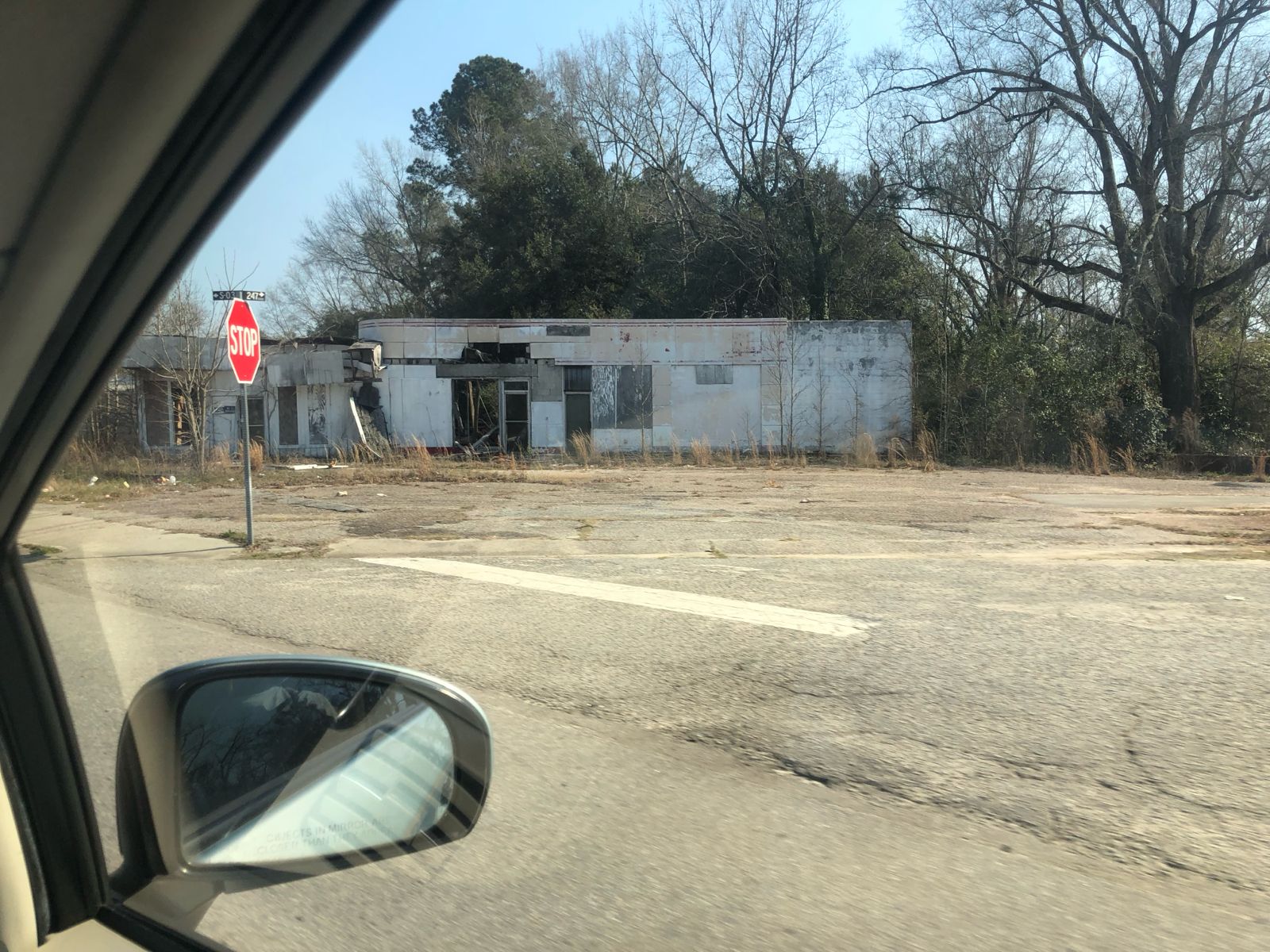
Allendale is a lovely word, harkens back to Merry Old England, Robinhood and all that jazz, but the city nowadays is a decaying corpselike town of abandoned motels, convenience stores, and restaurants.[2] Ned has perhaps inherited from the Moore side of his genetic heritage a morbid sensibility. Rather than getting the hell out of there, we tooled slowly, taking it all in, taking what used to be called photographs.

We decided to visit Blind Willie’s grave on this trip, and the art installation on the way back, since we had left late because of the ATT snafu. 

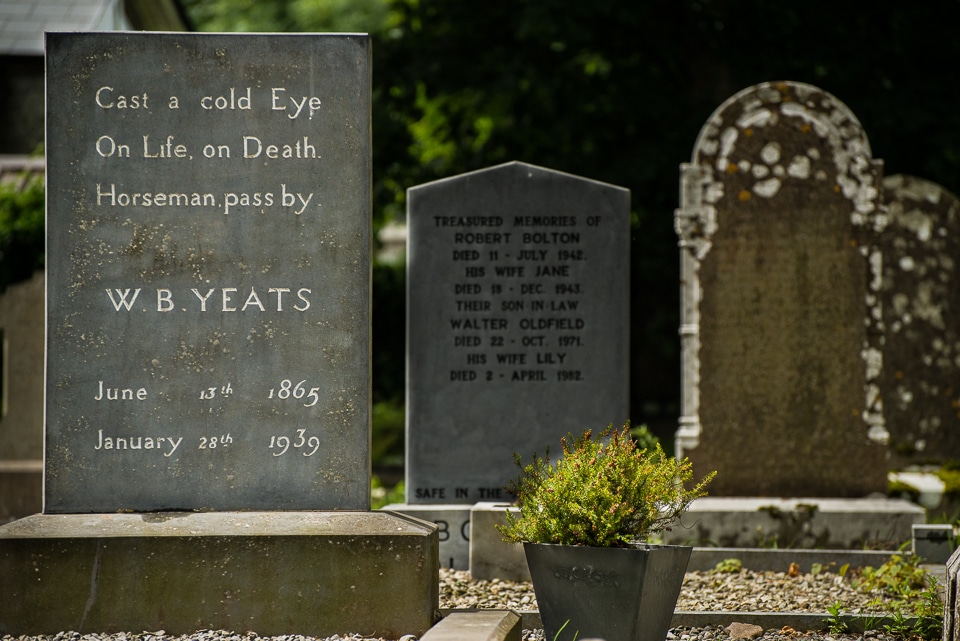
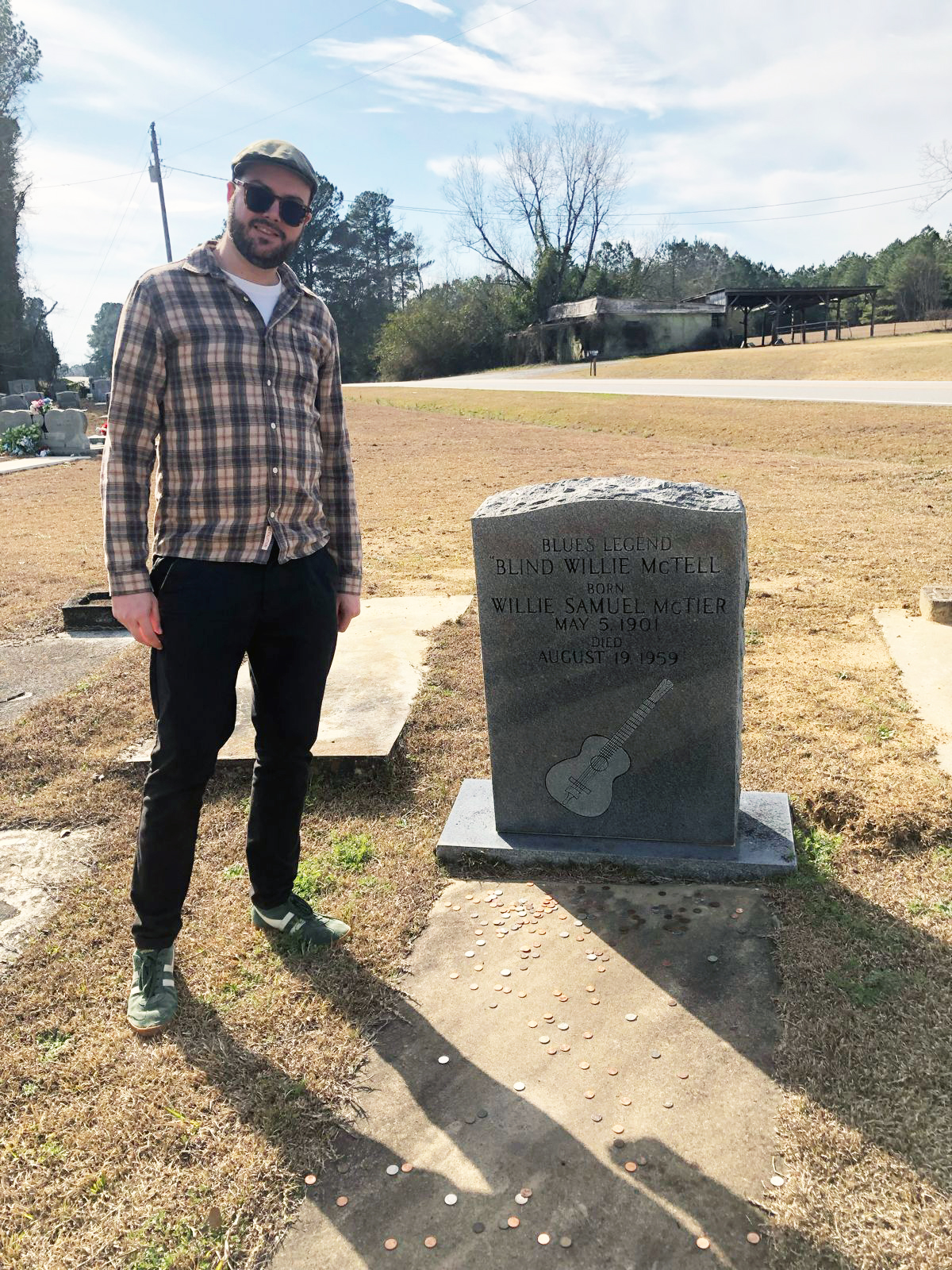
The grave is located in the yard of a small, red-bricked Baptist Church outside of Thomson. By the way, not only was Blind Willie a great bluesman, but he’s also the eponymous source of one of Dylan’s underappreciated masterpieces.

Here’s a snippet from “Blind Willie McTell”:

See them big plantations burning
Hear the cracking of the whips
Smell that sweet magnolia blooming
See the ghosts of slavery ships
I can hear them tribes a moaning
Hear that undertaker’s bell
And I know no one can sing the blues
Like Blind Willie McTell

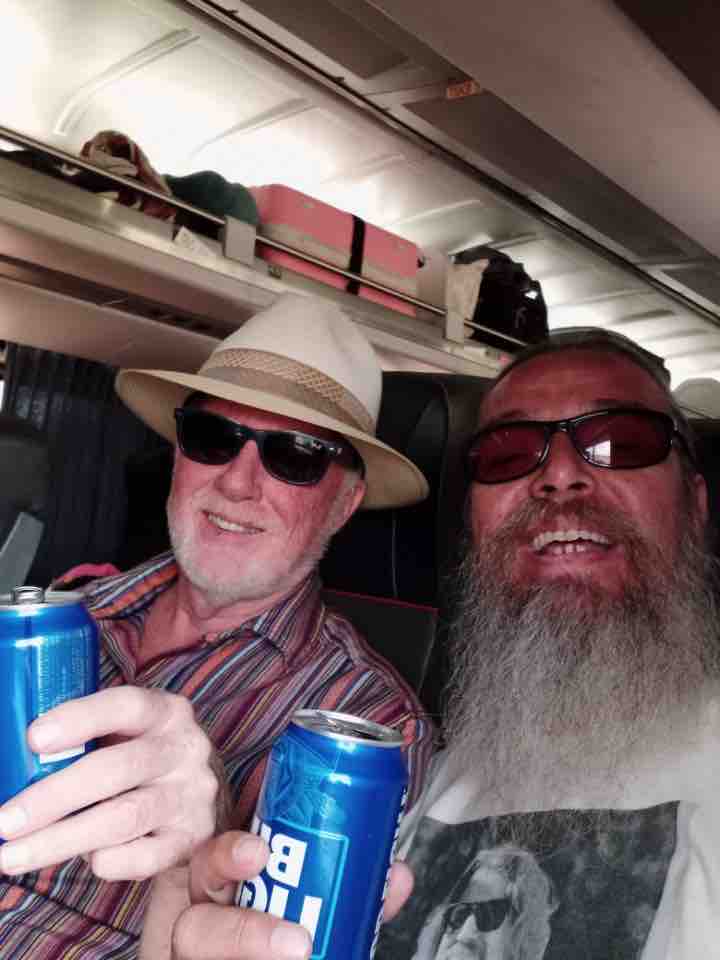
Ned and stood by the grave, Ned tossed some German Euros on the slab, and with that mission accomplished, we made our way to Becky and Dave’s.[3]
In the next episode, Becky introduces us to the Georgia Writer’s Hall of Fame in Eatonton where I learn some stuff and Ned buys me a book after I buy Becky a book.

Now that’s what I call a “cliffhanger” or maybe a “coat hanger.”

Here’s Dylan himself singing the above-quoted verse:


[1] Here’s a LINK if interested.

[2] It makes the Trenchtown of the Jimmy Cliff’s The Harder They Fall look like Beverly Hills. It’s the opposite of Reynolds, where Becky and Dave live, a picturesque golf community of rolling hills and million dollar houses on and adjacent to Lake Oconee. 

[3] Note to those who read episode 1. No, we didn’t pick up a blind hitchhiker, complete with red-tipped white cane. Never trust a teaser.
My Boys Are Back in Town: Joel Chandler Harris Backroads Edition

On the main drag through Allendale, SC.

Episode 1

Family Time

My far flung sons, Harrison up in Chevy Chase. and Ned over in Nuremburg, came for a visit in mid-February. It’s rare to be together in one place; however, Ned decided to come down for two-plus weeks during an academic break, and Harry took a couple of days off to join Caroline, Brooks, and me with his wife Taryn and their boy, Julian Levi Moore, the mighty mini-mensch, my grandson.

Harry and Taryn rented a bright yellow cottage around the corner, something you might encounter in a Winslow Homer watercolor, one of the many spiffed-up two-bedroom houses on Folly that in rental brochures affect a Key West vibe.

Julian, who is two-and-a-half, is as verbal – as his late grandma Judy would say – “as all get out.” Though he conflated our house with the state of South Carolina, and would say when he was in the rental, “I wanna go to South Carolina, I wanna go to South Carolina.” [1]

the mighty mini-mensch

We all had a great time, and the boys and I got to hang in a bar reminiscing about days of yore – surfing on the Isle of Palms, playing wiffle ball in our backyard, bedtime readings, and  movies in theaters we’d seen together, starting off with Snow White and ending up with David Lynch’s Mulholland Drive.

Harrison (left) and Ned at Lowlife

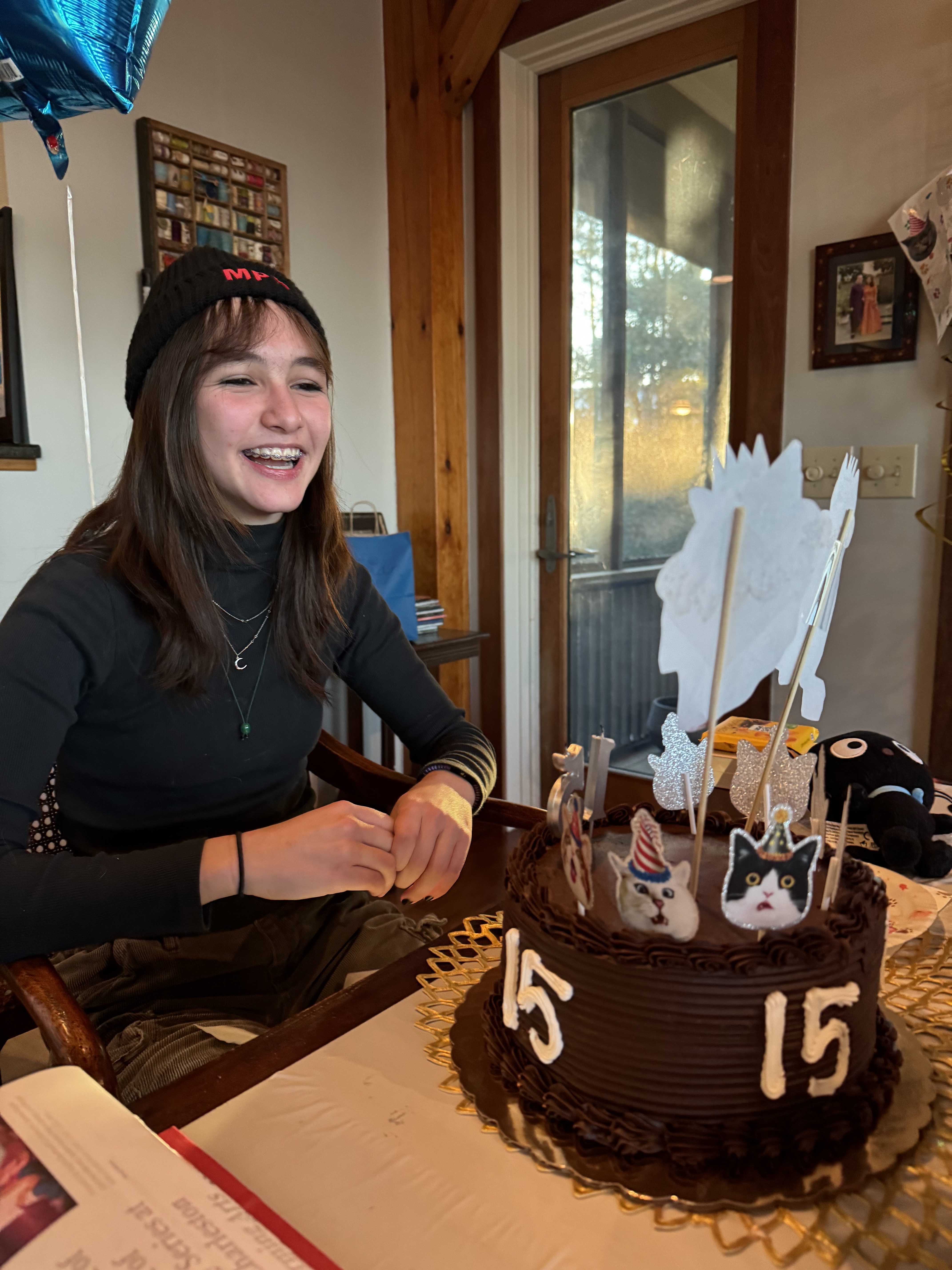
We also got to celebrate Brooks’ 15th birthday, a festive occasion for sure!

Brooks

But, alas, Harrison had to get back to work, so we sad our sad goodbyes, sad for me anyway, because of the limited number of these encounters left as my twilight continues its necessary progression. 

[Hello, sorry to interrupt, but I’m Marcus Aurelius, and I do not approve of that previous paragraph.]

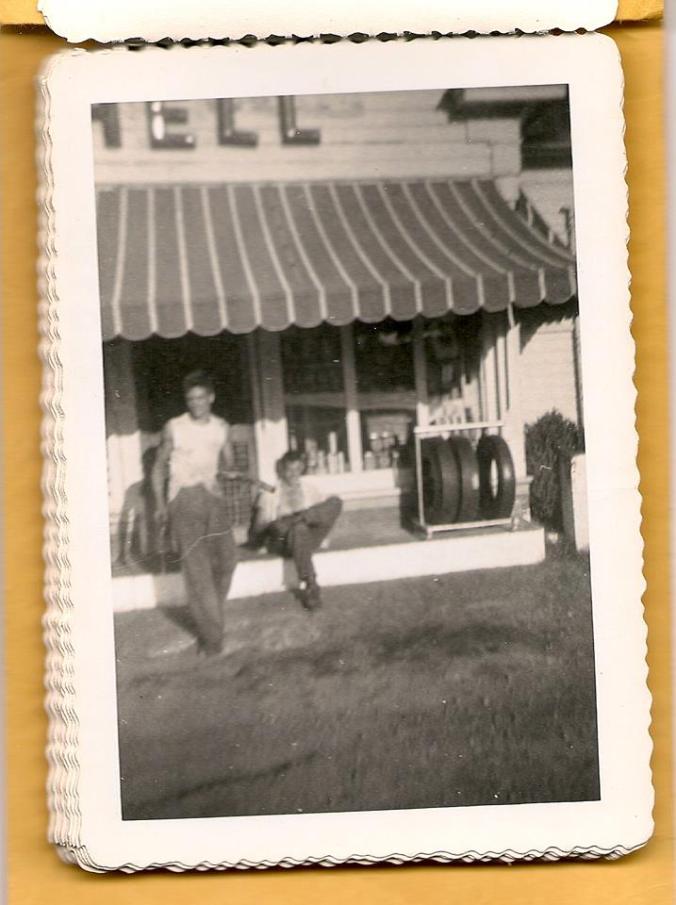
You’re right, Marcus, that sounded whiny. And, sure, we can FaceTime. It’s not like when we depended on handwritten letters for communication. I remember my uncle Jerry’s infrequent missives to my grandmother when he was in the service. That had to be tough.

Uncle Jerry (standing) at my grandparents’ service station in Summerville

Back Roads Road Trip

Abandoning Caroline and bonus daughter Brooks, Ned and I took off to see his Aunt Becky, Uncle Dave, and Cousin Scott in Reynolds, nee Reynolds Plantation, a golfing development on Lake Oconee between Greensboro and Eatonton, Georgia. 

I almost always go on the back roads because you don’t see shit like this on the Interstate. 

Or curiosities like this.

We had a problem, though. ATT had crashed, Ned’s German phone was dataless, so [gasp], we’d have to negotiate the labyrinthian lefts and rights, rights and lefts, four way stop signs on Highways 17 South, 64 West, etc. etc. with an anachronistic road map, a document incapable of saying out loud in a soothing yet robotic tone, “At the light, take a right, Stonewall’s Calvary Road.”

How does the trip go? Do we pick up a blind hitchhiker complete with red tipped white cane?

Find out next time to Episode 2, “Allendale Ain’t Looking So Good, Though Come to Think of it, Neither Am I.”


[1] When hearing our waitress Jaime at Jack of Cups Saloon list food kids might like, before she was finished, he looked her in the eye, and said, “Grilled cheese please.”

An Existential Country Song in Search of a Tune

An Existential Country Song in Search of a Tune

with apologies to Mississippi Fred McDowell

After I fell into the ditch of despair,

Jesus quit returning my calls,

So I decided to self-medicate

and got hooked on phenobarbital.

*

Ended up losing my job,

losing my wife,

lost custody of my twin girls,

done ruined my life.

*

Chorus:

Jesus ain’t on the main line,

The phone just rings and rings.

Please pick up your phone, Good Lord.

So I can earn my wings.

*

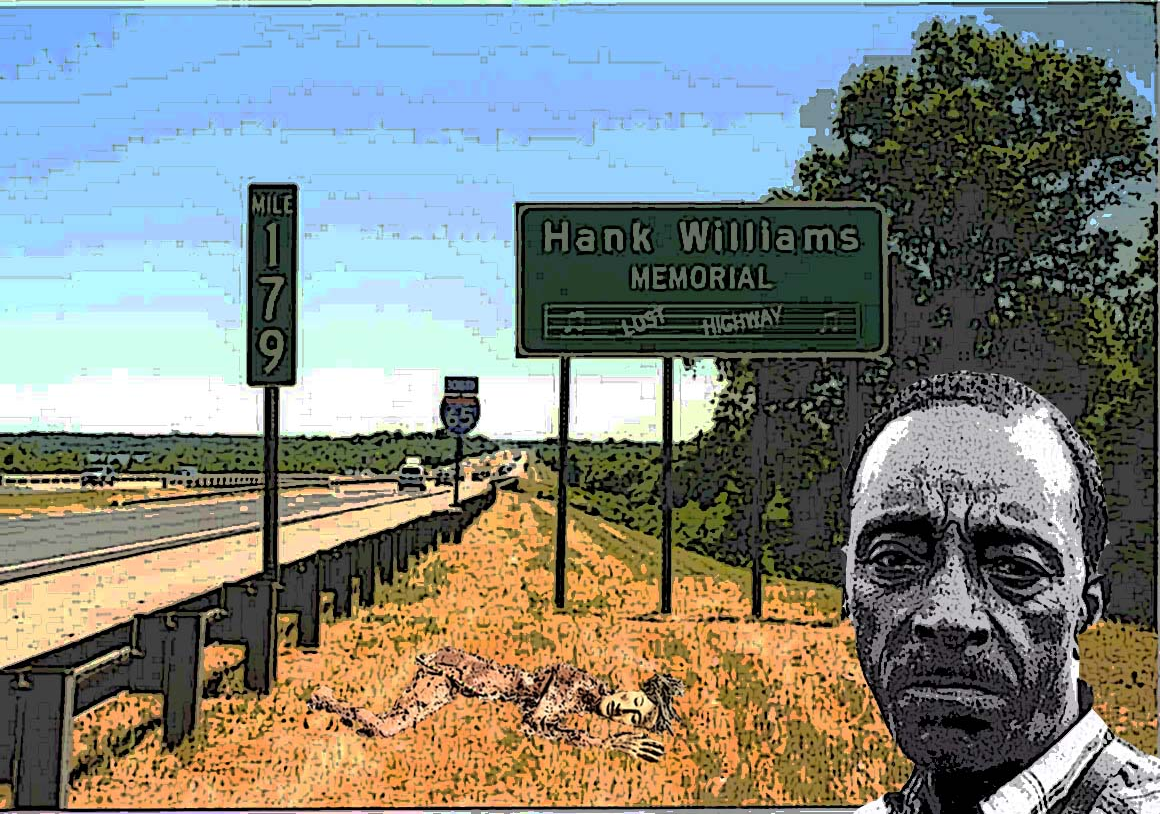
I shuffle along Hank’s Lost Highway

skinny, stooped, dejected,

one of them obviously homeless men

Society has rejected.

*

Chorus:

Jesus ain’t on the main line,

His phone just rings and rings.

Please pick up the line, Sweet Jesus.

So I can earn my wings.

*

The universe is a lonesome place

When you ain’t got no God

Everything so sad and empty,

a blank billboard, a meaningless facade.

*

So please pick up the phone, sweet Jesus,

Lift me out of this ditch of despair.

Please pick up the phone, sweet Jesus,

So my soul can get repaired. 

Taylor Made Foolishness

In the NFC Championship game, I rooted for the Baltimore Ravens because their name comes from the Edgar Allan Poe poem, which the poor boy penned in Baltimore, and also because my friend and bartender extraordinaire Charlie Neeley hails from that neck of the woods.[1]

Charlie and I-and-I

However, now I’m okay with The Ravens losing because Taylor Swift’s romantic relationship with Kansas City’s tight end Travis Kelce has triggered the Fox News crew and engendered conspiracy theories worthy of the donning of tin hats. Idiocy like this helps to keep my aging cynicism spry as my testosterone slowly takes his final bows and shuffles off stage. 

Rage, rage against the dying of the light and all that R&B.

But I digress. Here’s an unhinged tweet from Mike Crispi, a major pro-Trump broadcast personality: 

“The NFL is totally RIGGED for the Kansas City Chiefs, Taylor Swift, Mr. Pfizer (Travis Kelce). All to spread DEMOCRAT PROPAGANDA. Calling it now: KC wins, goes to Super Bowl, Swift comes out at the halftime show and ‘endorses’ Joe Biden with Kelce at midfield. It’s all been an op since day one.”

Like me, comedian Andrew Nadeau is skeptical: 

“I love the idea that liberals conspired to get Taylor Swift to date Travis Kelce and then rigged the playoffs because this somehow abstractly helps Biden. That’s where we shine. We can’t get free healthcare but perfectly execute a Riddler-esque conspiracy to ruin a football game.”

Swift endorsed Biden in 2020 and spurred 35,000 Insta followers to register to vote recently, so MAGA is terrified that Swift’s popularity with Generation Z will produce massive voter turnout among young adults who typically tend to be apolitical.  

Some passing-the-graveyard-whistlers claim Trump’s celebrity endorsers will counterbalance the Swiftian avalanche.

For example, Jack Posobiec, whom Twitter describes as “an American alt-right political activist, television correspondent, presenter, conspiracy theorist, and former United States Navy intelligence officer” counters: “We don’t have Taylor Swift on our side, but you know who we have? We have Kid Rock. We have Ted Nugent. We have influencers. We have all these people — Jon Voight.”

Ted Nugent and Kid Rock

As the young people say, “Um, okay.”


[1] Note to writers: avoid “penned” as a synonym for “wrote” unless the subject of the sentence formed letters with a quill.

Random Thoughts from a Dry Brain in a Dry Season

Random Thoughts from a Dry Brain in a Dry Season

“Vacant shuttles/Weave the wind.”  – TS Eliot, “Gerontion”

One of the many positive aspects of retirement is that I am no longer bound by industrialization’s time clock. If I awaken at three a.m.– what Gerard Manley Hopkins called “the fell of dark, not day” – instead of trying to grunt myself back to sleep, I tiptoe out of the bedroom, fire up the ol’ iMac and play Spelling Bee, a word game on the NYT crossword page. To attain the designation of “Genius” takes me anywhere from five to forty minutes. Generally, I fall asleep again around four or so and reawaken around six. I sometimes take two naps a day, one in the morning and one in the afternoon.

A man of leisure at last.

In my previous life as an English teacher, I would spend those awakened hours brooding about my working life and/or what TS Eliot called “the immense panorama of futility and anarchy that is contemporary history.”

By the way, that most quotable of quotes comes from Eliot’s essay “Ulysses, Order, and Myth.” Here’s another far less quotable snippet from that same essay: “Mr. Aldington treated Mr. Joyce as a prophet of chaos; and wailed at the flood of Dadaism which his prescient eye saw bursting forth at the tap of the magician’s rod.”

You win some; you lose some.

Speaking of losing, I just received this very minute this message via What’s App:

Hi, I’m Ivana. Nice to meet you.

I am looking for the other half of my life, someone who can accompany me throughout my life.

I am 36 years old and single. I like polite men. If you are very similar to me, please leave me a WhatsApp message now. I believe we can be each other’s life partners.

We can share each other’s lives and understand each other better.

WTF, as the young people say. 

Then last Friday, at Chico Feo, Harlan, the bartender, told me that a young woman, an investigative reporter, wanted to interview me. I said, “Uh, okay,” so she, an attractive, twenty-something, sat on the stool next to me and asked if I were a writer. I had assumed she had known that, so I said yes, and she asked what I had written, so I told her about Today, Oh Boy,” a novel set in Summerville, South Carolina, which coincidentally is where she’s from. To cut to the chase, she’s doing an in depth investigation on the serial killer Richard Valenti, who murdered two teenaged girls on Folly Beach in 1973. I have a close friend who was also kidnapped by Valenti but who escaped along with two of her friends, which led to his arrest.

She asked if I minded being recorded, and I said no, so she pinned a mic on my lapel and started asking questions. She was impressively articulate, explained her interest in the case, and while we were talking, my wife Caroline arrived, so I invited her to join the conversation because Caroline is much smarter than I am. The reporter is also friends with one of the teens who escaped and is hesitant to ask her about it because “she might not want to reopen that door,” as she put it. Caroline jumped in and talked about how the patriarchy deals with women who have been sexually assaulted.  By the way, this was two days after Trump’s 83 million dollar fine.

So anyway, I got 99 problems but worrying about grading essays ain’t one of them.

Etta James’ Artful Suffering

What a storehouse of sorrow must have existed in the soul of Miss Etta James, nee Jamesetta Hawkins, whose eventful life was fraught with childhood abuse, illicit drug use, and musical triumph. To quote Van Morrison’s “Summertime in England,” James was “high in the art of suffering” and could conjure her hurt Stanislavski-style as she belted out the blues, that history of sadness made manifest in the hurt of her voice, the expressions of her face.[1]

One of my favorite videos of all time is her duet with Dr. John in “I’d Rather Be a Blind Girl.”  As I mentioned recently in a post on the Pouges, I’d treat my students to a music video whenever everyone in the class made a 100 on a pop or vocabulary quiz, which, of course, spurred them on to read or review vocabulary and afforded me the pleasure of expanding their cultural heritage, expanding the narrow range of what they considered cool.

What a pleasure to study their faces as they watched this video.

Click HERE for video


[1] As in Konstantin Stanislavsky’s acting system in which he sought to activate actors’ memories to express emotions rather than merely representing them. 


Work in Progress: Long Ago Last Summer

This is the beginning of my current work in progress entitled Long Ago Last Summer. The first draft is completed, so now comes the painstaking work of refinement. What’s below are the first paragraphs of the 7100-word first chapter.

Chapter 1

Those Who Think, Those Who Feel

1

            My father aspired at some point early in his life to become a tragic figure, but unfortunately, even at that, he failed. Born in the 1920s in the shabby outer edges of Reconstruction’s long shadow, he grew up in Charleston, South Carolina, in those days a rundown museum of a city with its weather-beaten mansions and black women calling out in Gullah, balancing baskets of vegetables or laundry on their heads. A talented storyteller, my father was a virtuoso on the heartstrings, recounting unfortunate events from his melancholy childhood, an exotic world of paregoric addicts, ancient cotton-haired slave-born coloreds[1], blind street musicians, and blue-blooded eccentrics. I can conjure his depiction of himself even now, a ragamuffin Depression boy in knickers and cap hawking newspapers on city street corners. It’s odd that I picture his old stories in black-and-white. Perhaps it’s because of the photographs or the old movies of that era. Memory is a curious thing. I guess you could say it’s a collection. The older we get the more we discard, up to a certain point. My father, however, was a curator with a very narrow thematic interest. And what he kept was very well preserved and artfully presented.

2

My father felt unloved by his father, a distant presence puffing a pipe, turning a page of The Saturday Evening Post. I remember meeting my grandfather only once or twice when my father was alive, and I never heard my father utter a kind word about “the old man.” In my post-mortem meetings with Grandfather Postell, he was what you might call lively but egocentric. He’d talk about his golf and his dead Airedales and about his photography but never expressed any curiosity about what was going on in my little life. He had been the youngest of five, the only boy, the son of an Upcountry state senator, and perhaps spoiled by the plump quartet of his elder sisters, my great aunts, formidable eccentrics in their own rights. I can very well imagine not being loved by this man, though, on the other hand, I can’t really imagine being abused by him.  

His son, my father, absolutely worshipped his own mother, whose portrait hung, eerie and Oedipal, over my parents’ four-poster bed. She was beautiful and angelic and elegant and the brains behind the studio. Grandmother Postell’s death from T.B., three years before my birth, was right out of “Ligeia.” Yellowed photographs of her propped up on pillows in a ghostly white gown survive in black picture albums. As a little boy, I remember carefully turning the pages of those albums, gazing at my tall slender grandmother leaning against an antique car, my father half-her-size, standing beside her with his thick wavy hair combed straight back.  

As a child, listening to my father’s version of his own childhood, my eyes would sometimes fill with tears as he would in his gruff way catalogue his sorrows. He made me feel lucky to be me, and I felt guilty because I took for granted the bright sunshine of Suburban Summerville, my middle-class neighbors, and the leisurely hours I had to loll away shooting marbles or riding my bike on lazy Saturday afternoons. Unlike his own father, my father had sacrificed everything for us by working at the dreary Naval Yard, a job well below the significant talents he possessed. My father saw himself as a marked man, doomed to a life of bad luck, and I guess you could say that in some ways he was.

Though, by Depression standards, at least economically, my father didn’t have it all that bad. He lived with his parents, who had been employed as portrait photographers but who had lost everything in the Crash. During the Thirties, they stayed with his mother’s parents who lived in the second story over a pharmacy they owned on the corner of Spring Street and Ashley Avenue. Anyone who owned a business that didn’t fold during the Great Depression shouldn’t complain too much about deprivation. With money so scare, being a child laborer[2], especially a paperboy, might be considered a blessing, but not to my father, who viewed himself as Oliver Twist, a figure to be pitied, and perhaps he deserved that pity. I wasn’t there to witness his life.  

His stories, though, always accentuated the poverty. I’ll grant that living with eight other people in 1200-square feet isn’t enviable, but it’s not exactly The Grapes of Wrath either. After all, deprivation was pretty much the way-it-was in Charleston during the Depression, a city isolated and traumatized by the events of a war that still could claim a few living veterans shuffling down its sidewalks. Nevertheless, I don’t dispute that something must have been lacking in his childhood, and I suppose that the best guess for what was lacking is love. My own mother, in the unenviable position of following a dead saint, once surmised that what had ultimately been lacking in Daddy’s life was maternal love, not so much as paternal love, but Daddy would never have owned up to that. An insinuation like that would have thrown him into a rage, and he was the furniture-smashing type when he lost his temper.

When not working or getting expelled from a series of schools, my father roamed the streets of the Upper Peninsula. Here, he could put his seemingly endless store of anger to good use, saving a squirt from a cowardly bully or bloodying the nose an arrogant Northerner who had indiscreetly commented on the corporeal charms of some perceived paragon of Southern ladyhood. In the stories my father told us, he was always the cavalier, the heroic fellow, always smaller than the oppressors he pummeled, always a figure of sympathy. Boxing was the only sport he cared anything about. I can remember his yelling at the television on Friday nights, barking advice to Sugar Ray Robinson or Archie Moore, “Keep that left up, keep that left up.”

Of course, to be a tragic hero you’re supposed to be somewhat bigger than life and somehow bring your calamity down upon yourself, perhaps because you suffer from a fatal flaw, like too much ambition or too much pride, or in my father’s case, too much a flair for the dramatic. Nevertheless, his story, which is also my story, doesn’t quite make the grade as far as tragedy is concerned. I personally see our lives as a dark comedy, more Beckett than Tennessee Williams. You may have heard the saying, “Life is a comedy to those who think, but a tragedy to those who feel.”  Like everything else, it all depends upon your perspective.  


[1] The polite word in those days.

[2] Child laborer was the Dickensian term my father used to describe his employment with The News and Courier.   

Some New Year’s Foolishness

Ah, New Year’s Day, when we eat collards and black-eyed peas and look forward to changing ourselves for the better, vowing to practice mindfulness so that the all too ephemeral array of everyday wonders doesn’t flash by unheeded. 

Alas, however, our resolutions, more often than not, succumb to the deadly weight of habit as we, distracted by the morning news, fail to appreciate the taste of our buttery toast.

Although I’m not a fan of HD Thoreau (too smug, too self-righteous, too puritanical), he does have somewhat of a point here:

“And I am sure that I never read any memorable news in a newspaper. If we read of one man robbed, or murdered, or killed by accident, or one house burned, or one vessel wrecked, or one steamboat blown up, or one cow run over on the Western Railroad, or one mad dog killed, or one lot of grasshoppers in the winter, – we need never read of another. One is enough. If you are acquainted with the principle, what do you care for a myriad of instances and applications?”

New Year’s Resolution #1: Don’t read the paper or doom scroll while eating.[1]

On the other hand, you do want to be somewhat cognizant of what’s going on in the world, to base whom you’re voting for on something more concrete than “it’s time for a change” or “the price of avocados has gone through the roof.” Democracy depends on an informed citizenry and all that jazz.

I recall a Mad Magazine parody of the Fifties sitcom Ozzie and Harriet where Harriet, not wanting to upset husband Ozzie, had cut out unpleasant news stories from the paper, which resulted in his booking the family’s vacation in the civil war torn Dominican Republic, the contemporary equivalent booking a tour of the Gaza Strip.

New Year’s Resolution #2: Don’t book vacations in war zones.[2]

Hey, wait, here’s s resolution I hope we all can embrace without caveats.

New Year’s Resolution #3: Strive to be kind.

Hey, y’all, Happy New Year! Thanks for reading.

My son Ned’s Nuremberg rendition of his mother Judy Birdsong’s New Year’s Soup (Bon Choy substituted for collards, which you can’t get in Germany.


[1] Caveat #1: Yeah, but I’m not eating toast, I’m eating some generic cereal, so I’d rather read about the latest baseball transactions than contemplate the taste of cardboard.

[2] Caveat #2. Yeah, but the bluesman Robert Lighthouse recently toured The Ukraine and found it to be one of the most rewarding experiences of his life. (You can read my interview with Robert HERE.)

2023 in the Rear View

Well, young and old and in-between, another winter solstice had swirled us into darkness, which means it’s time for my annual attempt to rack up a few more hits by shining a light on what I consider the highlights of a year of blogging.

So let’s get going.

January

In light of the Murdaugh mess, I became more aware of just how disloyal our computers can be, whether they’re ratting us out as we’re careening 80 miles an hour heading down a dirt road to Mama’s looking to cop an alibi or merely chatting it up in a bar and having our words transported to blood-sucking capitalists, which happened to me in The Saint James Infirmary iPhone Blues

Also, I at the start of the new year, I went all self-defacing with some un-wistful memories of motor incoordination. I went all Spasmadaco.

February

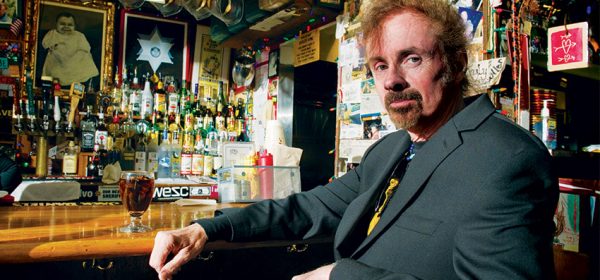
Got to meet one of my literary heroes in Savannah. T. Coraghessan and Me.

Also, I mused about what it would be like to have Hunter S. Thompson cover the Murdaugh trials in the The Hyper Gothic Murdaugh Saga: Hunter S Thompson Edition.

March/April

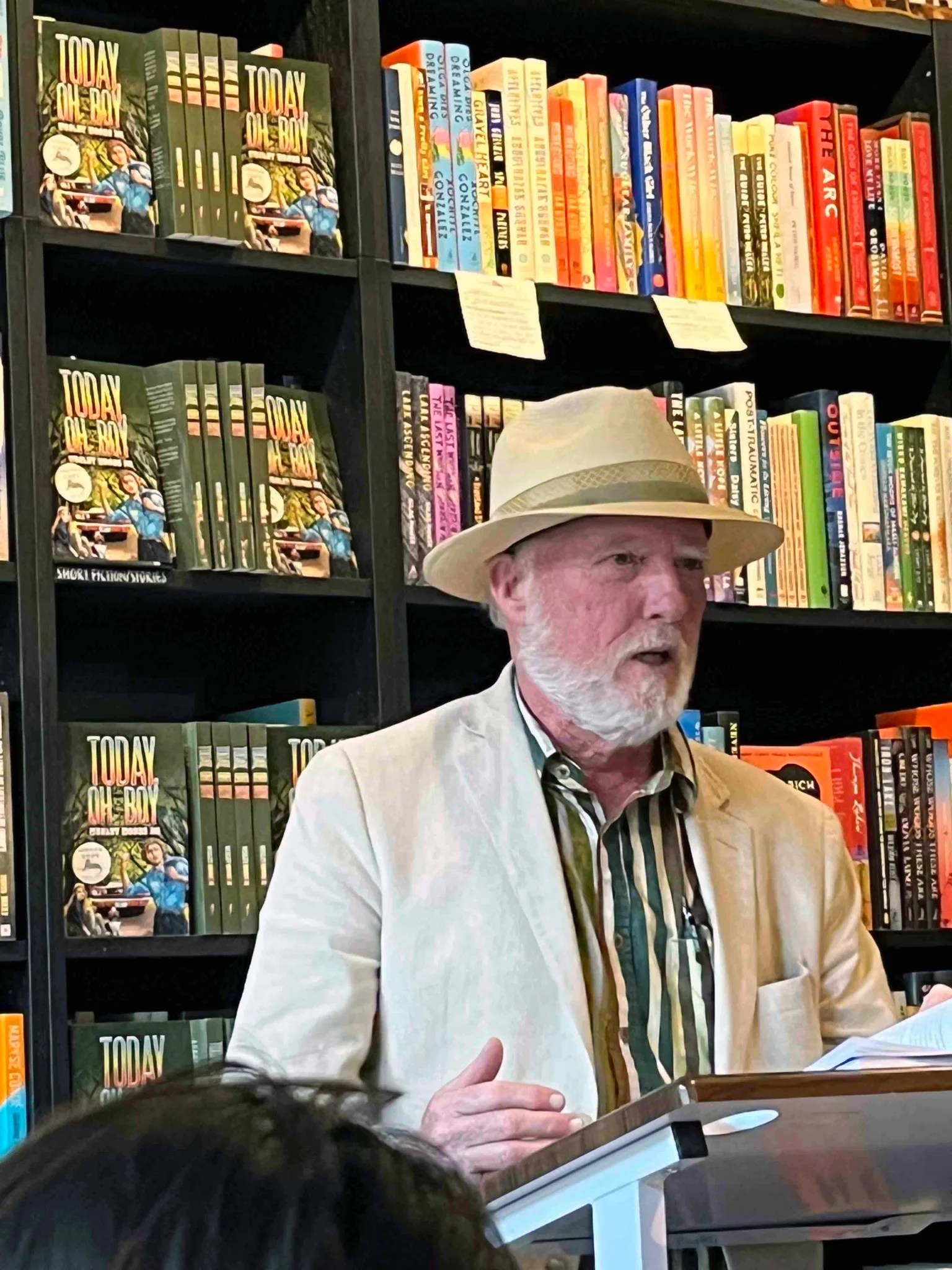
My novel came out 31 March and Buxton Books hosted a launch in early April.

Late Life Hullabaloo.

A Reading of Today, Oh Boy at Buxton Books, Charleston, SC 11 April 2023

Caroline, Brooks, and I-and-I also went with some friends to Mexico City in April.

Heeding Andrew Marvel.

May

I wrote a limerick – ha ha! – and guess what? It’s rated PG!, not surprising given it’s a Limerick.

June

Of course, death is one of my favorite subjects, as is music. So here are two posts on those timeless subjects.

You can’t Be Any More Out of It Than Dead.

And that’s the godless truth!

Here Comes the Night features a Van Morrison music clip, which in itself is worth a click.

July

July was fun. I wrote a nostalgic piece claiming not to be nostalgic called A Nostalgic Dismissal.

And I hitched a train up to DC, got to see my son, daughter-in-law, grandson, and fellow grandparent. Alas, though, I suffered misadventures after making some bad choices on the train trip home. There’s no fool like an old fool. You can ride along in Choo Choo Ding a Ling Ling.

August

Kirkus reviewed my novel: Kirkus Review of Today, Oh Boy.

And the delightful Montgomery Boat Brawl balmed my wizened heart.

Afterbirth of a Nation: The Montgomery Boat Brawl.

September

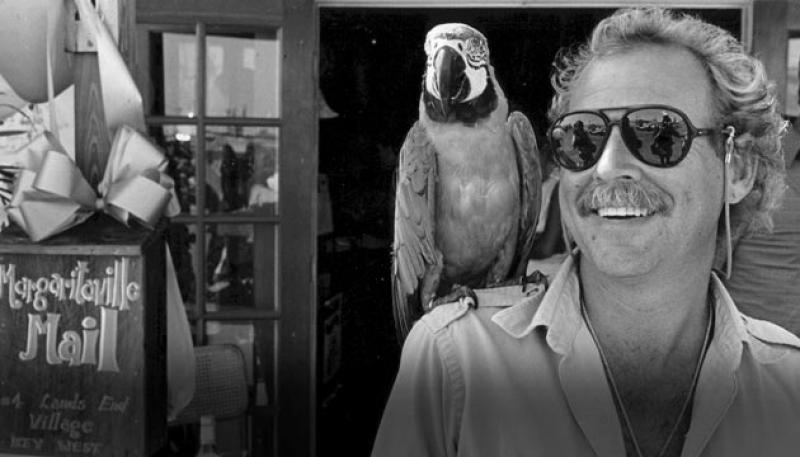
Alas, Jimmy Buffet died: So it follows that Jimmy Buffet’s Party’s Over.

October

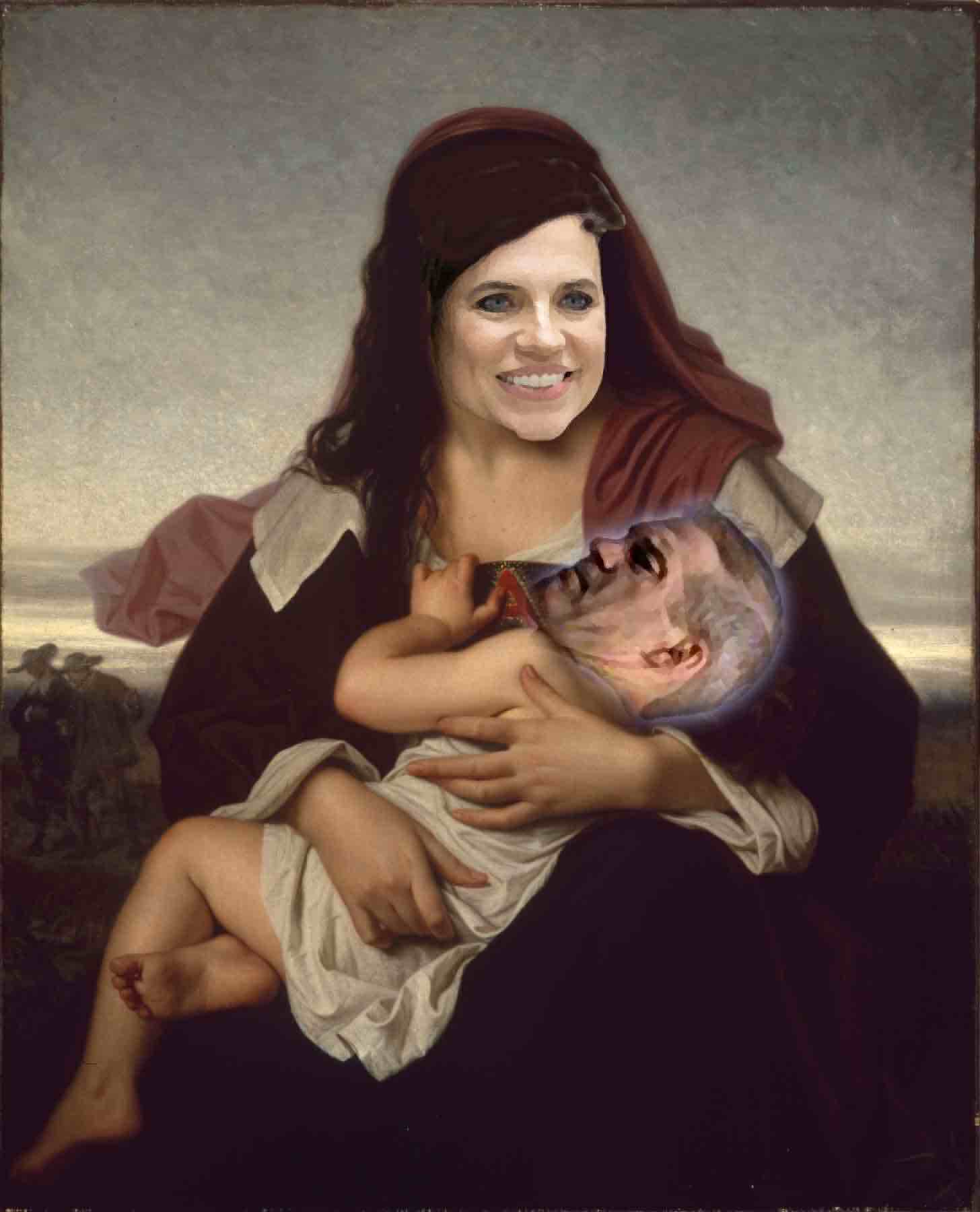
As she’s wont to do, Nancy Mace made an ass out of herself by thinking being slightly snubbed is the equivalent of standing on a scaffold and being humiliated by an entire town and then being further sexually shamed by having your status as adulteress emblazoned on your breast for the rest of your life.

Now that level of self-pity is truly shameful: Nancy Mace’s Scarlet Letter.

November

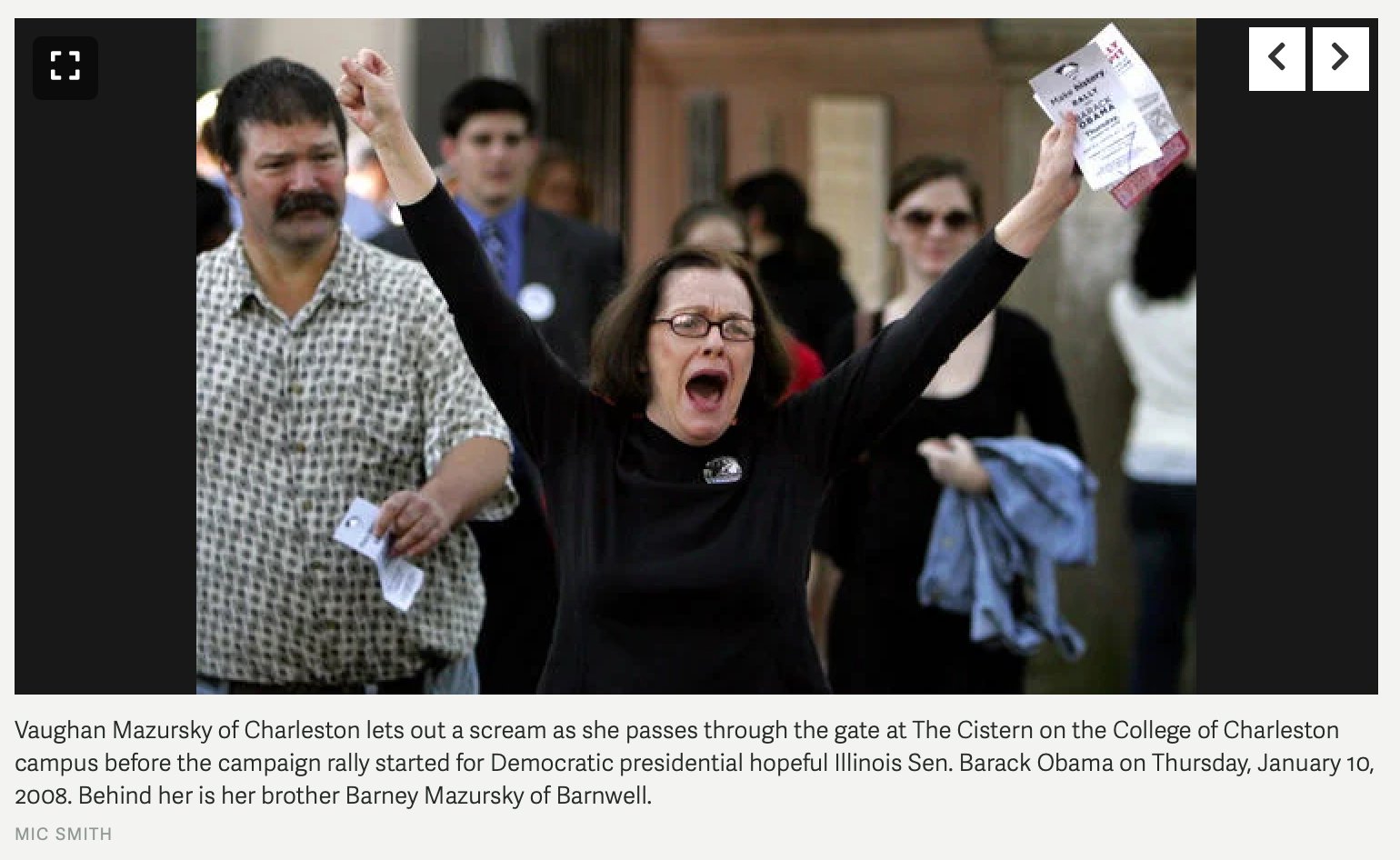
My friend, the incomparable, Vaughan Murzursky died: The Czarina Defies Death for a While.

December

And, finally, let us end with the beginning, a meditation on your mother’s and your Birth Pangs.

Birth Pangs

Although it occurred 71 years ago tomorrow, I remember my birth as clearly as if it had happened yesterday.[1]

I recall grooving in the womb, the temperature a comfortable 98.6, the background music the soothing backbeat of my mother’s twenty-one-year-old heart of gold, womb service delivered umbilically in the amniotic Eden of pre-Natal bliss.

But, alas, on the fourteenth of December, an earthquake, a rupture, unwanted spasms, an excruciating expulsion through an opening not nearly large enough to accommodate the partially deflated soccer ball of my head, which, as it turned out, was covered with Hemoglobins. 

Hour after hour of torture. Then I feel the ice cold clamp of forceps on my head, depressing and denting it, as Dr. Snyder yanks me out of the vice of a constricted passageway into the freezing but blinding bright light of Dorchester County Hospital’s delivery room.

To add insult to injury, he grabs me by the ankles and slaps the tiny target of my ass as I let out a hellish, ear-shattering scream.

Welcome to the third planet from the sun, little one.

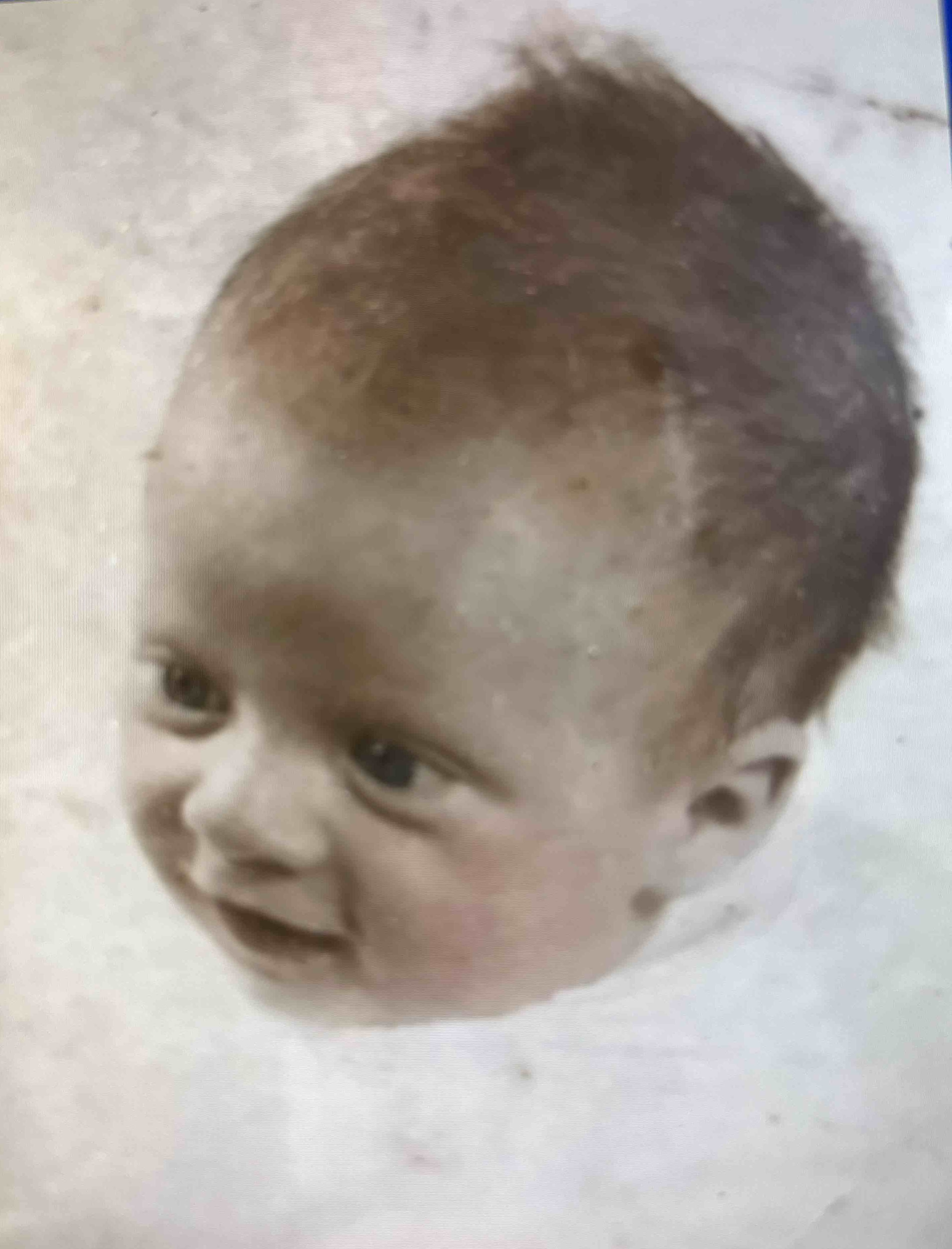
I was not a pretty sight. Both parents agreed that I was the ugliest baby they’d ever seen. They’d sometimes tell the story to dinner guests in my presence. The punch line was that Daddy had to ride back to Clemson right after the not-so-blessed event, and some lady on the Greyhound asked him why he looked so distraught, and he replied, “Because my wife has just given birth to a seven pound, four ounce monkey.”

After the laughter subsided, my mother would add, “But a week later he was the most beautiful baby you’d ever seen. When I would stroll him around Colonial Lake, strangers would stop and marvel at his beauty.”

Yeah, right.  No wonder I’m so messed up.


[1] Of course, at my age, remembering what happened yesterday clearly is not a given.