Schadenfreude: A Confession

Carl_Spitzweg_-_Der_arme_Poet_Neue_Pinakothek copy

Yesterday, at the school where I work, I took a prognosticative multiple-choice test formulated to determine high school students’ strengths. I’m 63, familiar with the Delphic inscription Know Thyself, so I think I can accurately say that my strengths lie in dependability and my main weaknesses in impatience and impulsiveness – “the awful daring of a moment’s surrender” as tight-assed TS Eliot put it.[1]

However, as I clicked my way through the 70-odd questions, it slowly dawned on me that I’m not a particularly compassionate person when it comes to inconveniencing myself to actually help people. Oh, I don’t mind sending a check, but if I had the choice between writing ten thousand times in longhand I’m not a compassionate person of or spending a day with Habitat for Humanity helping to build a house for the poor, I’d opt for the writer’s cramp.

In the test I took, this question came up more than once: do you like helping people? I answered sometimes virtually every time. Of course, it’s certainly gratifying rescuing a toddler caught in a riptide (which I’ve done) but not so much joining an intervention for one of your junkie relatives. The bottom line is that, no, I don’t particularly enjoy helping people if it inconveniences me, so the test was effective in that it made me realize that in reality I’m  not all that compassionate, which I sort of considered myself to be.   Sure, I enjoyed helping the guidance department test the test, but I really had no choice. It was part of my job.

As coincidence would have it, to reinforce that self-assessment, four Team USA Olympian swimmers made a bad decision down there in Rio,. Of course, virtually every bad decision is the culmination of a series of bad decisions. E.g., lying about the robbery was a bad decision, necessitated in the mind of Lochte because someone had vandalized a restroom, which was a bad decision, precipitated by staying at a disco until 5 a.m., which was a bad decision, no doubt aided-and-abetted by the consumption of torrents of intoxicants, which was a bad decision, that over-indulgence a habit arrived at early on in their hotshot days as revered student athletes and not abandoned over the course of decades, bad decisions, ad nauseam.

A truly compassionate person, the Buddhist that I used to pretend to be, would feel compassion for the swimmers. He might recall some really stupid antics committed in the throes of drunkenness from his checkered past instead of schadenfreude.

Unfortunately, what one feels is what one feels. Let the great ax fall where it may.


[1] E.g., sending an angry email at 3 a.m., dropping down the cliff face of a wave you should know you can’t handle in a hurricane swell.

Bachelor Party at Chico Feo’s: An Anthropological Study

chico bachelor party


Last Saturday, I had the opportunity as an anthropologist to observe a late afternoon bachelor’s party at Folly Beach’s little corner of the Caribbean, Chico Feo.

By the way, bachelor parties for centuries have been traditional components of mating and marriage rituals in the West. Whether you’re bidding “farewell to bachelorhood” in Munich at a Junggesellenabschied or in Arles marking the “burial of the life of a boy” at an enterrement de vie de jeune fill, you can be assured of one commonality: the Junges and garçons are gonna get shit-faced just like the lads in Liverpool and the dudes of Malibu.


Berlin Junggesellenabschied

Berlin Junggesellenabschied

Indeed, even though it was merely four in the afternoon at Chico Feo, a few of the entourage exhibited telltale signs of intoxication — sleepy, glazed eyes; mouths that hung open; wobbly legs. The first reveler in this condition I encountered kept bumping into the vacant bar stool adjacent to me.  Charlie, Chico’s world-class bartender, informed me with a scowl that these fellows were part of a bachelor’s party. It appeared that Charlie had already cut this fellow off.

I’d estimate these young men to be from the Northeastern United States, a section of the country in which good-natured mockery seems to be an ubiquitous social custom (see Tolerating Middle Class Northerners for Dummies). The bros bantered about slinging insults, ordering beer after beer, and slurping down in one swallow Chico’s delicious tacos as if they were oysters.

Most of these young men were large in stature, and even if they weren’t, they sported over-sized biceps and an array of body art ranging from rustic gunmetal blue barbed-wire wraparounds to high-end multicolored patterns that screamed Gauguin. It seemed, though, that some had acquired their muscular upper arms a while ago because now their abs resembled not so much washboards as loads of laundry.

It was interesting to try to determine who reigned as alphas of the cartload. One “dude” particularly seemed in charge, a vociferous twenty-something who looked as if his ancestors may have entered Ellis Island from Brindisi. He had an olive completion, aquiline beak, and jet-black short-shorn hair covered by a baseball cap worn backwards. He was conversing with some female patrons, boasting of the Adonis-like beauty of one of his friends, Paul, a ridiculously good-looking and fit fellow whose sandy hair fluttered in the on-shore breeze. Paul was sitting at the bar but looking in the opposite direction at the bacchanal taking place beneath the overarching trees that provide shade for Chico’s tables and chairs.

“These chicks want you to take off your shirt, Paul,” the alpha shouted in an accent that I’d place somewhere close to Newark.

Paul sat there passively grinning.

“C’mon Paul.   Show ‘em what you got.”

The females nodded their heads, and the ringmaster shouted, “C’mon, Paul, take off your shirt. Now! Show us your tits,” and a chant began “Show us your tits, show us your tits,” to which bartender Charlie, the real alpha, put an immediate stop. The ringleader opened his mouth and raised his arm as if he were going to continue, but Charlie’s stare short-circuited the bravado, and the erstwhile alpha dropped his hand and benignly smiled what I would call (removing my pith helmet of anthropological professionalism for a second) a stupid, shit-eating grin.

“Hey, which one’s getting married?” I asked Charlie.

“I don’t care,” he said shaking his head.

Unlike Dian Fossey or Jane Goodall, I didn’t ingratiate myself my this cartload[1] of not-so-fun-folks to follow them to their next destination, the Tides Hotel where they were wisely staying, eliminating even the need of Uber for their locomotion. However, I suspect that before the evening came to its inevitable end, these celebrants would witness some form of burlesque for hire, i.e., a stripper performing that age-old ritual.

I’ll leave you with this from Wikipedia:

In Israel, the bachelor party is called מסיבת רווקים. Such parties often feature heavy drinking and sometimes the presence of strippers.

Israeli מסיבת רווקים

Israeli מסיבת רווקים

Seems like a pattern, huh.


[1] Did you know you call a group of chimps a “cartload?” It’s a troop of gorillas and baboons, a barrel of monkeys, but a cartload of chimps. Go figure.

Deserts of Vast Eternity

shapeimage_2

And yonder all before us lie
Deserts of vast eternity.
Thy beauty shall no more be found,
Nor, in thy marble vault, shall sound
My echoing song; . . .
Andrew Marvell

“Me, me, me me,” squeals the toddler, waving his arms.

“Watch me!” demands the nine-year-old wobbling off on his bike.

“Who me?” snarls the adolescent, feigning outrage.

“Will you marry me?” asks the suitor, dropping to one knee, reaching in his pocket for the diamond.

“I need some time and space for me,” says the wife frowning, her back turned, her arms folded across her chest.

‘Why me?” wonders the patient in the hospital gown as his oncologist points to the mass on the x-ray.

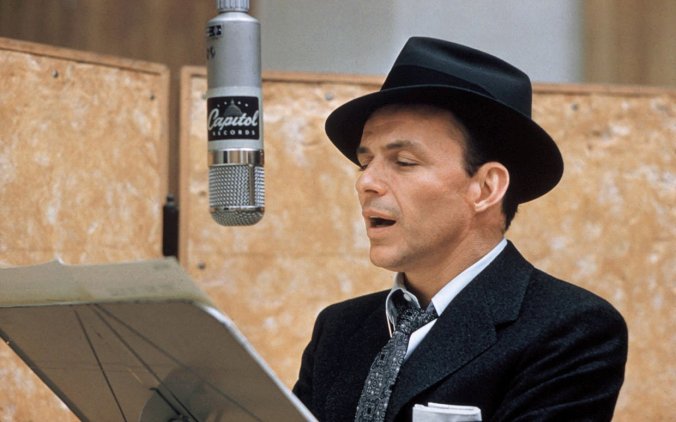
“I gotta be me,” croons fedora-sporting Sinatra, a fading memory, a voice very few living have heard live.

Frank-Sinatra-duets-ftr

Some argue rather narrowly that world only exists in perception, i.e., that if there were no you, there wouldn’t be a world. Well, yes and no. If I had been killed in that horrific wreck on Hilton Head in 1976, the Braves still would have lost the ’91 Series – though for my sons non-Harrison and non-Ned, there would be no world.

Nevertheless, given that wherever we are is the center of the circle of perception – despite the fact that we’re mere dots on a map of blurred dots – each dot forms the center of our universes, 7 billion centers of 7 billion universes projecting outward from Europe, Asia, the Pacific, South America, the circles intersecting, forming collectively what is, or, rather, what seems to be.

1292515425-nytimes-nashville-census-map-2010

As our world becomes more secular, the surety of eternal bliss dwindles among the populace. As in the pagan world of Beowulf, for many the only path to immortality is through fame, but which one of us would trade places with Frank Sinatra or Steve Jobs?

No, as one of Flannery O’Connor’s characters put it, “You can’t be any poorer than dead.”

Given that oblivion looms for so many of us, no wonder we seek attention, desire to be noticed. So we have our photograph taken next to the Mona Lisa. We publish blogs, post photographs of our evening meals on Facebook, purchase red Corvettes to counterbalance the drop in testosterone. We struggle to leave a mark, whether it be a novel of lasting value, a beautiful building, a cure, an estate.

All the while the invaluable moments dissipate unseen like heat waves from the floors of deserts.

Mike Theiss: Tumbleweed and Patterned, Cracked Desert Floor, and Nearby Mountains

Mike Theiss: Tumbleweed and Patterned, Cracked Desert Floor, and Nearby Mountains

The global village underscores our ultimate insignificance. Back in the mists of time, among the few of our tribal community, among the savannas or in the forests, we didn’t seek notoriety but subsumed ourselves in rituals. However, now, like the toddler, we seek attention to prove that we exist. Once we’ve been gone a hundred years most of us won’t leave a trace – except for whatever genetic tracings can be found in our descendants or any bones that might show up in an archeological dig or construction project.

The paradox is that despite endless silence that awaits us, what we really need here in time is silence. Time to think. Time to feel.

images-1

The Age Old Anvil of Sorrow

broken

When things get bad for me, I tend to turn to literature in the paradoxical quest to both temporarily forget my personal troubles and to delve deeply into someone else’s. Obviously, great literature universalizes the human condition and reminds us that violence, disease, and sorrow have always been with us and will always be with us.

“Blood will have blood,”[1] like Macbeth says, as if commenting on this morning’s headlines.

His Russian cousin, Ivan Ilyich comes to realize that disease preys on the undeserving just as often as on the righteous (even on the exerciser, the non-smoker).

Meanwhile, despairing Manley Hopkins’ anguished “cries heave, herds-long; huddle in a main, a chief/Woe wórld-sorrow; on an áge-old anvil wince and sing.”

No, to cop out with a cliché – I am not sorrow’s first rodeo. Antigone, Isolde, Hamlet, Emma Bovary, and Alyosha Karamazov have all been there (in despair), done that (grieved) – as have their creators.

antigone4

* * *

The Brothers Karamazov, which I finished yesterday, was June’s project, and Joseph Franks’ 5-volume biography of Dostoyevsky is July’s. The Brothers K offers all the vicarious sorrow anyone could ever desire – childhood abandonment, sexual exploitation, sexual betrayal, filial betrayal, insanity, alcoholism, adolescent angst, dark nights of the soul, and, of course, buckets of blood.

Dostoyevsky

Dostoyevsky

So far, Fyodor Mikhailovich Dostoyevsky’s life hasn’t been much happier. I’m only on page 70 (of 932), and already Fyodor’s mother has died of a lingering mysterious illness, he’s been sent off to a military academy he detests, and now his father has died, most likely murdered by his serfs, and Fyodor has a number of younger siblings who are now orphaned.

Dostoyevsky was a man of his convictions and held to them even when they were unpopular. Throughout his life, from coming to the aid of bullied cadets at the military academy, to reaching out and aiding the peasantry, he practiced what he preached. Or as David Foster Wallace puts it in his essay “Joseph Frank’s Dostoyevsky”:

For me, the really striking, inspiring thing about Dostoyevsky isn’t just he was a genius; he was also brave. He never stopped worrying about his literary reputation, but he also never stopped promulgating unfashionable stuff in which he believed. And he did this not by ignoring (now, a.k.a.” transcending” or “subverting”) the unfriendly cultural circumstances in which he was writing, but by confronting them, engaging them, specifically and by name.

This, DFW maintains, certainly isn’t the case nowadays:

But Frank’s Dostoyevsky would point out (or more like hop up and down and shake his fist and fly at us and shout) that if this is so [i.e., our intelligentsia abjures ideological passion], it’s at least partly because we have abandoned the field. That we’ve abandoned it to fundamentalists whose pitiless rigidity and eagerness to judge show that they’re clueless about the “Christian values” they would impose on others. To rightist militias and conspiracy theorists whose paranoia about the government supposes the government to be just way more organized and efficient than it really is. And, in academia and the arts, to the increasingly absurd and dogmatic Political Correctness movement, whose obsession with the mere forms of utterance and discourse show too well how effete and aestheticized our best liberal instincts have become, how removed from what’s really important – motive, feeling, belief.

In other words, our current condition is one of fragmentation. Both major national political parties are splintering, and the gulf between them ideologically is like light years. Congressional districts twist and turn across maps like wakes from drunken boats. Although you might think that our digital interconnectivity might bring us closer together, it seems to me it isolates us, as we sit at the bar ignoring our friend as we stare down at the screen cultivating some personal obsession. In other words, we suffer from what Dostoyevsky might call radical individuality: I perceive the universe from my perspective; therefore, I must be the center of the universe. Other lives don’t matter as much – white, black, Muslim, Christian, Jew, infidel.

nc12

This attitude of isolation, of course, is a recipe for unhappiness; just ask the diva who demands eleven red roses in a blue vase every time she books a suite facing east in a luxury hotel where some tiny little infraction is going to throw her into a tizzy.

She suffers from disconnection, different but in some ways not unlike the radicalized homegrown terrorist or the arsenal-amassing militiaman or the divorced, underemployed middle-ager attaching the hose to his exhaust pipe.

[cue Barbra Streisand’s “People”]

Here is Alyosha Karamazov after the funeral of little Ilusha addressing Ilyusha’s friends at the end of the novel:

And whatever happens to us later in life, if we don’t meet for twenty years afterwards, let us always remember how we buried the poor boy at whom we once threw stones, do you remember, by the bridge? and afterwards we all grew so fond of him. He was a fine boy, a kindhearted, brave boy, he felt for his father’s honour and resented the cruel insult to him and stood up for him. And so in the first place, we will remember him, boys, all our lives. And even if we are occupied with most important things, if we attain to honour or fall into great misfortune — still let us remember how good it was once here, when we were all together, united by a good and kind feeling which made us, for the time we were loving that poor boy, better perhaps than we are. My little doves let me call you so, for you are very like them, those pretty blue birds, at this minute as I look at your good dear faces.

[. . .]

I say this in case we become bad,” Alyosha went on, “but there’s no reason why we should become bad, is there, boys? Let us be, first and above all, kind, then honest and then let us never forget each other! I say that again. I give you my word for my part that I’ll never forget one of you. Every face looking at me now I shall remember even for thirty years. Just now Kolya said to Kartashov that we did not care to know whether he exists or not. But I cannot forget that Kartashov exists and that he is not blushing now as he did when he discovered the founders of Troy, but is looking at me with his jolly, kind, dear little eyes. Boys, my dear boys, let us all be generous and brave like Ilusha, clever, brave and generous like Kolya (though he will be ever so much cleverer when he is grown up), and let us all be as modest, as clever and sweet as Kartashov. But why am I talking about those two? You are all dear to me, boys; from this day forth, I have a place in my heart for you all, and I beg you to keep a place in your hearts for me! Well, and who has united us in this kind, good feeling which we shall remember and intend to remember all our lives? Who, if not Ilusha, the good boy, the dear boy, precious to us for ever! Let us never forget him. May his memory live for ever in our hearts from this time forth!”

Love.

Unknown


[1] Especially when purchasing an assault rifle is easier than buying a tube of cortisone cream.

On Our Nation’s 240th Birthday

Robert Fowler

Robert Fowler

In the 1980’s, my pal Robert Fowler had a radio comedy show on SC Public Radio that aired on Saturday mornings called The Hog Breeders’ Gazette . I remember fondly one 4th of July program that featured a parody of a school assembly celebrating the founding of our great nation.

One of the contributions to the mock school assembly was a brilliant piece of doggerel that portrayed western expansion as nothing more than undesirables, miscreants, getting booted out of a series of towns forever westward until they reached the Pacific Ocean. I wish I could replicate it for you, but the cassette upon which I recorded it has been lost, and even if it hadn’t been lost, I have no machine upon which to play it, from which to transcribe those rollicking rhythms and clever rhymes.

Alas!

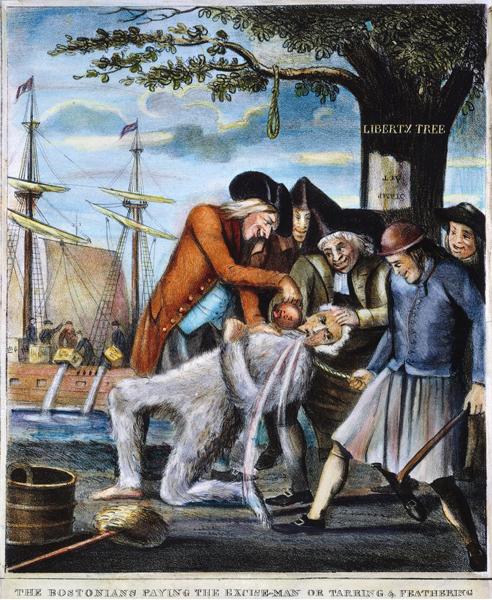
Anyway, the piece eloquently poked fun at the concept of American Exceptionalism, the idea that the United States is the New Jerusalem ordained by the Creator of the Universe as a shining city on a hill to provide the planet with a safe haven for individuals to live their lives in the open spaces that freedom provides. Fowler’s poem portrayed the early populace of these United States, not as idealists seeking religious sanctuary, but as the dregs of Europe, losers, crooks, neer-do-wells so out of synch with their original cultures that they’d risk the wild, treacherous stormy ride across the Atlantic in a desperate attempt to escape. These were the scalawags that inhabit The Adventures of Huckleberry Finn, candidates for tarring and feathering, ungovernable, uneducated white people willing to do about anything to line their own pockets.

dawe-taxman-1774-adjustment

Obviously, the truth lies somewhere in between. I suspect for every desperado there have been ten Irish or Vietnamese mothers sincerely seeking the honest opportunity of hard work and upward mobility, but the truth of the matter is that we are a difficult bunch to govern as the recent occupation of the Malheur National Wildlife Refuge suggests.

Of course, we Americans have been indoctrinated to believe that our government’s fortunate birth in the Age of Enlightenment with its skeptical and rational check-and-balances insures stability, but now, given arcane and undemocratic rules of the Senate, it seems as if these checks-and-balances might result in paralysis, stagnation. In the current climate, we can’t even get that body to convene to fill a Supreme Court vacancy.

And so, at least for now, both major political parties seem to be fracturing, heroin overdoses are all the rage among the middle class, victims of middle school bullying with shoulder-chips the size of Sisyphus’s boulder have easy access to automatic weaponry — but — and this is a very big but – there’s no more vibrant, alive, musically diverse, more interesting place on the planet, and I submit, we have immigration to thank for that and are very fortunate overall to call the United States home.

So happy 4th of July, dear readers.


Ants and the Karamazovs

the author fleeing from an ant attack

the author fleeing from an ant attack

I’ve spent June with the Karamazovs.   In the literary category of most-fucked-up families, the Karamazovs rank right up there with Faulkner’s Compson clan and the mother-and-son team of Mr. and Mrs. Oedipus Rex.[1]   With the Karamazovs, we’re talking a toxic Freudian stew of father/son rivalry; religious/existential angst; vigils over putrid, decaying corpses; parricide – you name it.

paperbackFlipping through the yellowed pages of my 1957 paperback, I’ve been hanging out in monasteries, crumbling estates, filthy hovels, roadhouses, and prisons. Dostoyevsky’s celebration of suffering dwarfs whatever current troubles the reader tends to be enduring – in my case defending our household from an invasion of sugar ants (Monomorium pharaonis).

That’s right sugar ants, or, if you prefer, pharaoh ants, hordes of them, hundreds, if not thousands, marching dutifully in single file until they make the vertical descent from windowsill to counter top where they break up and swarm into earthbound clouds of tiny six-legged locusts.

If Dostoyevsky’s world is God-haunted, our bathroom is Darwin-haunted, man-versus-beast, and am I ever outnumbered, pitted against a very insidious, well-adapted enemy equipped with three types of pheromones, remarkable navigation skills, nesting strategies that subdivide colonies into non-competitive satellite campuses. To make matters worse, the colonies of these ants contain many queens, making it more difficult to eradicate a colony.

Monomorium pharonis with sugar crystal

Monomorium pharonis with sugar crystal

Sugar ants are tiny, a mere 2mm, about the size of a gnat. I first noticed them in the sink, feasting on a careless dropped dollop of toothpaste, so I guess you could say my carelessness caused the invasion.[2] Anyway, dispatching this first wave was as easy as retrieving tissue and wiping the intruders away. “Ha! Let that be a lesson,” I thought.

What I didn’t realize is that these fallen scouts had left a well-marked trail of pheromones pointing out to kinsmen the path to my sink. My next strategy was to spray the counters with peroxide, which instantaneously dispatched the unwanted immigrants, and I thought the puddles might act as a moat to dissuade others from visiting, but then again, I was mistaken.

The third strategy was successful. I mixed some Borax powder with fig preserves, placed the concoction on a piece of cardboard, and laid it on the counter. Man, what a cluster feast. It looked as if they were drunk, hundreds of them, inert, seemingly stuck, but still others were marching in single file, going and coming beneath the windowsill and through the screen.

That night I was shocked to discover that except for a few dead non-souls stuck in the preserves, that they were all gone, and the morning after no one returned, and now it’s been two days, so I am on the verge of declaring victory. Praise be for that slow acting poison borax, which the workers took home to their queens, who ingested it and with those royal deaths, the colony ended.

So now I can return in triumph to the Brothers Karamazovs — Dmitri, Ivan, Alyosha — and to the illegitimate Smerdyakov, whose stunted, dim-witted mother Lizaveta Papa Fyodor had his way with, impregnating her with the offspring that one day would put an end to him. In other words, return to a world far less organized, wholesome, and, dare I say, moral than the ant colony I destroyed.


[1] AKA the House of Cadmus.

[2] Or as Dmitri Karamazov might say, “”We’re all cruel, we’re all monsters, we all make men weep, and mothers, and babes at the breast, but of all, let it be settled here, now, of all I’m the lowest reptile.”
Karamazov-Banner

Mind-Forged Manacles

shapeimage_2

C’est l’Ennui!—l’oeil chargé d’un pleur involontaire,
Il rêve d’échafauds en fumant son houka.
Tu le connais, lecteur, ce monstre délicat,
—Hypocrite lecteur,—mon semblable,—mon frère!*

Baudelaire “Au Lecteur”

In our culture of hyper-stimulation, silence has become the rarest of commodities. In the evening of an overcast, humid, post-solstice sabbath, a siren swirls off in the distance while some unseen high-pitched mechanical blower/sandblaster/particle-collider keens like an instrument of torture.

To me, a native of the Lowcountry, summer’s official beginning is a sad occasion. The best weather is already behind us. The drip drip drip of days will winnow with less and less daylight as the ambitious resolutions of early June melt in the heat like wax sculptures – the hot tub not repaired, the school work delayed, the evenings, mornings, afternoons dissipating inevitability into oblivion.


*It’s the soul-stunting boredom – an involuntary tear in the eye.
Smoking the houka, he dreams
of gallows. Reader, you know this exquisite malady.
You, hypocrite reader – my soulmate – my brother!

very loosely translated by I-and-I (who assures you it sounds great in French)

Ennui, by Askerov

Ennui, by Askerov

O, woe is me!

Even though I have access to an array of Robert Altman films I can stream instantly via Netflix, Nashville is not available; the beach that is exactly .32 miles away is teeming with vulgarians, the gorgeous vista behind our house muted by the cloud cover.

Bill Clinton, you can’t even begin to feel my pain!

clintonfrown460

Perhaps, the decadent, entitled, whining dissatisfaction sampled above stems from my disinclination to seek out silence. The East has provided us with techniques to subdue what zen masters call “the monkey mind,” i.e., the brain’s tendency to flash from idea to longing to memory the way a spider monkey slashes from tree to tree to tree.

spider monkey (Ateles geoffroyi)

spider monkey (Ateles geoffroyi)

One of the many beauties of Buddhism is that it provides its practitioners a regimen of exercises that transforms the mind – to switch metaphors – from murky strom-tossed waters into a glassy pool that reflects things as they are. Buddhism relies on self (not supernatural) reliance in the paradoxical quest to annihilate ego.

“If you understand real practice, then archery or other activities can be zen. If you don’t understand how to practice archery in its true sense, then even though you practice very hard, what you acquire is just technique. It won’t help you through and through. Perhaps you can hit the mark without trying, but without a bow and arrow you cannot do anything. If you understand the point of practice, then even without a bow and arrow the archery will help you. How you get that kind of power or ability is only through right practice.”
― Shunryu Suzuki, Not Always So: Practicing the True Spirit of Zen

Jeff League: Bonsai Tree with Blossoms

Jeff League: Bonsai Tree with Blossoms

Oh, but if right practice were only that easy! The changes are oh so slow. After all, according to Buddhist teachings, it’s a regimen that may take lifetimes rather than weeks to perfect.

Plus, the Faustian temptations – the webs (worldwide/ otherwise) that stretch out to snare us. Why assume the half lotus when I can watch reruns of What’s My Line? on YouTube or channel surf with a television monitor that provides images that seem more wonderful than the flora and fauna outside my window?

Not to mention the restive hardwired desires for sustenance and sex.

Nevertheless, as the adage goes, charity begins at home, and right practice is ultimately a matter of self will. In fact, Marlowe’s Doctor Faustus offers a superb example of the dangers expressed at the beginning of this post – the tendency to shrug off the profound for the superficial, to squander precious moments in fruitless distractions. Remember, Faustus sold his soul to achieve greater knowledge, to understand how the cosmos functioned, yet soon enough started wasting his powers in trivialities, e.g., playing magical tricks on his adversaries and conjuring illusions like Helen of Troy, the face that launched a thousand ships/And toppled the topless towers of Ilium.
The 16th century equivalent of computer porn.
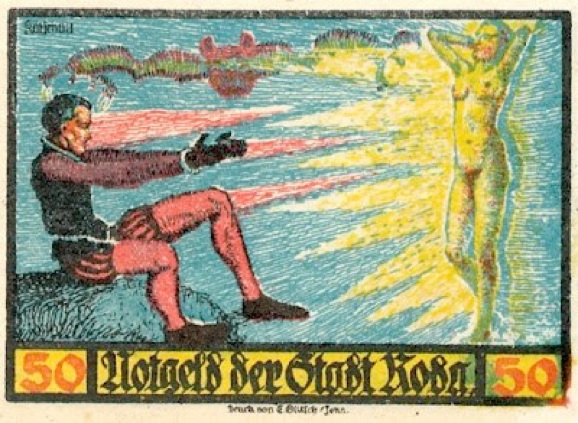
5 D. Fausti Buhlschaft mit Helena aus Graecia

Of course, the mind itself consists of the most delicate of chemical balances. What we so naively consider our substantial selves is an illusion conjured by a delicate mixture of amino acids, monoamines, acetylchlorine, nitric acids, etc.

A hit of illicit acid or a doctor prescribed dose of Prednisone can transform the seemingly substantial you from Jekyll to Hyde, begging the metaphysical/existential question who or what am I?*

Certainly, successful meditation must alter our brain chemistry in some mysterious way that leads to serenity. Here’s an anecdote from Ram Dass (aka Richard Albert) on the subject:


*Note to former students: Cf. Raskolnikov, Harry Haller, Stephen Dedalus, Oedipus, Hamlet, Othello, Emma Bovary, Milkman, Willy Logan, Merseault, Elizabeth Bennet, Raskolinkov, Mr. Kurtz, Dorothea Brooke . . .

In 1967 when I first came to India, I brought with me a supply of LSD, hoping to find someone who might understand more about these substances than we did in the West.

When I had met Maharajji (Neem Karoli Baba), after some days the thought had crossed my mind that he would be a perfect person to ask. The next day after having that thought, I was called to him and he asked me immediately, “Do you have a question?”

Of course, being before him was such a powerful experience that I had completely forgotten the question I had had in my mind the night before. So I looked stupid and said, “No, Maharajji, I have no question.”He appeared irritated and said, “Where is the medicine?”

I was confused but Bhagavan Dass suggested, ” Maybe he means the LSD.” I asked and Maharajji nodded. The bottle of LSD was in the car and I was sent to fetch it. When I returned I emptied the vial of pills into my hand. In addition to the LSD there were a number of other pills for this and that–diarrhea, fever, a sleeping pill, and so forth. He asked about each of these.

He asked if they gave powers. I didn’t understand at the time and thought that by “powers” perhaps he meant physical strength. I said, “No.” Later, of course, I came to understand that the word he had used, “siddhis,” means psychic powers. Then he held out his hand for the LSD. I put one pill on his palm. Each of these pills was about three hundred micrograms of very pure LSD–a solid dose for an adult. He beckoned for more, so I put a second pill in his hand–six hundred micrograms. Again he beckoned and I added yet another, making the total dosage nine hundred micrograms–certainly not a dose for beginners. Then he threw all the pills into his mouth. My reaction was one of shock mixed with fascination of a social scientist eager to see what would happen.

He allowed me to stay for an hour– and nothing happened. Nothing whatsoever.

Although we must cast a skeptical eye on anecdotal evidence, logic itself suggests that we at least give meditation a try, even if it yields something less than guru-dom. If it can help us shed delusions and rediscover wonder in the everyday, why not take the plunge? Meditation is religion neutral – the Southern Baptist and Shite Muslim (they have more in common than you might imagine) can practice meditation in honor of their respective deities.

It has in my negligible experience helped me to focus outside of myself to discover a certain interrelatedness, and the twenty minutes it costs can be scheduled between texting and checking emails – sometime during the evanescent day’s decline into darkness.
Just try to make sure you’re somewhere quiet.

photograph by Judy Birdsong

photograph by Judy Birdsong

The Zombie Apocalypse Blues (We’re All Gonna Die!)

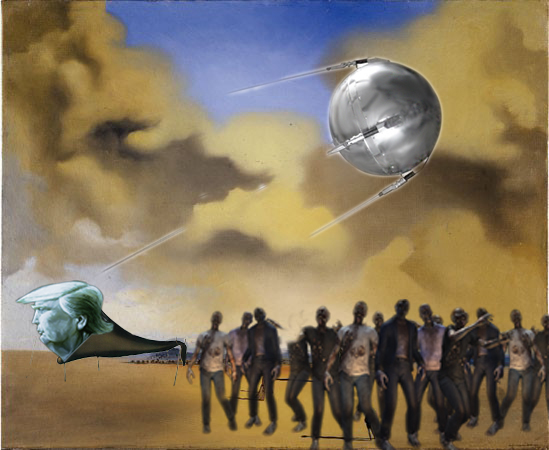
Zombie Apcolpse


Born six years and ten months after the atomic bombings of Hiroshima and Nagasaki, I am old enough to remember looking up at the stars above the steeple of the Methodist Church across the street from our rented house to see if I could detect Sputnik inching its way across the night sky.

We’re all gonna die!

Five years later, I would crouch underneath my desk at Summerville Elementary School as we practiced surviving a Soviet nuclear attack.[1]

We’re all gonna die!

A few months ago, I huddled beneath a Harkness table with high school students as we practiced surviving an assault from a deranged assailant.[2]

We’re all gonna die!

* * *

In the swirl of everyday events, it’s sometimes difficult to see strange occurrences as nothing more than mundane. In our particular culture, mass murder has become mundane. I’m not at all surprised to awaken to the news that some disaffected religious fanatic or marginalized bigot clad in body armor has decided to take out his grievances on complete strangers. Chances are that the murderer here in the United States is a native-born citizen of the-home-of-the-brave-and-the-land-of-the- free. Chances are he feels unaccepted so decides to throw a tempter tantrum.

Now, even the loneliest of the alienated can commune with fellow disaffected psyches on the Internet, cross-pollinating hatreds. Omar Mateen, our butcher de jour, actually checked his Facebook page during the carnage to see if the shootings had gone viral. Despite his having sworn fealty to ISIS right before the attack, I suspect that repressed-queerness, a tyrannical father, and high-school unpopularity had as much to do with his rage as geo-political/religious fanaticism.   Maybe he didn’t get enough positive attention when he was growing up. Now, he has gone viral, achieved infamy, set the Internet ablaze by obliterating the lives of his victims, their families, and friends.

Meanwhile, Congress is unwilling to ban the sale of assault weapons to people on no-fly lists, the Republicans have nominated PT Barnum-Meets-Mussolini, the Democrats a woman with a 55% disapproval rate, forest fires roar and oceans rise as satellites galore orbit the Earth keeping tabs and providing entertainment that features zombie apocalypses.

We’re all gonna die!


[1] Did they do this in the “separate-but-equal” African American school across town?

[2] Did little colonists in their one-room schools practice for a possible Indian attack?


Way, Way Past Time

Yesterday morning I awakened to the news that the 1,001st mass shooting since Sandy Hook had occurred at an Orlando nightclub.   Of course, mass shootings only make up a small percentage of the 32,000 firearms deaths the US racks up every year.


CkzEqS-WEAAQLnj


Be that as it may, when it comes to mass shootings, a very clear pattern emerges as to the weapon of choice among the assailants, the AR-15, the weapon used Friday night in Orlando and six months ago in San Bernardino and in 2012 in both the Aurora, Colorado, theatre shooting and the massacre in Newton, Connecticut, at the Sandy Hook Elementary School.

It’s the same weapon South Carolina State legislator Lee Bright raffled off when he ran against Lindsey Graham in 2014. I’ll let the ironically named legislator speak for himself:

“In the wake of the horrific tragedy in Newtown, Connecticut, gun-grabbers were sure they had the votes to RAM gun control into law,” the email said. “Thanks to the action of Second Amendment supporters all over the country, their schemed failed — even despite my Republican Primary opponent, U.S. Senator Lindsey Graham. … In fact, it’s one BIG reason I’m running for the U.S. Senate. And today, I’m announcing that my campaign is giving away a brand new Palmetto Armory AR-15!”

Capture7

Bright asked supporters to forward the email “to every pro-gun friend and family member you have.”

There is no reason for anyone to own an AR-15 assault weapon (note the nomenclature). For hunting, it might be useful if the game is Godzilla, but for deer or even bear it seems like overkill, not very sporting, and as far as self-protection goes, a shotgun will do.

And please spare me the deluded fantasy that assault weapons are necessary in the event that “they” ever come after “our guns.” Let me assure you that if the “they” is the US Military, your AR-15 is not going to be all that effective against F-15s, armored vehicles, cruise missiles, etc.

But, the doubters ask, if we make assault weapons illegal, only criminals will own them. Well, we have a real world example of what happens when assault weapons are banned in the 1996 legislation that Australia enacted. I quote the NY Times:

The oft-cited statistic in Australia is a simple one: There have been no mass killings — defined by experts there as a gunman killing five or more people besides himself — since the nation significantly tightened its gun control laws almost 20 years ago.

A few of the weapons accumulated in Australia's government's buy back program

A few of the weapons accumulated in Australia’s government’s buy back program

Obviously, it’s way past time for us to do the same. The fact that this latest butcher with a known link to an Islamic radical could purchase an assault weapon is unconscionable, ludicrous, downright un-Darwinian.

Please contact your representatives. I certainly am.

Psalm: Dystopia

il_fullxfull.288899605


From man’s blood-sodden heart are sprung

Those branches of the night and day

Where the gaudy moon is hung.

What’s the meaning of all song?

‘Let all things pass away.’

                                                WB Yeats, “Vacillation”


Once upon a time,

and a very good time it was,

before we put seeds in the ground,

the gods lived inside the snake,

inside the bush, inside of us.


After the capture of the seed,

the plants lost their souls

as the folk toiled

beneath the eyes of a watchful god —

or so they thought.


But over the centuries, as they reaped and sowed,

the sky god began to shrink, to wither

into little more than a whisper.


Later, citizens polished their pianos,

and the factories spewed their soot,

and the dead carp floated upon the lake,

and the coral disappeared from the seas,

which rose year after year –

to reclaim the trade-seared land.