Our planet suffers from too much sorrow/too many troubles–– fluorocarbons, cows, prequels, Subarus, homo sapiens, ads, tin pot dictators, lone gunmen, South African billionaires, etc., etc. etc.
Earth Mama Gaia seems to be doing all she can to shake off these fleas of infestation.
To wit, in the last four years, we’ve had a plague, Biblical-scale floods in Appalachia, and now these Southern California fires whose widespread devastation makes the great conflagrations of London 1666, Charleston 1861, and Chicago 1871 seem like pep rally bonfires in comparison, at least when it comes to total square miles of smoldering rubble and the billions of dollars of property loss.
because we’re too distracted squinting at tiny screens informing us of the latest sorrows/horrors from practically every square inch of the Planet Earth. Hey, our synapses evolved back in those non-agrarian days of yore on savannas rich in birdsong but devoid of the blare of leaf blowers, so our brains are ill-equipped to deal with all this over-stimulation, the incessant din of our ailing empire–– honk, honk, bang, bang, ahooga, ahooga–– and the never ending volcanic avalanche of distressing news.
No wonder so many of us is gone cruzy and taken to self-medication.
Envy the nuns and monks of cloisters and monasteries, Mother Teressa and Thich Nhat Hahn, but come to think of it, they’re dead, and to quote Mary Flannery O’Connor, “you can’t be any poorer than dead.”
Here’s another quote, this one from a poem by my wife Caroline Tigner Moore –– “The Earth will outlive this human plague.”So on that note, “Good night ladies, goodnight, sweet ladies, goodnight,
Each year right before Xmas, I digitally leaf through my blog posts and select what I think are the best ones (or most representative) and repost them in the hopes of selfishly boosting my hits and visitor numbers. Her are the all-time stats:
Views 281,304
Visitors 174,752
Posts 1,140
Comments 1,816
The exercise also provides me with touchstones to what was going on in my life. For example, I appeared on a few podcasts, but that seems like it was two years ago, not this year.
Anyway, fun ahoy, let’s get started.(Hit the headline in the box to trigger the link).
January
I love the blues and jazz, so that means I love Etta James.
I’ve been reading Ariel and Will Durant’s short collection of essays entitled Lessons of History, a remarkable condensation of 5,000 years of various civilizations’ modi operandi. The Durants organize their treatise according to twelve categories: History and the Earth, Biology and History, Race and History, Character and History, Morals and History, Economics and History, Socialism and History, Government and History, History and War, Growth and Decay, ending with the question: Is Progress Real?
Some of this seems dated, especially the chapter on race; however, I found the chapters on Economics and Socialism to be especially eye-opening. I’d really never considered the distribution of wealth in pre-industrial cultures, but as it turns out, the battle between oligarchs and peasants, the haves and have-nots, is as old as the pyramids, stretching from ancient Greece to China.
Here’s the last paragraph of their essay “Economics and History”:
We conclude that the concentration of wealth is natural and inevitable, and is periodically alleviated by violent or peaceful partial redistribution. In this view all economic history is the slow heartbeat of the social organism, a vast systole and diastole of concentrating wealth and compulsive recirculation.
In the United States, a country that doesn’t provide affordable healthcare for many of its citizens, the top 1% of households (or penthouseholds) control 30%, or about a third, of the country’s wealth. Counterintuitively, the working class overwhelmingly opted to elect billionaire Donald Trump who has joined forces with Elon Musk to continue the redistribution of wealth upward, threatening to cut social security and replace the ACA with something or another. There would seem to be no agitation among what used to be called the proletariat about the inequities of current wealth distribution. These voters eschewed Kamala Harris’s plans for free in-home care for the elderly and voted for even more tax cuts for the super wealthy.
But bam! (excuse the bad taste in diction) the murder of United Healthcare CEO Brian Thompson has generated a tsunami of vitriol from citizens who actually approve of the murder.[1] Often when a murderer somehow slips through the Orwellian ubiquity of surveillance cameras, on-line sleuths attempt to aid authorities in apprehending the assailant. However, according to the New York Times, “in a macabre turn, some people seem to be more interested in rooting for the gunman and thwarting the police’s efforts,” and “civilian efforts to find Mr. Thompson’s killer have appeared muted.”
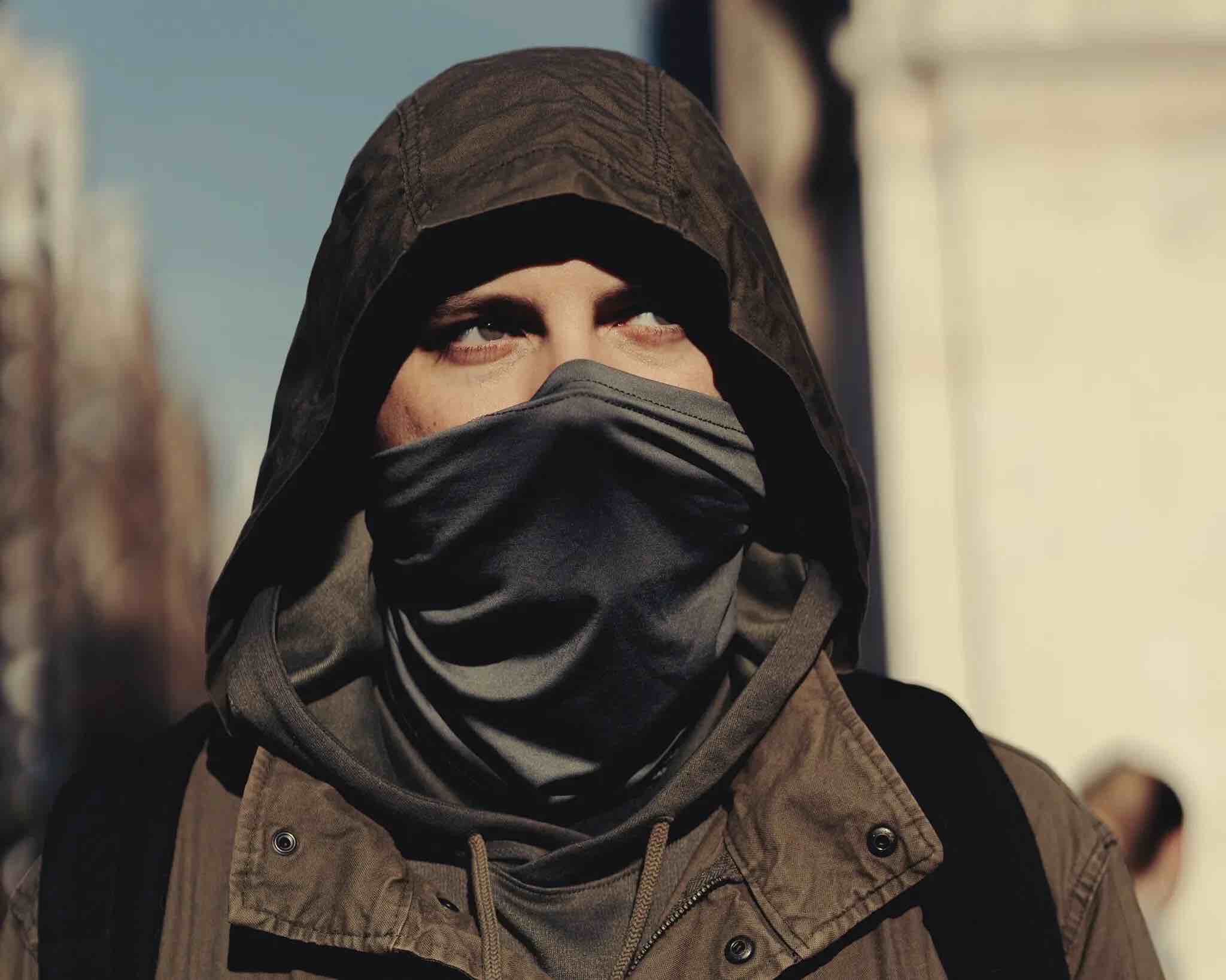
In fact, a look alike contest based on surveillance photos of the murderer was held in Lower Manhattan yesterday, and the winner (see below) said he celebrated the killer’s action.
The words “deny, defend, depose,” which were etched on the bullet casings and are presumed to refer to insurance companies’ tactics in withholding benefits, have become a sort of rallying cry. According to the Times, a jacket similar to the one worn by the killer “is flying off the shelf.”
More from the Times: “Alex Goldenberg, a senior adviser at the Network Contagion Research Institute, which tracks online threats, said the internet rhetoric had left experts ‘pretty disturbed’ by the glorification of the murder of Brian Thompson and the ‘lionization of the shooter.’
““It’s being framed as some opening blow in a broader class war, which is very concerning as it heightens the threat environment for similar actors to engage in similar acts of violence,’ Mr. Goldenberg said.”
No doubt the murderer’s James-Bond-like ability to slip through the sieves of our contemporary spying-on-each-other network of cameras and microphones has something to do with his lionization.
Perhaps as I type this he is undergoing plastic surgery in some underground bunker.
[1] Presumedly even opponents of capital punishment are applauding the killing of this father of two.
The other night Caroline and I stumbled across the 1928 silent film Our Dancing Daughters on TCM and watched the whole damn thing. As the hepped up actors herky-jerkyed across the screen, it occurred to me that I wouldn’t mind living within the confines of a silent movie. For one thing, I’m practically deaf, so how convenient it would be to have utterances appear in writing, floating in the air long enough for even the slowest of readers to decipher.
Also, facial cues are a breeze to pick up on in a silent flick. In my adulthood, on more than one occasion, I’ve had a highschool friend tell me that she had a crush on me back in the day. Well, in a silent movie, picking up on flirting is less of a problem.
On the other hand, music in silent films is generally melodramatic, a solo piano tinkling or a muted orchestra holding forth. James Brown, the Godfather of Soul, the hardest working man in showbiz, would be wasted in a silent movie, though his amped-up dancing might give Buster Keaton or Charlie Chaplin a run for his money.
The Godfather came up in conversation last night at the Blind Tiger Porter-Gaud alumni party. I was chatting with former student Jamie Ewing, reminiscing about driving his cousin Willy Hutcheson to school in the 90s with the late Erin Burton and my two sons. On our trip from the IOP and Sullivan’s Island, we listened to various CDs Monday thru Thursday, but Friday mornings were dedicated to JB.
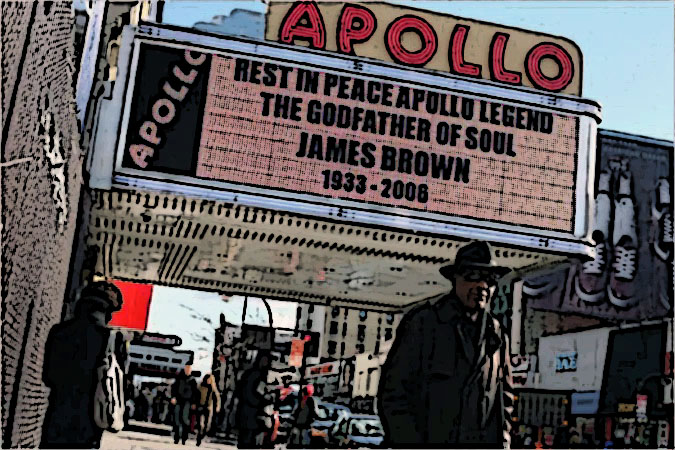
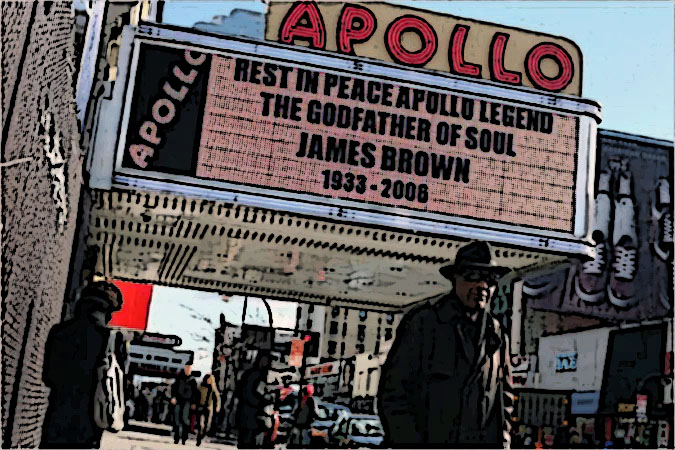
I told Jamie that I saw the Godfather live in ’75 at the Carolina Coliseum, one of the few white folks to attend that extravaganza. Then Jamie floored me with this revelation: he waited in line at the Apollo Theater in Harlem[1] to see James Brown lying in state, one of the hundreds to file past the coffin.
I mean, one of the greatest albums of all time is Brown’s 1963 Live at the Apollo, and Jamie can boast that he saw James Brown dead at the Apollo.
Bravo, Jamie, and RIP Barnwell, South Carolina’s, most famous citizen, the hitmaker who gave us “Pass the Peas,” “Gimme Some More,” “It’s a Man’s World,” “Papa’s Got a Brand New Bag” . . .
[1] I know “in Harlem” is redundant, but ain’t everybody as hip as you and me.
Donald Trump has dubbed his rambling speeches “the weave,” claiming that if you connect the dots of his zigzags, a unified picture appears. So I thought I’d give it a try myself.
Here goes.
The other night, after suffering through a self-righteous, ill-informed screed from a Facebook follower, I found myself listening to Bob Dylan’s masterful protest song “Hurricane,” a cinematic narrative recounting the arrest and trial of Rubin Hurricane Carter, a boxer wrongly convicted of a triple homicide in 1966 in Patterson, New Jersey.
Meanwhile, far away in another part of town Rubin Carter and a couple of friends are drivin’ around Number one contender for the middleweight crown Had no idea what kinda shit was about to go down
When a cop pulled him over to the side of the road Just like the time before and the time before that In Paterson that’s just the way things go If you’re black you might as well not show up on the street ‘Less you want to draw the heat
Near the end of the song Dylan sings,
How can the life of such a man Be in the palm of some fool’s hand? To see him obviously framed Couldn’t help but make me feel ashamed to live in a land
Where justice is a game
Now all the criminals in their coats and their ties Are free to drink martinis and watch the sun rise While Rubin sits like Buddha in a ten-foot cell An innocent man in a living hell
As I was listening, the long gone idealism of the 60s came to mind. Dylan himself — and Joan Baez –performed at the March on Washington, sharing the stage with Martin Luther King. They heard firsthand the “I Have a Dream Speech.” They’re both still alive sixty-one years later.
In 1963, the American people considered communism the greatest threat to the nation’s sovereignty, and the Soviet Union was our greatest enemy whose spy agency the KGB eventually became the employer and training ground for Vladimir Putin, whom Donald Trump so idolizes, along with Kim Jong Un, the North Korean dictator.
According to Trump, outside forces like Russia and North Korea aren’t the greatest threat to American sovereignty; no, it’s “the enemy within,” American citizens, news organizations, and celebrities tarred with the paradoxical disapprobation “woke.” It’s Joe McCarthy redux, and McCarthy’s corrupt lawyer Roy Cohn was Donald Trump’s mentor.
Trump and his followers bring to mind WB Yeats’s lines from “The Second Coming”:
The best lack all conviction, while the worst
Are full of passionate intensity.
Fueled by the fifth deadly sin wrath, these resentful white supremist faux Christian cultists seem to prefer a dictatorship of oligarchs to the teachings of their would-be Savoir who famously preached
Blessed are the meek, for they shall inherit the earth.
Blessed are the merciful, for they shall obtain mercy.
Today, 21 September 2024, happens to be the autumnal equinox, and here on Folly Beach, the Edge of America, the weather is perfect, not a cloud overhead, the temperature Edenic, downright Elysian — no flies at Chico Feo, no mosquito swatting needed on my walk home from the bar.
However, today also happens to be the 35th anniversary of Hurricane Hugo. As you can see above, Hugo was, “a mighty, mighty storm.”[1] Ask any Lowcountry resident who opted not to evacuate, and you’re likely to hear tales ranging from extreme discomfiture to abject terror.
Our family – Judy Birdsong, sons Harrison (5) and Ned (3), springer spaniels Jack and Sally, and I-and-I lived on the Isle of Palms, a barrier island that lay in the crosshairs of a cone of inevitability – in other words, Charleston was going to get clobbered by a monster category 4 cyclone.
On Wednesday evening before Thursday’s late night landfall, before we drove to my parents’ house in Summerville to drop off the dogs and spend the night before fleeing further inland to Columbia, I drove downtown to Charleston to hear Allan Gurganus read from his just published novel The Oldest Living Confederate Widow Tells All. I bought a copy, had Allan inscribe it, then drove back home and nailed plywood over sliding glass doors.
As it turned out, the novel, which deals with Reconstruction, offered a parallel to what we were about to endure. My father-in-law Ralph Birdsong compared the post-Hugo Isle of Palms and Sullivans Island to the bombed out towns of Europe he witnessed in World War II.
Sullivan’s Island 22 September 1989
Reconstruction indeed.
We left Summerville first thing Thursday morning and arrived at my friend’s Jake’s house around noon where we watched the storm swirl closer and closer to the coast on a television screen. That evening, we had dinner at a restaurant in Five Points. We had been lately listening to Lyle Lovett’s most recently released album, which featured a song called “Here I Am.”
Here’s are the lyrics from the last verse, which is spoken rather than sung:
Look, I understand too
little too late.
I realize there are things
you say and do
you can never take back.
But what would you be if
you didn’t really try?
You have to try.
So after a lot of thought
I’s like to reconsider.
Please if it’s not too late,
Make it a cheeseburger.
When it was time to order our meal, I asked three-year-old Ned what he would like to eat, and he said in a tiny little Lyle Lovett voice, “Please make it a cheeseburger.”
That almost made the entire ordeal worth it.
Almost, but nor entirely. Because the only bridge to the islands was destroyed, we became homeless for 17 long days, moving from family to family, devoured by anxiety. However, once we finally made it to the island via a ferry and walked from the marina to our home, he were delighted to see it standing in one piece. The ground floor had received about two inches of water, a tree had smashed through a back door into our bedroom, the floors were warped, so we had tons of work to perform, but we could sleep upstairs.
Sullivan’s Island Bridge (photo credit Judy Birdsong)
Ever it be so pounded, there’s no place like home.
[1] I copped that quote from the Black spiritual about the Galveston hurricane of 1900.
In the early ’80s, after my late wife Judy Birdsong landed a full-time position at Trident Technical College teaching psychology, I quit my po-dunk so-called assistant managerial position at Safeco[1] and decided to try my hand at writing short fiction full time. I had been selected to participate in a SC Arts Commission workshop headed by Blanch McCrary Boyd. Other writers in the workshop included Josephine Humphreys, Lee Robinson, Billy Baldwin, Harlan Greene, Steve Hoffius, Greg Williams, and Starkey Flythe, Jr., among others.
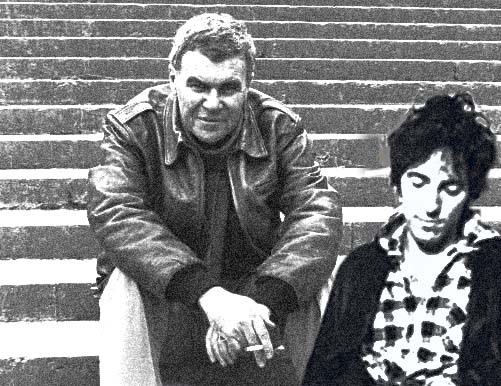
Through Starkey’s suggestion, Greg Williams and I attended the Sandhills Writing Conference at Augusta College in Georgia, where Starkey lived.[2] At the conference, I learned a lot from writers I’d never heard of before, but the most profound consequence of my attending was discovering Raymond Carver. Why I had not heard of Carver is puzzling; nevertheless, better late than never.
I found his short stories thrilling, well crafted in the Flannery O’Connor sense of every detail contributing to the stories’ central themes, for example, the long white beard of the blind man in “Cathedral” evoking associations with blind seer Tiresias as he guides the benighted first person narrator into the realm of light, the blind not leading the blind not into a ditch but into a state of enlightenment.
However, most of Carver’s stories are the opposite of uplifting, like “A Serious Talk,” the story of a post-divorce Boxing Day encounter in which an estranged husband attempts to make up with his wife after trying to burn her house down, or like “Popular Mechanics,” a story dramatizing a breakup that ends with the husband and wife engaging in a literal tug-of-war with their baby:
“Let go of him, he said.
“Don’t,” she said. “You’re hurting the baby,” she said.
“I’m not hurting the baby, he said
The kitchen window gave no light. In the near-dark he worked on her fisted fingers with one hand and with the other hand he gripped the screaming baby up under an arm near the shoulder. She felt her fingers being forced open. She felt the baby going from her.
“No!” she screamed just as her hands came loose.
He would have it, this baby. She grabbed for the baby’s other arm. She caught the baby around the wrist and leaned back. But he would not let go. He felt the baby slipping out of his hands and he pulled back very hard.
In this manner, the issue was decided.
* * *
Three years after Carver’s collection What We Talk About When We Talk About Love was published, Bruce Springsteen released his seventh album, Born In the USA. Aside from the sonic pleasures of Springsteen’s rock-‘n’-roll, I have always admired his story-telling talents, how he creates working class characters who come alive for the listener. He, too, like Carver, provides details that vivify his narratives, and as with Carver’s, Springsteen’s characters often don’t find redemption.
Here are the lyrics of “Downbound Train,” the final song of Side 1.
I had a job, I had a girl I had something going, mister, in this world I got laid off down at the lumber yard Our love went bad, times got hard.
Now I work down at the carwash Where all it ever does is rain Don’t you feel like you’re a rider On a downbound train?
She just said, “Joe, I gotta go We had it once, we ain’t got it anymore.” She packed her bags, left me behind She bought a ticket on the Central Line.
Nights as I sleep, I hear that whistle whining I feel her kiss in the misty rain, And I feel like I’m a rider On a downbound train.
Last night, I heard your voice You were cryin’, cryin’, you were so alone You said your love had never died. You were waiting for me at home.
Put on my jacket, I ran through the woods. I ran ’til I thought my chest would explode. There in the clearing, beyond the highway In the moonlight, our wedding house shone.
I rushed through the yard, I burst through the front door. My head pounding hard, up the stairs I climbed. The room was dark, our bed was empty. Then I heard that long whistle whine And I dropped to my knees, hung my head and cried.
Now I swing a sledgehammer on a railroad gang Knocking down them cross ties, working in the rain. Now don’t it feel like you’re a rider On a downbound train?
But here’s something else. When Springsteen performs these songs, he transforms into the characters he sings about. Like a method actor, he summons memories that blur the distinction between rock star and the wretches he sings about. He feels what they feel, and it shows.
For example, note during the dream sequence of the clip below, at 1:55, how he trembles when he sings,
“Put on my jacket, I ran through the woods. I ran ’til I thought my chest would explode. There in the clearing, beyond the highway In the moonlight, our wedding house shone.
I rushed through the yard, I burst through the front door. My head pounding hard, up the stairs I climbed. The room was dark, our bed was empty. Then I heard that long whistle whine And I dropped to my knees, hung my head and cried.”
I mean, I find this to be very moving. Like the blind man in “Cathedral,” Springsteen is creating empathy, creating someone besides myself I can feel sorry for.
Blessed be the artists who take us out of ourselves.
[1] Not the insurance company but a safety equipment distributor.
[2] Coincidentally, Greg won in a tie the second place short fiction award.
I have the slightest acquaintanceship with the novelist TC Boyle, whom I occasionally try to convince that his despair over what he sees as Trump’s inevitable election is unfounded, so I thought I’d summarize my arguments and share them with the public at large.
So, ladies and gentlemen, bulldogs and babies, here’s why Trump’s going to lose the 2024 election.
Technical Reasons
Donald Trump runs the Republican Party the way dictators run their fiefdoms, i.e., by purging professional bureaucrats and replacing them with family members, like daughter-in-law Laura, the head of the RNC, who would probably have trouble successfully running a laundromat, much less a complicated multi-state conglomeration. This means that the party doesn’t have the organizational apparatus in place to competently run a campaign, to assemble a 50-state ground game, for example.
A case in point, the piss poor vetting of JD Vance. To win the election, Trump needs to increase his appeal among suburban women, and he’s not going to win them over by selecting a frothing at the mouth misogynist like the Senator from Ohio[1]. In 2020, on Eric Weinstein’s podcast Portal, Vance agreed with his host that “postmenopausal females” exist just to help take care of children. I’m certain some slick communistic Hollywood commercial maker is crafting an attack ad quoting Vance as I type this. Hey, JD, this is late empire America not Medieval Slovenia.
With more states adding right-to-choose referenda – most recently Arizona and Missouri – more women will be inclined to vote. The women I hang with, postmenopausal and otherwise, don’t want some self-identified hillbilly or convicted rapist telling them what they can’t so with their bodies.
Perhaps the most salient technical reason that DJT is going to lose the election is that he seems incapable of attempting to broaden his coalition. All he does at these rallies is sling red meat to lost souls in attendance and promise massive tax cuts to CEOs who would rather increase their wealth than provide free school lunches to food-insecure children.
And by the way, as much as Donald would like the economy to crater before the election, with today’s strong retail sales report and a likely interest rate cut coming in September, that ain’t going to happen in the 90-odd days before the election.
Fundamental Reasons
Donald Trump’s always suffered from Narcissistic Personality Disorder; however, now that pathology is compounded by his diminished mental acuity, the product of decrepit age, to use WB Yeats’ unlovely term. Some also suggest that Trump is addicted to Adderall, which they blame for his periodic sniffing. Anyway, he is, as he said the other day, who he is.
No way he’ll quit obsessing over crowd sizes or cease with the adolescent nicknames, and as the election intensifies, his infirmities will be increasingly obvious to those paying attention.
Anyway, his song and dance is getting really stale, or as one wag put it on Twitter/X, Donald is in his fat Elvis stage. Diehard fans adore him, but who else enjoys being bombarded with a constant barrage of hyperbolic negativity – foreign hordes pouring into our cul-de-sacs, the future a Blade Runner hellscape if Kamala wins – a land in which saying Merry Christmas could land you in jail.
Only idiots believe shit like that.
Harris Walz
Trump could very well have defeated Biden, especially after the debate; however, now he’s running against a formidable ticket that exudes joy and points to a bright future where citizens collaborate to address problems, a ticket that doesn’t want to dismantle NATO, or coddle up to dictators.
Conclusion
So chins up, pinko-fascists, if we work hard to get out the vote and unloosen our purses and donate, we got this thing. I don’t foresee my deleting this post on November 7, the day Caroline and I are going to see fellow Trotskyite Sarah Silverman at the Charleston Music Hall.
So, chill thyselves.
[1] Note the authentic-sounding pundit-ese. – “the Senator from Ohio.”
Even though I’ve written parodies of self-help books, I don’t think I’ve ever read a real one all the way through.[1] But, oh, lots of other people have. According to Worldmetrics.org, “the global self-help industry is estimated to be worth $11 billion,” and “58% of Americans have purchased a self-help product at least once.”
I guess one reason I’m not into self-help is that I’m in my seventies, retired, so not in the market to pick up “the 7 habits of highly effective people” nor do I have the energy to “accept nothing less than the life [I] deserve.”[2] Before retirement, revisiting the texts I was teaching left little time for recreational reading, so if I were going to slip a side book in between Crime and Punishment and The Sound and the Fury, it would be a contemporary novel like Cloud Atlas rather than the bogus-sounding The Influential Mind: What Our Brains Reveal About Our Power to Change Others.
There is, however, a topic I wish some self-help sage would address, i.e., helping wretches like me come to terms with “the thousand shocks that flesh is heir to,” in other words, how to help us forget those PTSD-inducing experiences.
My late wife Judy Birdsong used to complain about what she called my “demons,” for example, my habit of awakening in the dead of night screaming after a nightmare conjuring that time at age seven when I accidently saw my demented wheelchair-bound great aunt naked. Or my self-defeating habit of reexperiencing in a never-ending loop Lonnie Smith’s getting deked in the ’91 World Series and not scoring what would have been the winning run. Imagine being at your in-laws at the Thanksgiving table holding hands while the patriarch is praying out loud, but rather than joining in the amens, you blurt out, “Dammit, Lonnie, why did you stop running?”
I wish some self-help sage would write How to Turn Your Demons into a Flea Circus. Ideally, this book would demonstrate to the – to use a quaint term – neurotic reader that she has blown negative life events way out of proportion, that she should shrink those bloodsucking vampires of her imagination into fleas, absurd itty bitty insects performing amusing little tricks in a miniature circus mock-up complete with tiny trapezes and tightropes. In essence, to find the humor in horror.
How to Turn Your Demons into a Flea Circus would teach us how not to take ourselves so seriously. Rather than being blown out of proportion, these negative life events would be weighed against what TS Eliot called “the immense panorama of futility and anarchy” i.e. the historical tapestry of famine, war, and genocide.
Come to think of it, though it’s certainly not a quick fix, reading great literature is a way to tame those demons because it teaches, to quote Wesley Moore III, that “suffering doesn’t make you special; it makes you human.”[3]
I suspect that there’s not a quick fix. So, to quote the late, great Kurt Cobain, “never mind.”

















 You Do Hoodoo