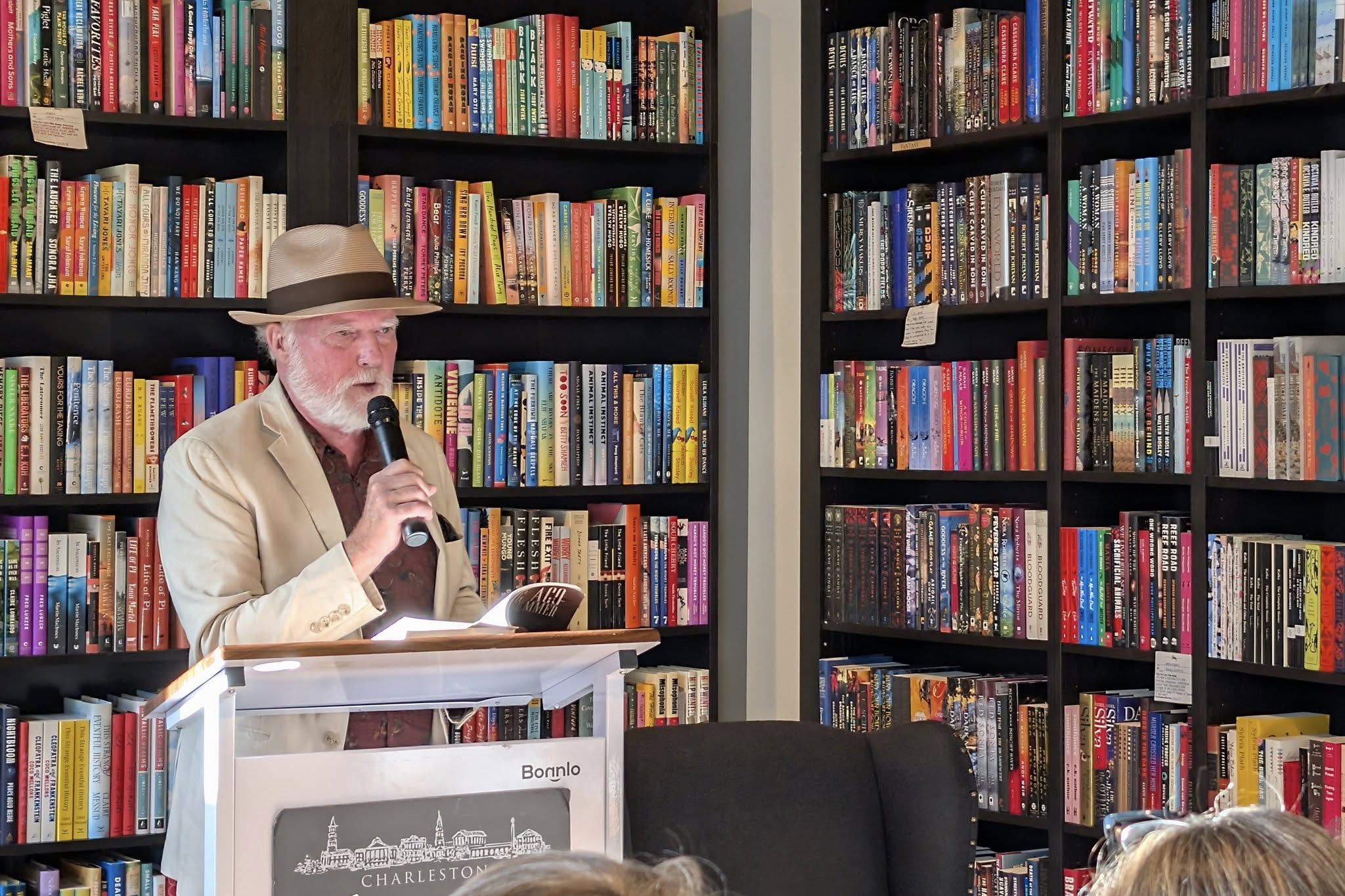
Alex Werrell’s Book Launch Intro for Long Ago Last Summer

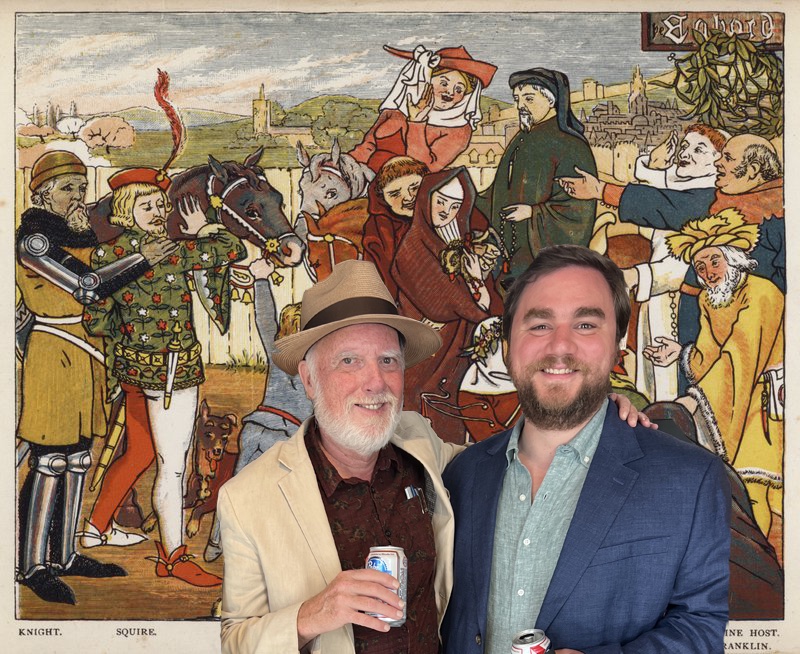
My former student and forever friend Alex Werrell has, as my mother used to say, “a way with words.”  I discovered that talent when I taught him in an honors Brit Lit survey several years ago at Porter-Gaud School.  When we were reading Chaucer’s Canterbury Prologue, Alex, an opera buff, turned me on Alessandro Moreschi, “the last castrato.”  Chaucer hints that the Pardoner has been, as we callous pet owners say, “fixed.” 

No berd hadde he, ne nevere sholde have

As smothe it was as it were late y-shave

I trowe he were a geldyng or a mare.[1]

I explained to the horrified students that boys with beautiful voices were sometimes disencumbered of their testosterone-producing testicles to preserve the youthful timbre of their angelic voices, “a small price to pay for art’s sake,” I’d joke.

Playing Moreschi’s recording of “Ave Maria” became a tradition in my British Lit course. Forgive the cliche, but talons raking a blackboard would be a more pleasant sound. What a pleasure to watch the students squirm!

Alex ended up at Yale where he earned a BA and MA in English and became the mentee of the great literary critic Harold Bloom.  After Yale, Alex remained in New Haven, published essays in Salon, and taught, first at the Hopkins School, and now at Taft.

After I heard Alex deliver a masterful eulogy for his grandfather, I selfishly thought that, hey, I could tap him for my memorial service, but fortunately, by having him introduce me at the book launch for Long Ago Last Summer, I was able to hear him sing my praises while among the quick.

Forgive my vainglory in posting Alex’s speech below, but once a jackass, forever, a jackass (me, not Alex).  

After all, it’s not every day that you can applaud being called a “motherfucker.”

Take it away, Alex:

Bearing in mind my grandmother’s suggestion for any speech — all great orators should study Shakespeare, she said, and learn his most important lesson: “All’s Well That Ends” — I won’t catalogue all that Wesley Moore has written, taught, and done.

You’d need a TI-84 to add up the lives he molded, shaped, and changed — and if he were to receive royalties for every lesson plan of his that I’ve copied, this book launch would be in Mallorca. It is a gargantuan and daunting task to try to introduce this Renaissance raconteur, writer, poet, teacher, and philosopher king, so I’ll outsource the job responsibly and sustainably to Cecil Franklin, who was once asked by a reporter to describe his little sister: “Call Aretha a great blues singer and you’re telling the truth. Call her a great gospel singer and no one will argue. Call her a great jazz singer and the greatest jazz artists will agree. Bottom line—she’s all three at once. And in the language of the jazzman, that’s what’s called a motherfucker.”

Wesley Moore is all that and more.

His latest work is a testament to that Long Ago Last Summer transports and transforms, synthesizes and sympathizes; short fiction gives way to essays which inspire poetry and deep, graceful swan dives into memory.

Like a casserole in the Donner Pass, this “Southern Gothic gumbo” has a lot of himself mixed in. Given that, one of the many reasons why Long Ago Last Summer is brilliant is that it is precisely the opposite of that scourge of modern texts, generative AI. And while talking about generative AI at a book launch feels a bit like reading “The Ballad of Hollis Brown” at a baby shower, that menacing technology walks among us now. Like one of the foundational sins coursing through the Southern Gothic, AI perverts creation and devalues the human; the fullness of what it means to be a human does not matter half as much as mere production, production, production. In dramatic contrast, Long Ago Last Summer is a thrillingly human book because Wesley Moore stands for what matters: connection, imagination, integrity.

Searching for the book on Amazon — (And, please, gracious hosts: this was for research purposes only; the only destination wedding I want for Jeff Bezos is at the bottom of the ocean.) — I wanted to see what the heartless algorithm might suggest as “related books.” One was Walter Isaacson’s biography of Einstein which, given Mr. Moore’s excellent lessons on relativity and cultural Modernism, seemed fitting. Then there was Rhinestone Cowboy, Glen Campbell’s autobiography. I don’t have an explanation for that one.

What might the algorithm consider when determining whether to recommend Long Ago Last Summer to a prospective reader? It could be something as simple as geolocation: did this person grow up within twenty miles of a filling station that offers both diesel and barbecue? Or maybe it’s that stray google search for city ordinances concerning the accidental murder of a domestic cat. Maybe it’s looking up sterling silver hallmarks of the Confederacy and then looking up statutes of limitations for stolen Confederate silver. Or maybe it’s trying to find higher resolution images of Pee Wee Gaskins.

While the algorithm is good at pushing polyester blends off of Temu, I have a feeling it would struggle with Wesley Moore’s newest book. In no small part that’s because it’s hard to categorize. As Wesley himself said on television, “It’s really not a novel.” 

In 1925, as she was struggling to write To the Lighthouse, Virginia Woolf found herself frustrated. Writing in her diary that she needed “a new name” for her books “to supplant ‘novel,’” Woolf floundered about trying to find the right word: “A new — — by Virginia Woolf. But what?” she writes.

The word Woolf ends up on is “elegy” — a word that feels fitting for this book. To be clear, this is not because, as Mr. Moore says, he’s retired and living on a fixed income, nor is it even because of biplane rotors and headless fathers and tubercular aunts.

Instead, it feels so fitting to me because Mr. Moore spent so many classes in English 10 on such poems, insisting that we memorize Blackburn Hughes’s list of the four “greatest English elegies.” To help us in that endeavor, Mr. Moore demonstrated the rhythmic swish-swish of Gray’s heroic quatrains with an epee. Doing his best impression of Stevie Wonder’s star role in the John Milton biopic, Mr. Moore recited bits of Lycidas. And, in his Lowcountry baritone, he intoned Tennyson’s In Memoriam.

Elegy is no stranger to anyone who has grown up in the South. An elegy has but one requirement: it must defy the laws of linear temporality, enabling the past to persist. Time becomes fluid; what for Tennessee Williams was Suddenly, Last Summer, unbearably close, is, for Mr. Moore, Long Ago Last Summer, unbearably distant. The reversal that so haunts Flannery O’Connor’s Misfit — Jesus’s setting the world off balance, taking dead Lazarus and making him walk like a natural man — is the foundation of elegy: a reversible alternation between presence and absence. Reflecting on Mrs. Ramsay in To the Lighthouse, Vanessa Bell writes to her sister Virginia how “it is almost painful to have [Mother] so raised from the dead.” Milton ends Lycidas with talk not of yesterday and of death, but of “To-morrow” and “pastures new.” Reading through the night the letters Arthur Henry Hallam wrote him, Tennyson finds himself surprised by dawn — and, in a flash, understands that “East and West” had “mixt their dim lights, like life and death, / to broaden into boundless day.”

The fourth great elegy is “Adonaïs, “written by Percy Shelley for John Keats, who died in an apartment overlooking the Spanish Steps in Rome, hemorrhaging up what little remained of his lungs at only 25.

Mr. Moore’s voice always took on a different timbre when he read to us Keats and Shelley. I cannot read their poems without feeling as if I’m back in his classroom — wind-up nuns, Rashaan, paleological timeline and all. His humanity and his teaching have become grafted to the Young Romantics in my mind’s eye. Throughout their poetry are traces of birdsong, so precious and so vital to both short-lived poets — and so like the traces of Judy Birdsong, so precious and so vital, in this work in front of us.

Shelley, mourning Keats, likens life to a “dome of many-colored glass” that “stains the white radiance of Eternity.” The many pieces of colored glass lovingly assembled here — with Caroline’s steady hand, keen eye, and beautiful verse — are aptly described by the author as a “mosaic” of his life. 

The glue that binds these pieces — the guide for navigating the disparate stories, poems, and essays — is memory. “Memory…ties it all together.”

In the spirit of elegy and memory, I’ll close with some words from Mr. Moore’s former colleague Erica Lesesne, who once defined what it meant to be a hero: “Ethical, competent, non-judgmental, yet communicating high ideals and expectations, thereby influencing others to risk their own best sides in a seethingly adolescent environment.” 

It is a pleasure to introduce one of my heroes, Mr. Moore. As he writes, “Let’s crank up the old Victrola.”


[1] No beard had he, nor was meant to have,

It was smooth as if he’s just shaved;

I think he was a gelding or mare.

Long Ago Last Summer Book Launch Highlights

Wednesday, Buxton Books, Charleston’s premier bookstore, hosted the launch of my new book Long Ago Last Summer.

What follows is an abridged version of the festivities.  Thanks to my wife Caroline Tigner Moore for providing these videos.

Julian Buxton got the show rolling with by reading a passage from the book on James Dickey.

Next, Alex Werrell delivered his introduction.

The first bit wasn’t recorded. Here it is

Bearing in mind my grandmother’s suggestion for any speech — all great orators should study Shakespeare, she said, and learn his most important lesson: “All’s Well That Ends” — I won’t catalogue all that Wesley Moore has written, taught, and done.

You’d need a TI-84 to add up the lives he molded, shaped, and changed — and if he were to receive royalties for every lesson plan of his that I’ve copied, this book launch would be in Mallorca. It is a gargantuan and daunting task to try to introduce this Renaissance raconteur, writer, poet, teacher, and philosopher king, so I’ll outsource the job responsibly and sustainably to Cecil Franklin, who was once asked by a reporter to describe his little sister: “Call Aretha a great blues singer and you’re telling the truth. Call her a great gospel singer and no one will argue. Call her a great jazz singer and the greatest jazz artists will agree. Bottom line—she’s all three at once. And in the language of the jazzman, that’s what’s called a motherfucker.”

Wesley Moore is all that and more.

The video picks up from there:

I followed with a reading of my short story “Their Own Little Worlds.”

Unfortunately, “The Bluegrass Blues,” the poem I read was cut short in the video, so here’s the text:

The Bluegrass Blues

For Kathy McDaniel

Banjos make me blue.  There’s

pain in that frenetic pickin’

fueled by moonshine and misfortune,

pain that goes all the way back to Ireland,

black potatoes and fickle lasses,

the death of lovers or worse.

Fiddling can get downright dolorous, too,

that high lonesome keening,

the breakneck pace

the manic flipside of poverty.

Saturday night

shouting on the hills of glory

but returning to the shack

to find the chickens dead

and Pretty Polly’s tearstained letter.

***

Picture Shelly[1] plucking a banjo,

Shelly in one of those silk

two-toned cowboy shirts

singing through his nose

about how the saddest songs

end up being the sweetest,

a fiddle taking up the strain,

a quick, pained grin to the audience

as he nods his head to the music.

The last piece was a short essay “The Art of Not Thinking” that I wrote a couple of weeks after Judy’s cancer returned.

After a Q and A session, it was book signing time.

I really appreciate all who came out on such an unbearably hot day, and it was especially gratifying to see my fellow authors Eugene Platt, Layle Chambers, Bill Thompson, and Josephine Humphreys.

Cheers!


[1] The English poet Percy Bysshe Shelley 1792-1822 

Yesterday, Oh Boy

Yesterday, Oh Boy

When my friend David Boatwright, who produced the cover of Today, Oh Boy, approached me about adapting the poolroom chapter from the novel into a fifteen-minute film, I jumped at the chance.  David whipped out a script, which I approved, then later made some significant changes. 

Near the end of the novel, which is set in 1970, Rusty Boykin, an ADD-riddled hippie-wanna-be from Summerville, South Carolina, and Ollie Wyborn, a straightlaced, straight-A transplant from St. Paul, Minnesota, join forces in thwarting an attack from a pair of rednecks whose favorite pastime is, to use the Lowcountry lingo of the day, “cutting ass,” i.e., beating up people they don’t cotton to.  

David’s major change in the second draft of the script was fusing Rusty and Ollie into one character, which I again approved, given I had complete confidence in his intelligence and talent, and because as a practical matter, there’s virtually no room for character development in a fifteen-minute movie.  Another significant change, which added gravitas to the film, David created a new character, a Viet Nam vet who relates a harrowing account of wartime mayhem to the bartender, played my former student, David Mandell. 

So anyway, David Boatwright and his producer Paul Brown raised the needed money and assembled a crew of costume designers, cinematographers, assistant directors, sound people, make-up artists, art directors, property managers, actors, a stunt coordinator, a basset hound, etc. and shot the film in four days. 

The exterior shots, which included fisticuffs and car chase, were filmed on bucolic Wadmalaw Island and the interior shots at the defunct West Ashley restaurant Bearcat, which has been transformed into a ’70s era bait and tackle shop/bar complete with pinball machines and a functioning jukebox on loan from my friend Thom Piragnoli.

I asked David if I could have a cameo, and he said, of course, so yesterday I spent twelve amazing hours on the set being part of an incredibly complicated matrix of moving parts. 

When I arrived at seven, an actor was seated having his hair tended to. One of the make-up women said she would do my hair next, and I explained, “But I have no hair,” removing my hat, and she said, “Great!,” meaning, I take it, less work for her.  After I introduced myself, another woman said, “Oh, these young actors can’t wait to meet you. They’re walking around with the book.” 

Indeed, they were incredibly appreciative. Each one sincerely thanked me for writing the novel.  Two actors, twins brothers playing rednecks, asked me why their characters were so angry. When the actor Logan, who played the Viet Nam vet, thanked me for, in his words, “creating all of this,” I told him that, in fact, David had created his character and dialogue. He said yes, but I had created the world around him. To my mind, his performance and speech are the climax of the film. 

I abstractly knew that it would be cool to see characters I had created “come to life,” but had underestimated how gratifying it ended up being.  It was especially moving to see Jill Birdsong, modeled on the high school version of my late wife Judy Birdsong, performing her role, and I especially enjoyed the actor Patrick Basquill, who brought the bully Bobbey Ray Bosheen to life. The creepiness he brought to the role reminded me of William Dafoe’s portrayal of Bobby Peru in David Lynch’s Wild at Heart.

Also, it was really weird to hear the name “Rusty,” my childhood nickname, called out throughout the day. Sometimes, I thought they were referring to me. And Thomas, the actor who plays Rusty, looks a lot like I did in high school, except he has blue eyes, high cheek bones, brown hair, and isn’t riddled with freckles and acne. 

In other words, he’s skinny.

from left to right, Thomas Beck, Rusty Moore, and “Rusty Boykin”

It was such a wonderful day, the best ever in my life as a writer, and I can’t wait to see the finished product, entitled Summerville 1970, which will make the festival circuit and premiere sometime in the fall at the Terrace Theater on James Island.

Before I end this way too egotistical account, I want to acknowledge my wife Caroline Tigner Moore, without whom the manuscript of Today, Oh Boy would have been found in a drawer after my demise, rather than becoming a published novel. 

Caroline has encouraged me throughout but also has bravely said, “Un-uh, that doesn’t work, why don’t you do this instead.” She’s tactfully guided me through the interviews and the whole befuddling process of my post-teaching career, including offering encouragement in my avocation of creating “fake paintings.” 

After my beloved Judy Birdsong died, I imagined the lonely life of a wounded epicurean, but Caroline has enriched my life in ways I could not have imagined, especially in establishing a loving family that includes my wunderkind stepdaughter Brooks, who is as kind as she is brilliant, and a trio of pets, KitKat, the demi-mutt, and our blue-eyed ragdoll cats, Juno and Jasmine.

Love to them and to you!

PS. Here’s a link to the Kirkus review of Today, Oh Boy that includes an interview and links to purchase it via Amazon and Barnes and Noble, or better yet, get it from your local independent book store, which in Charleston is Buxton Books.

Nothing Orange Can Stay

Although spring offers rebirth, for example, dollar weeds resurrecting, azaleas ablaze, etc., it also has its downsides.

Nature’s first green is gold,

Her hardest hue to hold.

Her early leaf’s a flower;

But only so an hour.

Then leaf subsides to leaf.

So Eden sank to grief,

So dawn goes down to day.

Nothing gold can stay.

                                                Robert Frost “Nothing Gold Can Stay”

OMG! My life is slipping through my fingers! Nothing good ever lasts for long!

April is the cruelest month, breeding

Lilacs out of the dead land, mixing

Memory and desire, stirring

Dull roots with spring rain.

                                                Thomas Sterns Eliot “The Waste Land”

Same ol’ same ol’, death and resurrection, death and resurrection, death and resurrection . . . 

Here on Folly Beach, springtime attracts sybarites of all stripes, like those 25 cent beer nights in the 1900s, those days of yore. 

Today at Lowlife, on my side of the bar, a crew of northern males in their early sixties sported expensive haircuts, retro bowling-like shirts, and satiric lanyards celebrating impending inebriation. Maybe it was a college alum get-together. Who knows?  I asked one of them what was up, but he was not forthcoming. 

Meanwhile, inside the restaurant, across the bar from where I sat, a bushel of bachelorettes were doing something similar in the team party department, dressing alike, engaging in one last bacchanalia before the sacred vows.

Hubba hubba hubba, shish boom bah! “Do you?” “I do.” “I now pronounce you.”

Elsewhere (all over the world, in fact) more serious folks were amassing to protest the hare-brained economic and geopolitical executive orders of a leader who always wins golf tournaments held on courses he owns. 

Here’s the White House’s official announcement: “The President won his second round matchup of the Senior Club Championship today in Jupiter, FL, and advances to the Championship Round tomorrow,” 

To quote Bob Dylan, 

I couldn’t help but feel ashamed

to live in a land

where justice is just a game.

But here’s the good news (and the bad news). Trump and his cabinet are too slapdash careless to topple our democracy. Their idiotic unprovoked trade war is sure to produce a blue tsunami in the midterms next year.

Pity the poor Nancy Maces who’ll have to choose between getting primaried a year from now or continuing to vote for destruction.

Trump’s insanity will lead to failure. People will pretend they didn’t vote for him. 

So don’t despair. Nothing orange can stay. Spring leads to summer, summer autumn, fall winter.

Around and around we go, and where we end up is in the rat’s alley where the dead men lost their bones. so I say, to quote the late great Warren Zevon, “Enjoy every sandwich.”

A Renewed Awareness of the Wonderous 

A Renewed Awareness of the Wonderous 

“Its only boundary was the horizon, the sill of the sky, separating what the eye could see from what the mind might imagine.”
                                                                        ― Barry Lopez, Horizon

At the moment, thanks to my pal Bill Thompson, I’m reading Horizon, Buddha-like Barry Lopez’s fascinating memoir, a meditation on nature, human cultures, capitalism’s role in the secularization of society, language’s function in altering the world we perceive, the poisoning of the planet, among a host of other fascinating topics. 

Lopez is difficult to characterize. For example, he was an explorer, having travelled to over 80 countries. His National Book Award winning work Arctic Dreams details five years he spent in the Canadian Arctic as a biologist.  Lopez possessed, among many other virtues, a profound patience that allowed him the peace of mind to observe over hours, days, and weeks phenomena like light changing in the passage of time from dawn to dusk over the surface of the Pacific Ocean. Though married twice, he seems monkish in his seeking solitude, and indeed, after his Catholic education, he flirted with the idea of becoming a Trappist monk. Instead, he became a novelist, a painter, a landscape photographer, and philosopher. These hours of observation and solitude engender philosophical observation:

During certain periods of uninterrupted vigilance at the edge of the sea, I’ve also had the sense that there is some other way to understand the ethical erosion that engenders our disaffections with modern life—the tendency of ruling bodies, for example, to be lenient with entrenched corruption; the embrace of extrajudicial murder as a legitimate tool of state; the entitlement attitudes of those in power; the compulsion of religious fanatics to urge other humans to embrace the fanatics’ heaven. The pervasiveness of these ethical breaches encourages despair and engenders a kind of social entropy; and their widespread occurrence suggests that these problems are intractable.

Lopez is particularly interested in how commercial enterprises like logging transform forests from diverse ecosystems to tree farms. Clearcutting disrupts the natural order as invasive species displace native plants and animals, so rather than the terrain boasting a variety of different trees, the denuded landscape is replanted with one type of commercially profitable tree, e.g. Douglas firs or loblolly pines. A clearcut,” he writes, “is not the outward sign of a healthy economy but of an indifference to life.”

In a similar light, he laments Colonialism’s obliteration of native people’s cultures, the loss of native languages, and drives home the point that advanced technology does not make a culture superior to a less technically advanced culture, especially if the happiness of a culture’s people is a gauge of success:

The seductive power of this system of exploitation—tearing things out of the earth, sneering at the least objection, as though it were hopelessly unenlightened, characterizing other people as vermin in the struggle for market share, navigating without an ethical compass—traps people in a thousand exploited settlements in denial, in regret, in loneliness. If you empathize with the Jaburrara over their losses, you must sympathize with every person caught up in the undertow of this nightmare, this delusion that a for-profit life is the only reasonable calling for a modern individual.

Sounds a bit like the current ruling US regime.

On the other hand, the contrarian in me wonders how Lopez could afford to circumnavigate the planet, exploring exotic locales like Australia’s Outback and Afghan villages. Where did the money come from to bankroll these expeditions?  

Capitalistic enterprise, I suspect. 

Modern living is incredibly complicated, which, to be fair, he acknowledges, but whether you agree with him politically or not, Lopez provides, not only food for thought, but a feast for contemplation.

Reading this book has in a sense made me more alive in jarring me from my inwardness to seek out wonder outside the Self while seeking is still possible.  

I’ll give him the last word:

Exposure to an unusually spectacular place in conducive circumstance, the thinking goes, can release one from the prison of one’s own ego and initiate a renewed awareness of the wondrous, salutary, and informing nature of the Other, the thing outside of the self.

The Green Pastures of Retirement

Although I often whine about my chronic insomnia, in reality, it’s not a big deal because I’m retired.  Rarely do I have to be at a certain place at a designated time, so I can nap whenever I want, sometimes snatching a snooze as early as ten a.m., so it’s not like stumble about zombie-like all day, sleep deprived. 

In fact, it doesn’t make much evolutionary sense to be unconscious eight straight hours. I’ve read that our spear-toting pre-agrarian savannah-dwelling ancestors didn’t necessarily sleep through the predatory night, and during the Middle Ages, people engaged in a routine called “two sleeps,” turning in around nine or ten, slumbering for two or three hours, then awakening around one for what was known as “the watch,” a period in which they’d tend to tasks, socialize, and/or procreate.[1] Around two or three they’d again hit the literal hay (or if wealthy, a feather-stuffed mattress) and sleep until dawn or a bit later. 

However, I don’t want to give the impression that now that I no longer have to battle Folly Road traffic in the a.m. that I dawdle away the day doing crosswords, binging Netflix, or wasting time on the internet. This week, in fact, I’ve been especially busy going through the second proofs of my next book, engaging in a political protest, and most vexing of all, jumping through the electronic hoops of TurboTax. Being retired makes performing these acts much more convenient.

Excuse me; I need to vent. Correcting the proofs on Long Ago Last Summer was much more difficult than it had been with my first book, Today, Oh Boy.  This time around, rather than having a human being perform the copy editing phase, the publisher shoved the manuscript’s 62, 327 words through the woodchipper of AI.

The book is a compilation of short fiction, poetry, and personal essays that features a medley of Southern voices. Each piece can stand alone; however, collectively, they form a sort of mosaic with one of the major patterns being Southern Gothic, that literary subgenre that features “incestuous aristocrats, necrophiliac halfwits, sadistic Alabama sheriffs [. . .] the suicide hanging in the attic, the alcoholic great aunt who gave birth to the idiot child buried in the backyard.”[2]

You know, the human byproducts of the post-Reconstruction South, the folks I grew up with. 

Alas, AI wasn’t up to the task of dealing with the book’s cacophony of styles and voices.  Not only did it remove double negatives from the foul mouth of serial killer Donald “Pee Wee” Gaskins (who picked me up hitchhiking in 1970) and replace them with grammatically correct utterances, but it also altered direct quotes from the poetry of Emily Dickinson. Anyway, on Monday I completed the weeklong task of correcting the corrections. If I were teaching full time, I would not have had the leisure to pick through the rumble and piece back together my original tiles.

Nor could I have attended Tuesday’s anti-Trump demonstration at Hampton Park without having to take a personal day. I had planned on Tuesday to do our taxes, but it ended up being one of those rare days when I had to be somewhere at a specific time. The protest occurred on the very day of Trump’s state of the union address in which he stupidly misconstrued the words “transgender” and “transgenic.”

Trump: Eight million dollars for making mice transgender. This is real.

Jeff Tiedrich: No, no, no, no. Nobody is spending government money to make mice transgender. You low-wattage dolt. The word is transgenic.

Let’s say you’re a cancer researcher, and you implant some human genetic material into mice, in order to better study how cells mutate. boom! — you’ve just created transgenic mice

Nobody is doing sex-change operations on mice and setting them loose in Nancy Mace’s bathroom.

But I digress. I hadn’t engaged in a public protest since the fall of 1971, and I it looked like many of the protestors in attendance were alive and kicking during the Viet Nam era, which makes sense, given they are past retirement age and free to go wherever they choose midday on a Tuesday in March. I used to tell my students that if the governor told my generation that we couldn’t drink until we were 21, there would have been 300,000 of us on the lawn of the Governor’s mansion every day of the week. 

The protest, though somewhat limited in its attendance[3] and no doubt in swaying public opinion or sending shivers up the spines of Republican representatives, did provide an outlet for our outrage at Trump’s destroying our democracy and cruelly wreaking havoc upon the lives of so many of our citizens, not to mention his abandoning of Ukraine and the rest of our European allies. 

It was somewhat comforting to rub elbows with like minded people whose intelligence and commitment was apparent in the signs that they carried.

photo credit Joan Perry

photo credit Caroline Tigner Moore

photo credit Linda Bell

Okay, don’t worry about this 5-paragraph essay set up. I’m not going to give you a blow by blow account of my doing taxes, which thanks to my late wife’s assets is complicated by K-I limited partnerships, etc. Nevertheless, I do them myself because nowadays accountants essentially have you enter your financial information into their computer software instead of TurboTax. It ends up being the same amount of work. Using an accountant might save us some money, but what the hay. 

Ah, with my daily labors completed, here I sit sipping a Westbrook IPA at Lowlife Bar on a Wednesday afternoon scribbling this down in a composition notebook, happy to have completed the taxes and survived the tornados that never showed up on a day when Charleston County schools were called off.

Cheers! Thanks for reading until the end.

PS. Uh-oh! I just saw on LinkedIn that I appeared in 12 searches, two of which were the State Department and USAID. Yipes.

photo credit Joan Perry


[1] Since families usually slept in communal beds, having sex could be problematic.

[2] from the preface of Long Ago Last Summer, 38-9. 

[3] The Post and Courier estimated around 500,

This Land Ain’t Your Land, This Land Is The Oligarch’s Land

I remember back in the day – the ’60s to be exact – I took civics, a required class devoted to teaching future voters how the Founding Fathers formed a representative democracy consisting of three branches of government that created checks and balances to ensure that no one entity could usurp power, a system in which reason, rather than avarice, would rule the nation. 

The idea was that citizens would elect a person to represent them and vote on issues pertaining to their lives, to look after the majority’s best interests.

Well, the Republican controlled House of Representatives just passed a budget that calls 880 billion dollars of spending cuts to help offset 4.5 trillion dollars in tax cuts.

Under this budget, Medicaid, Medicare, and Social Security would have to be cut.

Here are some un-fun facts to know and share.

South Carolina has 1.1 million residents who rely on Medicaid (19.5% of the population).

South Carolina has 1 billionaire (0% of the population). 

South Carolina has 108,812 millionaires (5.4% of the population).

Every single Republican representative in South Carolina voted for this budget, opting to further enrich billionaires and millionaires but to further impoverish the needy.

The minority rules!

A not at all delicious irony: the working class is now the base of the Republican party.

Shape Without Form, Shade Without Color

Certainly, as several cultural critics have pointed out, Yeats’s magnificent poem “The Second Coming” expresses powerfully and concretely our current situation, what TS Eliot abstractly described as “the immense panorama of futility and anarchy that is contemporary history.”

Yeat’s poem is brief; therefore, I’ll quote it in its entirety:

Turning and turning in the widening gyre   

The falcon cannot hear the falconer;

Things fall apart; the centre cannot hold;

Mere anarchy is loosed upon the world,

The blood-dimmed tide is loosed, and everywhere   

The ceremony of innocence is drowned;

The best lack all conviction, while the worst   

Are full of passionate intensity.

***

Surely some revelation is at hand;

Surely the Second Coming is at hand.   

The Second Coming! Hardly are those words out   

When a vast image out of Spiritus Mundi

Troubles my sight: somewhere in sands of the desert   

A shape with lion body and the head of a man,   

A gaze blank and pitiless as the sun,   

Is moving its slow thighs, while all about it   

Reel shadows of the indignant desert birds.   

The darkness drops again; but now I know   

That twenty centuries of stony sleep

Were vexed to nightmare by a rocking cradle,   

And what rough beast, its hour come round at last,   

Slouches towards Bethlehem to be born?

Does the description “a gaze as blank and pitiless as the sun” remind you of anyone?

Of course, the Founding Fathers feared the rise of an American despot, so they counterbalanced the executive with Congress and the courts. Unfortunately, the lines “[t]he best lack all conviction, while the worst/ [a]re full of passionate intensity” aptly describe the Republican controlled House and Senate, Nancy Mace, full of passionate intensity, Lindsey Graham lacking all conviction.[1]

The Republican Senate certainly abandoned their responsibility of advising and consenting when they confirmed a vaccine-denying former heroin addict who literally has had worms eating his brain as Director of Health and Human Services and an alcoholic sexual predator who has absolutely no experience running a large enterprise as Secretary of Defense.

This idea of citizens lacking conviction is also powerfully rendered in TS Eliot’s “The Hollow Men” whose final lines have become almost a cliche:

This is the way the world ends 
Not with a bang but a whimper.

The hollow men of Eliot’s poem are scarecrows, heartless, “behaving as the wind behaves,” going with the flow, their “dried voices [. . .] quiet and meaningless.” 

Like Senator Susan Collins, for example. 

At any rate, in both poems we see Christianity breaking down, as the Antichrist slouches towards Bethlehem and in Eliot’s poem when the “Lord’s Prayer” breaks down into gibberish.

Between the idea  
And the reality  
Between the motion  
And the act  
Falls the Shadow 

                                  For Thine is the Kingdom

Between the conception  
And the creation 
Between the emotion  
And the response  
Falls the Shadow 

                                  Life is very long

Between the desire  


And the spasm  
Between the potency  
And the existence  
Between the essence  
And the descent  
Falls the Shadow 

                                  For Thine is the Kingdom

For Thine is  
Life is 
For Thine is the 

This is the way the world ends 
Not with a bang but a whimper.


[1] Both hail from a state “too small to be a country, too big to be an insane asylum.” – James Petigru on South Carolina.

Governing as a Performative Art: Nancy Mace Edition

It seems to me, an admittedly jaundiced observer, that many of our current representatives are attention-starved narcissists who would rather don costumes and bring attention to themselves than plopping down behind a desk and performing the unglamorous work of governance.

Take our director of Homeland Security Kristi Noem dressing up like a border patrol agent, a cowgirl, and an ICE agent.

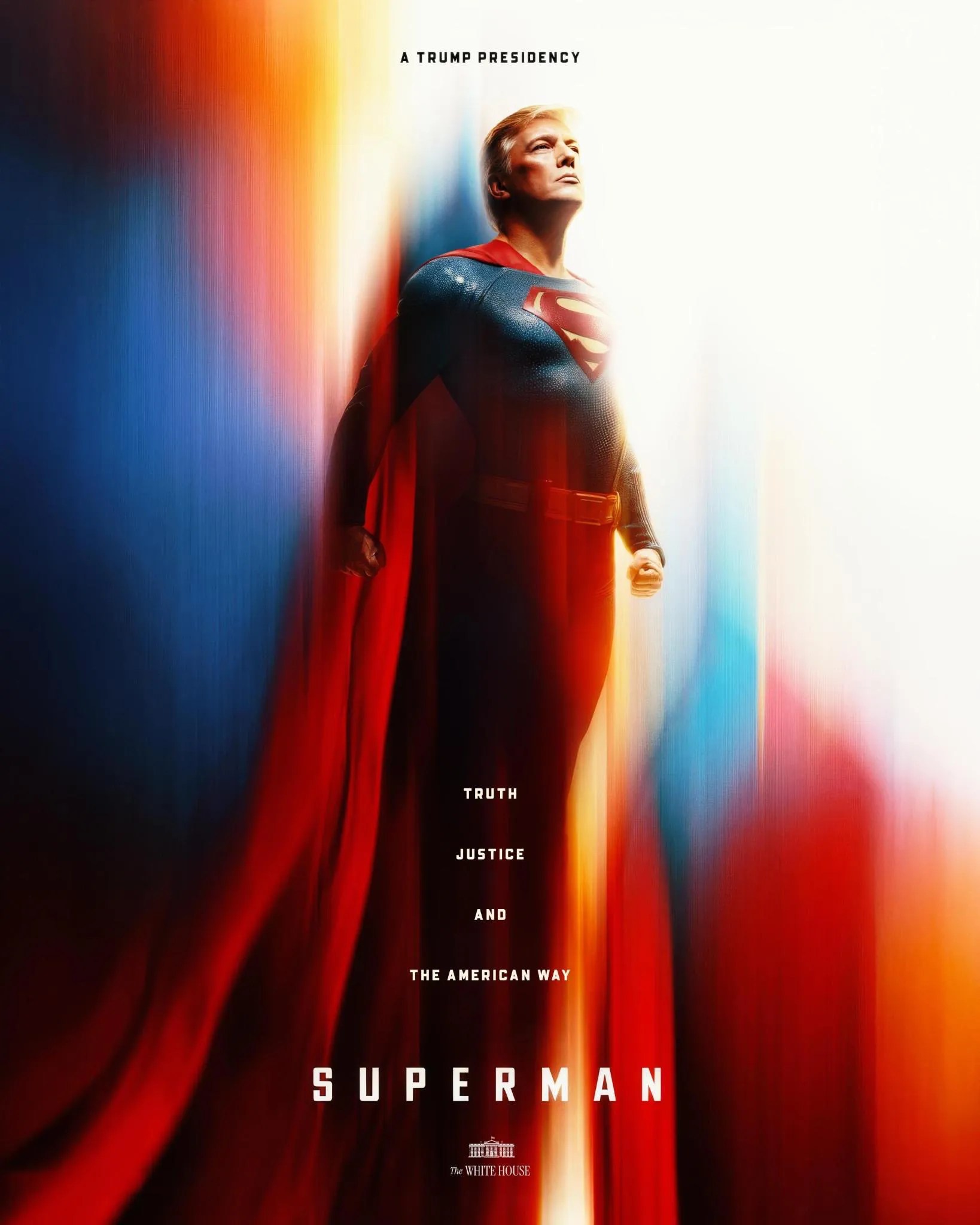
Of course, her trendsetting boss is no stranger to dressing up and engaging in make believe.  

Unfortunately, this compulsion to commandeer the spotlight isn’t just confined to the cabinet.  House Representatives, particularly Nancy Mace, enjoy incorporating Halloween into their everyday comings and goings as well.

Here’s Mace channeling Hester Prynne in a subliterate misunderstanding of Hawthorne’s classic novel, not seeming to get that the scarlet letter stood for “adultery.”  

She claimed she was wearing the A because she was a woman being demonized for her “voice” and “vote.”  Hester Prynne, on the other hand, stoically bore her persecution silently. Stoicism and silence are certainly not attributes we identify with Mace, who seems to be in the throes of some kind of nervous breakdown, reminiscent of the first scene in Night of the Iguana where clergyman T. Lawrence Shannon goes apeshit in the pulpit and mocks the parishioners, resulting in a mass exit during the course of his rantings.

Here’s a LINK to my post on nervous breakdowns featuring a clip from John Huston’s film Night of the Iguana.

Representative Mace’s venue for her recent Reverend Shannon-like ranting was the House floor of the US Capitol where she flappingly displayed the dirty laundry of her sordid relationship with her ex-fiancé Patrick Bryant for all the world to see, the same fiancé she mentioned at the National Prayer Breakfast a year earlier when she shared with the august worshippers assembled there that she had told Mr. Bryant, “No, baby, we ain’t got time for that,” that being premarital morning sex, because she didn’t want to be late for the Jesus fest.

I’m not going to catalogue the accusations of her screed the other night, which may or may not be true, the hidden cameras, the sexual assaults, etc. but merely suggest we the people would be better served with representatives who focus on our collective good rather than their own personal vendettas, to channel Jimmy Carter as opposed to Caligula, who also had a penchant for cosplaying, who liked to dress up like soldiers, mythological figures, and women.

Oh, Joe Cunningham, our lonely First Congressional District turns its lonely eyes to you.