If Well Used: A Meditation on Alcohol

3036413-GDKXVVDB-7

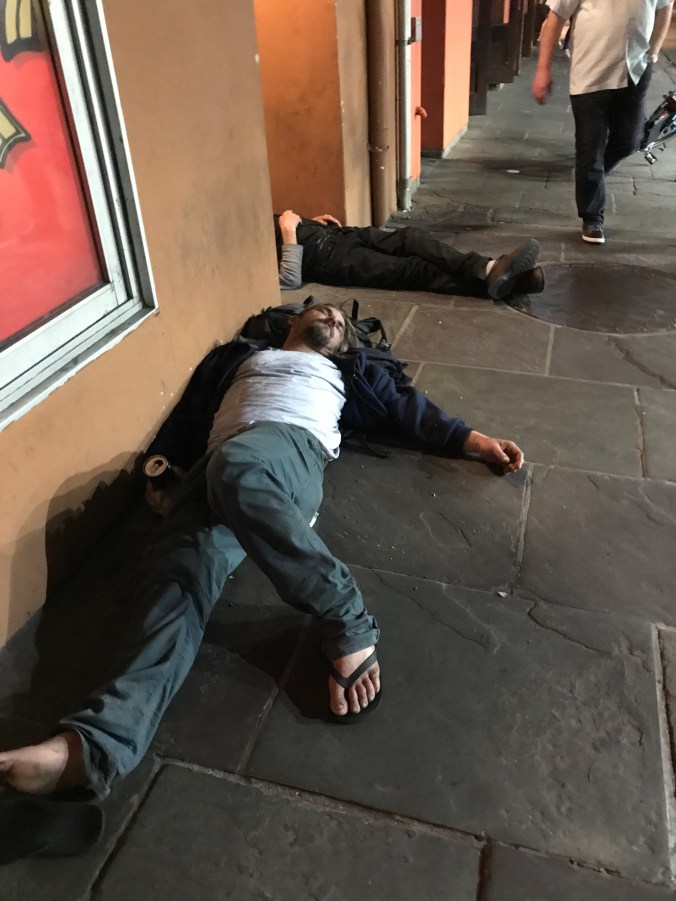
The Drunks by Ta Thimkaeo

Cassio: O strange! Every inordinate cup is
unblessed and the ingredient is a devil.

Iago: Come, come, good wine is a good familiar creature,
if it be well used.

Othello 2.2

My mother’s people, Southern Baptists, considered the use of alcohol a sin, so my poor Granddaddy Kiki was reduced to hiding his half-pints in shoes stowed inside his closet. A bantam rooster of a man, five-six at the most, he was literally a redneck in that having worked for decades at the gas station he owned, his head and neck had been permanently crimsoned by the sun, the redness coming to a point in a v beneath his neck. He wore those undershirts that have become known as wifebeaters, though I’m fairly certain he never lay a hand on my grandmother,  despite her reducing him to hiding his contraband like a child.

Kiki was a wiry man, fun-loving, could stand on his head in his 70s.  Acrobatic, he could also fall stiffly face first to the floor by cushioning the impact with his palms. He had been in a singing quartet as a young man and enjoyed yodeling while strumming on a ukulele. So when he drank, he went whole hog (as he himself might put) disappearing, sometimes for days, but eventually returning to the Fury of my justifiably outraged grandmother.

Perhaps he should have chosen someone a bit less religiously rigid, but if he had, obviously you wouldn’t be reading this because I would not be I.

Although not Baptists, my father’s parents also didn’t drink – or at least I don’t remember ever seeing them imbibing. Like Kiki, Granddaddy Moore lived to be a lithe old man and in his 70s could shoot his age at golf, but I never saw him take even a sip of alcohol. His sister, however, my Great Aunt Lou, would get sloshed on sherry every afternoon, repeating the same old stories over and over again as we pretended to be hearing them for the first time. She was a fiery old woman, but the sherry seemed to have a mellowing effect.

So no one I know of in my parents’ and grandparents’ generations ever suffered from what I would a serious, chronic drinking problem, at least the type dramatized this abbreviated sad song by The Kinks:
IMG_1693

15 February 2018 French Quarter

But even if you don’t suffer from a serious, chronic drinking problem, one solitary bender can get you in an ark-load of trouble [cf Cassio and [see here]]so I started wondering what three universally hailed sages from three different cultures and centuries have to say about drinking. After all, why even start something if it might get you in trouble?  Is having, as Iago says, “a good familiar creature” at your beck and call worth the risk of the creature turning on you?

Birth of Dionysus Zeus Thigh

The birth of Dionysius from Zeus’s thigh

Not surprisingly, since one of their most important deities was Dionysus,  the Ancient Greeks thought drinking produced at least some salutary effects, especially when practiced in moderation.  The word symposia literally means drinking together.  Symposia might be described as ritualistic drinking parties with singing accompanied by a flute girl, who, according to my sources, wore little or no clothing. As midnight turned to dawn, things could get out of hand.

As the evening went on, the wine had gone around the room in a particular order and so had the songs, the members became progressively drunker. This was when the flute girl “was liable to be groped by the men”. According to Prof Davidson and Dr Fearn, “we don’t know when they stop singing but certainly they get drunk. They talk about banqueters as if they are fellow voyagers on a ship and gradually the sea gets more and more turbulent and they start to get seasick or throw things out of the window, break furniture and grope the flute girl. Eventually they will emerge from the house in a kind of festival conga, go to another house with the flute girl accompanying them and try to cause riots there as well.” It was an out of control pub crawl.

“Drinking in Ancient Greece” from the University of Warwick website


In Plato’s Symposium, most of the participants are suffering from hangovers from the night before, so they decide they’re going to take it easy, dismiss the flute girl, but end up drinking all night and talking about love. The mode of narration is appropriately very convoluted; the conclusion is that the pursuit of wisdom and beauty is the ultimate object of love.

47d6cc6127bc47449942aa71287d2119

The Symposium by Anselm Feuerbach

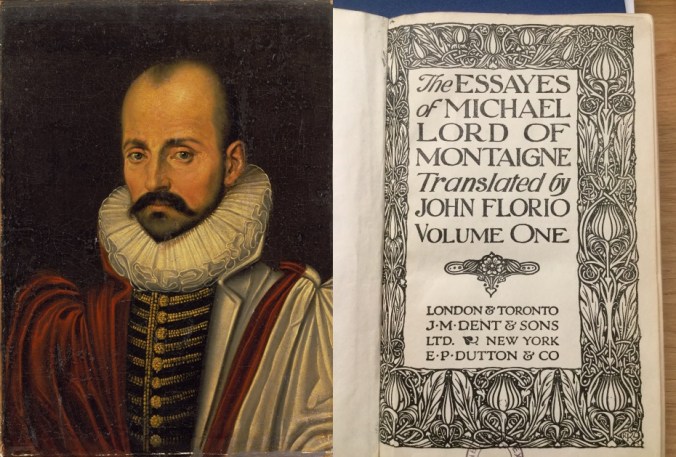
Montaigne, in his essay “On Drunkenness,” offers this encapsulation of Plato’s views on drinking:

Plato forbids children wine till eighteen years of age, and to get drunk till forty; but, after forty, gives them leave to please themselves, and to mix a little liberally in their feasts the influence of Dionysos, that good deity who restores to younger men their gaiety and to old men their youth; who mollifies the passions of the soul, as iron is softened by fire; and in his Lazes allows such merry meetings, provided they have a discreet chief to govern and keep them in order, as good and of great utility; drunkenness being, he says, a true and certain trial of every one’s nature, and, withal, fit to inspire old men with mettle to divert themselves in dancing and music; things of great use, and that they dare not attempt when sober. He, moreover, says that wine is able to supply the soul with temperance and the body with health. Nevertheless, these restrictions, in part borrowed from the Carthaginians, please him: that men forbear excesses in the expeditions of war; that every judge and magistrate abstain from it when about the administrations of his place or the consultations of the public affairs; that the day is not to be employed with it, that being a time due to other occupations, nor the night on which a man intends to get children.

However, Montaigne himself calls drunkenness “a gross and brutish” vice and quotes Lucretius:

When we are conquered by the strength of wine,

Our limbs grow heavy, our legs intertwine;

With sodden mind, slow tongue, and swimming eyes,

We reel amid the hiccups, brawls and cries.

Montaigne admits, though, that he wishes he enjoyed alcohol more because it’s one of the last pleasures available to the aged.
michel-de-montaigne-essays

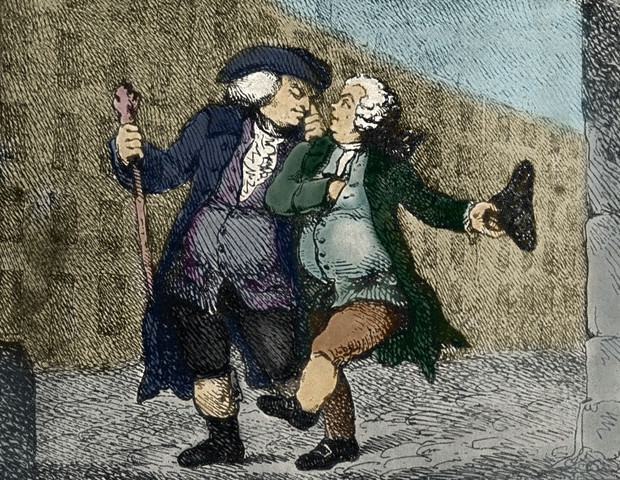
To turn to England, my hero, Samuel Johnson, has much to say about intoxicants. He tells Boswell, “I have no objection to a man’s drinking wine, if he can do it in moderation” but admits he tends to go in excess. Of course, he disdains drunkenness, but on one occasion justifies it.

I [James Boswell] called on Dr. Johnson one morning, when Mrs. Williams, the blind lady, was conversing with him. She was telling him where she had dined the day before. “There were several gentlemen there,” said she, “and when some of them came to the tea-table, I found that there had been a good deal of hard drinking.” She closed this observation with a common and trite moral reflection; which, indeed, is very ill-founded, and does great injustice to animals — “I wonder what pleasure men can take in making beasts of themselves.” “I wonder, Madam,” replied the Doctor, “that you have not penetration to see the strong inducement to this excess; for he who makes a beast of himself gets rid of the pain of being a man.”

Anecdotes of the Revd. Percival Stockdale; collected in “Johnsonian Miscellanies,” edited by G.B. Hill.
Walking up the High Street by Thomas Rowlandson

My late mother-in-law, Dot Birdsong, was the wisest drinker I’ve ever known.  Each day at five, she prepared hors d’oeuvres and drank exactly two glasses of Dewars on the rocks. In fact, she continued essentially to the day of her death, though by then heavily diluting the Dewars.

And as it turns out, the Mayo Clinic informs us

Moderate alcohol consumption may provide some health benefits, such as:

Reducing your risk of developing and dying of heart disease.

Possibly reducing your risk of ischemic stroke (when the arteries to your brain become narrowed or blocked, causing severely reduced blood flow)

Possibly reducing your risk of diabetes.

So I guess it all depends on who you are, your constitution, your powers of self-constraint.  Poor Cassio knew he couldn’t hold his liquor but caved in to peer pressure,  poor Charles Bukowski had his demons to subdue, but happy Dot Birdsong took her small sips of that delicious amber-colored liquid and enjoyed companionship.

One size doesn’t fit all.
 

My Second Second Line

Steve spenser

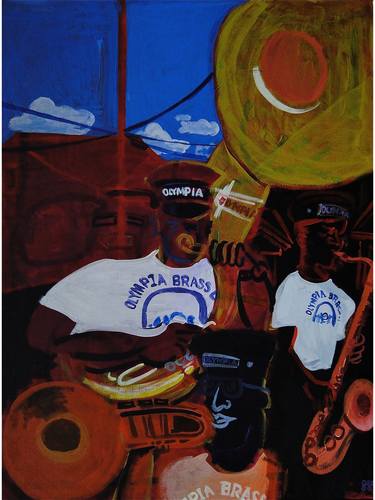
Olympia Jazz Band by Steve Spencer

If you’re lucky enough to be in New Orleans on a Sunday, google WWOZ and find out where the second line parade is going down.

Here’s a link for a brief history of the tradition, but essentially second lines arose in the 19th Century as African American citizens formed fraternal societies to collectively provide burial insurance and to sponsor jazz funerals for members who had cake-walked to the Other Side.

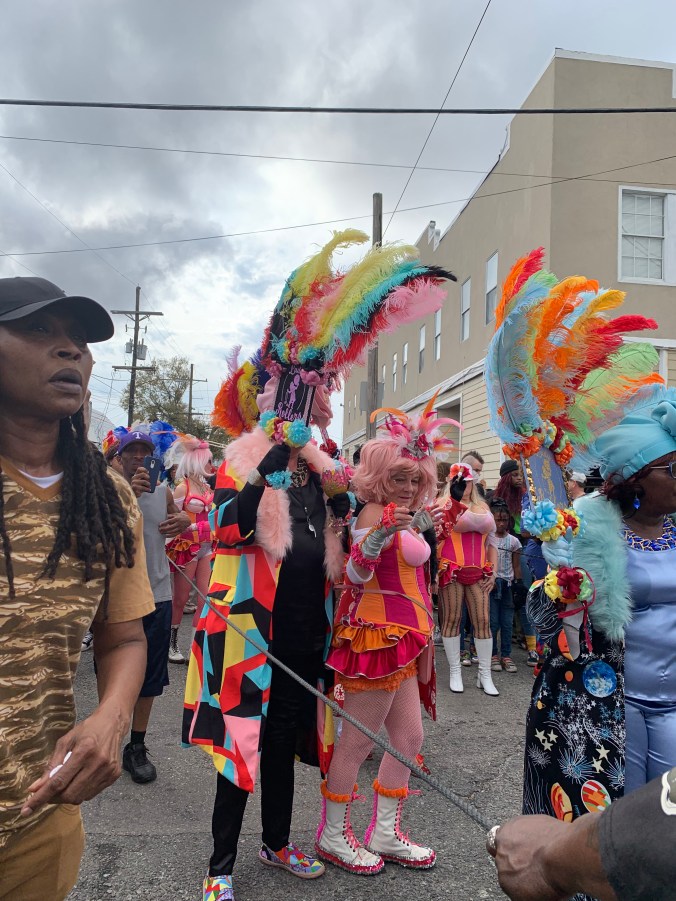
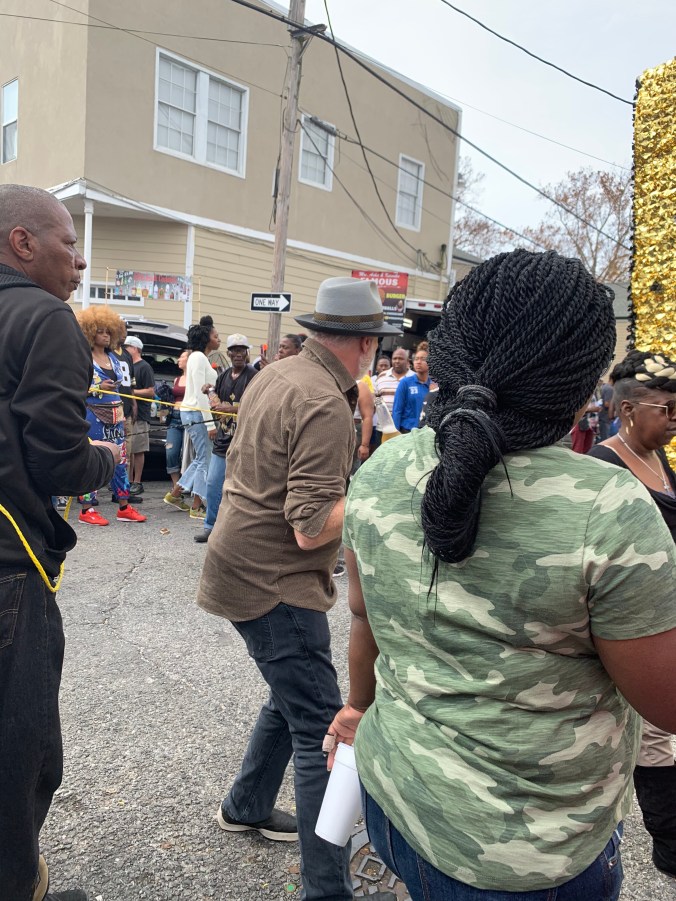
Originally, the first line consisted of family members and close friends of the deceased, the hearse and the band, while the second line was made up by mourners (or anyone else) who wanted to follow.  Nowadays, second lines aren’t necessarily associated with funerals; they’re hosted by neighborhood organizations for the joy of it. As Ian McNulty puts it in the linked article above, “Second lining can also refer to the type of dancing that usually goes on at these parades – a wild, strutting dance step to carry participants forward in pace with the brass band – so one can go to a second line, be in a second line and do the second line all at once.”

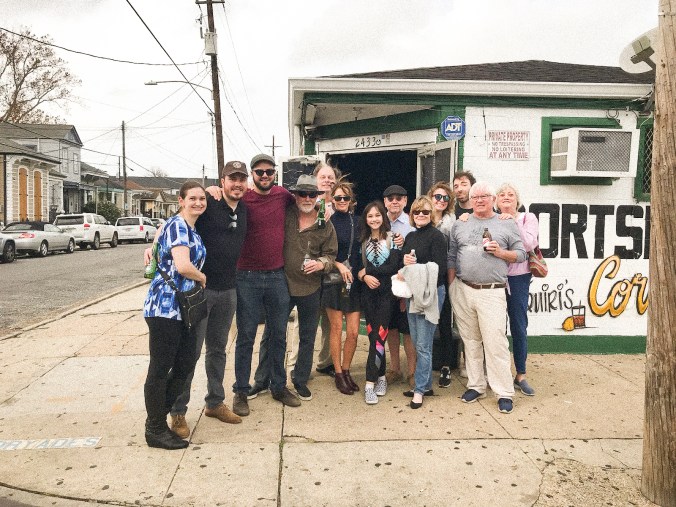
We weren’t in New Orleans for a funeral but for a wedding (which I officiated in my capacity as the Rockin’ Reverend Rusty).  So the day after, the father of the groom, Jake-the-Snake and daughter Anna; Jake’s sister Beth and son Ben;  Keefus Sanders, the best man at Jake’s own wedding; the Beasleys; and Entourage Moore featuring Harrison, Taryn, Ned, Caroline, Brooks, and I-and-I met up at the corner of 2433 Dryades where the parade picked up King Roller and Dukes at an establishment called Sportsman Corner.*

IMG_2423-3.jpg

Here’s a video peek at the festivities:


IMG_2315

HAPPY NEW YEAR AND THANKS FOR READING!

IMG_2309


*Do Lawd, retired English teacher, that’s a long awkward compound subject you got going there.

Christmas in New Orleans

IMG_2587

This Christmas my immediate family gathered in New Orleans for the holidays to celebrate the wedding of my friend Jake-the-Snake Williams’ son Mac, whom I’ve known since utero.  Ned came all the way from Nuremberg, Harrison and Taryn from NYC, and, of course, Brooks, Caroline and I-and-I from Folly Beach, SC.

We rented a VRBO in Treme, two houses down from the Back Street Museum, which houses Mardi Gras Indian costumes and Second Line Parade outfits.

Renting a VRBO in Treme would be massively frowned upon by Davis McAlary, a character on the HBO series Treme, because it violates Davis’s paradoxically entitled notion that he should be the only white person allowed to infiltrate Treme because of his profound love for New Orleans’ African-American culture.

That’s our excuse, too.

IMG_2155.jpeg

I-and-I on the porch of the Back Street Museum

Here are some pix from our excursion to Walgreens to process photos and cop some razor blades. While Caroline and Brooks waited for photo processing inside the pharmacy, I wandered outside to check out the environs.

IMG_2605.jpg

IMG_2601.jpg

IMG_2608.jpg

The black citizens of Treme could not have been more welcoming, Mr. Francis, the proprietor of the Back Street Museum, called a friend to find out where Sunday’s Second Line parade would originate so we could catch it. Rodney, the manager of the Lil People Bar just around the corner from our place, gifted us some toilet paper and invited us to a catfish fry Sunday to watch the Saints game.

What to do?  Check out the Second Line?  Eat catfish at the Lil People?

IMG_2615.jpg

The great James Booker

I ain’t know.

Ch-Ch-Changes

Tomas Honz A Near Future

In my boyhood – we’re talking the Fifties and Sixties – I loved movies from the 1930’s, the Marx Brothers, WC Fields, and Laurel and Hardy especially.  Jean Harlow in her shimmering white gown seemed from my limited perspective almost as far removed as the Civil War.  Nick and Nora Charles epitomized a world glamour forever lost; in short, for ten-year-old I-and-I, the decade of the Thirties was a Golden Age (despite its soup lines and empty Christmas stockings).

loy_powell

Myrna Loy and William Powell in Their Roles as Nora and Nick Charles

Of course, nowadays for me, thirty years is merely half a lifetime ago, the blink of the old proverbial eye, seeming like yesterday, as they say.

Yet it was a time before email, before downloading music and movies, before smart phones, before same sex marriage, and certainly 1984 – that sinister Orwellian year – must seem as distant to a ten-year-old today as 1932 did to me in ’62 – the year Dylan released his debut album, Marilyn Monroe was found dead, and a U2 plane (not the Irish band) espied missile sites going up in Cuba.

[cue] “[Our] old road is rapidly aging

Of course, as Heraclitus pointed out many moons ago (29,772 or so to put an approximate number on it), change is the one constant of the universe.  Nowadays, though, at least as far as Western culture goes, change has accelerated at warp speed: cell phones seemingly morph instantly in our hands as we switch from punching buttons to swiping screens.  The landfills are probably overflowing with those whatcha-used-to-call-ems – oh yeah, floppy discs.  What’s amazing is how fluidly we have waltzed from teletypes in the early ‘80‘s to Skype in the 20-teens to FaceTime in the Twenties..

Less smooth, however, has been the transition from the cultural conventions of the 1950’s to the Brave New world of this Millennial decade.

Who looks more wholesome, Robertsons or Stones?

These are not comfortable days for fundamentalists with genetics suggesting that homosexuality is not a Satanic perversion but a orientation encoded in the double helixes bequeathed to us by the random collision of sperm and ovum.  We have a not-easily- reconciled Biblical schism between the love and compassion of Jesus’s preaching and Paul’s seemingly more traditional stances on women and homosexuals.  These beliefs end up being personal, and it is clear that expressing one’s beliefs publicly – no matter which side you fall on – is fraught with danger.

My eyes collide head-on with stuffed
Graveyards, false gods, I scuff
At pettiness which plays so rough
Walk upside-down inside handcuffs
Kick my legs to crash it off
Say okay, I have had enough, what else can you show me?

And if my thought-dreams could be seen
They’d probably put my head in a guillotine
But it’s alright, Ma, it’s life, and life only

Bob Dylan “It’s Alright Ma, I’m Only Bleeding”  1965

hoch_eyes

Hannah Höch: Totalitarian

Which brings me to a subject near and dear to my cerebral cortex – language.  Paradoxically, we have now a coarsening of language* while simultaneously political correctness forbids our use of once scientifically sanctioned words like retarded.**


*E.g, our stuff  (i.e. personal belongings like books and recordings) has been downgraded to shit as the patois of the hood via hiphop is aped by the middle class.

**A friend mentioned last week that she had been verbally excoriated for using “retarded” in the sense of “backwards looking.”  From infoplease: The treatment of mentally retarded people has always reflected the changes in society. They have been officially referred to as idiots and as the feebleminded. The introduction of the IQ test was followed by a classification system that used such terms as moron (IQ of 51–70), imbecile (26–50), and idiot (0–25); later these terms were softened and classifications redefined somewhat to mild (IQ of 55–70), moderate (40–54), severe (25–39), and profound (0–24) retardation. The term mentally retarded itself, although still commonly used, has been replaced in some settings by the term developmentally disabled.

I myself have  recently gotten in a bit of trouble for using figurative language (an instance of anatomical synecdoche, if you must know) which underscored for me the absurdity of mistaking a word for the act or condition it describes.***

*** As I once told my mother, “I’ll bring in a jar of piss and a jar of urine, and if you can distinguish which is which, I’ll quit using the word “piss.”


Come to think of it, perhaps shit is a more appropriate word than stuff for the manufactured, almost instantly obsolete artifacts we now call our own (as opposed to grandfather’s golden pocket watch or the Swiss army knife we used to carry).

Whatever the case, the tension between accepted vulgarities like shit and out-of-vogue elocutions like homo suggests cultural confusion amid all of the dizzying change we’re exposed to, so you better watch those tweets, Steve Martin,and your mouth Rusty Moore.

All that I ask is that the Politically Correct Police and the Bible Thumpers keep their sanitized hands off my vocabulary.

carlinstone2

2019 Yearly Review

chico-bachelor-party

Although a bit early, I’m posting my annual recap of my favorite posts of the year because Monday we’re headed to NOLA where the Right Rocking Reverend Rusty will officiate his very first wedding as Jacob McLeod Williams and Darsey Virginia Walker enter the holy state of matrimony. This event will take place on 28 December a couple of hours after LSU takes the field against Oklahoma, so the Right Reverend has crafted a service that screams brevity is the soul celebration.

Anyway, let’s get this here celebration started.

January

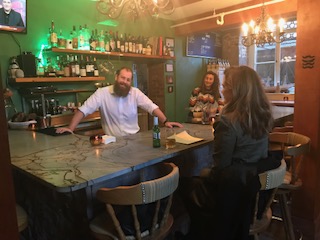
charlie2019’s first month yielded only five posts, one an excerpt from a novel Caroline’s editing for me in hopes of eventual publication. Also there’s a piece mocking South Carolina’s attorney general for calling marijuana “the most dangerous drug” and a meditation on angels,” which is probably the most well written.  However, I’m going to feature my “Ode to Bartenders,” those kind souls who ply us with spirits and sometimes offer sage advice.

February 

I was more productive in February, which also features a novel excerpt that I discovered mouldering in a drawer.  There’s also a poem honoring my late friend Larry “Buck” Howard, and a couple of others of note, but I’m going to provide links to only two, my dyspeptic (though eloquent) disparagement of Super Bowls and a link to an interview with my brother, the musician Fleming Moore,  in which he performs a song inspired by my son Ned.

March 

0a1b5119-5f49-41d3-a0d3-f2d0668baea3

photoshopped by Jake McDonald

Again, not much to choose from here in sheer numbers. I wrote about mindfulness, euphemisms, a Danielle Howle concert, and teaching poetry. Also, I wrote about sharing Porter-Gaud’s Visiting Writer honor with my man Bill Slayton, which you can read here.

April 

As lilacs bred out of the dead soil, mixing memory with desire, I wrote about Sunday morning blues and the phenomenon of curiosity.  Alfred “Do Lawd” Tennyson makes an appearance as does dying in nursing homes. On the bright side, Caroline and I did head up to Wilmington for the battle of the DJs, topped off with an Ice Cube concert.

May  

judy and the boys portugal

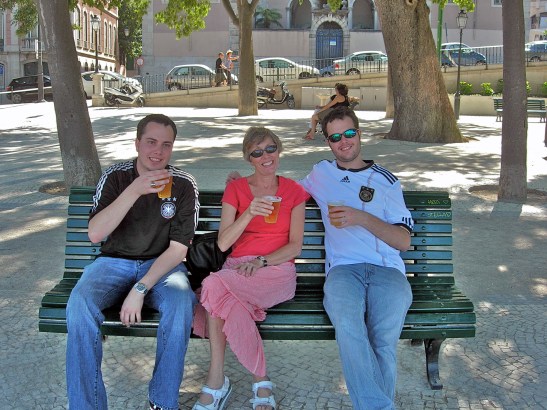
In May I taught my last class, mused on poetry, and wrote this tribute to my late wife Judy Birdsong who died on Mother’s Day in 2017.

June 

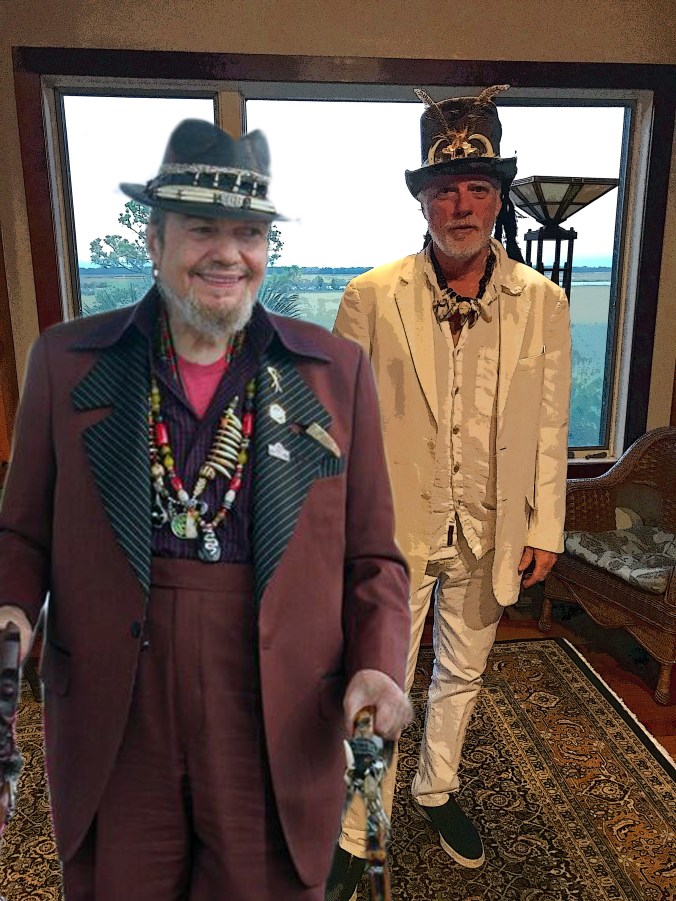
Hey, retirement resulted in a much more productive month of blogging, but in June one of my heroes died, the great Mac Rebennack. AKA Dr. John, whom I lauded in two separate posts.  Here is the more ambitious of the two,a lexicon of Dr. John locutions. 

July  

van

From left to right, Caroline, I-and-I, Cheryl, Chris, Kathy (photo credit Joe Brown)

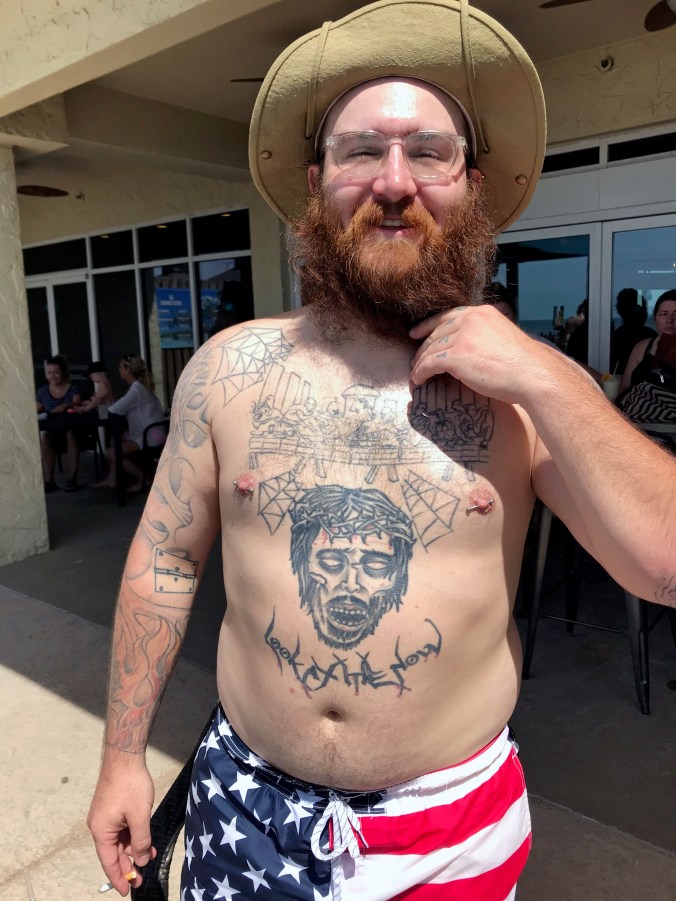
I’m providing links for two posts, the first a narrative of epic proportions, our trip to see the greatest rock-n-roll band in history and a poem that I’m proud of, “Ode on a Tattooed Torso.”

Tattooed Torso

August

August was hopping.  Caroline and I saw Steve Earle in Florence, SC, both on the sidewalk and in concert.  I wrote about the all but forgotten psychedelic band Blue Cheer and the spectacular TV series Deadwood, reviewed Once Upon a Time in Hollywood, and channeled Joseph Campbell, which, I think is the most noteworthy of the posts.

September 

September got off to a shitty start with the Gamecocks losing to North Carolina.  Once again, music seems to be an obsession.  Here’s a post about country music  and one on Miles Davis. 

October 

jack of cups 1.0 (original 2)

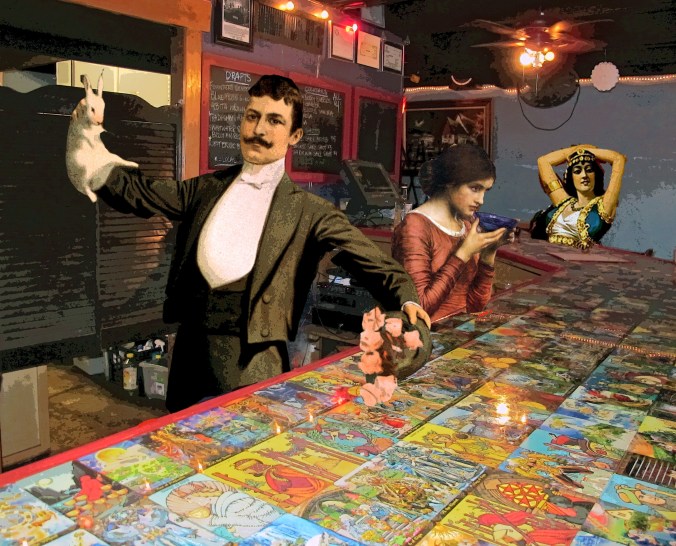
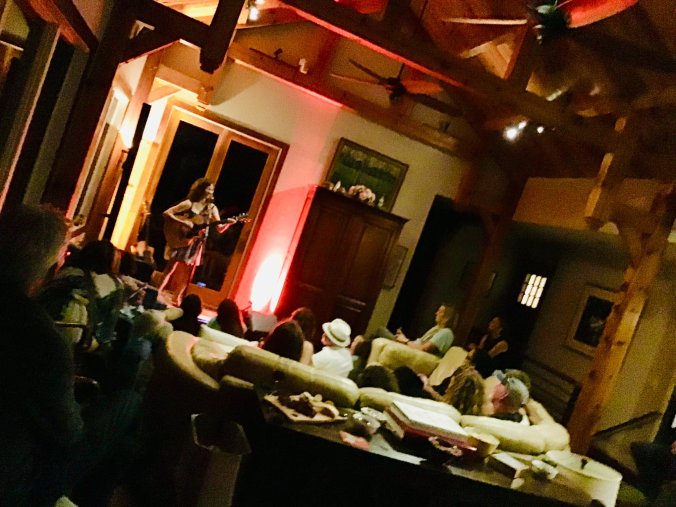
Lots of retreads here from the old blog.  I did, however, launch my art career , and Caroline and I hosted our first house concert. 

house shot

 November 

Saw a bad movie, wrote a bad poem, mocked an asshole YA author.

December

Only three, four counting this one, maybe “The Towering Dead” is the best, but I do like the account of the Phish concert as well.

So, hey, if you’re a repeat customer, thanks so much for reading this blog.  I sincerely appreciate it, and stay tuned to find out how Mac and Darsey’s wedding turned out.

Dr. Hoodoo Dr. John Wesley


Swapping Stories, Southern-Style

hotel-columbia-demolition-11-21-1971-700x754

I actually witnessed this implosion in November of 1971.  Stayed up all night to see it right before dawn with my personal bodyguard Haboo Garbowski, a bear of a mannishboy.

Yesterday, I had the pleasure of hanging out with old college friends who attended the University of South Carolina with me in the early to mid-70s, and, of course, we told stories because that’s what old Southern boomers do.[1]  We relive the past because, as the song says, “old times [here] are not forgotten.”[2]

The majority of these tales are comedic, thematically connected. For example, the time when ol’ so-and-so was wandering around someone’s house in the wee hours drunk as a skunk wearing only an oxford dress shirt as he stumbled around munching on a chicken drumstick, and another, even more embarrassing incident, when an extremely inebriated newlywed became disoriented and crawled naked in bed with his mother-in-law. Here, the written word is no substitute for the oral transmission, the whoops and hollers, the rhythm of the vernacular.

That story led to one about a young woman who house sat for B and D.  This woman, a free spirit, slept in the nude. One morning, she stepped out onto the deck in her naked majesty and closed the sliding doors.  CLICK.  She tried to reopen the door, but it wouldn’t budge. All the other doors were locked as well.

Fortunately, she had her phone in her hand, which she had picked up out of habit, a rather absurd situation, to be outside naked except for a cell phone, which brings to mind this lovely ditty from Robert Graves.[3]

For me, the naked and the nude
(By lexicographers construed
As synonyms that should express
The same deficiency of dress
Or shelter) stand as wide apart
As love from lies, or truth from art.

Lovers without reproach will gaze
On bodies naked and ablaze;
The Hippocratic eye will see
In nakedness, anatomy;
And naked shines the Goddess when
She mounts her lion among men.

The nude are bold, the nude are sly
To hold each treasonable eye.
While draping by a showman’s trick
Their dishabille in rhetoric,
They grin a mock-religious grin
Of scorn at those of naked skin.

The naked, therefore, who compete
Against the nude may know defeat;
Yet when they both together tread
The briary pastures of the dead,
By Gorgons with long whips pursued,
How naked go the sometimes nude!

Well, by Graves’ definition, she was naked, not nude, as naked as a jaybird, as my grandmother would say, who herself has relocated to “the briary pastures of the dead,” but that’s another story.

Obviously distressed, the young woman called one of the owners, D, and asked her if she should ask people in the neighboring house for help, but D said, “We live at the end of a dirt road.  We don’t have neighbors. I’ve hardly ever talked to those people.”

The good news, though — and how lucky is this – the house was equipped with a trap door.  All she had to do was fetch the ladder, find the trap door, push it open, and enter from below, which, bless her heart, she did successfully.

This narrative led to other getting locked out of the house stories, like poor ol’ Sherman T who was told he could crash at that very house, but found it locked. His door knocking coming to naught, he decided to crash on a lounge chair next to the pool.

“So I wrapped myself in towels,” he said.  “They were dog towels. I spent the night wrapped up in dog towels under the moon.”

Of course, I have a couple of getting out of the house stories (here’s one), but the one I was going to tell involved in-laws, a rental house in St. Simons, and the Swimming Pool Q’s.

“The Swimming Pool Q’s,” D and B shouted.  “They’re good friends of ours!”

So instead of hearing my lame story we talked about the Pool Q’s, which had nothing to do with my favorite story of the evening , the Great Mount Pleasant Mushroom Disaster, but I’ll have to tell you that one in private the next time I see you.

I’ll leave you with this peek of the Pool Q’s until the folks at YouTube remove it because of copyright concerns.


[1] Pardon the redundancy.

[2] Despite the copious amounts of intoxicants involved in many of these stories.

[3] Graves doesn’t distinguish “nekkid,” unlike Lewis Grizzard, who famously  explained, “There’s a big difference between the words, ‘naked’ and ‘nekkid.’ ‘Naked’ means you don’t have any clothes on. ‘Nekkid’ means you don’t have any clothes on … and you’re up to something.”

The Towering Dead

me and the reaper seranade

Nor for the towering dead/ With their nightingales and psalms

Dylan Thomas, “In My Craft or Sullen Art”

Hamlet describes death as “the undiscovered country from whose bourne/ No traveler returns,” phrases that betoken death’s mystery, a subject so profound that you can almost get away with slipping in a moth-eaten word like “betoken.”

victorian-post-mortem-photography-tm.jpg

Don’t say “cheese”

On the other hand, Wallace Stevens designates Death as the mother of beauty.

pieter_brueghel_heimkehr_der_jaeger_1010967-1.jpg

Woody Allen pigeonholes it as one of the two things that come only once in a lifetime.*

woody_allen_0731


*The other is sex

***

My first 3-D encounter with a human’s death happened when I was around twelve or so on a rare Sunday when we’d all gone to church together, even Daddy.  In those days TV consisted of a couple of channels,  so we would occasionally drive for amusement, motoring around and through Summerville, circumnavigating the past –  riding past clapboard houses where we used to live, past our former maid’s dilapidated cottage, past the crossroads where my grandfather’s gas station had stood before it burned down.

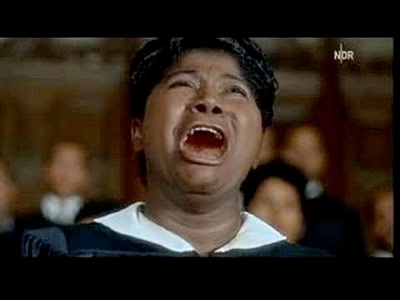
On this particular summer’s day, we encountered a cluster of hysterical people on the sidewalk right across the street from Dorchester County Hospital.  The windows of our un-air-conditioned Ford Falcon were down, and as we rolled past, I witnessed a Mahalia-Jackson-sized woman throwing her hands back in the air while screaming over and over, “My Mama left me, My Mama left me!”

As our car crawled on, I caught sight of the outline of the body, already covered, the screams receding as Daddy sped up and drove straight home.

Later that day, we traveled to Lake Moultrie with our neighbors, another rarity, and I saw Mrs. Delasanti’s pubic hair peeking out of her bikini bottoms.

A first for me.  Forbidden.  Thrilling.

So, on that Sunday, I sort of got a peek at both sides of the coin, the tomb and womb, and, unfortunately, the tomb won out.  Death had ruined my day.

“My Mama’s left me, My Mama’s left me!” rang out as I lay me down to sleep that night.

Horace Walpole has described life on this planet about as pithily as anybody: “This world is a comedy for those who think, a tragedy for those who feel.”

Mahalia.jpg

Mahalia Jackson

***

Over the years, I have become much more of a thinker than a feeler.  I’d like to believe that education, fairly wide reading/traveling, my dabbling in Buddhism, and maturity have brought about my detachment (rather than a callousness acquired from the onslaught of horrific images I’ve been bombarded with in over a half-century of a media-saturated life:  JFK’s shattering skull, Vietnamese monks immolating themselves, starving African toddlers with bloated bellies, Donald J Trump raising his hand to take the oath of office).

Of course, since that first encounter with death, I have witnessed others, loved ones, shuffling off their mortal coils. As I held my mother-in-law’s hand as she was in the thrall of dying, she looked up at the ceiling, gazing intently at whatever she saw up there, and said, squeezing my hand, “Rusty, this is overwhelming.”

My beloved Judy had a harder time, though mummified by morphine, her breathing labored,  yet right before the end, she quieted down, and I recited to her over and over “may flights of angels sing thee to thy rest,” and I’m also almost positive she was at least dimly aware of my presence and words because she sort of smiled for awhile before she became still.

***

I have an oncologist friend who once told me that out there (wherever that is) lurks enormous amounts of anonymous funding for a dedicated (if not fanatical) group of scientists/physicians who believe that they can conquer aging and death-by-disease, a prospect that frankly gives me the heebie-jeebies.  In that world, all deaths would be accidental, the afterlife a occupancy-challenged condo.  I imagine suicide rates would skyrocket. How weary, stale, flat, and unprofitable would seem the never-ending daily routines in that Malthusian nightmare of a world!

I told my friend, “They don’t know the story of the Sibyl.”

“No they don’t,” he concurred.

1508x1512-Sistine_Chapel_Frescos-Michelangelo_Buonarroti-14751564-Sibyls-Cumaean_Sibylimage.png

Translation: “I saw with my own eyes the Sibyl of Cumae hanging in a jar, and when the boys said to her, Sibyl, what do you want? she replied I want to die.”

***

No, I believe that Wallace Stevens got it right:  Death is the mother of beauty.

Who would trade his or her short-lived ability to discern beauty for the undifferentiated undying existence of amoeba and paramecia, or prefer the perfect two-dimensional monotony of prelapsarian Eden to the depth and complexity of postlapsarian Babylon with its gardens full of fading flowers and kiss-stealing star-crossed lovers?

Biologically speaking, sex is what creates diversity, and its cost is death, the cessation of being, or, as Philip Larkin put it in “Aubade”:

        [. . . ] no sight, no sound,
No touch or taste or smell, nothing to think with,
Nothing to love or link with,
The anesthetic from which none come round.

Death for sex, not a bad trade off by my reckoning.

Unlike Larkin, death holds no special dread for me.  Although I don’t believe in an afterlife, the idea of having my short-leased indestructible matter recycled into another form appeals to me.  I think a burial at sea sounds exquisite – a quick re-entry into the animal world via ingestion.

In this interim between womb and tomb – let us be thankful to have ended up here and now and agree with Dylan Thomas that wise men at their end know dark is right.

Though, rather than raving as Dylan Thomas suggests, I’d like to think of myself in those final instants as surrendering to the fitting inevitability of it all.  To try to enjoy the fleeing images of my consciousness as they’re jettisoned into nothingness.

After all, form is emptiness and emptiness form.

Heart_Sutra_01.jpg

What’s Become of All the Dear, Dead Typewriters?

underwood.jpg

I miss the sound of clicking-clacking typewriter keys.

My very first typewriter was an Underwood that I bought for next to nothing, a slow-motion engine like the one above whose keys would sometimes stick, freezing in midair before they could imprint a letter on the scrolled paper.  The keys were small and round and perched aloft by long metal attachments. When you hit them, they sort of catapulted through the ribbon onto the paper. At the end of a line, you had to yank a metal flange so the carriage would return to the left margin, producing a clear audible “ding.” As it turned out, the ribbon couldn’t be replaced unless I could locate a time machine, so the Underwood and I had a short-lived romance, little more than a fling.

Nevertheless, with it I composed a few very bad poems, love poems or satiric poems in tiny typeset.  Only a couple of the satiric ones survive, written in a self-invented fifteen-line rhyming stanza form I called the bonnet, in honor of my favorite bartender, Hartley Bonnet, who worked at Oliver’s Pub on Devine Street in Columbia. It was a private club, so you could drink on Sundays.  Jimmy Buffett was a member. He was dating a girl from Columbia, whom I heard he eventually married.

I think my daddy provided me with my first electric typewriter, a throw off from his business, and after banging on the Underwood, I had a hell of a time adjusting to the gentle touch that the sensitive electric model demanded.  At first, the keys would stutter when I banged them, a staccato hiccup that meant starting over, or positioning correction tape to efface my mistake, or if I had splurged and bought erasable bound paper, scrolling up, erasing the errata, repositioning the paper, and retyping. If I were writing a research paper, sometimes when I was typing a footnote, the paper would shoot out because I’d misjudged, typed past the bottom of the  page, the last couple of strokes hitting the black cylinder where the paper should be.

Here’s what a typed page looked like:

IMG_2392

And a close up of a correction.

IMG_2393

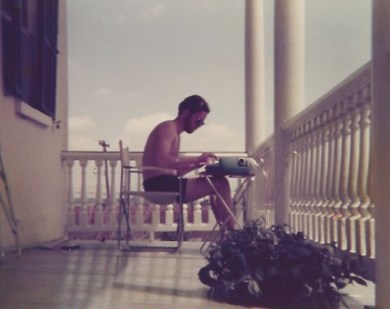
I was typing  the words to that soon-to-be abandoned novel when I lived in the Manigault House on East Bay Street, which was divided into three apartments, one upstairs and one downstairs in the main house.  The third apartment,  ours, was two stories on the back end and sported an upstairs porch overlooking the projects.

manigault house

wesley porch typing

wesley limehouse typing 1

One day, my neighbor, whose name I didn’t know, asked me if I were a writer.  “Well, sort of,”  I said, pleased to think I may have possessed an author’s aura.  “I’m working on a novel.”

He told me he could hear my typing through the walls.

When I landed a state government contract to crank out descriptions of various jobs you could get with an associate degree from the local community college, I went ahead and bought a Tandy computer and printer.  This was early, in the days before hard drives, and this contraption sported ten-inch twin disc drives.  The salesman assured me that ten-inch disc drives would be the wave of the future.  One drive accommodated a ten-inch floppy disc that contained the word processing program, the other a blank disc for your writing. The printer was sort of like a typewriter and produced clicking sounds.

When I first started teaching at Porter-Gaud, I would type out my carbon-backed report cards and feed them individually into the printer, making me way on the cutting edge of technology.

Of course, I wouldn’t go back to those lesser technologies. In fact, I could if I wanted to; an electric typewriter is languishing in my attic. On the other hand, I think something is lost by not having to retype manuscripts after editing a page by hand, which encourages polishing, and you can make editing changes too rapidly without having time to digest the alterations.  Of course, a meticulous, patient person can still edit the old way, but as this typo-plagued blog attests, I’m not that person.

Time’s winged chariot and all that jazz.

Speaking of jazz, here’s a video of the poet Eddie Cabbage accompanying some cool cats, including the late Vinny Youngblood, up on the porch in the upstairs Chico Feo Airbnb as Tim Brown looks on.

Beach Bum Bummer, Boomer Edition

thebeachbum_1024x1024

Caroline and I have invested/wasted time over the Thanksgiving holidays checking out two films and a flick. On Monday night, we watched an HBO documentary on the photographer Robert Mapplethorpe and an experimental film called Notes on an Appearance, a slow-cut edited paean to stasis, directed by Ricky D’Ambrose, .

On the following evening, we watched the recent stoner film The Beach Bum directed by Harmony Korine and starring Matthew McConaughey, Snoop Dog, Isla Fisher, and featuring Jimmy Buffett playing himself.

Here’s my amphetaminic spoiler-infused synopsis.[1]

Moondog, the eponymous beach bum, is supposedly a genius poet, though the pap he recites isn’t even, strictly speaking, verse, much less poetry.  Perpetually drunk and stoned, he divides his time cavorting with multiple sexual partners in Key West or at his obscenely rich wife’s mansion in Miami.

Despite being deemed loveable by a host of movie critics, including the New Yorker’s Anthony Lane, Moondog shows up late for his daughter’s wedding, strides up to the couple taking their vows, grabs the groom’s crotch to measure his manhood, and calls him “a limp dick.”

Tee-hee.

After the ceremony, Moondog and his wife (who has been having an affair with Snoop Dog’s character Lingerie) go for a drunken drive, crash the car, and Moondog ends up a widower cut out of his late wife’s will until he publishes a significant collection of poetry.[2]

Pissed off at having his inheritance delayed and predicated on productivity, Moondog recruits a host of homeless people and trashes his daughter’s house (tee hee), which results in his going to rehab to avoid prison. At the rehab facility, he and an arsonist named Flick (get it?) become buddies.  They escape in a golf cart that somehow outraces the pursuit.

Short of money, the unlovable rogues attack and rob an old man in a mechanical wheelchair, bringing to mind A Clockwork Orange, except in that movie brutalizing an old man managed to be funny, thanks to Alex’s “Singing in the Rain” routine, whereas in The Beach Bum the assault seems simply cruel.

Moondog and the Flick split ways, and our antihero takes up with Captain Wack, who charters a swim-with-the-dolphins business.  With a family of tourists on board, including pre-pubescent children, Moondog spews vulgar sexual terms (the daughter actually puts her hands over her ears).  Despite his love for dolphins, Captain Wack can’t distinguish them from sharks, dives in to model swimming with them, and loses a foot.[3]

After copping some magic muse-like ganga from Jamaica, curtesy of Lingerie, Moondog writes what Wikipedia calls “a poetic memoir,” receives critical acclaim, and wins the Pulitzer.  Now, he can receive his inheritance, 17 millionaire dollars in cash delivered in a freshly purchased yacht.  Sailing off into the sunset, Moondog purposely sets fire to the money (which killjoy me thinks could have bought some food insecure children a Big Mac or two).  The yacht explodes; some bills rain down about a party that has gathered to celebrate the occasion.  Of course, Moondog escapes unscathed as he floats along in a dingy, one of Dionysius’s chosen.

The End.


Now, don’t get me wrong; I can love movies that thumb their cinematic noses/give double barrels to the establishment, movies like A Night at the Opera or Jean Vigot’s Zero for Conduct, and I’m okay with a dash of  gratuitous sex, but as my wife Caroline so aptly put it, the entire movie is gratuitous.

What exactly is the point? Unlike Fellini’s The Satyricon, The Beach Bum isn’t mocking Late Empire extravagance or moral turpitude; it’s celebrating it, hence the presence of that Apostle of Hedonism, the venture capitalist Jimmy Buffet, who, I understand, is  marketing “a string of Margaritaville retirement homes” where the bald and cellulite-ridden can bask in what remains of their days (and nights).

Wasting away in Margaritaville

IMG_1458


Here’s a spiel for you golden-agers:

“It’s always been that happy place in your mind, the spirit of adventure in your soul. It’s the state of mind when it all comes together in one of life’s perfect moments. When your mind wanders to this paradise, why not follow it home?” reads the site. “We have heard your call… Minto Communities and Margaritaville welcome you to Latitude Margaritaville!… Inspired by the legendary music and lifestyle of singer, songwriter and best-selling author Jimmy Buffett, your new home in paradise features exciting recreation, unmatched dining and FINtastic nightlife. With Minto’s 60 years of experience developing award-winning, master-planned communities and building quality homes for over 80,000 families, innovative new homes are a given.”

Perhaps if Donald Trump weren’t president, I might have been less caustic in this review, but to me, Moondog is what Trump would be like as a stoner: vulgar, narcissistic, privileged, someone whose supposed “genius” gives him license to be a perpetual asshole.  Although Moondog shares some characteristics with Jeff Spicoli of Fast Times at Ridgemont High and The Dude of The Great Lebowski, he, unlike those sympathetic characters, is arrogant, entitled, not in the least bit clever.

That said, he only harms himself, his family, and the occasional wheelchair bound Boomer. I just happen to find Barabas of Marlowe’s farce The Jew of Malta to be much more of a hoot.

FRIAR BARNARDINE. Thou hast committed—

BARABAS. Fornication: but that was in another country;
And besides, the wench is dead.


[1] Charleston’s own The City Paper pegs the plot as “hilarious misadventures” and rogerebert.com calls it a “funny, ultimately sweet movie.”

[2] Several times this not yet published collection of words is referred to as a novel, though what we get at the end is a Pulitzer winning collection of poems.  It’s almost as if the screenwriter, Mr. Korine, doesn’t know the difference.

[3] Okay, no doubt a fan of the film will note that this is a farce, that the shark fins are cardboard, that it’s not supposed to be realistic, to which I say, Moondog-style, fuck off.