An Orgy of Ennui Gives Way to the Roaring’ Twenties Revisited

The publishers of the vocabulary series Wordly Wise seem obsessive in their campaign to promote the word ennui. It appears in the 9th, 10th, and 11th grade workbooks, and I can’t think of any other word that appears in multiple editions.[1] Here are pages 76 and 77 from Book 6, which we used for our 9th grade students.


Note that the words “yokel,” “ennui,” “transient,” and “orgy” appear in the same lesson and how quaint yokel’s definition comes off: a “gullible country fellow” and how orgy’s definition – “wild, abandoned merrymaking” – sidesteps its sexual content altogether. I learned early in my career that having students write sentences using unfamiliar words was a waste of time, for the same reason I discouraged them from consulting thesauruses: they more often than not misuse the word because they don’t know its connotations. (Here’s a great example of thesaurus misuse from an earlier post).

If they are unfamiliar with the words, students tend to come up with sentences like this:

The landscape company sent over some yokels to dig our koi garden.

We had an orgy at the pep rally with lots of loud cheering.

Or let’s see if we can use both words in one sentence.

The yokels had a veritable orgy of tobacco juice ejaculations as they dug a koi pond in our back yard.

Anyway, back to ennui.  Certainly, ennui transcends mere boredom. It’s more like a malaise, a world weariness, an existence where even orgies seem like a drag. When I taught the word, I also taught John Berryman’s “Dream Song 14.”

Life, friends, is boring. We must not say so.   
After all, the sky flashes, the great sea yearns,   
we ourselves flash and yearn,
and moreover my mother told me as a boy   
(repeatingly) ‘Ever to confess you’re bored   
means you have no

Inner Resources.’ I conclude now I have no   
inner resources, because I am heavy bored.
Peoples bore me,
literature bores me, especially great literature,   
Henry bores me, with his plights & gripes   
as bad as achilles,

who loves people and valiant art, which bores me.   
And the tranquil hills, & gin, look like a drag   
and somehow a dog
has taken itself & its tail considerably away
into mountains or sea or sky, leaving            
behind: me, wag.

Now that’s ennui!

Well, having endured a year of a pandemic, we all may be suffering to some degree of ennui, despite Netflix, Spotify, Amazon Prime, and TikTock. For most people, simple human contact is a need, whether it be at a sold-out concert or merely in the simple act of shaking hands with a just-introduced barroom companion.

But, hey, it’s the 20s, and the end of Covid (our Spanish flu) in sight. With the Trump Administration (not exactly the equivalent of WWI but pretty damn gruesome) over, and with the legalization of cannabis (our Prohibition) sweeping across the land, we just might set the decade a-roarin’.

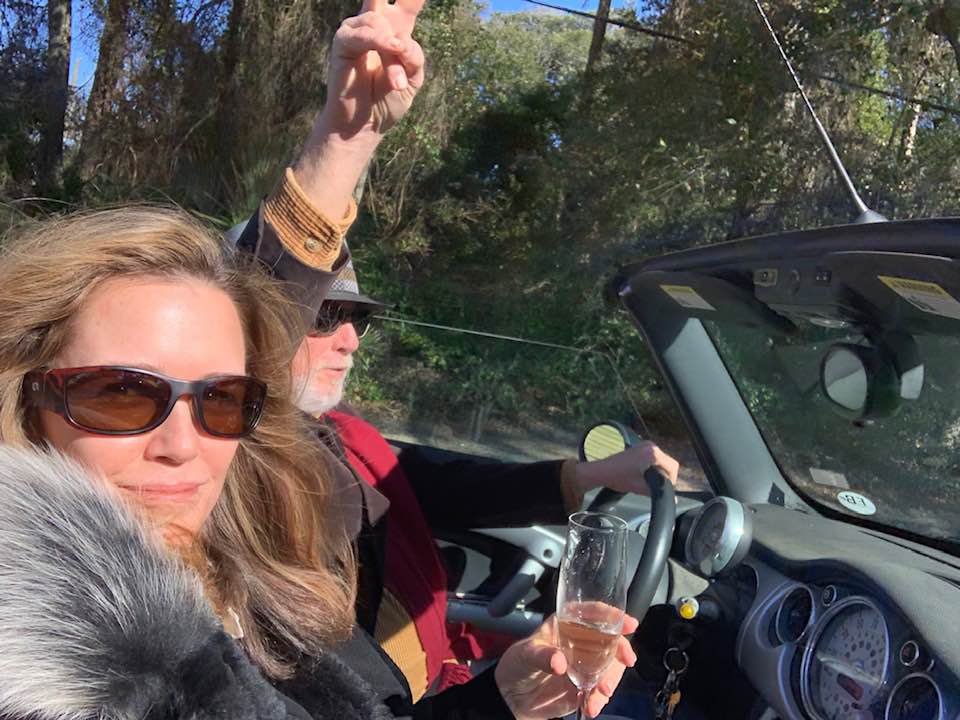
In fact, my beloved and I are getting a head start by going full tilt Gatsby (while keeping a sharp eye out for roadside yokels) as we celebrate what we hope to be a new era of love and prosperity).

Happy New Year!

[1] In my 34-year career at Porter-Gaud School, I taught 7th, 8th, 8th, 10th, 11th, and 12th grades, including AP Literature and Composition, so I’m very familiar with the Wordly Wise series. 

Recipe for Rusty-O Chicken, a Mexican-Style Easy-to-Fix Delicioso Dish

A decade or so ago, my Porter-Gaud colleague Jimmy Owens turned me on to a recipe whose only prep was pouring Picante sauce over chicken breasts. My sons dubbed the dish “Jimmy-O Chicken.”  Over the years, however, I’ve made so many changes to the recipe that I now call it my own, “Rusty-O Chicken,” the O in honor of both Jimmy and the recipe’s Mexican flavoring.

It takes only ten minutes max prep, and is, as Cousin Minnie would say, “DEE-licious,” so Dear Readers, here it is.

1. Pre-heat the oven to 350 degrees.

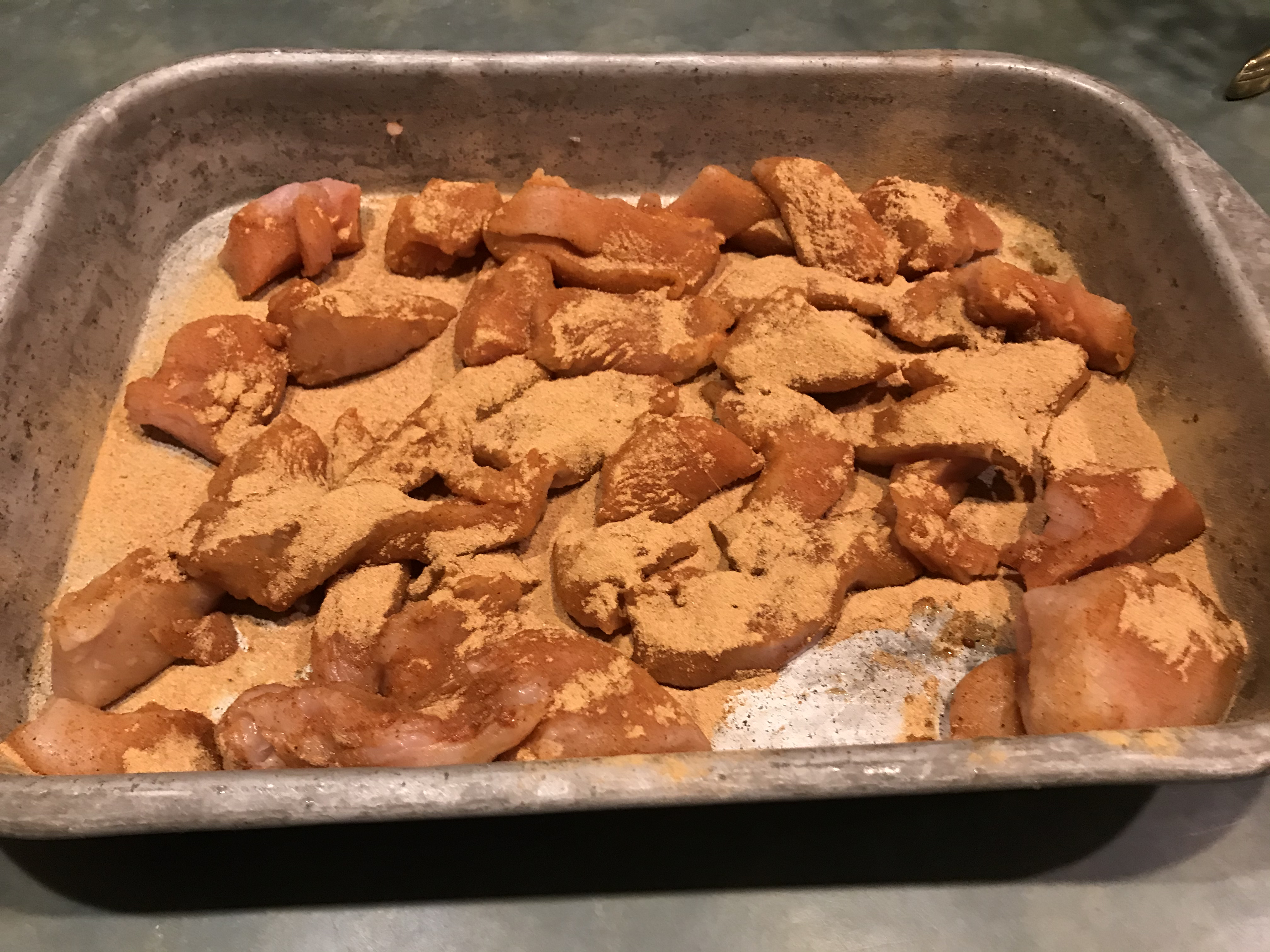
2. Cut four chicken breasts (I use scissors) into hunks that are a bit bigger than bite-sized and coat them with chicken taco seasoning.

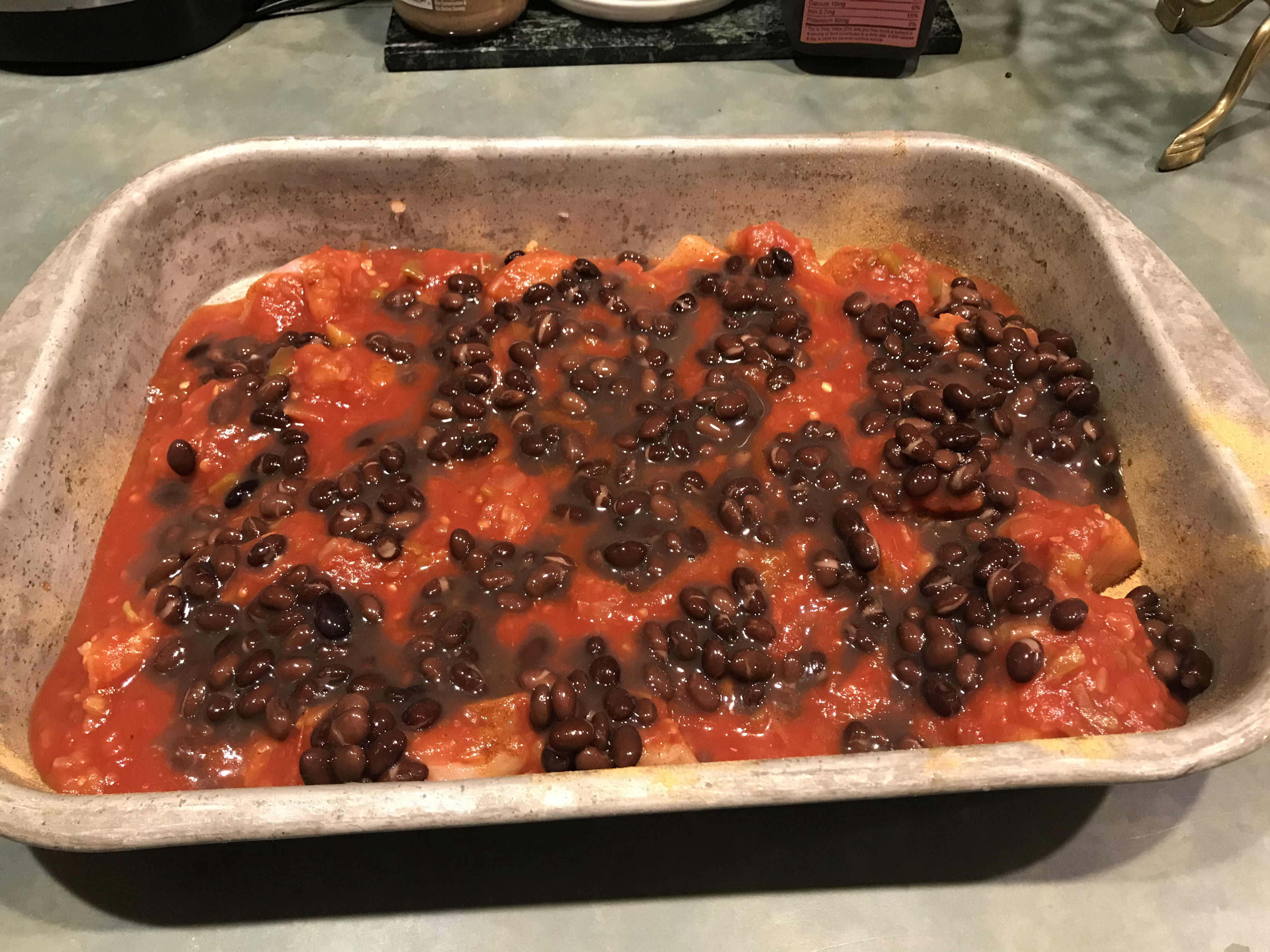
3. Pour a complete bottle of Picante sauce over the nuggets.

4. After draining a can of black beans, dump it on top of the Picante sauce.

Sprinkle a packet of Mexican cheese over the concoction.

6. If you choose, arrange black olives over the cheese.

7. Bake for about forty-five minutes or until bubbly.

8. Serve over white rice.

It Ain’t Orwellian, You Patronizing, Hubris-Bloated Blatherskite

Sen. Josh Hawley (R-Mo.) gestures toward a crowd of supporters of President Donald Trump gathered outside the U.S. Capitol to protest the certification of President-elect Joe Biden’s electoral college victory Jan. 6, 2021 at the US Capitol in Washington, DC. Some demonstrators later breached security and stormed the Capitol. (Francis Chung/E&E News and Politico via AP Images)

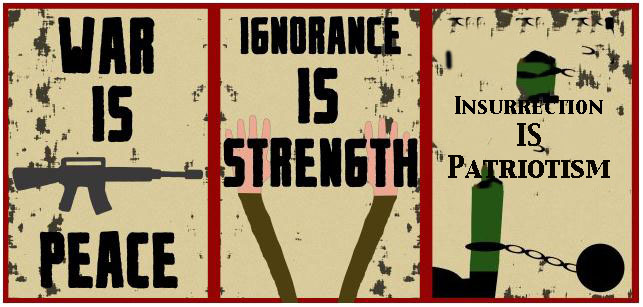
Although by no means do I consider myself an Orwell scholar, I did teach 1984 for a number of years, so I can claim a fairly deep acquaintance with its text, so it irks me when I see or hear the adjective Orwellian employed as a sort of catchphrase to describe any situation that occurs when information brought to light results in negative political consequences.[1]  

For example, take Senator Josh Hawley (R MO) seen above co-opting the Black Power clenched fist from the 60s to show his solidarity with the soon-to-be rioters amassing outside the Capitol last week. Because Hawley spearheaded a Senate faction that challenged electors during the certification process and exacerbated the grievances of the mob that ransacked the Capitol, Simon and Schuster rescinded a contract to publish one of those PR tomes aspiring presidential candidates produce prior to launching their campaigns.  According to Hawley, a private for-profit corporation’s decision to back out of a book deal after its author had played a role in encouraging a violent takeover of the Capitol building “could not be more Orwellian.” He goes on the call the cancelled contract “a direct assault on the First Amendment” as “[t]he Left look[s] to cancel everyone they don’t approve of.”

Actually, there is nothing “Orwellian” about Simon and Schuster’s decision not to publish Hawley’s book. Now, it would have been Orwellian if Simon and Schuster had translated the text into Newspeak and manufactured a fake biography of Hawley’s life or had company spies record Hawley’s every move or had had him seized and transported to a reeducation facility. However, if my First Amendment right meant that a publishing company that earned 184 million dollars in sales last year was obligated to publish my novel Today Oh Boy, I would be one very happy fiction writer.[2]

In fact, the insurrectionists’ subsequent identification by the authorities as commissioners of crimes stemmed not from the omnipresent surveillance of Big Brother but from their own narcissistic need to record themselves in live streams and selfies and to capture their fellow rioters in action to demonstrate how important they all are. To echo William Blake’s phrase from his poem “London,” our “manacles” are “mind-forged” in that we ourselves choose to bind ourselves to devices that track our every movement, our purchases, our internet searches. We are, if not exactly Big Brother, Little Brother and Little Sister, documentarians of our own little lives, seeking fame thorough exposure, amassing “likes” to validate our existence in a culture that reckons worth by numbers.


[1] In fact, I’ve developed an overarching lesson plan in teaching the novel as a whole that you can find here.

[2] Here’s a free sample.

Election Fraud Madness in Poe and Way Beyond

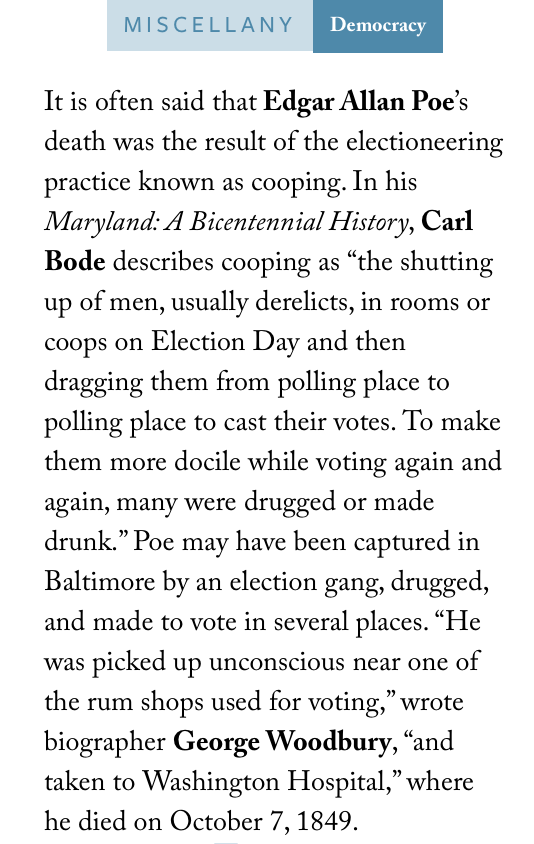
As I was joy scrolling through my Twitter feed this morning, basking in what I fear will be short-lived solace, I ran across this tweet from Lapham’s Quarterly regarding the death of Edgar Allan Poe, my first literary hero.

https://www.laphamsquarterly.org/democracy

Originally tweeted by Lapham’s Quarterly (@laphamsquart) on January 5, 2021.

I’ve written elsewhere about my discovery of Poe when I was a small boy trespassing in a sequestered library. A few years later, Mrs. Morgan, my seventh-grade teacher, read out loud “The Tell Tale Heart. ” As she mimicked the madman narrator’s voice, she began pounding her palm on her desk to approximate the sound of the beating heart the narrator imagines he hears beneath the floorboard where he has deposited the remains of his murder victim. It was out-of-character for Mrs. Morgan to read a complete story out loud, but it certainly held our attention.

The first paragraph of that story, which as a child astonished[1] me, now produces a wry smile: 

True! –nervous –very, very dreadfully nervous I had been and am; but why will you say that I am mad? The disease had sharpened my senses –not destroyed –not dulled them. Above all was the sense of hearing acute. I heard all things in the heaven and in the earth. I heard many things in hell. How, then, am I mad? Hearken! and observe how healthily –how calmly I can tell you the whole story.

Throughout the tale Poe cultivates dramatic irony through the raving narrator’s insistence that he’s perfectly sane, demonstrated in the special care he took in suffocating the old man (whom he claims he loved) and the rational steps he took in dealing with the corpse.

If still you think me mad, you will think so no longer when I describe the wise precautions I took for the concealment of the body. The night waned, and I worked hastily, but in silence. First of all I dismembered the corpse. I cut off the head and the arms and the legs. I then took up three planks from the flooring of the chamber, and deposited all between the scantlings.

Rereading it just now for the first time in a half-century produced a chuckle, not, I suspect, the effect Poe was seeking. 

Anyway, I became a Poe aficionado, devouring all of his short stories and most of his poems, reveling in the dead weight of distracting details that characterize his tales, his Latinate diction and erudite references, the creepy Freudian obsessions of tubercular lovers and diabolical murderers. 

In fact, when I began teaching Poe, I used his work to introduce students to psychoanalytical criticism, demonstrating how “The Fall of the House of Usher” could be read as an allegory of Freudian repression as Frederick Usher buries his sister (hints of incest) in the crypt beneath his house only to have her break from her casket with superhuman strength, crashing forth to clasp him in her deathly embrace. Also, we analyzed Poe’s story “William Wilson” through the lens of Jungian criticism, with the mysterious other William Wilson, the narrator’s nemesis, representing the doppelgänger archetype, a sort of superego that unconsciously undermines the narrator’s attempts at perpetrating crimes. In doing so, we looked at his biography to see how life events creep their way into his fictions.

illustration Of William Wilson by Ben Jones

Alas, poor Poe, the victim of “coopering,” an unwitting pawn of election fraud in those halcyon days when you didn’t need doctored software or mail-in ballots or dead Venezuelan politicians to steal an election. You could just ply a toper with demon rum or laudanum, change his clothes, drag him from polling place to polling place, a sad end to a consistently sad existence: an orphan whose father flew the coop before his son’s mother became consumptive and died; an orphan adopted by a cruel – in this case –  stepfather who tried to mold the sensitive child into someone he wasn’t; an orphan whose child bride cousin, like his mother, also wasted away with tuberculosis; an orphan who was his own worst enemy, whose panning of an anthology edited by a friend led to a literary feud that resulted in the former friend’s writing a scurrilous biography that depicted Poe as an opium addled madman, a legacy that still lives on.

Meanwhile, 170 years later, we still have our madmen and women, confabulating about pedophiliac Democratic cabals devoted to Satan worship, evangelical in their quest to disseminate their fever dreams to the masses.

And today’s the day when what has been a pro forma constitutional rite will be transformed into a circus while Proud Boys and Lizard Squads and other fringe groups take to the streets, a slightly more sophisticated attempt at undermining an election than dragging an impoverished writer through the alleyways of Baltimore. Today’s madcap spectacle might make an entertaining action-packed novel or movie – or perhaps a cynical dark comedy like Dr. Strangelove.

This brand of madness and mayhem, however, doesn’t suit Poe’s talents as a storyteller. I’m thinking Dickens or Twain would be better able to do justice to the likes of Sidney Powell, Lin Wood, and Rudy Giuliani, or maybe a movie directed by Robert Altman or Quentin Tarantino might be the way to go..


Lin Wood Yippee-Ti-Oh

Anyway, fun ahoy. The let the games begin.


[1] I love the sound of astonished, which originally meant to turn to stone, an ear-pleasing blend of an Anglo-Saxon prefix, root, and suffix.

An Idle and Most False Imposition

The author

Cassio: “Reputation, reputation, reputation! Oh, I have lost my reputation! I have lost the immortal part of myself, and what remains is bestial.” Othello 2.3

When I was growing up, my mother often warned little ol’ red-headed I-and-I that a good reputation is an invaluable commodity and once lost virtually impossible to reestablish.

How discouraging then, to discover via an unsolicited email from MyLife that my reputation is three points lower on average than my neighbors’, and, of course, I can’t help but wonder what misdeed or combination of misdeeds have contributed to the sullying of my character in relation to, say, the fellow who lives on the corner, a year-round resident whose hurricane shutters have been securely latched for at least the last five years and who makes Howard Hughes seem gregarious in comparison.. 

Tom Waits, “What’s He Building in There?”

I mean, if I lived in the exclusive planned communities of Kiawah, Wild Dunes, I’on, or Daniel Island, it wouldn’t surprise me if my reputation lagged behind those of the fine families who have chosen to sequester themselves from the mere middling and who sleep secure knowing that architectural guidelines prevent the couple across the street from painting their house in any contraband pigment that might upset the soothing balance of sameness that surrounds them.[1]

But I live on Folly Beach, the so-called Edge of America, the notorious setting for the 4th of July riots of 2012 and the disastrous Follygras debacle of 2019. Fatal drug overdoses among residents, though not common, are not unheard of. Look, I can count the number of manicured lawns on one hand whereas the number of yards strewn with broken down lawnmowers and the rusted remnants of bicycles would require an abacus to calculate. To be deemed less reputable than the average Folly resident raises questions.

Folly Gras 2019 by Wesley Moore III

For example, how significant is three percentage points in reckoning of my reputation? How does my driving my MG Midget down steps leading to the University of South Carolina’s Campus Police headquarters in 1978 figure into the algorithm? Are there statutes of limitations on youthful indiscretions, like the time or two I was escorted from drinking establishments ? Do my occasionally outré fashion choices affect negatively my score as the tabulators of character scan the internet for images of me, and does the fact that most of those images feature me holding an alcoholic beverage and grinning a shit eating grin negatively affect my score?

Charley Neely and I-and-I

Who knows? The good news is that I boast a stellar credit score, am not looking for employment, and my sweet mother is none the wiser resting in peace in the churchyard of St. Paul’s Episcopal Church.


[1] I suspect that perpetually shut hurricane shutters would be frowned upon. 

Twitter, a Bastion of Un-Rugged American Non-Individualism

“But after I got them to leave and shut the door and turned off the light it wasn’t any good. It was like saying good-by to a statue. After a while I went out and left the hospital and walked back to the hotel in the rain.”


Frederick Henry after his wife’s death in Hemingway’s A Farewell to Arms


Although I enjoy Twitter as a medium through which I can follow intelligent journalists and receive breaking news faster than I can on cable news networks, it teems with self-pitying grandstanders, which I find off-putting. Desperate for sympathy in numbers, these popularity seekers bombard feeds with truncated accounts of their personal travails, as if a casual scroller clicking a heart or typing a phrase of consolation is meaningful in any significant way. 

Here’s a sample of o-woe-is-me tweets culled in the last two days:

My only child has a fever and chills. She is driving home alone, from a testing site. I am dying inside.

Talked at my dad earlier today, hoping he could hear me. Got the call tonight. My dad died from Covid. In a nursing home. Alone.

My dad got home from MON-GENERAL at 1:30 p.m. He died at around 1:55 Does anyone care?

It’s my birthday. I’m home alone. No one cares. 

No, as it turns out, lots of people care, given that these cri de couers rack up thousands of responses from sympathetic followers (their laments limited, however, to 280 characters), and I myself also care in the very limited way in that I’m sorry when anyone suffers, and certainly there’s more than enough of that going around on a planet where approximately 150,000 humans die on a typical day and many more than that on a day during a worldwide pandemic.[1]

On the other hand, it’s also depressing for me to note that the rugged individualism and stoicism that once defined the American character is as dead as Davy Crockett.[2]

Look, no one is a stranger to heartache. I was holding the hand of my wife of forty years when she died on Mother’s Day, of 2017,  but the last thing I can imagine doing is logging on to Twitter seeking sympathy before her corpse had been buried or cremated or come to think of it, even after that.

It was, of course, very moving to receive so many handwritten expressions of sympathy from our relatives and friends, and I also would have appreciated unsolicited sympathy from a total stranger who might have written, “I read your wife’s obituary in the paper, and she seemed like a wonderful person. I’m sorry for your loss.”  However, it would have been very less meaningful if I had solicited sympathy by posting on Facebook, “My darling Judy is dead. Does anybody care? How about flooding my mailbox with sympathy cards?”

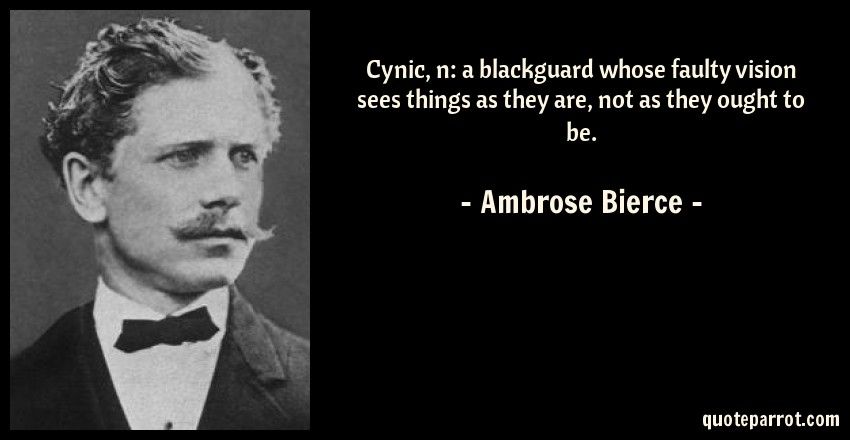
Sorry about this hard-hearted, cynical grousing, but my spiritual advisor, Mencken Bierce Twain, thought it would be a good idea to get it off my chest. 

Anyway, here’s to a happier 2021 when I hope fewer folks will have occasion to post about the trauma of COVID.


[1] Not to mention the death of pets, debilitating diseases, house fires, hurricanes, homelessness . . . 

[2] As exemplified by self-pitier-in-chief President Donald Trump, who is about as stoic as Blanche DuBois.

2020, the Year in Review

Well, ladies and gents, despite this being a year of too many foul subtractions, too much self-isolation, and a cluster bombed political landscape about as verdant as a WWI battlefield, this blog has enjoyed significant success, if you count success in the number of visitors who peeked in and the total number of hits registered on the site.

A record shattering year with 37,840 hits and 22,969 visitors from 132 countries

Perhaps, we can attribute this growth in readership to the old adage misery loves company.

At any rate, here’s a look backward at some of what I consider the worthiest posts. To revisit the posts, hit the highlighted word, which will transport you to the piece in its entirety. In January I was ignorant that old man contagion was hiding behind a tree laying (sic) in wait to throw at brick.[1]Nevertheless, not realizing that many would turn to the solace of spirits (not to mention IPAs and spiked seltzers) in the coming months, prophetically I posted a pro-alcohol piece .

To counterbalance the somewhat positive with sort of negative, I also produced this piece on the great American songwriter Stephen Foster. 

February

On February 15th, Caroline and I visited Mosquito Beach’s Island Breeze for the last time, not knowing it was the last time. Alas and Alack!

By 29 February, the virus was flourishing, so I published this enlightening expose on vultures.

March

The Charleston community lost a richly talented English teacher, a learned Charleston historian, and lovely human being, Erica Lesesne.

Also, my pal the poet Jason Chambers allowed me to read and record on of his compositions.


April

April is, as Eliot, put it, is the cruelest month, so I brought this post up from the dead land, the first post directly dealing with the pandemic

I also wrote a poem dedicated to my friend Richard O’Prey, who is alive and well I’m happy to say. 

May

My wife Caroline wrote this brilliant villanelle in memory of my first wife Judy Birdsong who died on Mother’s Day of 2017. There’s an audio clip of Caroline reading that accompanies the text of the poem.

I also bid farewell to Porter-Gaud’s Class of 2020 who lost out on the springtime rituals of severance they so richly deserved. 

June

With the year half done, I came up with this pandemic parody of of William Ernest Henley’s “Invictus.” 

July

In July, I began a series dedicated to my native town of Summerville. Here’s the most popular one that brings together two rather antithetical citizens of that once quaint village. 

August

Not much going on in August. Here’s another one from the Summerville series chronicling my first night ever spent in a jail.

September

For some odd reason, I had death on my mind

October

Another pandemic poem, this one on the wearing of masks. 

November

With the election seemingly over, I posted this celebratory poem

Also, here are a handful of videos celebrating George Alan Fox and Chico Feo’s  Songwriters’ Soap Box Open Mike Extravaganza.


December

Ah, those lazy crazy deathly dangerous days of college.

Thanks to all of you who stop by and read the blog, especially my regulars, Rodney, Bill and Dana, Furman, Sue, Gary, and, of course, my siblings, and my loving, patient, and beautiful wife Caroline.


[1] With apologies to Ry Cooder

Before There Was Such a Thing as Black Friday

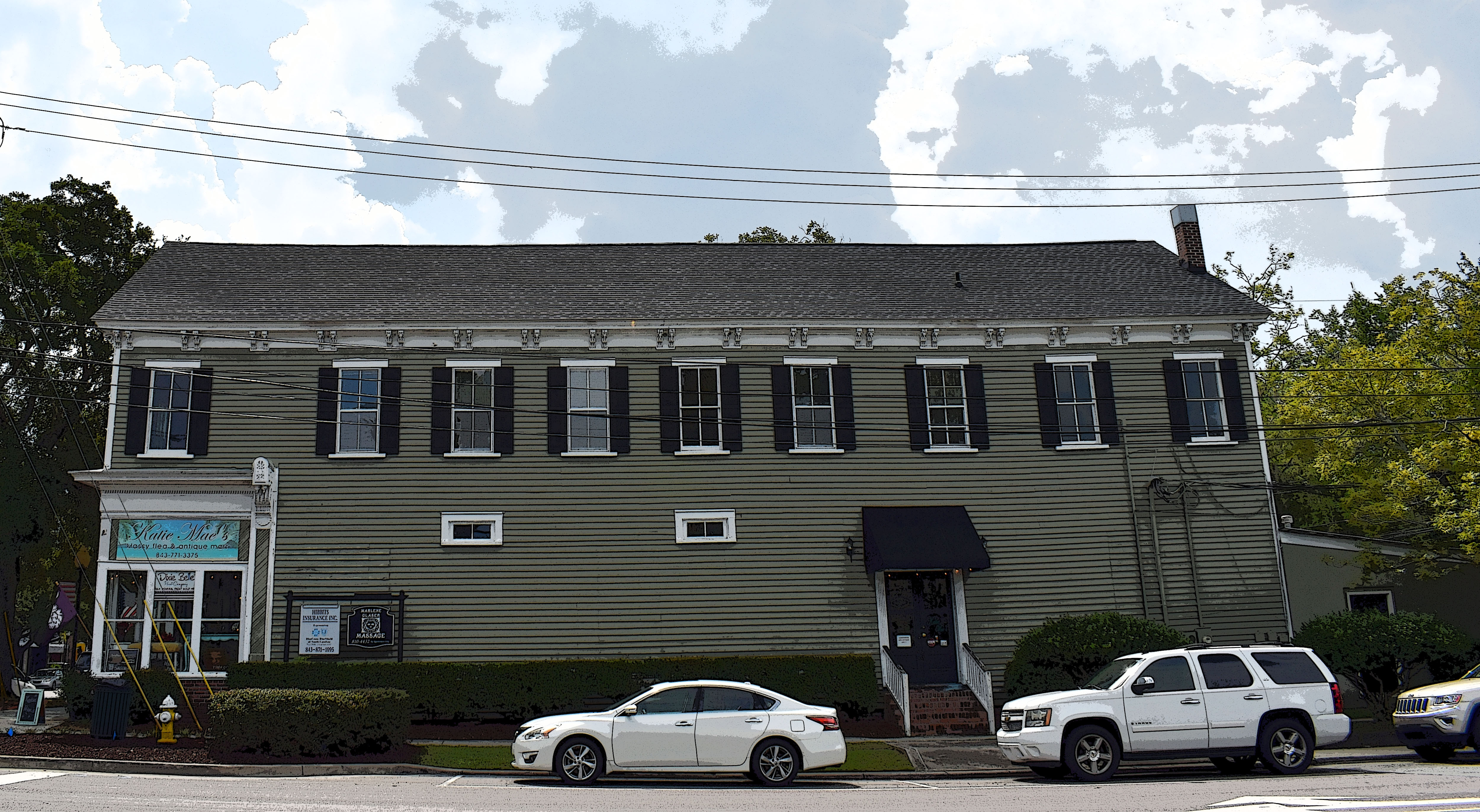
This building as seen today once housed Mr. Pete’s and later Carolina Home Furnishers

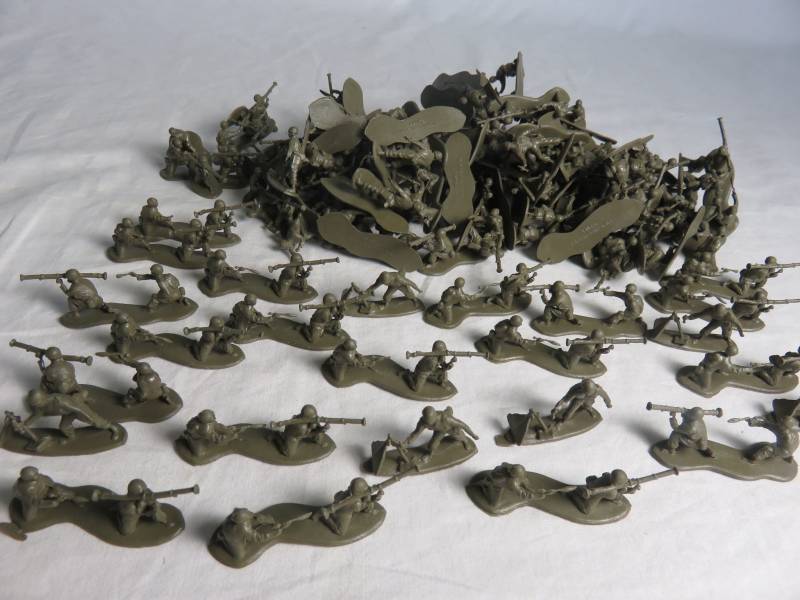
When I was very small, there was department store across from the Summerville Post Office on Richardson Avenue called Mr. Pete’s, a cavernous space in a clapboard building. I think that Mr. Pete was a Greek immigrant, though I’m not sure. I am, certain, however, that he sold toys, and I remember a long bin along one of the walls filled with a variety of tiny plastic soldiers that went for a penny a piece. It had only been a decade since WW2’s close, and if my memory serves me, Mr. Pete also sold some army surplus items. I also recall dolls of both races standing on shelves staring blankly out over the merchandise.

Over the course of time, I amassed quite a collection of soldiers, which we would set up as armies on opposite sides of our bedroom floor, and take turns rolling marbles to knock them over, the winner being the one who “killed” all of the opposing general’s men. The last survivors were always those soldiers who lay on the stomachs pointing their rifles. You had to flip them over to kill them.

Also, among the items for sale for children at Mr. Pete’s was a Monopoly game that went for five dollars, which was a fortune back then when you could hop, skip, and jump a couple of blocks and cop a fountain Coke from Guerrins for a nickel. Anyway, my Aunt Virginia, who was only six years older than I, coveted that Monopoly game, and it was a monumental moment in my young life when she finally scraped enough money to purchase it. 

In her role as banker, Virginia was very meticulous when we played the game, counting aloud as she distributed funds or doled out houses and hotels. I was more accustomed to games like Candy Land and Kentucky Derby that featured concrete starts and finishes. Drawing cards or thumping a color-coded spinner determined your moves in time-restricted outcomes better suited to a four-year-old’s attention span. Often, Virginia had to bribe me to play.

I have no idea what happened to Mr. Pete or his store. I did, however, years later work in that building when it housed Carolina Home Furnishers, which was run by Weeza Waring, an absolutely wonderful and undemanding boss who regaled me with old yarns as we sat next to one another in recliners watching Perry Mason reruns. 

That’s what we mostly did, watch TV, the old reruns giving way to soap operas as the day matured. Customers were few and far between. My duties consisted of fetching the mail in the morning (and sometimes a bottle for Weeza from the liquor store in the afternoon), and sweeping and dusting. On Saturdays, if we had made a sale that week, the owner’s son Kirk Singletary and I would deliver furniture, or one occasion, repossess an item that the purchaser could not afford.

A few months ago, my wife Caroline and I travelled to Summerville so I could refresh my visual memory of these places for this self-indulgent project of chronicling what it was like growing up in a small Southern town during the Civil Rights era. Of course, we went to see the building, but it was the height of the pandemic, and the businesses there were closed. We didn’t get a chance to check out the interior of what now is now “Katie Mae’s Flea Market.” I wanted to look up out of the two small rectangular windows on the South Cedar Street side of the building.

I remember almost a half century ago, in the late morning of my life, dying for the workday to end, peering through those tiny rectangular windows at puffy white clouds drifting past.

Moments “that time allows in all his tuneful turning so few” as we wish our lives away.[1]

photo credit Caroline Tigner Moore

[1] Dylan Thomas, “Fern Hill,” an incredibly beautiful poem, well worth a click.

Thanksgiving 2020, Let’s Make a Joyful Sigh

Rudy and Sidney serving up a real turkey

Another Thanksgiving is about to roll on past, this one in a year whose repetitious digits have come to represent calamity.

Google 2020 memes if you’re in the mood for some sardonic humor.

Q. If 2020 were a cocktail, what would it be?

A. Colonoscopy prep.

Still, we still have things to be thankful for, right?[1]

I’m thankful I retired when I did so I didn’t have to dismember my Brit Lit survey course, deep-sixing the Wife of Bath, giving Alexander his walking papers, lecturing remotely to the adolescent equivalents of Jeffrey Toobin.[2]

I’m also thankful that even though I was reared in close proximity of Birchers who compiled lists of “card-carrying communists” that included Lucille Ball, I’m not batshit crazy enough to believe that George Soros teamed up with Venezuelan strongman Hugo Chavez (who has been dead for seven years) to create an algorithm that via a software firm called Smartmatic switched Trump votes to Biden votes from headquarters in Spain and Germany.[3]

I’m thankful it was I, the incredible rubber man, who stepped out on the deck that collapsed instead of other less-Buster-Keaton like loved ones. 

I’m thankful that this pandemic is not as deadly as the Ebola or the Bubonic Plague or Brady Bunch re-runs.

Yes, go ahead and call me Mr. Pollyanna. I’ve earned it.


[1] That is, if you’re not John Prine or Herman Cain.

[2] “The New Yorker has suspended reporter Jeffrey Toobin for masturbating on a Zoom video chat between members of the New Yorker and WNYC radio last week. Toobin says he did not realize his video was on.”  In fact, I’m thankful that I’m not Jeffrey Toobin.

[3] The tediousness of that sentence of explanation speaks volumes. Too bad they failed to switch those Senate votes while they were at it.

A Paean to Warren Zevon, Hivah!

I went home with a waitress the way I always do
How was I to know she was with the Russians, too?

I was gambling in Havana, I took a little risk
Send lawyers, guns, and money
Dad, get me out of this, hiyah!

An innocent bystander,
Somehow I got stuck between a rock and a hard place,
And I’m down on my luck.
Yes, I’m down on my luck.
Well, I’m down on my luck.

I’m hiding in Honduras, I’m a desperate man
Send lawyers, guns, and money
The shit has hit the fan.

                                                “Lawyers, Guns, and Money”

image from Britannica

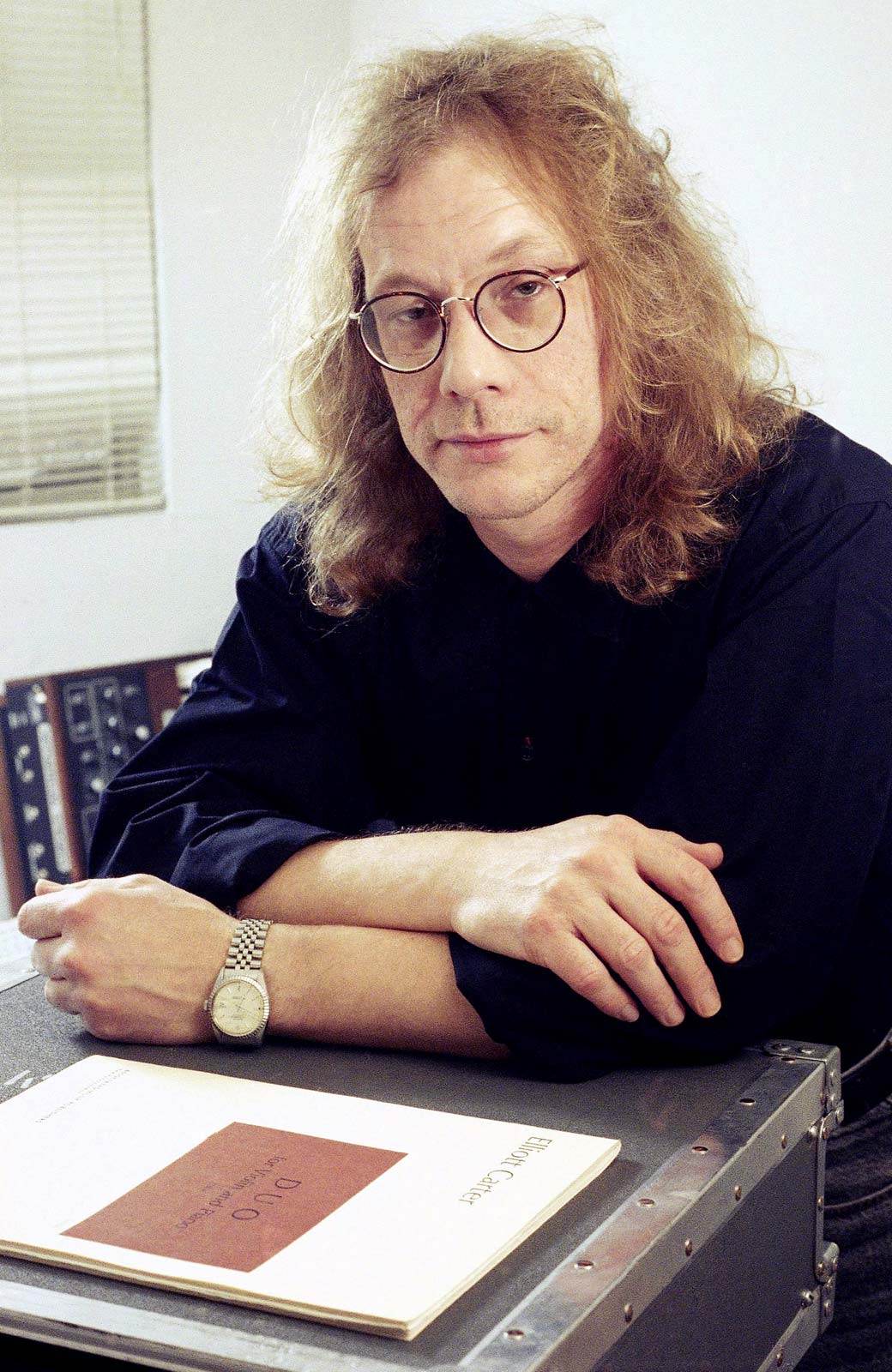
I miss Warren Zevon, his catchy tunes, his erudite cynicism, his geo-political obsessions. The first Zevon song I heard came blasting from an AM/FM radio in my cramped three-brother bedroom in 1977 when I had moved back home as a place to crash before getting married. I had just dropped out of grad school, didn’t have a job, and even though my wife-to-be was relatively wealthy, my mother insisted that every day I drive fifteen miles to the Temp Agency on Rivers Avenue to see if I could cop some sort of stopgap gig in construction, a trade I had never plied. It was, in a word, depressing.

And, of course, no one ever chose me, lacking both construction boots and biceps.[1]  

The song blasting from that radio on that autumn evening was “Werewolves of London,” a joyous, literate, tongue-in-cheek send-up celebrity society.

Well, I saw Lon Chaney walking with the Queen
Doing the Werewolves of London
I saw Lon Chaney, Jr. walking with the Queen
Doing the Werewolves of London
I saw a werewolf drinking a piña colada at Trader Vic’s
And his hair was perfect.

Those lyrics are perfect – slyly allusive, absurd, funny, like the howling ah-hoos of the chorus. With Warren I had a pal, someone I could relate to, a hip, literate compadre who employed humor to keep chase away the darkness that stalked him like an obsessive spurned lover.[2]

The majority of my hometown Summerville pals had moved on, and most of the ones who had stayed fell into the demographic of “white males without a college degree,” hard drinkers and pot smokers who wouldn’t know Lon Chaney, Jr. from Zeno of Elea.[3]

And as the years passed, I continued to follow Warren’s career and was lucky enough to see him twice, once in a bar called the Music Farm with a Canadian backup band in 1992 and a couple of years later in a solo acoustic show at Mynskens on Market Street. 

Although we would never have a conversation, he would continue to be my pal up to the very end when he accepted his death sentence of Mesothelioma with characteristic good humor. 

Warren Zevon is sitting at a table in a Hollywood hotel cafe, patiently waiting for someone to bring him a menu. Ten, fifteen, twenty minutes seep by. “At a time like this,” he says with an arched eyebrow and a low, rumbling laugh, “you really get the feeling of time marching on.”

David Fricke, “Warren Zevon and the Art of Dying”

I’m writing this on 15 November 2020 in the interregnum between Trump’s concession and Biden’s inauguration and could use a new Zevon name-dropping record to drop, something rhyming “Kayleigh” and “Tiffany,” “Giuliani” and “Proud Boy Army,” something with a resonant bass line, emphatic drumming, and lively guitar licks that would provide me the opportunity to show off my gold-capped molars in a wide ass sardonic grin.

Guess I’ll just have to settle for “Boom Boom Mancini,” “Desperado’s Under the Eaves,” and “Roland the Headless Thompson Gunner.”


[1] I did do some substitute teaching, though it was more like babysitting than pedagogy, and eventually through a set of divine missteps seemingly ordained by Tyche herself, landed a job at a community college teaching in one semester English 101, Technical Report Writing, and Business English. Obviously, they were as desperate as I was.

[2] In fact, a hade-sporting skull bogarting a cigarette became Zevon’s trademark. 

[3] Yes, I am a card-carrying elitist. Check this out: