Vanilla Pudding’, Suburban Rapper

Vanilla Puddin'

Vanilla Puddin’


I have 99 Problems, but Disposable Income Isn’t One of Them


Vanilla Puddin’ is my name,

And rapping is my avocation,

Muthasmoocha!


Jay-Z can’t rhyme better than I,

So ‘cuse me while I kiss the ground,

Muthasmoocha!


I own a late model Volvo with leather seats and air bags.

You know I don’t like to boast,

But that Volvo’s paid for,

Muthasmoocha!


An officer pulled me over for rolling thru a stop sign,

Then asked me for my registration,

Which was up to date and everything,

So you can kiss my alabaster derriere,

Muthasmoocha!


I have 99 problems

But disposable income isn’t one of them.


So dig it, fellow homeowners!

Yeah!


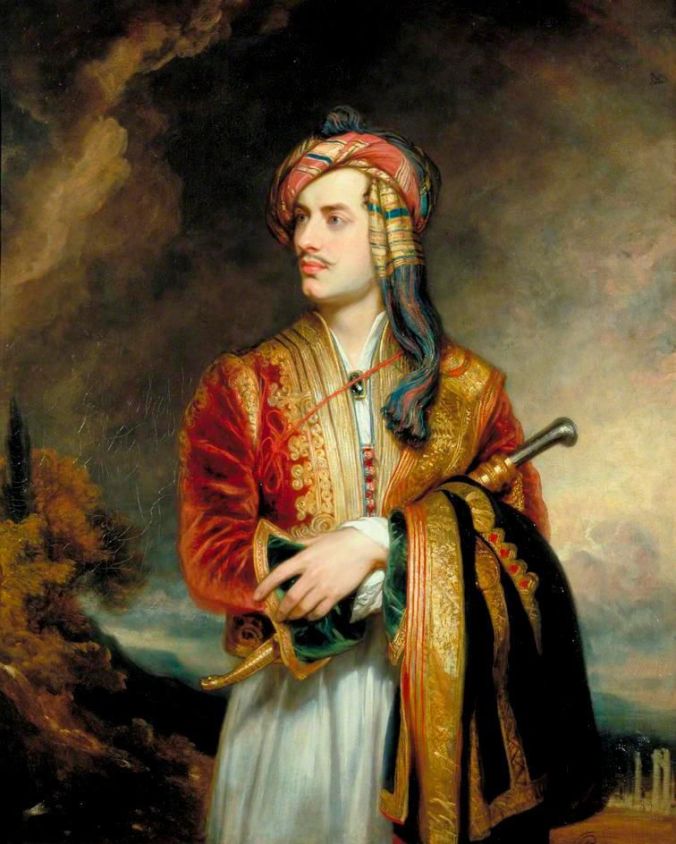
No Replicating Prince, the Lord Byron of Pop

screen-shot-2015-12-08-at-7-58-05-am


Okay, you’re Dr. Frankenstein, and your mission is to construct not merely a living, breathing hominid, but to piece together Prince.

Let’s start with the brain – to replicate Prince’s virtuosity one puny human brain ain’t gonna hack it.

First, you need to cop James Brown’s primary sensory cortex and those regions called caudate nucleus and thalamus. They control dance gyrations, and when it comes to busting moves, no one compares to the Godfather and Prince, unless you want to throw Michael Jackson into the mix – but let’s face it, both Jackson and Prince owe an unpayable debt to the late, great hardest working man in show business. He is the progenitor.  Here’s some very low quality video of Brown, Jackson, and Prince on stage together.


In addition, Prince’s exquisite thumping funk originally comes from that same source, James Brown. So that part of the brain that rules the beat, the cerebellum, we need that to come from the Godfather as well.

At one count Prince played 27 musical instruments, but it’s his searing guitar solos that stand out. You’ve probably heard the story of Clapton’s remark, “I dunno, ask Prince” when someone asked him how it felt to be the greatest guitarist in the world.


So we need slices of Hendrix’s brain as well.

Prince’s song writing — where to begin? He could be as melodic as Smokey Robinson, as raucous as Rick James.

And charisma, where in the hell does charisma come from?

It’s time to drop this stupid Frankenstein conceit. There’s no replacing, no replicating Prince, a true virtuoso.

I’m just thankful I got to see him live twice, once with the Musicology tour in Columbia, SC 21 April 2004 and then in North Charleston 30 March 2011.

The Columbia concert was the second best concert I’ve ever seen, just losing out to the time I was on the front row of a Springsteen concert during the Darkness on the Edge of Town tour. The crowd at the Prince concert in Columbia was largely African American, and there was an electricity in the air, something smacking of Beatlemania, for the lack of a better term.

And what a friendly, generous performer. You got the idea he loved the audience as much as we loved him.

But now he’s dead, gone all Lord Byron on us. Poof!

29cfafa17a8c0a6d0cef13a3fb76124b


Poor Dead Aunt Virginia, Missing Fingers, Kendrick Lamar’s Hero Journey, and I-and-I

Backdrop

Sunday, I had the melancholy chore of driving from Folly Beach to Summerville to sign papers granting unsmiling folks at a funeral home permission to cremate my Aunt Virginia’s remains. It had been a strange weekend. Friday night, at the Jack of Cups Saloon, I ran into a woman just back from the emergency room after her husband had sacrificed his thumb and portions of two fingers to a buzz saw.
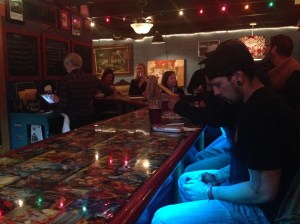
Jack of Cups 19 Feb 2016

Jack of Cups 19 Feb 2016

He was now home zonked out on painkillers, and she was downright giddy, maybe slightly hysterical, as she showed me images of his mangled hand on her phone. Under the influence of high gravity beer, I had found the spectacle somewhat amusing in a macabre Flannery O’Connor sort of way. At the time, the incongruence of her manic good mood and the awful image of the thumb stump on the screen of her iPhone struck me as paradoxically life affirming, but 36 hours later, on this overcast Sabbath morning, the incident seemed merely strange and sad.

Adding to my melancholia is the mournful state of our body politic. The Republican Party primary in my home state and the Democratic caucuses in Nevada had just gone down. Last week, the Hoodoo household suffered a relentless barrage of robo calls that could have driven even Stewart Smiley to suicide. A recorded message from the Cruz campaign, for example, featured one of the Duck Dynasty stars shilling for Ted, quoting none other than Thomas Jefferson himself. I could hear it blaring from our landline’s speaker as I worked on Saturday’s crossword puzzle.

Because we’re smack dab in the middle of the Roman spectacle of this campaign cycle, I doubt if we can fully appreciate just how surreal it actually is. The leading Republican candidate, who has won two of the first three contests, resembles Don Rickles more than John McCain or Mitt Romney. The Republican debates seem more like Hollywood Roasts than they do serious discussions of the profound problems facing our aging Republic – the threat of ISIS, grotesque economic inequality, an epidemic of mass murders, an aging population being supported by tax dollars siphoned from the paychecks of young people with massive student loans, the increasing unrest of a black population sick and tired of the status quo – of seeing their children murdered by suspicious white neighbors or gun downed/strangled by overzealous police officers. Then there’s the matter of Flint’s water supply being poisoned by misfeasance or worse.

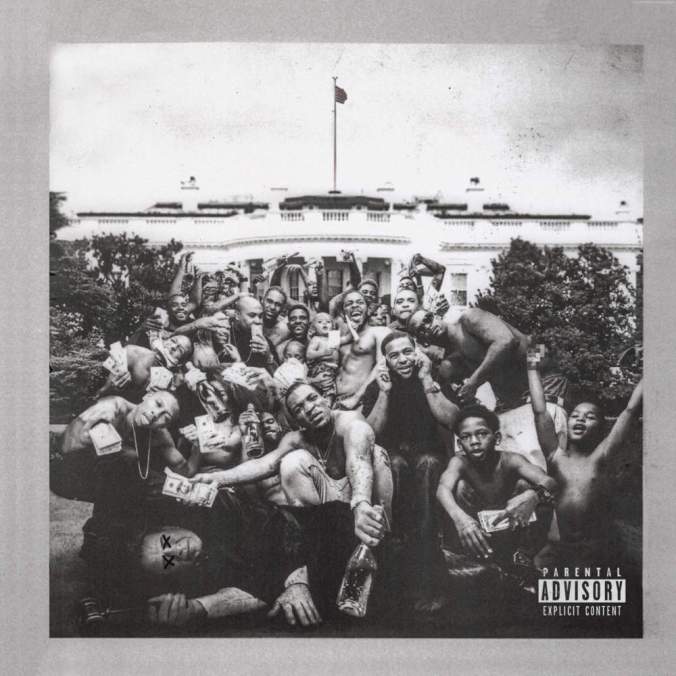
Speaking of race, before I left for Summerville, I had downloaded Kendrick Lamar’s To Pimp a Butterfly, a rather melancholy piece of business itself.

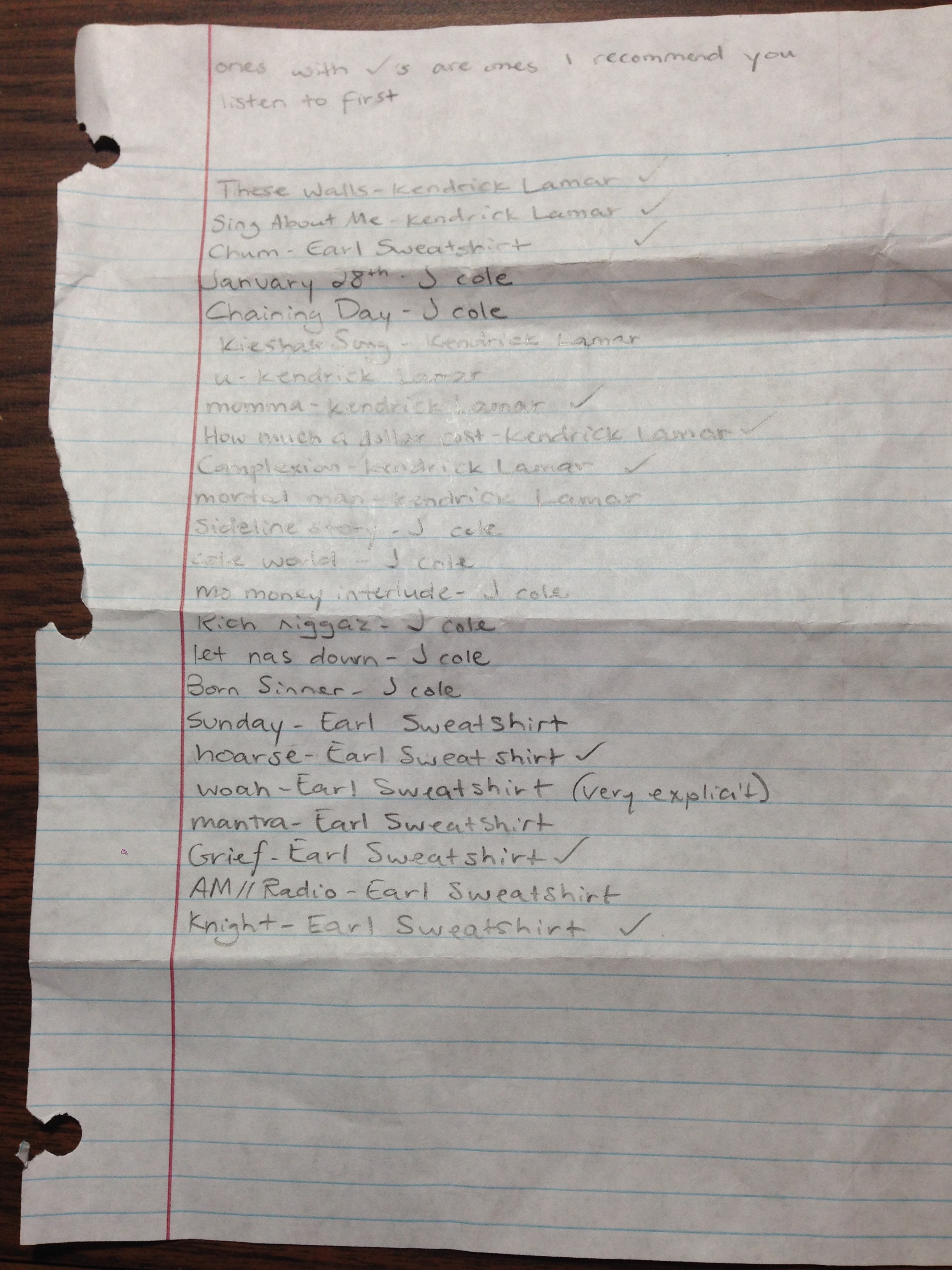
Because of Butterfly’ s almost universal critical acclaim[1], I had listened to snippets via iTunes but decided to not purchase the album. However, a student  I’d turned onto Dr. John told me he thought I’d like the new rap music he was listening to, and the next day handed me a long handwritten list of songs, several of which were from the Lamar album.

So I decided to devote the two-hour round trip to checking out the record, listening to it once on the way to the funeral home, and once on the way back. That way I could avoid thinking about Virginia, who unlike Lamar, never made it our of her cocoon.

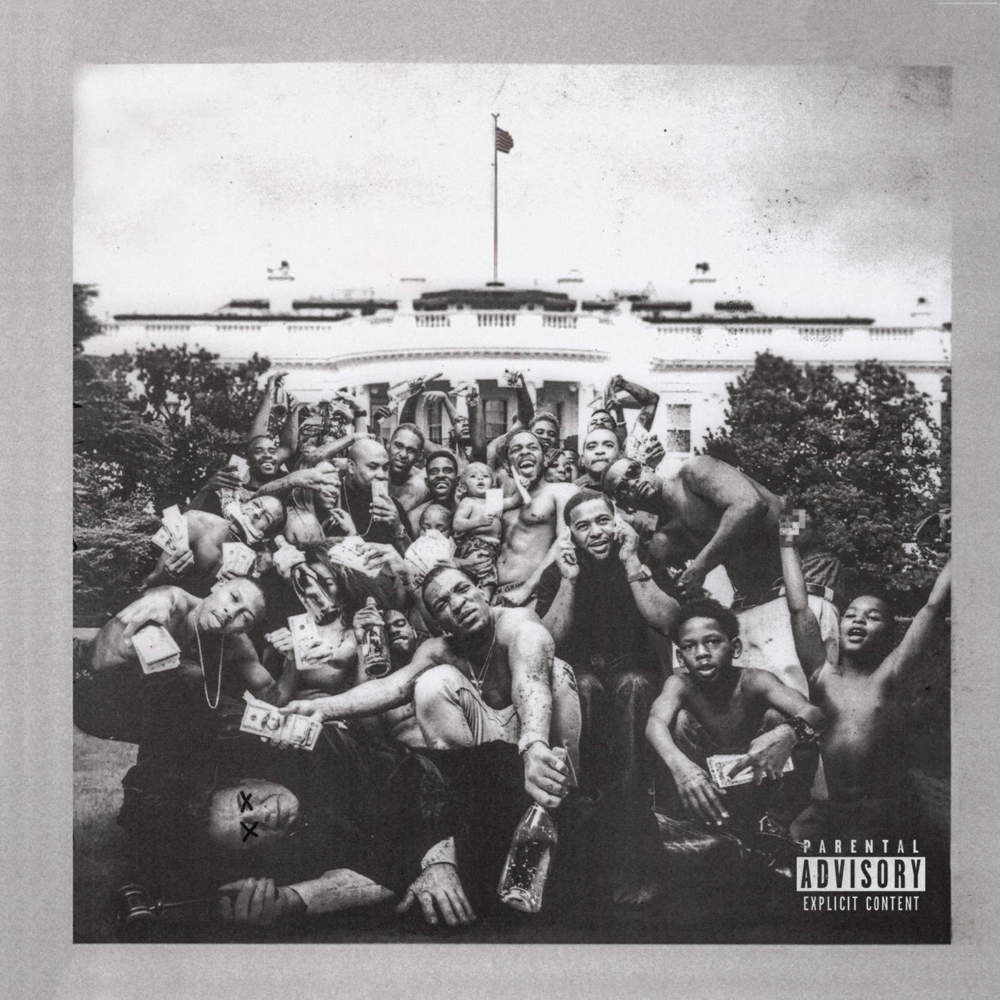
 To Pimp a Butterfly
3813bcd3d4accb7634eea23a2a7ab190.1000x1000x1

Okay, what we’re dealing with here is essentially narrative collage, a sonic novella akin to a not-all-that-positive LSD trip. Unlike most male-produced hip-hop, Butterfly doesn’t traffic in braggadocio; i.e., it is not an exercise in self-exaltation where a DJ catalogues his sexual conquests/treasure trove of top end cultural artifacts.[2] Instead, Butterfly explores Lamar’s guilt over what he sometimes perceives as the abandonment of his friends and family back in the ghetto of Compton after his entrance into the gilded realm of the rich and famous.

In a sense, it’s a classic Jungian battle between persona and self. Actually, it’s not so much like an LSD trip but more like a guided tour of someone’s unconscious with memory motifs periodically rising to the surface amid a dense swirl of background noises, bass riffs, horns, pianos, etc. Of course, the central theme is race – the difficulties urban African Americans face, shit, as Lamar would say, like teen pregnancy and gang warfare. Ultimately, the record can be seen as a parallel to the hero’s journey, a mannish boy leaves the circle of his home in the ghetto, endures a series of trials, and returns a Man with knowledge to share with his countrymen and women – in this case, his homies.

The record begins with “Wesley’s [as in Snipes] Theory,” what Greg Tate of Rolling Stone describes as “a disarming goof that’s also a lament for the starry-eyed innocence[3] lost to all winners of the game show known as Hip-Hop Idol.”

Unlike most instances of the hero’s journey, we begin in medias res, already outside the ghetto homeland and in the realm of celebrity. The track features both Dr. Dre and the great George Clinton.

Lamar describes his behavior after first getting signed to a record deal and the disillusionment that soon follows. He loses his “first girlfriend” and finds “[b]ridges burned, all across the board/Destroyed, but what for?”

He “hit[s] the dance floor,” goes predatory “snatch[ing] your little secretary bitch,” and then embarks on a spending spree with “platinum on everything.”

When I get signed homie I’mma buy a strap

Straight from the CIA, set it on my lap

Take a few M-16s to the hood

Pass ’em all out on the block, what’s good?

I’mma put the Compton swap meet by the White House

Republican, run up, get socked out

Hit the press with a Cuban link on my neck

Uneducated but I got a million dollar check, like that

Both Dr. Dre and George Clinton offer warnings. Dre’s practical:

But remember, anybody can get it

The hard part is keeping it, motherfucker

Clinton’s metaphysical:

Lookin’ down is quite a drop (It’s quite a drop, drop)

Lookin’ good when you’re on top (When you’re on top you got it)

A lot of metaphors, leavin’ miracles metaphysically in a state of euphoria

Look both ways before you cross my mind

Bad news for uneducated moguls:

Tax man comin’

Tax man comin’

Tax man comin’

Tax man comin’

Tax man comin’
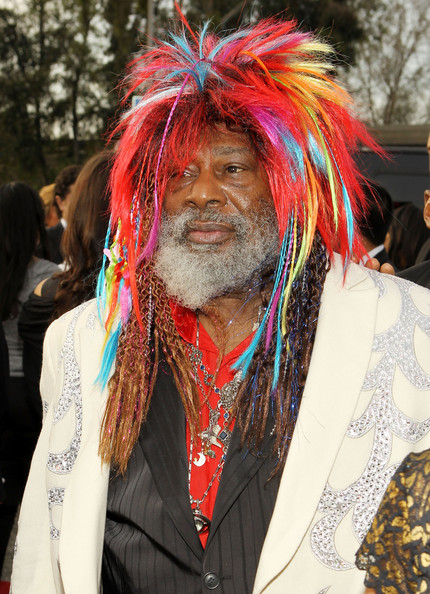
George+Clinton+52nd+Annual+GRAMMY+Awards+Arrivals+QEt1sIkYnVsl

George Clinton

Musically, the next two cuts, “For Free” and “King Kunta” are my favorites, the former some serious bitchin’ rapped over a discordant, jazzy blend of drums, piano, bass, and horns.  It reminds me of toned down version of Tom Waits’ “Minute,” which, in turn, reminds me of the soundtrack of a manic car chase from a ’50’s TV crime drama.

“Kin Kunta,” killer funk, owes an awful lot to James Brown’s “Payback.”

He’s mad:

Got a bone to pick

I don’t want you monkey mouth motherfuckers sittin’ in my throne again

(Aye aye nigga whats happenin’ nigga, K Dot back in the hood nigga)

I’m mad (He mad), but I ain’t stressin’

True friends, one question

Kendrick’s Mr. Big Shot:

I was contemplatin’ gettin’ on stage

Just to go back to the hood see my enemies and say

Bitch where you when I was walkin’?

Now I run the game got the whole world talkin’, King Kunta

Everybody wanna cut the legs off him, Kunta

Black man taking no losses

Bitch where you when I was walkin’?

Now I run the game, got the whole world talkin’, King Kunta

Everybody wanna cut the legs off him

This inauthenticity can’t last. Repeated throughout the narrative is a memory of a breakdown:

I remember you was conflicted

Misusing your influence

Sometimes I did the same

Abusing my power full of resentment

Resentment that turned into a deep depression

Found myself screaming in a hotel room

The 6th track corresponds to the “belly of the whale” stage of the hero’s journey, deep depression, Odysseus in the Underworld. It’s a powerful, raw, authentic confession of self-contempt.
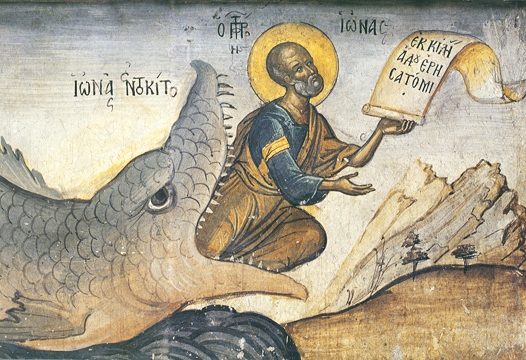
Jonah/Kendrick

Jonah/Kendrick

And you the reason why mama and them leavin’

No you ain’t shit, you say you love them, I know you don’t mean it

I know you’re irresponsible, selfish, in denial, can’t help it

Your trials and tribulations a burden, everyone felt it

Everyone heard it, multiple shots, corners cryin’ out

You was deserted, where was your antennas again?

Where was your presence, where was your support that you pretend?

You ain’t no brother, you ain’t no disciple, you ain’t no friend

A friend never leave Compton for profit, or leave his best friend

Little brother, you promised you’d watch him before they shot him

Where was your antennas, on the road, bottles and bitches

You faced time the one time, that’s unforgiven

You even faced time instead of a hospital visit

You should thought he would recover, well

The surgery couldn’t stop the bleeding for real

Then he died, God himself will say “you fuckin’ failed”

You ain’t try.

In the ten tracks that follow, the hero begins his ascent. God provides the Supernatural Aid universally present in the hero’s journey. The protagonist’s focus becomes less egocentric and more visionary.

On the track “i” we get apotheosis:

I done been through a whole lot

Trial, tribulations, but I know God

Satan wanna put me in a bow-tie

Praying that the holy water don’t go dry, yeah yeah

As I look around me

So many motherfuckers wanna down me

But ain’t no nigga never drown me

In front of a dirty double-mirror they found me


And I love myself

(The world is a ghetto with guns and picket signs)

I love myself

(But it can do what it want whenever it wants and I don’t mind)

I love myself

(He said I gotta get up, life is more than suicide)

I love myself

(One day at the time, sun gone shine)

Some of these latter cuts bring to mind Gil Scott Heron.  The record ends with  Lamar interviewing poor old dead Tupac (thanks to an old radio interview) and an oral SparkNotes-like explanation of the caterpillar/butterfly motif.

I’m, of course, not doing the record justice. I can’t come even remotely close to conveying the magical meld of sound and sense and image that is the record.  Plus, I’ve left out Lucy (Lucifer) and all kinds of political subtexts, but, just leave it at this: I give it an A+++++ going on masterpiece.

Conclusion

On the morning after the Charleston massacre, I had to go to the cleaners to pick up a tux for my son’s wedding and go buy some black shoes.  I reckoned I’d encounter anger among African Americans given that I was angry myself.  The first black man I saw was sitting in a lawn chair drinking a beer on the edge of the parking lot of the laundry.  I waved, and he waved back.  A black woman rang me up at the shoe store, and when she asked me how it was going, I said that all this hatred had me feeling really low, and she said things would get better. I don’t know if she had made the connection to the shootings that had taken place about five miles away.  Probably she thought it was just some kind of personal trauma, even though I was sporting all my fingers and both thumbs as I handed her the credit card.

IMG_0006


[1] E.g., this from Rolling Stones’ Greg Tate: “To Pimp a Butterfly” is a densely packed, dizzying rush of unfiltered rage and unapologetic romanticism, true-crime confessionals, come-to-Jesus sidebars, blunted-swing sophistication, scathing self-critique and rap-quotable riot acts. Roll over Beethoven, tell Thomas Jefferson and his overseer Bull Connor the news: Kendrick Lamar and his jazzy guerrilla hands just mob-deeped the new Jim Crow, then stomped a mud hole out that ass.”

[2] He does, however, by my count twice boast of the size of his dick, claiming nine inches at one point.

[3] “Starry-eyed innocence in Compton?
Hank and Townes: Long Gone Daddies

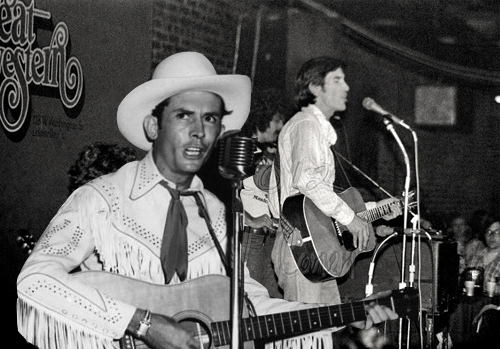
hank and townesToday, January 1st, marks the anniversary of the deaths of two great American songwriters, Hank Williams in 1953 and Townes Van Zandt in 1997.   In addition to their coincidental departure dates, these two shared a lot in common.

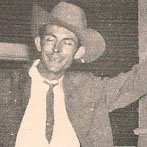
They were both long and lanky long gone daddies with dark hair and eyes, and they both had what my granddaddy called “jug ears.” In fact, judging by these two accompanying photographs, I suspect that a DNA test would discover a shared ancestor in the not too distant past.

cropped hankdrunkcropped townes

More significantly, they also possessed the rare ability to create memorable melodies with song lyrics that can stand alone on a page without musical accompaniment.

First Hank:

Hear that lonesome whippoorwill.

He sounds too blue to fly.

The midnight train is whining low.

I’m so lonesome I could cry.

Then Townes:

Everything is not enough.

And nothin’ is too much to bear.

Where you’ve been is good and gone.

All you keep’s the getting there.

Well, to live is to fly, all low and high.

So shake the dust off of your wings

And the sleep out of your eyes.

Theirs was a tragic vision.  To quote Richard Sewell:

[The tragic vision] recalls the original terror, harking back to a world that antedates the conception of philosophy, the consolations of the later religions, and whatever constructions the human mind has devised to persuade itself that the universe is secure. It recalls the original un-reason, the terror of the irrational. It sees man as questioner, naked, unaccommodated, alone, facing mysterious, demonic forces in his own nature and outside, and the irreducible facts of suffering and death. Thus it is not for those who cannot live with unresolved questions or unresolved doubts, whose bent of mind would reduce the fact of evil into something else or resolve it into some larger whole.

Like their artistic archetype Edgar Allan Poe, throughout their abbreviated lives, they were besieged by “demonic forces in their own natures,” and like Poe, they attempted to neutralize those demons through drink and more exotic drugs — in Hank’s case, chloral hydrate and barbiturates, and in Townes’s, codeine and heroin.

However, when it comes to self-destruction, I don’t think either EA or Hank could hold a candle to Townes Van Zandt. Supposedly, Poe gambled to augment his stepfather’s meager allowance, but in Townes’s case, his gambling seemed a deep-seated masochistic addiction.

According to John Kruth’s biography, To Live’s to Fly, not only did Van Zandt literally lose shirts off his back, but in one card game, he also lost his gold dental inlays, which he pulled out with pliers and delivered on the spot as payment.   He also had the propensity to give all his hard earned money away to winos after getting paid for a gig.  Like a crazed character out of Dostoyevsky, he seemed to seek out suffering, perhaps for the sake of his art.


Year after year,

bottle after bottle,

for the sake of the song,

stumbling full throttle,

gig after gig,

swig after swig,

staggering through life,

for the sake of the song.


’97, New Year’s Day,

home from the hospital

he slipped away —

one hand on his heart,

the other on his flask —

the weight of the world

suddenly gone slack,

his windswept world,

forever gone black.


Some say he suffered

for the sake of the song,

cultivated sorrow

for the sake of the song.


Rot gut, suicides, needles, yellow fever,

all the hurt in the world out West,

took up residence in his hollow heart,

like a stick-stirred rattlesnake’s nest.


For the sake of the song,

for the sake of the song,

they say life is short,

but art is long.


For the sake of the song,

for the sake of the song,

right might not be right;

wrong might not be wrong.


RIP, boys.

Just Can’t Cut That Juice a Loose: KILLER ROCK LYRICS ABOUT SUBSTANCE ABUSE!!!

Foreign_Affairs_Tom_WaitsI-and-I, that’s right, Mr. Hoodoo Man he-self, boon companion and devoted supporter of Mr. John Jameson, lover of hoppy craft beer concoctions, not to mention spicy Sunday morning bloody marys, has voluntarily climbed aboard that proverbial wagon that refuses to stop at taverns, bodegas, juke joints, and roof top bars.

Or to put it more succinctly, he’s quit drinking alcohol.

Why, you ask? Has Mr. Moore been stumbling in at 3 a.m. and slapping around his beloved consort Judy Birdsong?

Of course not.

Has he found that drinking has adversely affected his social life?

To the contrary.

Okay, is he chronically late, a no-show sometimes? Does he hire barmates to grade his essays? Does he put himself in risky situations? Is he a frequent visitor to emergency rooms?   Has he gotten a DUI? Recently made a complete and utter ass out of himself?

No, no, no, no, no, and “not that he is aware of.”

Why then?

The answer is vanity. Recently, he saw photographs of himself at his son’s wedding and realized that his once David-Niven-like svelteness had ballooned into a girth approaching Hitchcockian proportions. And even though he now possesses a Falstaffian paunch, his arms and legs have maintained the emaciation of his 97-pound-weakling adolescence.

John Falstaff by Eduard Von Grutzner

John Falstaff by Eduard Von Grutzner

He’s too vain to post a photograph, but picture a four-month pregnant Mick Jagger and you get the picture.

Why not cut out those empty calories? Why not give it a try?

So how has he been spending those hours not spent in drinking establishments?

Listening to songs about substance abuse, that’s how, and he’s come up with a list a few killer song lyrics devoted to over-indulgence, like this classic from Willie Nelson:

The night life ain’t no good life, but it’s my life.

Not only that, he’s going to provide sound samples to go along with a few of his favs. So sit back and enjoy

THESE KILLER ROCK LYRICS ABOUT SUBSTANCE ABUSE!!!

(I know it lacks that Buzzfeed allure of botched plastic surgeries).

Okay, we’re going to start with John Hiatt’s “Paper Thin,” whose first sentence has the panache of the opening of a well-crafted short story. Listen.


Here’s how the song ends:


(Saw John about a year ago in concert.  Here’s the REVIEW).


Okay, for our next lyric on substance abuse, let’s go way back to my tenth grade year of 1968 and the Butterfield Blues Band’s “Drunk Again.”  The song’s by Elvin Bishop and features the domestic trauma drinking can cause.  Here’s a snippet:


Of course, as Bob Dylan famously tells us in “Just Like Tom Thumb’s Blues” — “I started off on burgundy but soon hit the harder stuff” — alcohol is the ultimate gateway drug.  I betcha ain’t nobody ever shot up heroin who hadn’t started out on the road to perdition with wine or beer. You start off seemingly innocuously with a PBR and the next thing you know your rolling up bills and snorting cocaine or worse.  Here’s John Hammond, Jr’s superb cover of the Tom Wait’s classic “Heart Attack and Vine”:


That’s right:

Boney’s high on china white;

Shorty’s found a punk

You know there ain’t no devil;

that’s just god when he’s drunk.

Well, this stuff will probably kill you;

let’s do another line.

What you say you meet me

down on Heart Attack and Vine.

Love can be a drug, they say.  Wasn’t Robert Palmer “addicted to love?”  Here’s the great Lucinda Williams making the analogy:


C’mon, Lucinda.  You know what Willie B Yeats sez:  “Never give all the heart for love . . .

Okay, let’s end this thing on a positive note.  The resurrection of Tim Finnegan via Irish whiskey.  Here, the Clancy Brothers describe how dead Tim’s corpse is brought back to life during a drunken brawl at his wake, which is the song that gave rise to James Joyce’s last novel.


:


Mickey Maloney ducked his head
when a bucket of whiskey flew at him
It missed, and falling on the bed,
the liquor scattered over Tim
Now the spirits new life gave the corpse, my joy!
Tim jumped like a Trojan from the bed
Cryin will ye walup each girl and boy,
t’underin’ Jaysus, do ye think I’m dead?”

Come to think of it, quitting drinking altogether seems anti-Buddhist.  Maybe the middle way would be better.  Lose weight by exercising, eating healthily, and limiting one’s intake to a couple a day?

Sounds like a plan.

Review of Elijah Wald’s “Dylan Goes Electric”

Dylan Goes ElectricI’ve just sailed through the uncorrected proofs of long-title-lover Elijah Wald’s latest, Dylan Goes Electric: Newport, Seeger, Dylan, and the Night that Split the Sixties. The book is slated for publication on 15 July 2015, almost fifty years to the day after Dylan shocked the Newport Folk Festival by going electric, and I encourage anyone interested in popular music to check it out.

Wald’s previous books include Robert Johnson and the Invention of the Blues and How the Beatles Destroyed Rock ’n’ Roll: An Alternative History of Popular Music. A musician himself, Wald possesses that rare ability to weave meticulous research into engaging narratives propelled by conversational but polished prose. It’s as if someone with an advanced degree in history and musicology who witnessed the events first hand is talking to you.

Wald begins his chronicle in 1949 with the story of Pete Seeger, yet another one of Harvard’s incredibly successful dropouts. We follow Seeger through the ‘40s and ‘50s as he becomes both an archivist of traditional music and a creator of original “folk songs” like “The Hammer Song (If I Had a Hammer)” and “Where Have All the Flowers Gone.” The folk scene of the 50s and early 60s was no love fest, or as Wald puts it, “[The] tendencies and cliques of the American folk scene [. . .] were endlessly tangled, but Seeger served as a guide for virtually everyone, whether they considered themselves traditionalists, revivalists, agitators, or potential pop stars.” Nevertheless, even Seeger himself received criticism from the most rigid of folk purists for associating himself with the Weavers whose polished performances weren’t authentic enough for their tastes.

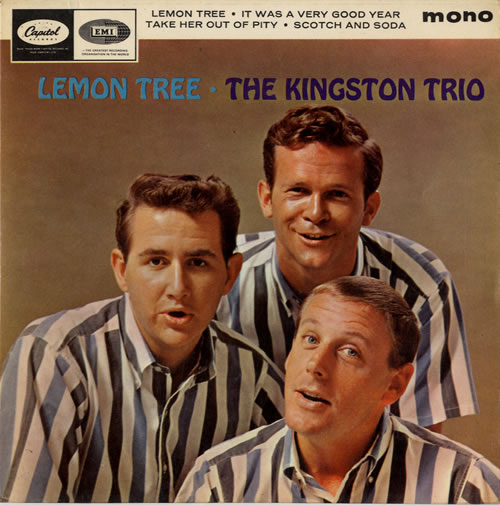
The-Kingston-Trio-Lemon-Tree-548846This static between the rawness of down-home renditions by performers like Doc Watson and the dulcet harmonies of groups like the Kingston Trio (arrayed in matching outfits) crackles throughout those decades, and Wald does an excellent job of providing a historical context, especially in his depiction of the Red Scare. Wald concludes the first chapter with Seeger’s sentencing in 1961 for contempt of Congress when he refuses to name names of associates with connections to the Communist Party.

The next few chapters detail the familiar but time-obscured transformation of Hibbing-bred Bobby Zimmerman into that self-created icon we call Bob Dylan (whose fanciful verbal autobiography had him hoboing his way across the continent). Wald provides some clarification for those early days, noting that unlike many adolescents who were ignorant of rock ’n’ roll’s R&B roots, Bobby Zimmerman through late night radio broadcasts, especially Frank “Gatemouth” Page’s No Name Jive, discovered the likes of Muddy Waters and Howlin’ Wolf. Wald notes, “Dylan was getting the music direct from its southern source and valued it in part because it was secret knowledge.” Again, we see tension between the authenticity of artists like John Lee Hooker and the co-opting of roots music by white performers like Elvis and Buddy Holly. That Dylan was enamored of R&B before he became a folk singer is well-known but worth repeating, given his eventual embrace of rock ’n’ roll.

In the chapters chronicling Dylan’s hero-worship of Woody Guthrie, his move to New York, his ascent, and eventual coronation as once and future king, we see the continuation of the motif of contention among the folk music community, and at the Newport Folk Festivals of the early-to-mid 60s, these rifts widen into chasms. Wald does a masterful job of relating the events of the festivals, cataloging in detail the eclectic mix of performers that range from obscure yodelers, rock icons like Chuck Berry, blues masters like Lightening Hopkins and John Hurt, Bluegrass legends Bill Monroe and Ralph Stanley, folk interpreters including the Weavers, Joan Baez, and Judy Collins. How fortunate those aficionados who could attend the workshops, scheduled but informal get-togethers where a group of performers swapped songs and provided instruction. Dig this, at the ’64 festival:

“[R]elatively small contingents gathered to hear successive guitar and banjo workshops that included Muddy Waters, Robert Pete Williams, the Hawaiian guitarist Nolan Mahoe, and [Doc] Watson, and then Mike Seeger again with Ralph Stanley, Frank Profit, and Elizabeth Cotton. Meanwhile, over two-thousand people were watching Mike’s half-brother Pete host a topical songs workshop, and although it began with older artists from Ireland, Cuba, and the United States, most of the audience was there for the who’s who of Broadside writers Len Chandler, Phil Ochs, Tom Paxton, Malvina Reynolds, Hedy West, and Dylan.

Among the diverse crowds, we again see animosity of roots music devotees towards college-aged pop fans, and with the British Invasion of the Beatles, Stones, and Animals, folk music had in fact begun its decline in popularity. Of course, the  culmination of the schism occurred on Sunday night, 25 July 1965, when Dylan, as Wald title puts it, goes electric.

Wald’s meticulous detailing of previous festivals makes it crystal clear that Newport was no stranger to amplified music. At the ’65 festival, “[t]here were more amplifiers in evidence [. . .], and they were recognized as a sign of change, but few people considered them as a sign of sacrilege.” The Paul Butterfield blues Band played an electric (and by all reports electrifying) set Saturday as an illustration of the amplified Chicago Blues made famous by Muddy Waters. This performance was part of a sonic history of the folk music presented as a lecture by Alan Lomax, and indicative of the animus inherent in the various authenticity camps, Lomax, a stickler for authenticity, and Alan Grossman, a developer of musical acts (and Dylan’s manager), broke into a a clownish bout of fisticuffs over Grossman’s objections to what he considered Lomax’s disrespectful intro of the Butterfield Band. Wald’s depiction of this incident – a sort of kaleidoscopic presentation from various, sometimes conflicting, witnesses’ perspectives – is alone worth the price of purchase.  Here’s a snippet:

Lomax tried to push Grossman aside, or maybe it was Grossman who pushed Lomax. Either way, in seconds the portly prophet of tradition and the portly purveyor of mammon — “two big bears,” in Maria Muldaur’s description — were throwing inept punches and rolling in the dust.

guitar-at-newport-history-detectivesOf course, all of the various in-fighting that Wald writes about leads up to Dylan’s performance that Sunday night. Because of the not so simple existential fact that except for edited film, all we have to go on is a jumble of individual perspectives from various people sitting in different locations with different attitudes towards Dylan and with memories perhaps corrupted by the passage of time. Wald provides us with a sort of cubist painting, sharing with us a host of individual takes, including a present-tense rendering of the film. He suggests that Dylan’s decision to go electric was impulsive. Perhaps it was a reaction to Lomax’s less than glowing introduction of the Butterfield Band whose guitarist Mike Bloomfield had worked on Highway 61 Revisited and its electric hit “Like a Rolling Stone.”

The make-up of the band also suggests a hasty decision.  It consisted of a hodgepodge of musicians, some of whom were unfamiliar with the tunes. The drummer Sam Lay had heard “Like a Rolling Stone” on the radio but didn’t know who Bob Dylan was. Almost all agree the volume was ear-splitting, especially Bloomfield’s guitar, and the performance uneven (a charitable assessment) with much time wasted on stage tuning up, struggling with the tempo, getting started. According to Wald, the bassist Jerome Arnold played essentially one note throughout much of the performance. Dylan, who had grown accustomed to being idolized, heard perhaps his first boos since high school, though the boos were mixed with cheers. The proportions of boos to cheers (60/40? 50/50? 40/60?) seemed to depend on where you were sitting.

Pete Seeger

Pete Seeger

Most upset by the debacle of Dylan’s performance was Pete Seeger who is reported by some to have sought shelter in his car or by others to have run around screaming to turn down the sound, and Wald forever puts to rest the apocryphal story of an ax-wielding Seeger eager to sever the cables.

Wald manages to place the reader in the visceral world of that concert, no mean trick, and wisely avoids ever attempting to psychoanalyze Dylan, who as we all know by now is a restless soul who changes the tunes of his classics when the mood suits him. As an extra added treat, Wald slips into his prose without quotation marks phrases from Dylan’s lyrics, as in the following from the last chapter’s first sentence, “For many people the story of Newport 1965 is simple: Bob Dylan was being born, and anyone who didn’t welcome the change was busy dying.” I think we can all agree — or at least almost all of us can agree — Dylan’s genius could never be constrained within the confines of folk. I don’t know about you, but I prefer Highway 61 to Freewheeling.

Note: As I said, I read the uncorrected proofs so the book is bound to be even better than my version. It’s heavily noted, has a bibliography, and although my copy lacked an index, one will appear in the final edition. As far as errors, I only ran across a couple of typos, except for the phrase, which I hope someone catches — “the nameless protagonist of Albert Camus’s Stranger.” The protagonist’s name is Meursault.

A Very Brief Peek at What to Expect in the 2015 Emmylou Harris and Rodney Crowell Tour

emmylou-harris-rodney-crowell-the-traveling-kind-450x409n

Expect a fairly prompt start. Slated for a 7:30 beginning, the lights went down at 7:41 with Emmylou, Rodney, and the band unceremoniously taking the stage clad in what could be street clothes. For really big shots in the music industry, these two are as unpretentious as you get.

The songs – 20 of them – came in quick succession punctuated occasionally with pleasant banter directed at the audience, comprised of mostly old folks. Last night’s show was part of Charleston’s Spoleto Arts Festival, which may have had something to do with the audience’s advanced age. Several of them stiffly fled as the band took their bows as if they didn’t realize that encores were sure to follow.

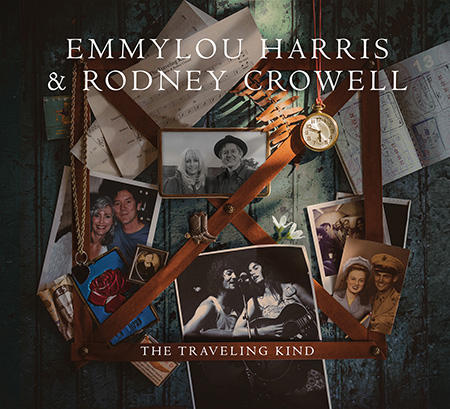
The set list sandwiches cuts from their new album of duets — The Traveling Kind – between covers and selections from their previous work. They kicked off with a cover of Lucinda Williams’ “I Just Wanted See You So Bad,” (which actually appears on the new album), then went right into “Grievous Angel.” Highlights from the pre-album phase included “Poncho and Lefty,” “Red Dirt Girl,” and “Love Hurts.”

Before they launched into the new songs, Emmylou remarked that she and Rodney had somehow managed to achieve longevity without getting much radio play. Then she said that she’d rather be on a jukebox than a radio to cheers from the audience.

I may have enjoyed the new stuff even more than lead-in tunes. The band — some of whom are not the musicians performing on the record – consisted of Steuart Smith on pedal steel, John somebody on drums, Michael somebody alternating between stand-up and electric bass, a killer keyboardist who also played accordion on the delightful “La Danse de la Joie,” and impressive Australian lead guitarist Jed Hughes who thrilled the crowd with searing solos.

Emmylou announced that we’d just heard most of the new album and then treated us to five more songs.

The lights came up, some septuagenarians headed for the exits, and then Emmylou came back on the stage alone and said that she only played this song – “Hickory Winds” — in South Carolina, and Rodney and the rest of the band ambled out one by one to join in.

So ultimately, what you can expect is 100 plus minutes of Americana music performed by a couple of national treasures.

Review of Bob Dylan Concert 17 April 2015

Here’s what to expect — and what not to expect — in the early 2015 dates of Bob Dylan’s Never Ending Tour.

Do expect a prompt beginning right around 8 PM when the lights go down, the audience reacts, the musicians take the stage, and the lights come up again dimly. Dylan doesn’t like the have his photograph taken — it’s forbidden — and the relatively darkened stage makes capturing a decent image virtually impossible. On the two occasions when the stage is well lit, if you attempt a surreptitious snap, beware of flashlight wielding ushers who will spot-light you in the act and bark at you like a hall monitor.

17 April 2015 photo by Ned Moore (who received a tongue-lashing for attempting to preserve history)

17 April 2015 photo by Ned Moore (who received a tongue-lashing for attempting to preserve history)

Don’t expect the audience to arrive on time, to be able to sit still and listen, or to remain silent during the performance. Throughout last night’s show at the North Charleston Performing Arts Center, audience conversation constantly hummed beneath the music like static. Of course, you could blame Dylan for not keeping their attention, but I suspect these folk would behave the same way during the Sermon on the Mount, especially if they had been swilling down beer and overworking their kidneys.

Do expect a superb, tight band: guitarists Stu Kimball and Charlie Setxon, bassist Tony Garnier, drummer George Receli, and multi-instrumentalist Donnie Herron playing mostly steel guitar but also banjo and fiddle. As my companion James T Crow aptly observed, these musicians performed more like an orchestra than a band, like an ensemble working together inventively and unselfishly for the sake of each individual song.

Expect Dylan to look cool in a white suit and hat, to strike poses, to shuffle in minimalistic dance moves, to play the harmonica, and to shuffle back and forth between a piano on the side of the stage to center stage where he sings behind a mike stand. Don’t expect much from either his harp-blowing or piano playing, but expect every time he hits a note on the harp for the audience to erupt in delight as if Sonnyboy (Rice Miller) Williamson had just risen from the dead.

Also, if you’re a true Dylan fan, expect to be pleasantly surprised by his voice, which sounded much healthier than when I last saw him in May of 2013, and seemed to improve as the night went on. If you’re not a true Dylan fan, expect to be disappointed by its gravelly timbre and lack of range. As another concert companion, Keith Sanders, puts it, “You can always tell when somebody doesn’t know much about Dylan because they start off talking about his voice.”

Don’t expect a jukebox full of greatest hits. And don’t expect the three “standards” he plays — “She Belongs to Me,” “Tangled Up in Blue,” and “Blowing in the Wind,” to sound like the records — in other words, expect non-standard standards. However, expect to be blown away by the reconfiguration of “Blowing in the Wind.”

For the set list click HERE.

Ultimately, be prepared to see a legend showcase gems from his recent work in a sort of smorgasbord of American musical styles: shuffles, mambos, boogies, country waltzes, torch songs, blues laments, ’50’s pop.

Expect the concert to end around ten, for Dylan not to introduce the band, or to even bow. I don’t know if you can expect what we heard last night — a rare audible “thank you” and “we’re gonna take a short break.”

I see I’m at the end of my typed page, so as Dylan put it at the end of his MusiCares speech: “I’m getting out of here. I’m gonna put an egg in my shoe and beat it.”

Dylan’s 2015 Rag and Bone Shop of the Heart Tour

Dylan-old-Blues-Eyes-AgainEvery time I go to see Bob Dylan, I figure it’s going to be my last, so when the concert’s over and the scarecrow graces us with a bow, I bid him a silent good-bye. I suspect I’ll do the same this Friday when Mighty Keith Sanders, Crafty Ned Moore, and I-and-I meet up at the North Charleston Performing Arts Center to witness the Master croak his way through a set list that is mostly melancholy. Dylan is obviously a restless man, a loner, no stranger to heartache yet wise enough to know it ain’t just about him.

Since I’ve argued HERE that Dylan deserves a Nobel prize in Literature, I thought I’d share my favorite lyrics from the tunes he’ll play Friday night, many of them works from recent albums.

“Things Have Changed”

People are crazy and times are strange
I’m locked in tight, I’m out of range
I used to care, but things have changed

“She Belongs to Me”

You will start out standing
Proud to steal her anything she sees
But you will wind up peeking through her keyhole
Down upon your knees

“Beyond Here Lies Nothing”

Down every street there’s a window
And every window made of glass
We’ll keep on lovin’ pretty baby
For as long as love will last
Beyond here lies nothin’
But the mountains of the past

Workingman’s Blues #2

I’m tryin’ to feed my soul with thought
Gonna sleep off the rest of the day
Sometimes no one wants what we got
Sometimes you can’t give it away

“Duquesne Whistle”

The lights on my native land are glowing
I wonder if they’ll know me next time ’round
I wonder if that old oak tree’s still standing
That old oak tree, the one we used to climb

“Waiting for You”

Well, the king of them all
Is starting to fall.
I lost my gal at the boatman’s ball.
The night has a thousand hearts and eyes.
Hope may vanish, but it never dies.

“Pay in Blood”

Another politician pumping out the piss
Another angry beggar blowing you a kiss
You got the same eyes that your mother does
If only you could prove who your father was

“Tangled Up in Blue”

She lit a burner on the stove
And offered me a pipe
“I thought you’d never say hello,” she said
“You look like the silent type”
Then she opened up a book of poems
And handed it to me
Written by an Italian poet
From the thirteenth century
And every one of them words rang true
And glowed like burnin’ coal

“Love Sick”

I see, I see lovers in the meadow
I see, I see silhouettes in the window
I watch them ’til they’re gone and they leave me hanging on
To a shadow

“High Water” (For Charley Patton)

Well, the cuckoo is a pretty bird, she warbles as she flies
I’m preachin’ the word of God, I’m puttin’ out your eyes
I asked Fat Nancy for somethin’ to eat, she said, “Take it off the shelf”
As great as you are man, you’ll never be greater than yourself

“A Simple Twist of Fate”

A saxophone someplace far off played
As she was walkin’ by the arcade
As the light bust through a beat-up shade where he was wakin’ up,
She dropped a coin into the cup of a blind man at the gate
And forgot about a simple twist of fate

“Early Roman Kings”

Ding dong daddy
You’re coming up short
Gonna put you on trial
In a Sicilian court
I’ve had my fun
I’ve had my flings
Gonna shake em all down
Like the early roman kings

“Forgetful Heart”

Forgetful heart
Like a walking shadow in my brain
All night long
I lay awake and listen to the sound of pain
The door has closed forevermore
If indeed there ever was a door

“Spirit on the Water”

I wanna be with you in paradise
And it seems so unfair
I can’t go to paradise no more
I killed a man back there

“Scarlet Town”

If love is a sin, then beauty is a crime
All things are beautiful in their time
The black and the white, the yellow and the brown
Its all right there in front of you in Scarlet Town.

“Soon After Midnight”

It’s now or never,
More than ever,
When I met you I didn’t think you’d do,
It’s soon after midnight,
And I don’t want nobody but you

“Long and Wasted Years”

It’s been a while,
since we walked down that long, long aisle
We cried on a cold and frosty morn,
We cried because our souls were torn
so much for tears
so much for these long and wasted years.

“Blowin’ in the Wind

Yes, ’n’ how many times must the cannonballs fly
Before they’re forever banned?

He ends the with a Sam Smith/Mary Bilge cover of “Stay with Me” whose theme jives well with the above

Guess it’s true, I’m not good at a one-night stand
But I still need love ’cause I’m just a man
These nights never seem to go to plan
I don’t want you to leave, will you hold my hand?

Backed by killer musicians, the poor ragged old minstrel continues to travel the road “like Big Joe Turner looking east and west from the dark room of his mind.”  Sure, the set is dark, but what do you expect from an aging master?

It’s not like Yeats’ “Circus Animal Desertion” is a toe tapper.

William Butler Yeats

William Butler Yeats

You Do Hoodoo Sound Track

mash it upIn this age of the rank amateur, I thought I’d mash up a theme song for the blog.  Collage, baby, collage.  It’s sorta like Muddy Waters meets the B-52’s meets Screaming’ Jay Hawkins meets the Boss.  The end is guaranteed to transform even woebegone Mike Pence’s thin-lipped frown into a smile.

Click the arrow for sound.