A Night in the Summerville Jail

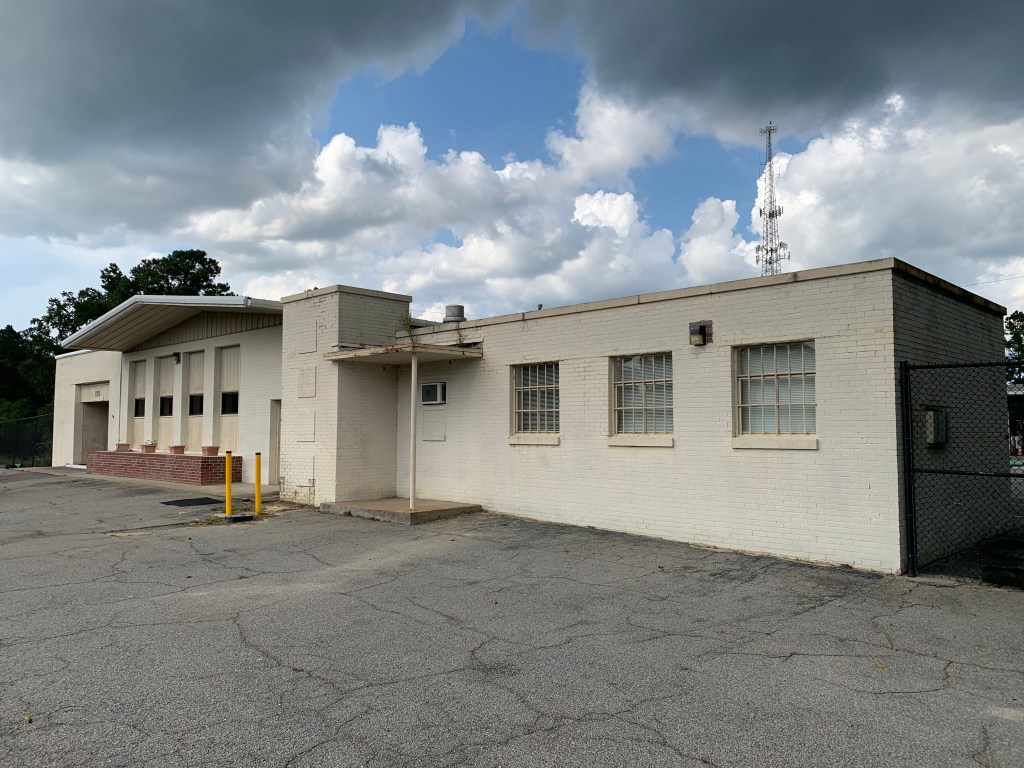
The Old Summerville Jail

He’s in the jailhouse now
Well I told him once or twice
To stop playin’ cards and a-shootin’ dice

                                                            Jimmie Rodgers

Well,  given that I’ve waxed nostalgic about Summerville’s azaleas, the Curve Inn Pool, our village idiots, and county hospital, I think it’s high time I turned my misty memories to a local institution you may not have visited – the Summerville Jail.

I spent one memorable night there in the summer of 1972, the summer before my junior year of college, after a group of friends and I engaged in a series of what educators nowadays call “bad decisions.” We’d smoked a joint (mostly seeds and stems) on our way to downtown Charleston to patronize a basement bar called Hog Pennys. There, of course, we downed a couple of beers, no doubt Old Milwaukees because they offered two extra ounces. [1]  On the way back home to Summerville, I suspect we did another joint. I know for sure the Kinks just released album Everybody’s in Showbiz was blasting from the speakers of the car’s cassette player. 

An appropriate snippet from the album

I guess it was only eleven or so when we pulled up to our hometown poolroom. We weren’t close to drunk or even all that high. After a couple of games of nine ball, we decided to call it a night.  

Another friend, Keith, who hadn’t accompanied us on our journey to the peninsula, asked if he could bum a ride home, so we all piled into the car. At some point, a revolving blue light clicked on behind us. It seems the driver – I’ll call him Billy – hadn’t come to a complete stop at the most recent stop sign.

There were two different bags of cannabis, belonging to different passengers. My perhaps flawed memory has us tossing them back and forth like in that old childhood game hot potato. Someone stuffed one of the baggies beneath the front passenger’s seat. The policeman approached the driver’s side, and as the fellow riding shotgun leaned over to make sure the baggie was well hidden, the officer took note.

“What is that?” he demanded.

“Uh uh uh.”

So we were all hauled downtown to the Summerville Jail, an adjunct to the police station itself, located in those days at 225 West Luke Avenue.  

The thing is that the officer did not procure the other bag, which created a very convenient out for this very inept liar. When the interrogators tried to put, as they say in crime novels, “the screws to me,” I could honestly say I didn’t know who had been in possession of the one baggie of impotent marijuana –  less than a nickel’s worth – that had been confiscated. 

Anyway, we were all ushered into the same cell without being fingerprinted or having mug shots taken. I recall an intercom with its red flight aglow, so we didn’t blab about what had happened. The police instructed us to call our parents, though Keith told the jailer that his mama had recently suffered a heart attack, so he’d rather spend the night in jail than wake her up with a phone call. I felt really bad for him because he was perfectly innocent.

One-by-one, my fellow inmates were released to their unhappy progenitors. When my father and mother arrived, my father was so boiling mad that I told the jailer I’d rather spend the night than be released, and he agreed that it might be a good idea.

Keith and I ended up in different cells, neither of which had bed linen, pillows, or a toilet seat, and I can’t begin to tell you how unpleasant it is waking up about 85 times in the middle of the night and remembering you’re in the clink. Morning did at last dawn, and we were served a poolroom hamburger for breakfast. My mother showed up to retrieve me; (thank goodness my father was at work). I assured Mama that the marijuana didn’t belong to me ­– it didn’t – but I did lie and claimed I hadn’t smoked any. Like I’ve said, I’m a terrible liar, but in this case my mother believed me.

We were supposed to be tried in St. George, and all of us but one made the trip. We sat there among other miscreants of Dorchester County on the pew-like benches of the courtroom. A self-important man with a Southern drawl called out cases and the accused stood up to acknowledge their presence . One trial involved statutory rape. Not only did they make the accused stand, but also the teenaged girl who was his victim, though she looked of age to me. Finally, the names of the last trial were called. Our names never were. Seems as if our no-show friend’s parents and procured a lawyer and had the case dropped. 

Sad to say, but the last time I saw that friend was in June of 2014 at the funeral of another of that carload. Because I don’t make it to Summerville often, I don’t think I’d seen my late friend or the no show in the new century. We sat next to one another in the pew, but neither of us brought up the incident. Sadly, it had created some bad blood.


[1] 18 was the legal drinking age back in those more lenient days.
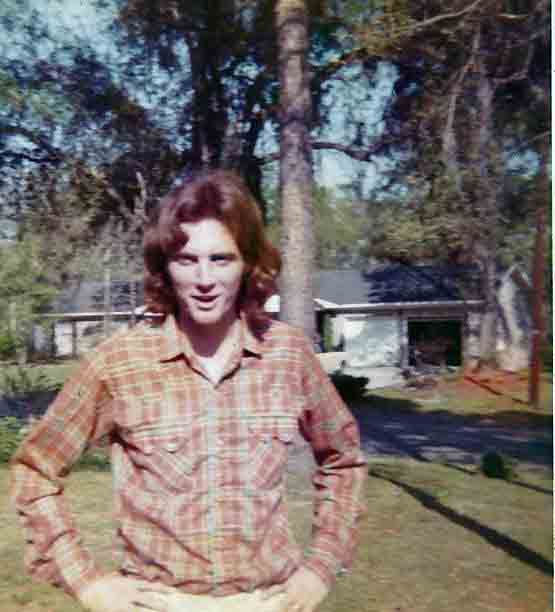
Me in 1973 (note spray-on tans had yet been invented)

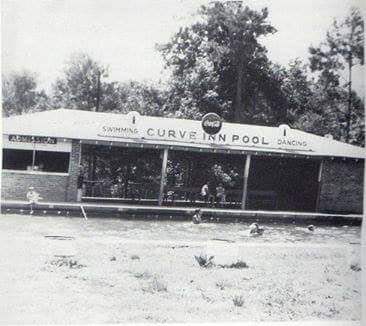
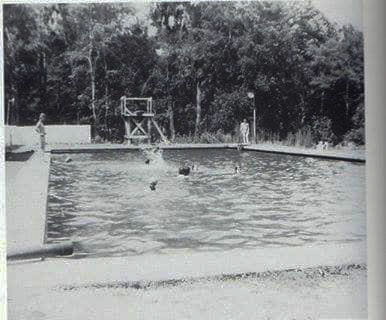
The Curve Inn Pool, Make Me Feel So Good, Make Me Feel All Right

Of all the songs on the jukebox at Summerville’s long-gone Curve Inn Pool, songs like the Byrd’s “Eight Miles High” and Bobby Fuller’s “I Fought the Law,”[1] my favorite was “Gloria” – not the Van Morrison original but a cover by an obscure Chicago band, Shadows of Knight. 

Somehow the Knight’s lead singer Jim Sohns’s gritty growling imitation of a Northern Irishman trying to sound like an American fit the funky working class vibe of the Curve-Inn, which you could join for the entire summer for a measly eleven dollars.[2] I can’t remember if the swimming facility at Miler Country Club featured a jukebox, but I’m absolutely positive you wouldn’t find anyone there perched on the rail of the high dive with the adjectives “sweet” and “sour” tattooed on each of his pectorals. In fact, those were the first homemade tattoos I ever witnessed, the equivalent of stick drawings compared to colorful tapestries you see sprawled across the epidermides[3] of hipsters nowadays.

Summerville coach and administrator Olin McCurry owned and operated the Curve-Inn, and he was there six days a week overseeing the establishment, shirtless and sporting one of those pith helmets bwanas wear in old Tarzan movies. I can see his son, little more than a toddler back then, also shirtless and waddling behind him.  I think the McCurrys were neighbors of ours when we lived on Laurel Street. I remember Laura McCurry, who was a few years younger than me,[4] conversing with my mother like an adult at the tennis courts as I rode my bike around and around the metal nets.

My most memorable summer at the Curve Inn was the summer of ’66. I had a so-called girlfriend named Francine Light, who had delivered me a note two days before school let out for the summer asking if I’d be her beau. I had been admiring her from afar forever, so I was thrilled. I remember walking her to the school buses that afternoon, my hair parted on the wrong side so it would hang over one ear, which no doubt looked ridiculous, though daringly out of dress code.

The problem was that I was so shy I rarely called Francine that summer, and when I did, I couldn’t figure out what to say. She came to the Curve-Inn a couple of times with her little brothers in tow, but all too soon wearied of my awkward non-engagement. I remember sending a message via a female friend to tell Francine I loved her, but the friend came a couple of days later to report that Francine didn’t love me back.

[cue Herman’s Hermits] “Why does the sun keep on shining?/Why does the sea rush to the shore?”

In reality, by no means did that crush-gone-wrong darken my summer. We played Marco Polo, devoured Zero candy bars and Cokes, perfected our cannonballs, back flips and gainers.

Oh yeah, and got an earful from that jukebox standing among puddles in the shade of the pavilion.

G – L – O – R – I – A 


[1] By the way, when I saw Springsteen on the front row of Gaillard Auditorium in The Darkness on the Edge of Town tour in ‘78, the Boss began with a cover of “I Fought the Law,” and I recognized it two chords in.

[2] Cool quote from Sohns, “The Stones, Animals, and Yardbirds took the Chicago blues and gave it an English interpretation. We’ve taken the English version of the blues and re-added a Chicago touch.”

[3] Forgive my pedantry, but epidermides is preferred over epidermises as the plural form, though both are acceptable.

[4] More pedantry: If any former students are reading this, note how I have broken a grammatical rule – it should be “older than I” – so I don’t come off as a constipated, um, pedant.

Football Pratfalls

In addition to its verdant beauty, its azaleas, its wisteria-entwined pines, Summerville is also famous – at least in South Carolina – for its long history of high school football excellence. If Summerville’s so-called historic district can’t claim a Revolutionary or Civil War battle, it can claim over a century’s worth of Friday night clashes on the gridiron, an impressive history of prep school football dominance.

I remember being a little boy and Mama bragging about Summerville teams of her high school days in the late 40s  and early 50s, teams featuring Bufort Blanton and Bo Berry, who a decade later were still being lauded for their post-World War II gridiron exploits. Perhaps they still are among the dwindling number of Summerville citizens of that era, though even greater triumphs would ensue.

mama and bette

Summerville High Students Bette Newsome Walton and Sue Blanton Moore (my mother) circa 1950

Hired in 1953, John McKissick amassed 621 wins, 10 state championships. “Legendary” is a word I hate to see affixed to a historical figure, but I will say that McKissick may have earned it. He was so successful that Pat Conroy included him in two of his novels, The Prince of Tides and South of Broad. I was born in 1952, so Coach McKissick was the only coach I ever knew, and I can proudly say I was once paddled by the great man in his role as assistant principal. I had been dismissed from class by a math teacher and sent to the office. I had the choice of three days of suspension or three “licks.” I opted for the latter, and Coach McKissick performed his duty affably, without a smidgeon of rancor, but all too efficiently.

Screen Shot 2020-08-10 at 8.59.44 AM

via 1967 Summerville High Yearbook

Of course, virtually every boy growing up in Summerville dreamed of being a football hero, of donning the green and gold of the mighty Green Wave, of achieving, like Billy Walsh in the 1960s, the mantle of hometown hero.[1] I was no exception; only there was a small problem, literally a small problem, which actually ended up being big problem: I was so scrawny I could have been the model for the 90-pound weakling advertisement. Not only that, I wasn’t very fast, though I did possess fairly decent hand-eye coordination and was capable of making diving catches, even an occasional one-handed grab. We played tackle every day after school in my front yard, for hours on Saturdays and Sundays. In my neighborhood, I was considered pretty good, the equivalent of an impressive koi in a tiny little backyard water garden.

90 pound weakling

One time, I remember, the kids in my subdivision challenged another neighborhood  – or they challenged us – in a game where we wore helmets and shoulder pads. I guess maybe I was in the sixth or seventh grade. The contest was played near the Curve-In Pool on a big slopping grassy side yard of someone’s house. If I remember correctly, Green Wave stars Wayne Charpia and the late Billy Sedivy refereed.  A kid on the other team named Punky Pearson ran through our arm tackles for touchdown after touchdown. A less romantic child might have reasoned that maybe he wasn’t cut out for the bigtime.

But when high school rolled around, in the fall of ’68, I went out for junior varsity. The tryouts were at Doty Field, and although our coach, Reid Charpia, didn’t cut anyone, lesser talents like me had to pick out our equipment last from a diminished pile of helmets, pads, pants, and shoes. I ended up with white, not gold pants, and a pair of high-top cleats at least two sizes too big.

I will say this for myself. I didn’t quit as several did. Practices were brutal. Hydration was frowned upon in those days, though I think we had salt pills.  I ran the windsprints, got creamed in the tip drills, but managed to survive the season without serious injury. On Thursdays, I got to wear my jersey to school, number 67, not a typical number for a halfback, but appropriate enough for a fourth string halfback.

The good news is that the Summer of Love had just passed, and other recreations beside football were in the offing for those not well-suited to bodily collisions.


[1] In subsequent years a few Green Wave veterans ended up in the NFL, most notably, AJ Green.

Miss Capers Gives Edgar Allen Poe a Gothic Run for His Money

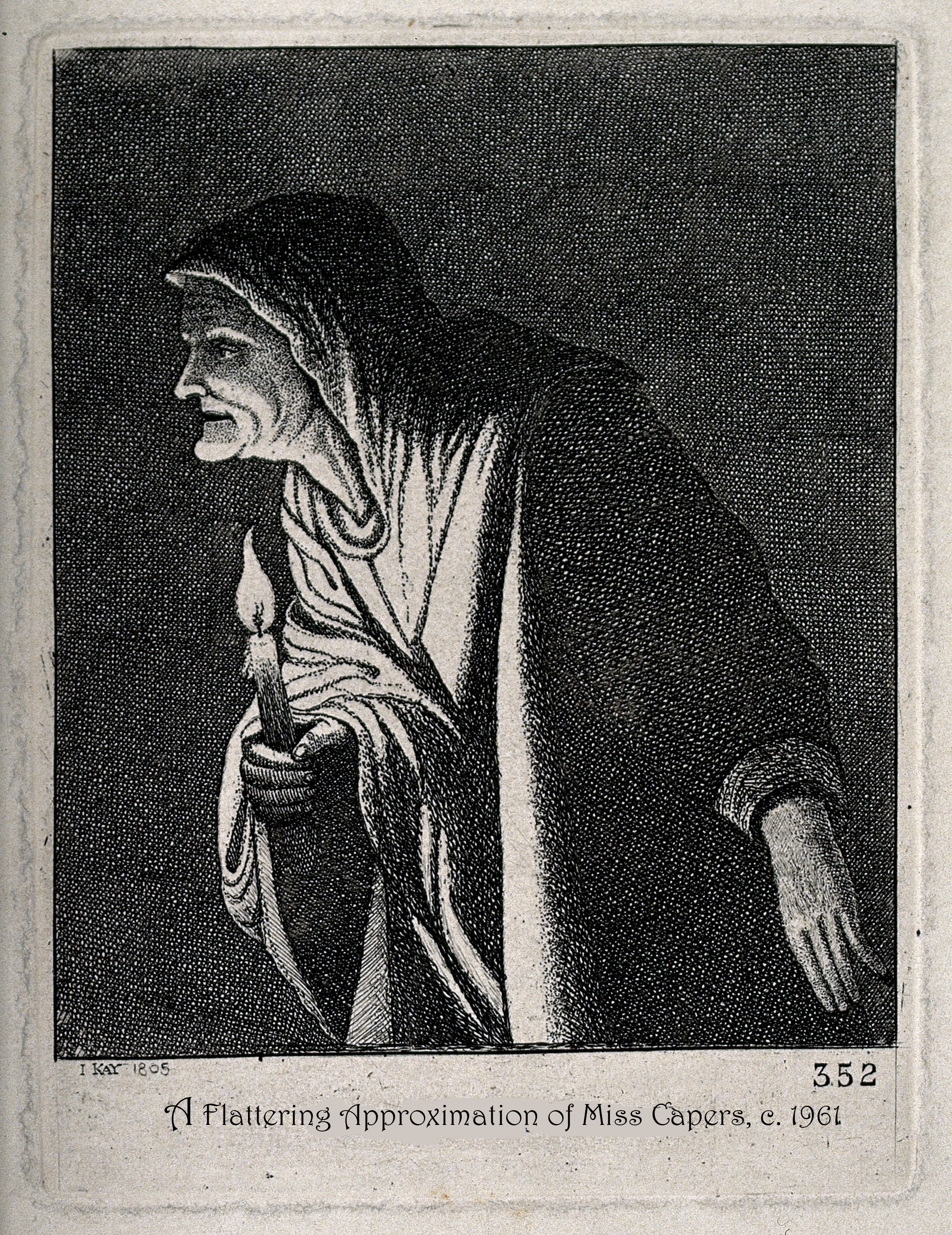
V0025881 The witch of Endor with a candle. Engraving by J. Kay, 1805,

The witch of Endor with a candle. Engraving by J. Kay, 1805, Credit: Wellcome Library, London.


Of all the many eccentric characters who haunted the streets of my hometown in childhood, including the mentally challenged man known as Pepsi Cola and another more infamous miscreant who trafficked in underwear and firecrackers, I believe that the old crone known as Miss Capers deserves the title of the strangest Summervillian of all.[1]

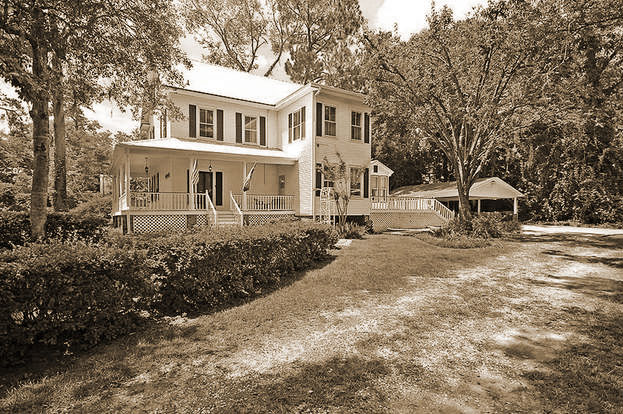
In the early Sixties, my maternal grandparents stayed in a subdivided Victorian house on West 3rd Street, the upstairs having been split into two apartments, the bottom story uninhabited and warehousing a portion of some wealthy family’s estate: furniture, rugs, an extensive library with hundreds of books.[2] In the side yard there was a well.  You could remove the cinder block and then the plywood and peer into an abyss.  I think I remember looking down at my reflection in water, but I may have gotten that idea from a Seamus Heaney poem. Behind the house was an open grassy field and a patch of woods featuring bamboo that we called “Ghost Forest.” It was a convenient neighborhood, two houses down from Timrod Library and close to the Playground via the short cut through Pike Hole.

sepia house copy

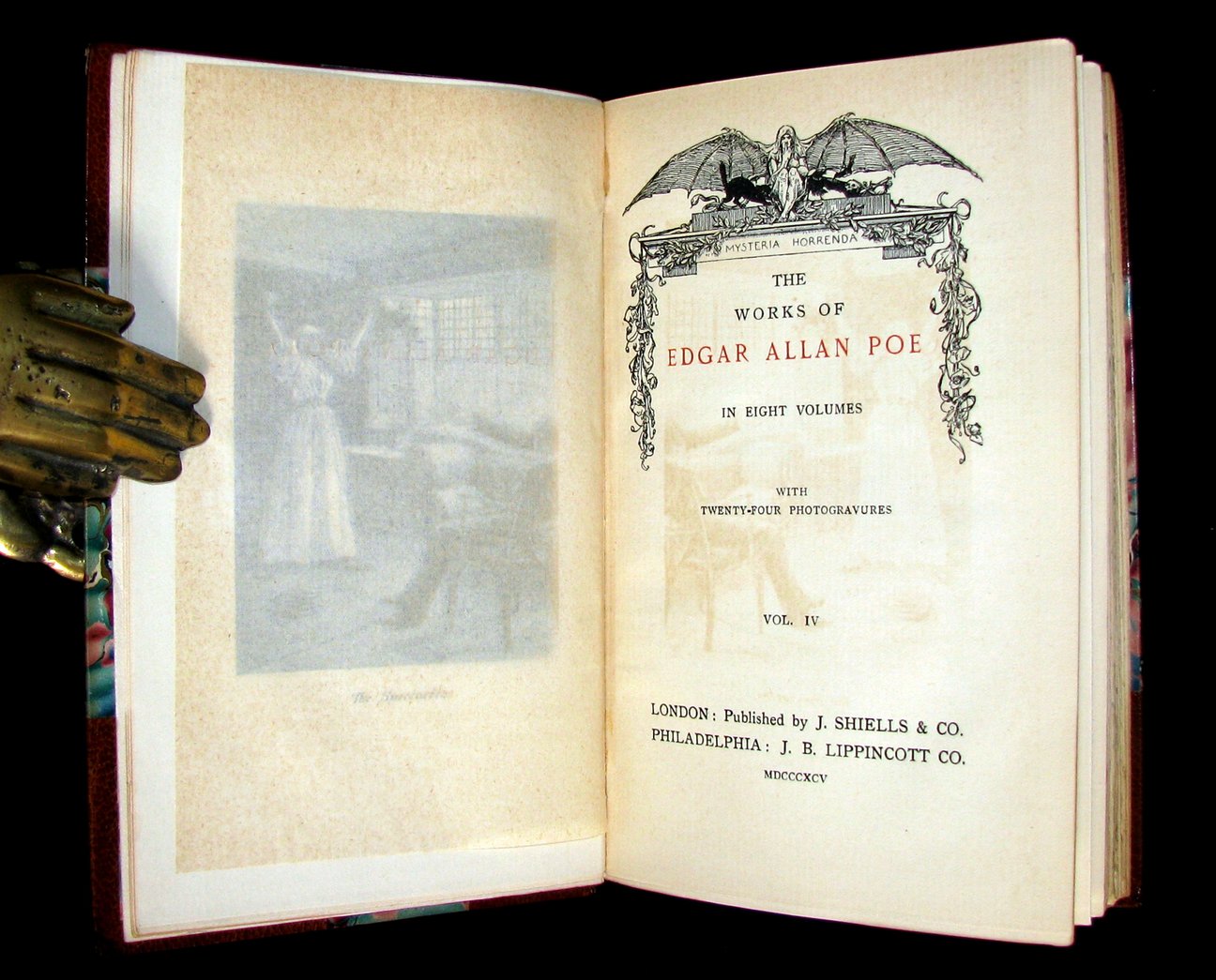
Although not an adventurous child, I somehow gained entrance into those off-limit rooms downstairs, the furniture sheeted, the air stale. I’d sneak below and explore. After repeated visitations and investigating some of the books I could reach on the lower shelves, I started secretly “borrowing” individual volumes of the Complete Works of Edgar Alan Poe.

20200308poe-015_1296x

This is from the actual set I’m talking about

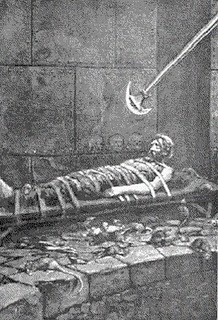
pit-pendulum-bmp-2Each slender volume, bound in red, featured sheer paper sheathing occasional engravings of ravens, subterranean crypts, or rats gnawing on ropes of the dudgeon-bound protagonist of “The Pit and the Pendulum.”  Into the forbidden first-story space I’d sneak, terrified I’d get caught, carefully replacing last week’s purloined octavo, flipping through other volumes, choosing another based solely on the luridness of the illustrations.

I was only eight or nine, so most of the prose lay beyond my reckoning, but I could manage lots of the poetry and some of the stories (“The Tell Tale Heart,” for example). Unable to distinguish bathos from profundity, I became completely enamored of the singsong silliness of “The Raven,” devoting several stanzas to memory. “Annabelle Lee” could bring tears to my eyes. Something sinister lay beneath those works, so the whole enterprise smacked of trafficking in pornography – though pornography would not have been in my early Sixties vocabulary.

I’d smuggle the forbidden text and read it surreptitiously in bed because I knew my parents/ grandparents wouldn’t approve of my trespassing and borrowing without asking. I liked the musty smell of the books, the way the pages whispered when I turned them, the way the illustrations lay perversely beneath diaphanous paper. Despite the buxom space sirens who cavorted on the covers of pulpy paperbacks, Sixties sci-fi couldn’t compete with the deep purple sublimations of diseased consciousness that I found in Poe.

The thing is, though, if it were the gothic that I was craving, I needed only to traipse across the hall and knock on mysterious Miss Capers’ door because she lived in the other apartment in the upstairs of my grandparents’ house. Truth is, I would not have knocked on her door for five dollars, a fortune in those days, because my brother David and I were convinced that she was a witch, and as far as diseased consciousnesses go, Miss Capers could give Bertha Mason, Mr. Rochester’s insane wife in Jane Eyre, a run for her money.

She certainly looked witchlike with her sharp nose and perpetual frown. It seemed that she only possessed two outfits, the one she wore most often a brown, probably woolen, monkish garment, the hood coming to a point pulled up over her stark white hair, even on blistering summer afternoons.  Her other outfit consisted of an old-fashioned white blouse and long blue skirt. Her shoes were strange Victorian contraptions, boots, I guess you’d call them, that had several buttons on the side.  She looked like she’d stepped out of the pages of a 19th Century Gothic novel.

shoes

She rarely left the house, but occasionally you’d spy her walking down the street, hunched over a cane in one hand and a bag in the other. Perpetually belligerent, she’d shake her cane at you if you passed her on the sidewalk. I seem to remember that she was terrified of thunder and lightning. One time my parents took David, my high-school aged aunt Virginia, and me into Miss Capers’ room during a storm, I think to try to comfort her, and she told me the safest thing to do during a thunderstorm was to place your face six inches from a window and to stare out at the rain. It’s the only conversation I ever had with her.

Eventually, a smell began to emanate from Miss Capers’ room, which we thought might be accumulated garbage, but when the smell metastasized into a stench, my father knocked, then pounded on the door, eventually forcing it open. I wasn’t there at the time, but what he found was Miss Capers sitting with her leg wrapped in newspapers, gangrenous, terrible to behold, literally rotting.

Of course, my parents called for an ambulance, and from what I understand, the leg was amputated, and she survived, but was taken away somewhere to live out the rest of her days and nights under some sort of supervision.

Miss Capers would have made an excellent ghost, moaning in that room whenever a thunderstorm passed, but the house has been redone, been spiffed up with all its gothic traces effaced, an incongruous setting for a specter. They should have kept that library, though. It was really something. Perhaps if I ever become a ghost, I’ll haunt it, aggrieved that the books shelves have been replaced with prissy wainscoting.


[1] According to legend, the second man would trade firecrackers to naive newcomers to town for a pair of their underwear and a photograph of them. He would say, “I’ll give you 50 pack of firecracker for your drawers.” If successful in the transaction, he would tie the underwear (always tightie whities) behind his bike, place the photograph of the victim in the underwear, and pedal his bicycle all over town. There was a local band fronted by the late Jerry Stimpson who adapted Yardbirds hit “For Your Love” into “For Your Drawers.”

Also, I realize that “crone” has fallen into disfavor because of its sexist connotations, but I use it here anyway because, well, she fit precisely the definition, especially the bad-tempered part.

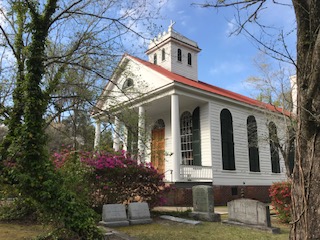
[2] It’s still there, across the street from Bethany Methodist Church.

Sometimes the Twain Do Meet

Dorchester County Hospital Summerville, SC

Dorchester County Hospital Summerville, SC 1950s

In the first decade of my life, the 1950s, my mother worked as a practical nurse at Dorchester County Hospital in Summerville, South Carolina. Unfortunately, I got to spend more time at the hospital than I would have liked because I contracted rheumatic fever in 1956, which would result in a two-week stay in a ward at the hospital and two months in bed at home after that.

I was only five at the time, so my memory of the ward is hazy. I remember getting EKGs and Reverend Storm, the Baptist preacher, coming and extolling everyone on the ward to bow their heads and pray for me, which I found embarrassing, and I also remember some of my mother’s friends and my grandmother’s friends coming to visit the hospital.

hospital-ward-1950s-cropped

One of these was Vivian Mallard, a good friend of my grandmother’s. I remember her playing a simple board game called Davy Jones Locker with me as I lay in the hospital bed. If erect posture is a sign of moral uprightness, Vivian was a paragon of virtue. She was a short, trim woman with curly gray hair and glasses, a no-nonsense lady who walked as if she were balancing an etiquette book on her head. After my recovery, when my grandmother kept my brother and me while Mama was nursing, I spent many a boring hour on Vivian Mallard’s porch or in her immaculately trimmed yard while “Mama Blanton,” as we called my grandmother, and Vivian exchanged gossip about the ins and outs and comings and goings of Summerville’s citizenry.

Another of Mama Blanton’s good friends was Miriam Etheridge, who with her husband ran a grocery store attached to their house just down the street from Alston High School, the African American School in those days of segregation. This was a “colored neighborhood,” as we put it back then, so the clientele of the store was almost exclusively African American.  Because of segregation, my only exposure to Black children was at the store. I remember the girls having elaborate, complicated hairdos featuring multiple parts and ponytail like projections. I actually had a crush on one of the Black girls, a tall, pretty light-skinned girl, but even back then I knew better than admit to something like that.[1]

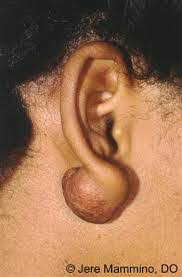
Perhaps, it was at Mrs. Etheridge’s store that I first encountered Harold, a mysterious black man whom people claimed “was not right in the head.”  In addition to mental illness, Harold suffered from a strange, plum-sized, sac-like growth dangling from his ear that my mother called a “wen.” Scouring google for an approximation, the closest image I could come up with is the one below, which isn’t nearly big enough. Why no charitable entity sought to have it removed seems strange. But back then even doctors’ offices were segregated with separate black and white waiting rooms. Perhaps pro bono operations weren’t a thing.

cystAt any rate, among the rumors about Harold was that he had been on a path to becoming a physician but had some sort of mental breakdown in medical school. Whatever the case, Harold’s status in his adulthood was that of a vagrant. Riding my bicycle through the park, one time I saw him passed lying among azalea bushes with a jug next to him.

Another time, in those days before people locked their cars, Harold crawled into the back seat of Vivian Mallard’s Oldsmobile and fell asleep. It’s not clear if he had done so the night before or in the morning when Vivian decided to go grocery shopping.  It wasn’t until she arrived at the Piggly Wiggly parking lot and got out of her car that she discovered Harold curled up unconscious in the back. I suspect that she screamed, but I don’t know for sure. And I also don’t know if Harold was arrested or whatever ultimately became of him. Sometimes cases like his were sent up to the State Mental Hospital on Bull Street in Columbia, an institution featuring the same dark brown bricks that gave Dorchester County Hospital such an uninviting vibe. If he had been sent to Columbia, maybe they would have removed the wen, but at that point, it wouldn’t have done him much good.

maxresdefault-1

The now abandoned State Mental Hospital on Bull Street


[1] She actually appears in a short story I wrote, which you can access here.

Update: Please note in the comments that Harold indeed eventually had the wen removed.

The Silent Screams of Preacher Simmons

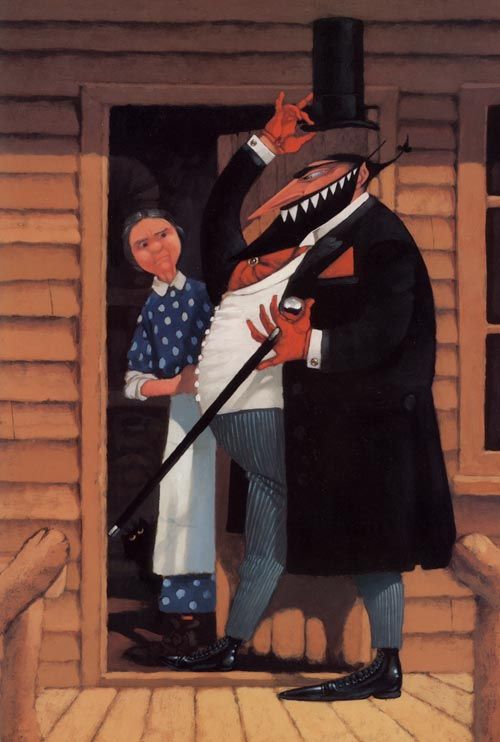
preacher simmons illustration

There was a man in Summerville named Preacher Simmons. I don’t think Preacher was an ecclesiastic title, but merely what his mama had named him.

Unfortunately, cancer had claimed Preacher’s larynx, and after his tracheotomy, he communicated by holding a vibrating wand to his throat that produced a strange humming robotic voice. He and my granddaddy, Kistler Blanton, had been pals for a half-century, once boyhood fishing buddies, now surreptitious drinking buddies, both cursed with Baptist wives raised by Puritanical mothers way back in the days not long after Reconstruction.

Preacher called my house one time when I was twelve or so, asking for my granddaddy, and not putting two and two together, I thought I was getting bamboozled with a prank call. Not to be outwitted, I said in a theatrically polite voice, “I’m sorry, sir, but there are no extra-terrestrials by that name living here.”

Without waiting for an answer, I hung up.

In less than a minute, the phone rang again, so I picked it up and heard again the robotic vibrato in my ear, “Preacher Simmons, this is Preacher Simmons on the line. I need to talk to Kistler.”

Of course, I felt terrible.  “So sorry, Mr. Simmons,” I said, halfway apologizing and halfway not, segueing from my sorry-ness about my rudeness to my sorry-ness that Kistler was not at my house. I told him I had no idea where he might be, though I couldn’t imagine he wasn’t in his room, where he spent virtually all of his time.[1] No, he hummed, he’d tried that. My grandmother had given him our number.


Alas, this next anecdote featuring Preacher Simmons may strike you as cruel, but if I were telling it to you in the flesh, I guarantee you that you’d laugh out loud. When I was an English teacher, I used to tell it to my classes to illustrate the cruelty of comedy, to suggest that laughter itself could be strange and creepy, a sort of nervous reaction brought on by either discomfort or perverse incongruity.[2] When telling the story, I’d act the part of Preacher, placing an invisible wand to my throat, mimicking his robotic voice, making a Lowcountry baritone sound mechanical.  It never failed: at the denouement, every year, every single student would be laughing out loud, some ashamed of themselves but unable to stifle the reaction.

In fact, the story would make a great silent one-reeler, with Buster Keaton or Harold Lloyd starring as Preacher. It would have to be filmed outside in a yard with an unpaved driveway that snaked some fifty yards between pine trees to a clapboard house without a garage.

Anyway, Preacher’s wife, whose name I’ve forgotten, had purchased some piece of furniture that had been stashed in the back of their station wagon and impeded her view from the rearview mirror. She had parked the vehicle way up the driveway and honked the horn, summoning Preacher from the house. The idea was that he’d turn the station wagon around and back the vehicle to the front porch so they could save some steps unloading the furniture. When she got him on the porch, Preacher’s red-rimmed eyes and the telltale olfactory emanations of Old Grandad signaled to Mrs. Simmons that she ought to be the one driving, that Preacher ought to be the one to help her negotiate the twists, turns, and trees of the driveway.

So she pulled up a ways, turned the car around, and started backing up. Standing behind the wagon, with auditory wand to throat, he guided her, waving with his free arm, back peddling as the vehicle moved slowly in reverse.

“COME ON BACK,” his electrified voice hummed. “TURN IT MORE. KEEP TURNING.”

He backed into a tree, so he decided to cut around the back of the wagon to the other side, but tripping on a root, he went sprawling, arms splayed, the wand falling from his hand and rolling out of his reach.

Of course, when he screamed for her to stop, there were no sounds, just a mouth franticly mouthing, “STOP! FOR CHRISTSAKES, STOP!”

Mrs. Simmons felt the vehicle run over something, a root or limb she thought, so she shifted gears, put in forward, and ran over Preacher one more time.

She got out, walked to the back of the wagon to find her husband, thrashing on his stomach in the dirt, screaming in pain, mime-like, his head lifted with his mouth opening and closing again and again in thunderous silence.

She leaned over and handed him his wand, so he could scream out loud, so she could ask him how bad off he was, but the contraption no longer worked.

The good news is that he wasn’t bad off at all. The station wagon had rolled over his legs, not inflicting all that much damage. According to Mama, Preacher and Kistler had consumed so much alcohol over the course of their long lives, they had become “pickled,” a metabolic process that made them impervious to injury.

I guess you could say Kiki and Preacher lived semi-charmed lives.

lloyd


[1] You can read a more detailed description of his existence here.

[2] I have a theory about the psychological creepiness of laughter, which you can read here.


Tales from Old Summerville

carolina inn

Old Carolina Inn, the first building in Summerville to have an elevator

Before the fast food franchises, before the Wal-Marts, before the sprawl, my hometown Summerville, SC, was a lovely, quiet village nestled in a pine forest 25 miles northwest of Charleston.  Settled just after the Revolutionary War and originally known as Pineland Village, the community in those days offered a haven for plantation owners seeking seasonal escape from malaria-bearing mosquitoes.

Eventually, Pineland Village became known as Summerville, and people started settling there year round. In 1847, Summerville officially became a municipality, and that very year the town council passed one of the first conservation laws in the nation, a statue forbidding cutting down trees of a certain circumference without permission.

Town-Hall-3

Town Hall back in the day

This passion for conservation and appreciation for the beauty of nature resulted in the planting of hundreds of azaleas, camellias, and gardenias throughout the town, both in its municipal parks and in the yards of the old clapboard whitewashed Victorian houses.  In the springtime, what is now called “the Old Village” or “the Historic District” has to rank as one of the most beautiful towns in the nation.  It claims as its official motto “Flowertown in the Pines.”

IMG_1211

St Paul’s Episcopal Church (photo credit Fleming Moore)

In 1950, the year my mother graduated from Summerville High School, the population stood at 3,312; in 1970, the year I began my senior year there, the population had barely grown to 3,839.  However, it almost doubled between 1970 and 1980 and grew a startling 247% to 22,519 from 1980 to 1990.  Since then, the population has doubled yet again, and according to a 2019 estimate, now 52,549 people call Summerville home.  When I go there nowadays, have lunch out or hit a bar, I recognize virtually no one.

However, in the old days, being a native and growing up “Flowertown” meant that everyone knew everyone else, which was a real disadvantage if you were a redhead like me.

“Did you recognize any of the boys?”

“No, but one of them was redheaded.”

“I bet it was Rusty Moore.  I’ll call his mother.”

Everyone in town knew everyone else, but outside of the town limits, there were a number of smaller unincorporated communities like Knightsville, which had its own elementary school, the Boone Hill community, Stallsville, New Hope, etc.  By junior high, children from these communities had matriculated in Summerville schools.  Unfortunately, a few of these rural children were dirt poor.  I remember shoeless White children hopping on the bus on the first day of school. We’re talking about the days of segregation when only a few handpicked African Americans had been integrated into our classes, and they were from downtown and academically talented.  Because academically, we were “tracked,” I rarely interacted with any of the disadvantaged kids from the rural areas, although I became good friends with several prosperous college prep kids from Knightsville.

However, when PE started in the 7th grade, I not only interacted with some of the disadvantaged rural kids, but I also showered with them, and since several had failed a year or two, some sported five o’clock shadows rather than peach fuzz.  PE  is where I first met Bobby Bosheen, the antagonist (and protagonist) of this piece.

My attempts to google Bobby Bosheen have turned up zilch.  I heard somewhere decades ago that he had been chained to a tree and bullwhipped and lost an eye.  Another rumor had him throwing a Hanahan boy off the Folly Pier and killing him in a tribal fight between rival high schools.  Although I doubt that either rumor is true, I don’t doubt that Bobby is no longer among the quick.  To say that he had anger issues is to say that Kanye West has ego issues.  Adjectives like volcanic and nuclear come to mind.  I would like to think that Bobby overcame his rage, that he turned out okay because deep down inside I don’t think he was a bad person.  He had this haunted look about him that suggested his childhood hadn’t taken place on Sunnybrook Farm.

For some odd reason, one Saturday, I let my friend, the late Gordon Wilson, talk me in going to Boone Hill Methodist Church to engage in unsupervised tackle football with the natives of that region.  Bobby was among the crew and had a jolly time swinging elbows, crushing ball carriers, and piling on.  Even though I enjoyed the game about as much as I would a root canal, I think my participation reaped the benefit of Bobby’s vaguely recognizing me and therefore not targeting me as an adversary.  True, he did punch me once as I was sitting in a car at the Curve-Inn Pool, but he was rip-roaring drunk and started fights that night with numerous revelers, including Kenny Reese, a popular basketball player.  The very next week I saw Bobby at Tastee Freeze, and Gordon asked him why he had punched me, and Bobby actually apologized, lamenting, “Whiskey and beer don’t mix.”

tastee freeze

The Old Tastee-Freeze

What really solidified my self-identification as a coward was Bobby’s girlfriend, a large, stringy haired bruiser with discolored teeth and the calves of a linebacker.  Unlike, Bobby, she hated me, hated me viscerally on sight. This was in ’70 or ’71, and I had started to grow my hair long and dress like Neil Young.  She used to position herself outside the entrance of the back of the main building and threaten me.  “I can’t wait to cut your ass, you red-headed bitch,” she said one day with arms crossed blocking the entrance.

red neck gal

I suspected she could have, given that she outweighed me and I hadn’t been in a real fight since the fourth grade, so I turned tail and found another entryway.  Whenever I saw her, I avoided her.  She scared the shit out of me.

The last time I heard something concrete about Bobby was in ’75 when I was bumming a ride back to college with one of my mother’s colleagues, a teacher at Newington Elementary School.  As we passed Morris Knight’s, a beer joint, the husband of the teacher, a non-Summerville native, mentioned that he had made the mistake of going in there one time to shoot pool and had been assaulted and actually beaten with pool cues.  He told me that he had pressed charges against the assailant, who was convicted, but that he couldn’t remember his name, that is was something funny sounding.

“Bobby Bosheen,” I suggested.

“Yes, that’s it!  Bobby Bosheen!”

Of course, Bobby’s anger had to come from somewhere.  I suspect at home he was no stranger to corporal punishment.  Perhaps, like Pee Wee Gaskins, he had been strung upside down naked and beaten with a two-by-four.  If he had been born to one of the families living on Carolina Avenue in a Victorian house with a spacious porch beneath moss draped live oaks among the azaleas, I suspect he and the rest of the world would have gotten along much better.

sville house

These Dreams That Shake Us Nightly

wes bad dream

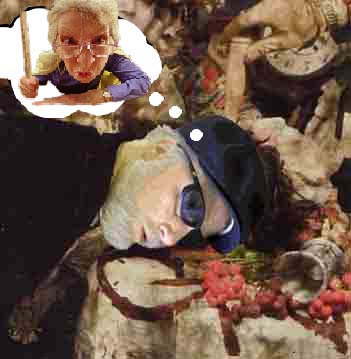
For some reason the projectionist in the Octoplex of my unconsciousness has been running triple features based on the theme of shirked responsibility. For example, last night ­– or probably more accurately this morning – Mrs. Waltrip, a woman I hadn’t thought about in a half-century, appeared in a dream I’ll entitle Maybe Waiting Until the Day Before the Final Exam to Come to Class for the First Time Was a Bad Idea.[1]

Mrs. Waltrip was my 7th grade math teacher, and hers was the final class of the school day.[2]  I recall she had a verbal tic of punctuating sentences with “op-shoop” and a habit of pointing at equations with her middle finger, an unfortunate peccadillo given the immaturity of her charges. However, what I most remember about her class is how frequently I looked up at stubborn hands of the institutional clock being dragged like a mule to the designation of three o’clock.  If it was a good day – a Monday, Wednesday, or Friday – I’d be headed home, but on Tuesdays or Thursdays I’d end up in the band room sitting in the last seat of the back row of the clarinet section pantomiming my way through “The Stars and Stripes Forever” or “Seventy-Six Trombones.”

Oh, how I wish that after I had failed the musical aptitude test for band in the fourth grade, Mr. Moody had said, “Sorry, Rusty, but I don’t thing band is a good fit for you.” Instead, I’d spend the next four years under his tutelage completely lost, pretending to play, marching in parades, miserably sitting  as a 7th grader in buses with high school students headed to or coming back from Charlotte, Walterboro, or Hanahan. Mr. Moody was all too aware of my incompetence but possessed too kind a heart for both of our goods.

In the summer before my 8th grade year, he called my house one afternoon while I was on the sofa in the den watching reruns of Sea Hunt. He asked me if I was planning to take band next year, and I summoned the courage to say no. After hanging up, I felt at once guilty and relieved (I suspect that he himself was dancing a jig). Summer practice would start in a week, and I wouldn’t be with the band on the football field inhaling (what had become for me) the sad smell of freshly mown grass. I’d be watching old movies or hanging with non-band friends in the neighborhood. Sgt. Pepper’s Lonely Heart’s Band came out that summer, a group more in tune with my musical tastes than “As the Caissons Go Rolling Along.”

But the thing is, I never dream about being an incompetent imposter fingering a clarinet. My bad dreams deal with academics, which, despite my disorganization, I was okay at. In this morning’s dream, Mrs. Waltrip is teaching a high school senior class I need for graduation, but when I show up for the very first time, she’s not angry but sympathetic, and is going to allow me to write a research paper to catch up. The equations on the board might as well be written in Farsi as well as I can reckon, but as the dream transfigures, I find myself at track practice running across a bridge with leaden feet, the research paper unwritten.

The question arises, why now that I’m retired with no real academic responsibilities at all – no essays to write, no essays to grade – do I so often dream that I have let my parents (both dead) and myself down? Why don’t I dream about winning essay or short fiction contests? Or sitting in Ted Savage’s living room with Paul Smith listening to “A Day in the Life?”

Perhaps we can’t undo what has been left undone.


[1] Doesn’t exactly trip off the tongue, does it?

[2] Back then, classes didn’t rotate throughout the week, so her class was always the last class of the day.

Old Man Trouble Laying Awaiting

old man trouble

Old Man Trouble by David Parkins

Trouble took my money, Cadillac’s gone
Best suit of clothes, all raised up in the closet, oh lord
But I’m so glad
Trouble don’t last, always

“Trouble You Can’t Fool Me” as performed by Ry Cooder


I was born on a rare snowy December afternoon in Summerville, South Carolina, during the waning weeks of the Truman Administration. It was the very same year that J. Fred Muggs, the chimp on NBC’s Today show, was born and the year the first issue of Mad Magazine appeared. Six months later, on June 19th, 1953, Julius and Ethel Rosenberg received 1700 volts of electricity in New York State’s Sing Sing Correctional Institute.

Hello, World; hello, Cold War.

Mama, look an H-Bomb (sung to the tune of “Shortening Bread”)

“Mama, look an H-bomb,” they all shout.

Mama say, “Watch out for the fallout.

See your daddy, he know.

Fallout make him ugly so.”

Hit the dirt, join the crowd.

“Mama, look a mushroom cloud!”[1]

Thanks, Mad Magazine.

mad castro


I remember standing in the weeds of the front yard of our two-bedroom rented house watching Sputnik travel across the night sky and recall squatting underneath a desk in the third grade during the Cuban Missile Crisis. Also, there was a sign hanging in the stairwell of Condon’s Department Store designating it as an official fallout shelter. I’ll admit the sign creeped me out whenever I saw it, but to say I grew up under the specter of nuclear annihilation would be inaccurate. The skies of my childhood were mostly sunny. I had escaped polio, my parents and pets lived long lives, though I did, come to think of it, suffer from an unrelenting series of unrequited crushes.

8771

John F Kennedy had the top of his head blown off when I was a fifth grader. I remember my teacher Miss McCue dabbing her eyes, but no tears were shed at my house. The following year our Ford Falcon station wagon sported a “Goldwater for President” bumper sticker, and I lamented when I woke up on 5 November 1964 to learn that ol’ AuH2O had been buried in a landslide. My first year of high school, James Earl Ray picked off Martin Luther King, and the following year Sirhan Sirhan shot Bobby Kennedy at point blank range after he had won the California Primary. Of course, all the while men and boys in body bags were flying in from Southeast Asia, and African Americans were being battered with billy clubs across the South.

Geopolitically speaking, it was a lousy time to grow up. You sort of winced when you picked up the paper each morning.


Well, I don’t know, but I’ve been told
The streets in heaven are lined with gold
I ask you how things could get much worse
If the Russians happen to get up there first
Wowee! pretty scary!

Now, I’m liberal, but to a degree
I want ev’rybody to be free
But if you think that I’ll let Barry Goldwater
Move in next door and marry my daughter
You must think I’m crazy!
I wouldn’t let him do it for all the farms in Cuba.

Bob Dylan, “I Shall Be Free No. 10”


The Seventies, Eighties, and Nineties seemed less traumatic. September 11th, of course, was horrible, but you have to be extraordinarily unlucky to be killed by an international terrorist. You’re more likely to be gunned down in a theater, school, night club, church or synagogue by a red-blooded American.

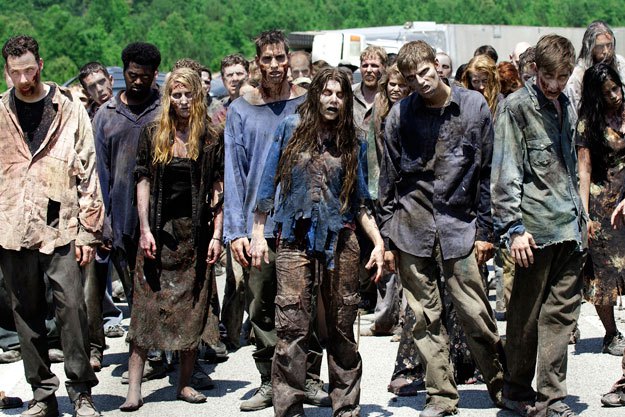
Whatever the case, Apocalypse was in the air. Stephen King and Cormac McCarthy wrote about it. Across both large and small screens zombies marched and pandemics raged.

Here’s a snippet from a post from 2014:

Horror is all the rage in Late Empire America. Walking your rescue dog past young Bentley’s house, you can hear heavy gunfire and explosions emanating from his manipulations of a video console. Hmm, sounds like he’s playing Mortal Kombat Armageddon, or is it World of WelfareLet’s Kill the Bloodsuckers?

All of this got me to wondering when the West quit writing utopias a la Thomas More and started portraying the future world as a nightmare. Of course, my go-to unscholarly source is Wikipedia, and it anoints Jonathan Swift’s Gulliver Travel’s as the first dystopian “literature” – though Oedipus Rex might lay some claim to being the first, with its plague-ridden Thebes ruled by a tainted king whose sexual misdeeds make the Clinton/Lewinski dalliance seem downright wholesome in comparison. But Oedipus Rex predates empire, and I suppose you must have an empire, a nation state, or a polluted planet to qualify as a dystopian society. My colleague Aaron Lipka tells me the civilization must be a fallen one in a dystopian society.

how-to-be-on-the-walking-dead

So what we have been dreading has arrived, a crippling pandemic; we have become actors ourselves in a historical drama. Nothing in my past can compare to what’s going on right now, and, of course, economically no one really knows what’s going to happen, but with all due respect to the President, we have seen something like this before.

In fact, Elizabeth Kolbert of the New Yorker provides a succinct history of pandemics in the 30 March issue.  Here’s a brief catalogue:

541-50 CE – the Bubonic plague known as the Justinianic plague spreads from Egypt to Britain, playing a significant role in the fall of the Roman Empire.

1400s through 1720: smallpox. “Parents would commonly wait to name their children until after they had survived smallpox.” Exported to the Americas, smallpox essentially wiped out indigenous populations.

1817 –  now – Cholera, a resurgent pandemic whose latest outbreak has killed approximately 10,000 Haitians in 2010.

20th century – influenza, polio, measles, typhus . . .

21st century – influenza, Ebola, Covid-19 [to be continued].

Forgive the cliché, but what goes around comes around. Here are Kolbert’s final three paragraphs:

Whenever disaster strikes, like right about now, it’s tempting to look to the past for guidance on what to do or, alternatively, what not to do. It has been almost fifteen hundred years since the Justinianic plague, and, what with plague, smallpox, cholera, influenza, polio, measles, malaria, and typhus, there are an epidemic number of epidemics to reflect on.

The trouble is that, for all the common patterns that emerge, there are at least as many confounding variations. During the cholera riots, people blamed not outsiders but insiders; it was doctors and government officials who were targeted. Smallpox helped the Spanish conquer the Aztec and Incan Empires, but other diseases helped defeat colonial powers. During the Haitian Revolution, for example, Napoleon tried to retake the French colony, in 1802, with some fifty thousand men. So many of his soldiers died from yellow fever that, after a year, he gave up on the attempt, and also decided to sell the Louisiana Territory to the Americans.

Even the mathematics of outbreaks varies dramatically from case to case. As Adam Kucharski, a professor at the London School of Hygiene & Tropical Medicine and the author of “The Rules of Contagion” (forthcoming in the U.S. from Basic Books), points out, the differences depend on such factors as the mode of transmission, the length of time an individual is contagious, and the social networks that each disease exploits. “There’s a saying in my field: ‘if you’ve seen one pandemic, you’ve seen . . . one pandemic,’ ” he writes. Among the few predictions about covid-19 that it seems safe to make at this point is that it will become the subject of many histories of its own.

The good news, however, is that at least as far as contagion goes, we non-medical personnel are the masters of our fate. We can distance ourselves, wash our hands if we go out, and train ourselves not to touch our faces.  In the catalogue of pandemics, Covid-19, to quote a physician I saw online, “is a wimpy virus,” done in by a simple soap.  Perhaps, if you allow me to wax all Panglossian, some good will come out of all of this, greater respect for science maybe, a reconfiguring of our medical insurance situation, a change of political leadership, a more equitable distribution of wealth.

Hang in there, y’all. Who knows?

Thinking of Noah, childheart, try to forget
How for so many bedlam hours his saw
Soured the song of birds with its wheezy gnaw,
And the slam of his hammer all the day beset

The people’s ears. Forget that he could bear
To see the towns like coral under the keel,
And the fields so dismal deep. Try rather to feel
How high and weary it was, on the waters where

He rocked his only world, and everyone’s.
Forgive the hero, you who would have died
Gladly with all you knew; he rode that tide
To Ararat; all men are Noah’s sons.

Richard Wilbur, “Still, Citizen Sparrow”


[1] I’ve scoured the Internet in vain seeking the issue in which this ditty appeared. However, I’m confident the lyrics are accurate because it’s one of the myriad of selections recorded in the juke box of my brain.


Buster Keaton Meets Kafka

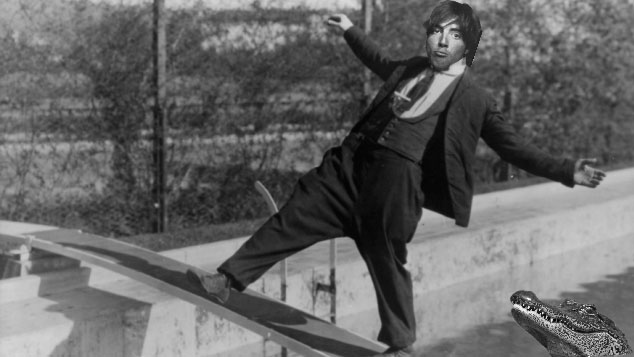
rusty_keaton

Me in 1973 (or at least my head in 1973)

Back, in ’73, it still got cold in early October.

In August of that year, I had on a whim enrolled in a tennis course mistakenly thinking it would count as an elective. Given my busy schedule of sometimes going to class, washing dishes at Capstone Cafeteria, and making the rounds of various pubs each evening, I had put off to the afternoon of the last day to drop a course without penalty to go through the rigamarole necessary to avoid further tarnishing my transcript.   To successfully do so, I needed to accumulate certain signatures.

After visiting the registrar’s office and securing the drop form, I trekked over to the far distant PE department and copped the john henry of the so-called instructor, the most difficult task in what seemed to me at the time as a Herculean quest – I had never been to class; I didn’t know his or her name.

After a bit of a runaround, somebody signed the form, so now all I had to do is to get my advisor to sign on the dotted line – something she no doubt would be delighted to do – but this rather severe woman gave me the heebie-jeebies. I sensed she held me in contempt -maybe because I was red-headed? or betrayed a contemptuous smirk when I dealt with her? or perhaps because I reeked of cannabis?  – I had no idea why she disapproved of me, but I imagined her animus was as palatable as dandruff-sprinkled wool.

Of course, she signed it – probably not even really knowing exactly who I was.

With the two signatures secured, I rode the elevator down to the lobby of the Humanities Building with a half-hour to spare before the Registrar’s Office closed.  As the elevator door opened and as I stepped out, the form somehow fluttered from my hand – and I swear I’m not making this up – it disappeared cartwheeling through the gap between elevator and lobby into the dark underworld of that hideous structure.

I could have tried a thousand times to flip the form through that gap and probably not been successful even once.  I stood there astonished, frozen, unbelieving.

elevator gap

I literally ran back to the registrar’s office, grabbed another form.  With the clock reading ten till five, my only recourse was to forge signatures, and in the case of my tennis instructor, to make up a name because I had already forgotten it.*


*Although I doubted it at the time, this strategy of forging and making up names worked.  In a pre-digital university with 20,000 students, what functionary is going to check to see if the the signatures are legit?


I shared that year an apartment with a bassist named Stan Gibbons who worked at the Record Bar at Richland Mall and who possessed a record collection extraordinare.  It was an upstairs apartment in a ramshackle house built in the Twenties on Henderson Street, a house long ago purchased by USC and transformed into a parking lot.

After the traumatic experience of having some malevolent spirit snatch the form from my hand and deposit it sideways through the one inch slot of the elevator shaft, I trudged up the steep hill to my house and up the steep stairs to the shithole I called home (my bed was in the kitchen) to watch the NL playoff game between the Mets and Reds on Stan’s black and white portable TV.

As the sun set and a cold front passed through, it started getting very chilly in the apartment. Need I mention that the apartment was unairconditioned and every window frozen into an open position? I managed to ram two windows down, but a third, one of two facing the front of the house, wouldn’t budge.  However, summoning every ounce of my 140 or so pounds, in a Samsonlike shouting concentration of force, I slammed the window down with such violence that the glass shattered.

What else, I inwardly whined, could go wrong today?  Now ice cold wind was streaming through the broken glass. I had no recourse but to light the heater, a gas fueled relic from the 1950’s.  This action required igniting a pilot light, something, again, I had never attempted, yet after maybe twenty or so attempts, whoosh, success.  I turned up the heat to a nice toasty temperature.

So I leaned back in a threadbare chair to watch the game.  In a minute or two, however, I smelled something burning, and turned around to see flames leaping from the stove upon which Stan’s record collection rested.  How could I have not noticed them sitting there in their cardboard boxes?  After all, I played them all the time.

I snatched the records off the stove, sickened by the stench of melted vinyl.  Every single LP was severely warped, unplayable.  Desperate ideas darkened my mind.  Hitchhiking to Nome, Alaska, never to return.  Telling Stan an outrageous lie: “Hey, Stan, someone must really hate you.  They broke in to the apartment through that window and set your records on fire.”

But I did neither.  When I heard his dreaded tread upon the stairs, I confronted him there and told him I had accidentally ruined his record collection.

He smiled broadly.  “Ha ha! you’re kidding,” he said.

feature181_confusion

Dan Scott:  Increasing Confusion

It didn’t take long for the truth to register with the smell and my unchanging woebegone expression. He said he might have to move out but stuck with me until the end of our lease; then on amiable terms we went our separate ways.